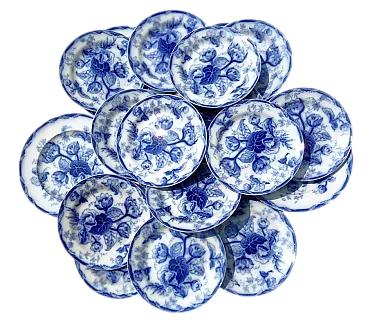
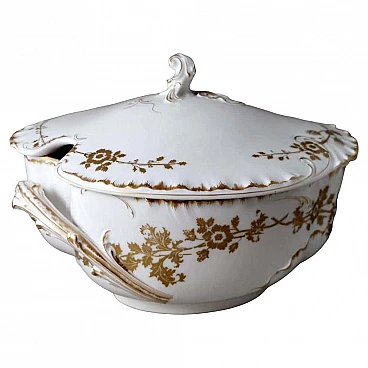
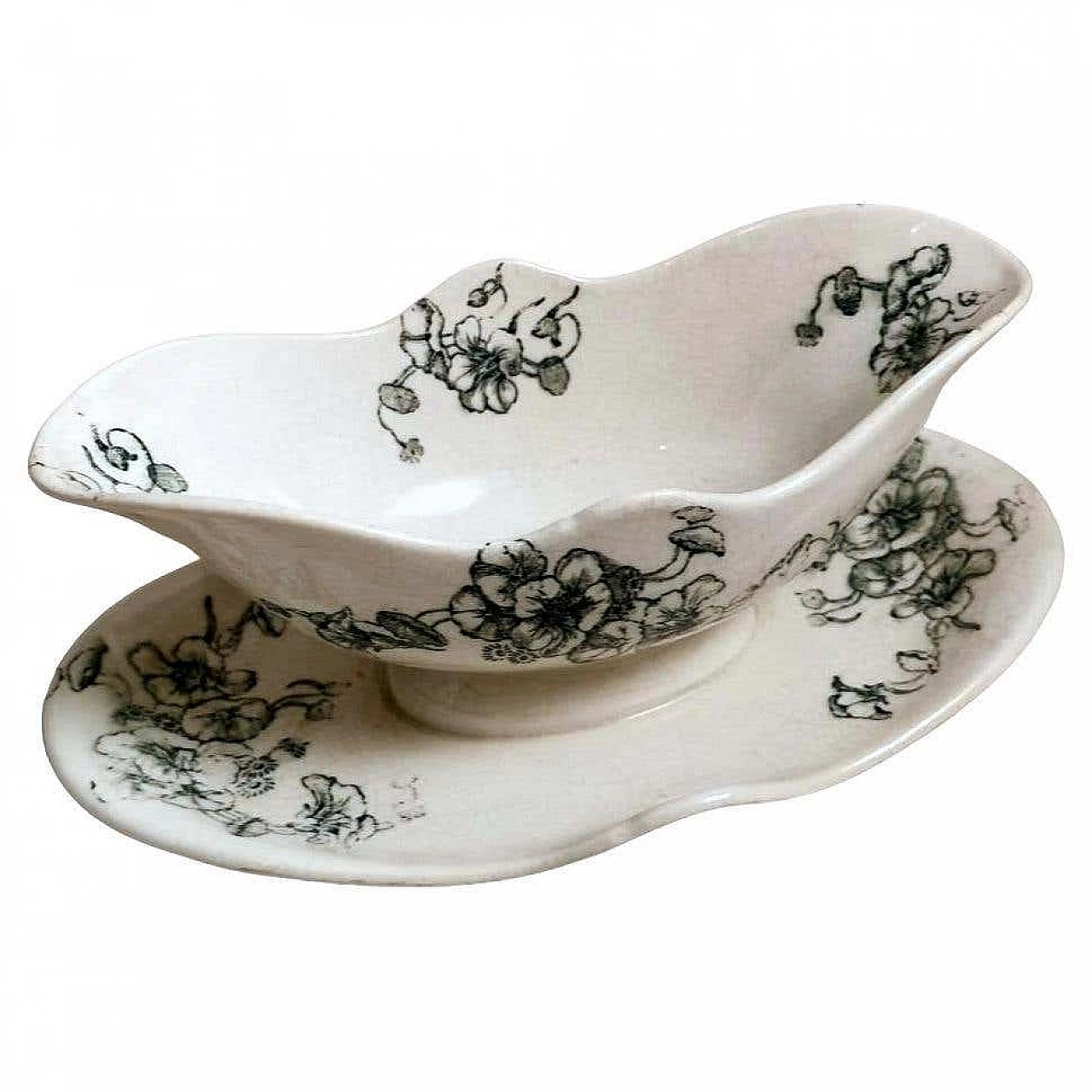
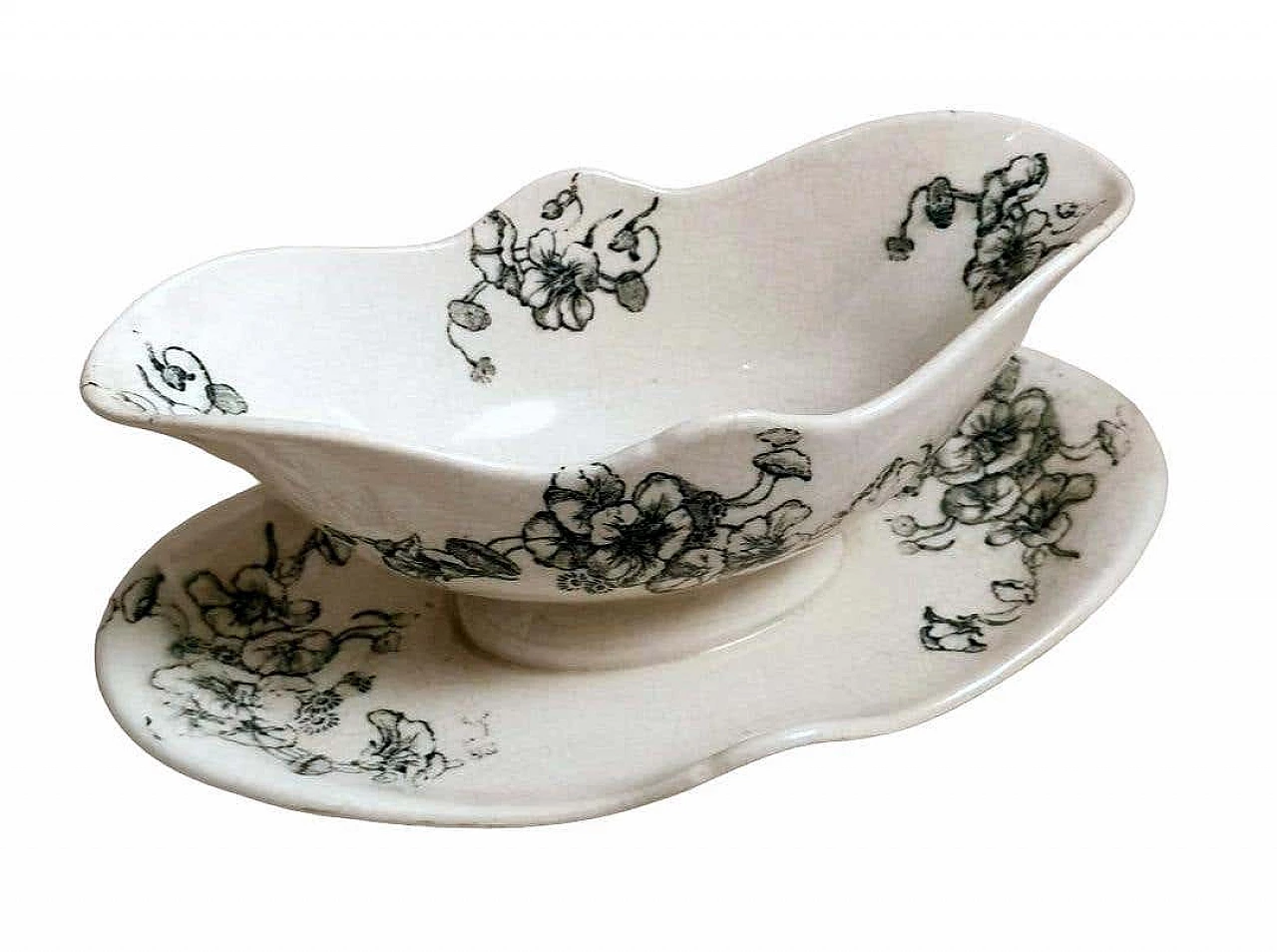
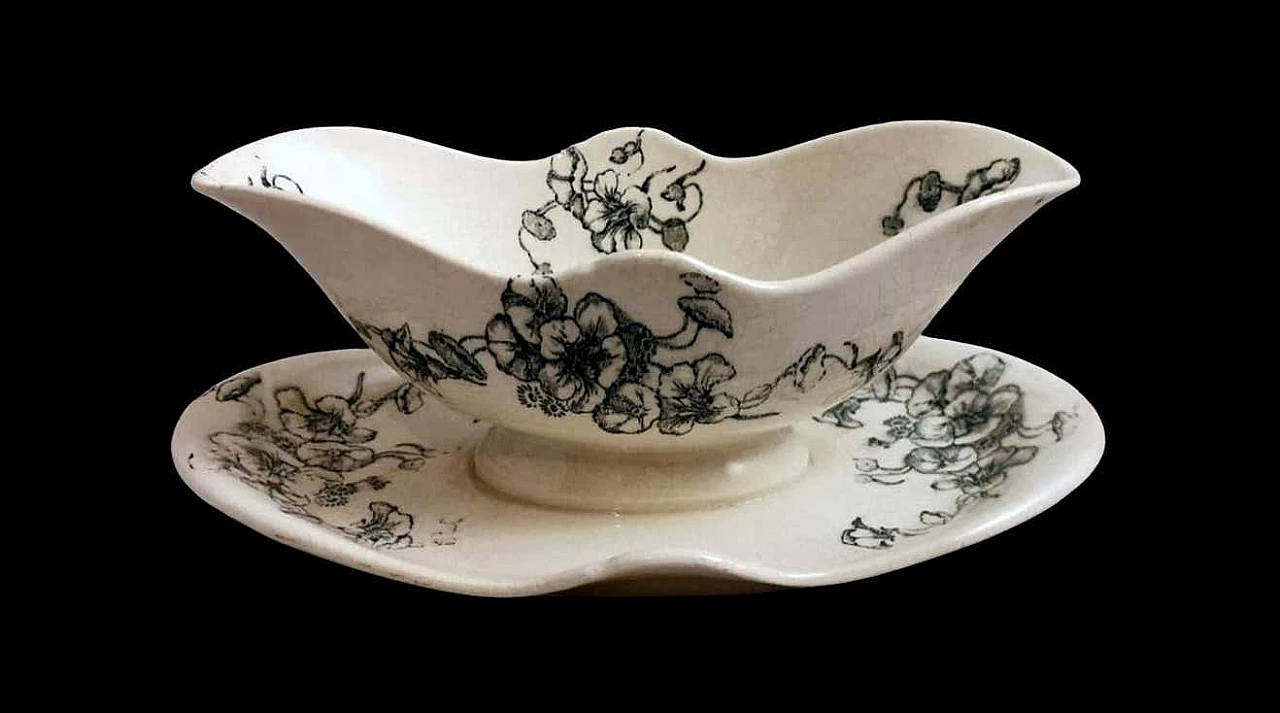
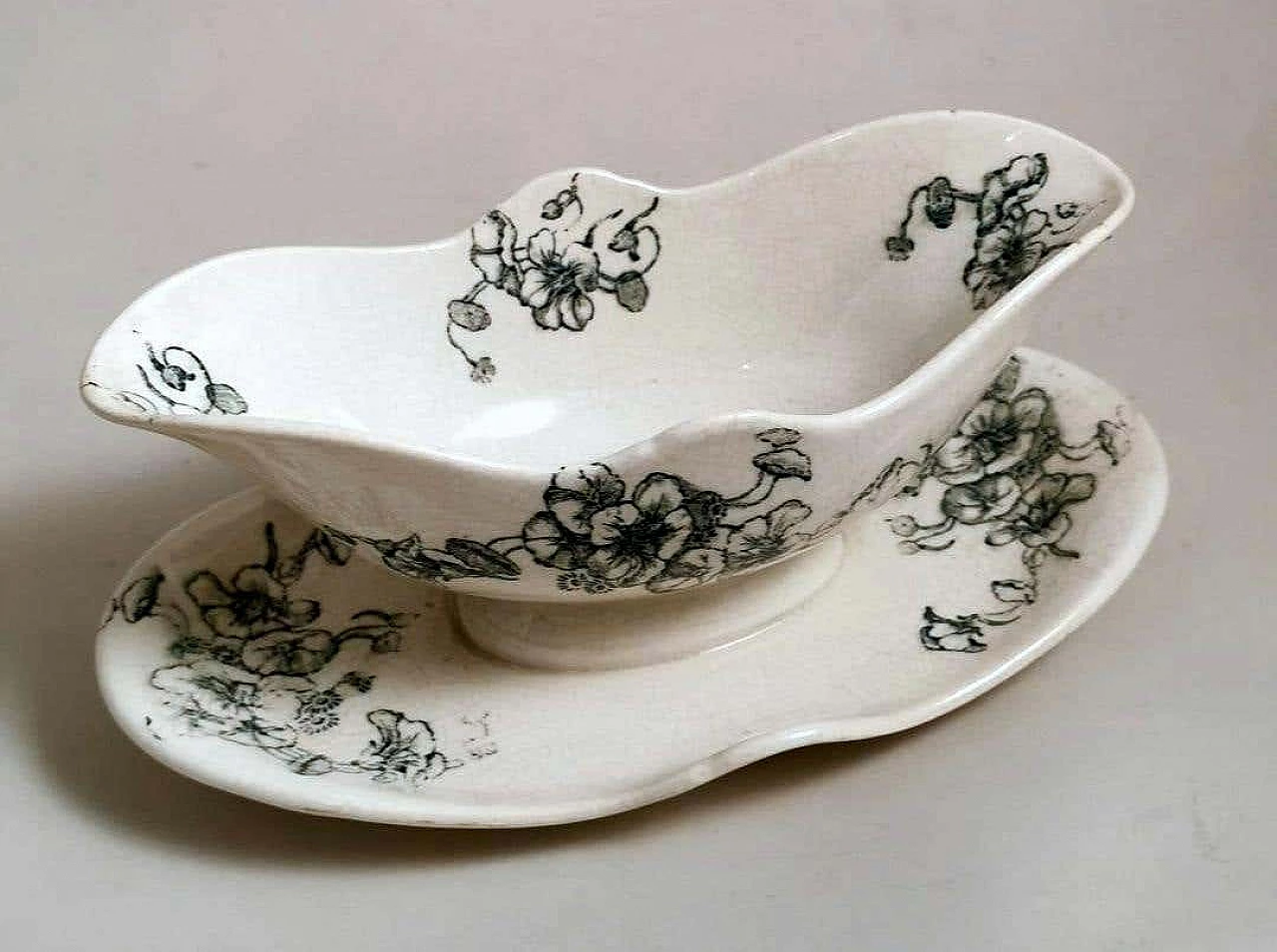
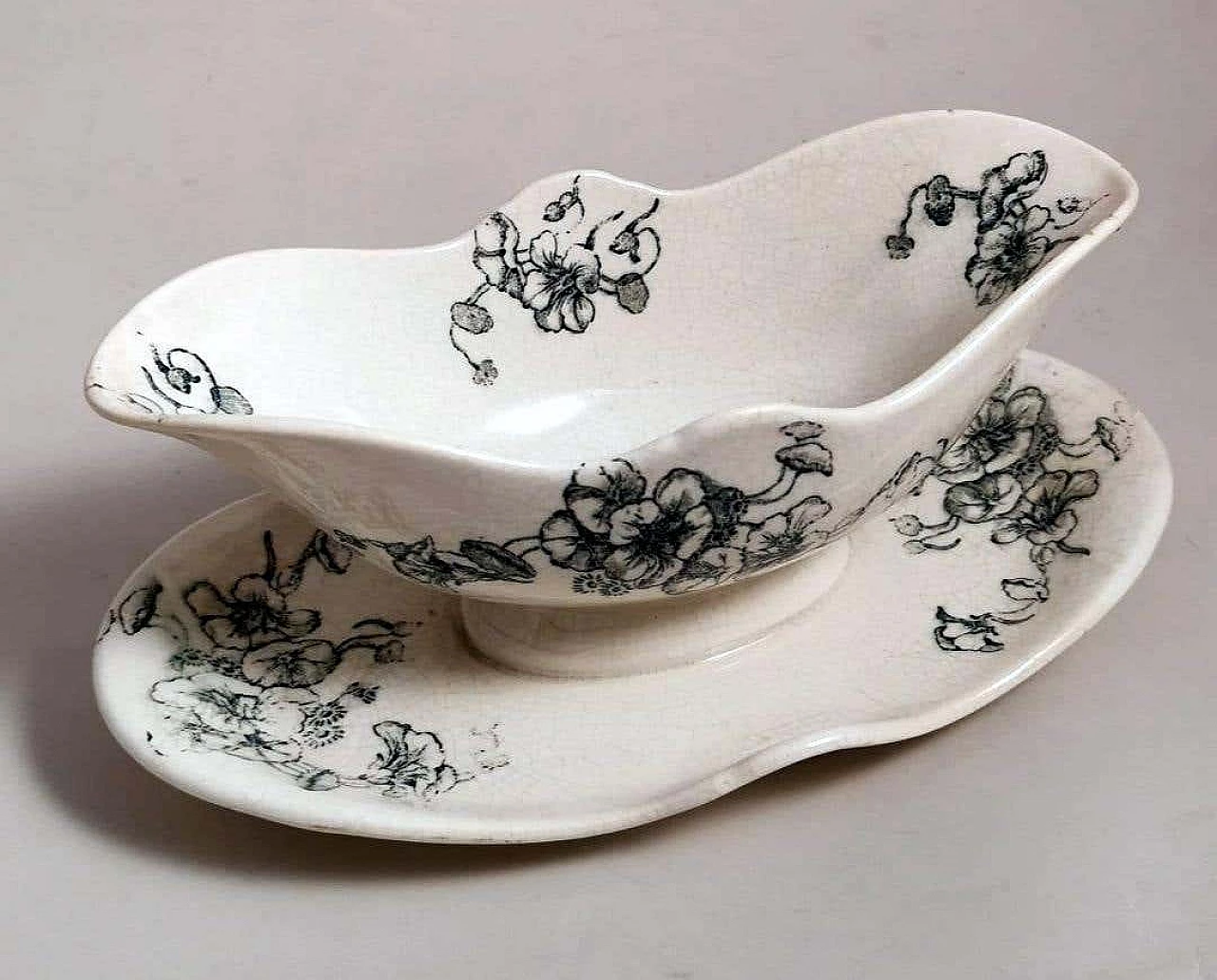
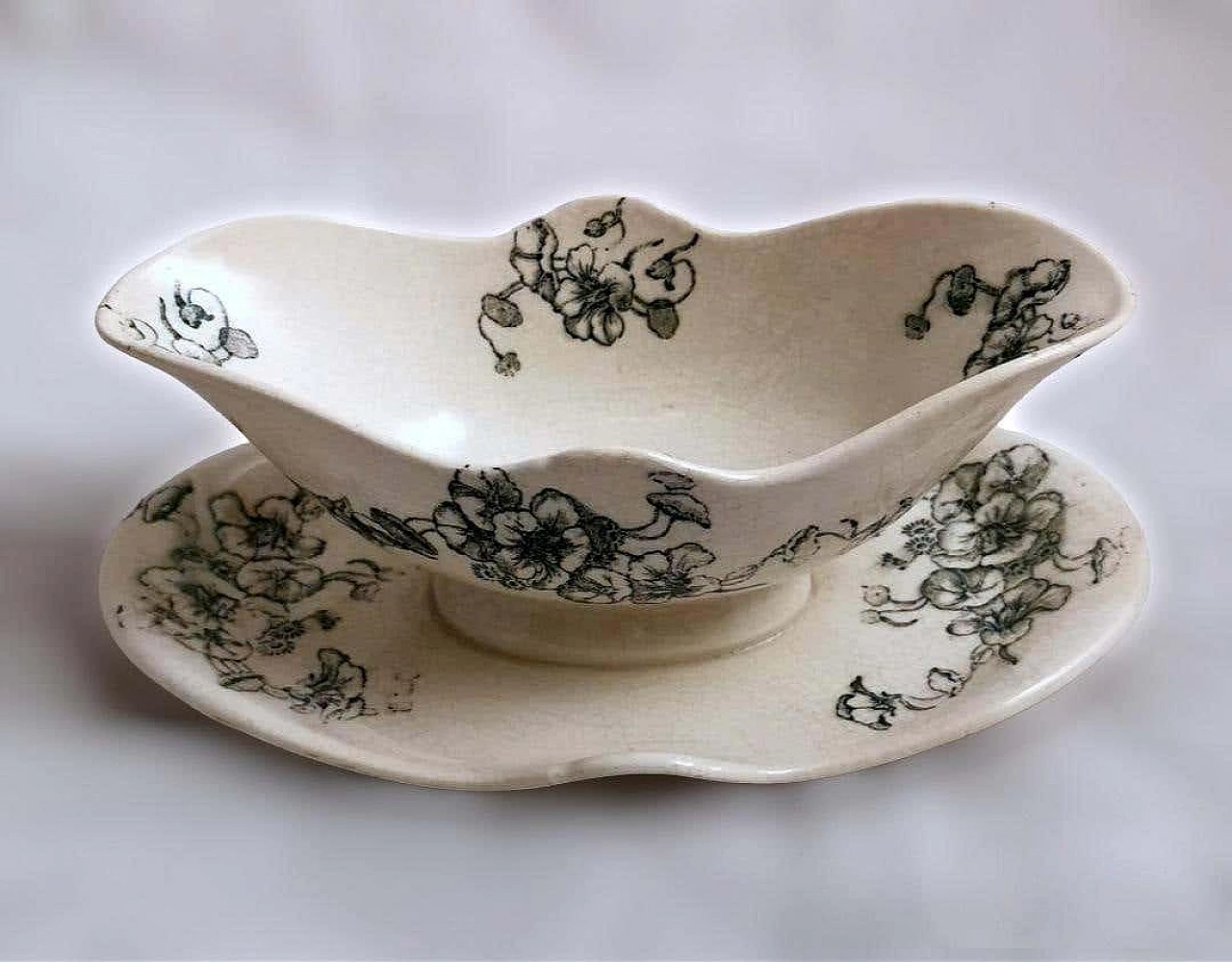
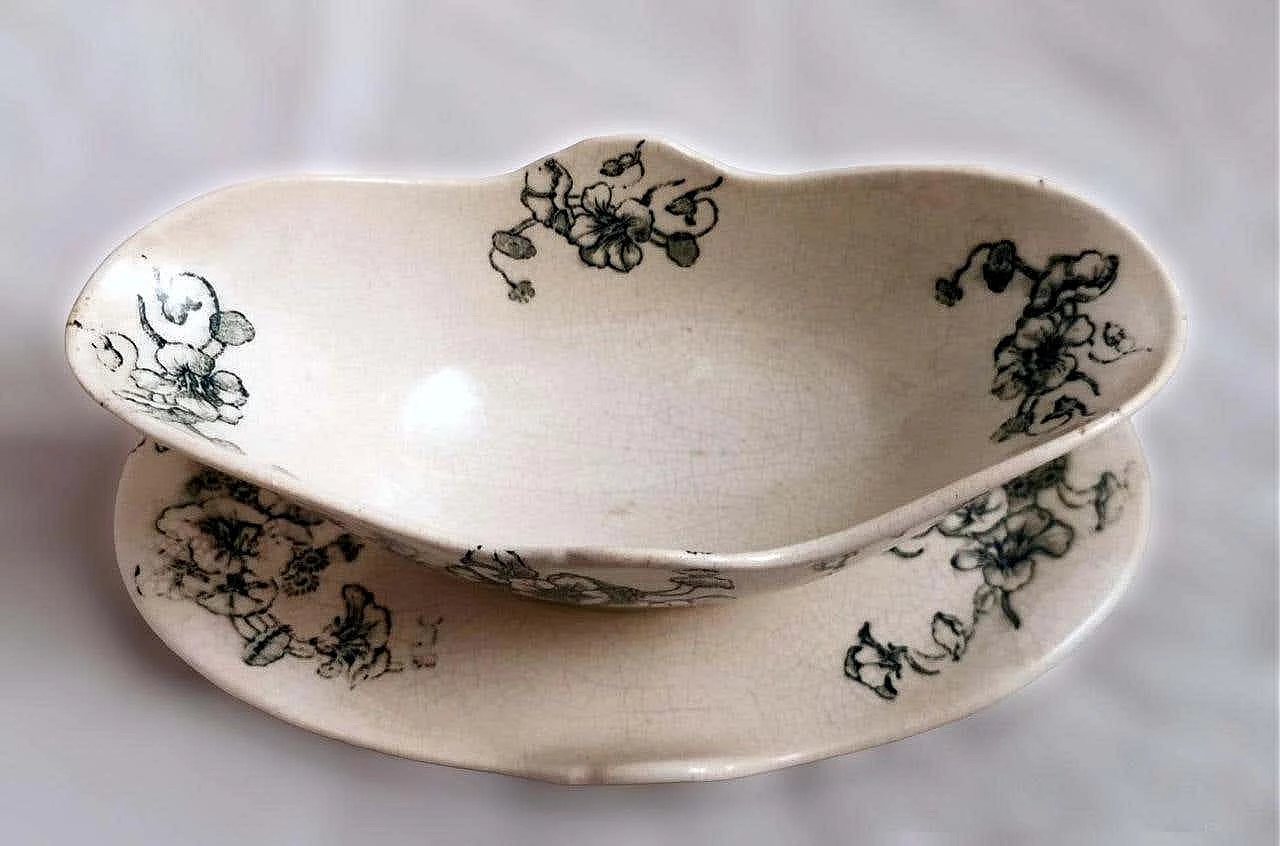
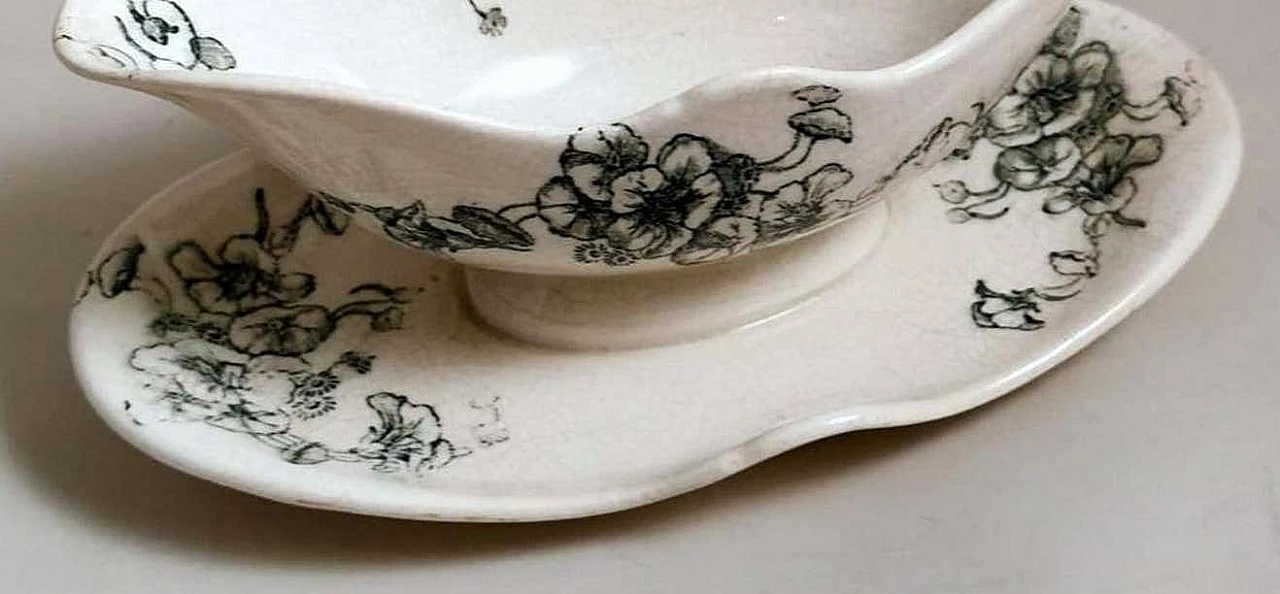
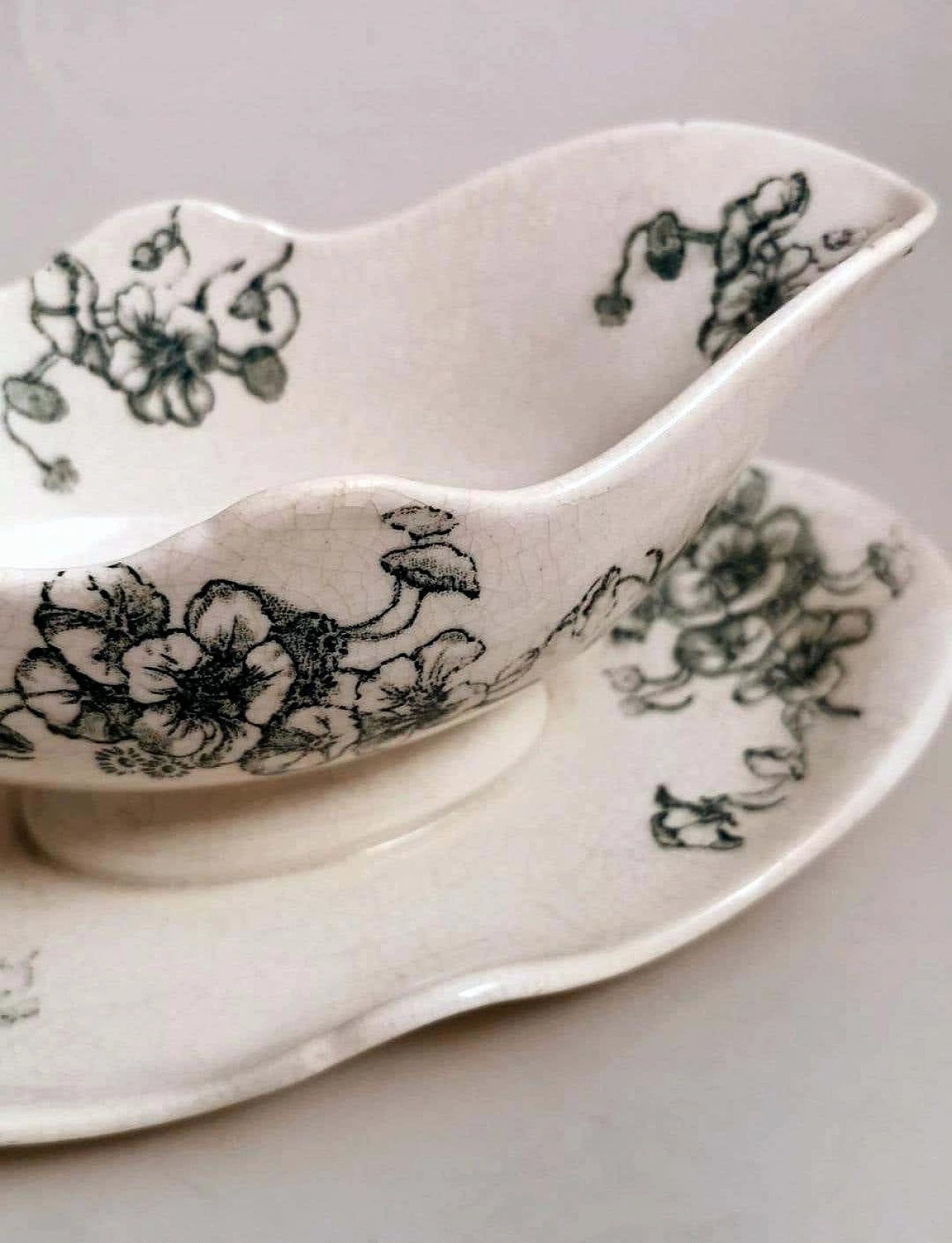
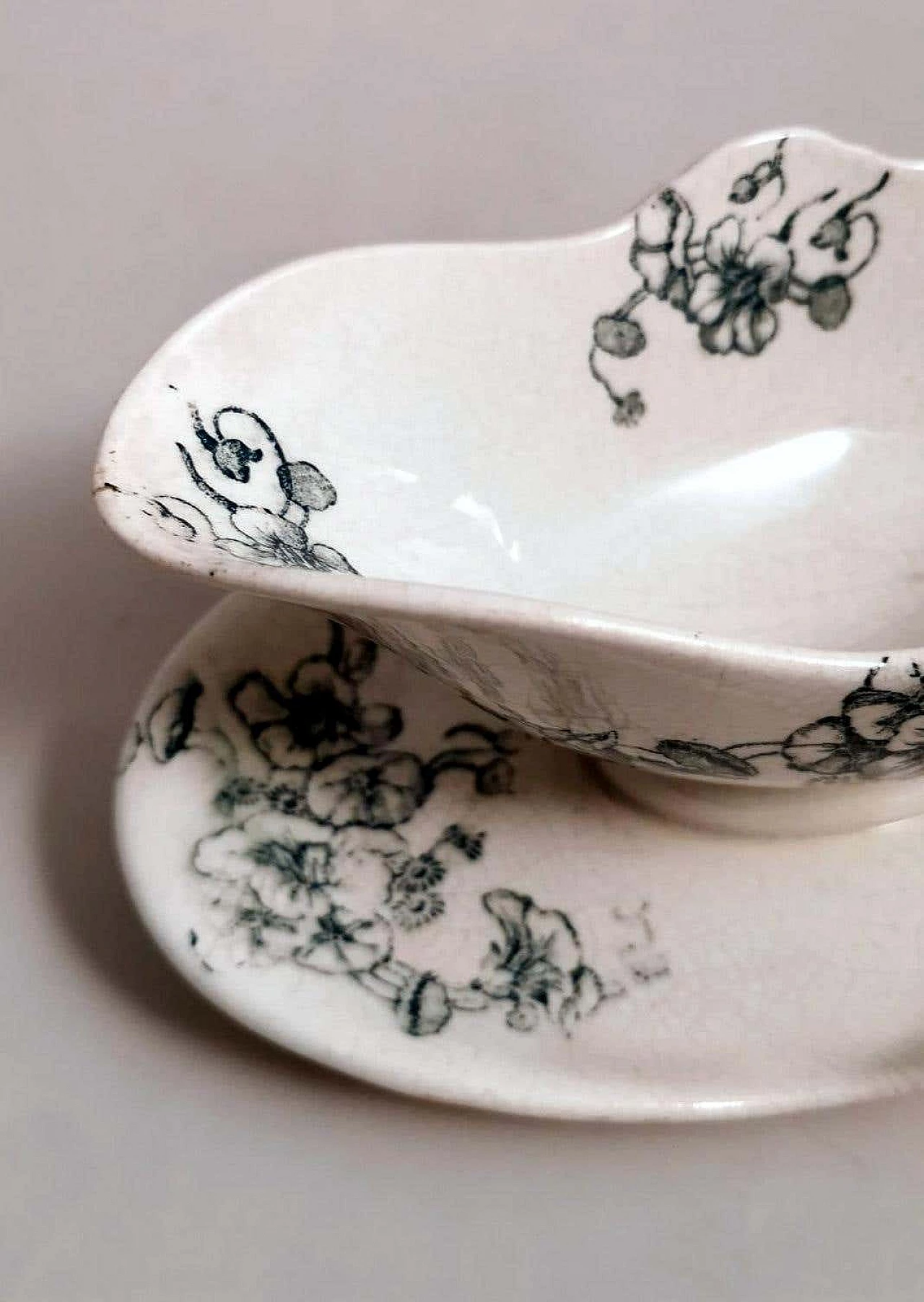
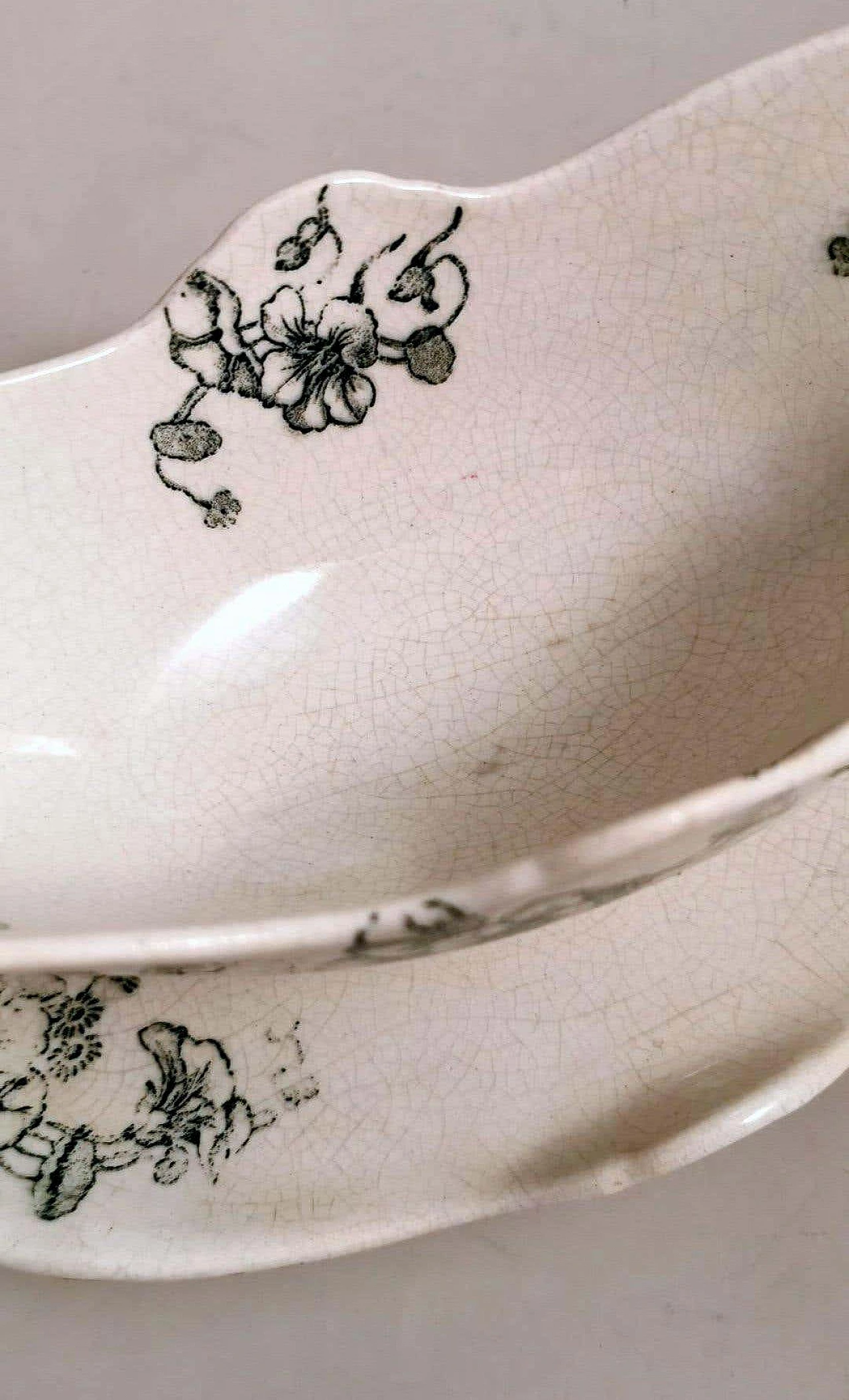
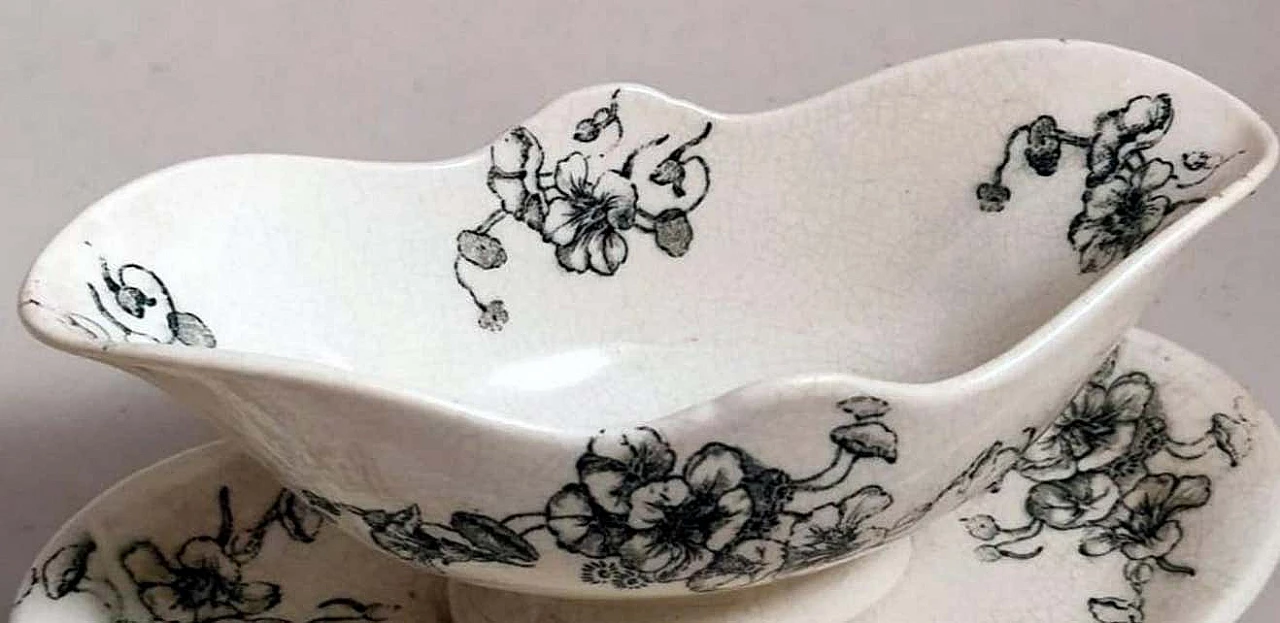
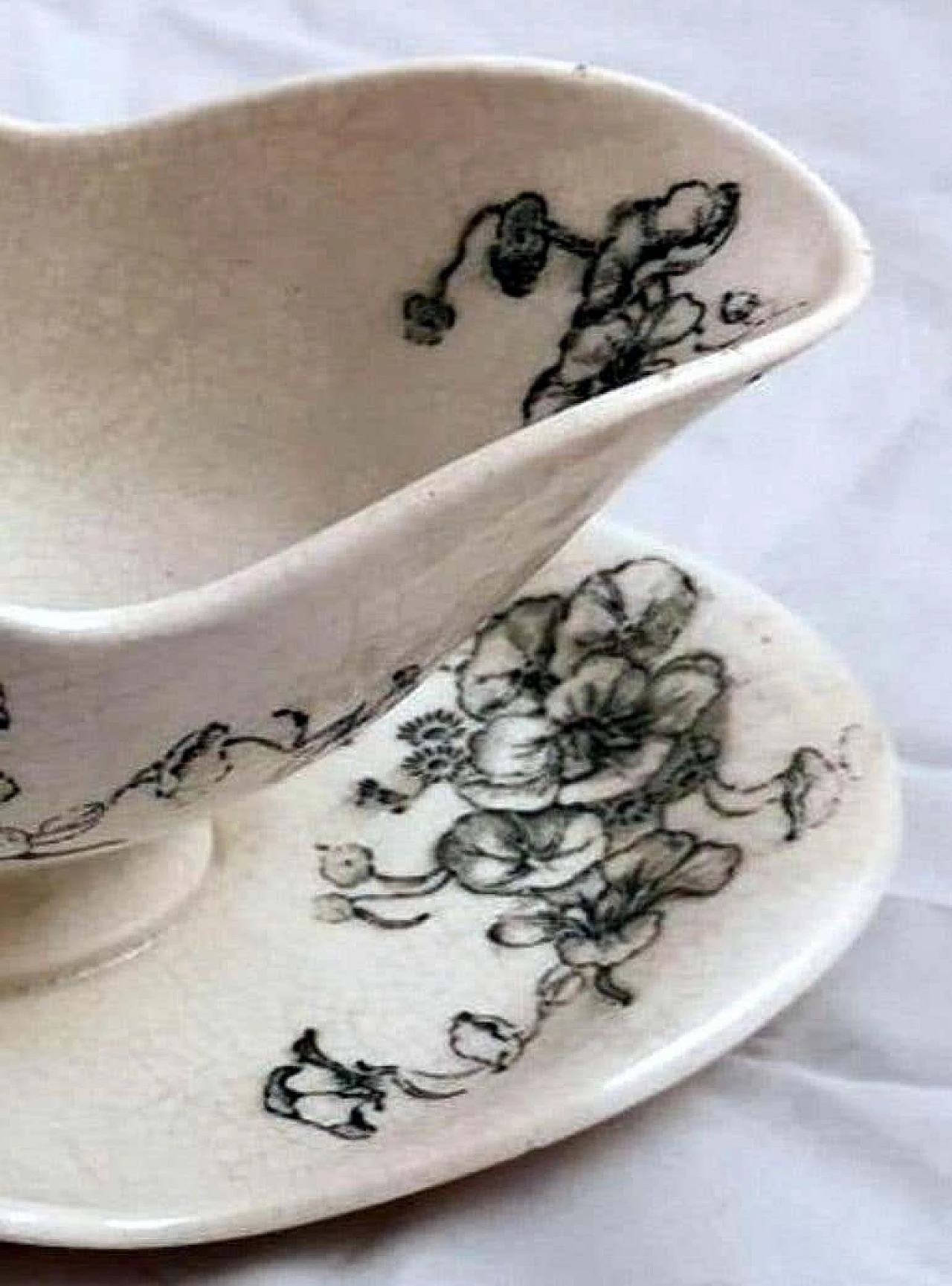
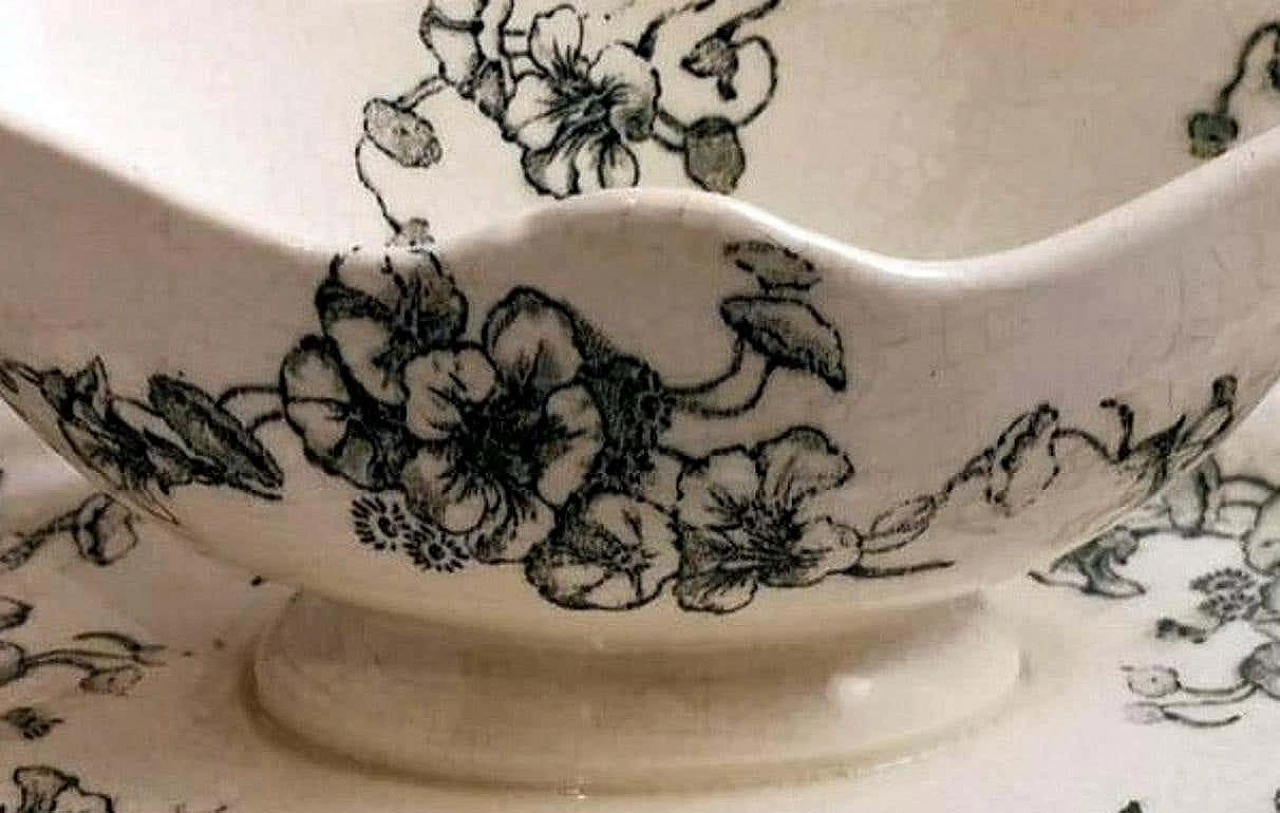
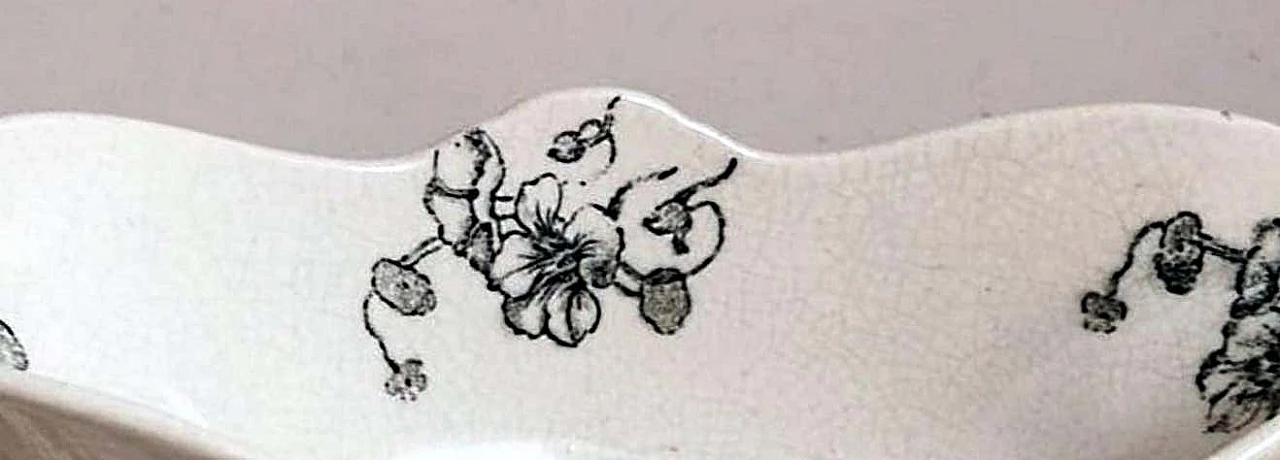
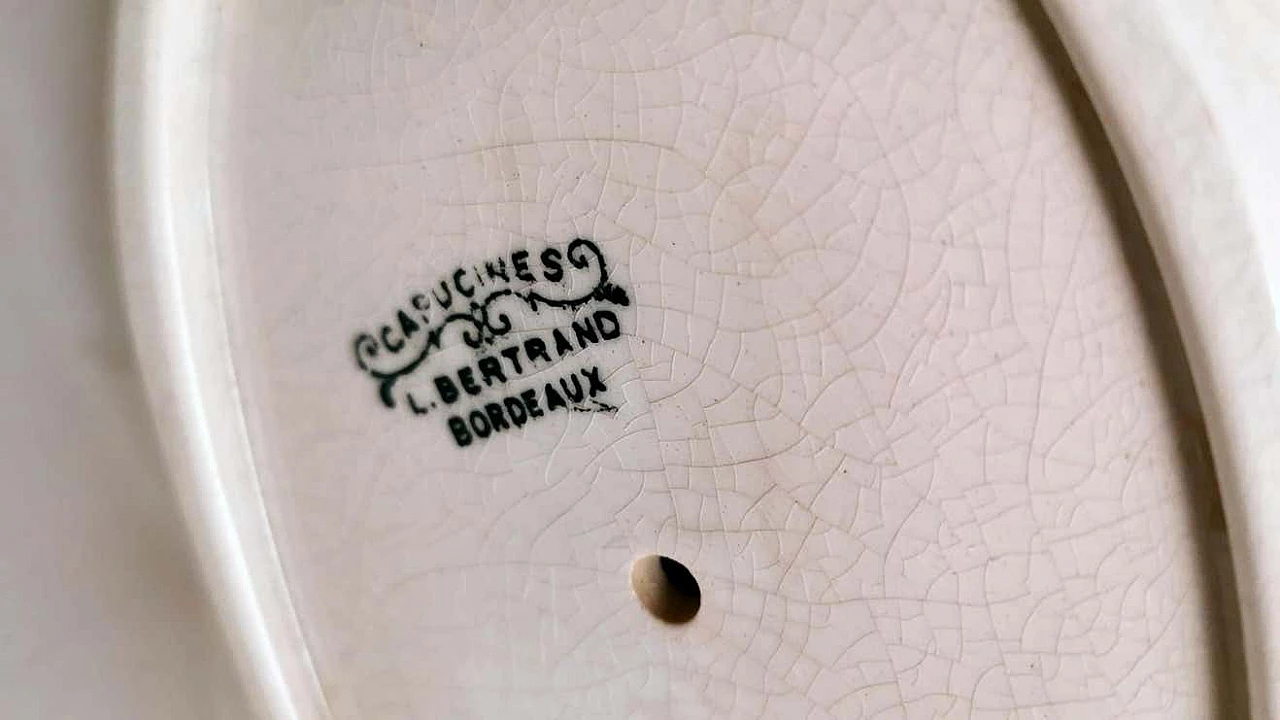
A pretty and unusual majolica gravy boat, this is a classic gravy boat with the plate matching the container, but with a very balanced and harmonious shape. The majolica was then enriched with elegant floral decorations made using the transfer wear method. In addition, time and use have created an interesting craquelé effect that makes the gravy boat even more refined. The mark on the bottom indicates that it was made between 1950 and 1955 in Bordeaux, France, by the firm Lèon Bertrand. Lèon Bernard, originally from Gironde, was an entrepreneur specialising in the trade of factory chimneys who, for some rather obscure regulatory reason, founded a ceramics factory at the end of the 19th century at 50 Rue Delbos in the popular Bacalan district of Bordeaux. The company was not large but had a skilled workforce that produced a few but good quality items, mainly tableware and toiletries. Very original were the table services, the company had created several with refined floral ornaments, each service had as decoration a flower of the French folk tradition, there was the lily, lily of the valley, lavender, anemone and many others, the names of the flowers were printed on the object together with the company stamp. Our gravy boat was part of a service decorated with a very special flower, the 'capucine'. The capucine (Tropaeolum majus) is a flower native to South America, with flowers of a beautiful deep orange colour. In France, it is widely used in hanging baskets or to decorate fences and walls. All of the company's decorations are made using the English 'transferware' method. Transferware, very much in vogue in the Victorian period, refers to enamelled and decorated tableware with a specific treatment that was produced in Staffordshire, England. Copper plates were used on which the design was engraved, the plate was then inked and the design transferred onto a special fabric which was then laid onto the tableware (plates, trays, soup tureens, etc.) which was enamelled and fired. The first to use this printing process were John Sadler and Guy Green of Liverpool in 1756. A hand-painted plate service was affordable for a few English families; with this method, even middle-class families could have a decorated plate service. Measures width 25 cm, width 17 cm, height 11 cm. The gravy boat is in good condition. For all our shipments we use special packaging materials (wooden crates, polystyrene, etc.) for maximum protection and safety of the items.


.png)


 SILVER Seller in Prato, Italy