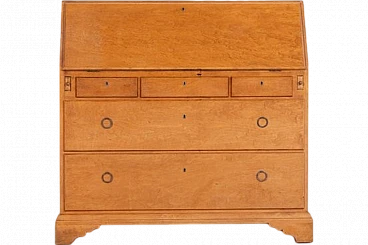
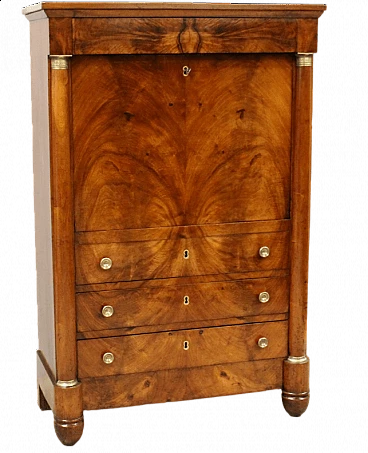
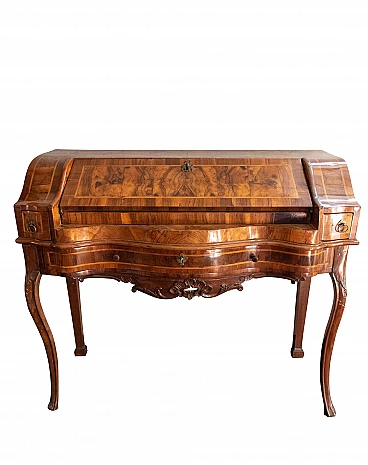
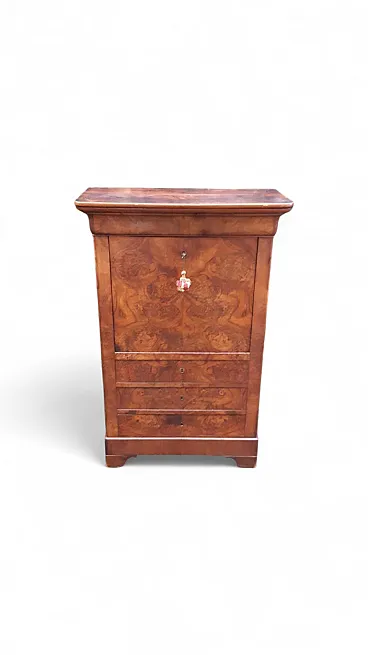
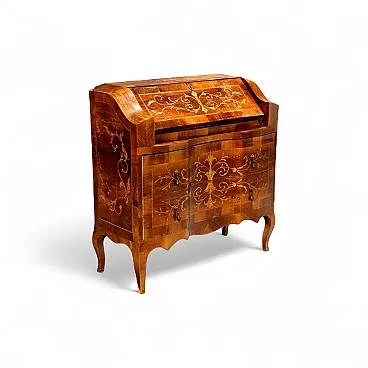
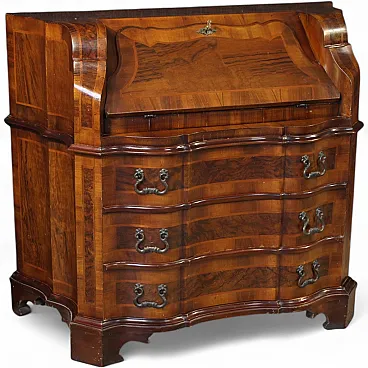
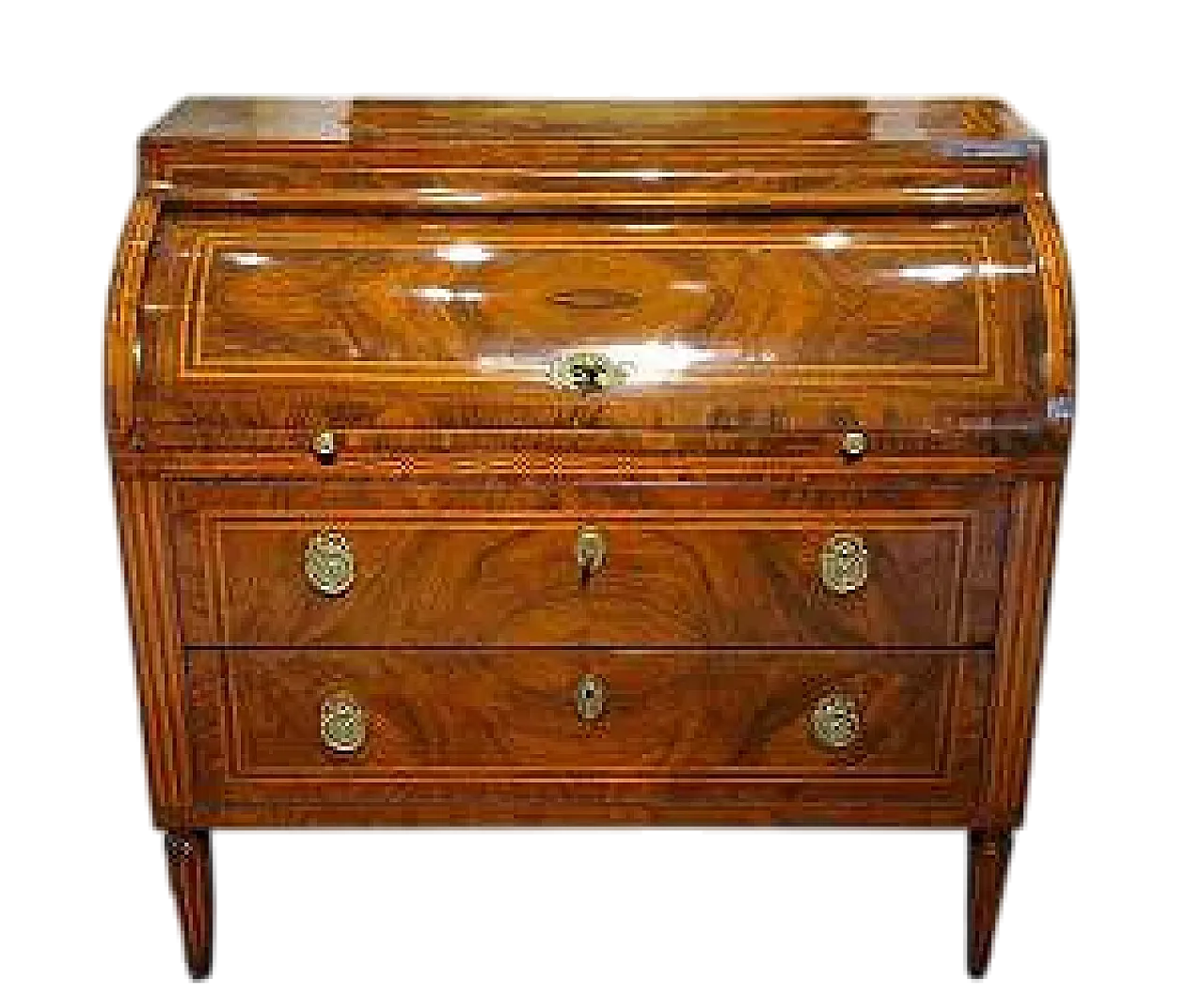
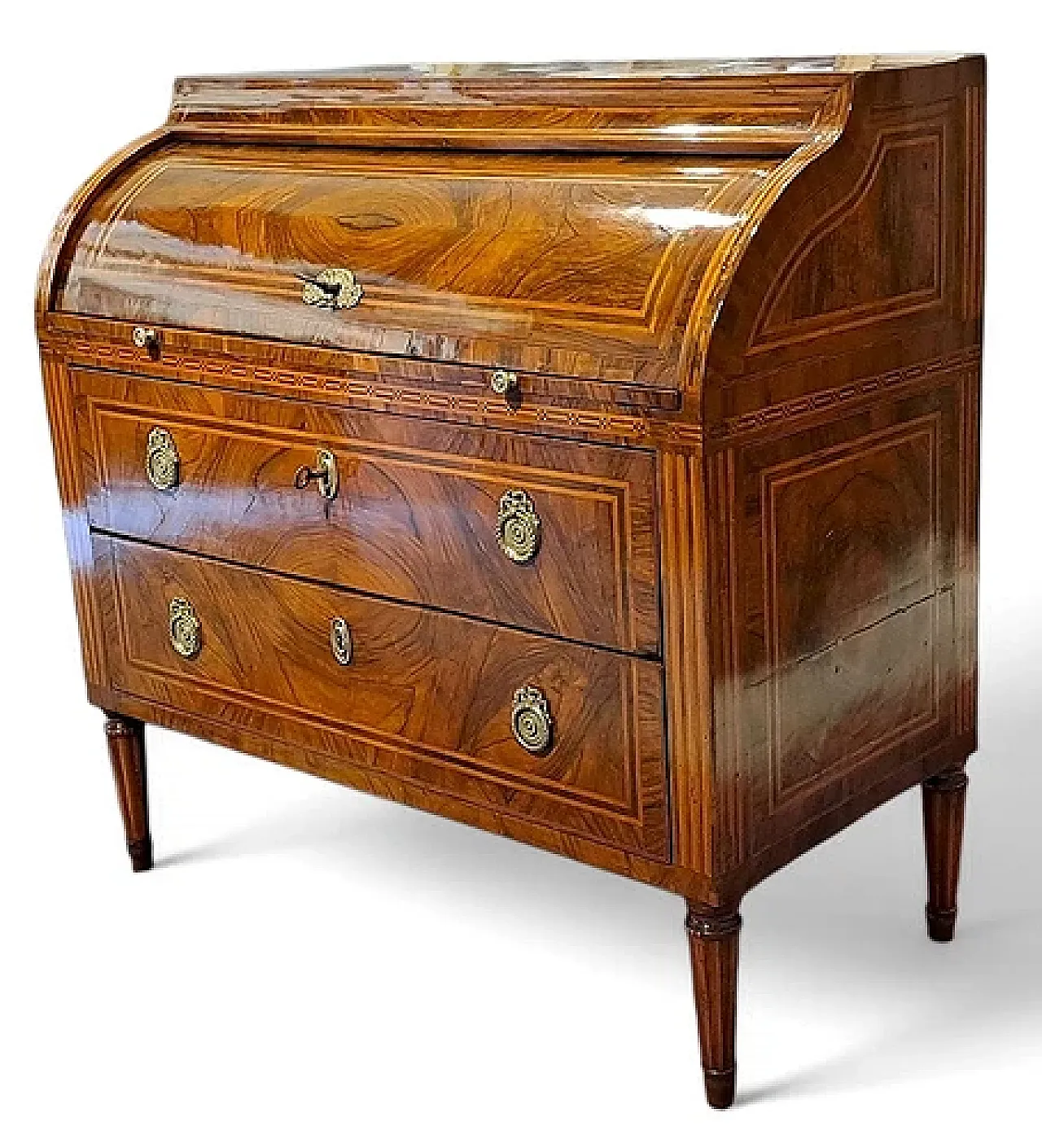
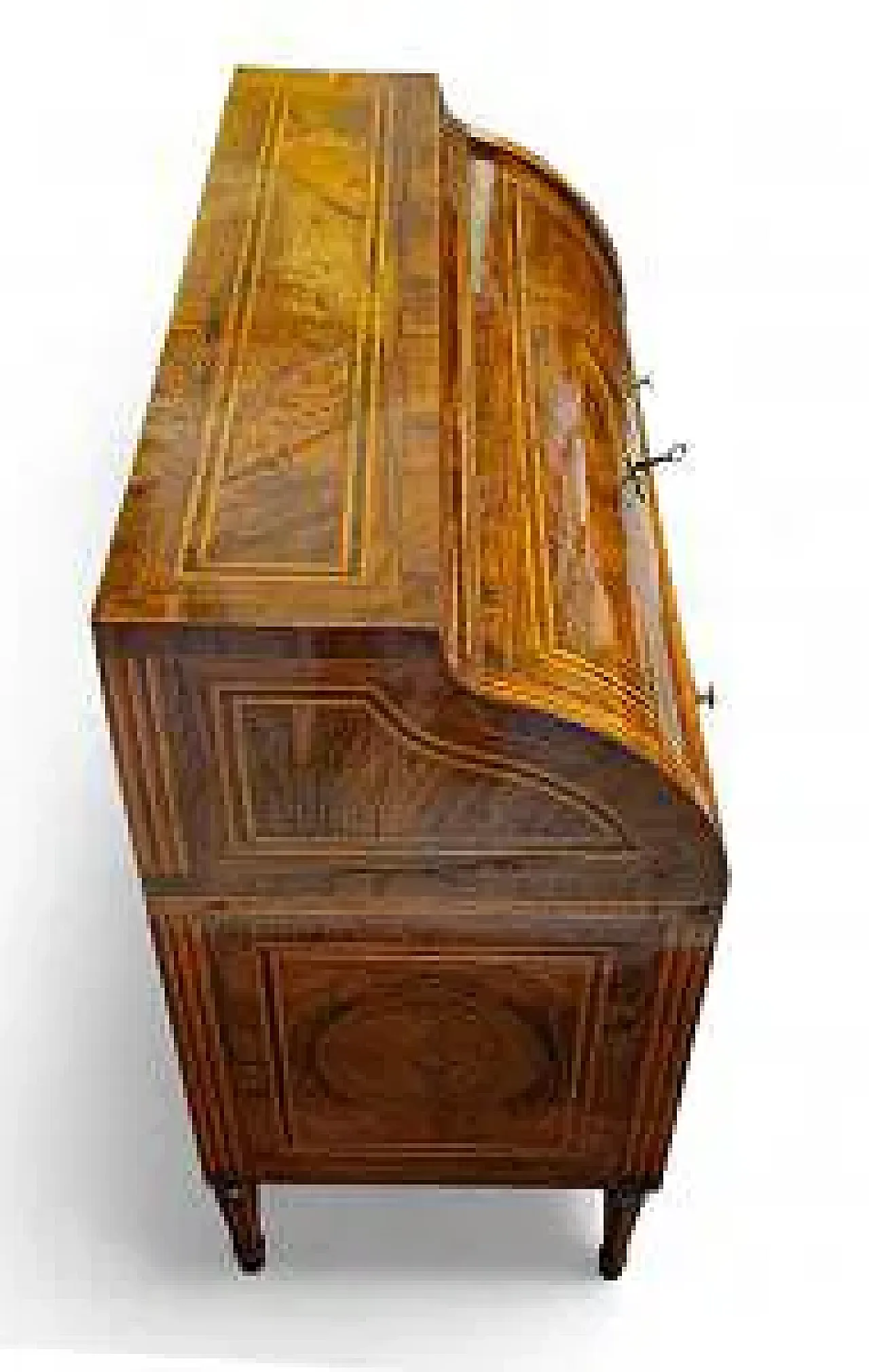
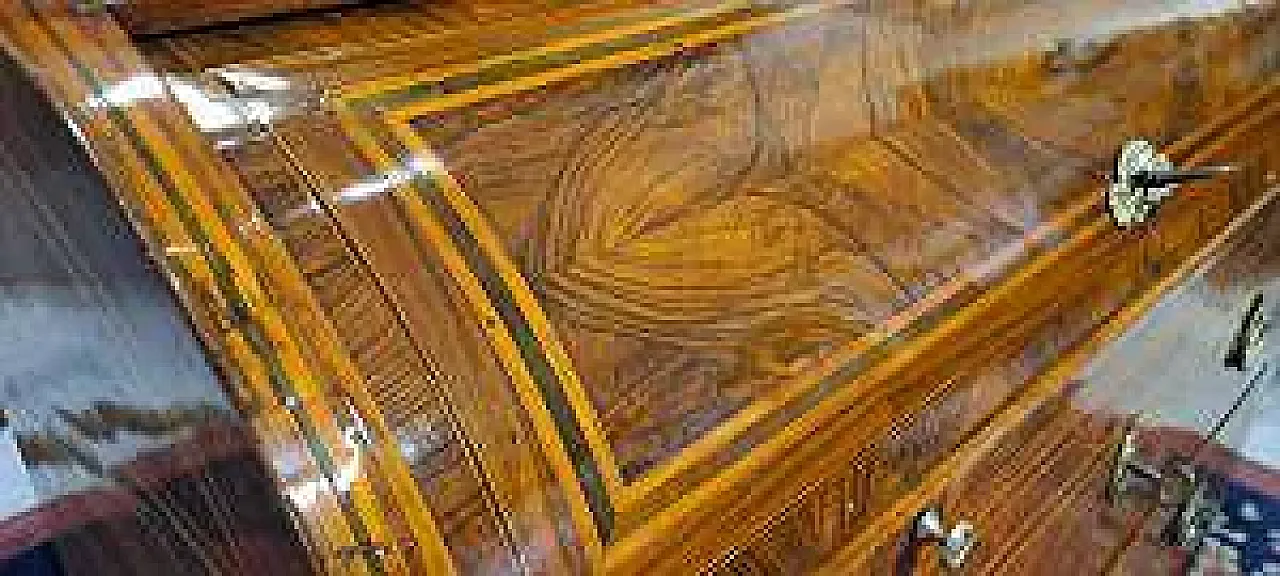
Essence and Slabbing: The furniture is entirely slabbed in walnut briar with a particularly rich and flamed grain which creates a magnificent "open stain" or symmetrical effect on the drawer fronts and on the cylinder. The paneling is a distinctive feature of the luxury cabinet-making of the period.
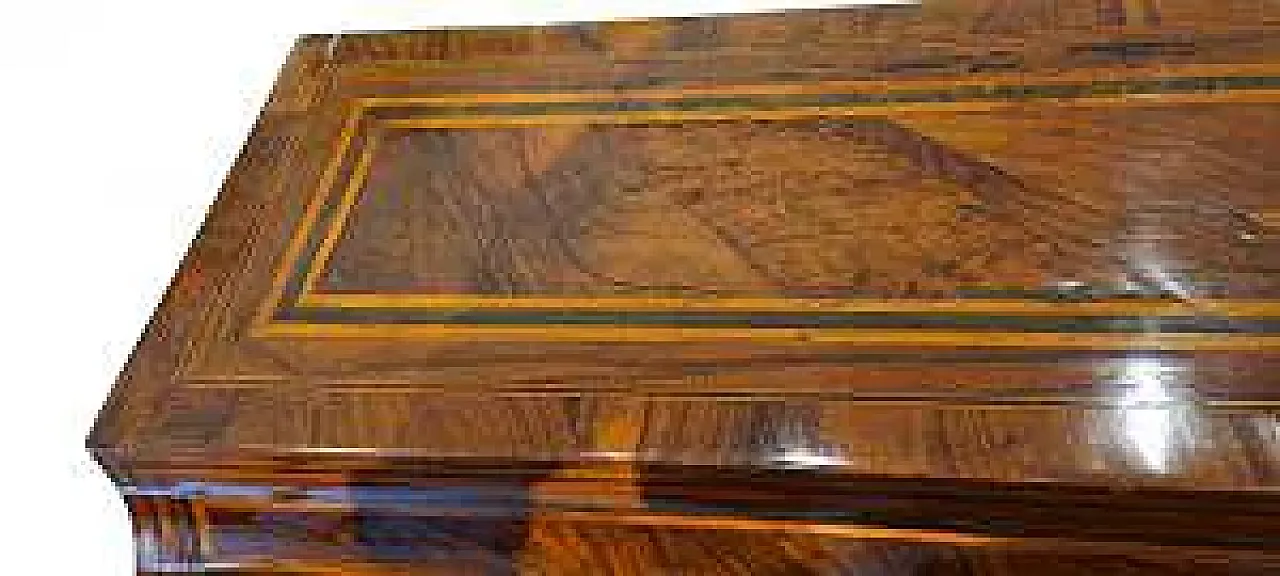
Inlays and Threads: The structure is beautifully framed by thin and precise threaded inlays in light boxwood. Key elements include:
A string course decorated with an elegant Greek or spindle motif, a classic of Neoclassicism.
Threads that square the panels of the paneling, enhancing the play of grain.
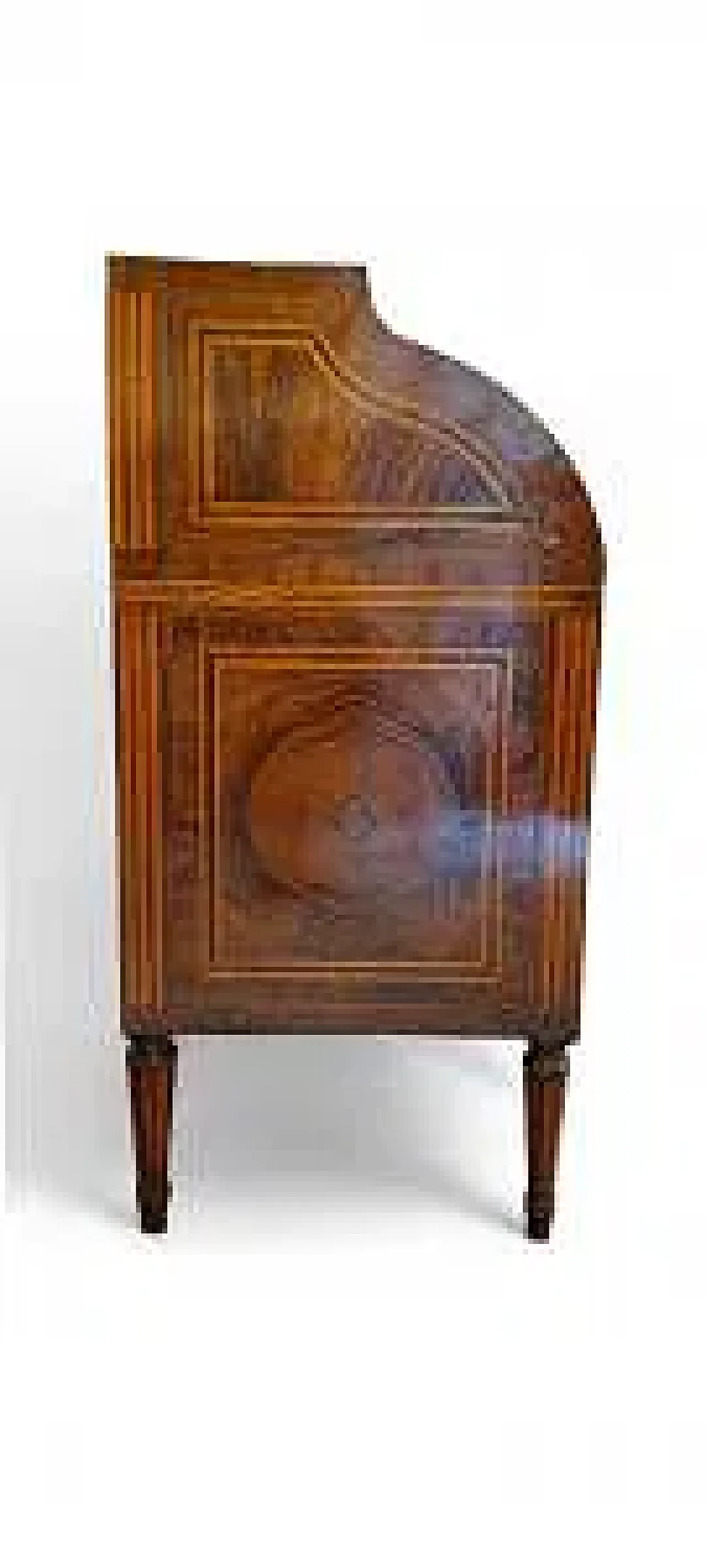
On the sides you can see squares that follow the rounded shape of the cylinder, with a central lozenge or "partridge's eye" motif.
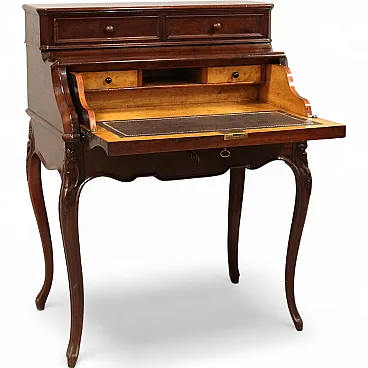
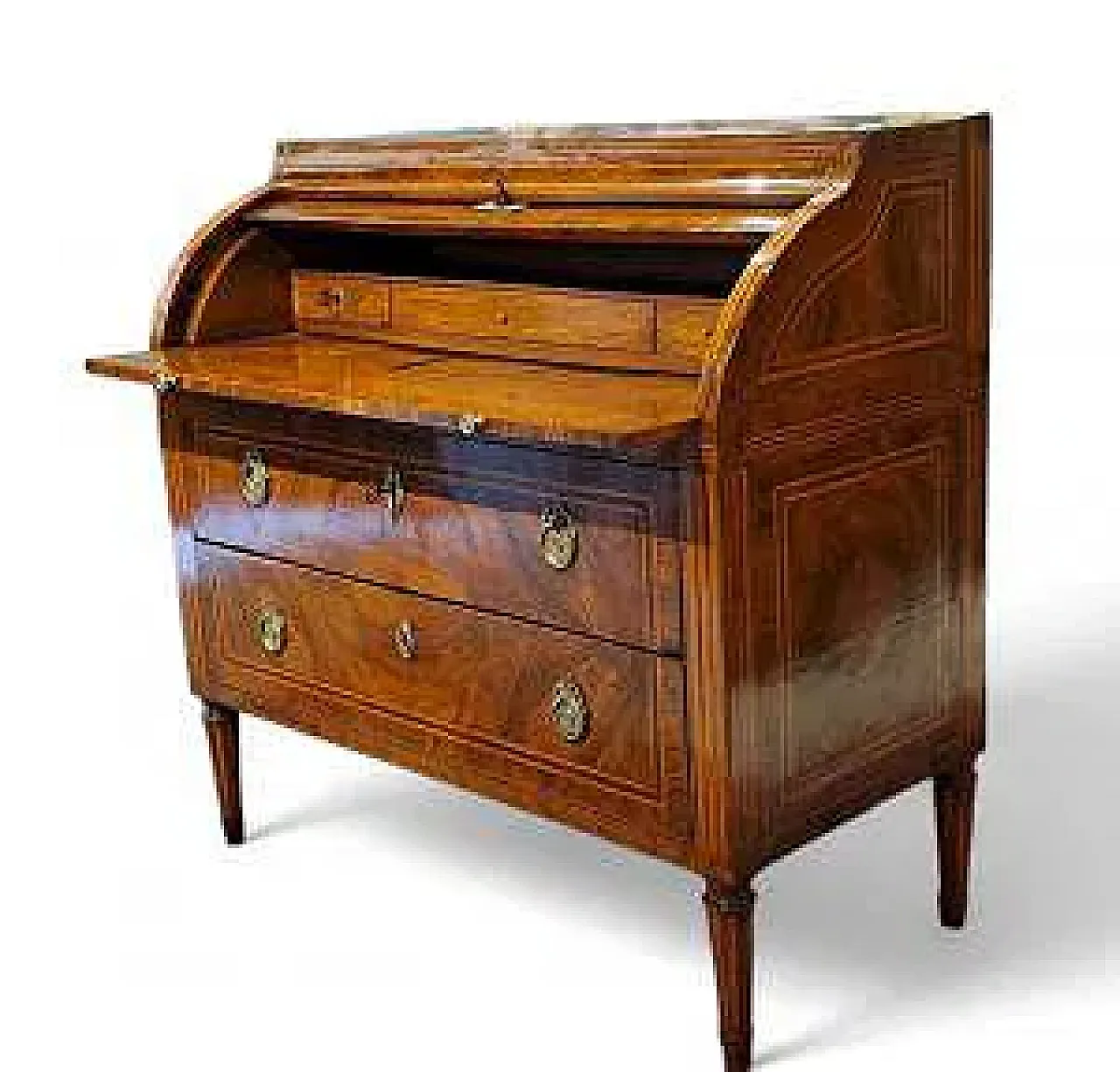
Structure and Functionality: The furniture looks like a two-body dresser-desk with:
Lower body: Consisting of two large rectangular drawers, embellished with wood grain.
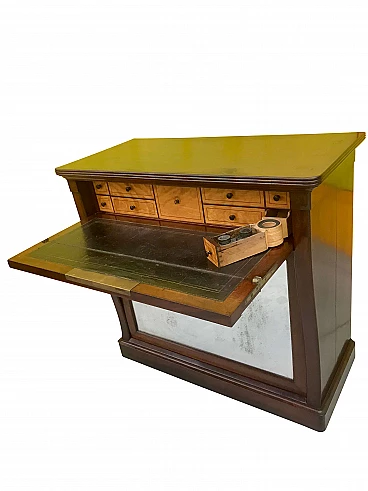
Upper body (Writer): Characterized by a refined cylinder/roller gully which, once slid, reveals an internal scarab complete with:
A removable writing table.
Small drawers and open compartments for storing correspondence and stationery.
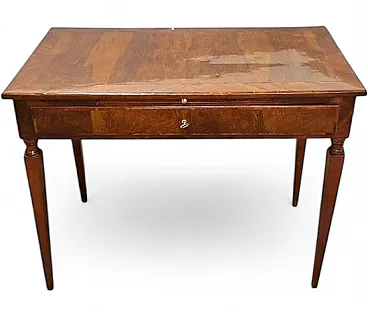
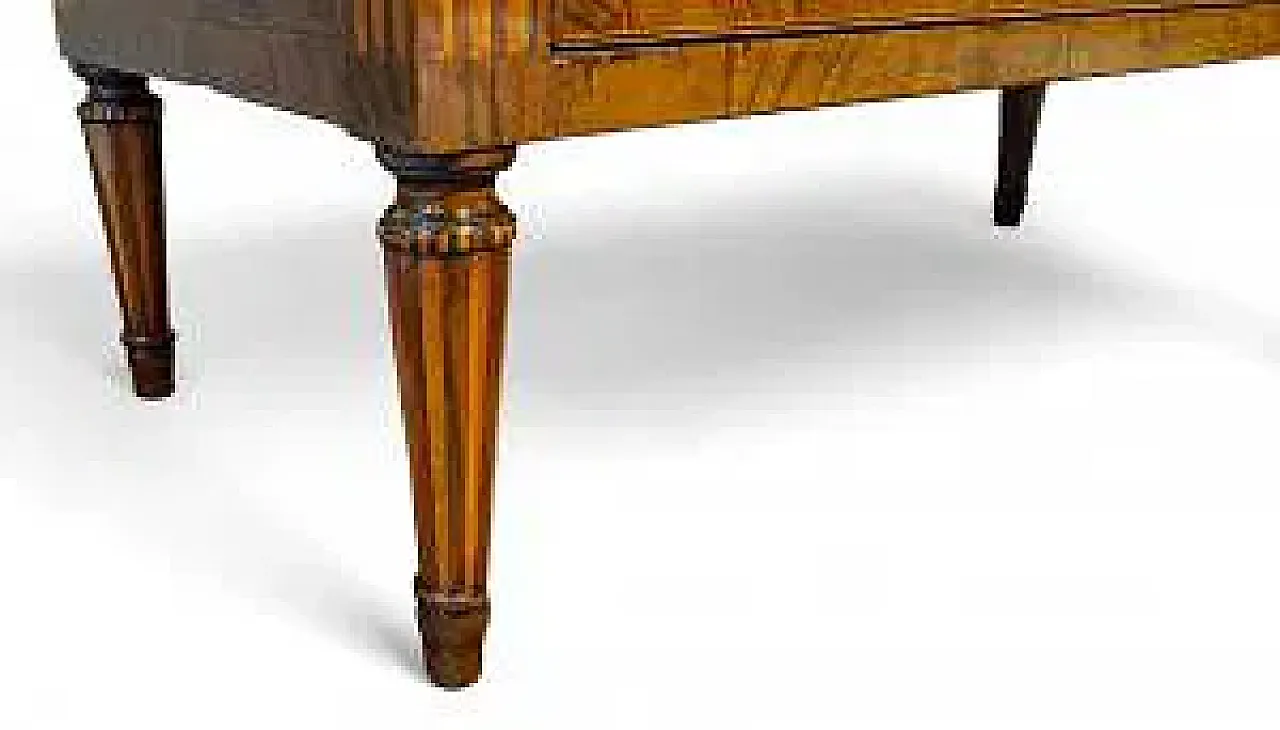
Legs: They rest on elegant truncated cone (pin) legs, another typical element of the Louis XVI/Neoclassical style, with a slight tapering downwards. They are decorated with an alternation of light and dark essences that create a cinnamon pattern or vertical bands.
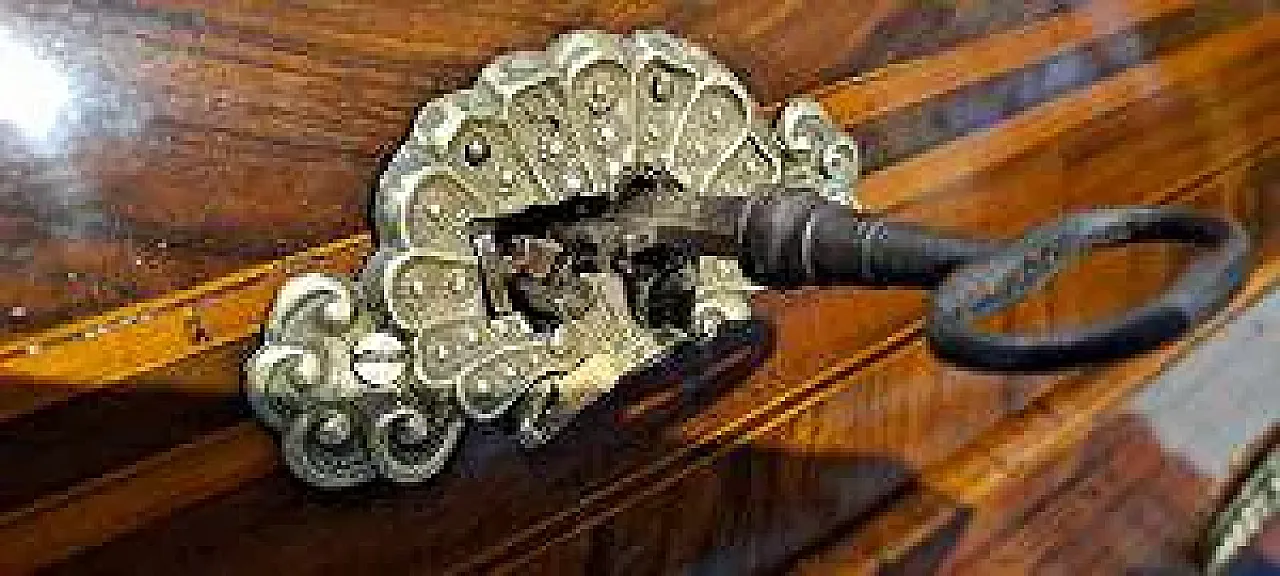
Hardware: The hardware is chiseled bronze and features:
Elegant circular rosette handles on the drawers.
Bronze lock nozzles, which contribute to aesthetic richness.
State of Conservation: Excellent state of conservation, with shellac polishing which enhances the depth of the grain.


.png)

-large.webp)
 SILVER Seller in La-Spezia, Italia