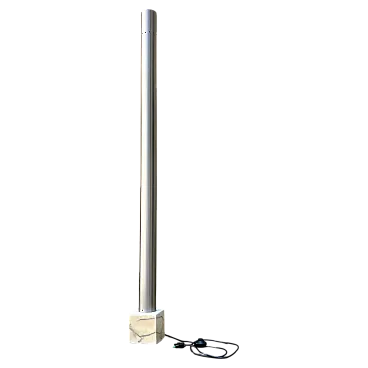
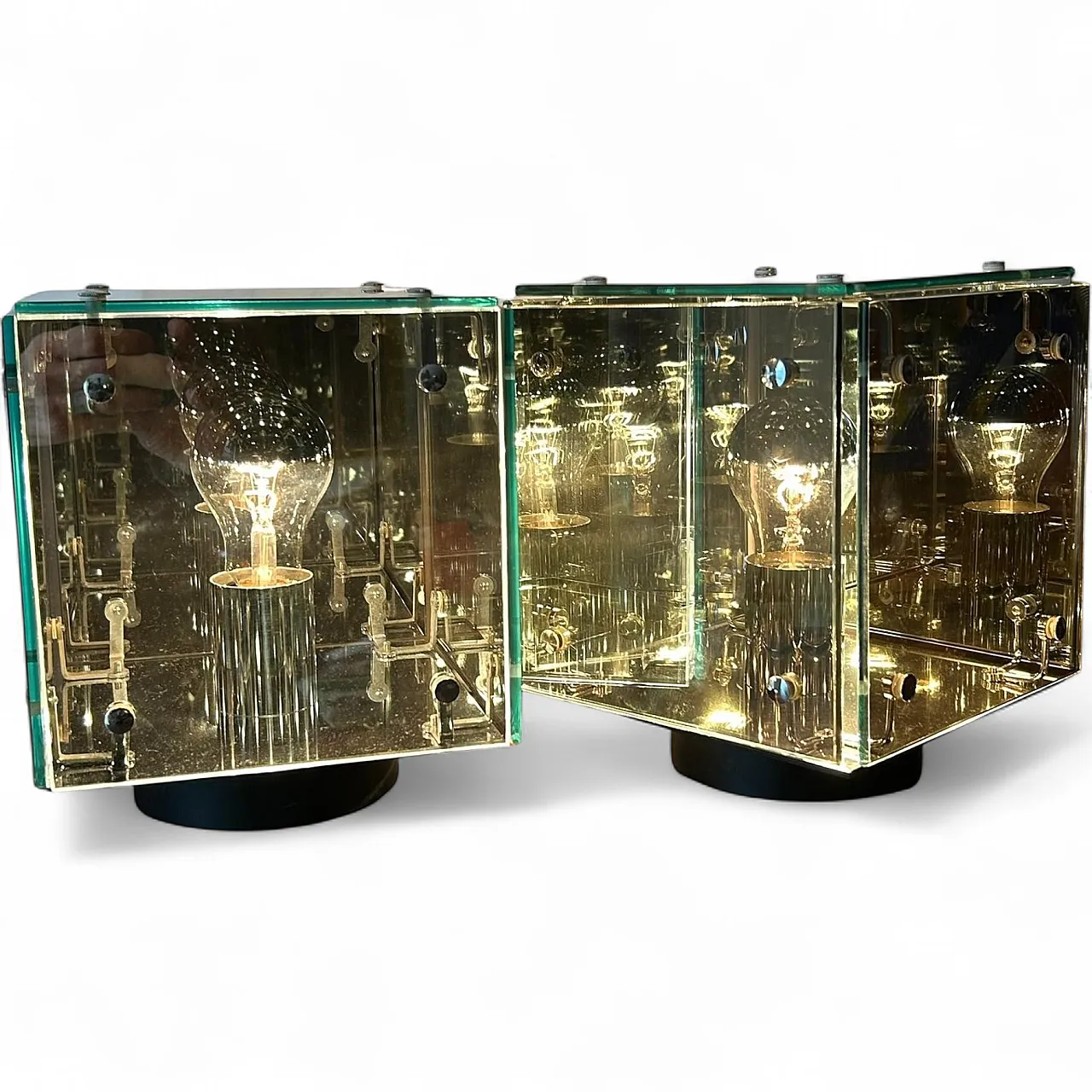
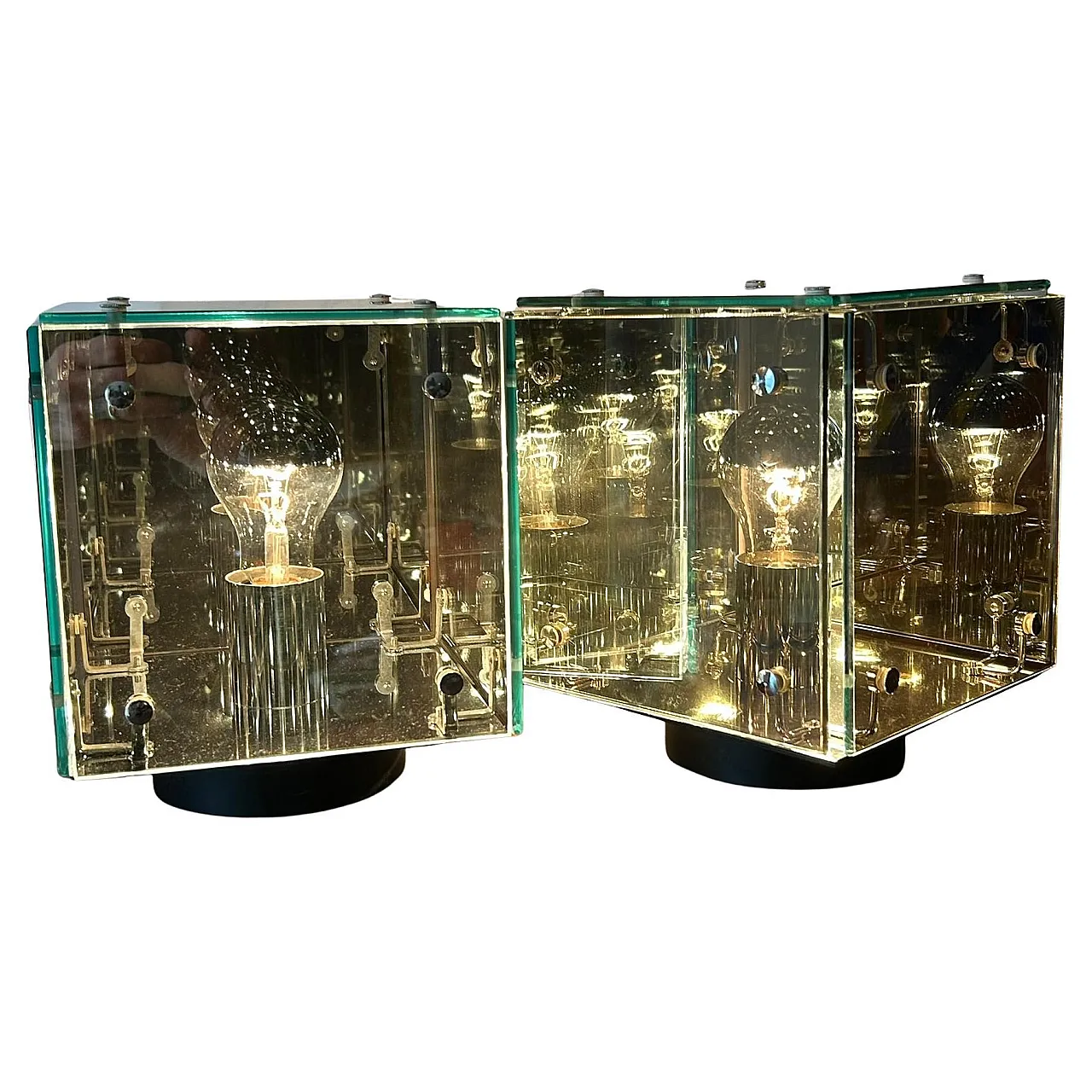
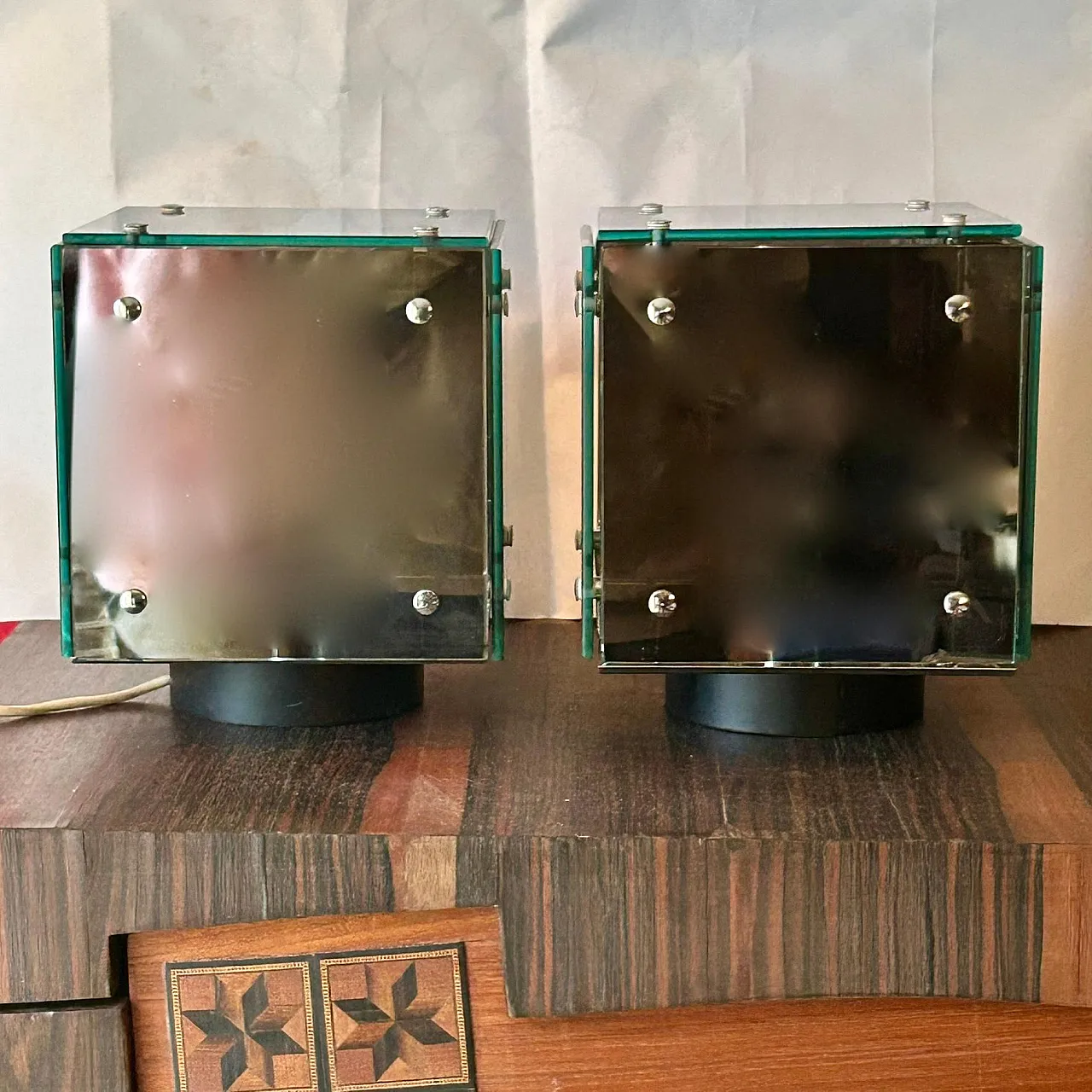
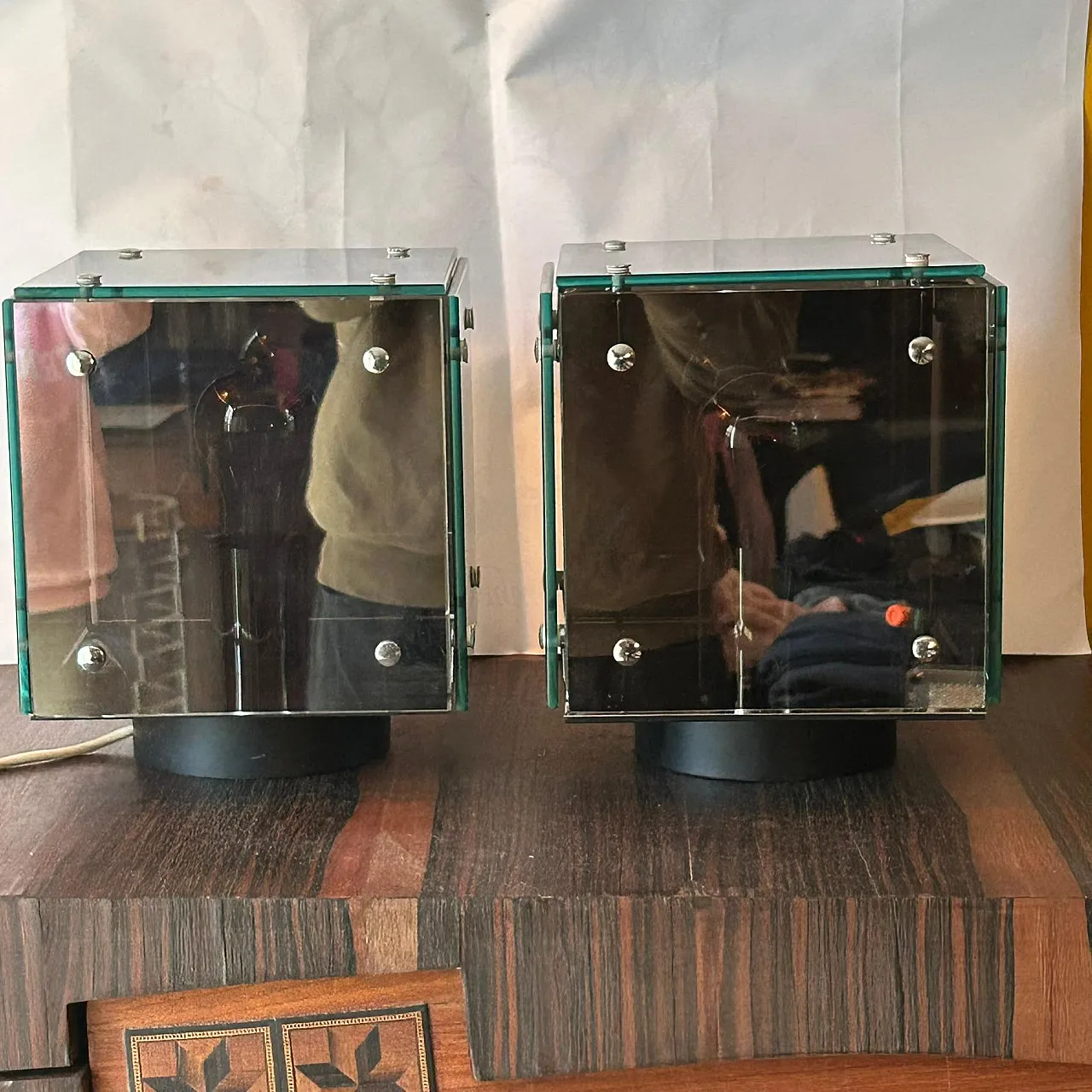
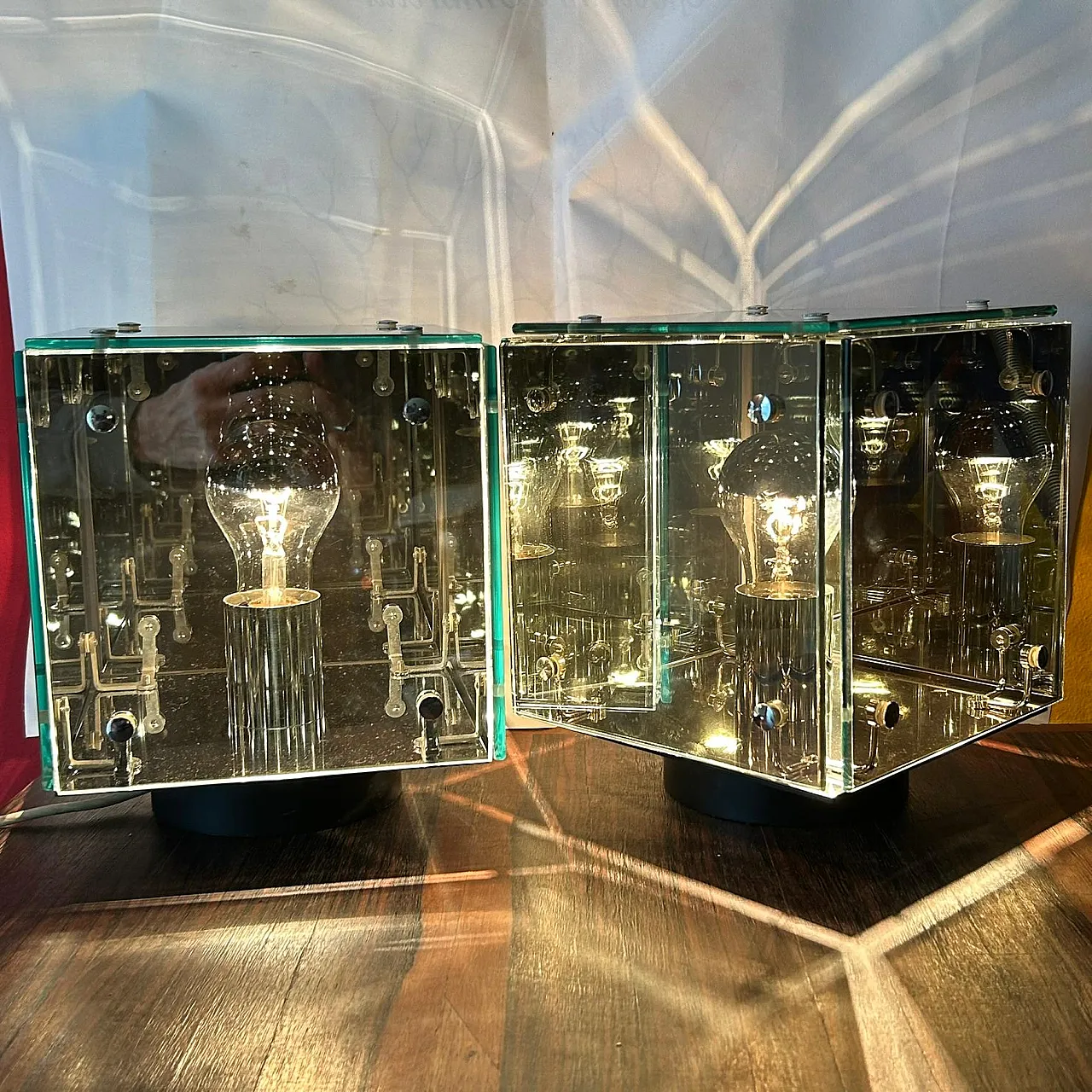
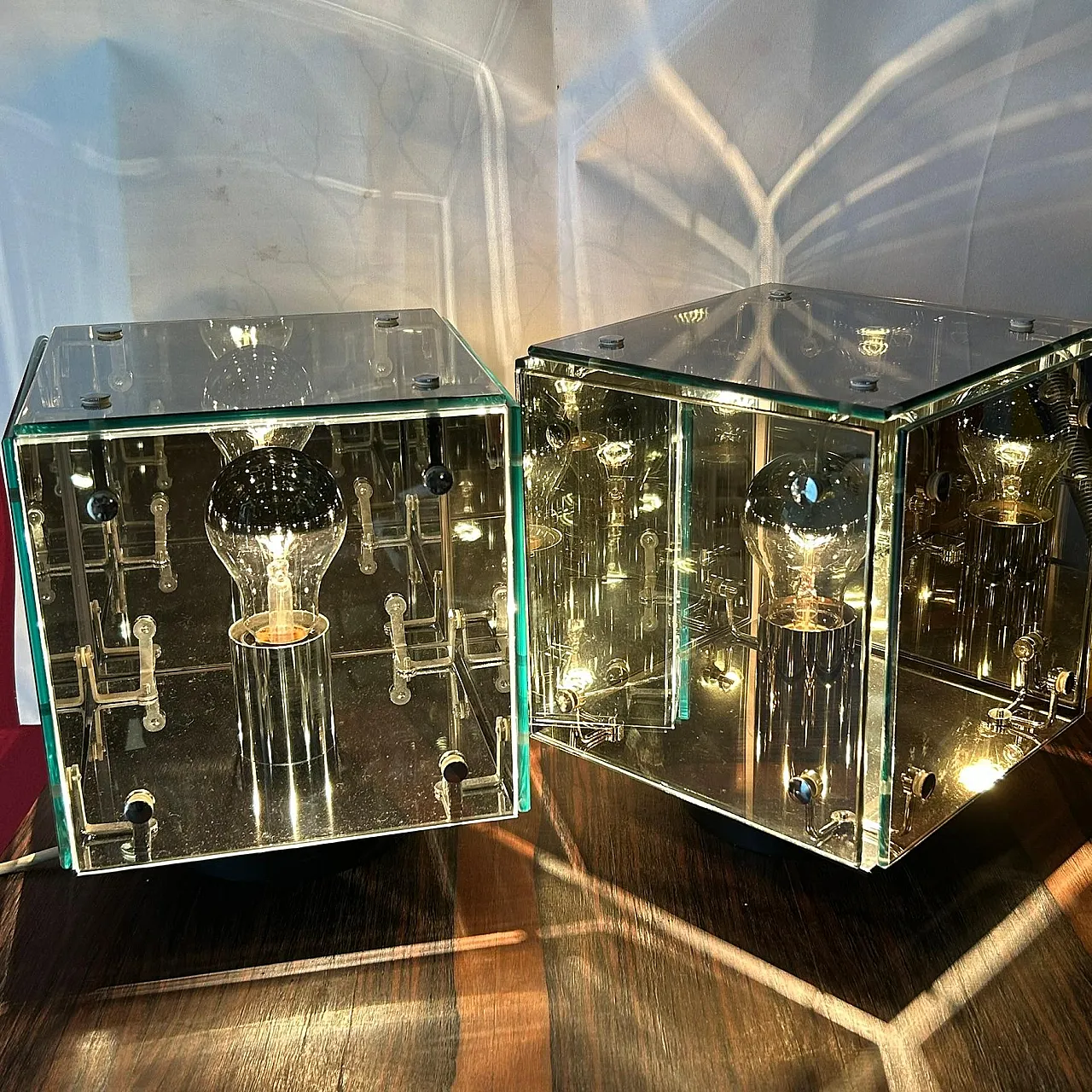
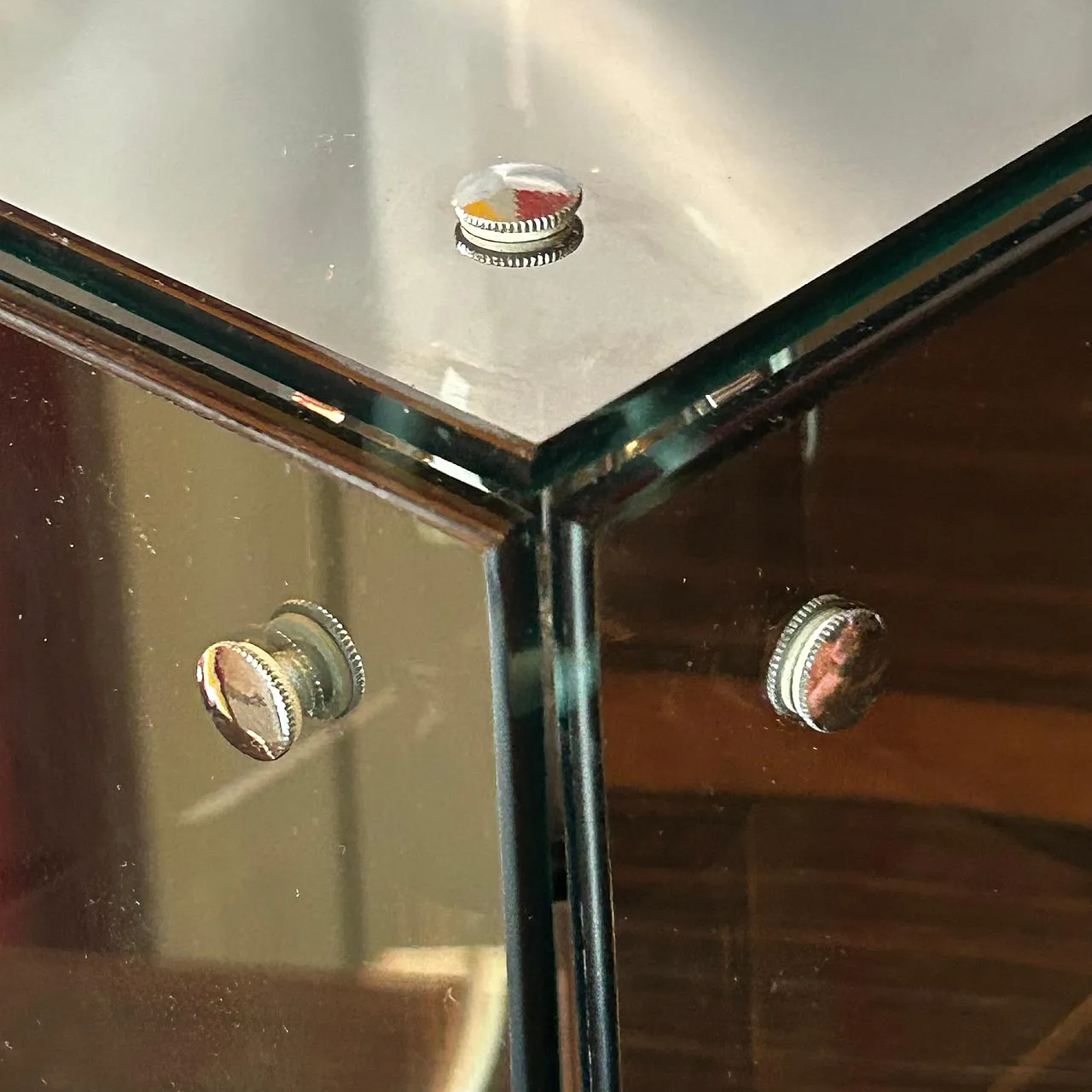
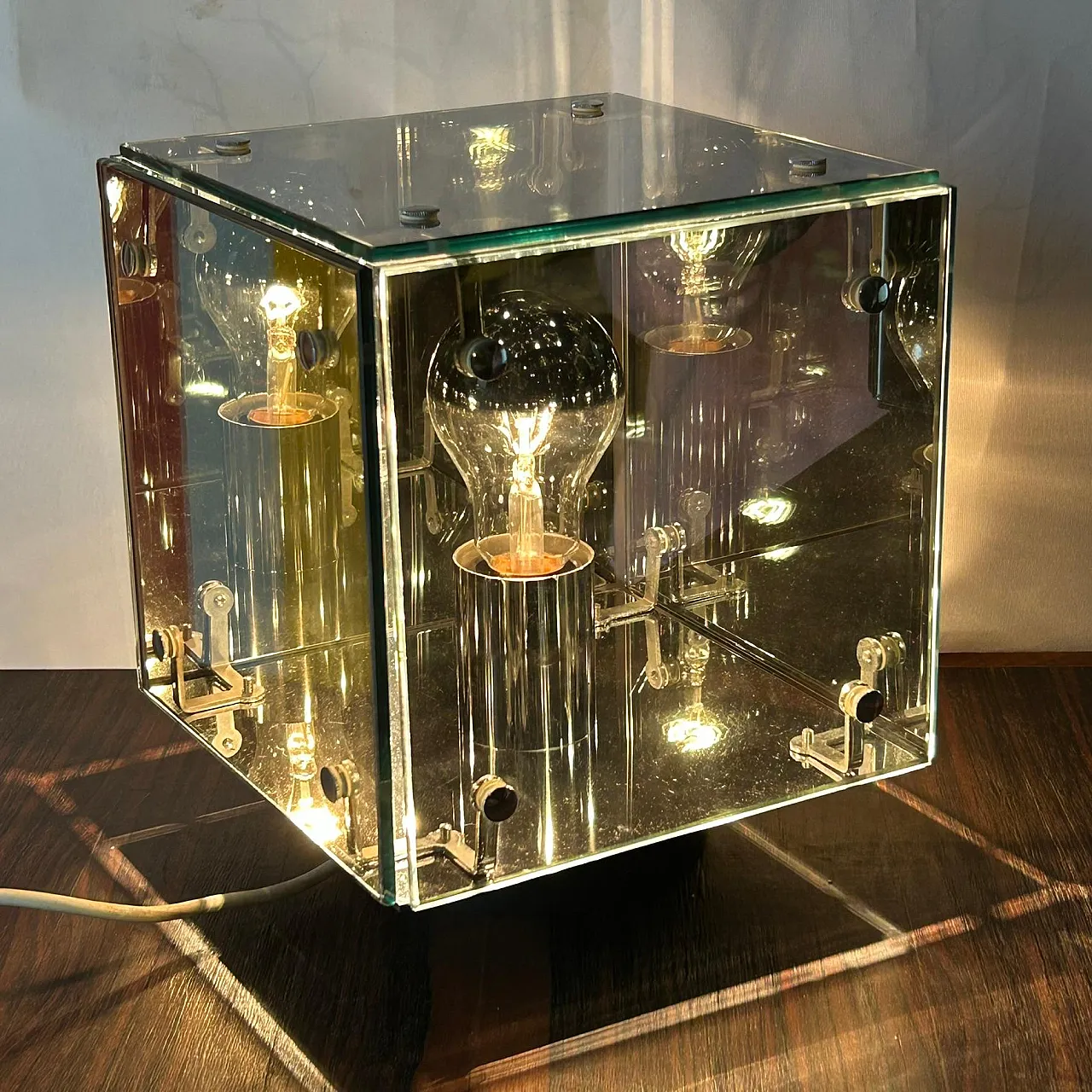
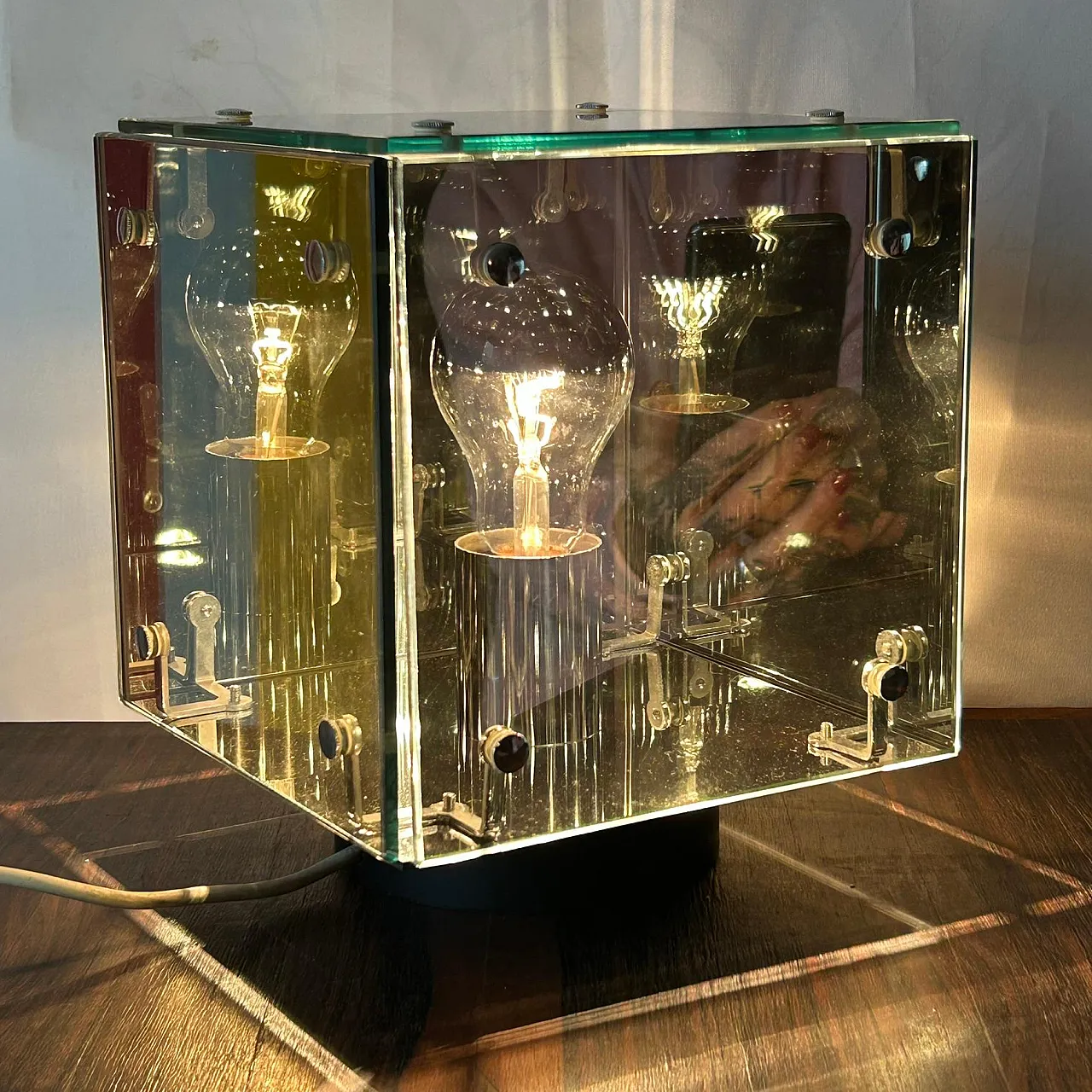
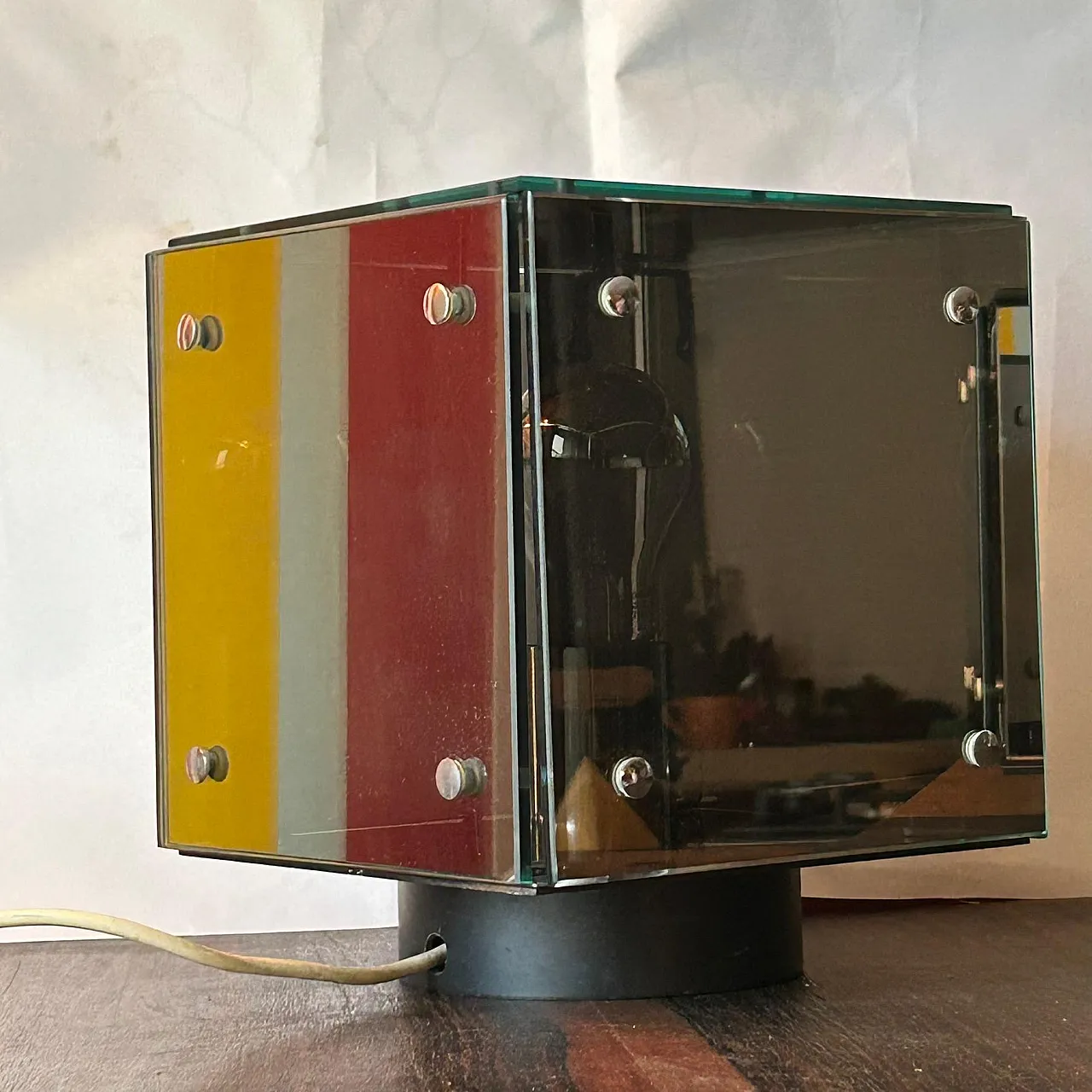
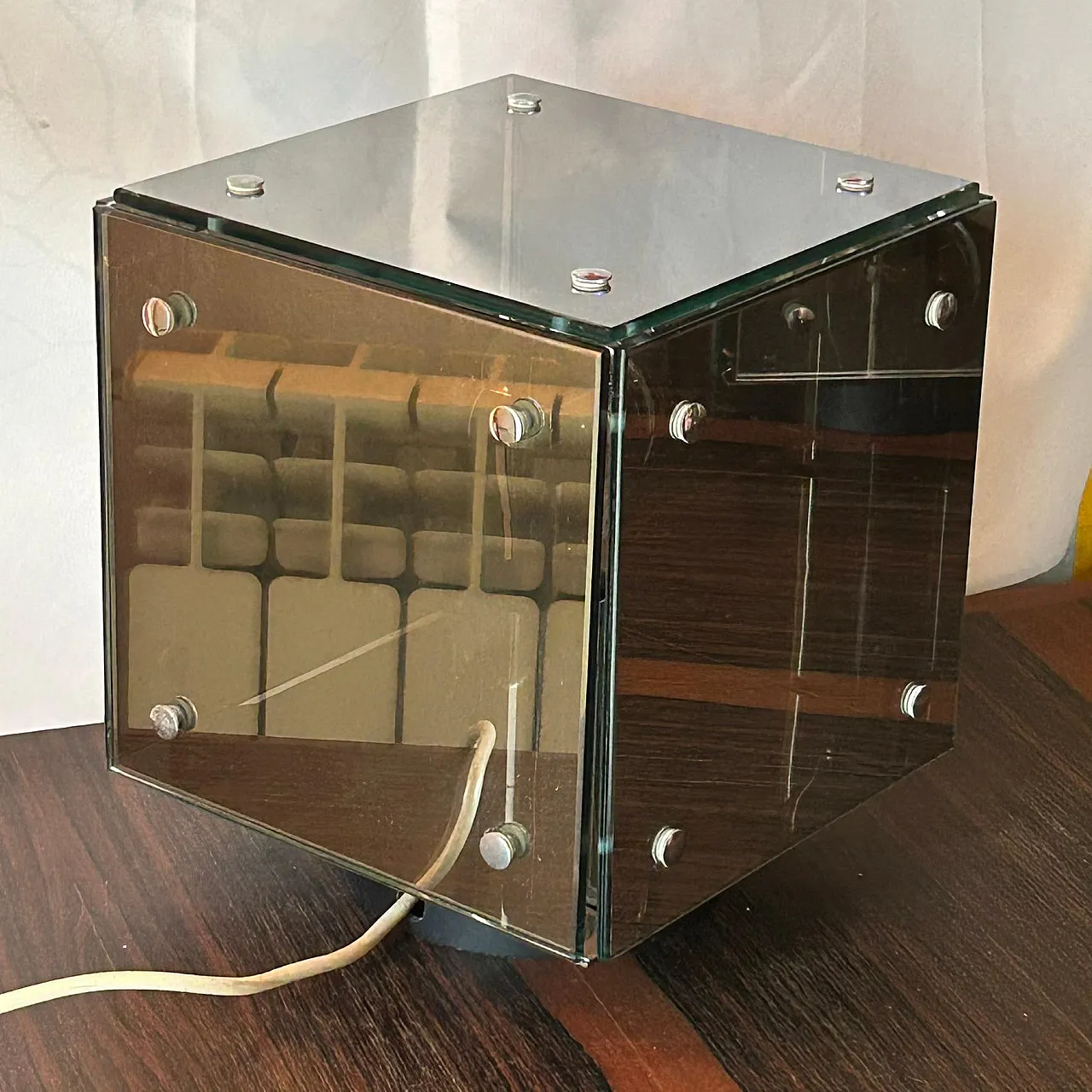
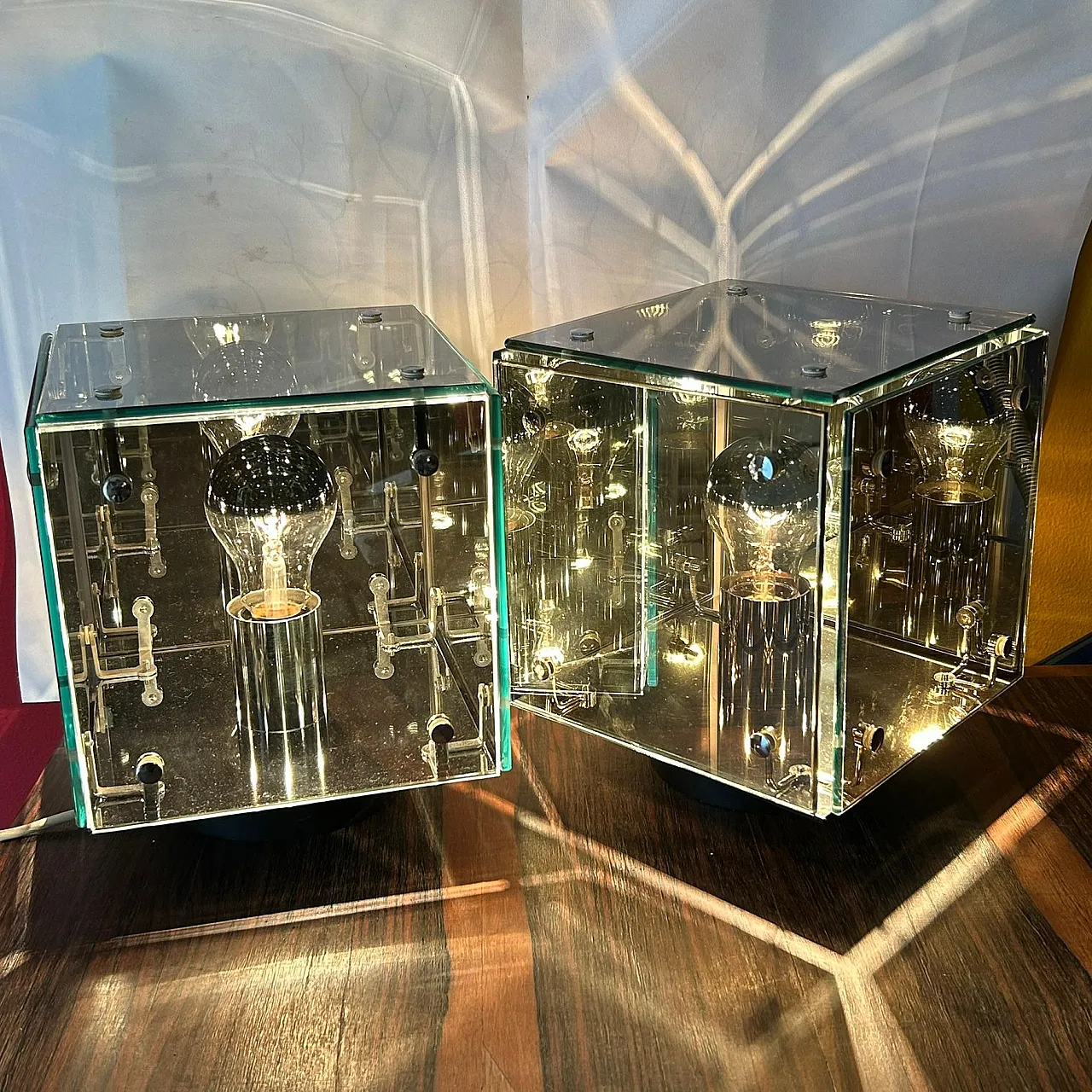
Prismars are iconic table lamps from the Italian avant-garde of the ’70s, designed with a minimalist yet striking aesthetic. The cubic mirrored glass structure acts as a reflective surface and, once turned on, transforms the light into an immersive visual experience, with infinite reflections that enhance the surrounding space. The design integrates silver glass, chrome elements, and standard electrical technology to create an object that is as much a piece of furniture as it is a luminous sculpture. The original production dates back to the 1970s for Nucleo Sormani, a significant signature of modern Italian design. Today it represents a sought-after piece by collectors and enthusiasts of high-profile vintage design. The Prismar lamp was born within the climate of intense experimentation that characterized Italian design in the early 1970s, a period in which light, matter, and visual perception became central elements of the project. The mirrored glass cube is not intended as a simple casing, but as an optical device: light multiplies, reflects, and creates a depth effect that surpasses the traditional lighting function. Prismar thus ranks among the most interesting examples of system lamps, in which the object takes on an almost architectural dimension and actively dialogues with the surrounding space. Studio ARDITI was an Italian design collective active in the early 1970s, made up of Trassinelli, Gamberini, and Mazzoni. The group operated in a research-oriented cultural context, favoring essential forms and unconventional solutions, especially in the field of lighting. Their designs stand out for their conscious use of industrial materials and their attention to perceptual effects, anticipating some reflections that will become central to the conceptual design of the following years.



.png)



 SILVER Seller in Milano, Italy