


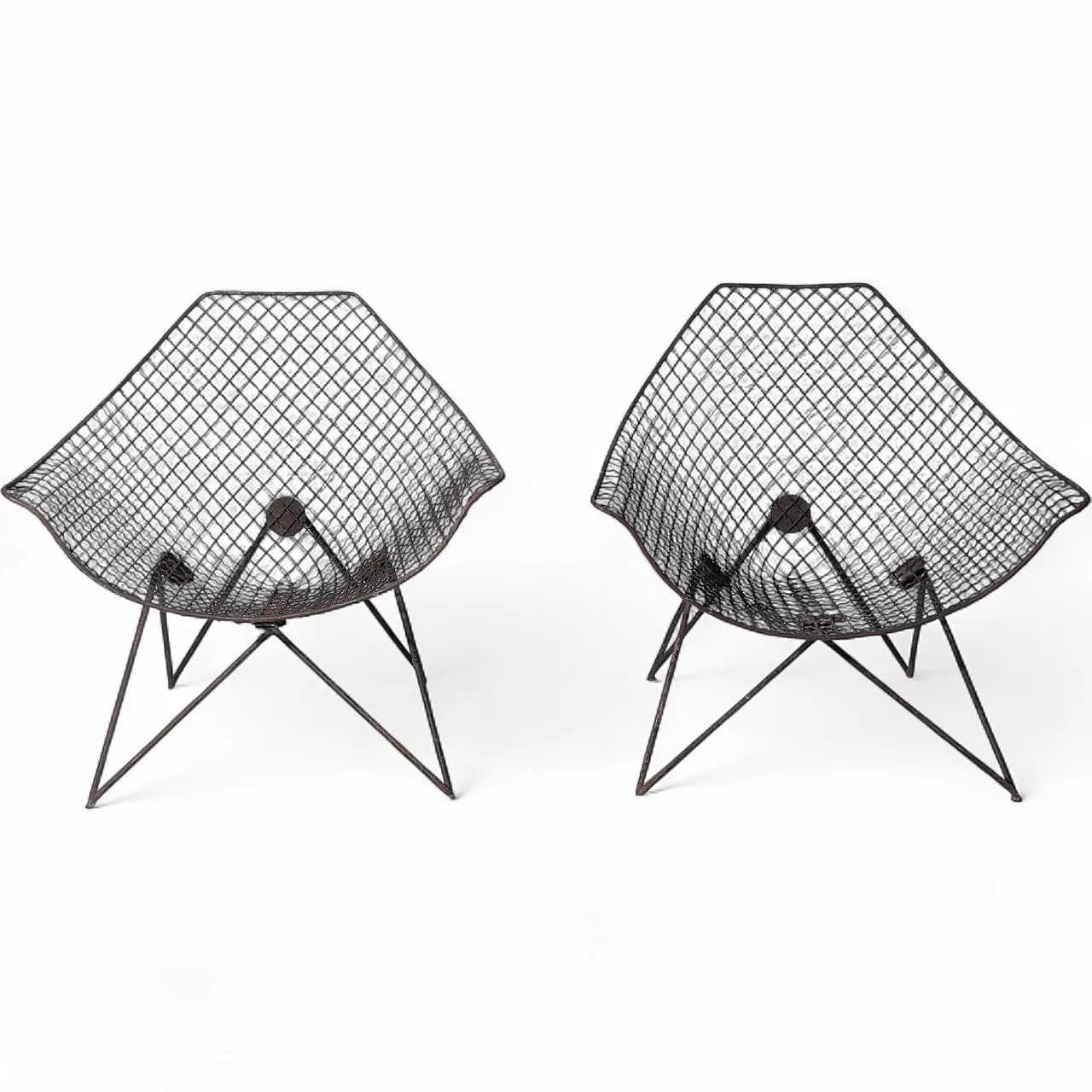
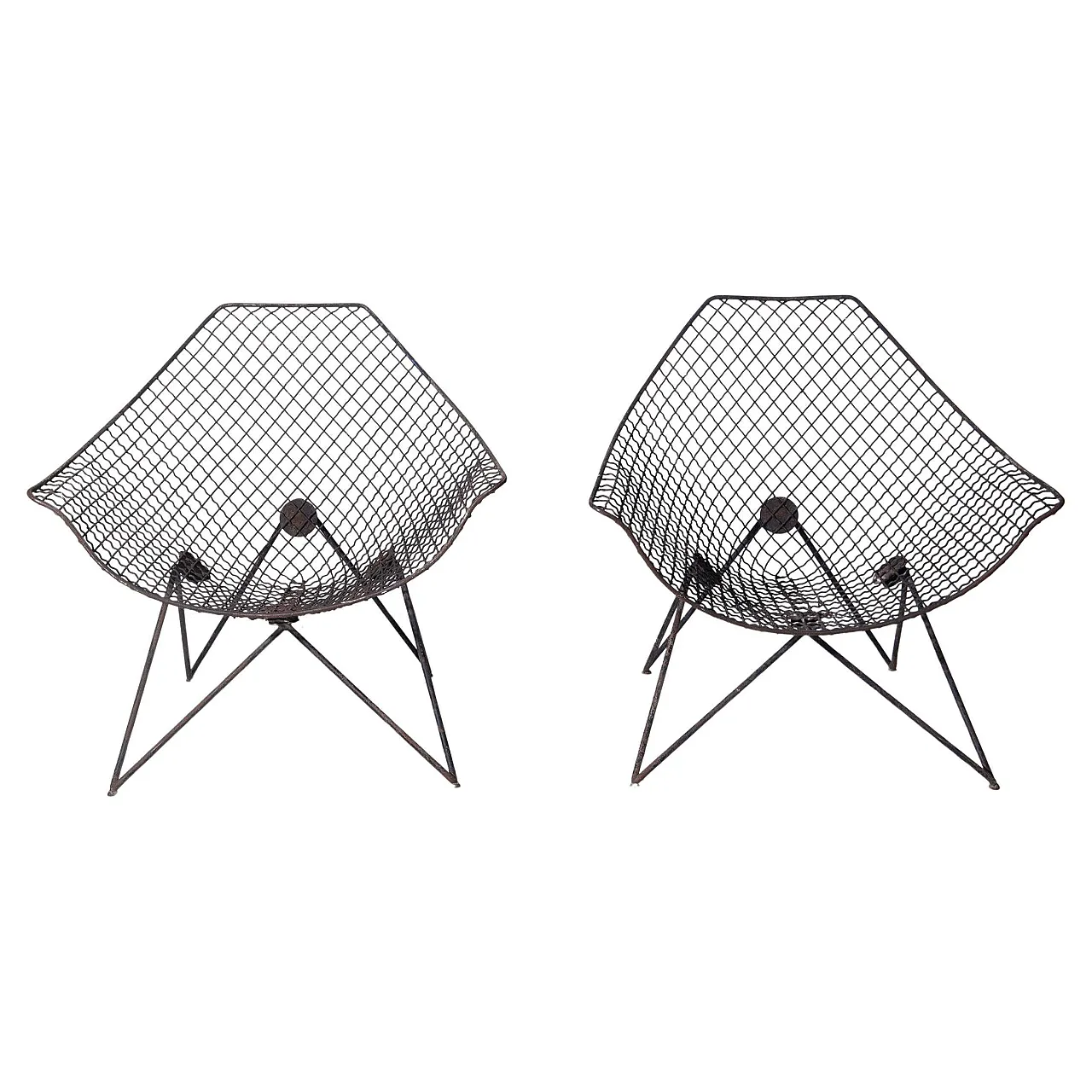
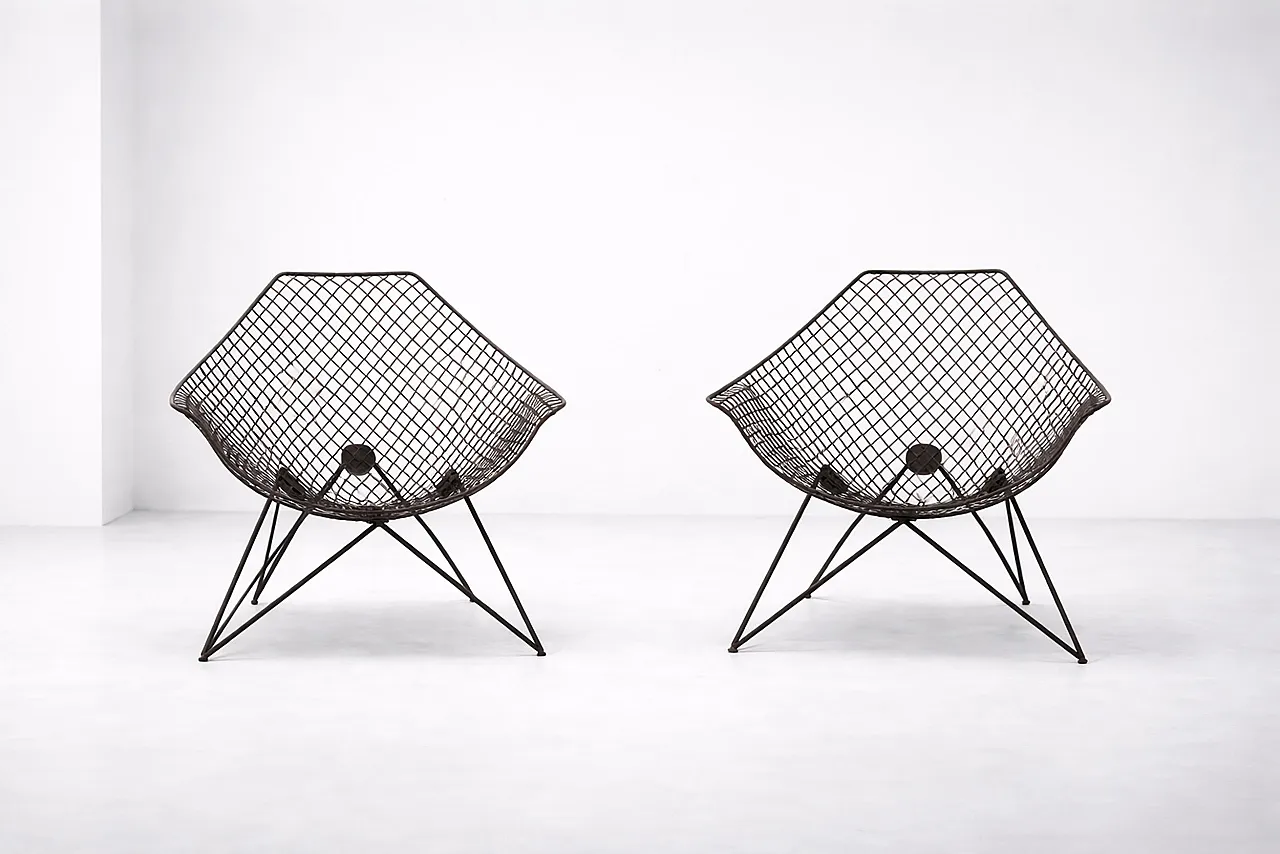
Pair of armchairs model Du 43 by Gastone Rinaldi for Rima, 1950s
.png)
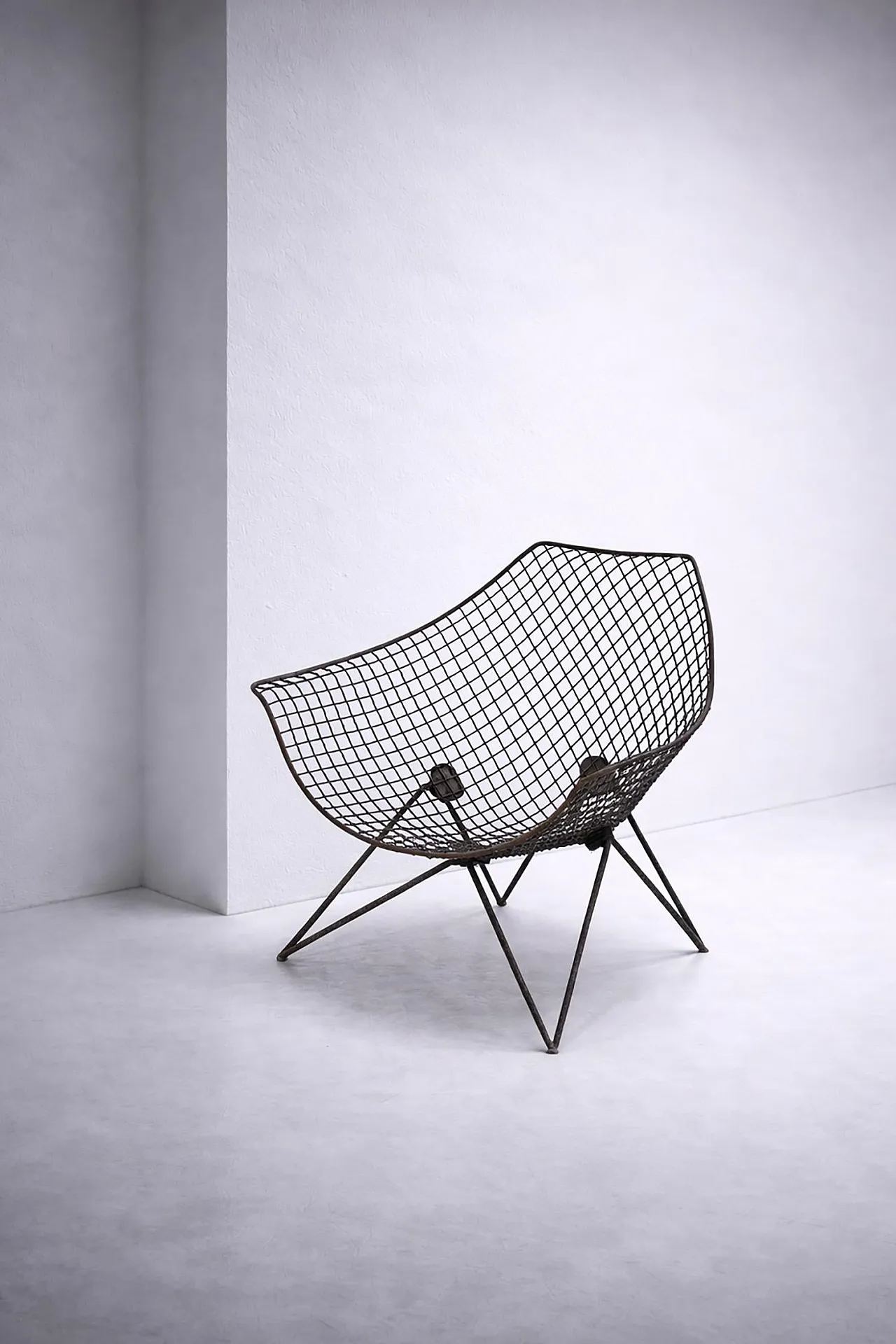
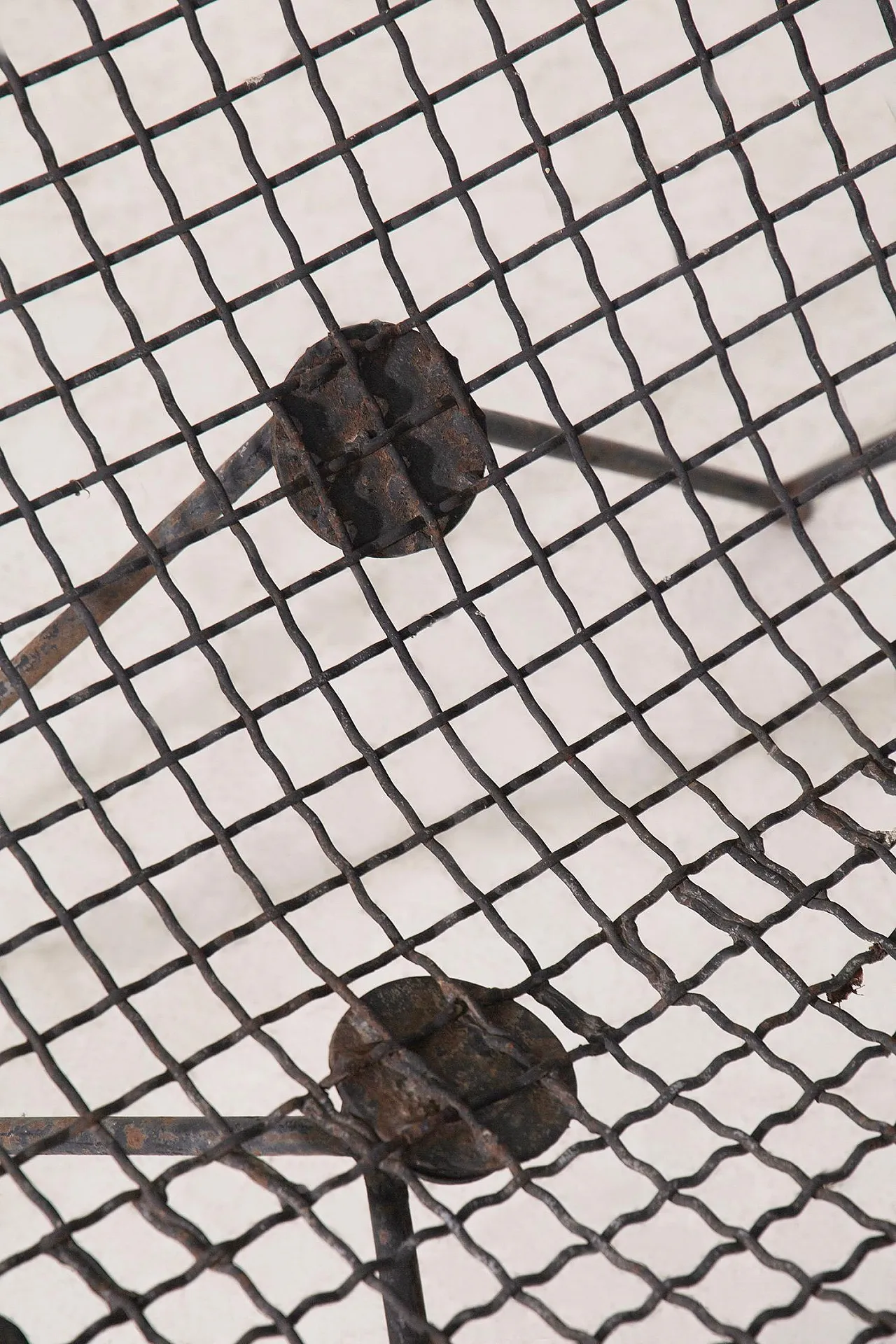
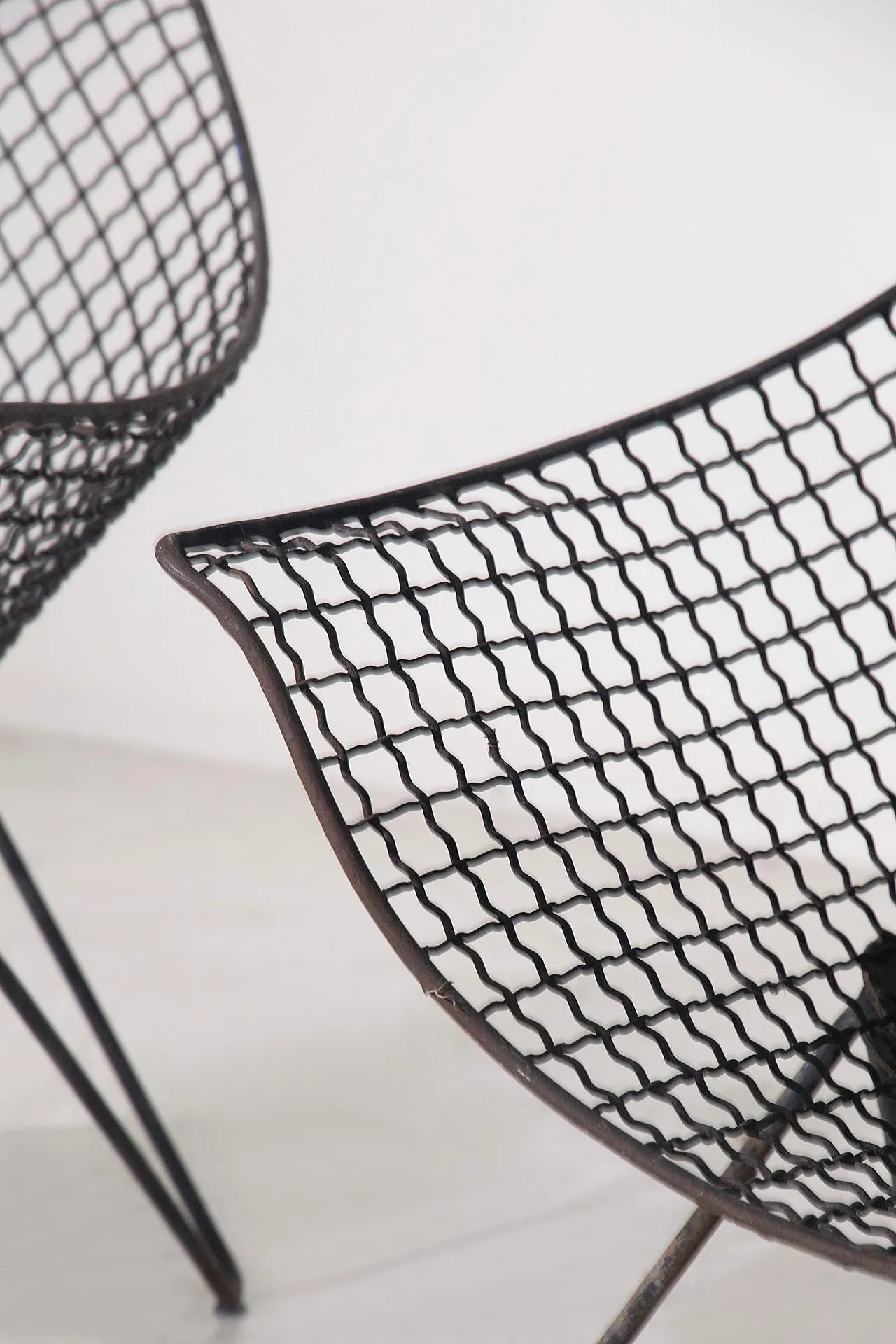
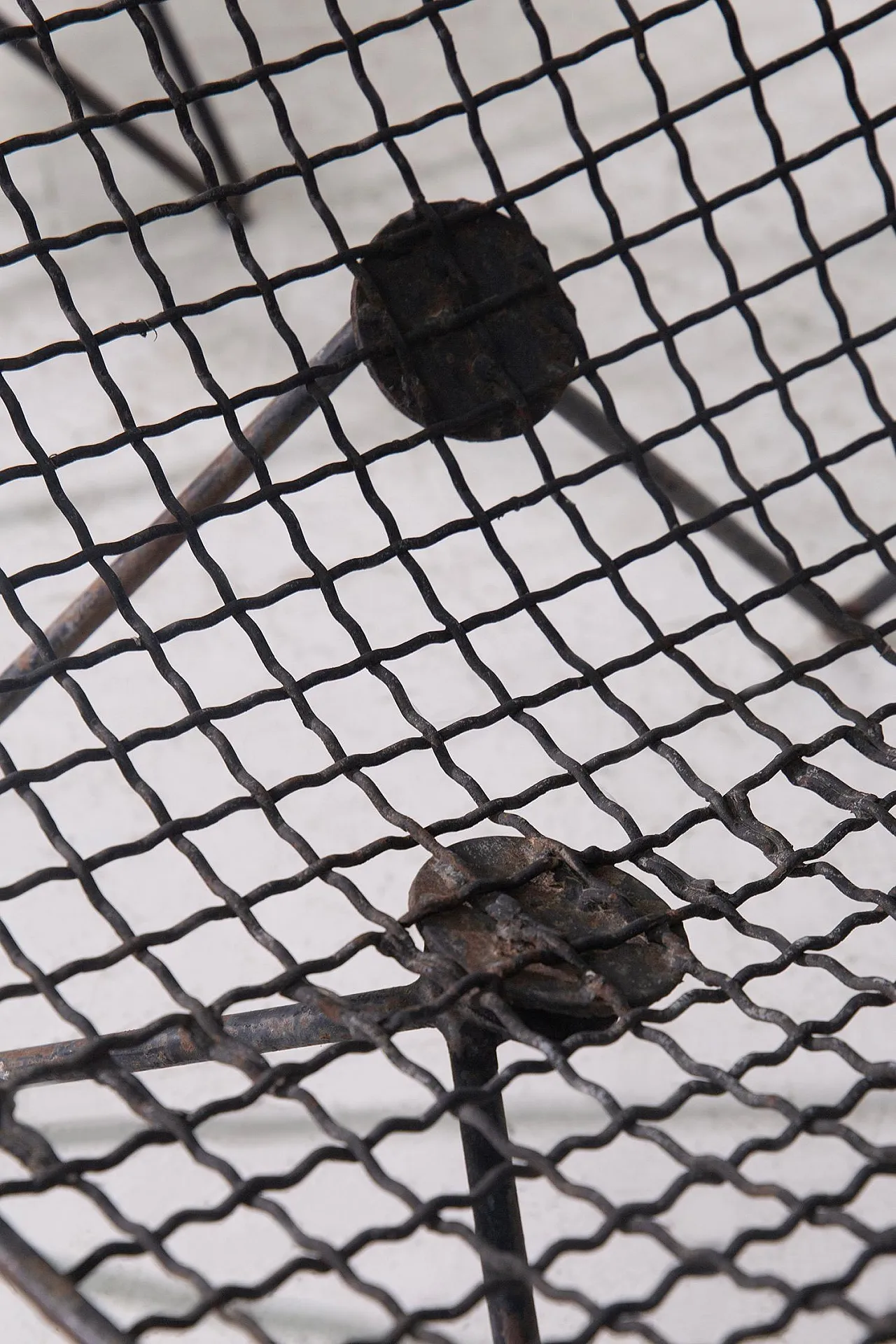
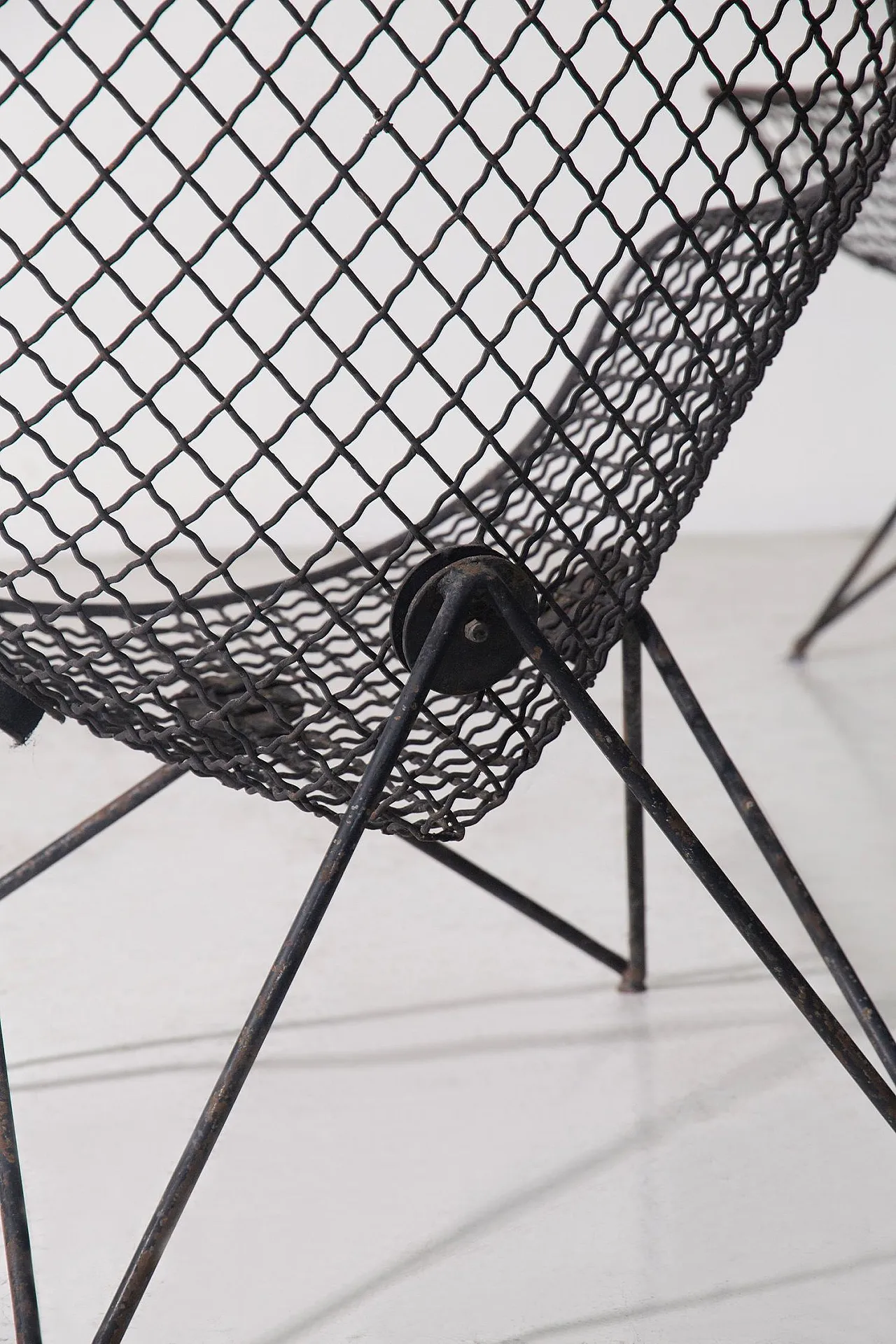
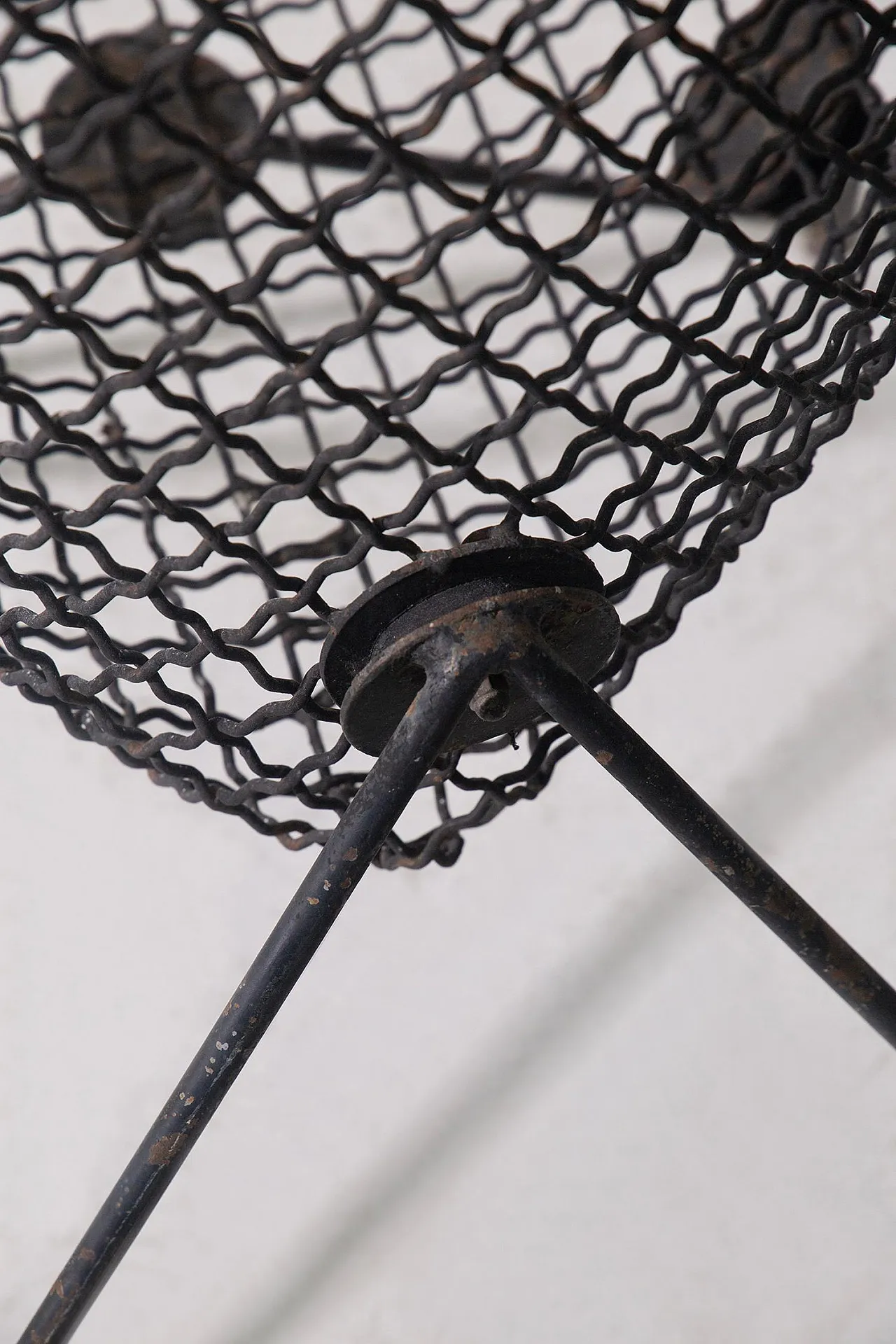
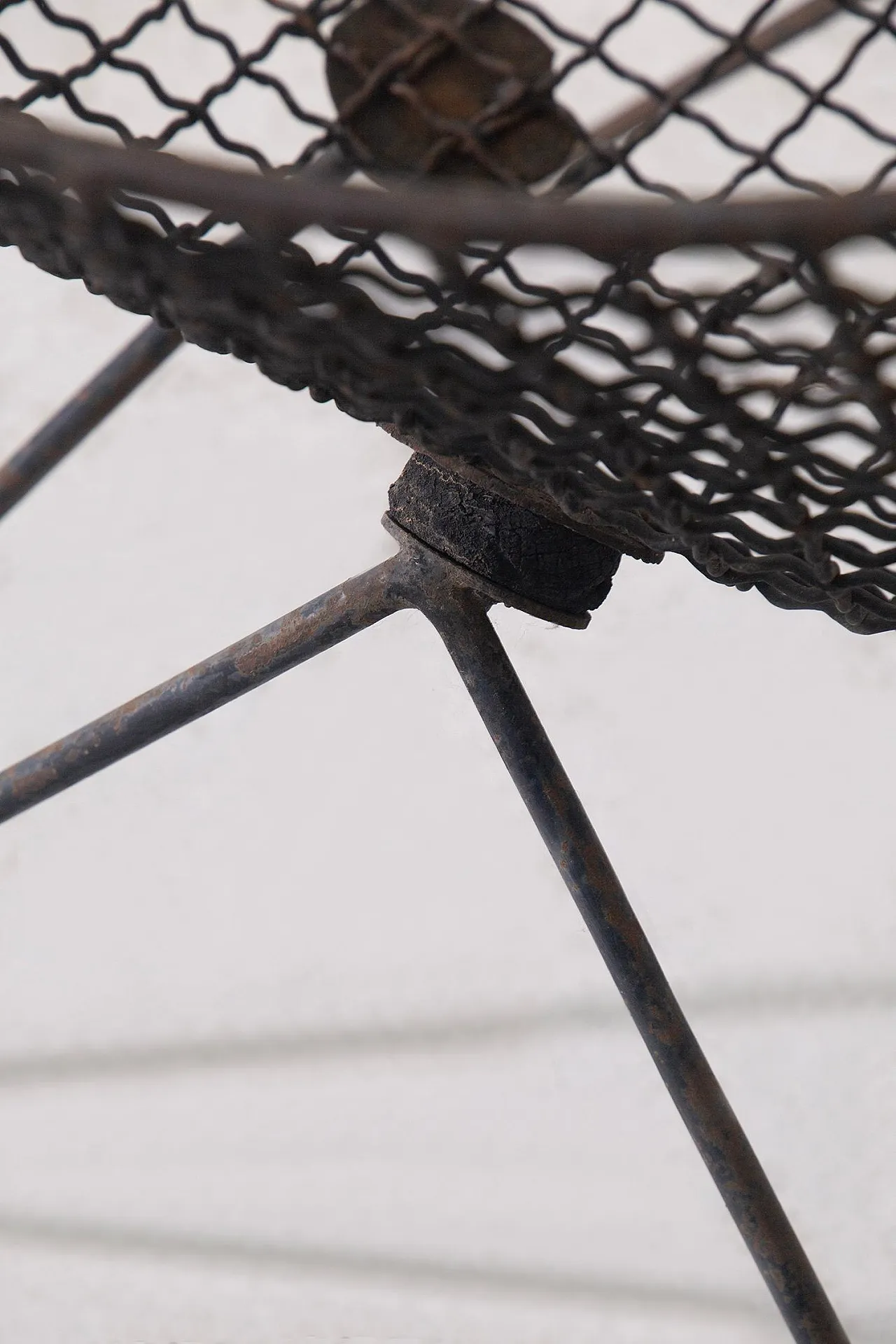
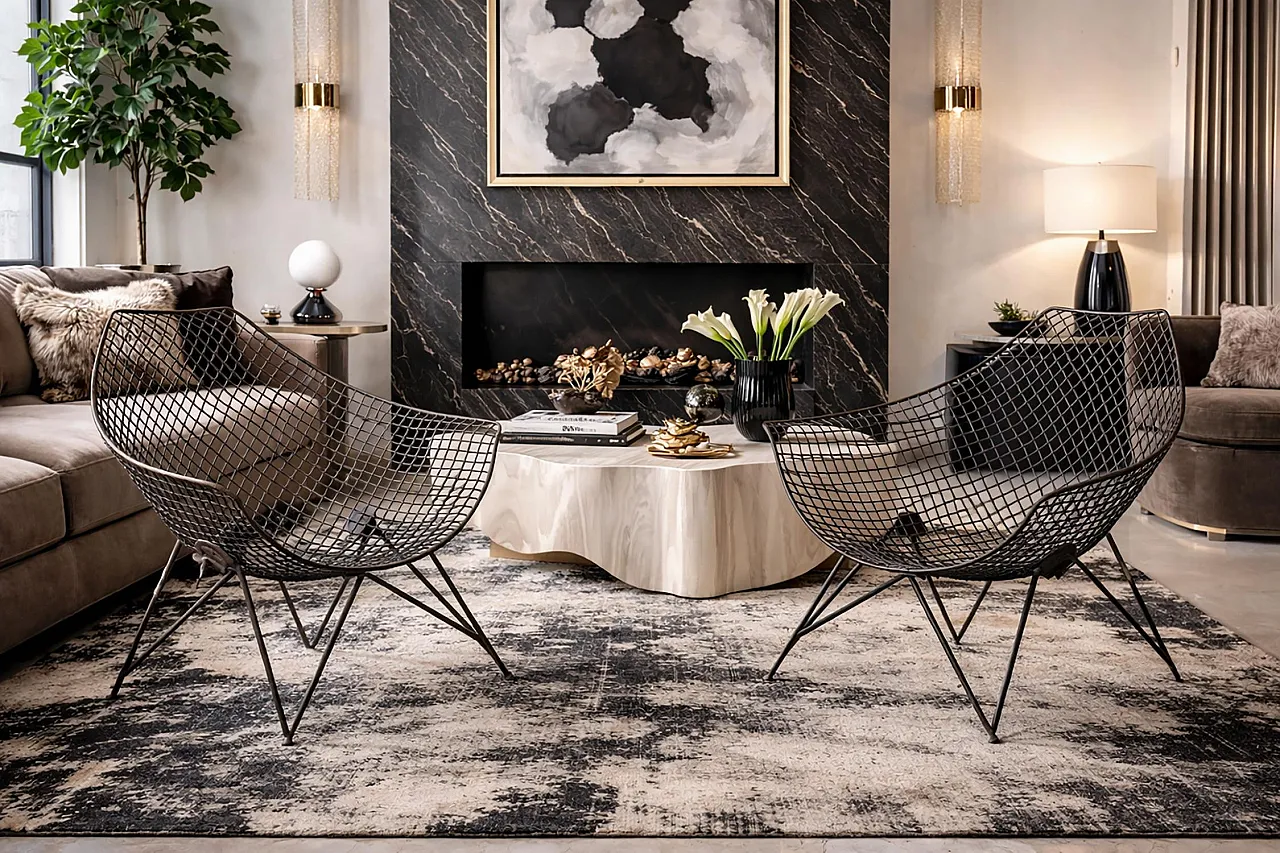
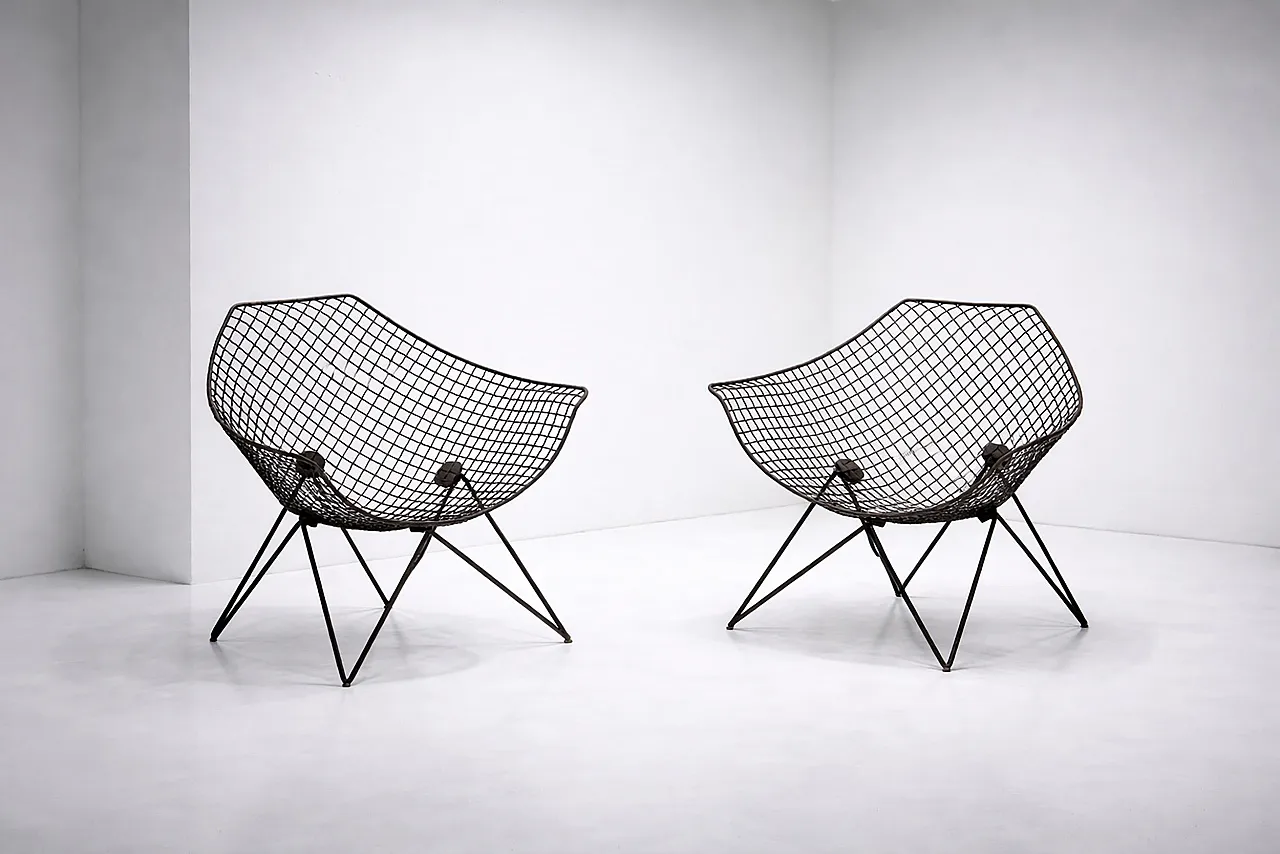
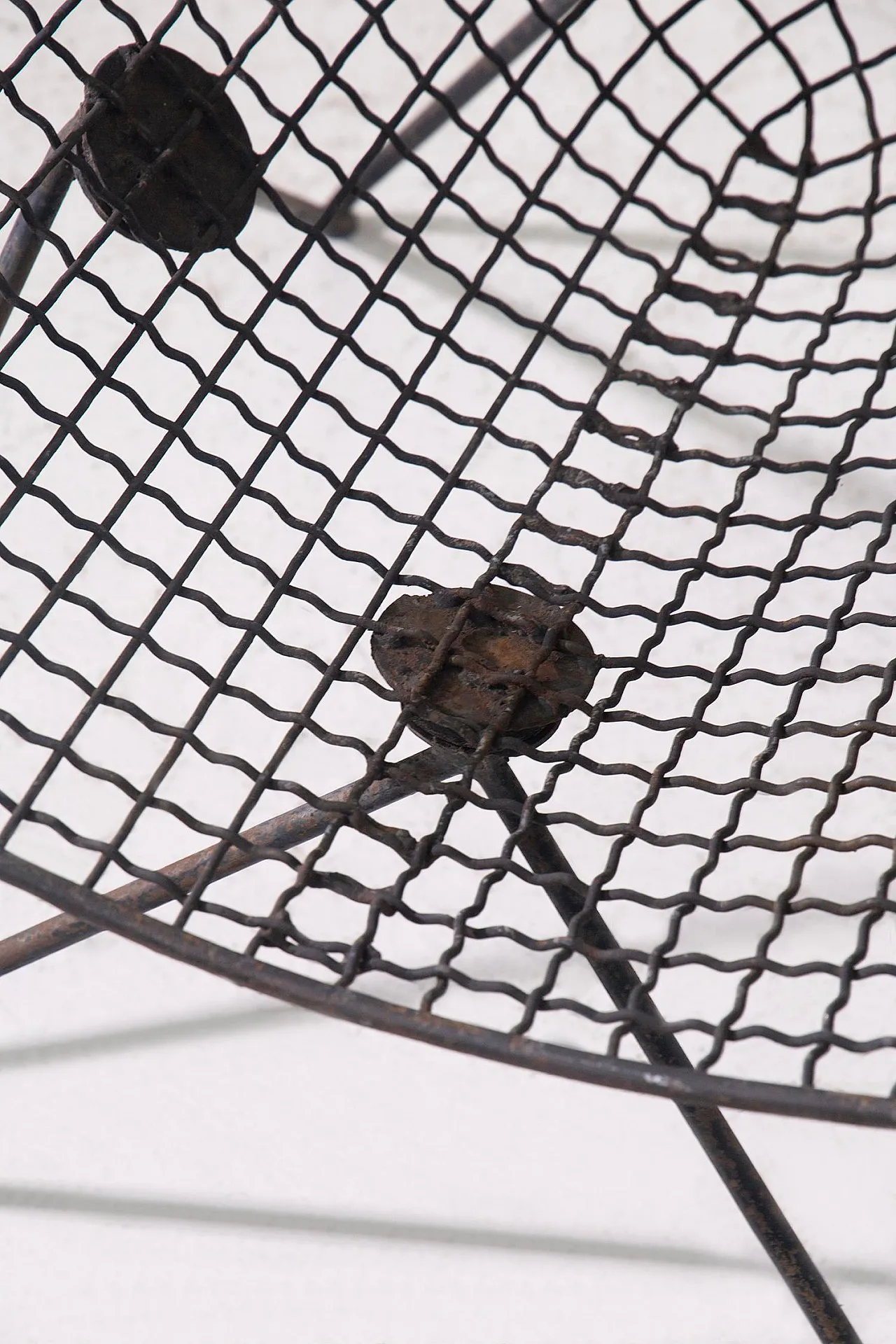
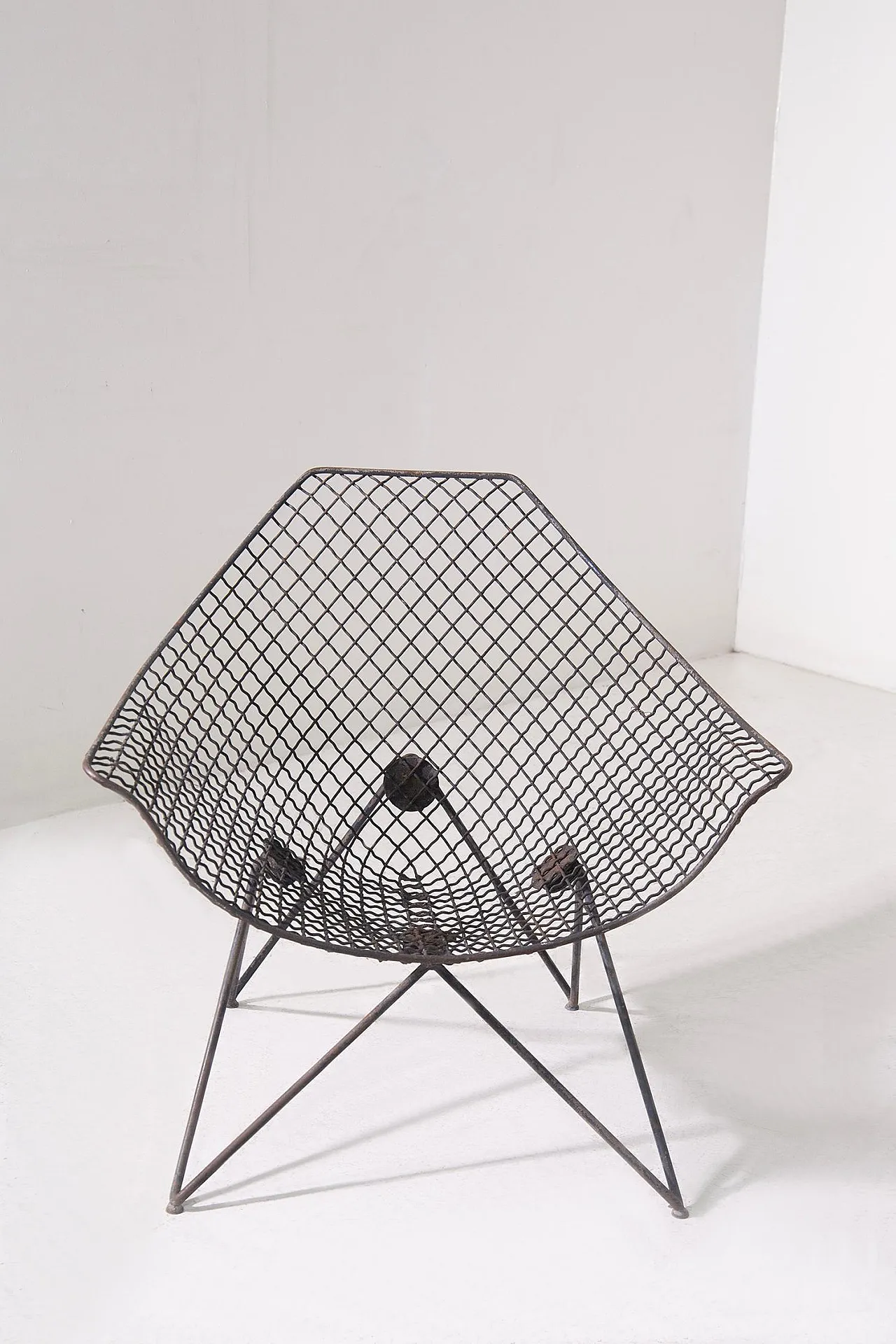
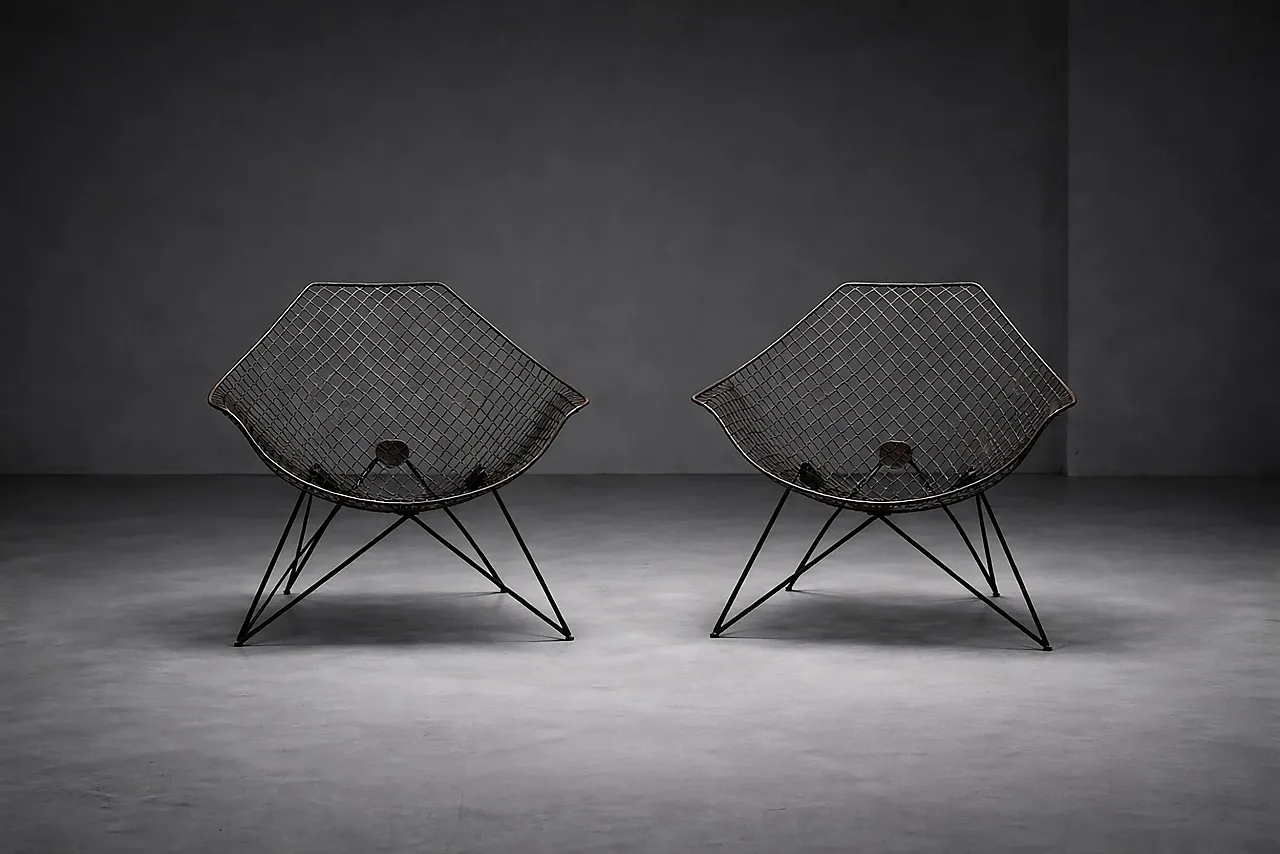
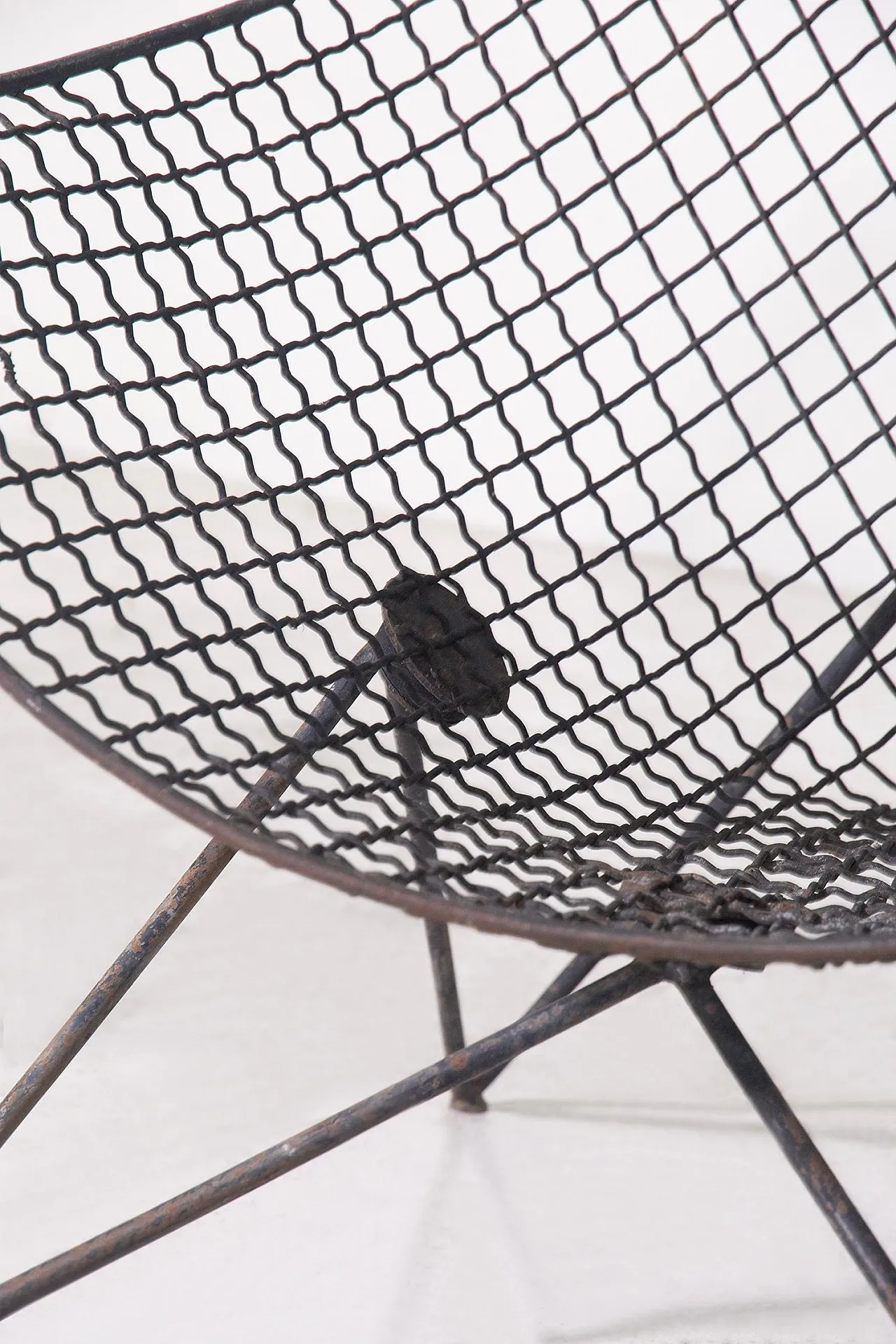
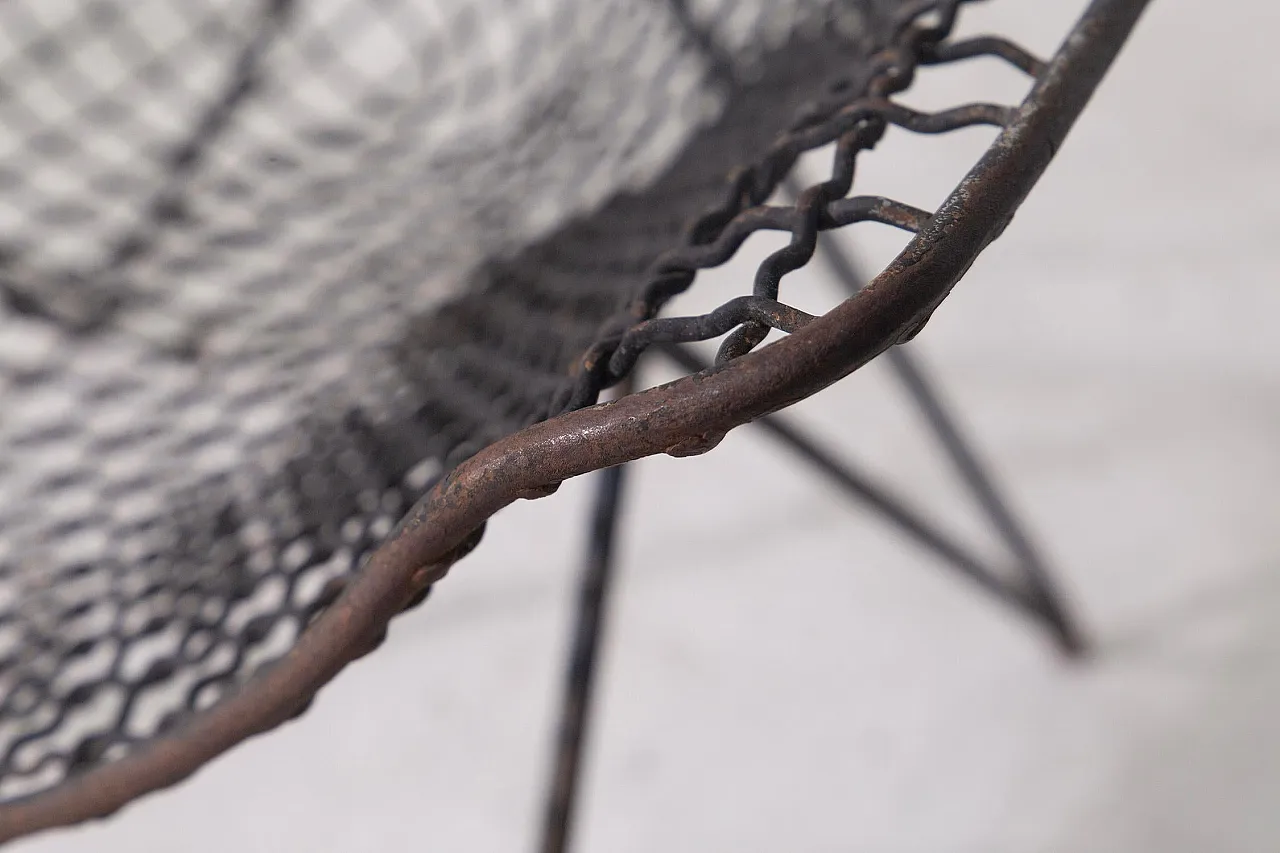
This rare pair of armchairs model DU43, designed by Gastone Rinaldi and produced by RIMA in the 1950s, stands as a powerful and experimental expression of post-war Italian design, where structural innovation and sculptural form converge. Entirely crafted in iron, the armchairs are defined by a woven metal mesh seat, an unconventional and radical choice for the period. The interlaced iron structure creates a flexible yet resilient surface, giving the chairs a light, almost floating appearance while maintaining remarkable structural strength. The visual transparency of the mesh emphasizes space, air, and light—key concerns of mid-century modern experimentation. The legs, also executed in tubular iron, are arranged in a distinctive triangular configuration, reinforcing the chairs’ architectural identity. These elements are anchored to the seat through circular iron joints, visible and intentionally exposed, underscoring Rinaldi’s commitment to structural honesty and industrial aesthetics. The joints function as both engineering solutions and formal accents, contributing to the chair’s unmistakable visual language. Notably, the original cushions are absent, allowing the pure structure to emerge in its most essential form. In this configuration, the armchairs fully reveal their experimental nature, highlighting the designer’s focus on material, construction, and form rather than comfort alone. The limited surviving production, combined with the fact that many examples were discarded in the mid-1980s—when furniture with such an unconventional appearance was often undervalued—has contributed to the model’s relative rarity and historical obscurity today. This context makes extant examples particularly significant for collectors and institutions. The DU43 chair received a Honorable Mention at the Compasso d’Oro in 1954, the most prestigious Italian design award of the time, acknowledging its innovative approach and formal originality. In the same year, Gastone Rinaldi was awarded the Compasso d’Oro prize for his model DU30, firmly establishing his role among the most forward-thinking Italian designers of the post-war era. These armchairs embody a moment of bold experimentation in Italian design history—industrial, sculptural, and intellectually rigorous—and stand today as rare testimonies to Rinaldi’s visionary approach and the pioneering spirit of 1950s Italian modernism.
ID: 36842-1769777481-141587
Time period

 SILVER Seller in Milano, Italia