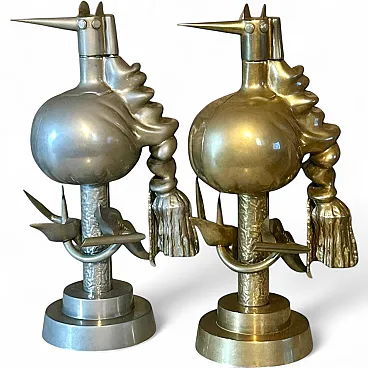
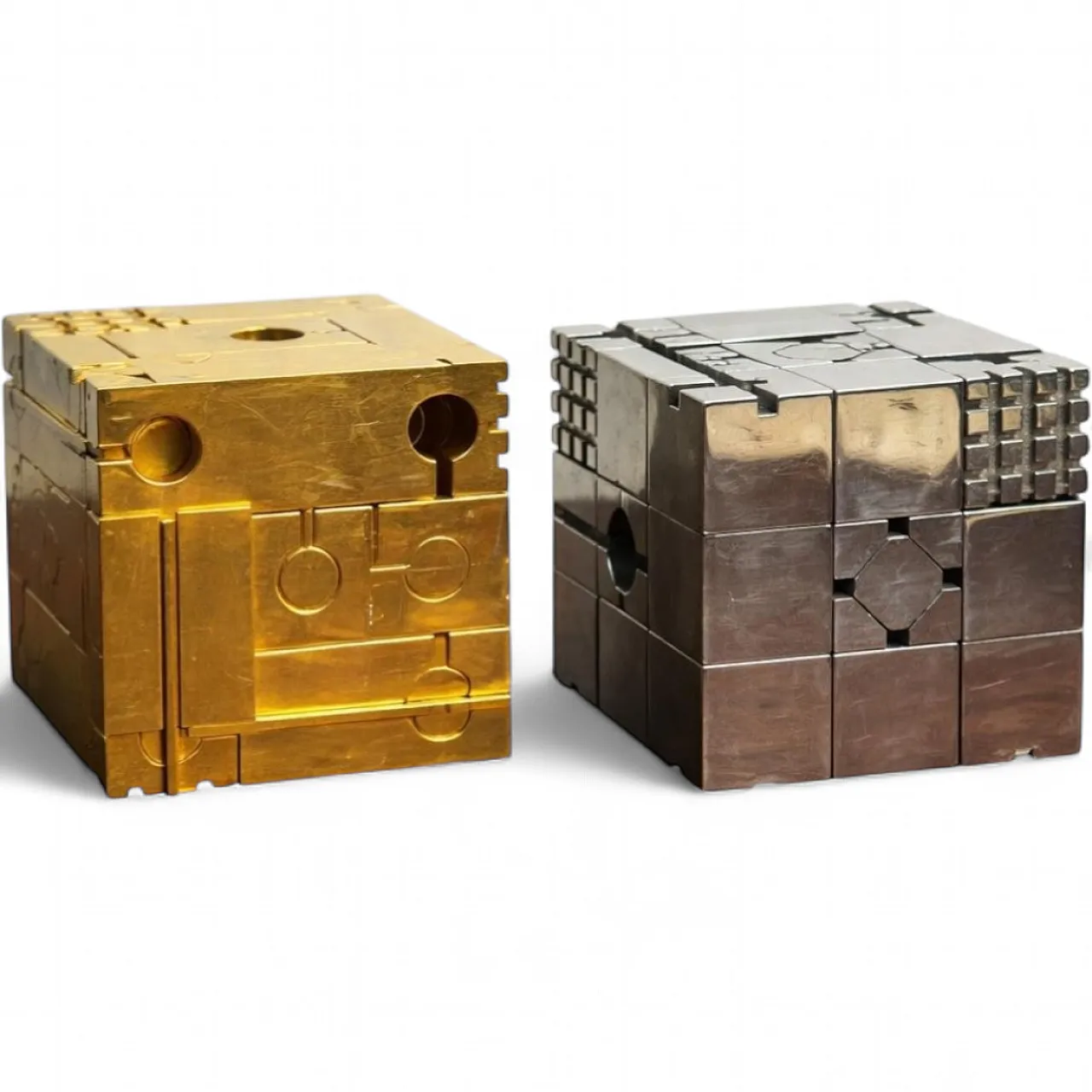
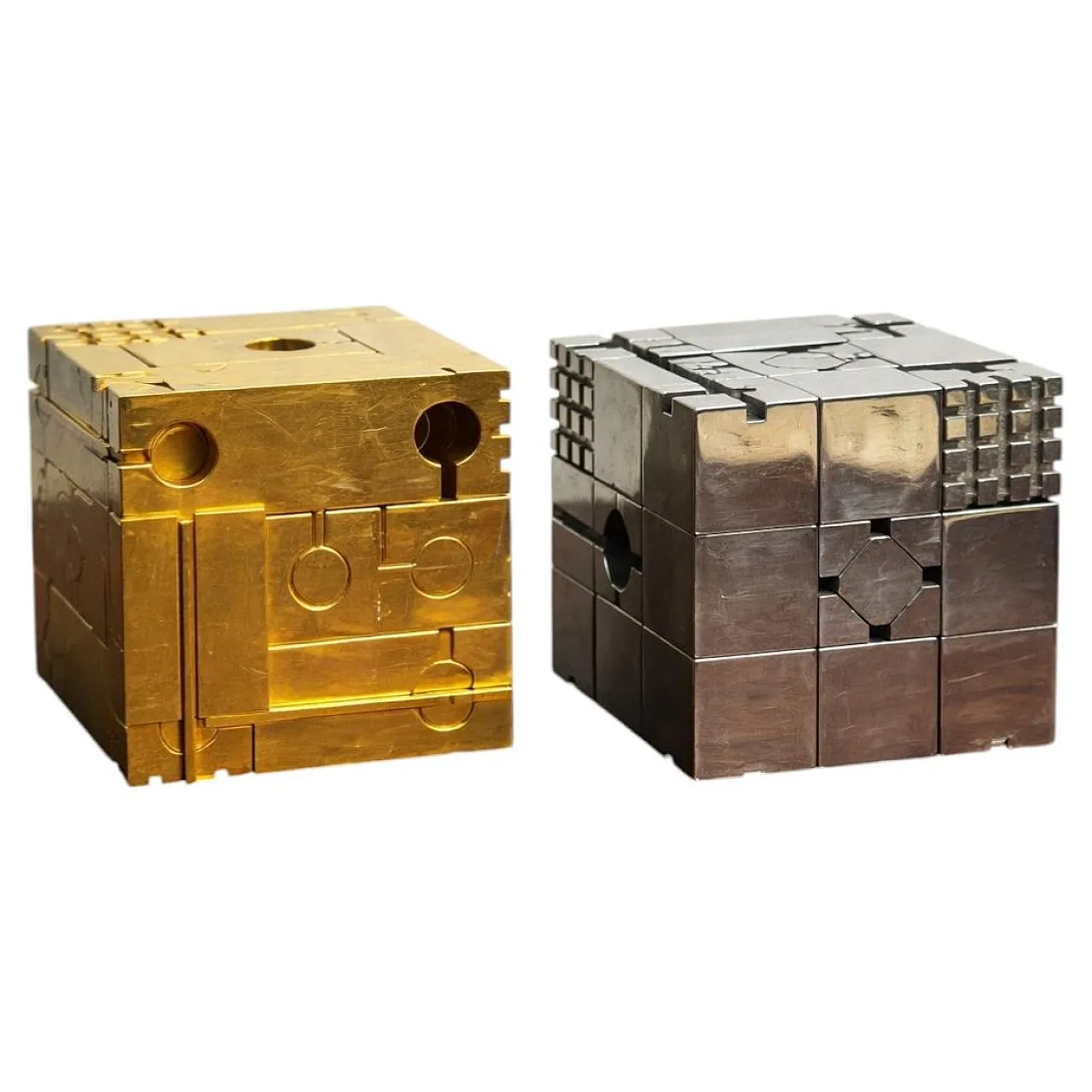
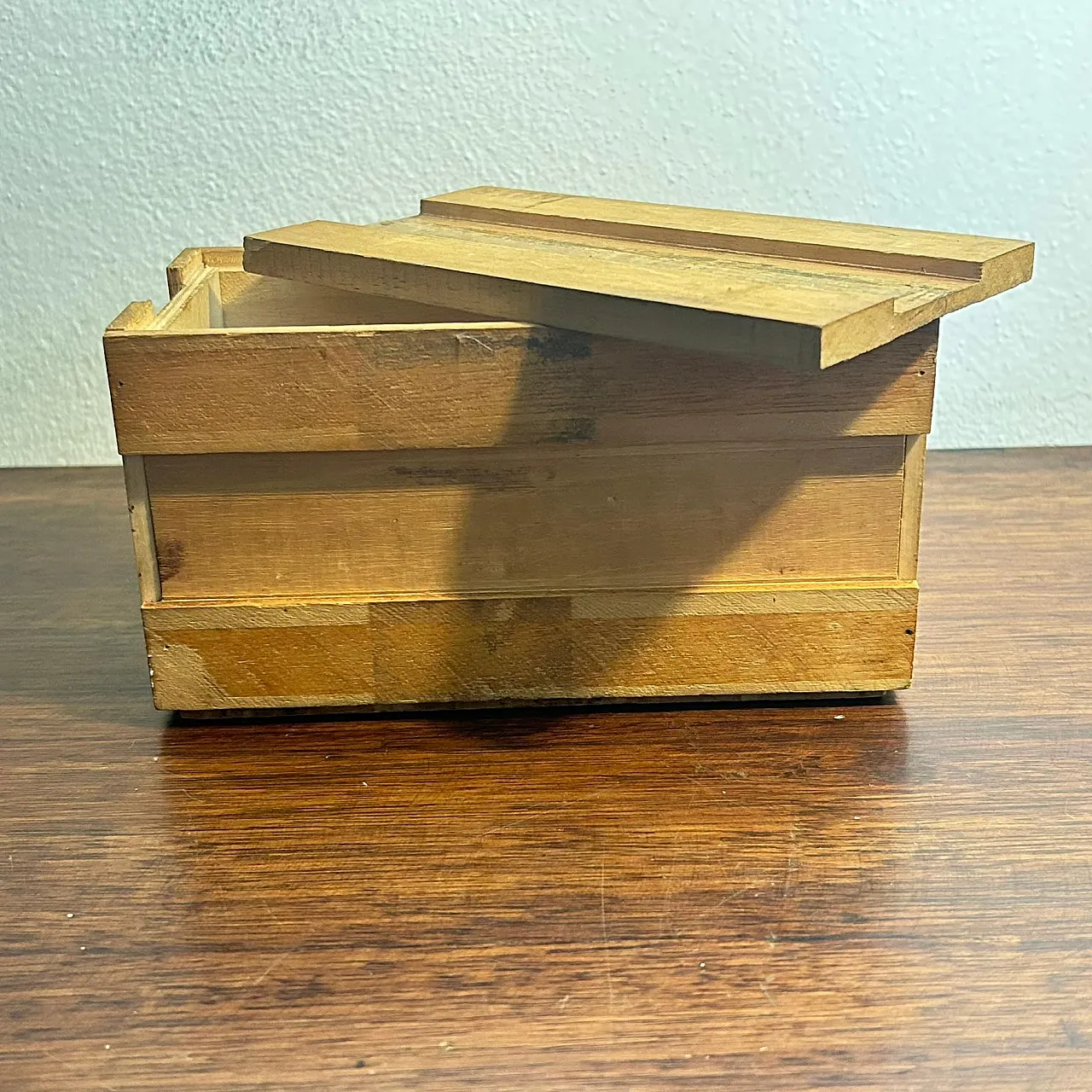
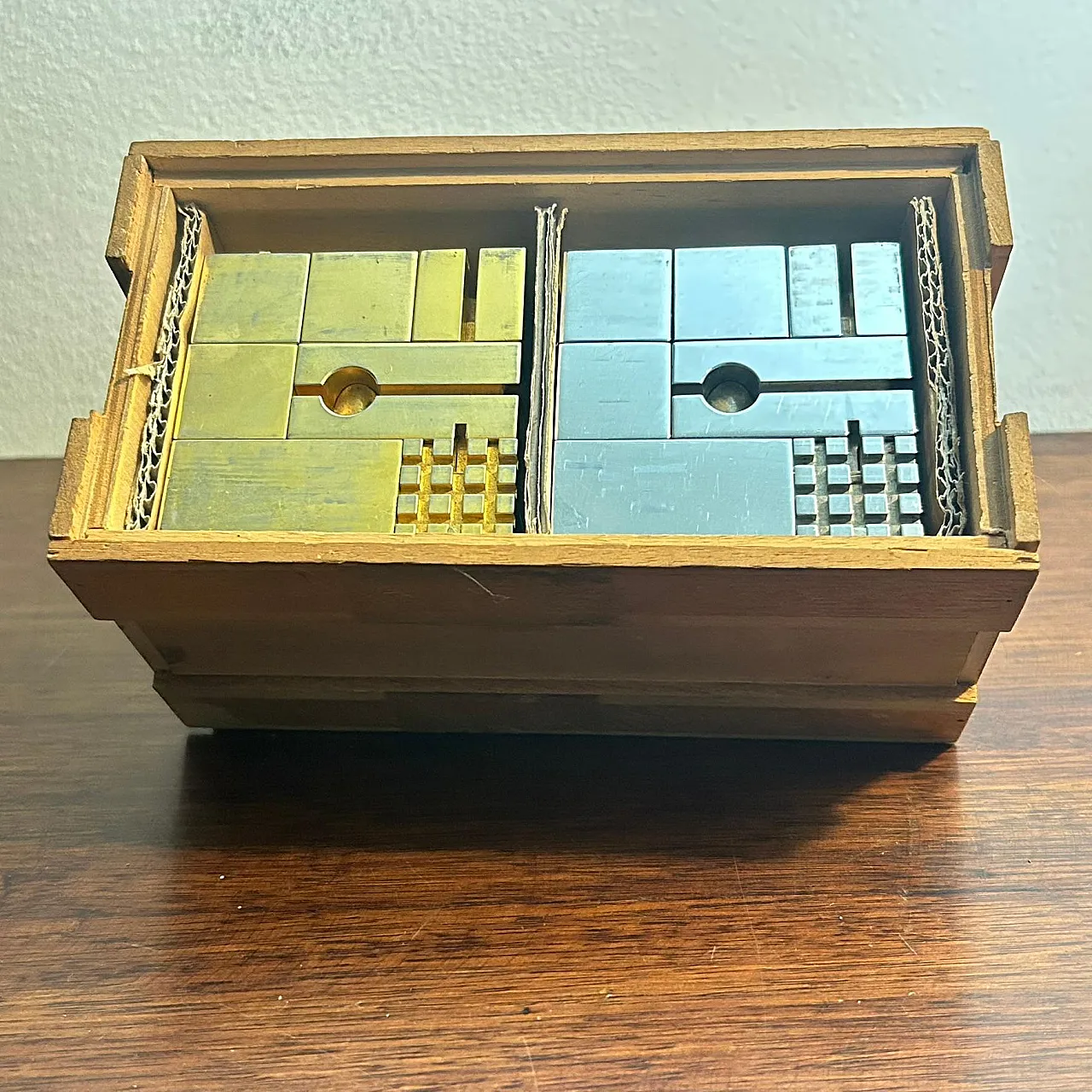
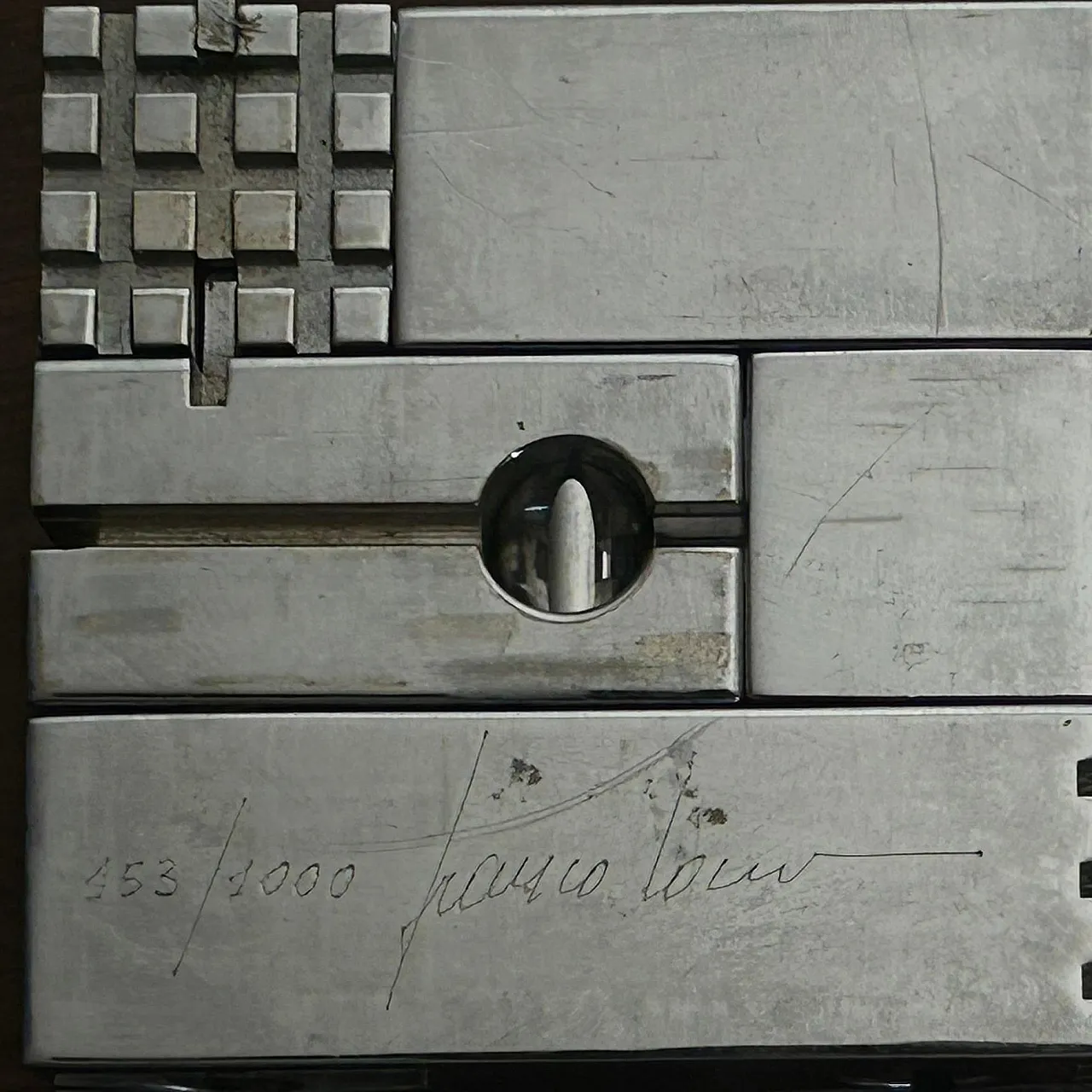
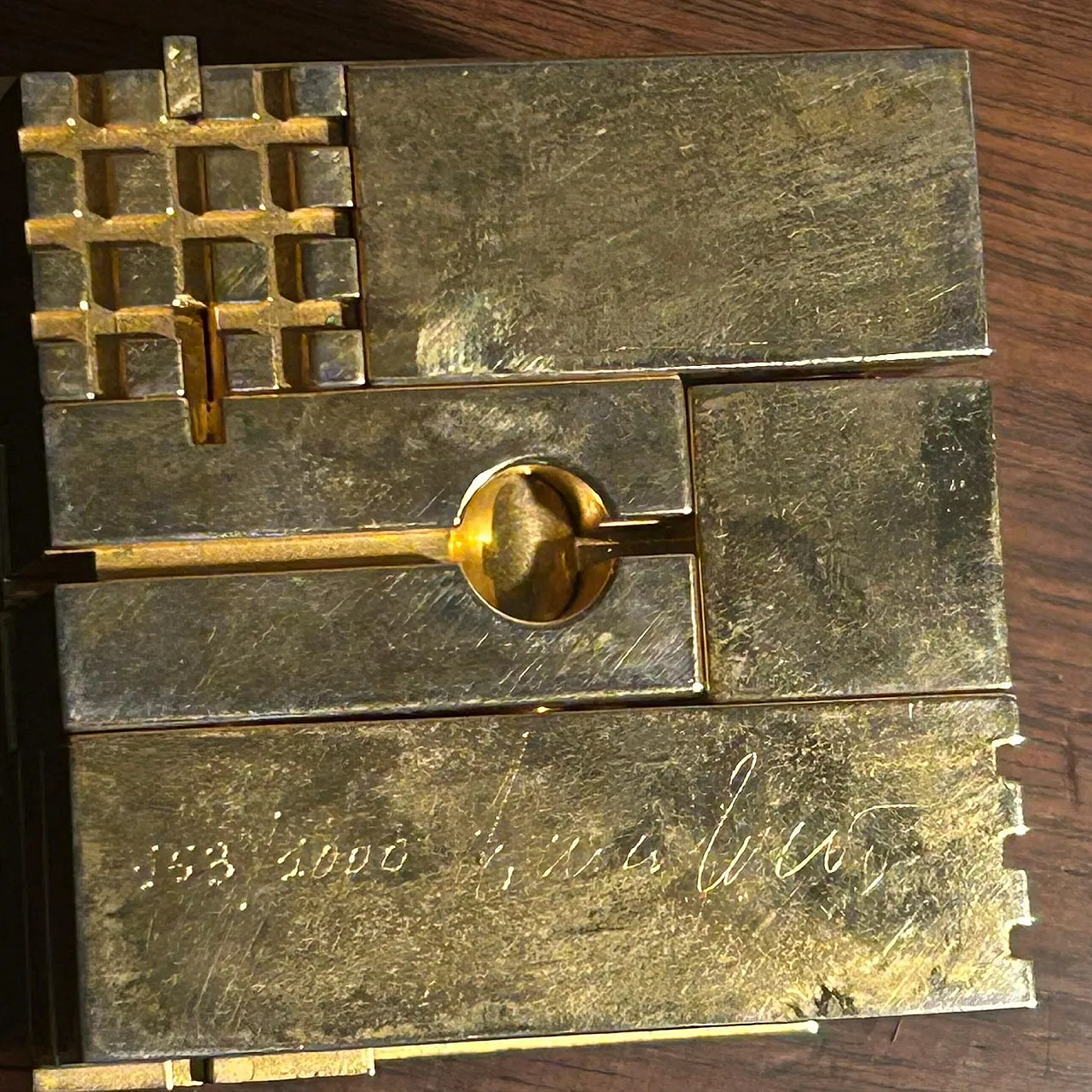
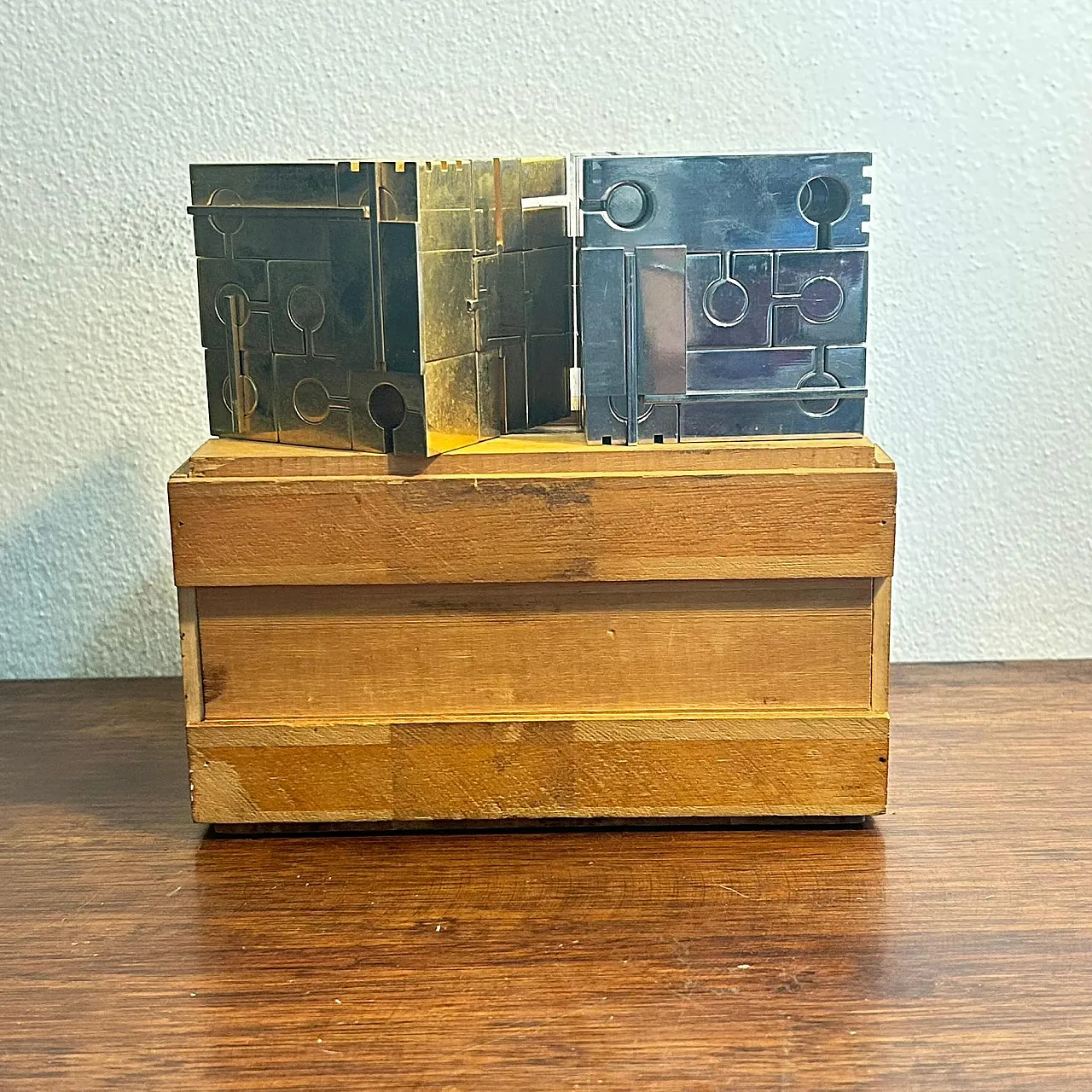
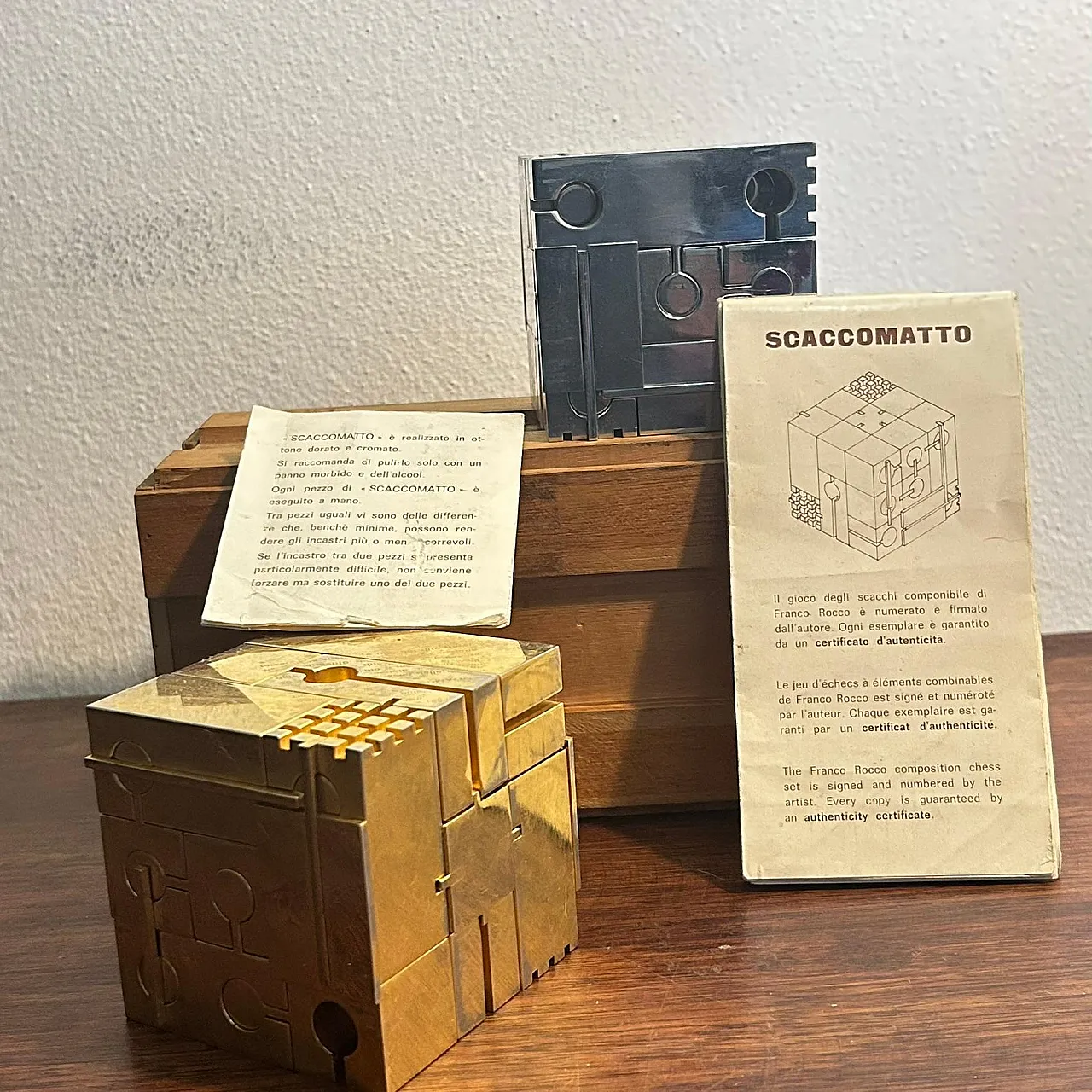
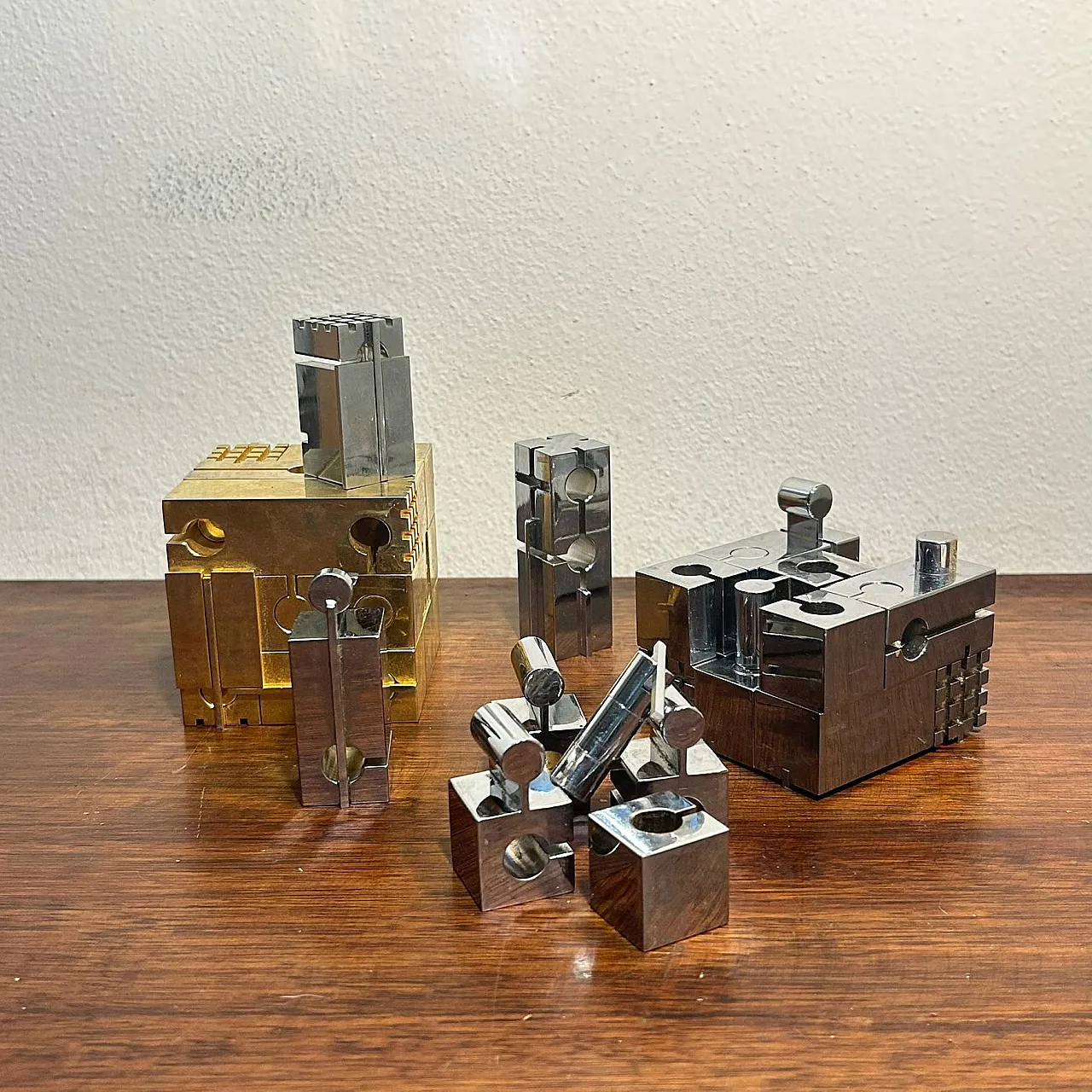
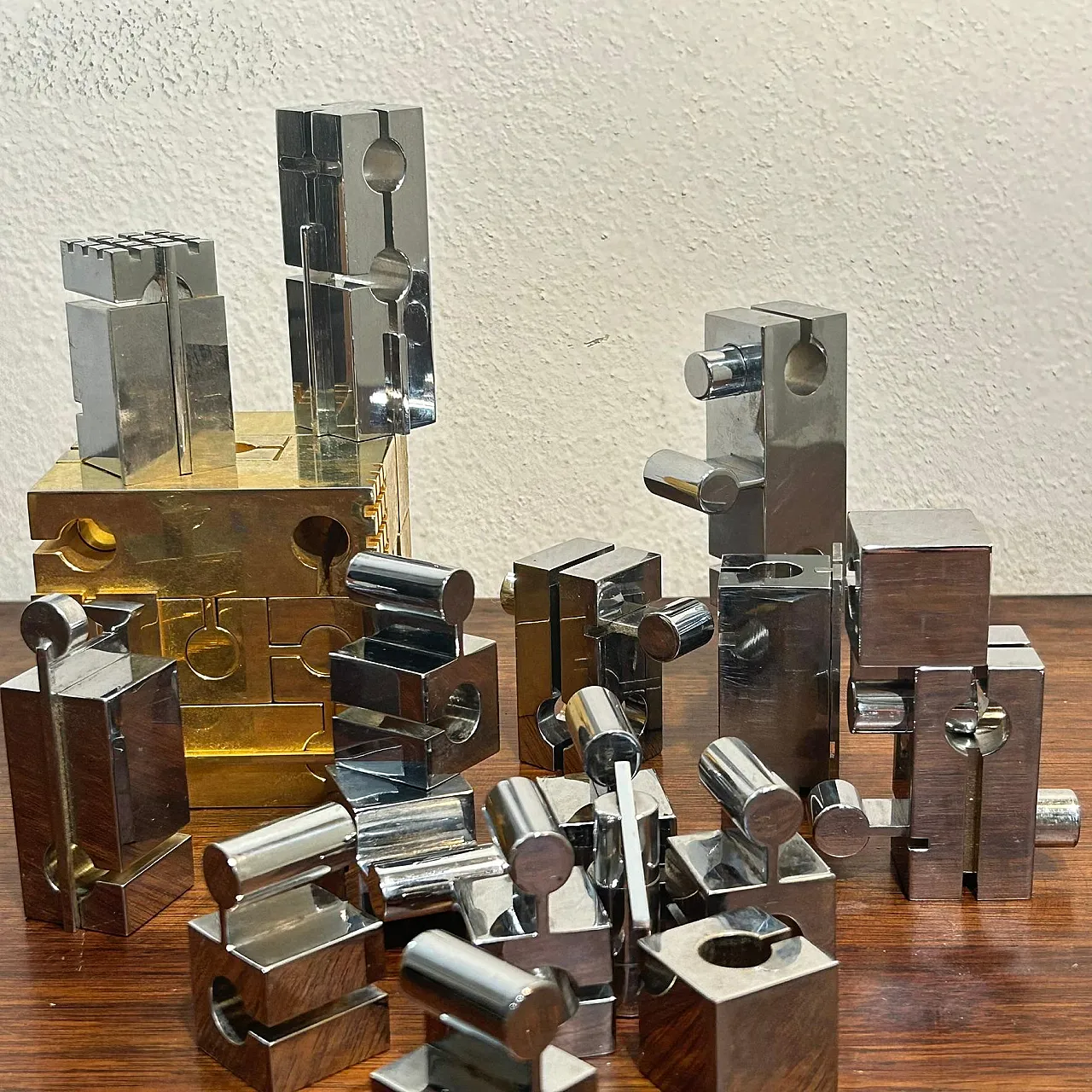
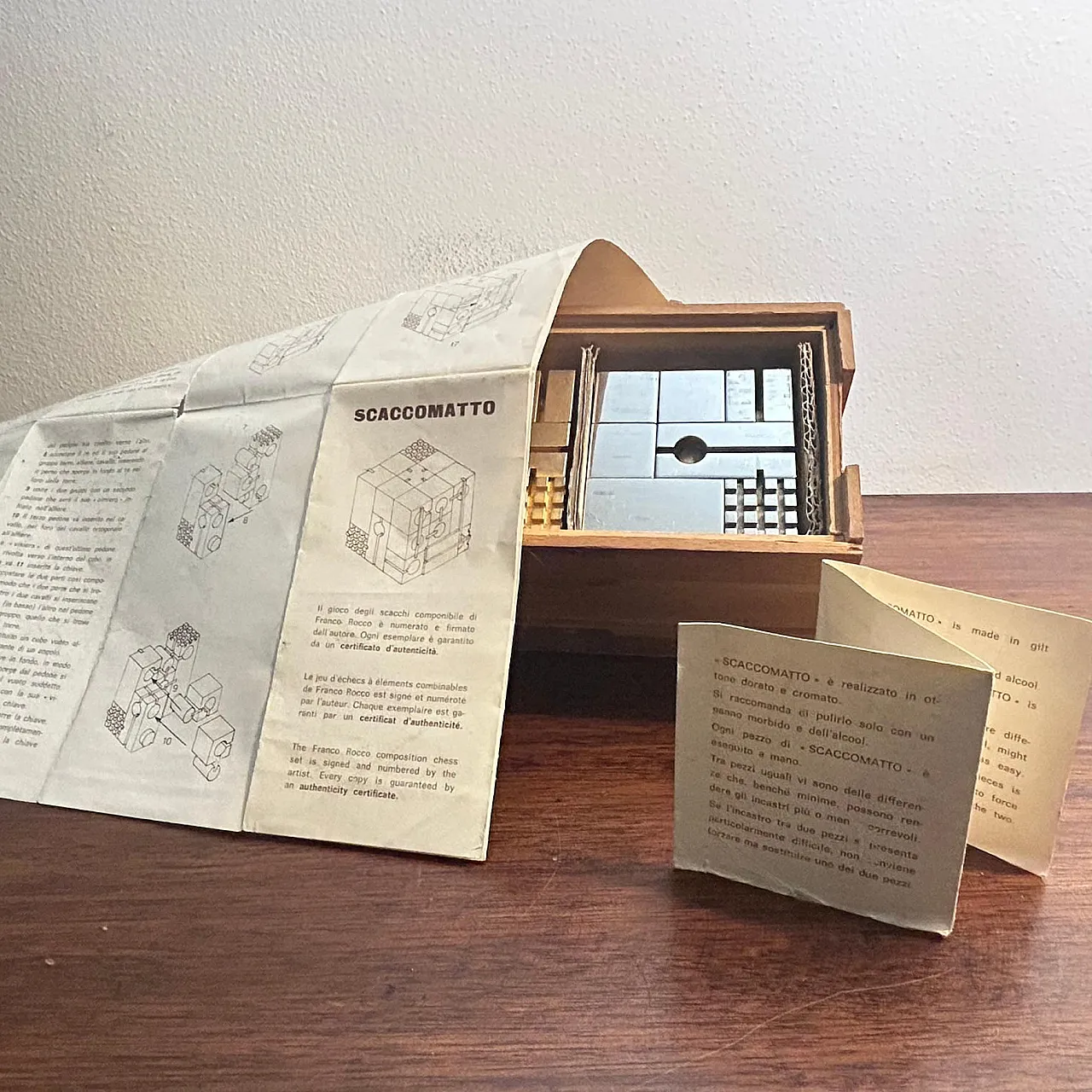
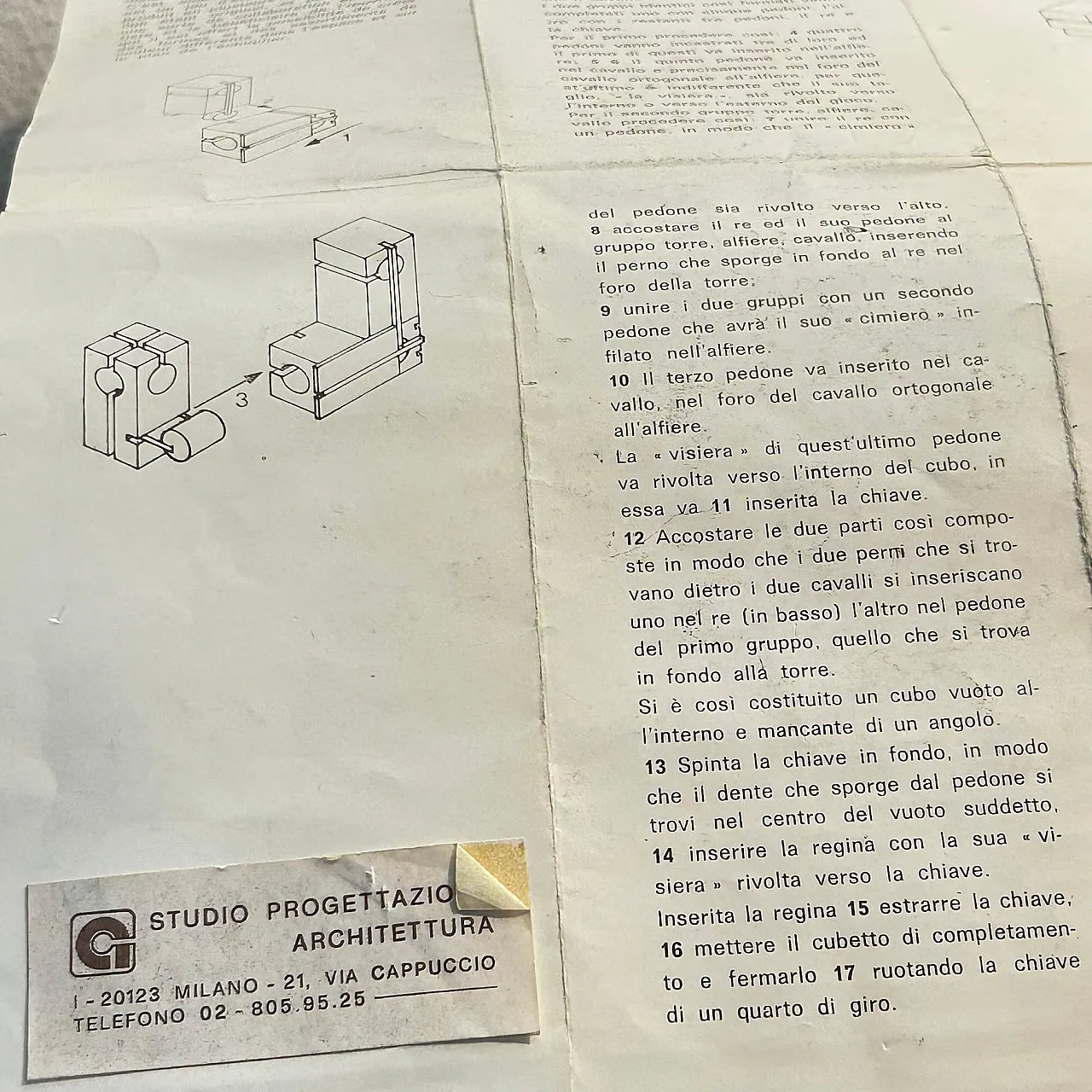
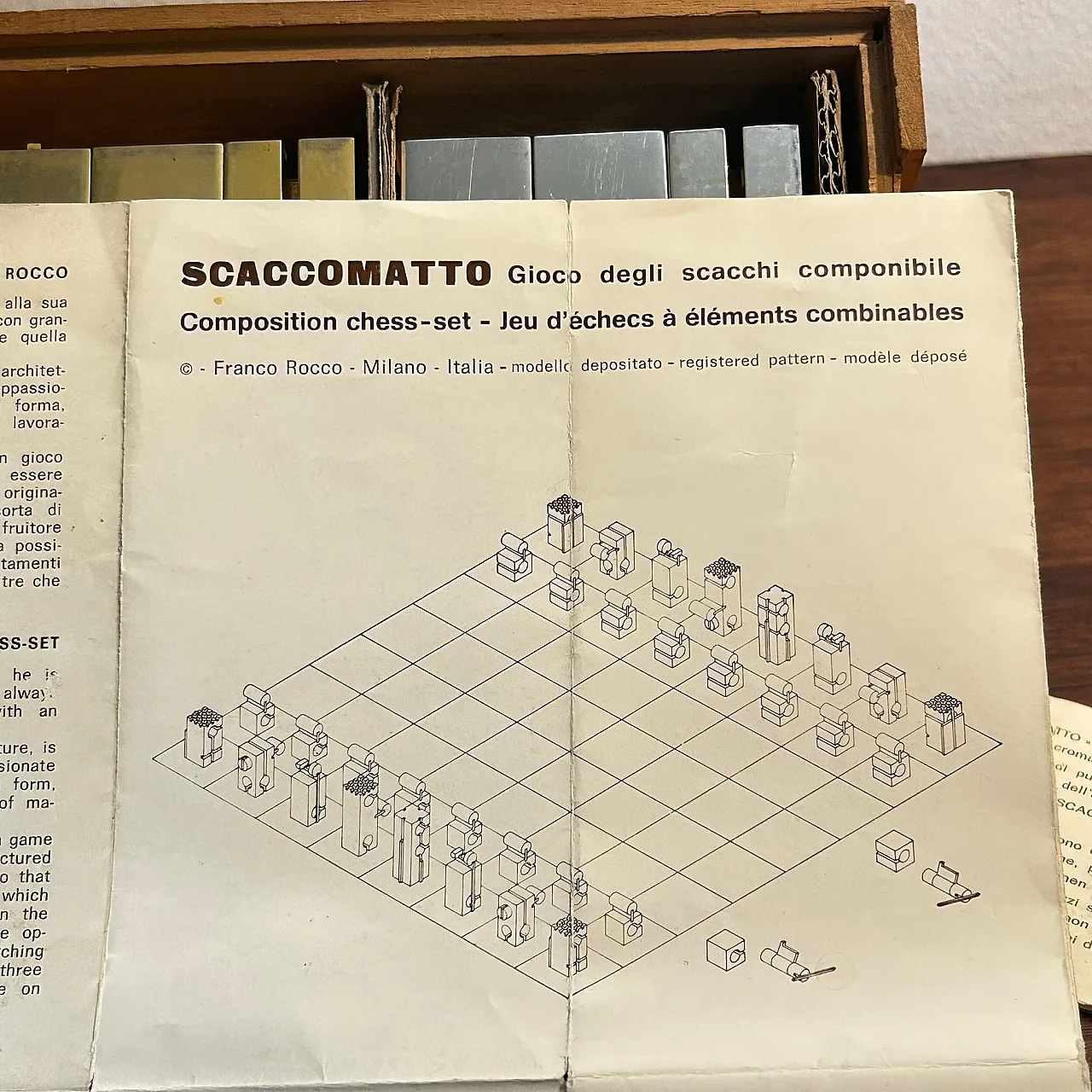
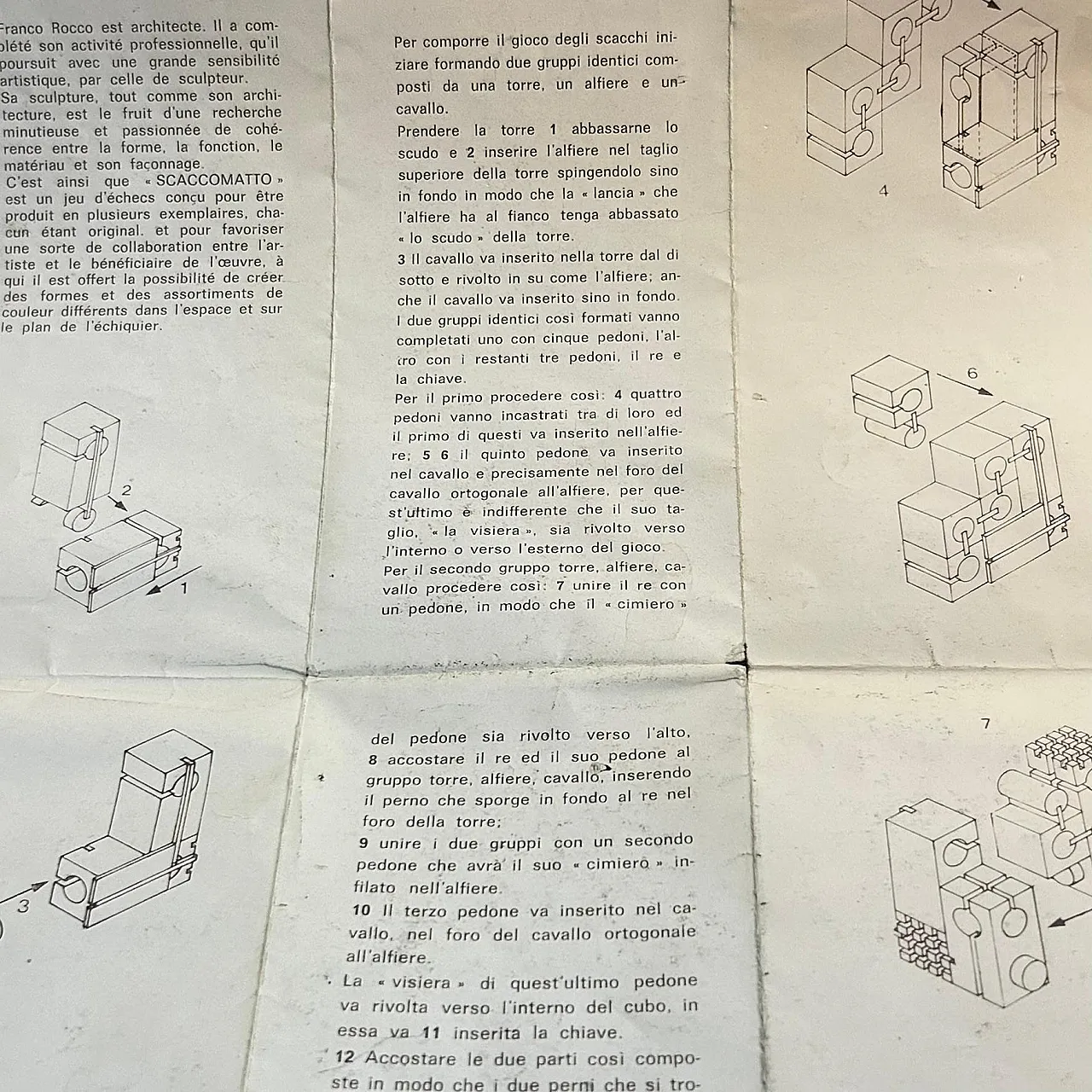
Conceived by Milanese architect Franco Rocco in the 1970s, “Scaccomatto” is one of the most interesting examples of a dialogue between Italian design, modular sculpture and three-dimensional design thought of the second half of the twentieth century. Conceived as a composable chess game, the set overcomes its playful function to become an activatable structural system: the individual pieces, through a precise interlocking mechanism, are reassembled into a compact cube with a strong plastic presence. The act of assembly reveals the constructive logic of the work, transforming the game into architecture on a domestic scale. The composition alternates gilt bronze for the black pieces and silver bronze for the whites, creating a refined dialogue between mass and light. The surfaces have a patina consistent with the era and slight signs of use on the silver plating, which do not compromise the aesthetic quality or the formal legibility of the whole. The proposed copy is signed and numbered 153/1000. It is complete with original wooden box, instruction sheets and assembly key — equipment rarely preserved in its entirety and of particular collector's importance. Produced in a limited edition of a thousand copies, “Scaccomatto” is today sought after by collectors of Italian design from the ’70s, enthusiasts of modular objects and scholars of the intersection between conceptual art and industrial design. This specimen comes from a private collection.



.png)


 SILVER Seller in Milano, Italy