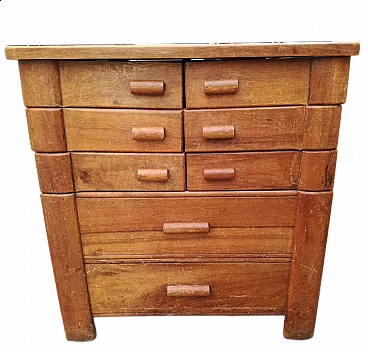
The Bastonio chest of drawers was designed by Ettore Sottsass for Poltronova in the early 1960s, during a crucial period in the designer's exploration of the relationship between function, materials, and visual language.
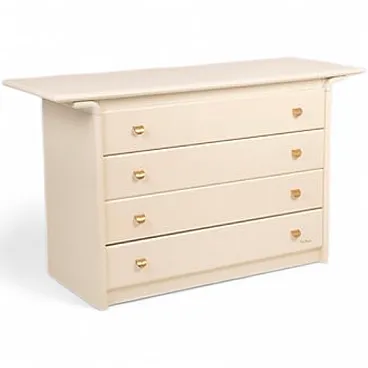
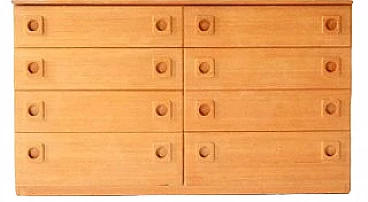
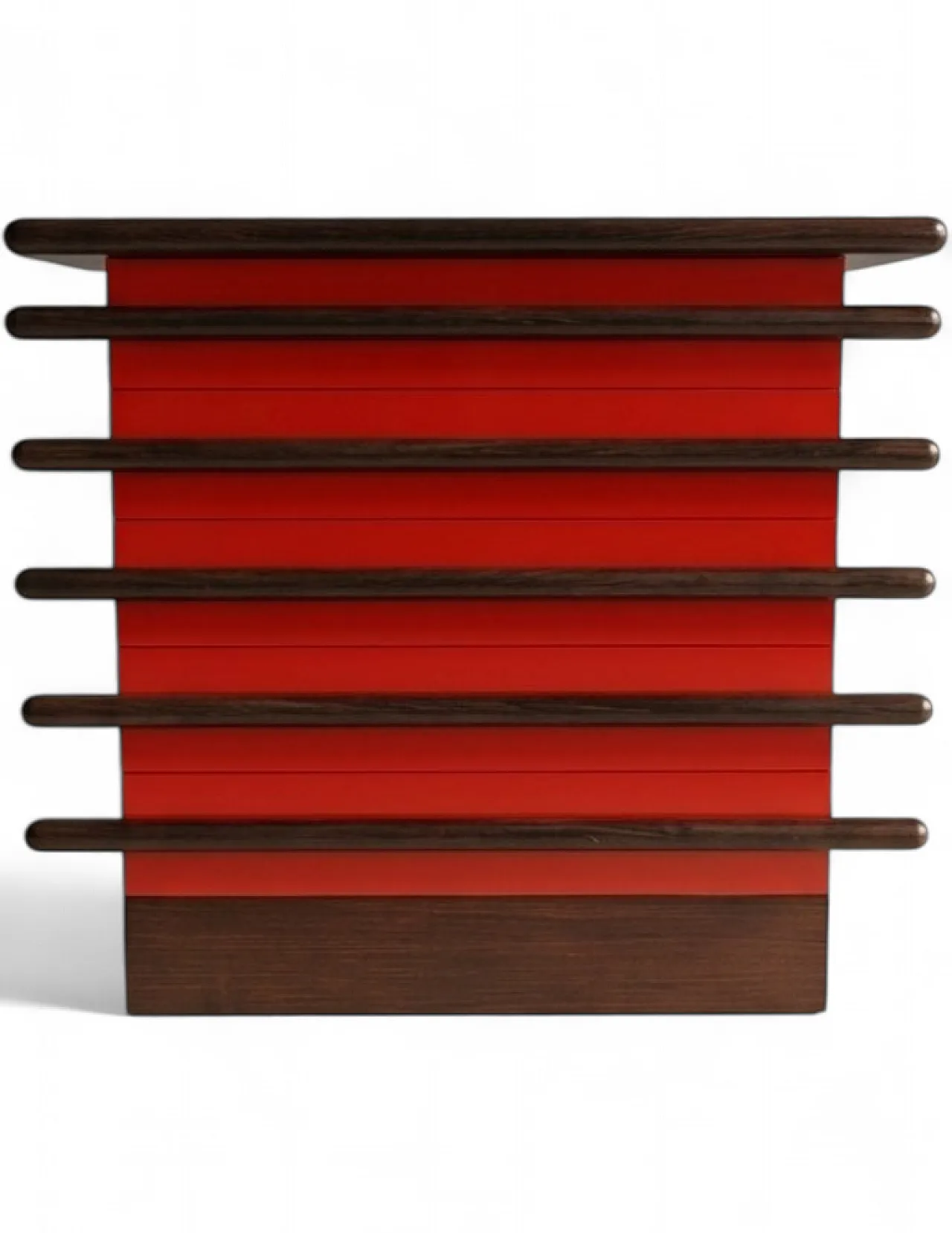
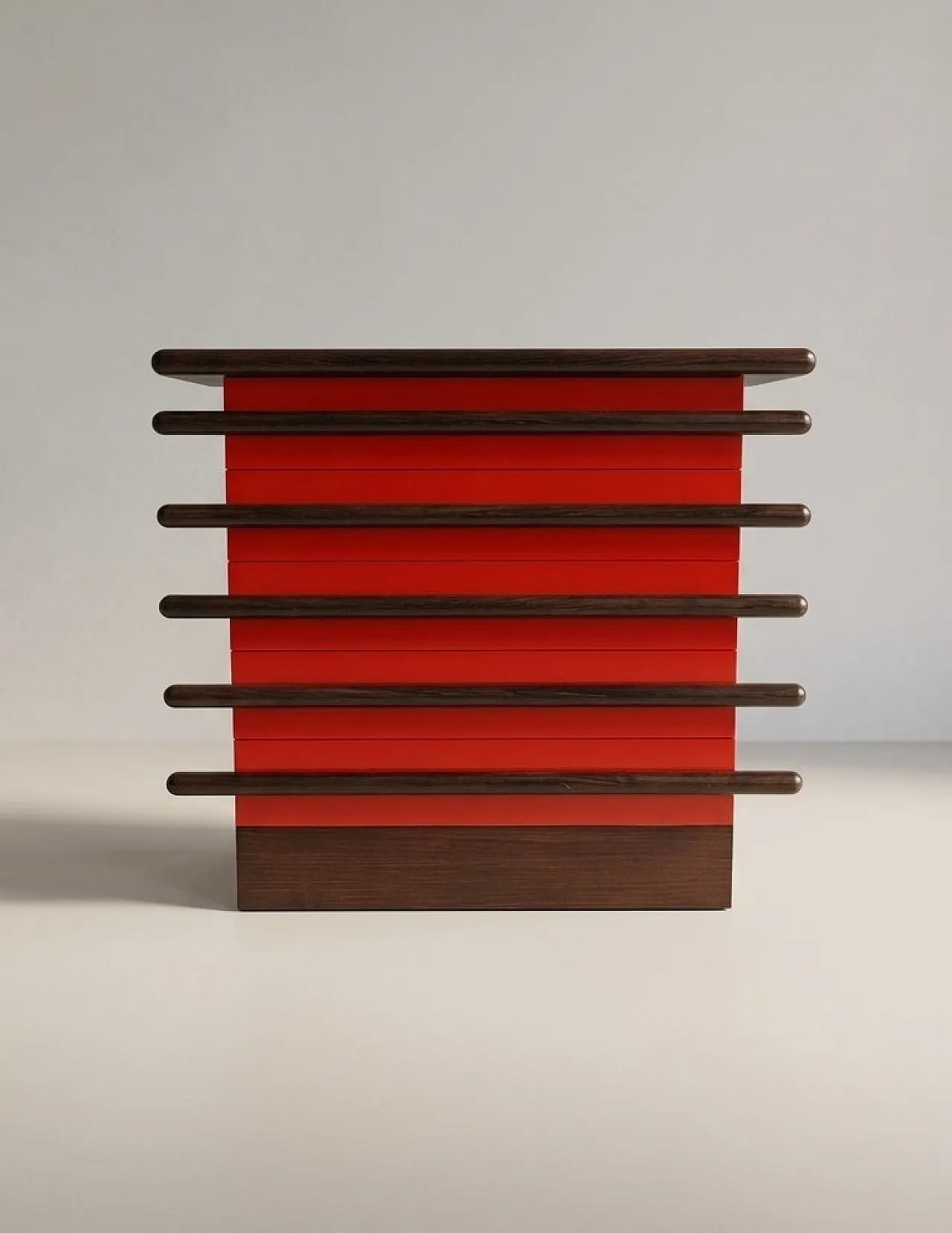
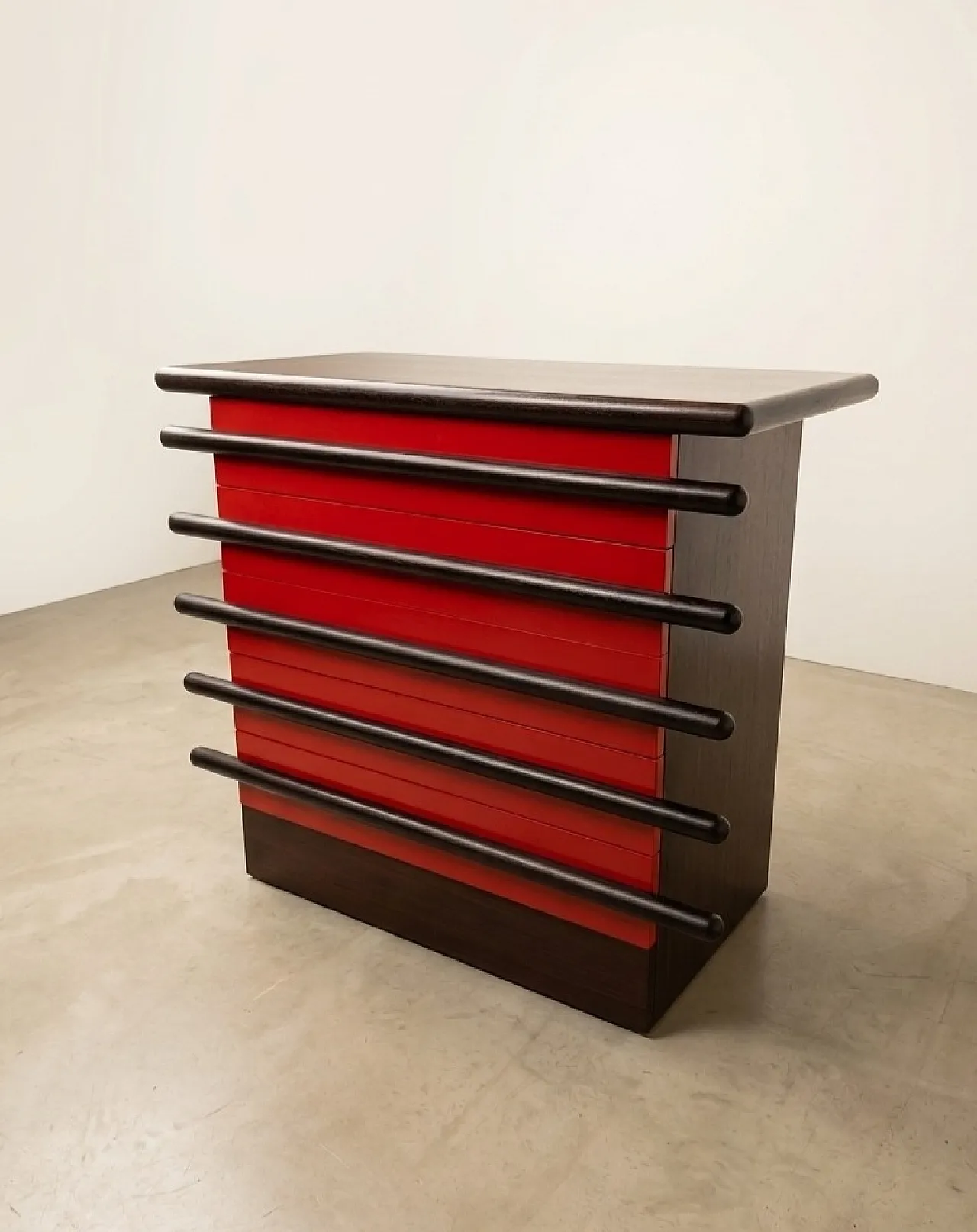
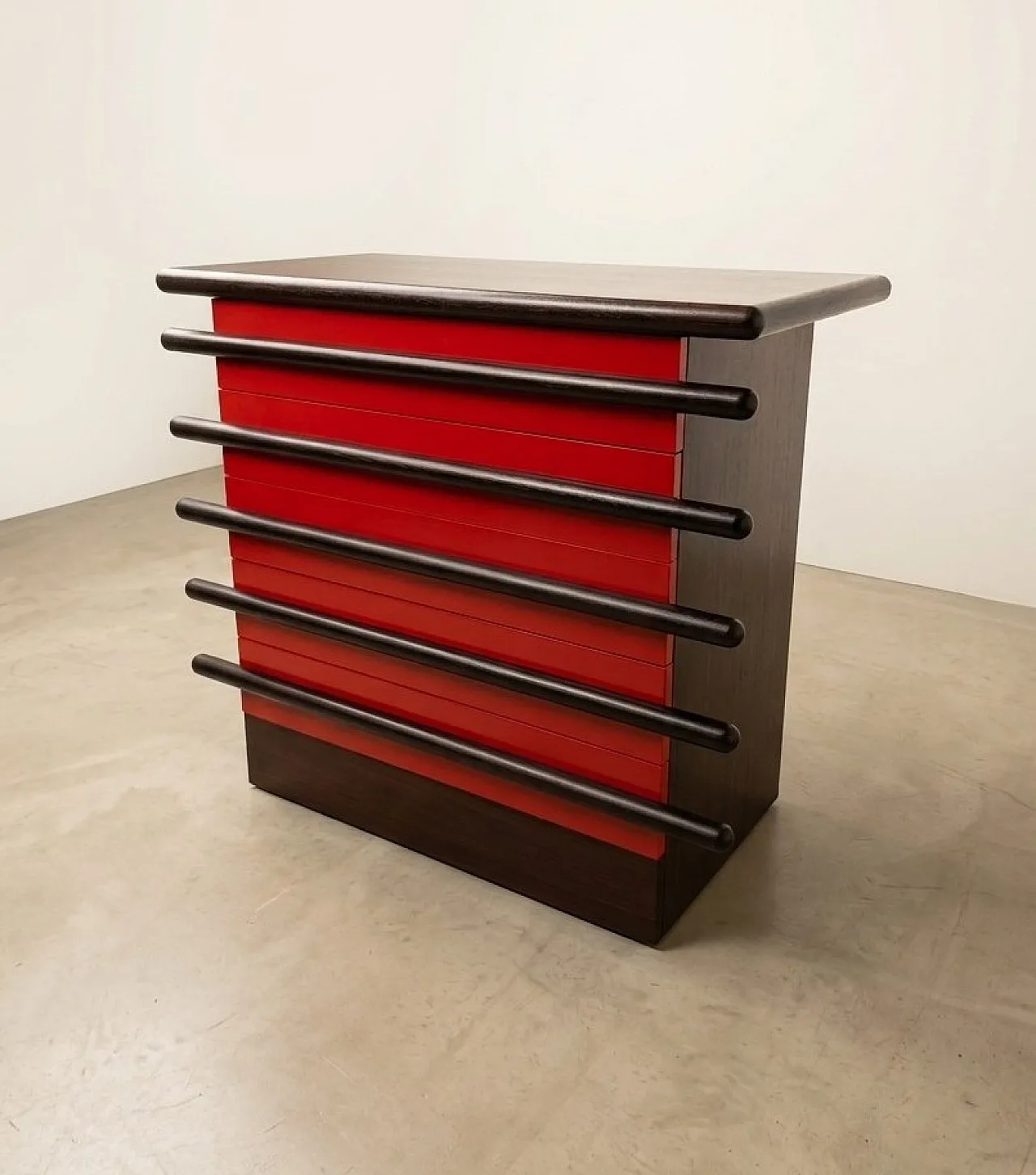
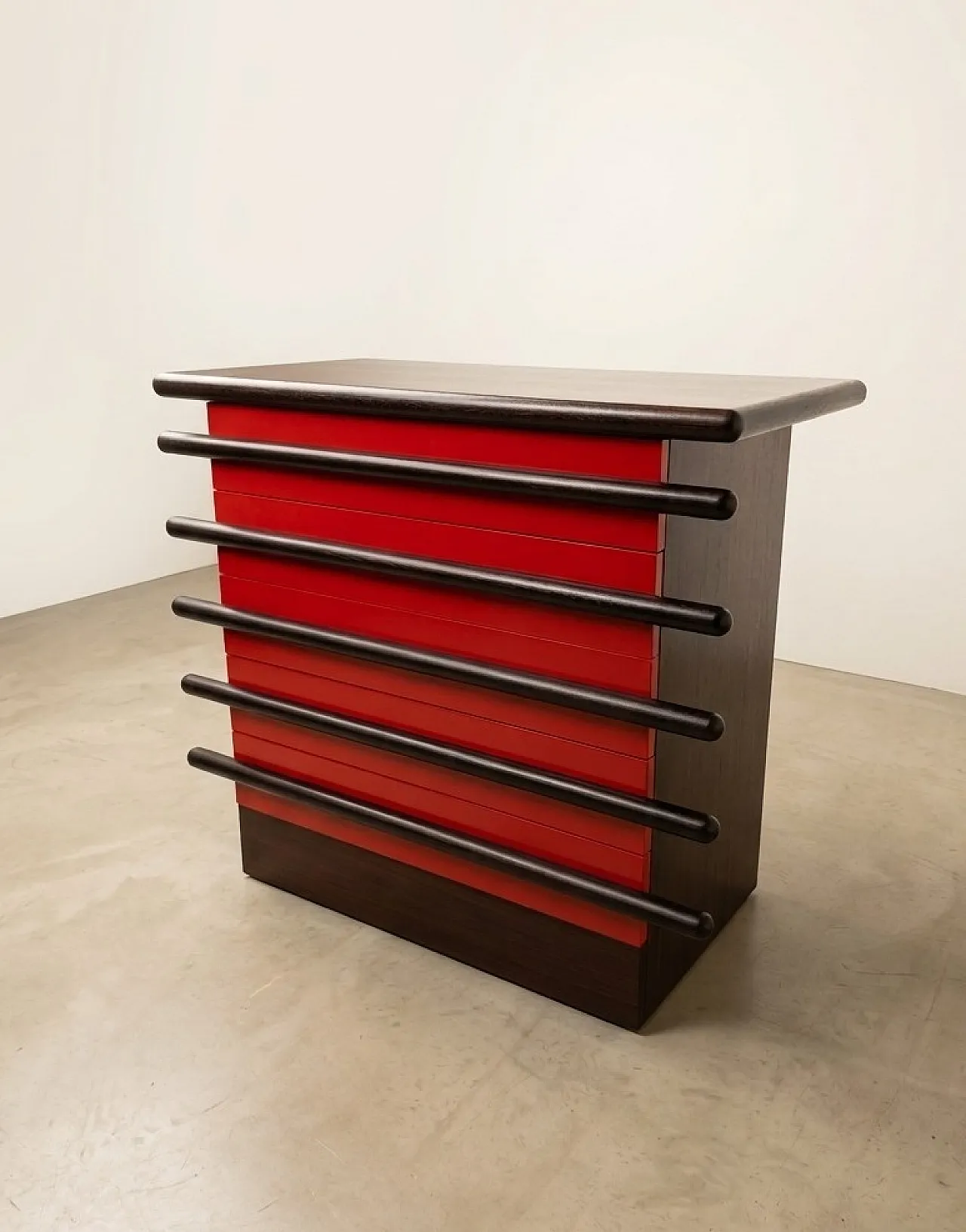
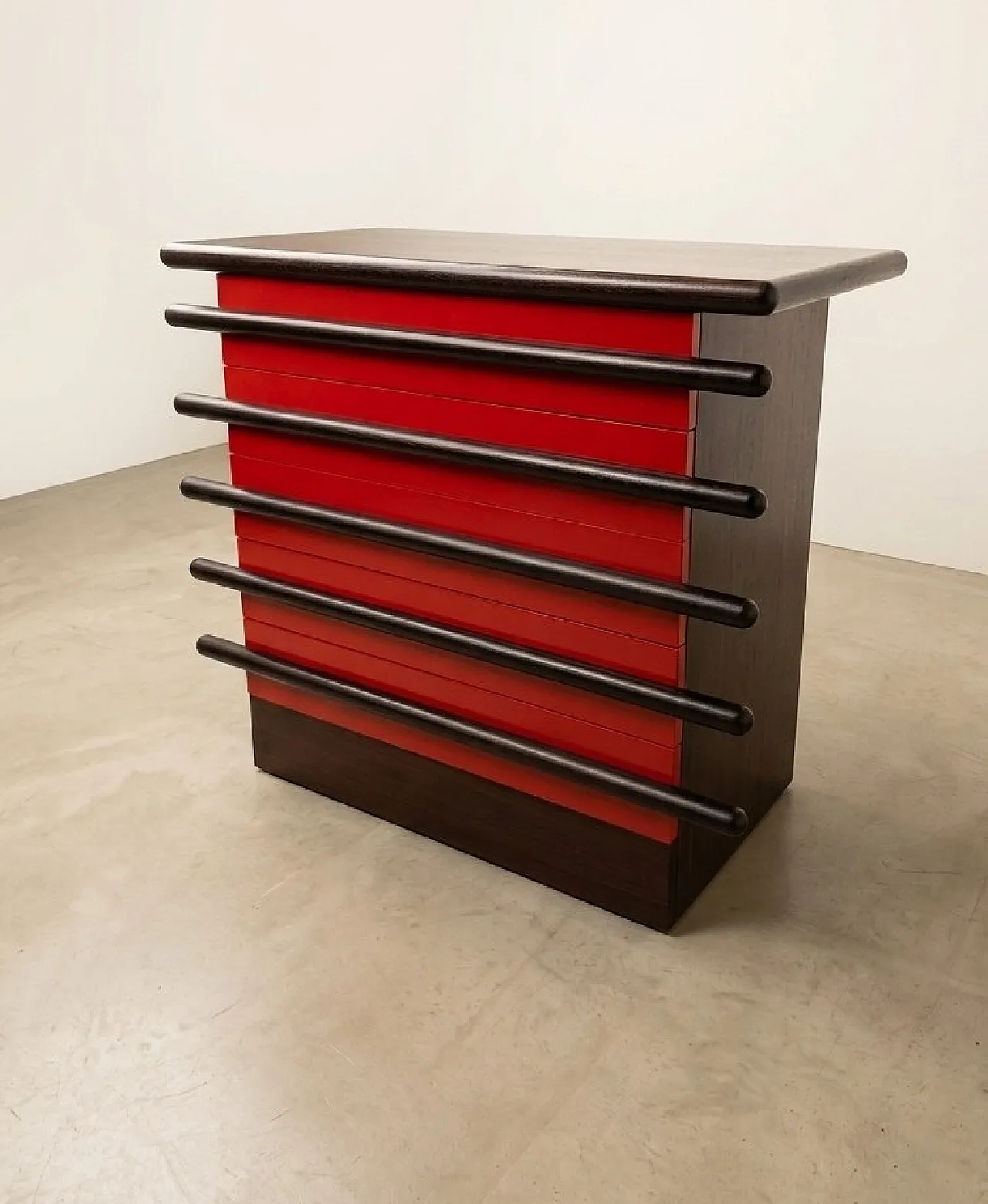
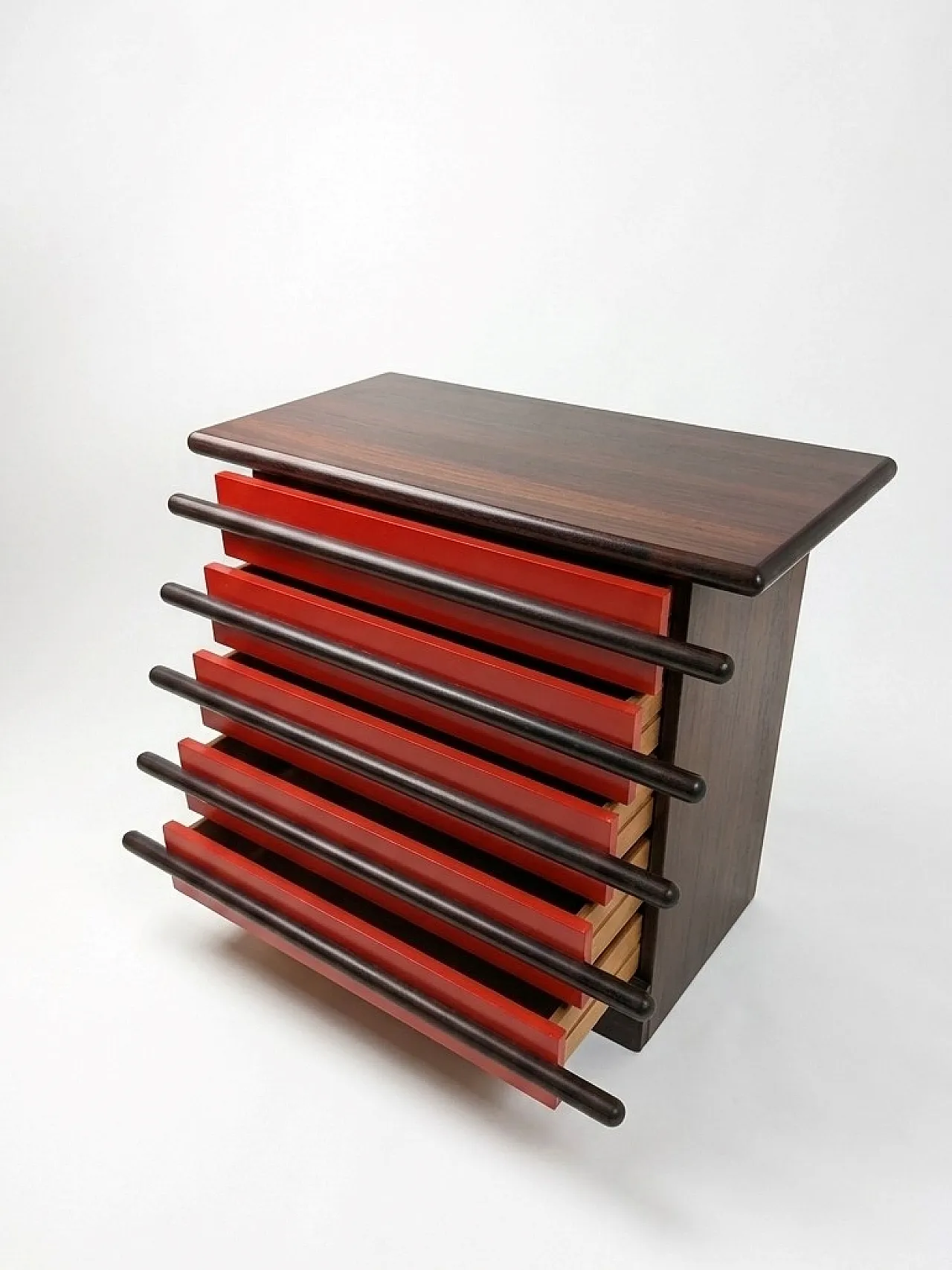
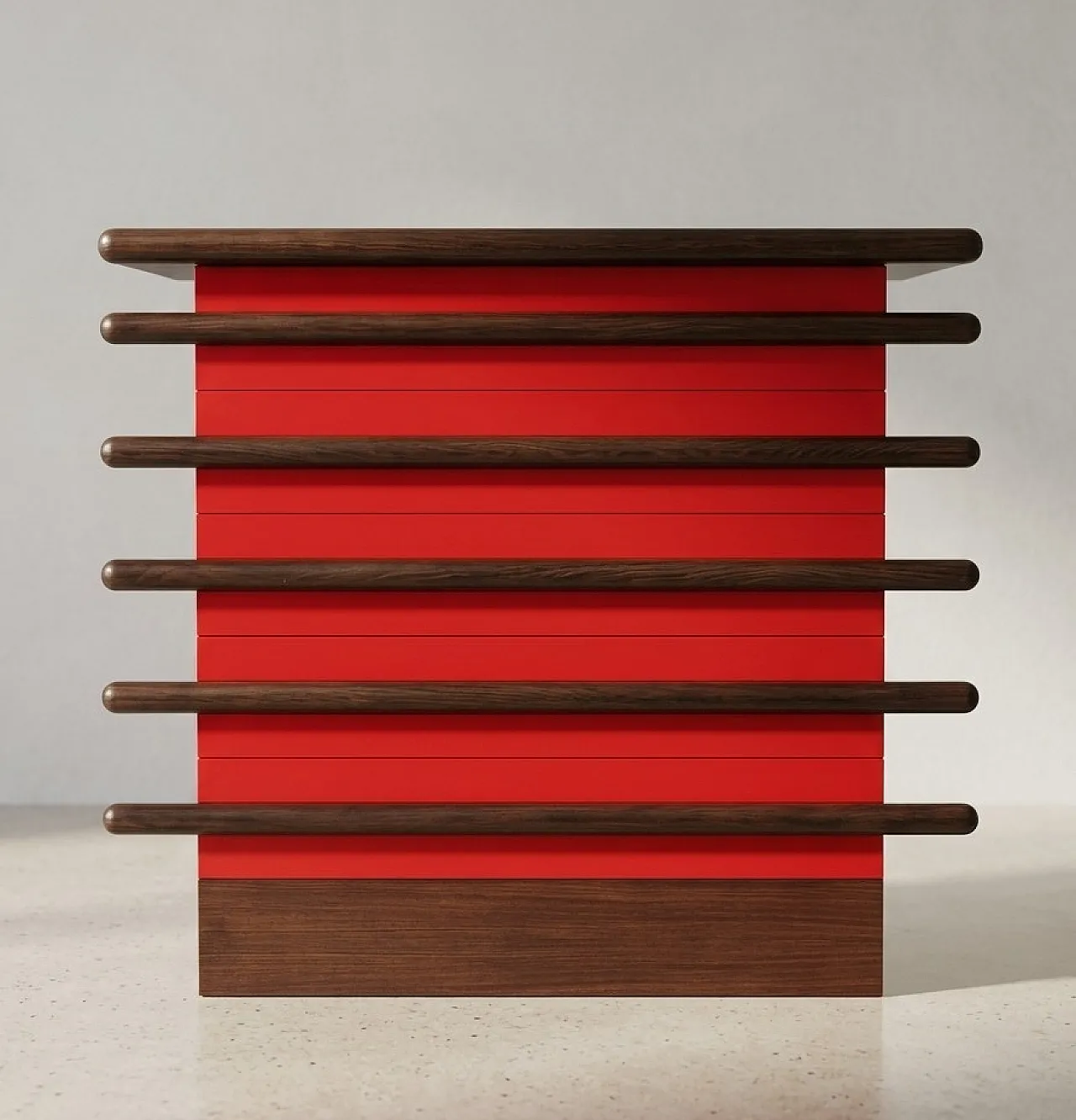
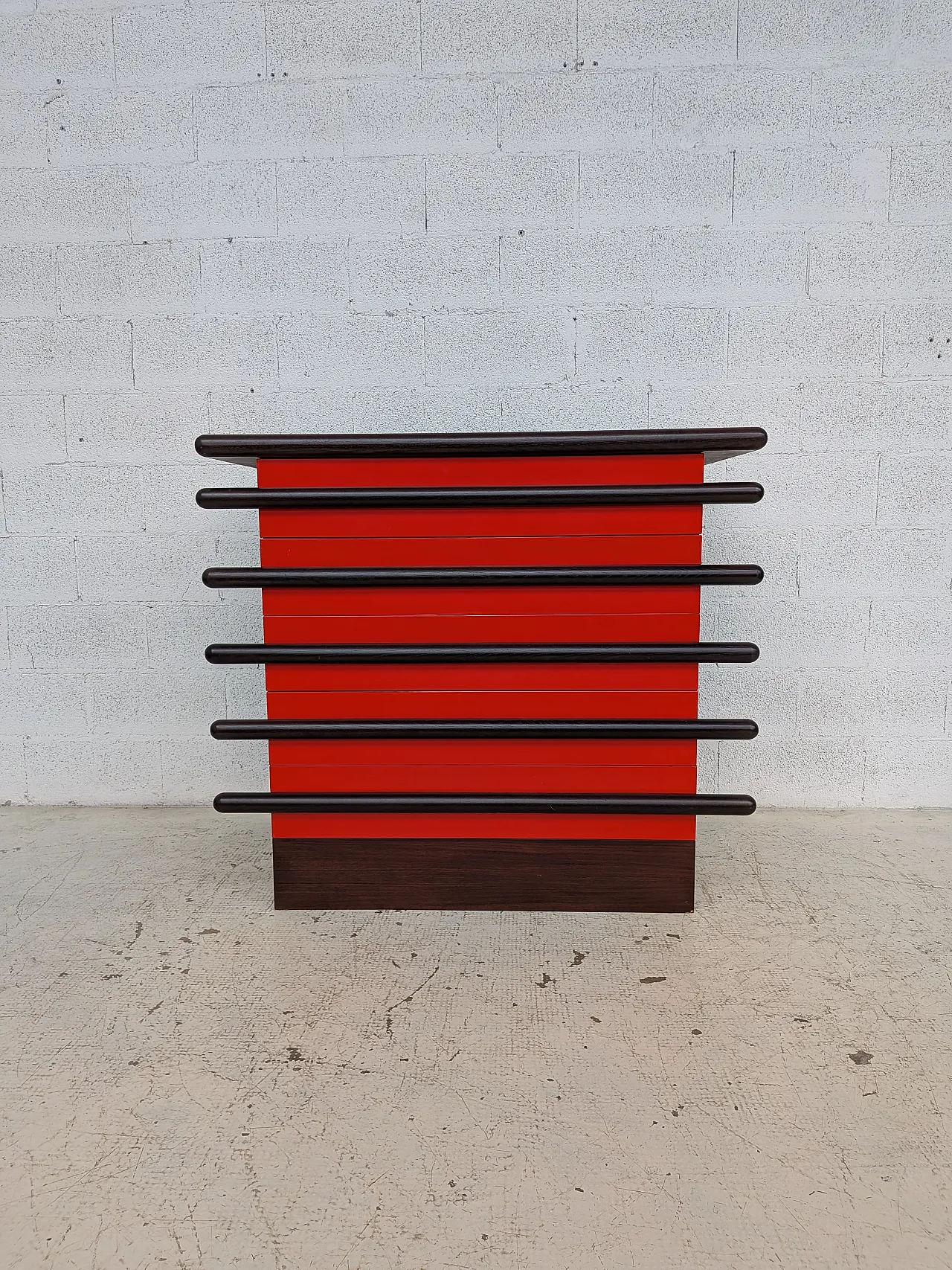
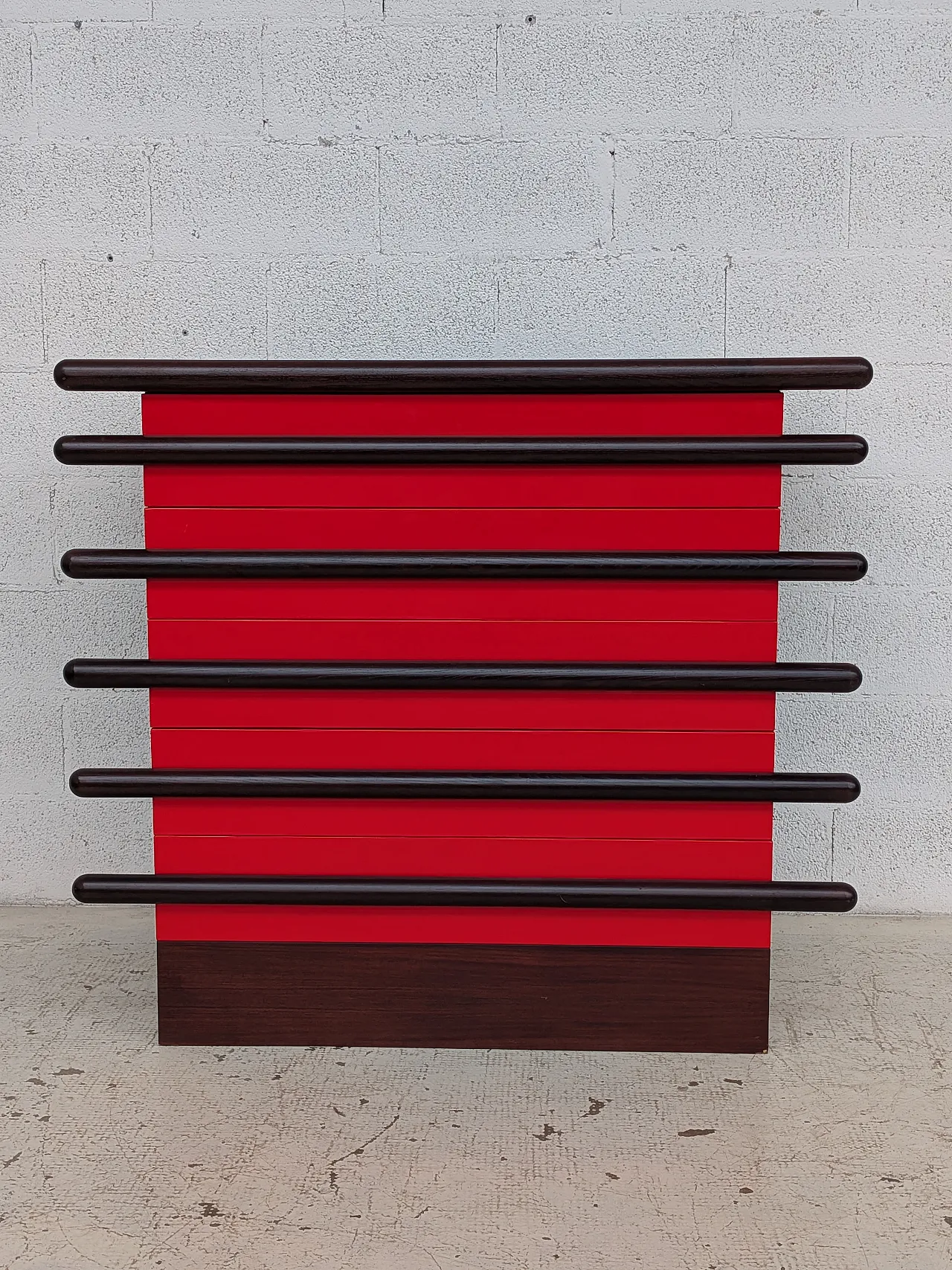
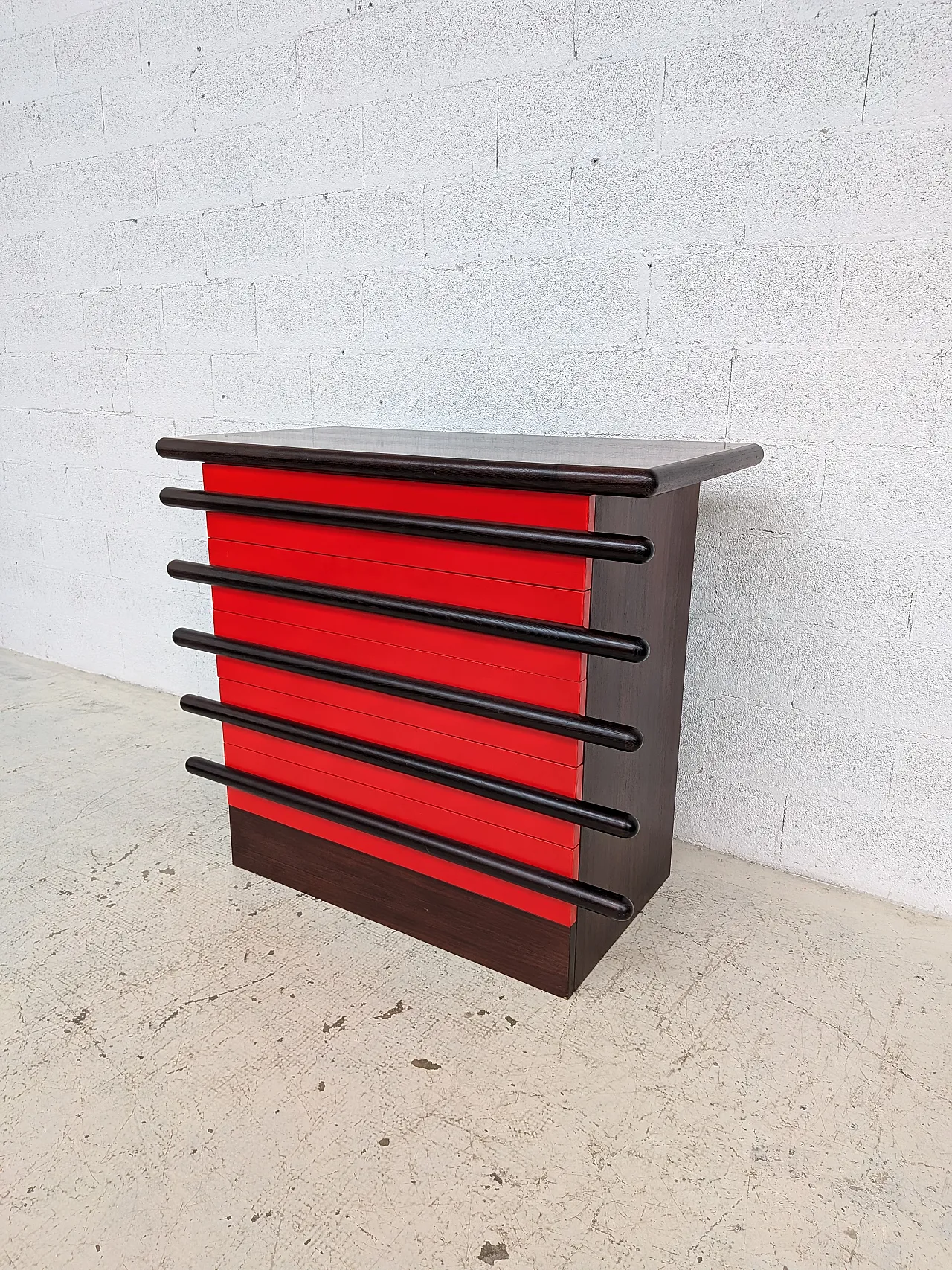
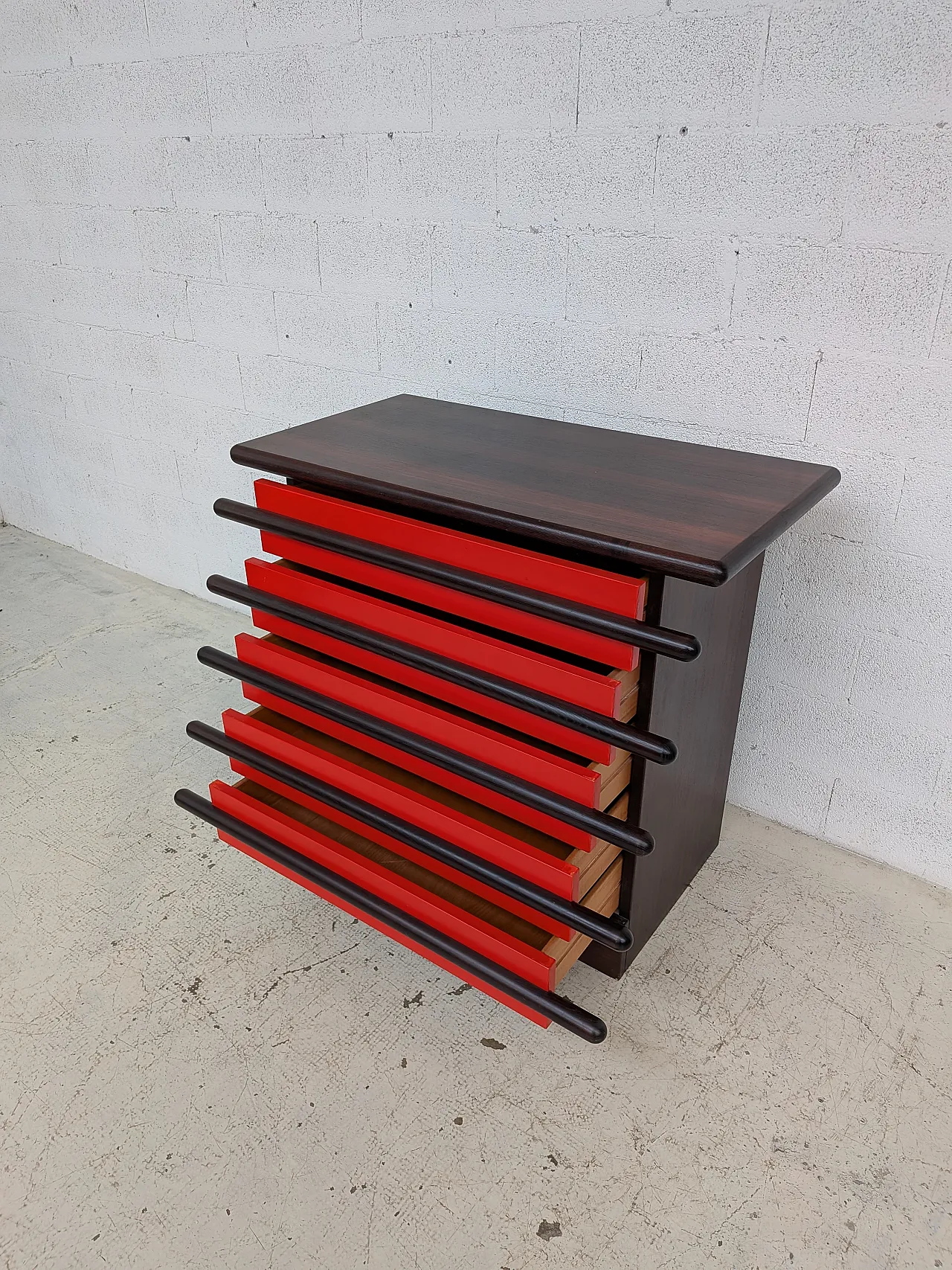
The piece features a compact, geometric structure comprising five drawers, with cylindrical elements serving as handles. These prominently articulated elements become an integral part of the overall composition, giving the piece an almost sculptural and anthropomorphic character.
The interplay of wood veneers, lacquered surfaces, and vivid color accents breaks with the rigorous neutrality of modernist furniture and introduces a more expressive and ironic dimension. Sottsass thus transforms a functional domestic storage unit into an object endowed with a distinct formal identity.
The Bastonio exemplifies the role of Poltronova as a laboratory for experimentation within Italian design during the 1960s and anticipates several themes that would become central to Sottsass's later work: color as a structural element, the combination of different materials, the theatricality of the object, and the blurring of the boundaries between furniture and sculpture.
Within the designer's oeuvre, the Bastonio therefore represents a significant work from the period preceding the foundation of Memphis, already displaying the freedom of expression and the desire to challenge functionalist principles that would define Sottsass's mature language.



.png)

 SILVER Seller in Padova, Italy