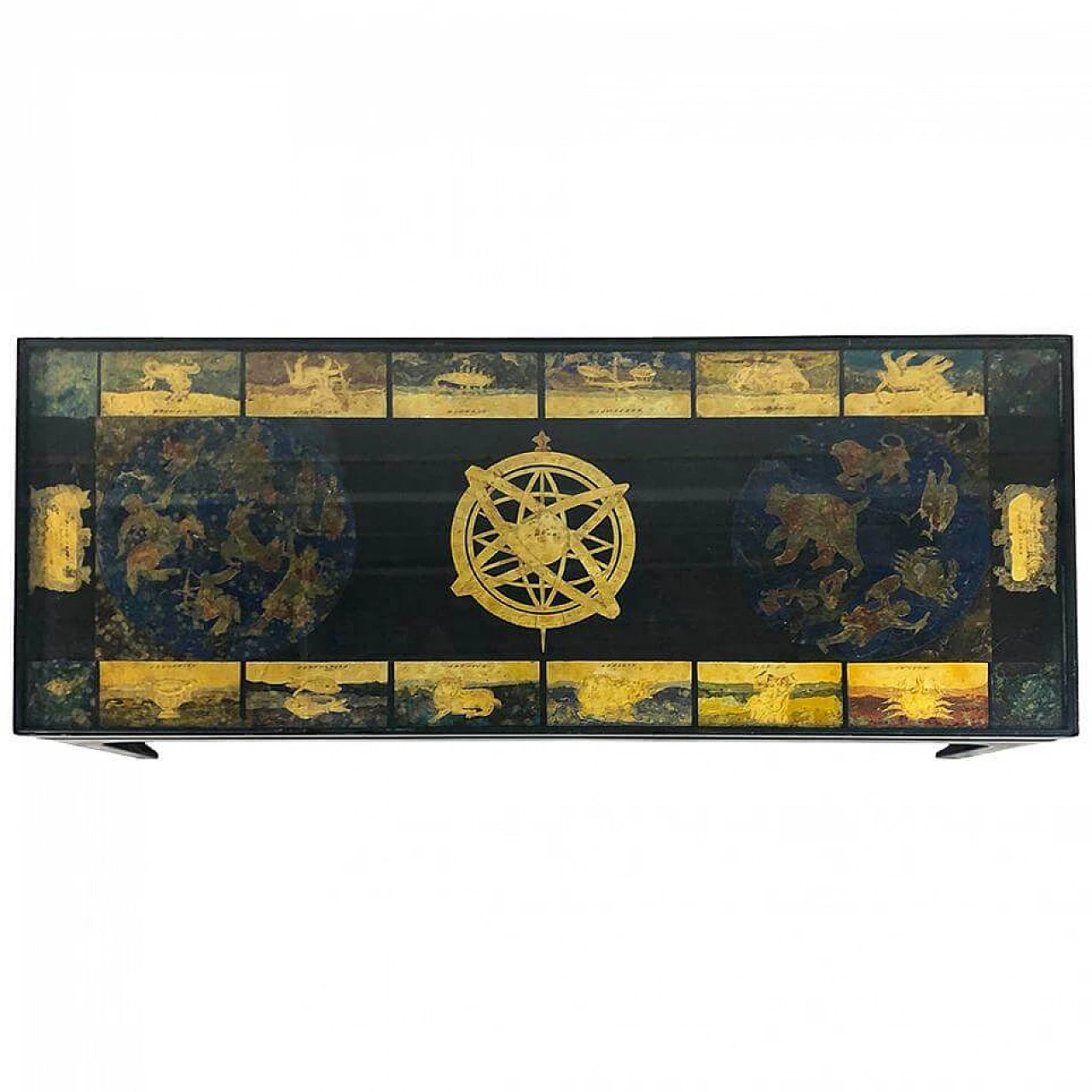
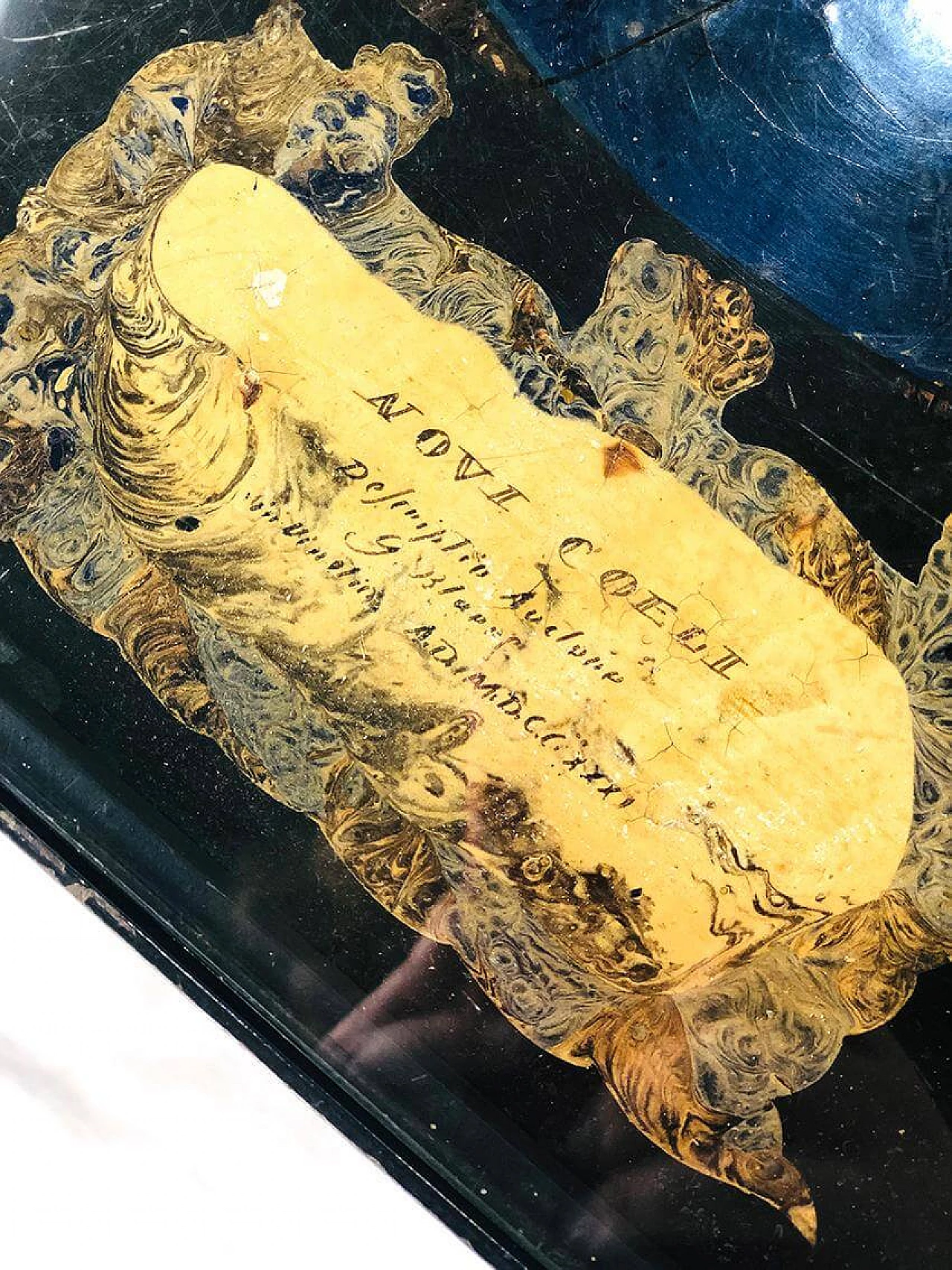
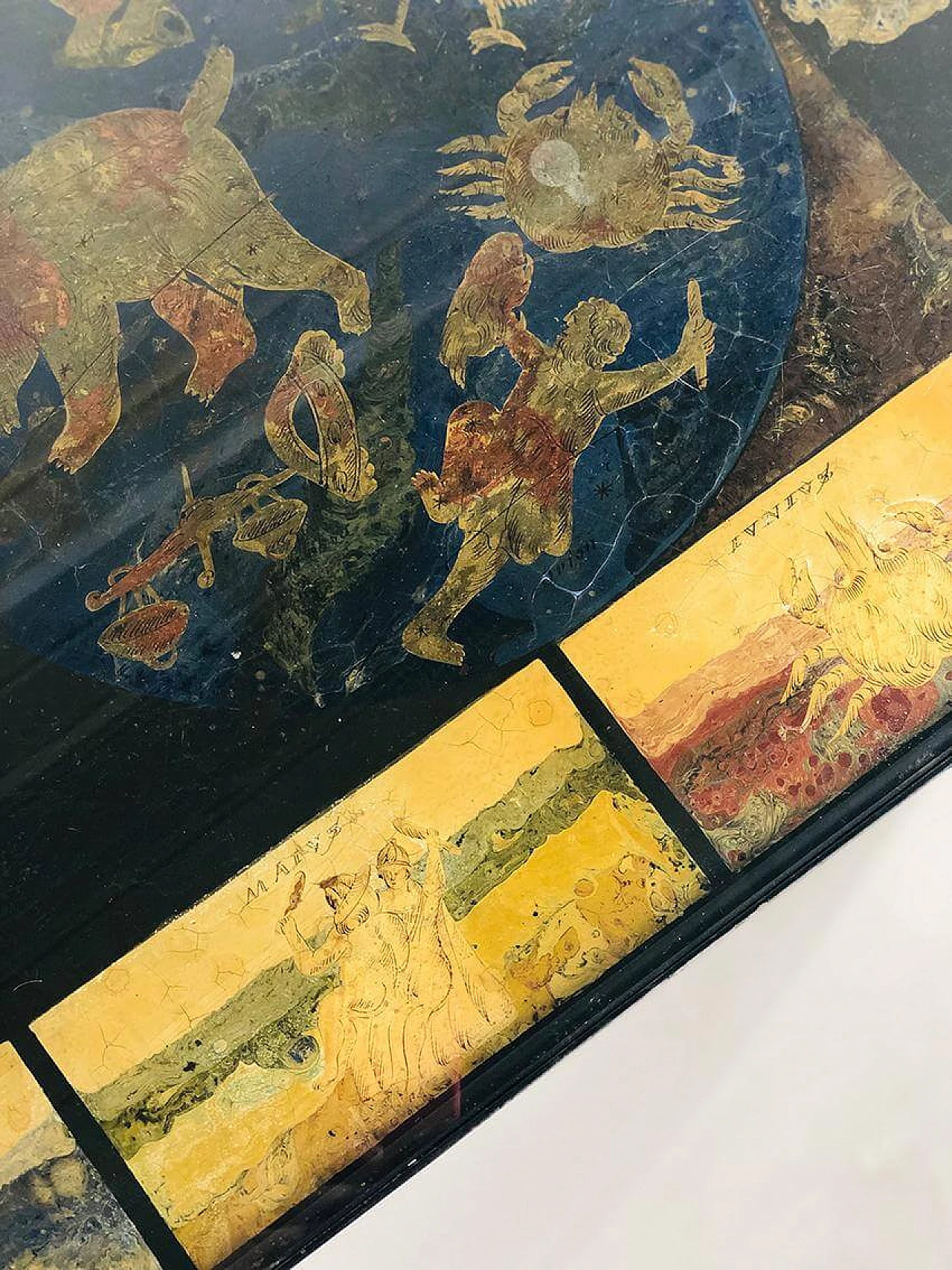
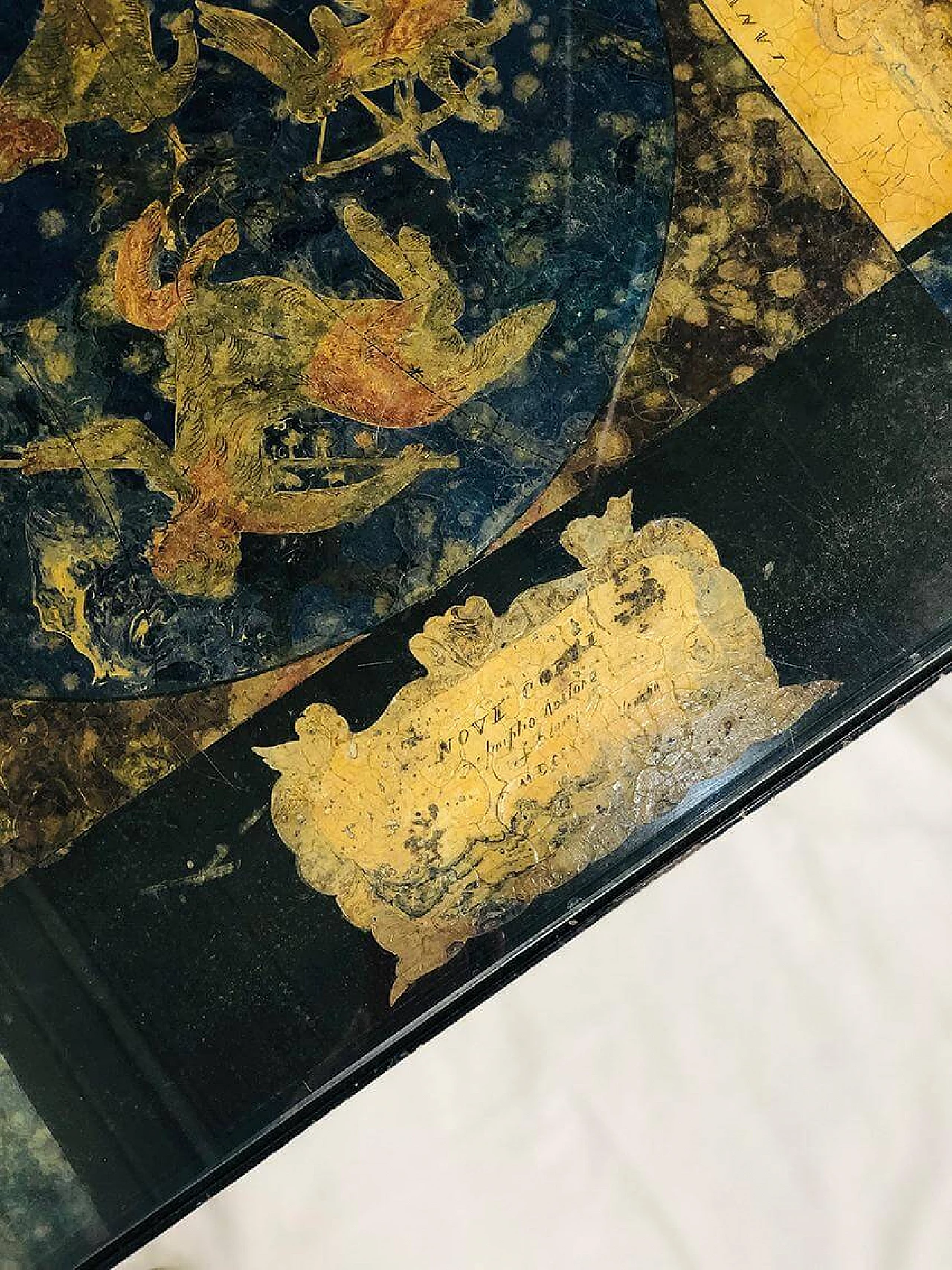
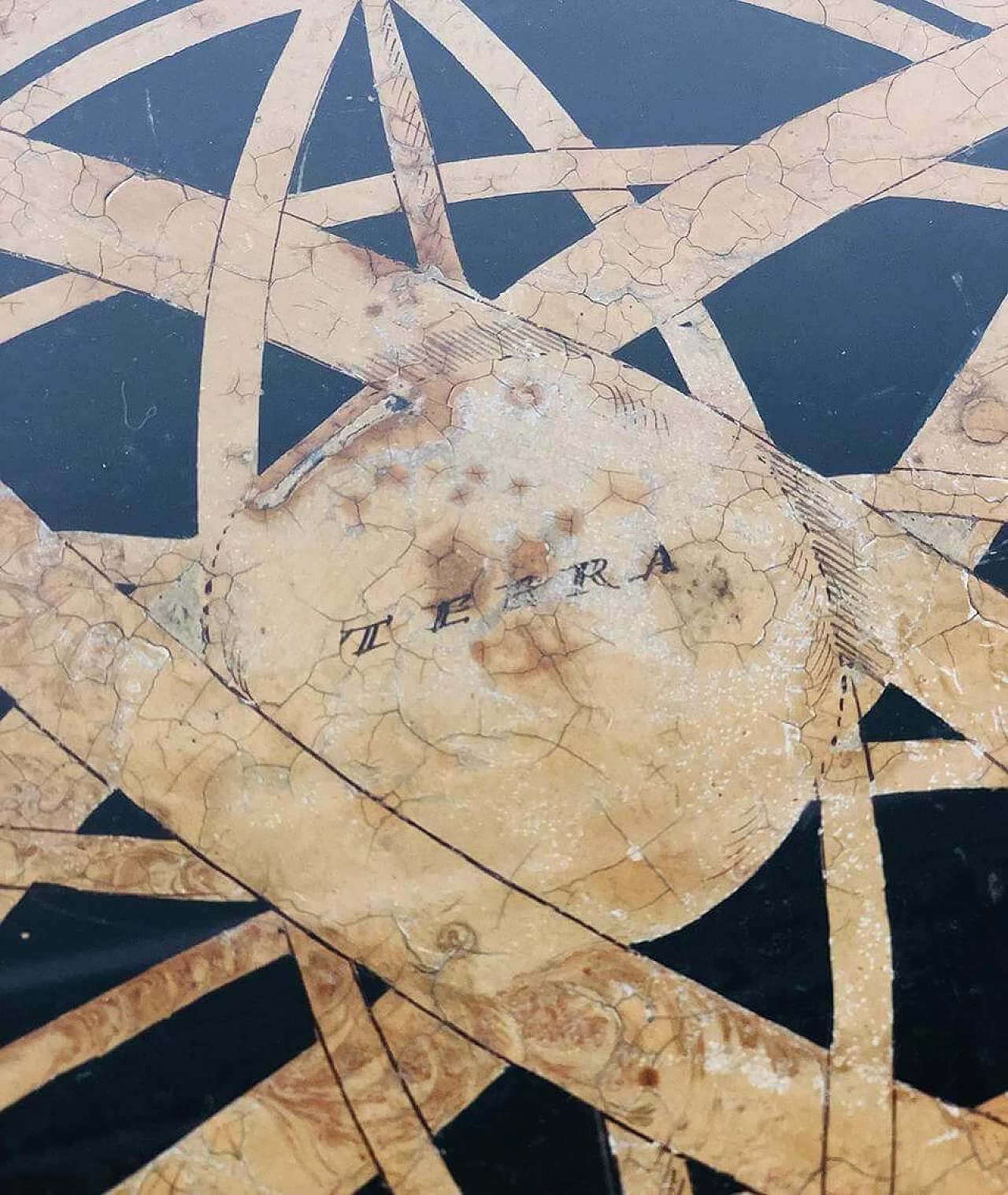
Small table in polychrome scagliola from 1731 with the original Italian signature of Venice. The work is signed by the artist Giglielmo Blaeuni. In the centre of the table we find an astrolabe: an instrument that calculated the height of the sun, but also had a double purpose: to solve problems of spherical astronomy. On either side of the astrolabe are two cobalt blue circles containing other symbolic animals. To protect the work, the table is protected by glass. Scagliola is a type of fine plaster used in construction and sculpture. The same term also identifies the inlay technique, which in the late 16th century early 17th century was created to 'imitate' marble and hard stone with a mixture of the same plaster, combined with natural glues and coloured pigments. Scagliola has had a particular tradition in the city of Carpi, where it was invented at the beginning of the 17th century, according to tradition, by Guido Fassi from Carpi, and in Val d'Intelvi, the traditional homeland of building specialists who were architects but also stonemasons, decorators and plasterers who, in the good season, carried out their work well outside the valley.


.png)




 SILVER Seller in Milano, Italia