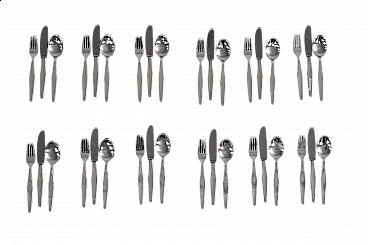
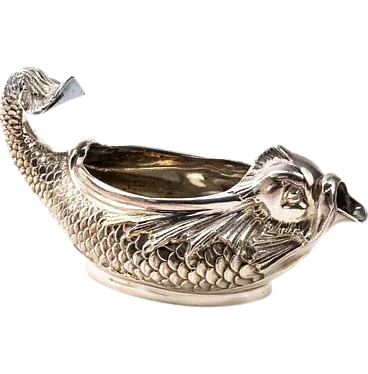
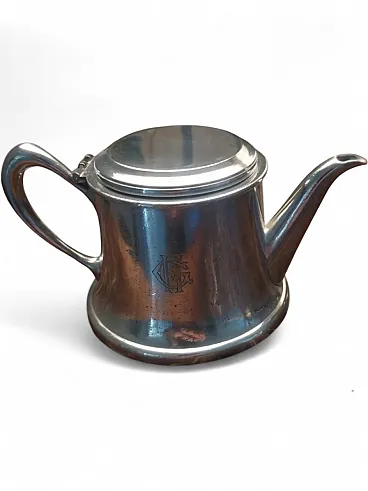
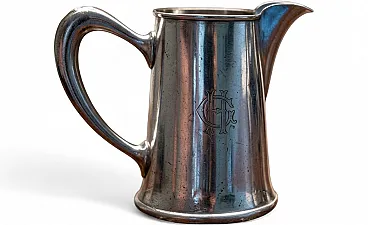
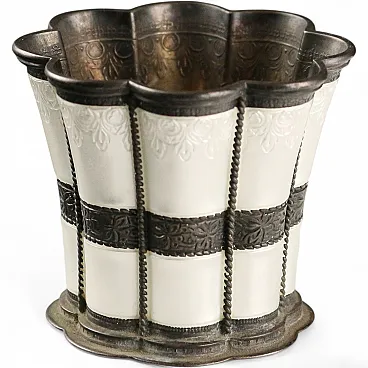
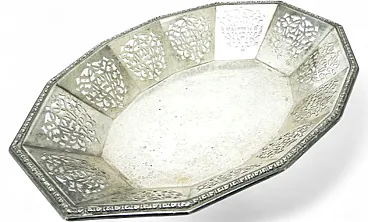
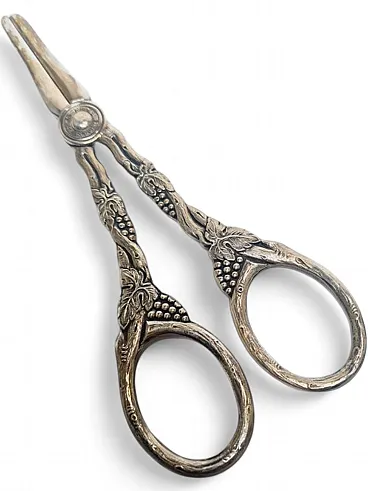
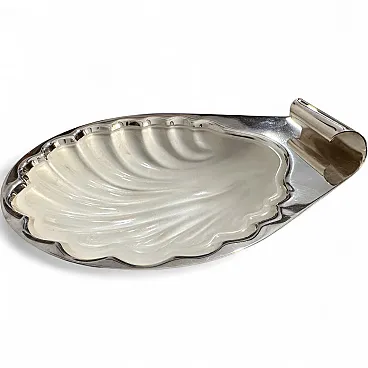
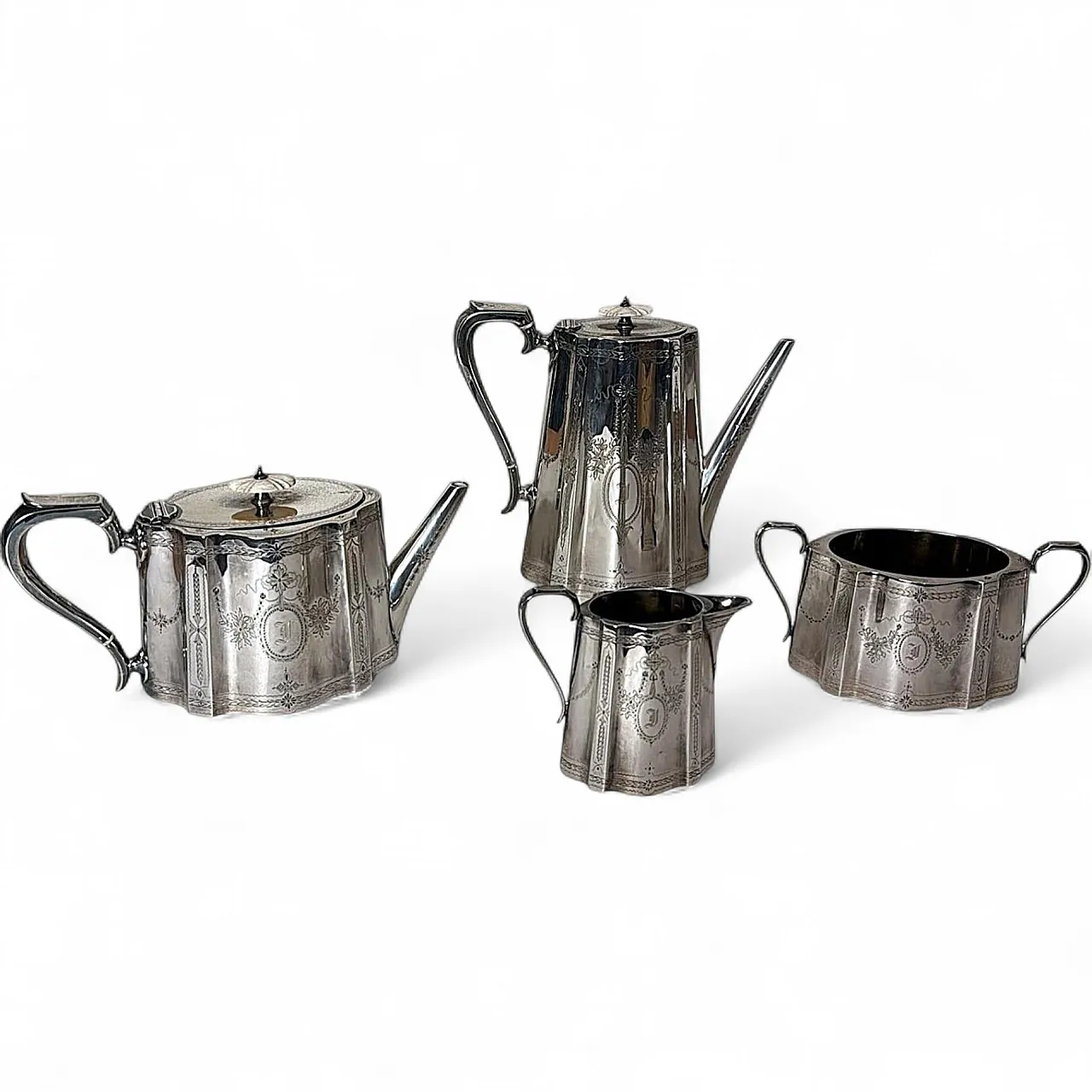
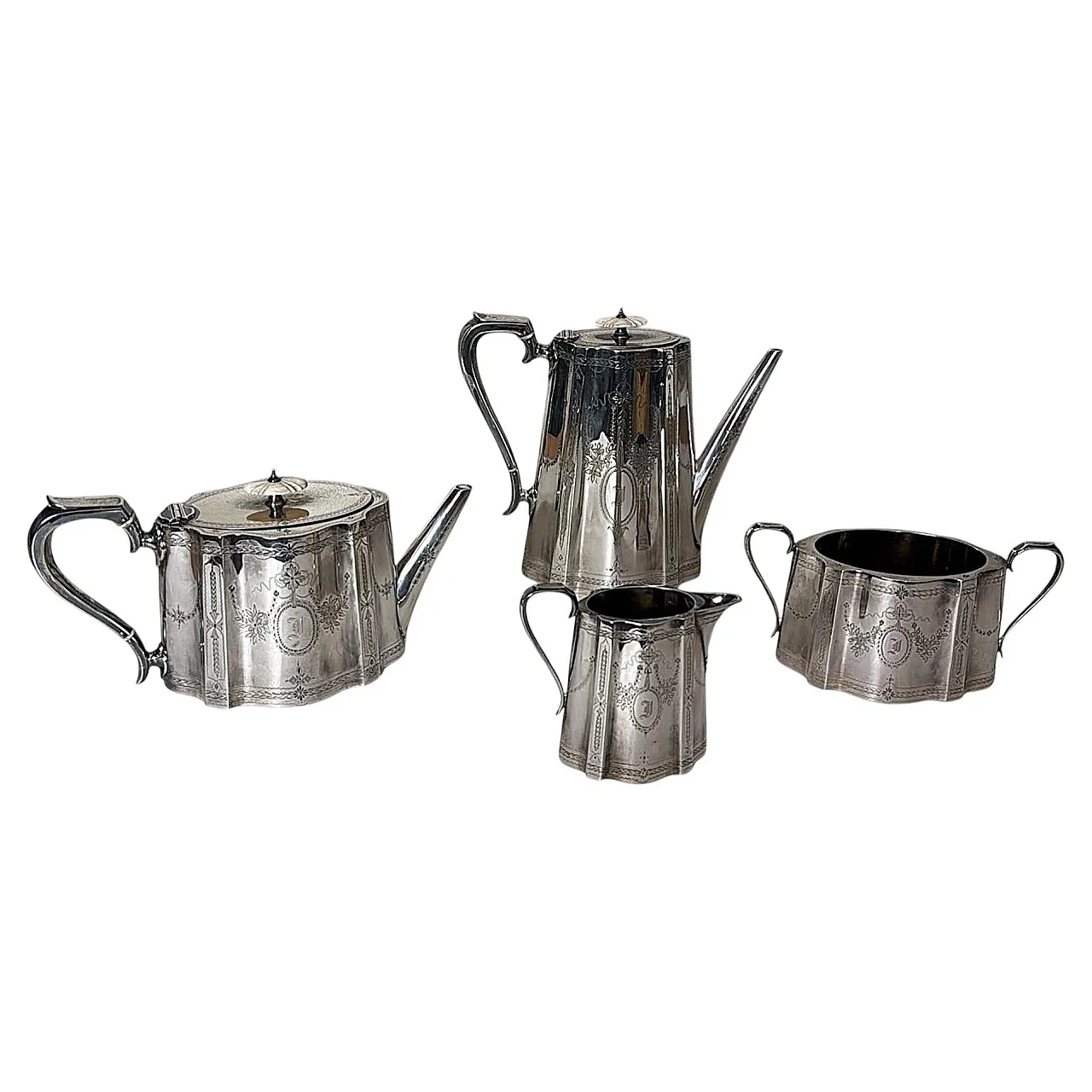
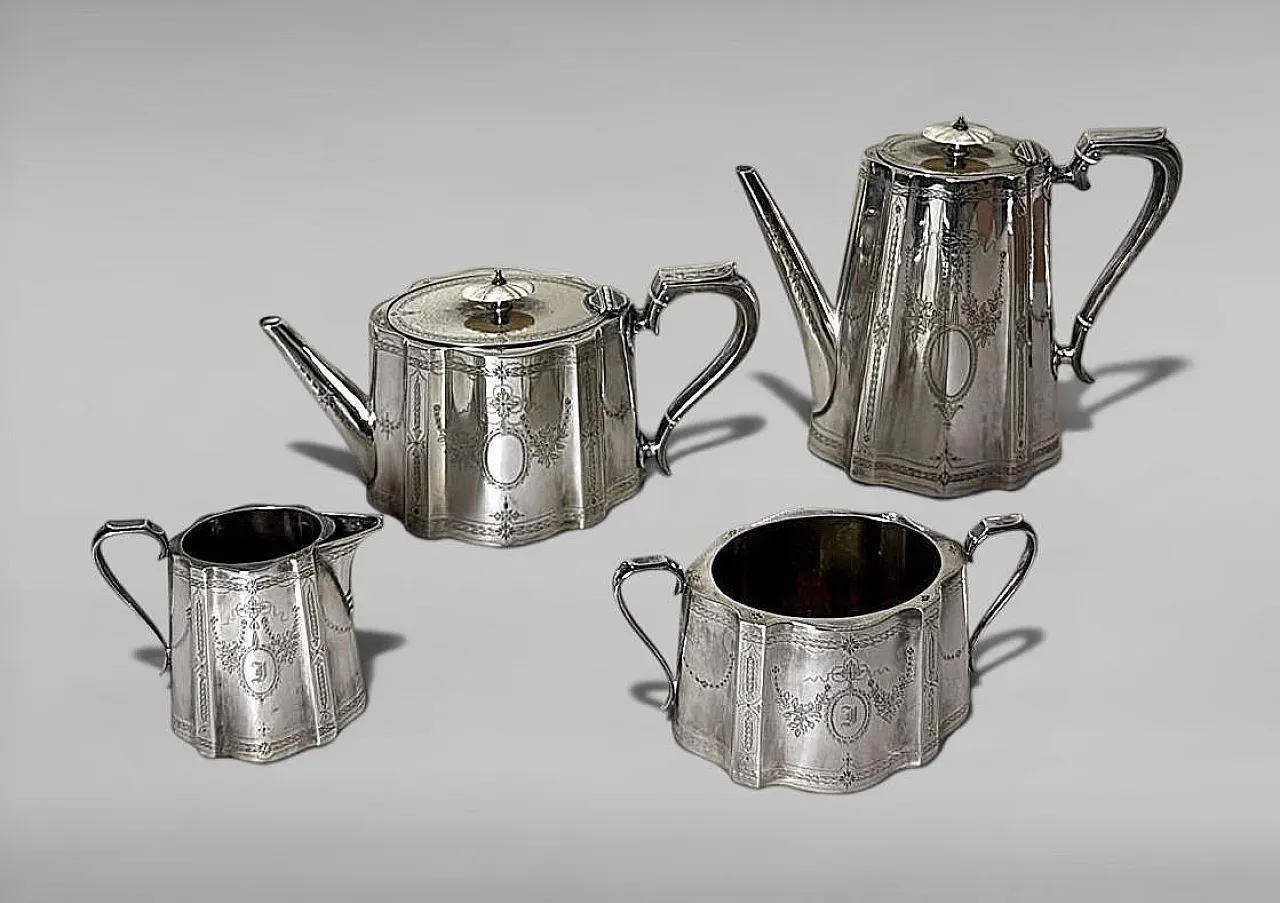
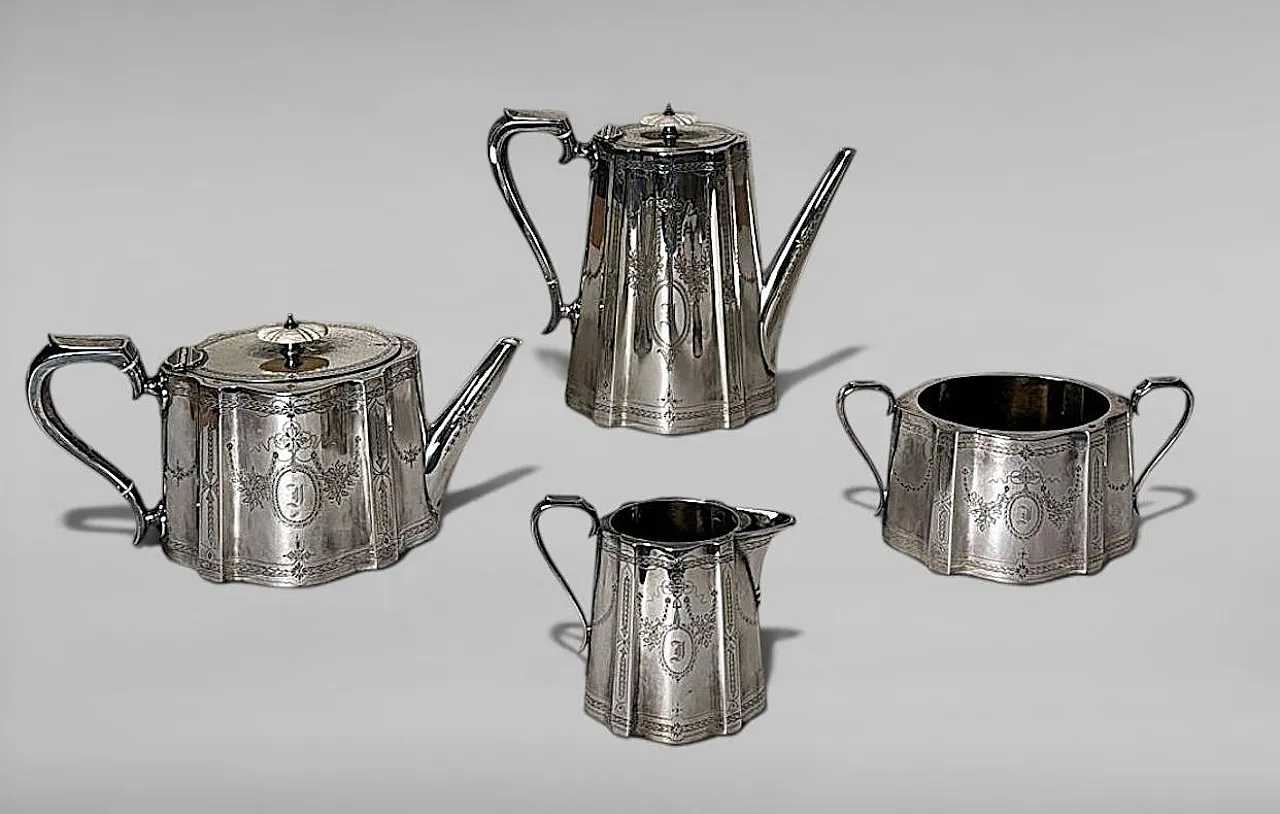
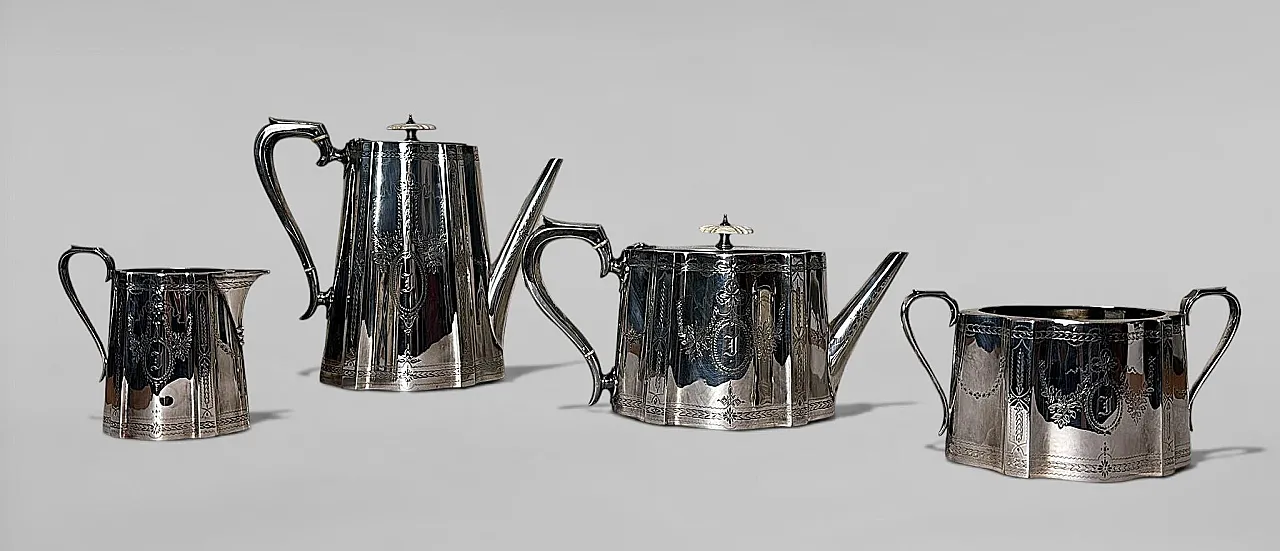
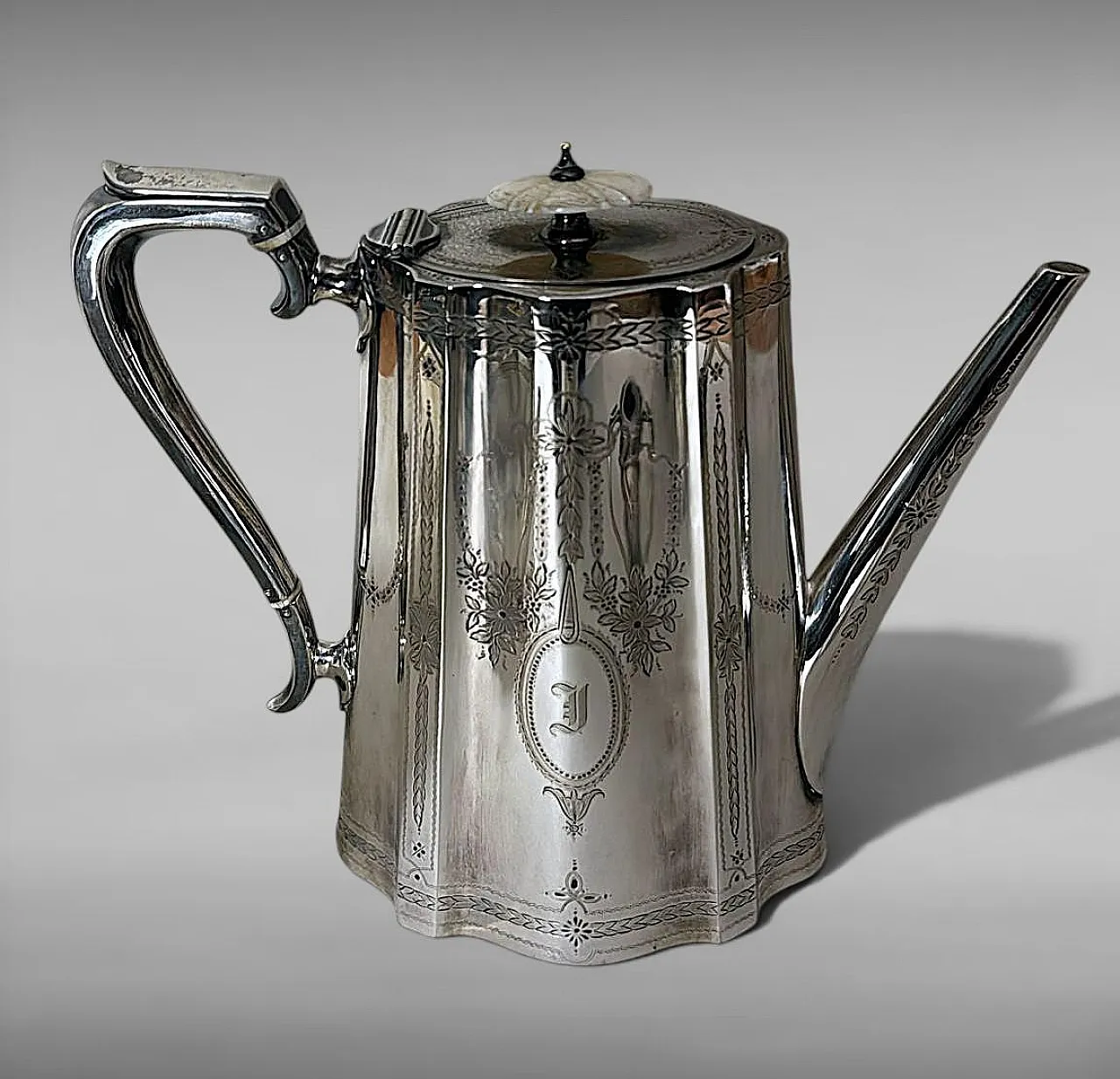
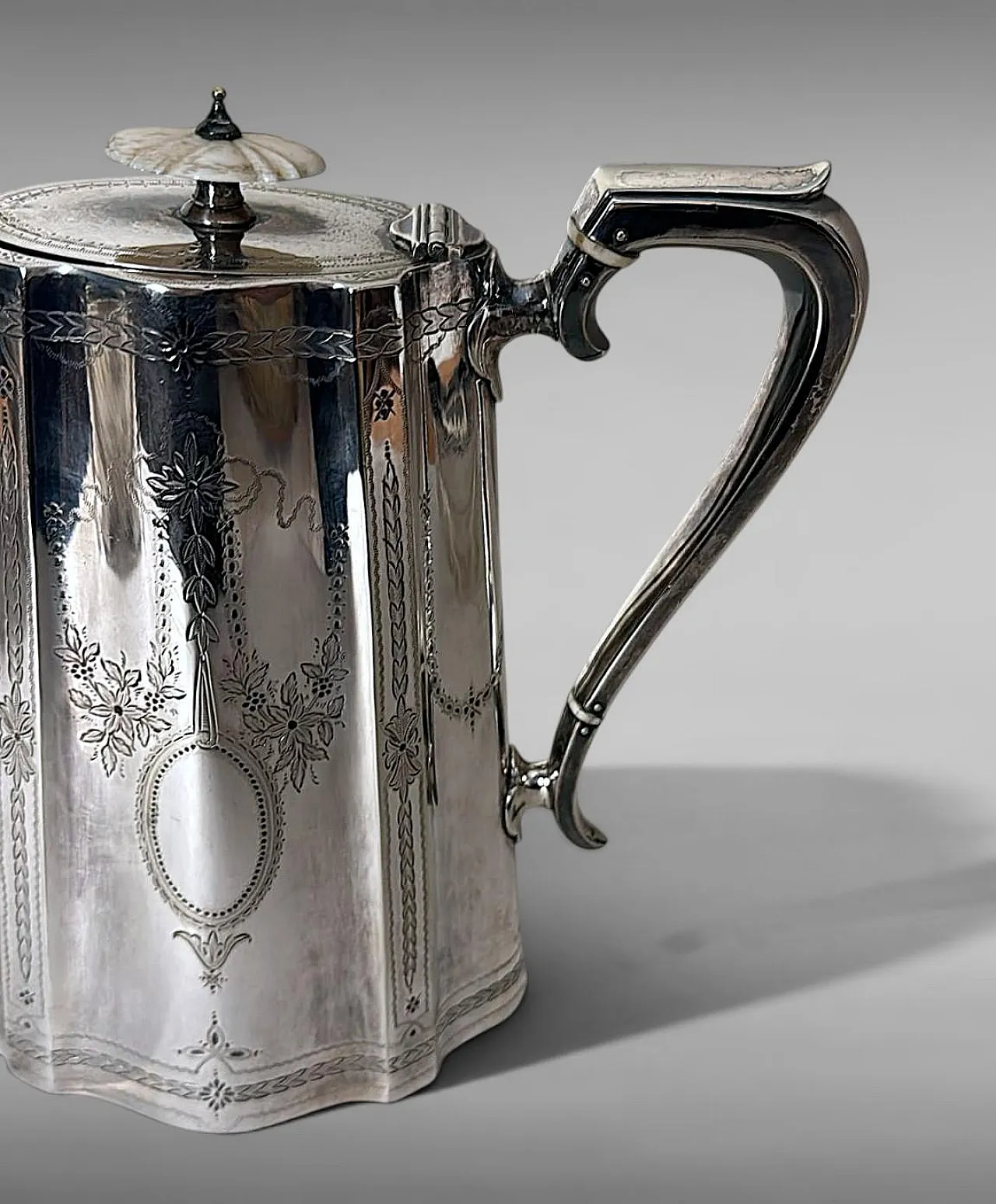
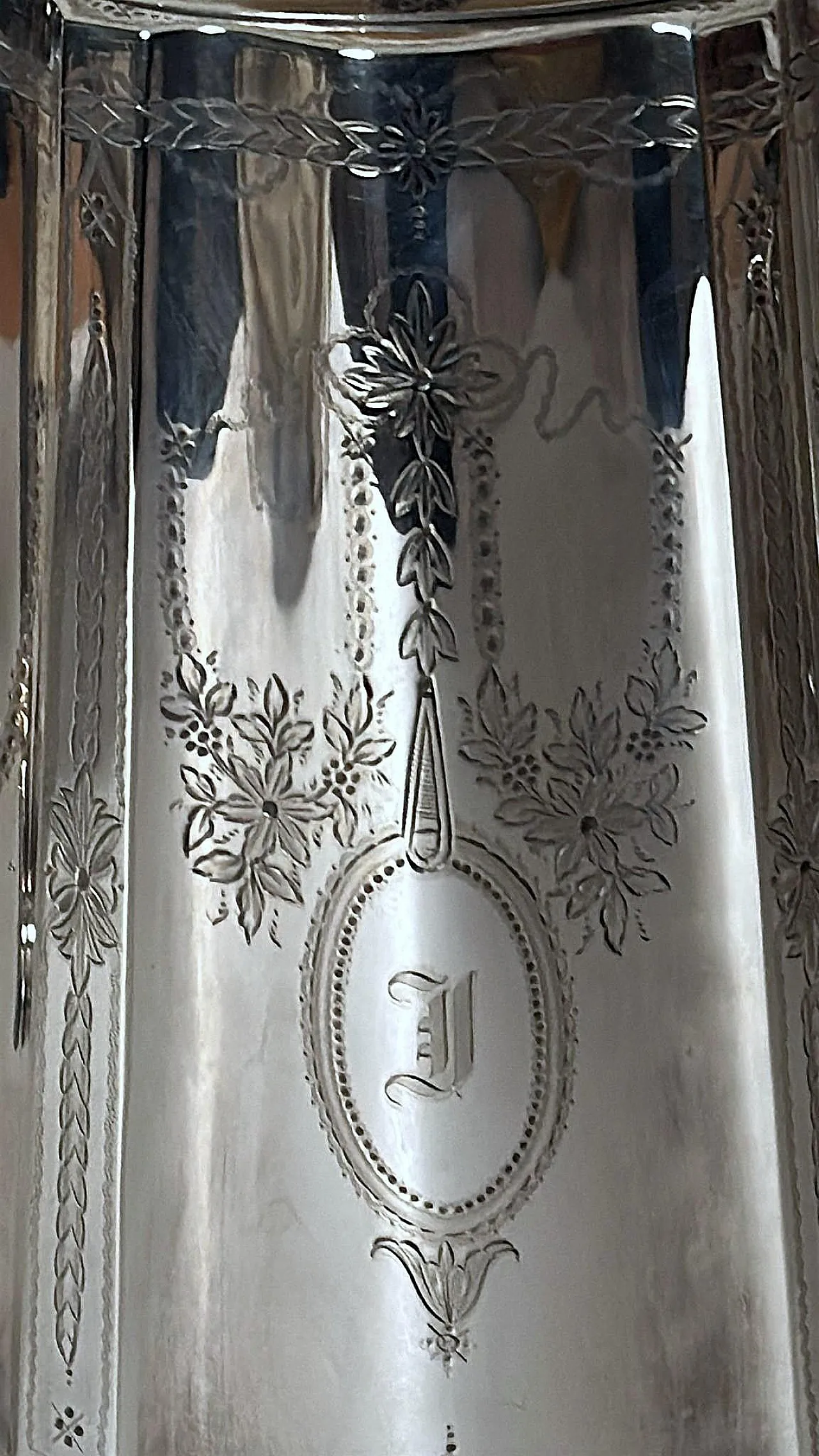
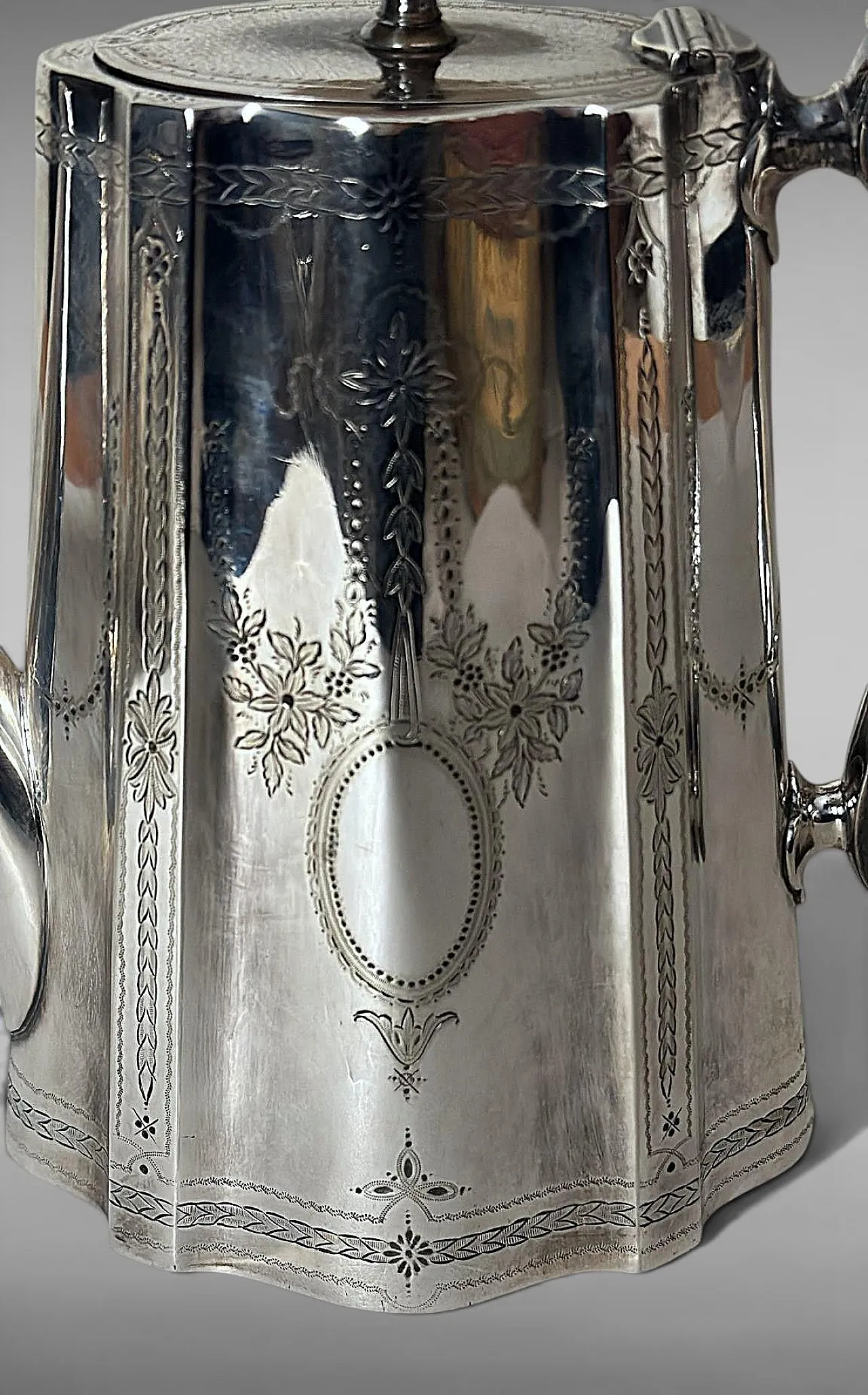
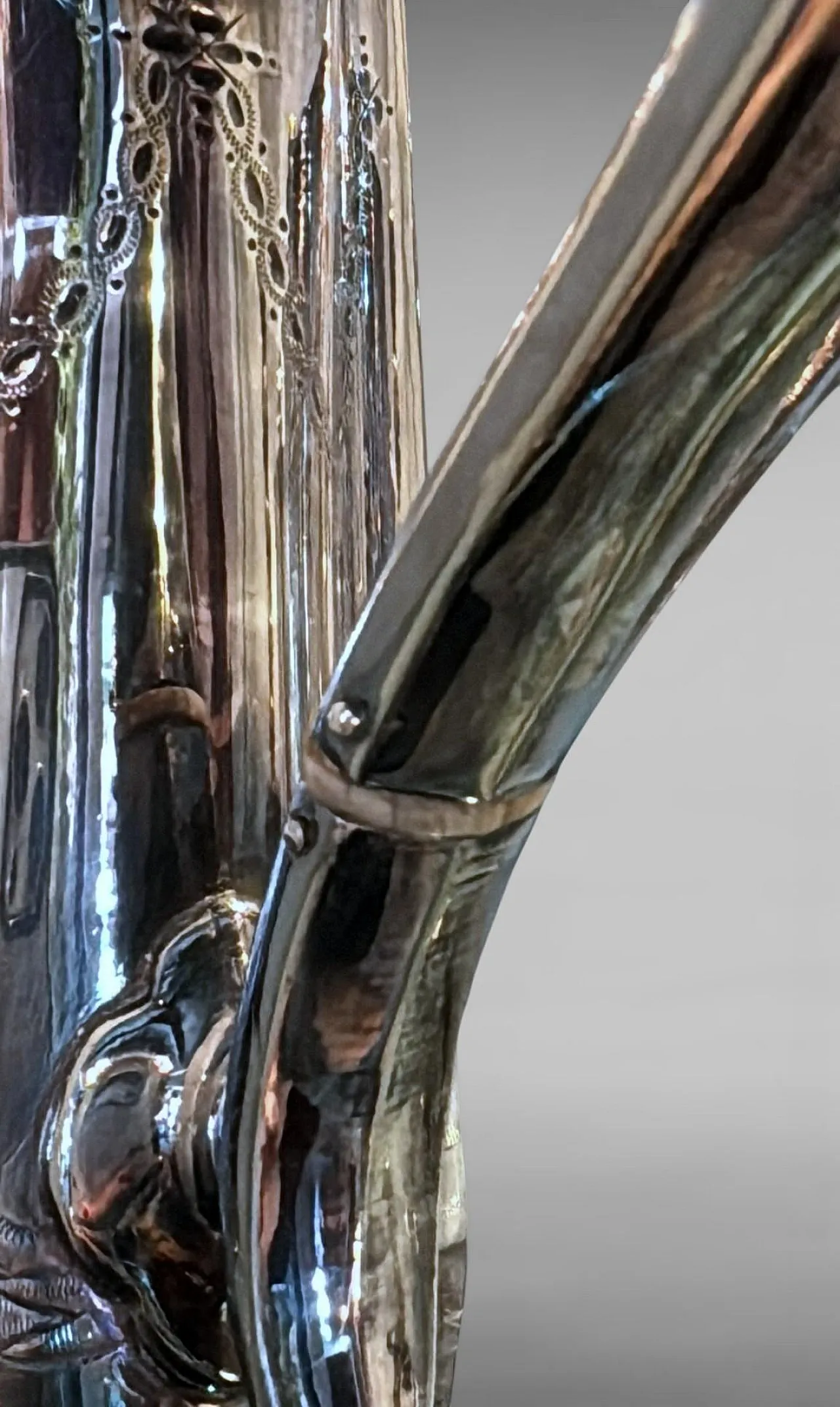
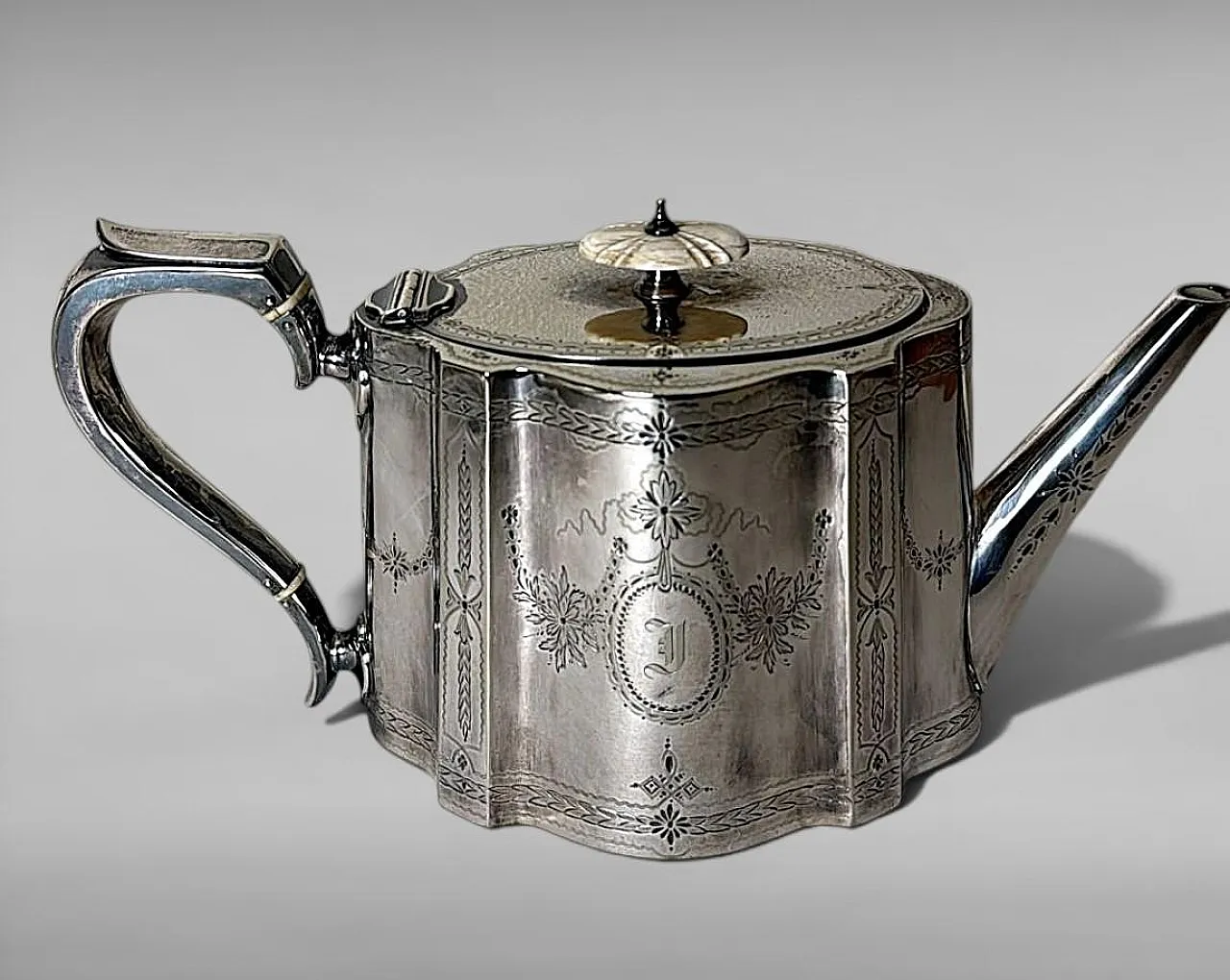
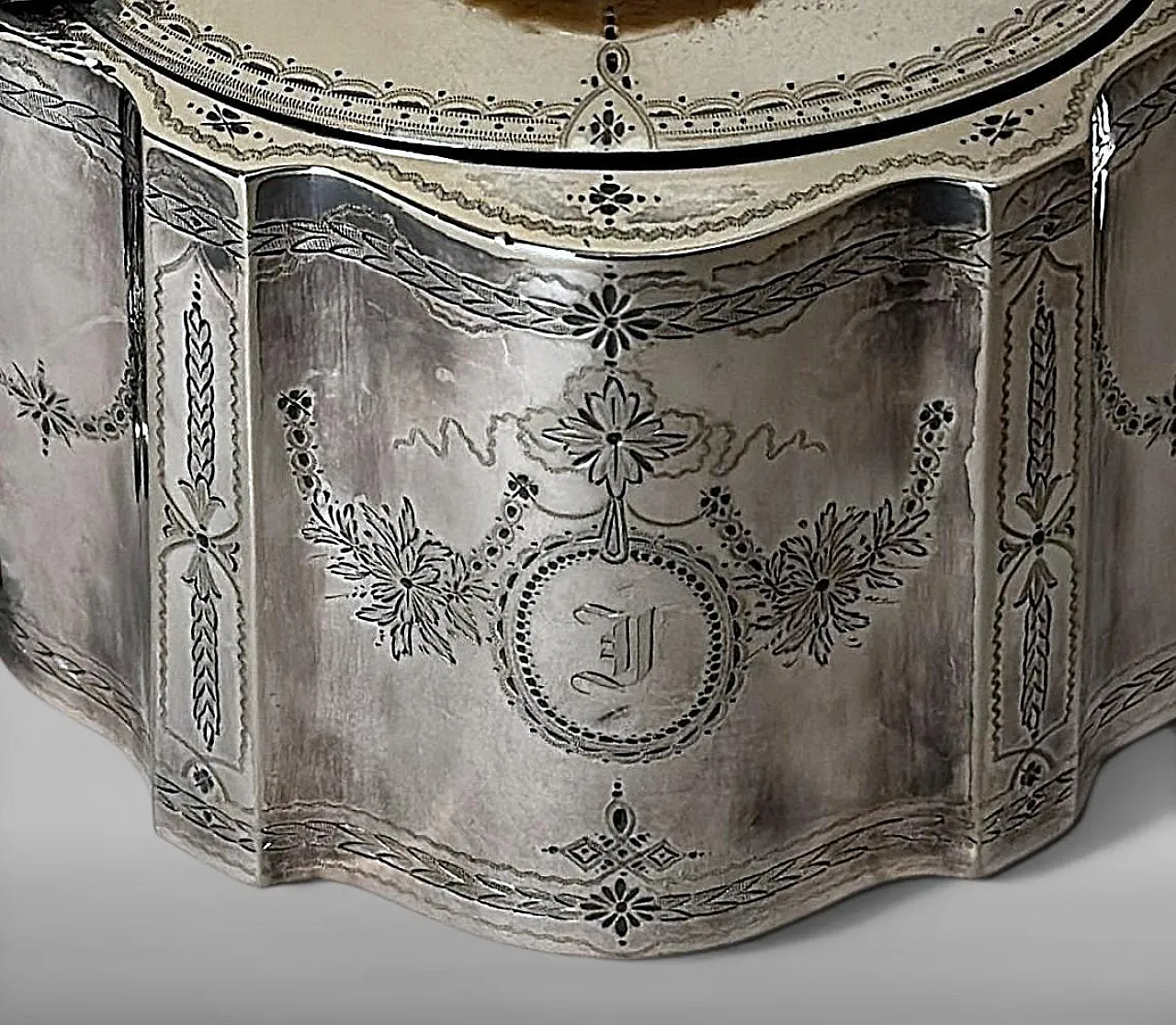
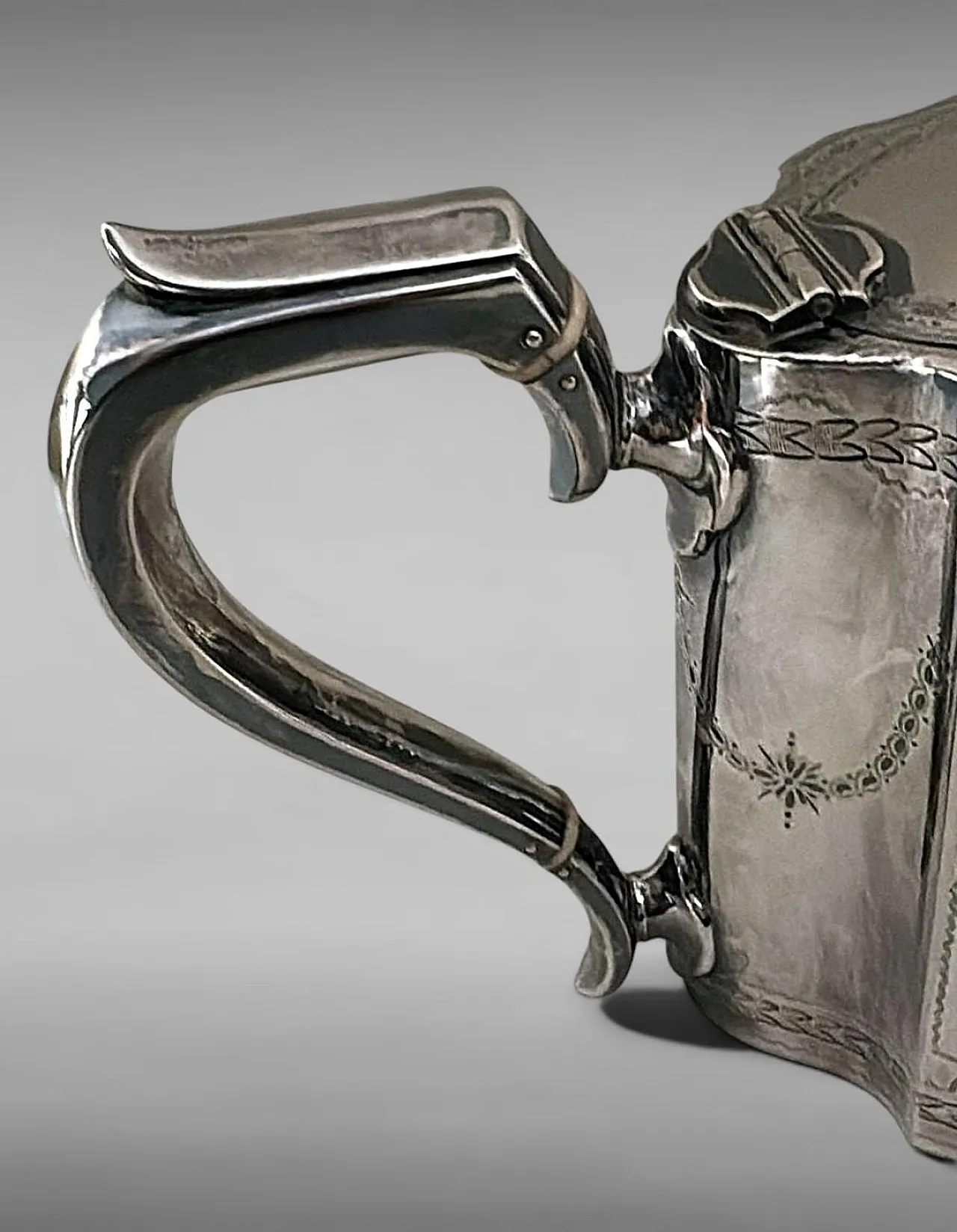
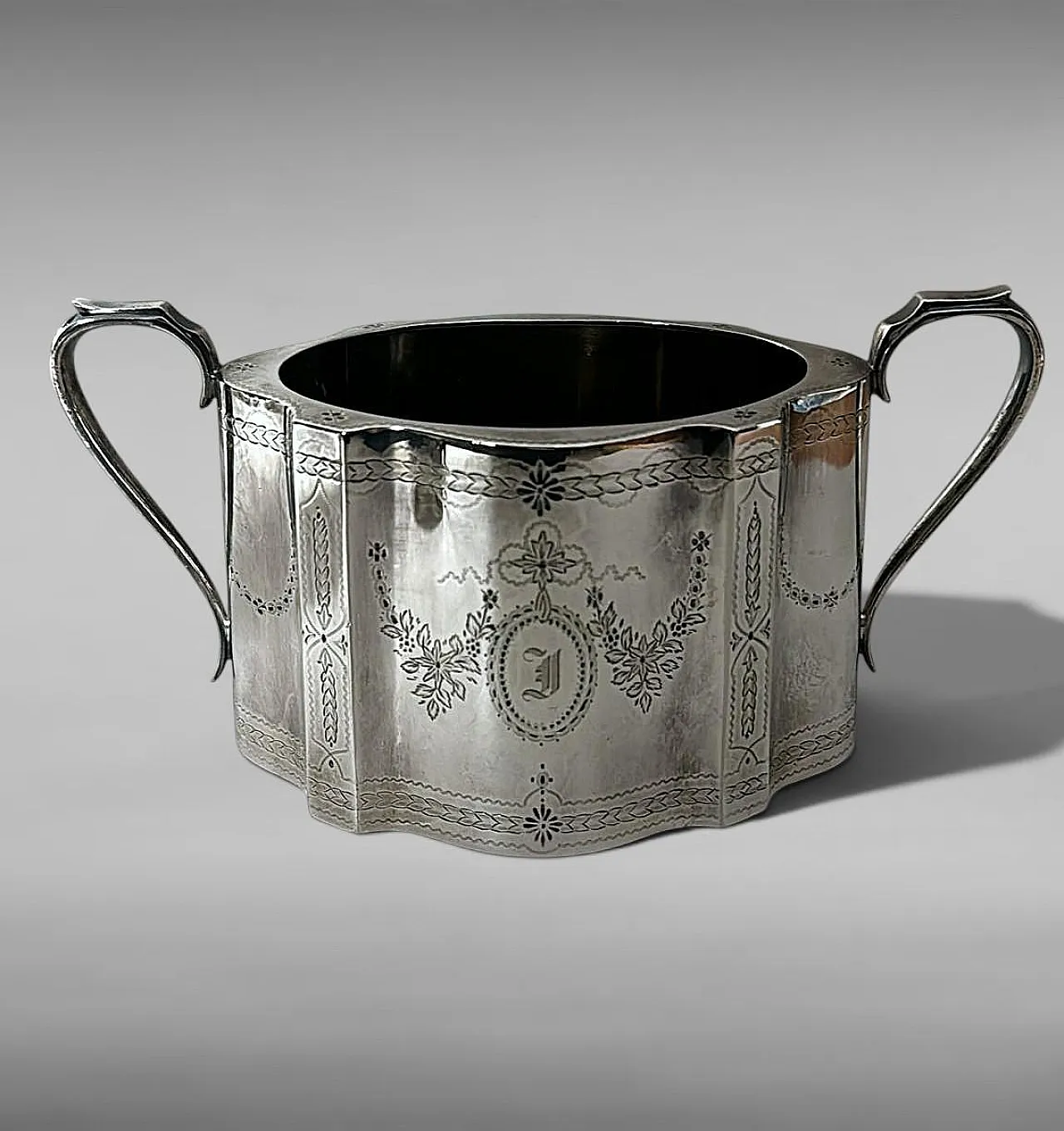
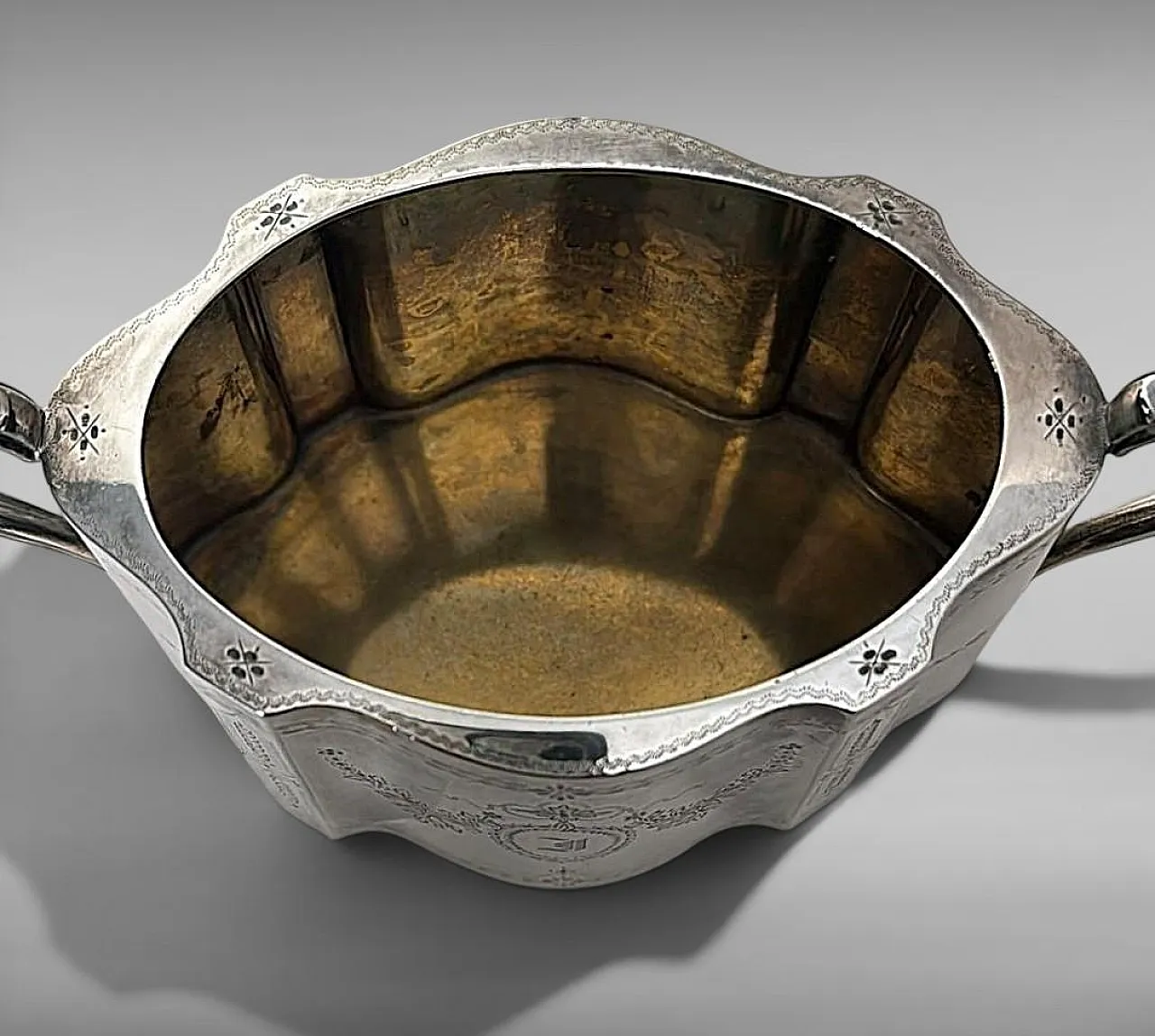
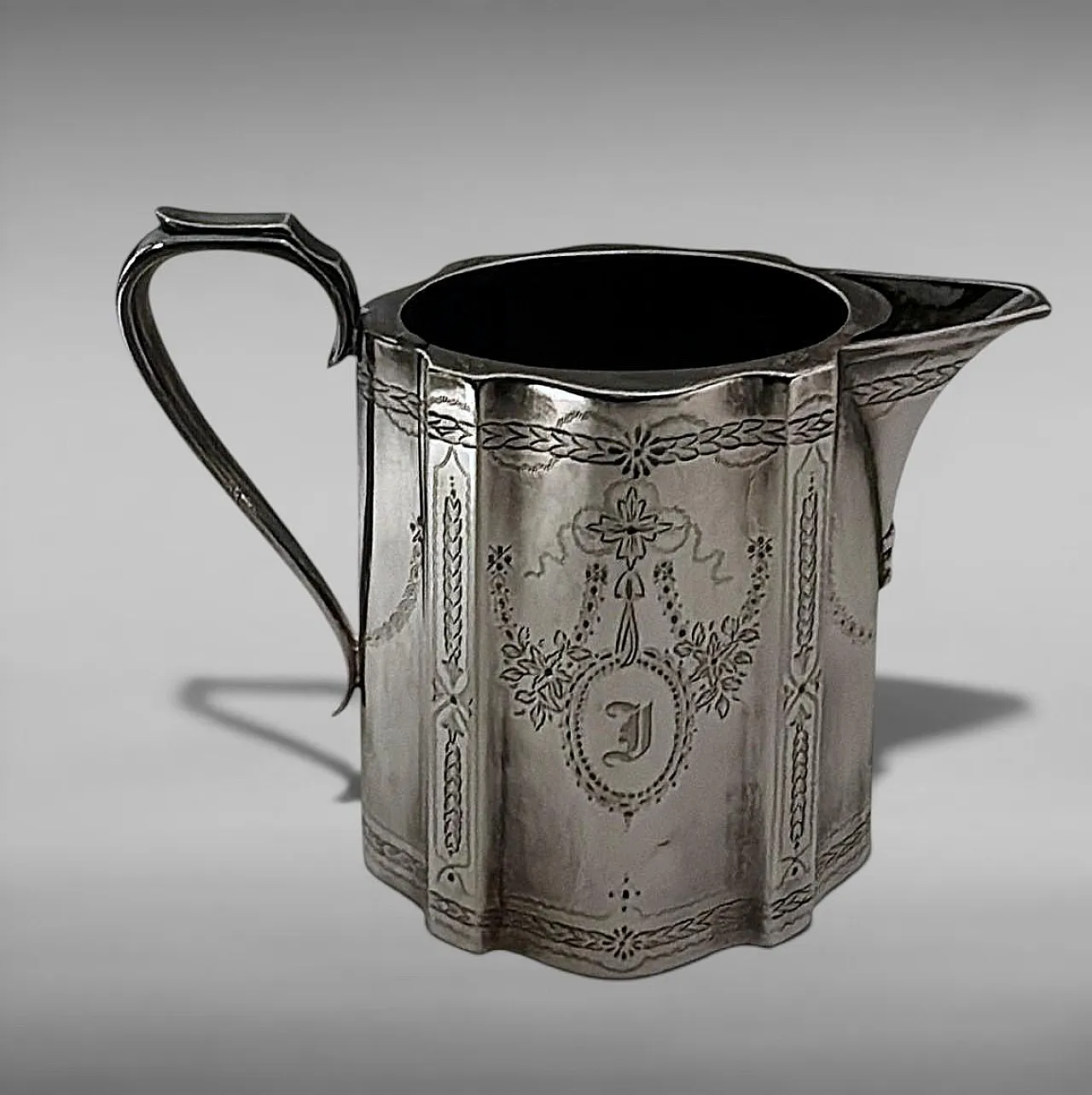
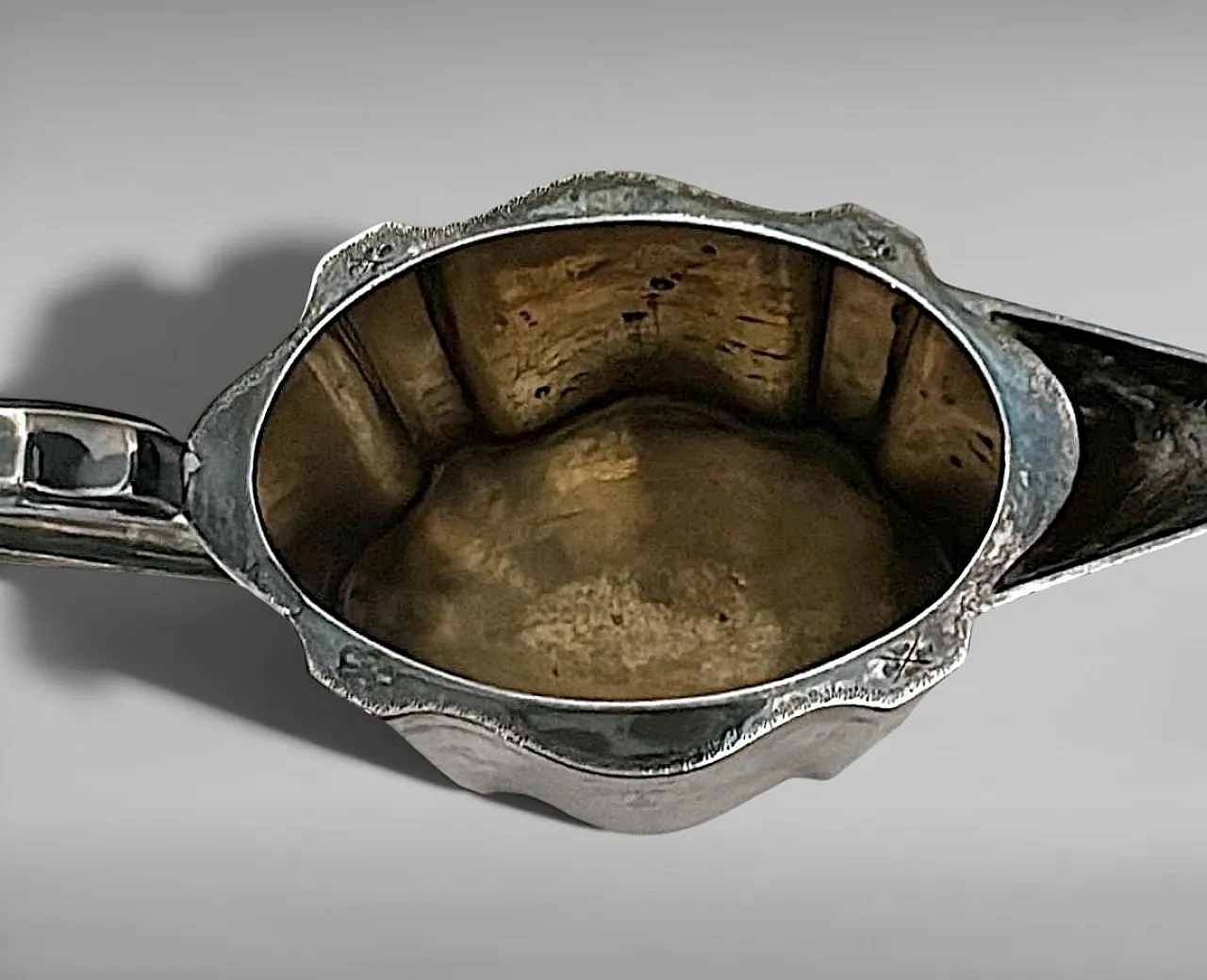
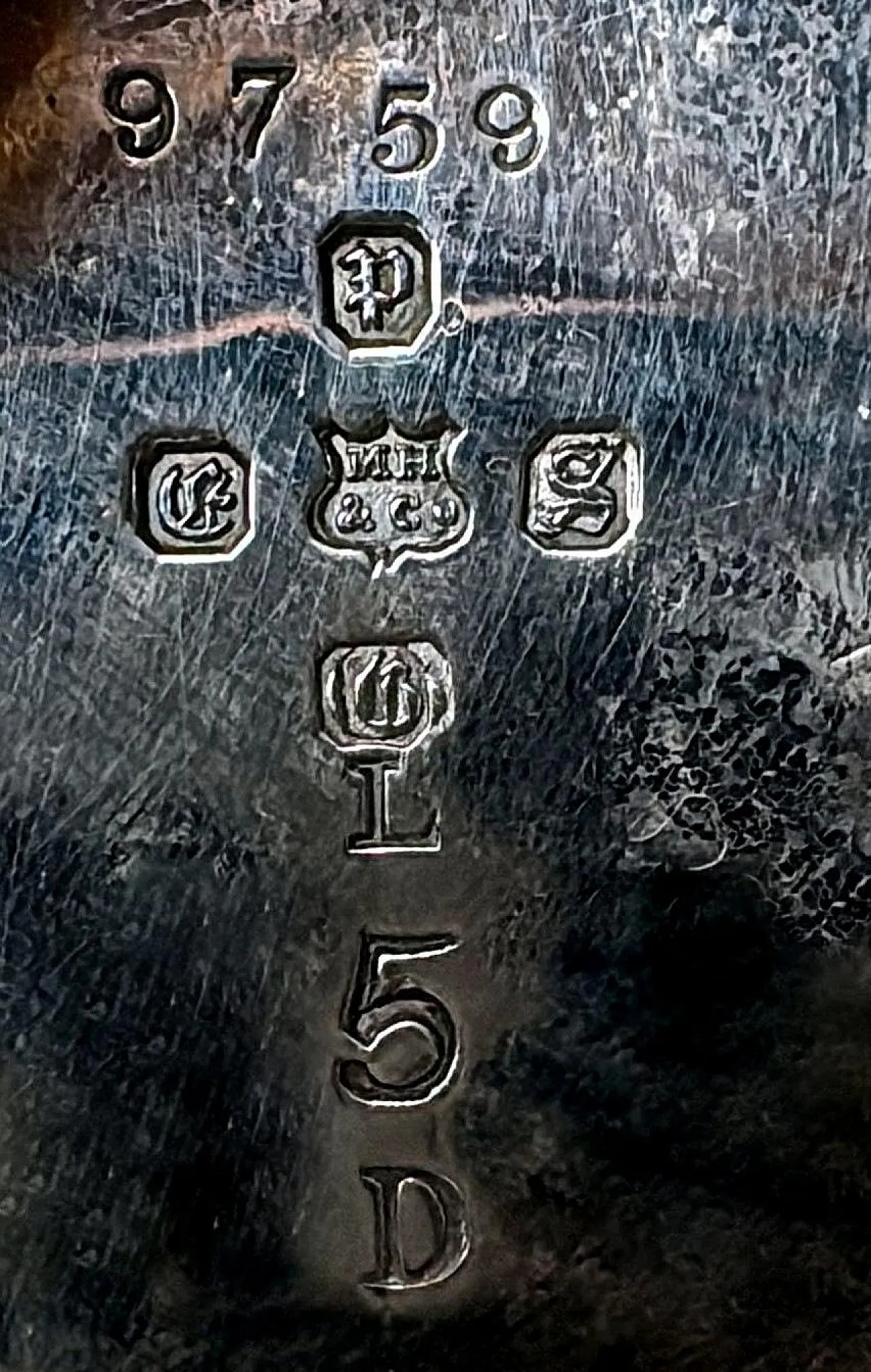
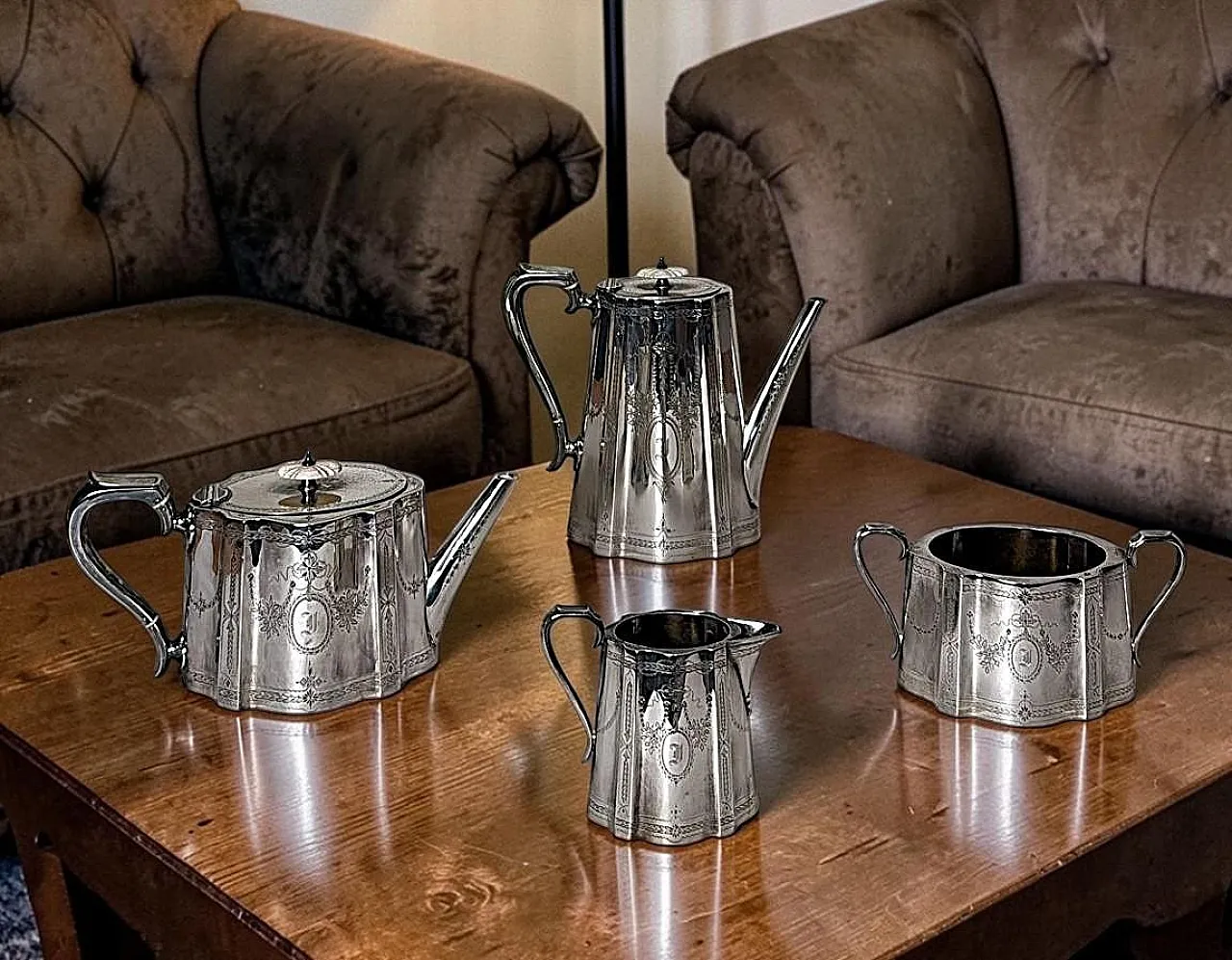
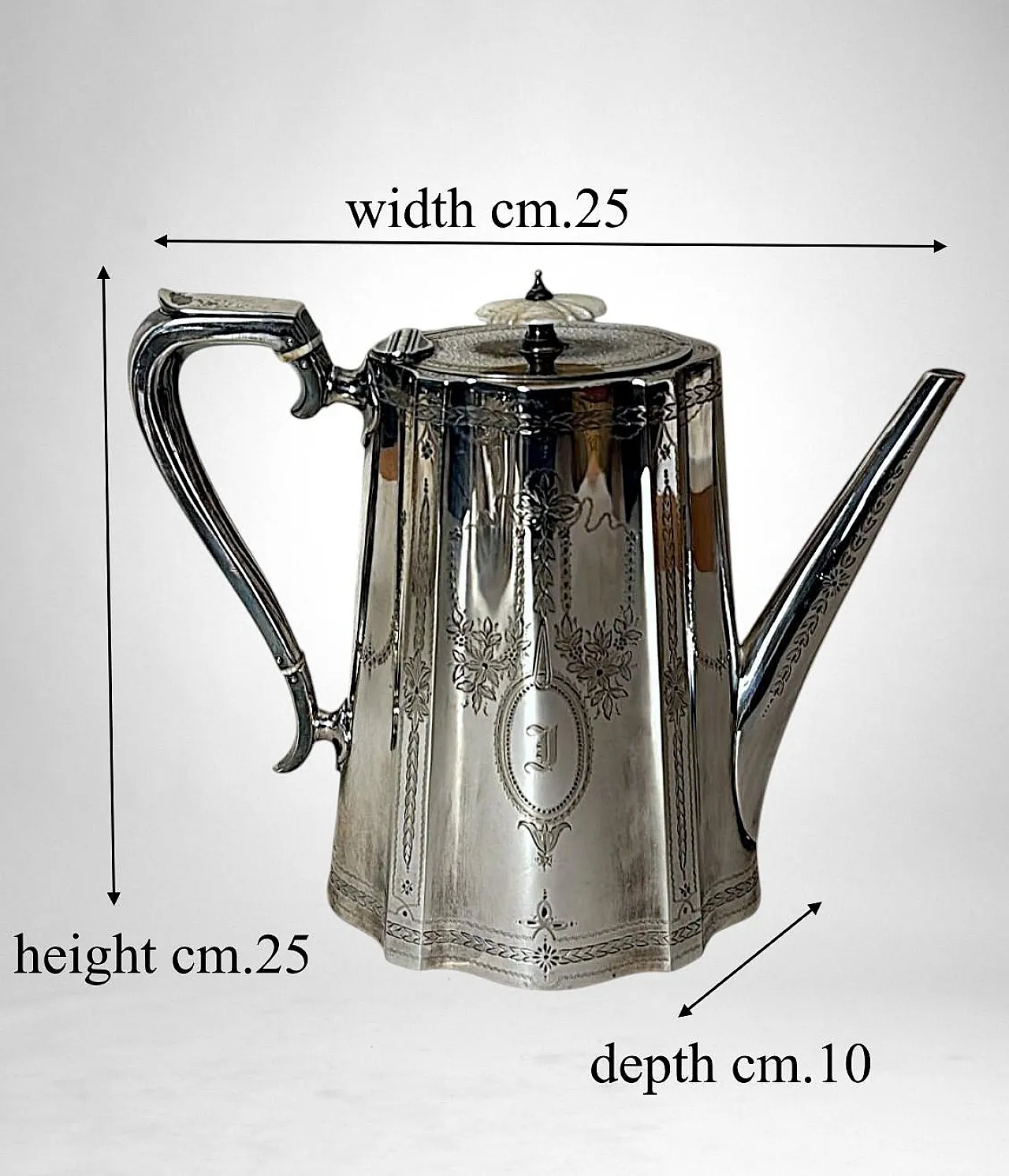
A classic English silver-plated tea and coffee service comprising four pieces. Each piece features an elegant shaped oval baluster form, richly embellished with finely executed engraved decoration. At the center of every item, a decorative cartouche frames the letter “I” rendered in an Old English script. The entire service is crafted in exceptionally high-quality silver plate. The base material employed was Hard Metal, an alloy renowned for its superior mechanical strength and excellent resistance to corrosion. The pieces were subsequently finished with a heavy electroplated silver coating of remarkable quality, which has survived exceptionally well to the present day. The hallmarks stamped on all pieces belong to one of the most important and respected English manufacturers of silver and silver-plated wares, Martin, Hall & Co. The company's origins date back to Sheffield in 1820, when Henry Wilkinson and John Roberts established the firm of Wilkinson & Roberts. In 1836 Wilkinson left the business, and in 1846 John Roberts entered into partnership with Ebenezer Hall, formerly his apprentice, forming Roberts & Hall. In 1854 Richard Martin, previously associated with Martin Brothers & Naylor, and Joshua Hall, brother of Ebenezer Hall, joined the partnership, creating the firm known as Martin, Hall & Co. In 1866 the company was incorporated as a limited liability company. The present service can be dated to 1854, as documented on page 89 of Sheffield & Birmingham Victorian Electroplaters Book of Marks by Andrea De Giovanni. The company operated from the Shrewsbury Works in Broad Street Park, Sheffield, and maintained showrooms in London, Birmingham, Glasgow, and Sydney. In London, the firm was registered as silversmiths, manufacturers of electroplated and silver-plated wares, and steel cutlers. Throughout its history, Martin, Hall & Co. participated in several major international exhibitions, including the Great Exhibition of 1851 in London, the International Exhibition of 1862, the Sydney International Exhibition of 1879, the Melbourne International Exhibition of 1881, and the British Industries Fair of 1915. In addition to producing sterling silver and electroplated wares, the company successfully marketed a more affordable line manufactured in a patented white metal known as “Martinoid.” Following the First World War and a brief collaboration with Gladwin Ltd., the company entered liquidation and was officially dissolved in 1936. The service remains in good overall condition, displaying the quality and craftsmanship that made Martin, Hall & Co. one of the leading names in Victorian silver-plated tableware. Coffee pot dimensions: Width: 8.66 in (22 cm). Height: 9.84 in (25 cm). Depth: 3.94 in (10 cm)


.png)

 SILVER Seller in Prato, Italy