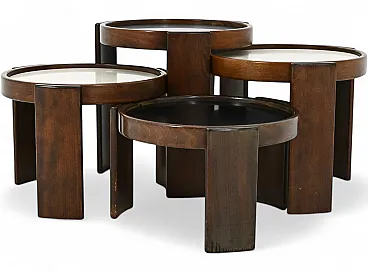
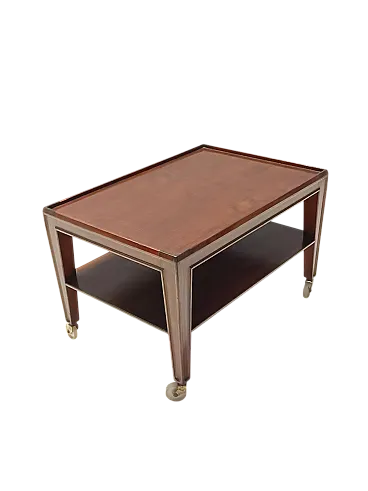
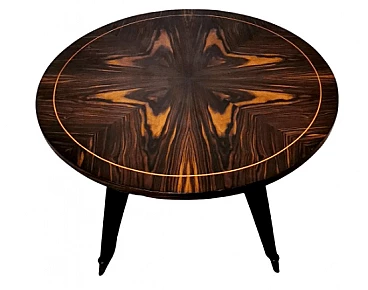
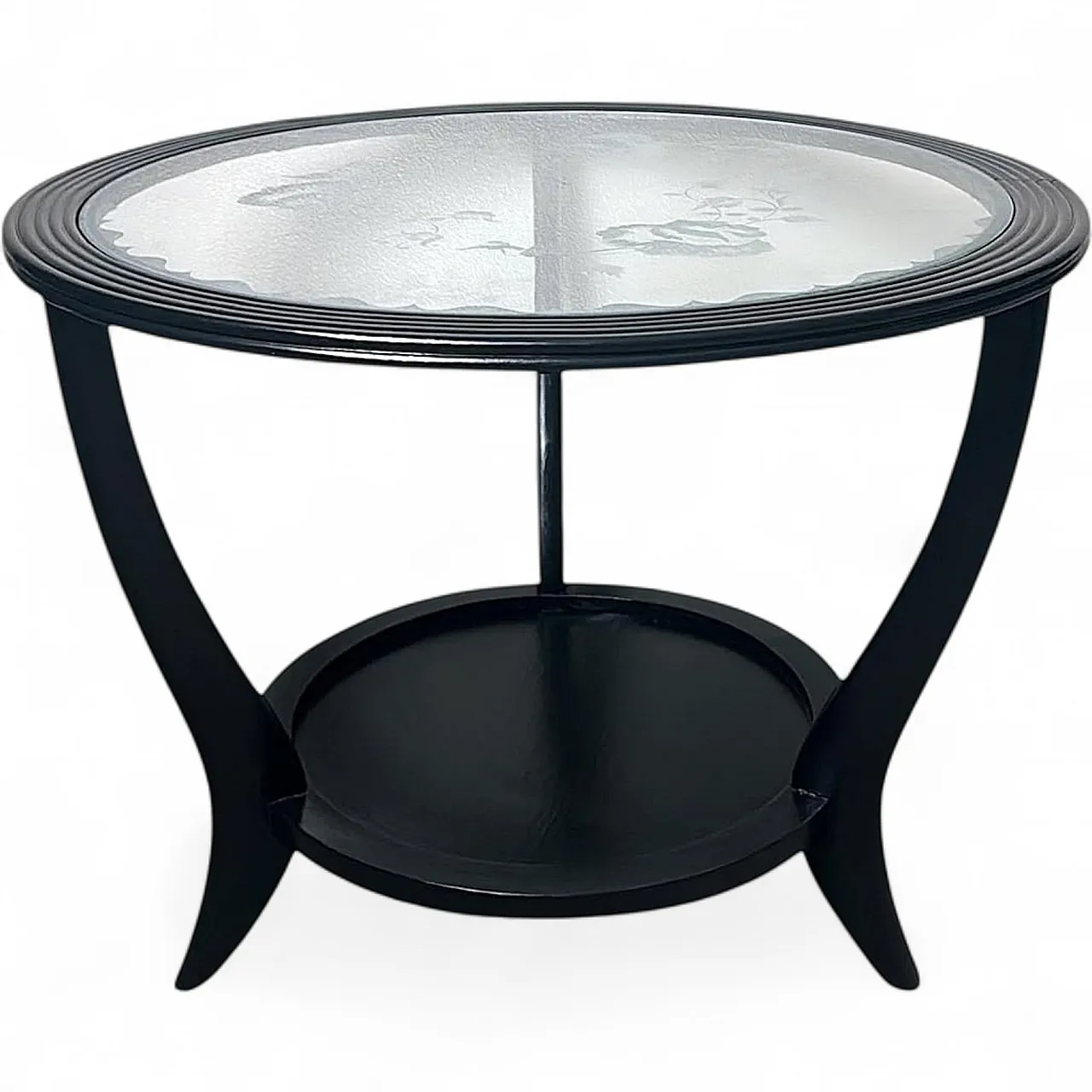
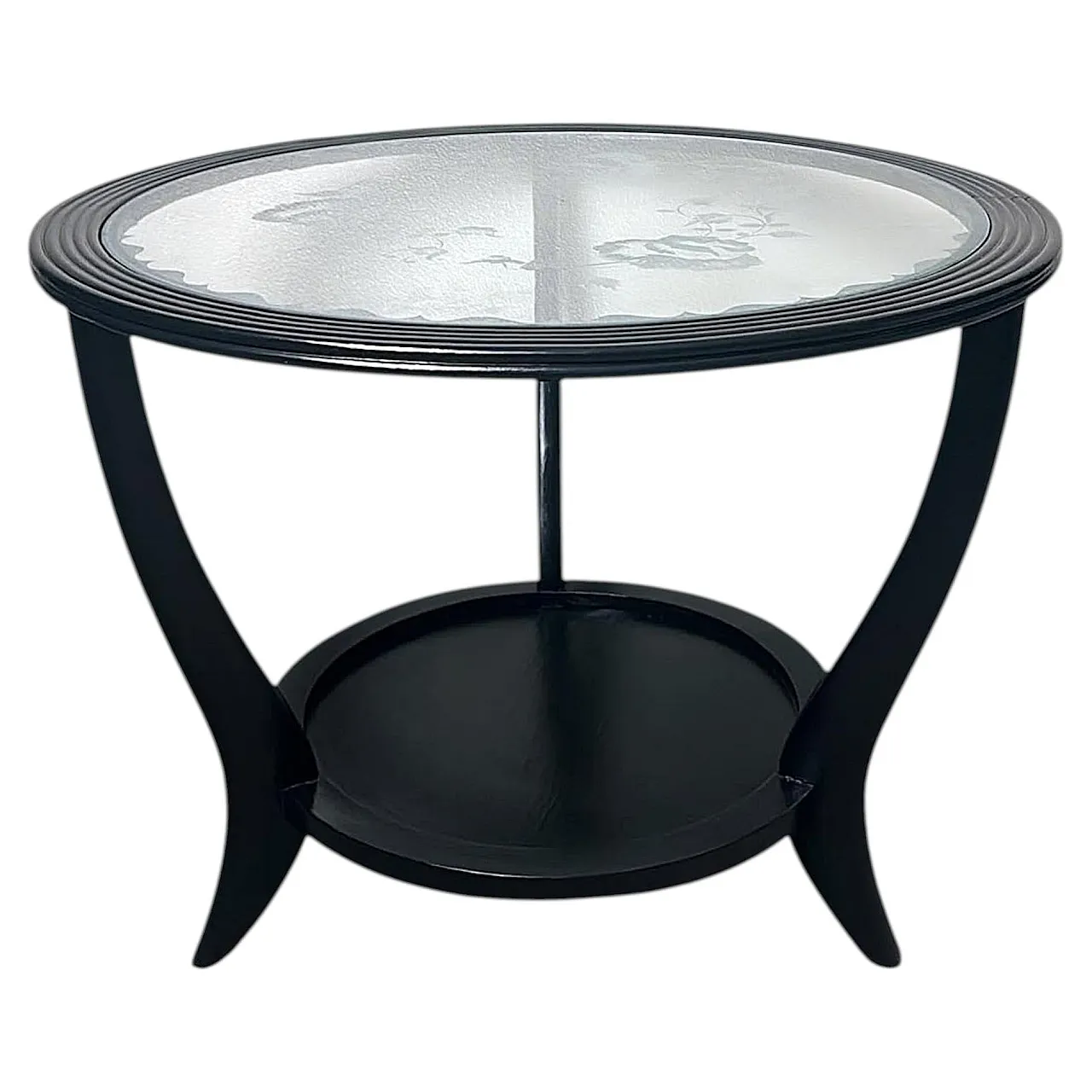
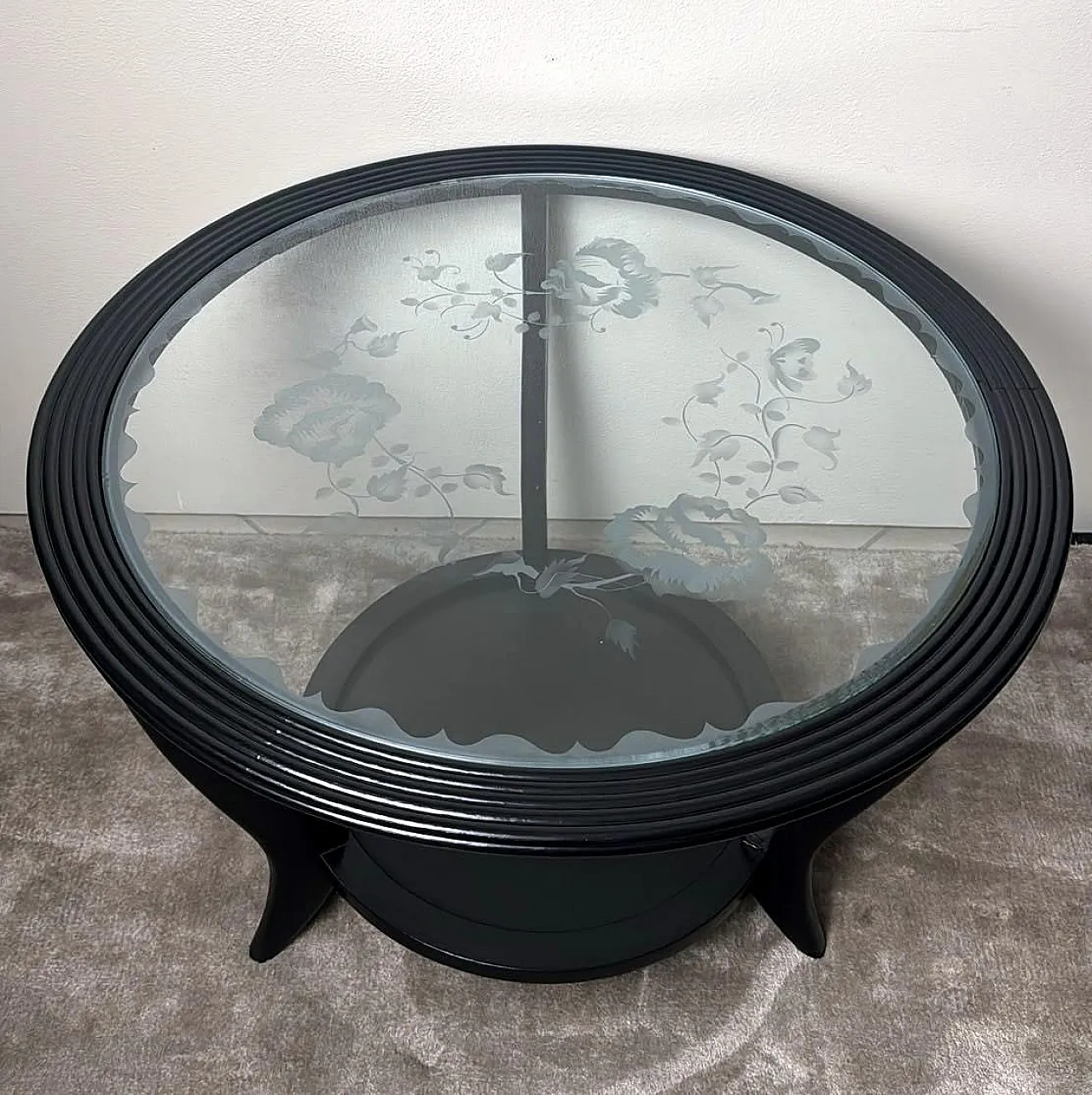
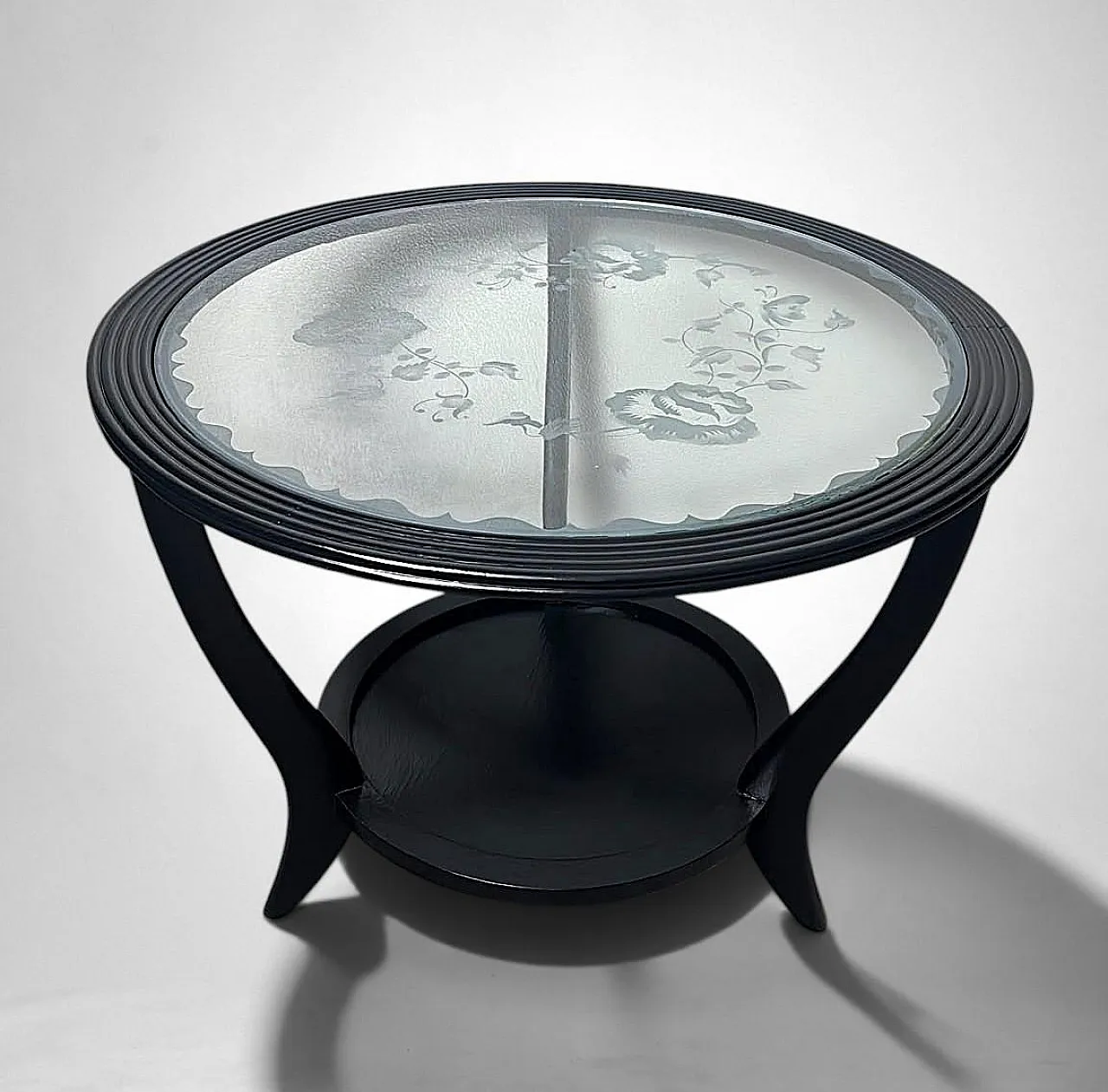
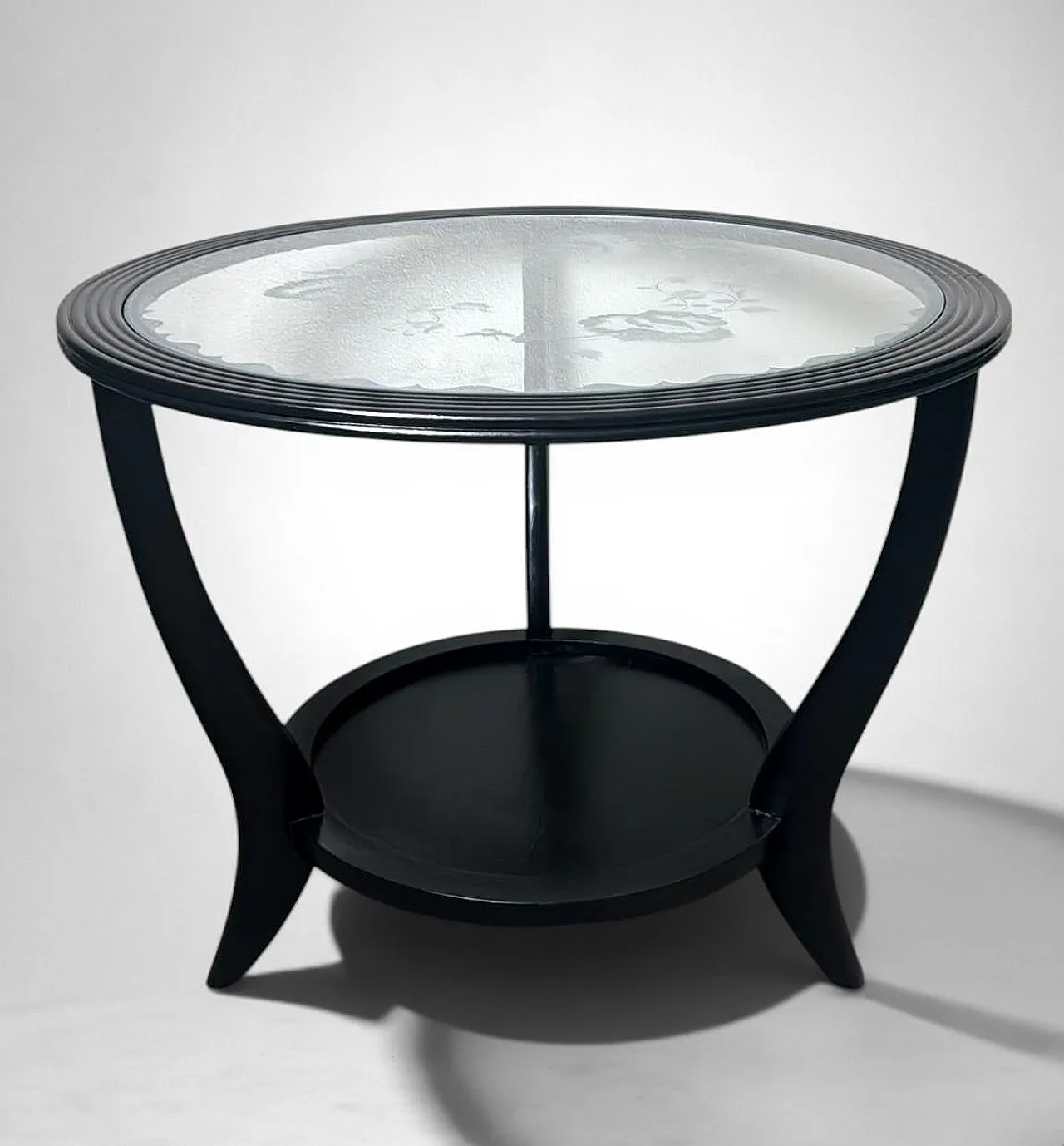
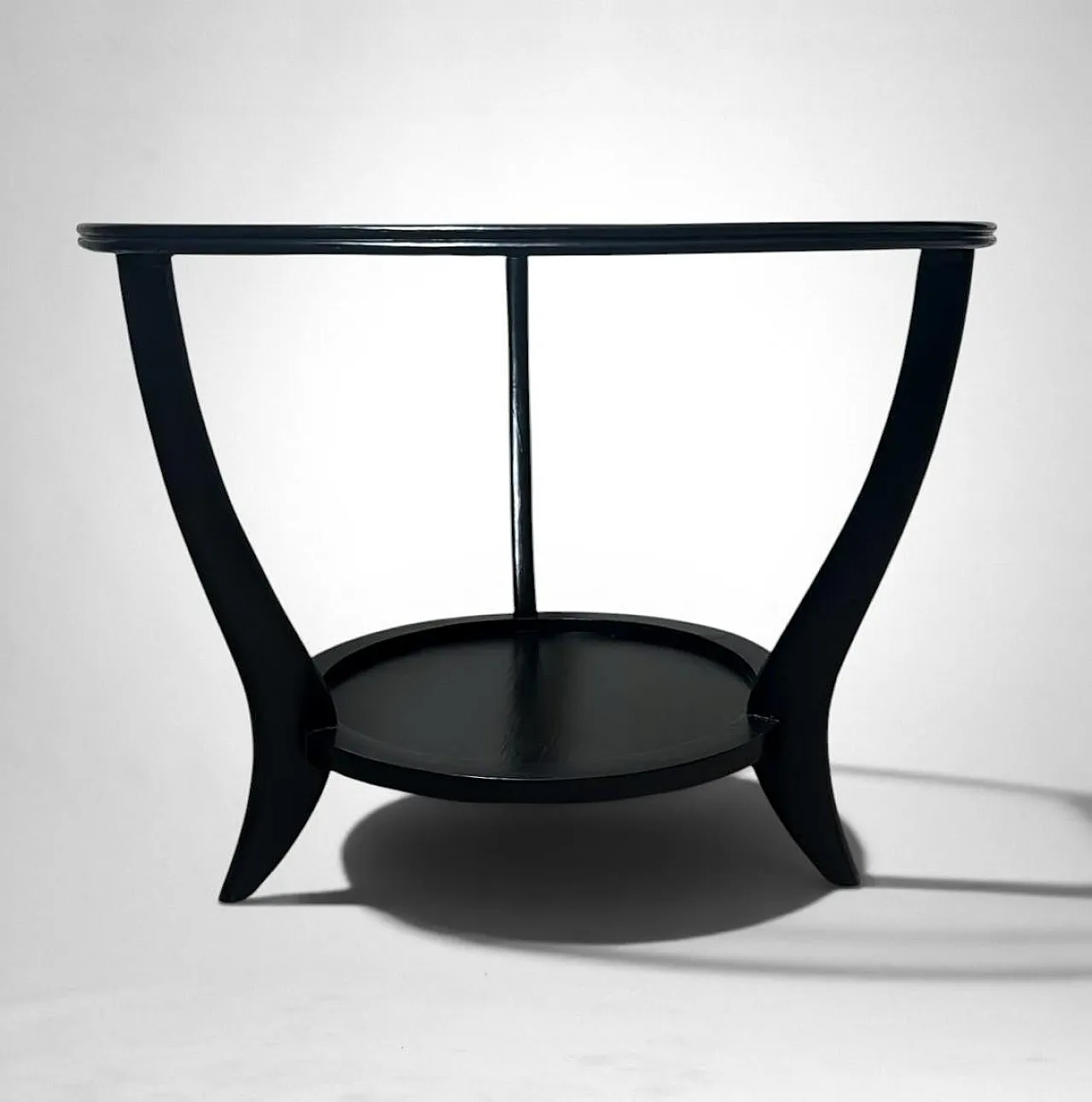
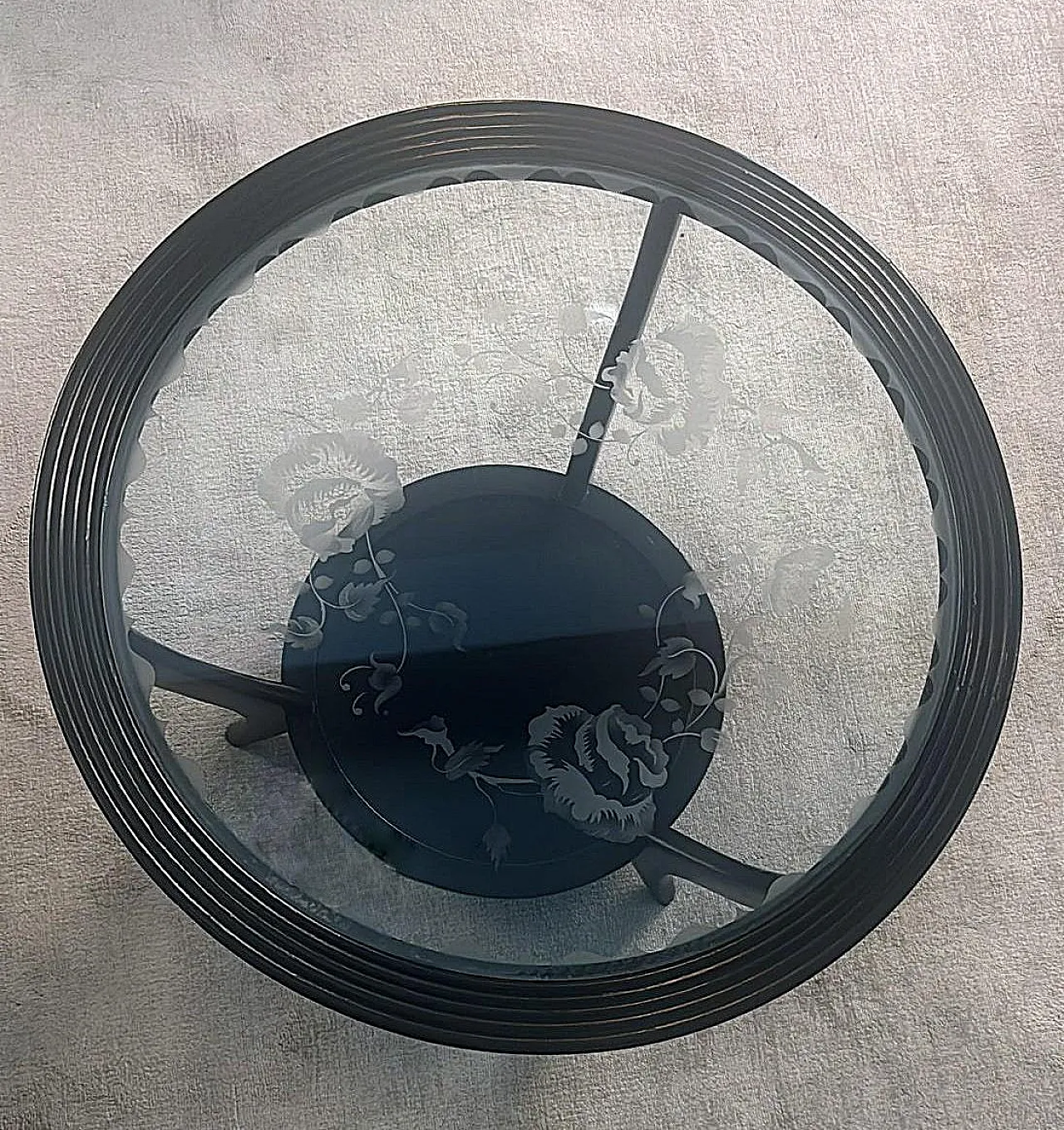
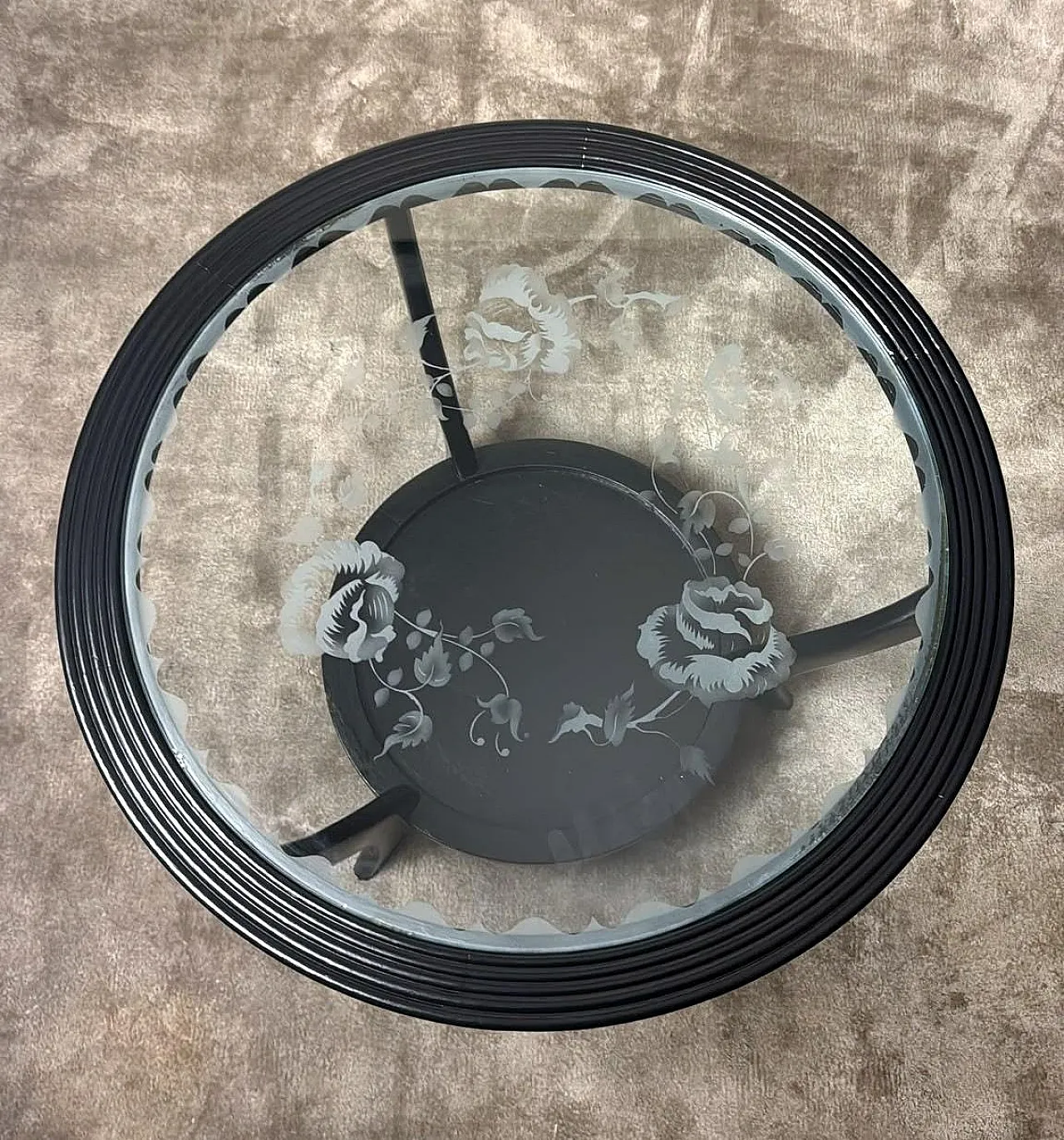
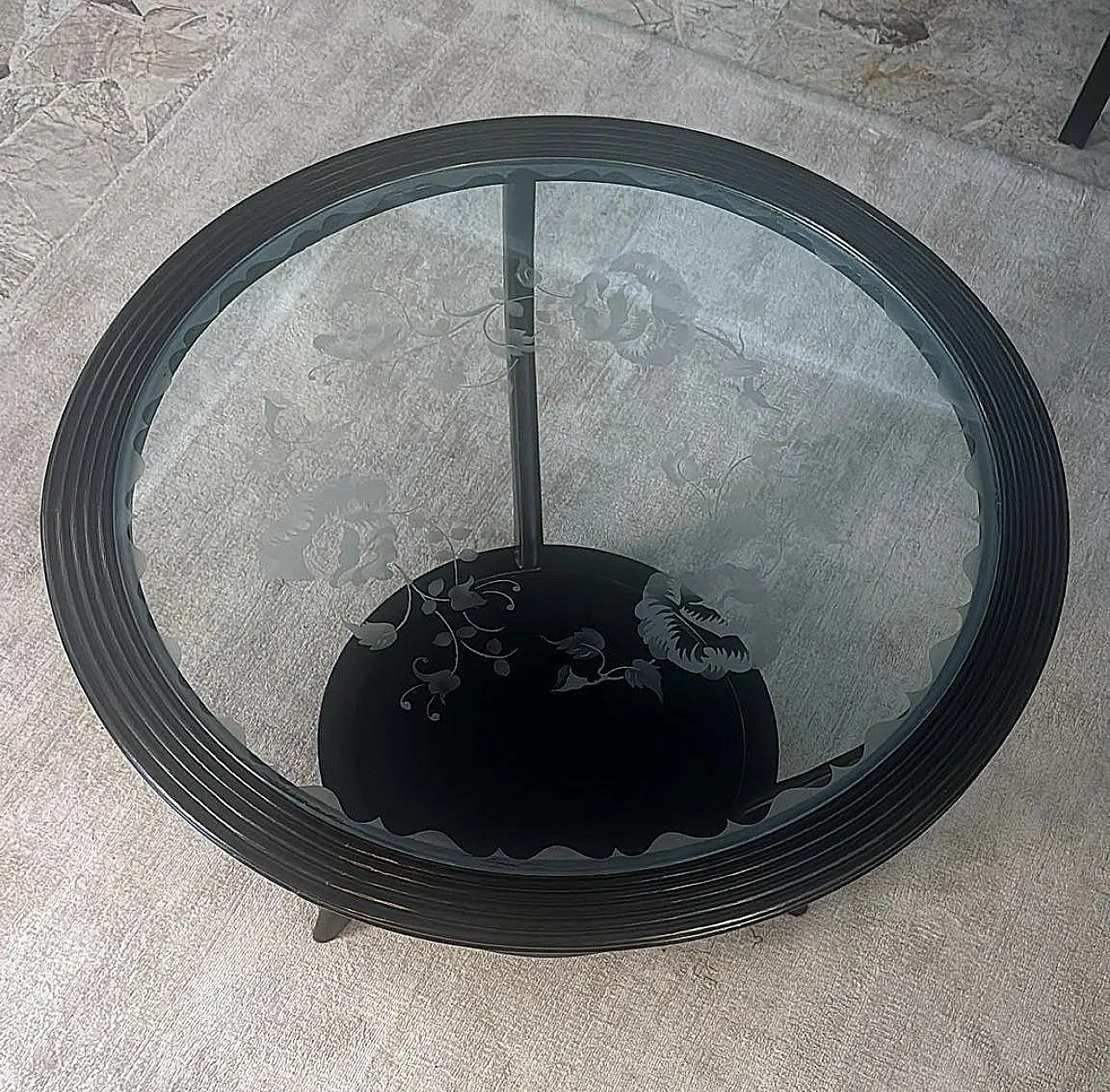
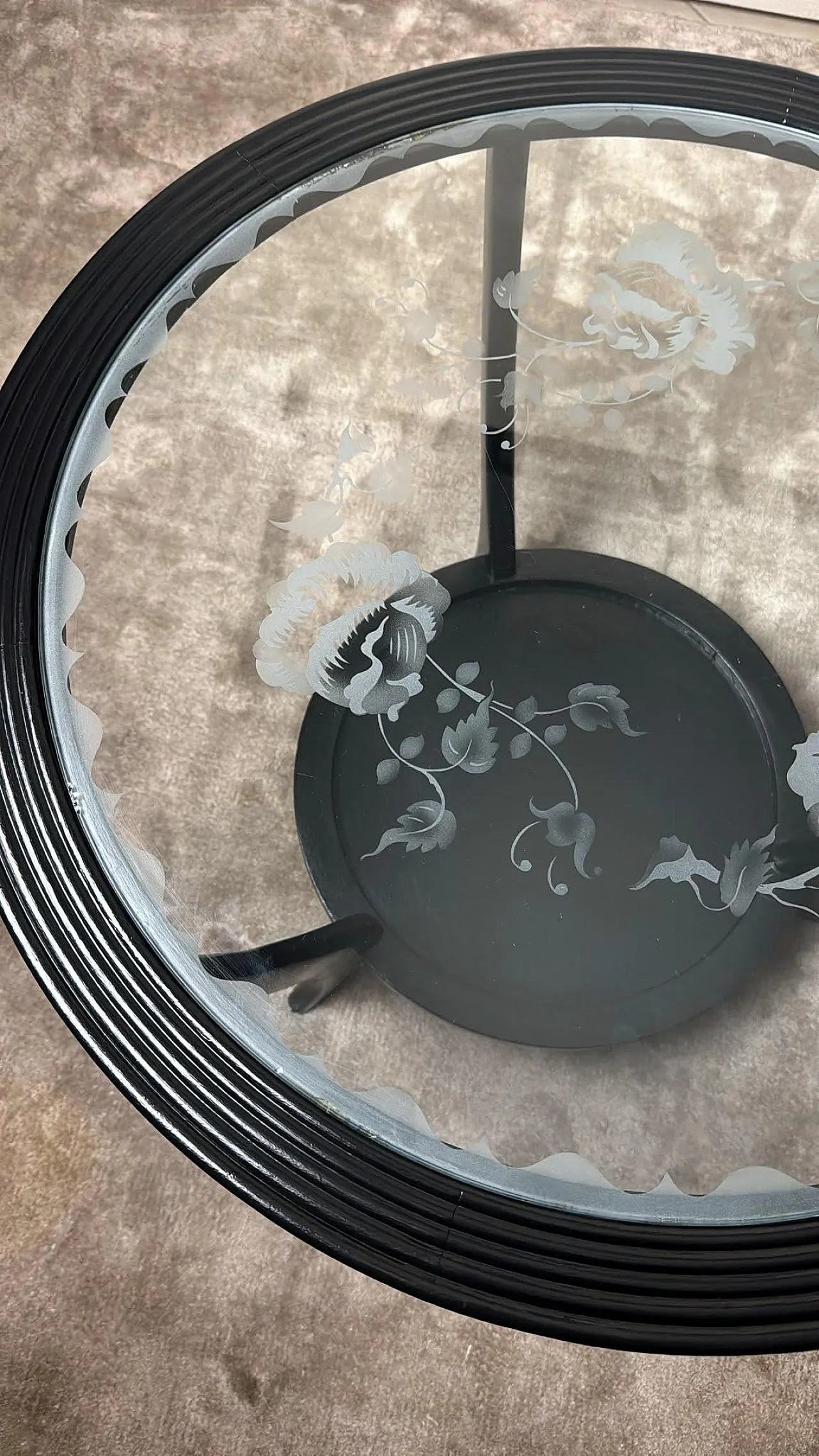
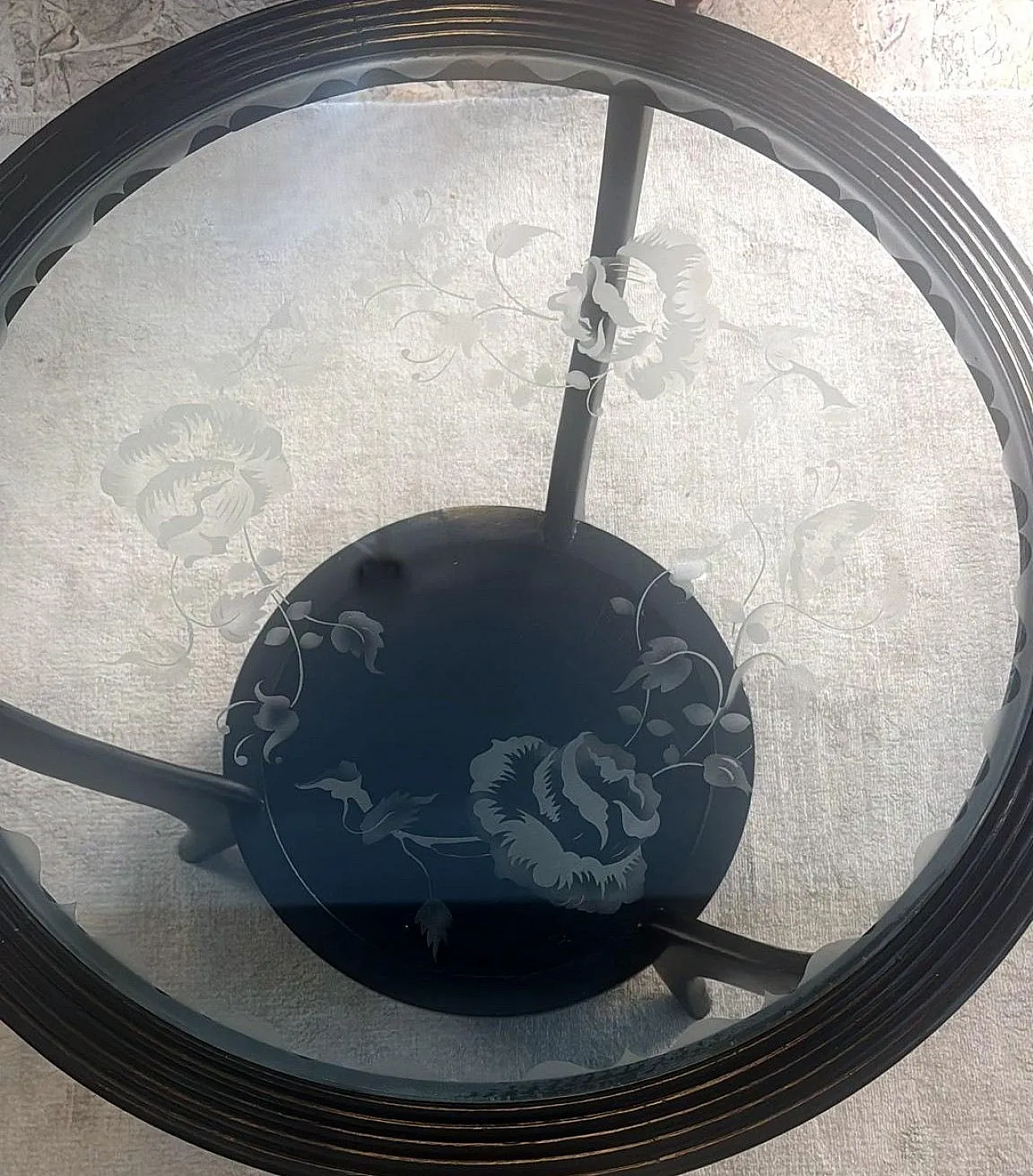
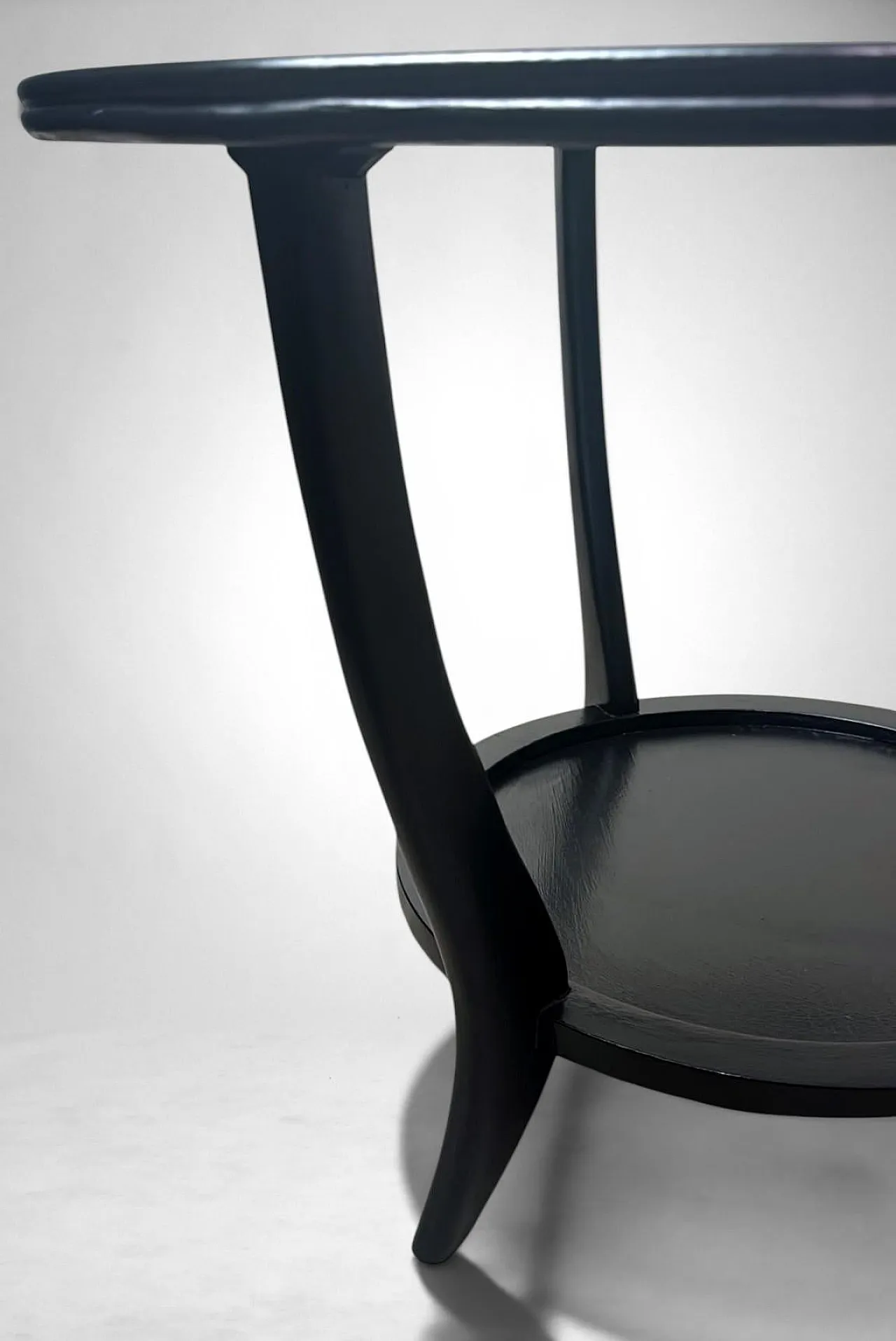
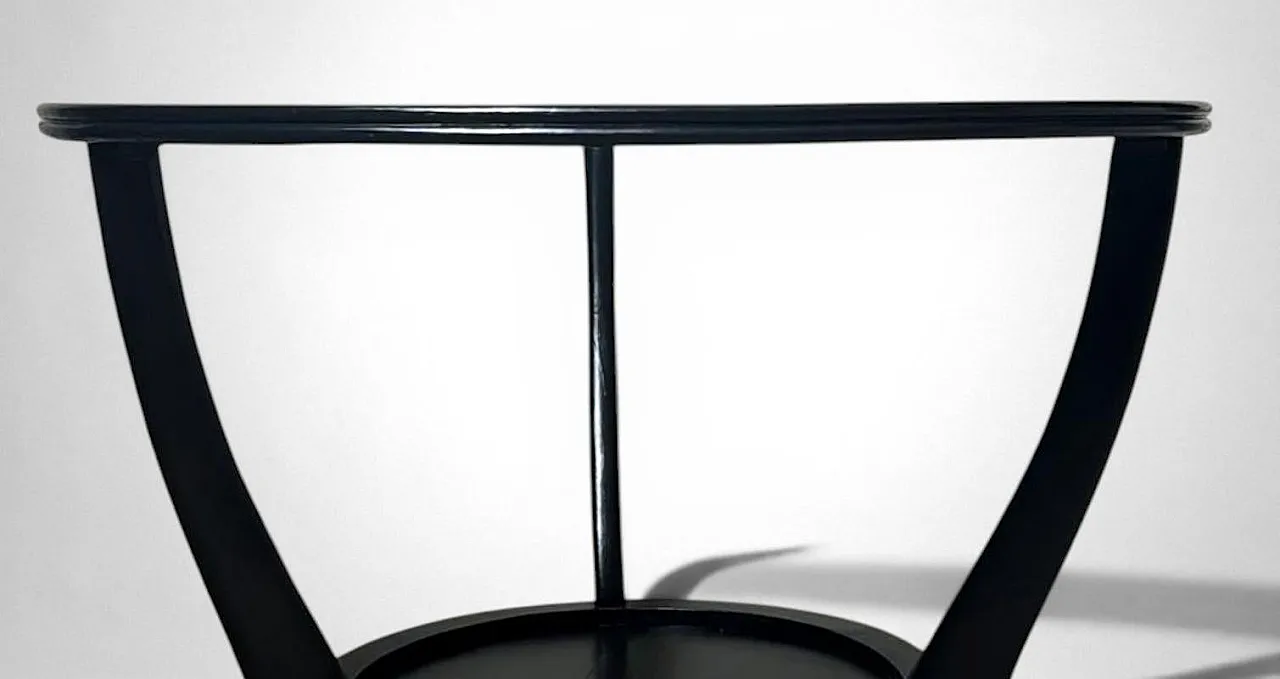
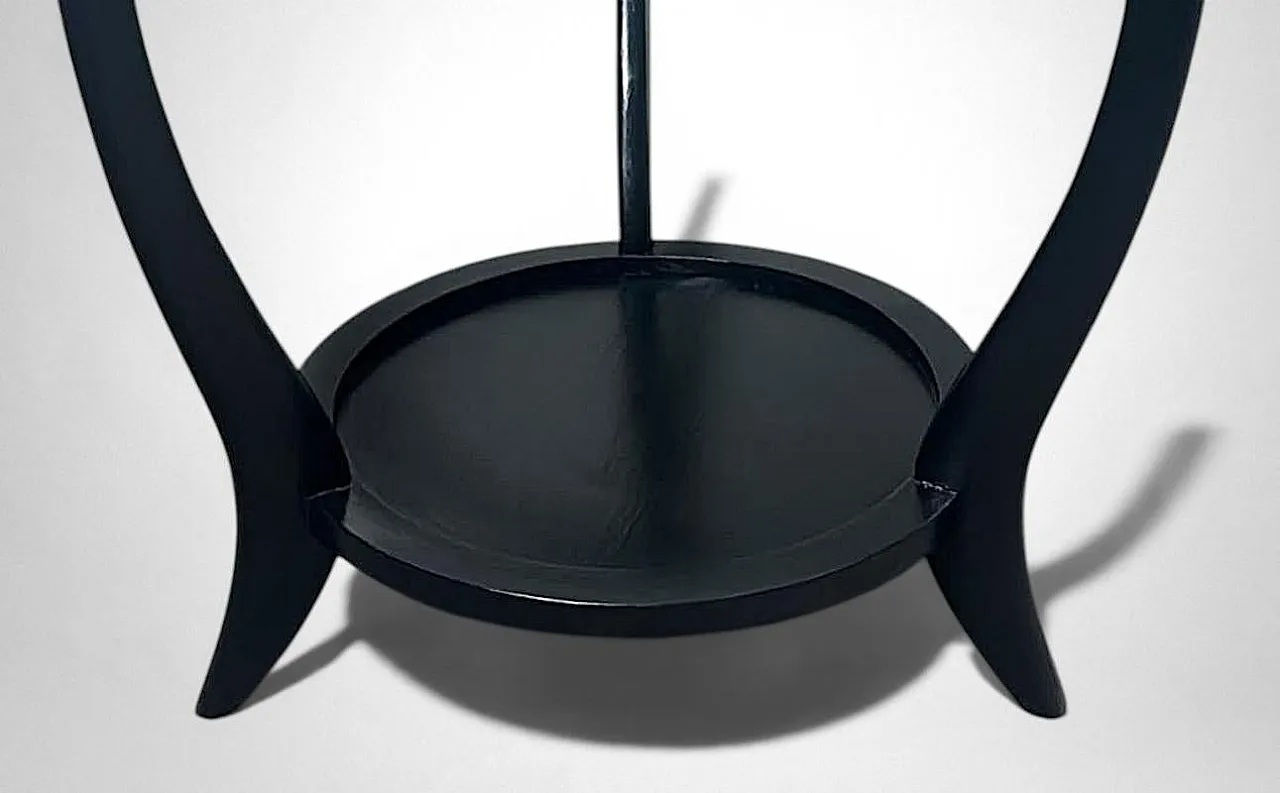
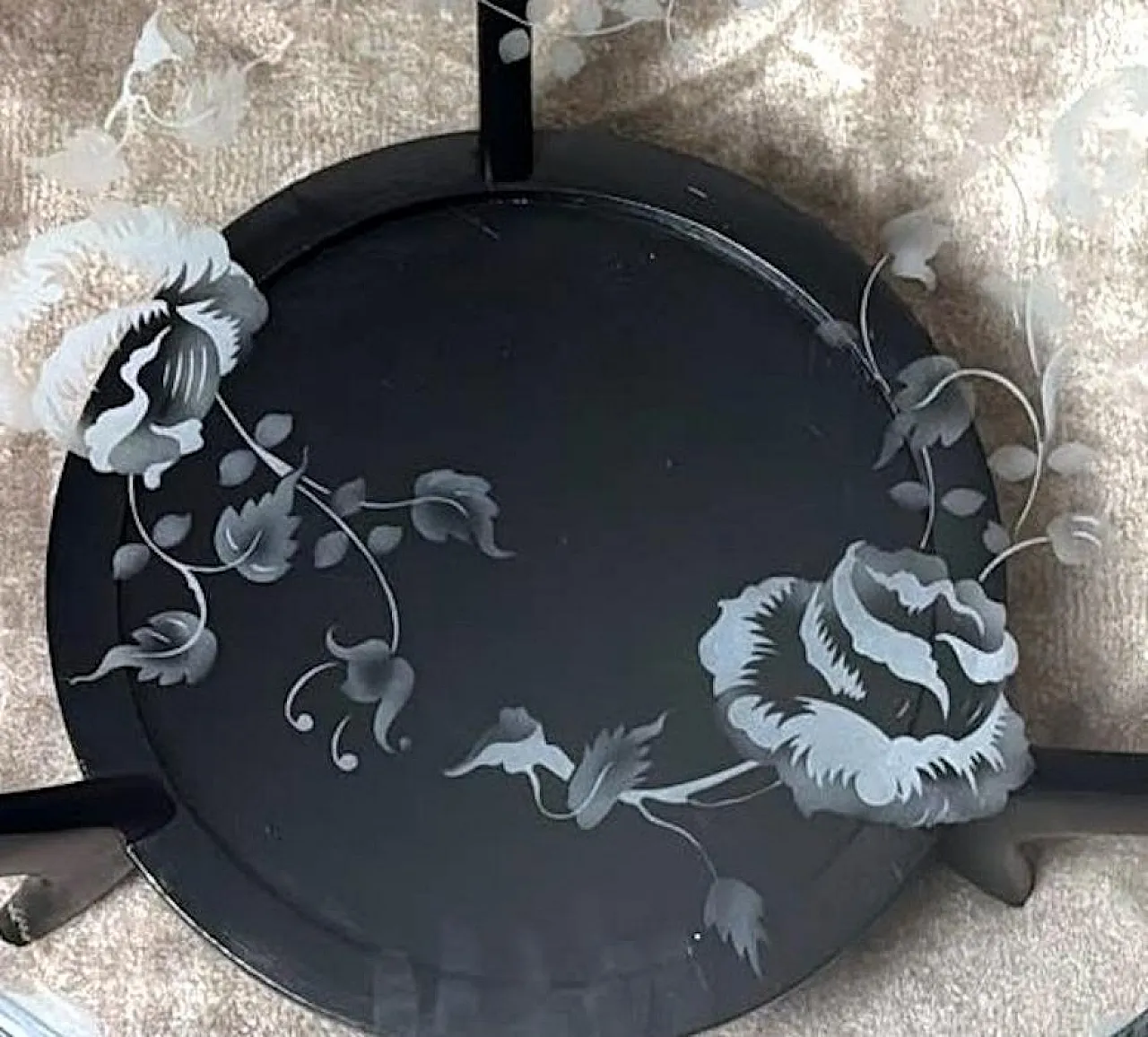
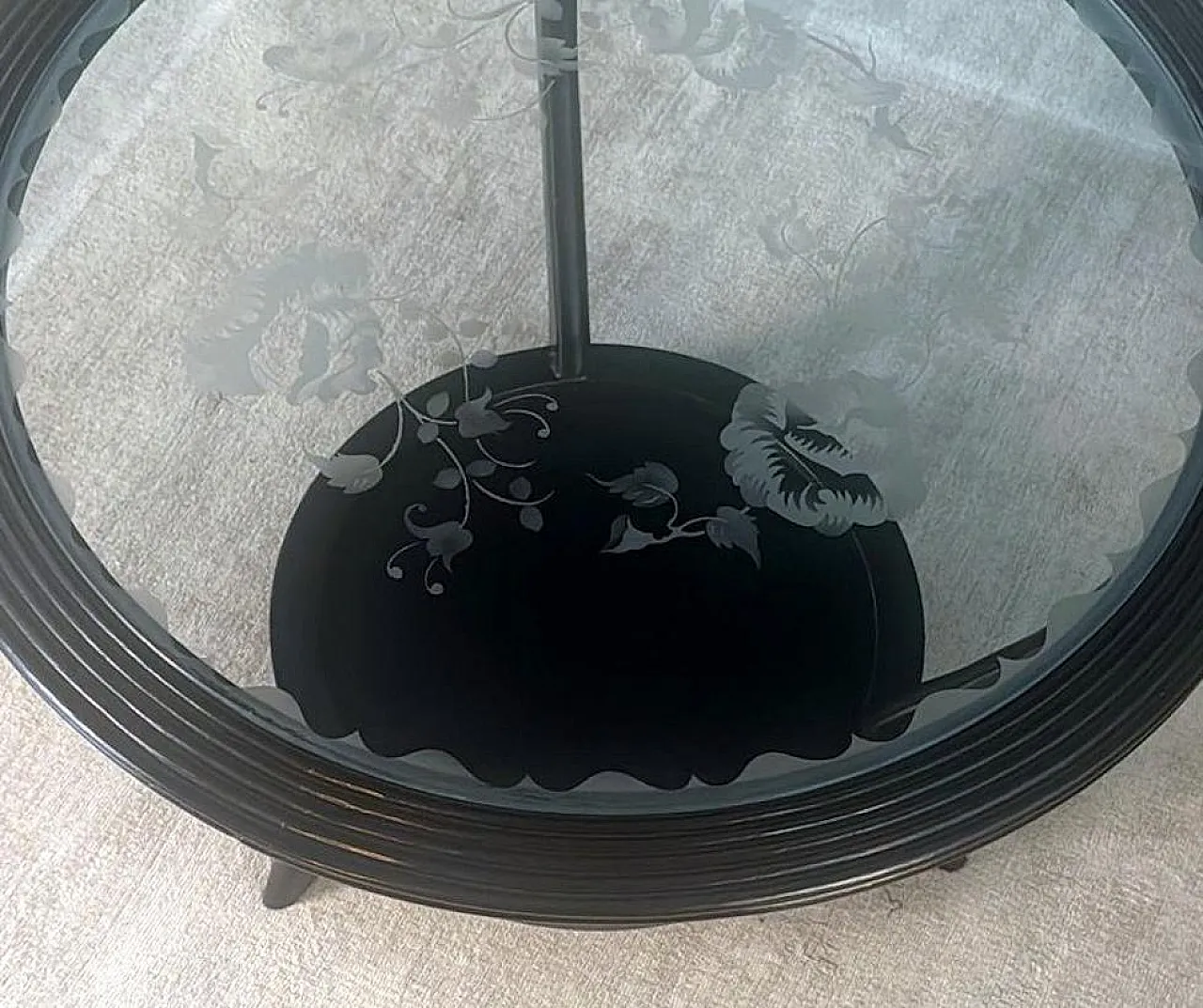
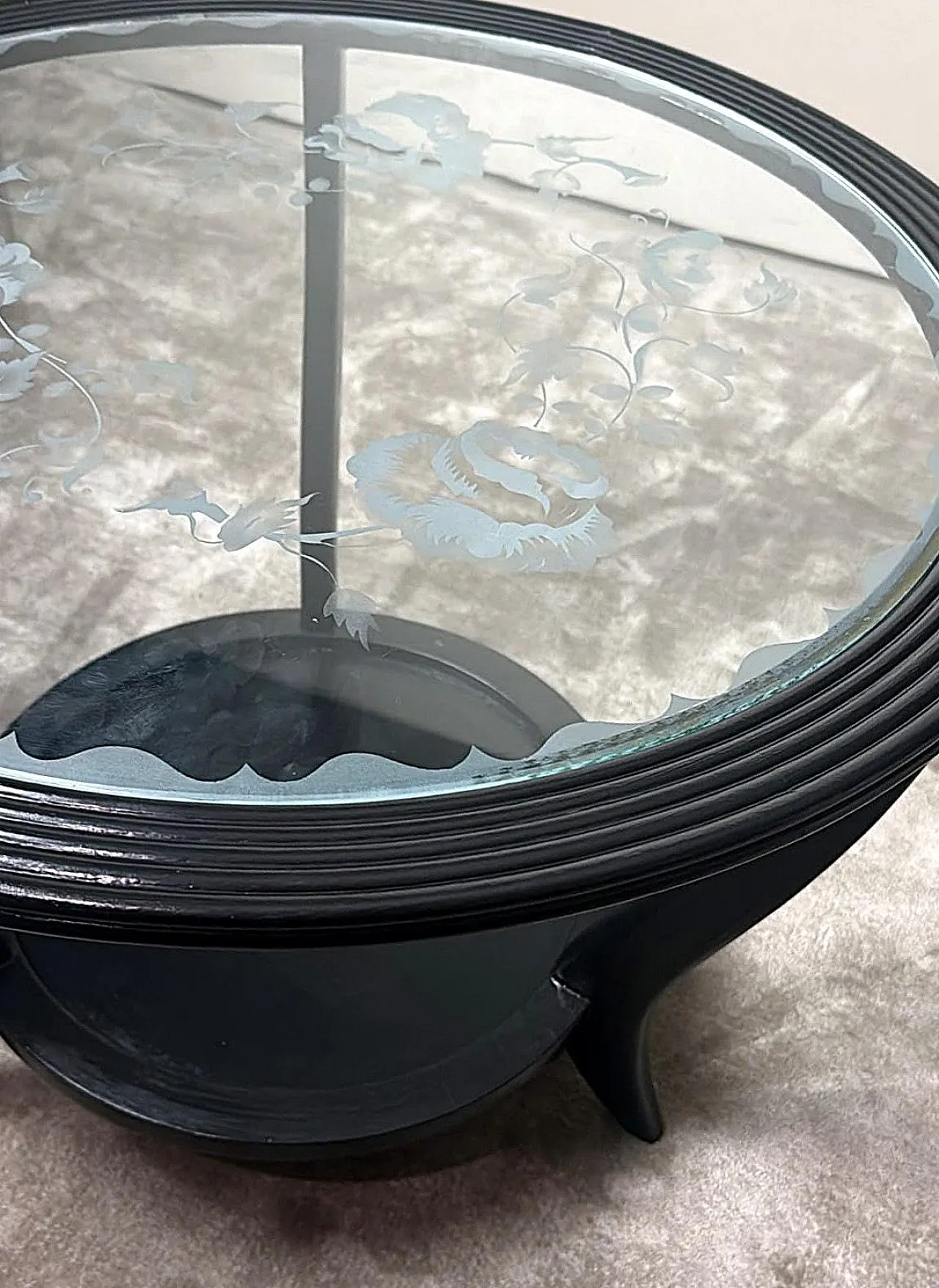
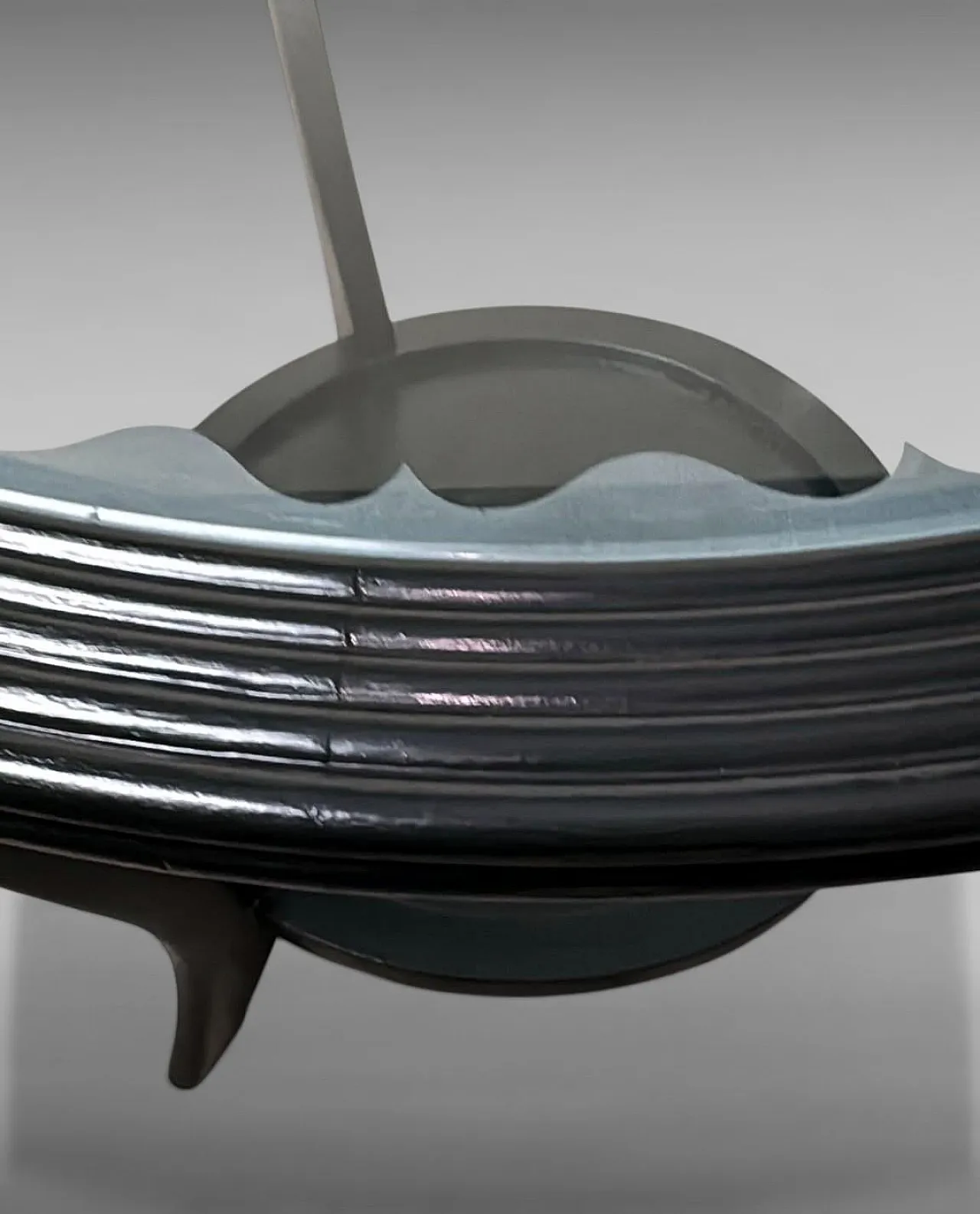
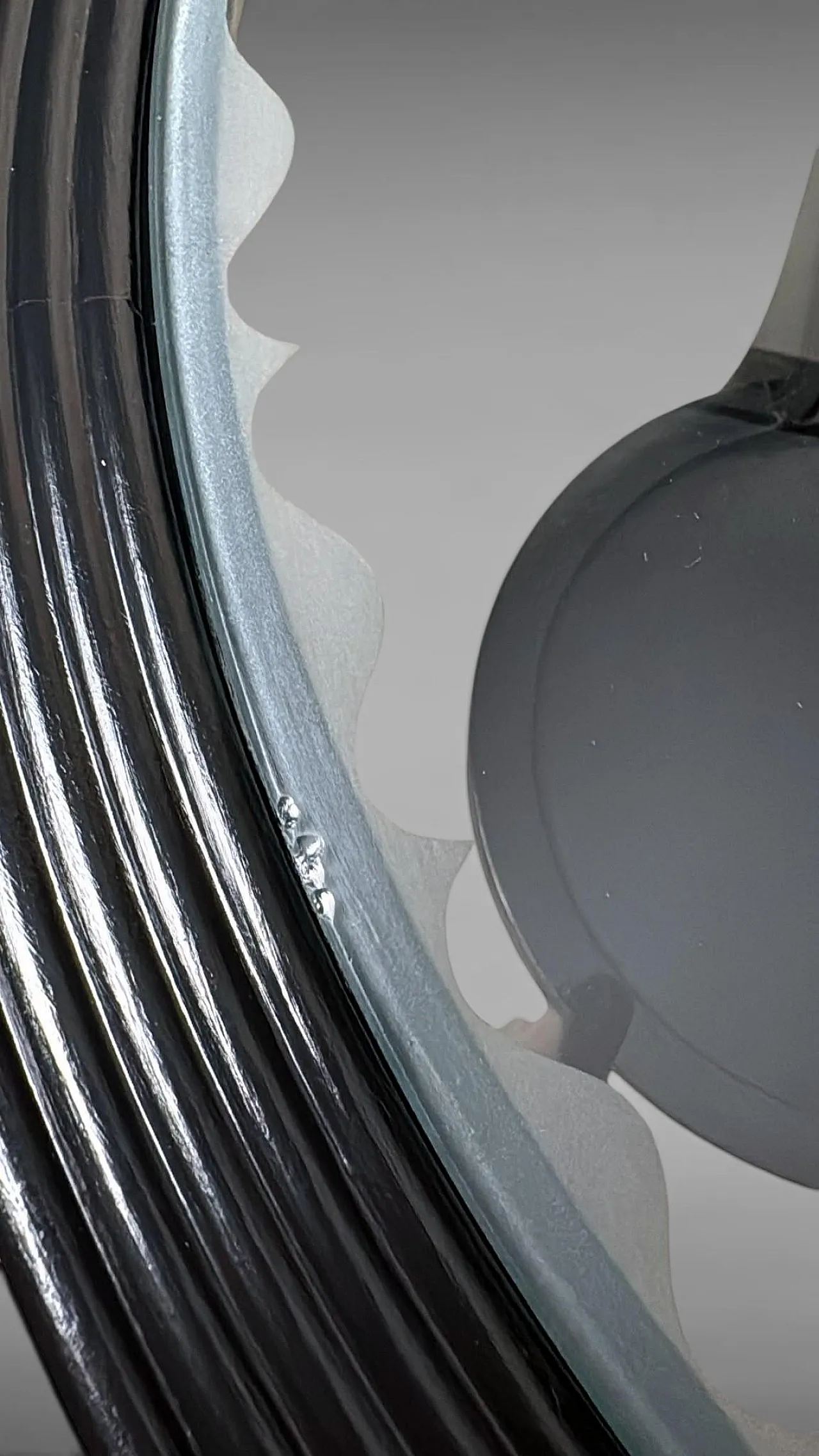
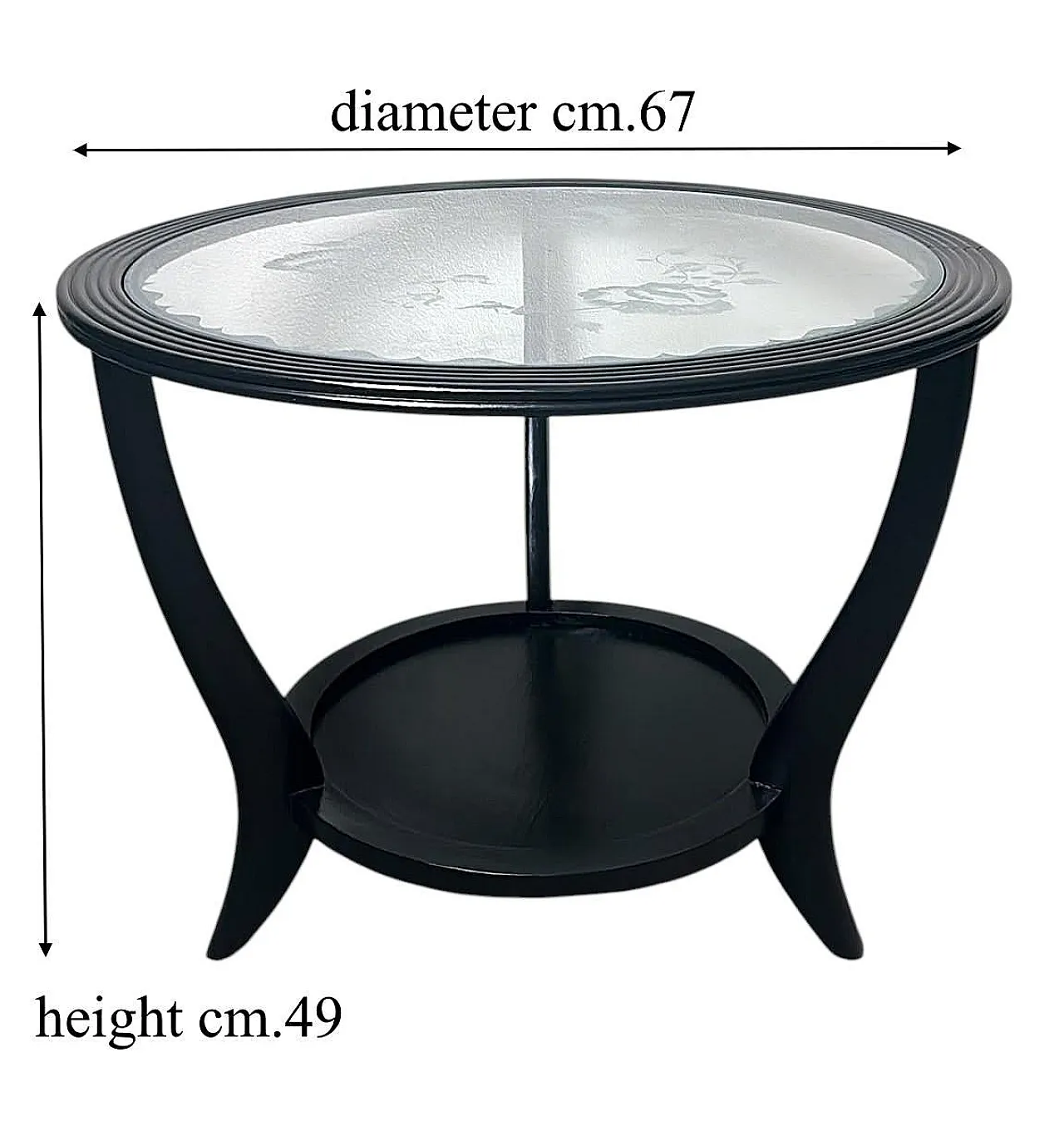
Elegant and distinctive Italian Art Deco side table crafted from walnut wood and finished in a rich black ebonized lacquer. The circular top is enhanced by a finely ground glass insert, whose delicate beveled detailing adds both refinement and visual lightness. Particularly noteworthy is the graceful design of the legs, characterized by harmonious, flowing lines that converge to support the practical lower wooden shelf. The overall composition is slender, sophisticated, and exceptionally well balanced. This table was handcrafted in Northern Italy between 1950 and 1955 in the style of Paolo Buffa. It is well documented that the renowned Milanese architect collaborated with highly skilled Lombard cabinetmakers, celebrated for their mastery of fine woodworking and their use of premium materials. Their creations were primarily intended for the residences of Milan’s affluent upper-middle class. Owing to its excellent craftsmanship, refined proportions, and meticulous finishing, this table was almost certainly produced by one of these accomplished artisans. Paolo Buffa (1903–1970) is regarded as one of the most important figures in twentieth-century Italian furniture design. His work is distinguished by a sophisticated balance between tradition and modernity, combining precious woods, elegant proportions, and refined detailing with a subtle modern sensibility. His furnishings are admired for their understated luxury and timeless appeal. After gaining professional experience in the studio of Gio Ponti, Buffa began a close collaboration in 1928 with A. Cassi Ramelli. He devoted much of his career to furniture design, continually developing new models and establishing a distinctive stylistic language. Rather than being a radical innovator, Buffa was an exceptional interpreter of the aesthetic ideals of his era, moving seamlessly from Neoclassical influences to the refined forms of the Novecento movement. Internationally admired for the elegance of his designs and the rigor of their execution, Paolo Buffa embodied a uniquely Italian approach to craftsmanship and design. By the time of his death in Milan in 1970, he had earned recognition as one of Italy’s most influential and respected designers. This piece has undergone a careful conservation and restoration process carried out entirely by hand by our team of specialized craftsmen, using traditional restoration techniques. It is presented in excellent condition. The glass surface has a small chip (see photo). Dimensions: Diameter: 67 cm (26.38 in.). Height: 49 cm (19.29 in.)


.png)
 SILVER Seller in Prato, Italy