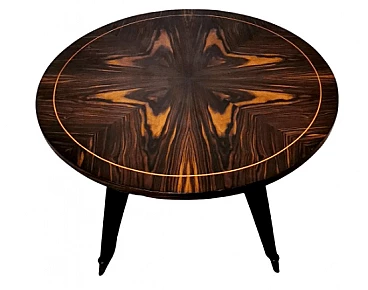
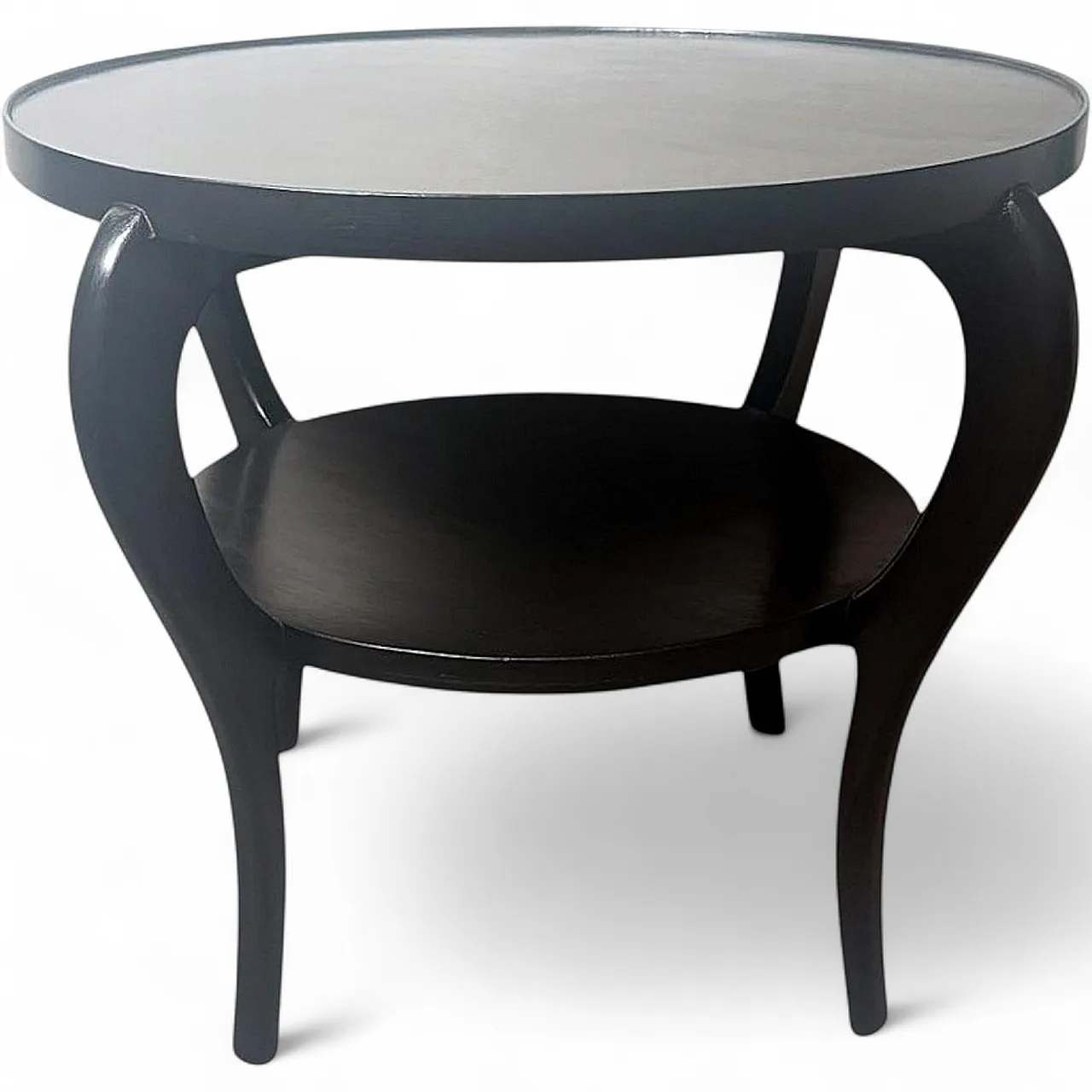
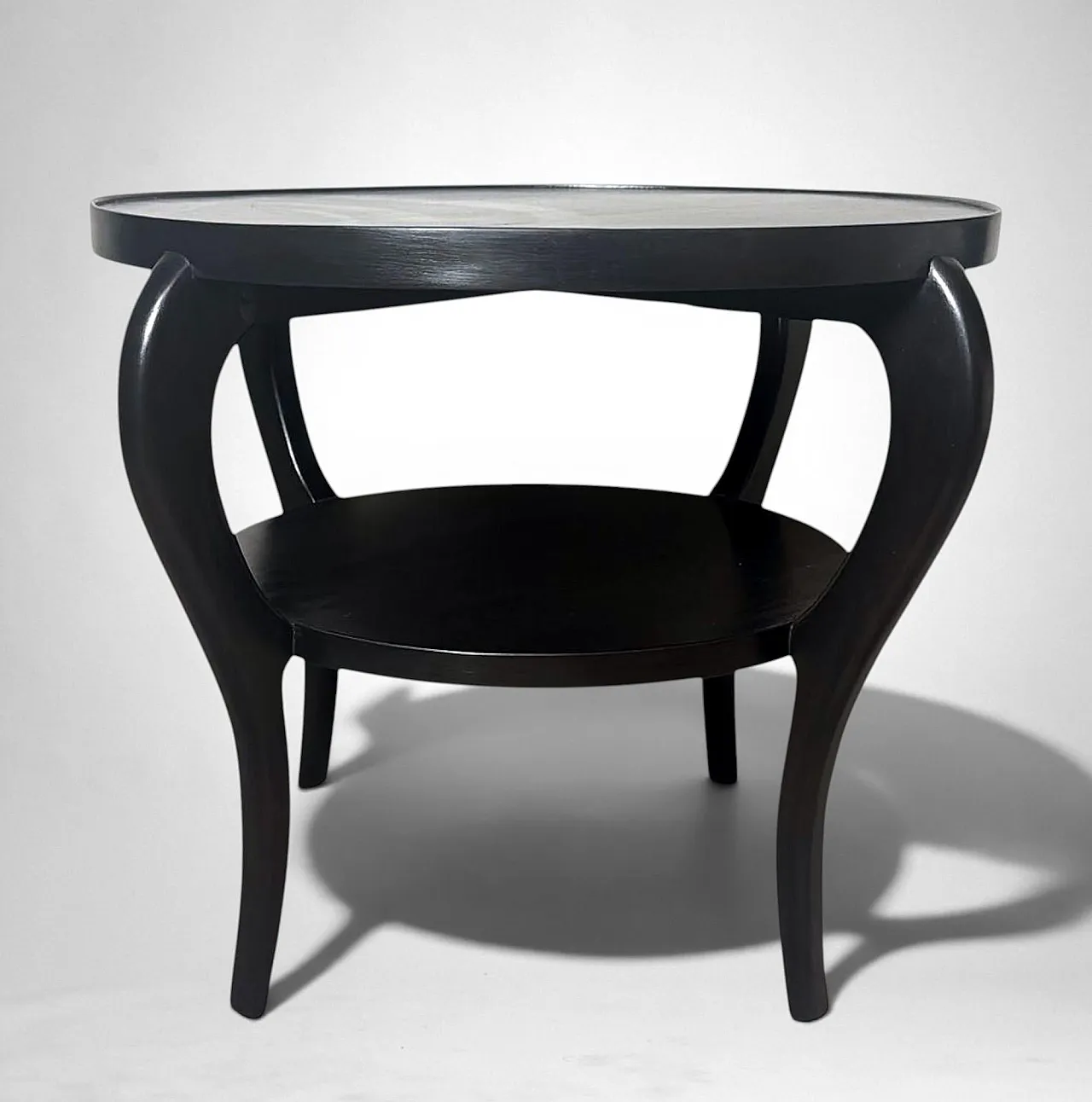
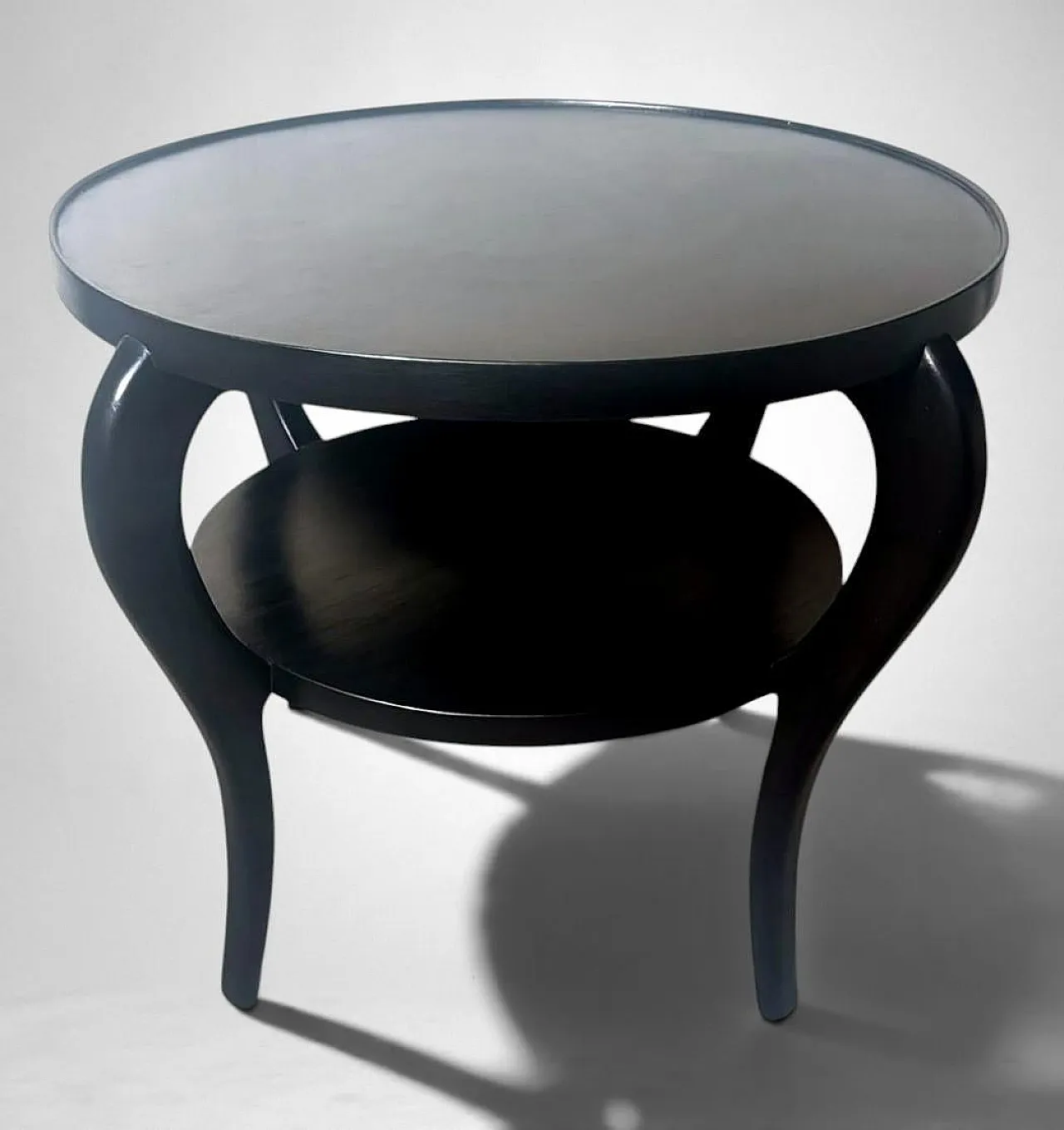
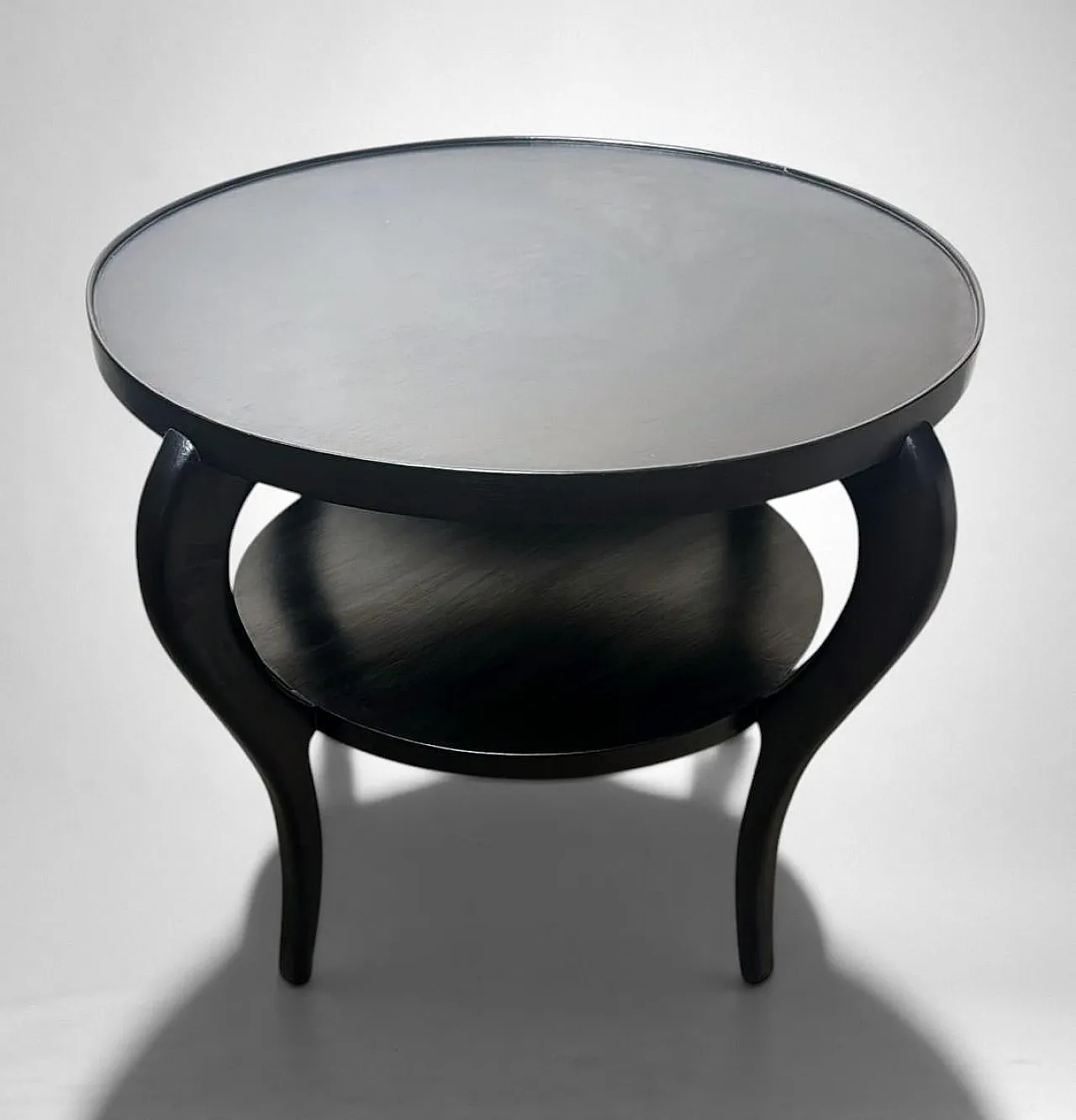
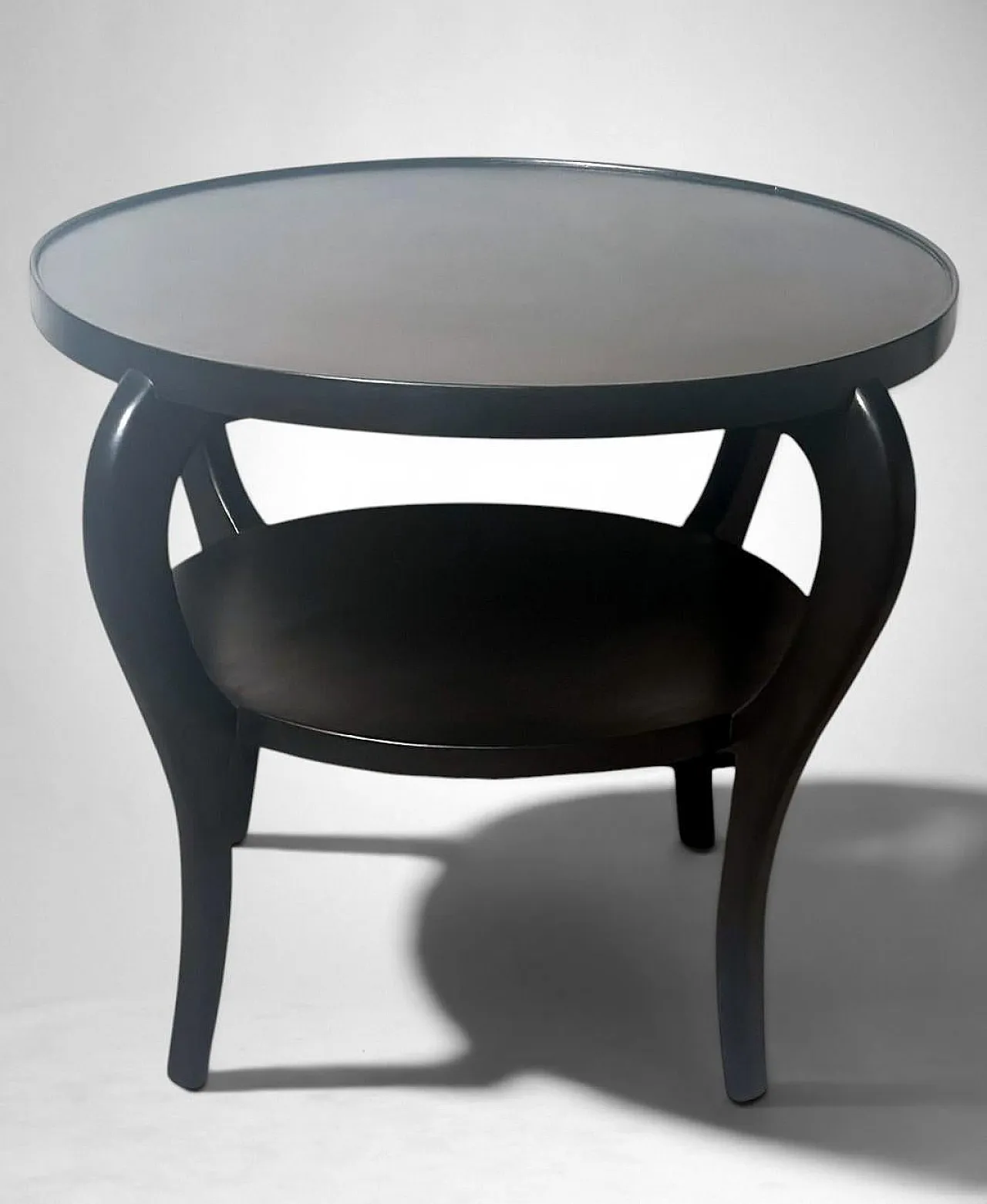
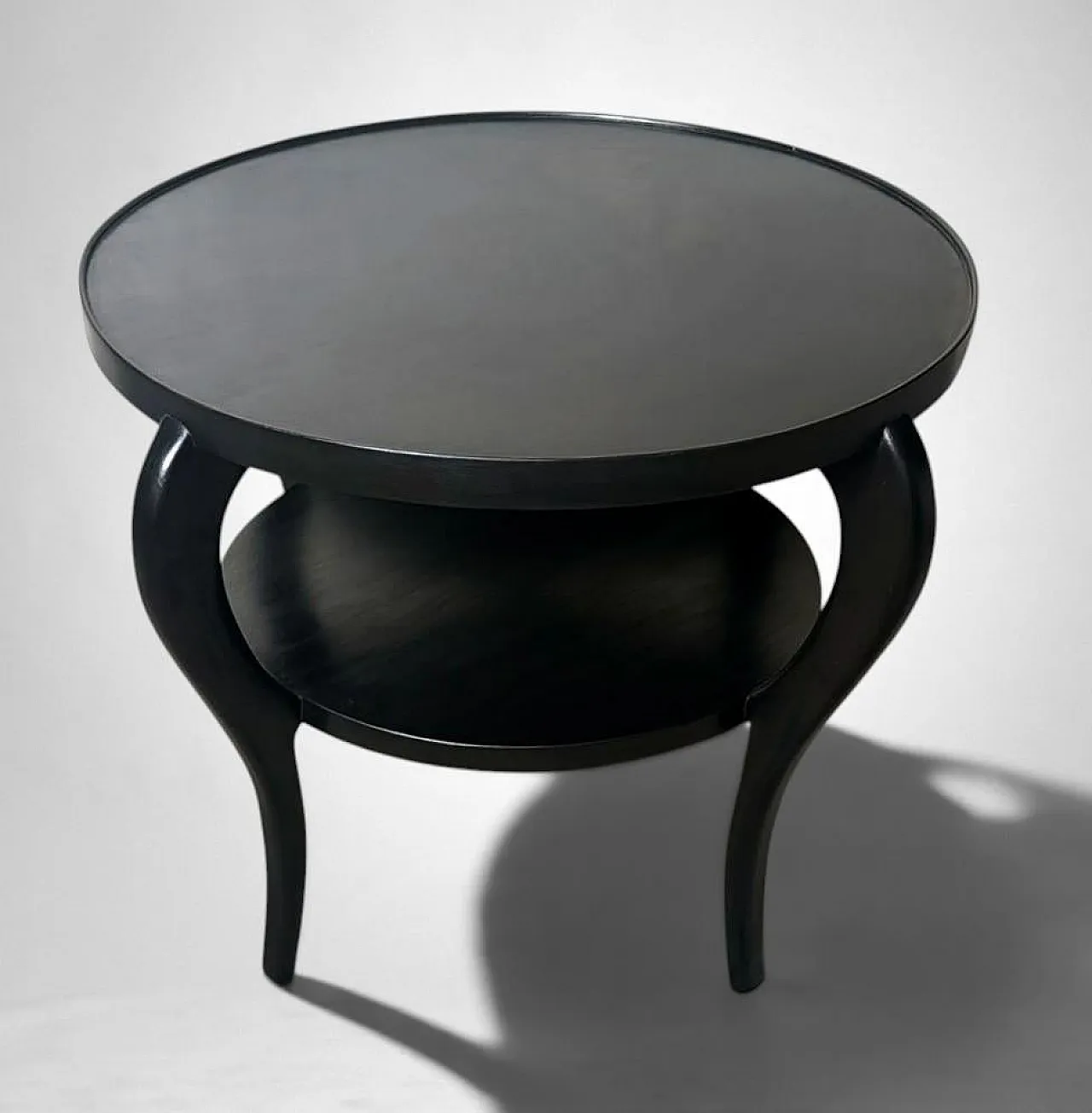
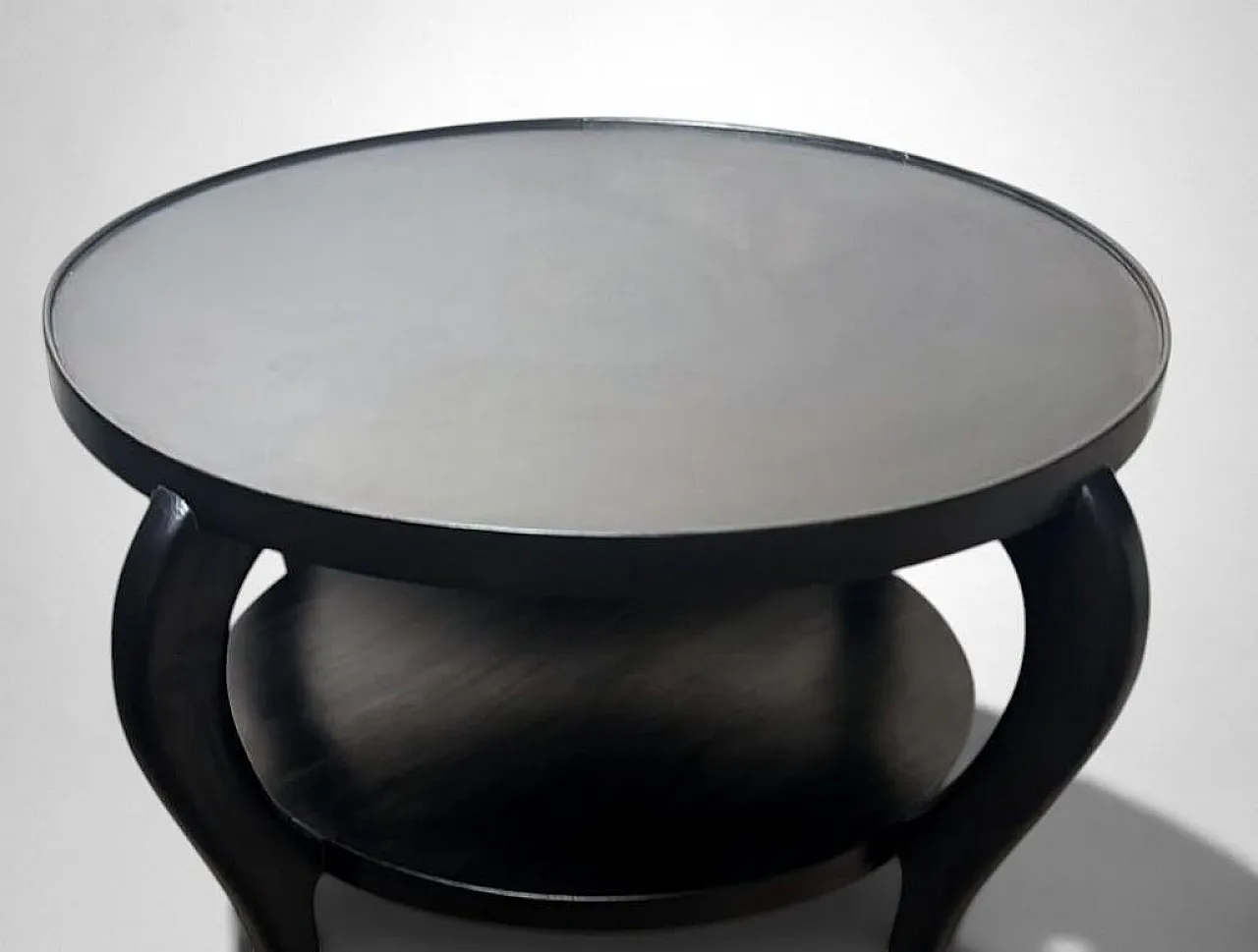
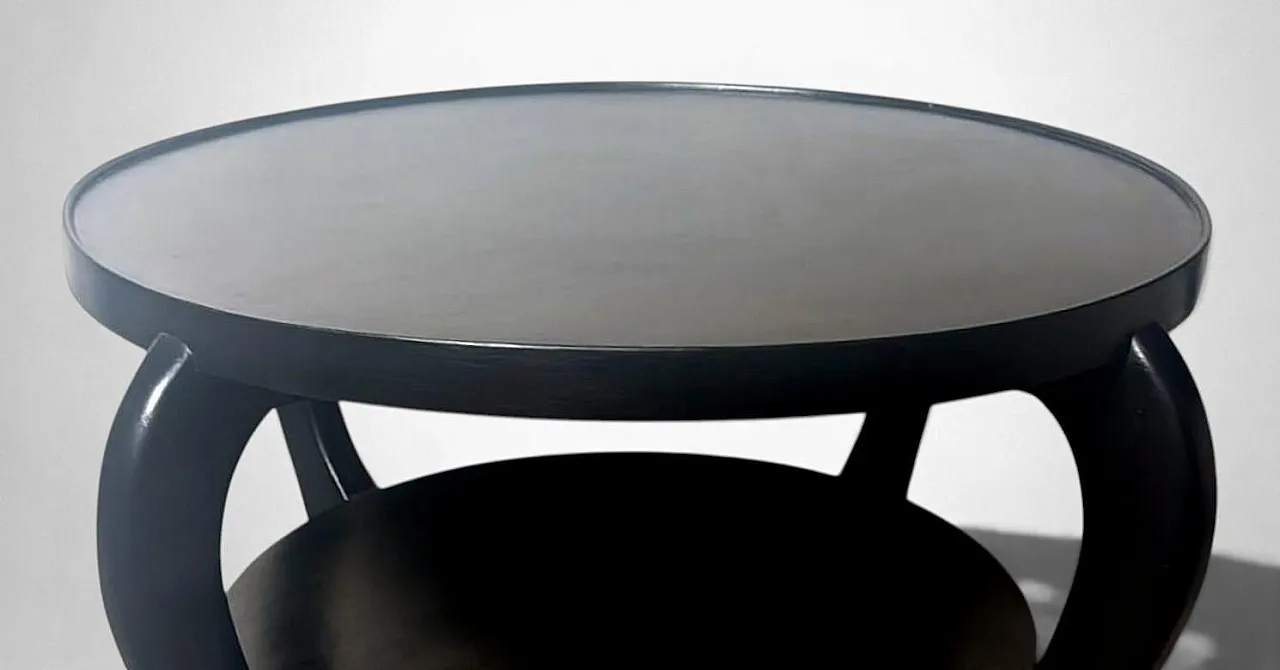
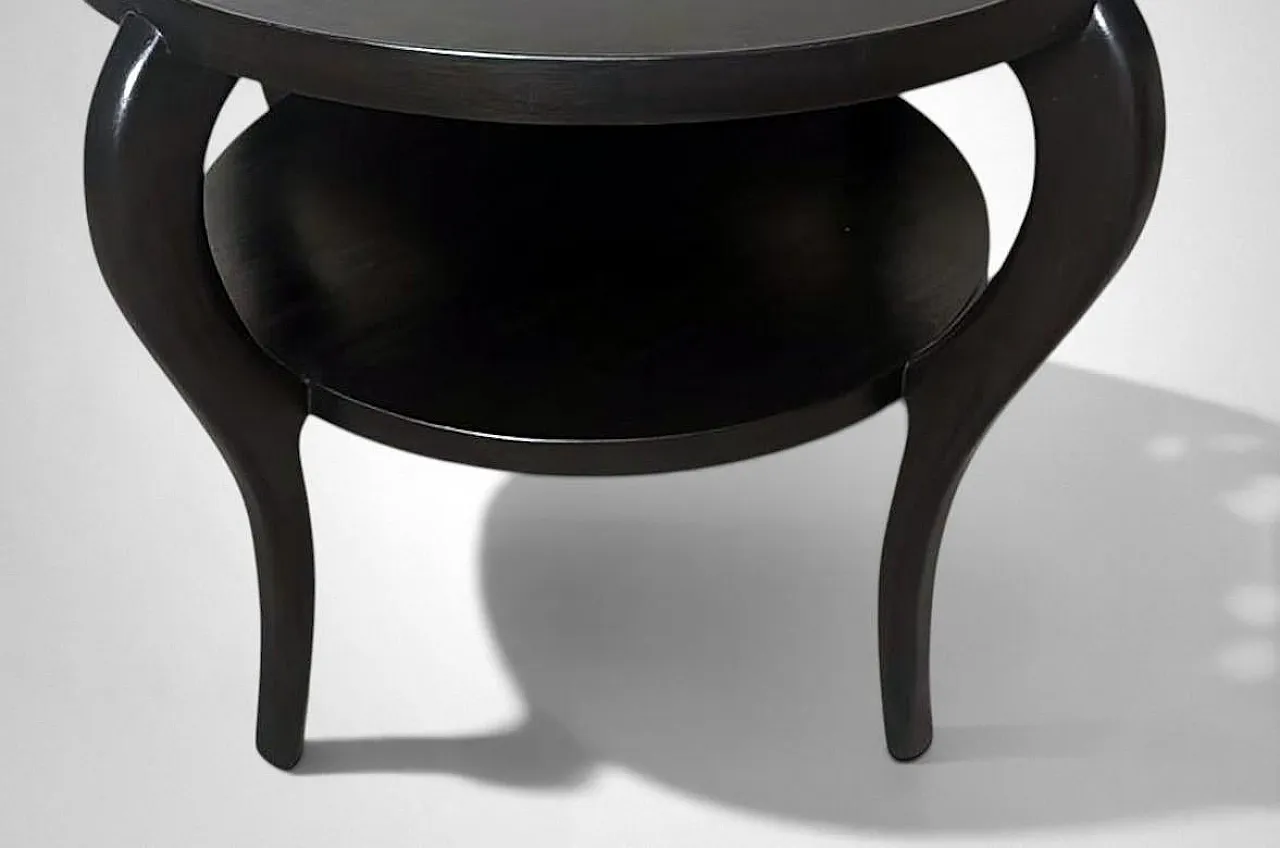
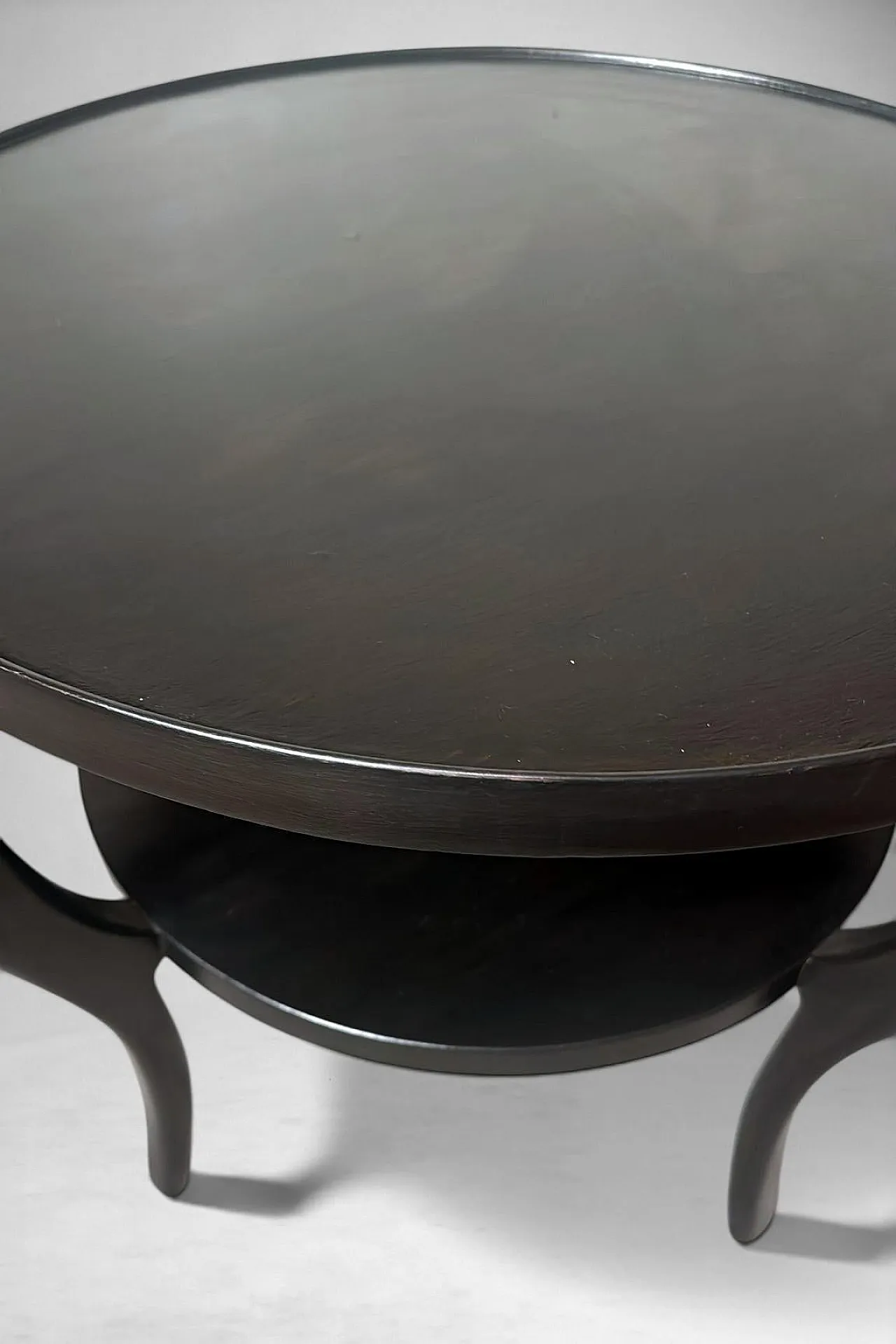
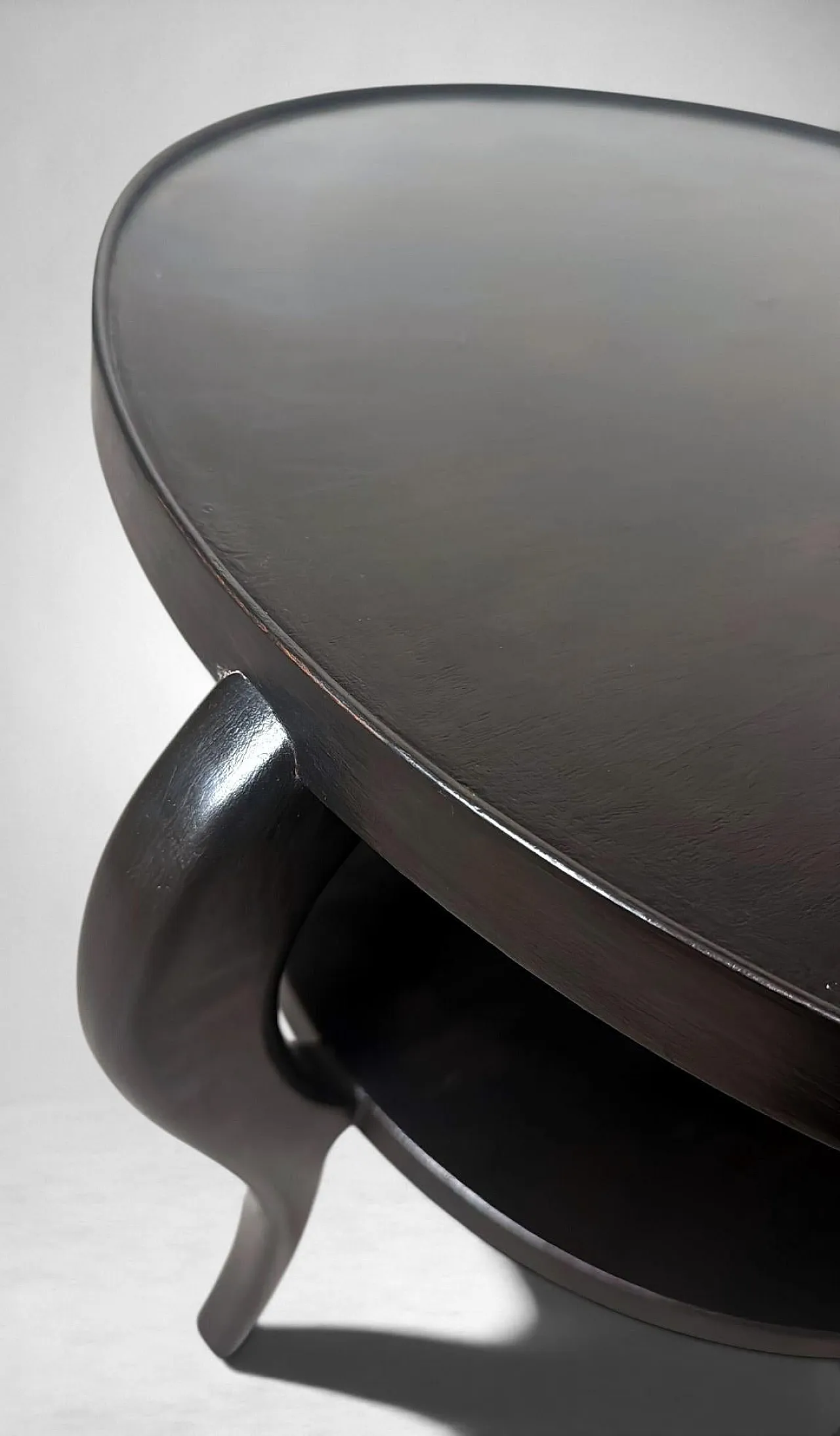
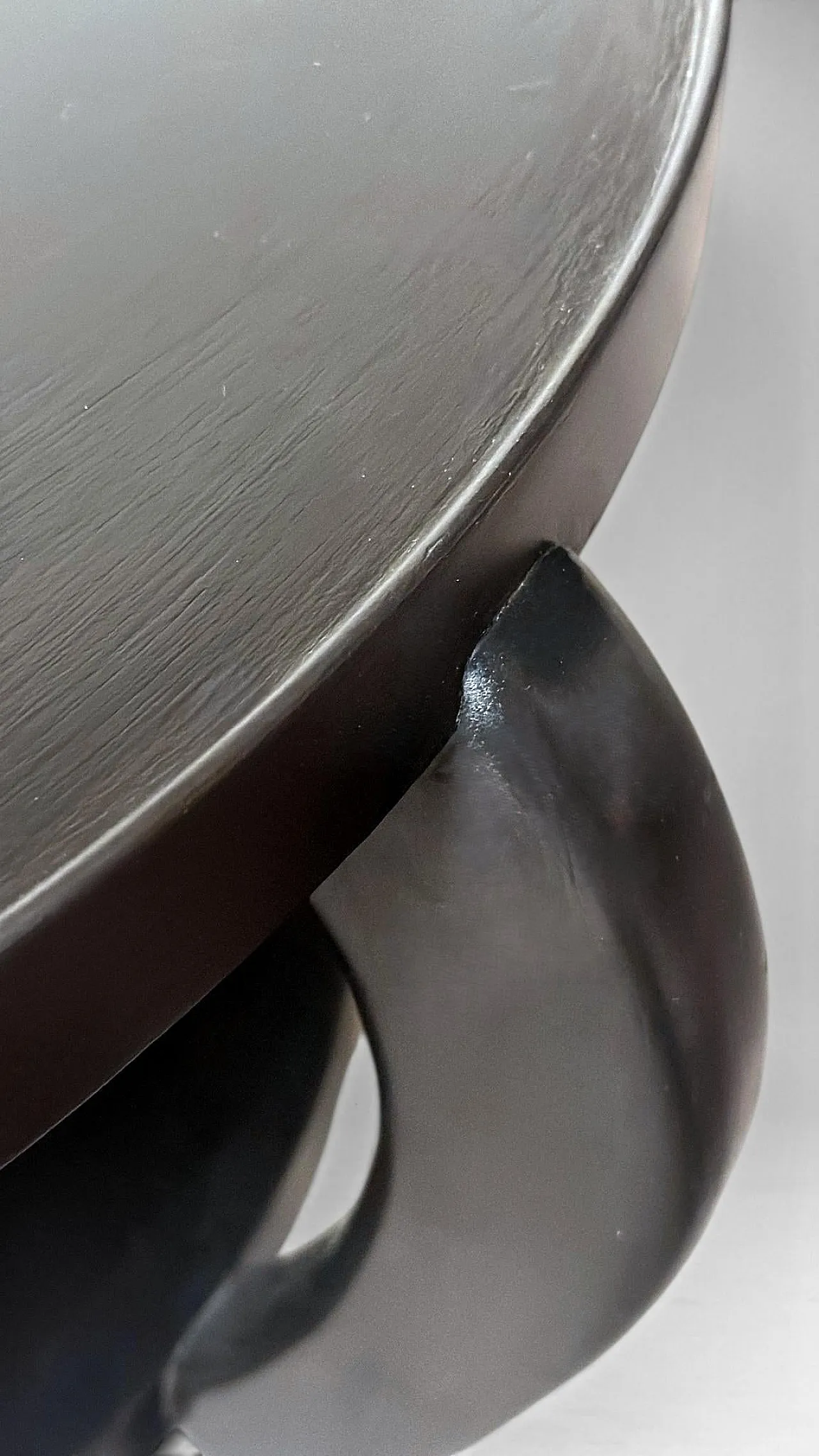
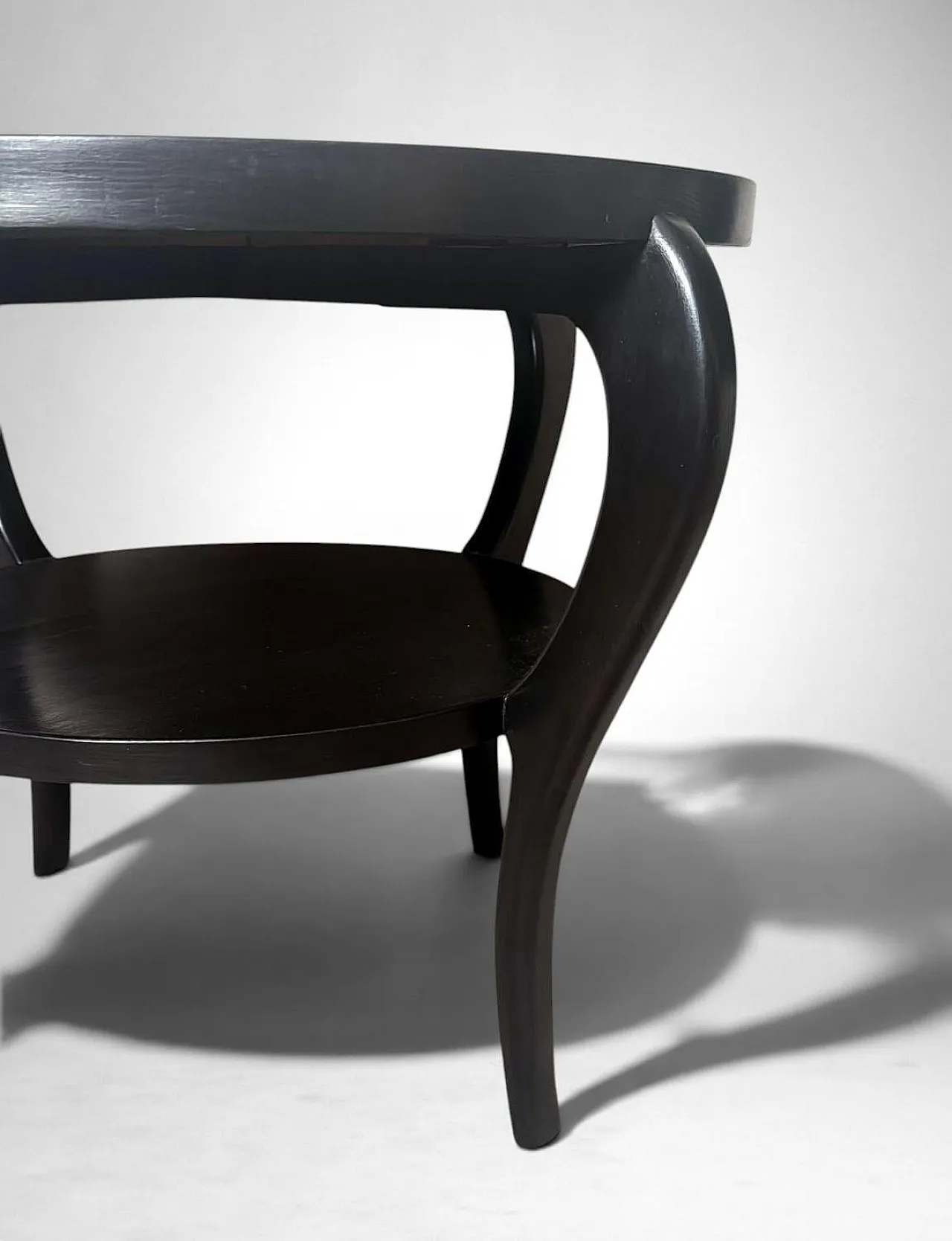
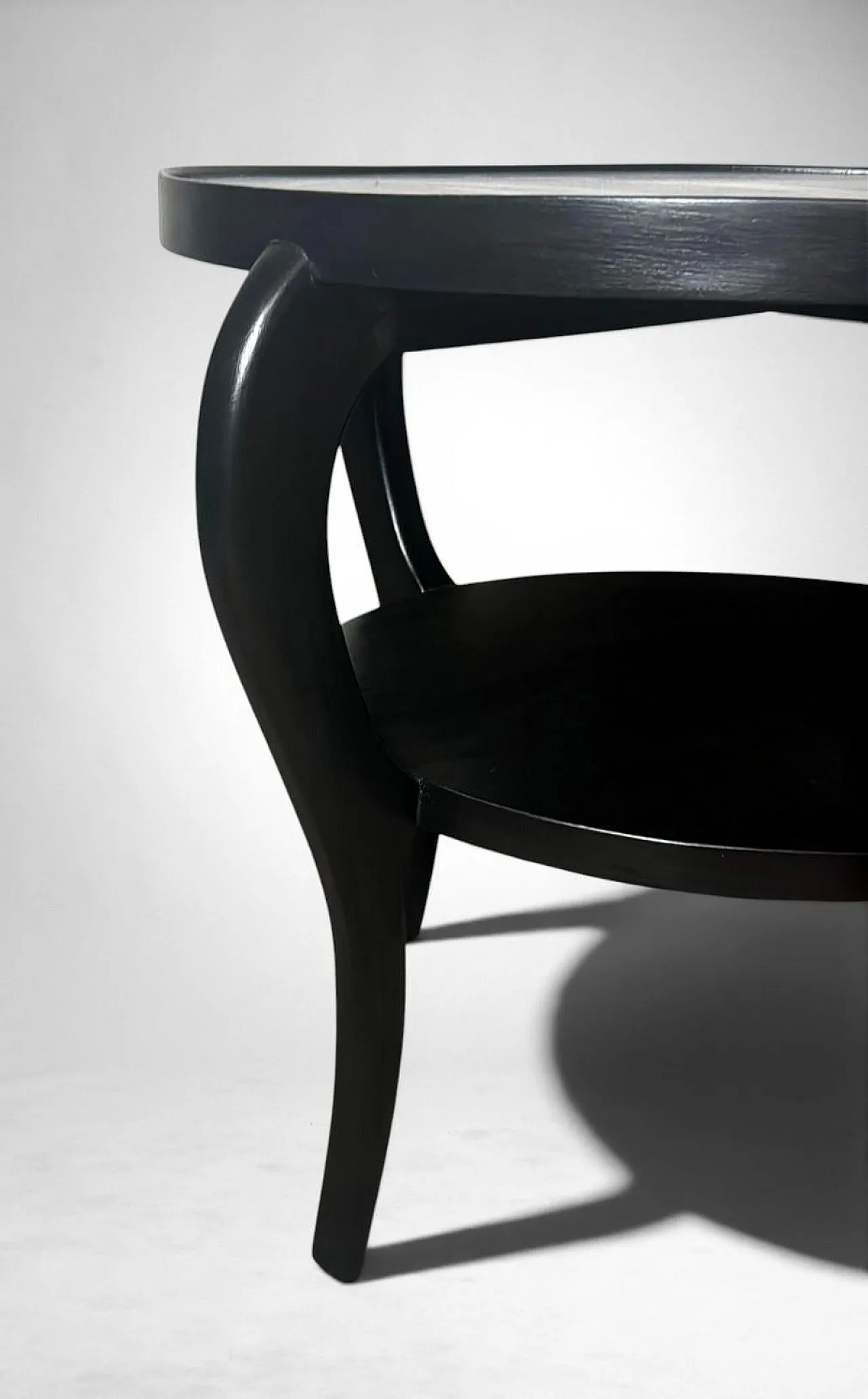
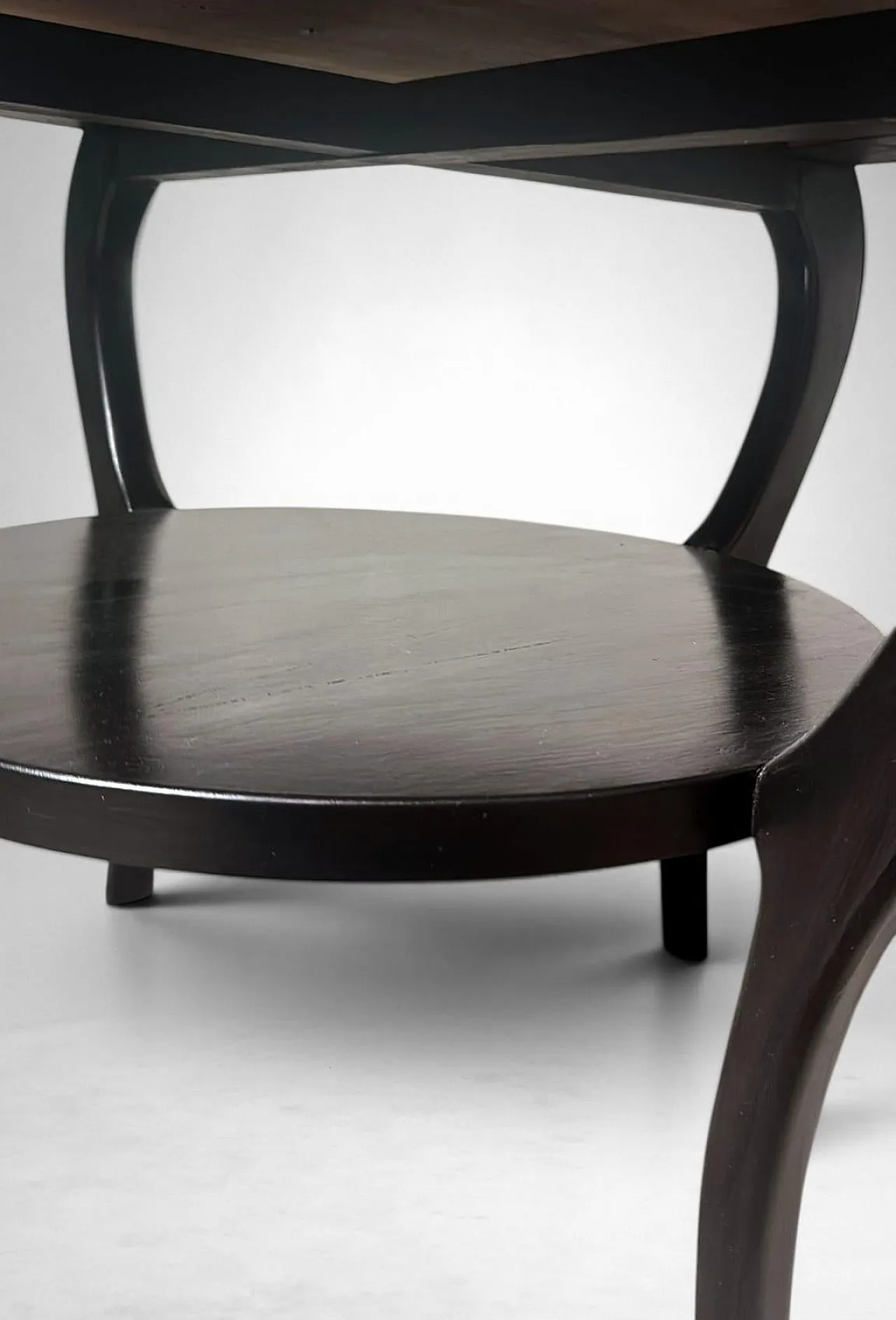
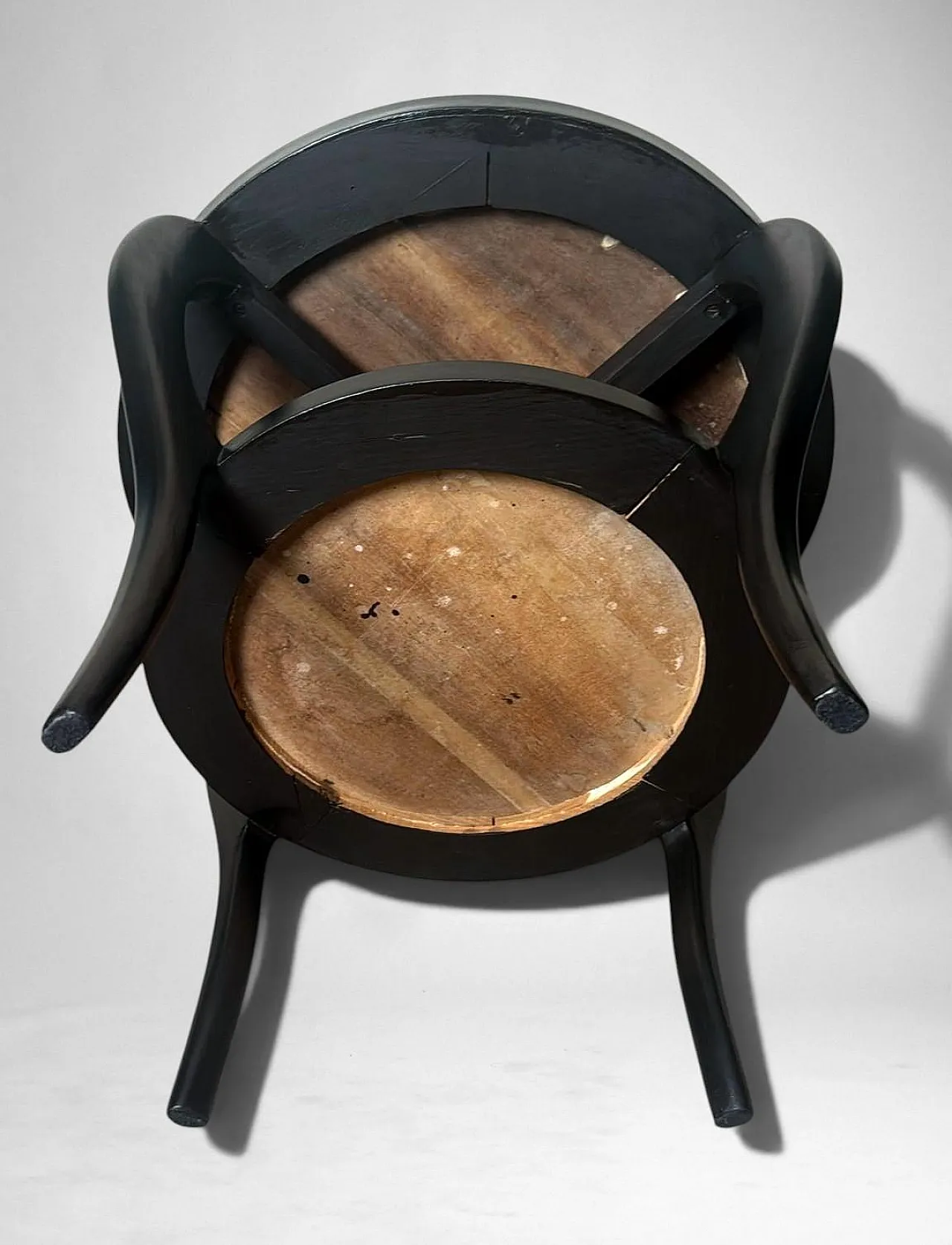
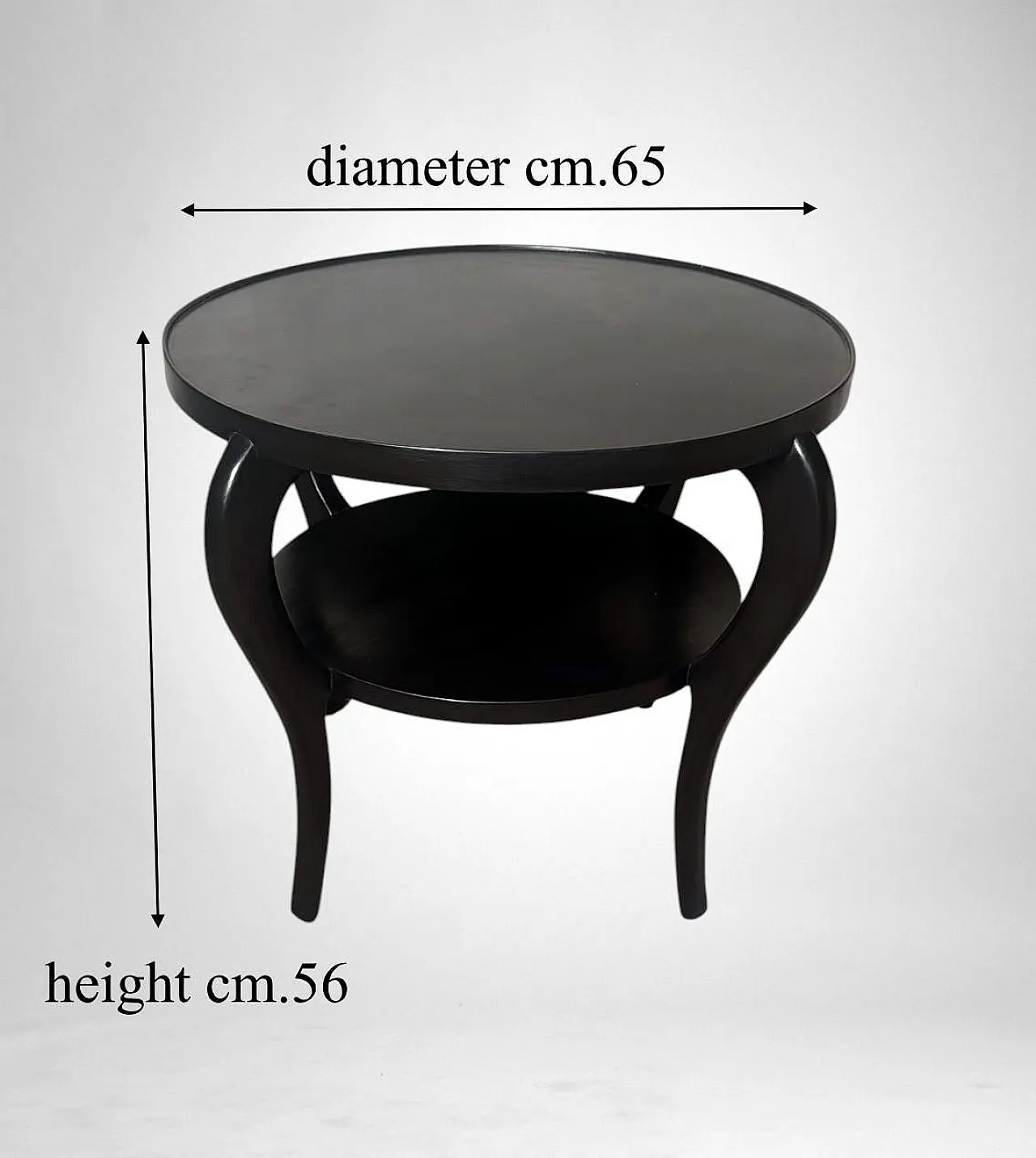
Refined and elegant Italian Art Deco coffee table crafted in ebonized walnut. Distinguished by its clean, balanced lines and sophisticated design, it combines visual harmony with practical functionality. From the edge of the circular top, four sturdy curved legs descend gracefully and converge midway into a lower circular tier, creating a striking architectural composition while providing excellent stability and structural balance. This table was produced between 1950 and 1955 in a highly skilled cabinetmaking workshop in Cantù, a town in the Province of Como, Lombardy, long regarded as one of Italy’s foremost centers for the production of fine furniture. Renowned for its exceptional woodworking tradition and commitment to craftsmanship, Cantù has supplied furniture for discerning private clients as well as prestigious interior design projects, including luxury hotels, restaurants, and distinguished residences throughout the world. This piece represents a fine example of postwar Italian Art Deco production. Its graceful silhouette and refined construction embody the elegance, sophistication, and attention to detail that define the style. Evoking the charm of a bygone era, it successfully combines artisanal tradition with everyday functionality, making it equally suitable for both classic and contemporary interiors. One of the table’s most distinctive features is the wood used for its veneering, later enhanced through an ebonizing process: Juglans regia, commonly known as European walnut or English walnut. Considered one of the most prized woods in fine cabinetmaking, it has been admired for centuries for its rich coloration, dramatic figuring, and beautifully flamed grain patterns. Because only a limited amount of premium-quality timber can be obtained from each tree, walnut remains a highly sought-after and valuable material. Veneering is an ancient woodworking technique that involves applying thin sheets of precious wood over a structural substrate. In the case of walnut, these veneers are cut from carefully selected logs into sheets generally ranging from 1 to 2 millimeters in thickness. They are then meticulously applied by hand to a prepared wooden structure using specialized adhesives. Following pressing and drying, the surface is finished through sanding, polishing, and the application of protective treatments that enhance both the appearance and longevity of the wood.n The origins of veneering date back thousands of years and can be traced to the ancient civilizations of Egypt and China. Over the centuries, the technique evolved and became an essential element in the production of fine furniture, luxury objects, and decorative works of art. In this particular piece, the process beautifully highlights the remarkable color variations, flame figuring, and natural grain patterns of the walnut veneer. The entire wooden structure has been carefully restored by hand by our team of skilled craftsmen and is presented today in excellent condition. Dimensions: Diameter: 25.59 in. (65 cm) — Height: 22.05 in. (56 cm).



.png)







 SILVER Seller in Prato, Italy