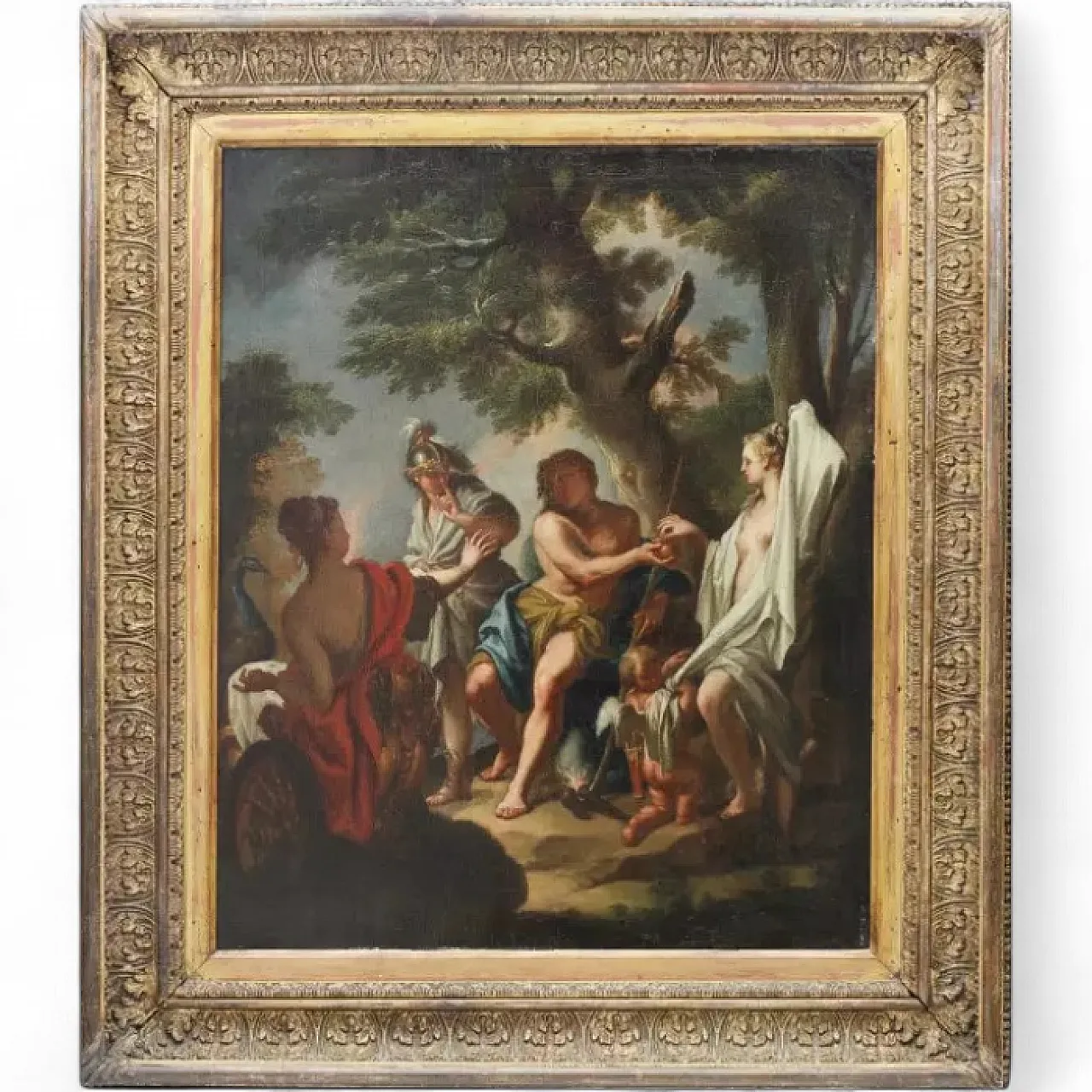
The painting The Judgement of Paris is a refined example of Flemish painting from the early 18th century, continuing the great tradition of the Old Masters. The work depicts one of the most celebrated subjects of classical mythology - the choice of Paris, son of King Priam of Troy, who was entrusted with deciding which of the three goddesses, Hera, Athena or Aphrodite, was the fairest.
At the centre of the composition, Paris is shown seated beneath a tree at the moment he presents the golden apple to Aphrodite, the goddess of beauty and love. Aphrodite is portrayed in a softly falling drapery, her figure imbued with elegance and serene majesty. Beside her stands Cupid with his quiver of arrows, reinforcing the allegory of love. Athena appears wearing a helmet and armour as the embodiment of wisdom and martial glory, while Hera, accompanied by the peacock - her traditional iconographic attribute - represents sovereignty and royal dignity.
The composition reflects the influence of the artistic legacy of Peter Paul Rubens (1577-1640) and his followers. The rich warm palette, expressive contrasts of light and shadow, dynamic gestures and sculptural treatment of the figures are characteristic features of Flemish Baroque painting.
The emotional intensity of the Baroque style, the sensual modelling of the human form and the theatrical arrangement of space are combined here with greater compositional clarity and decorative harmony typical of European painting of the early 18th century.



.png)




 SILVER Seller in Alpes-Maritimes, France