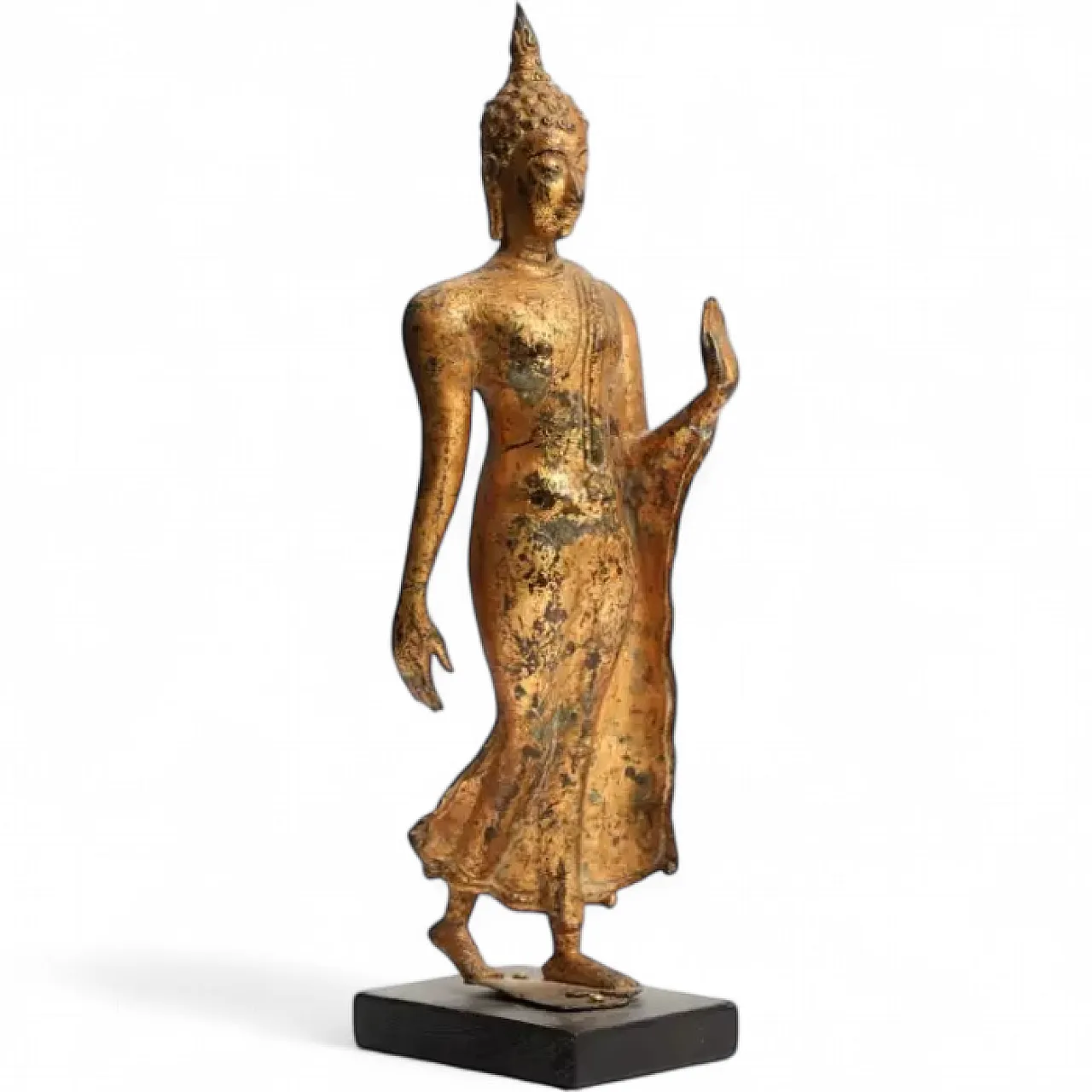
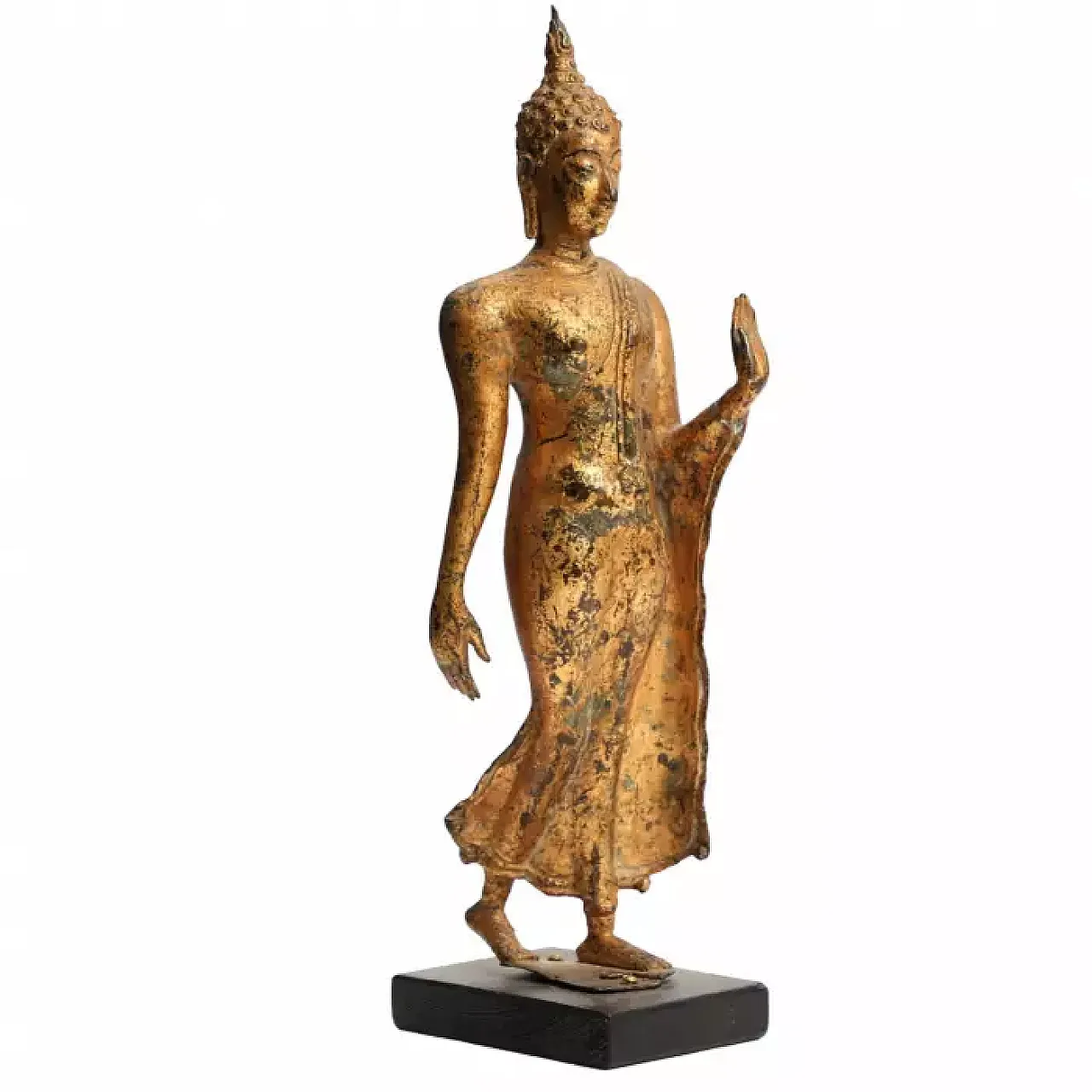
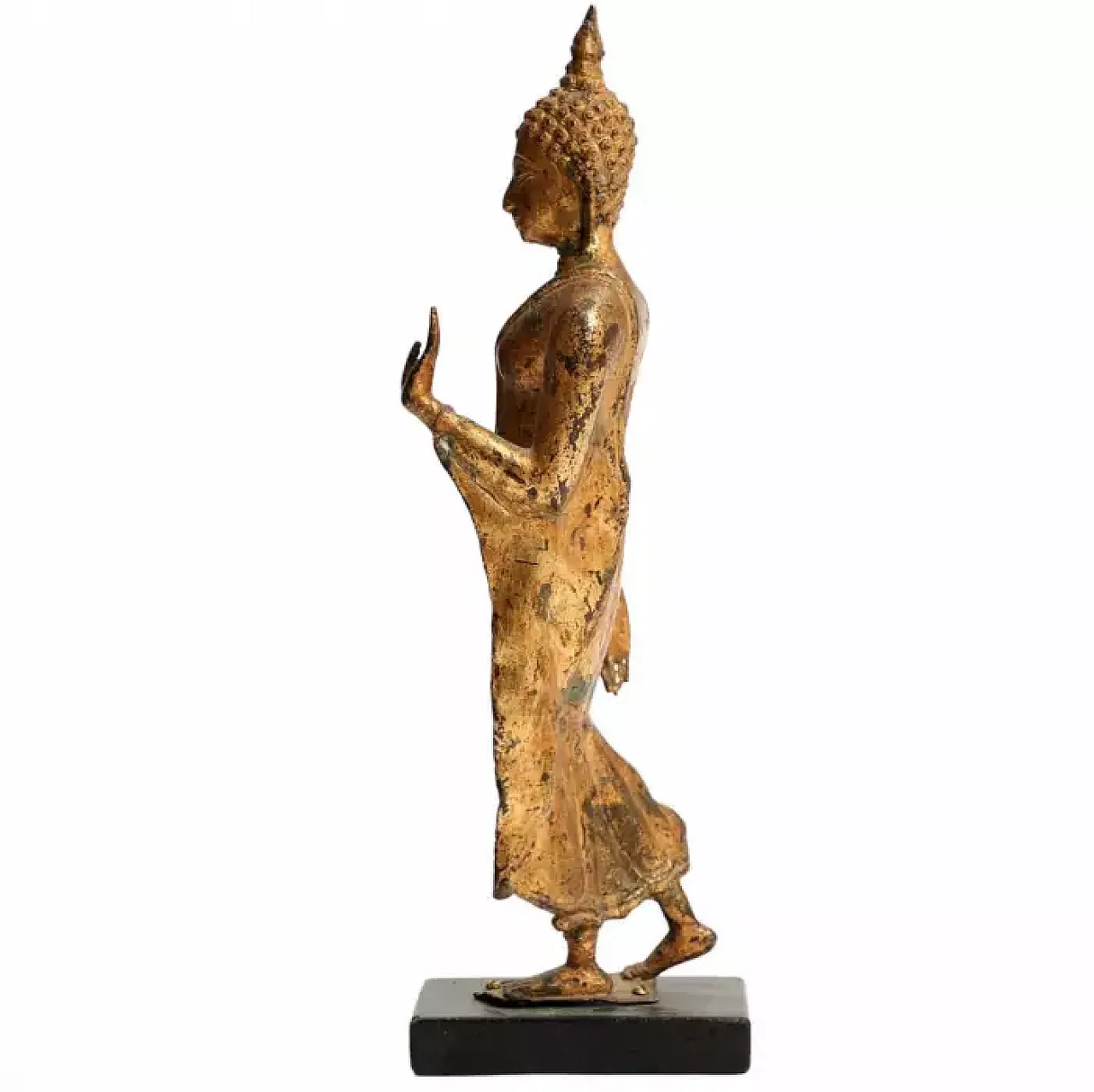
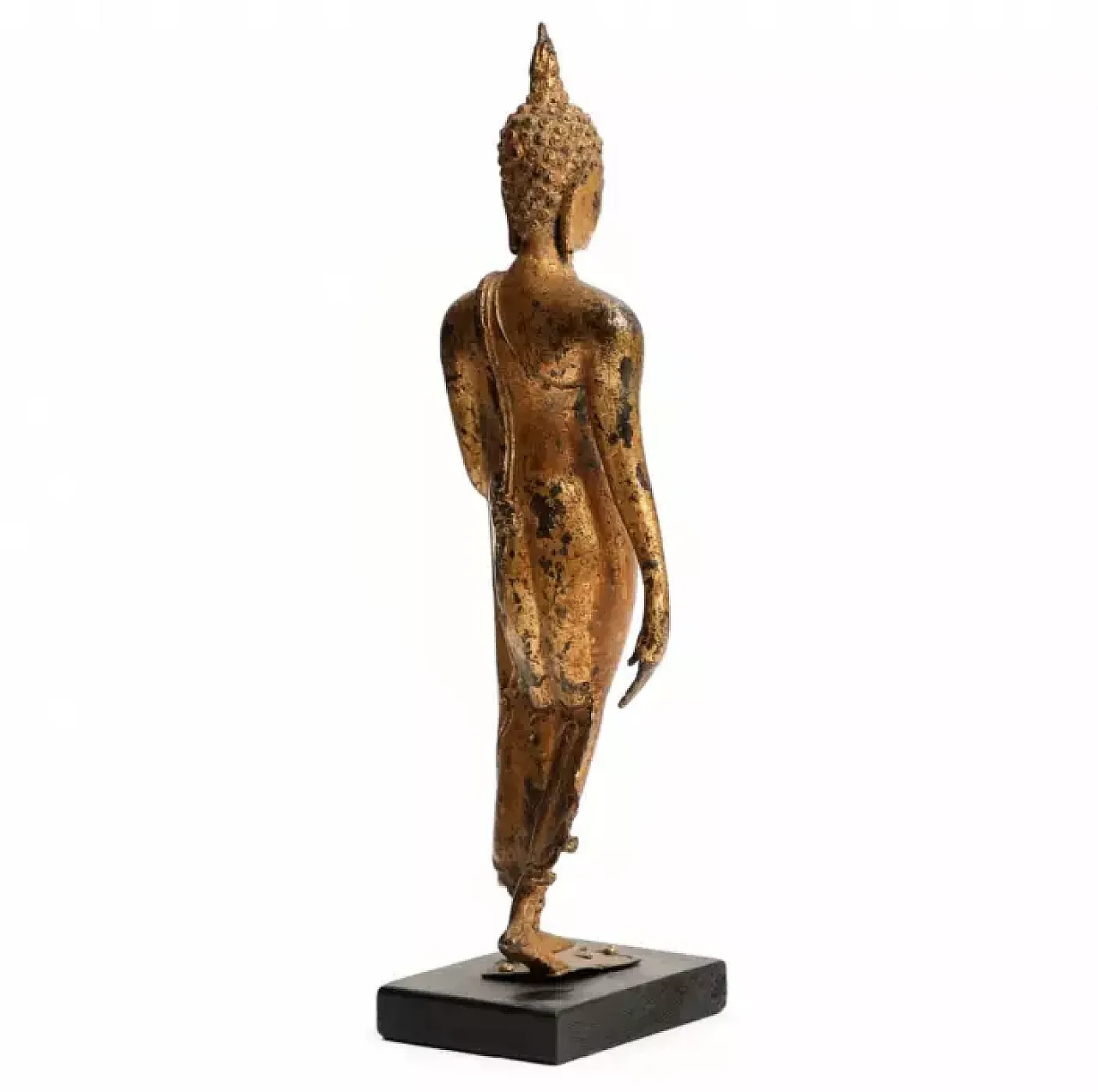
An expressive gilt-bronze figure of the Walking Buddha, made in Siam, present-day Thailand, during the 19th century. The sculpture depicts the Buddha in the distinctive walking posture associated with Thai art, symbolising the transmission of the Teaching, spiritual progress and boundless compassion towards all living beings. The left hand is raised in the abhaya mudra, a gesture signifying fearlessness, protection, blessing and the bestowal of inner peace. The right arm falls naturally alongside the body, reinforcing the impression of graceful forward movement.
The figure is distinguished by its slender proportions, elongated silhouette and refined modelling, characteristic of Siamese Buddhist sculpture of the Rattanakosin period. The face is rendered with softly idealised features and a serene meditative expression, surmounted by the traditional flame-form ushnisha, an emblem of enlightenment. The monastic robes are treated with restraint, their linear folds accentuating the rhythm and movement of the figure. Surviving areas of the original gilding preserve the sculpture’s noble and historic appearance.
The figure is mounted on a later black-painted wooden base, which provides stability for display and forms a visually harmonious complement to the composition. The overall height, including the base, is 28.5 cm.


.png)
 SILVER Seller in Alpes-Maritimes, France