Oil on canvas.
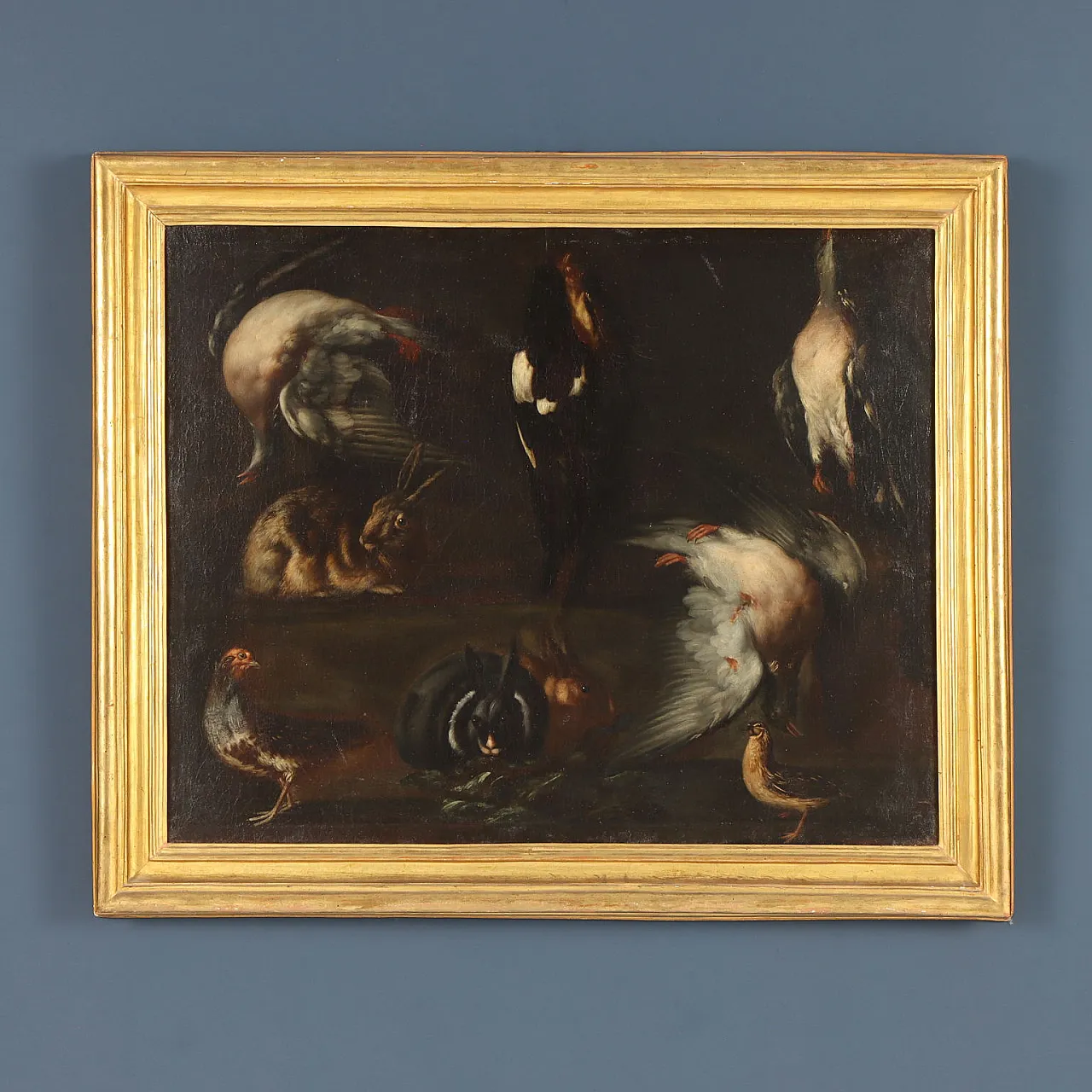
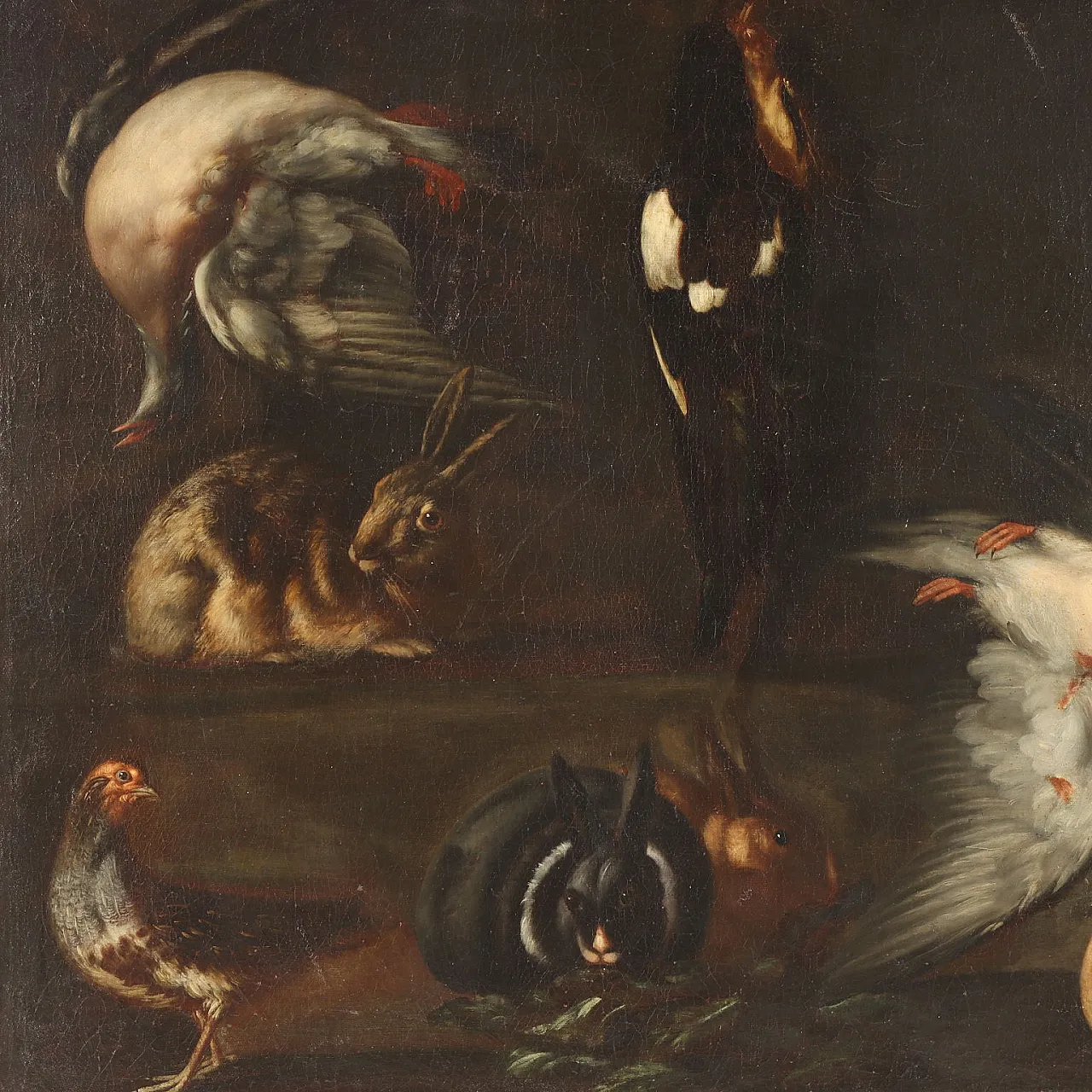
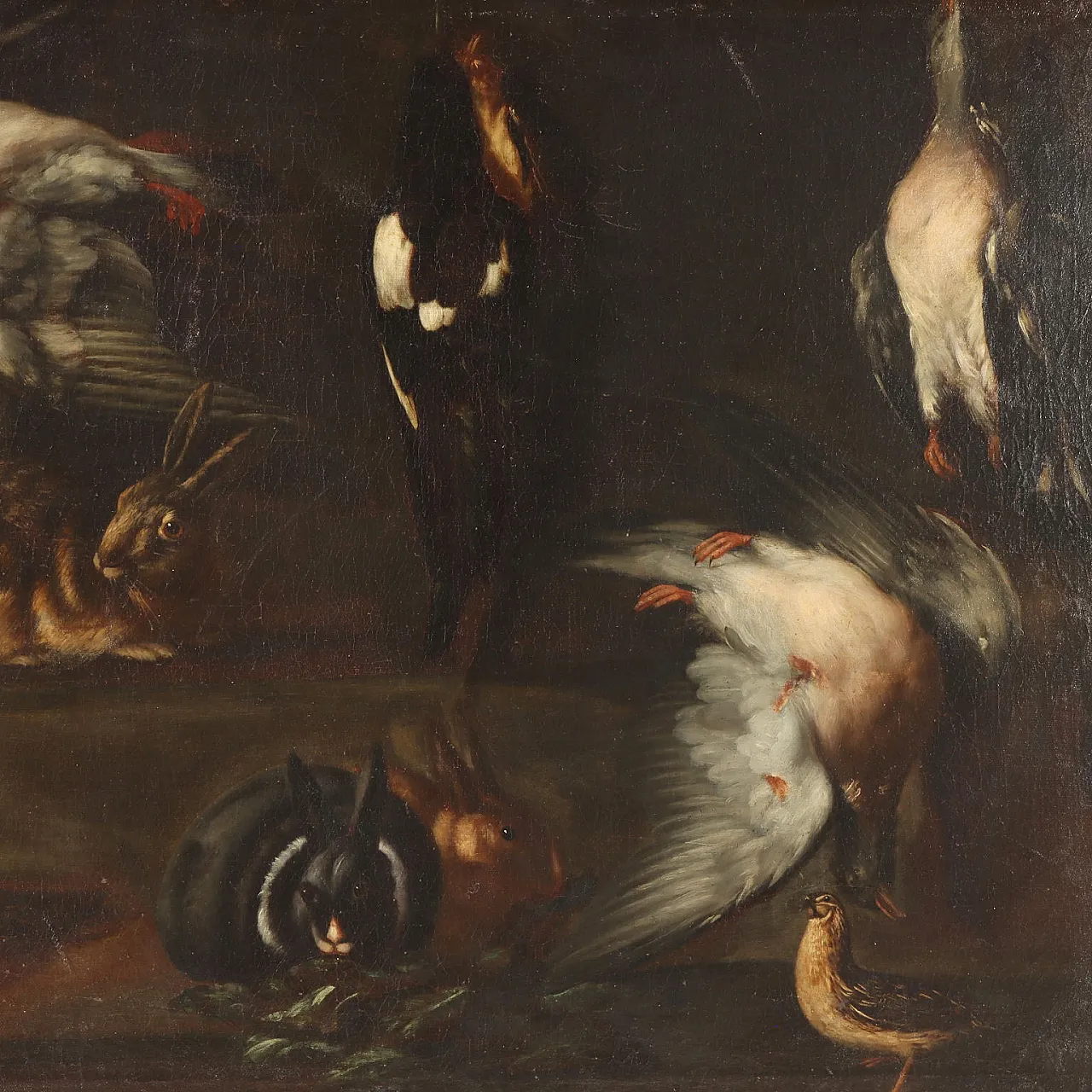
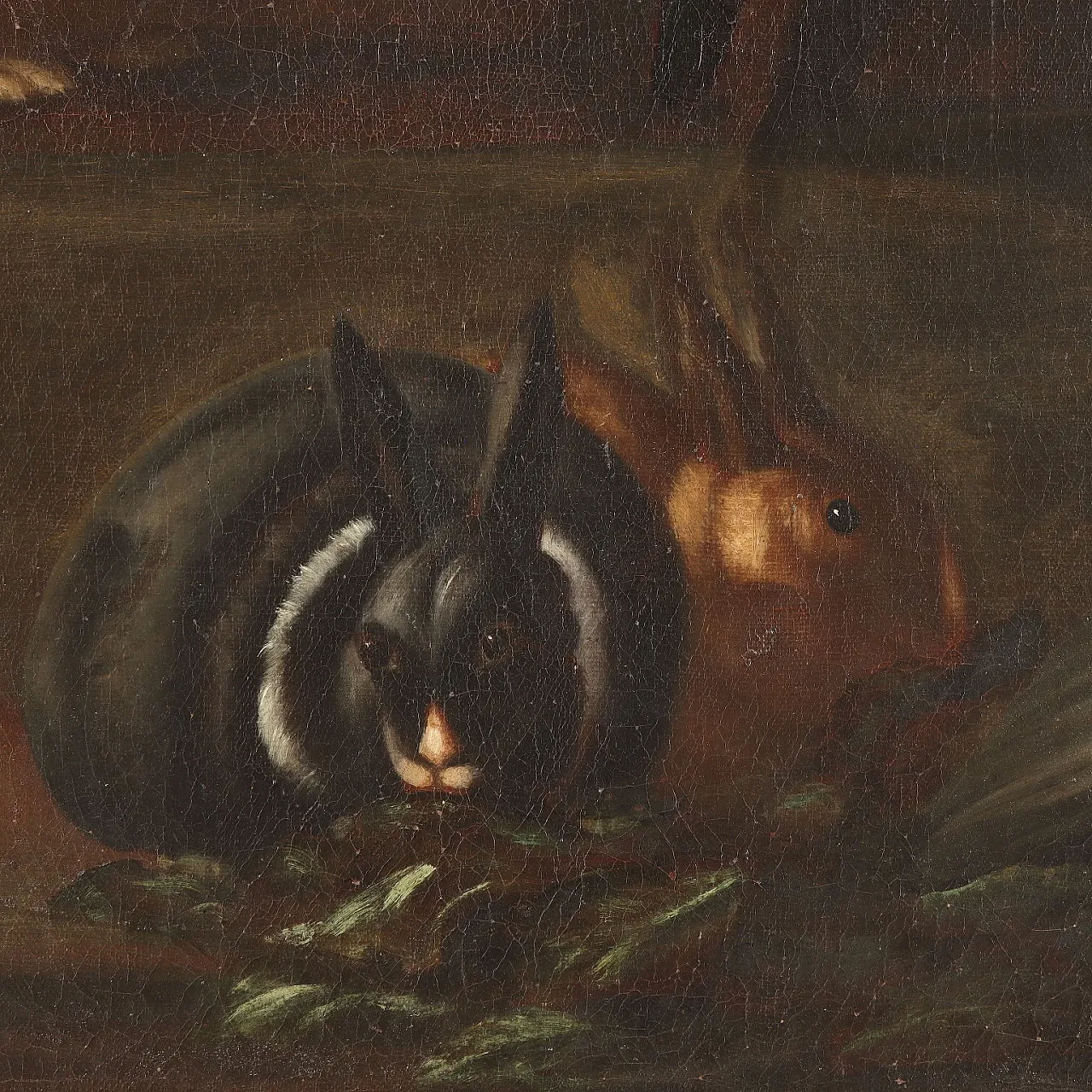
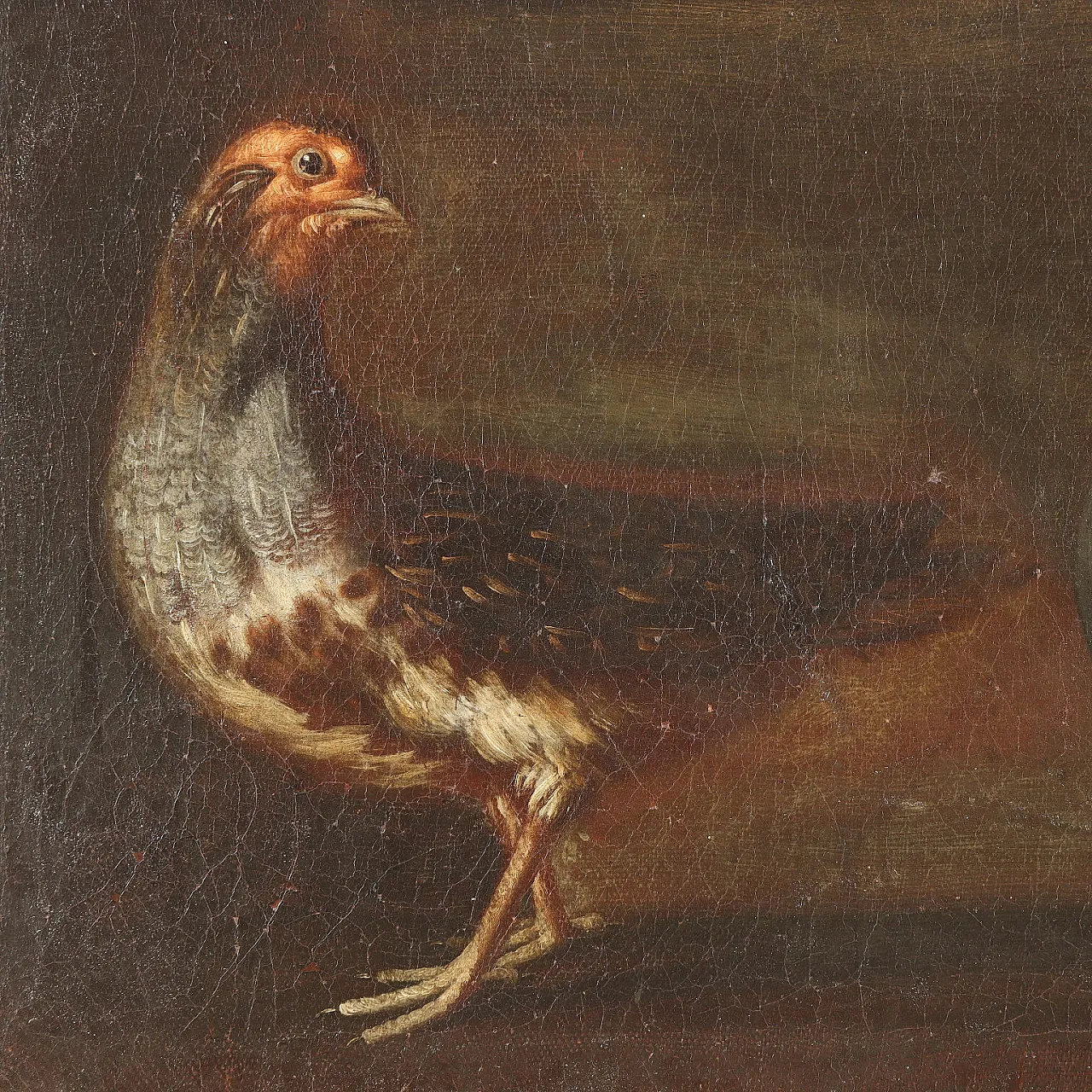
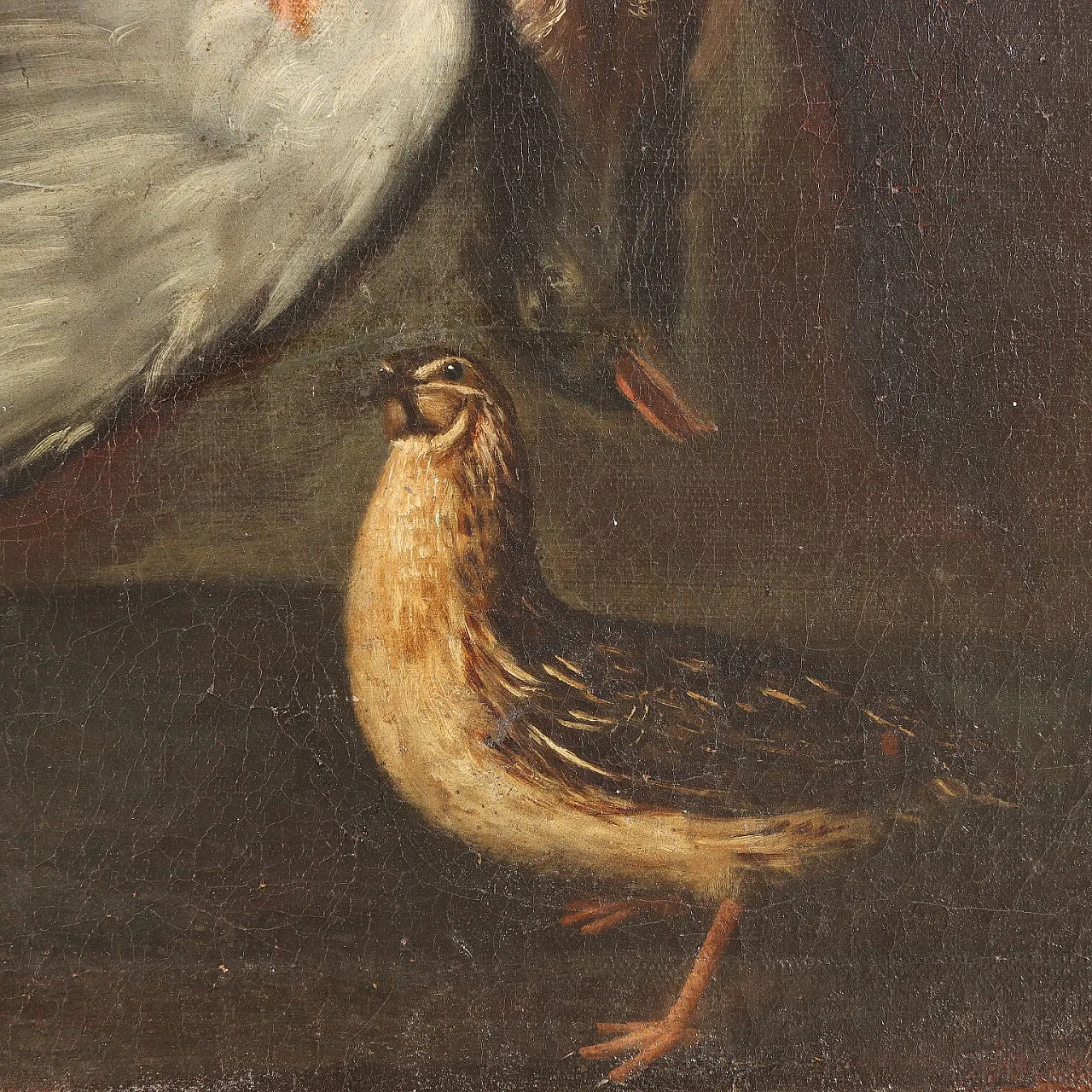
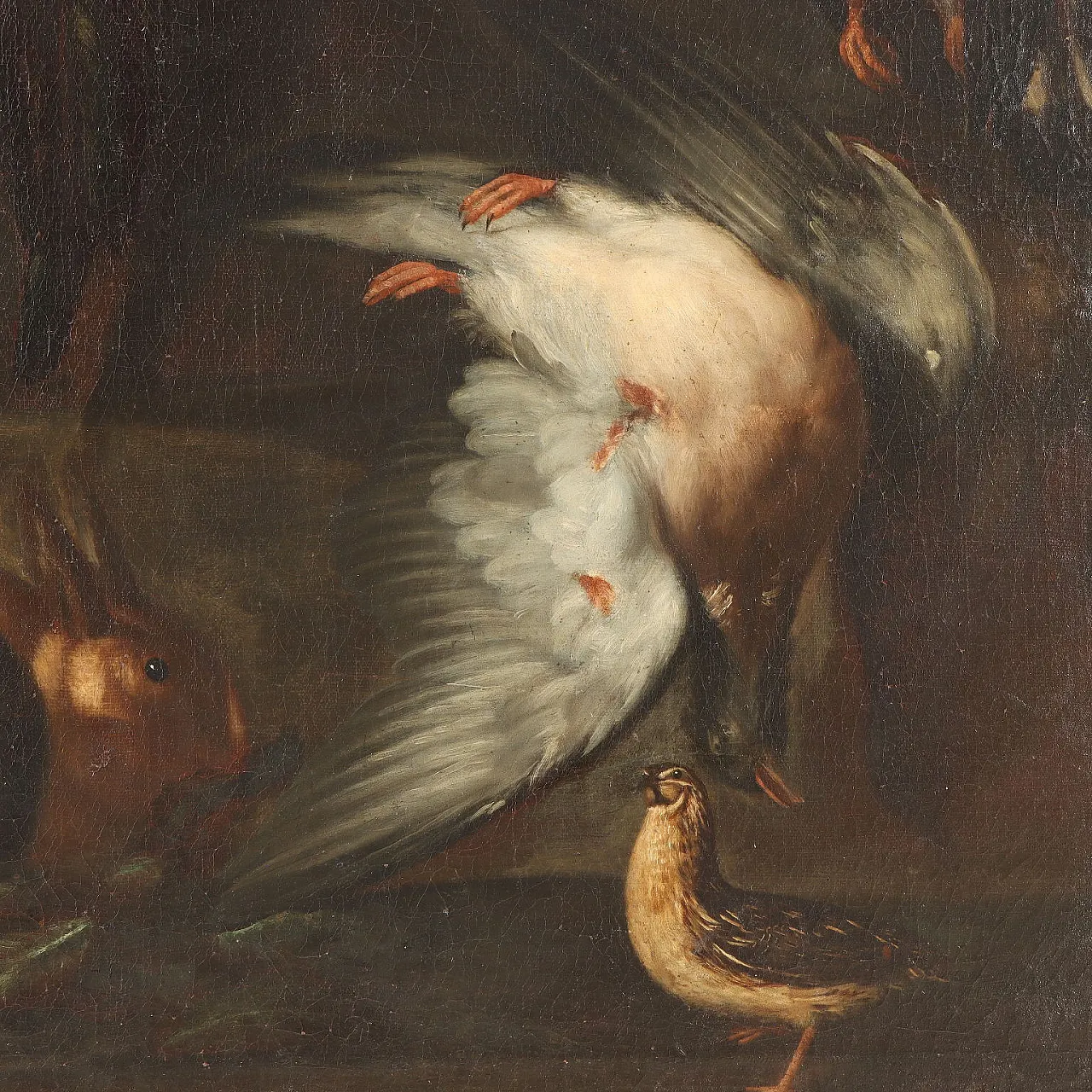
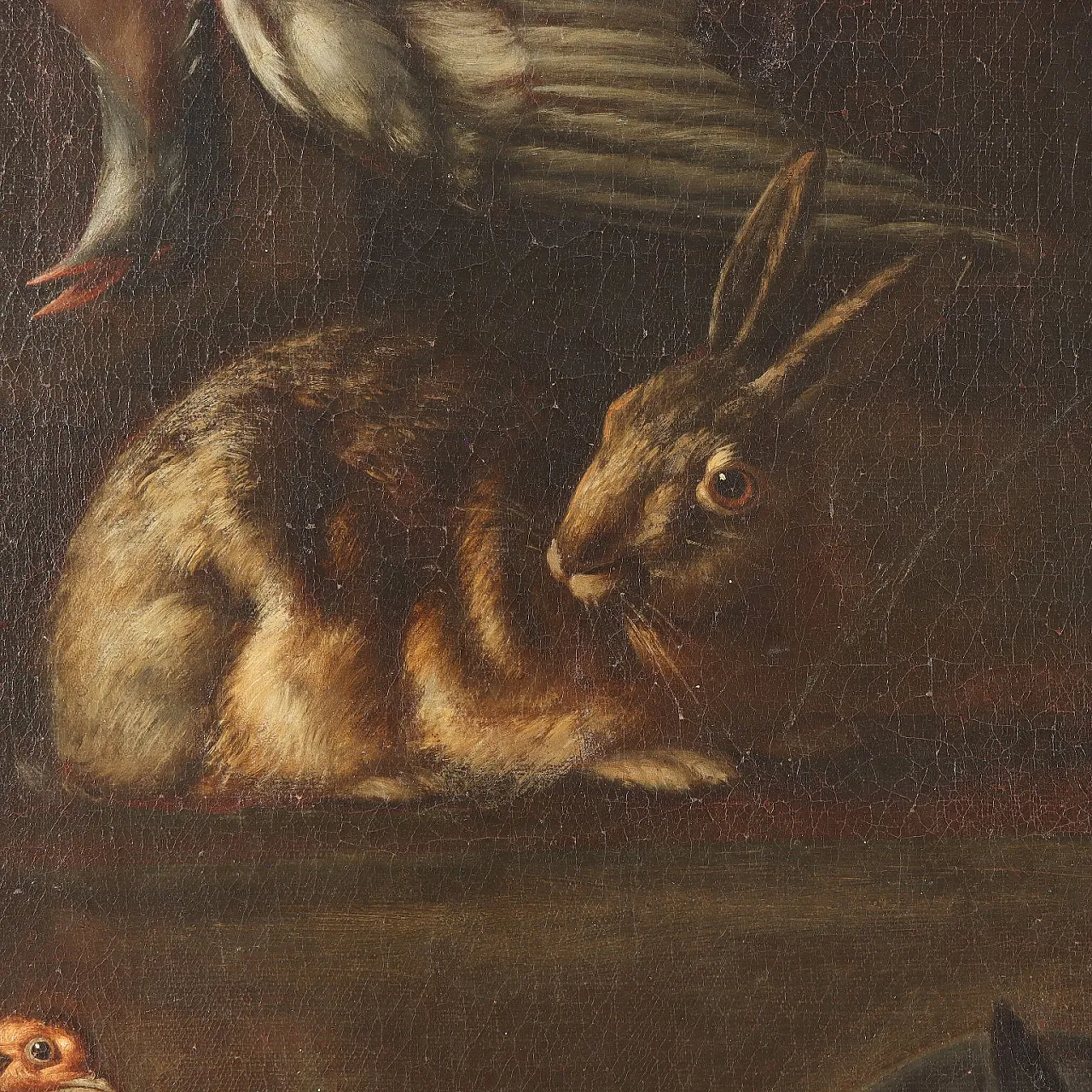
Amidst a completely dark background, various animals are depicted: some game, namely four different birds hanging by their legs or resting on a (nearly invisible) surface, and, on the same surface, three crouching rabbits and two strolling birds.
Living and dead animals are harmoniously intermingled, and only careful observation allows us to discern their vitality or the rigidity of death:
It is the lively gaze of the rabbits' and birds' eyes and the movement of the latter that identifies their state of life.
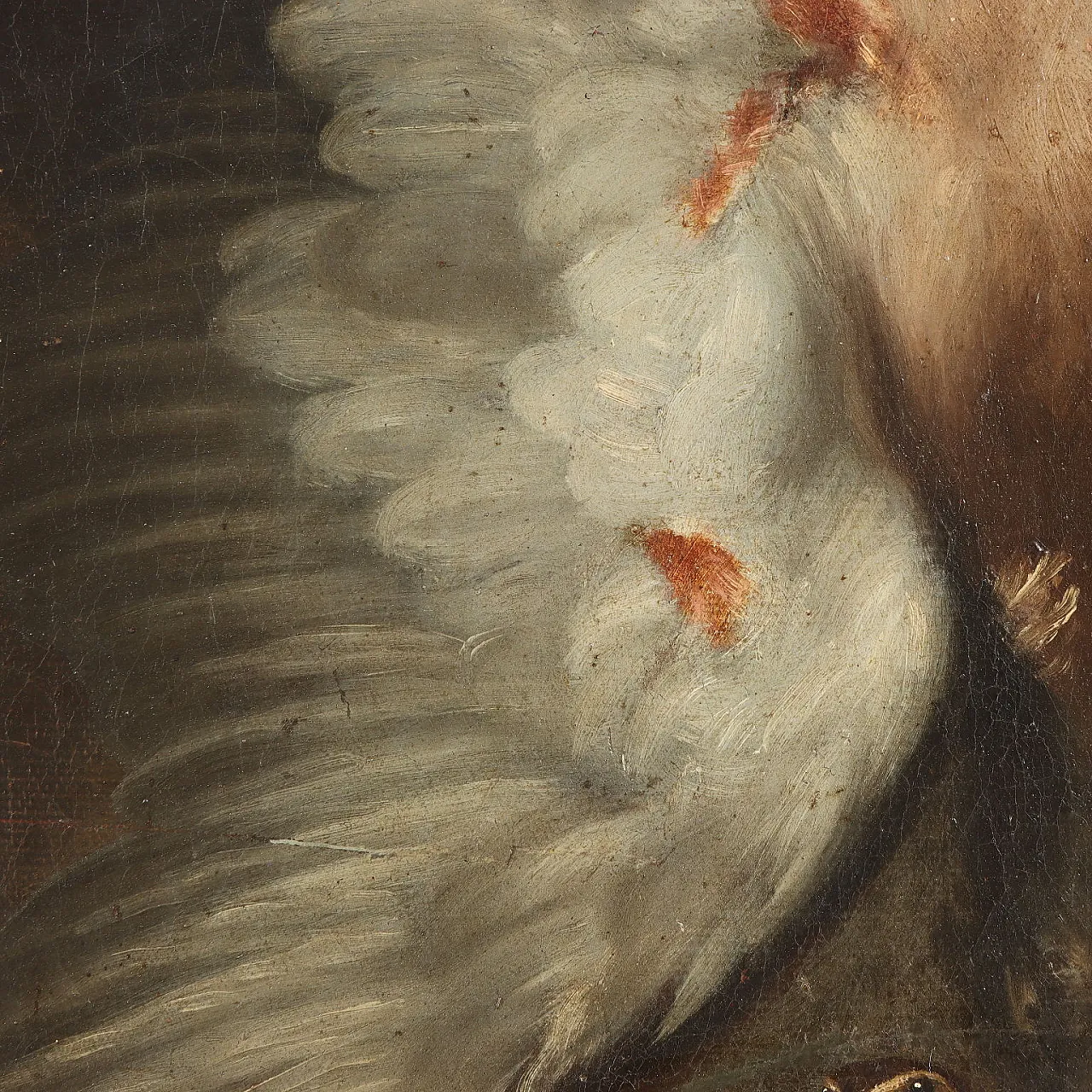
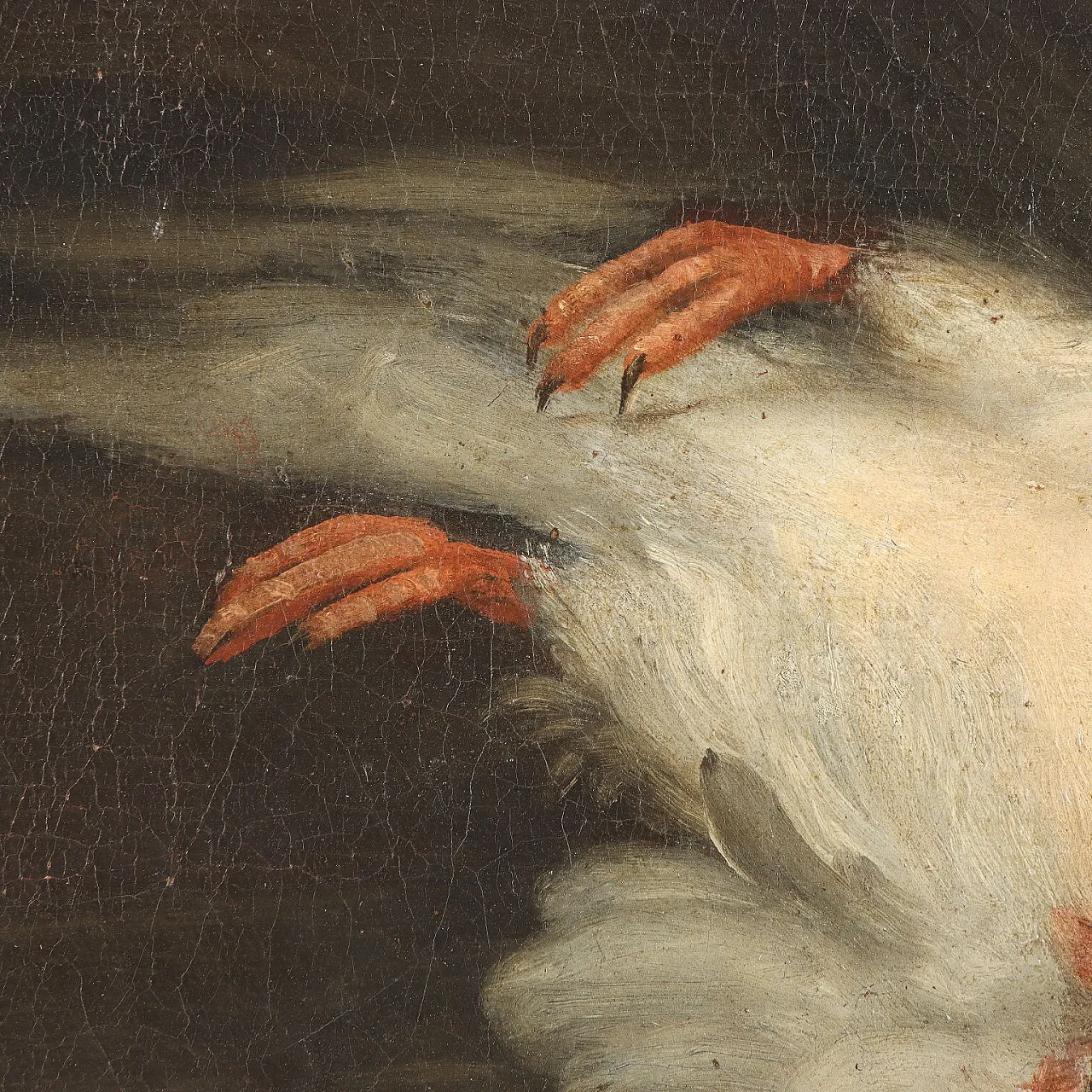
The artist's technical skill stands out in this work, evident above all in the virtuosity of his brushwork in depicting the animals' anatomical features, with plumage, skin, and fur clearly differentiated in detail.
Certainly of the Genoese school, the work is attributed to Sinibaldo Scorza (1589–1631), a painter active in the city of Genoa who specialized in the art of drawing, engraving, and naturalistic miniatures, with a particular focus on animals.
Scorza studied animals from life, making precise and detailed sketches and drawings, with an incredible ability to capture salient aspects from both a pictorial and scientific perspective, typical of the new interests of the time.
Alongside the drawings, he also made detailed notes on his sheets, such as the position of their legs, the type and color of their fur, to name a few.
Sinibaldo Scorza painted not only animals, but also a variety of subjects, including landscapes, mythological or genre scenes, and views and glimpses of the cities in which he stayed.
His naturalistic inclination was particularly strengthened by his contact with the great Flemish painters he met in Turin and then met again in Rome. All his works display a particular attention to the naturalistic aspect, captured in precise detail, with nature, trees, and various animals animating a landscape that can be Arcadian but always characterized by a strong taxonomic flavor.
Mythological tales, biblical or literary subjects were for Scorza (a keen reader with a vast literary culture) a pretext for studying landscapes filled with animals, characterized in detail one by one.
The painting presented here has previously undergone restoration and relining.
It is presented in an antique frame.
FINE ART



.png)

 PLATINUM Seller in Milano, Italy