Oil on canvas.
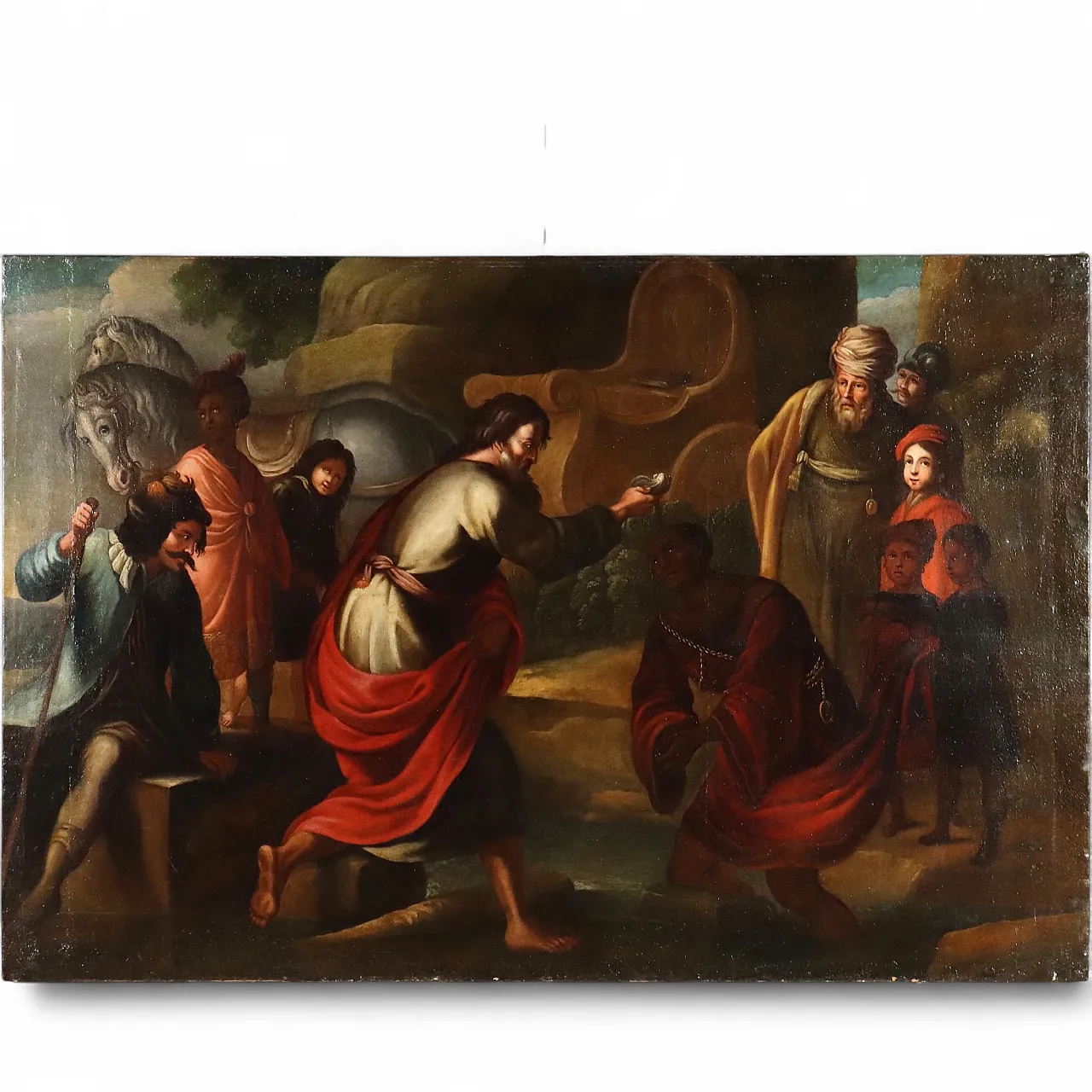
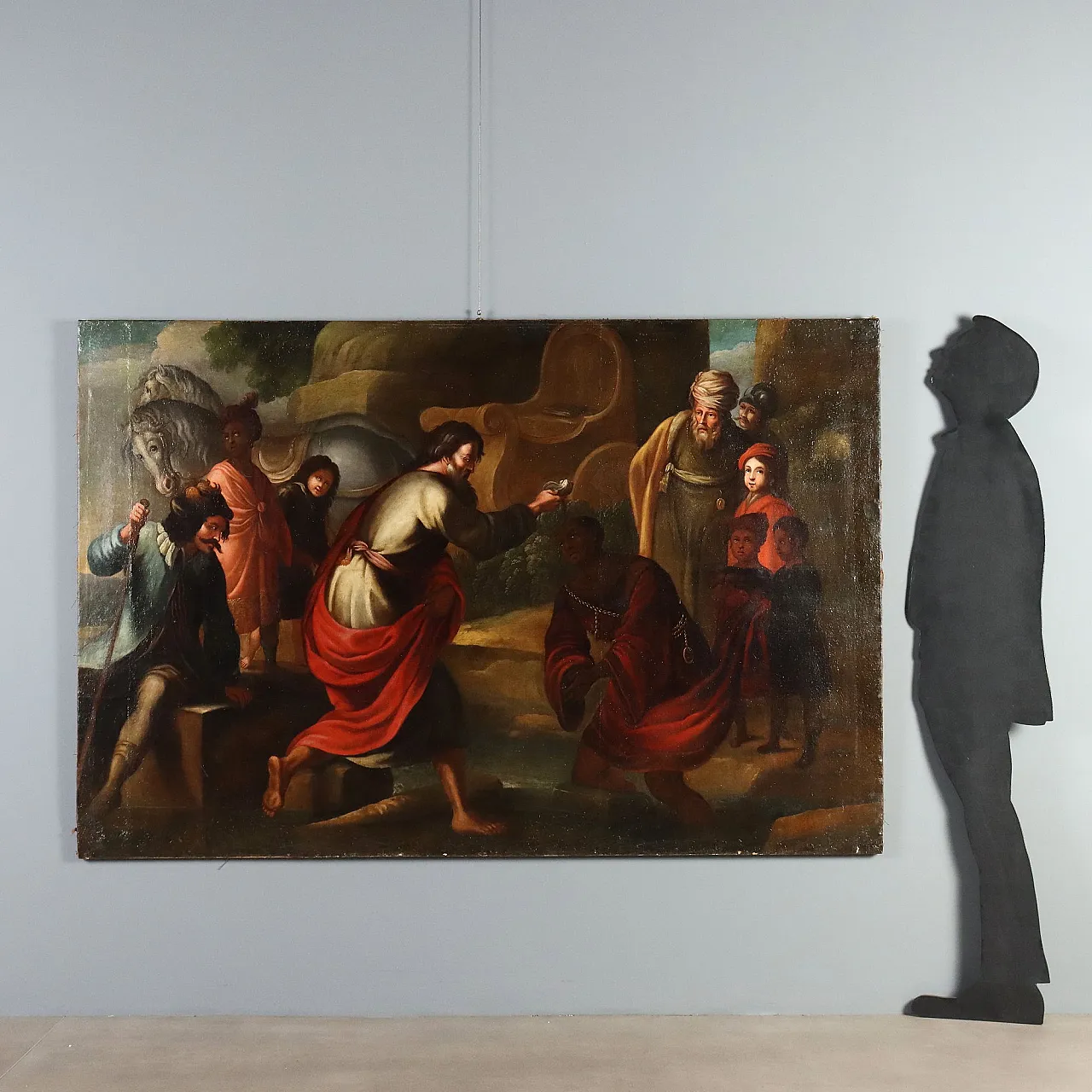
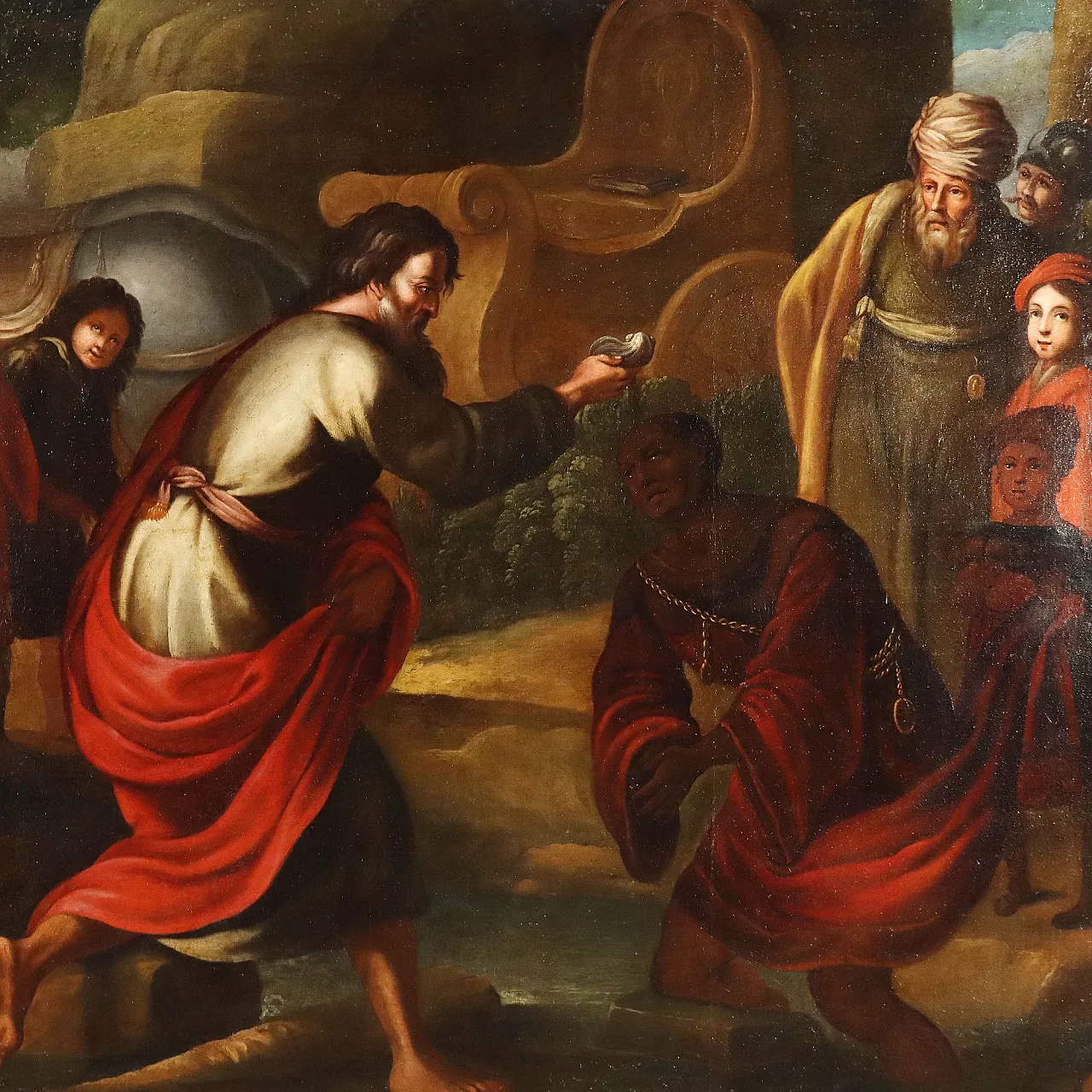
The canvas depicts an episode from the biblical book of the Acts of the Apostles, namely the baptism administered by the deacon Philip to an Ethiopian eunuch. Philip, after receiving an angel's invitation to travel along the deserted road from Jerusalem to Gaza, encountered the Ethiopian while he was traveling in a chariot reading the prophet Isaiah. After explaining the scriptures and announcing the coming of Jesus, he baptized him.
The subject was widely depicted, especially in the Flemish context of the 17th century, because it was considered an iconographic and theological theme of extraordinary importance for the Reformed Church (Calvinist and Protestant in general), particularly in the United Provinces (now the Netherlands).
Moreover, the pictorial style, particularly in the depiction of the figures, harks back to Venetian painting of the same period, well aware of how much the Flemish frequented Venice and how the two artistic cultures influenced each other.
The scene, in keeping with Baroque taste, is rich in figures that overlap and intertwine on different scenic levels.
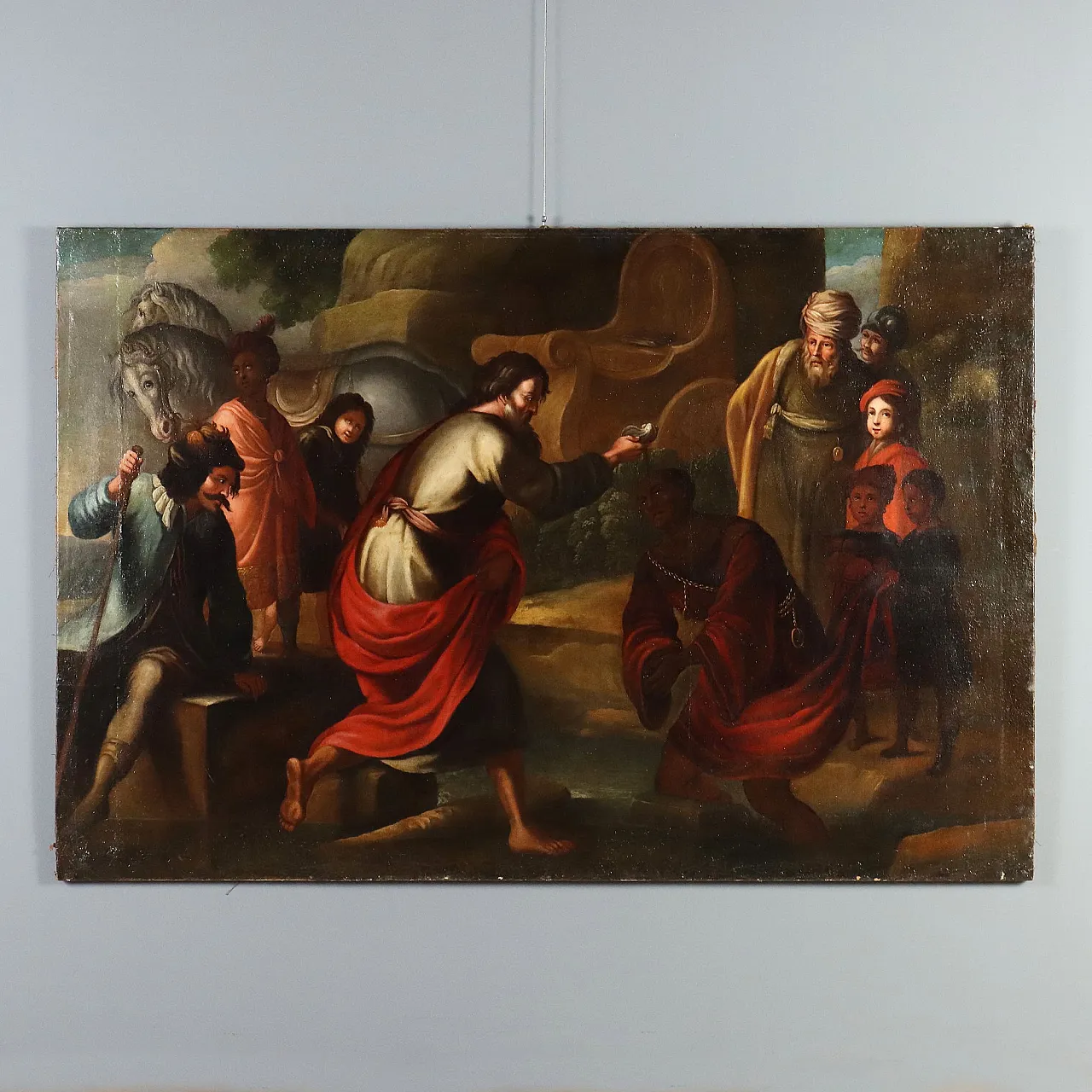
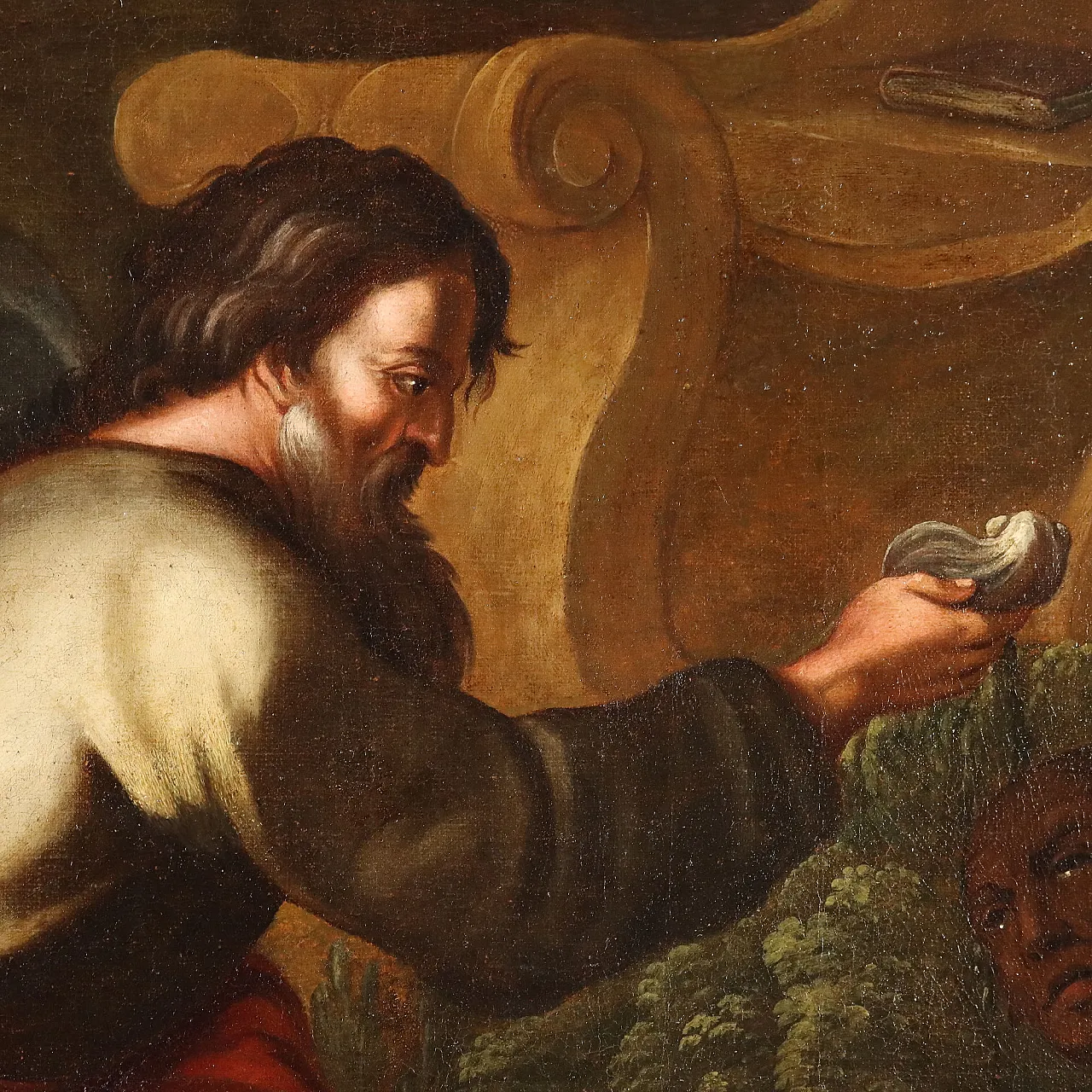
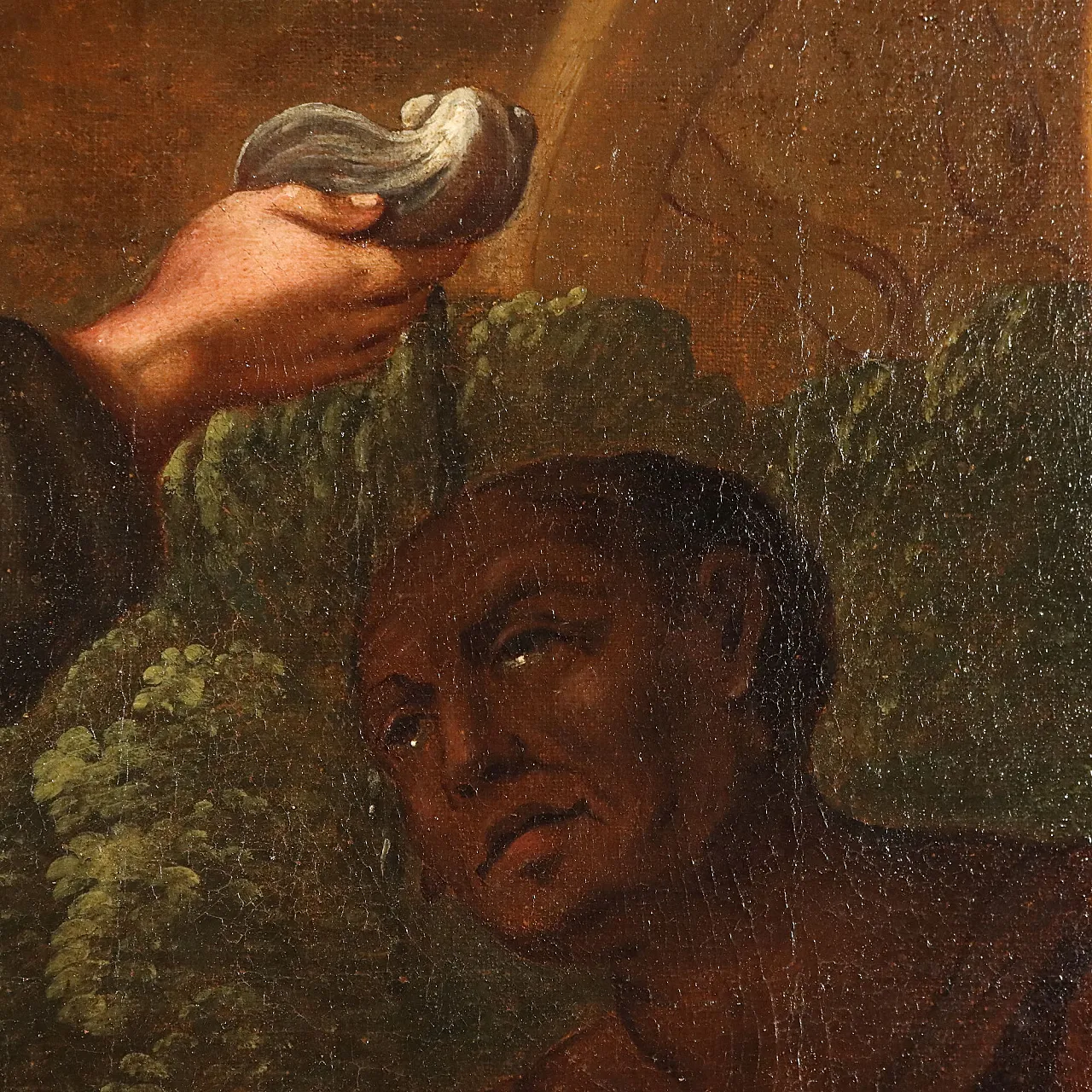
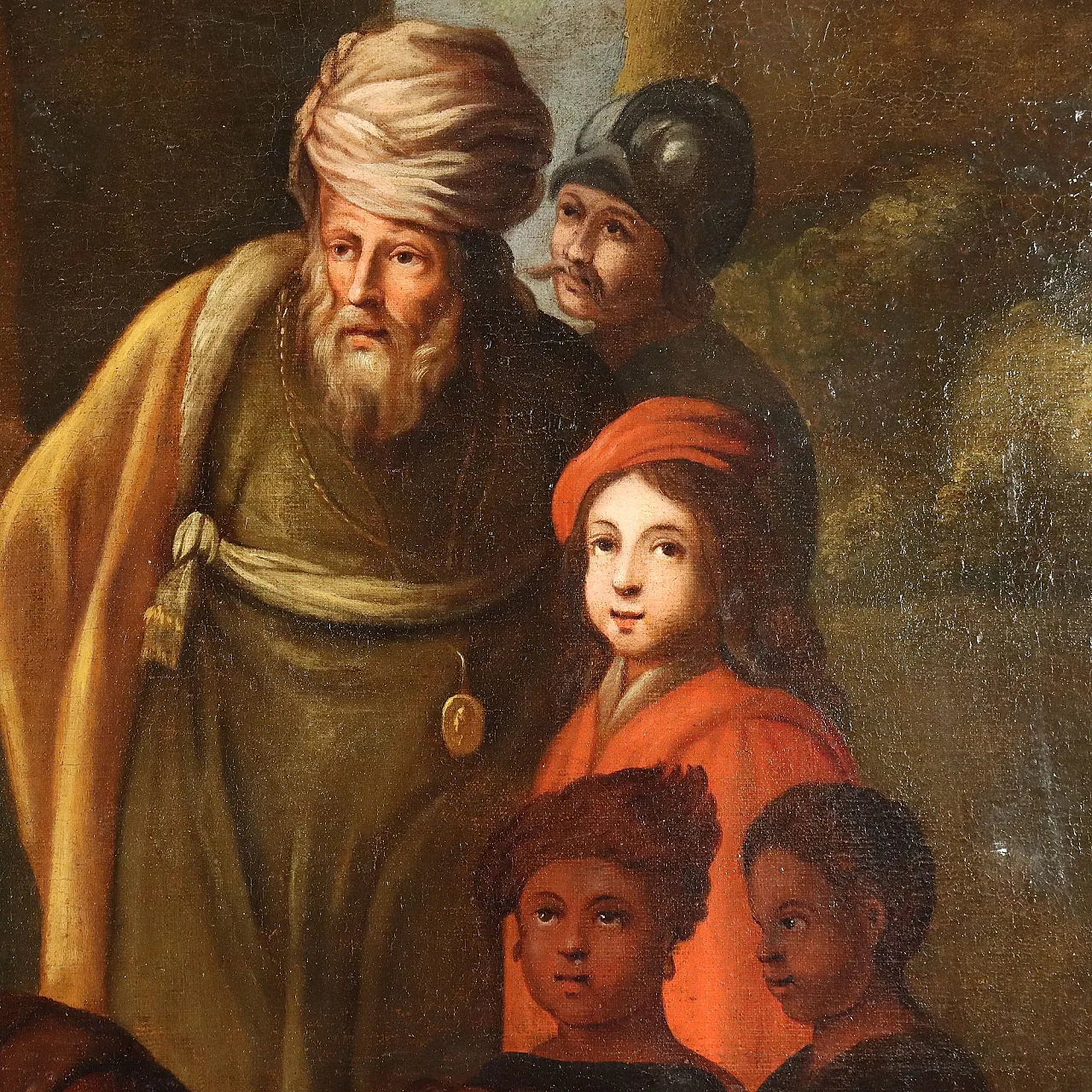
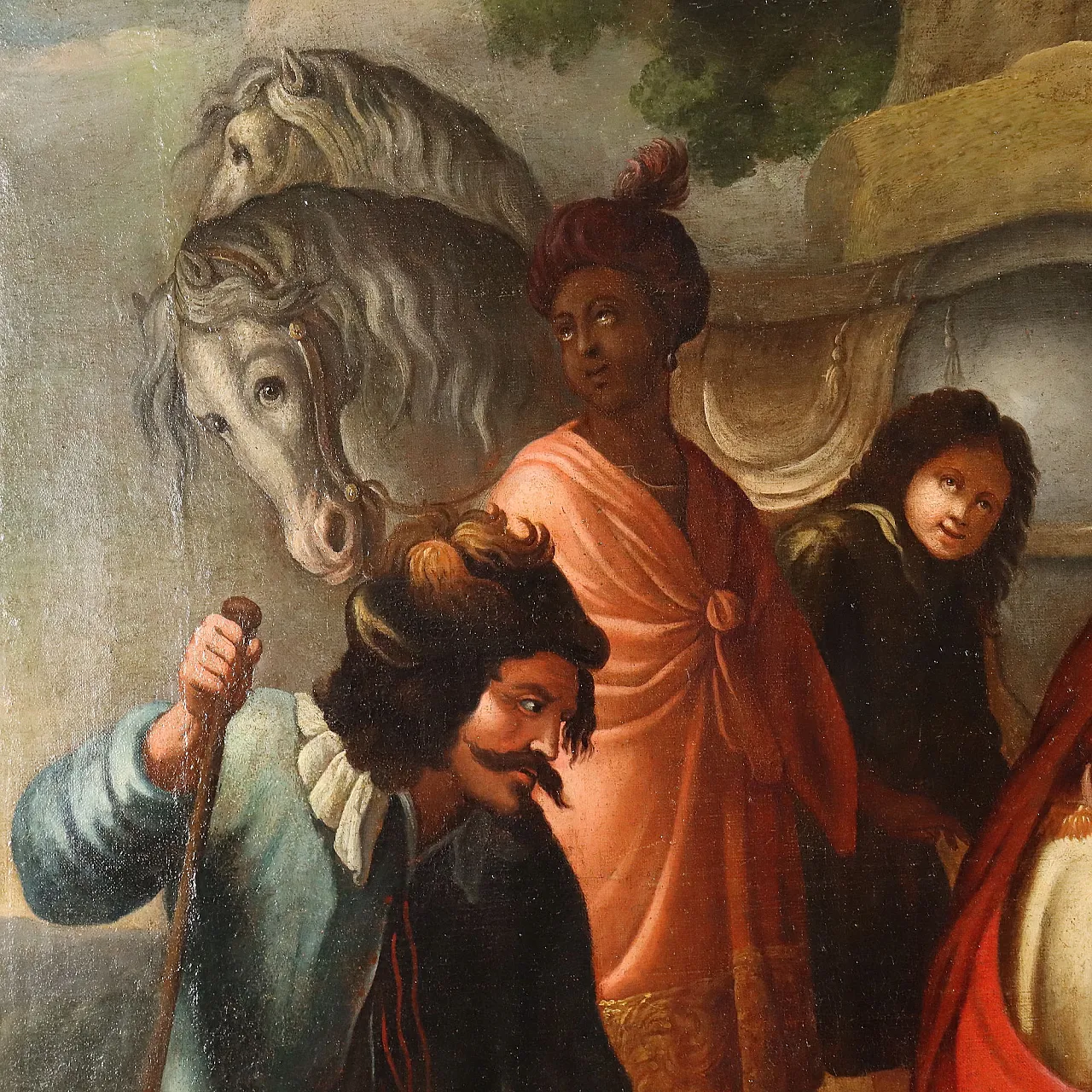
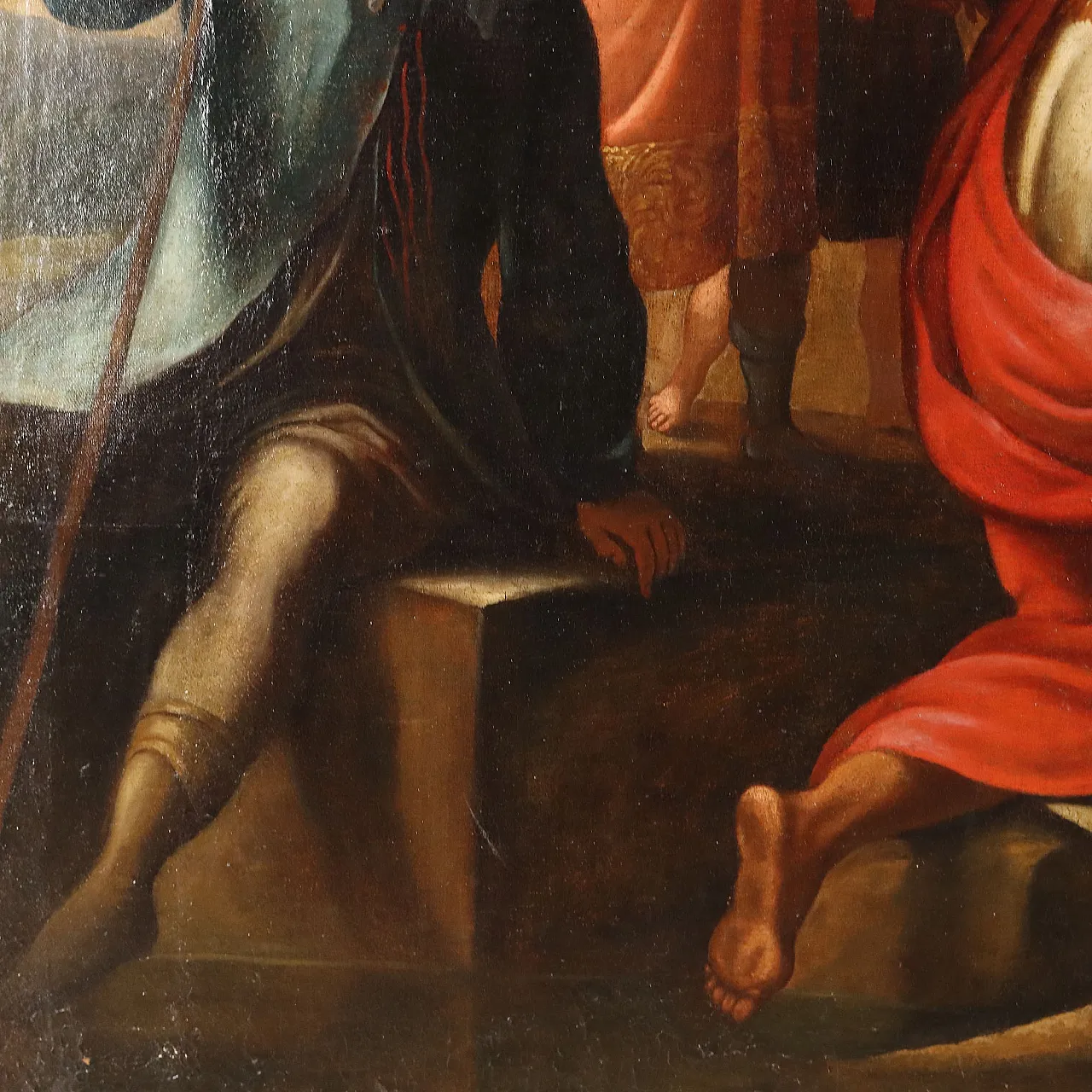
In the center foreground is the deacon Philip pouring baptismal water on the head of the kneeling Ethiopian; on either side are various figures assisting, onlookers, and children, and in the background to the left is a black servant holding the reins of the horse pulling the Ethiopian's chariot.
The landscape is barely discernible, particularly the stream in which the baptism takes place, and is chromatically uniform, with barely discernible details, even incorporating the Ethiopian's chariot.
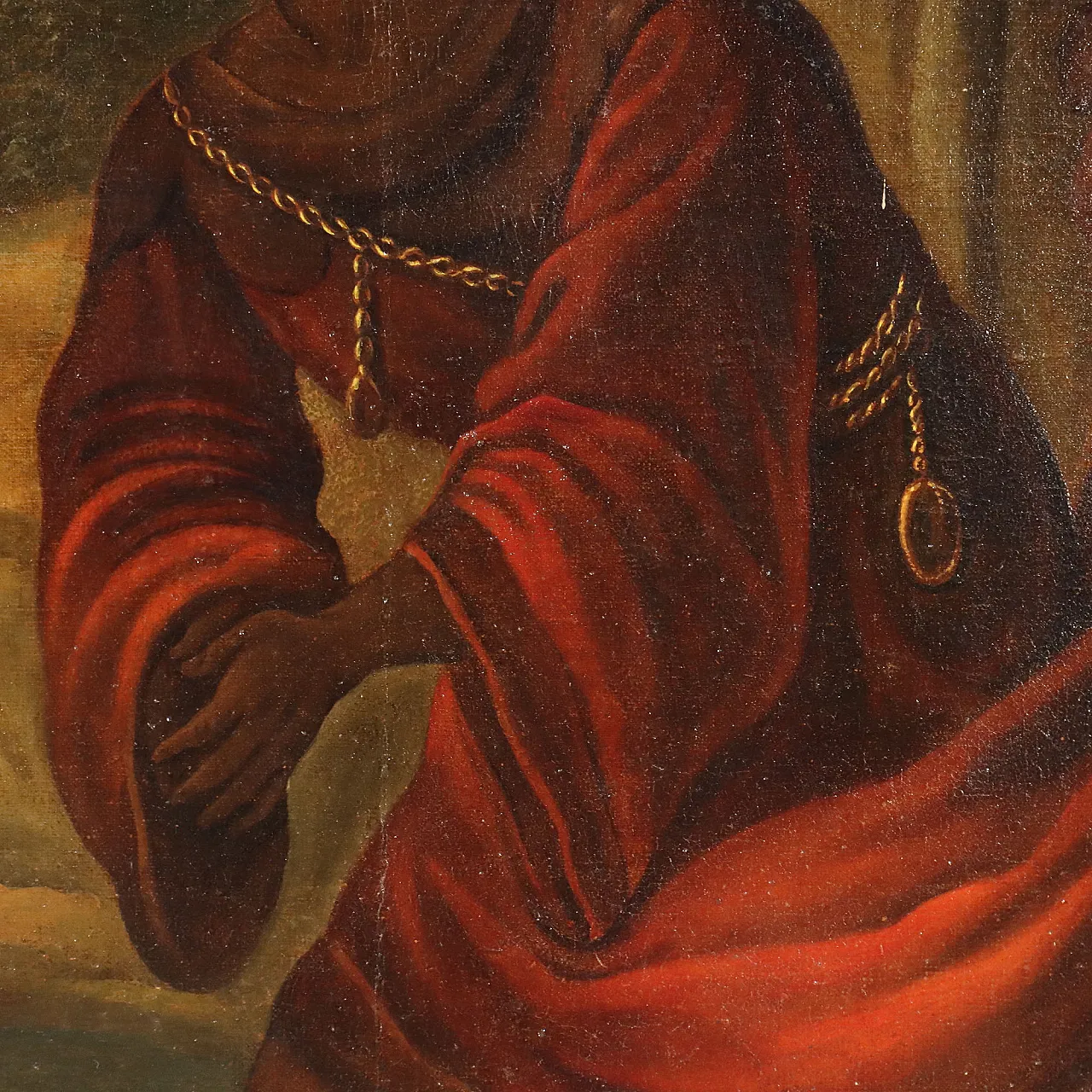
On the other hand, the figures stand out for the vivid colors of their robes and the rosy complexions of some of them, contrasting with the dark skin of the Oriental figures.
The painting, still on its original canvas, shows traces of previous restorations.



.png)

 PLATINUM Seller in Milano, Italy