Venetian school of the late 17th century
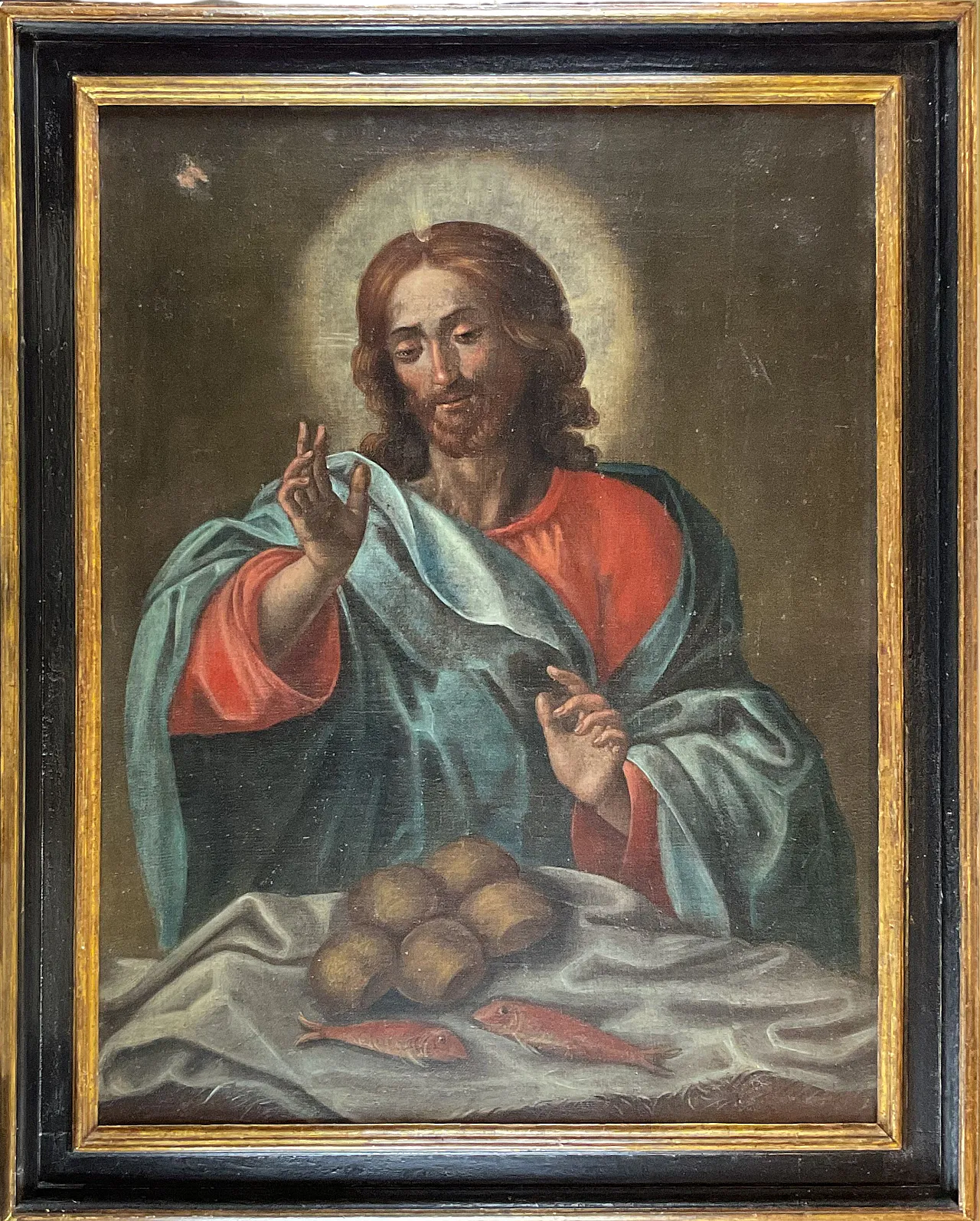
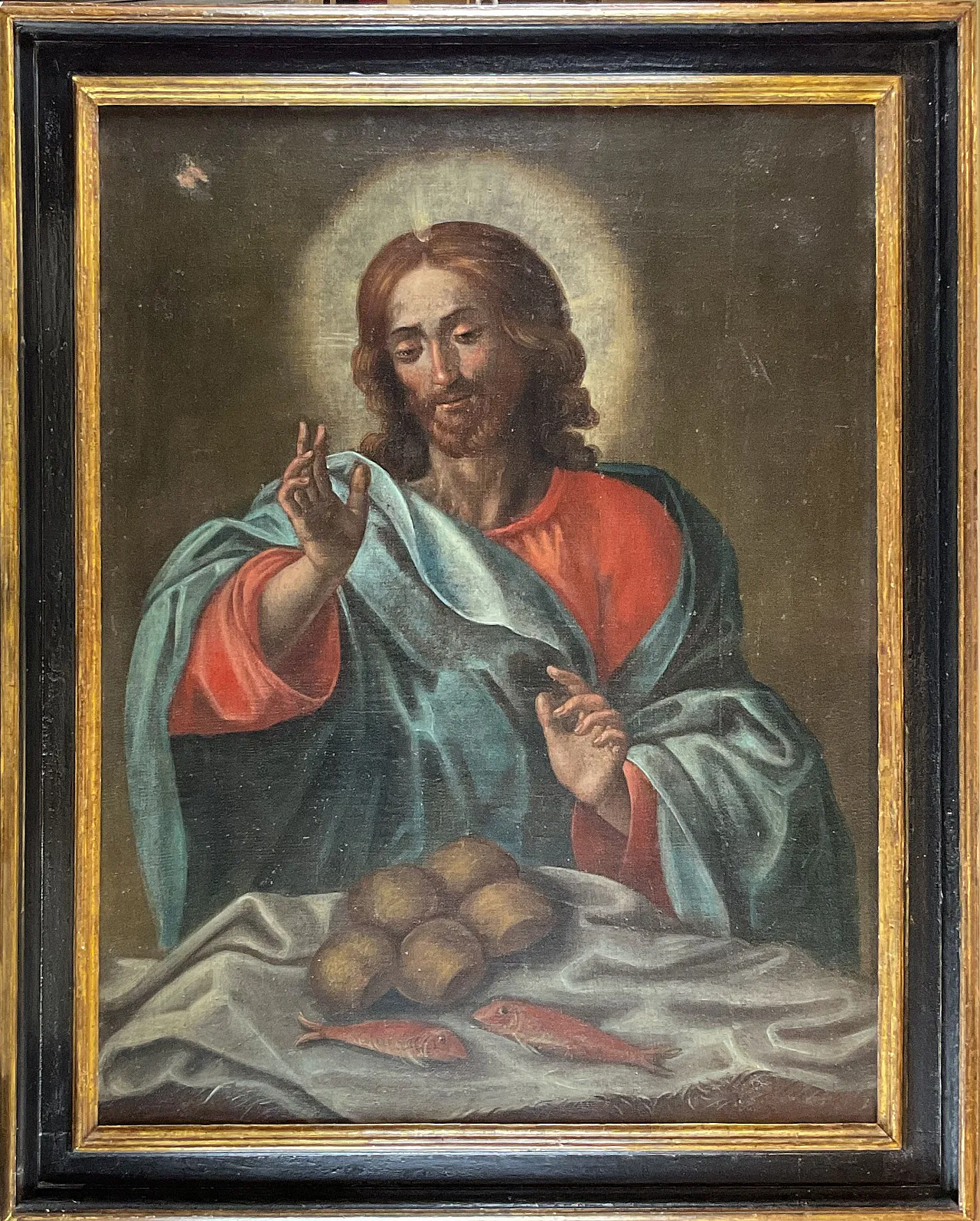
Blessing Christ with loaves and fishes
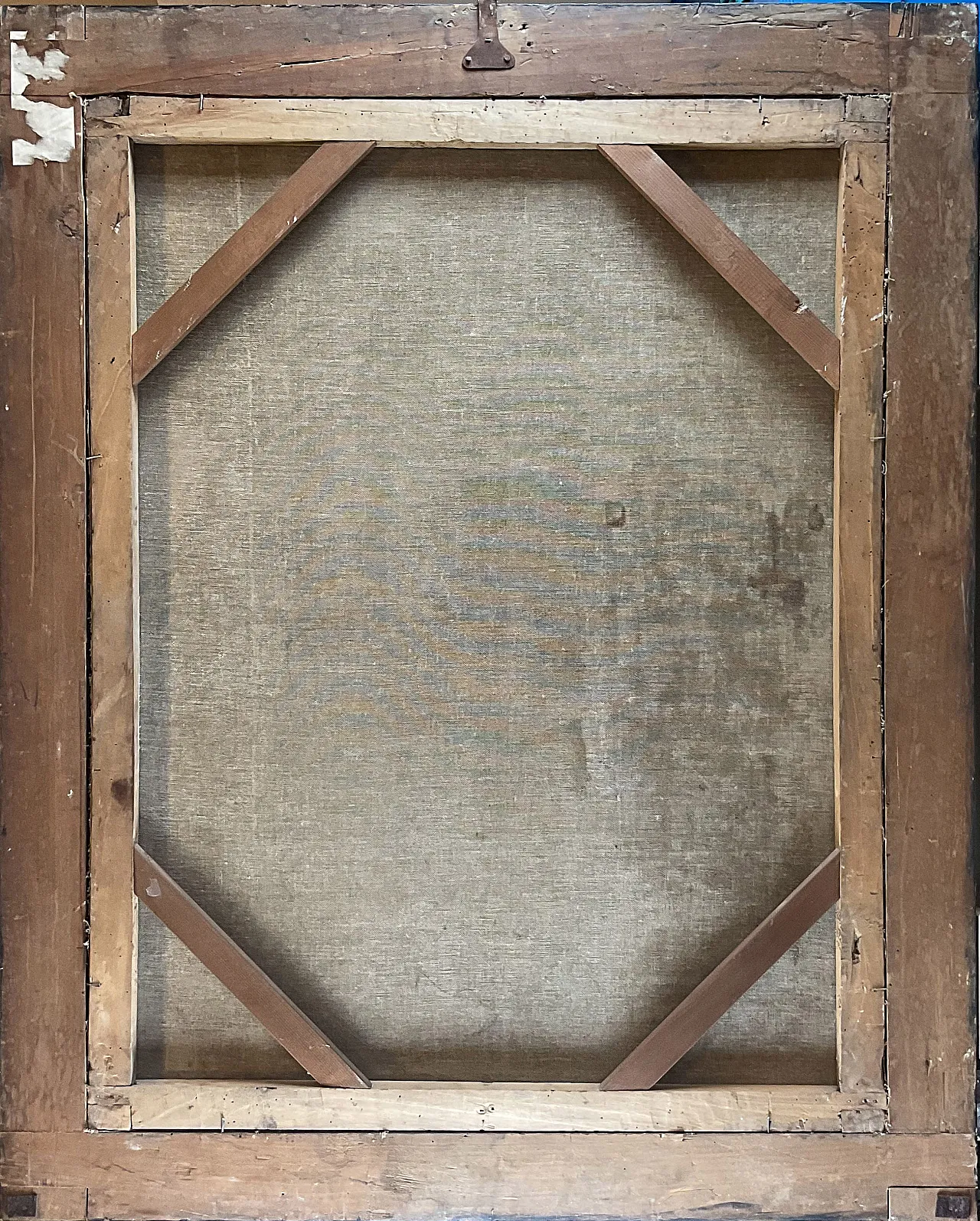
Oil on canvas, cm. 126×96
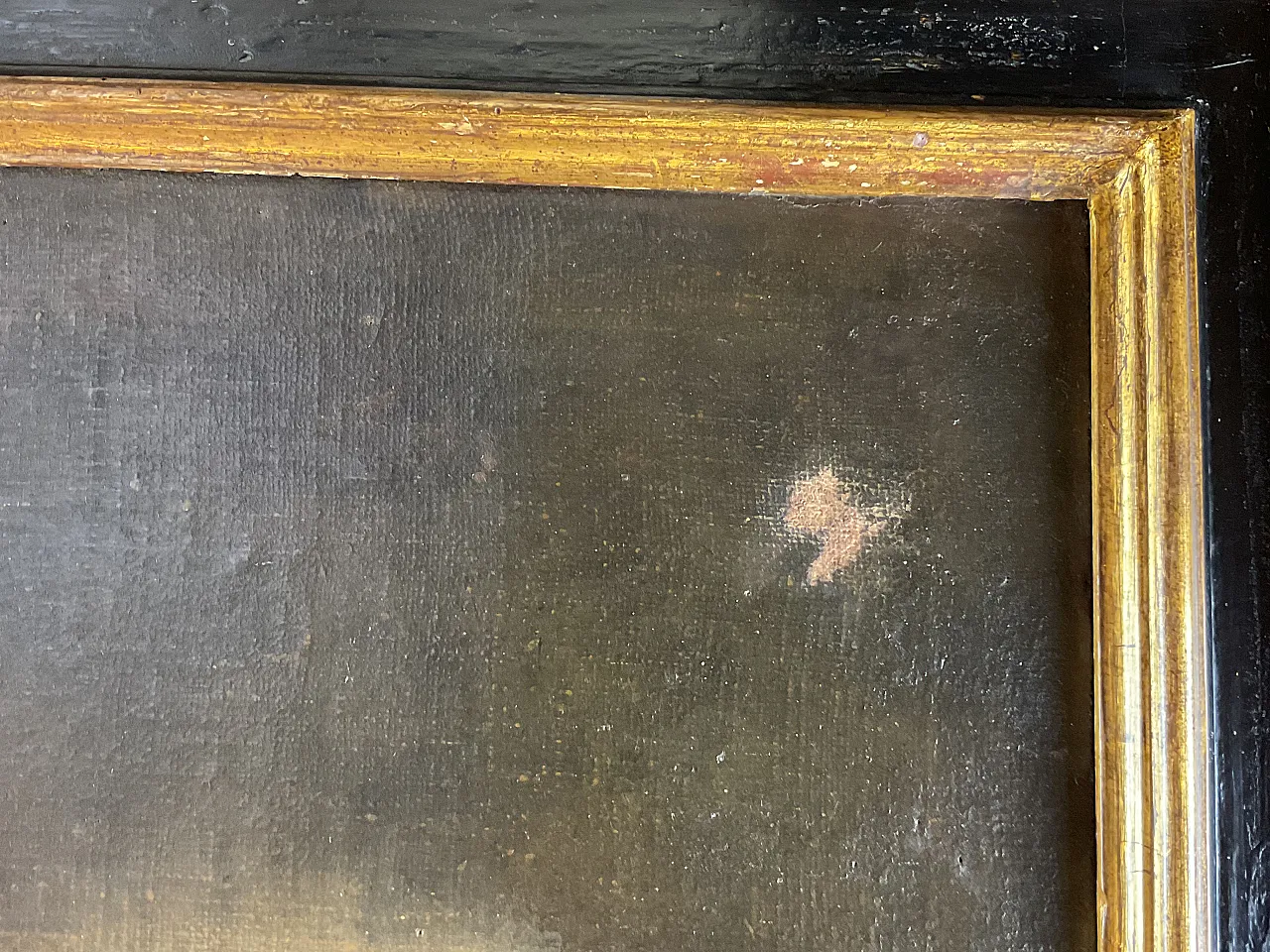
Within ebonized wooden frame
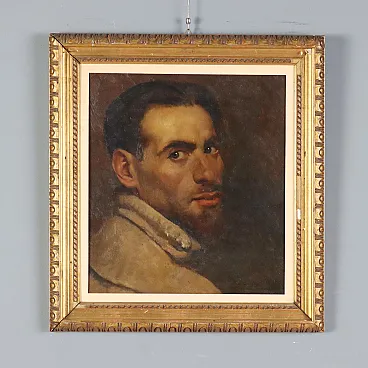
The painting depicts Christ blessing in the iconography of the Miracle of the multiplication of the loaves and fishes, an evangelical episode narrated in the Synoptic Gospels (Matthew 14.13–21; Mark 6.30–44; Luke 9.10–17).
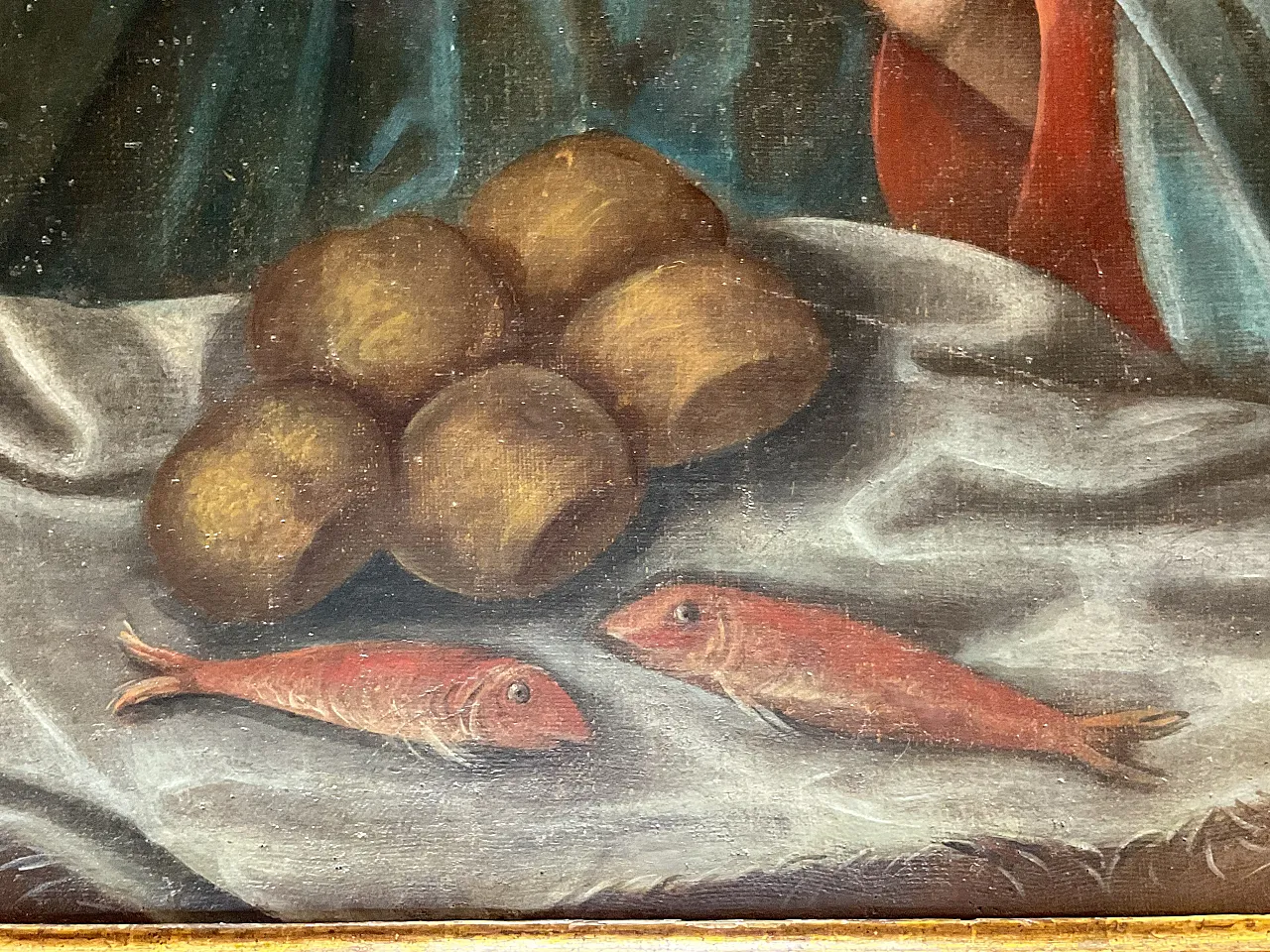
On the table in the foreground five loaves and two fish are depicted, symbolic elements that directly refer to the Eucharistic miracle.
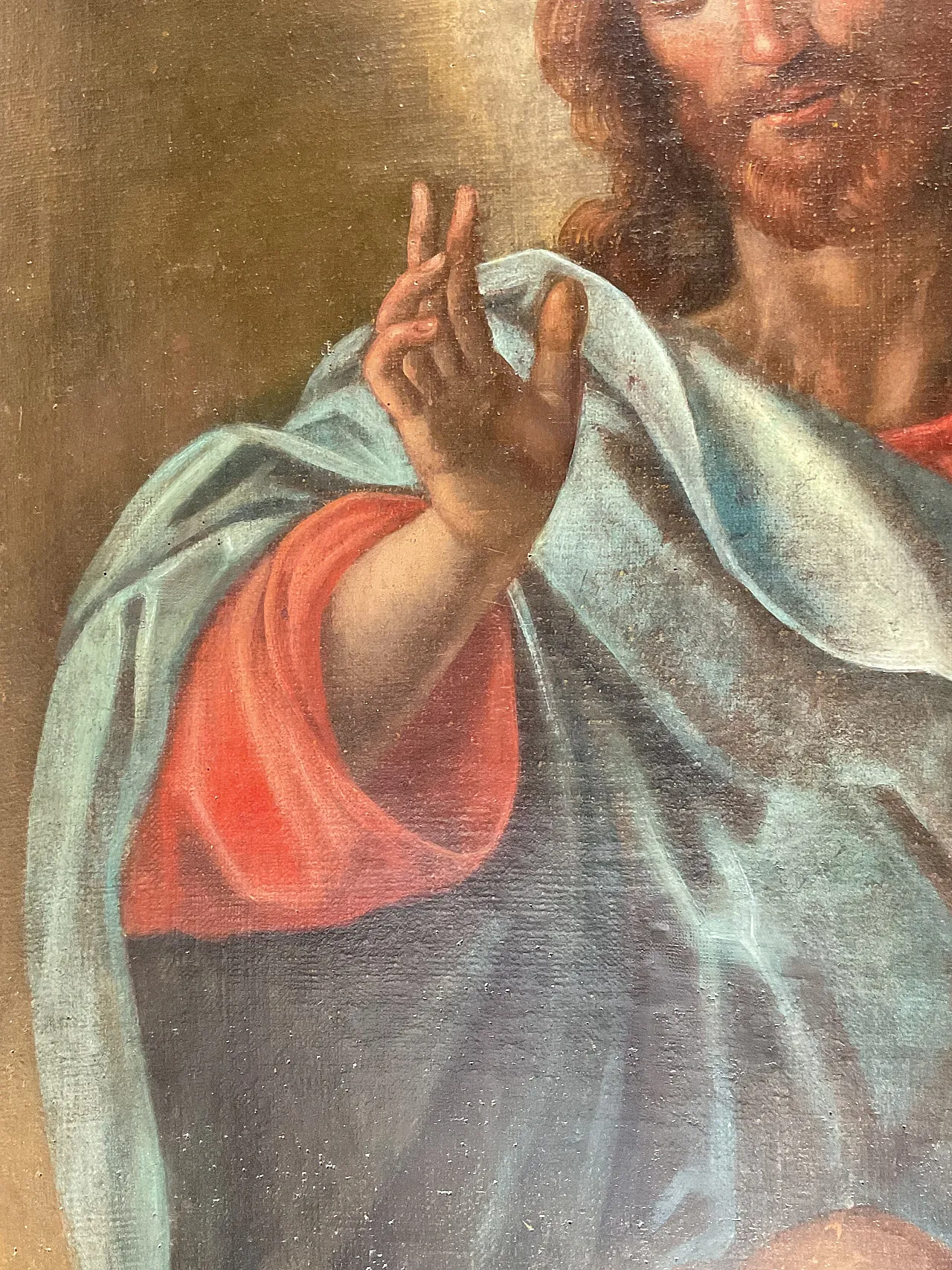
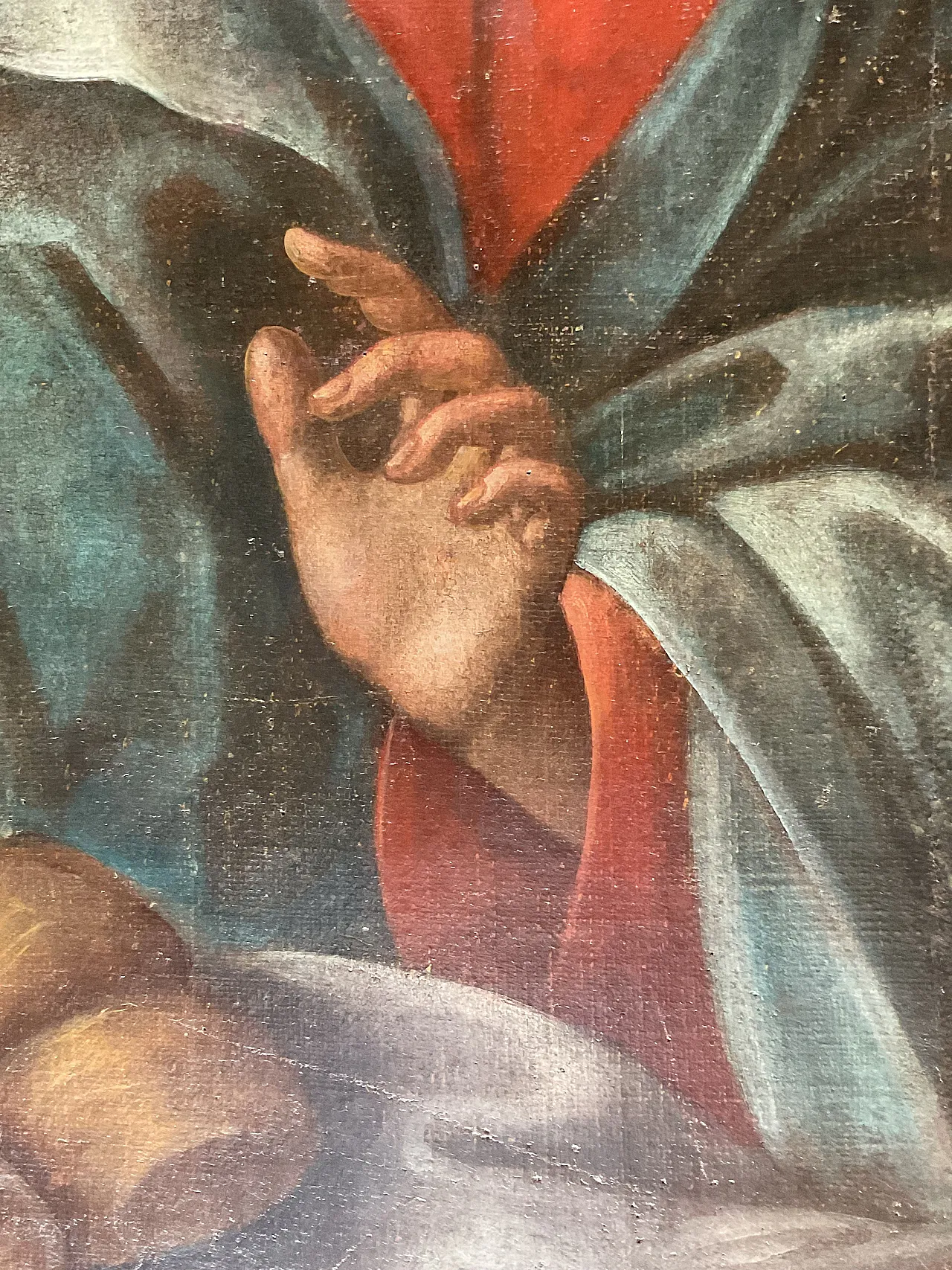
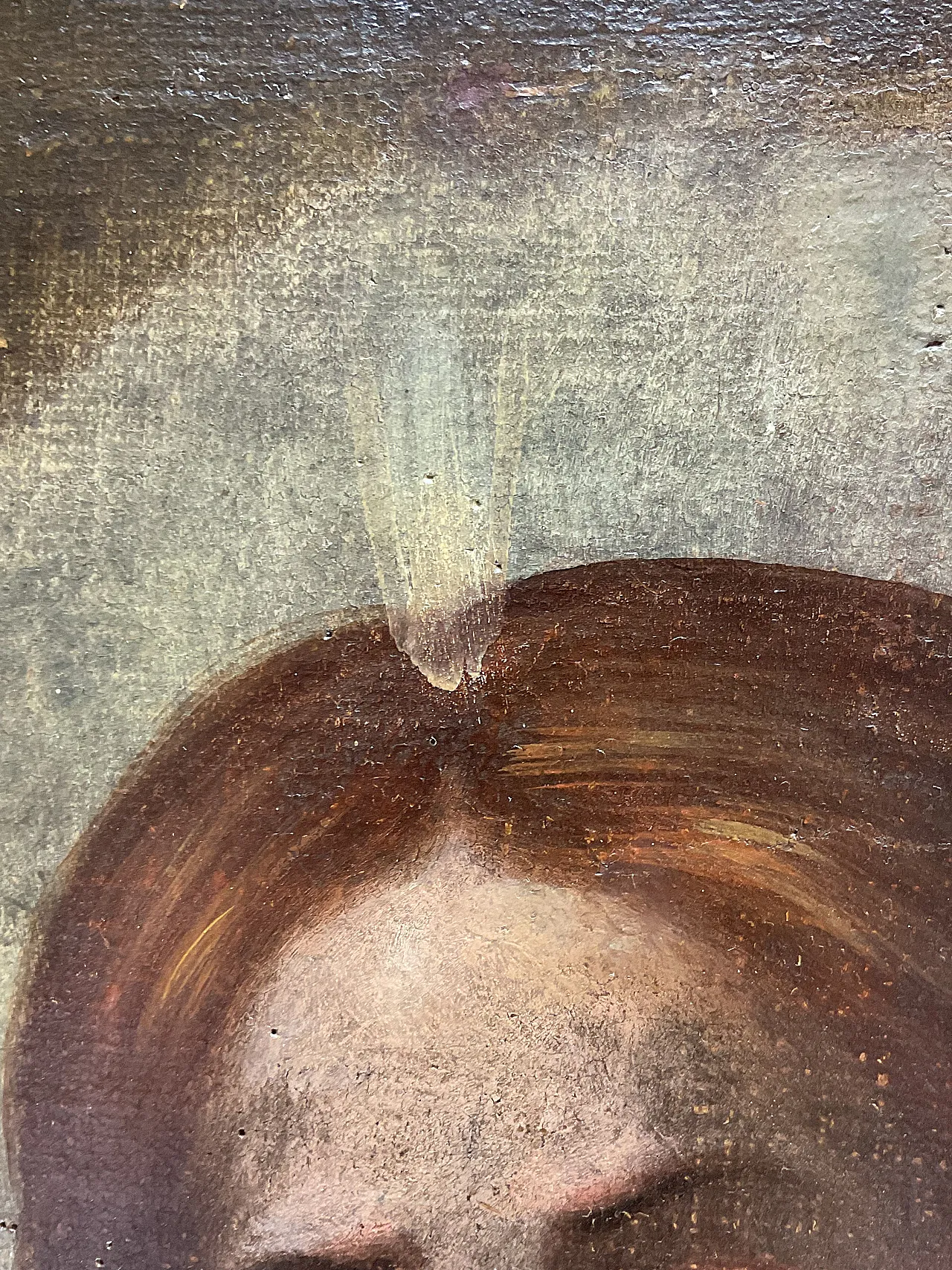
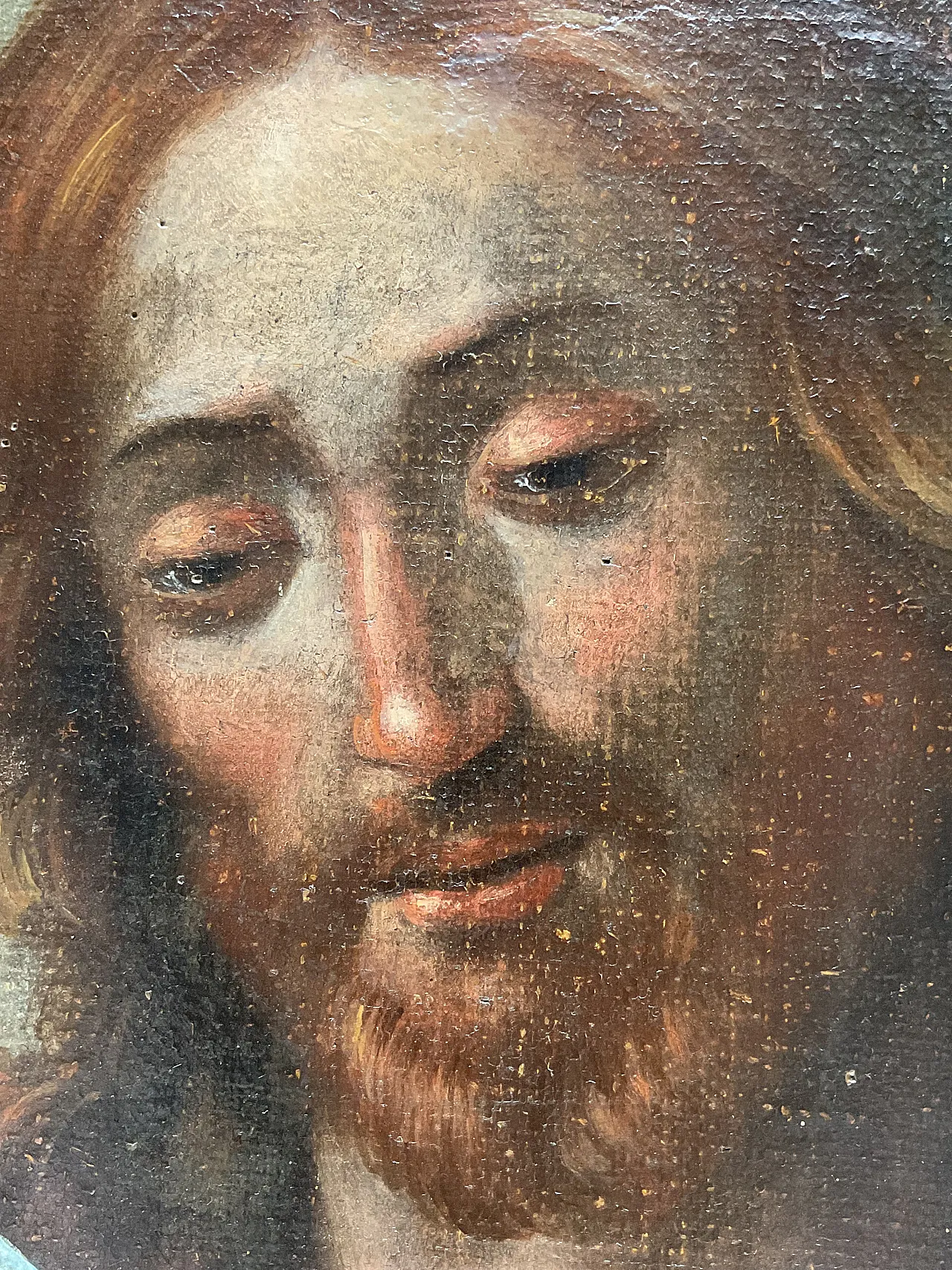
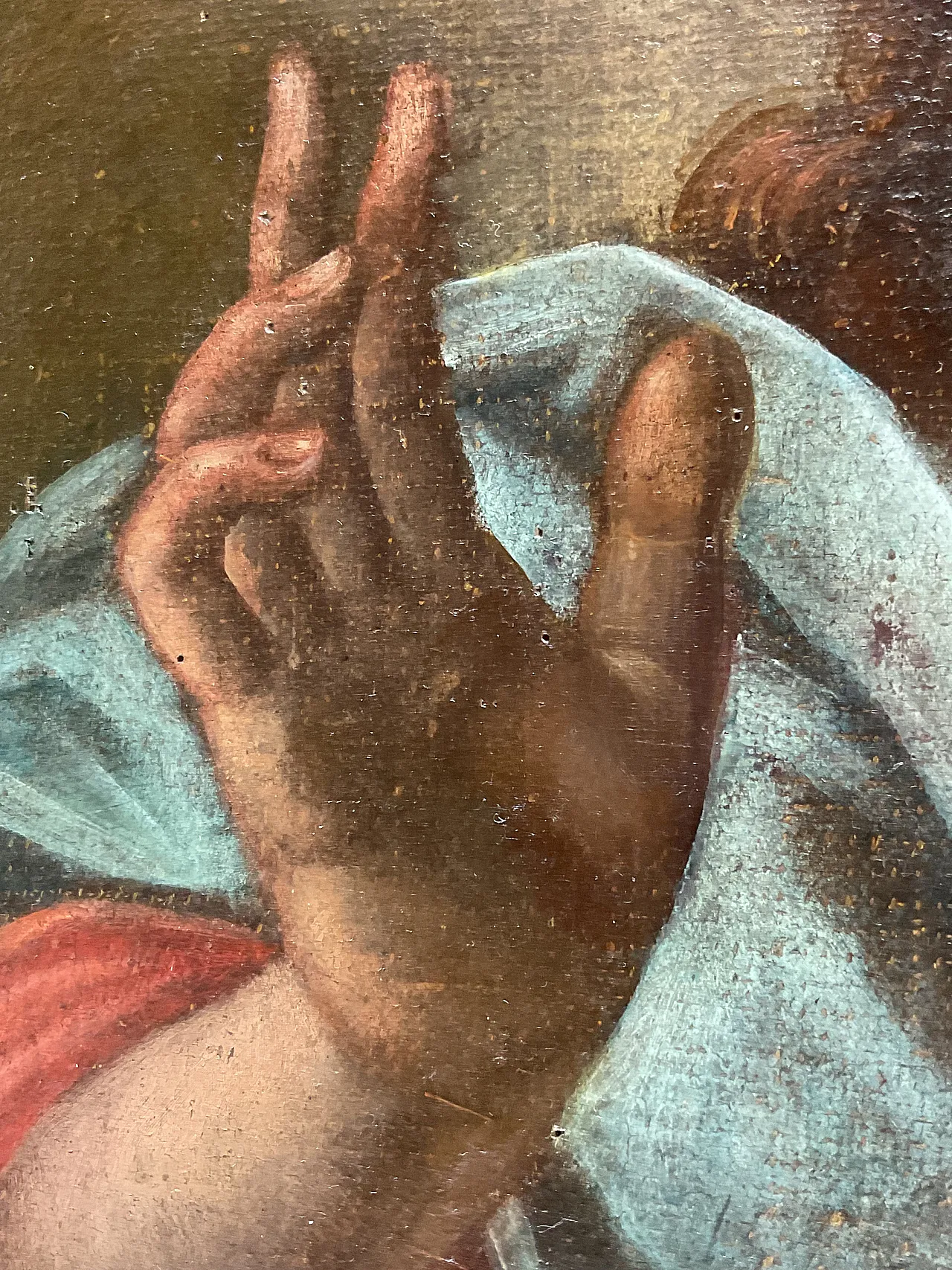
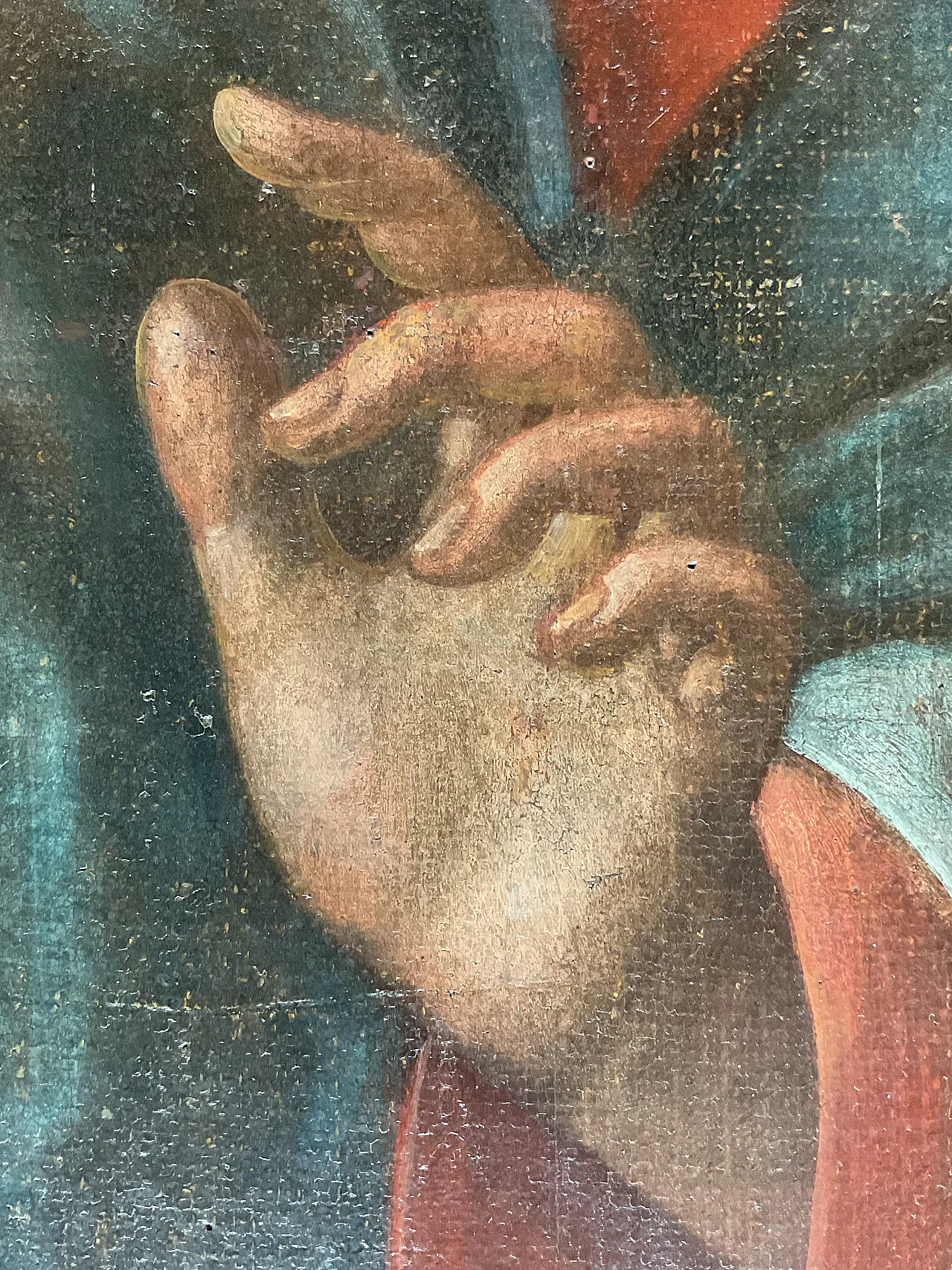
The blessing gesture of the right hand and the luminous halo on the head strengthen the character's divine identity, characterized by hieratic composure and an assorted gaze.
The painting can be traced back to the Venetian school of the end of the 17th century, in terms of style and pictorial quality.
The work shows strong affinities with the serial and devotional religious production of the Venetian and Lombard-Venetian areas, with echoes of late mannerism and Counter-Reformation painting. The modeling of the face, the flowing rendering of the hair, the soft light and the use of enamelled colored drapery (in particular blue and red) recall models widespread in the circle of Antonio Zanchi (1631–1722), although with a more simplified language, probably the work of a painter active in the Zanchi area or in the context of smaller workshops.
The work is created with a fluid and quite dense pictorial application, typical of late seventeenth-century Venetian production.
The drapery is constructed with large, bright folds, which create an effective contrast with the dark background, according to the practice of post-Caravaggio devotional painting. The face of Christ is serene and harmonious, characterized by a sweet expressiveness, typical of religious painting intended to stimulate the piety of the faithful.
The halo is rendered with touches of dry white lead or highlights, which accentuate the sacral effect of the figure.




.png)



 SILVER Seller in Venezia, Italy