

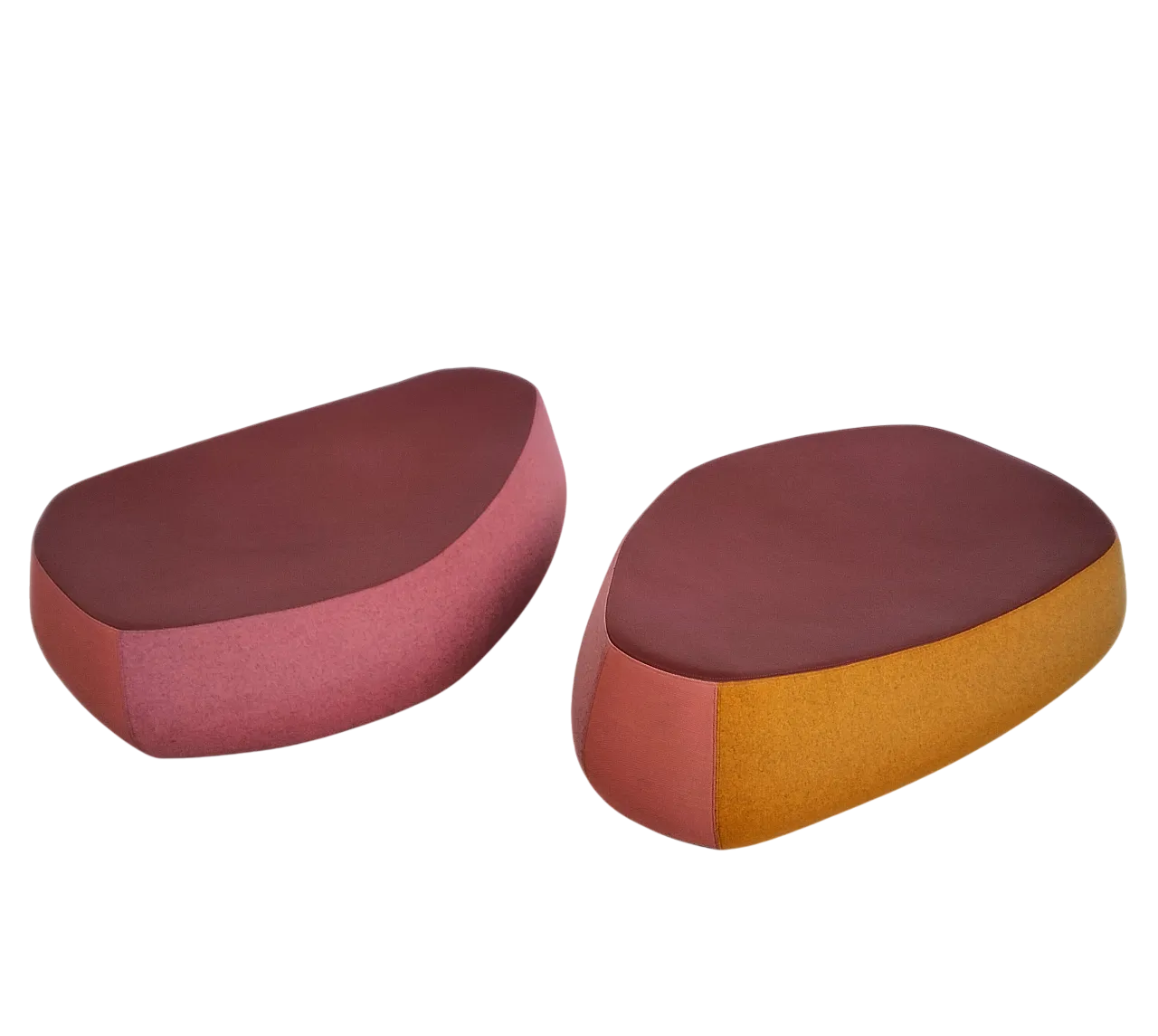
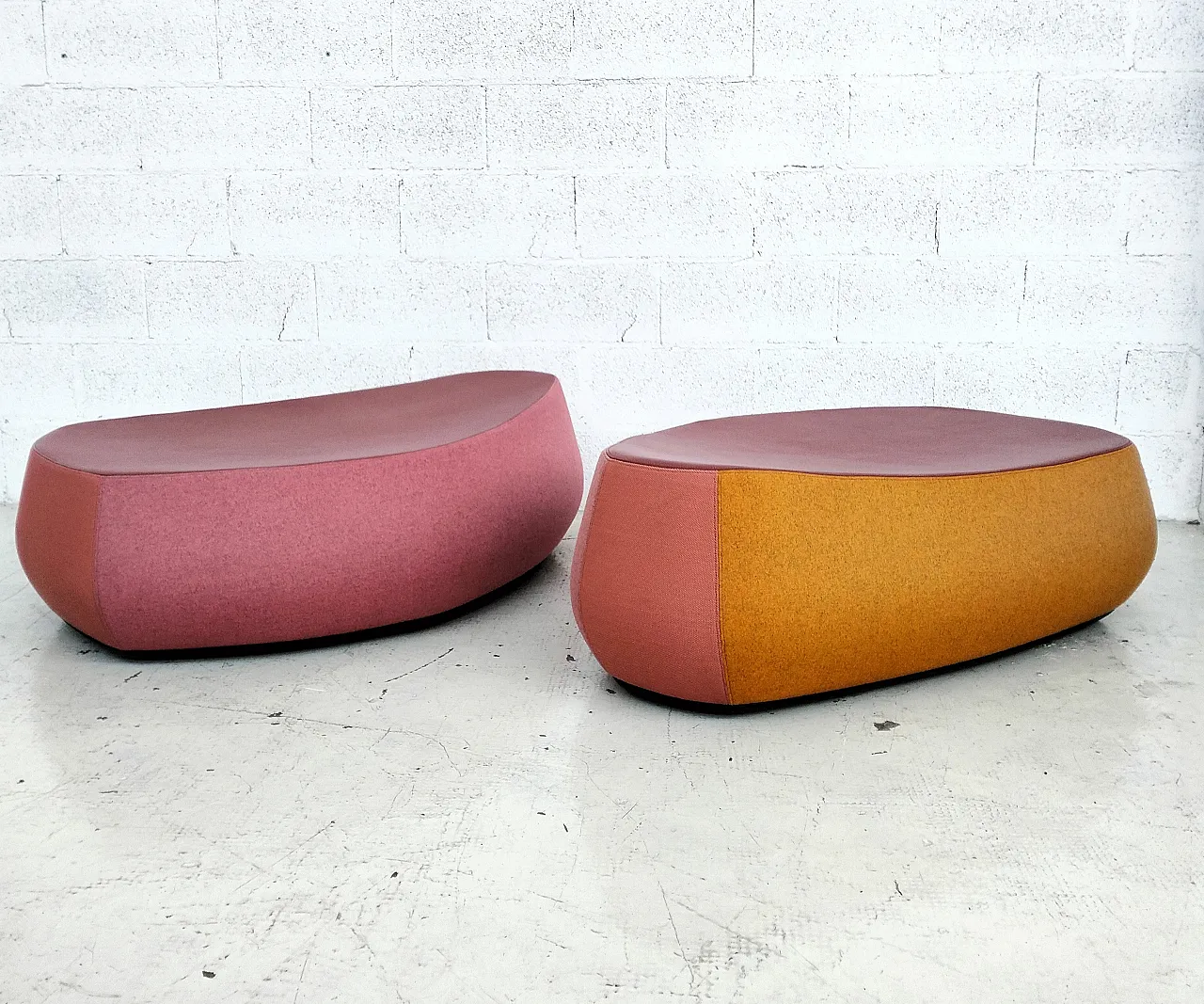
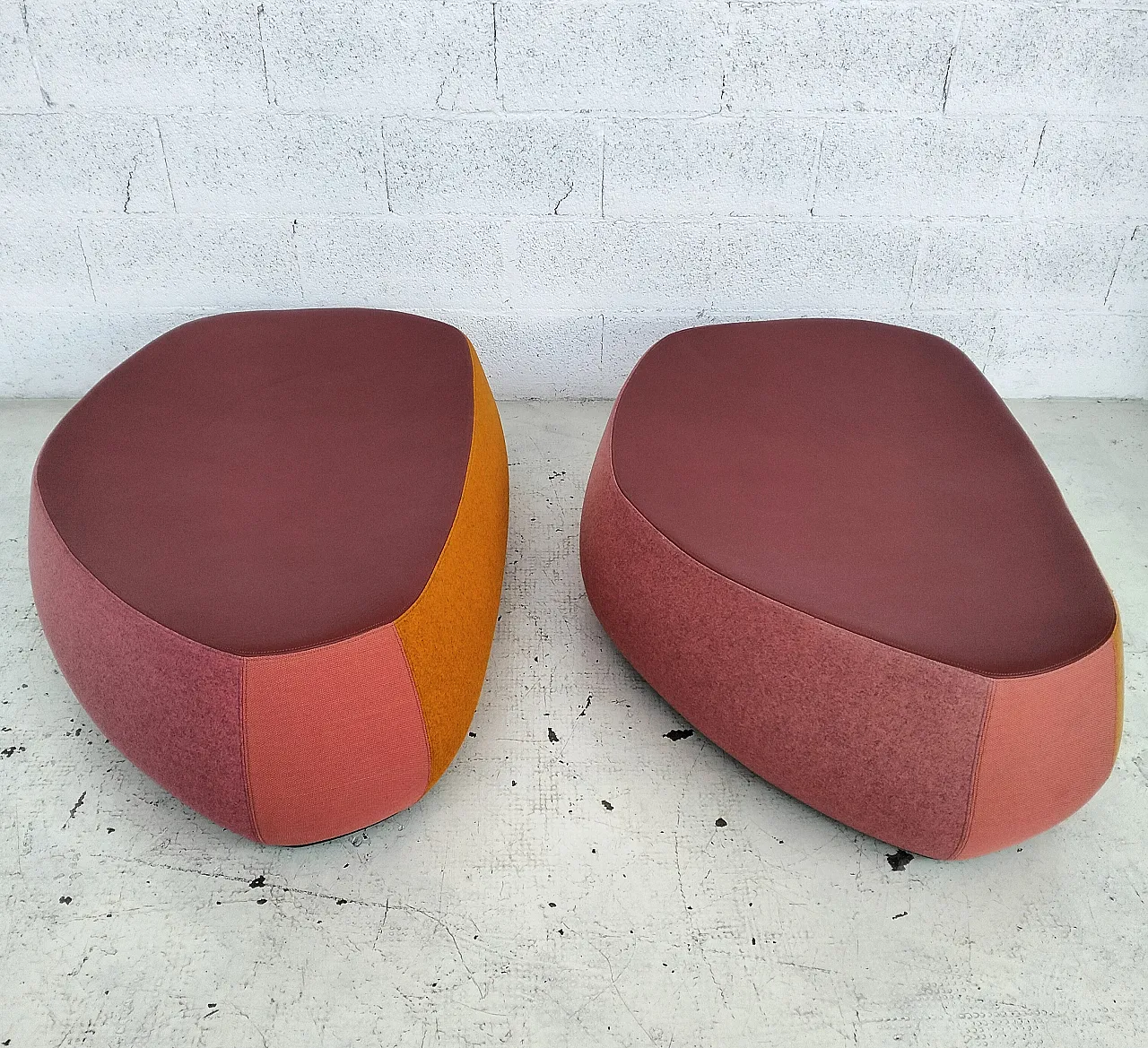
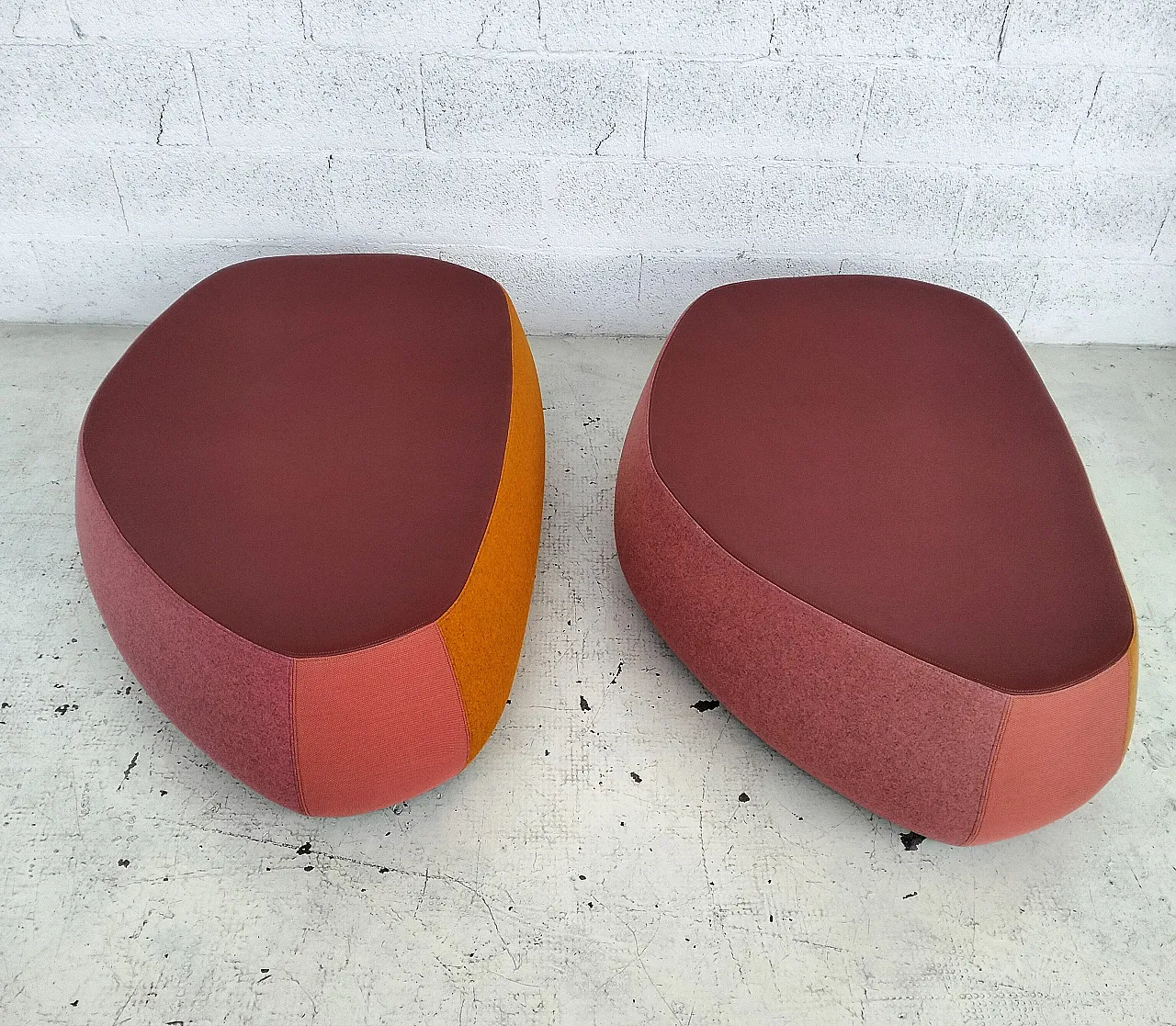
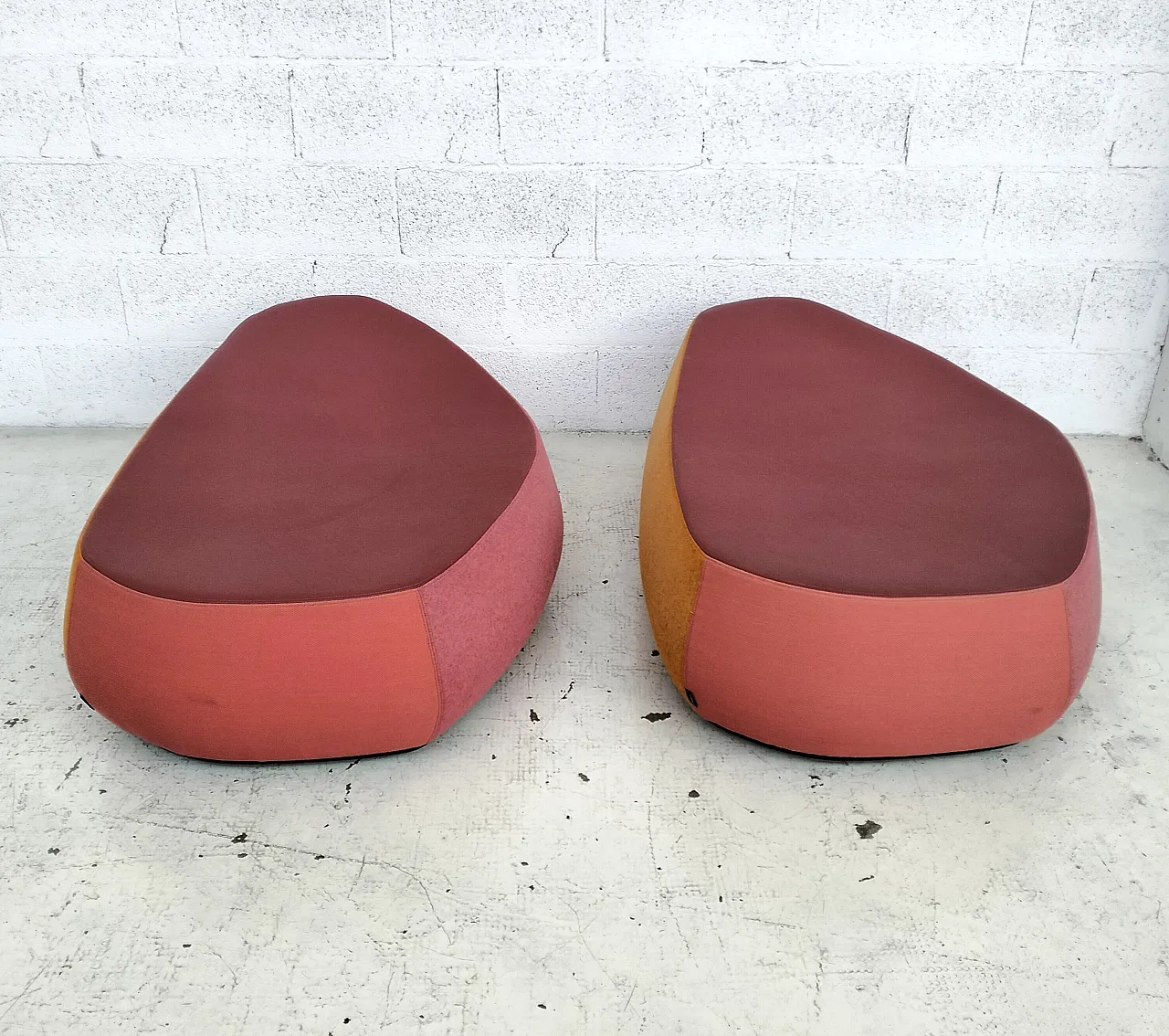
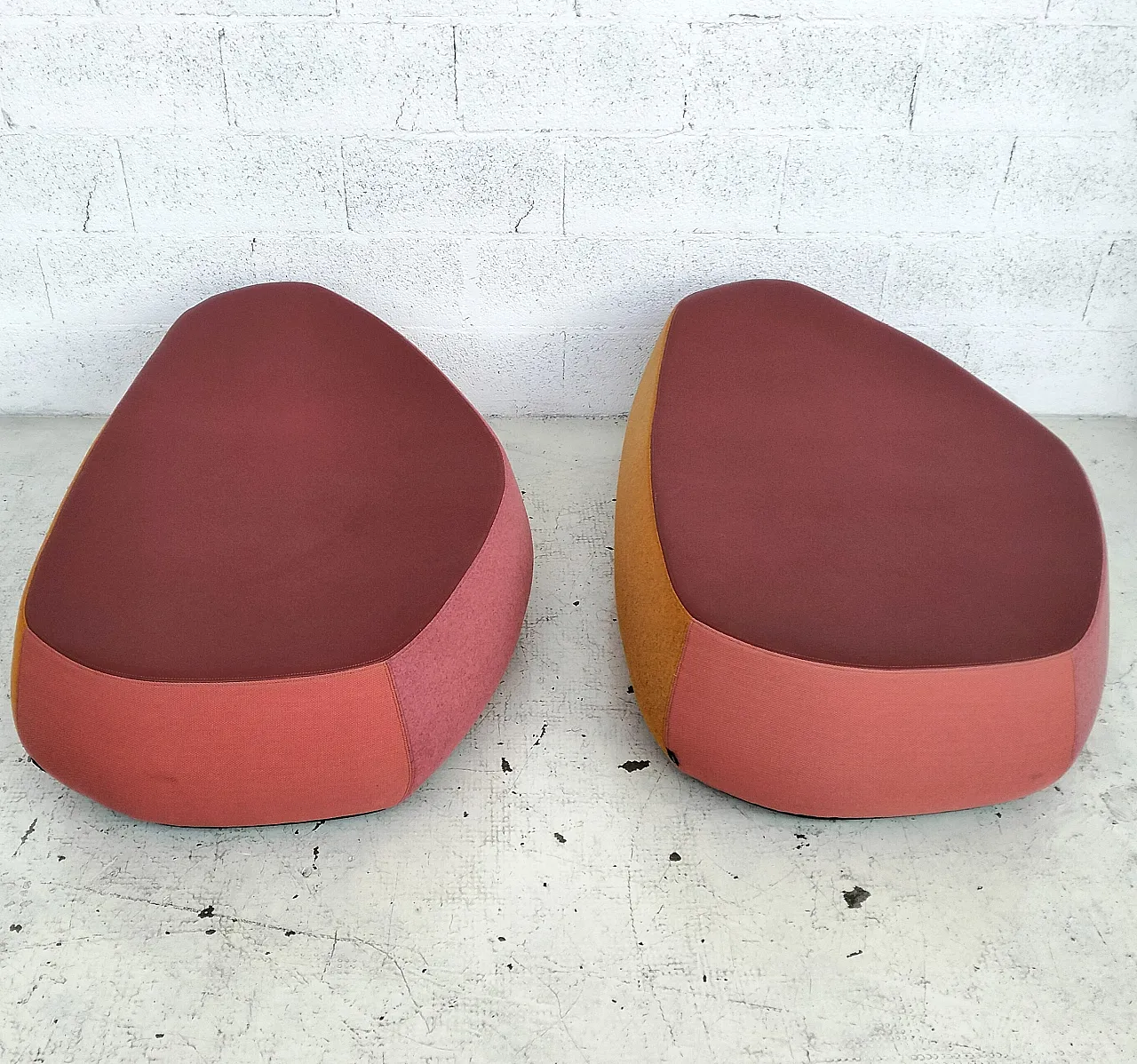
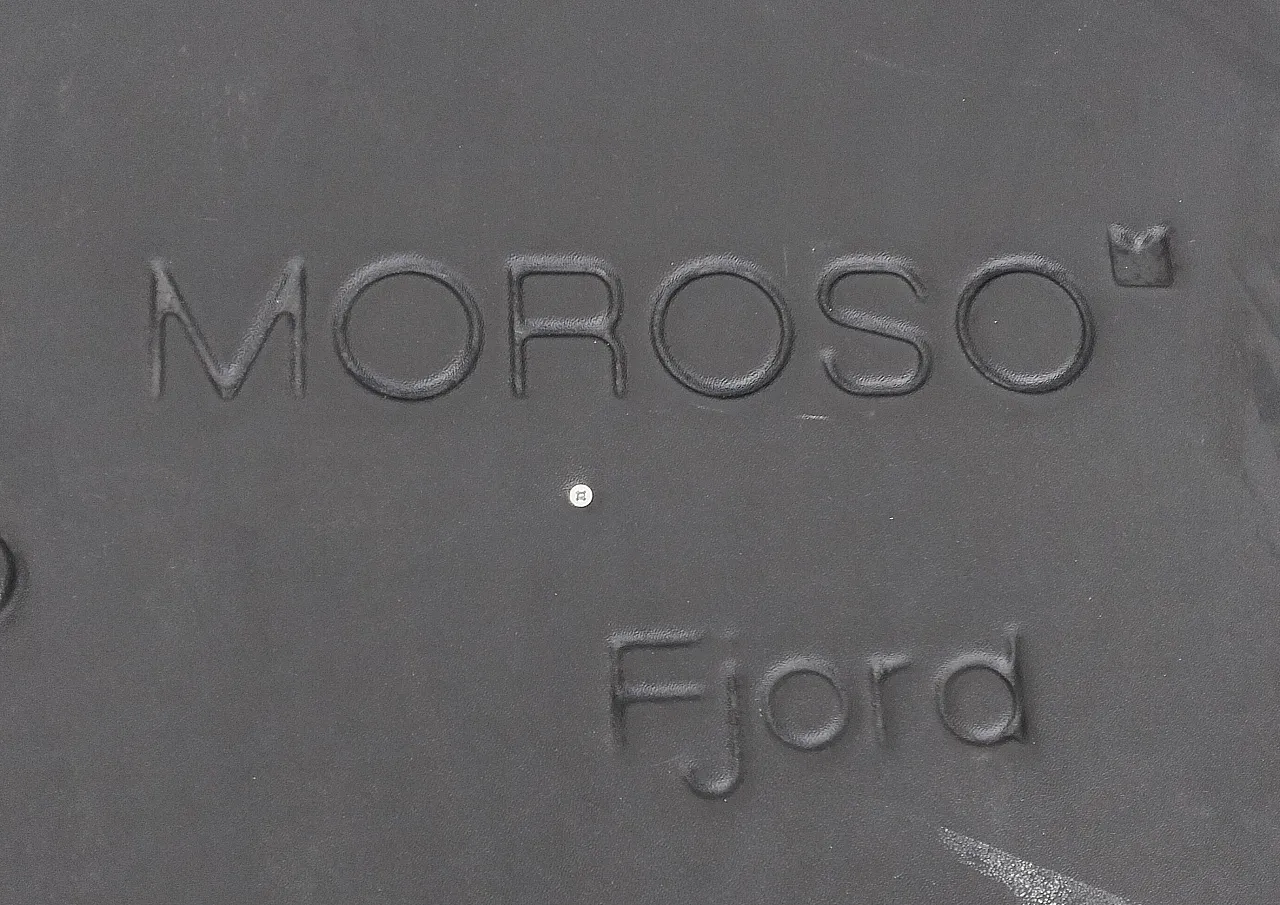
Coppia di pouf Fjord di Patricia Urquiola per Moroso, anni 2000



.png)
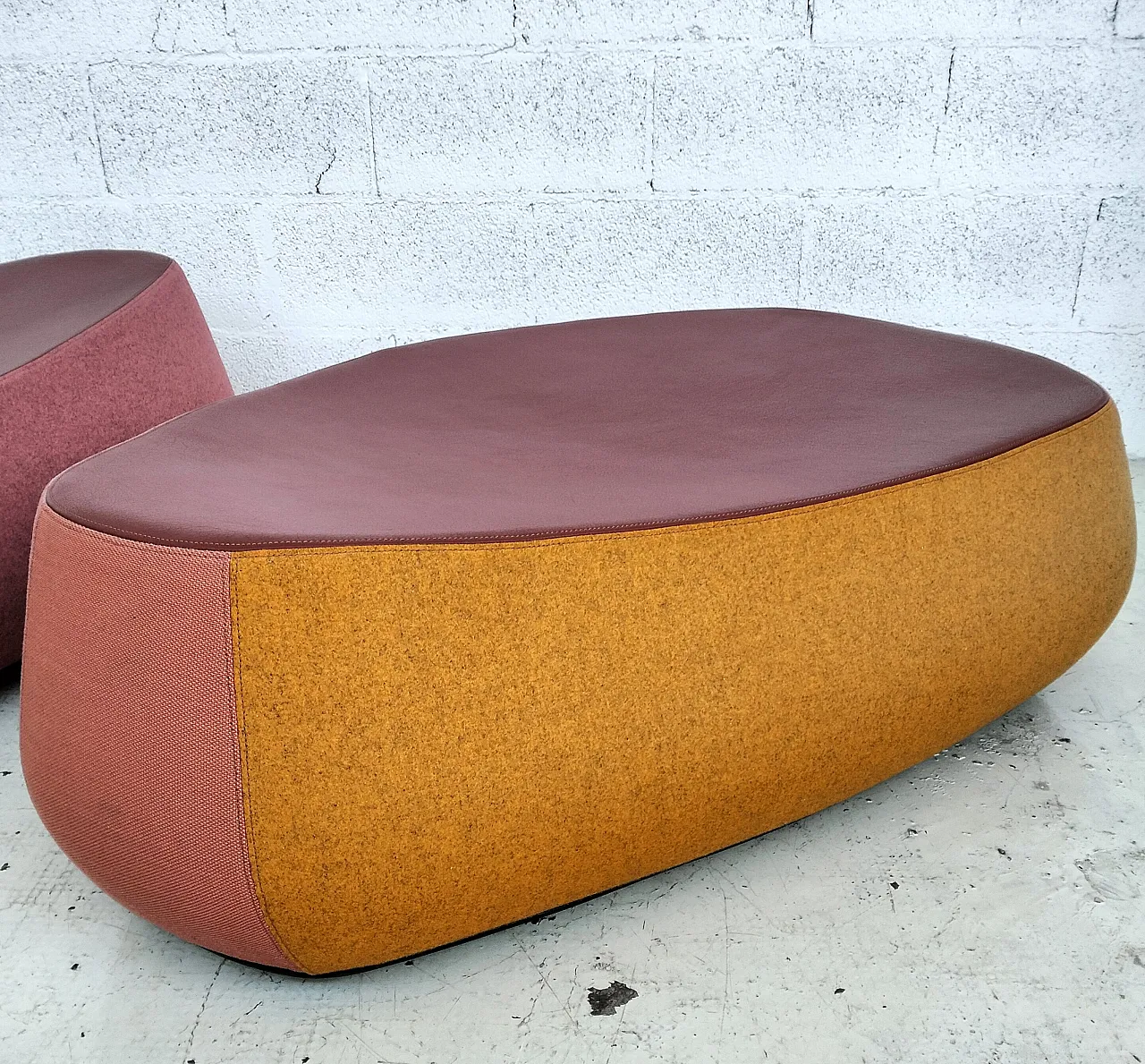
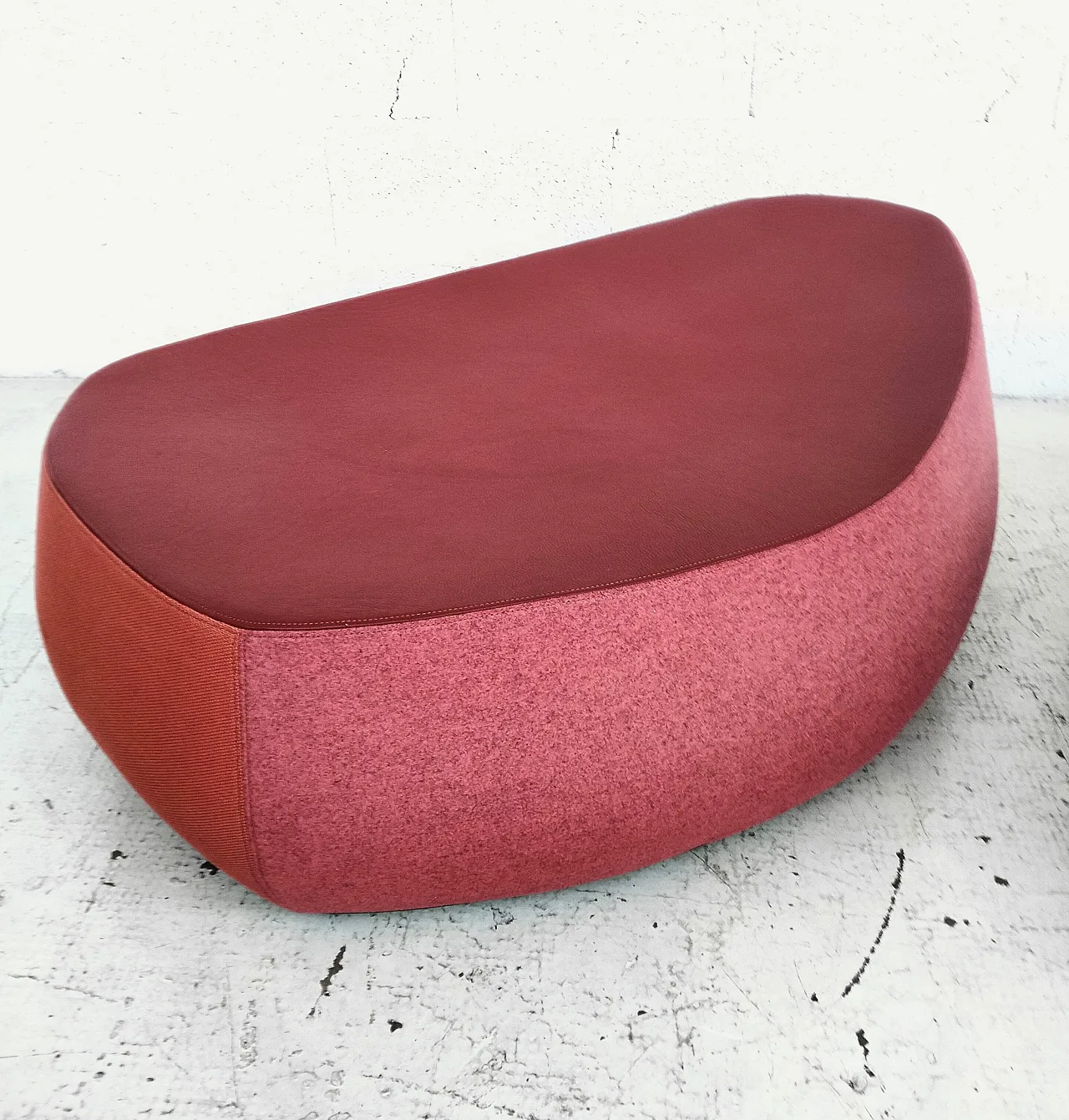
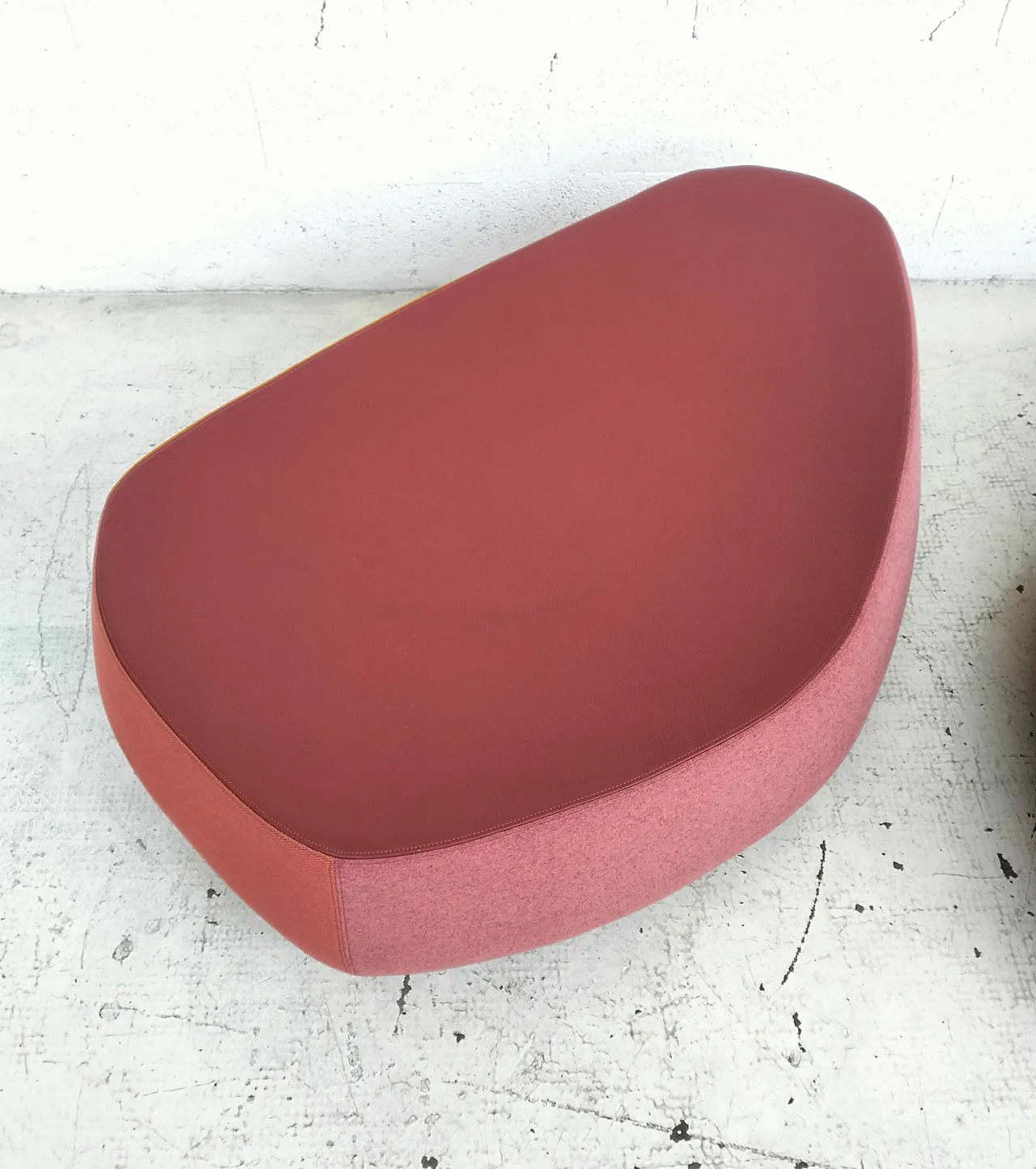
The Fjord collection was designed in 2002 by Patricia Urquiola for the Italian brand Moroso. Urquiola, a Spanish architect and designer based in Italy, often works with soft, sensory forms, balancing comfort and formal experimentation. The Fjord pouf is a perfect example of her design philosophy. The name Fjord refers to Nordic coastlines — sculpted shores, inlets shaped by water and wind. The design is inspired by a broken shell fragment, smoothed and worn by the sea. The shapes feature elongated cuts and soft curves, evoking natural erosion and smoothed surfaces. The visible stitching is a key aesthetic element — not just functional, it becomes a graphic detail that enhances the visual and tactile identity of the piece. Urquiola often uses stitching to express the relationship between interior structure and exterior form. Internal structure: made from cold-foamed fire-retardant polyurethane. This material ensures both comfort and compliance with fire safety regulations. Base: impact-resistant thermoformed plastic, designed to offer both stability and protection without adding too much weight. Upholstery: available in a wide range of fabrics and leathers. The choice of upholstery dramatically influences the final look, feel, and price of the piece. Dimensions – Fjord Large Pouf Width: 110 cm Depth: 75 cm Height: 38 cm This pouf works beautifully in both residential and contract spaces (lobbies, lounges, waiting areas) thanks to its sculptural presence and inviting comfort. Its relatively low height makes it ideal as a complementary seating element, footrest, or soft focal point — not a replacement for a standard chair. The large version has enough presence to be used as a standalone design piece — positioned against a wall, in an open-plan space, or at the center of a casual seating arrangement. The overall visual impact is one of softness and fluidity — despite the “broken” shape, the design communicates comfort and elegance. The exposed stitching acts as a kind of graphic detail, highlighting the craftsmanship and transforming structural necessity into aesthetic value. The contrast between the rigid internal structure and soft, tactile outer shell (fabric or leather) enhances the perception of coziness and support.
ID: 16769-1757686400-131424
Periodo

o fai il log in con le tue credenziali

 Venditore SILVER a Padova, Italy