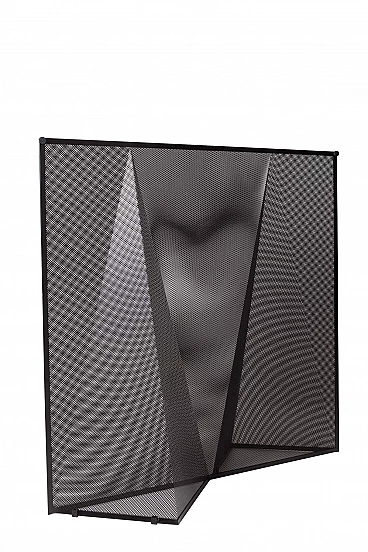
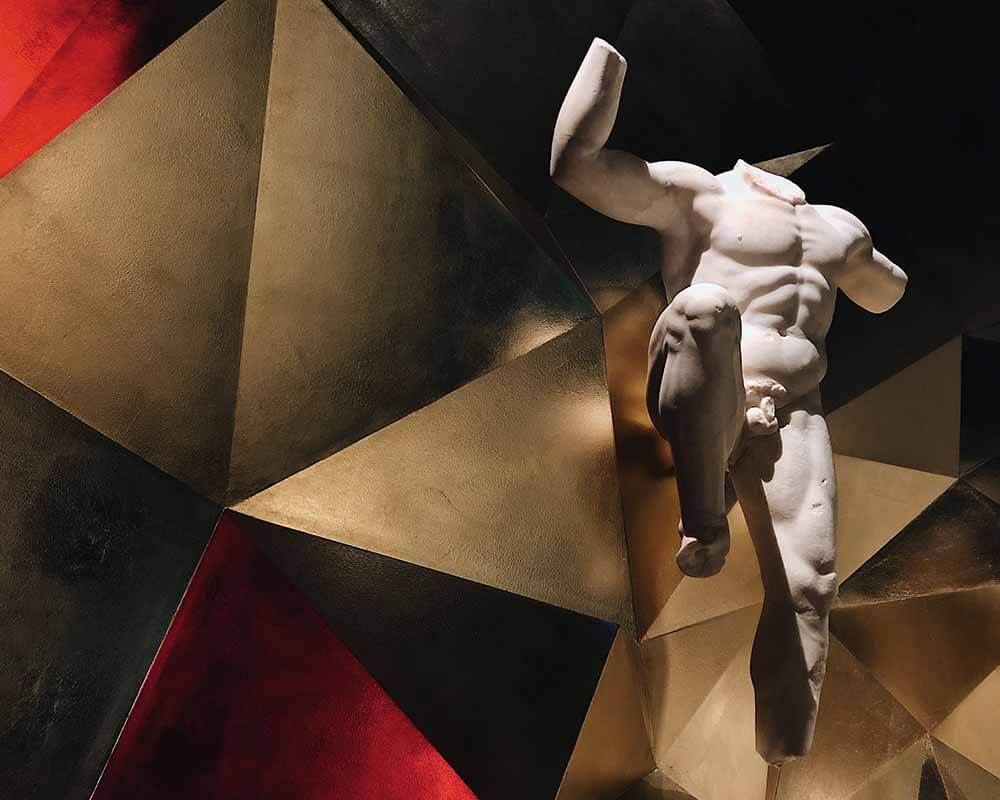
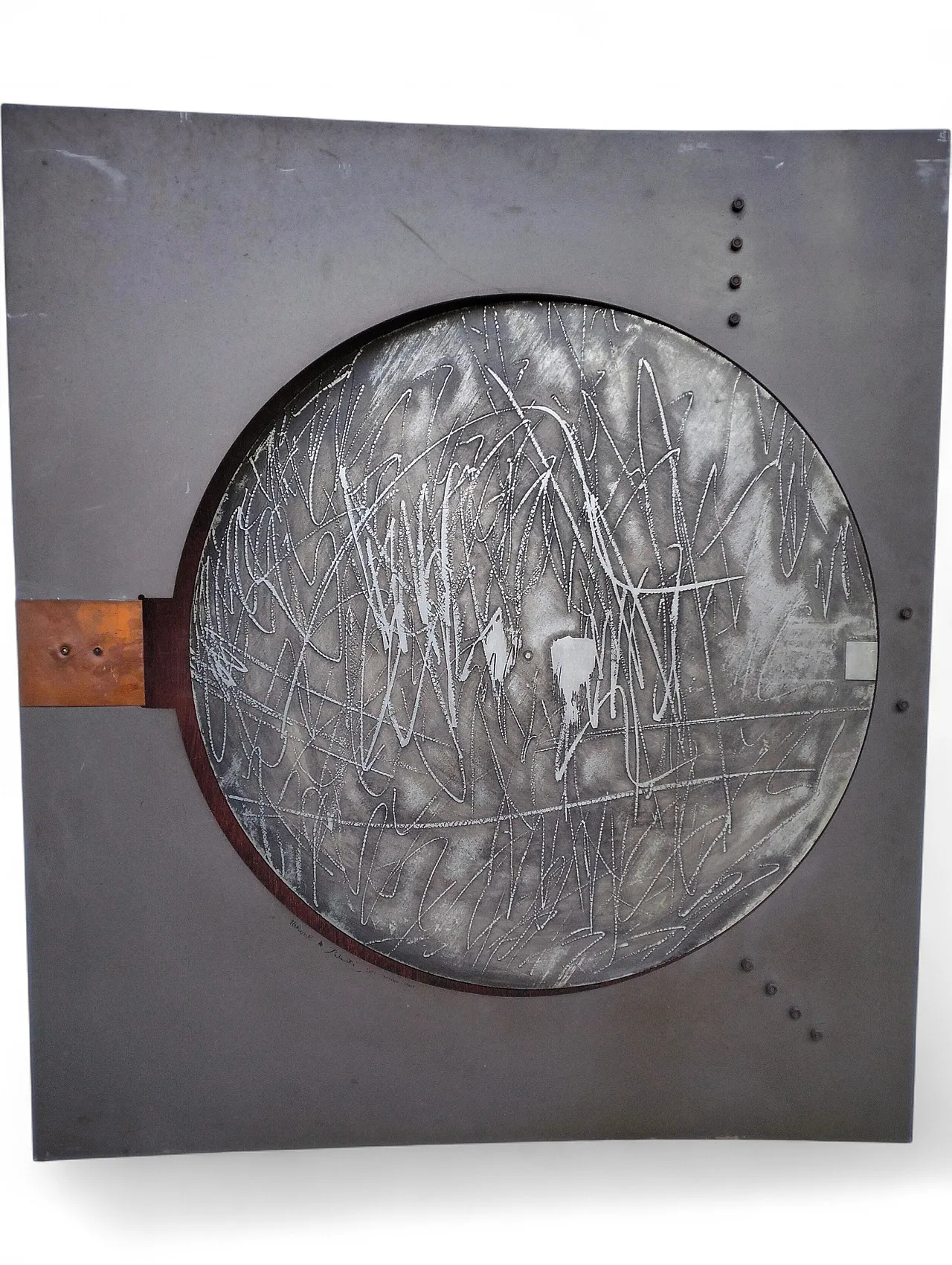
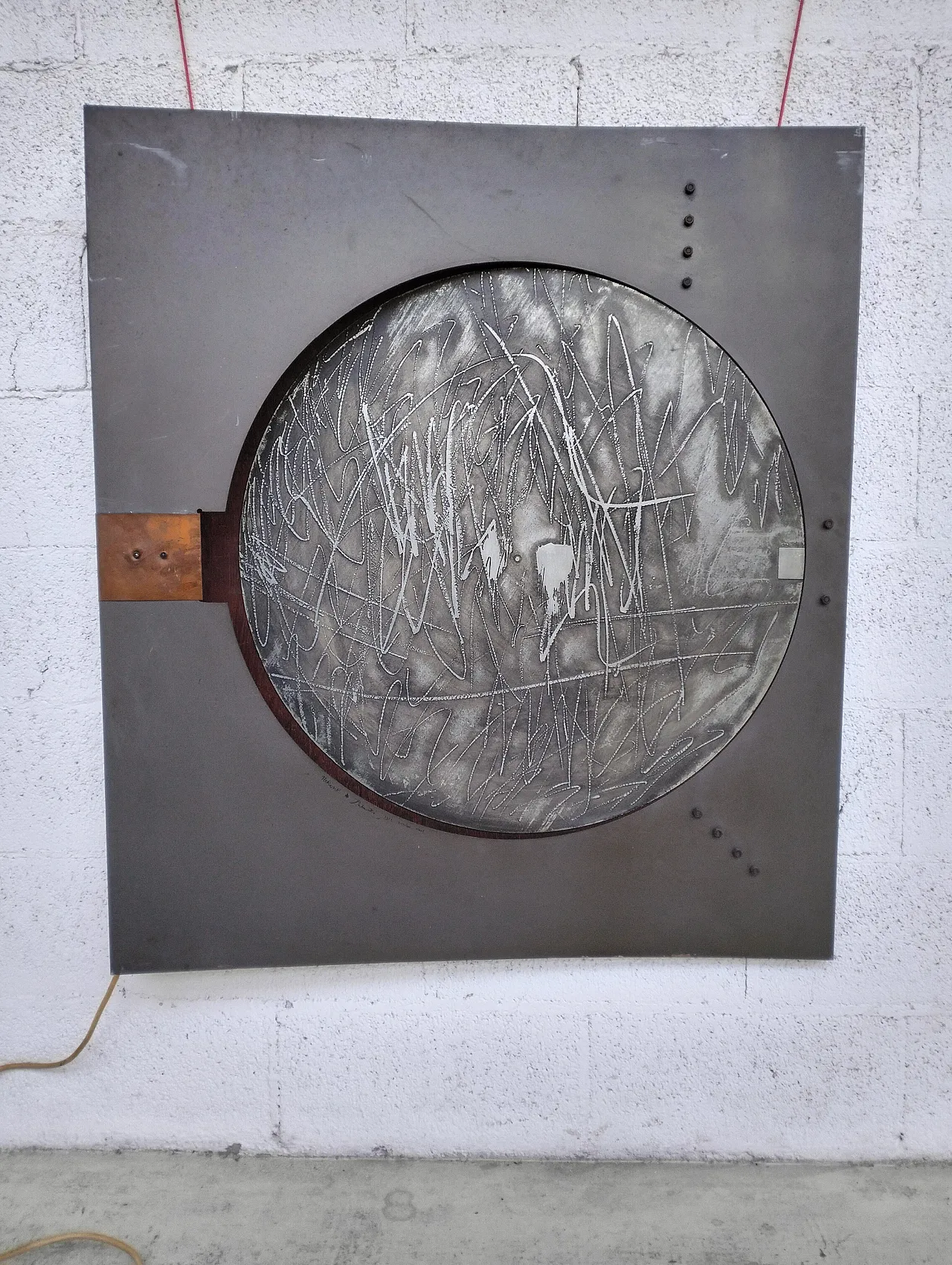
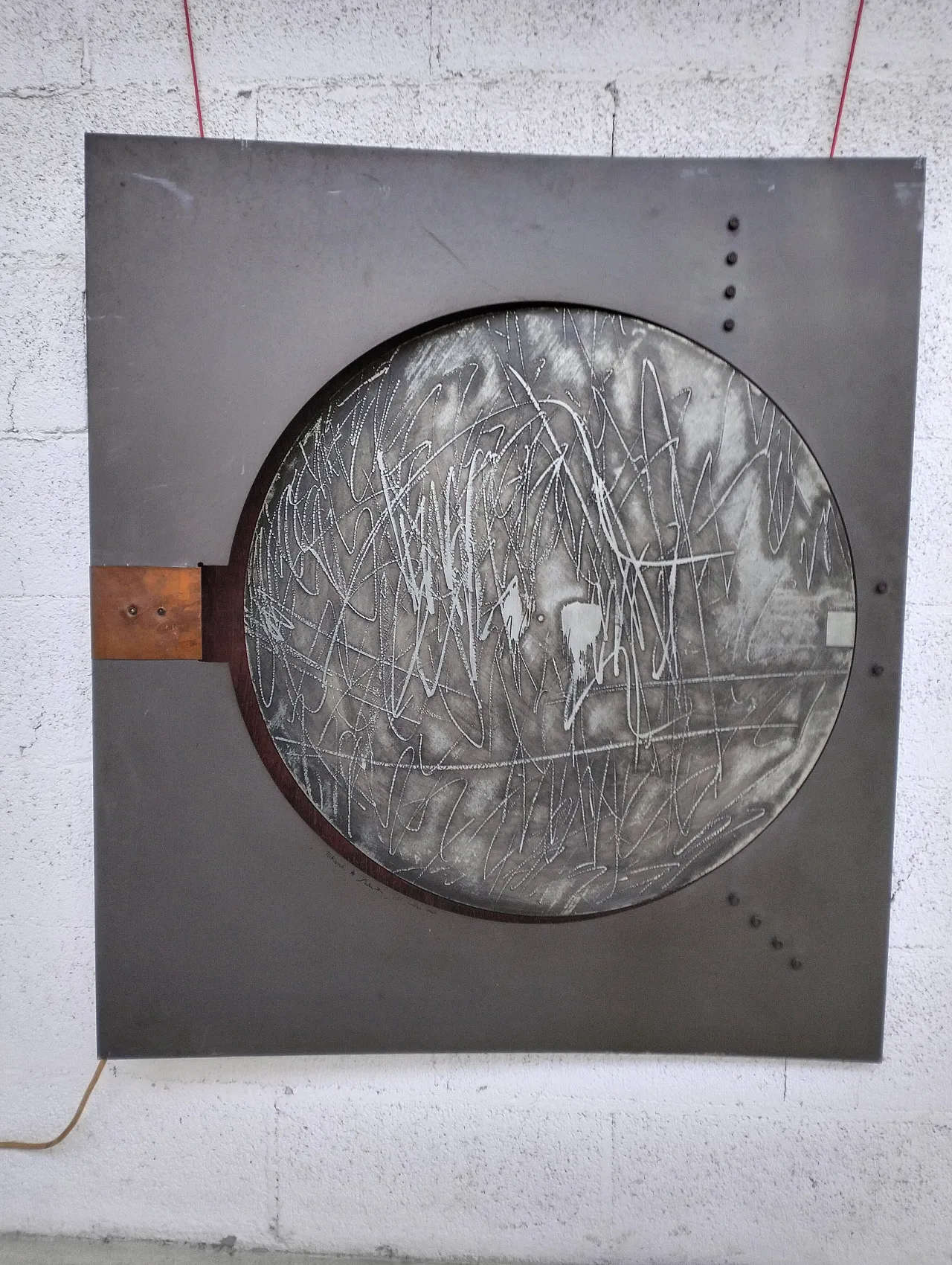
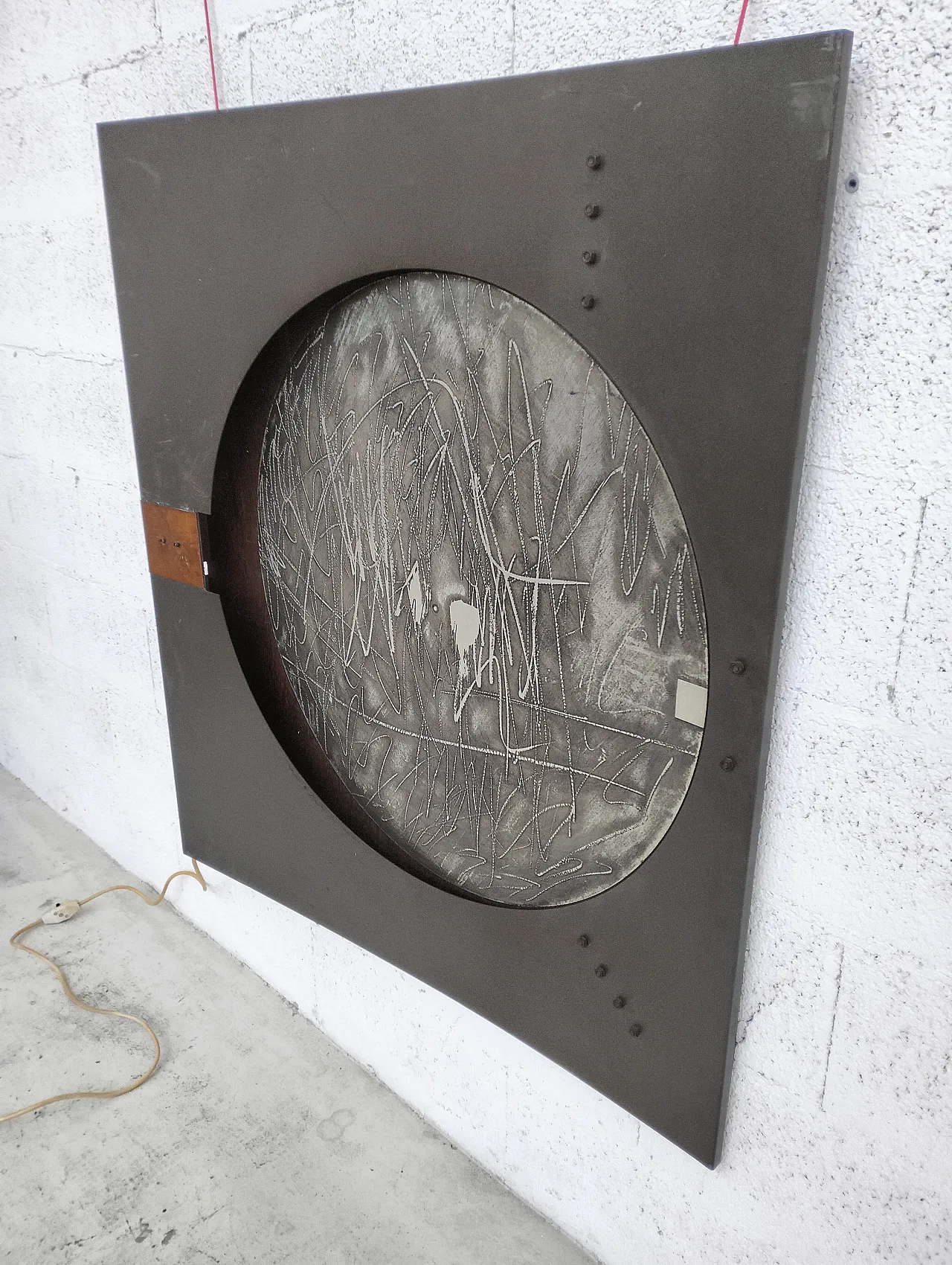
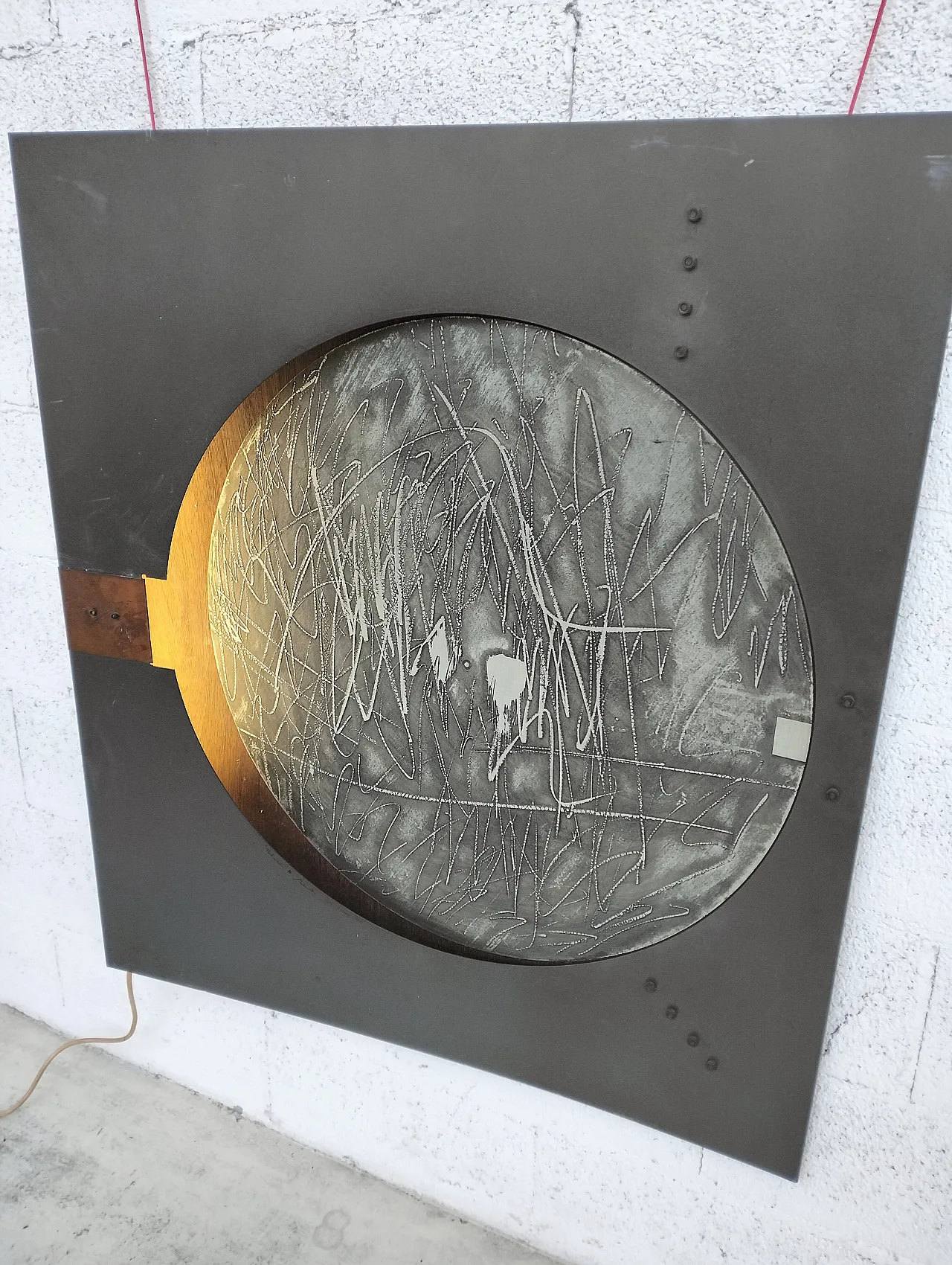
An illuminated wall panel by Nerone and Patuzzi (Gruppo NP2) from the 1970s is much more than decorative lighting—it sits right at the intersection of art, sculpture, and architecture.
These works were created within the experimental context of Gruppo NP2 (founded in 1962 in Turin), whose goal was to bring art into everyday living spaces, not just galleries.
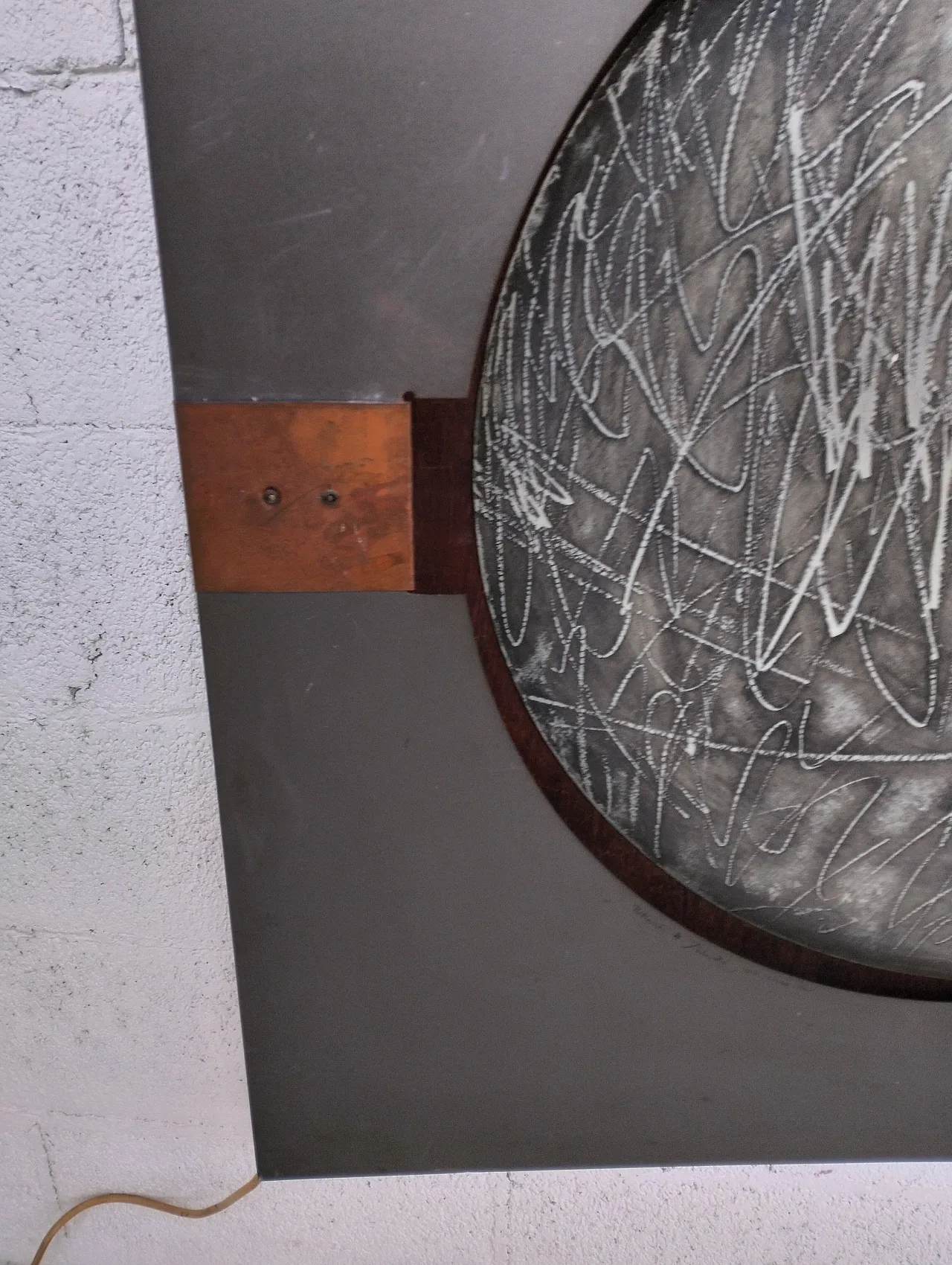
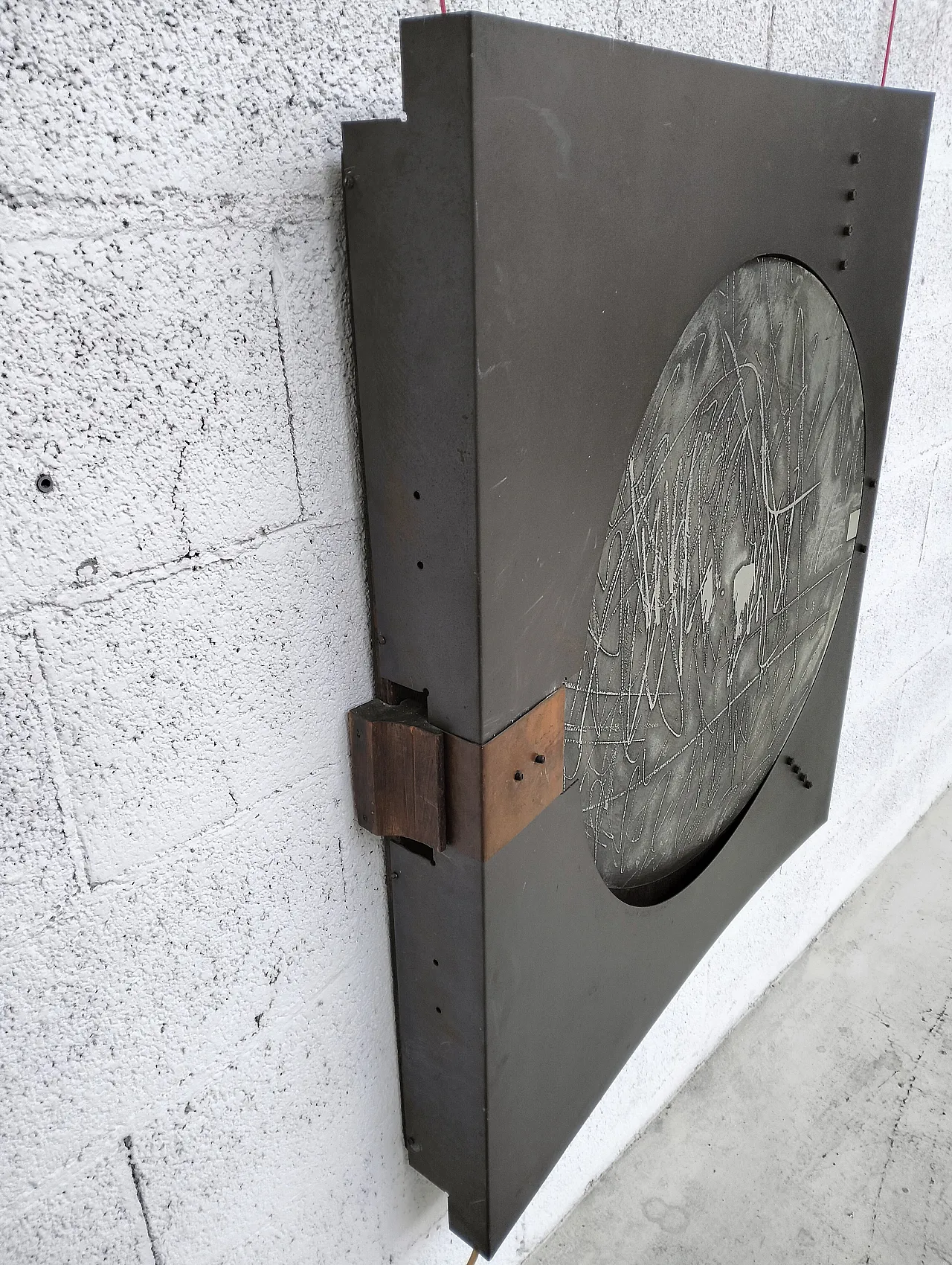
The panels are conceived as reliefs, often with deep textures, carved or etched surfaces, and layered materials. They behave like wall-mounted sculptures rather than flat décor.
Mixed materials
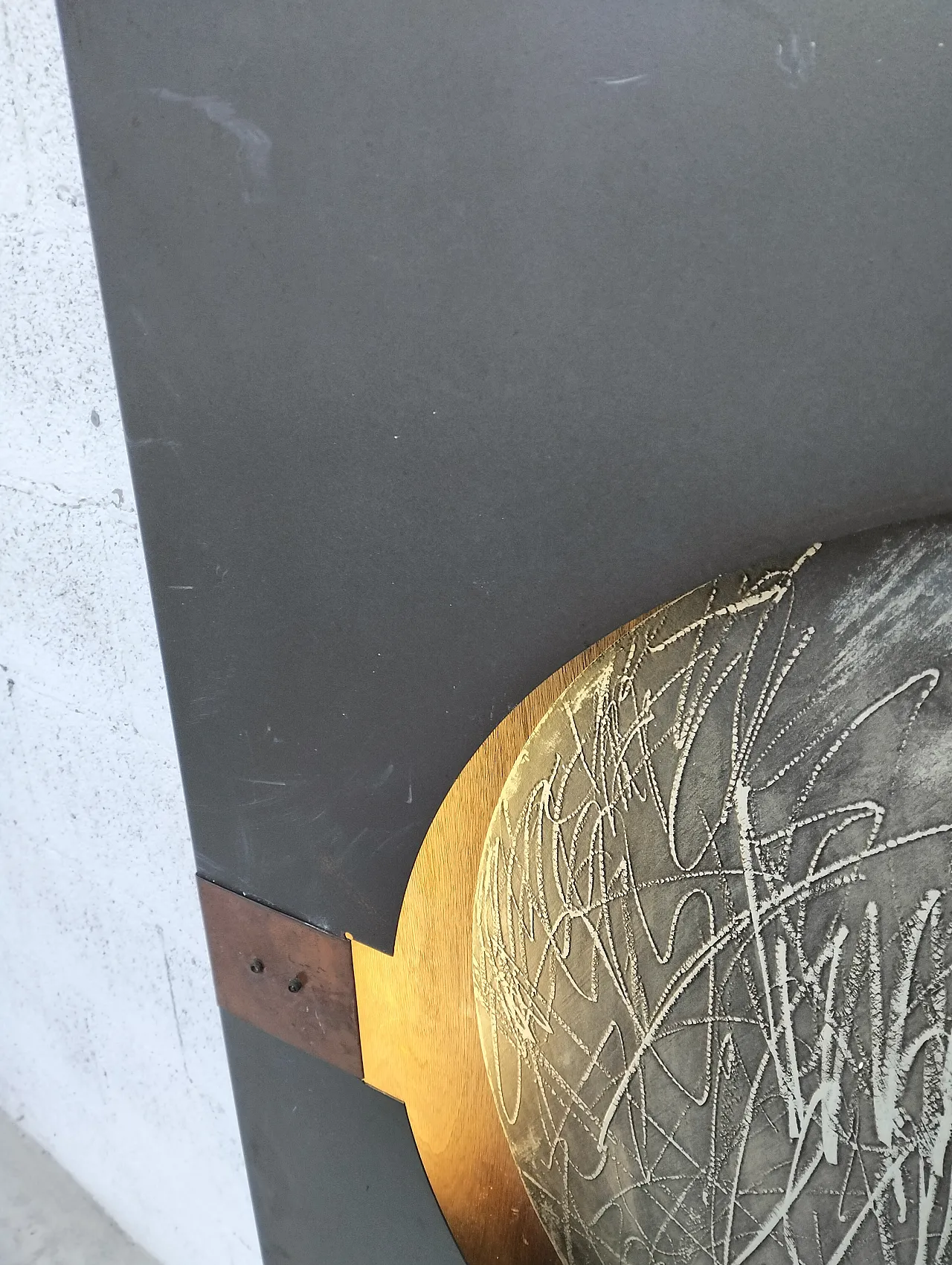
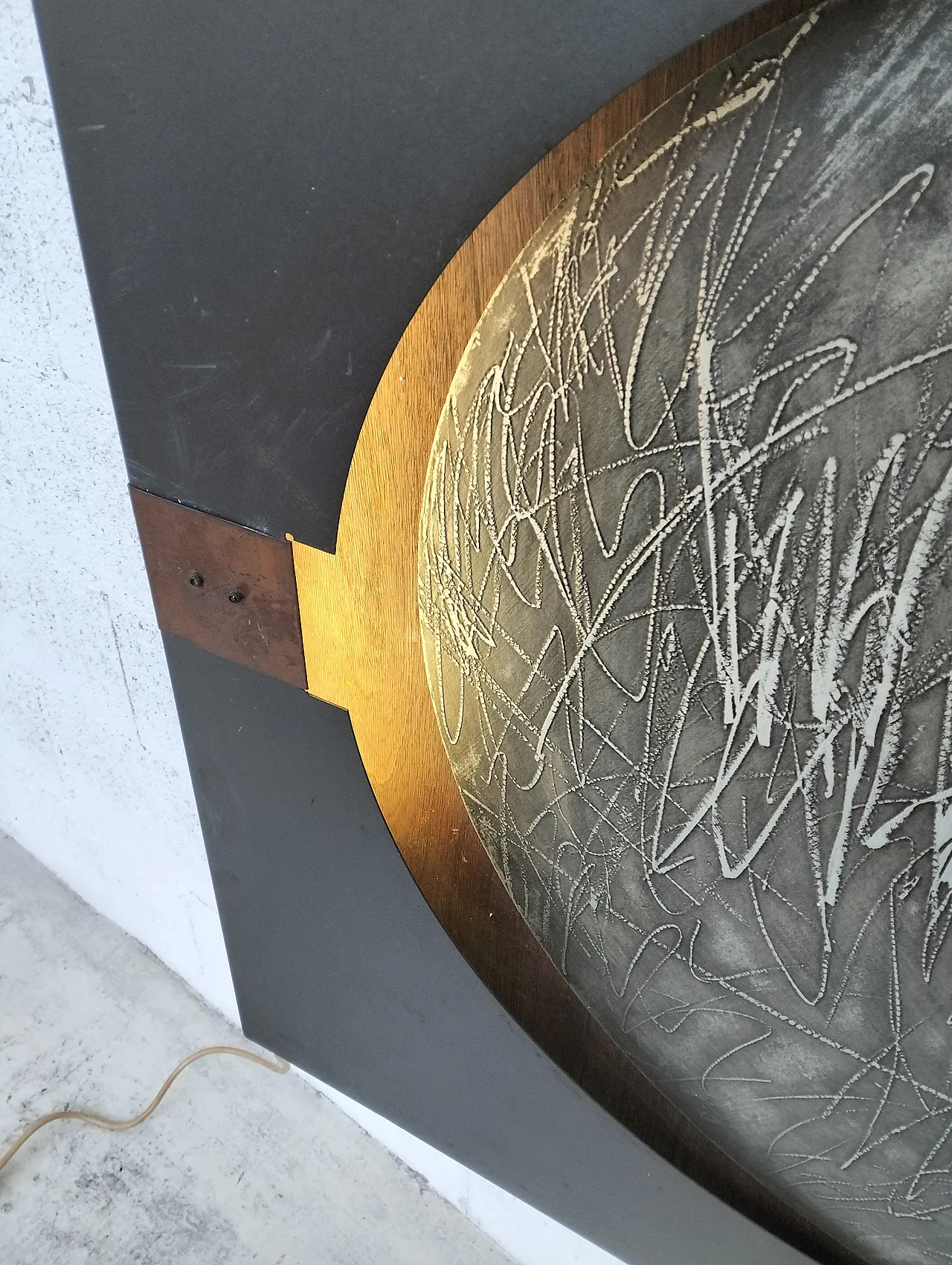
Typical examples combine metal (zinc, aluminum, copper), wood, and sometimes lead or steel, often treated with patinas or flame techniques to create depth and contrast.
Light as part of the artwork
In illuminated versions, light isn’t just functional—it’s integral to the composition. It interacts with etched or textured surfaces to create changing reflections and shadow effects, sometimes described as almost “cosmic” or eclipse-like.
Experimental surface treatments
Nerone in particular used techniques like burning wood or chemically treating metal, then finishing with wax or patina layers to achieve a rich, tactile surface.
Style and context
Strongly influenced by Constructivism and Bauhaus ideas, with a focus on geometry, material honesty, and integration with architecture.
Typical of 1970s Italian radical design, where boundaries between art, furniture, and lighting were deliberately blurred.
Often produced in limited editions or as unique pieces, making them collectible today.
Why collectors value them
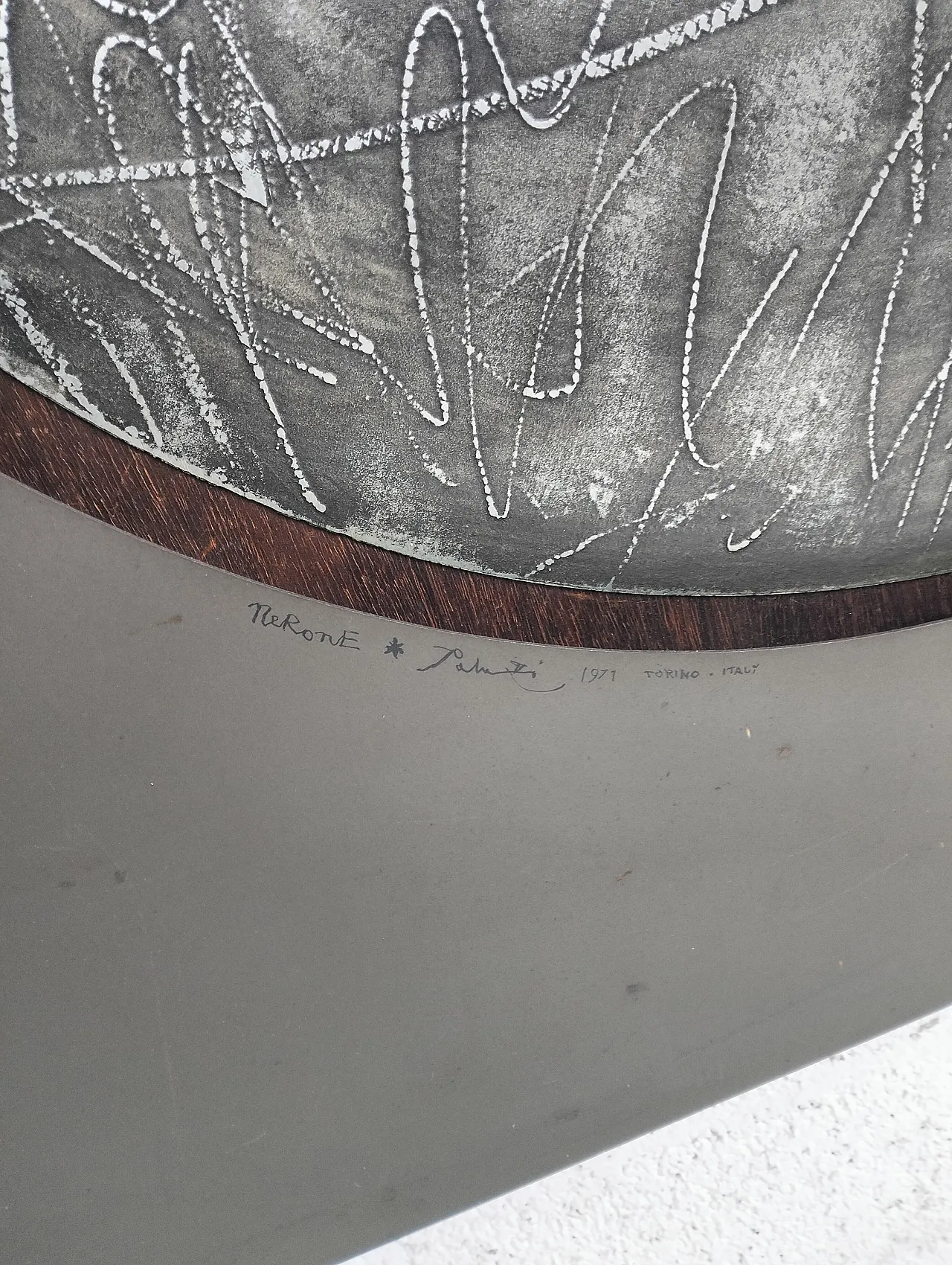
They are signed artworks, not just design objects
Each piece has unique surface variations due to handmade processes
They embody a key moment in postwar Italian avant-garde design
In short, an illuminated NP2 panel isn’t just a lamp—it’s a wall sculpture that uses light as a material.


.png)
 Venditore SILVER a Padova, Italy