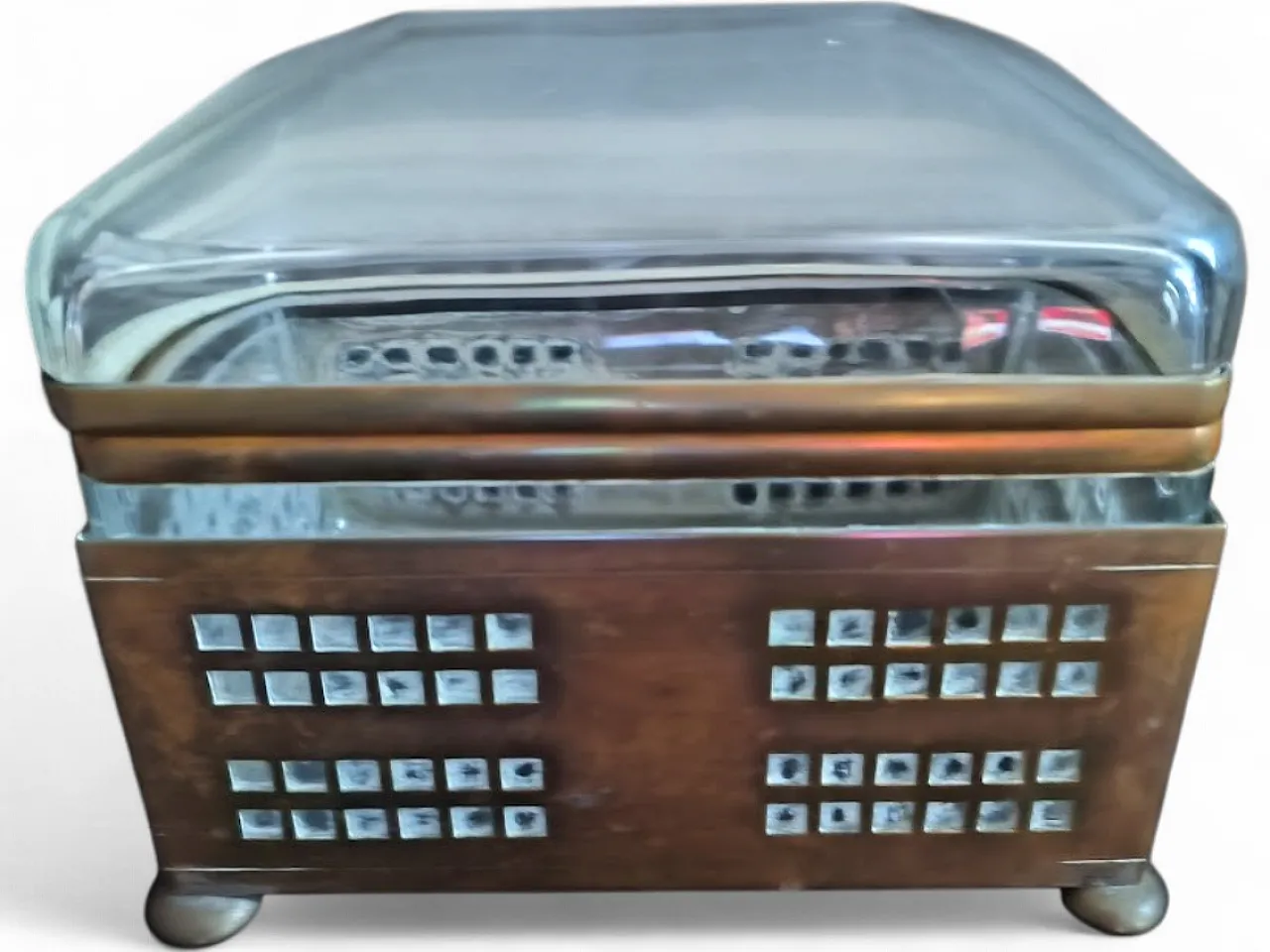
RARE Biscuit box by JOSEF HOFFMANN - Wiener Werkstätte - Wien 1905 c. (This is not confirmed and expressed by an "attribution", but there is certainly the same name as Hoffmann and the Viennese Sécession)
Height 18 cm - Width 29 cm - Depth 14 cm - Weight 2 kg
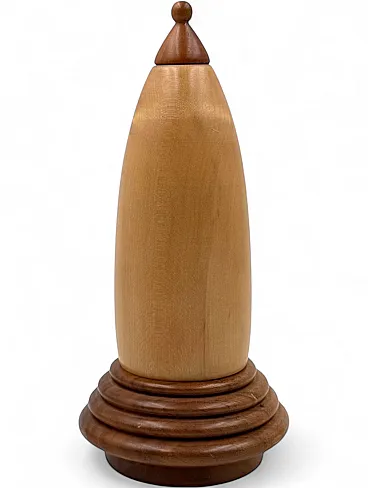
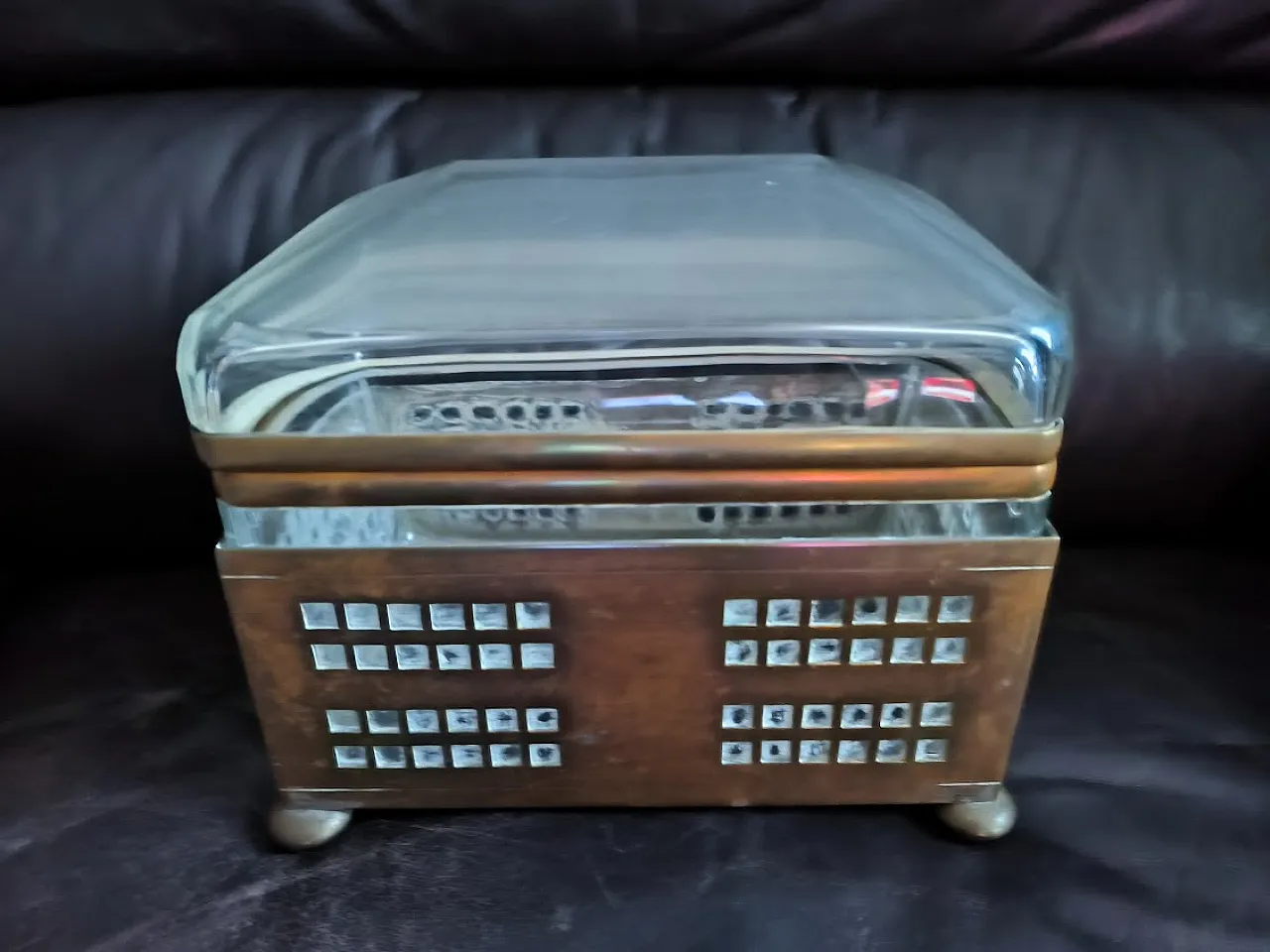
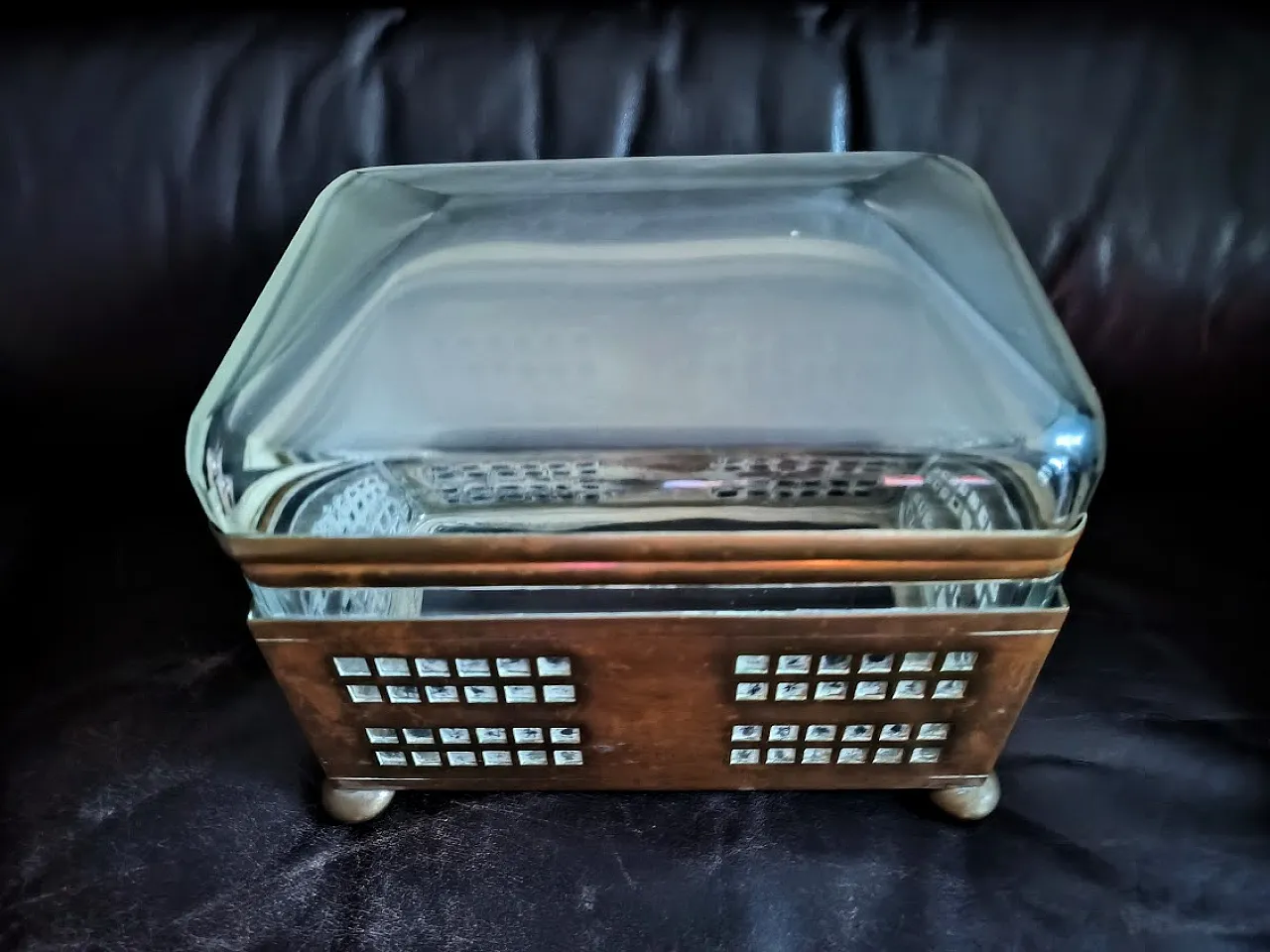
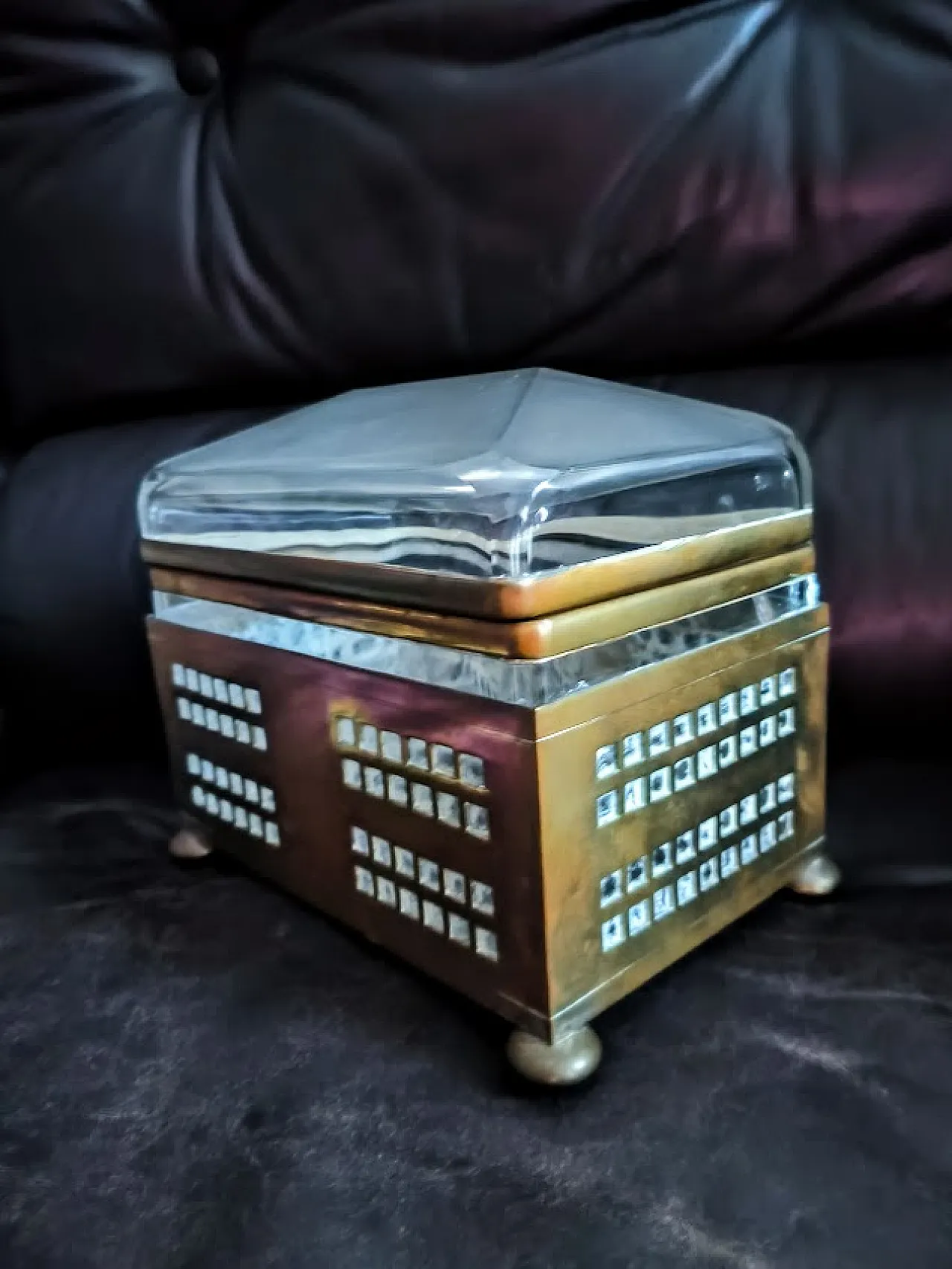
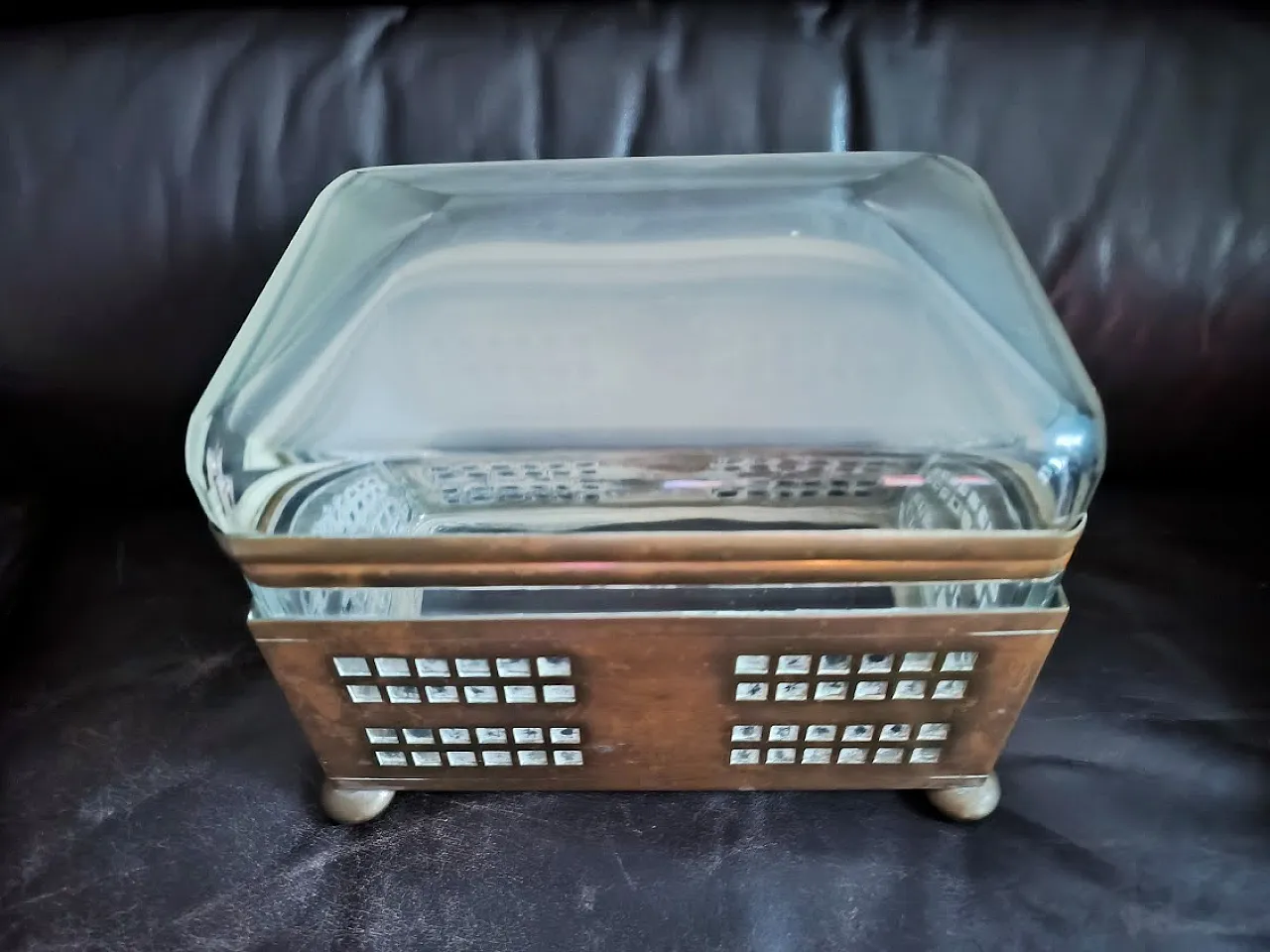
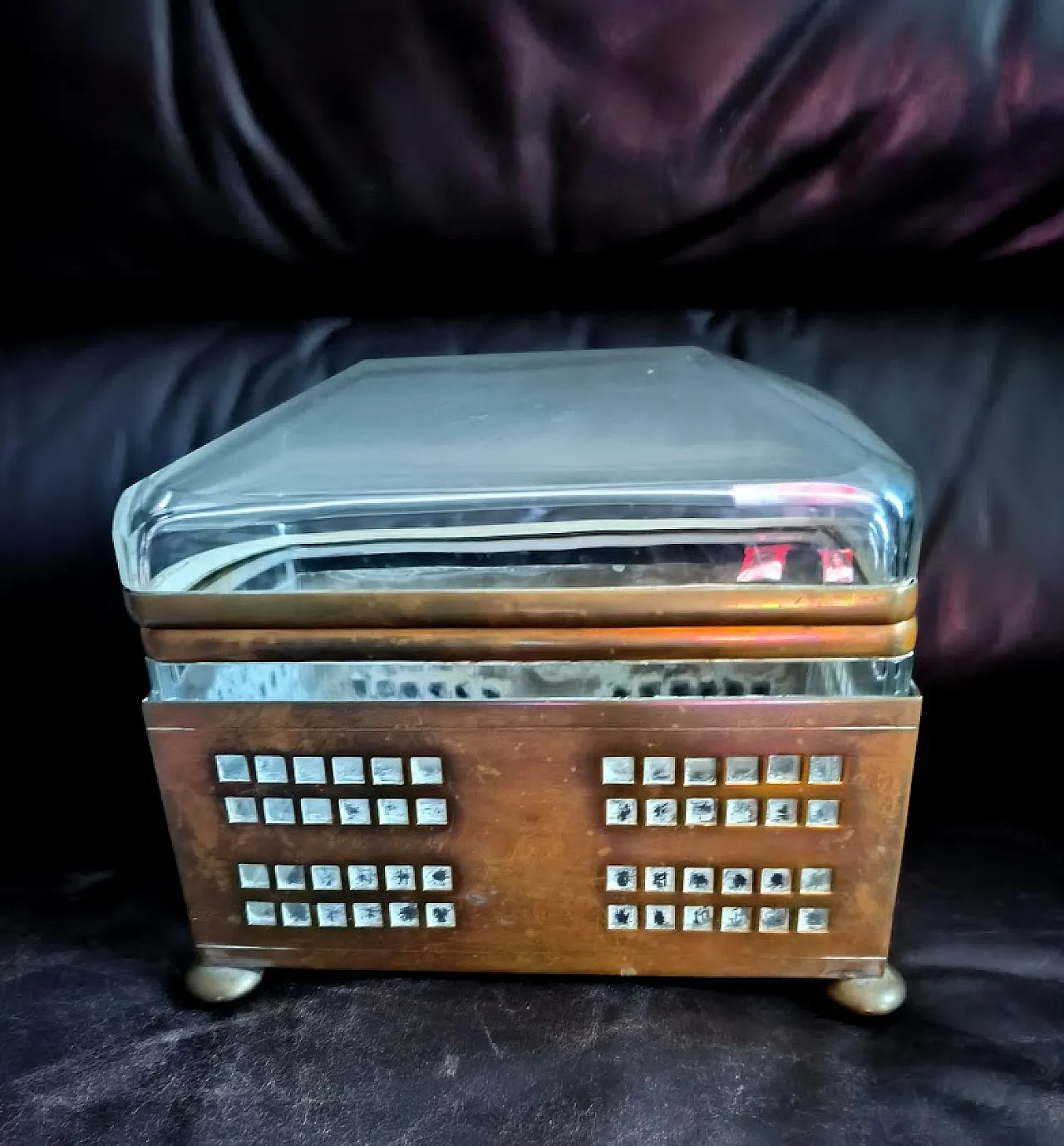
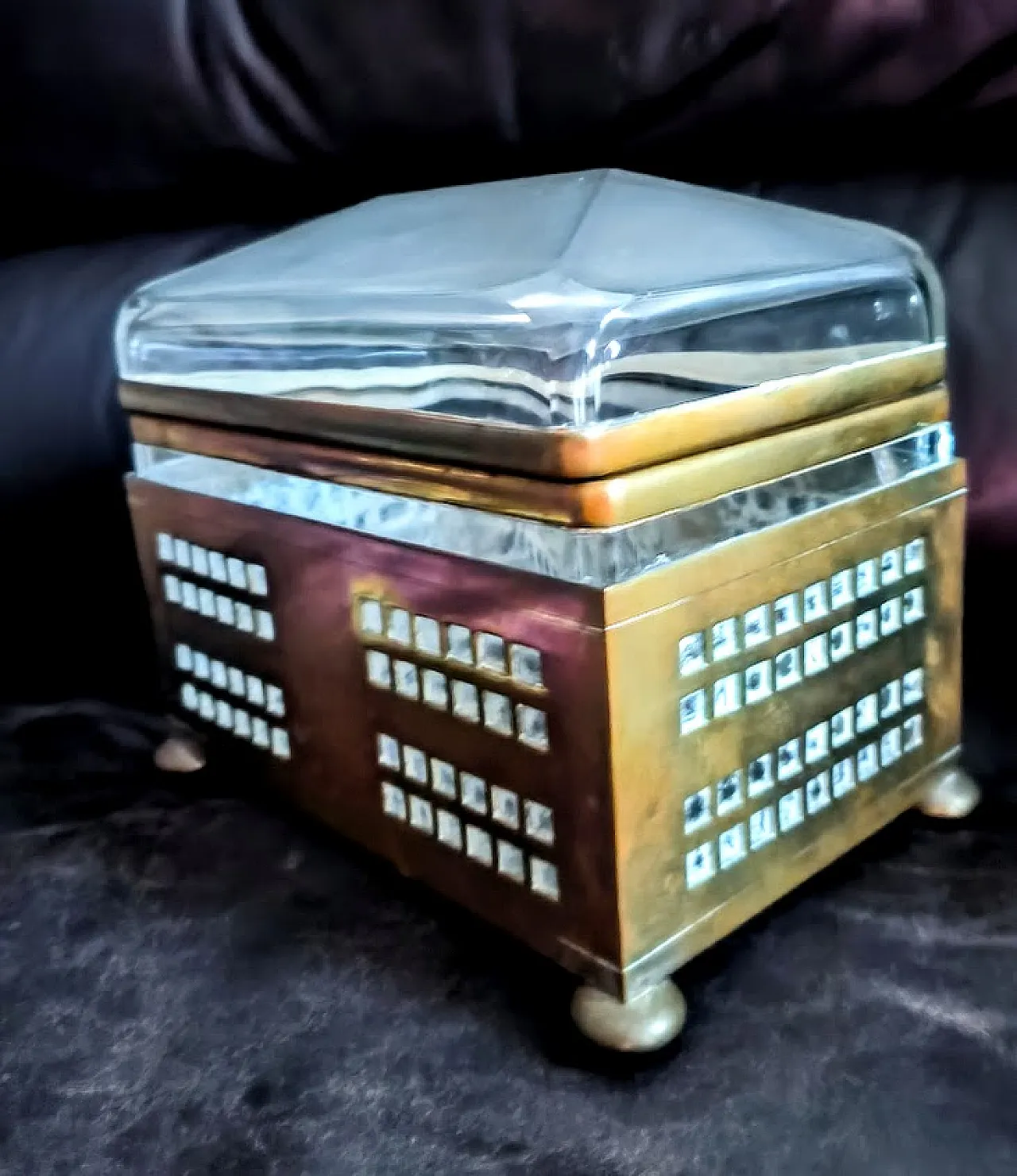
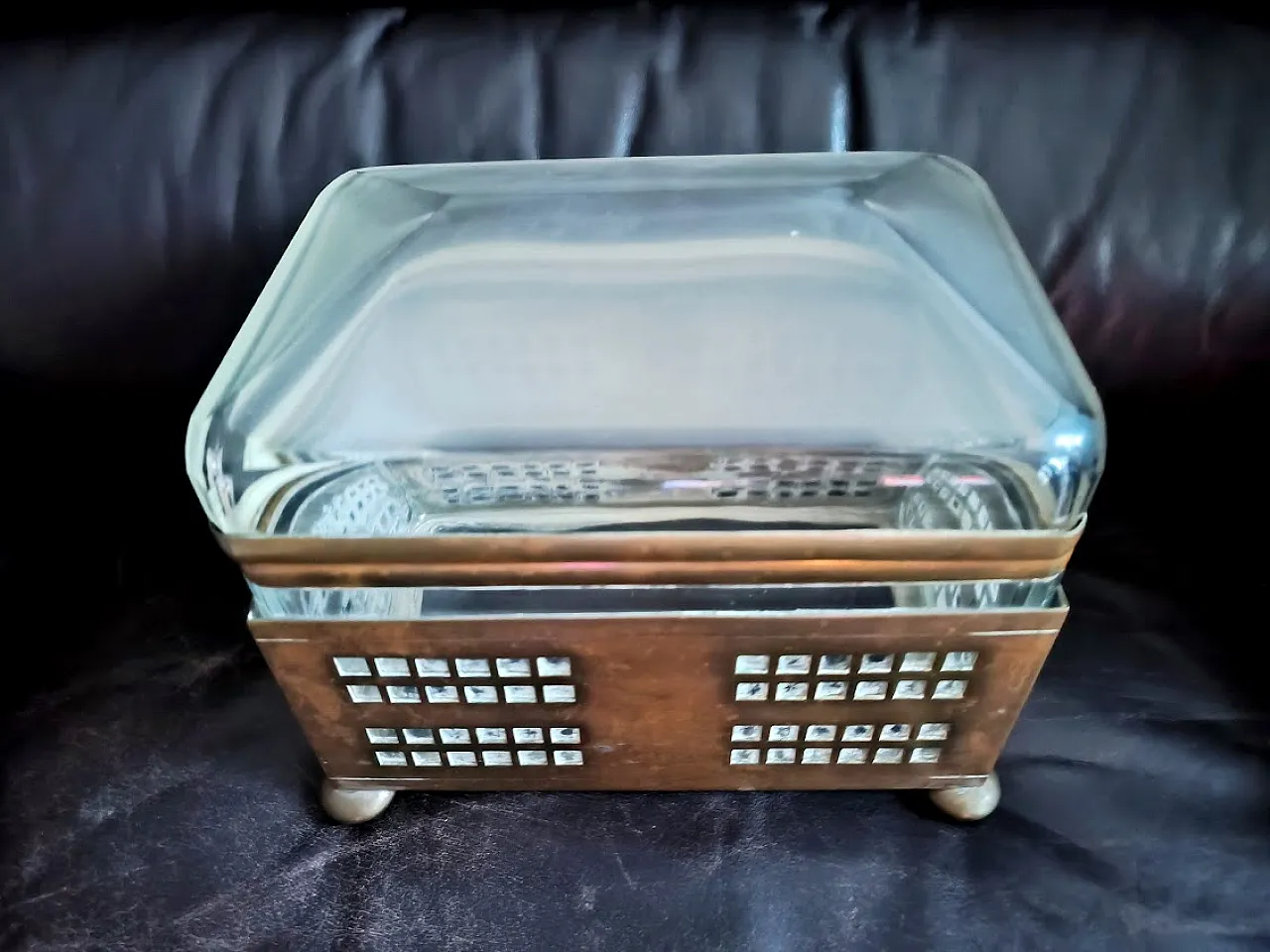
Brass and crystal box, attributed to Josef Hoffmann, ca. 1905.
Work in the canonical style of the Vienna Secession, exemplary of the geometric design of the Wiener Werkstätte. The object combines functionality and miniaturized architecture, embodying the ideal of "total beauty" theorized by Hoffmann.
The work is characterized by rigorous geometry and an aesthetic based on the principle of the square, Hoffmann's distinctive feature. The rational use of the square grid, here rendered through regular openings in the brass plate, recalls the architectural decoration and the modular language of the creations for the Wiener Werkstätte.
The contrast between warm metal and clear glass is often found in his boxes, trays or candlesticks made around 1904–1906. The blown or ground glass lid with a pyramidal top accentuates the architectural effect, transforming the box almost into a "miniature of a modern building" — a theme dear to Hoffmann, as seen in the designs for the Palais Stoclet (1905–1911).


.png)
 Venditore SILVER a FERRARA, Italy