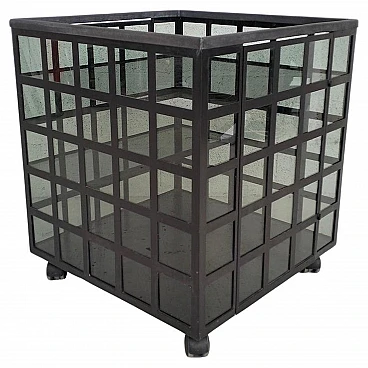
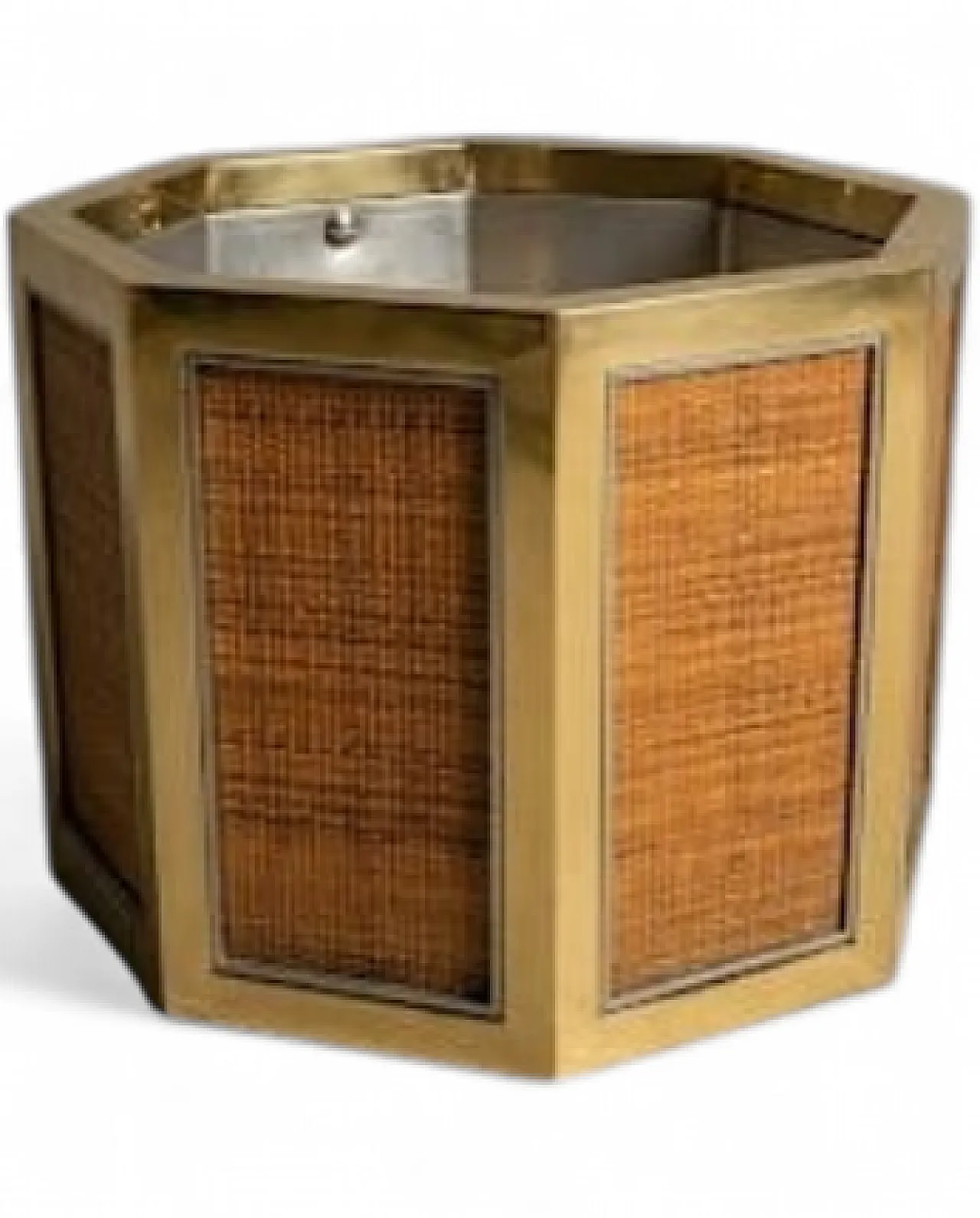
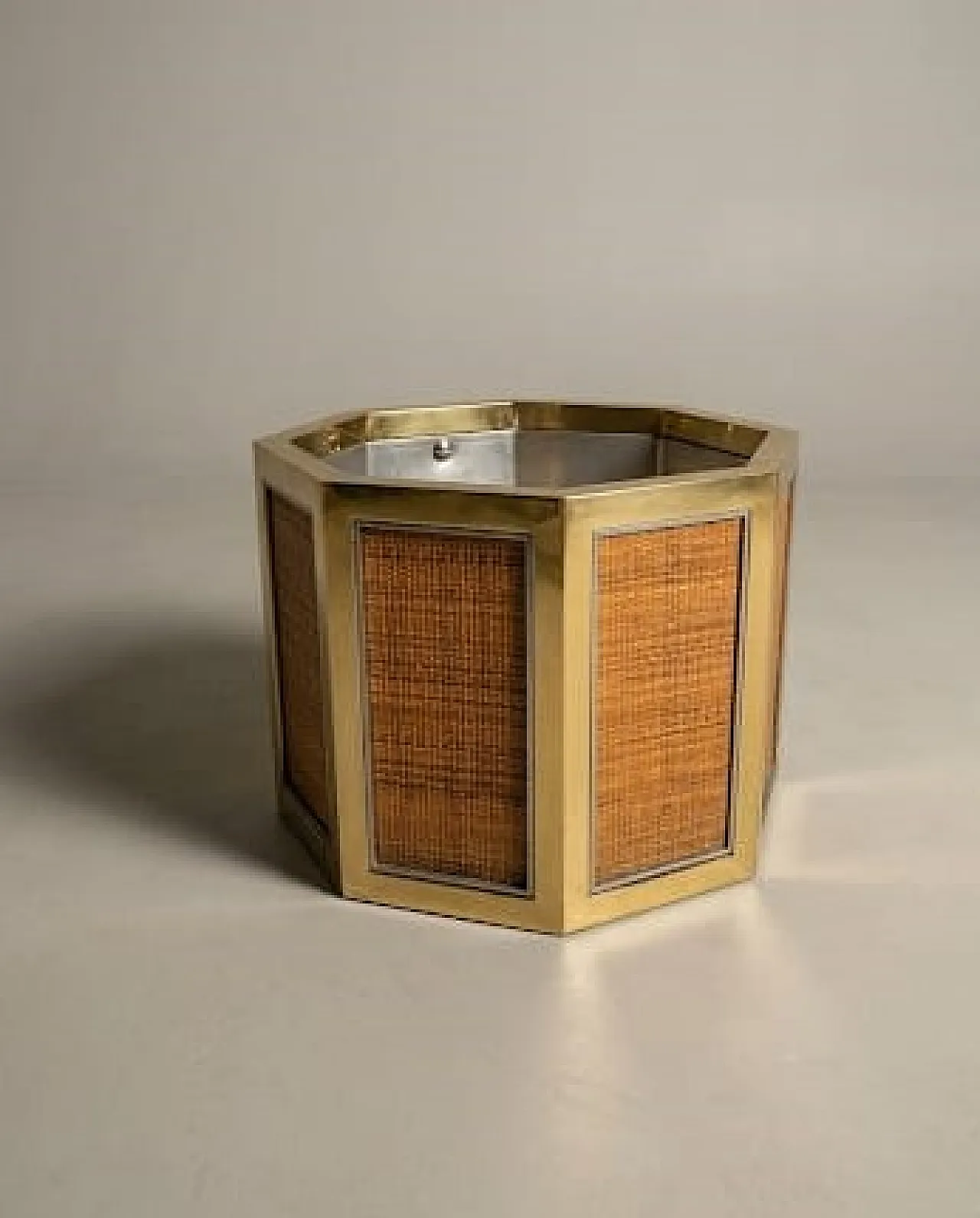
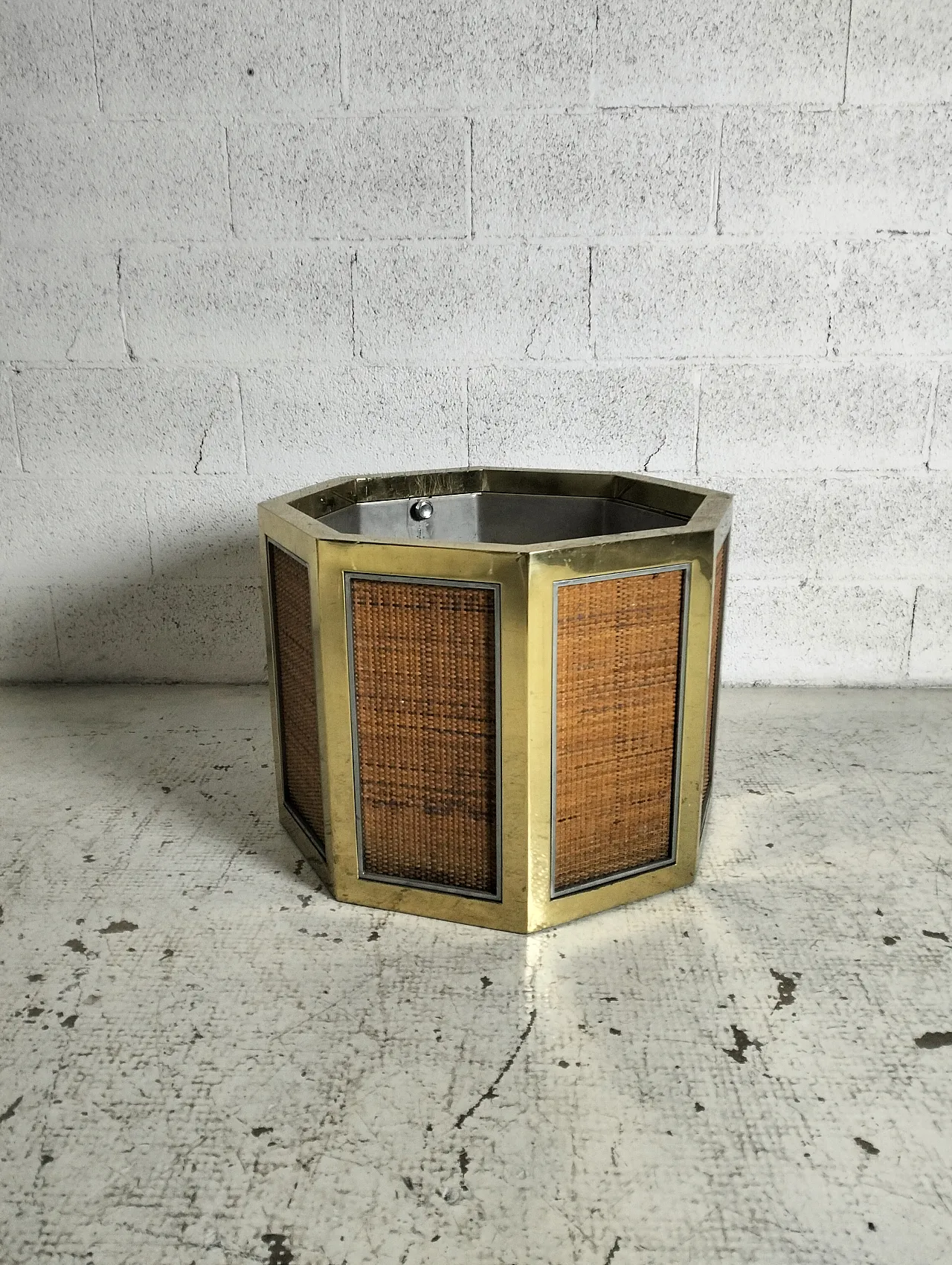
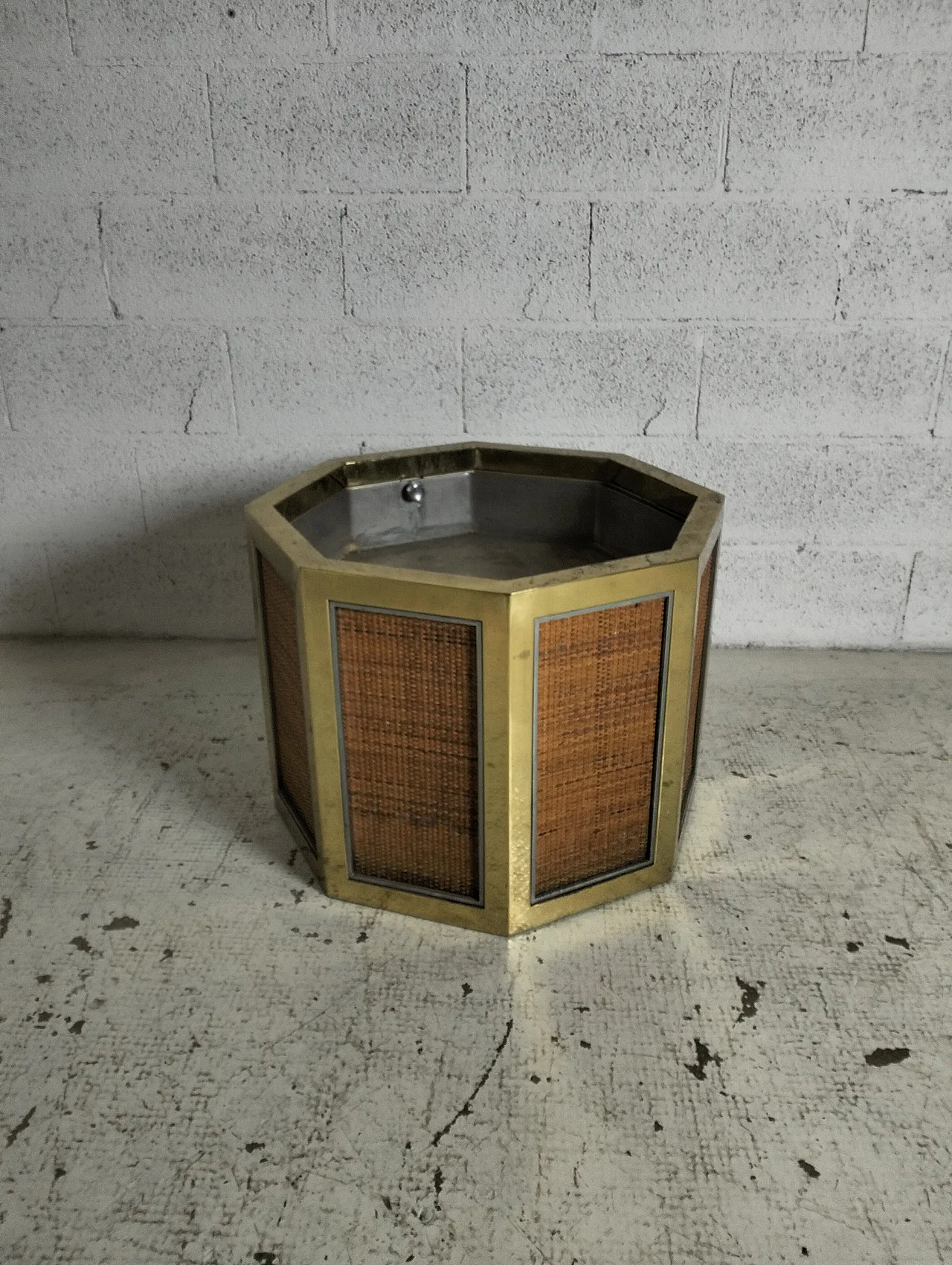
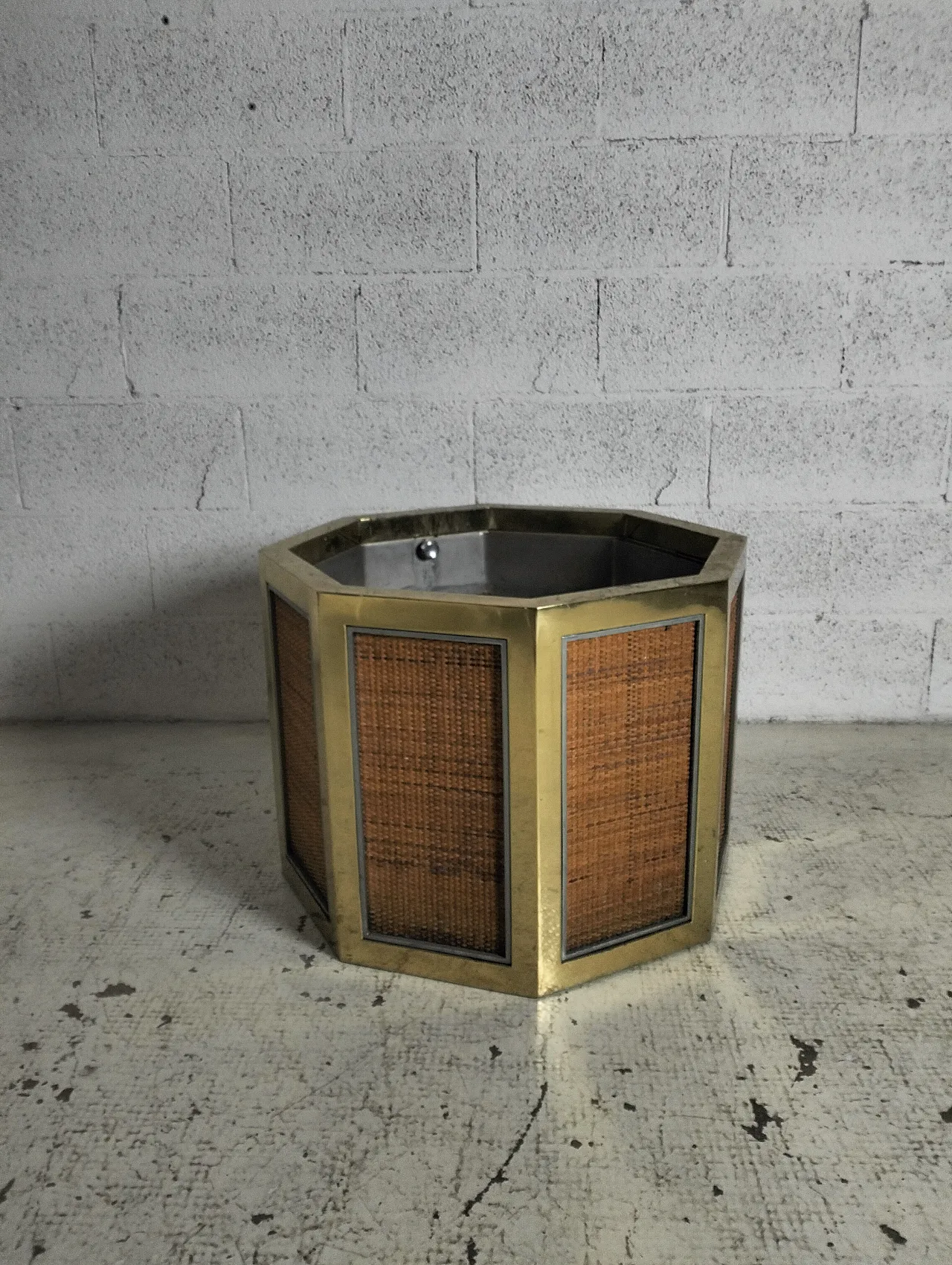
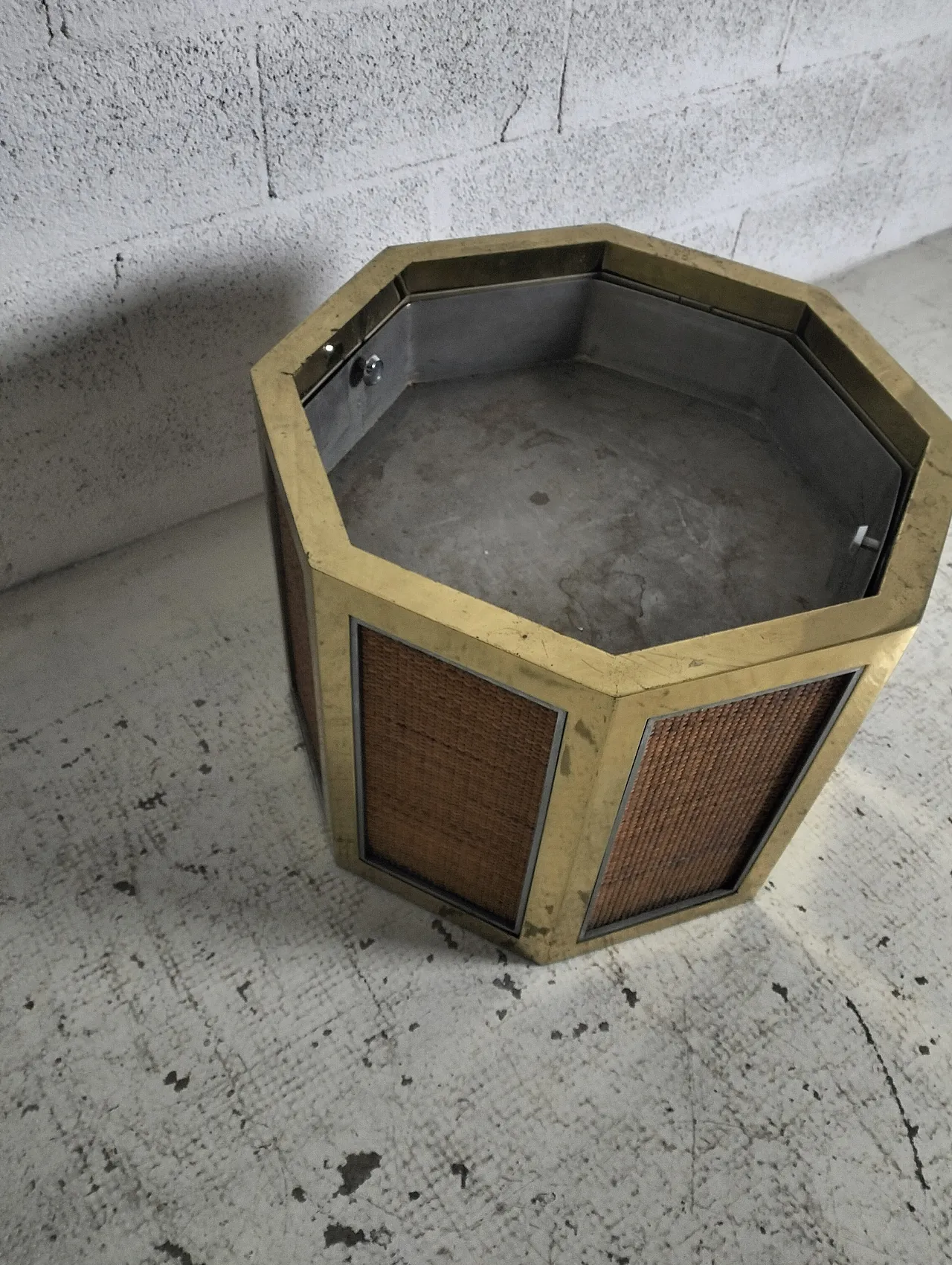
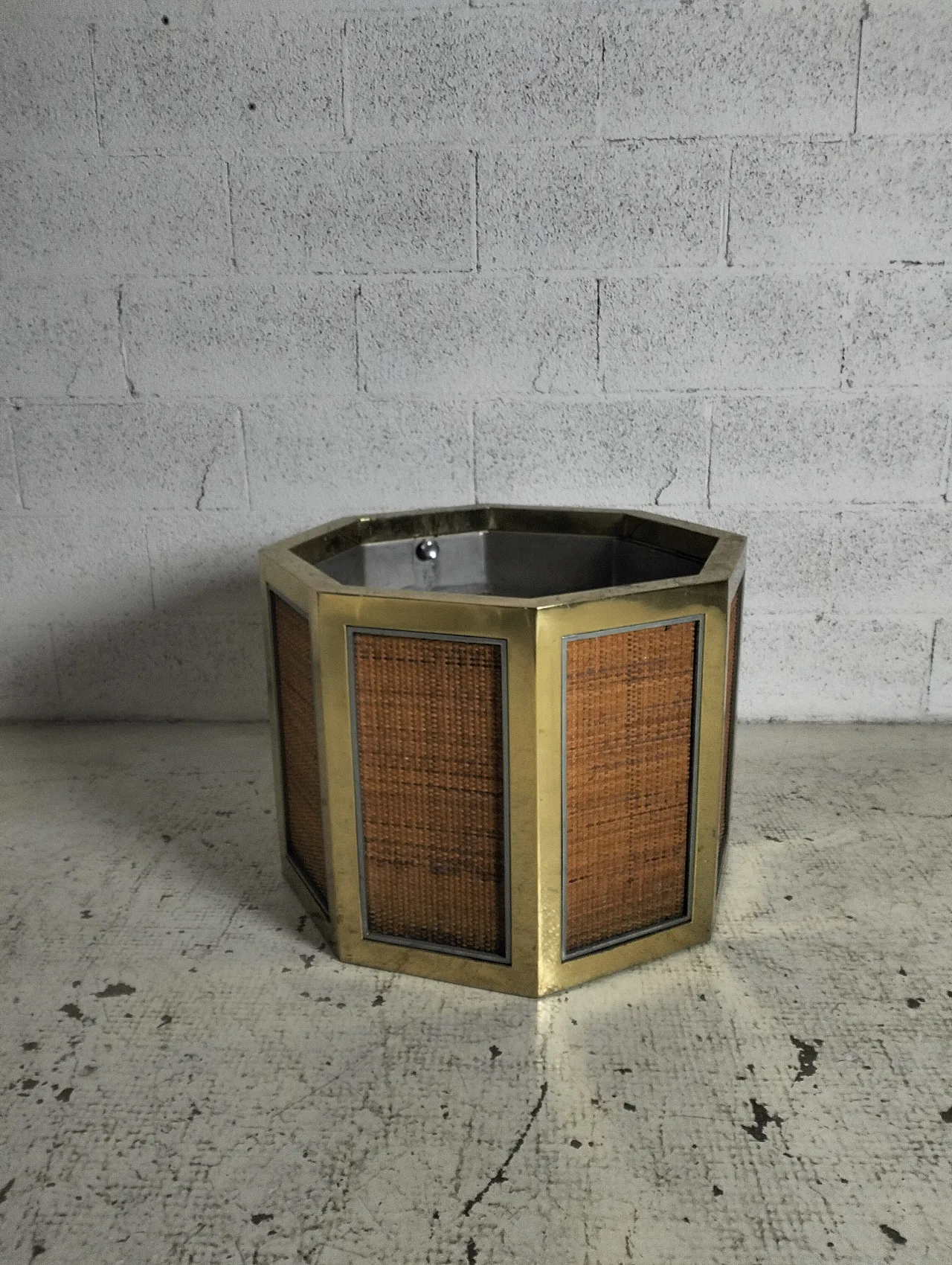
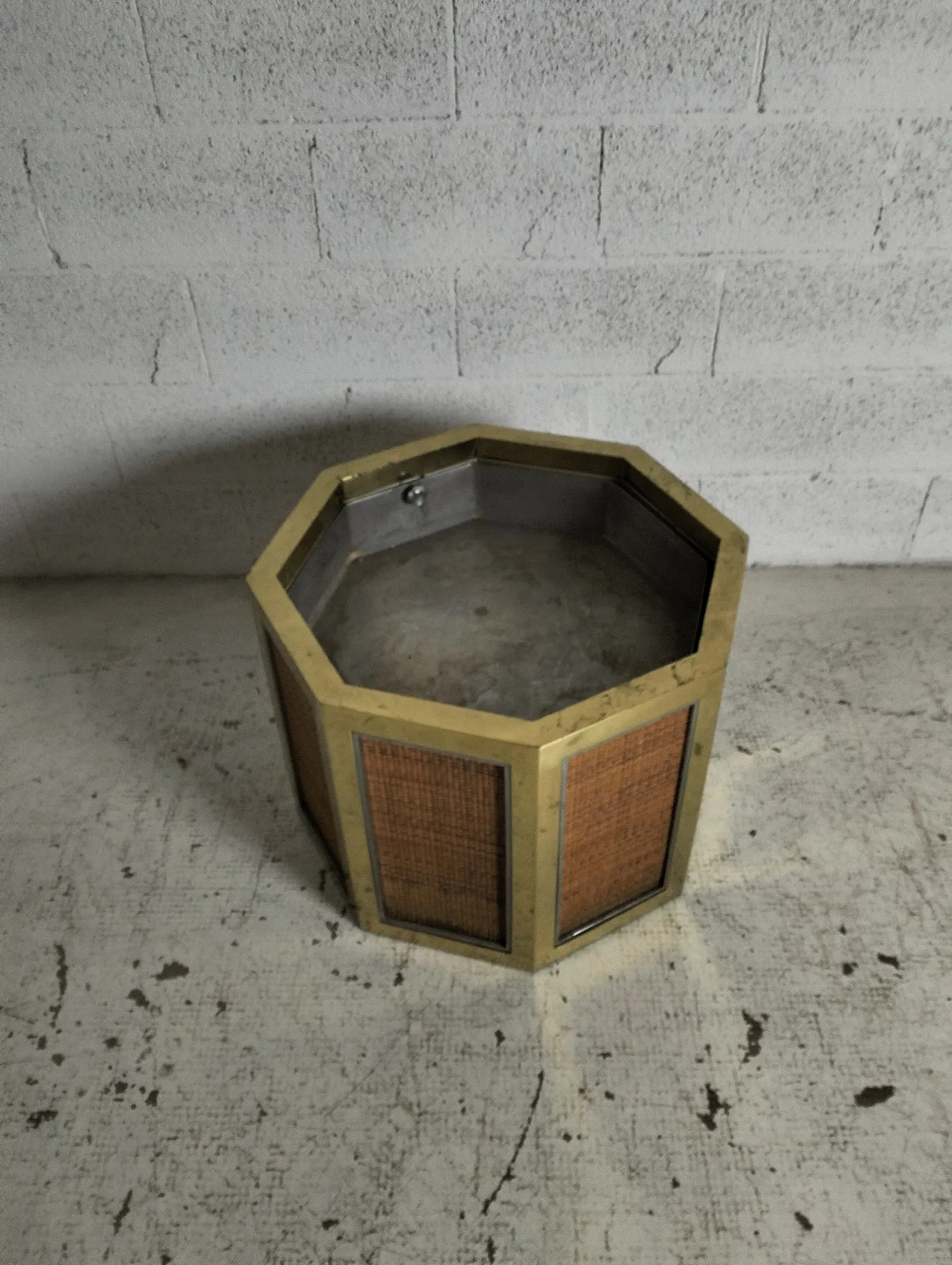
The octagonal brass and wicker vase (or planter) designed by Romeo Rega for Mario Sabot in the 1970s is a striking example of Italian Hollywood Regency–influenced design, where glamour meets geometric rigor.
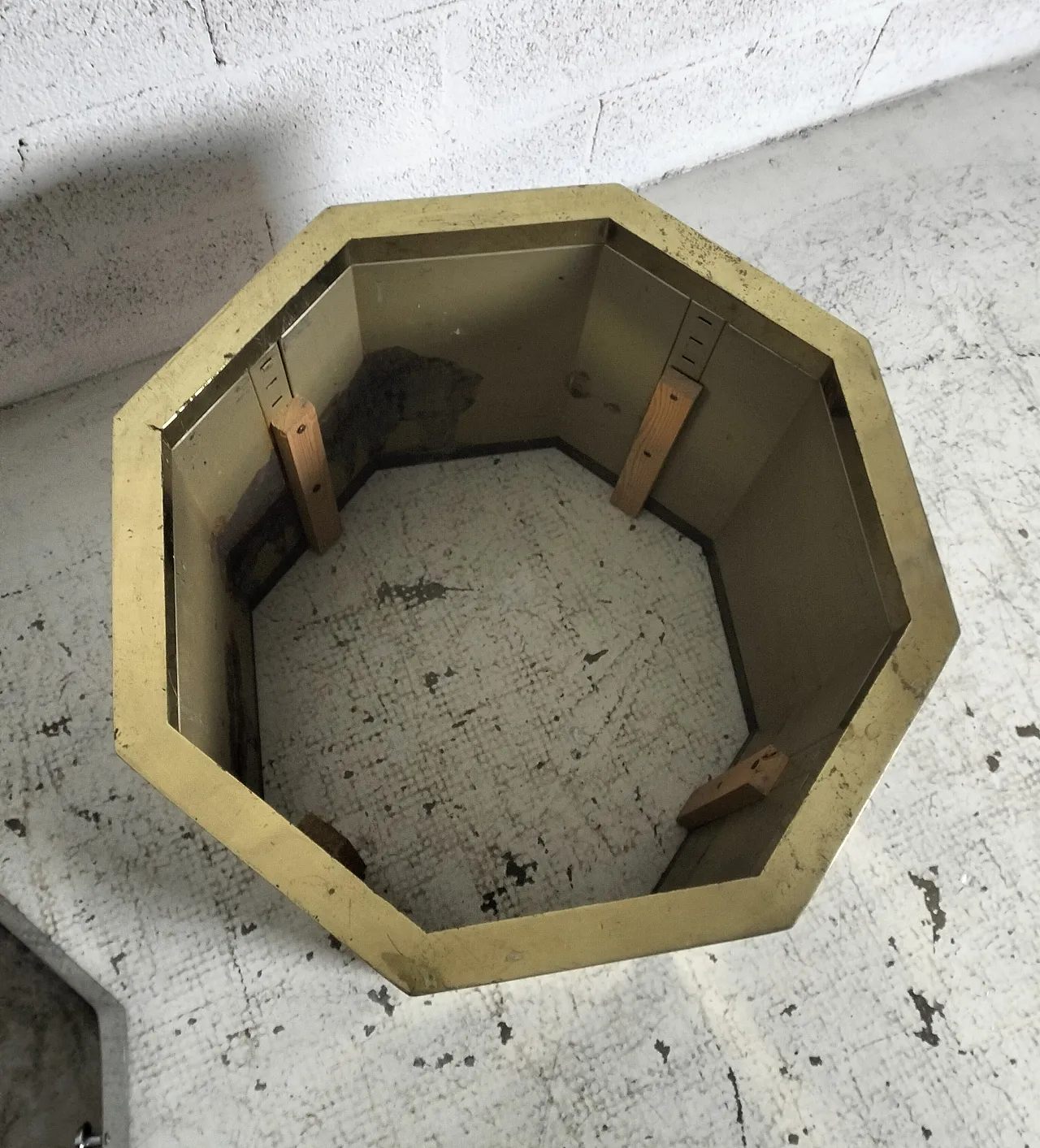
This piece is typically conceived as a large planter rather than a small vase, with a bold octagonal structure—a recurring motif in Rega’s work. It combines:
Brass frame polished, reflective, and luxurious
Woven cane (wicker) panels natural texture and warmth
Clean, architectural lines
The contrast between metal and organic fiber is essential: brass gives it a glamorous, almost sculptural presence, while wicker softens the look and makes it suitable for interiors with plants.
The piece sits firmly within 1970s Italian design trends:
Strongly geometric forms (octagons, cubes, grids)
Use of mixed materials (brass, glass, cane, chrome)
Aesthetic linked to Hollywood Regency and luxury interiors
Rega’s work is known for exactly this combination—modernist structure with decorative richness, often using gilded or chromed finishes to create visual impact.
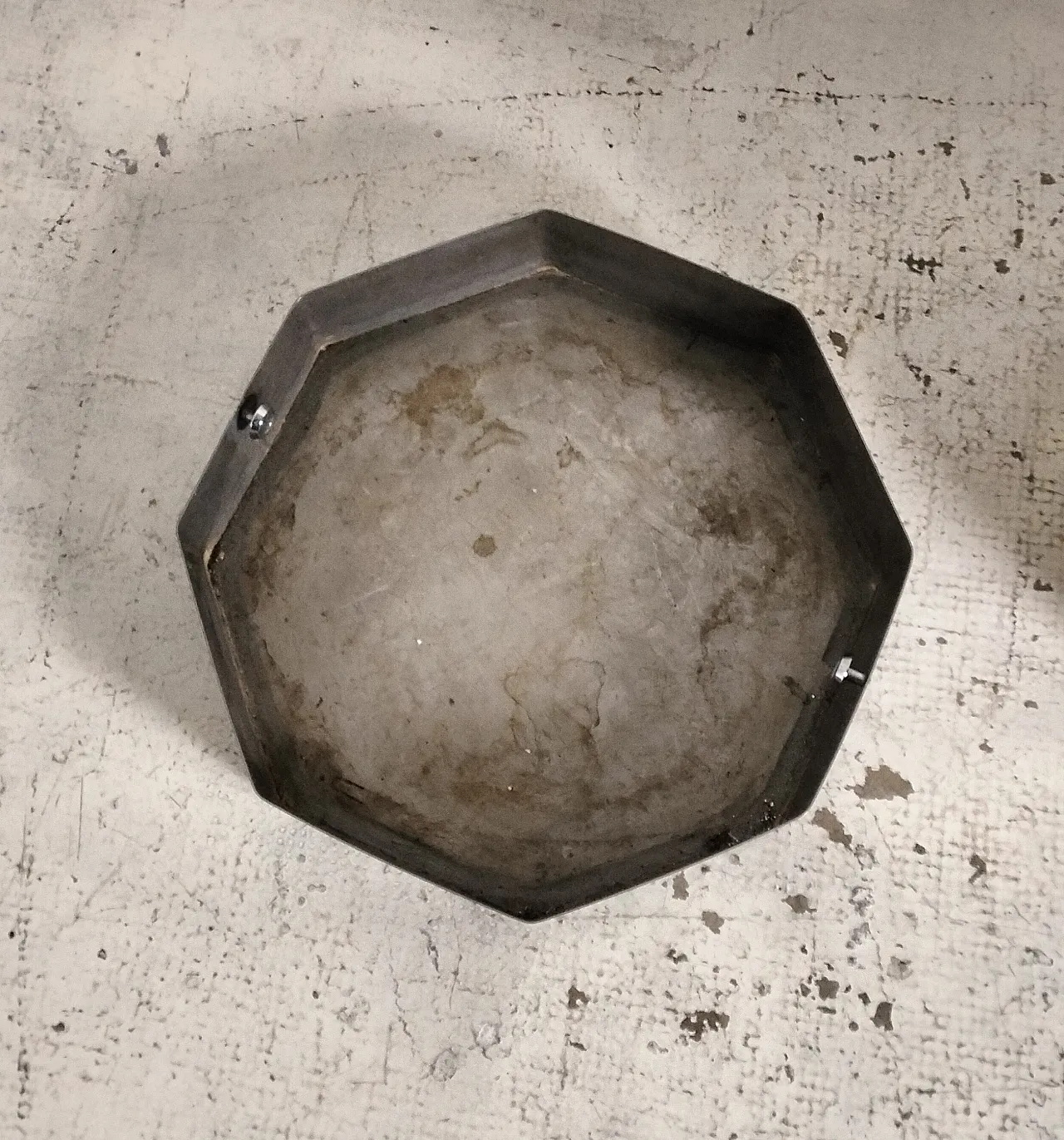
Designed to hold large indoor plants
Sometimes produced in pairs for symmetrical interiors
Their scale and structure make them architectural elements within a room, not just accessorie
Rare production: pieces by Rega for Mario Sabot are collectible
Iconic 1970s look: instantly recognizable glam style
Versatility: works in vintage, eclectic, or even contemporary interiors
Increasing demand in the vintage design market
Condition notes (important for your description work)
Because of the materials, typical wear includes:
Oxidation or patina on brass
Slight fraying or darkening of the cane
Minor structural looseness over time
These signs are generally considered normal and acceptable, especially for pieces meant to hold plants—so your earlier sentence about “segni del tempo e dell’uso” fits perfectly in a professional listing.


.png)

 Venditore SILVER a Padova, Italy