Vaso in Rame Smaltato e Bronzo – André Villien
Produzione: Parigi, Francia - Periodo: Anni '30
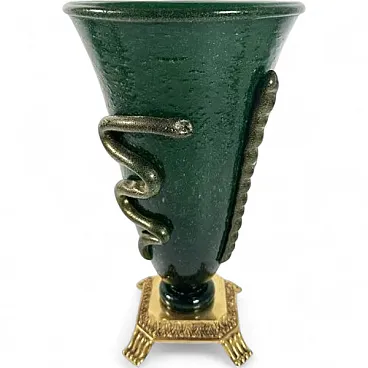
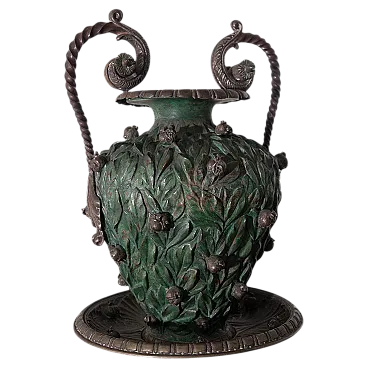
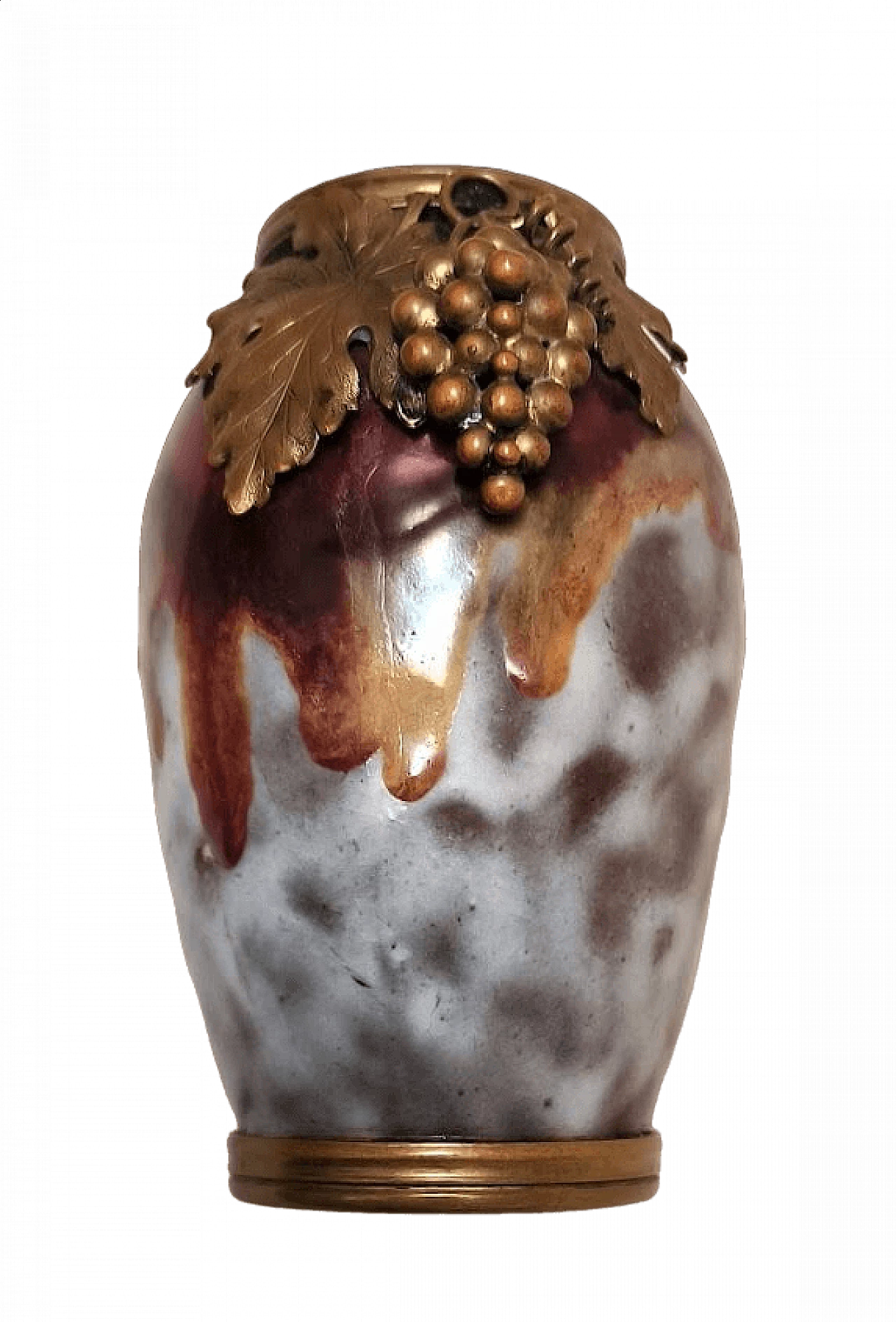
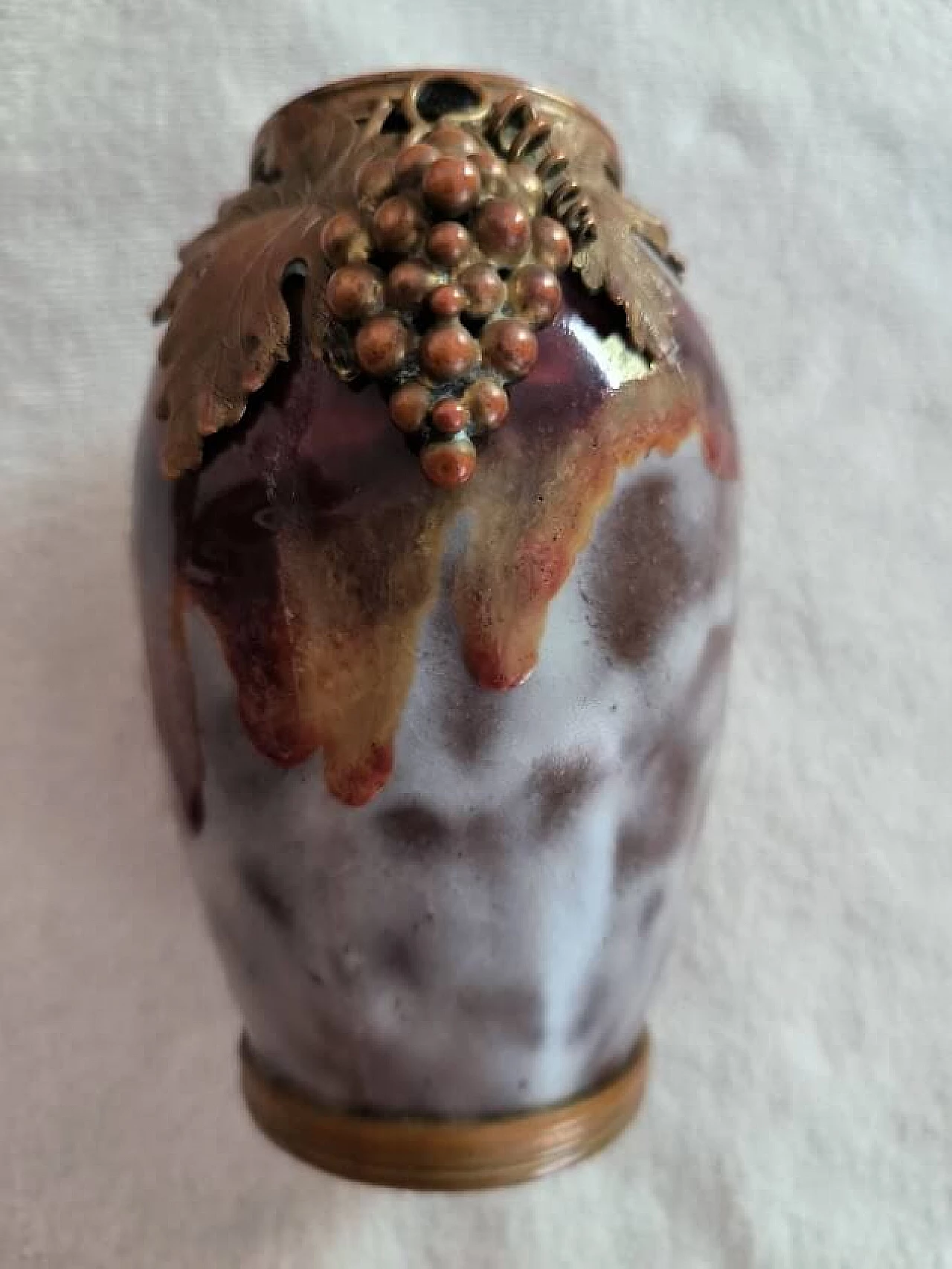
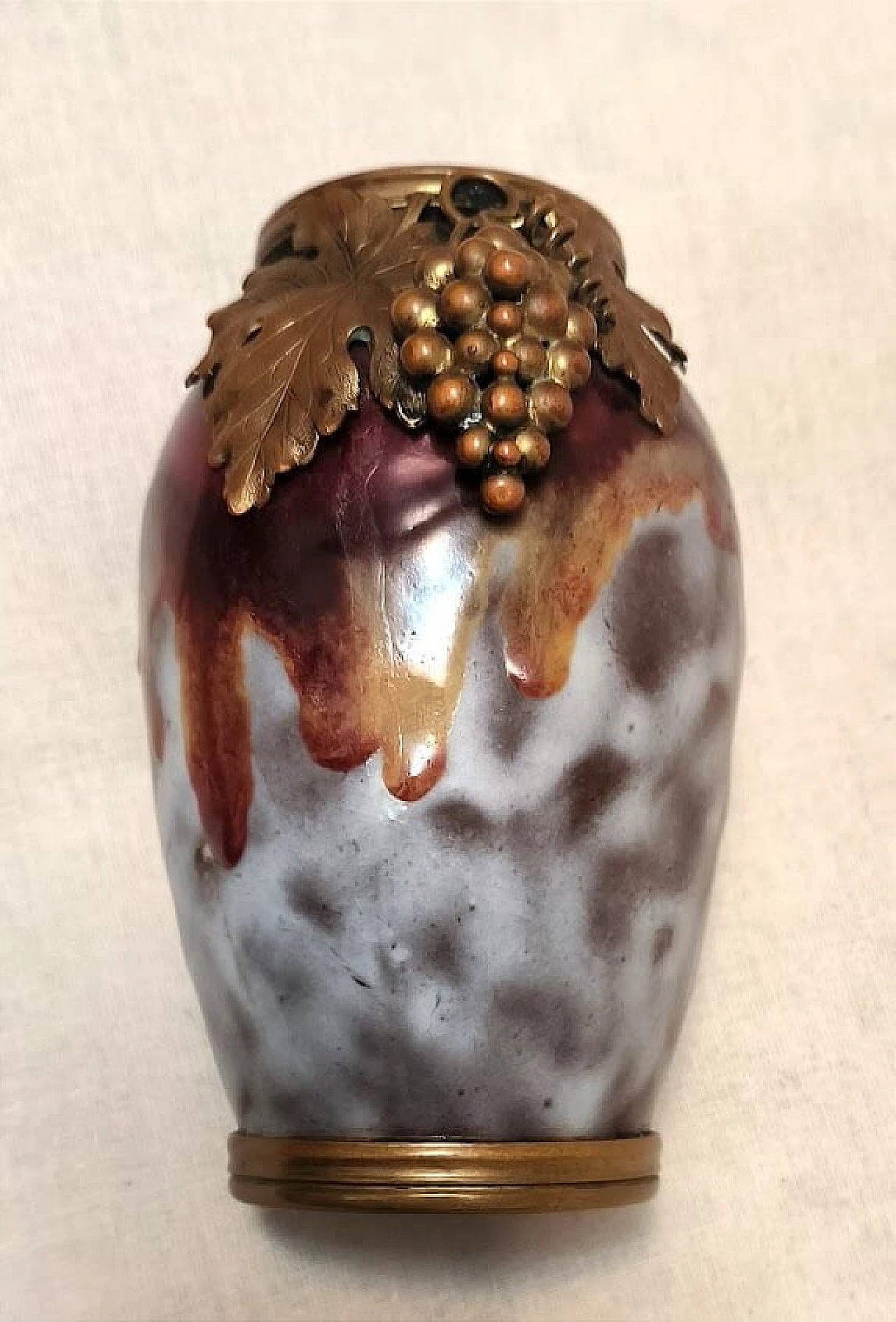
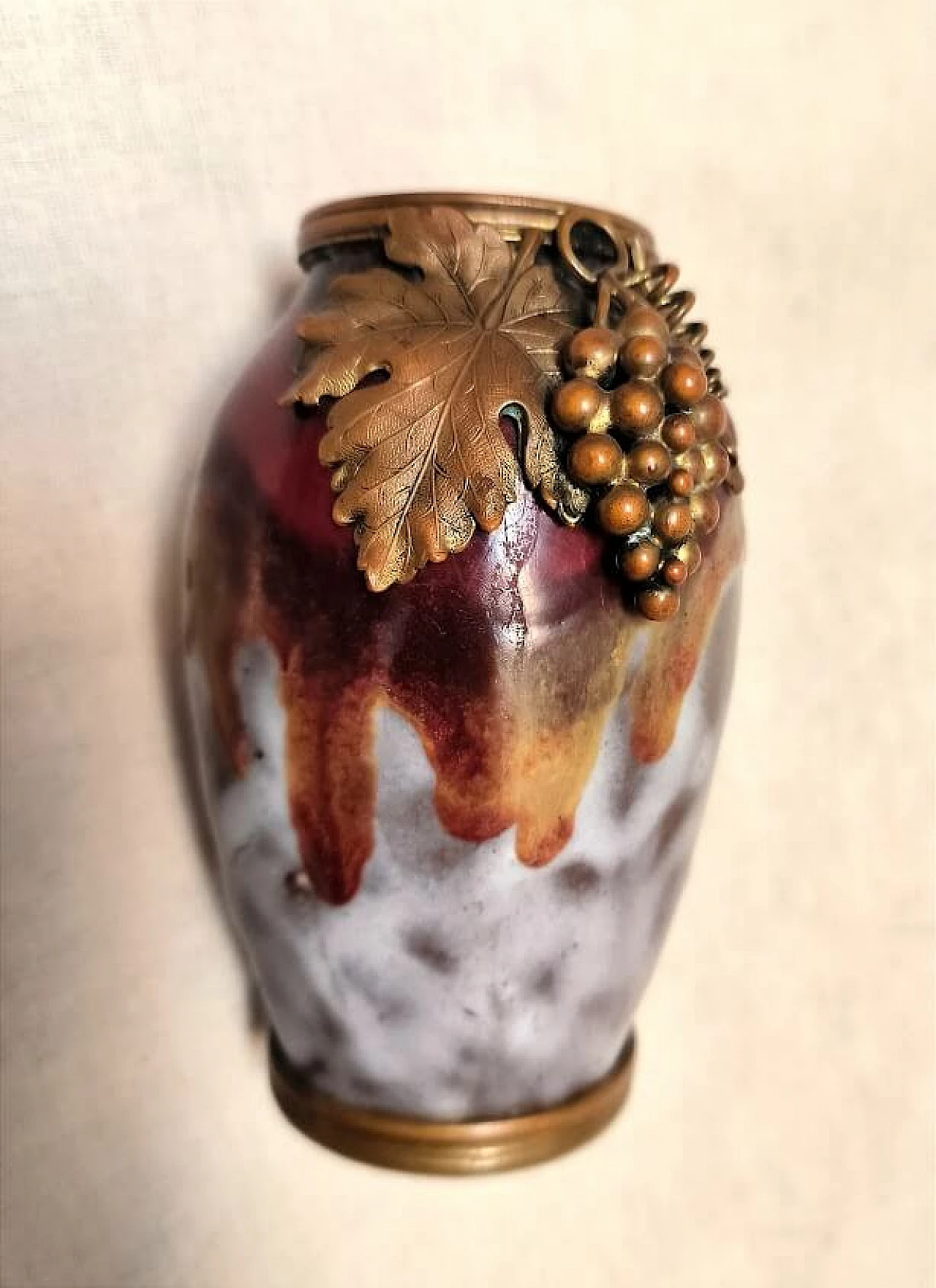
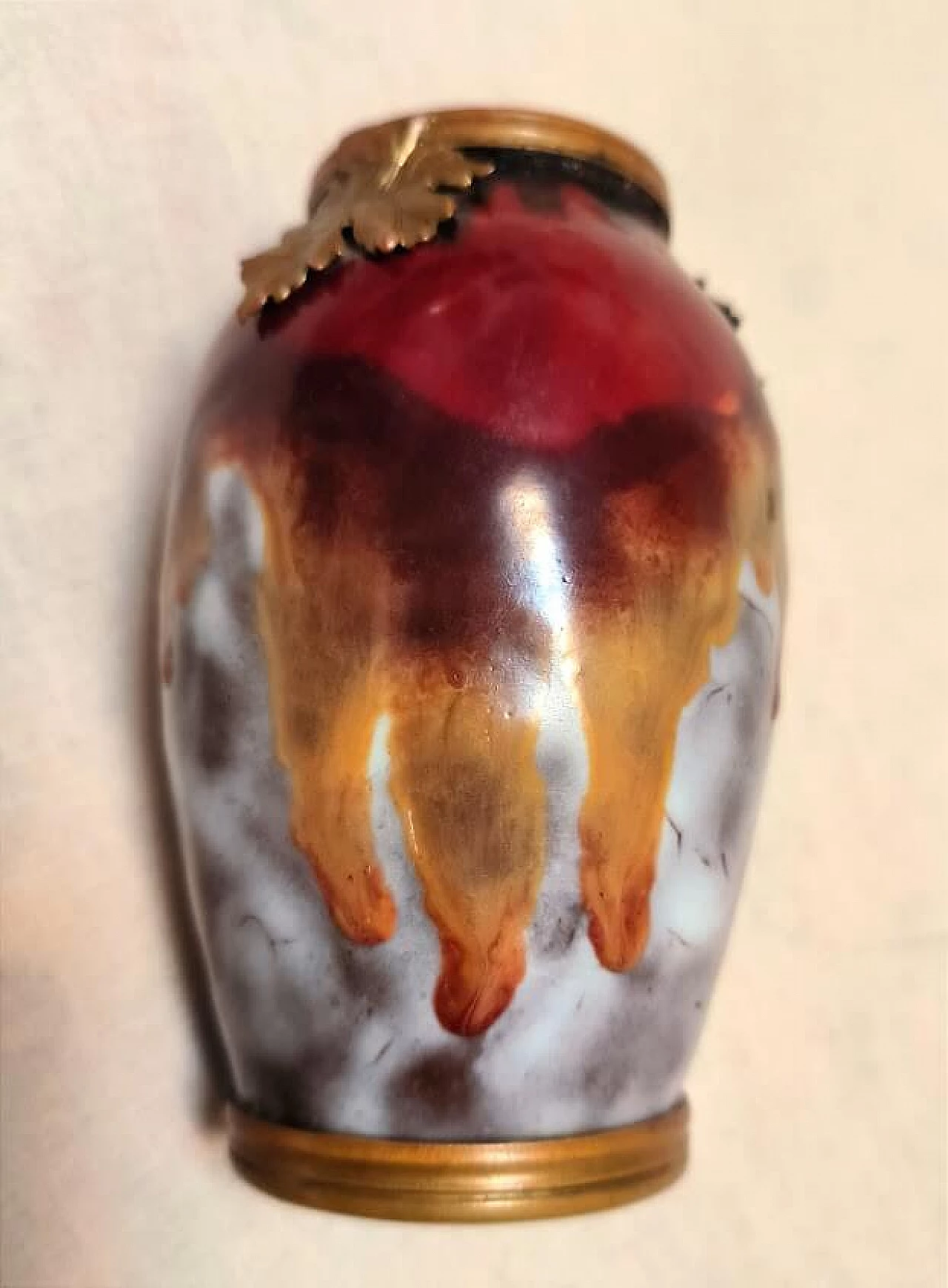
Materiali: Rame sbalzato, smalto a fuoco, applicazioni in bronzo o ottone fuso. Il vasetto è una splendida testimonianza della maestria artigianale di André Villien nel combinare metalli diversi e tecniche vetrarie. Estetica e Forma: Il corpo in rame presenta una forma organica, tipicamente "a bulbo", decorata con uno smalto a fuoco nei toni del verde e del marrone, con sfumature che richiamano le ossidazioni naturali del metallo o gli elementi della terra. La superficie smaltata ha una texture ricca, quasi granulosa, che conferisce profondità visiva all'oggetto. Le Applicazioni: Il pezzo è impreziosito da decorazioni applicate in bronzo che raffigurano motivi naturalistici (come rami, foglie o pigne), che fungono spesso da base o da decoro a rilievo lungo il corpo del vaso. Questo contrasto tra la base scura e materica e la brillantezza dei dettagli in rilievo è la firma stilistica del designer. Stile: Sebbene prodotto negli anni '30, il vasetto conserva un'eco della sensibilità naturalistica dell'Art Nouveau, ma la solidità delle forme e il rigore materico lo proiettano pienamente nel gusto Art Déco dell'epoca.
Breve Biografia: André Villien
André Villien è stato un rinomato dinandier (lavoratore del rame e dell'ottone) e decoratore attivo a Parigi tra l'inizio del XX secolo e gli anni '30. Il Laboratorio: Il suo atelier parigino era celebre per la produzione di oggetti d'arte in metallo: vasi, lampade, porta-ombrelli e centrotavola. Villien divenne famoso per la sua capacità di nobilitare metalli meno preziosi come il rame attraverso l'uso sapiente dello sbalzo, della cesellatura e, soprattutto, dello smalto.
La sua particolarità risiede nel "matrimonio" tra la base in rame (spesso trattata con smalti vitrei cangianti) e applicazioni in bronzo fuso che richiamano il mondo vegetale (vischio, pino, rami d'ulivo).
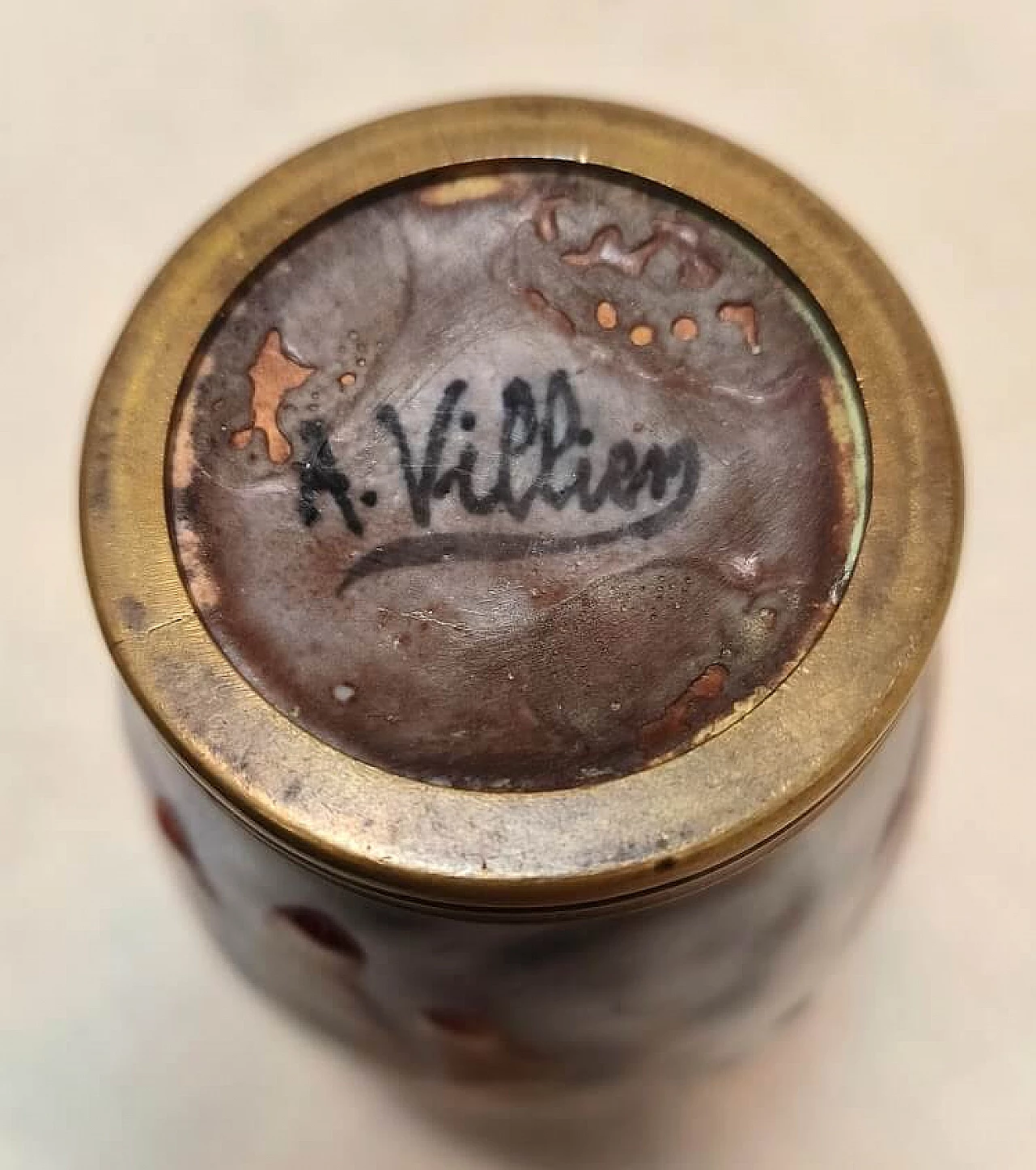
Oggi le opere di Villien sono molto apprezzate dai collezionisti di Art Objects francesi perché rappresentano una via di mezzo tra l'artigianato d'arte e la scultura da tavolo. La sua firma (solitamente incisa sul fondo "A. Villien") è garanzia di un'esecuzione manuale di alta qualità, lontana dalle produzioni industriali di massa.
Questo vasetto è un oggetto "tattile" oltre che visivo. La combinazione di rame e bronzo lo rende pesante e solido nonostante le dimensioni contenute. In un mercato di modernariato, i pezzi smaltati di Villien sono i più ricercati, poiché lo smalto protegge il rame dall'ossidazione e mantiene inalterata la lucentezza del colore originale per decenni.
__ Enamelled Copper and Bronze Vase – André Villien
Production: Paris, France - Period: 1930s
Materials: Embossed copper, fired enamel, bronze or cast brass appliques. This vase is a splendid testament to André Villien's masterful craftsmanship in combining different metals and glassmaking techniques. Aesthetics and Form: The copper body features an organic, typically bulbous shape, decorated with fired enamel in shades of green and brown, with nuances that recall the natural oxidation of the metal or the elements of the earth. The enameled surface has a rich, almost grainy texture, lending visual depth to the object. Appliqués: The piece is embellished with bronze appliques depicting naturalistic motifs (such as branches, leaves, or pine cones), which often serve as a base or as relief decorations along the body of the vase. This contrast between the dark, textured base and the brilliance of the relief details is the designer's stylistic signature. Style: Although produced in the 1930s, the vase retains an echo of the naturalistic sensibility of Art Nouveau, but the solidity of its forms and the rigorous use of materials fully reflect the Art Deco taste of the era.
Brief Biography: André Villien
André Villien was a renowned dinandier (copper and brass worker) and decorator active in Paris between the early 20th century and the 1930s. Workshop: His Parisian atelier was renowned for the production of metal art objects: vases, lamps, umbrella stands, and centerpieces. Villien became renowned for his ability to ennoble less precious metals like copper through the skillful use of repoussé, chasing, and, above all, enamel.
Its distinctive feature lies in the marriage of a copper base (often treated with iridescent vitreous enamels) with cast bronze applications reminiscent of the plant world (mistletoe, pine, olive branches).
Today, Villien's works are highly prized by collectors of French Art Objects because they represent a cross between fine craftsmanship and tabletop sculpture. His signature (usually engraved "A. Villien" on the bottom) is a guarantee of high-quality craftsmanship, far removed from industrial mass production.
This vase is a tactile as well as visual object. The combination of copper and bronze makes it heavy and solid despite its compact size. In the modern antiques market, Villien's enameled pieces are the most sought-after, as the enamel protects the copper from oxidation and maintains the original color's luster for decades.


.png)
 Venditore SILVER a FERRARA, Italy