Scultura Astratta Spazialista – Tensiostruttura - Anno: 1969
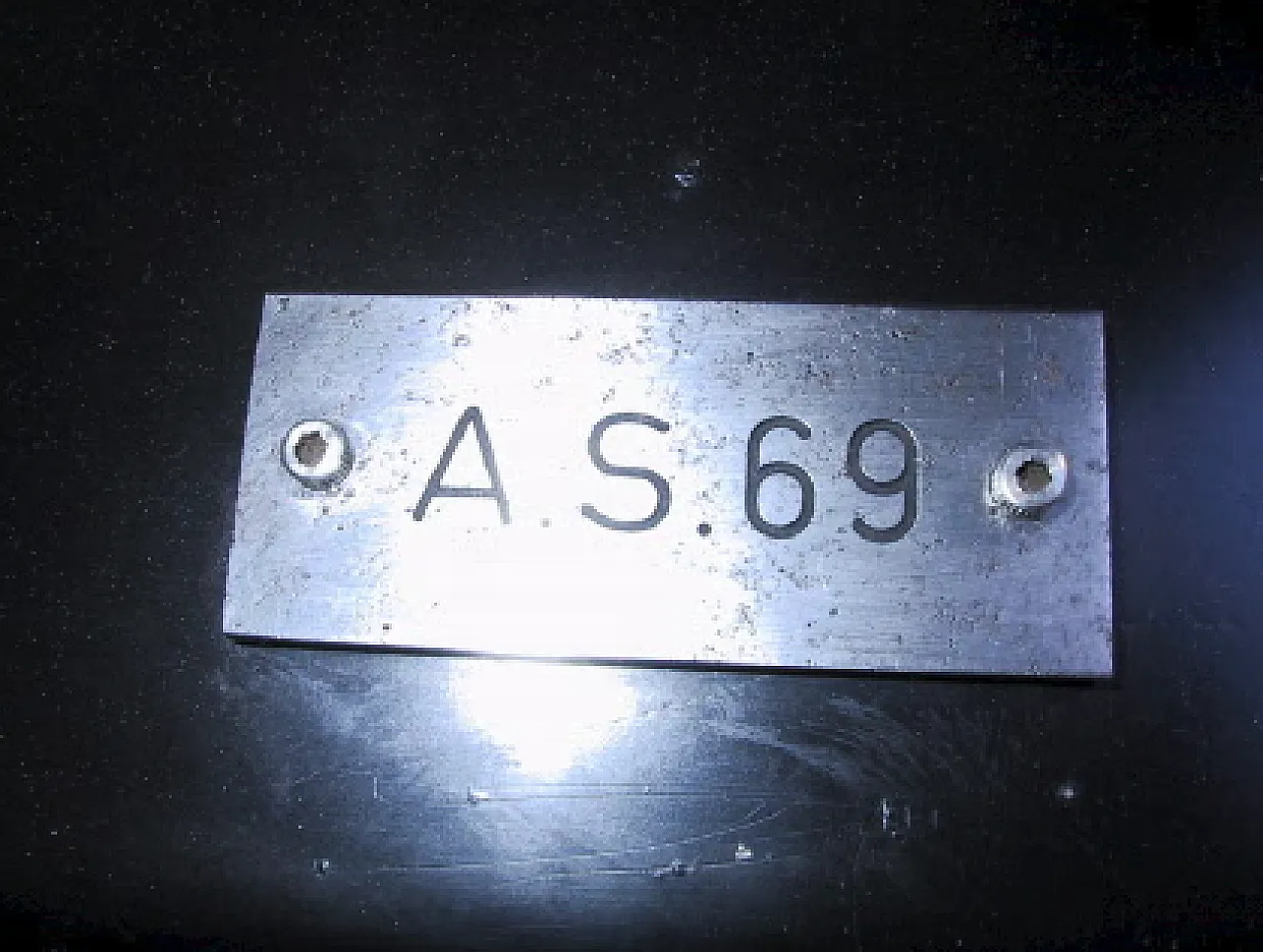
Acciaio elastico e base materica - Firma: Siglata "A.S." sulla base
Autore: Da identificare
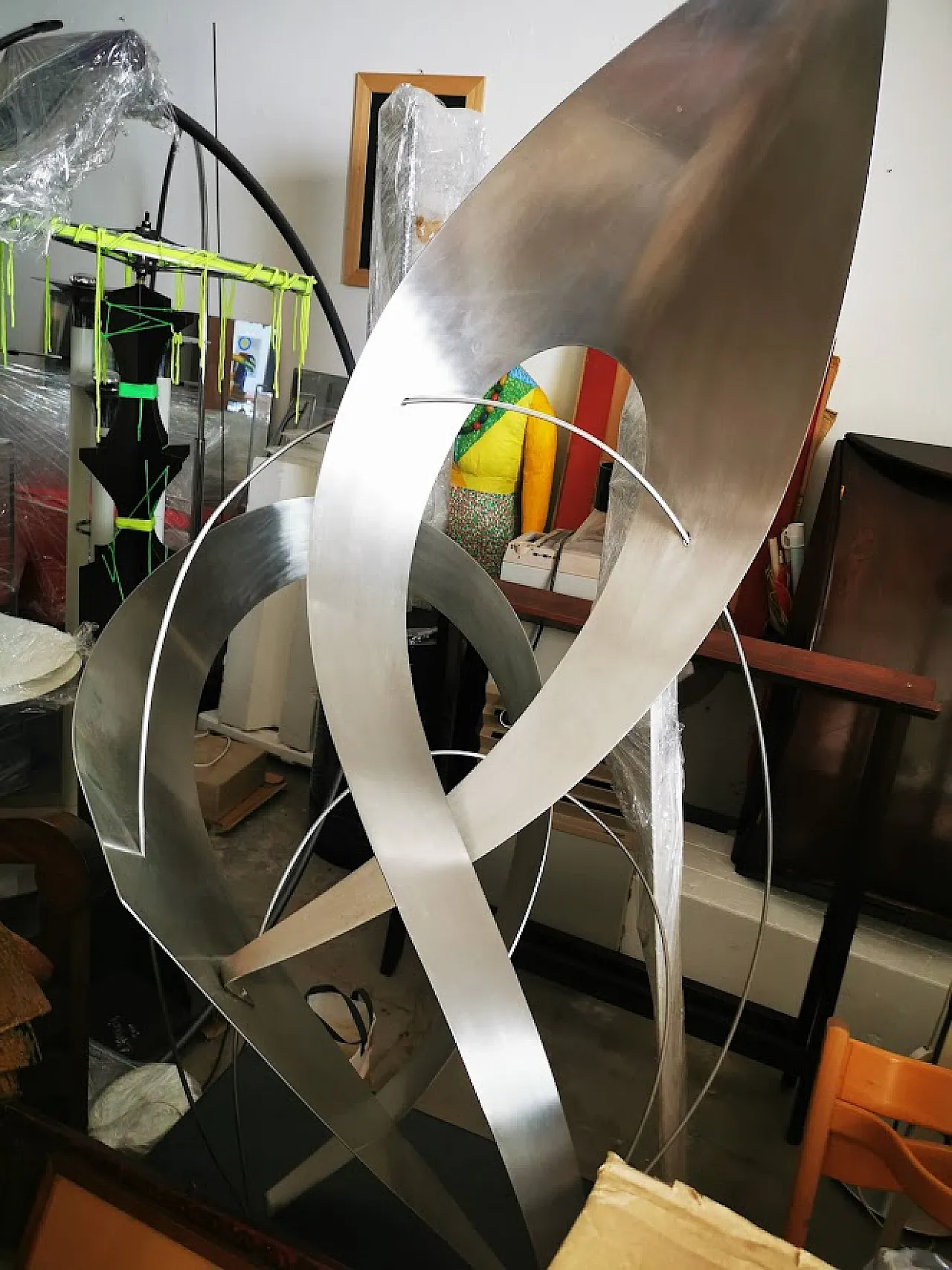
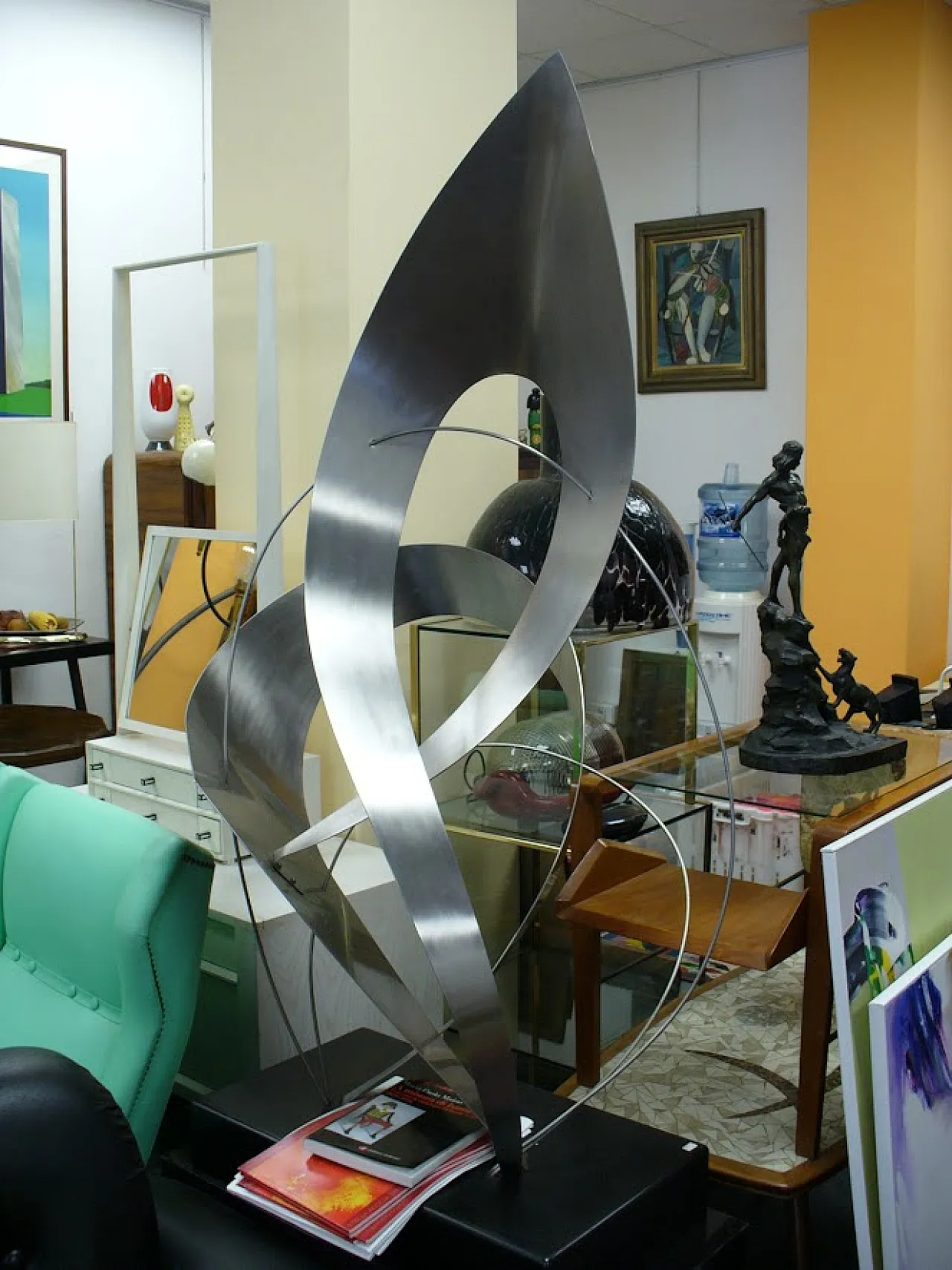
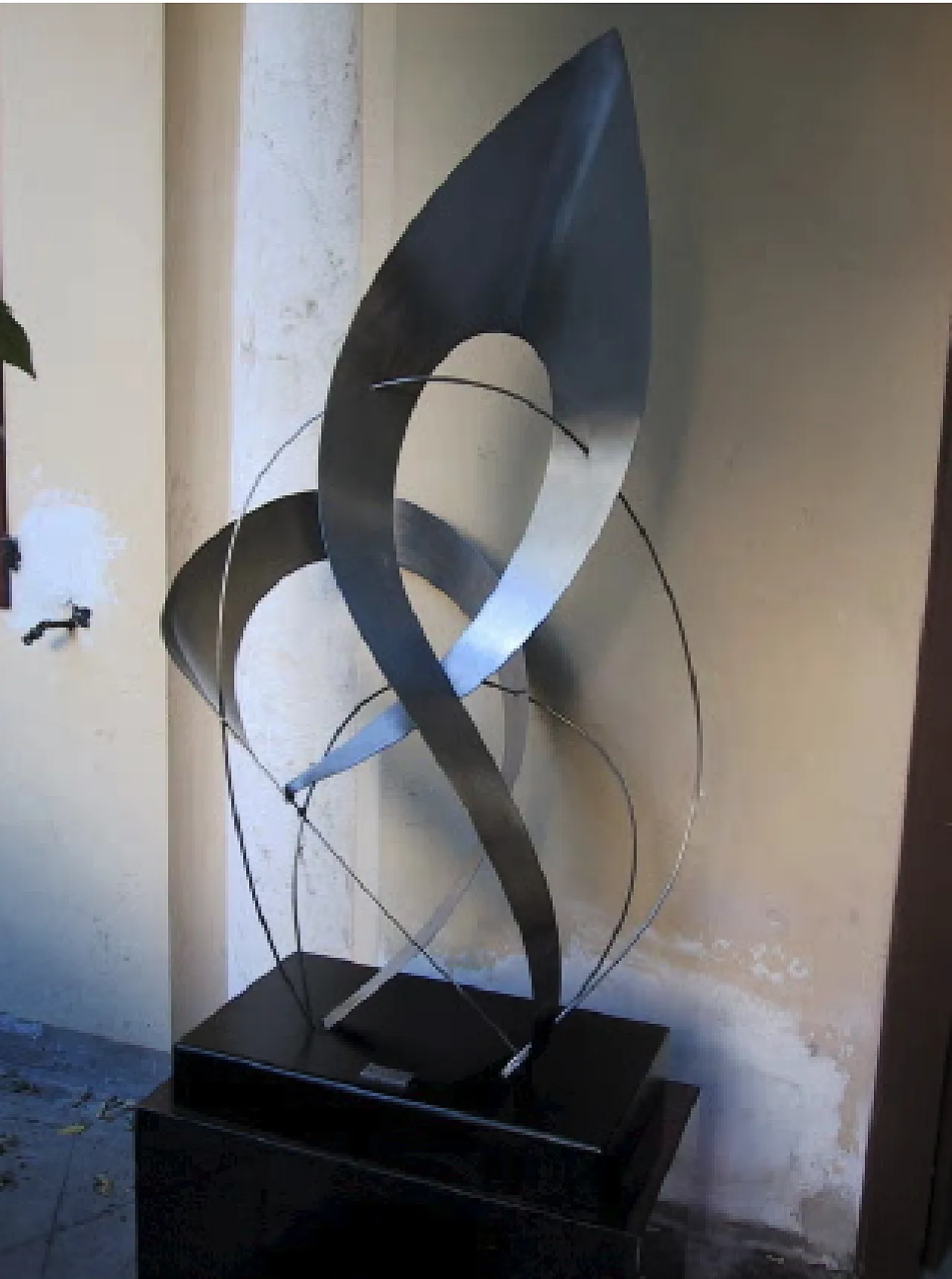
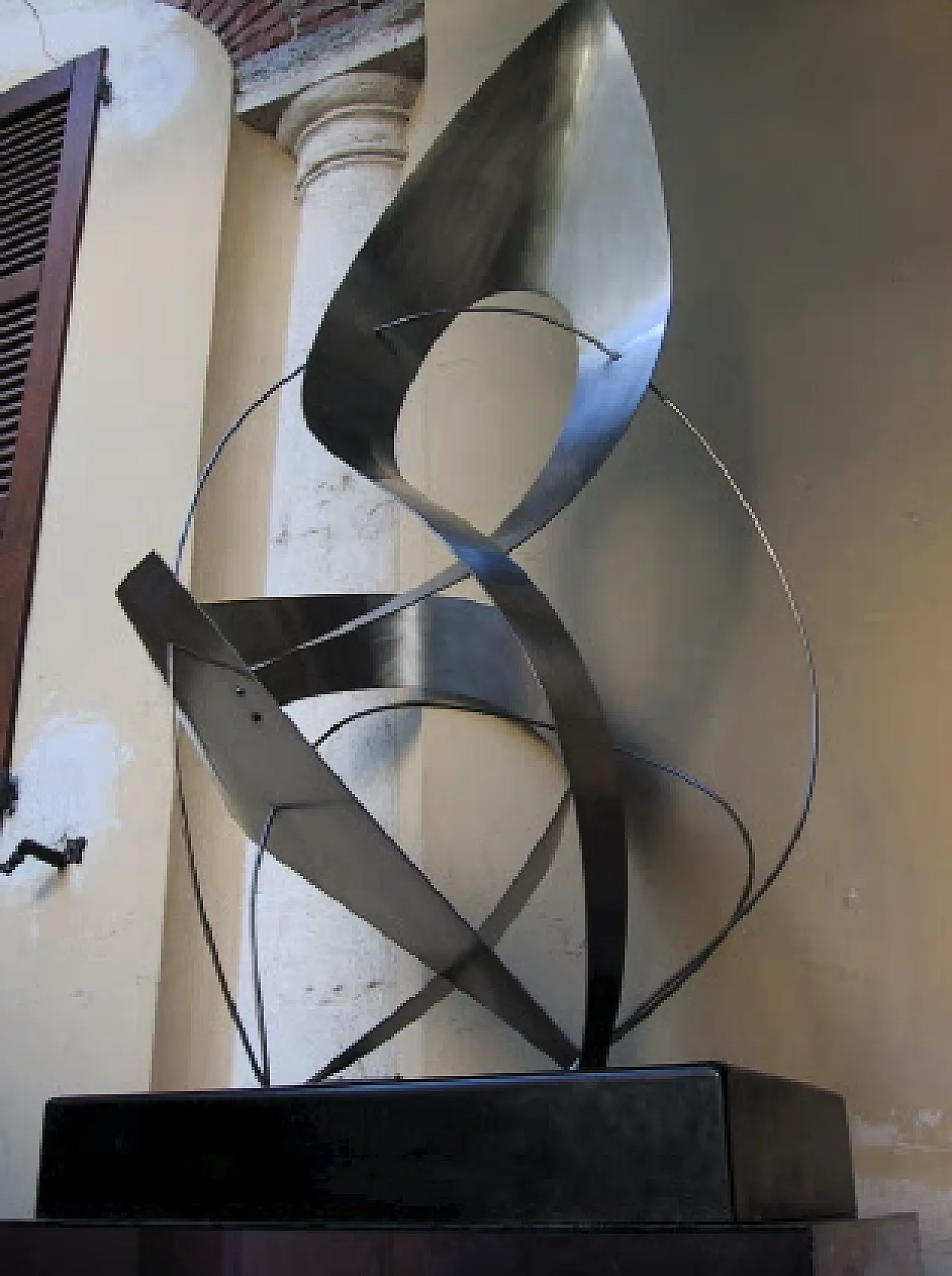
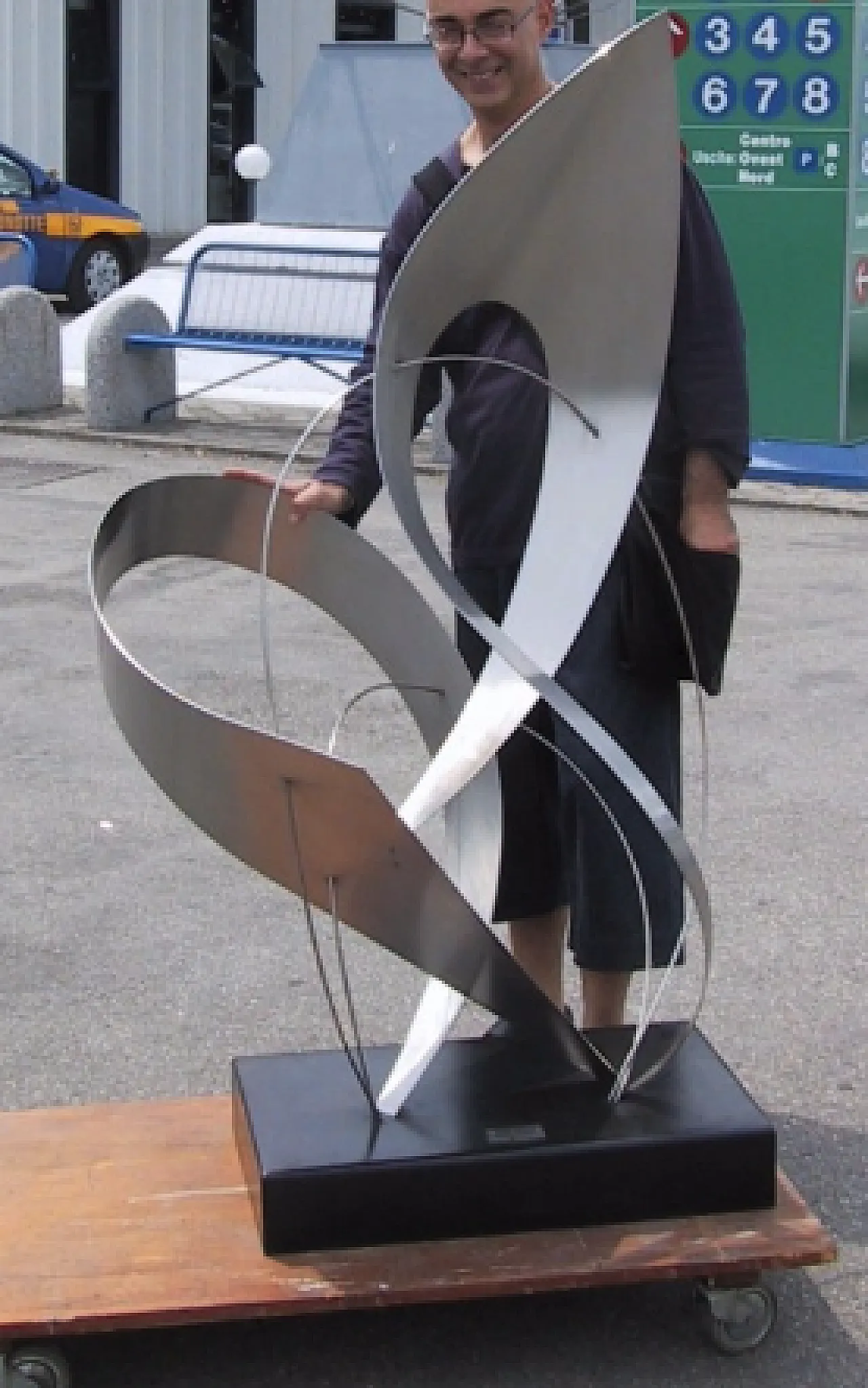
Importante scultura spazialista del 1969, esempio magistrale di tensiostruttura dinamica. L’opera si sviluppa attraverso l’uso di sottili lamelle in acciaio elastico che, piegate e messe in tensione, disegnano nello spazio una serie di archi e parabole intrecciate.
Concetto Spaziale: La scultura incarna la ricerca tipica di fine anni '60 sulla conquista dello spazio e sulla leggerezza. Le linee metalliche non occupano semplicemente il vuoto, ma lo "tagliano", creando un volume etereo e vibrante che cambia aspetto a seconda dell'angolo di osservazione.
Contrasto Materico: Di particolare interesse è il contrasto tra la base, di aspetto solido e materico (quasi brutale nella sua essenzialità), e l’estrema flessibilità e lucentezza dell'acciaio superiore. Questo binomio enfatizza la tensione tra forza di gravità e spinta ascensionale.
L'opera richiama le sperimentazioni di maestri del costruttivismo e dello spazialismo cinetico. La precisione tecnica nel montaggio dei filamenti d'acciaio suggerisce una mano esperta, vicina agli ambienti della ricerca strutturalista europea.
La datazione al 1969 colloca l’opera in un periodo di grande fermento creativo, a cavallo tra l'Arte Programmata e il Minimalismo. La firma "A.S." costituisce un importante punto di partenza per una ricerca attributiva che potrebbe accrescere significativamente il valore del pezzo, riconducendolo potenzialmente a figure della scena scultorea milanese attive in quegli anni.
Un pezzo di grande eleganza formale, ideale per collezioni focalizzate sull'astrazione geometrica e sulla scultura metallica del XX secolo.
- Abstract Spatialist Sculpture – Tensiostructure - Year: 1969
Spring Steel and Material Base - Signature: Initialed "A.S." on the base
Author: To be identified
An important Spatialist sculpture from 1969, a masterful example of dynamic tensile structure. The work is developed through the use of thin strips of spring steel that, when bent and tensioned, create a series of intertwined arches and parabolas in space.
Spatial Concept: The sculpture embodies the typical late 1960s exploration of the conquest of space and lightness. The metal lines do not simply occupy the void, but "cut" it, creating an ethereal and vibrant volume that changes appearance depending on the angle of observation.
Material Contrast: Of particular interest is the contrast between the base, solid and material in appearance (almost brutal in its essentiality), and the extreme flexibility and lustre of the upper steel. This pairing emphasizes the tension between gravitational force and upward thrust.
The work recalls the experiments of masters of Constructivism and Kinetic Spatialism. The technical precision in assembling the steel filaments suggests an expert hand, closely linked to the circles of European structuralist research.
The 1969 date places the work in a period of great creative ferment, straddling Programmed Art and Minimalism. The signature "A.S." constitutes an important starting point for attribution research that could significantly increase the piece's value, potentially linking it to figures in the Milanese sculpture scene active during those years.
A piece of great formal elegance, ideal for collections focused on geometric abstraction and 20th-century metal sculpture.



.png)




 Venditore SILVER a Ferrara, Italy