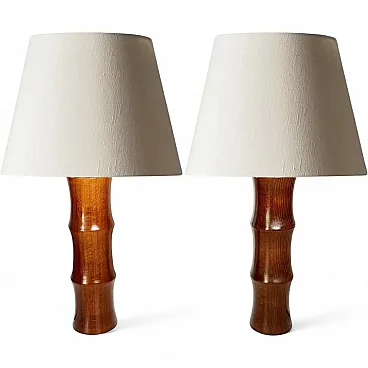
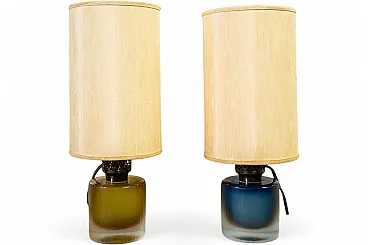
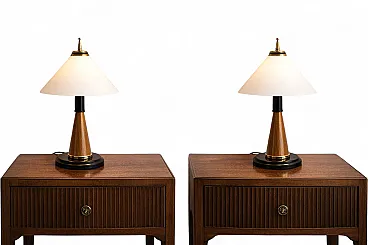
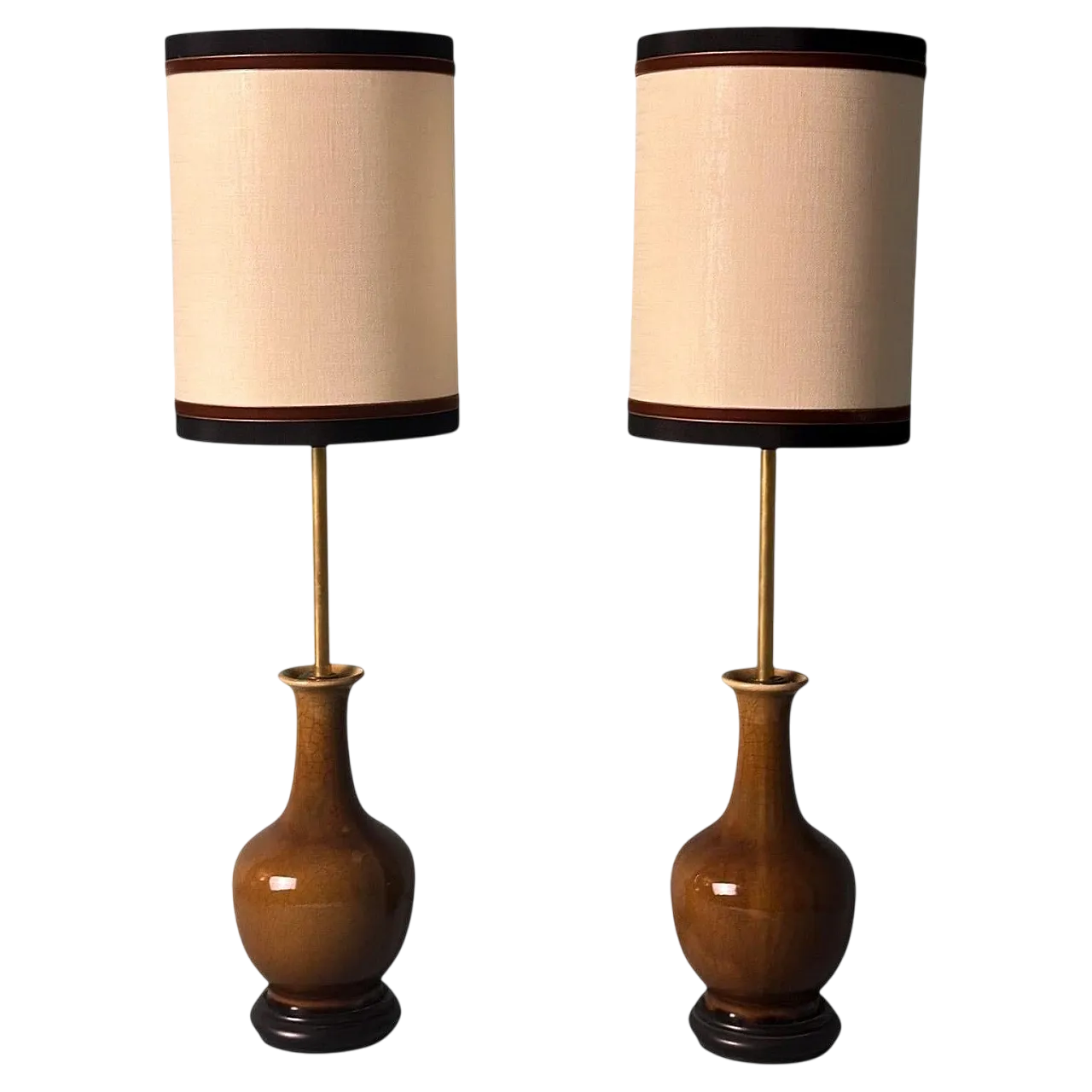
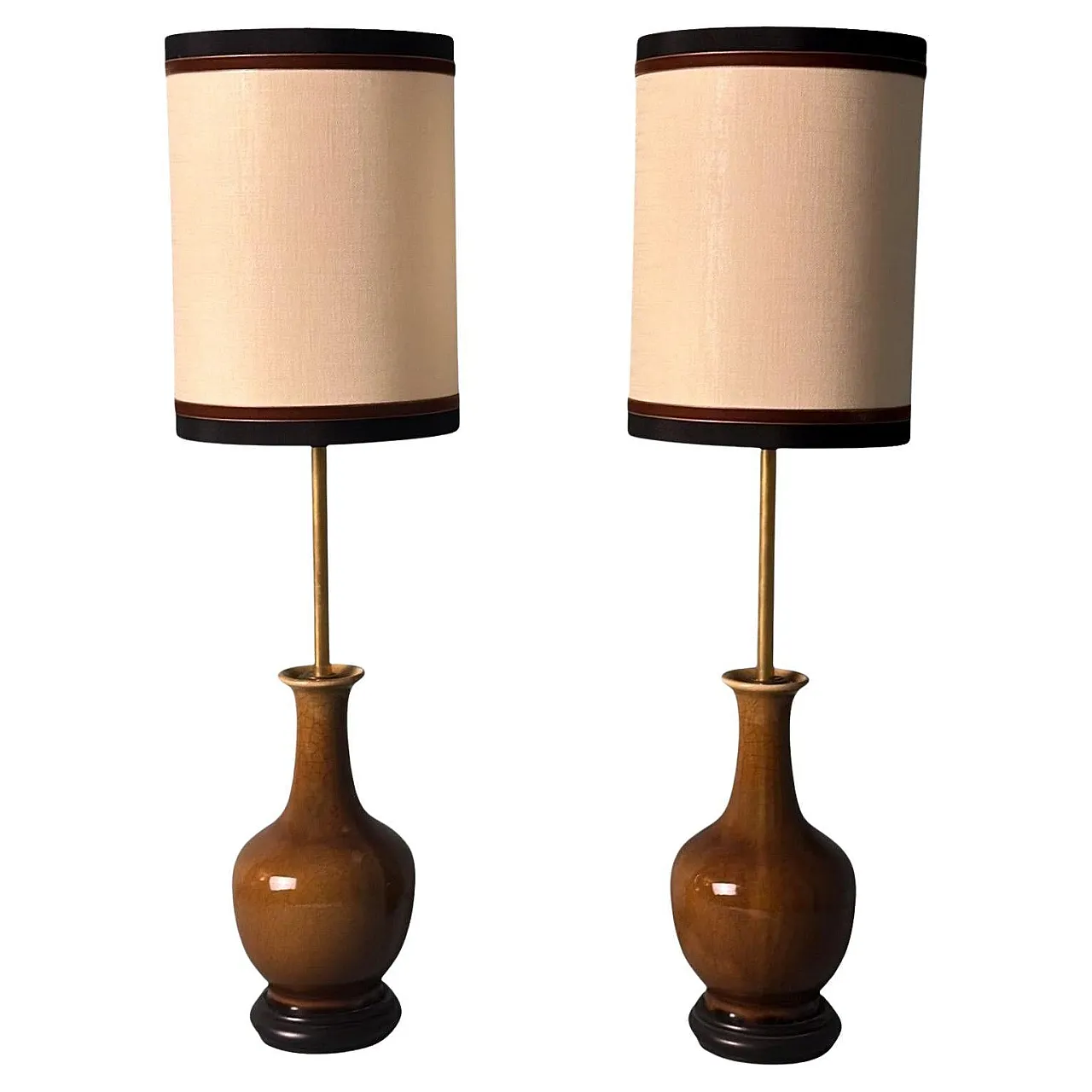
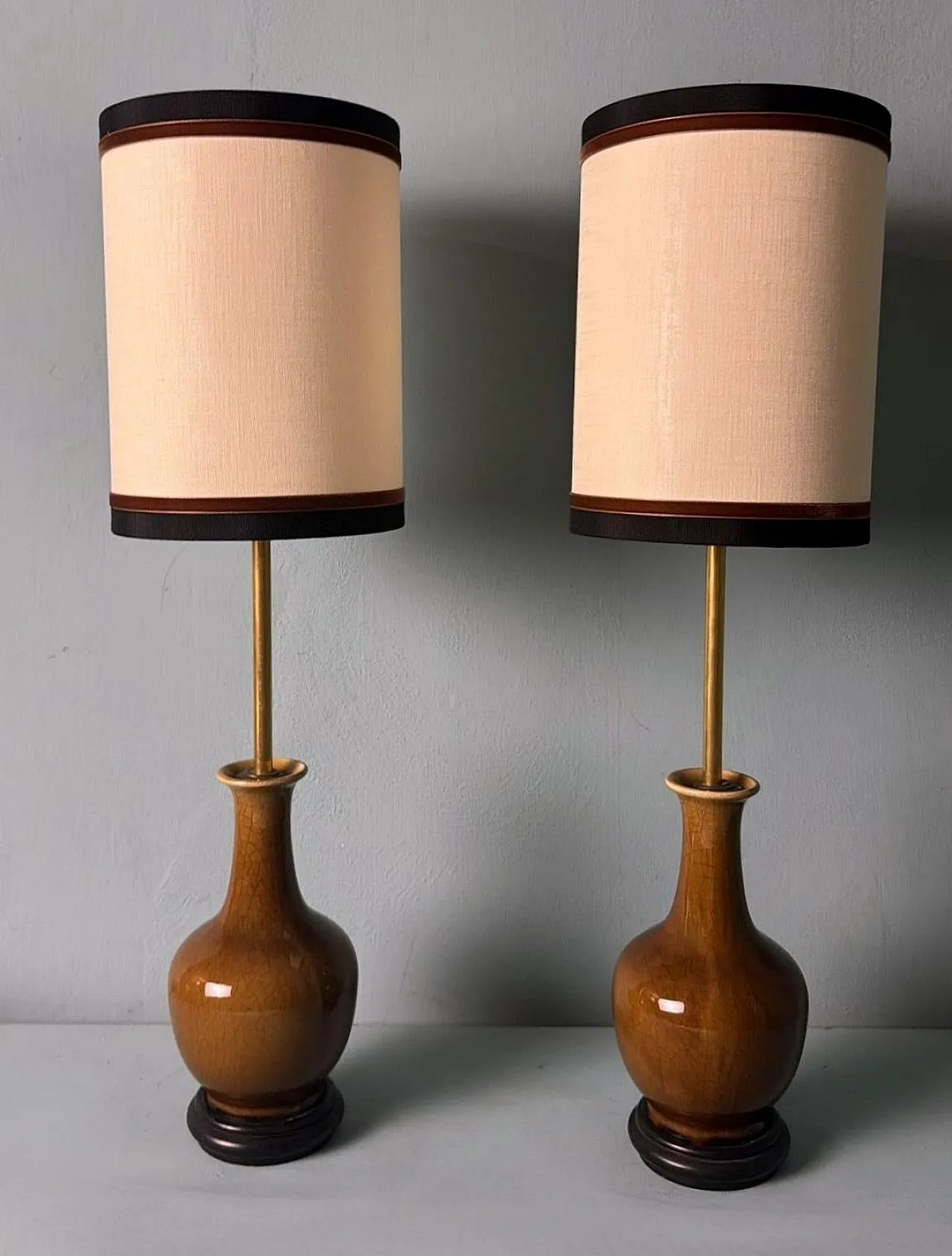
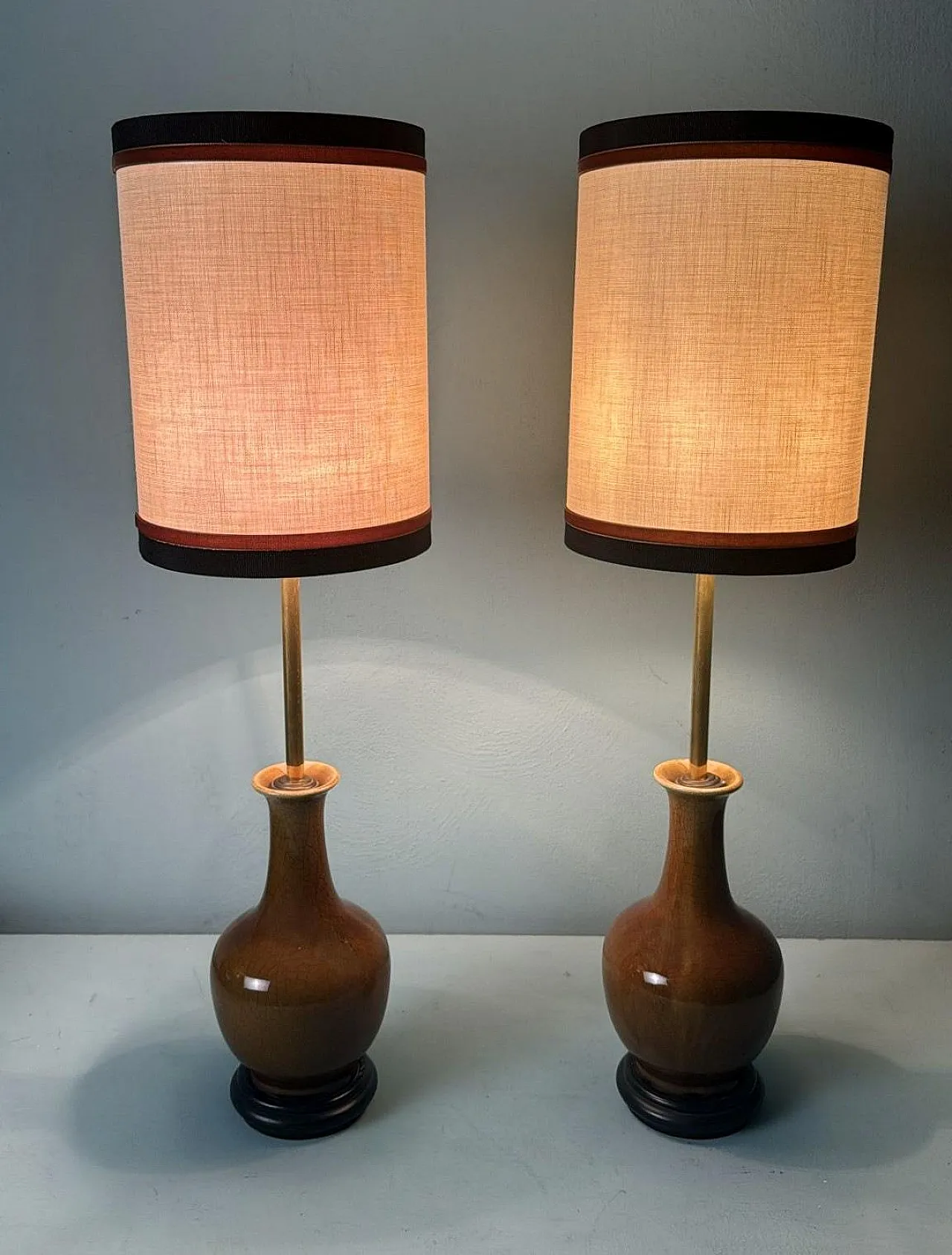
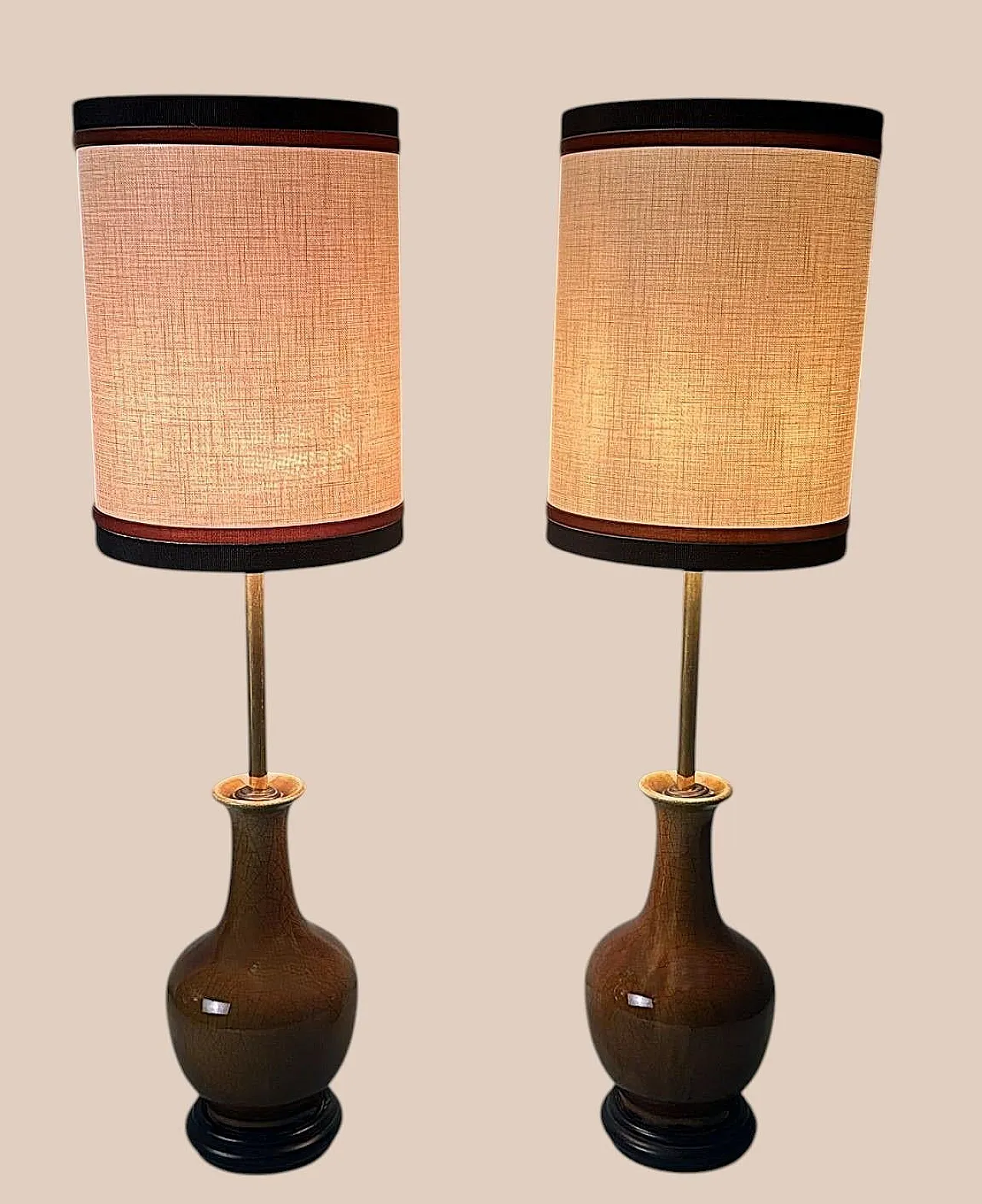
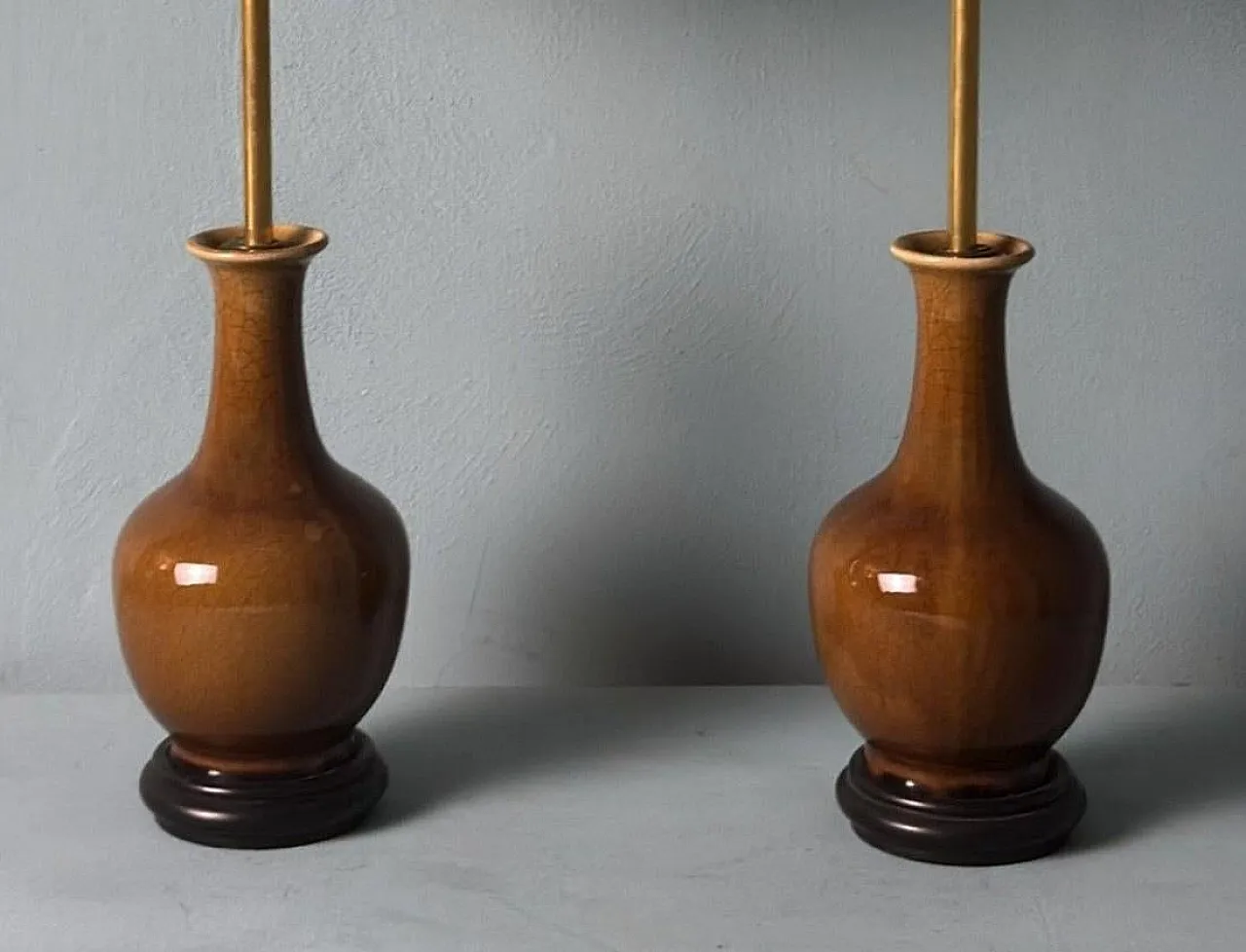
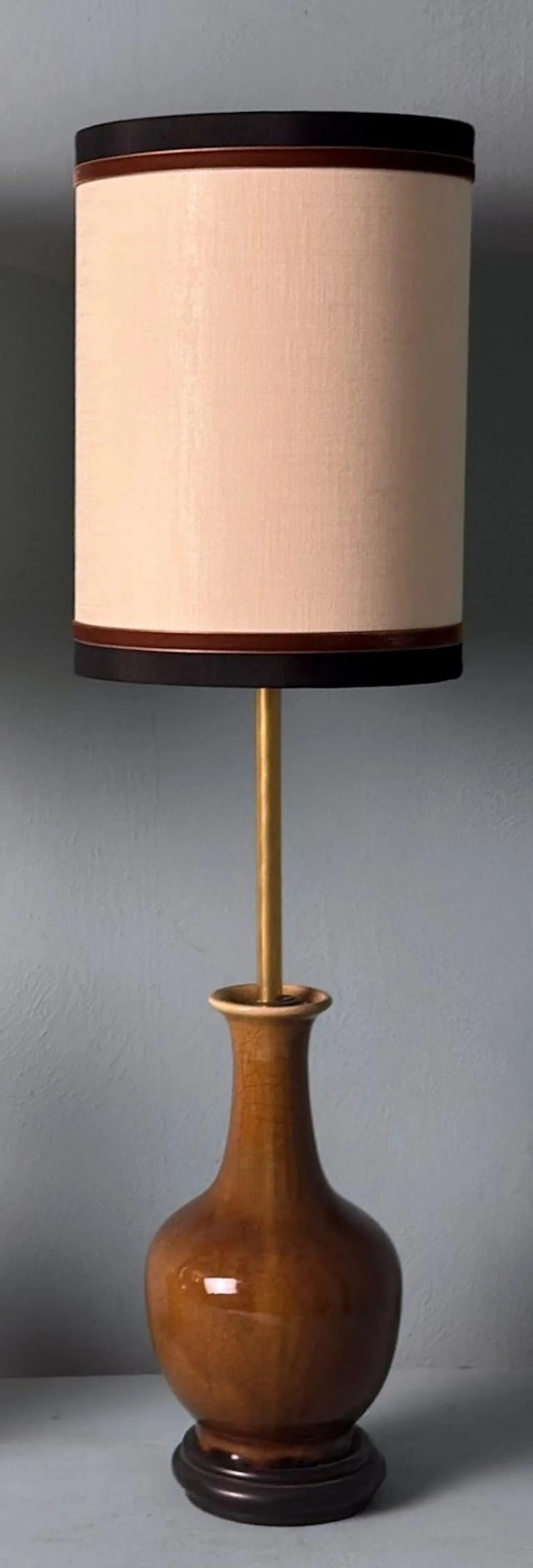
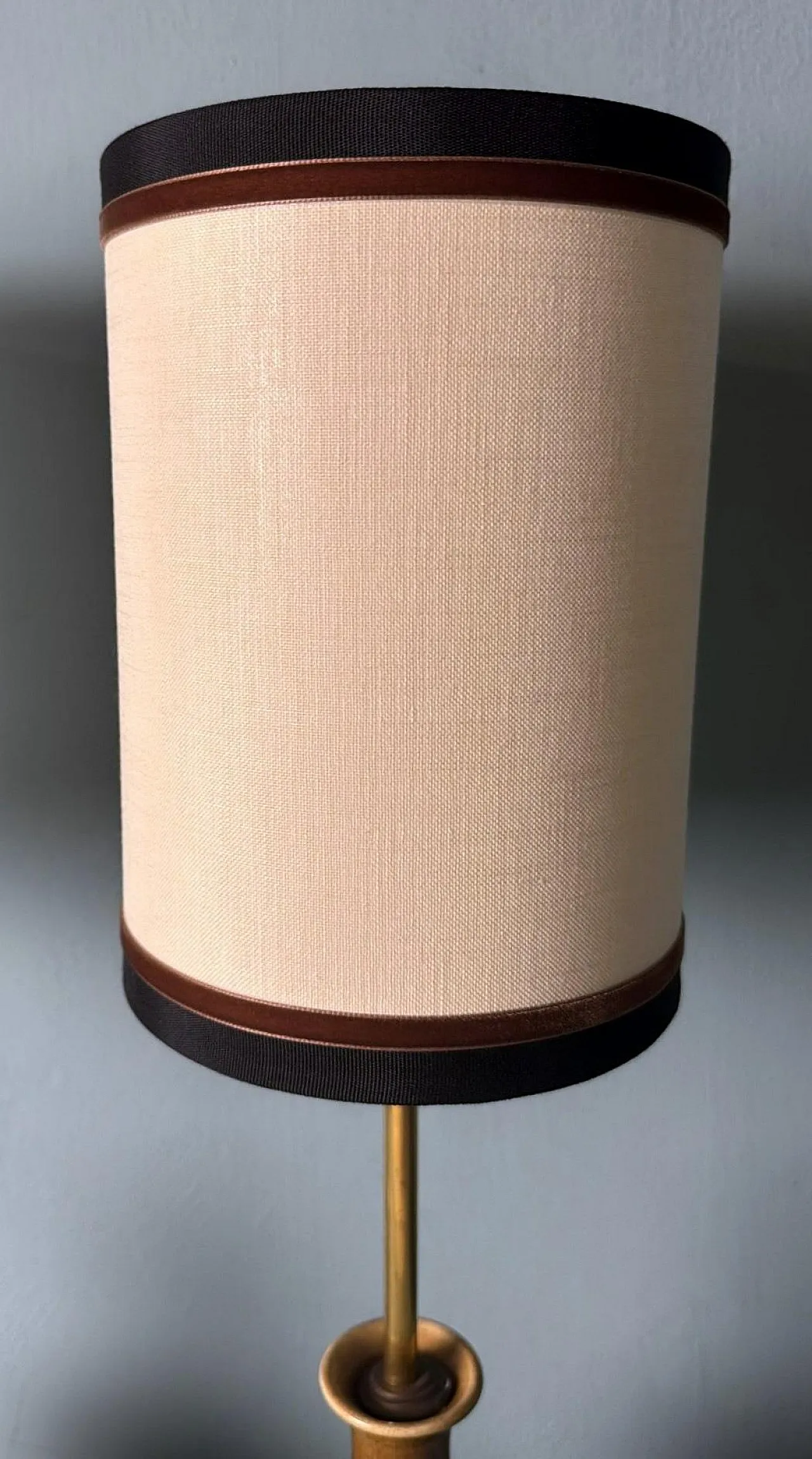
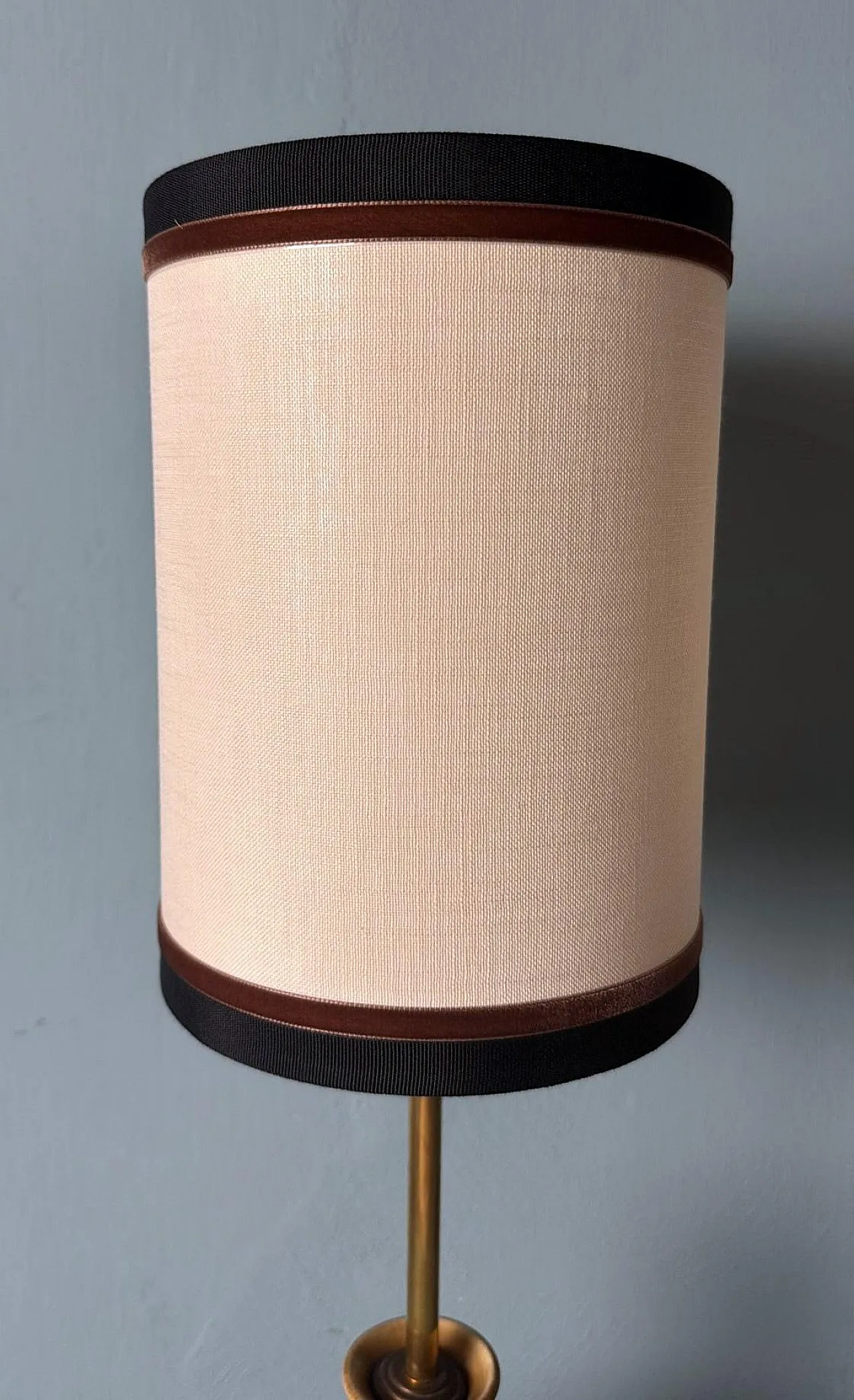
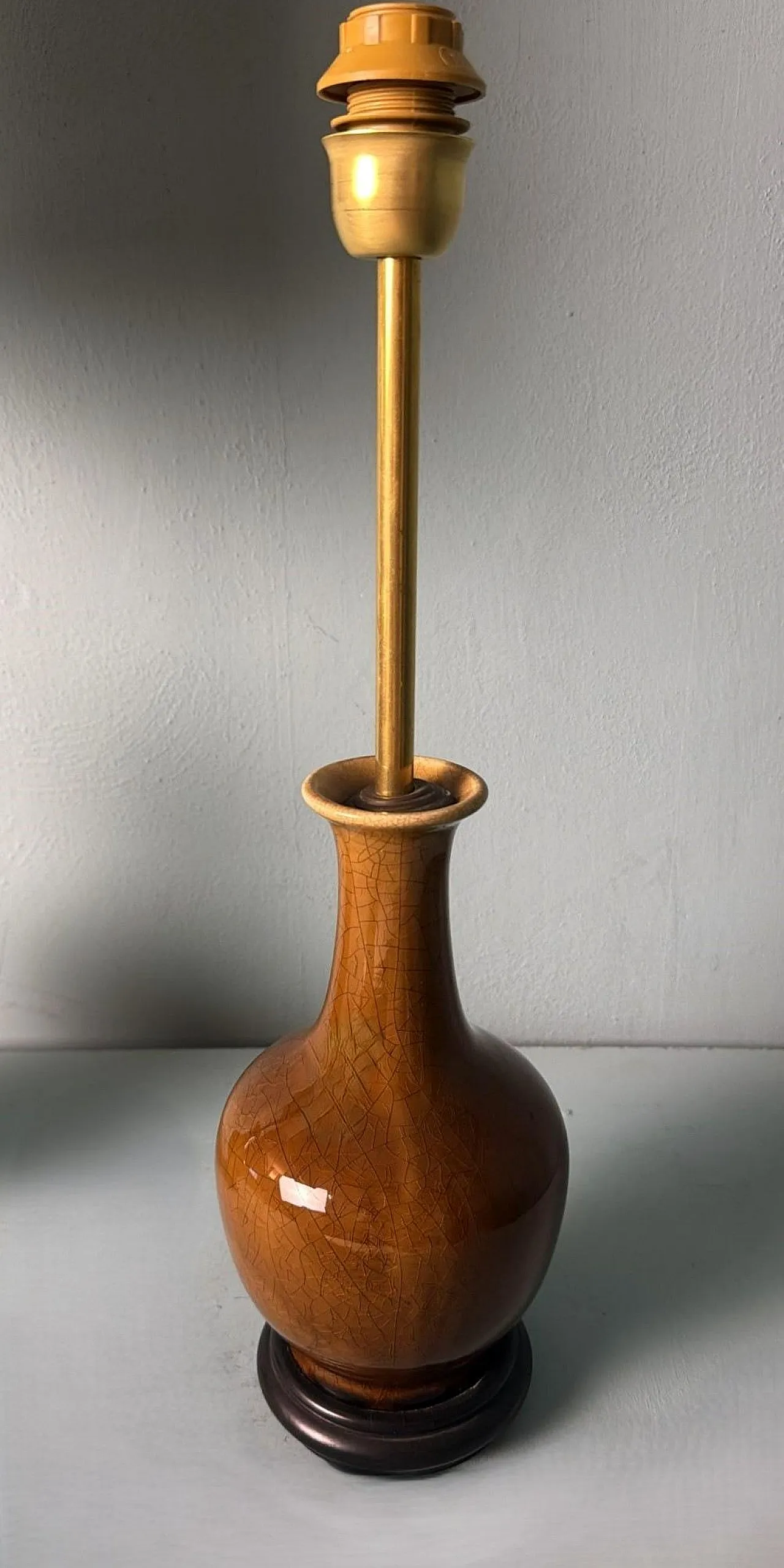
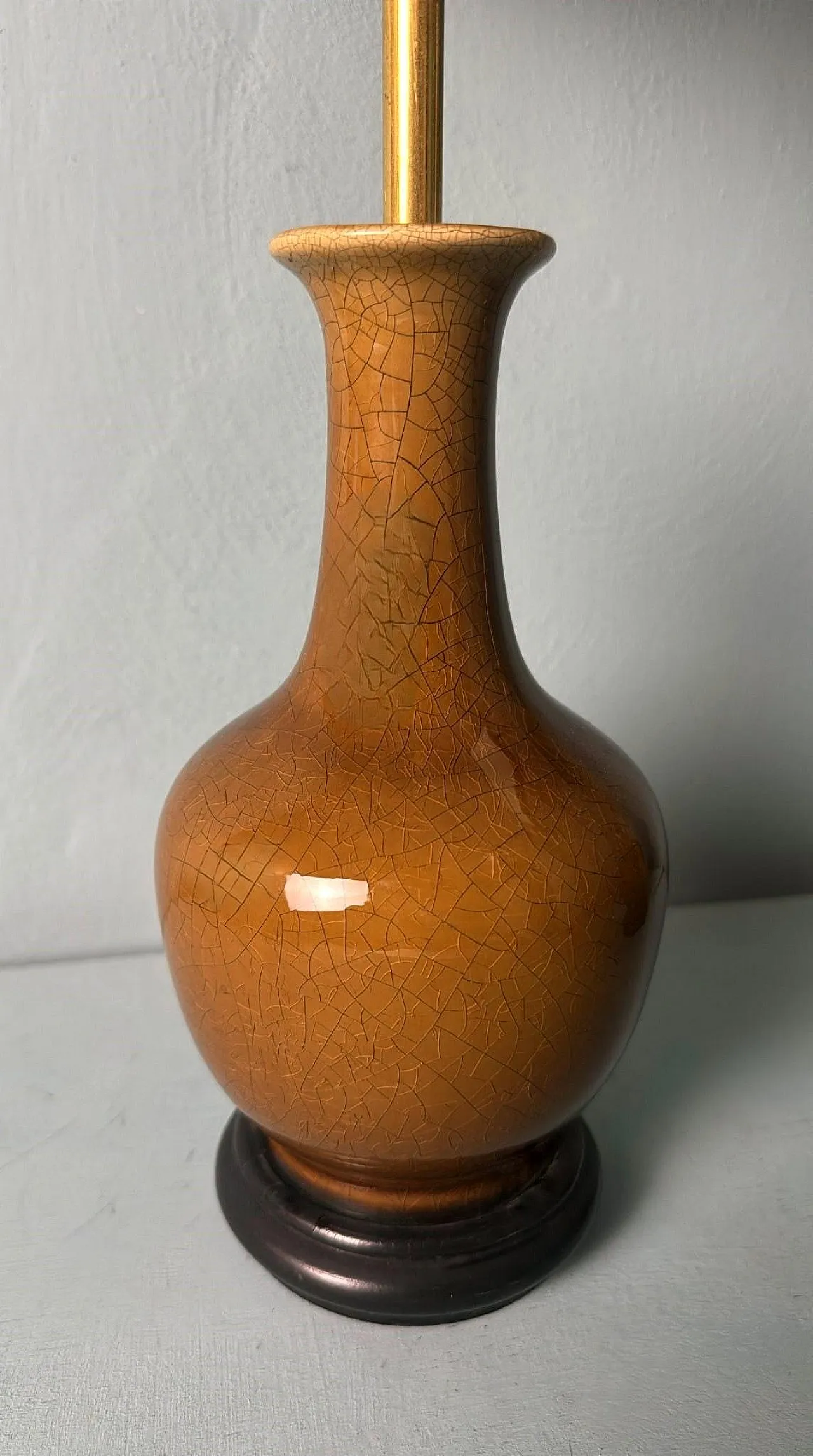
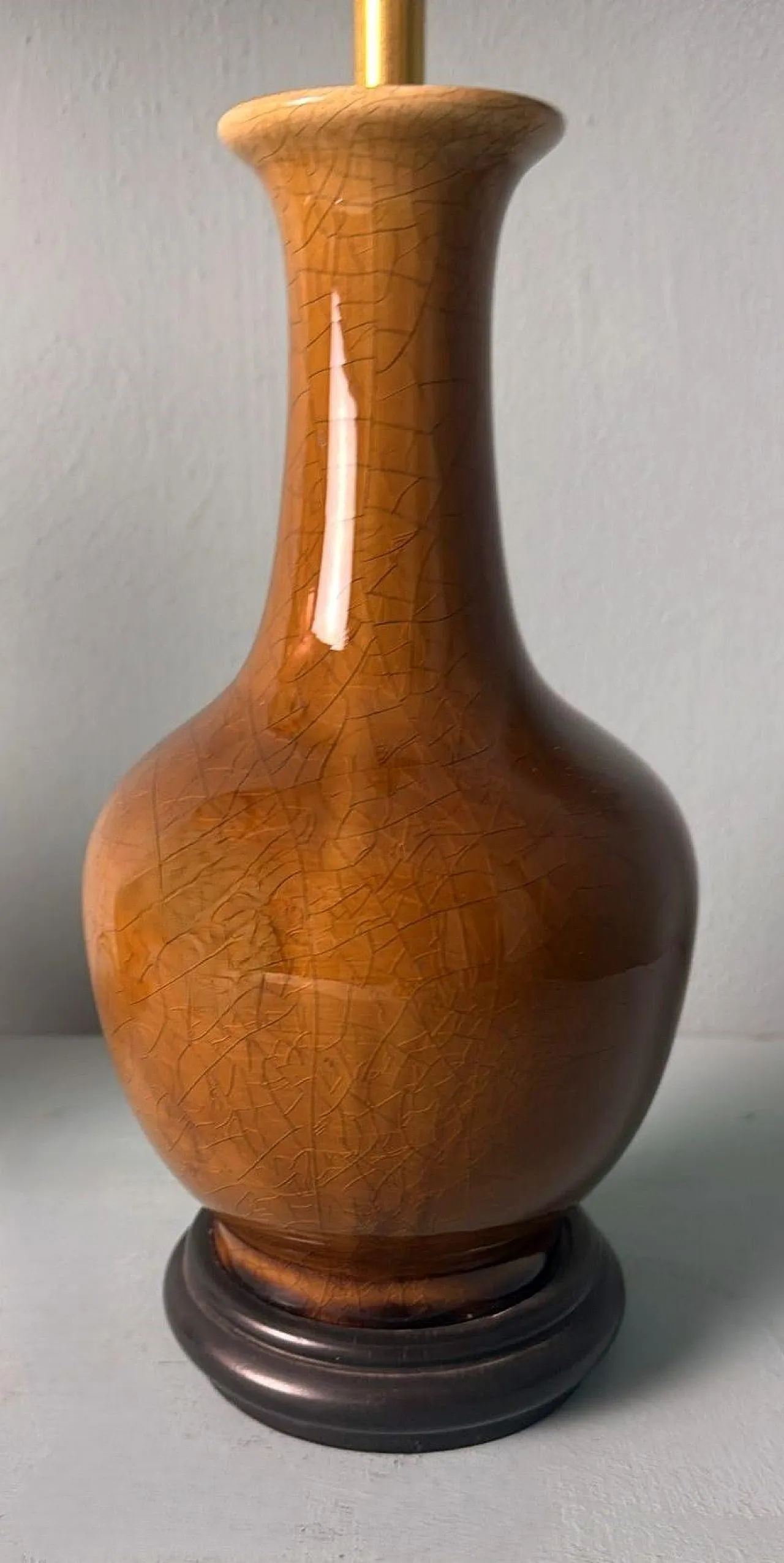
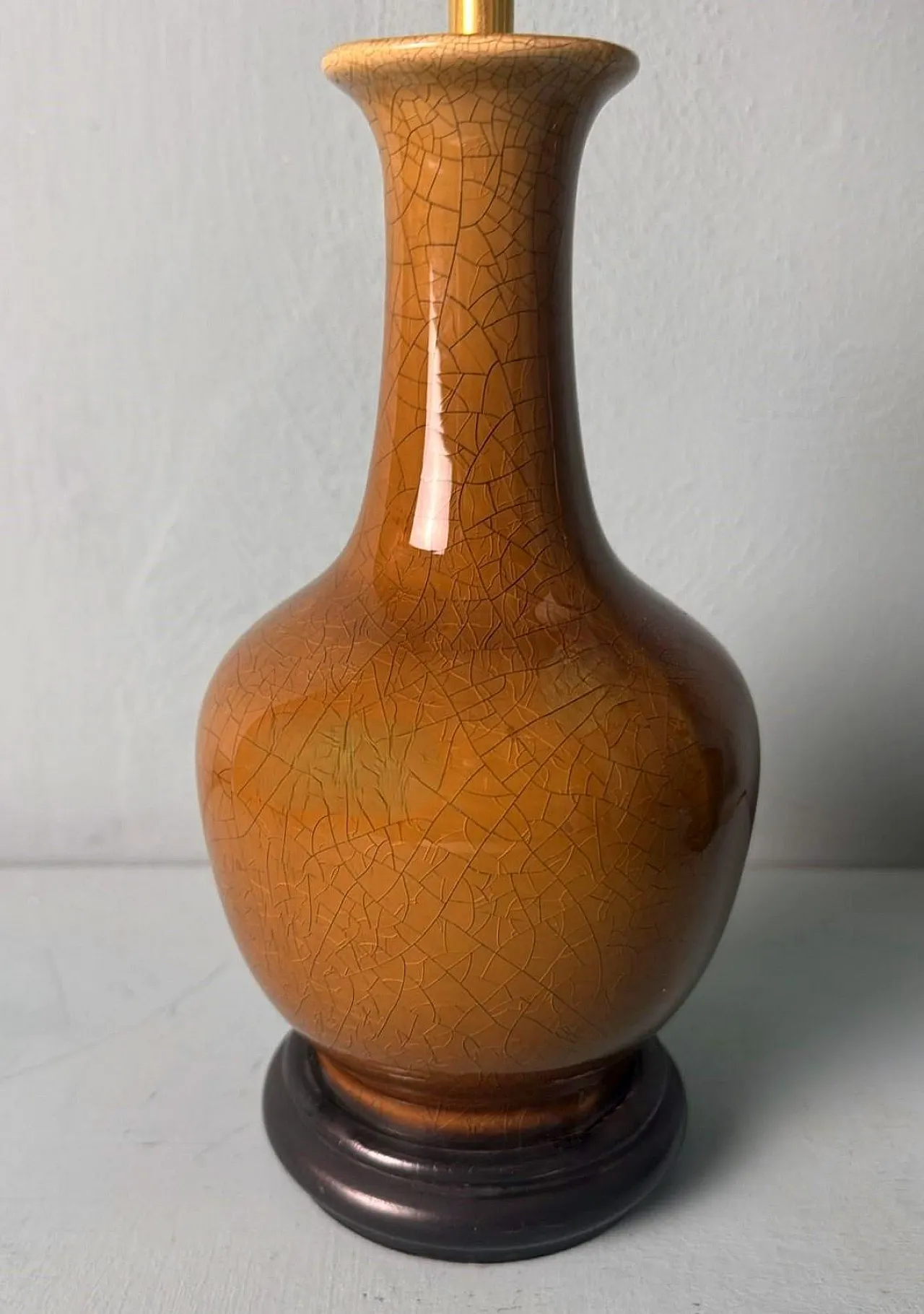
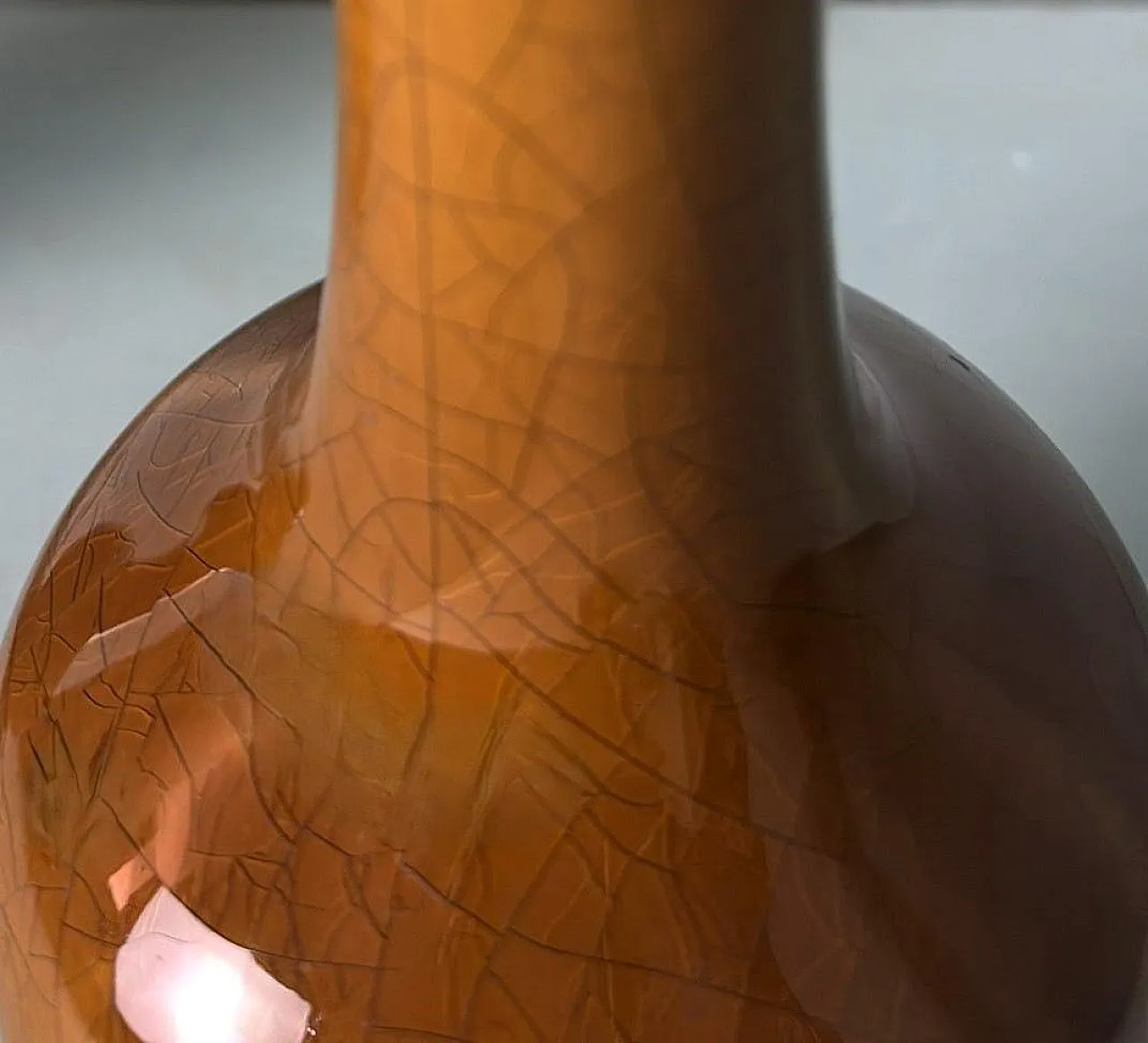
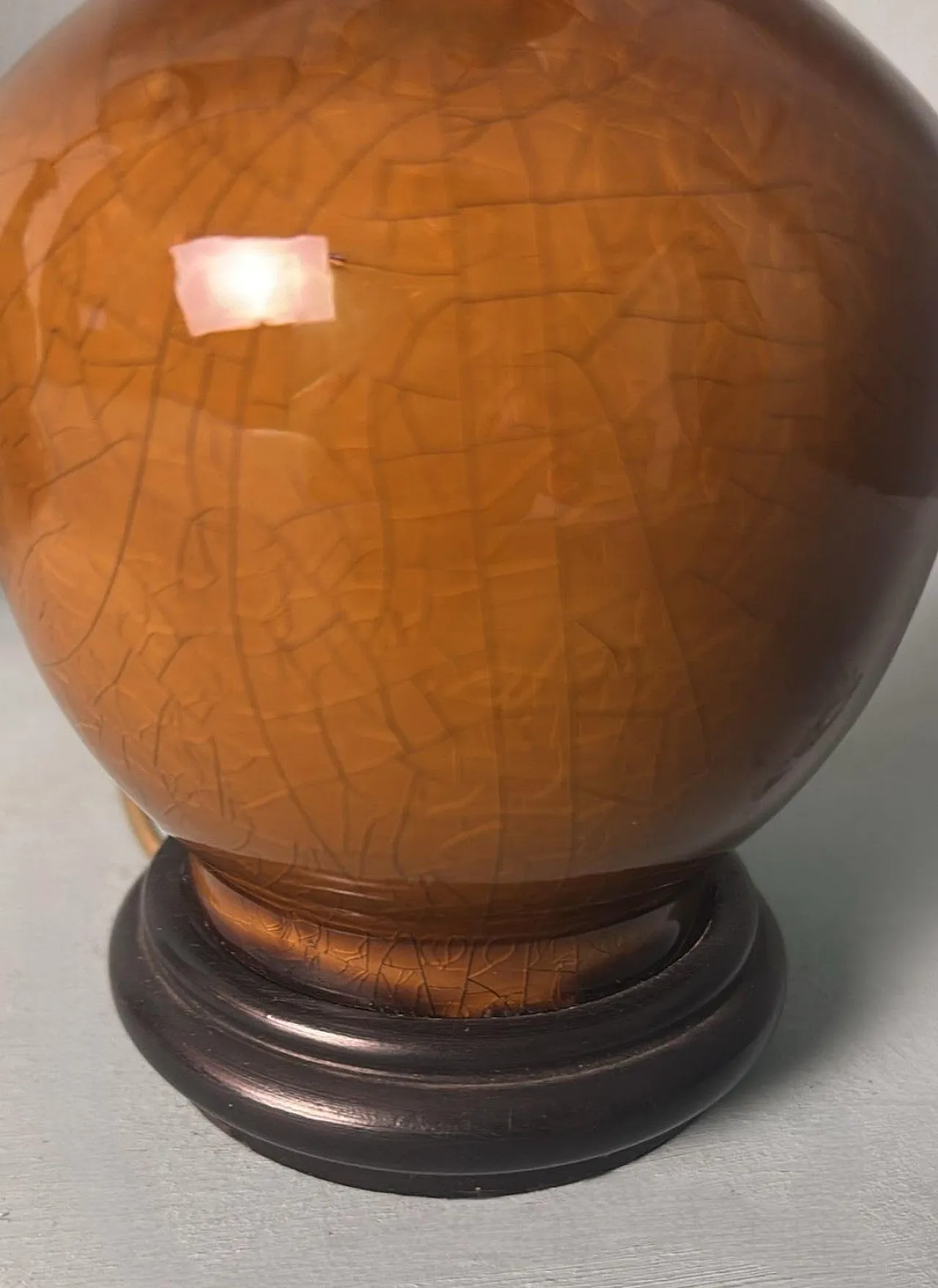
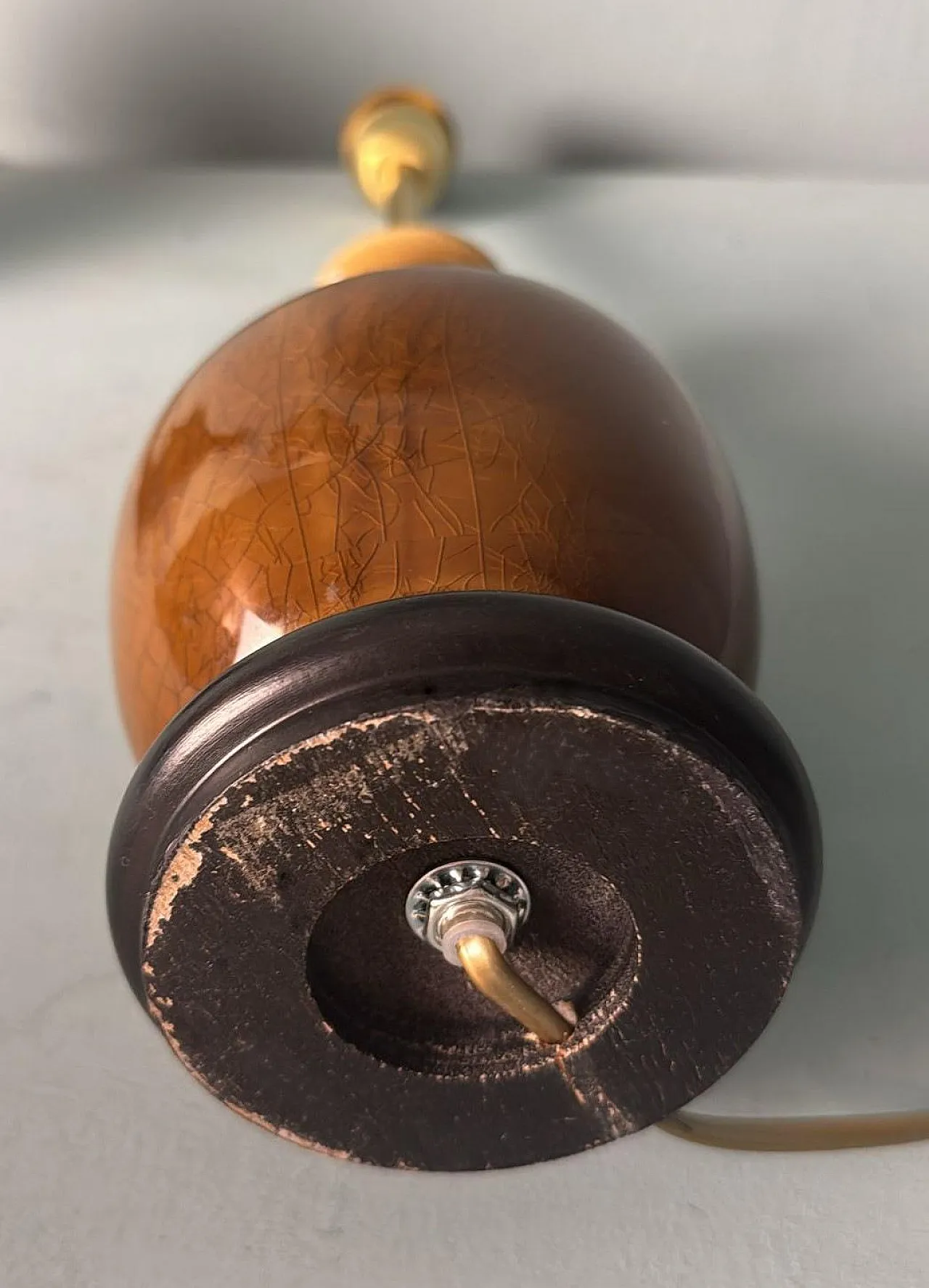
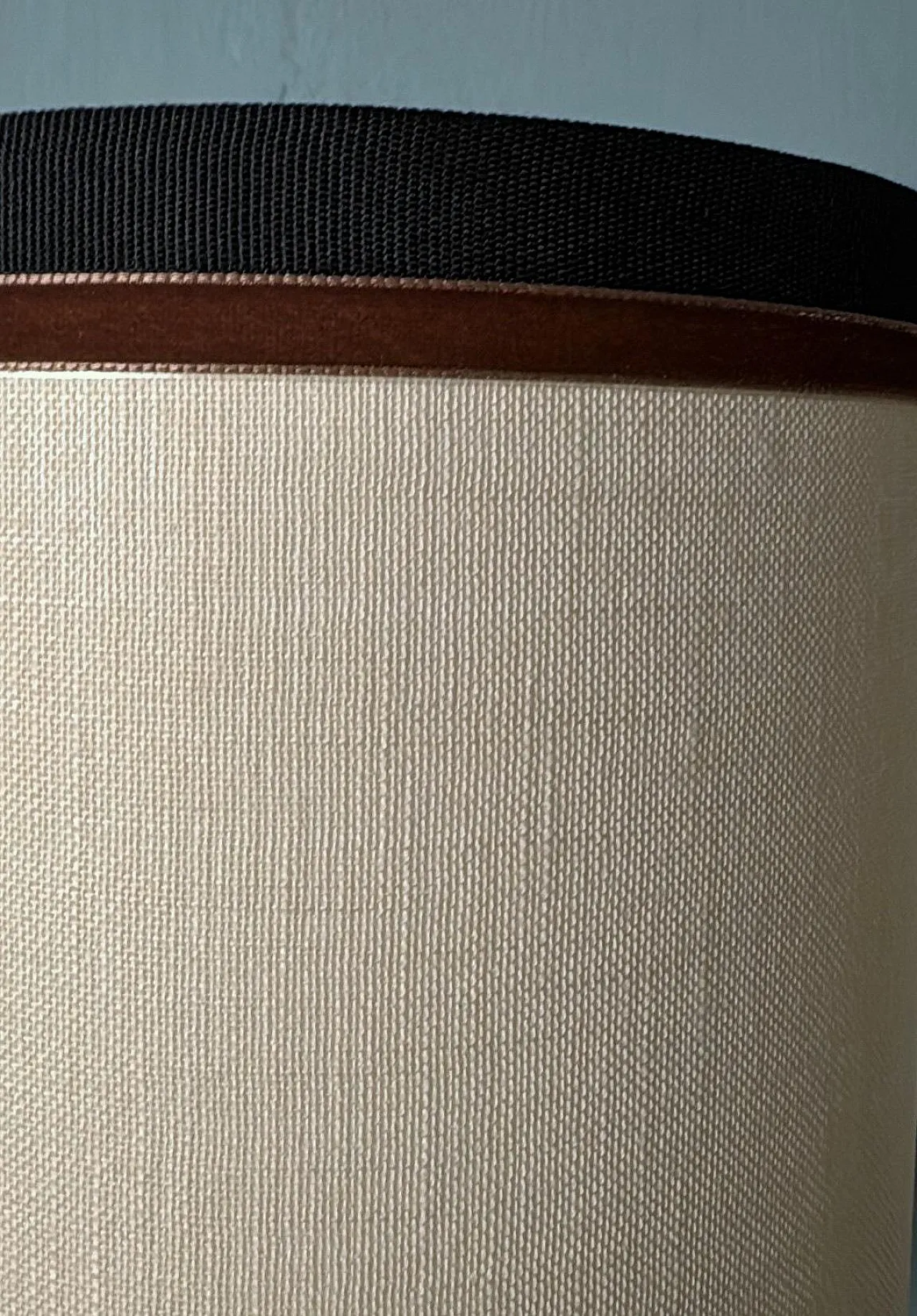
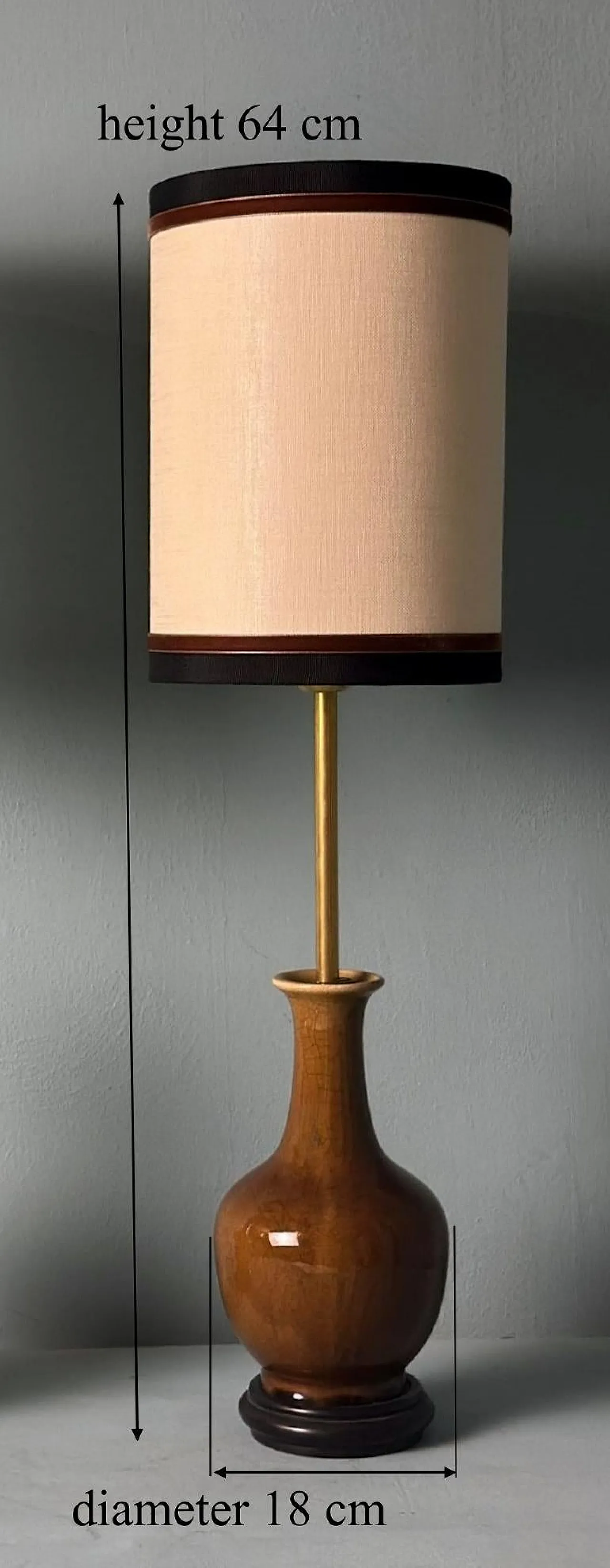
This exceptional pair of table lamps was created from two Chinese porcelain vases that were later converted into lamps. The electrical components were carefully installed by covering the vase openings with small round brass plates, from which a slender stem extends to support the light socket. Crafted from high-quality Chinese porcelain, the vases rest on elegant black wooden bases. Their simple yet refined and sophisticated shape is enhanced by the glossy brown crackle glaze, lending them a graceful and harmonious appearance. This combination of elements reflects a thoughtful and intelligent aesthetic vision, where craftsmanship, elegance, and meticulous detailing take center stage. The vases date back to the period between 1950 and 1955 and were likely produced in Jingdezhen, China—a city renowned for its centuries-old porcelain-making tradition, particularly in decorated and crackle-glazed ceramics. In China, the name Jingdezhen is virtually synonymous with fine porcelain. It is believed that the city was already producing exquisite pieces for official use as early as the 6th century AD, and it continued to do so throughout various dynasties (Tang, Song, Nan). During the Ming Dynasty (1368–1644), Jingdezhen began mass-producing high-quality porcelain for the imperial family and government officials. Rather than operating as a single imperial factory, the city functioned as the central hub for government commissions. The ceramic industry flourished during this period, producing exceptional-quality wares. Both the Ming and Qing Dynasties elevated porcelain craftsmanship to extraordinary levels, solidifying Jingdezhen’s reputation as the heart of Chinese ceramic artistry. Following the establishment of the People’s Republic of China in 1949, the Jingdezhen porcelain industry was restructured with the goal of developing Qing Guan porcelain production under a systematic national framework. During this period, ceramic workshops were reorganized into cooperatives, allowing production to expand on an unprecedented scale. In addition to household porcelain, the city has been producing a wide range of traditional and modern ceramic designs since the 1950s. The historic imperial kiln site has since evolved into a hub of innovative ceramic manufacturing, reflecting advanced techniques and embodying the refined aesthetic sensibilities of traditional Chinese culture. Today, it represents the most comprehensive industrial system for porcelain and ceramic craftsmanship in China. The lamps’ electrical system features a long brass tube that accentuates their elegant, elongated form. They are wired for European electrical standards, and the lampshades were recently handcrafted in a Florentine artisan workshop. A master upholsterer carefully crafted them using cream-colored linen fabric, with brown velvet trim and black grosgrain finishing. The vases showcase a distinctive crackle-glazed finish, a decorative effect commonly seen in paintings, where a network of fine cracks forms on the surface over time. This natural aging pattern is often used to determine a painting’s authenticity and age. By the late 18th century, as interior décor trends favored antique-inspired objects, artisans began deliberately aging ceramics and glassware using the crackle technique. This effect can be achieved through chemical treatments that uniformly alter the glaze, but the finest results are obtained using the traditional Japanese and Chinese Raku methods. This technique involves firing the glaze at high temperatures before rapidly cooling it, a process that must be executed with precise timing and temperature control to create the signature crackled effect. The Raku technique allows for the creation of truly unique, one-of-a-kind designs. The lamps are in excellent condition. The electrical system is brand new but wired for European voltage, so we strongly recommend having a qualified electrician verify compatibility with other electrical standards before use. Dimensions: Diameter: 18 cm (7.1 inches) Height: 64 cm (25.2 inches).


.png)




 SILVER Seller in Prato, Italy