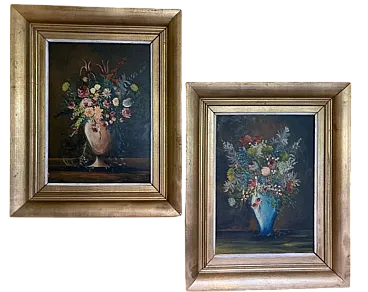
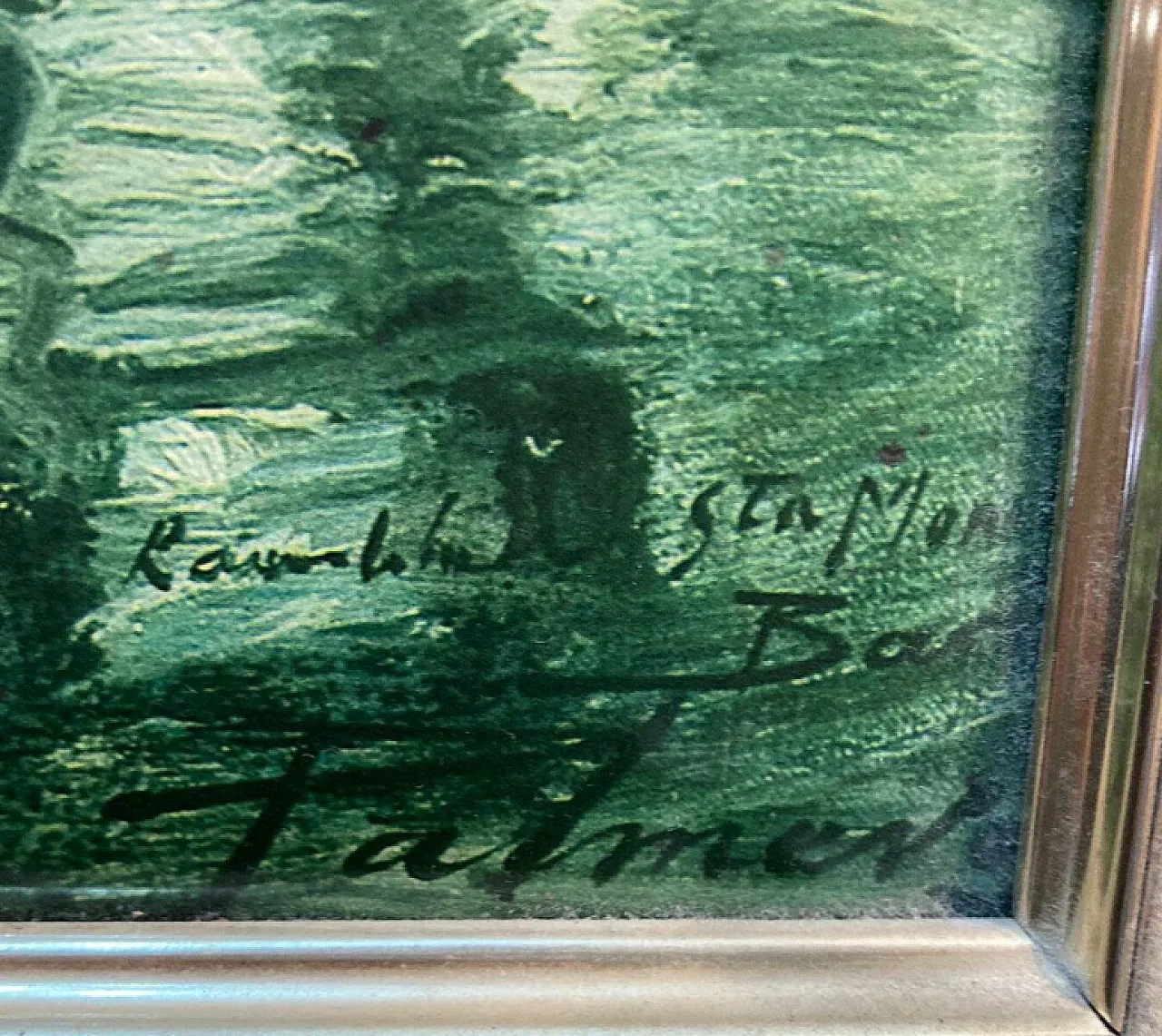
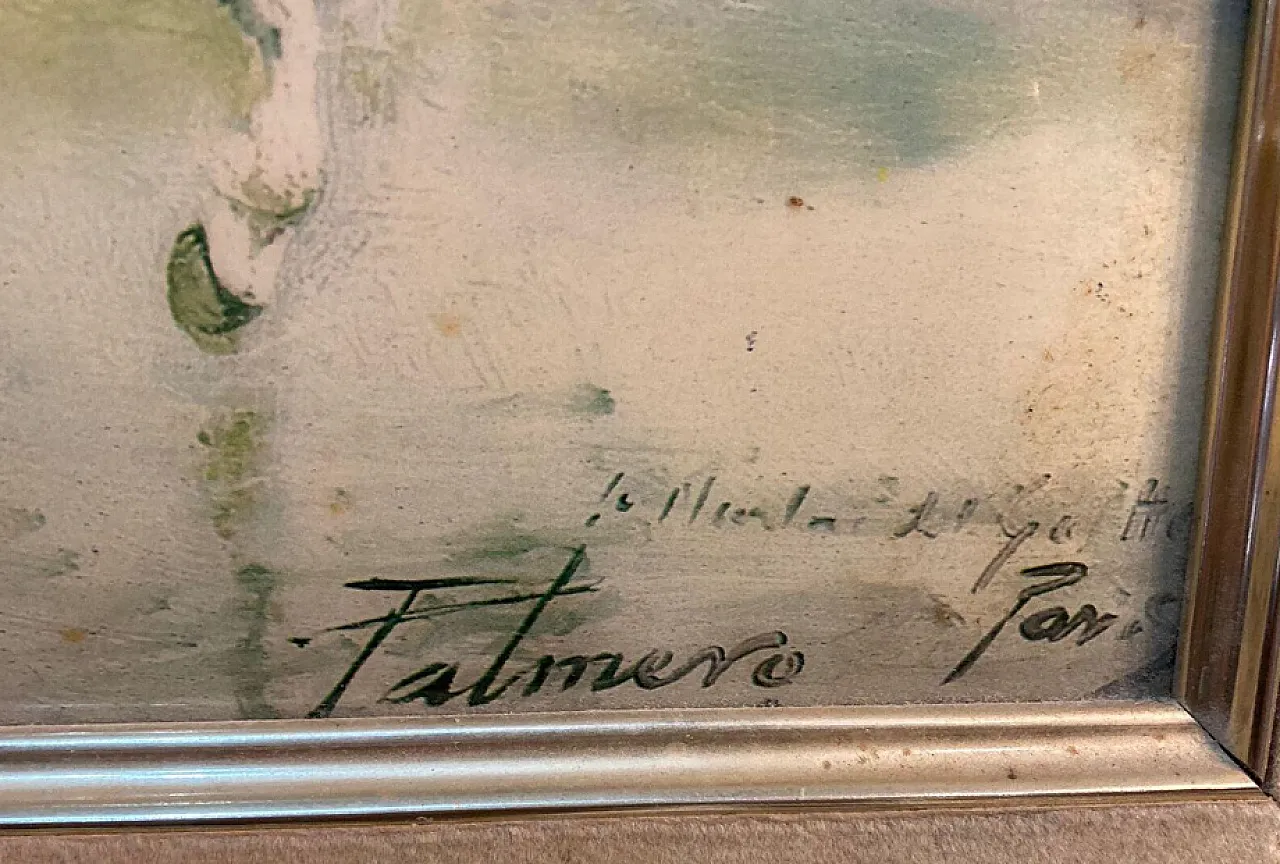
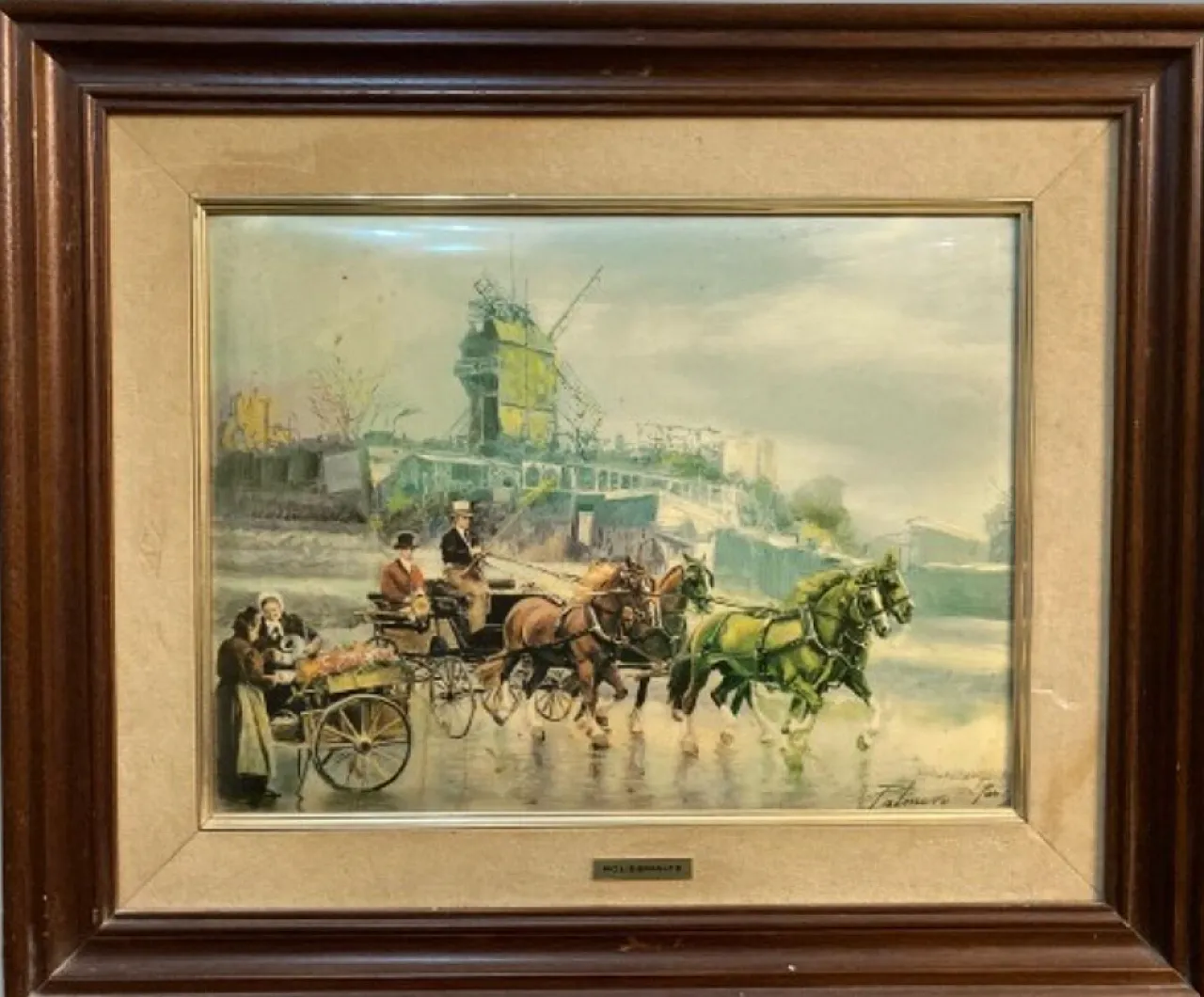
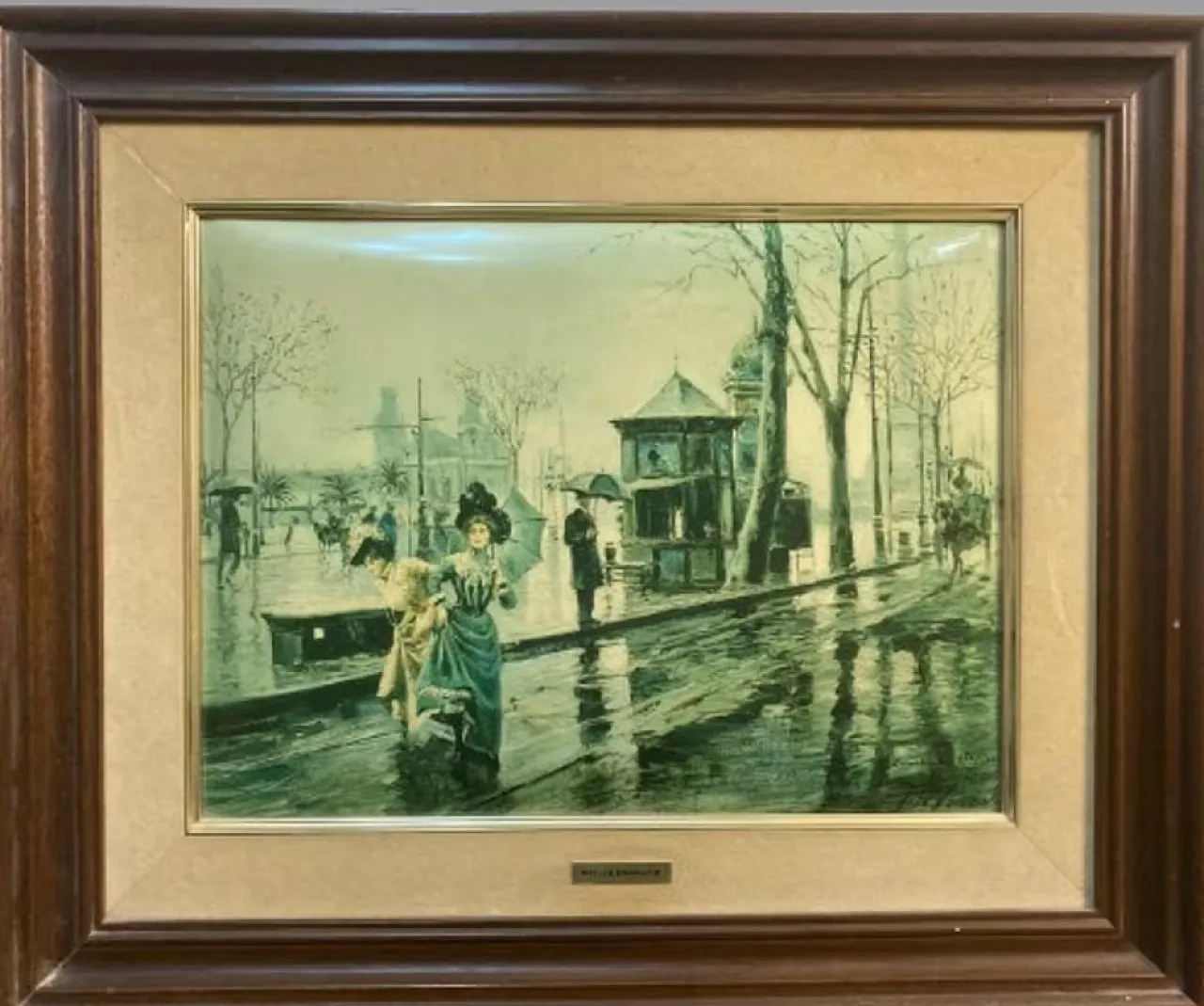
Pair of polyenamel reproductions by Alfredo Palmero de Gregorio, signed by the artist.
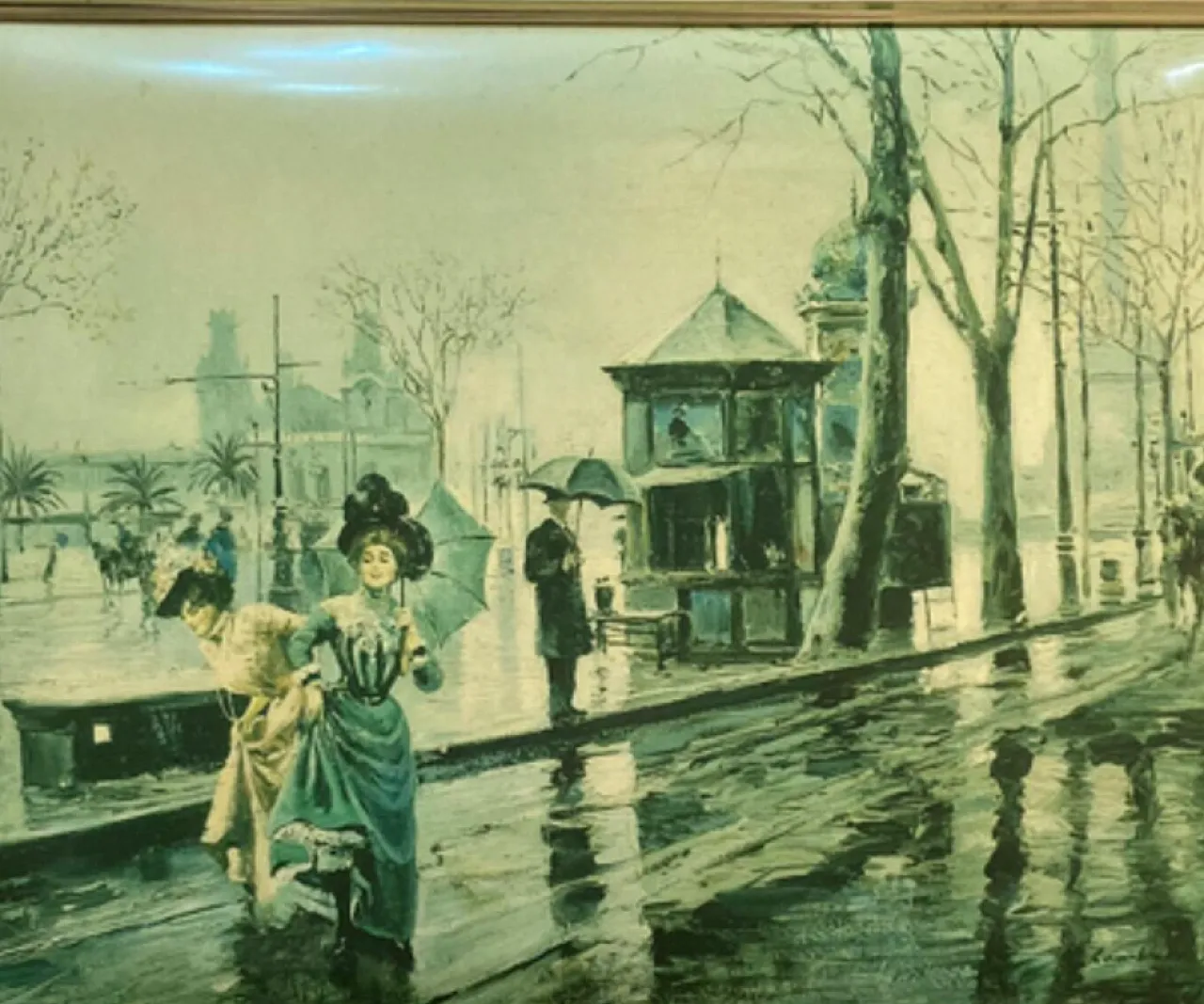
One of the paintings is titled "Wet Day in Paris."
Work Details:
• Artist: Alfredo Palmero de Gregorio.
• Subject: It depicts an urban scene in Paris on a rainy day, with elegantly dressed figures and the reflection of water on the pavement.
"Wet Day in Paris" by Alfredo Palmero de Gregorio was painted in the 1960s.
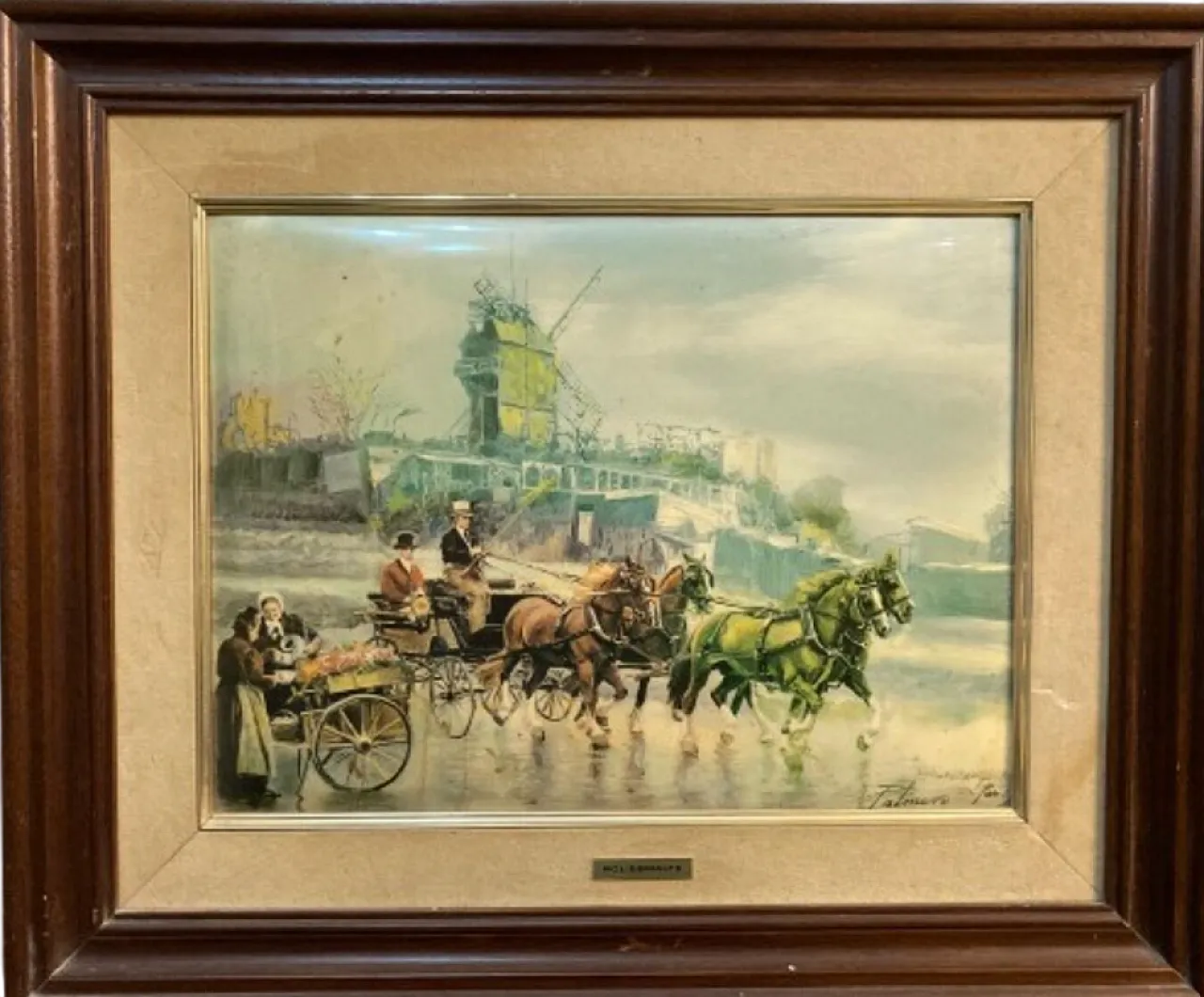
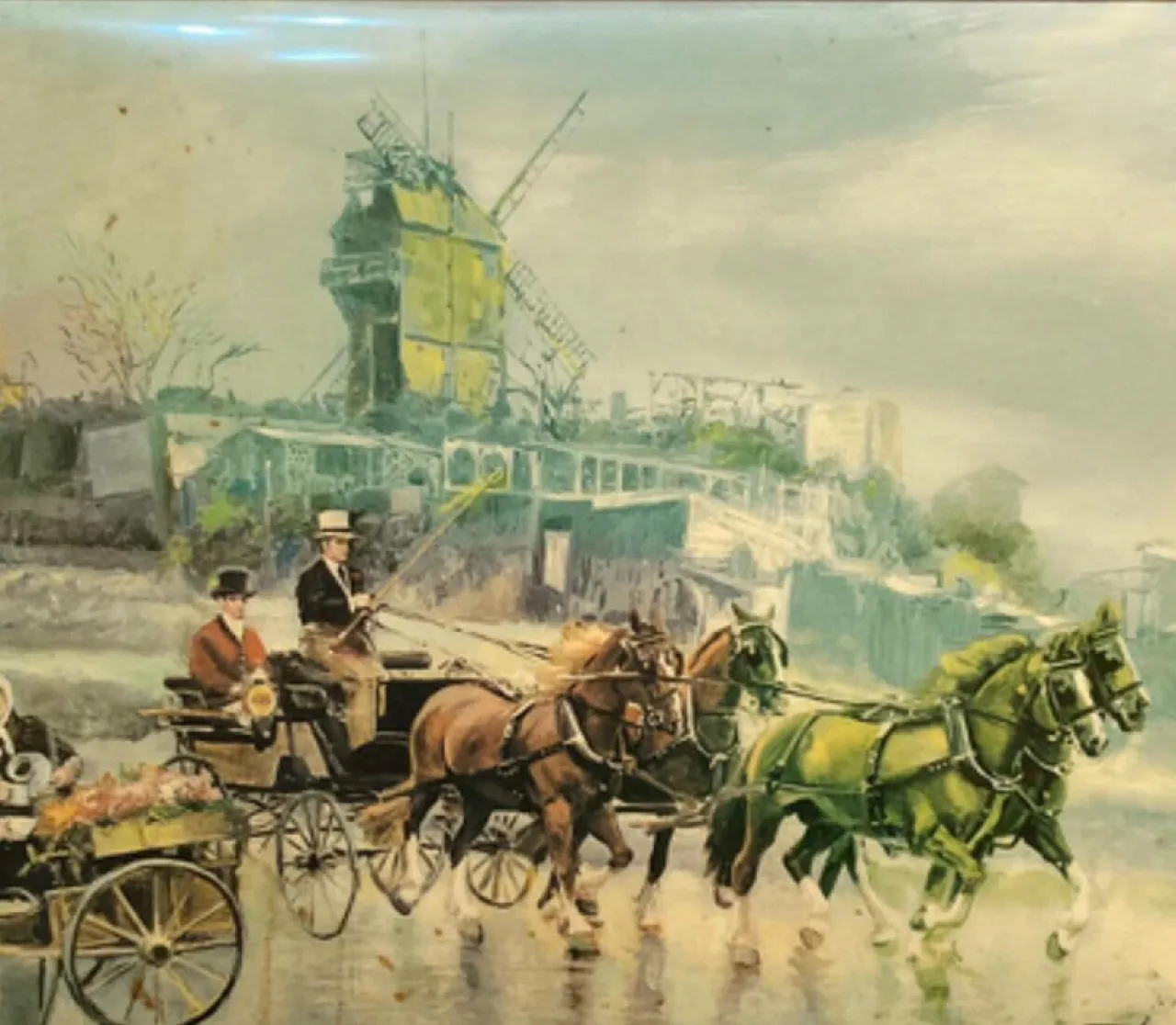
The other is part of the "Tableau Calèche Moulin."
Work Details:
• Title: "Tablue Calèche Moulin" or "Tableau Calèche Moulin."
• Artist: Alfredo Palmero de Gregorio (1901–1991), also known as "Maestro Palmero."
• Description: The painting depicts a scene with a horse-drawn carriage, human figures, and a windmill in the background, possibly in an urban or semi-urban setting, evoking the Belle Époque.
ARTIST BIOGRAPHY, SOURCE WIKIPEDIA
Alfredo Palmero de Gregorio (Almodóvar del Campo, March 12, 1901 – Barcelona, March 5, 1991) was a Spanish painter renowned for his realist style and his depictions of costumbrista and urban scenes. He is known as one of the leading exponents of Spanish realism in the 20th century.
Alfredo Palmero was born in Almodóvar del Campo, Ciudad Real, on March 12, 1901. From an early age, he showed an interest in painting, which led him to study at the Royal Academy of Fine Arts of San Fernando in Madrid beginning in 1914. His classmates included prominent artists such as Gregorio Prieto and Joaquín Valverde. In 1920, he held his first exhibition at the Casino in Ciudad Real. He subsequently traveled to Paris and Italy, where he came into contact with the major artistic movements of the time, including Impressionism and Modern Realism. Upon his return to Spain, he worked as a teacher at high schools in Ciudad Real, Burgos, Toledo, and Barcelona, the city where he eventually settled.
Work
Alfredo Palmero's work covers a variety of themes, including:
Costumbrista scenes: Depictions of everyday Spanish life.
Urban landscapes: Portraits of cities such as Paris and Barcelona.
Studies of the human figure: Especially in everyday and artistic settings.
His style is characterized by technical realism, with special attention to the use of light and color. Some of his most recognized works include:
Cafe at the Paris Opera.
Place de Clichy - Paris.
The Booksellers.
Palmero Museum
In 1960, Alfredo Palmero founded the Palmero Museum in his hometown of Almodóvar del Campo. This museum houses an extensive collection of his work, as well as personal objects and materials related to his artistic life.
Recognitions and Legacy
Alfredo Palmero received numerous awards throughout his life, establishing himself as one of the leading painters of his generation. His work continues to be exhibited in museums and private collections in Spain and abroad. He died in Barcelona on March 5, 1991.



.png)

 SILVER Seller in T, Spain