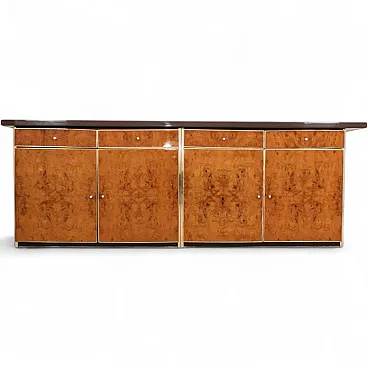
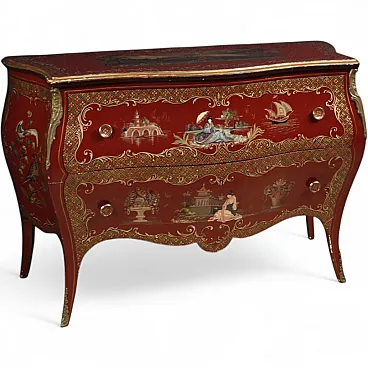
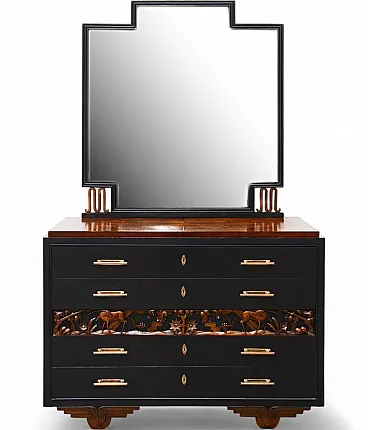
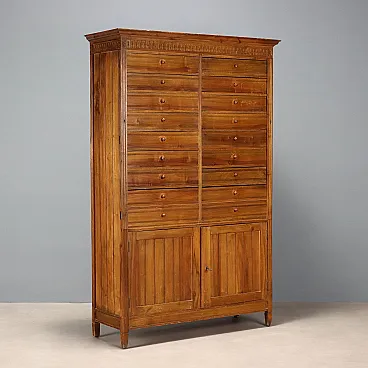
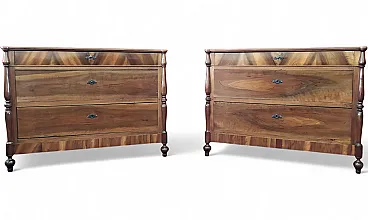
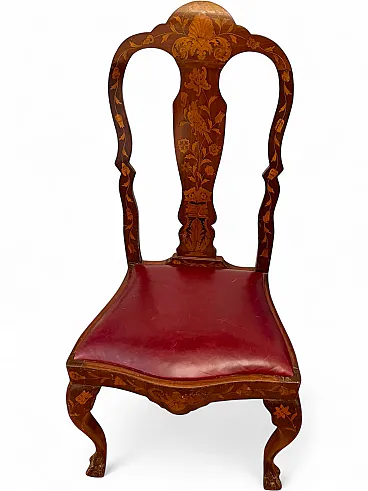
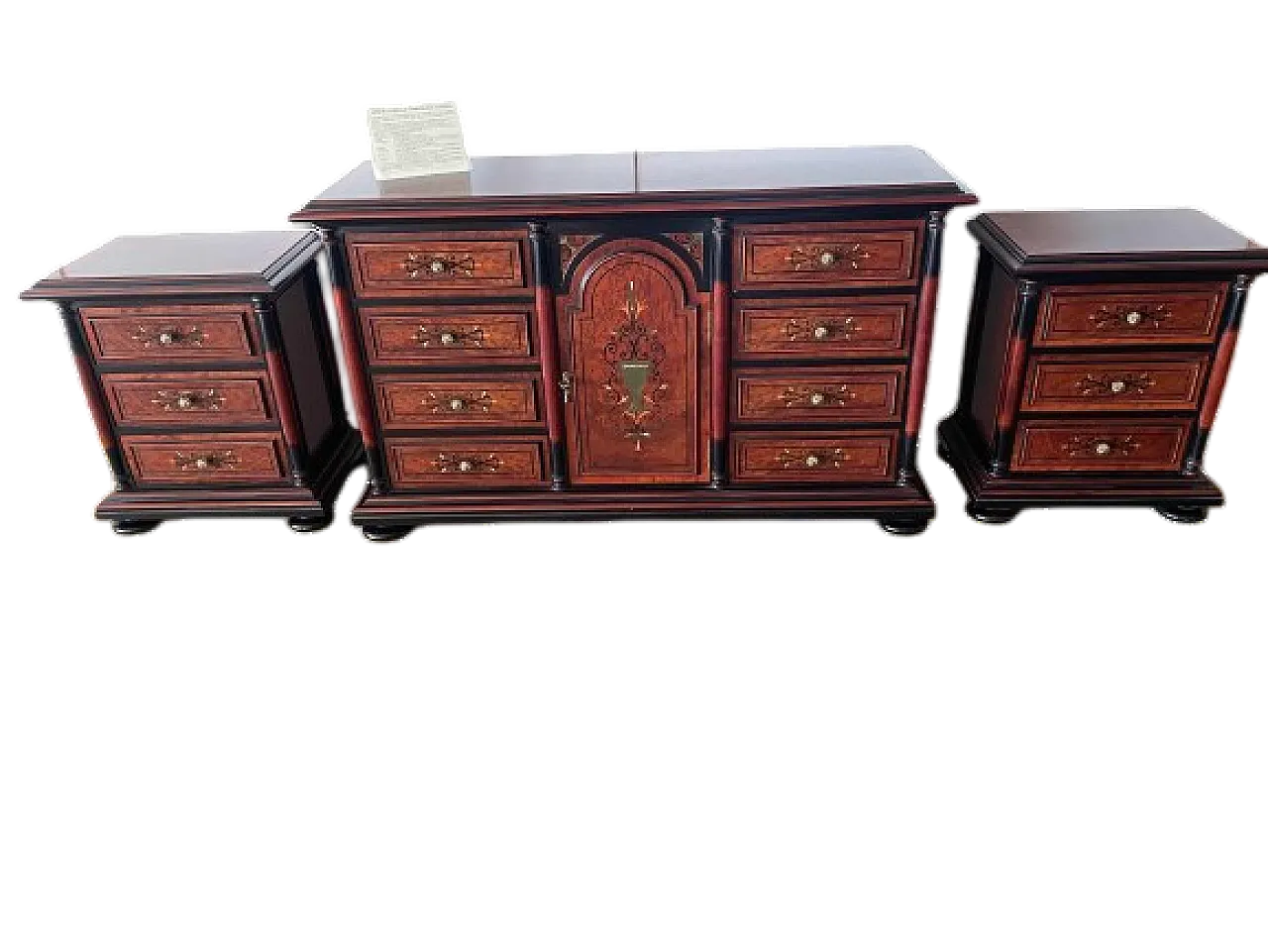
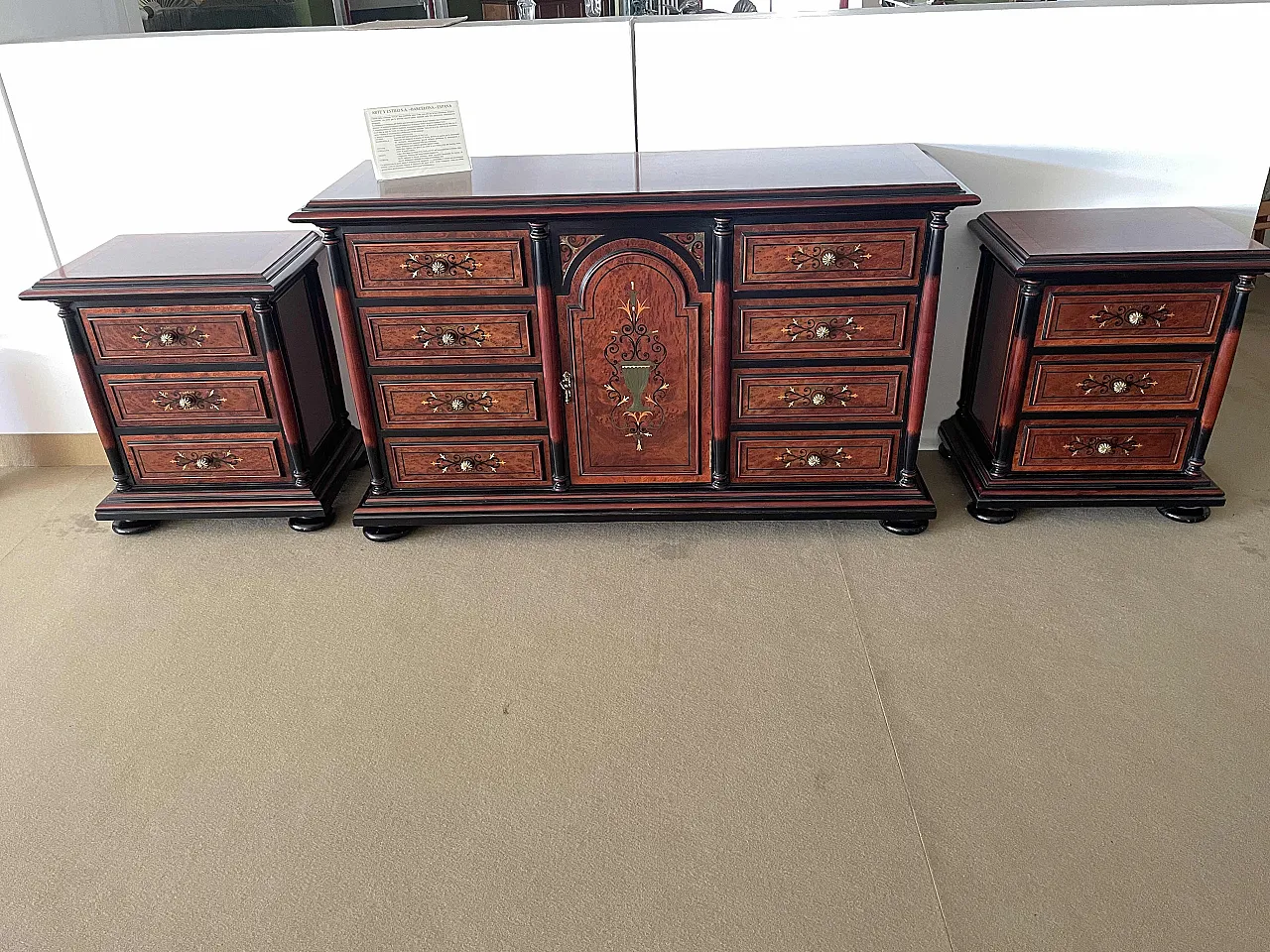
The very rare furniture in the "JOYA" collection are authentic works of art, not only for their conception, design and workmanship, but also for the precious raw materials used in their completely artisanal construction.
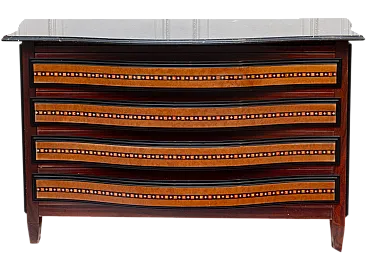
The structure and the entire furniture are made entirely of Spanish walnut which, unlike that coming from other countries, is the most suitable for its hardness and very fine porosity which allow the final finishing with pad or shellac.
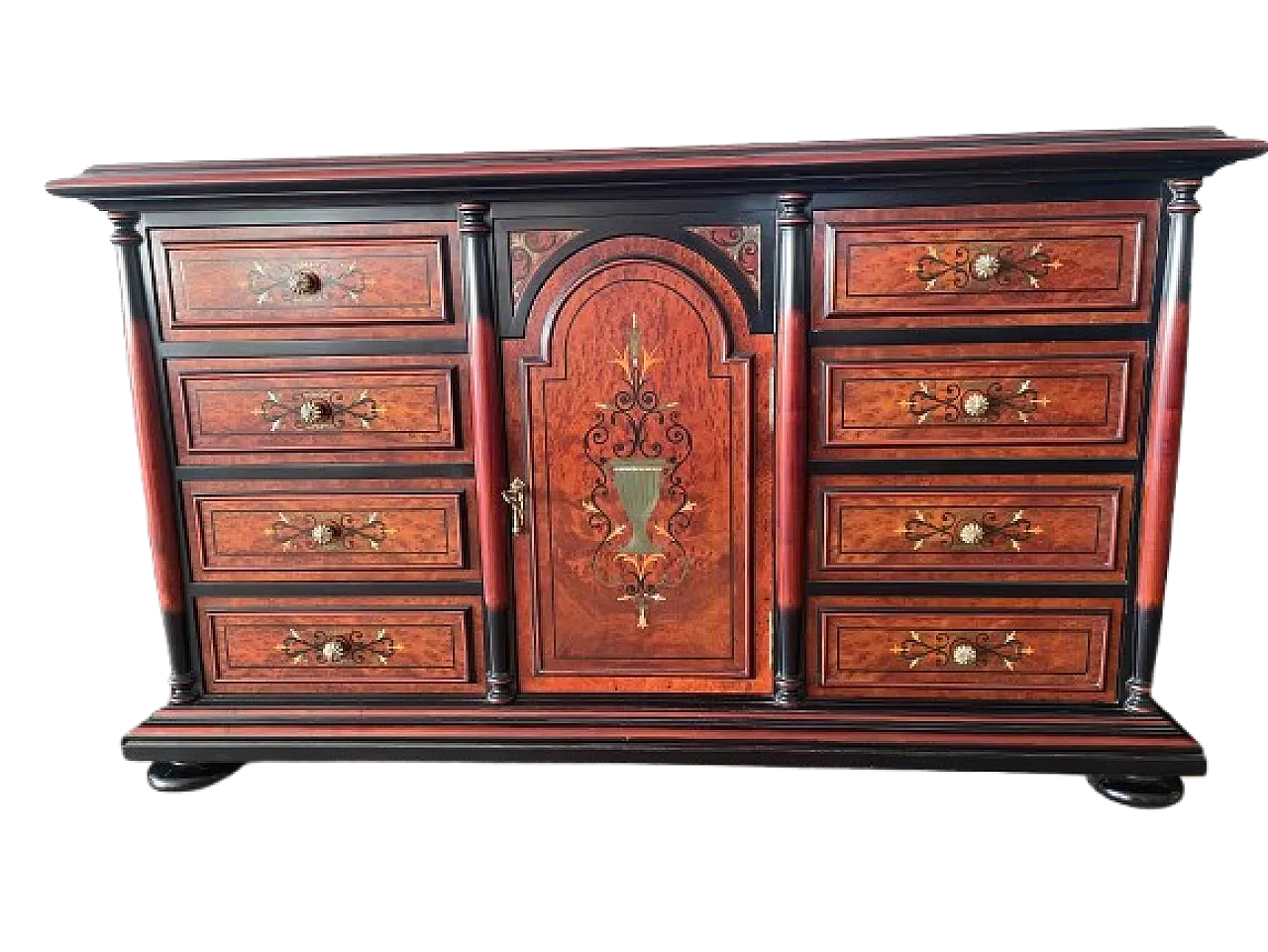
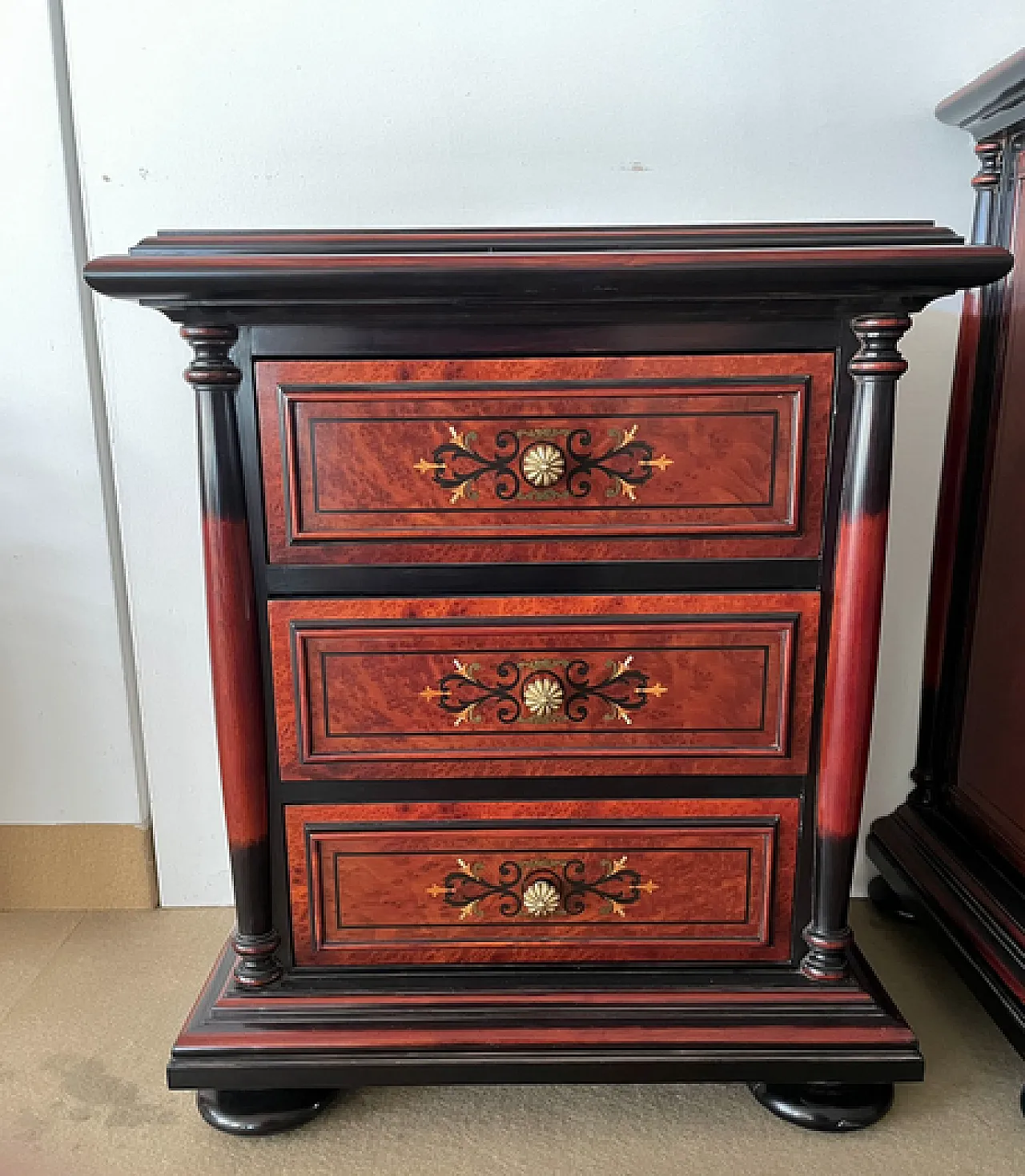
The veneer with which the walnut furniture is covered is Amboine briar, coming from the island of Ambon in the Molucca Islands archipelago (Indonesia). This exotic covering has some peculiar characteristics, apart from its rarity: it is very hard, very small in size, as it is only found in sheets of 35x40 cm, with a very fine grain or “louppe” and with a natural reddish-brown colour. All this means that, after its polishing, it has the appearance of a hard stone or the shield of a turtle.
The inlay of the furniture, apart from the filigree of their pure design, is made with different raw materials, of various colors and densities which, artistically combined, give a whole of extraordinary beauty, independent of the specific quality of the materials used.
These are:
IVORY Imported from India in 10x13 cm plates.
MOTHER OF PEARL Imported from Japan in 3x3cm plates, difficult to cut due to the size of the molluscs, which are necessarily small to produce the wonderful and multiple iridescent colors of their iridescence.
BRASS Metal plates 0.3mm thick, hand cut.
CORALLINE hard, woody plant, which owes its name to its color and hardness, very similar to marine coral.
EBONY Hardwood used in the 16th, 17th and 18th centuries in fine cabinetmaking in France, Italy and England. It comes from Makasar Island (Indonesia).
CITRONE Our inlays are authentic citron, an aromatic tree from Ceylon, small in size and very fine porosity, extremely hard.
The creation of these inlays is completely artisanal, designating and cutting out each of the pieces that compose them by hand and fitting them together and placing them piece by piece until obtaining the harmonious whole that had been previously designed and in accordance with the style of the entire piece of furniture.
The painting is carried out with natural processes, as in the French cabinet-making workshops of the 17th and 18th centuries "by pad", i.e. with wadding, shellac, with pumice stone and final finishing with bright/matt wax, leaving the wood, the veneer and the inlay its natural beauty and porosity, given that they are not covered either with nitrocellulose or with polyesters or even with any other type of chemical finishing.
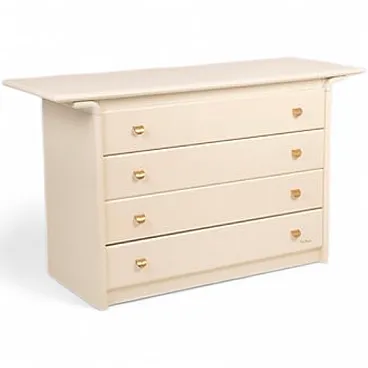
Drawer size 140x46xh85
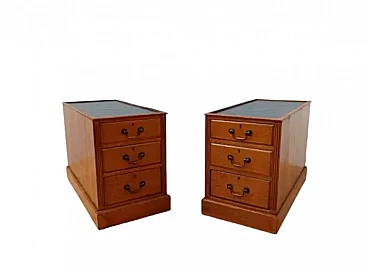
Bedside table size 56x40xh66


.png)

 SILVER Seller in Foggia, Italia