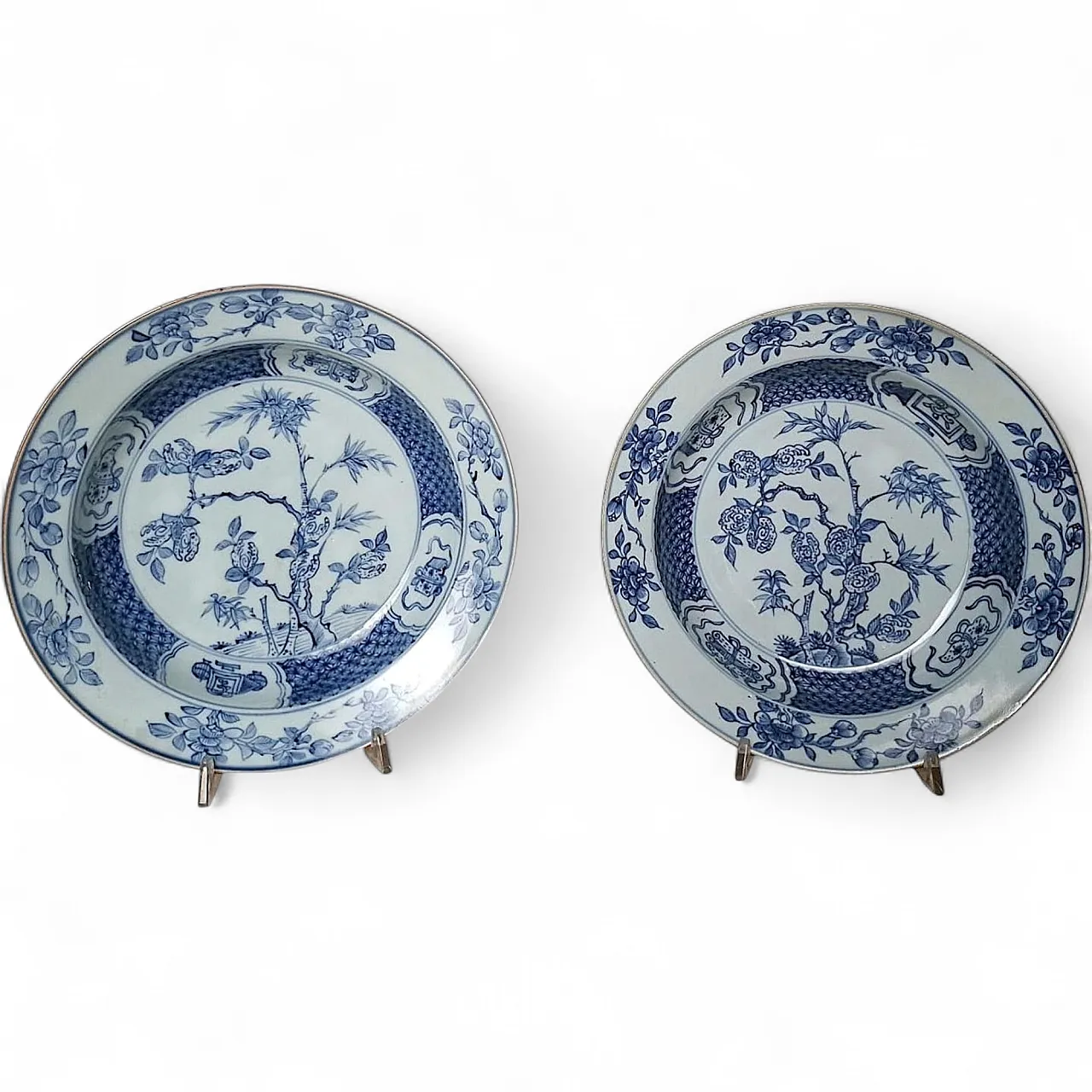
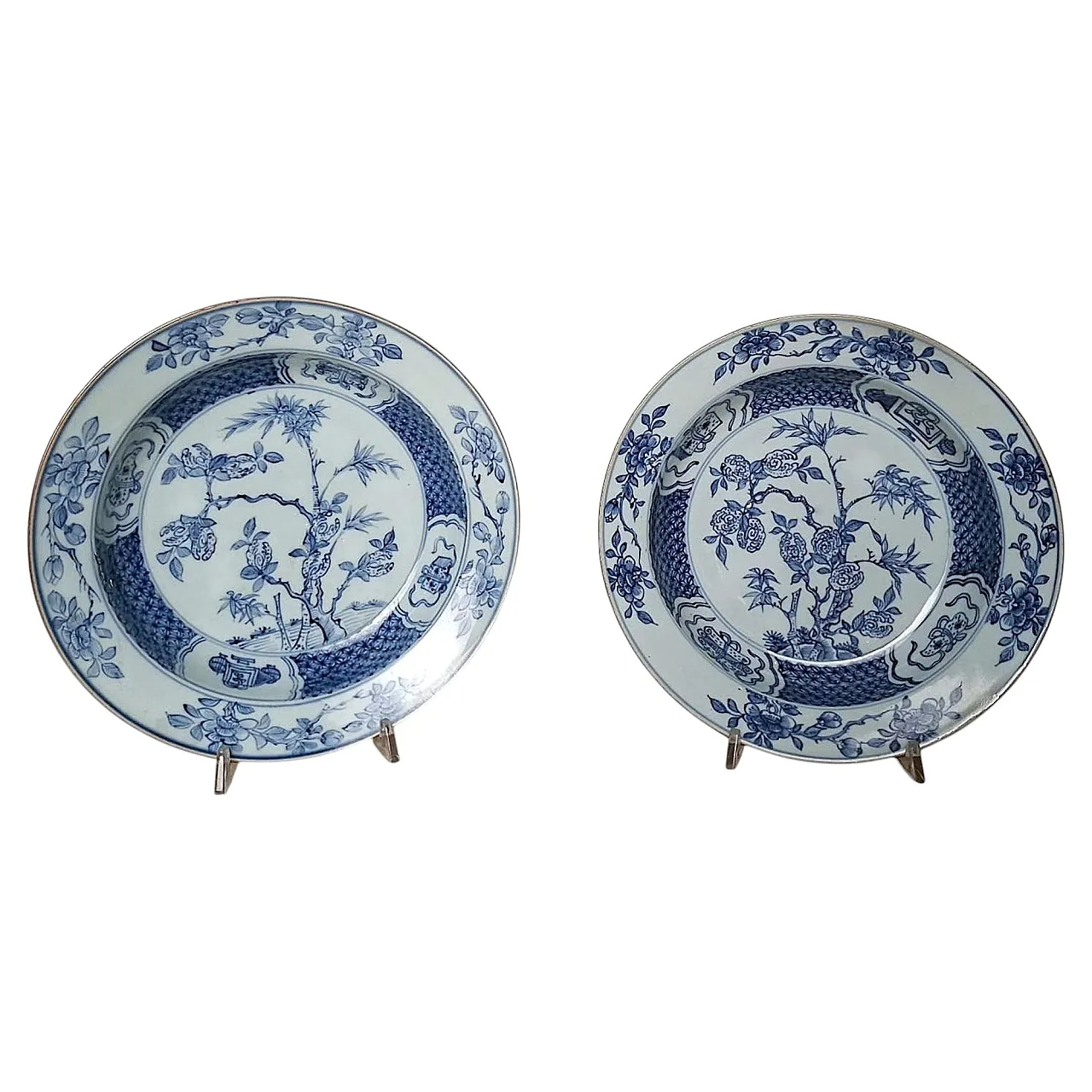
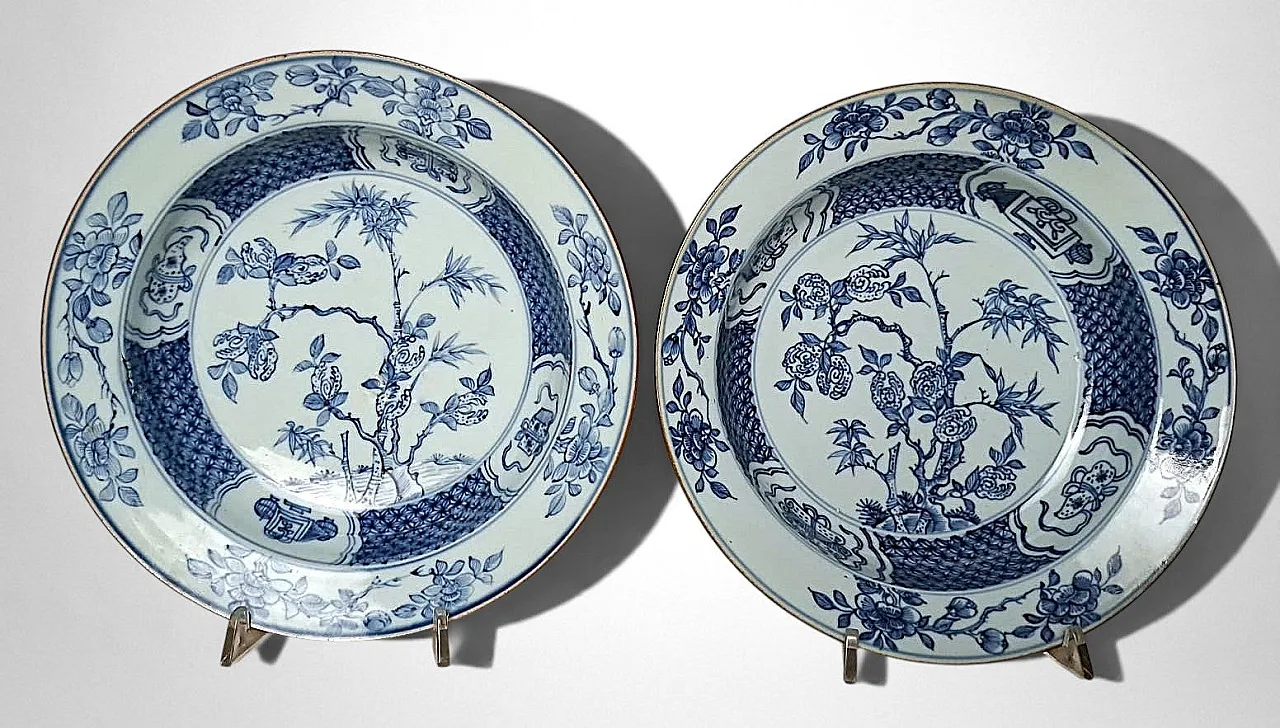
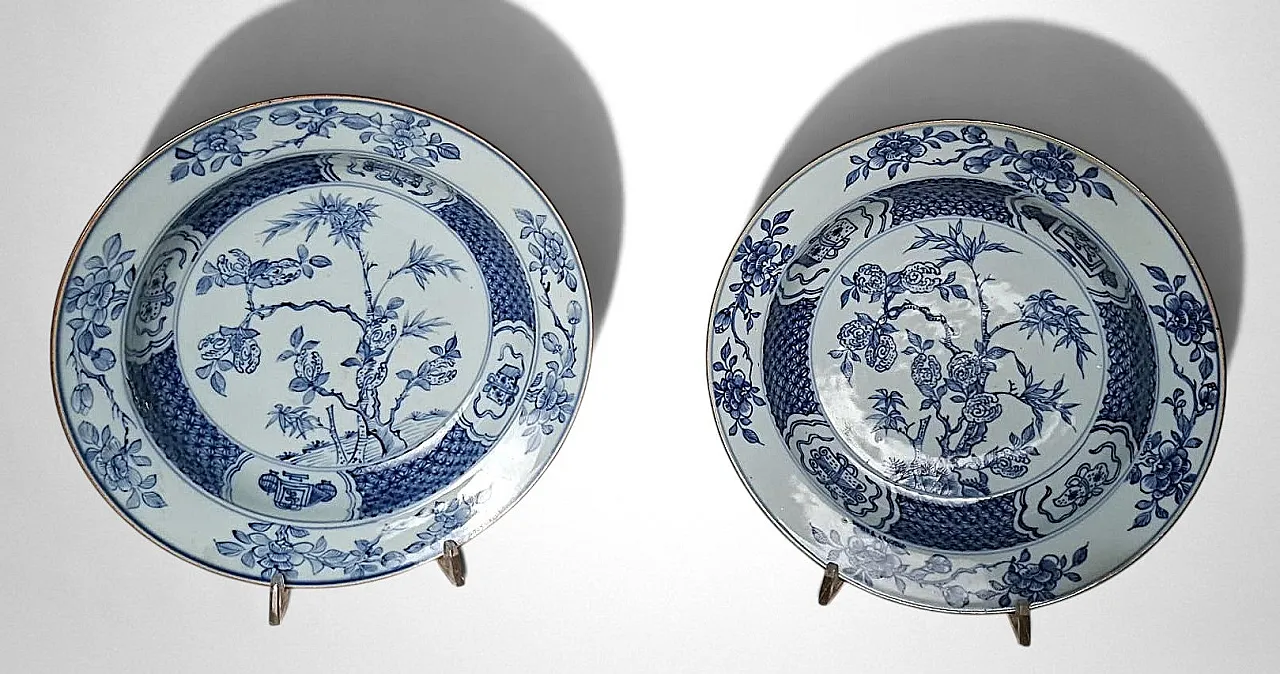
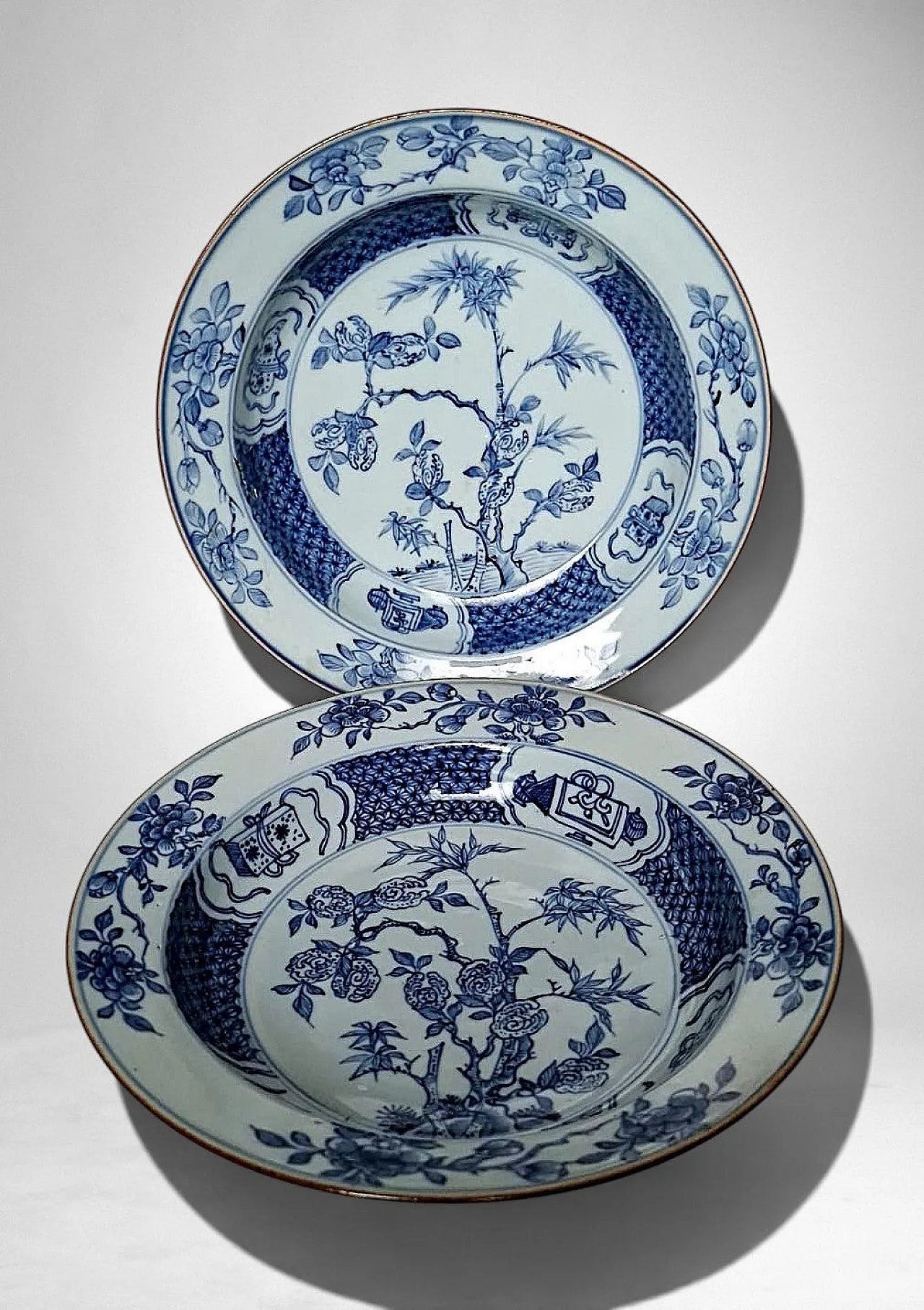
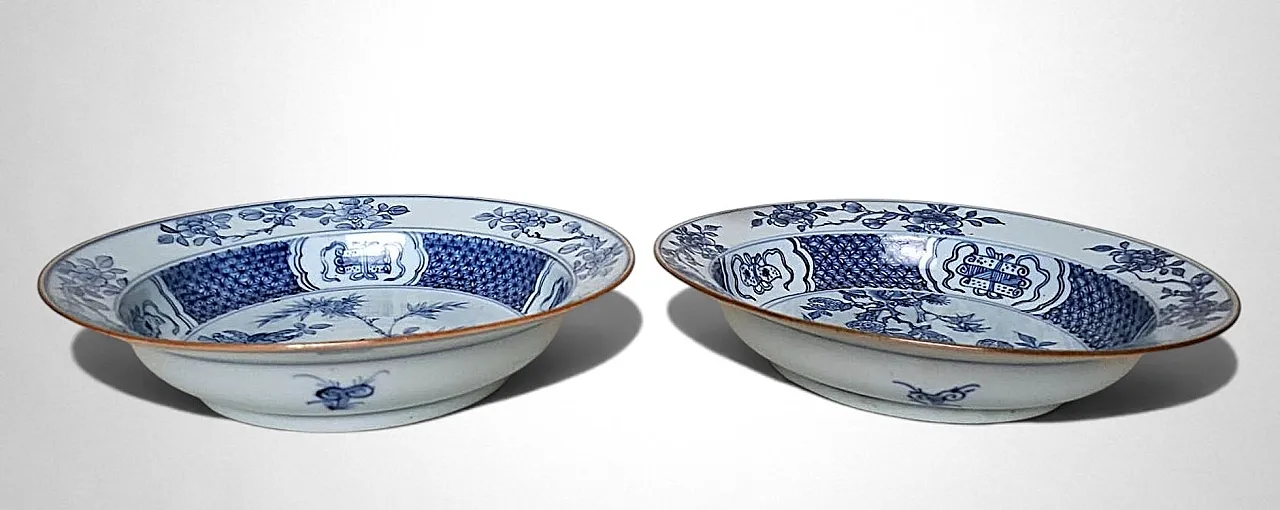
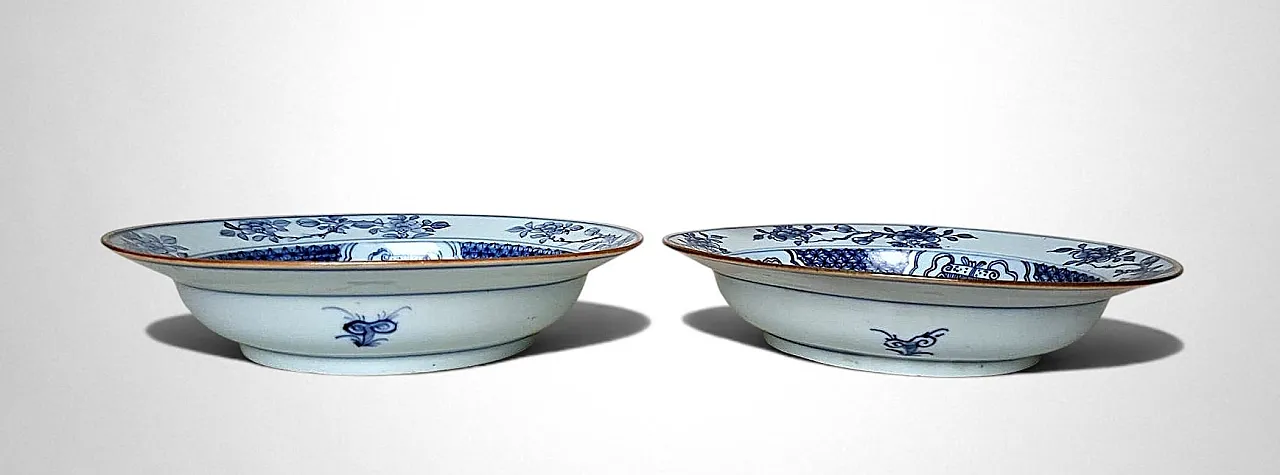
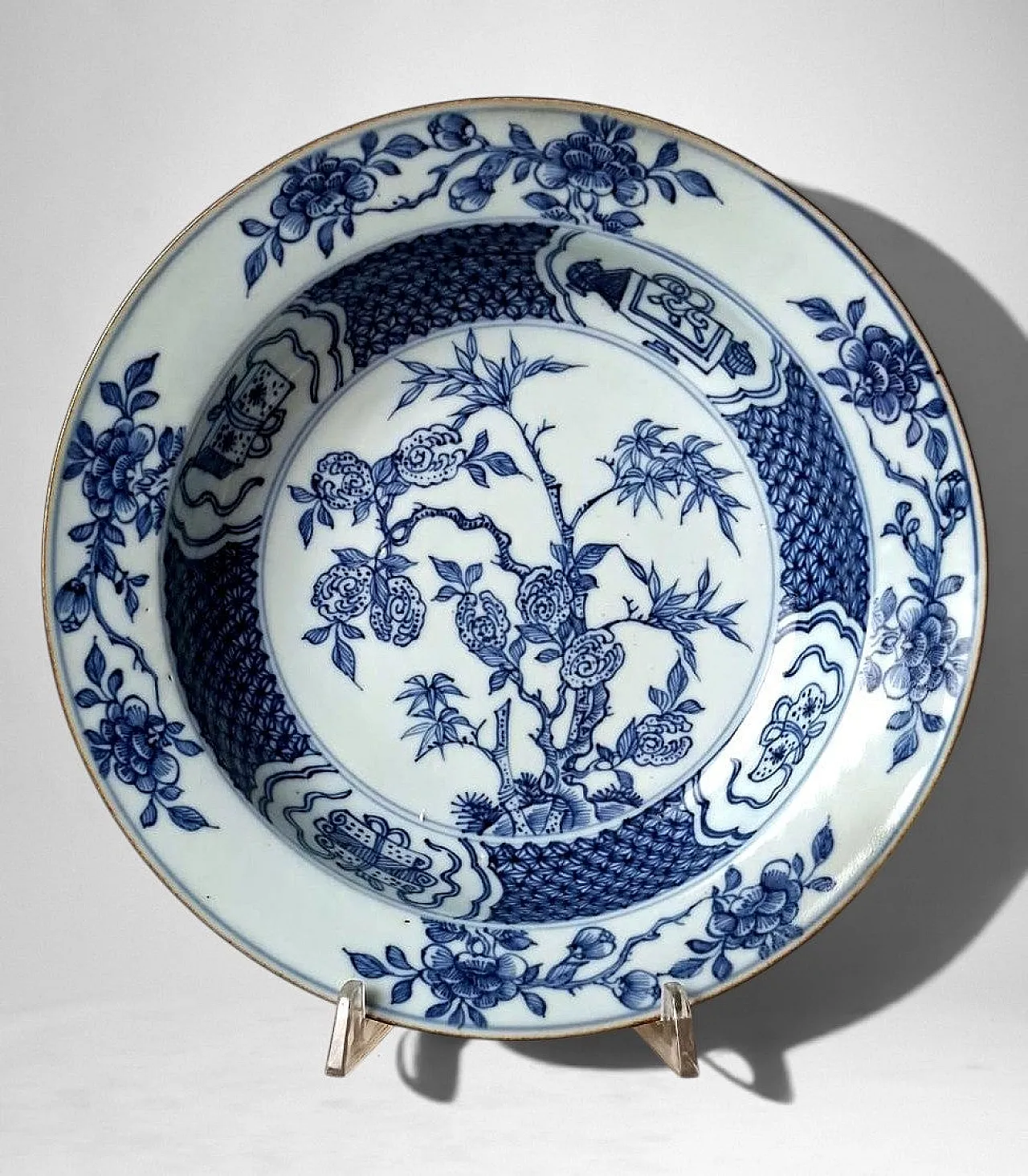
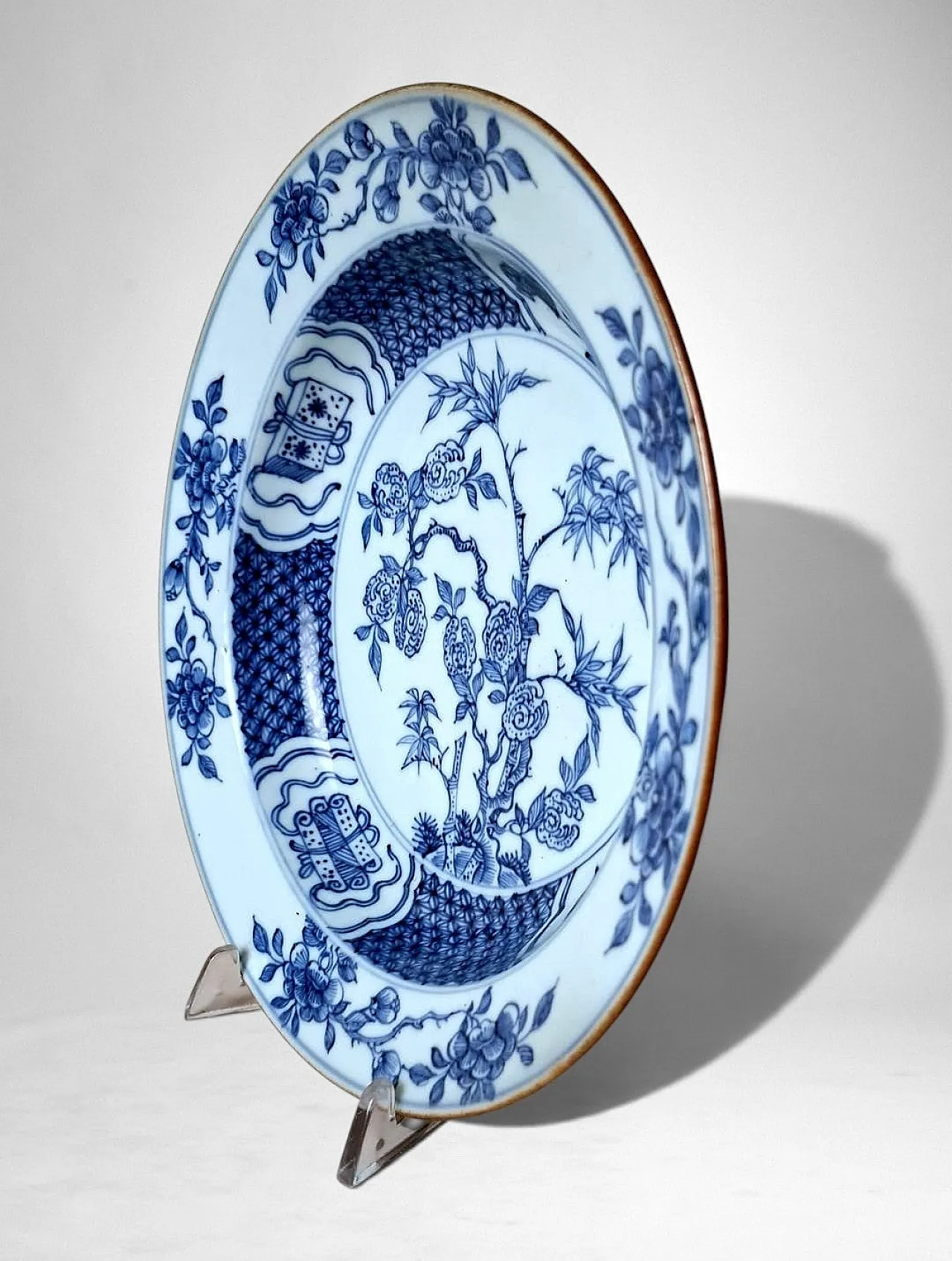
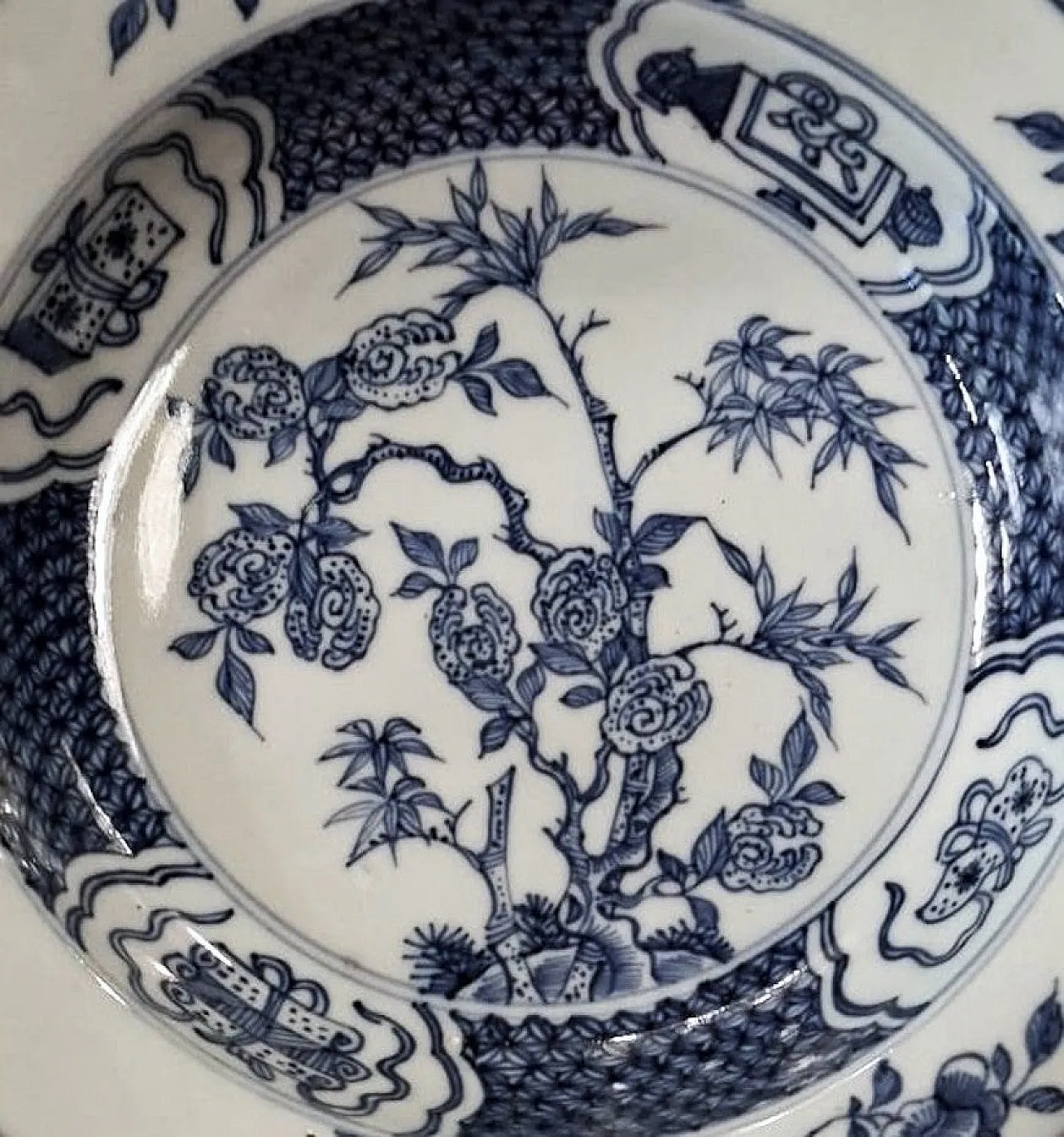
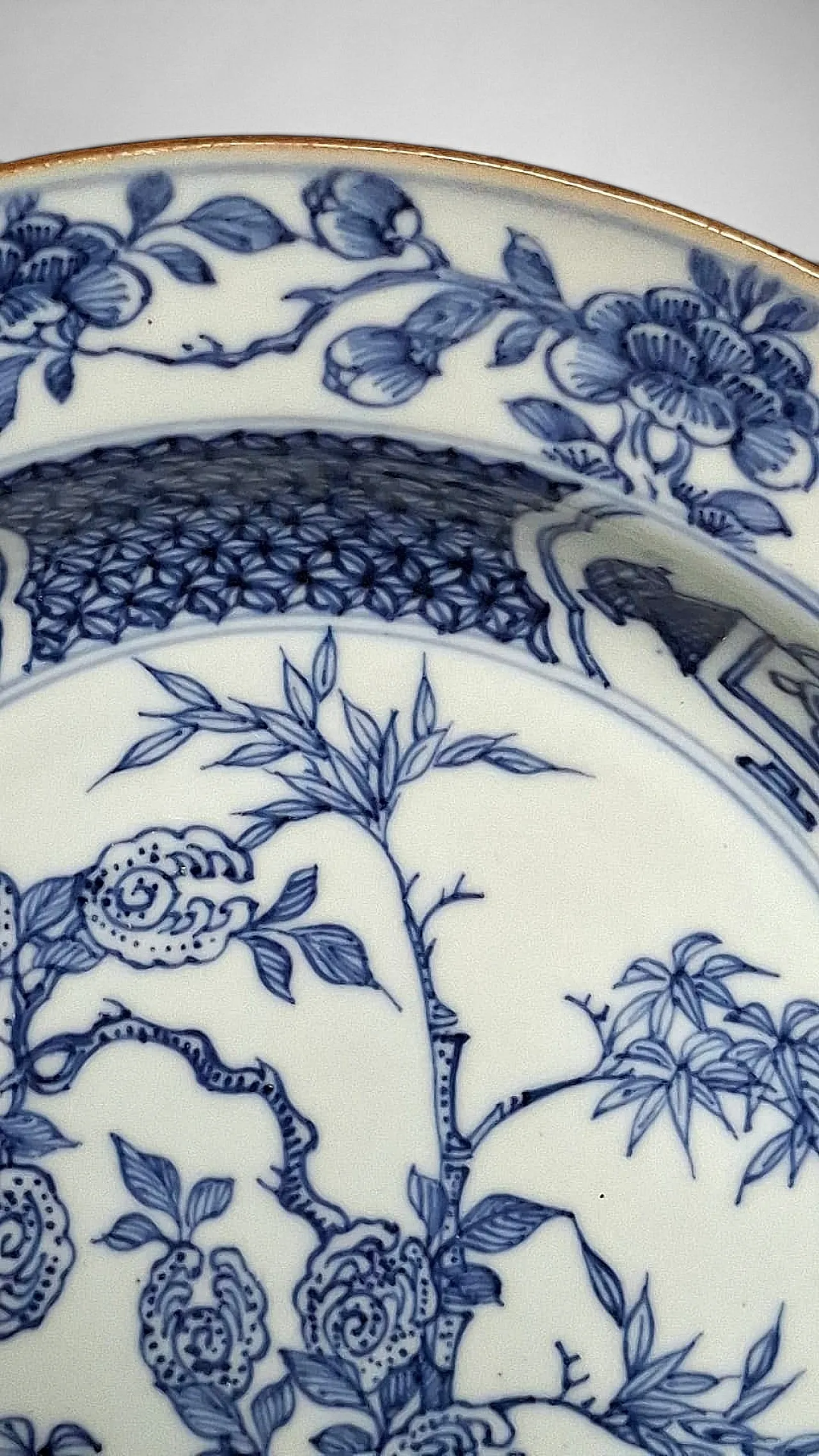
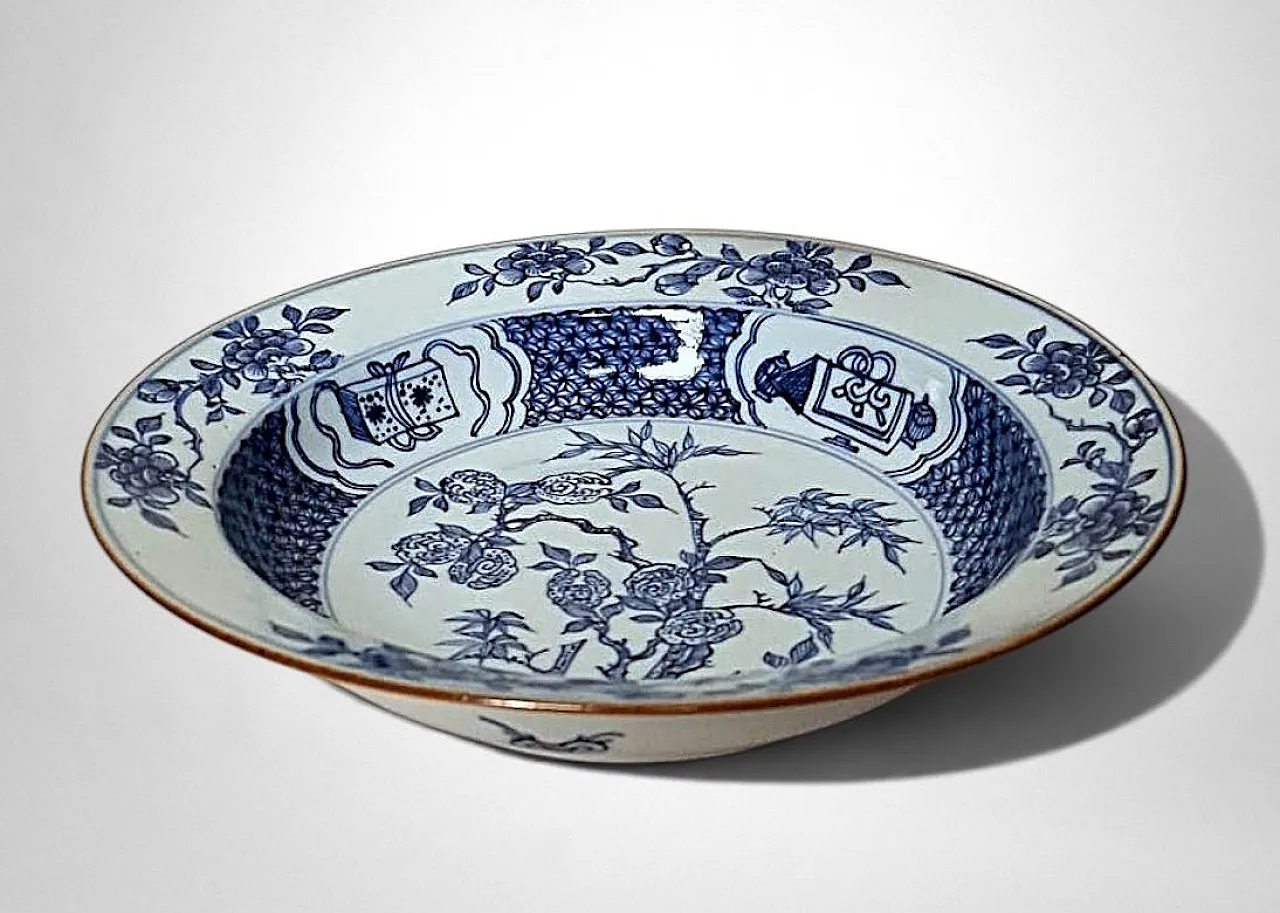
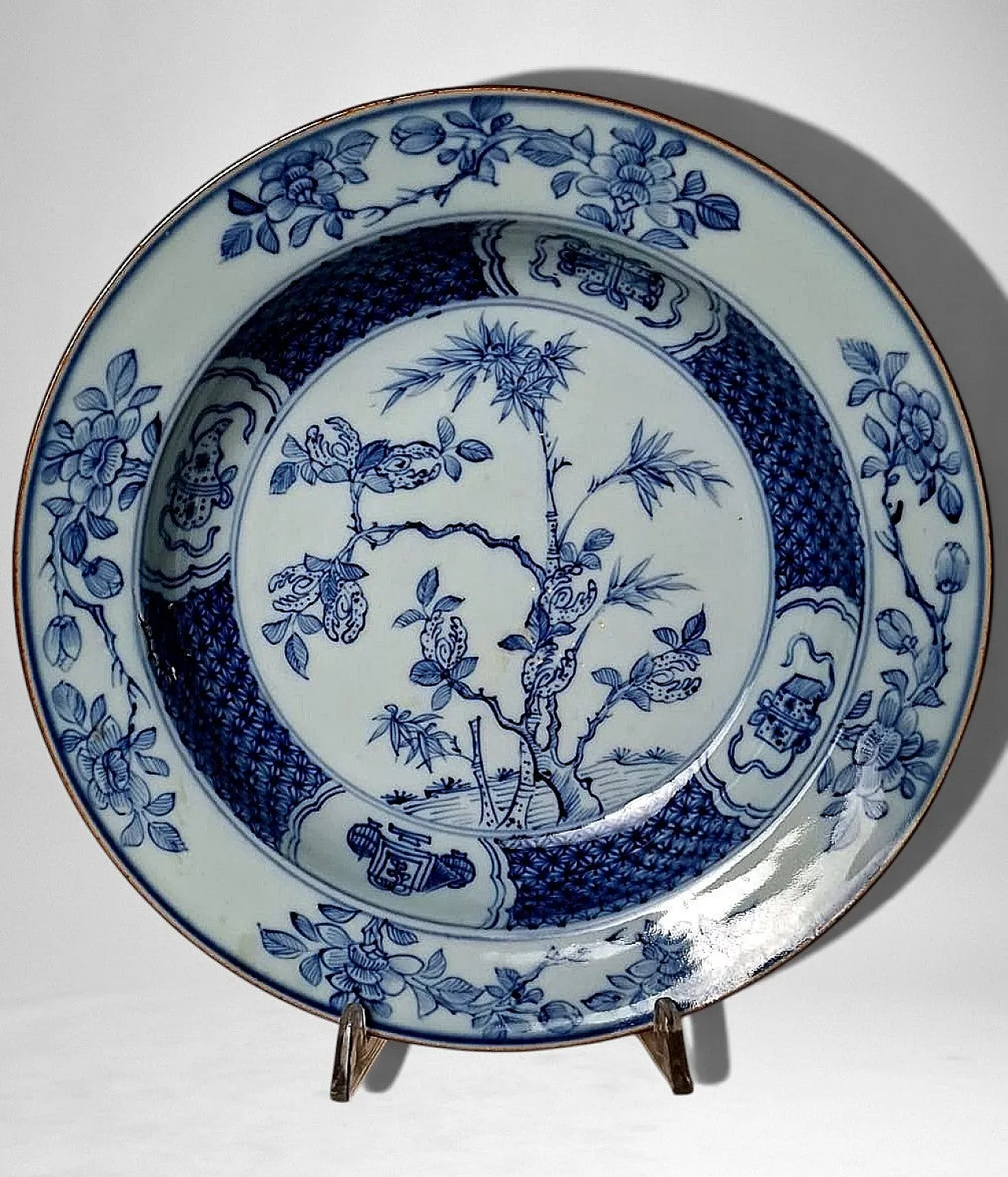
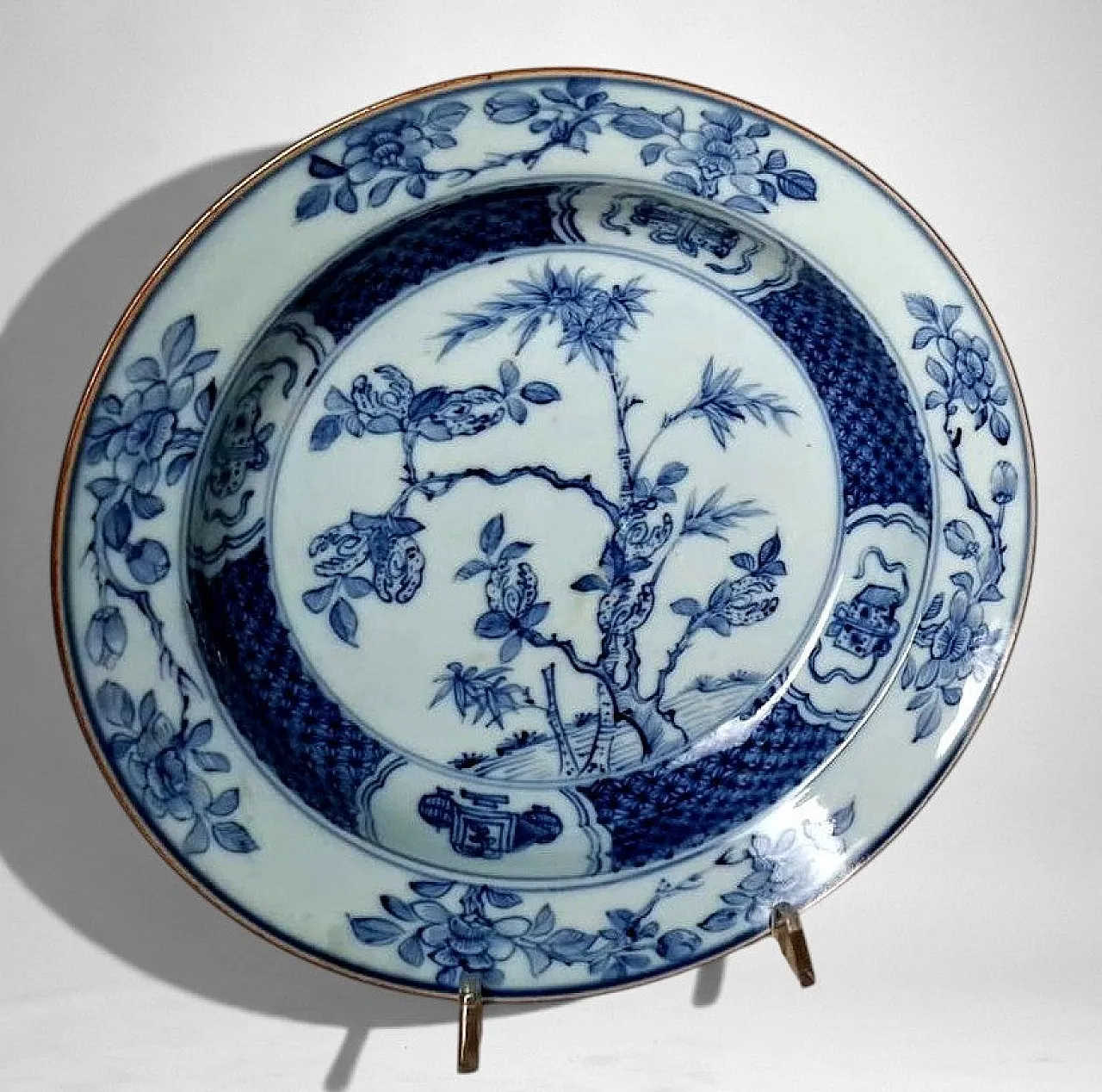
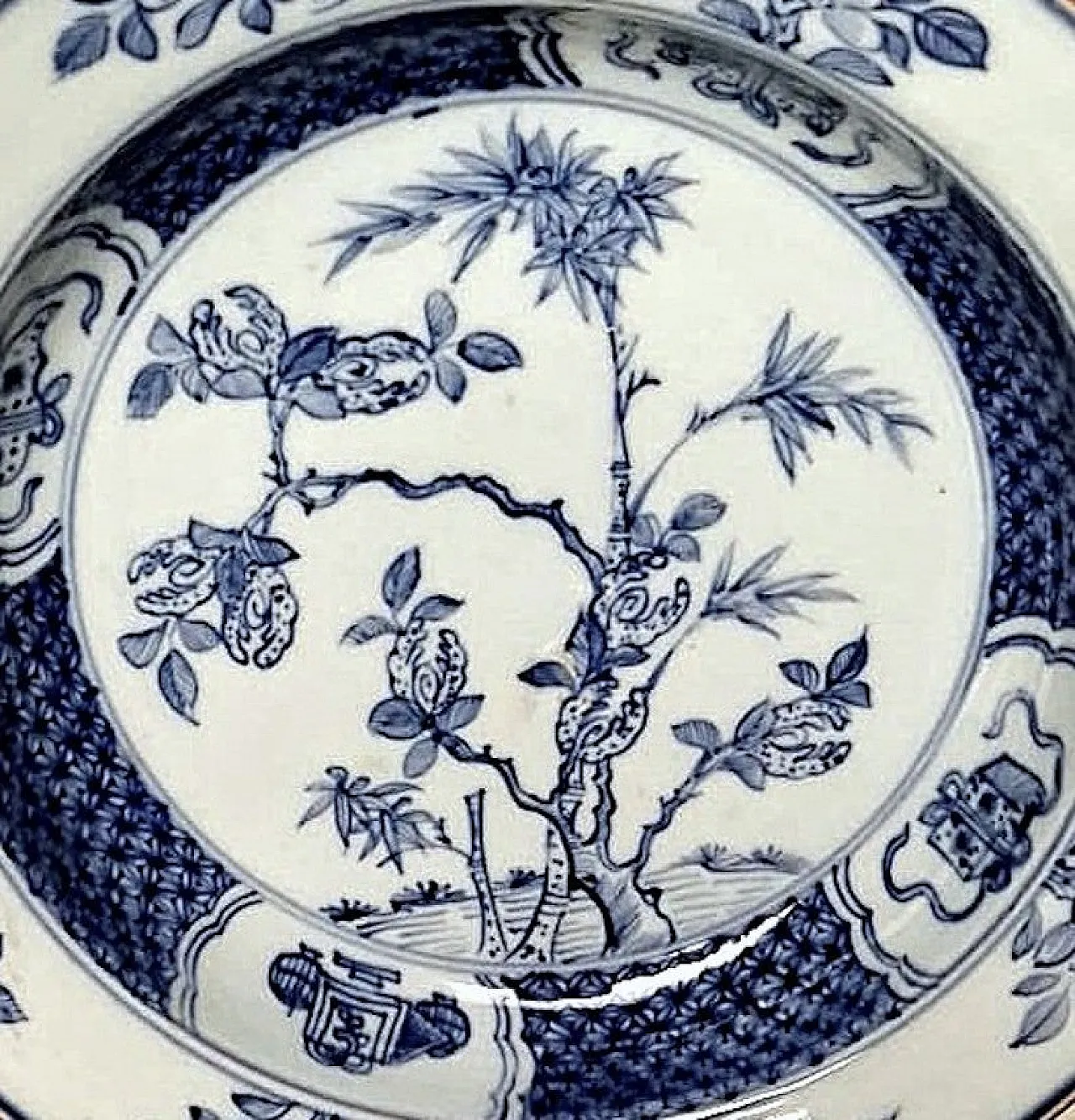
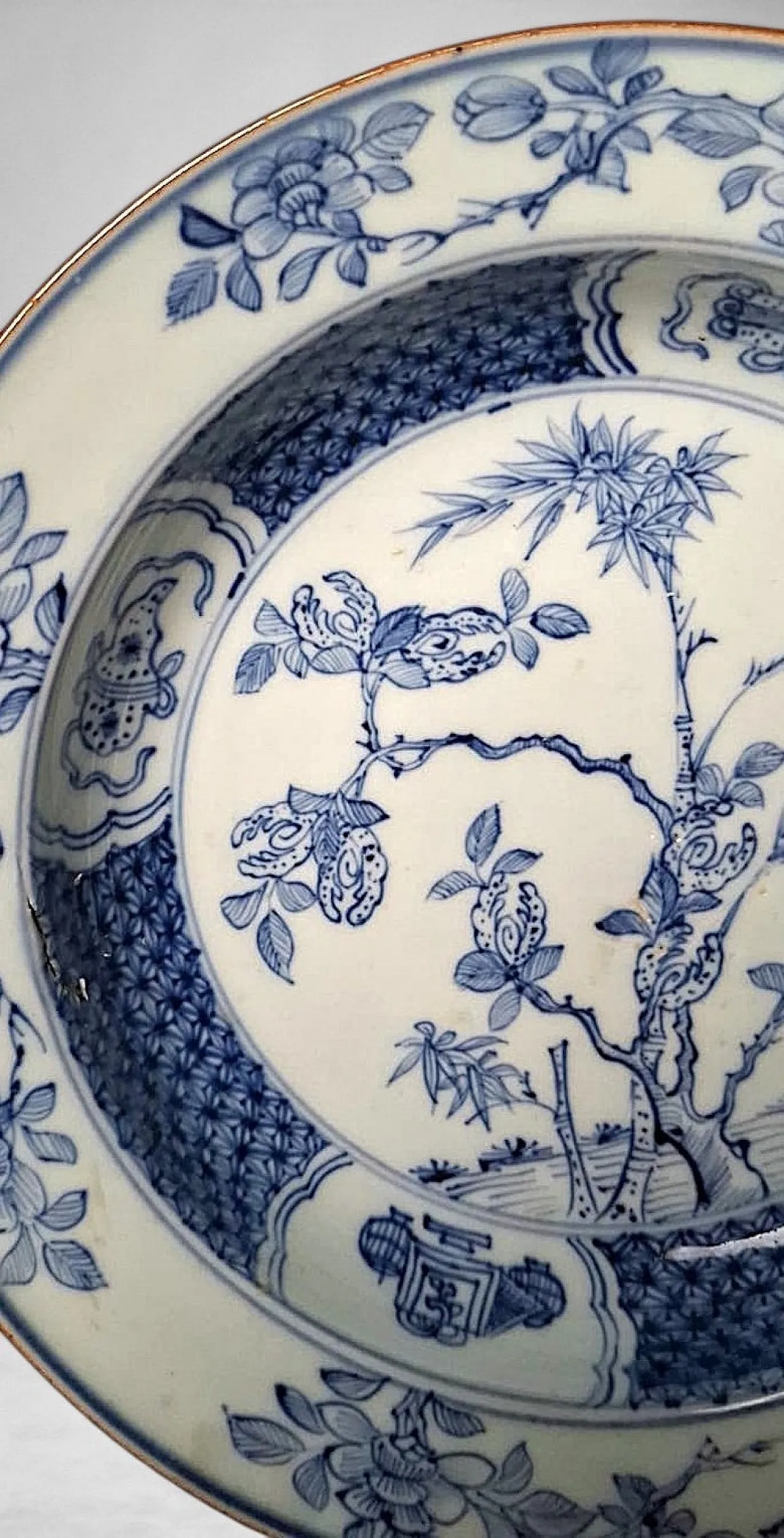
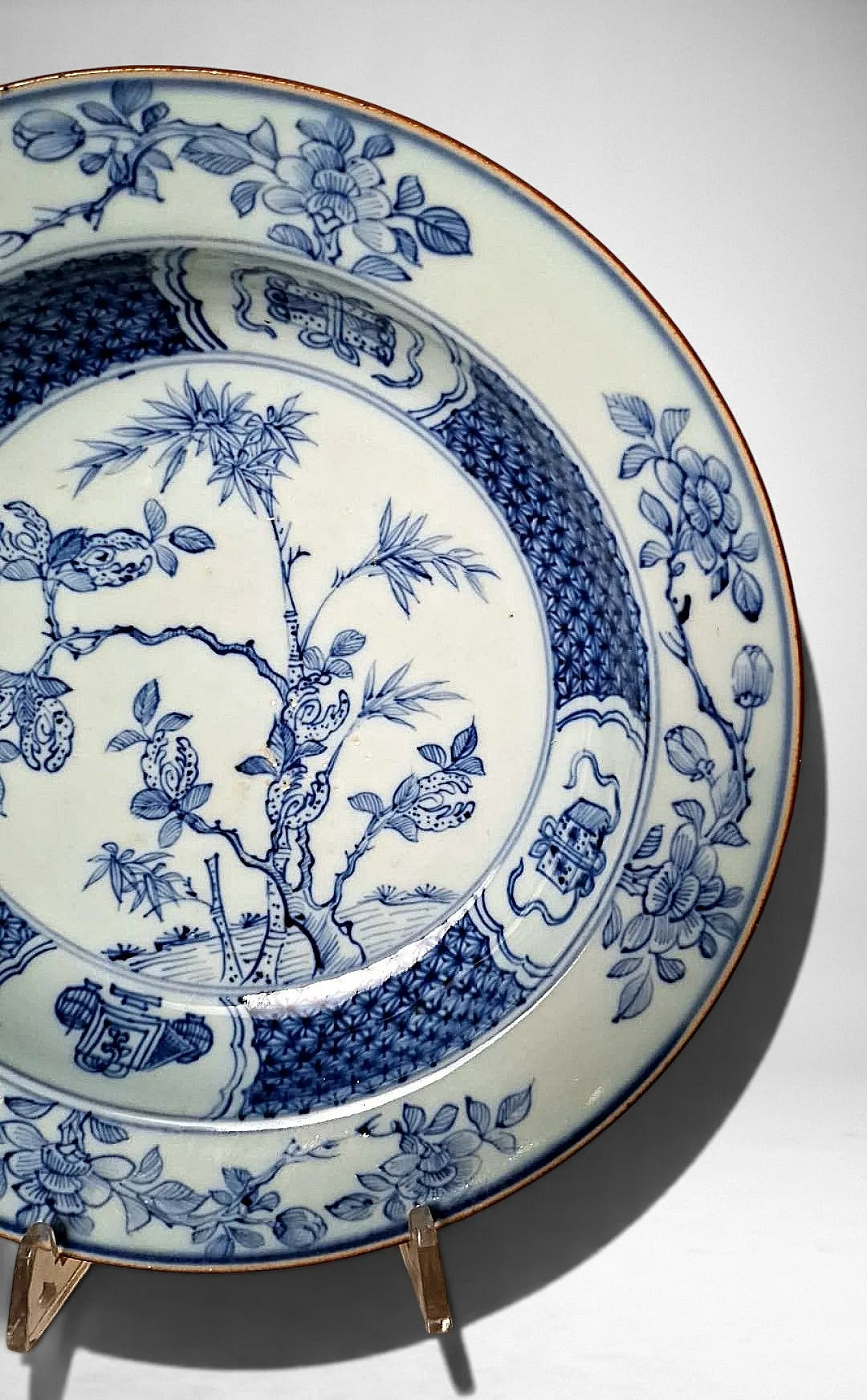
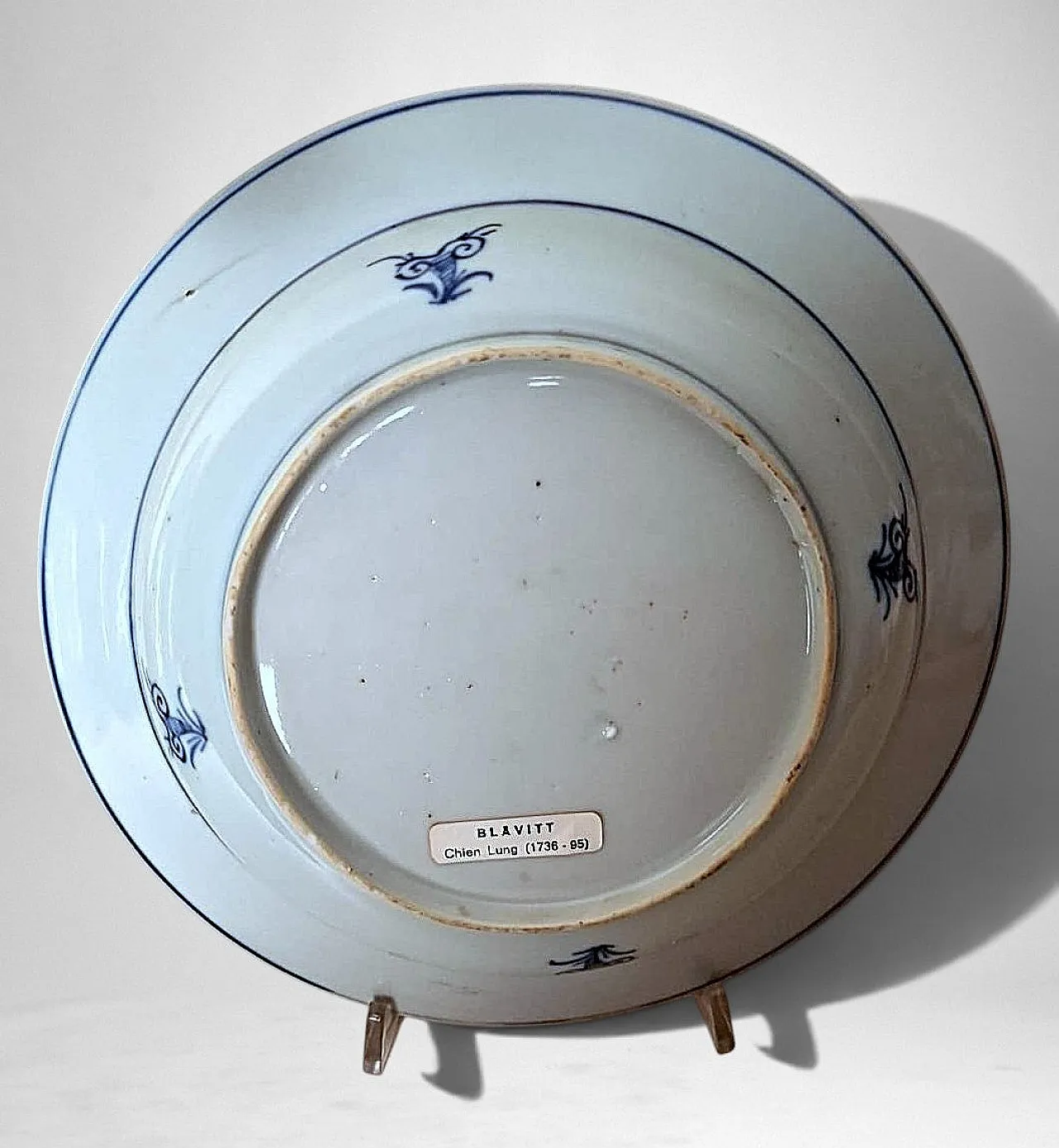
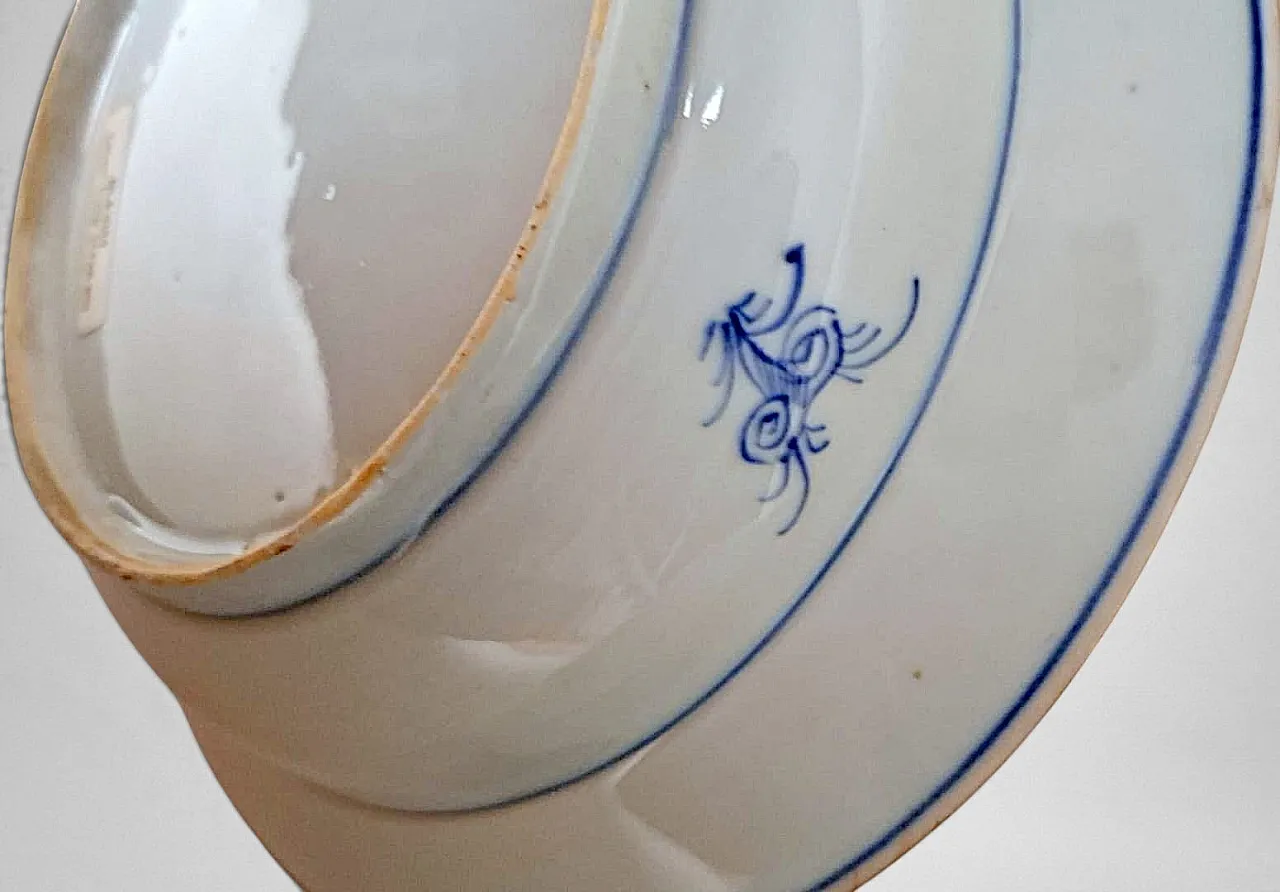
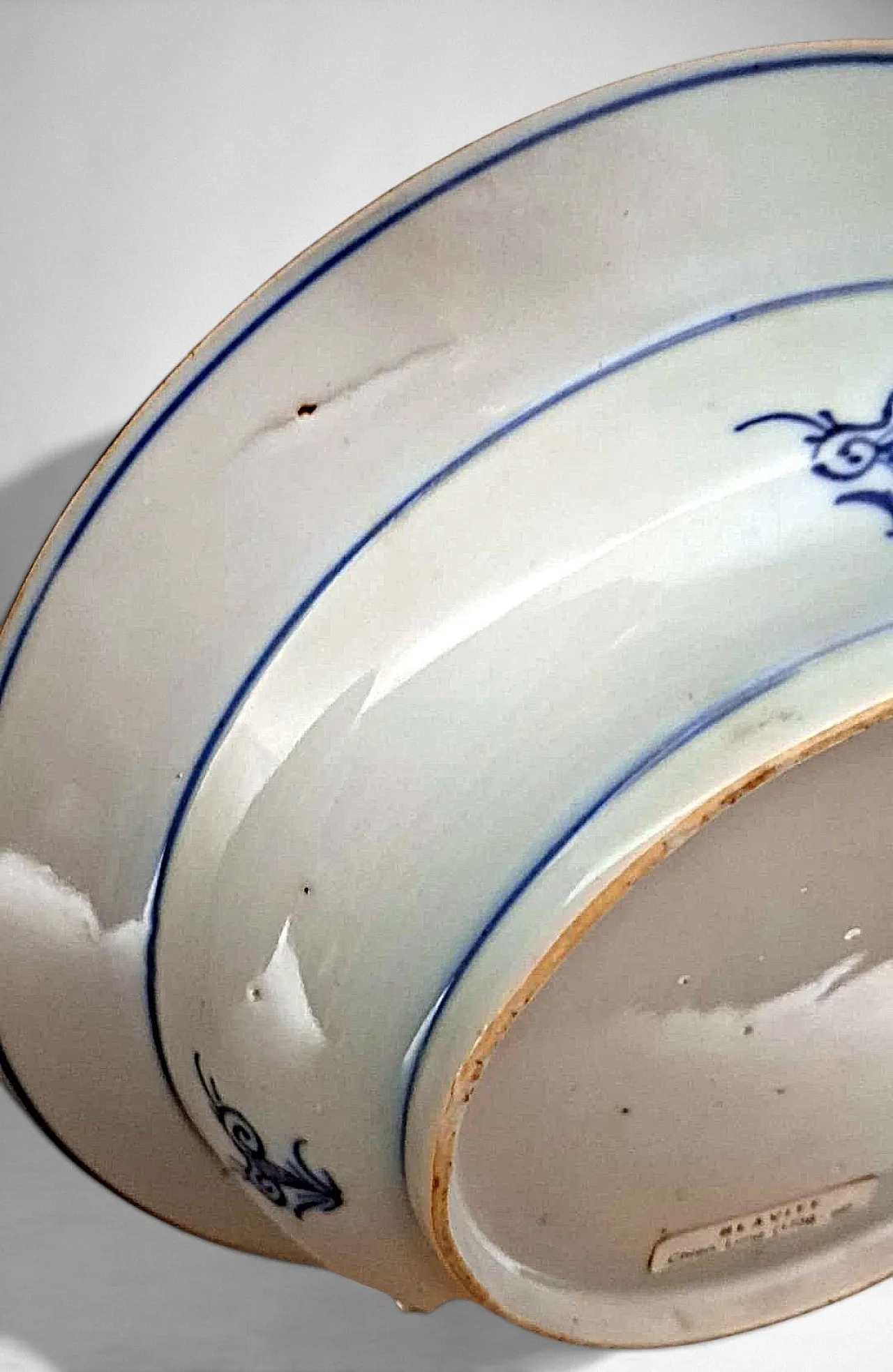
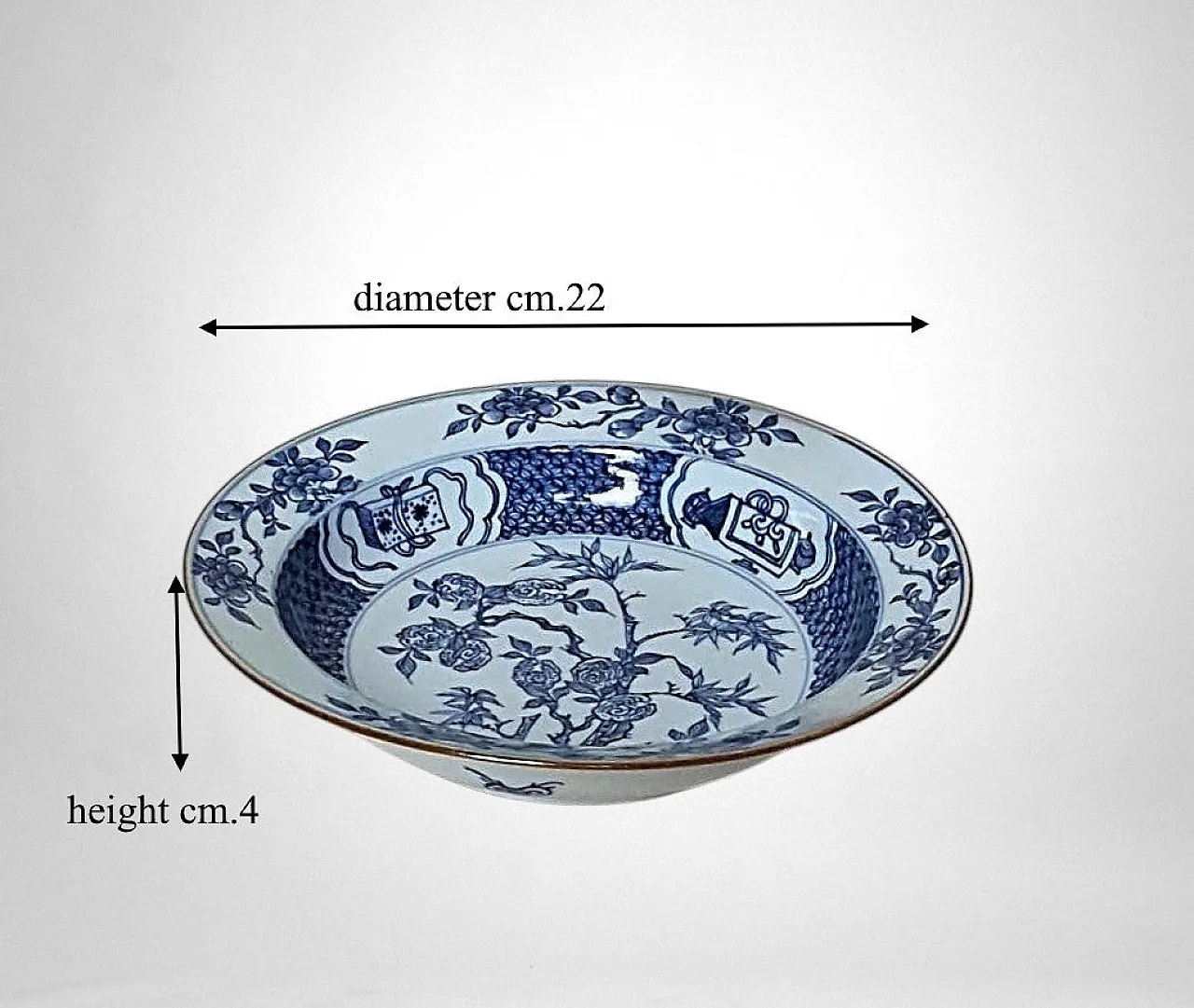
Pair of Chinese export porcelain soup plates, produced at the renowned kilns of Jingdezhen during the Qianlong period (1736–1795), under the Qing dynasty, most likely between 1760 and 1775. The two pieces were made for the European market and intended for export through the trading network of the East India Companies. The decoration, entirely hand-painted in underglaze cobalt blue, features a refined floral motif, one of the most widely used decorative themes in Chinese porcelain produced for Western markets during the 18th century. The quality of the porcelain, the characteristic cobalt-blue palette, and the decorative composition are all consistent with Jingdezhen production of the Qianlong period. The absence of a mark on the underside is entirely consistent with the intended purpose of these pieces. Numerous Chinese porcelains made for the European market during the 18th century bear no identifying mark. Imperial marks were primarily associated with porcelain produced for the court, while many wares made at private Jingdezhen kilns were left unmarked. Therefore, the absence of a mark should not, in itself, be considered a negative factor in determining attribution or date. Several constructional and decorative details contribute to the chronological dating of the plates, including the slightly shaped rim, the characteristic cobalt-blue tone, the decorative vocabulary associated with 18th-century production, and the relatively low foot ring, a feature frequently found on Chinese porcelain of this period. The manufacture can be attributed to Jingdezhen, in Jiangxi Province, a major center of ceramic production and, since the 14th century, regarded as the world's foremost center of porcelain manufacture. The Jingdezhen kilns also produced wares commissioned by important Chinese merchants who supplied the major international trading networks. The East India Companies were not, in general, directly involved in the manufacture of these objects; rather, they played a fundamental role in importing and distributing goods from Asia to European markets, including large quantities of Chinese porcelain. Among the principal companies active in trade with China were the British East India Company, founded in England in 1600; the VOC, or Dutch East India Company, founded in 1602; the French East India Company; the Danish East India Company; and the Swedish East India Company. The commercial route generally followed a complex network linking the Jingdezhen kilns with Chinese merchants and then with the port of Canton (Guangzhou), from where the porcelain entered the trading networks of the East India Companies before being transported to European markets. It is plausible that these plates reached Europe through the British East India Company; however, in the absence of documented provenance, it cannot be ruled out that they were commercialized through one of the other East India Companies. In any event, this circumstance does not affect their attribution as Chinese export porcelain or their historical and collectible interest. The plates are in good condition. The porcelain retains its characteristic material quality and displays minor surface irregularities consistent with the handcrafting and firing processes of the 18th century. Small inclusions and traces of ferruginous oxidation are also visible, attributable to the presence of iron in the ceramic raw material. These characteristics, which developed and became more pronounced over time, form an integral part of the object's historic patina and enhance its authentic material character and the distinctive appeal of an antique work of porcelain. Measurements: diameter 22 cm (8.66 in.); height 4 cm (1.57 in.).





 SILVER Seller in Prato, Italy