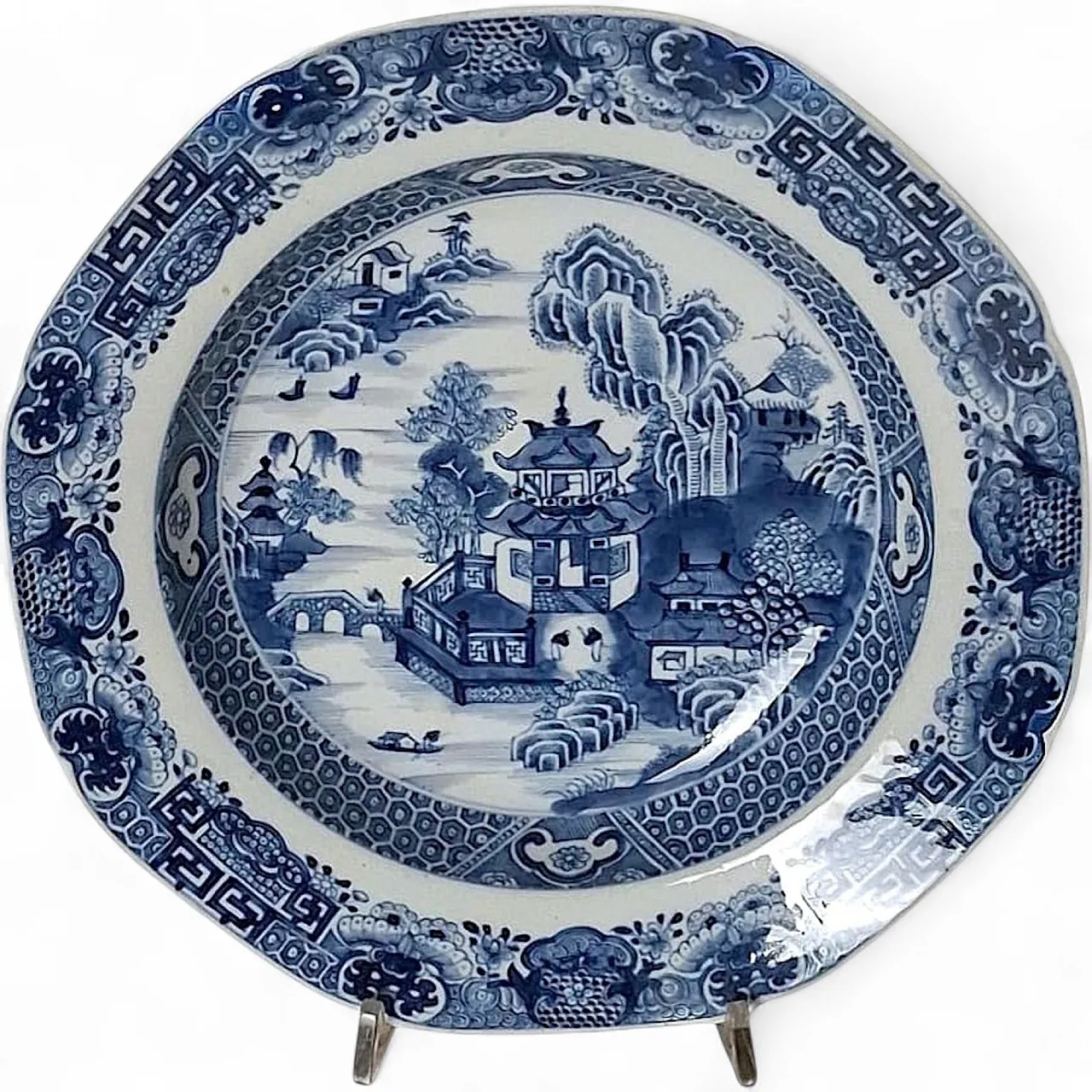
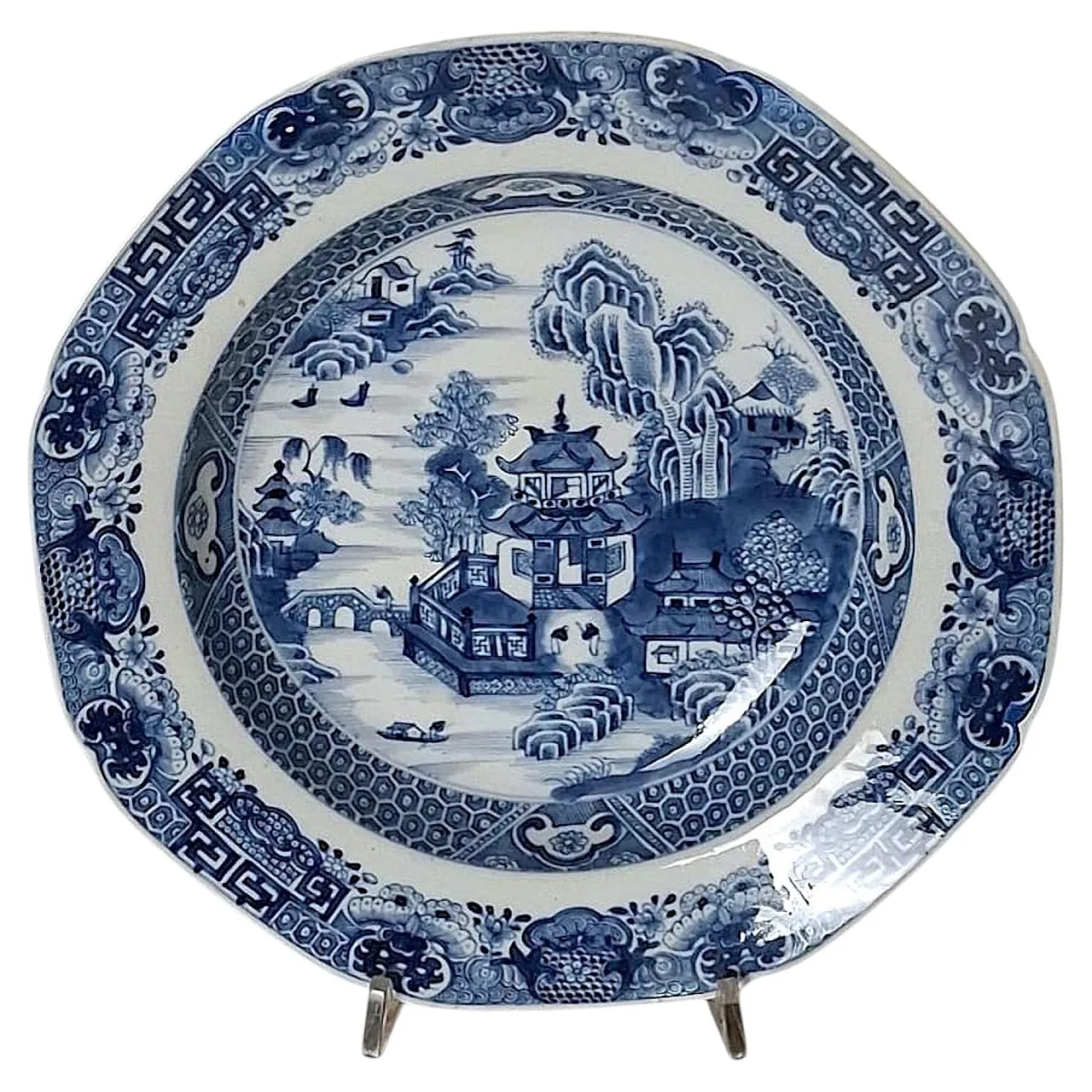
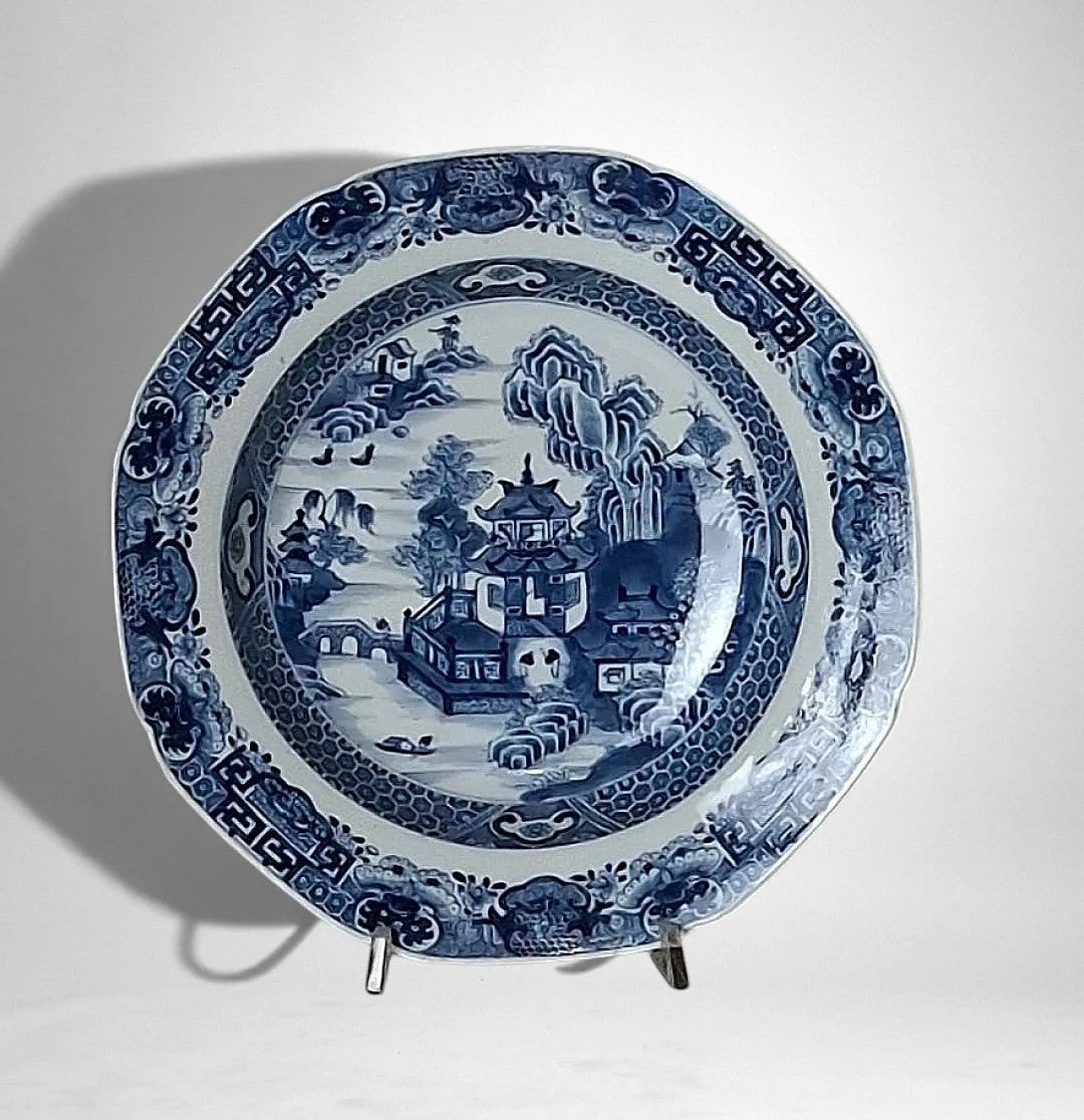
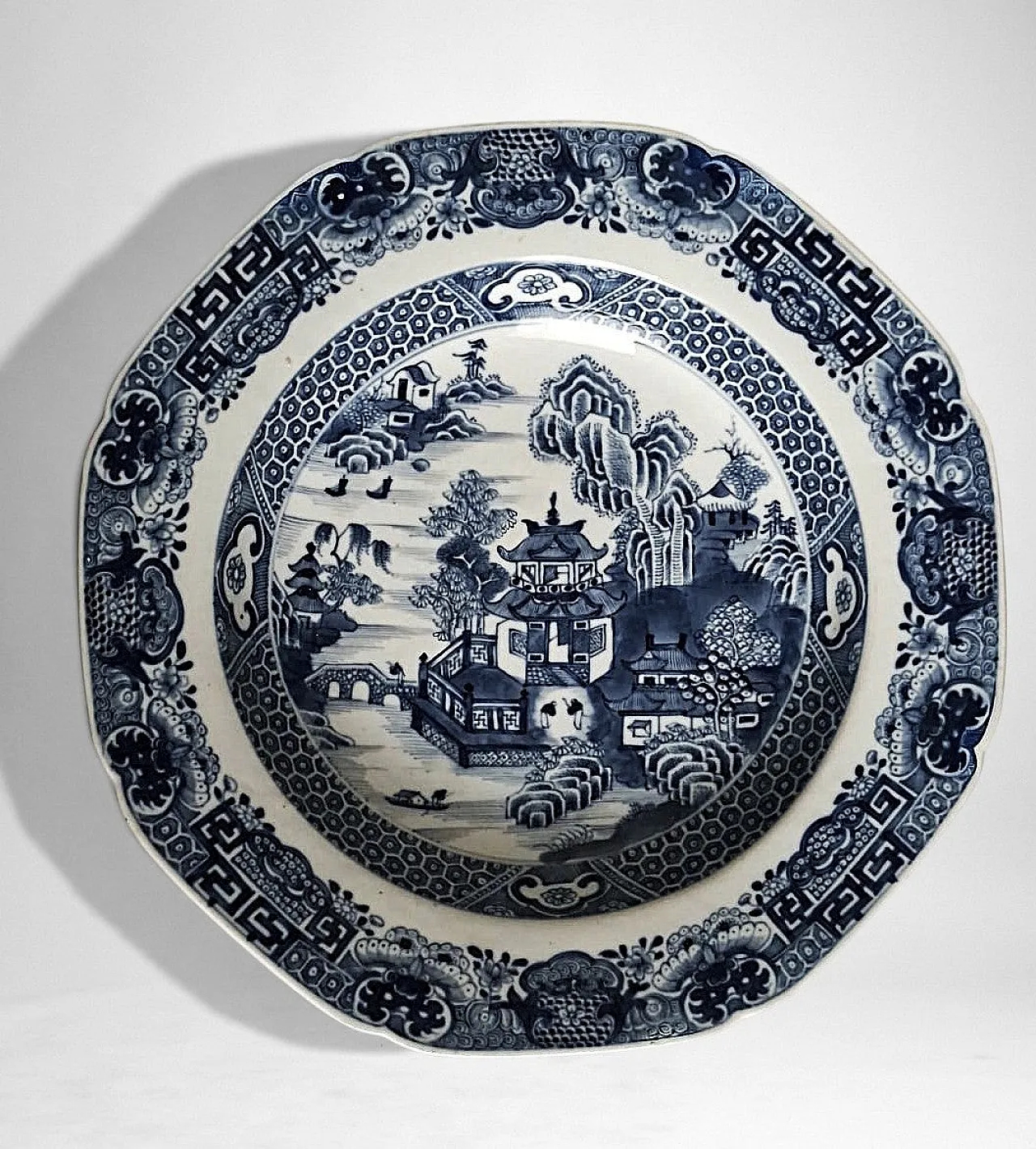
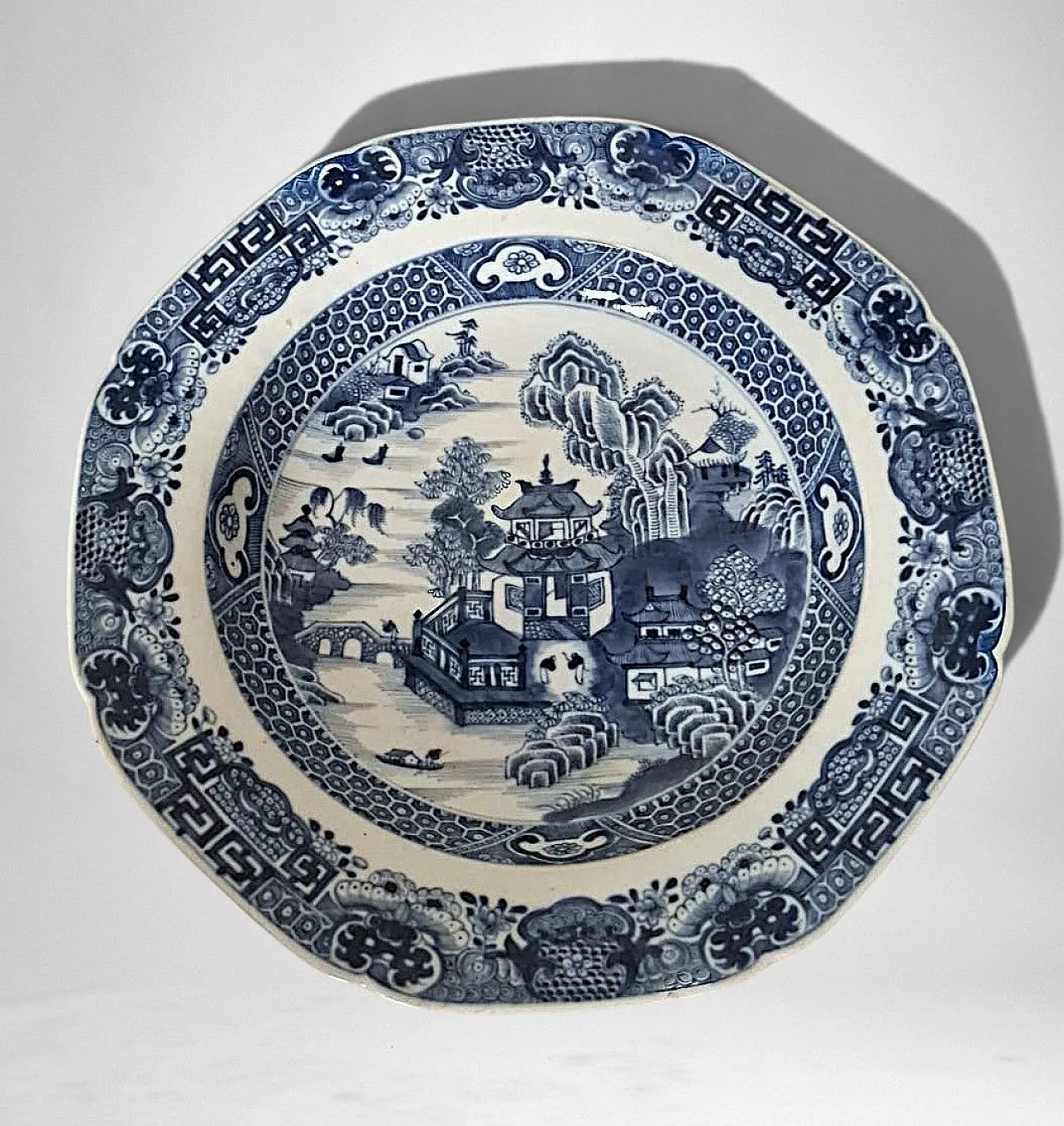
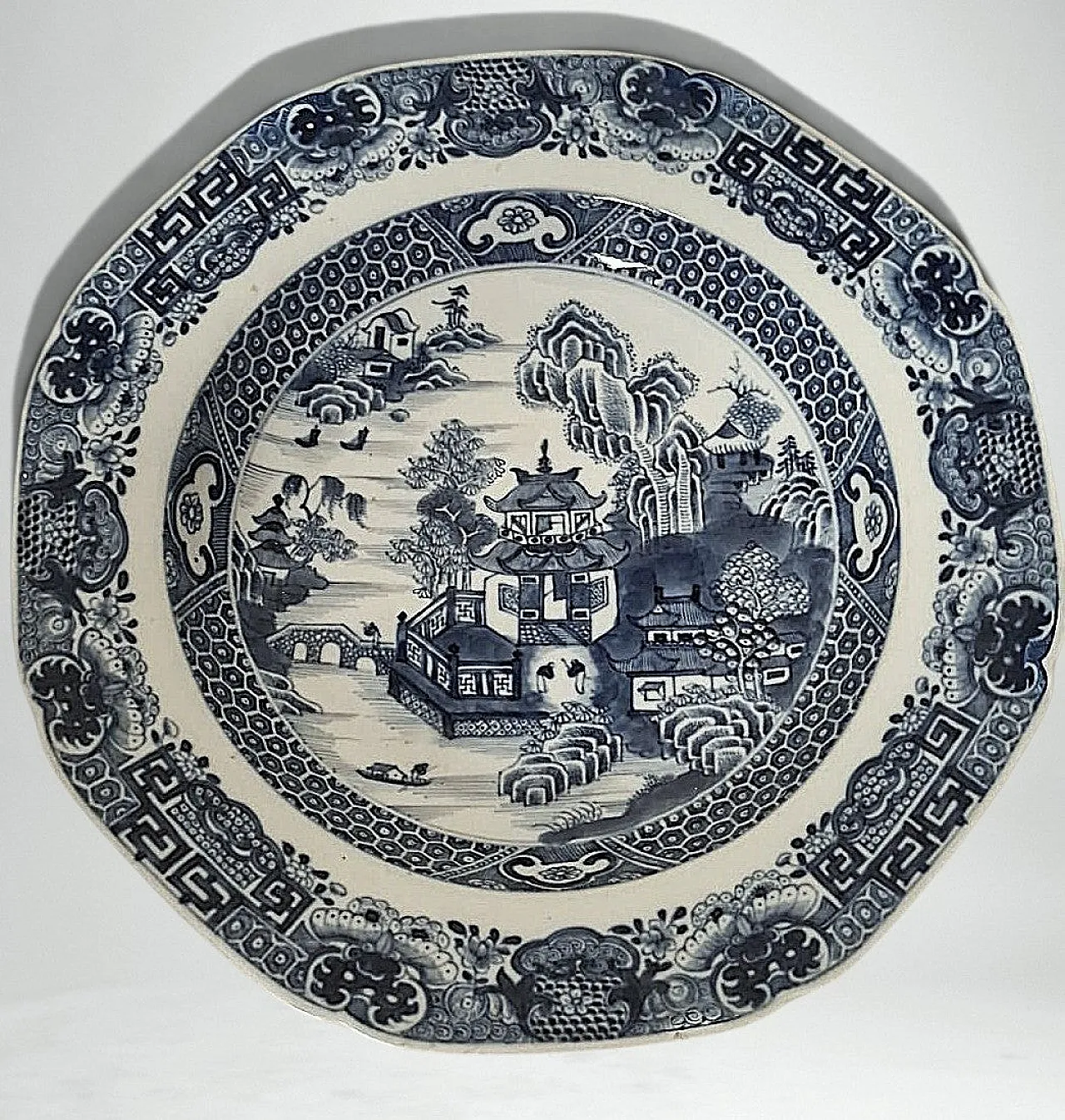
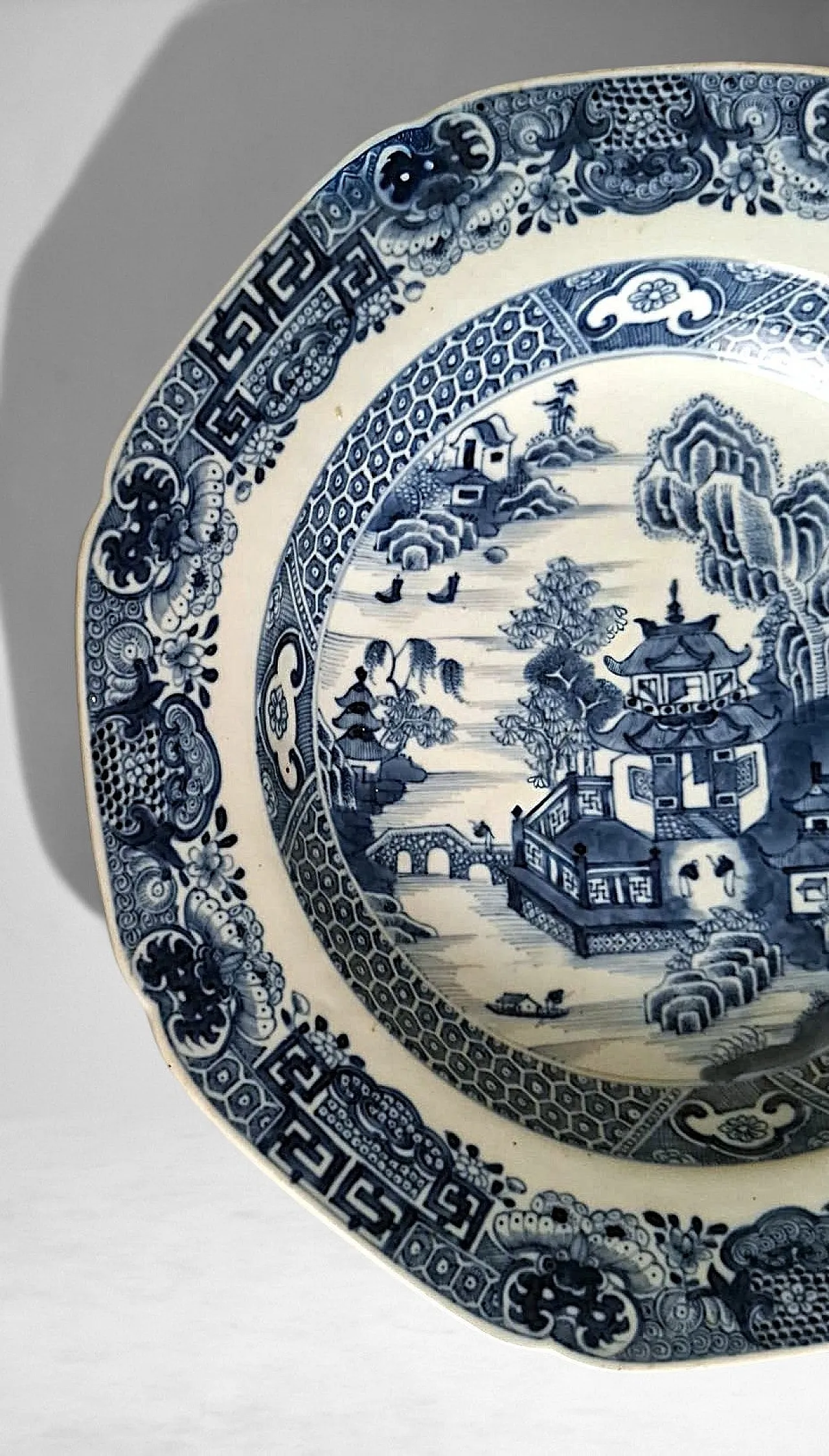
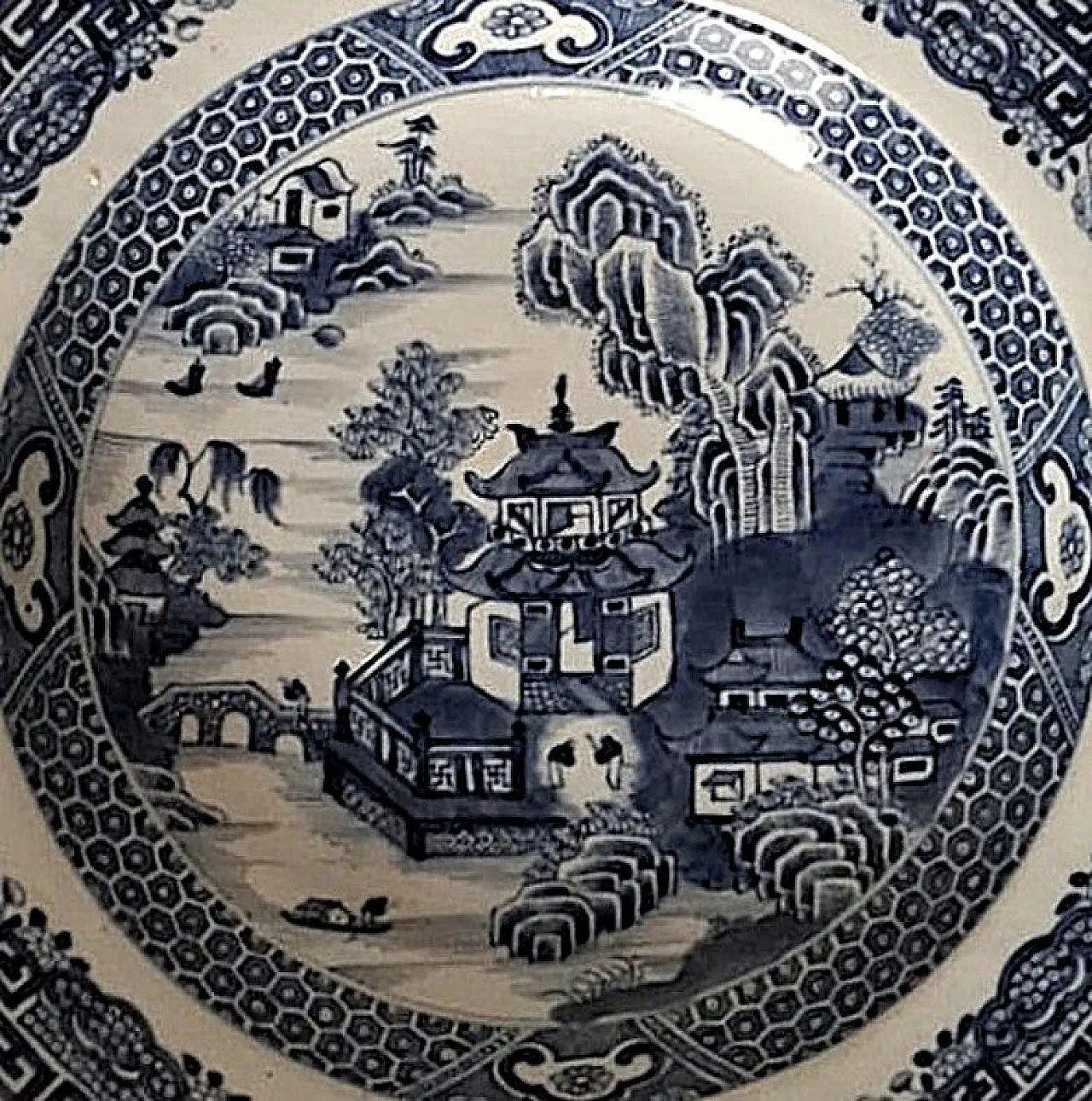
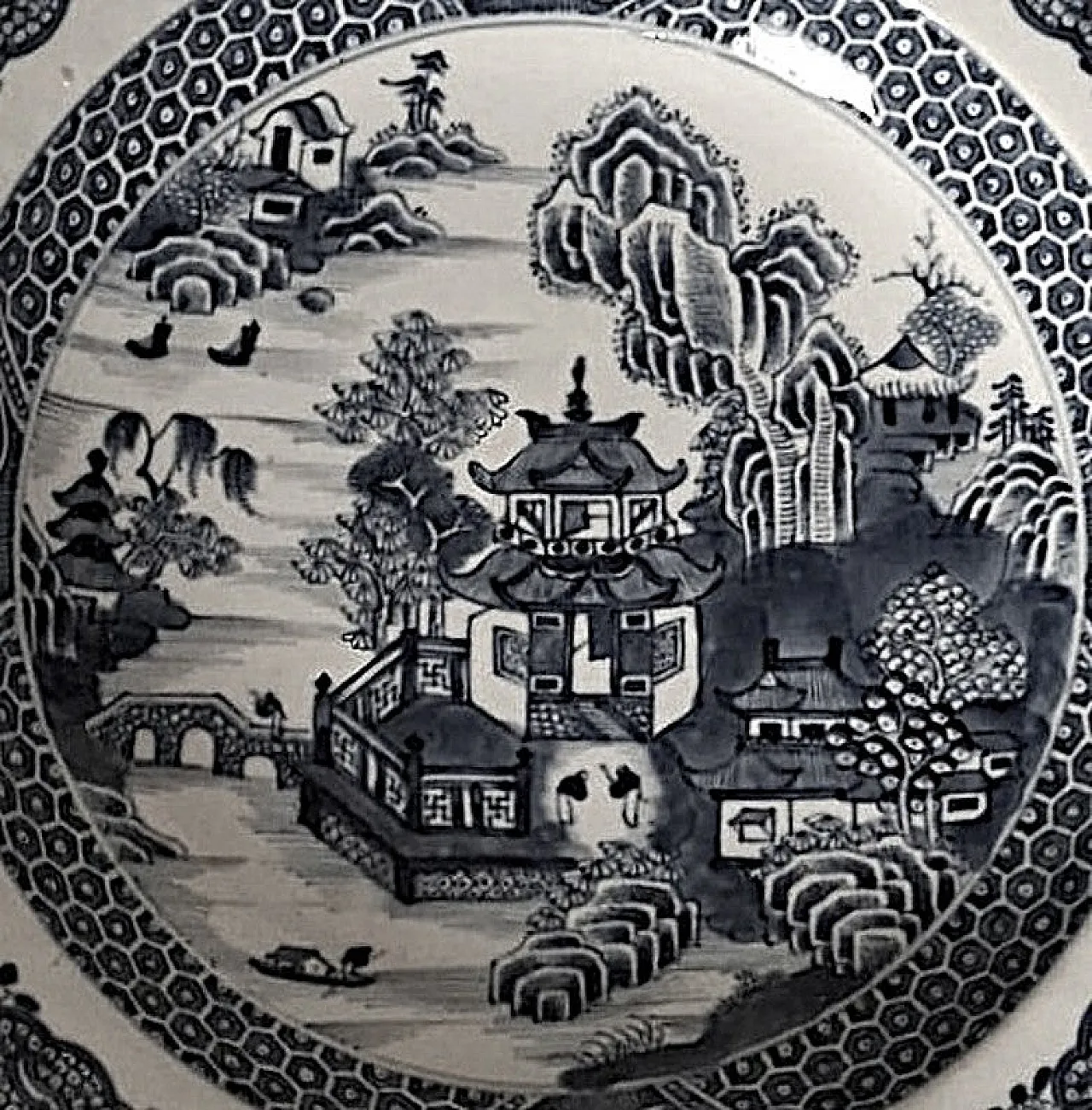
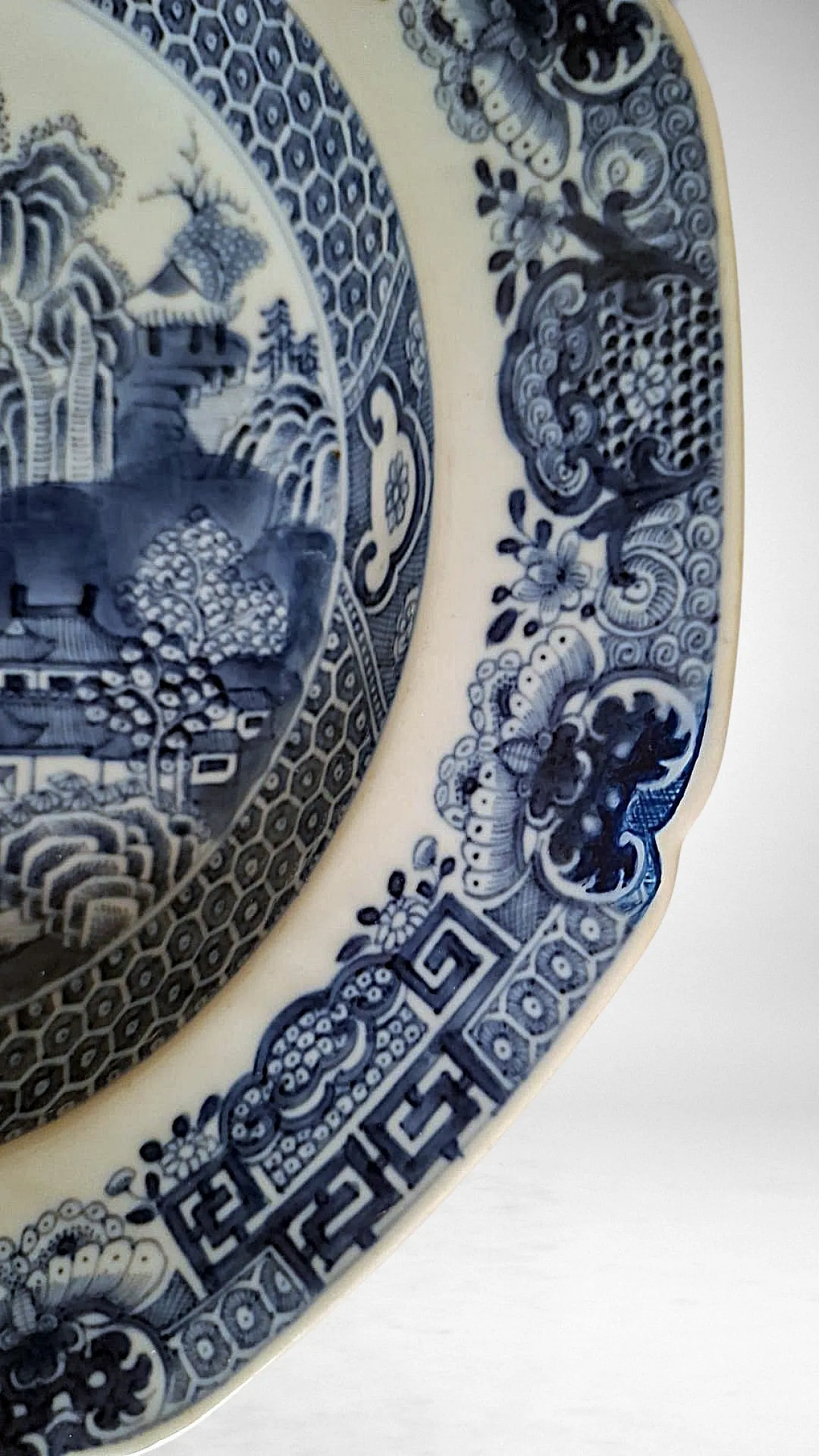
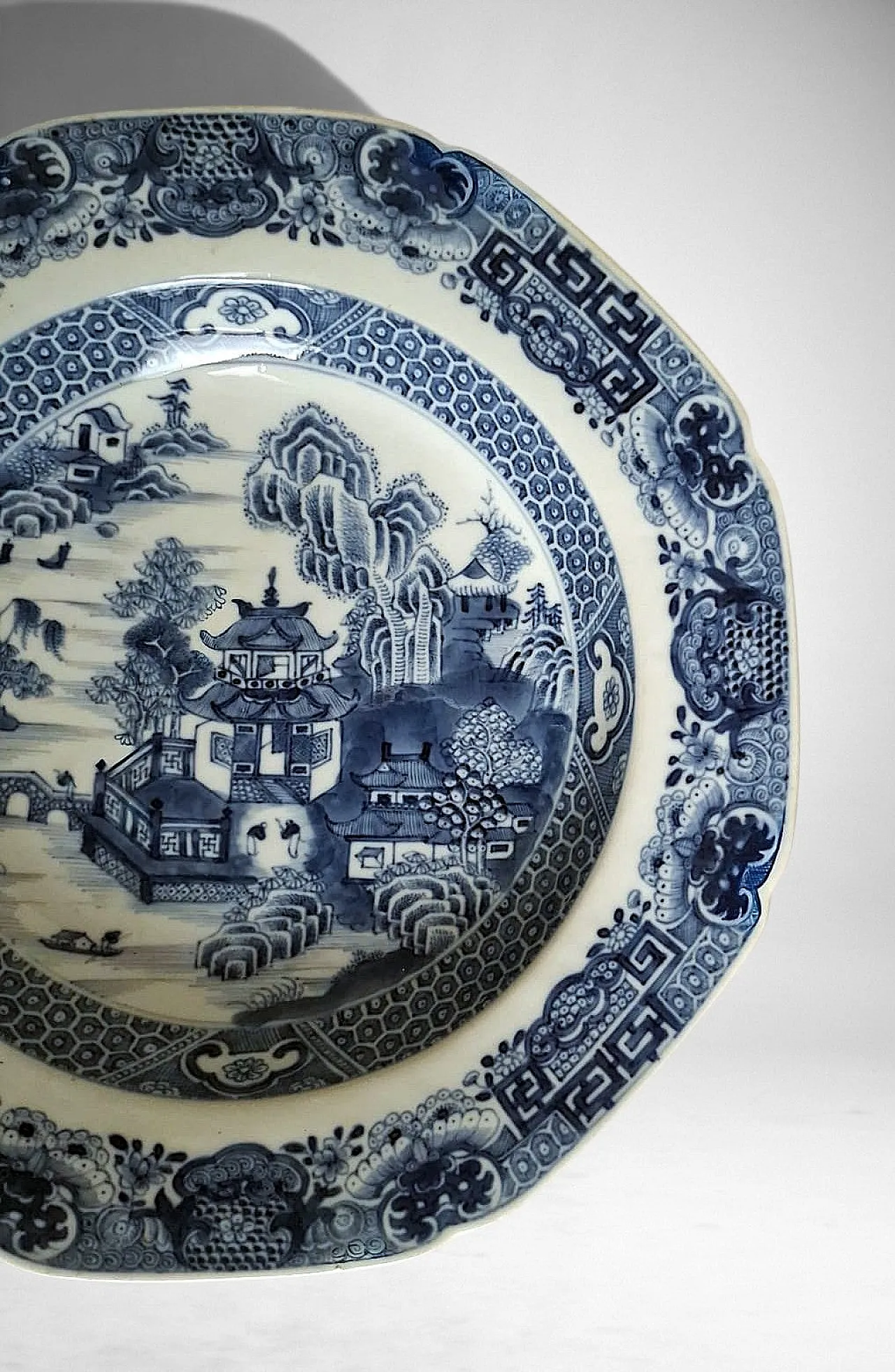
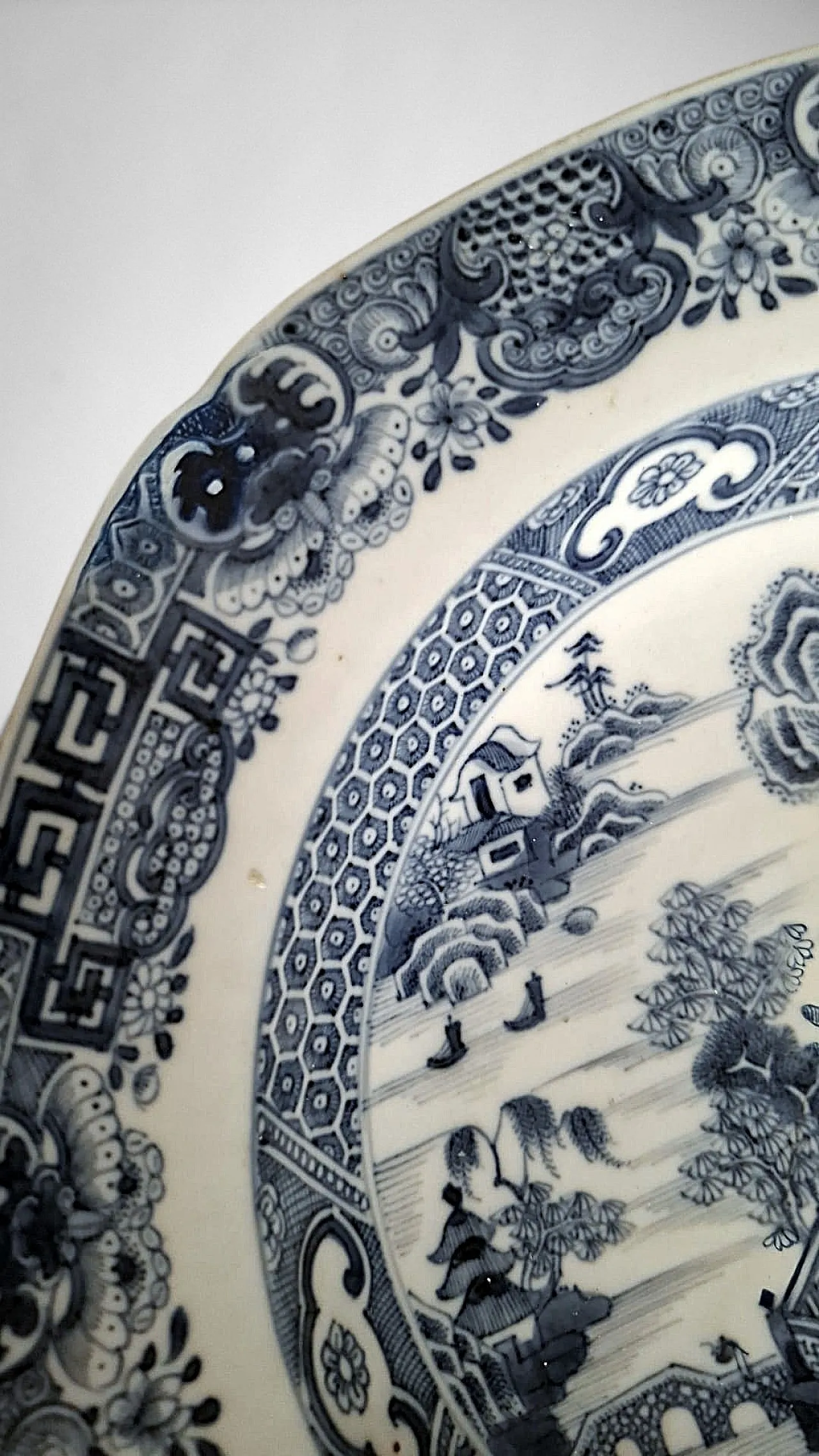
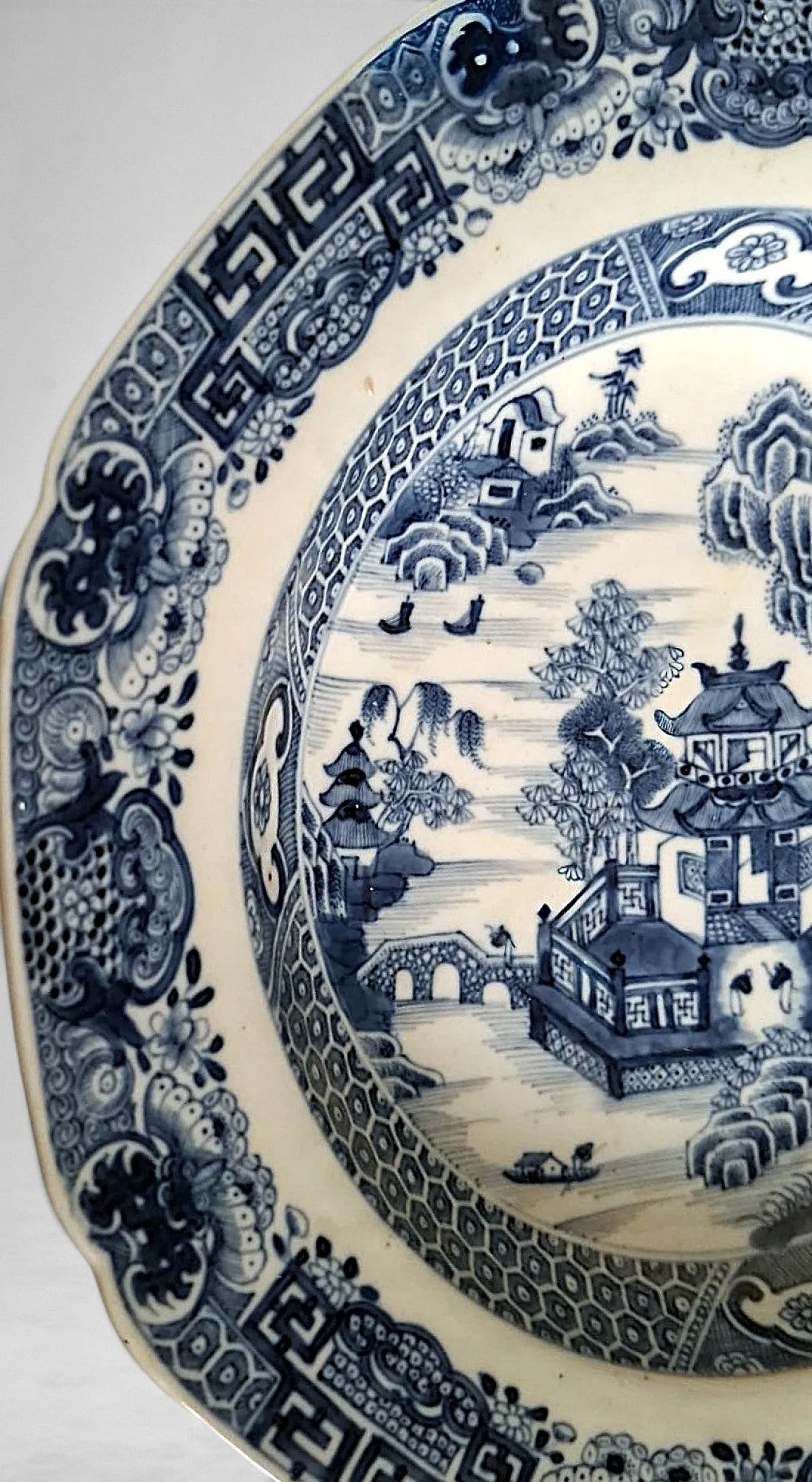
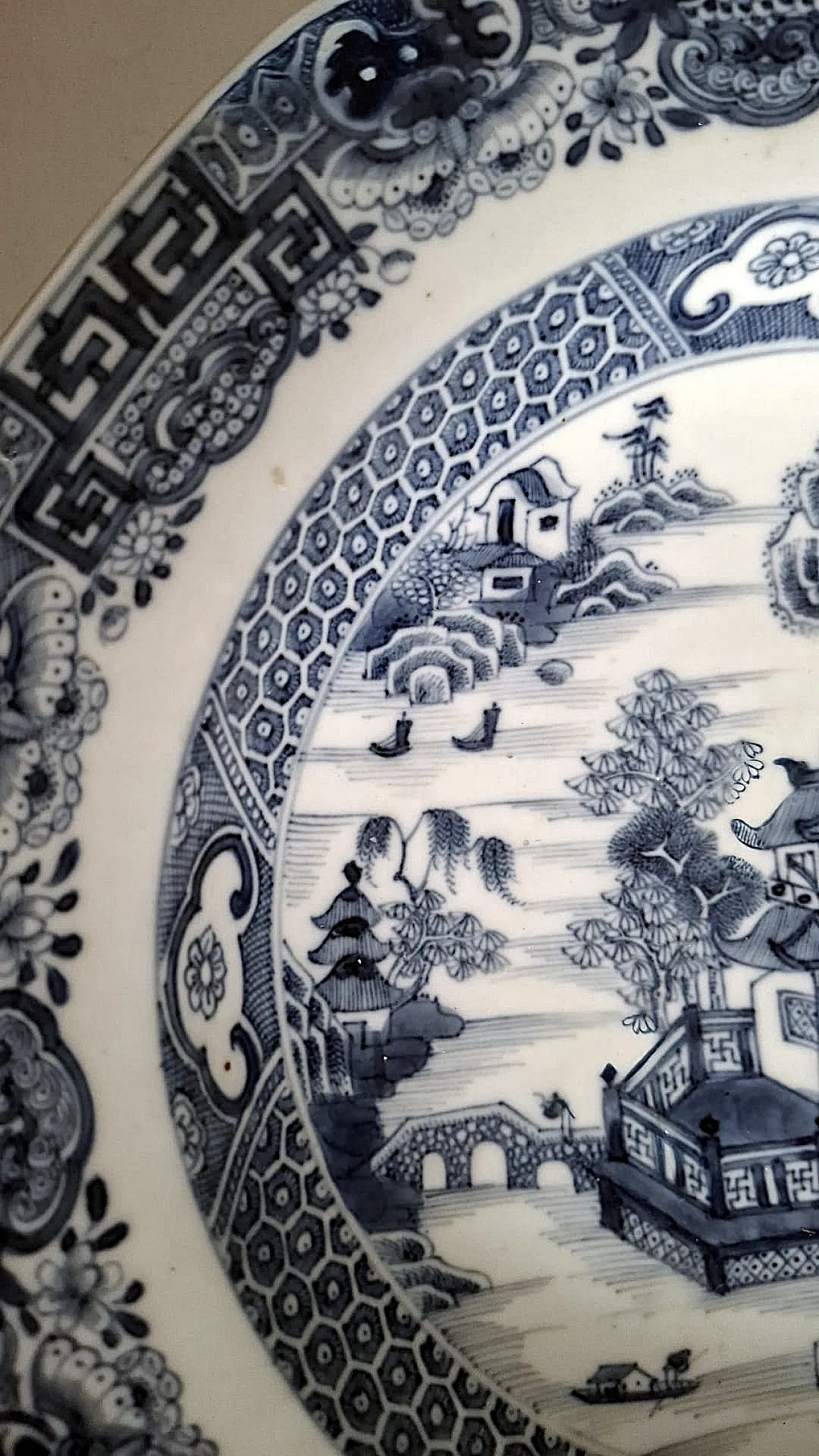
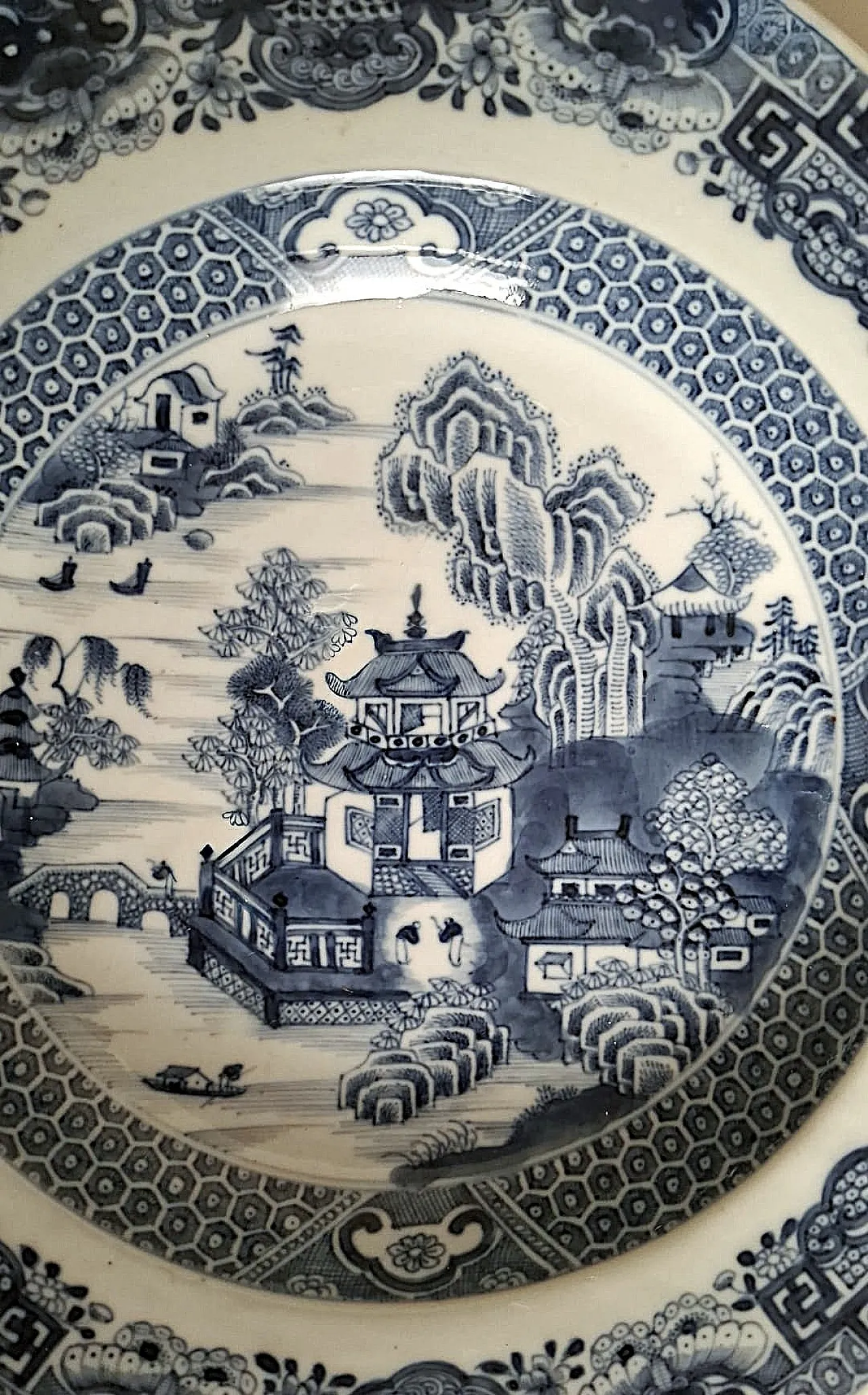
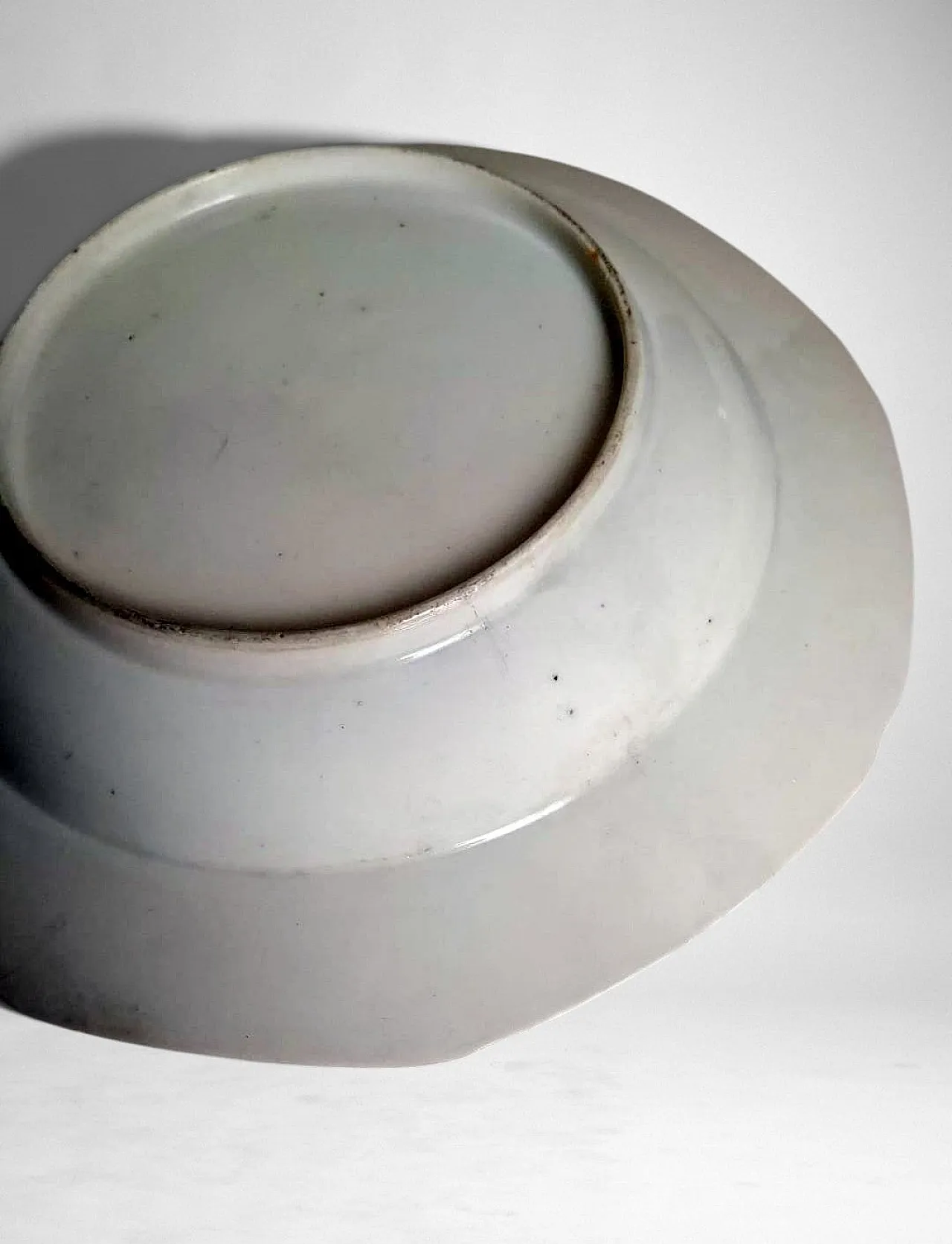
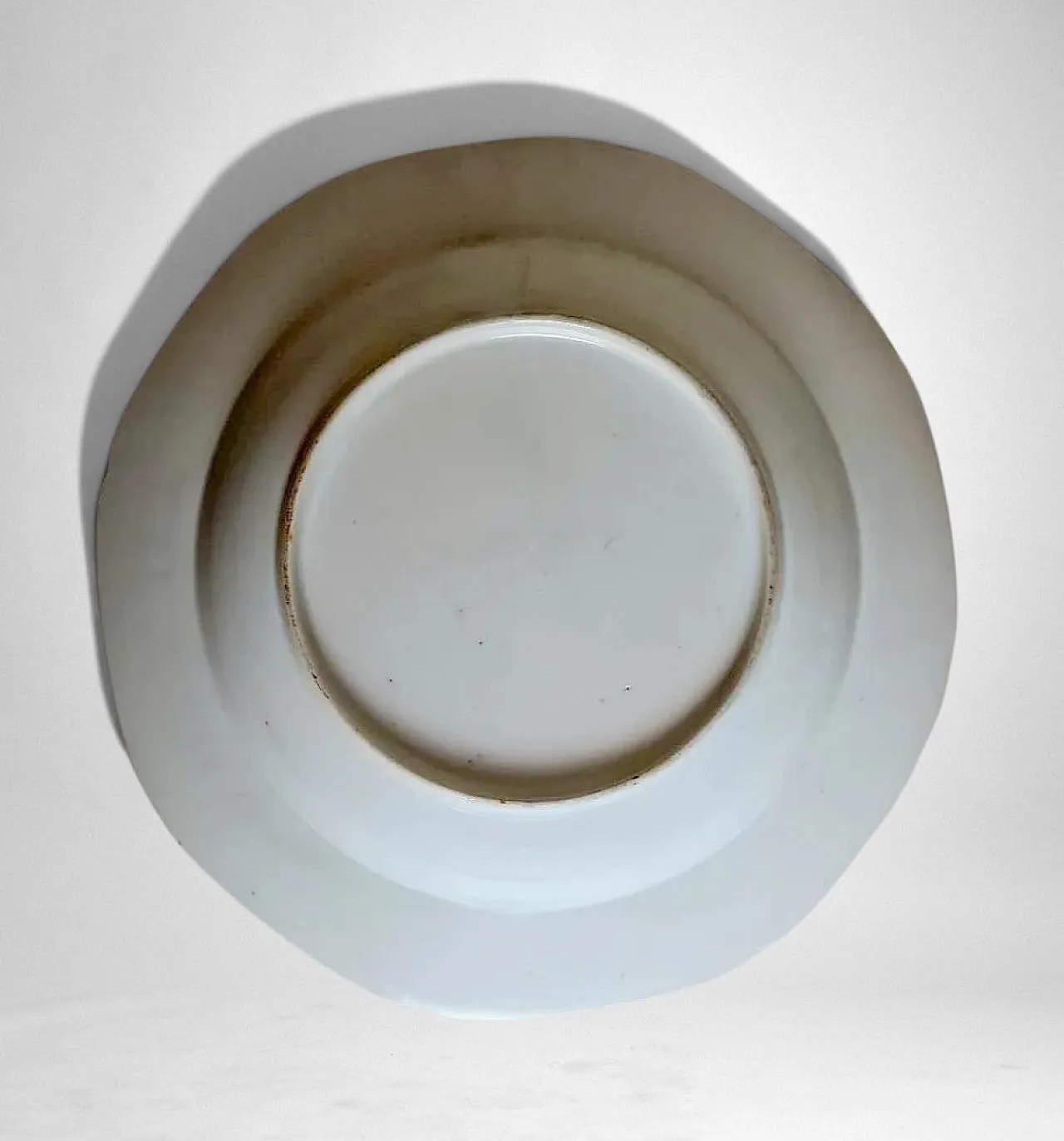
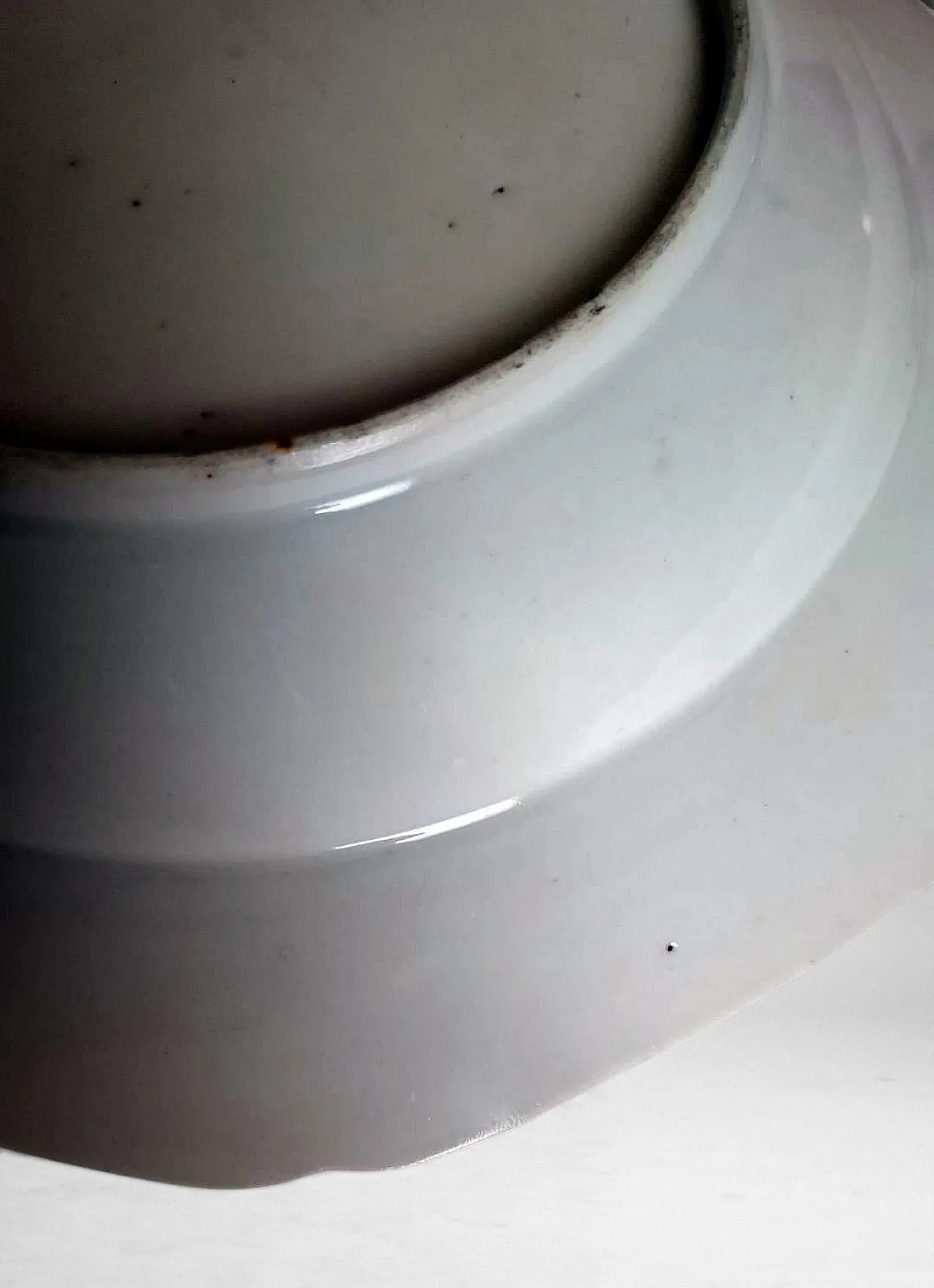
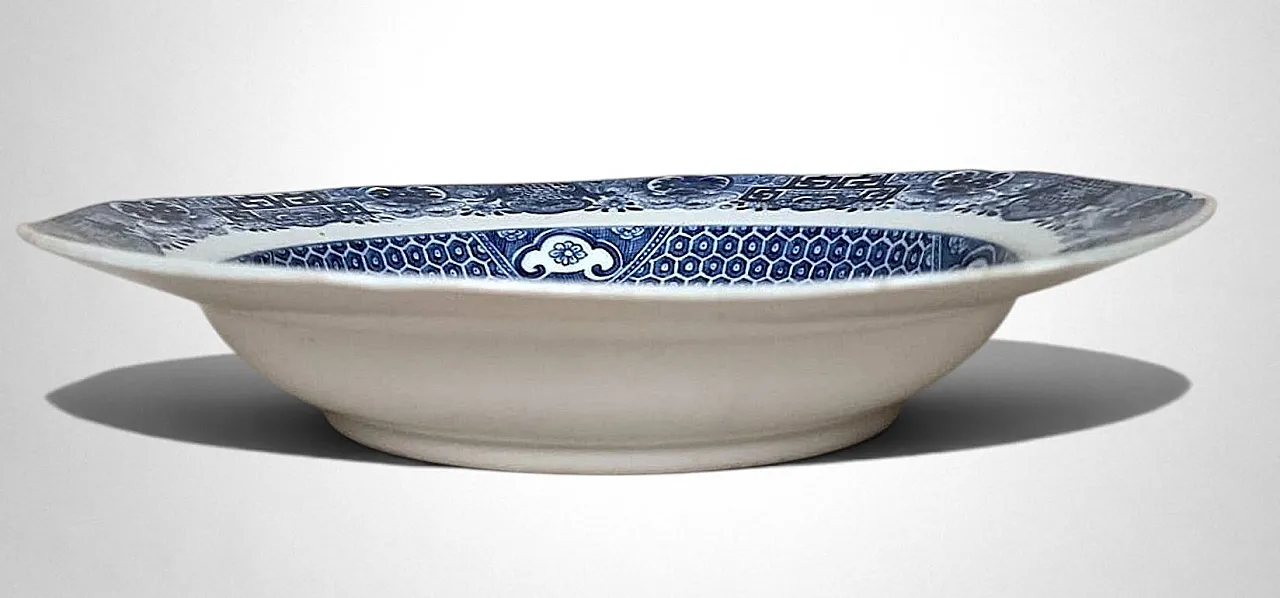
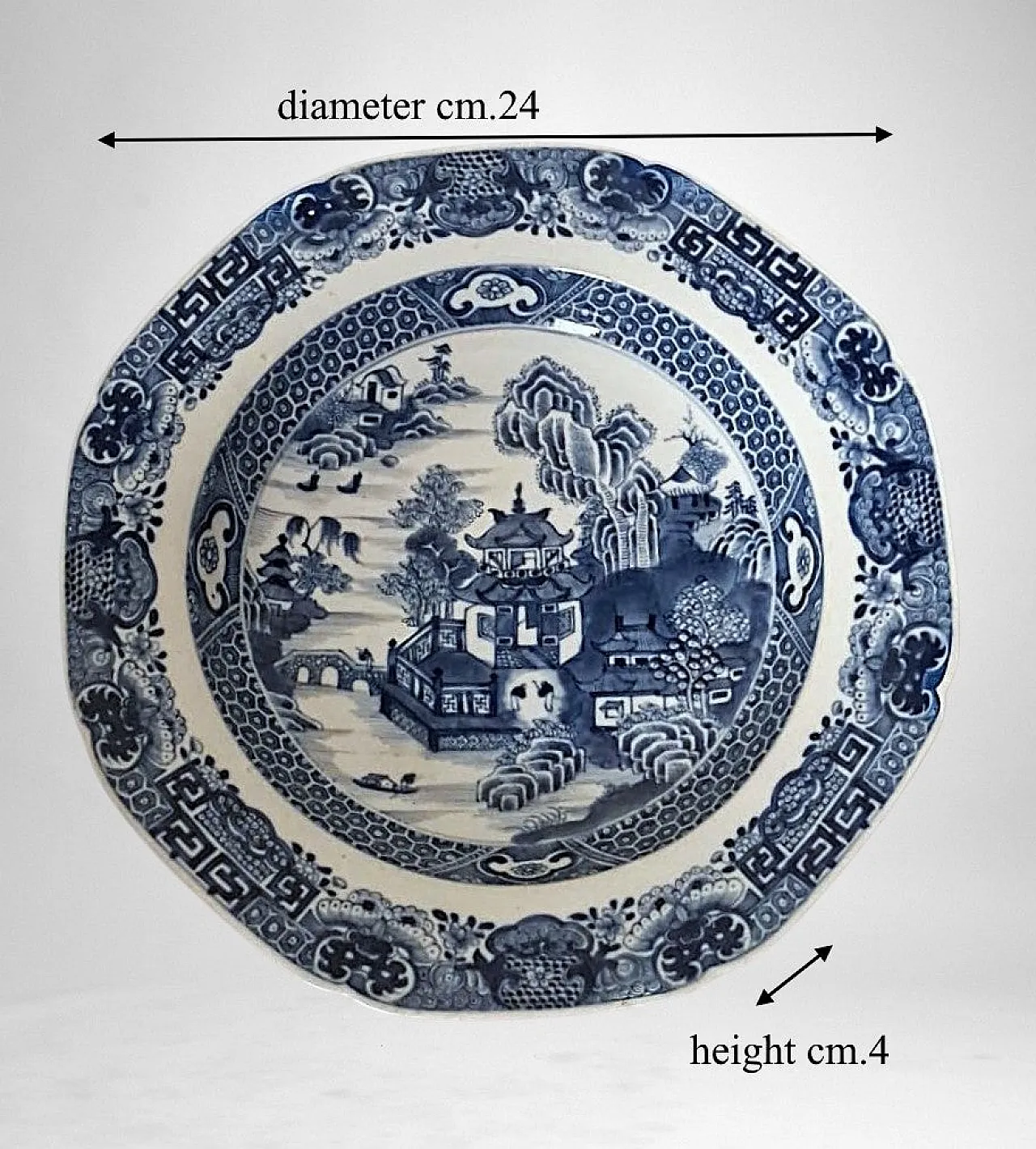
Chinese export porcelain plate produced by the renowned Jingdezhen kilns during the Qianlong period (1736–1795) of the Qing Dynasty, most likely between 1760 and 1775. The piece was created specifically for the European export market and was shipped to the West through one of the East India Companies. The decoration is entirely hand-painted in underglaze cobalt blue and features the celebrated "Nanking" or "Chinese Landscape Pattern," depicting pagodas, a small bridge, mountains, willow trees, rocks, and tiny figures arranged within an elegant pastoral landscape. This decorative pattern is generally dated between 1740 and 1780 and represents one of the most widely exported Chinese porcelain designs supplied to Europe during the eighteenth century. The absence of a mark on the underside is entirely normal and fully consistent with Chinese export porcelain of the period. The vast majority of porcelain produced for export during the eighteenth century was left unmarked, as imperial reign marks were primarily reserved for wares made for the imperial court. In addition, many private Jingdezhen workshops did not apply marks to their production. Consequently, the lack of a factory or reign mark should not be regarded as a negative factor in determining authenticity or dating. Several characteristics further support the proposed dating of this plate, including the gently molded rim, the distinctive cobalt blue tone, the landscape pattern typical of porcelain produced between 1740 and 1780, and the relatively low foot rim, a feature commonly encountered on eighteenth-century Chinese porcelain. The plate can be confidently attributed to the porcelain workshops of Jingdezhen, in Jiangxi Province, a city recognized as the world's foremost center of porcelain production since the fourteenth century. Its kilns manufactured wares commissioned by Chinese merchants who supplied the major East India Companies. These companies did not own porcelain factories; rather, they acted as powerful commercial enterprises responsible for importing large quantities of Asian goods—including fine porcelain—into Europe. The principal trading companies included the British East India Company (England, founded in 1600), the Dutch East India Company (VOC) (1602), the Compagnie française des Indes, the Danish East India Company, and the Swedish East India Company. The commercial route generally followed the same path: Jingdezhen kilns, Chinese merchants, the port of Canton (Guangzhou), the East India Company, and finally the European market. It is reasonable to assume that this plate was imported into Europe by the British East India Company, although it may equally have passed through one of the other East India Companies. In either case, this has no bearing on the historical significance, authenticity, or collectability of the piece. The plate is in good overall condition. The porcelain retains its original body together with the minor manufacturing irregularities characteristic of eighteenth-century handcrafted production, details that contribute to its authenticity and historical appeal. Dimensions: Diameter: 9.45 in. (24 cm). Height: 1.57 in. (4 cm).








 SILVER Seller in Prato, Italy