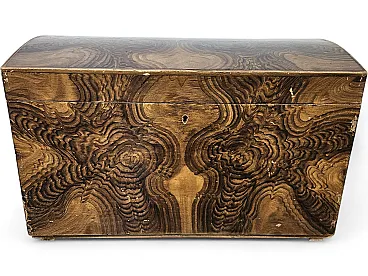
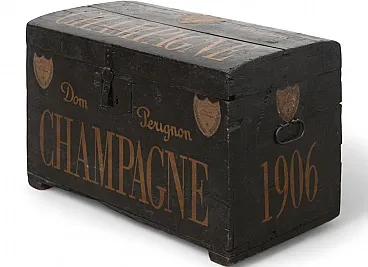
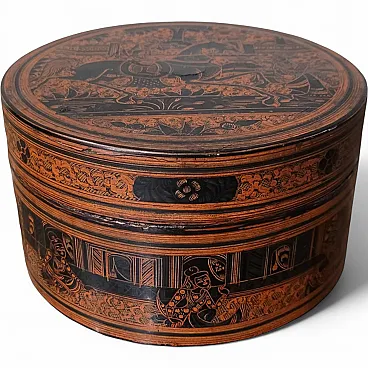
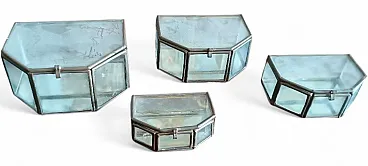
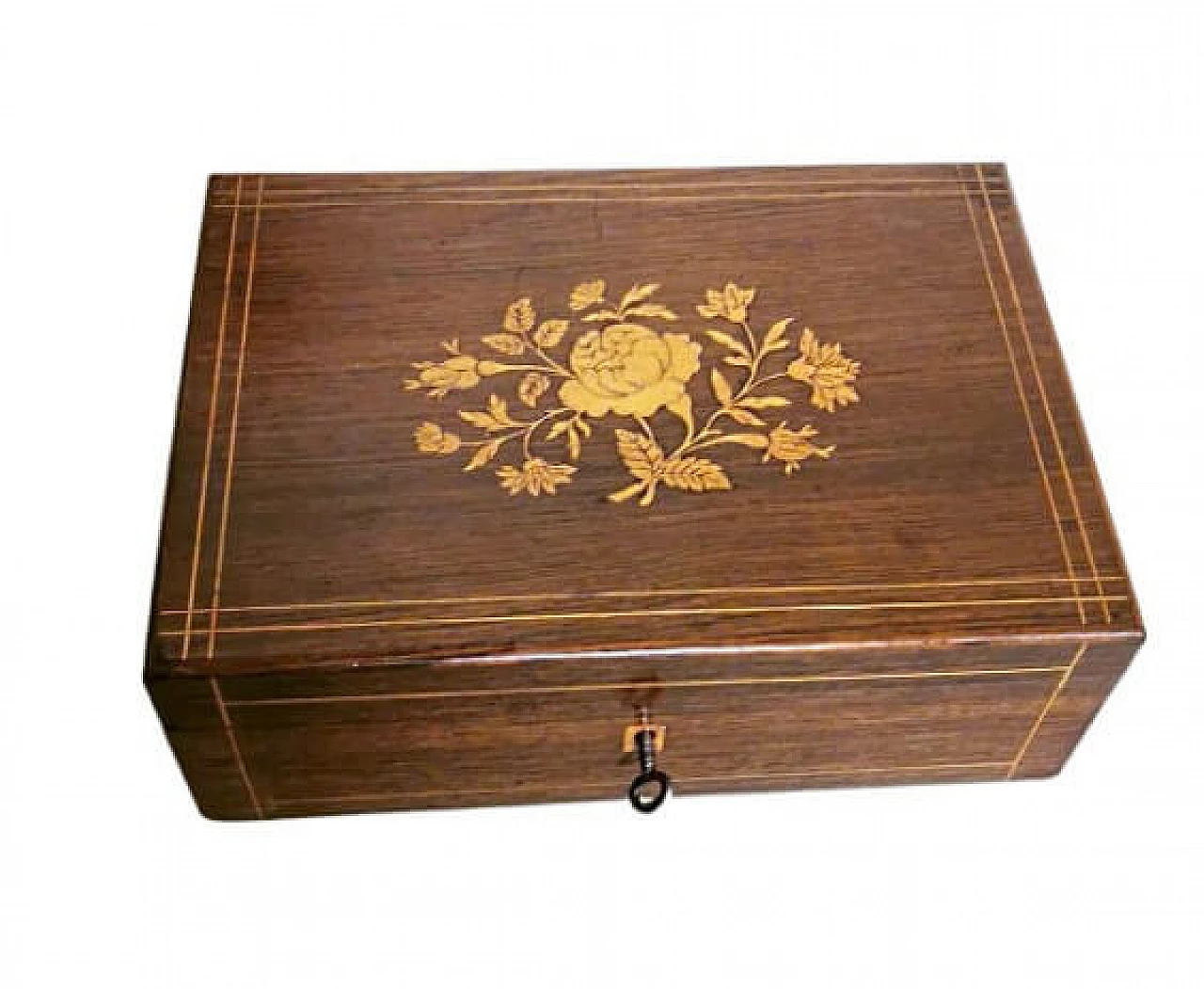
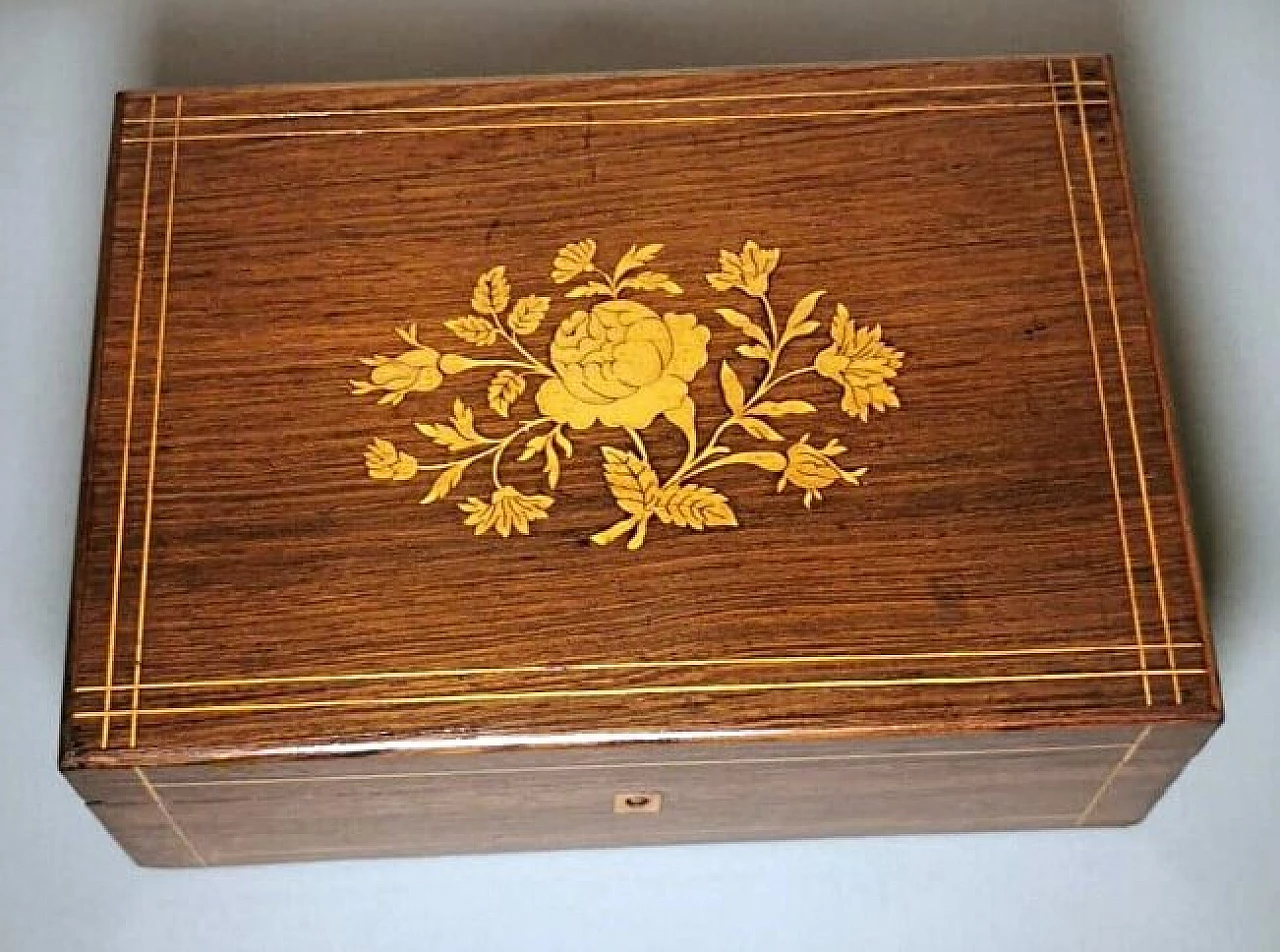
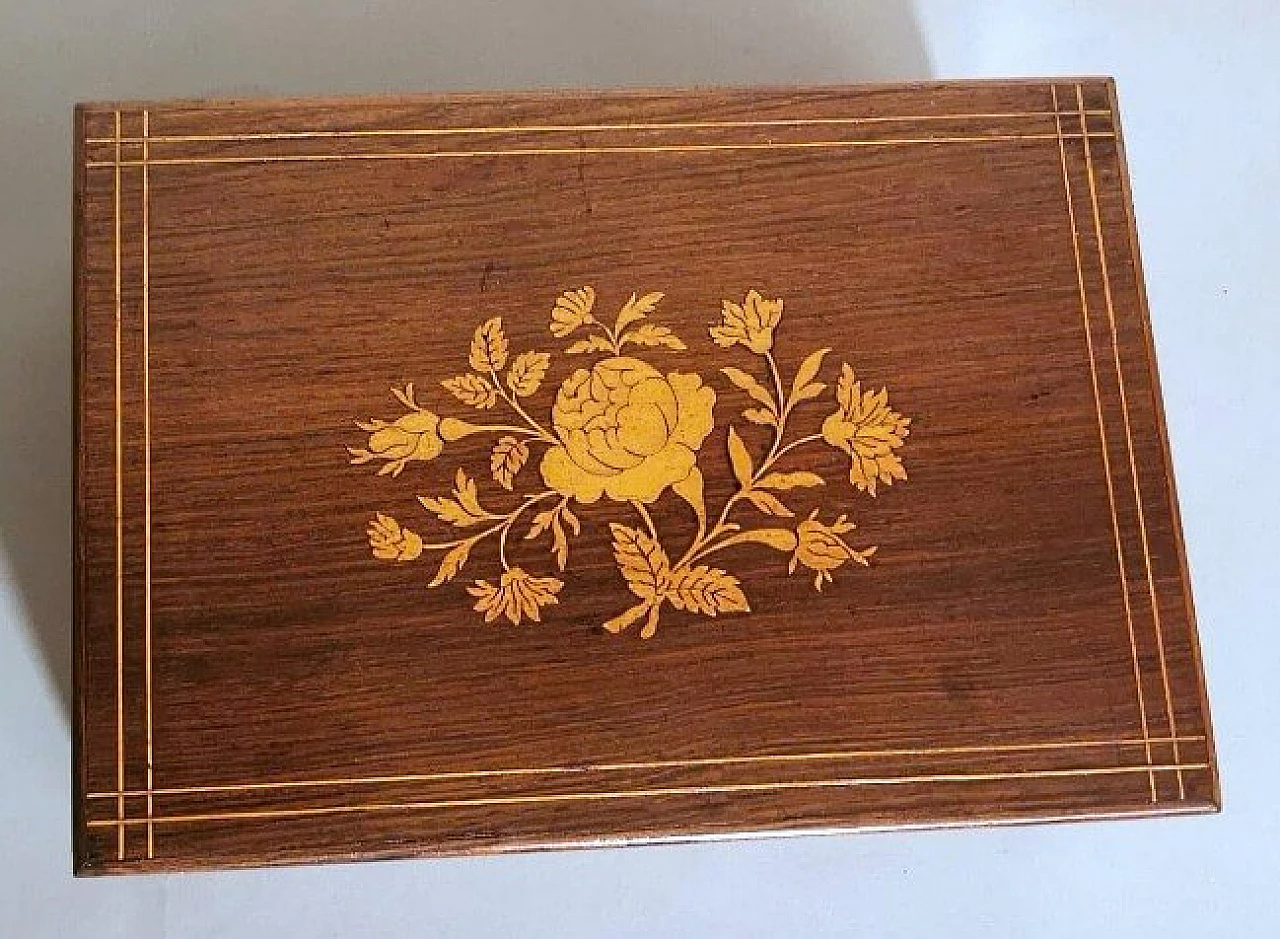
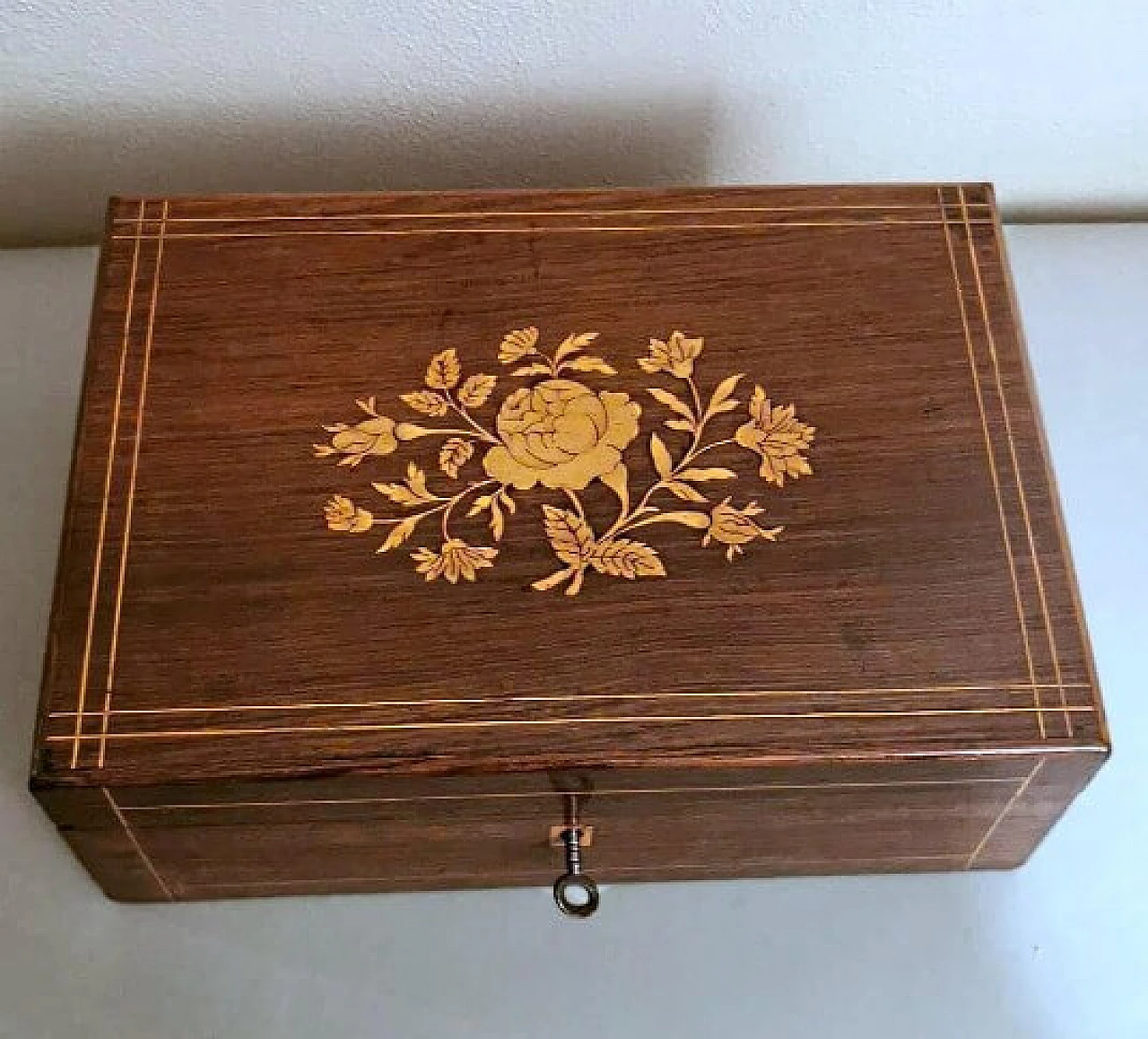
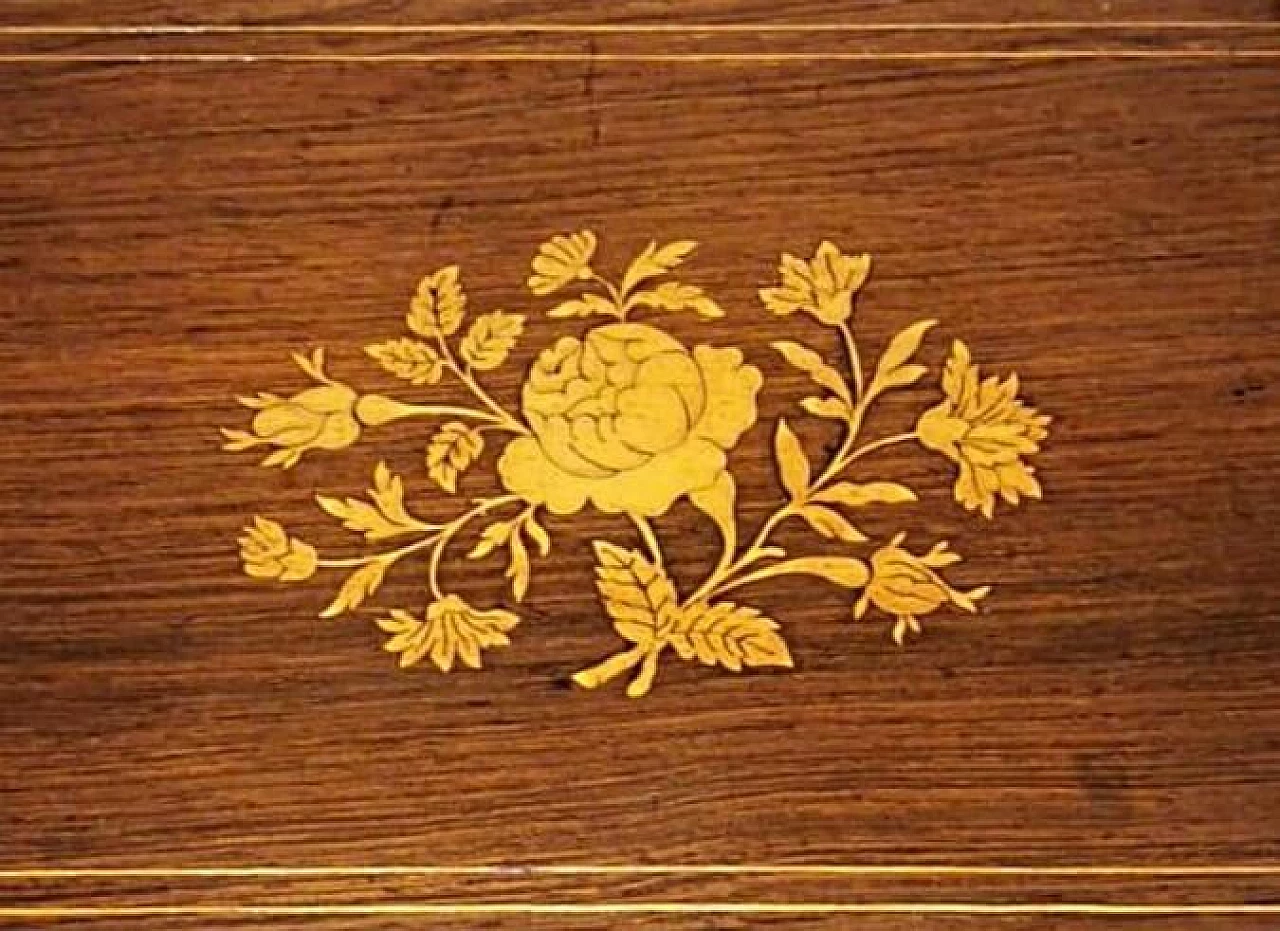
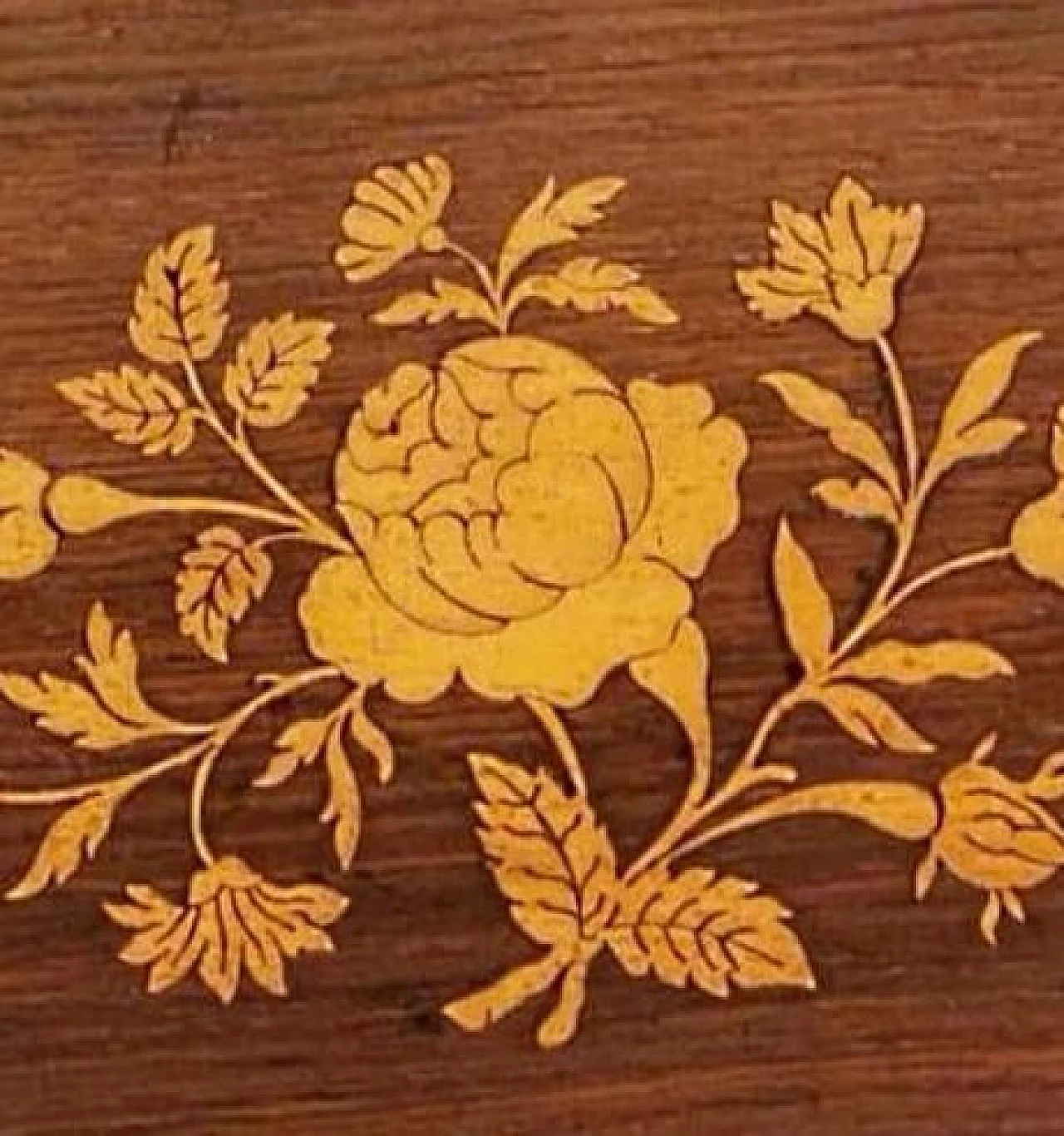
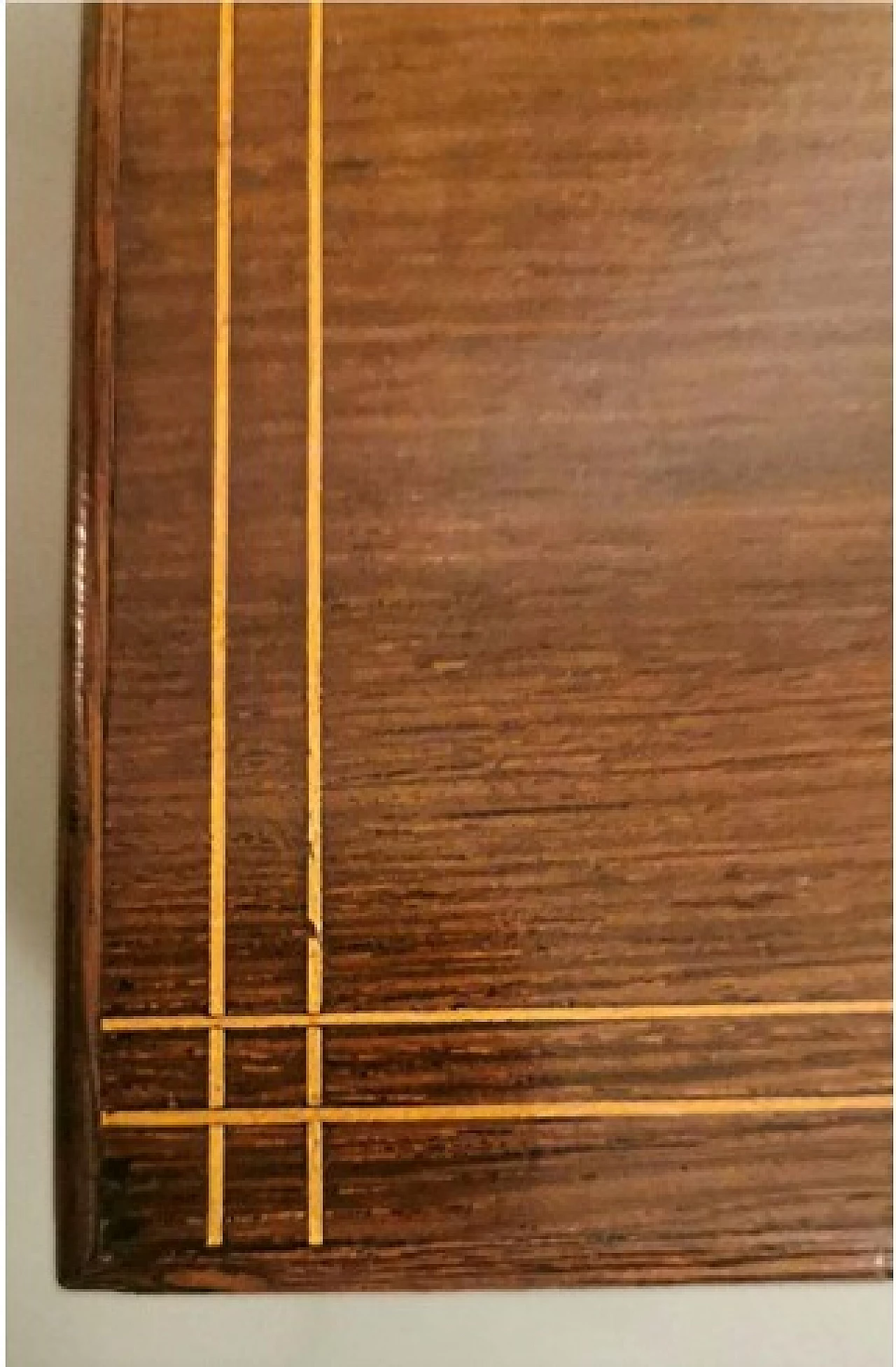
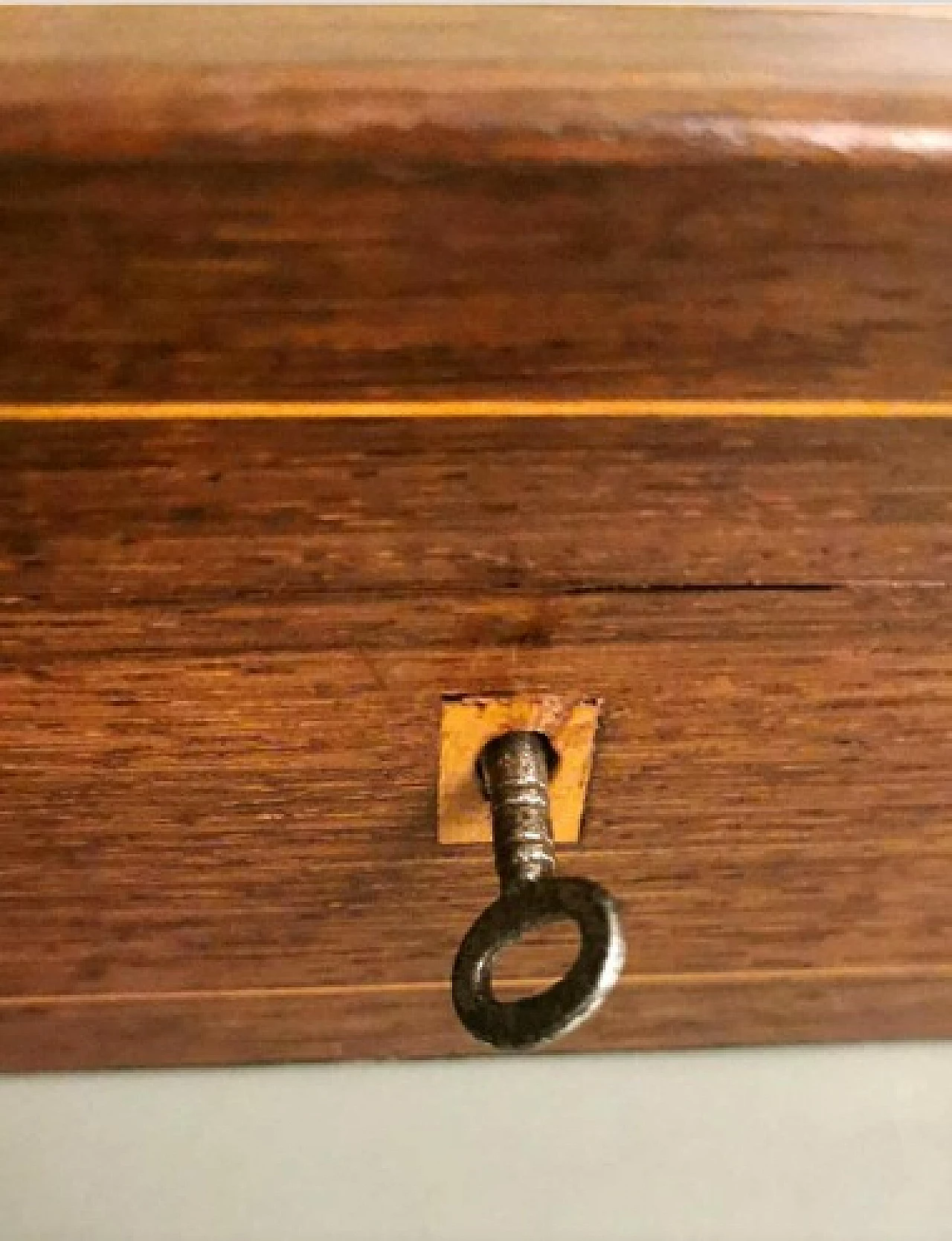
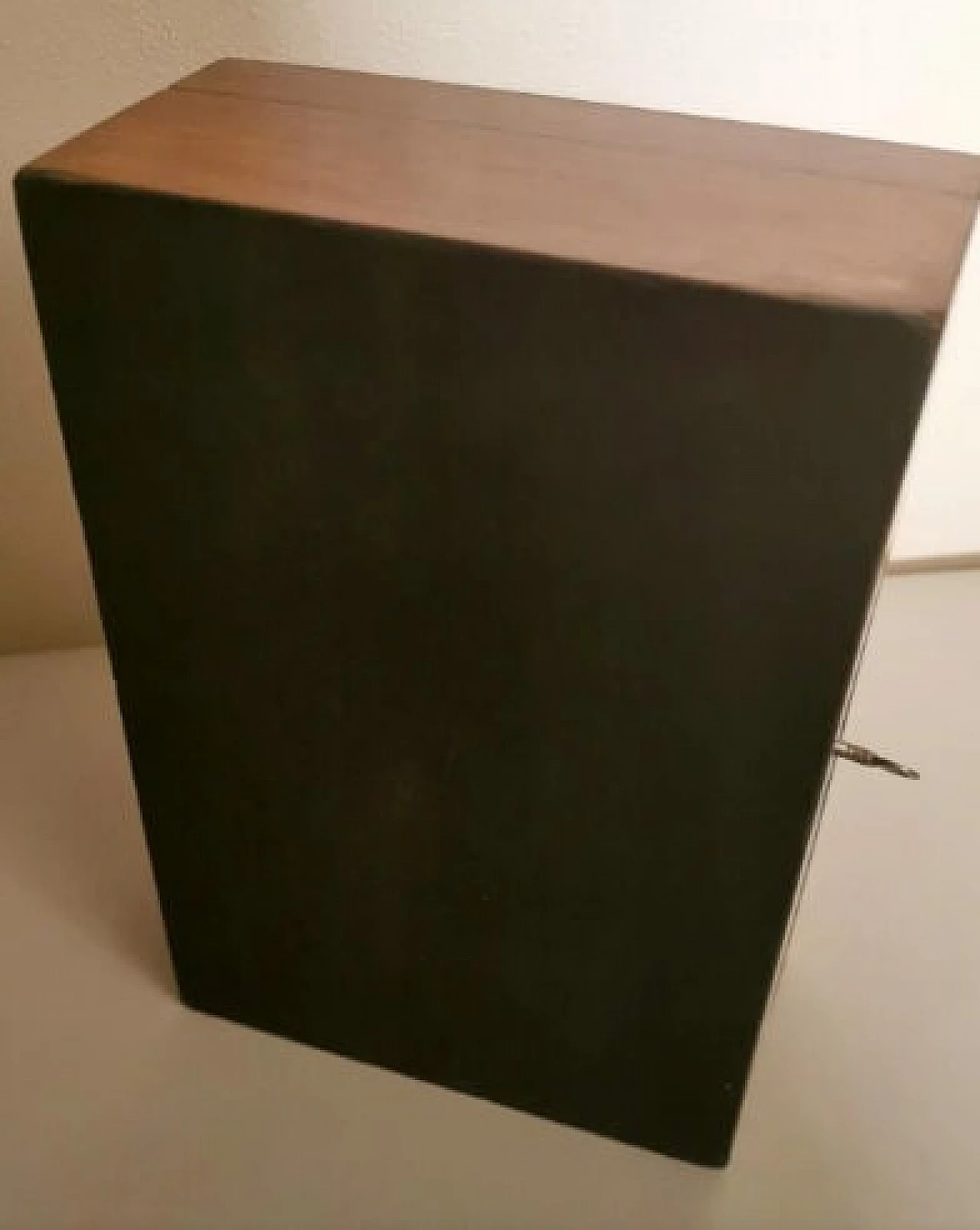
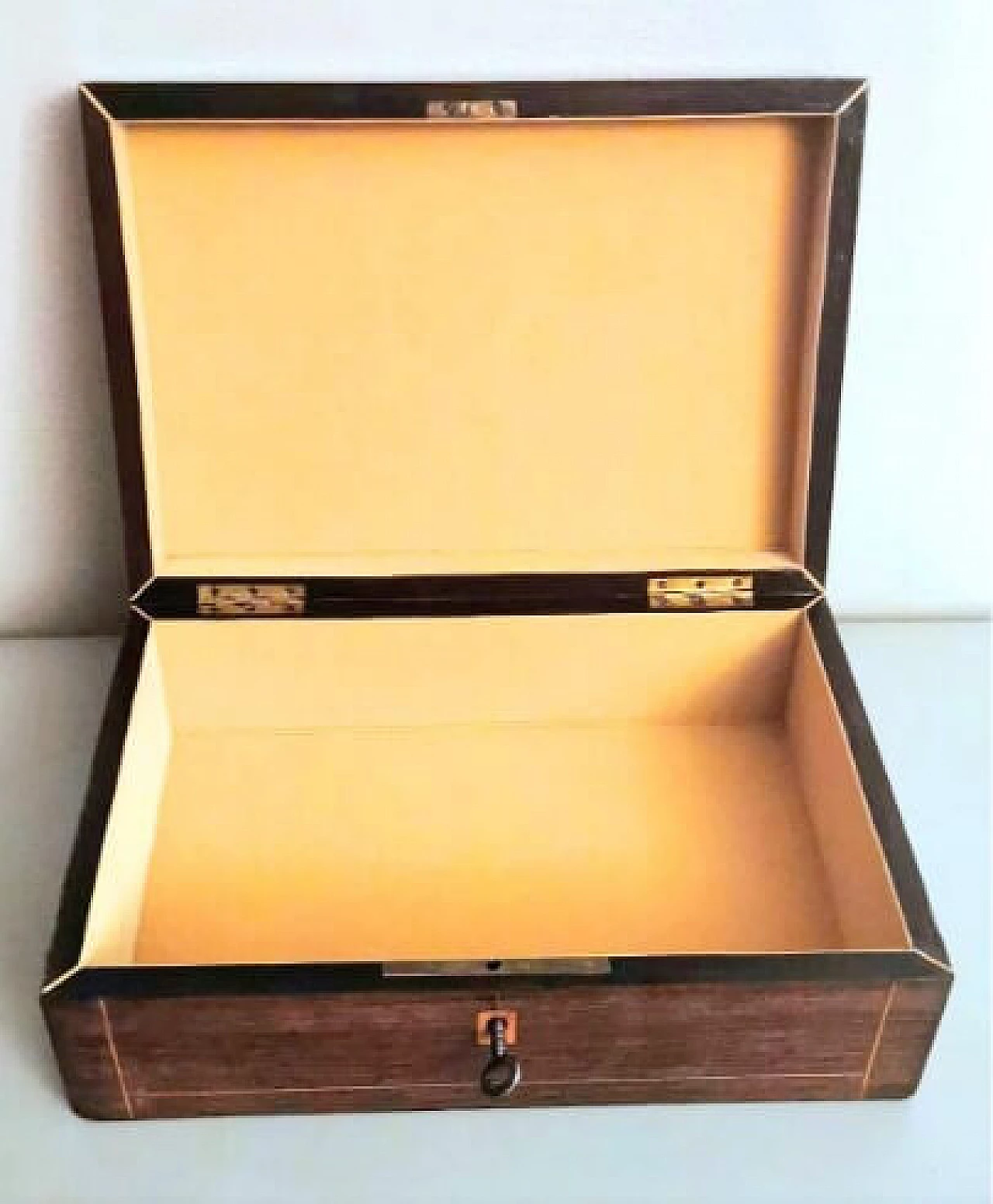
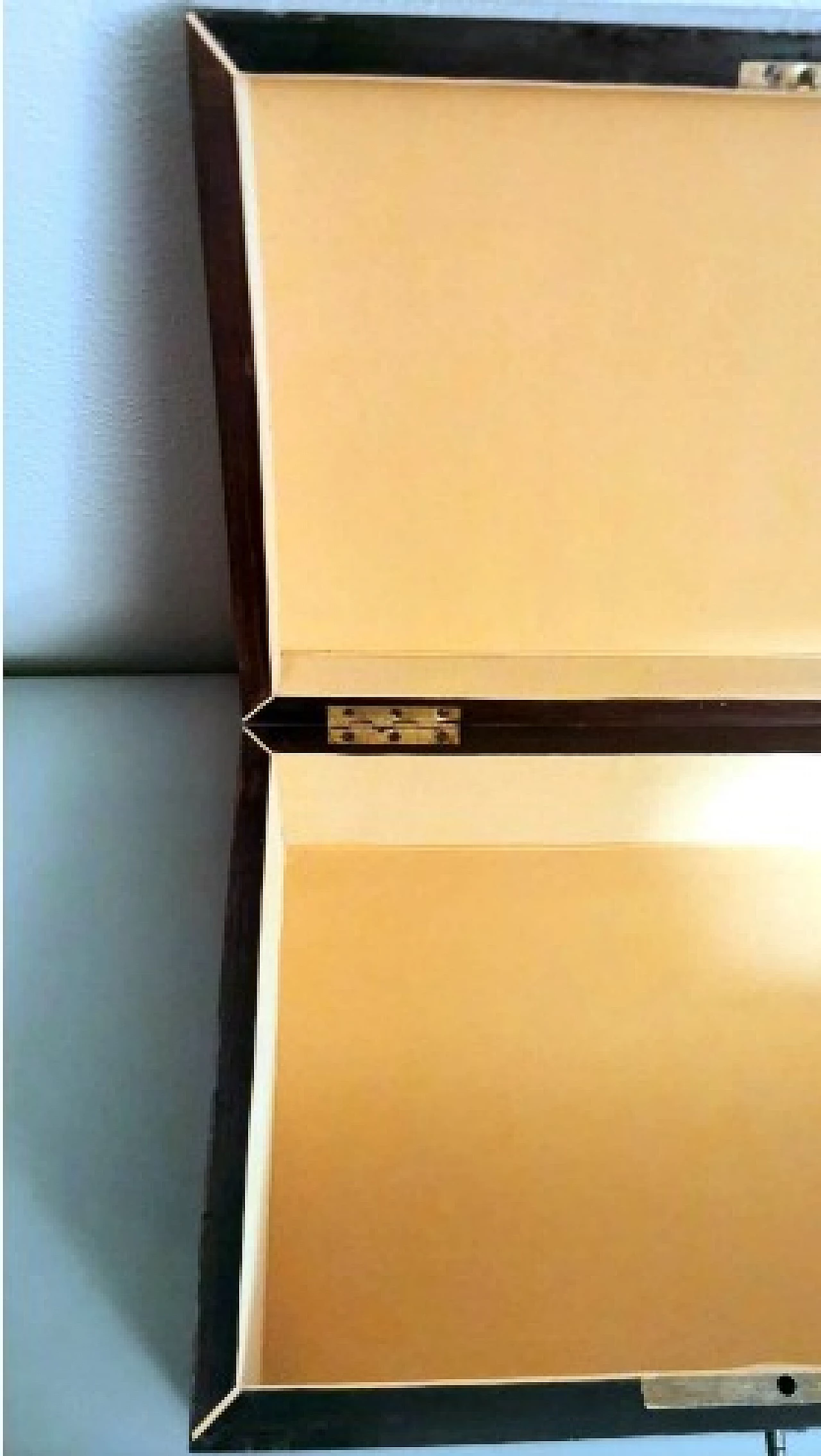
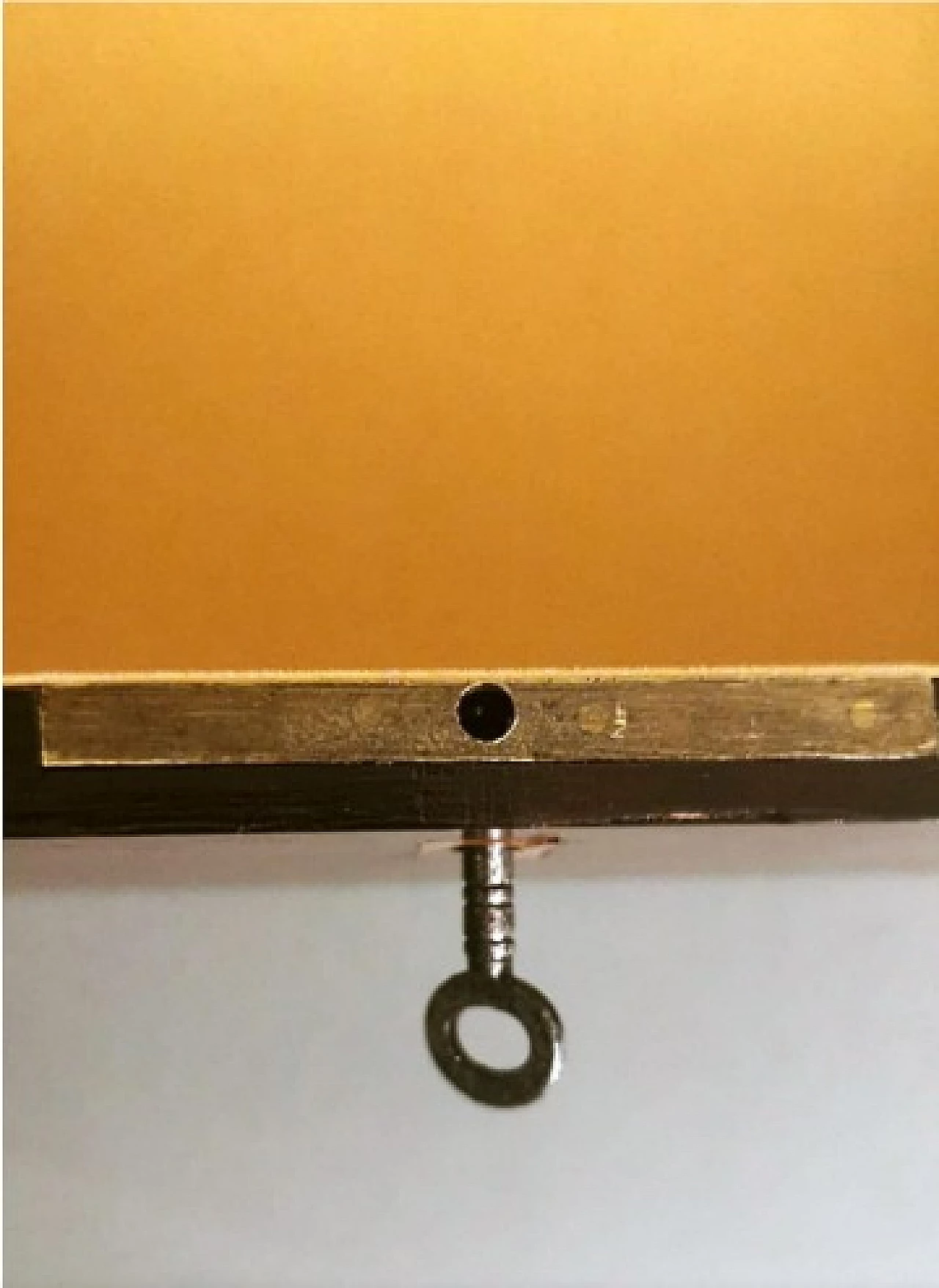
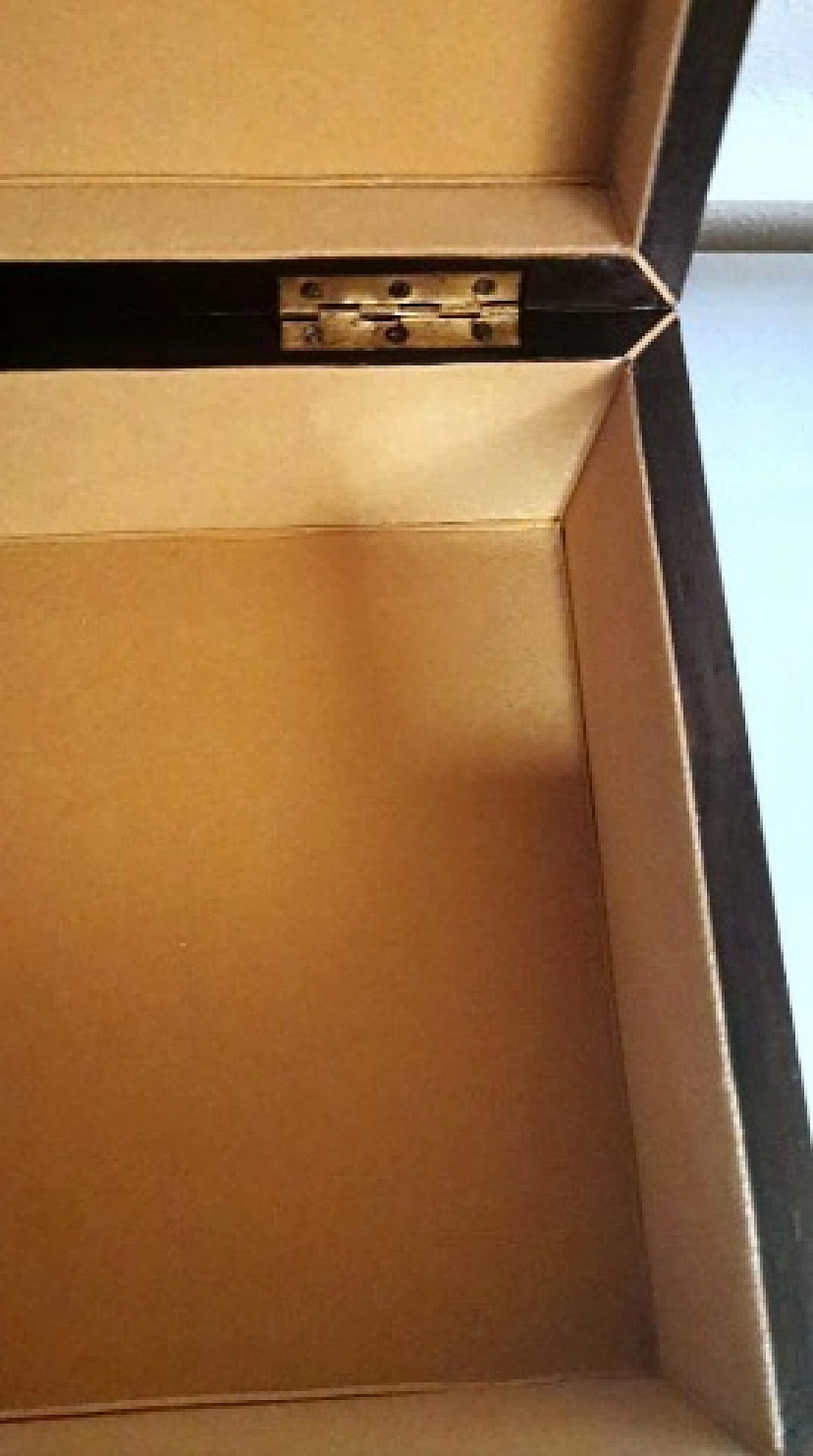
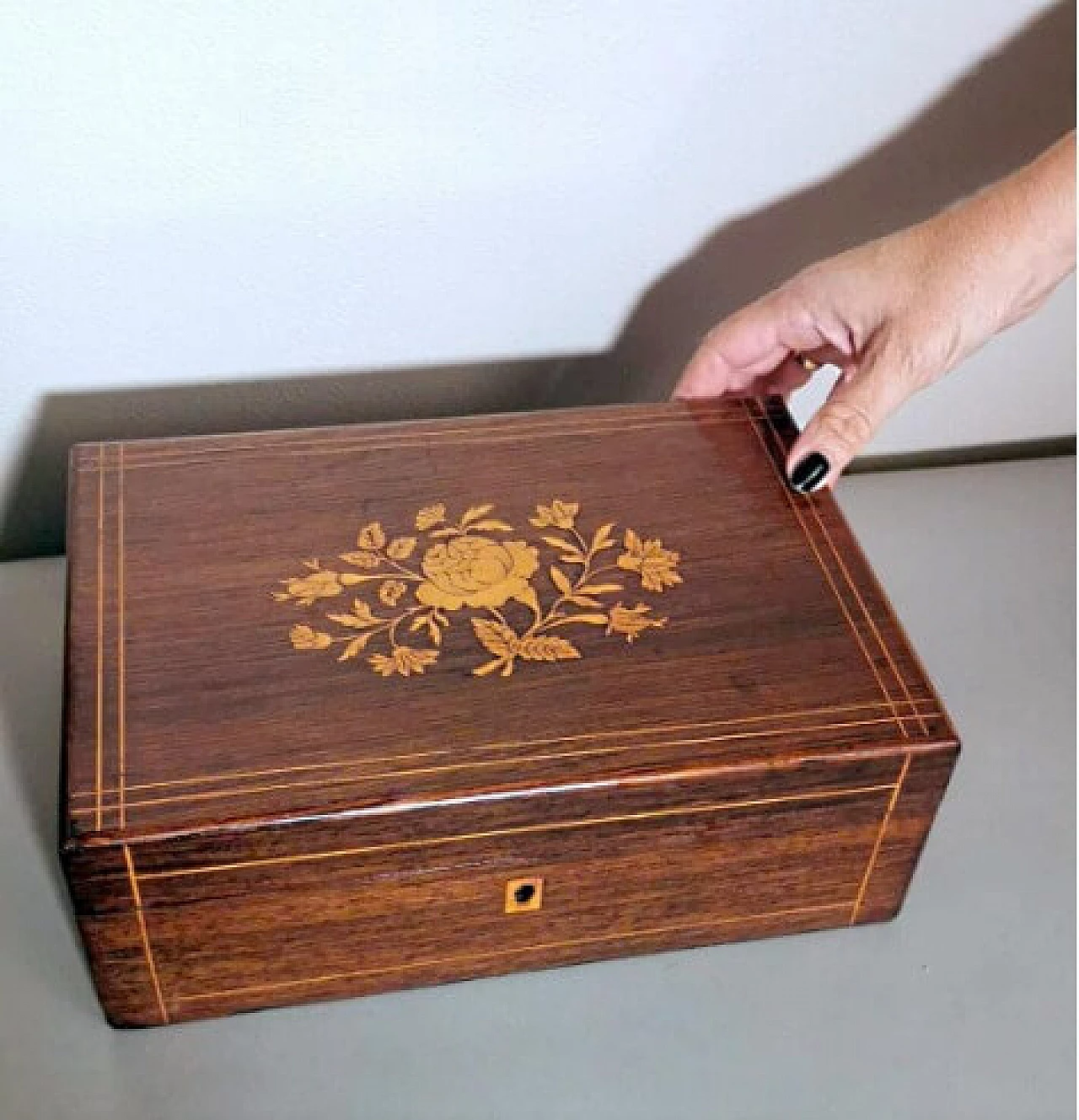
Elegant box made entirely of light European walnut. On the lid is a light rose with buds and leaves with the inlay technique using exotic woods; the straight and parallel lines on the edges of the box are also inlaid. The vintage lock is working and has an original key. The entire box has been hand-refurbished using ancient restoration techniques by our team of artisans and is in excellent condition; the inside has been lined with glossy tissue paper and the outside bottom is also protected with tissue paper. The chest was made in the Napoleon III style by a master cabinetmaker between 1870 and 1880 in an artisan workshop in the town of Pont-de-Beauvoisin, a French commune in the Isère department, nicknamed "the city of furniture" for its ancient tradition of woodworking. The master achieved a simple object but with an astonishing finesse, design rigor, sharpness and regularity. The masters had much freedom in creating the decorative pattern they liked best. For this reason, each inlay is unique. Inlay colors change depending on the wood species, the cut and grain of the wood. These factors, in fact, cause the refraction of light on the surface to vary. The inlay technique, therefore, is very complicated-only the most skilled cabinetmakers were able to perform such a difficult job. Another characteristic of the box is the type of wood used, namely light European walnut or domestic walnut. Walnut (Juglans Regia) is a valuable and expensive wood; the "European walnut" variety is much more so: it is characterized by a light color with shades tending toward yellow, warm tones, and much more pronounced grain, qualities highly valued in the luxury furniture industry. European walnut is a hardwood whose coloring, flaming and grain have been prized for centuries. It is a wood that is unmatched in appearance, unlike American walnut, which has a darker color and tends to discolor over time and is less expensive.


.png)
 SILVER Seller in Prato, Italy