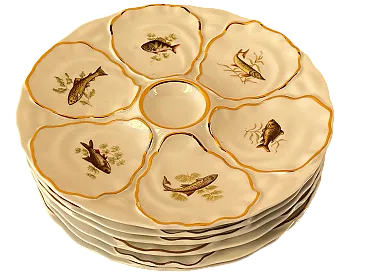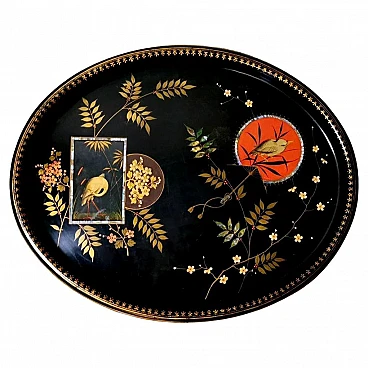






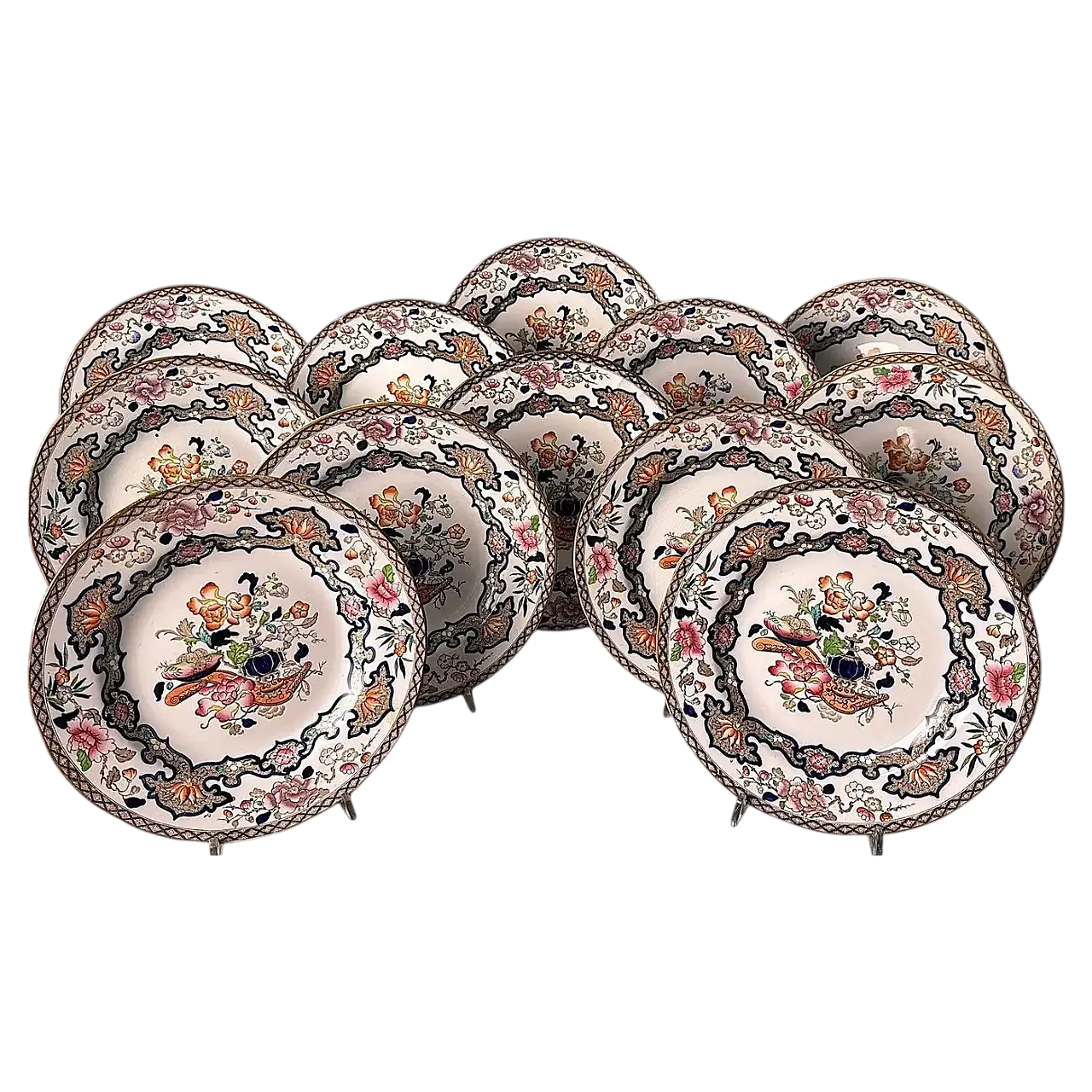
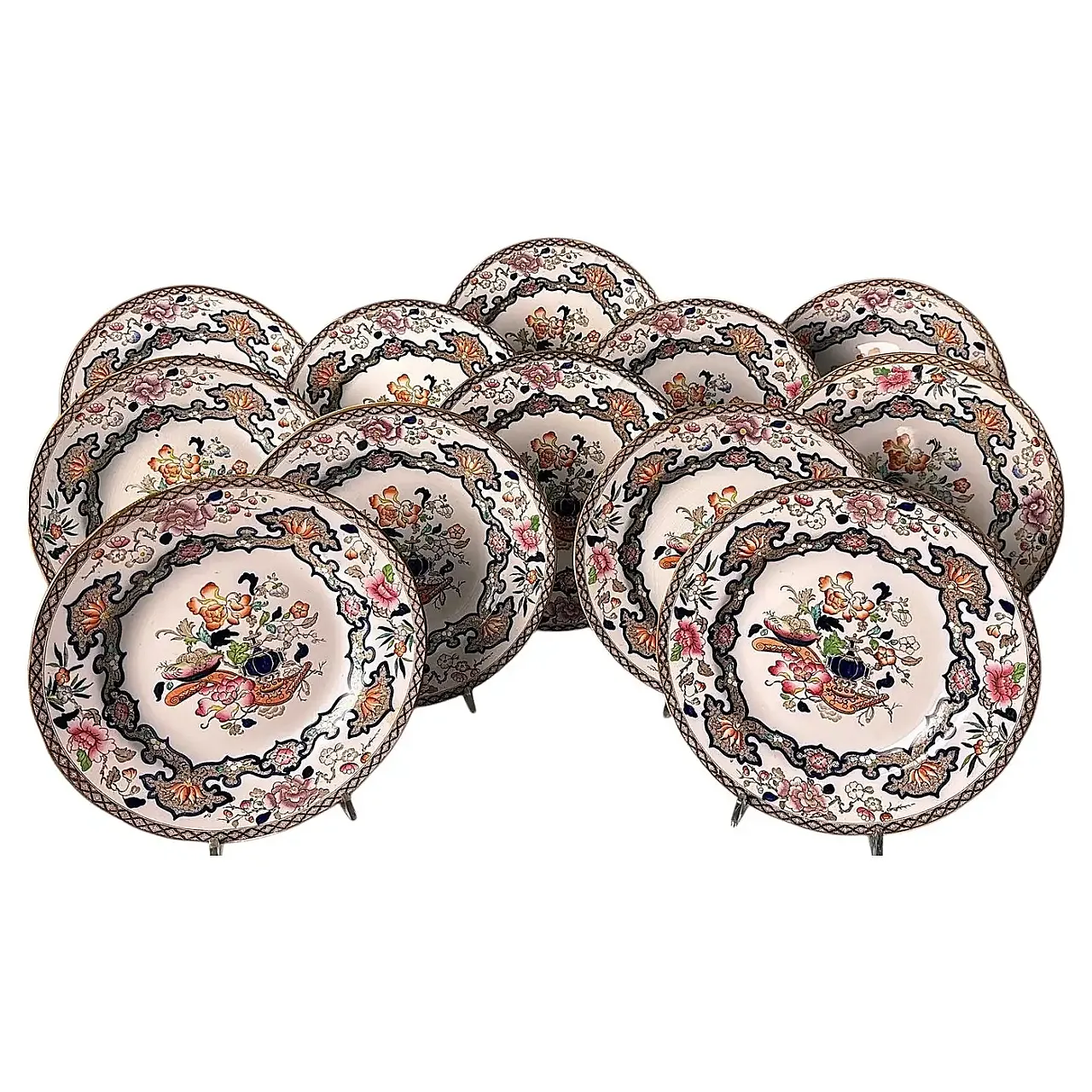
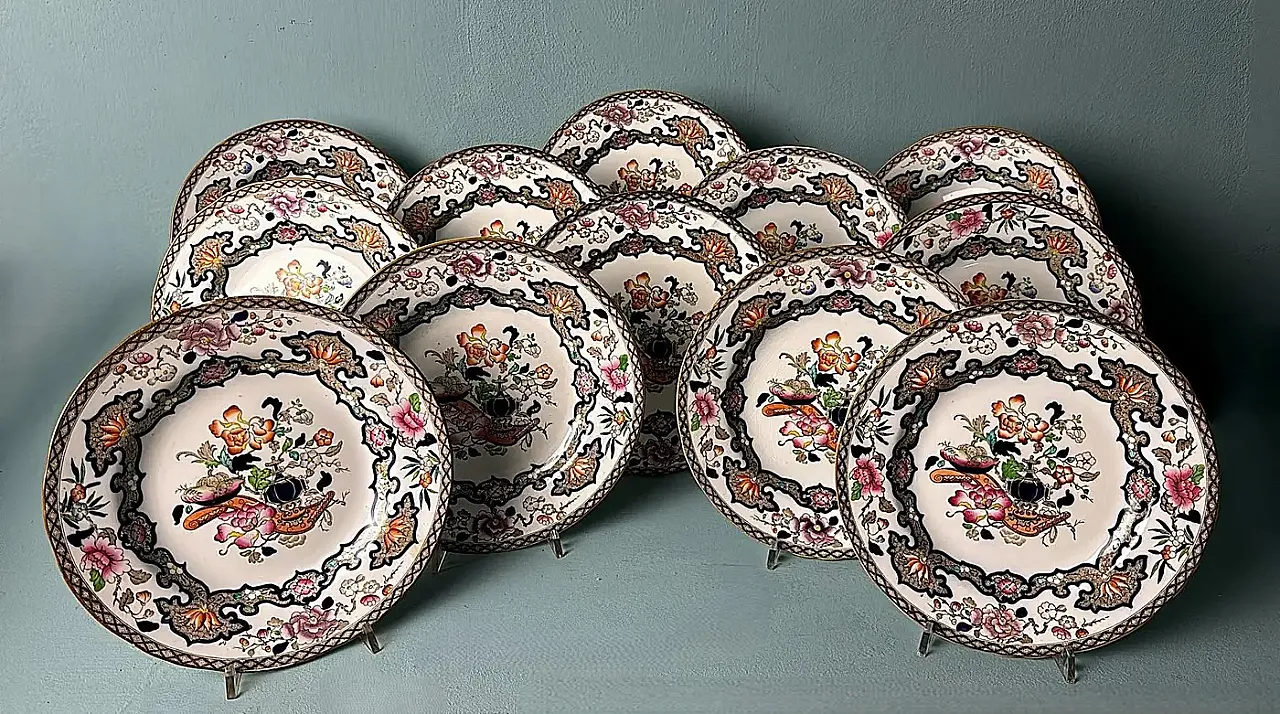
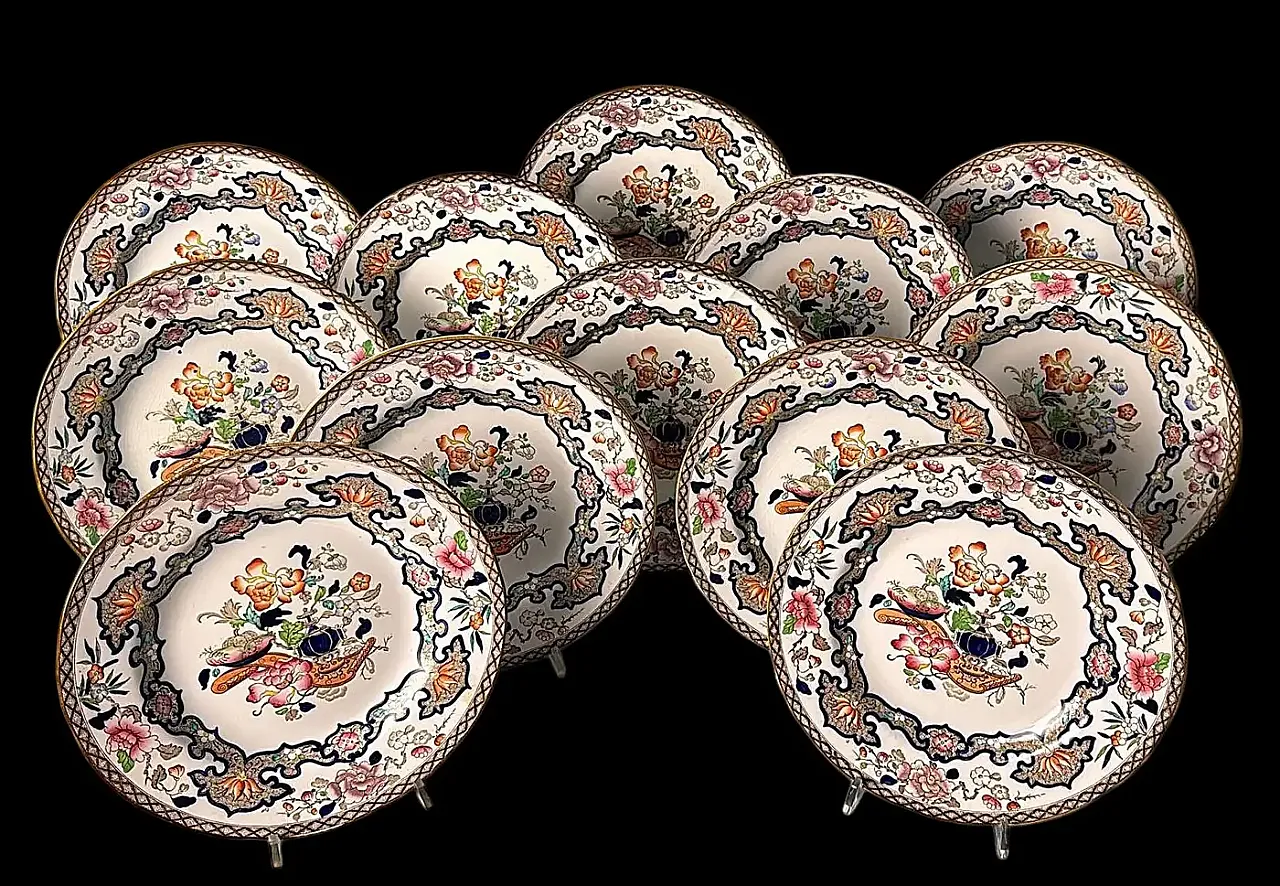
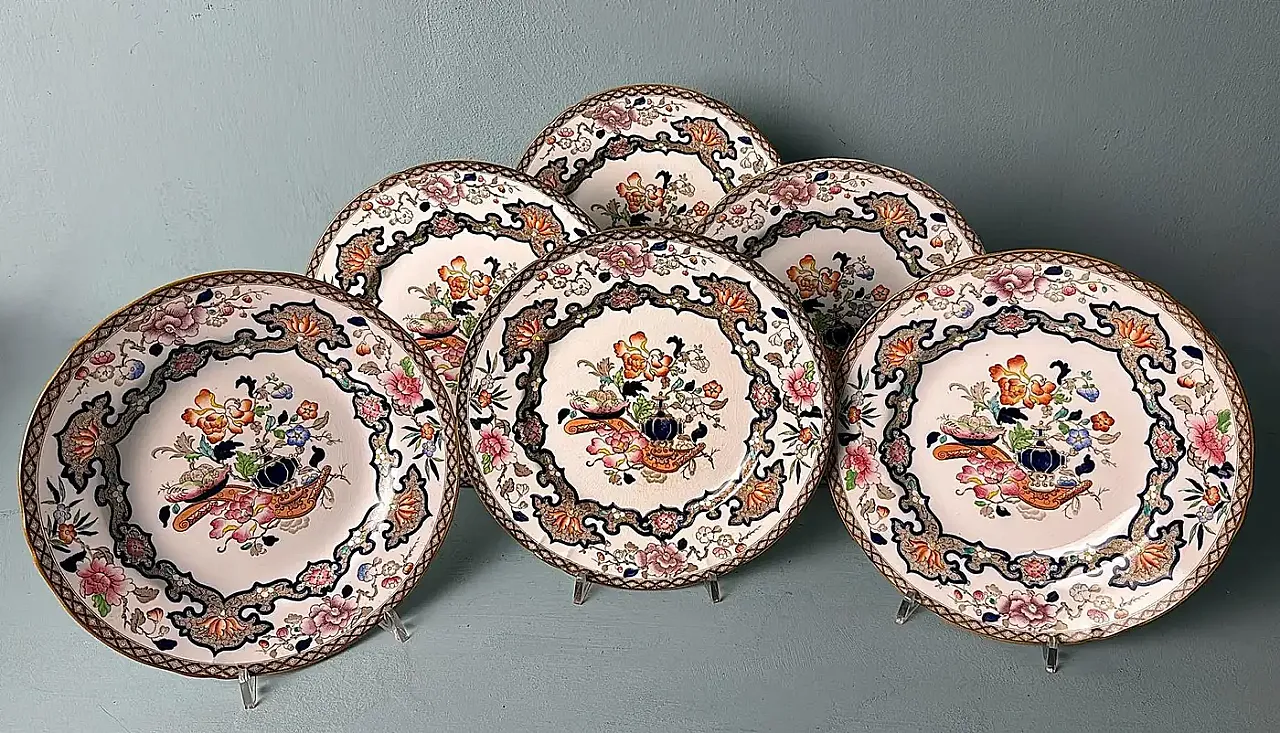
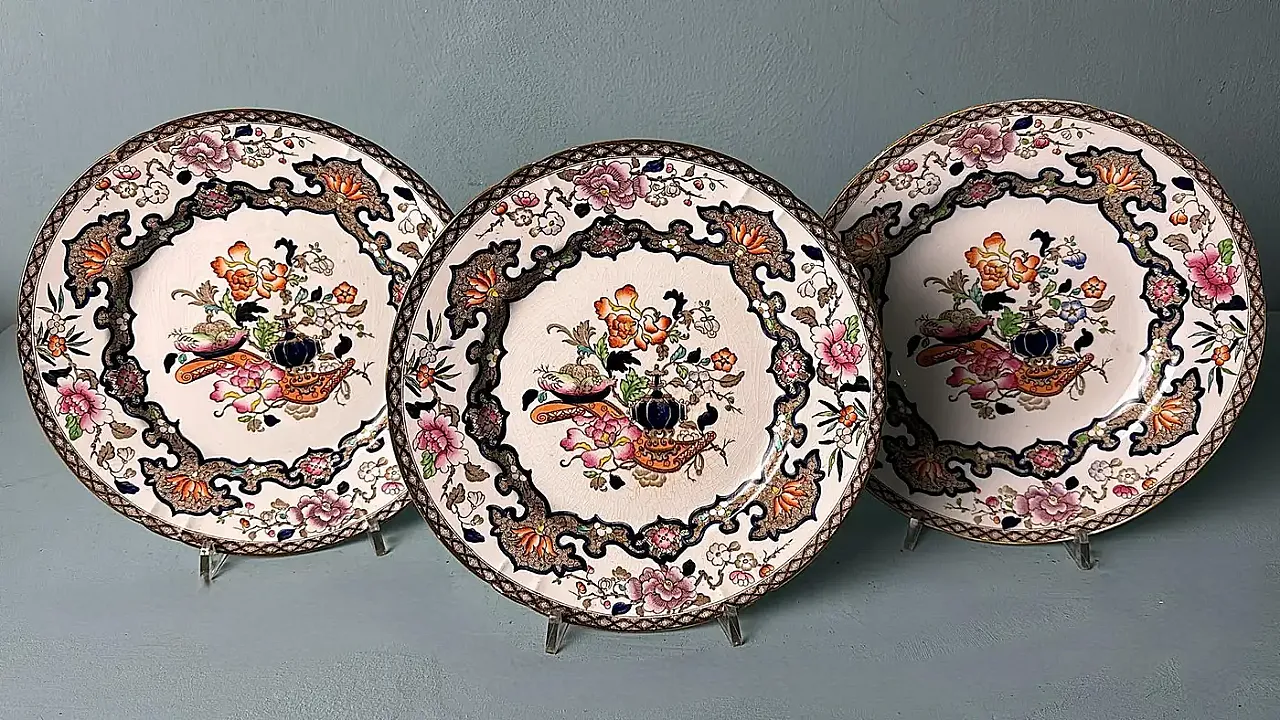
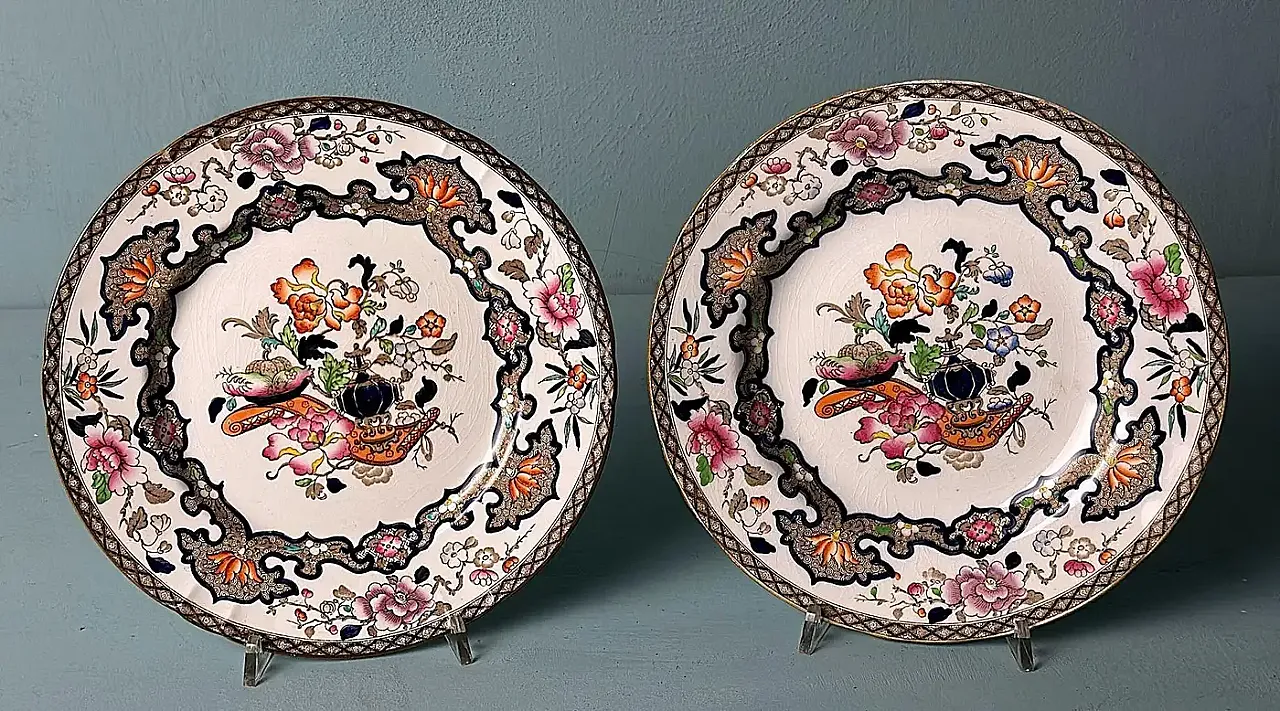
12 hand-painted English serving dishes, early 20th century
.png)
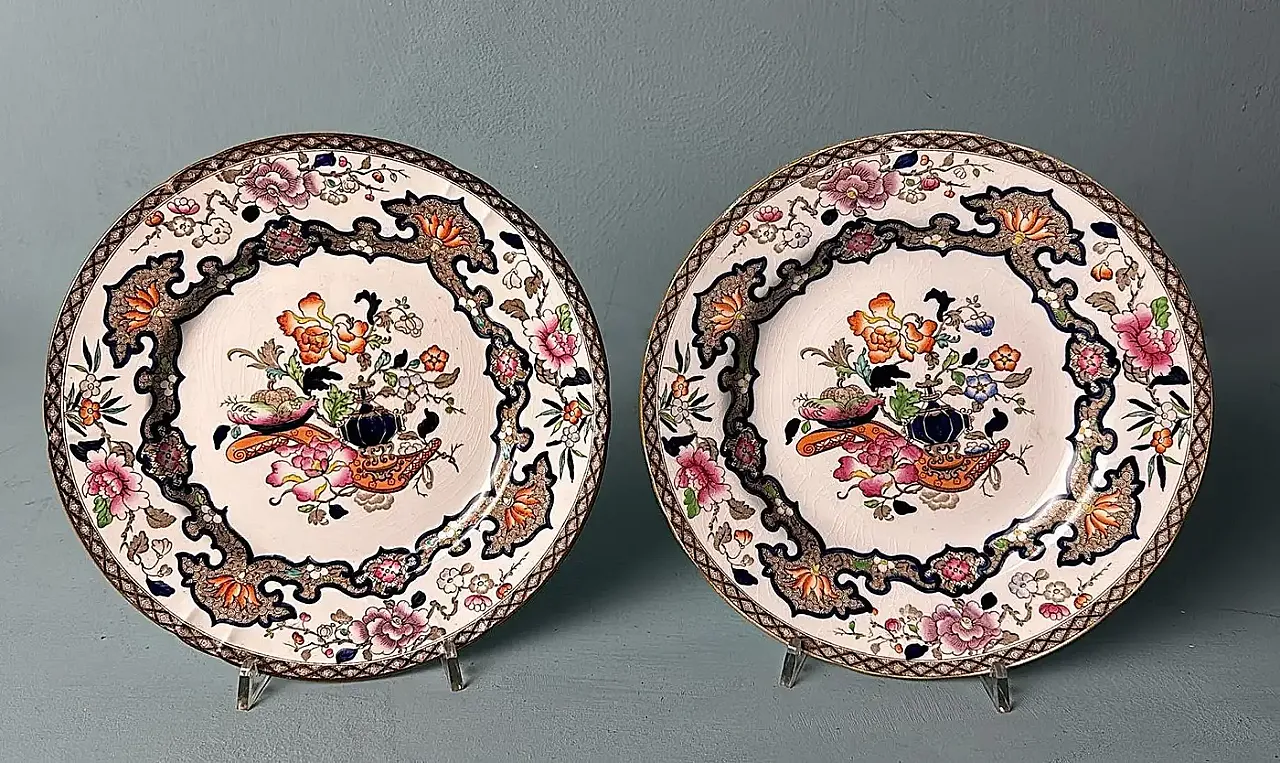
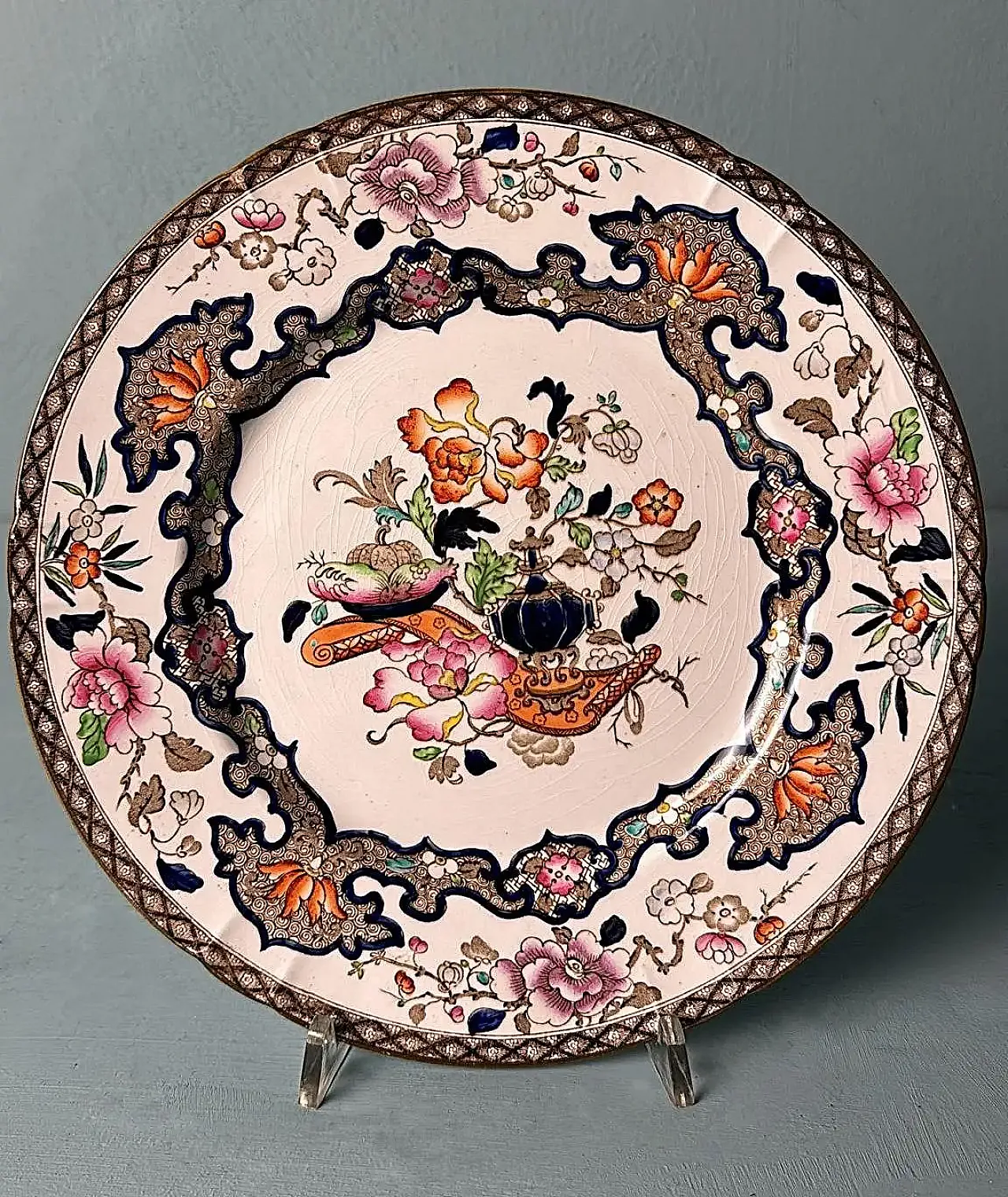
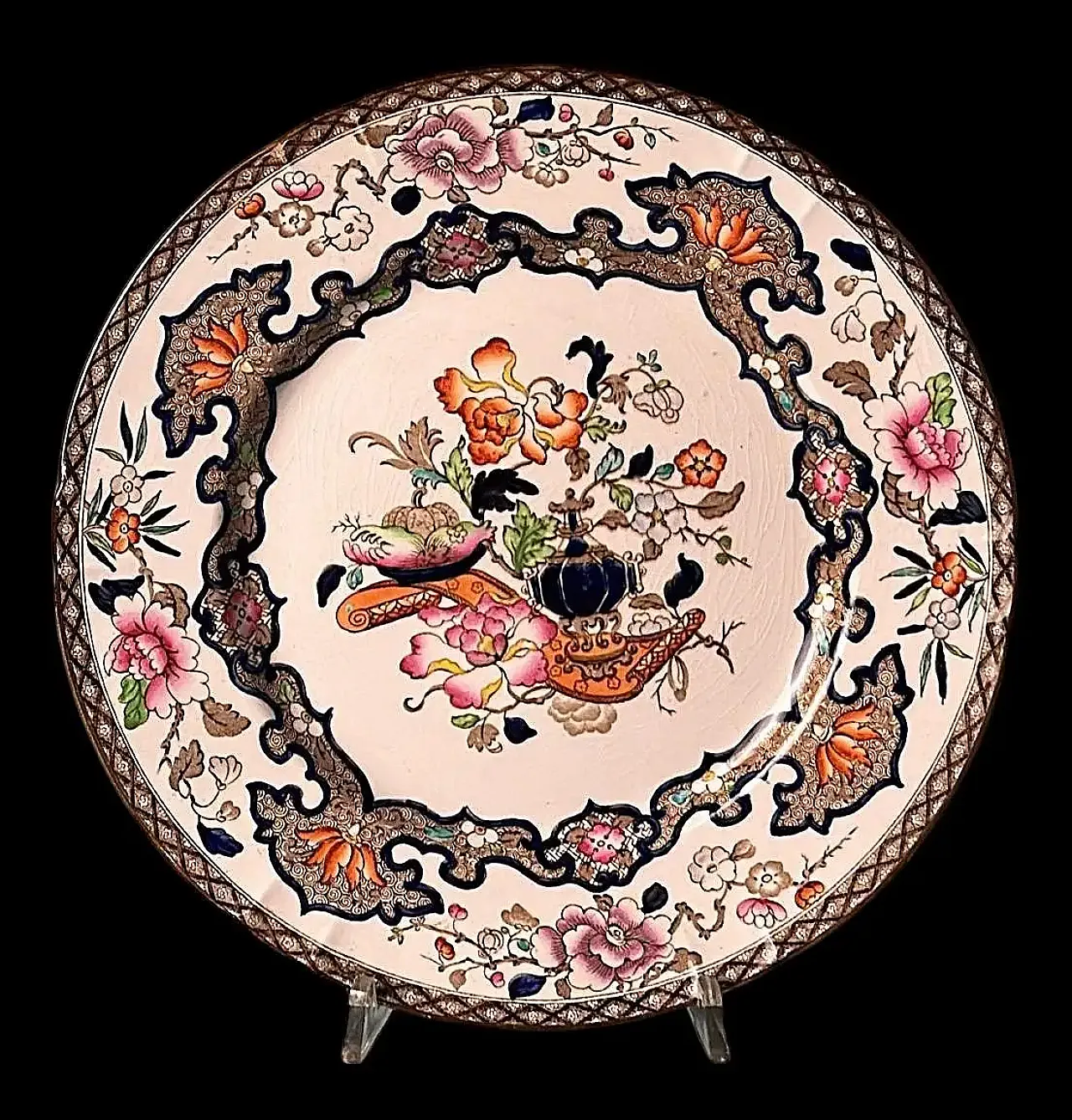
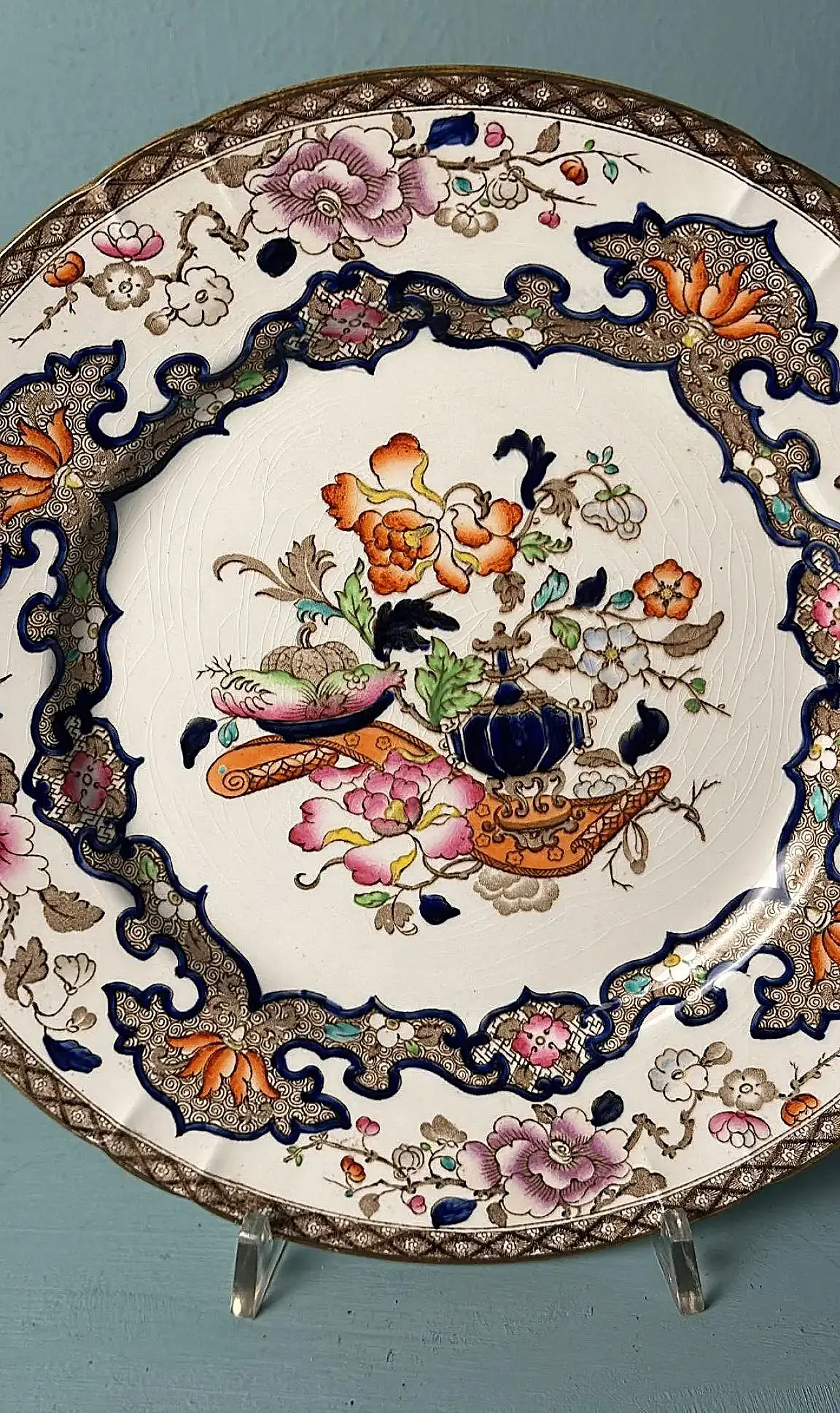
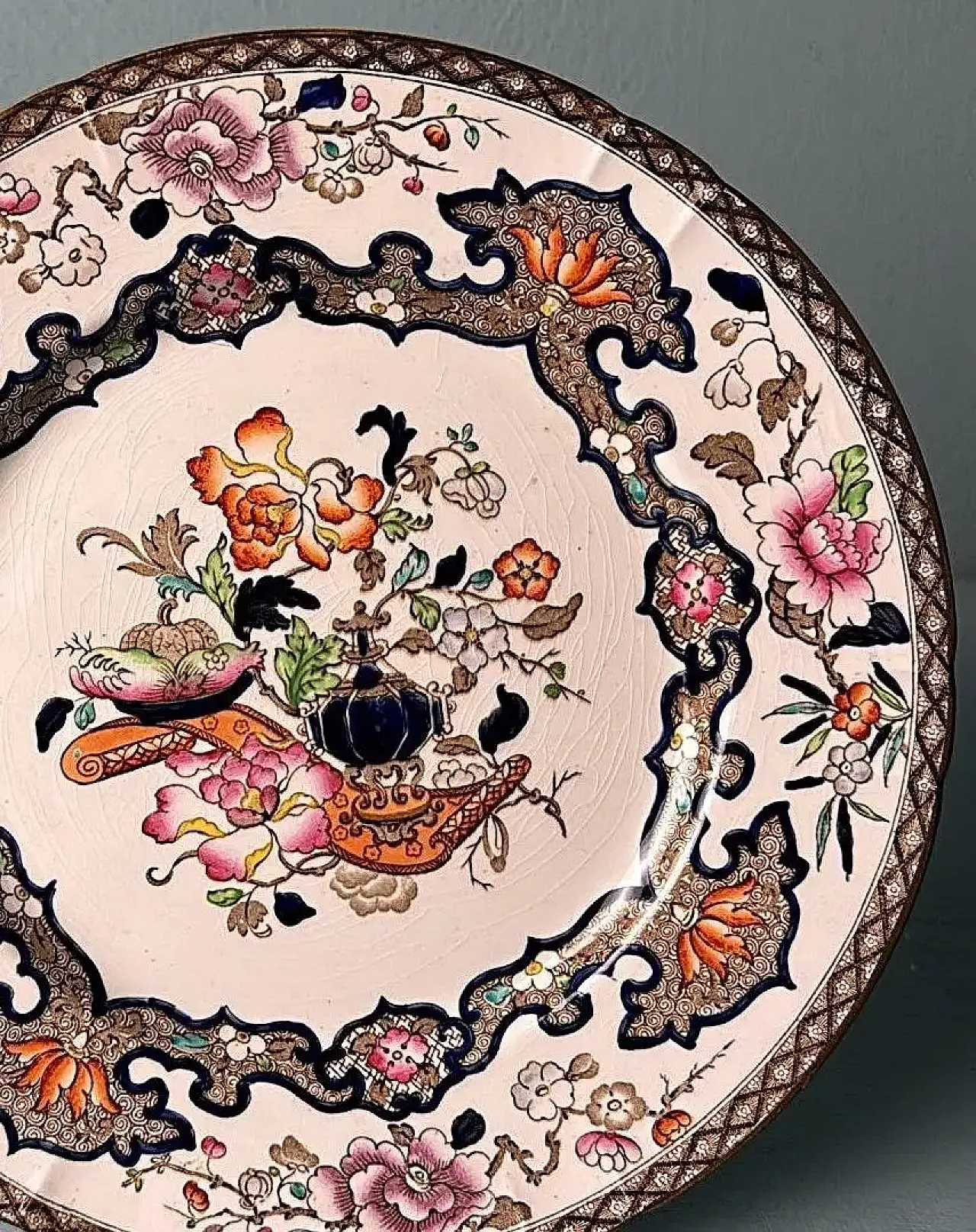
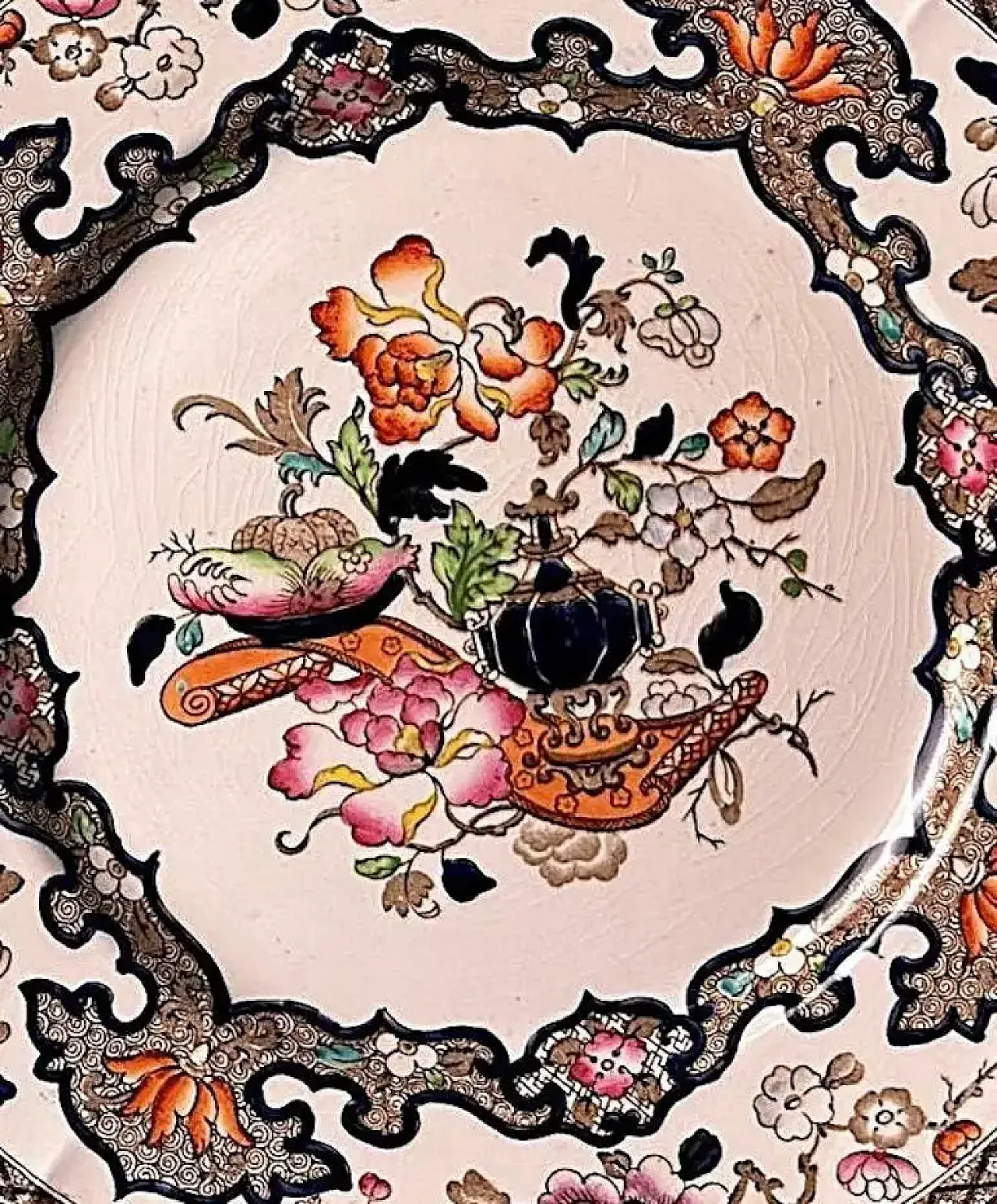
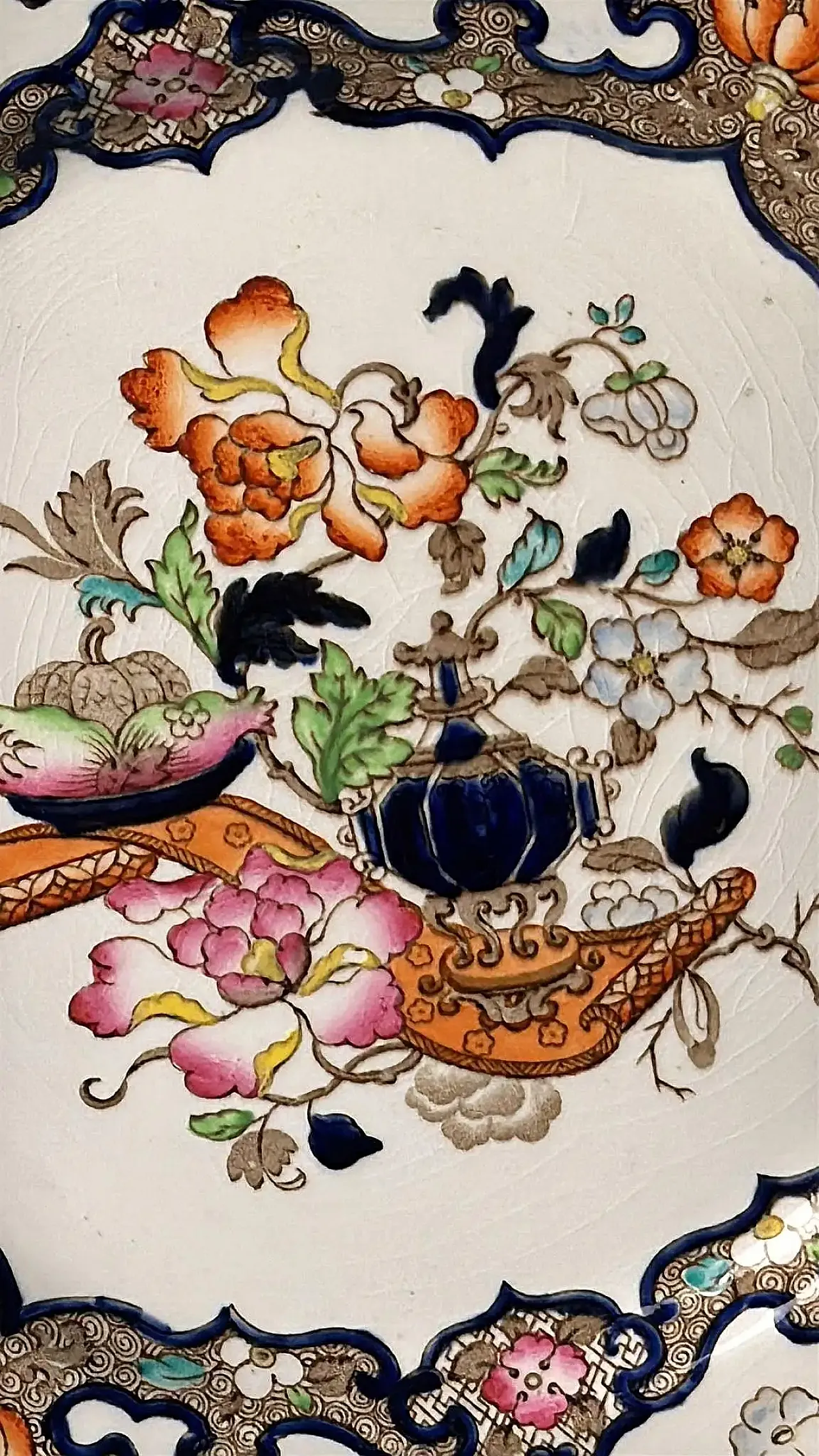
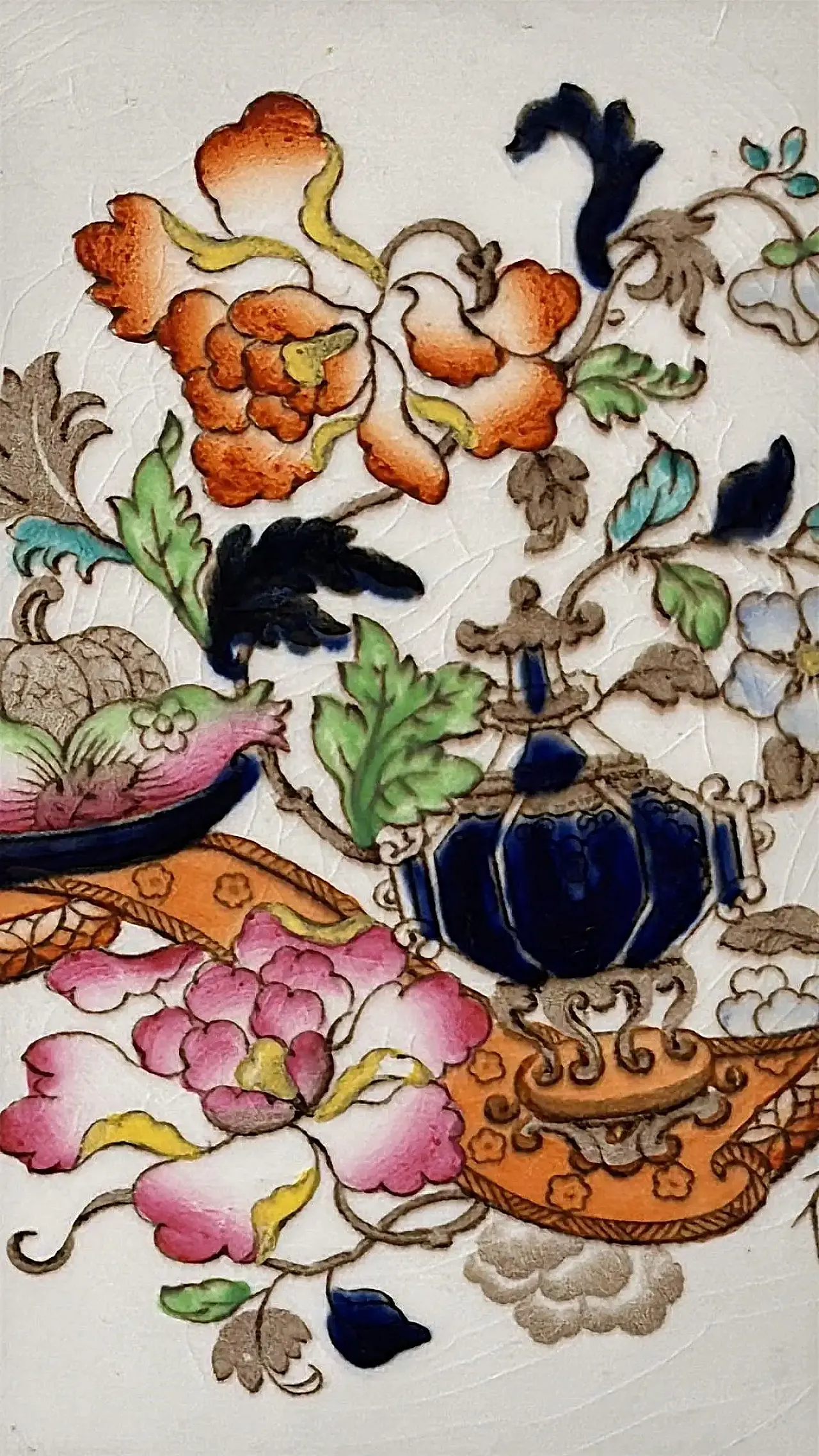
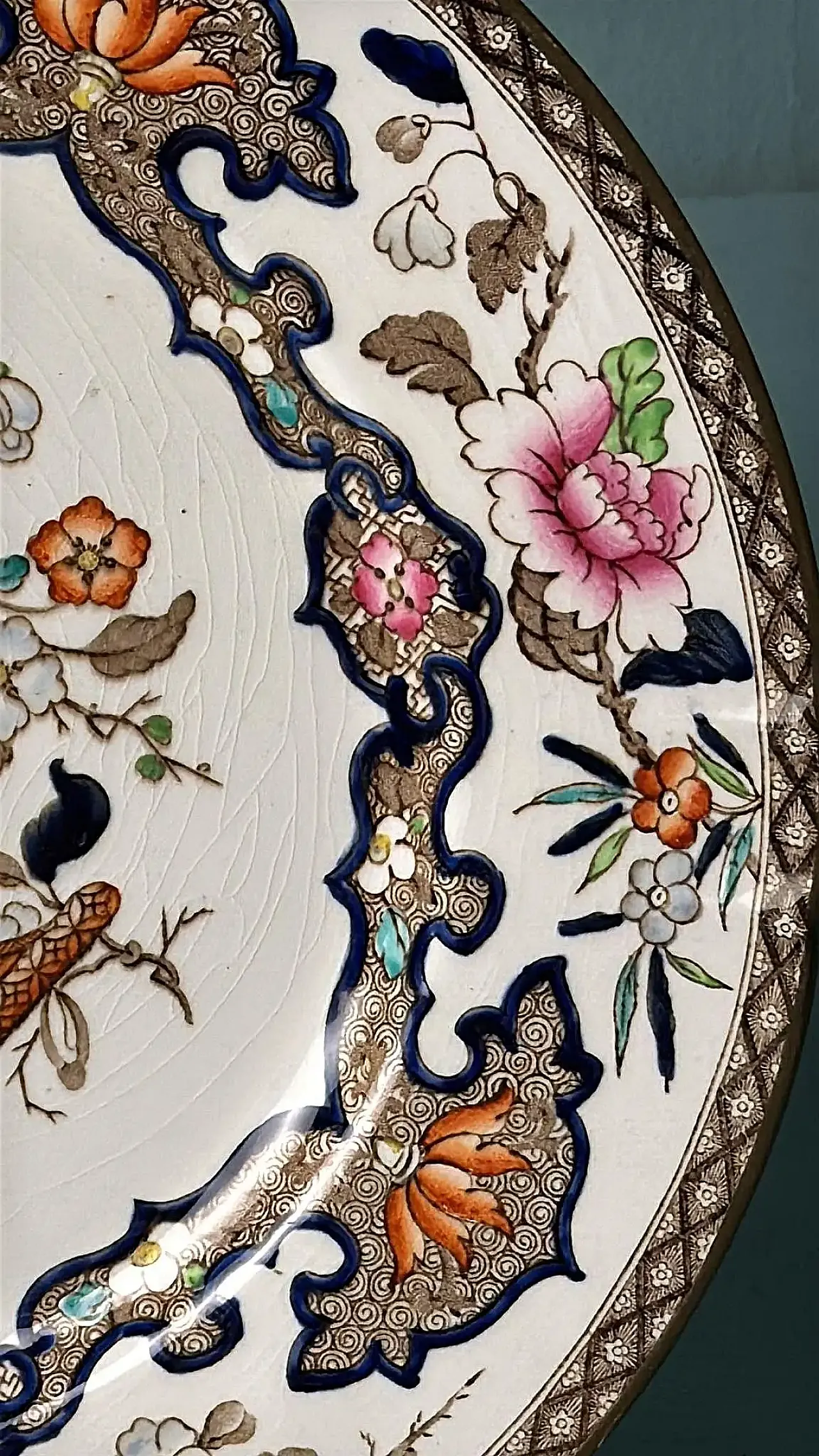
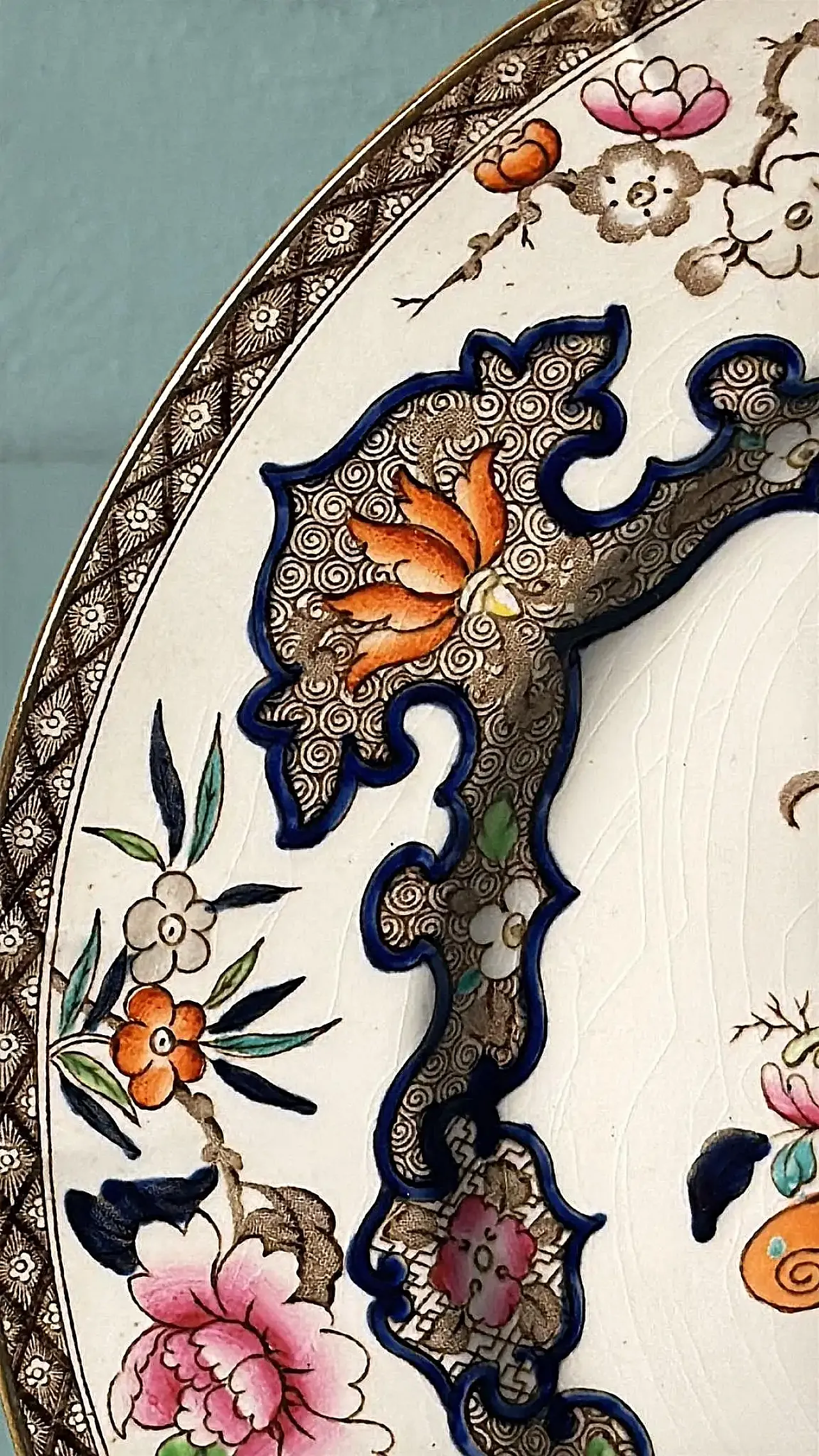
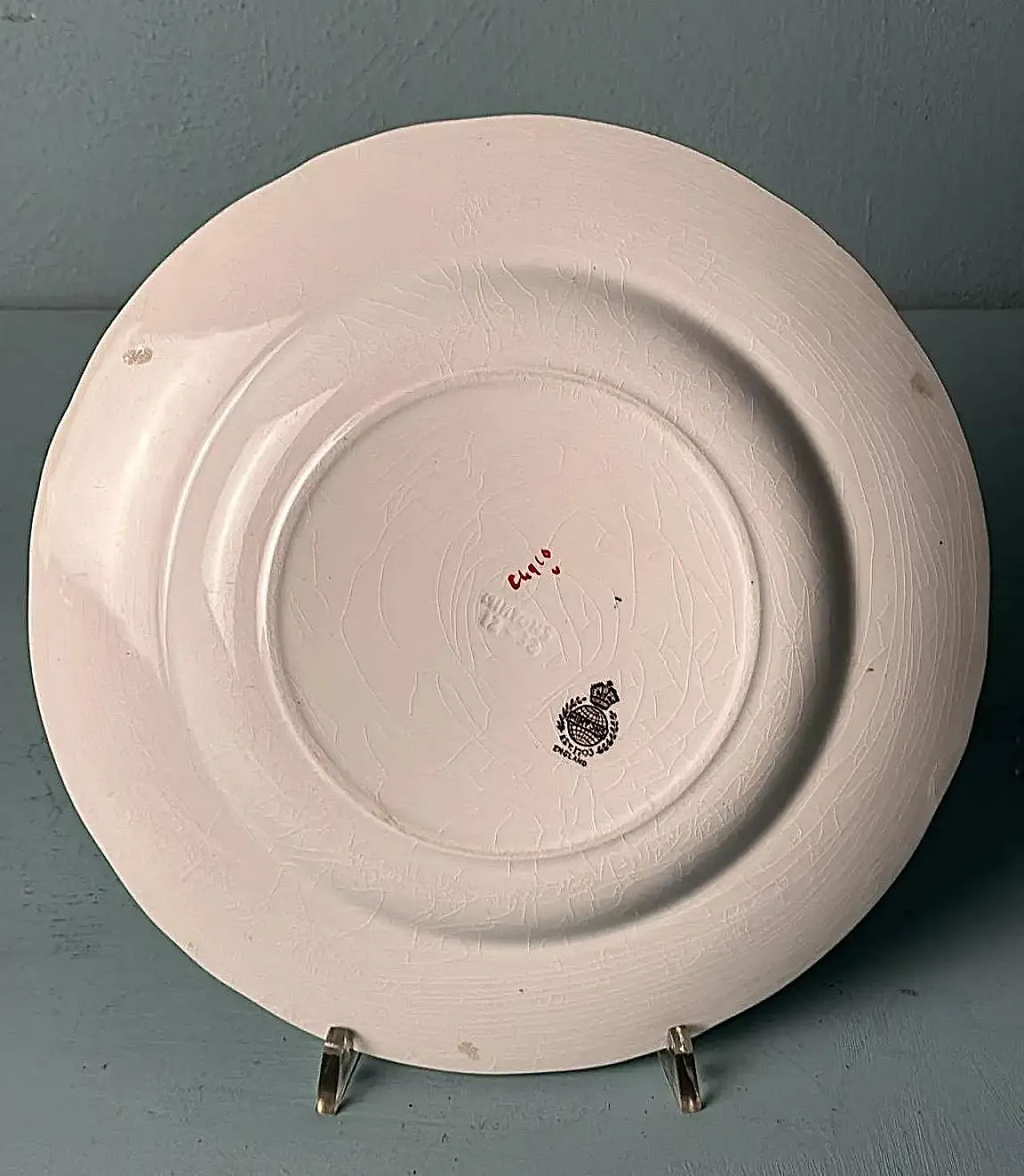
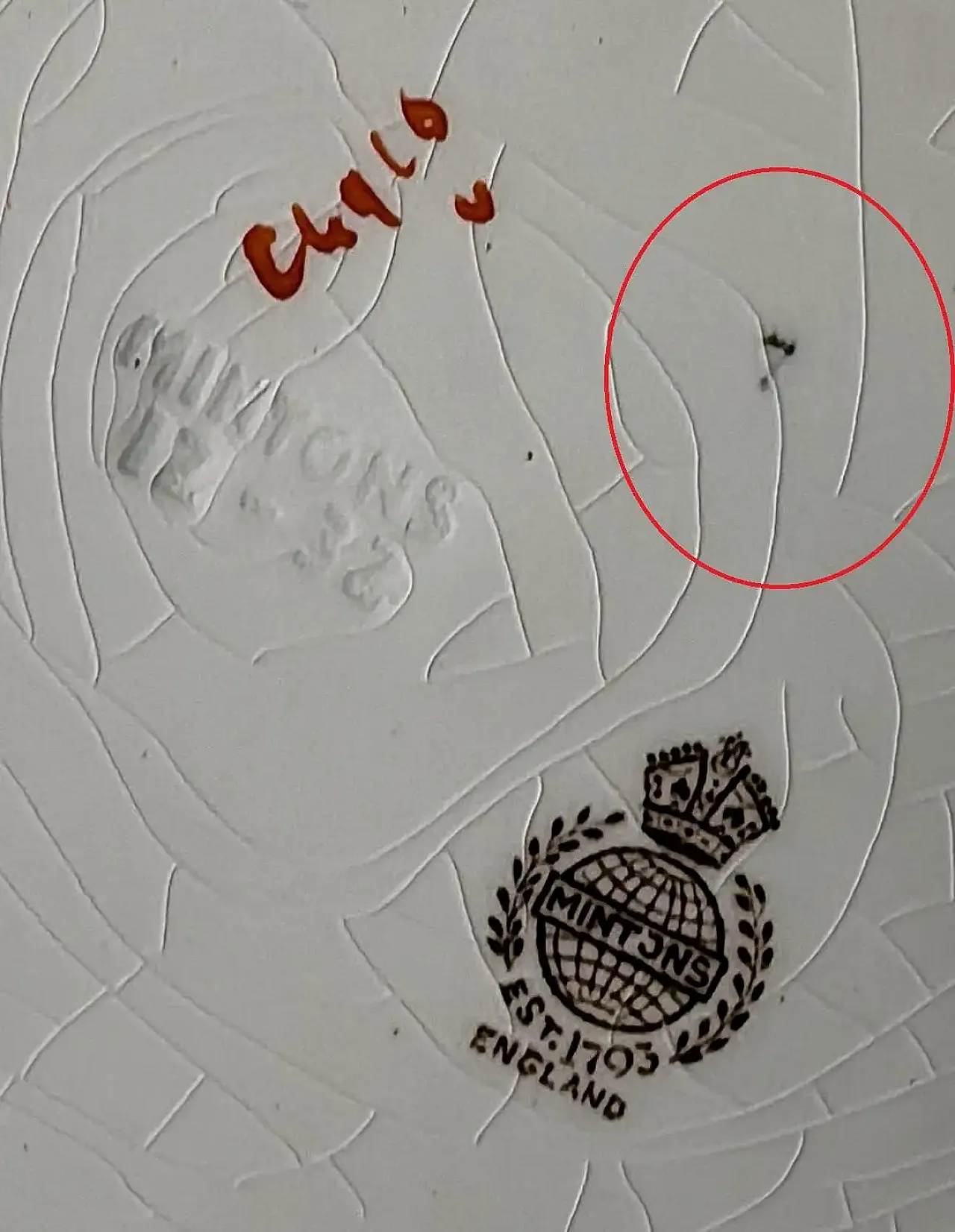
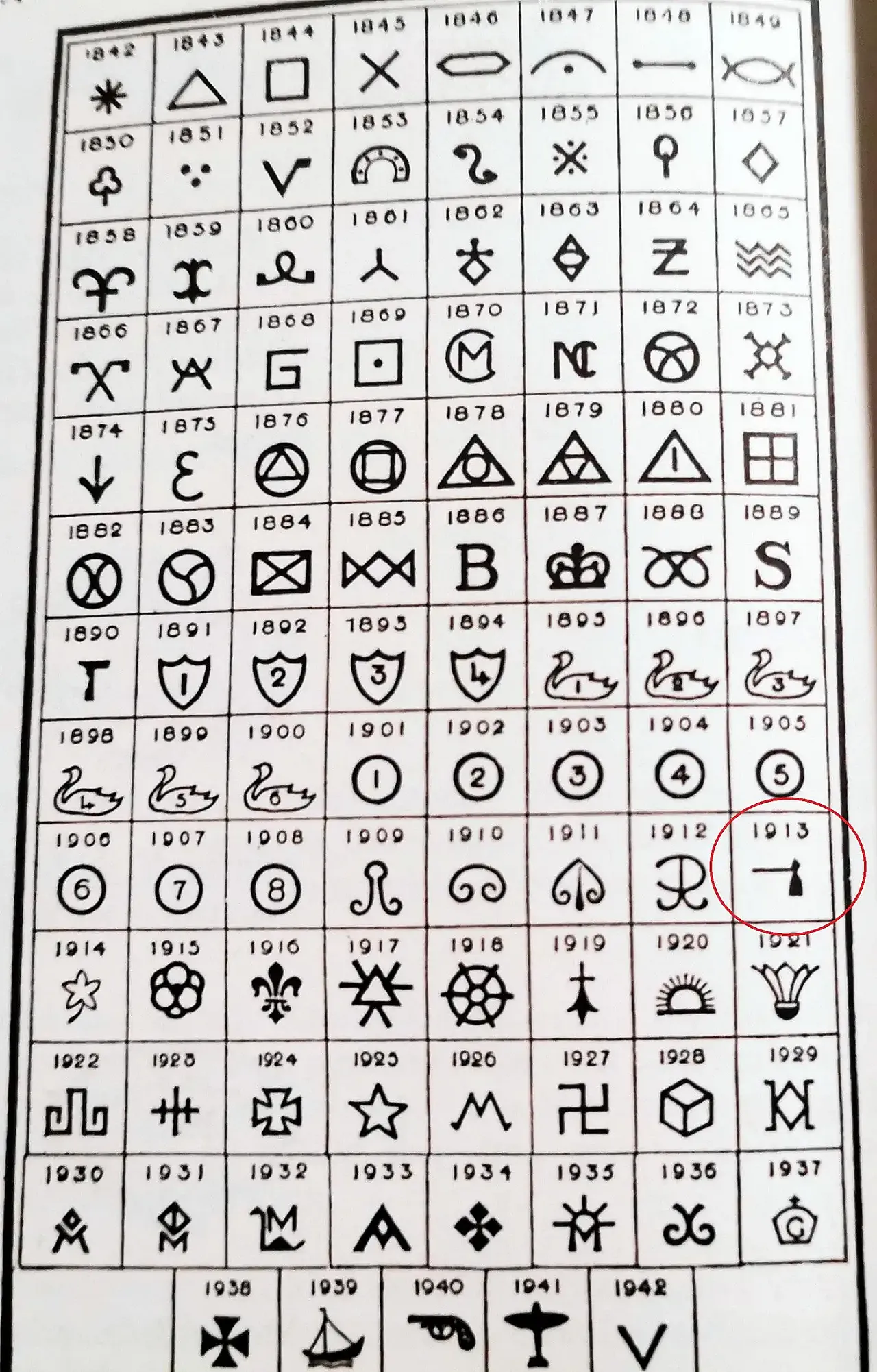
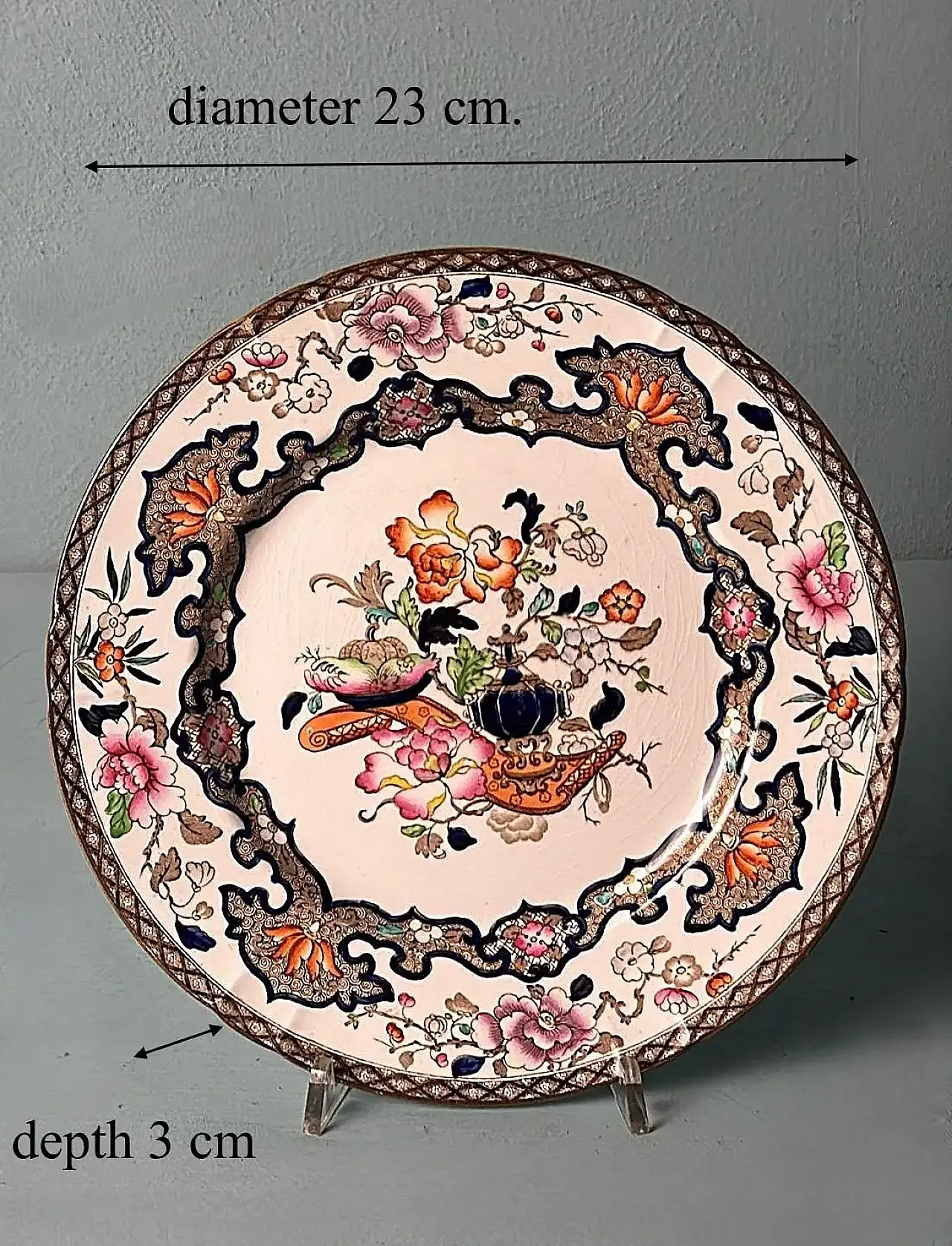
An exceptional set of 12 flat plates (slightly smaller than standard dinner plates), beautifully decorated in a classic chinoiserie style. The entire design was created using the transferware technique, a traditional decorative process developed in Staffordshire, England. The motif was first engraved onto copper plates, then inked and transferred onto a special paper that was applied to the ceramic surface (plates, jugs, trays, tureens, etc.). Once transferred, each plate was hand-painted with remarkable care. The artist skillfully enhanced even the tiniest details, using vibrant, well-balanced colors. The piece was then glazed and kiln-fired. On the back, you'll find the mark of the renowned English manufacturer Minton: a crowned globe framed by laurel, the word "MINTON", the company’s founding date, and “ENGLAND.” Just above the main stamp, a small plow symbol is visible. According to Minton’s date code system used between 1842 and 1942 (see attached photo), this symbol indicates the year of production: 1913. Founded in 1793 by Thomas Minton in Stoke-upon-Trent, Staffordshire – the historic heart of England’s ceramic industry – Minton was, for over a century, a symbol of refinement and innovation. A leader in ceramic artistry and design, the company produced exceptional pieces in bone china (the finest English porcelain: translucent yet durable), earthenware, and majolica, along with dinner services, vases, decorative tiles, and ornamental objects. Minton was also renowned for its glazed architectural tiles, widely used in Victorian public buildings. Notably, during the 19th and early 20th centuries, Minton was among the most sought-after suppliers of custom-made tableware for embassies and heads of state. The plates are in good overall condition. Dimensions: diameter 9.05 in (23 cm) – height 0.78 in (2 cm).
ID: 4672-1747660806-124269
Time period

 SILVER Seller in Prato, Italy