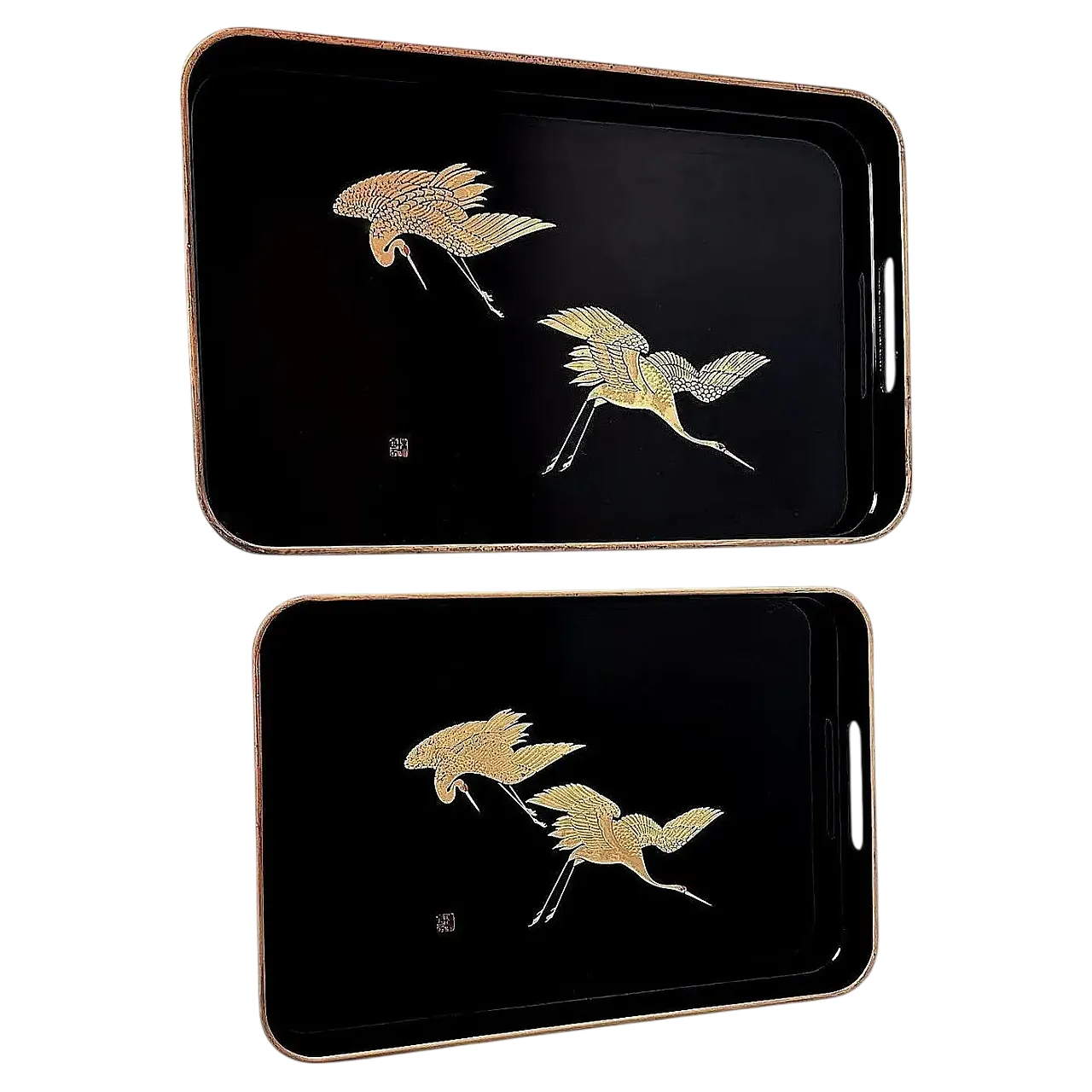
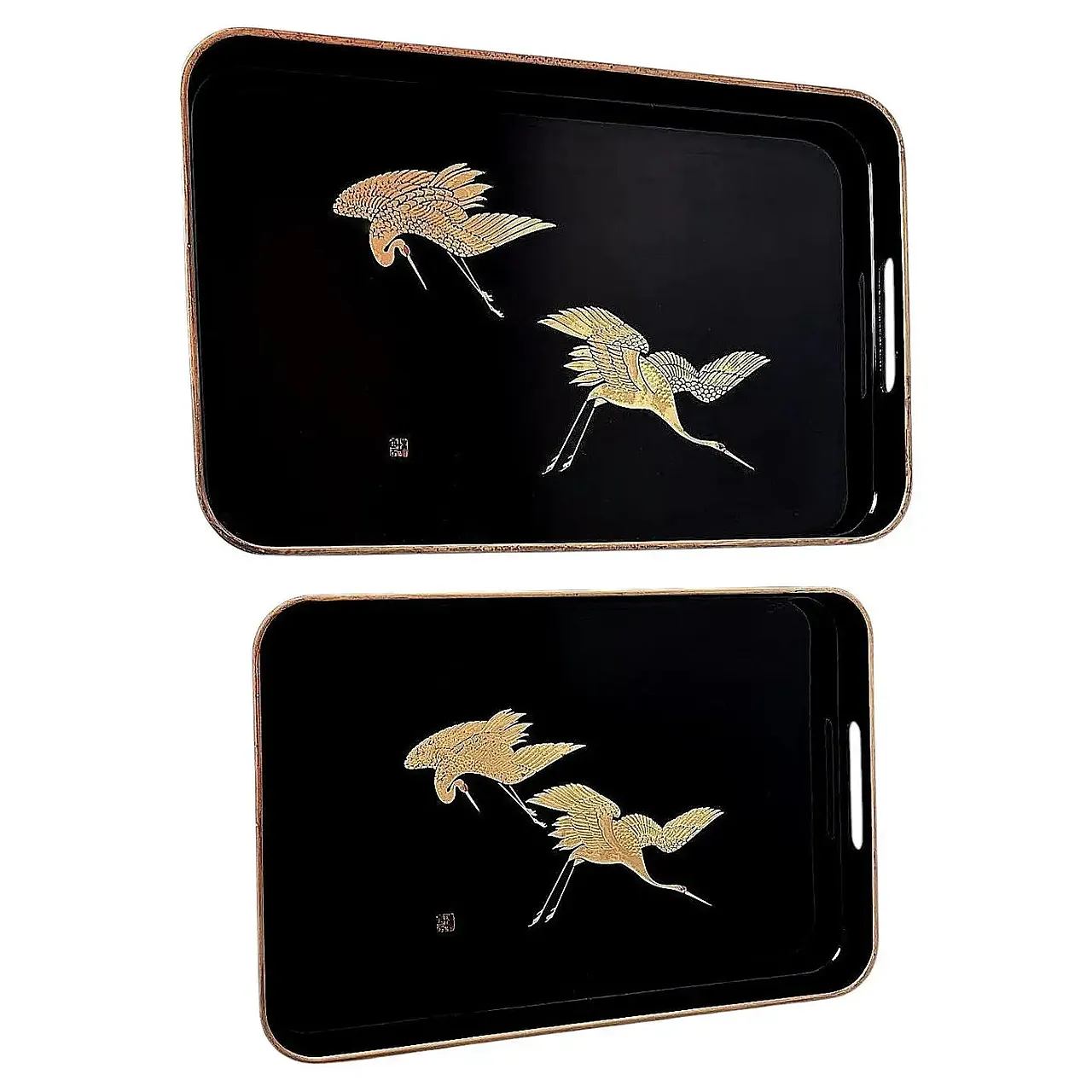
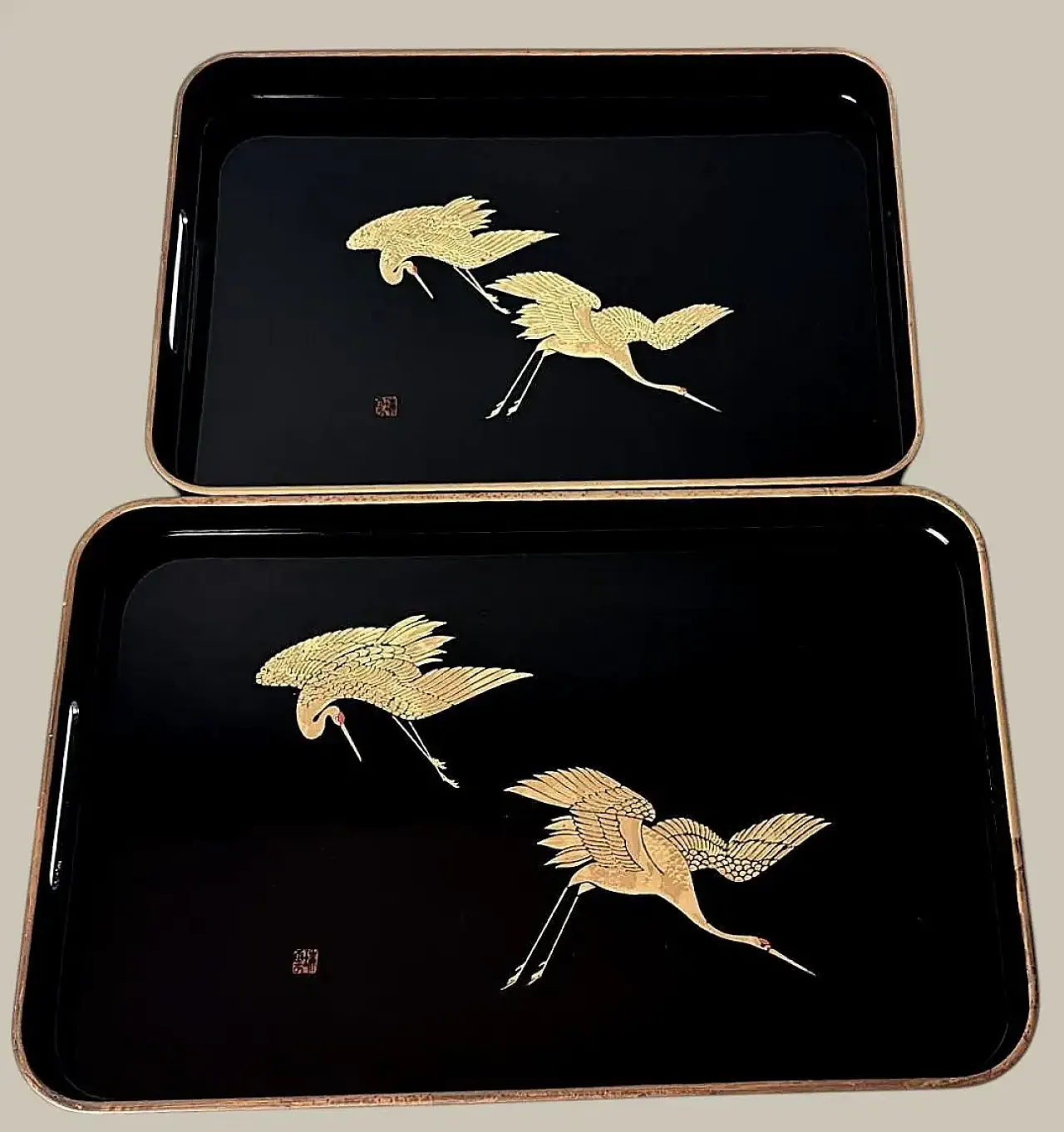
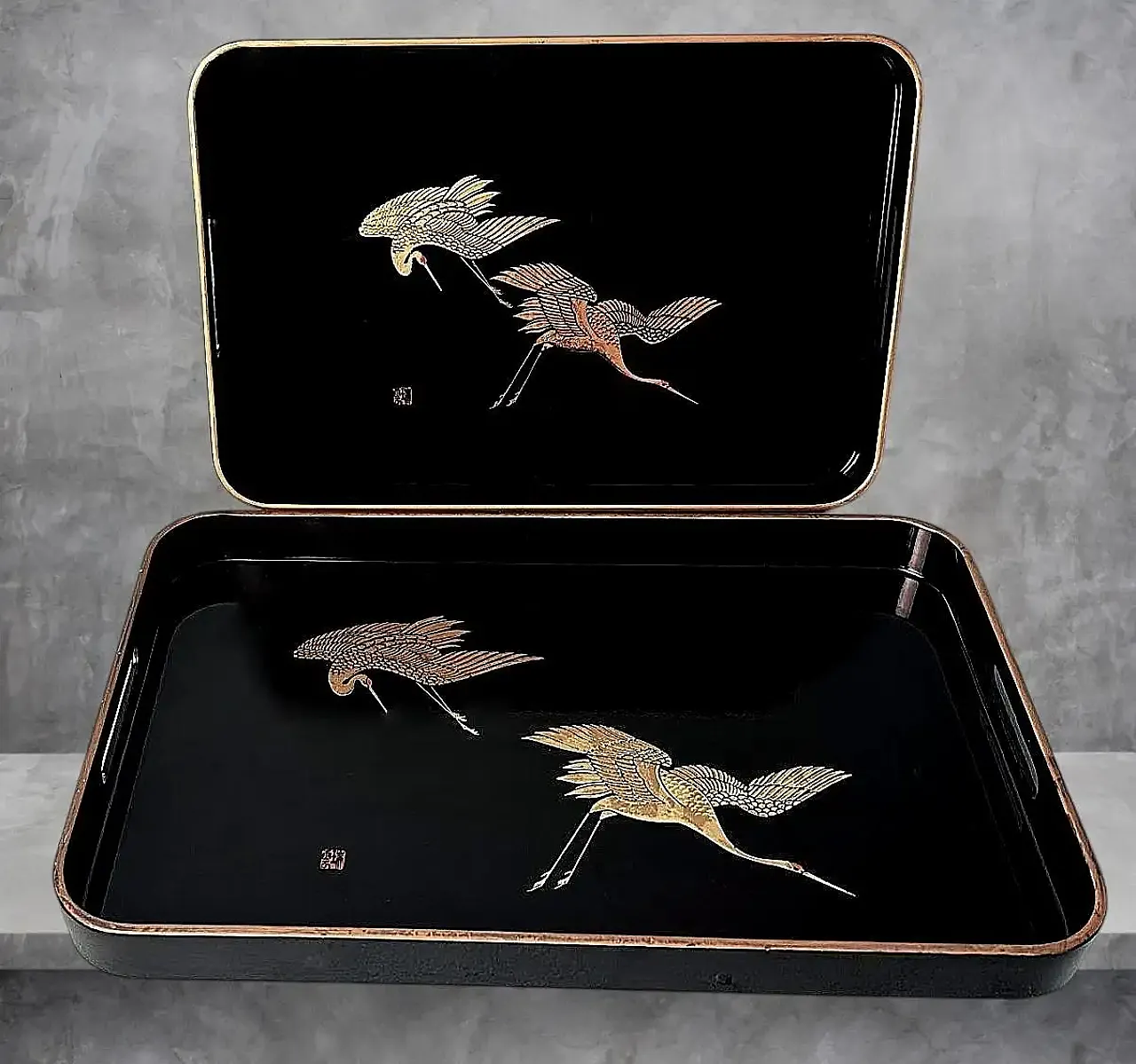
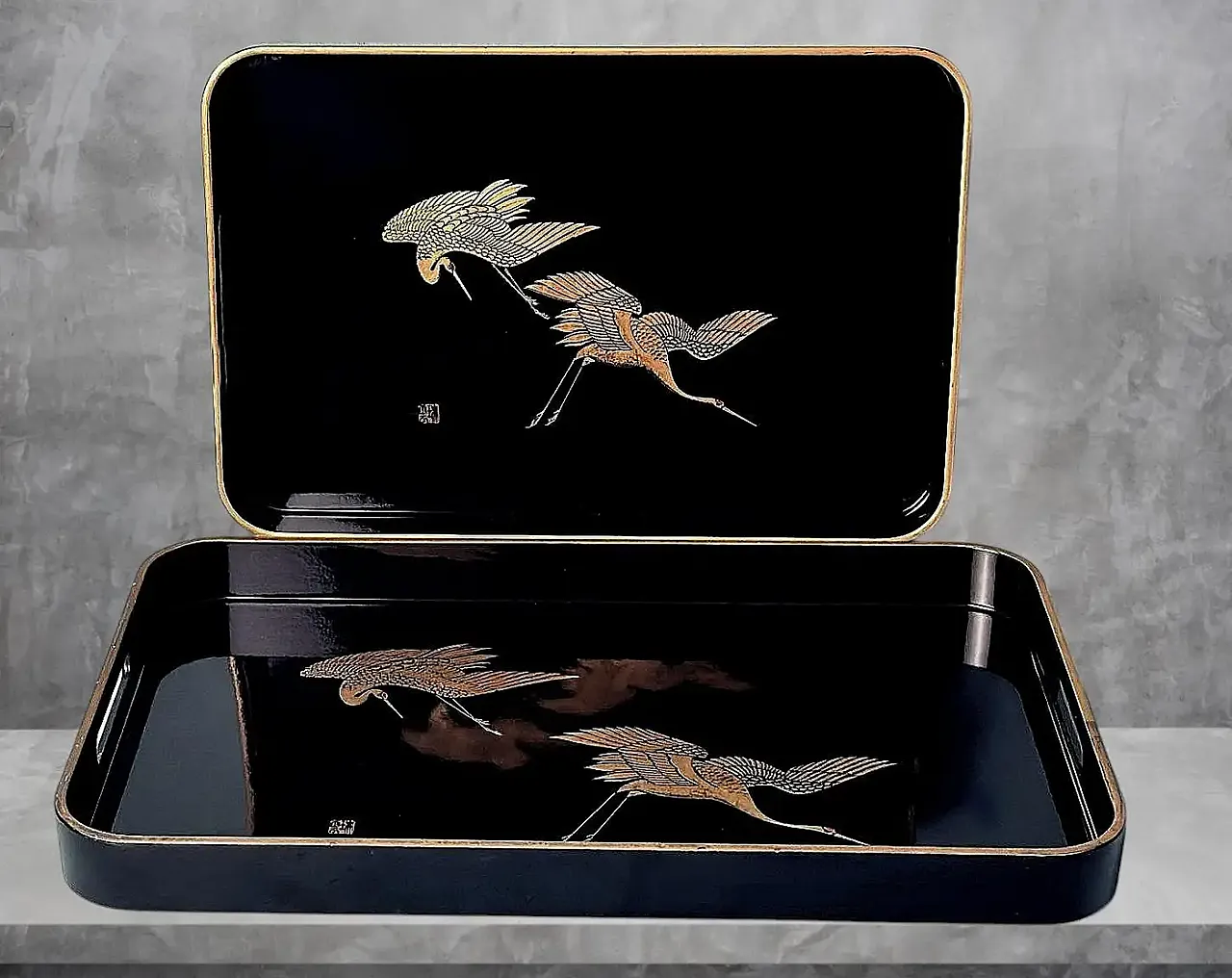
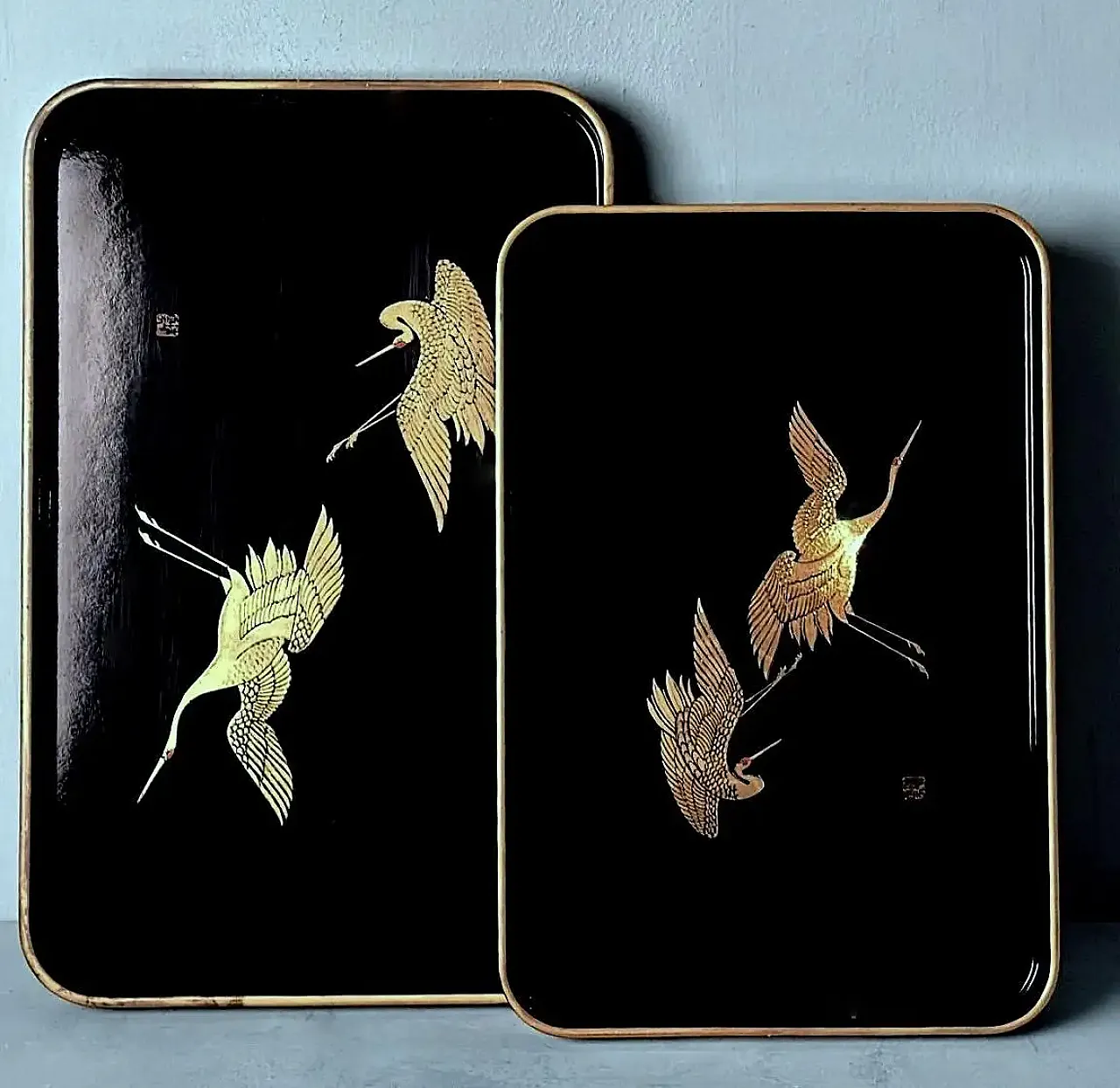
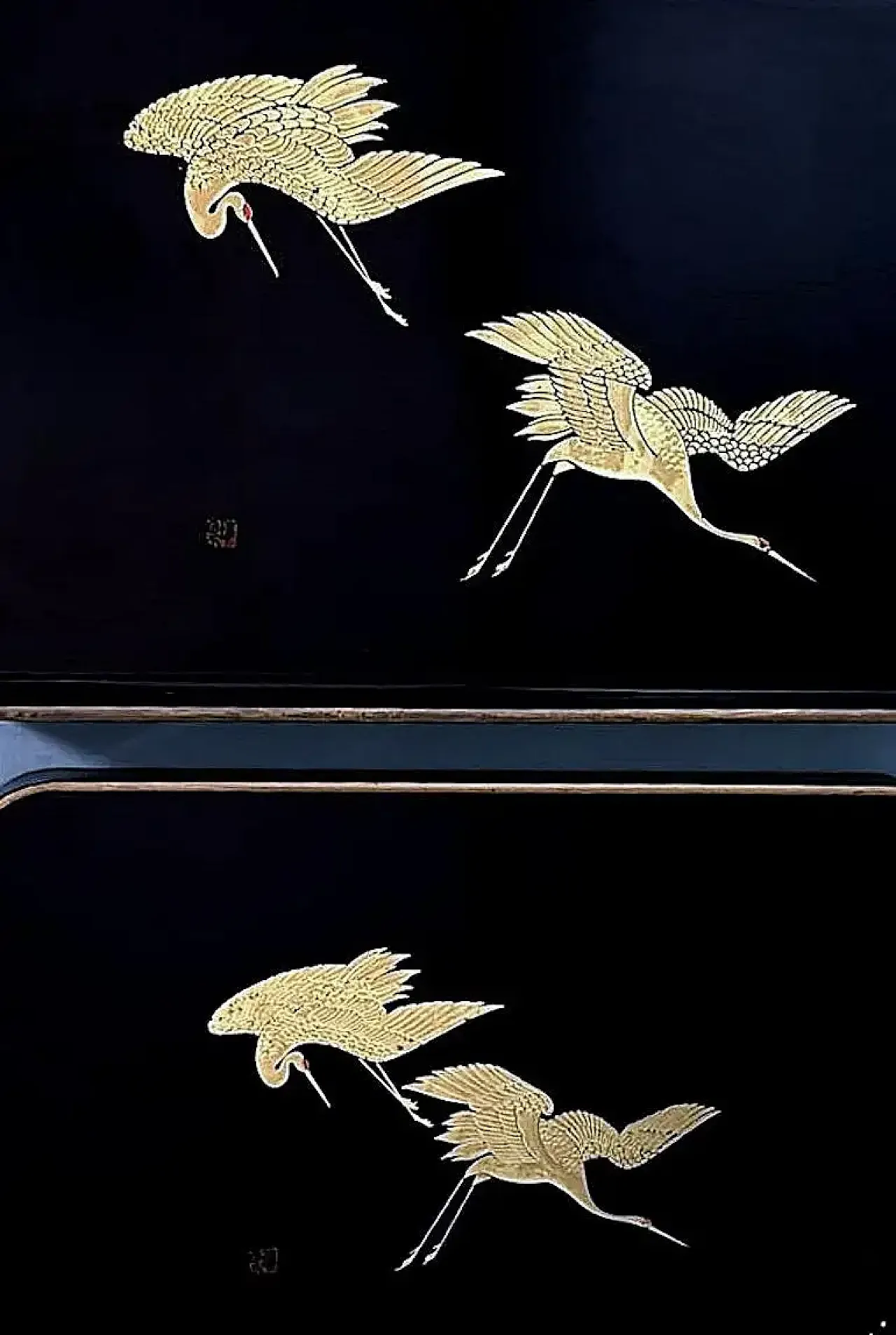
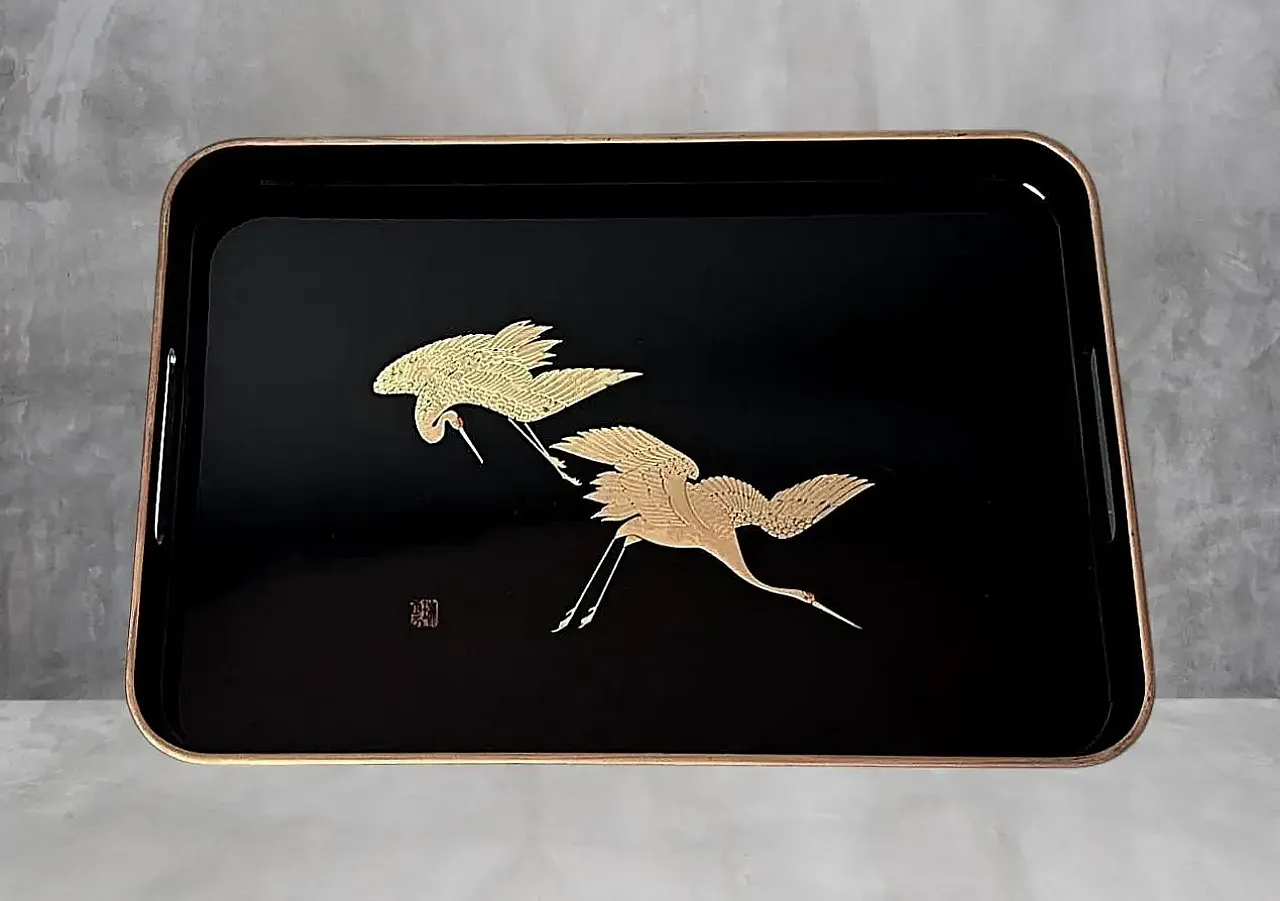
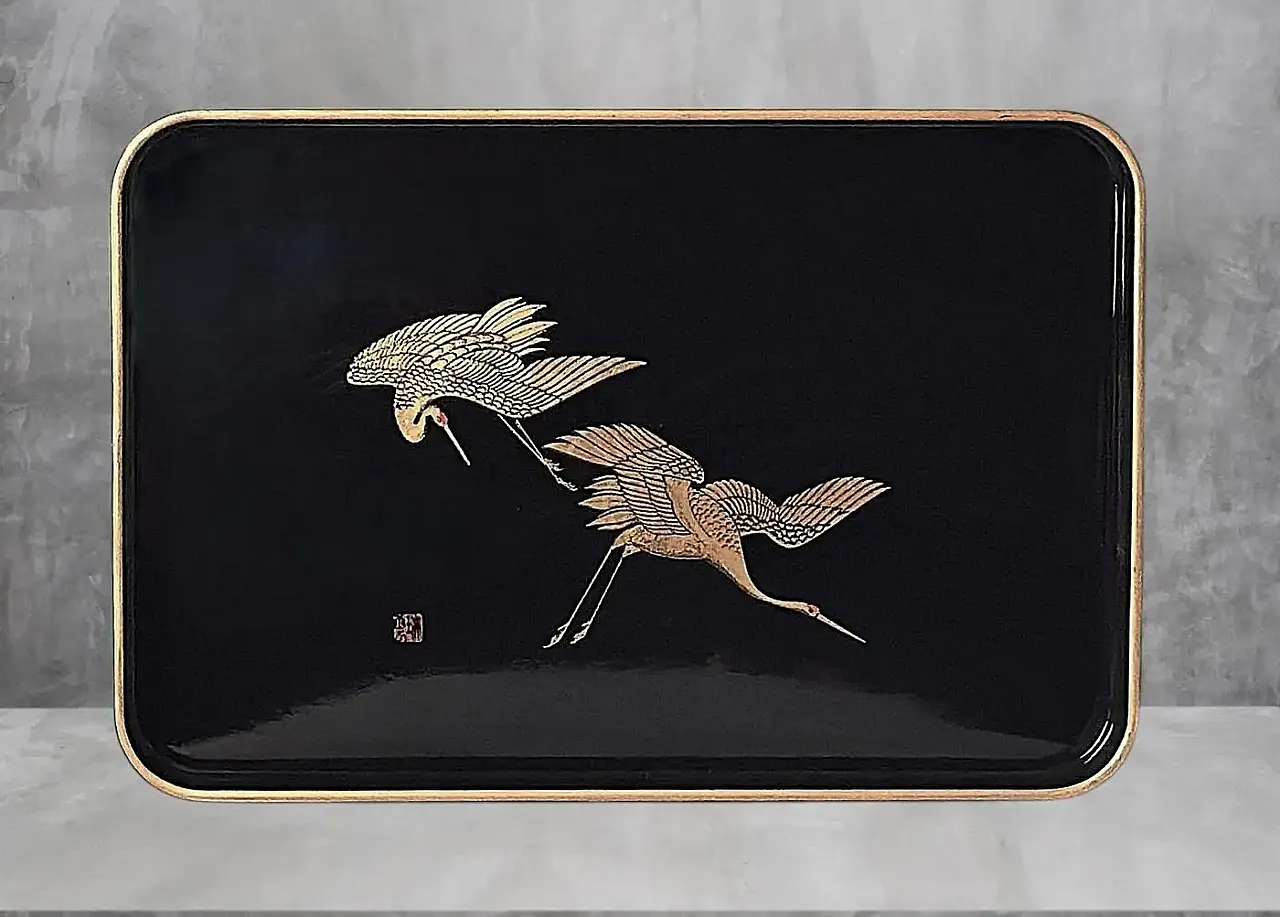
Unusual and refined pair of rectangular trays in two different sizes, crafted in black resin with a lacquer-effect finish. Each piece is entirely hand-painted with remarkable precision and skill: the artist meticulously rendered even the finest details—note the feathering of the wings and the legs—depicting two graceful cranes in flight in shimmering gold paint. The painting was executed using the Maki-e technique, an ancient Japanese lacquer art form. A stylized red ideogram representing the word “Tsuru” (crane) is also painted on each tray. The handles are seamlessly integrated into the short sides, and the entire upper rim is accented with gold. The result is a clean, elegant design that is also highly practical and functional. These pieces were made in Japan between 1960 and 1964 in the city of Wajima, on the Noto Peninsula—an area renowned for its lacquerware and similar materials. Beyond their aesthetic appeal, these trays carry a rich symbolic meaning. The crane, with its slender legs, pure white feathers, and signature red crown, is one of the most revered symbols in Japanese culture. It represents loyalty, honor, and strength—values that led the samurai class to use its image on their armor and weapons. The crane’s black, white, and red plumage also evokes purity and beauty, concepts reflected in the traditional makeup of the Geisha. Cranes are monogamous and known for their lifelong pair bonds, making them a meaningful gift for couples, especially newlyweds, symbolizing a long and happy life together. According to legend, folding 1,000 origami cranes will grant a heartfelt wish. This belief is deeply connected to the story of Sadako Sasaki (January 7, 1943 – October 25, 1955), a young girl who became a symbol of peace in post-war Japan. Sadako was only two years old when the atomic bomb was dropped. She appeared unharmed, but ten years later, at age twelve, she was diagnosed with leukemia caused by radiation exposure. Inspired by the legend, she began folding cranes in hopes that her wish to live would come true. She created hundreds of them—each a delicate, colorful masterpiece. Day after day, from her hospital bed, she folded with determination. Tragically, her illness progressed, and she passed away in October of that same year. Her story deeply moved the Japanese people. In her honor, a statue was erected in Seattle’s Peace Park (USA), where visitors still leave garlands of origami cranes as a symbol of peace and hope. Sadako and her cranes have since become powerful symbols of peace around the world. The trays are in good overall condition. Dimensions:– Large tray: 49 cm W x 31 cm D x 5 cm H – Small tray: 43 cm W x 29 cm D x 5 cm H


.png)




 SILVER Seller in Prato, Italy