Main features
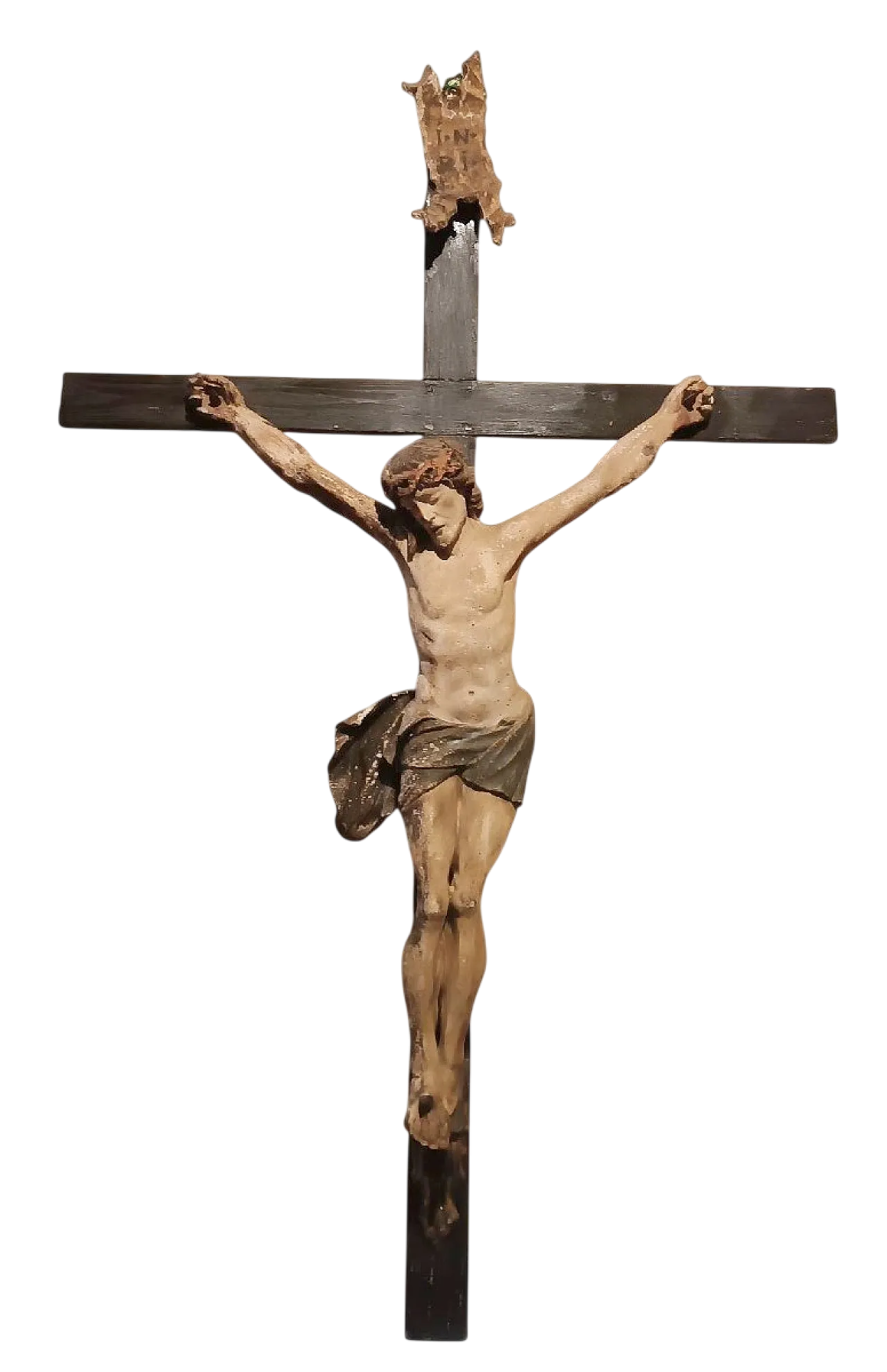
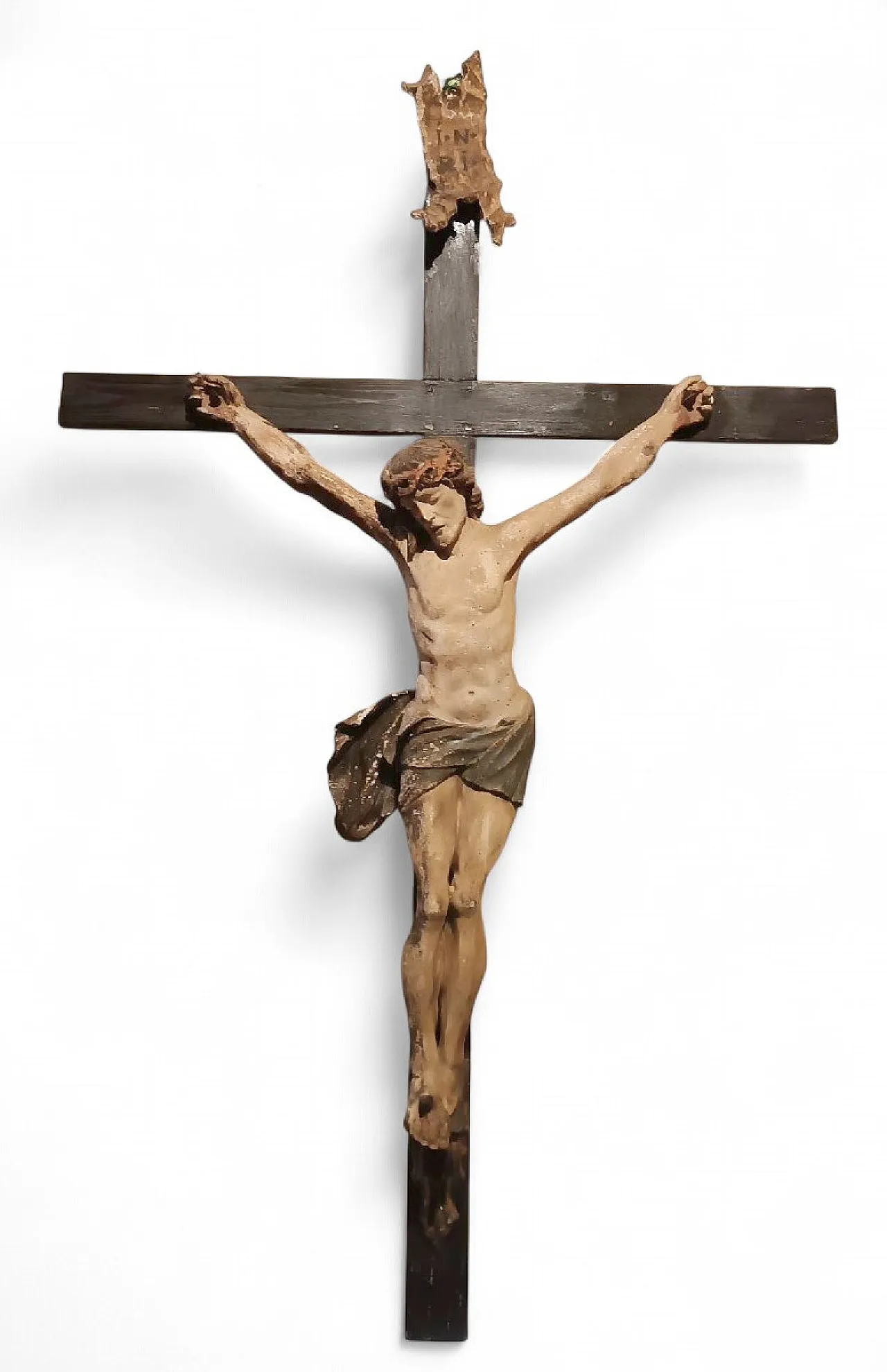
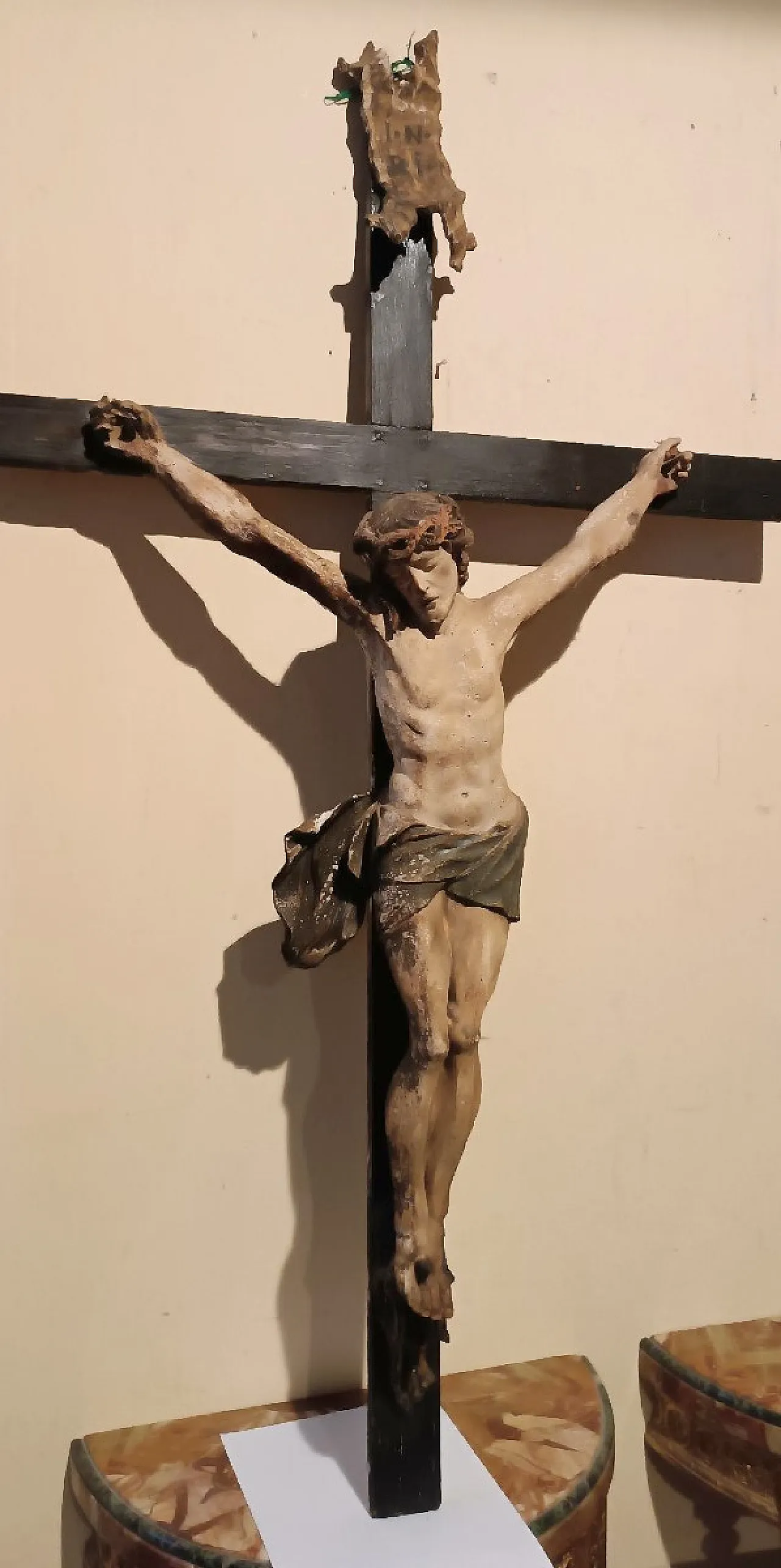
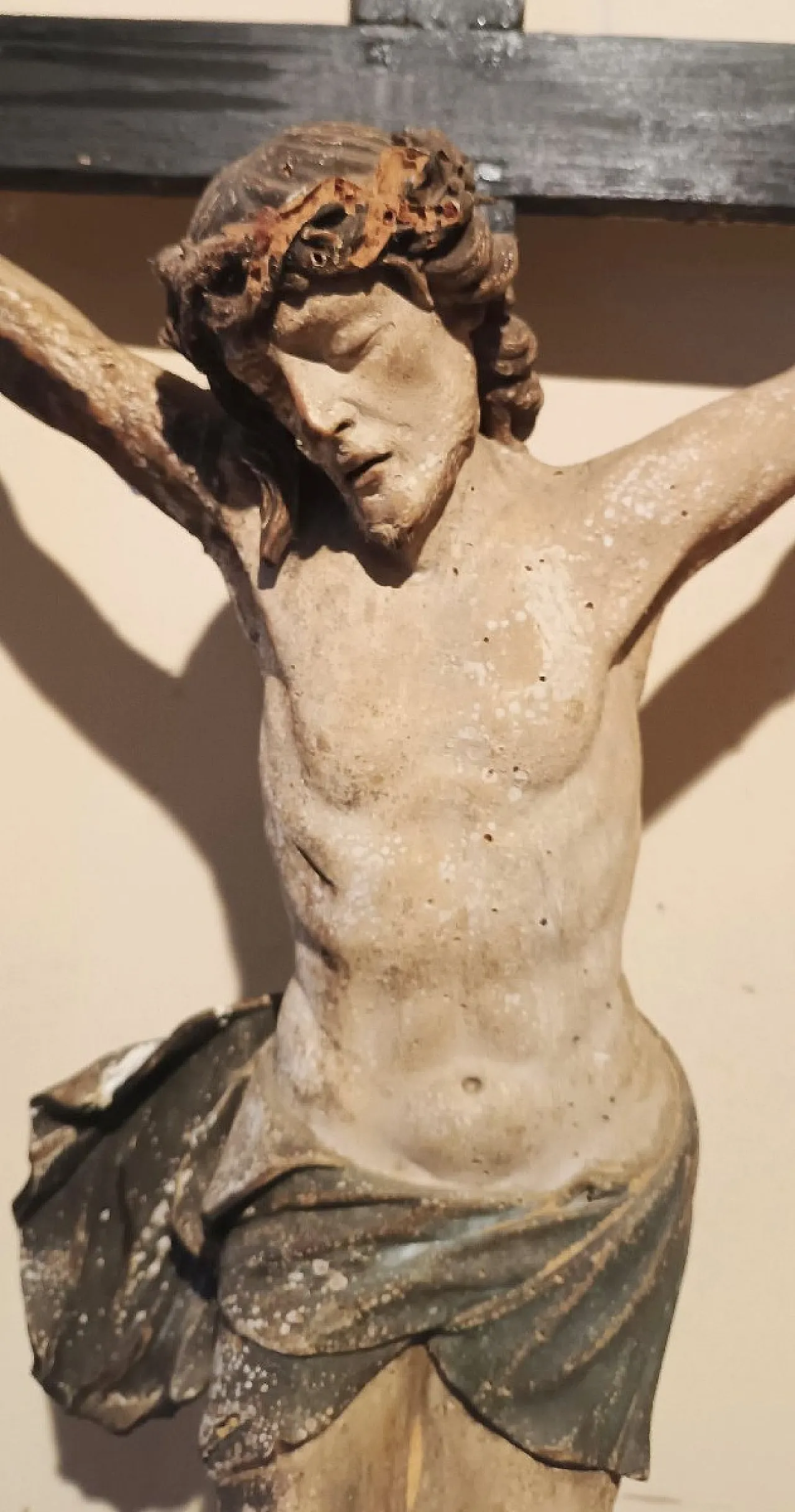
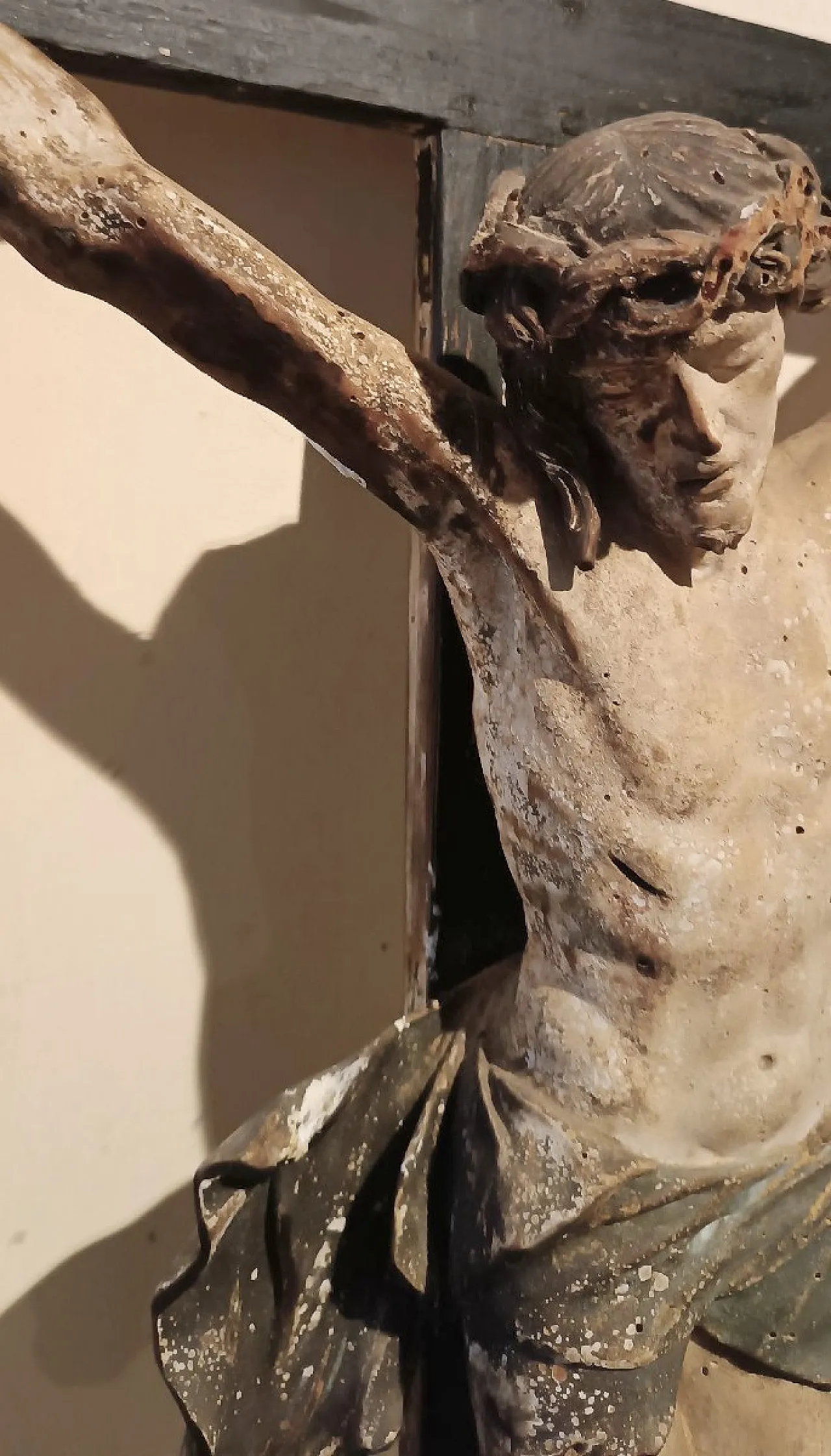
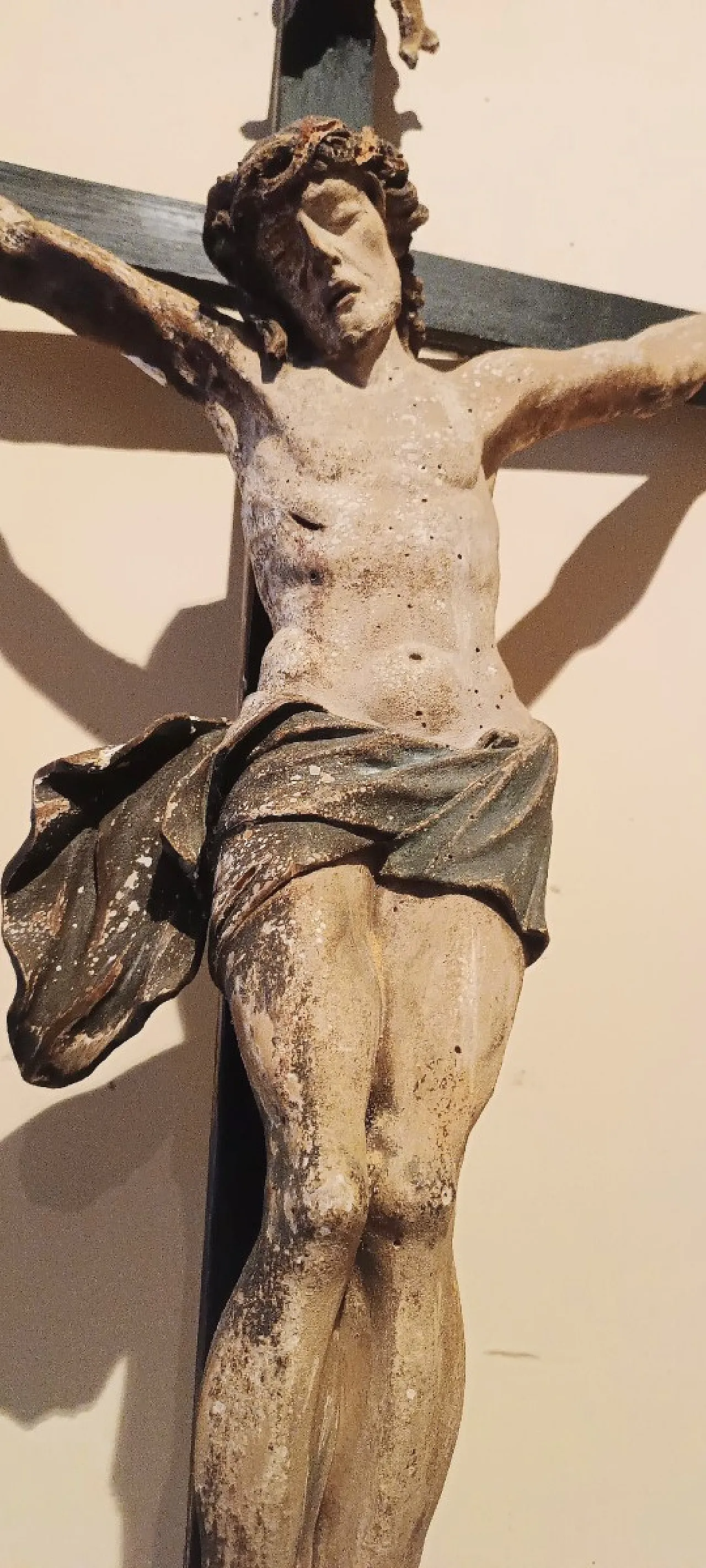
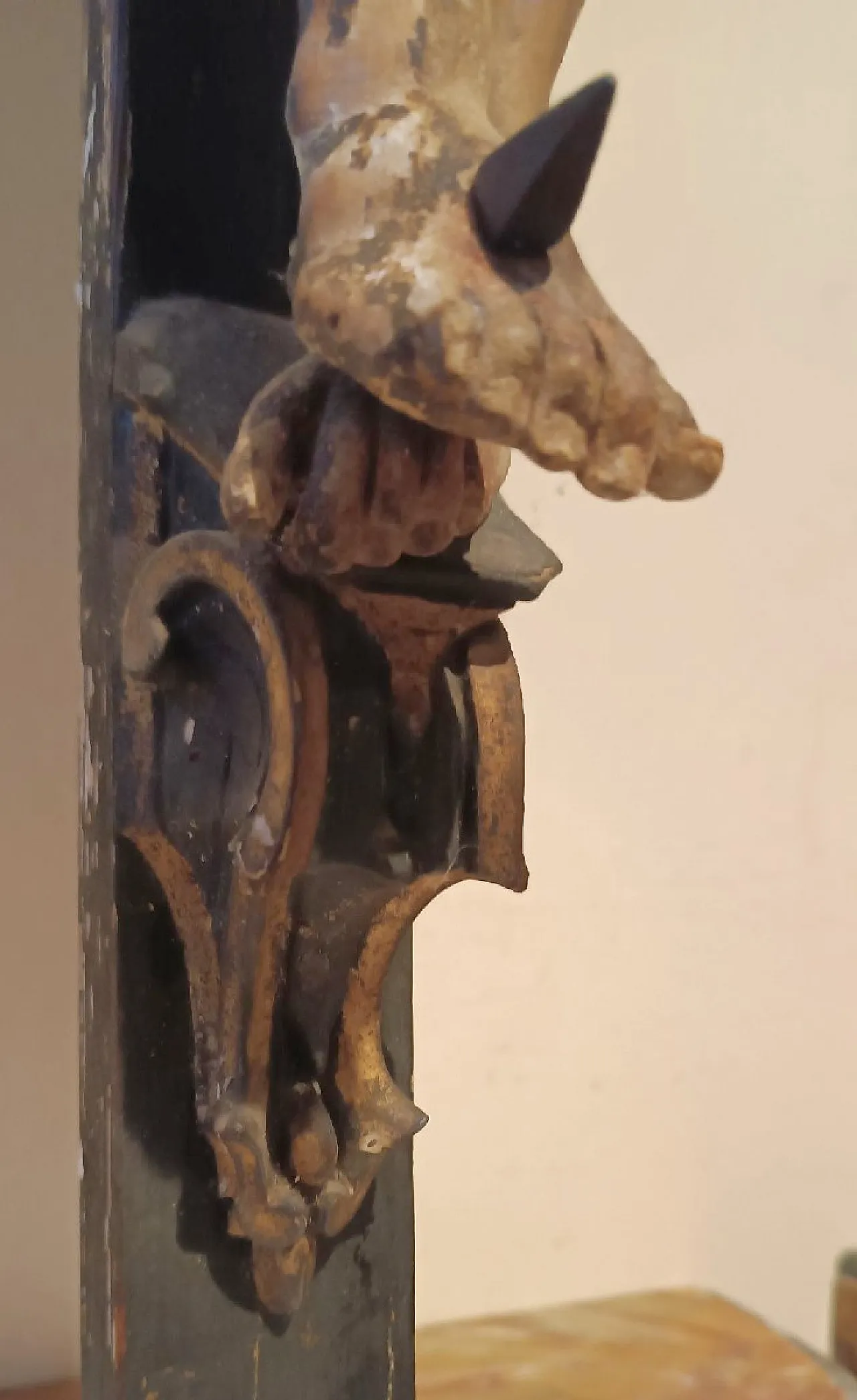
: Materials and technique: The sculpture is carved from wood, prepared and painted in polychrome. The cross is painted black and its upper part features a wooden scroll with the inscription “INR.I.”. The base is carved and covered in wood, decorated with gilding.
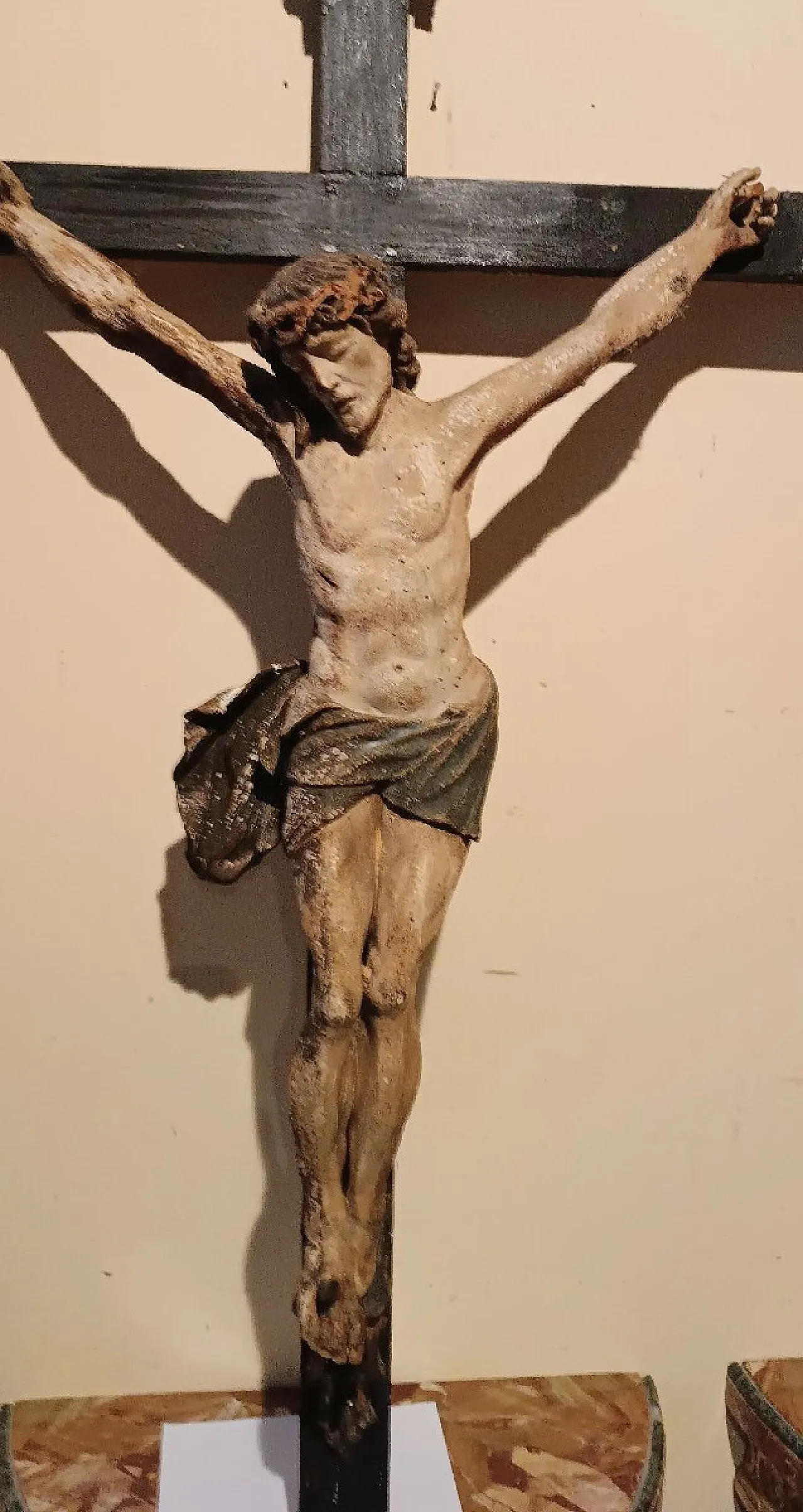
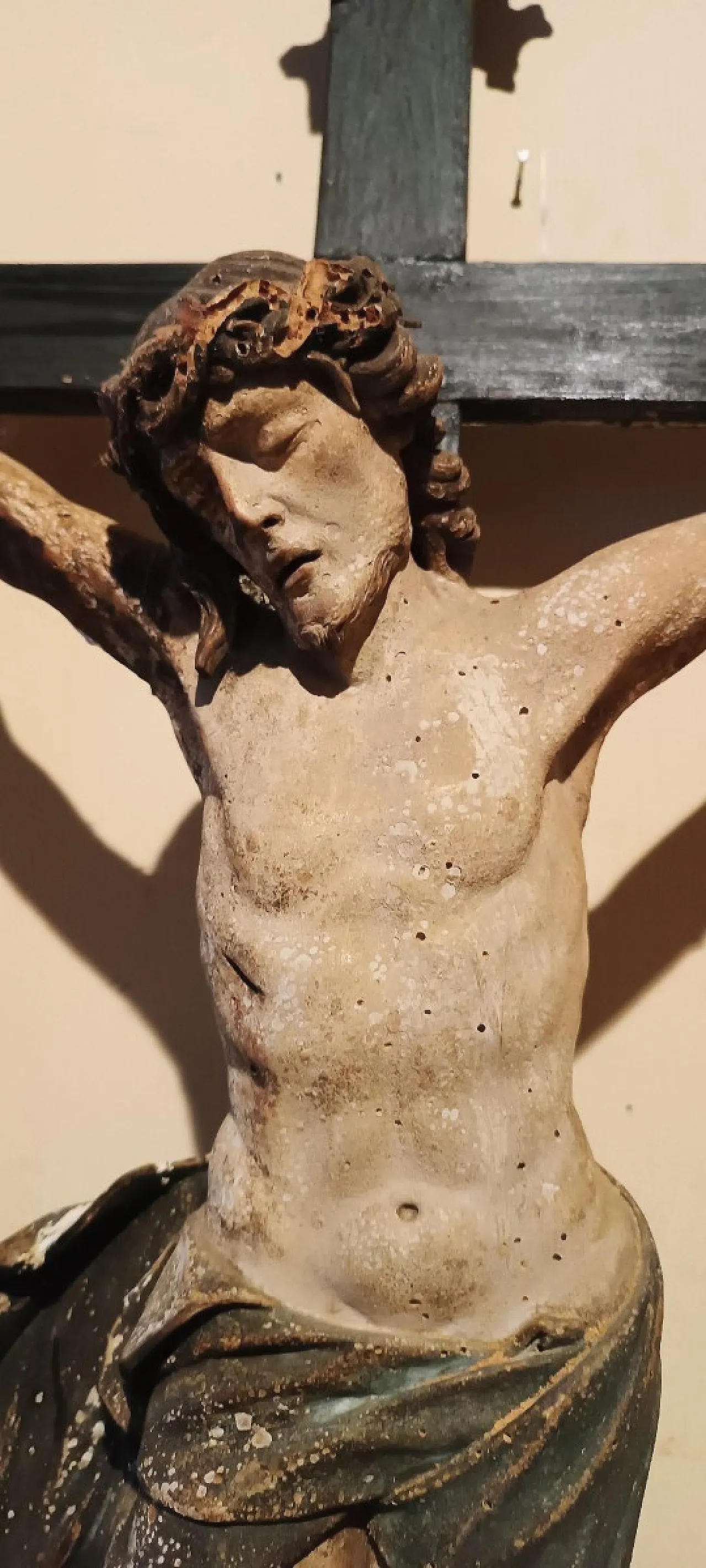
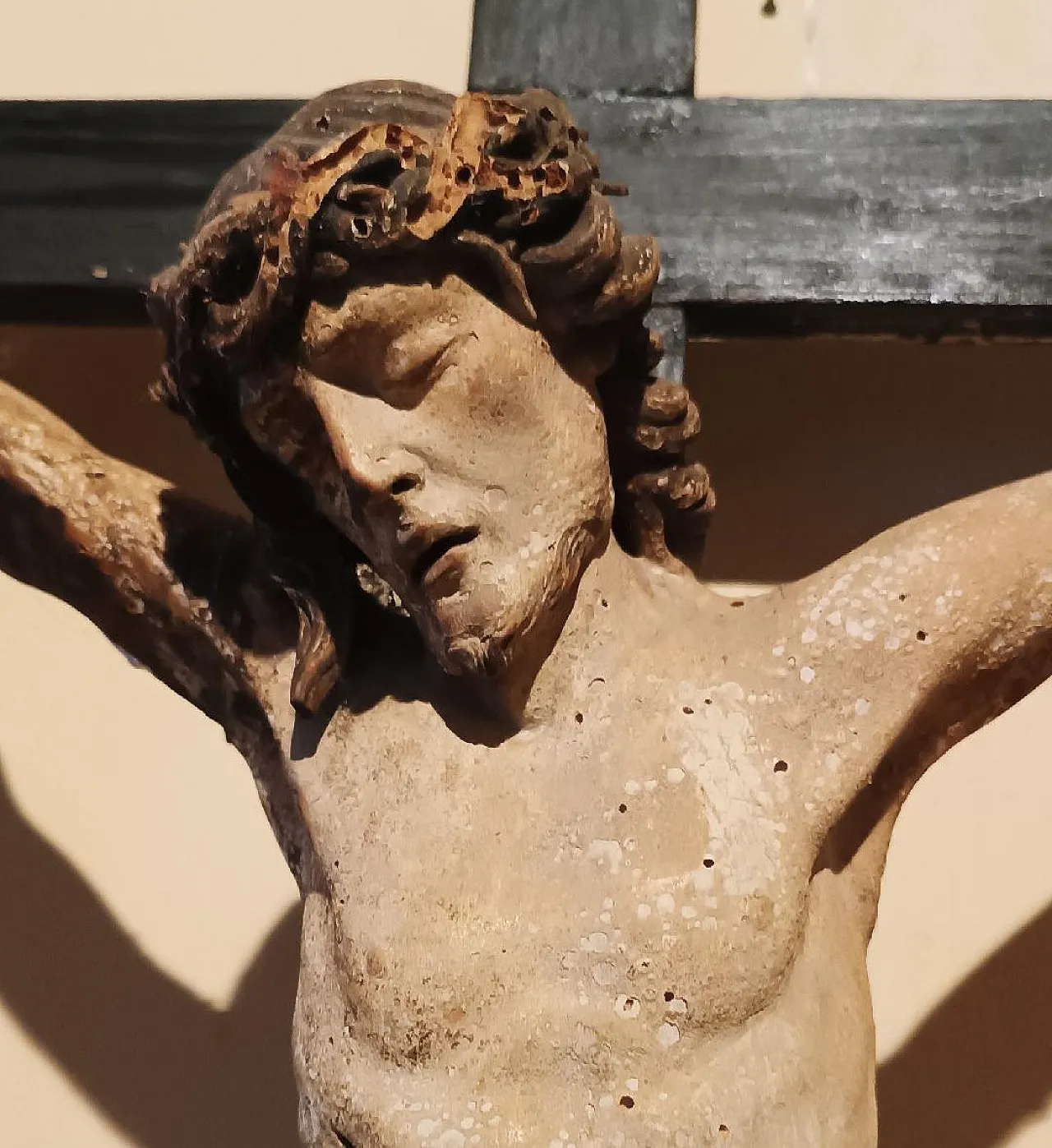
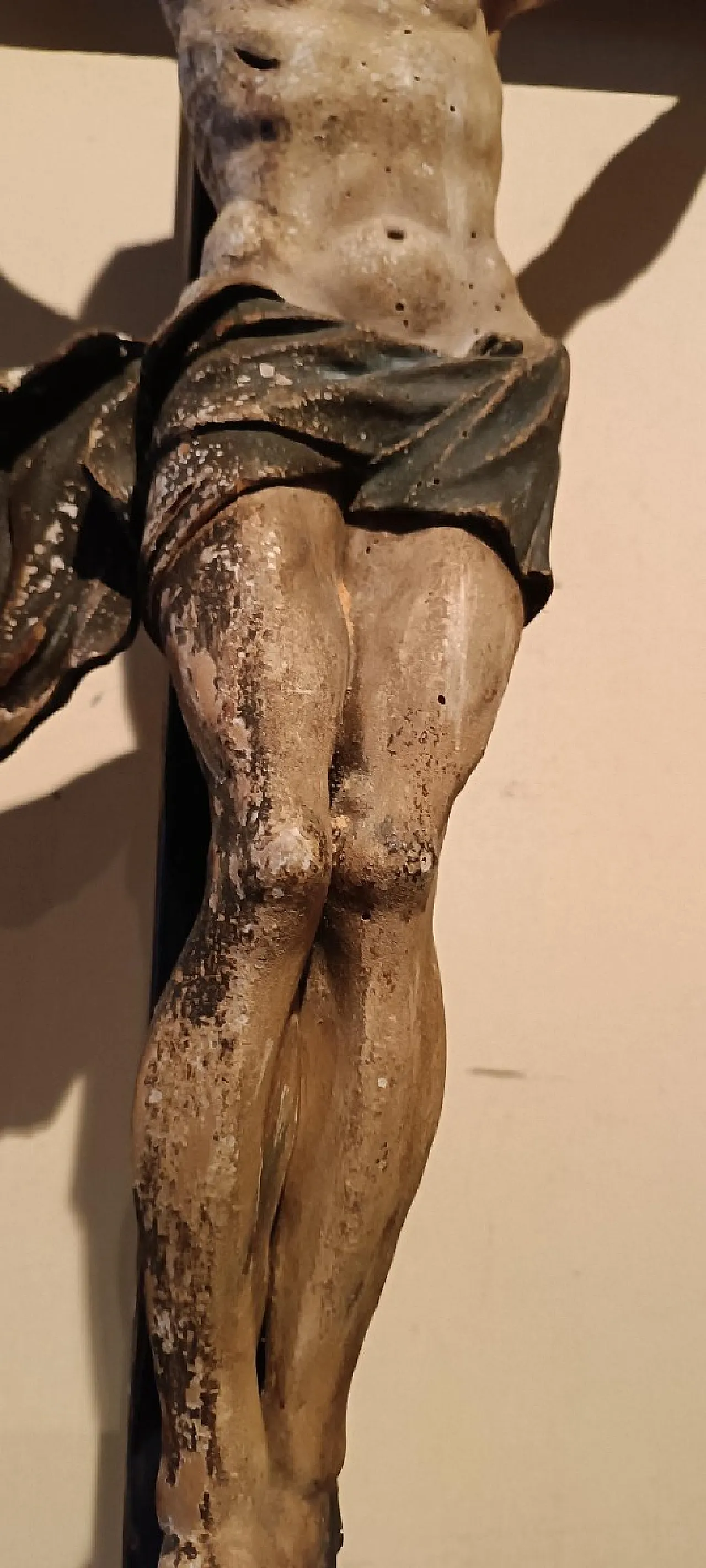
Style and iconography: Christ is depicted in the style of Christus Patiens (Suffering Christ), with his head bowed, his eyes closed or half-closed, and a knotted loincloth (cloth) covering his hips and legs. This iconography developed widely from the 13th century onwards, emphasising the humanity and suffering of Jesus.
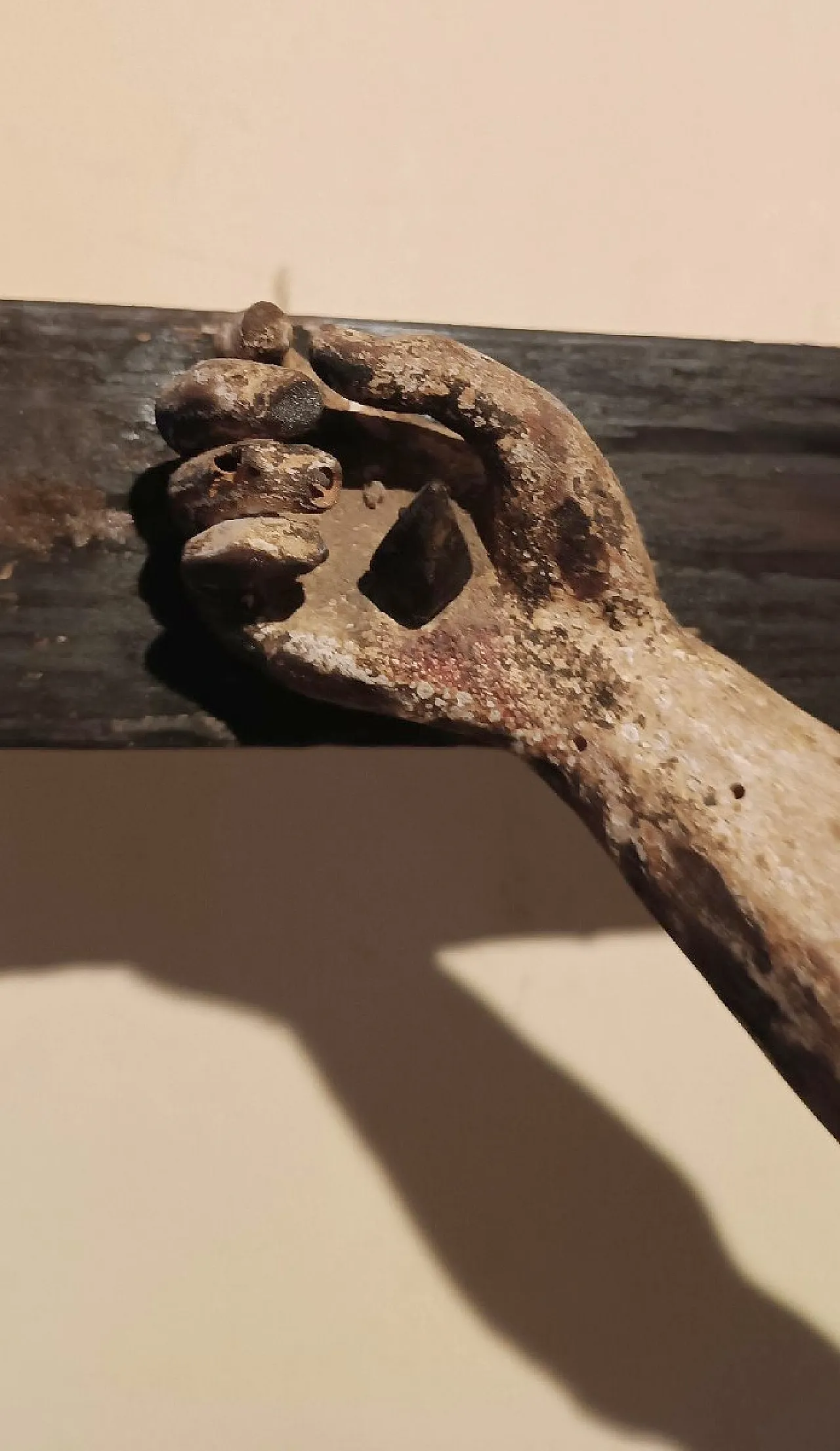
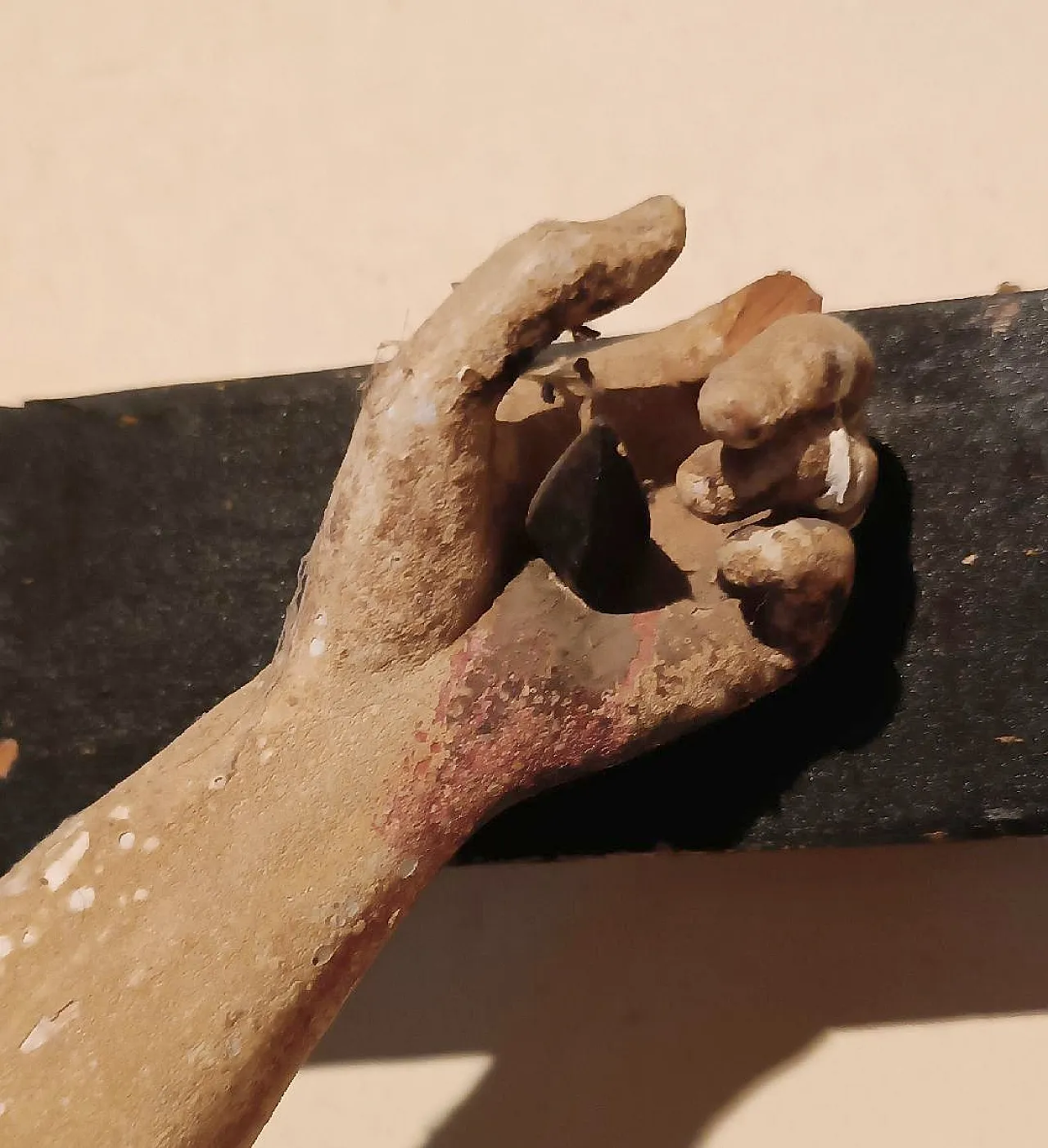
Anatomical details: The attention to anatomical details, such as visible ribs and musculature, suggests a thorough study of the suffering human body, common in Baroque and late Renaissance schools of sculpture. Condition: The sculpture shows signs of wear and tear, visible through the loss of paint (polychromy) and some minor damage, such as the absence of a finger on the right hand, typical of well-preserved but worn early works.
Works of this type are often unique pieces made by master craftsmen or local schools, making precise attribution difficult without specialist knowledge.



.png)
 SILVER Seller in Firenze, Italy