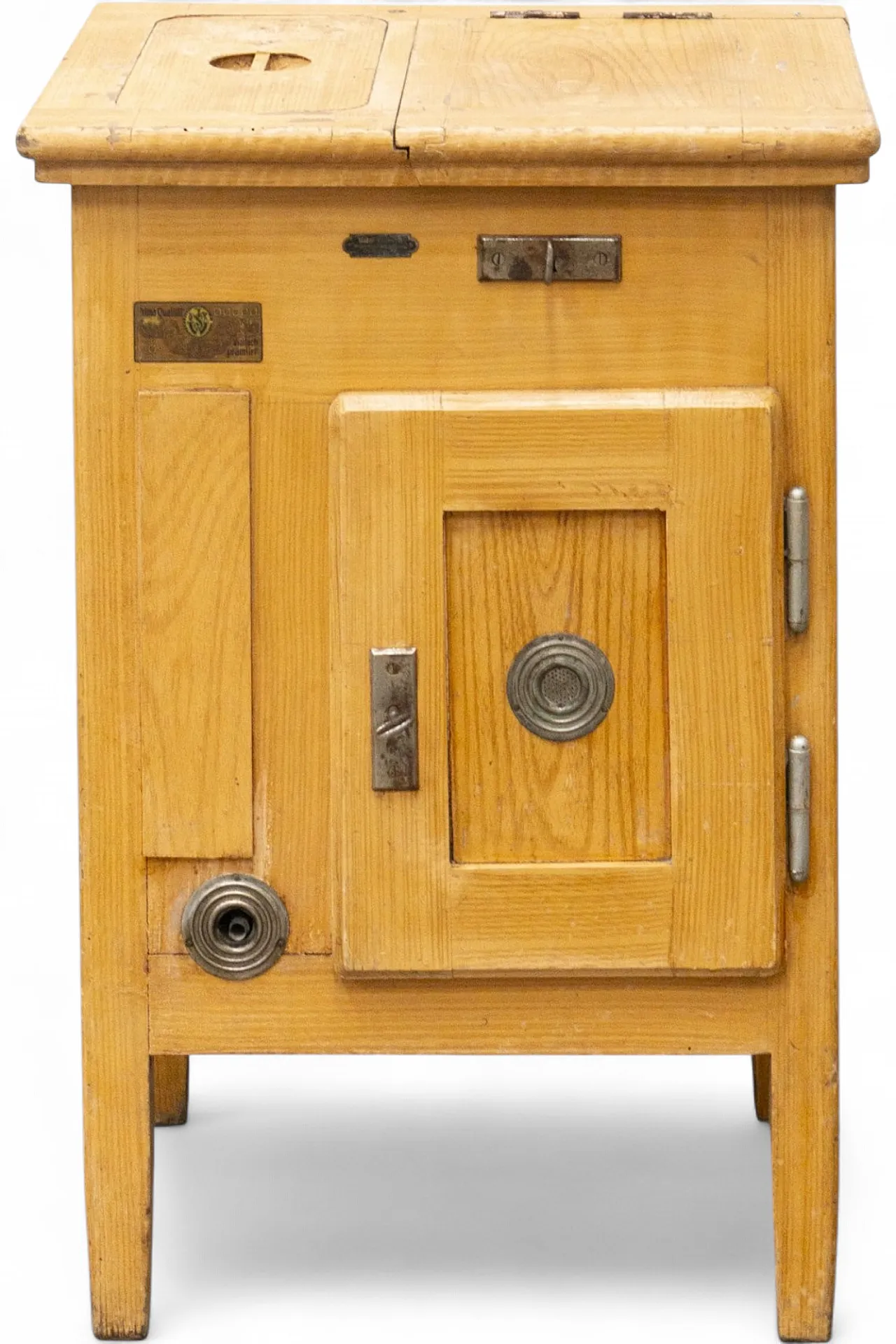
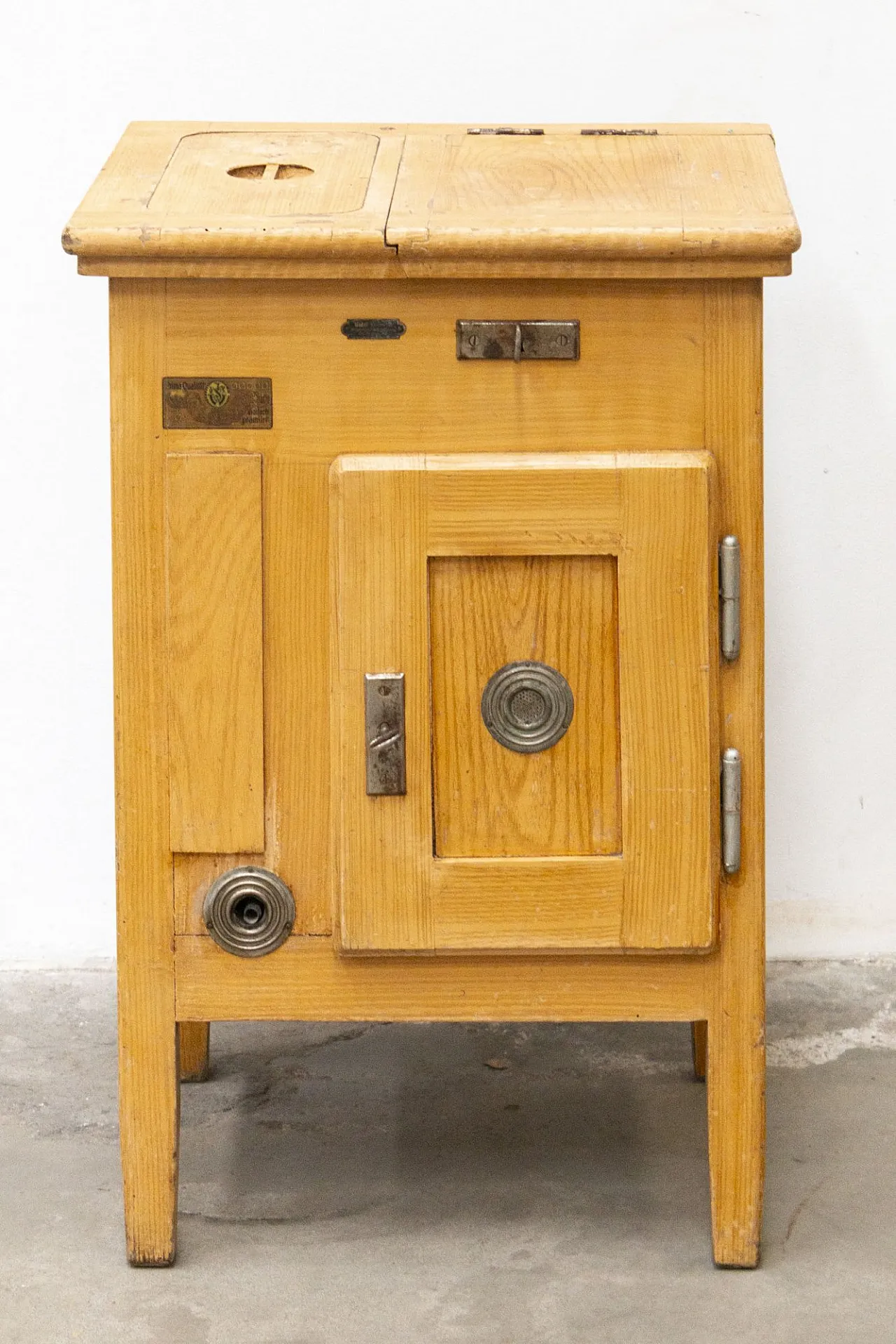
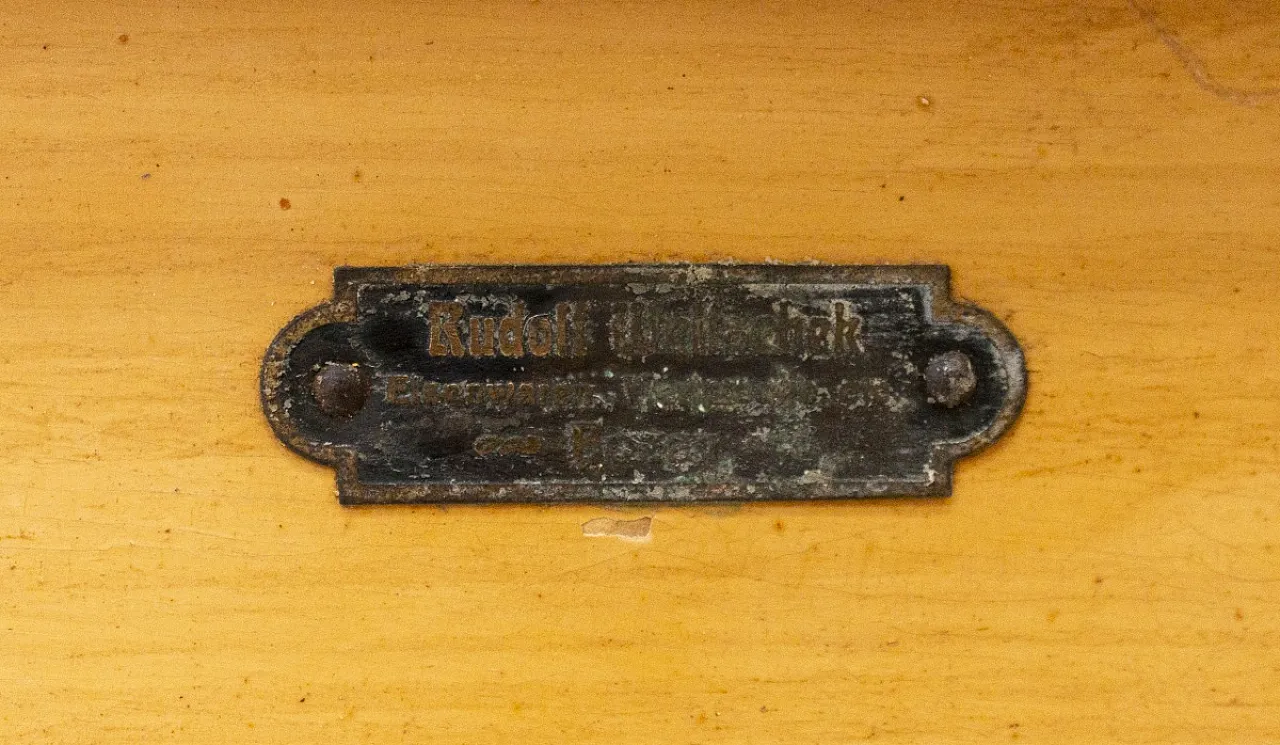
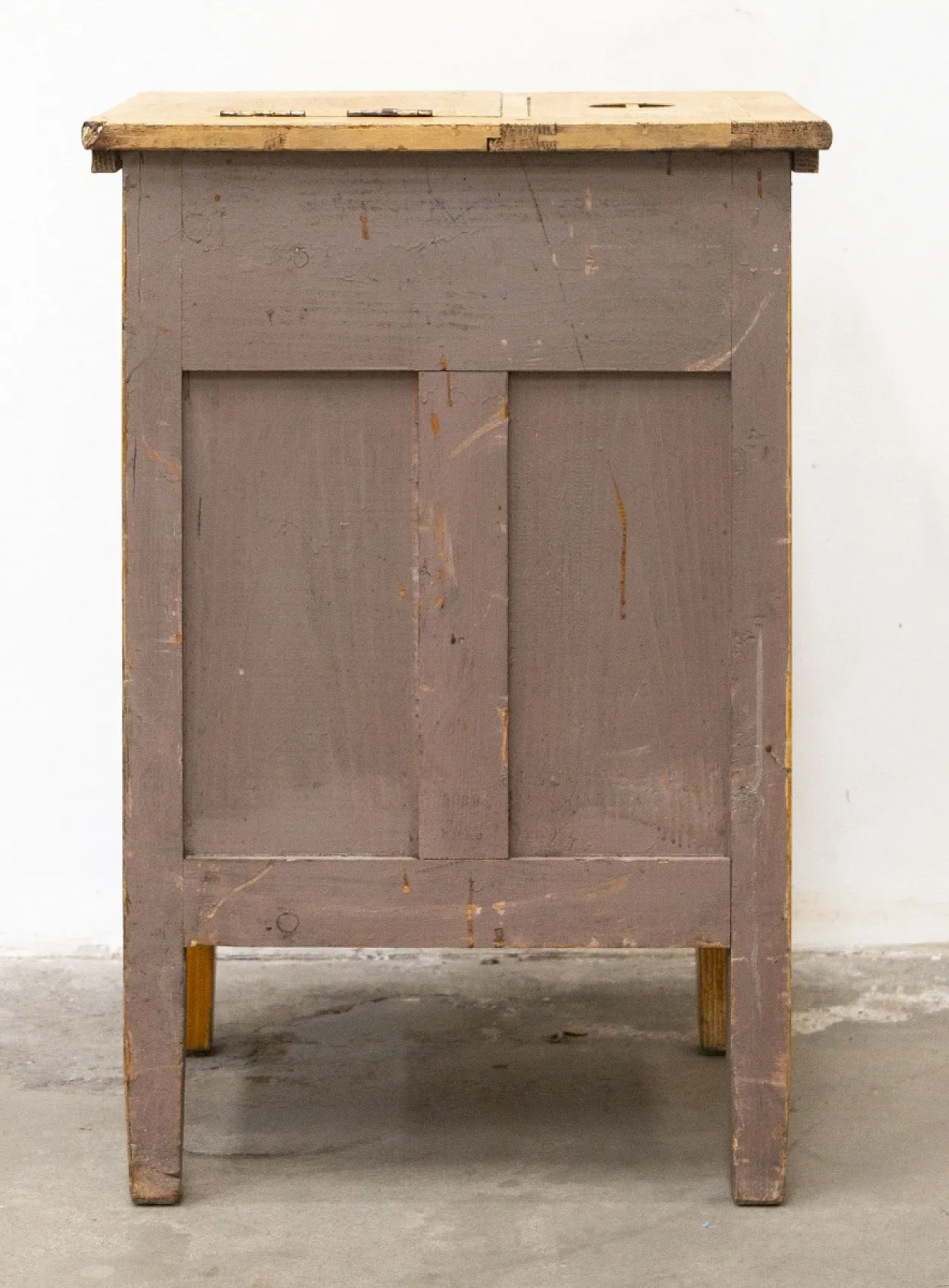
Domestic glacier dating from 1900 to 1915. Production signed by Rudolf Ondráček's special workshop, operating in the territories of the Austro-Hungarian Empire, as can be seen from the original metal plates and trademarks printed directly on the furniture.
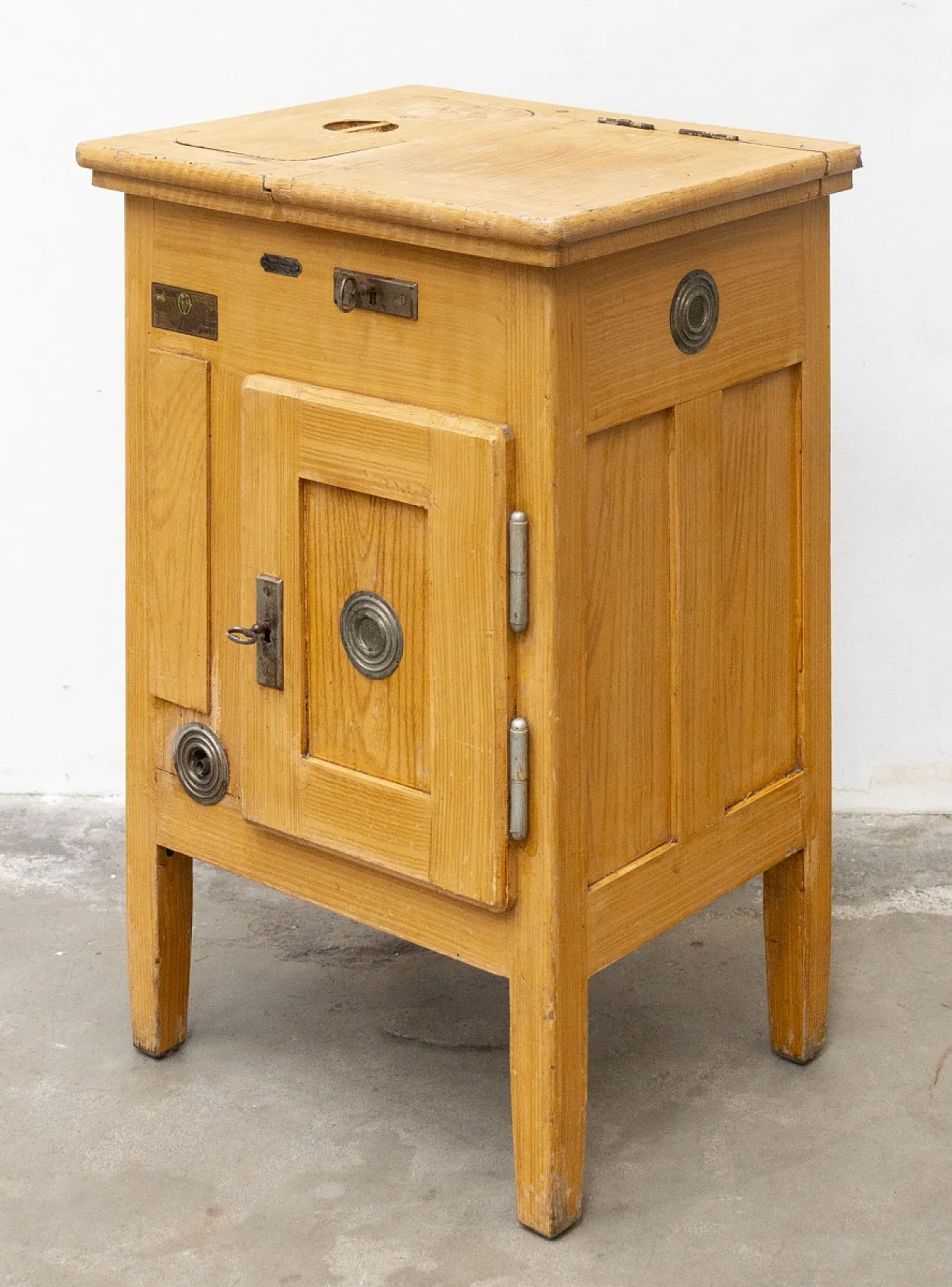
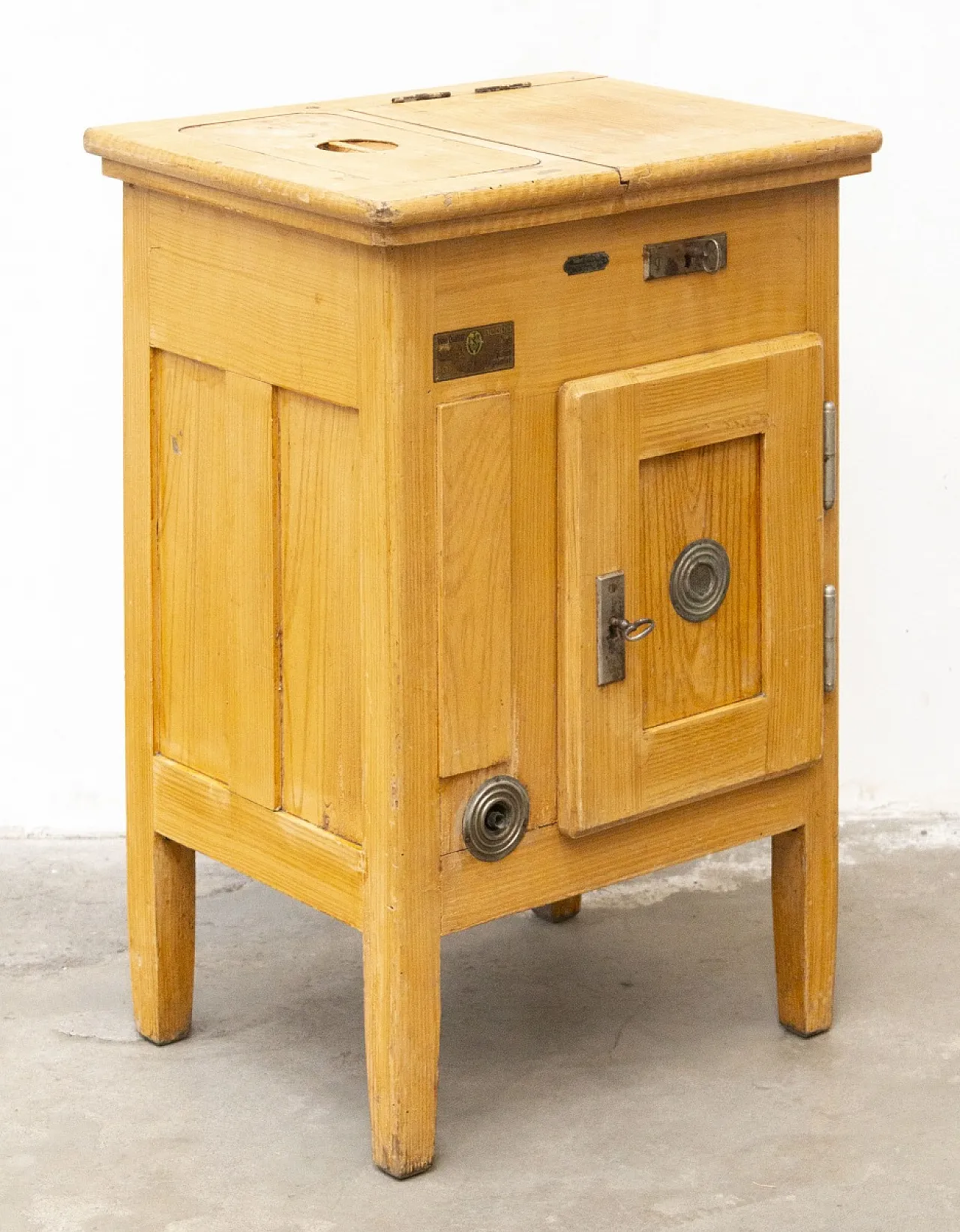
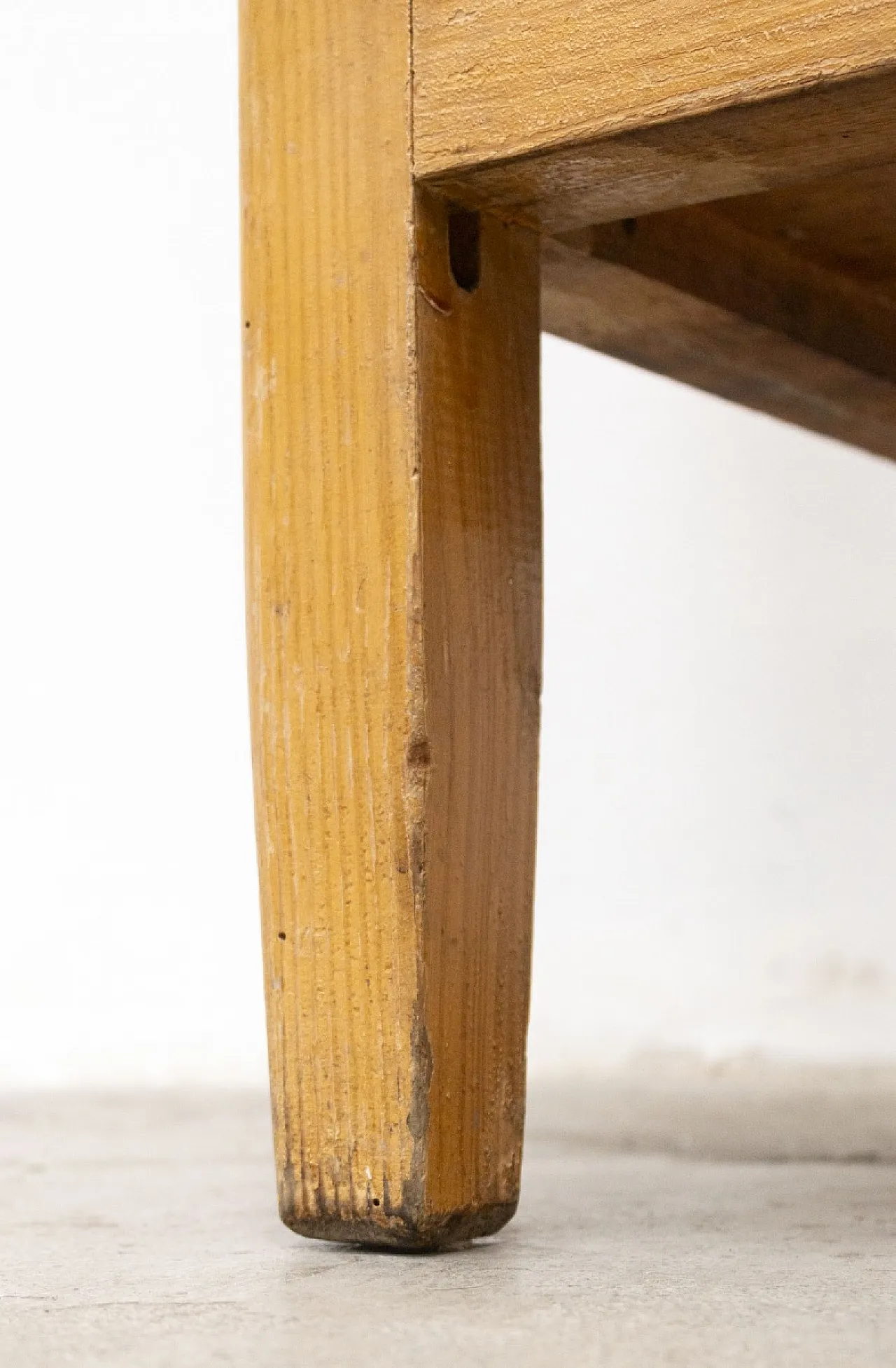
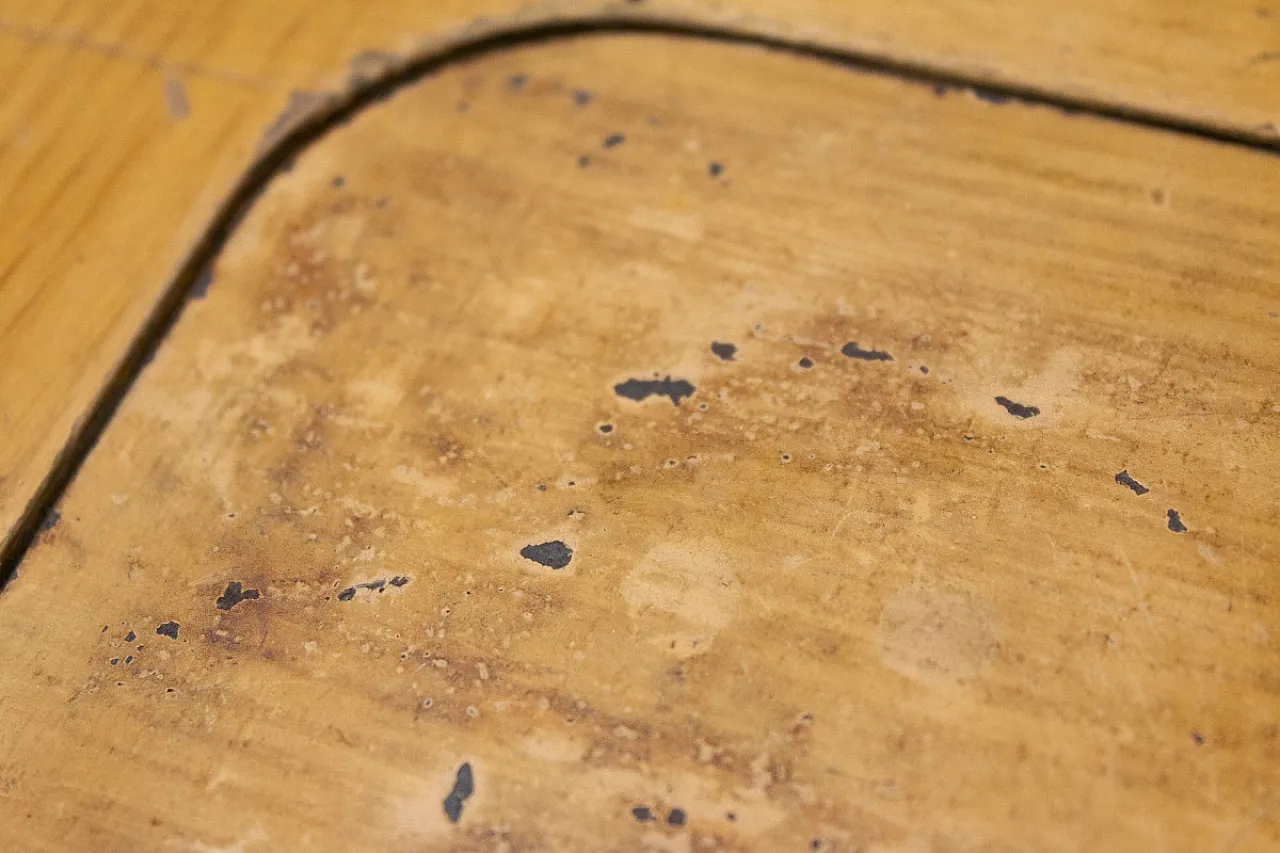
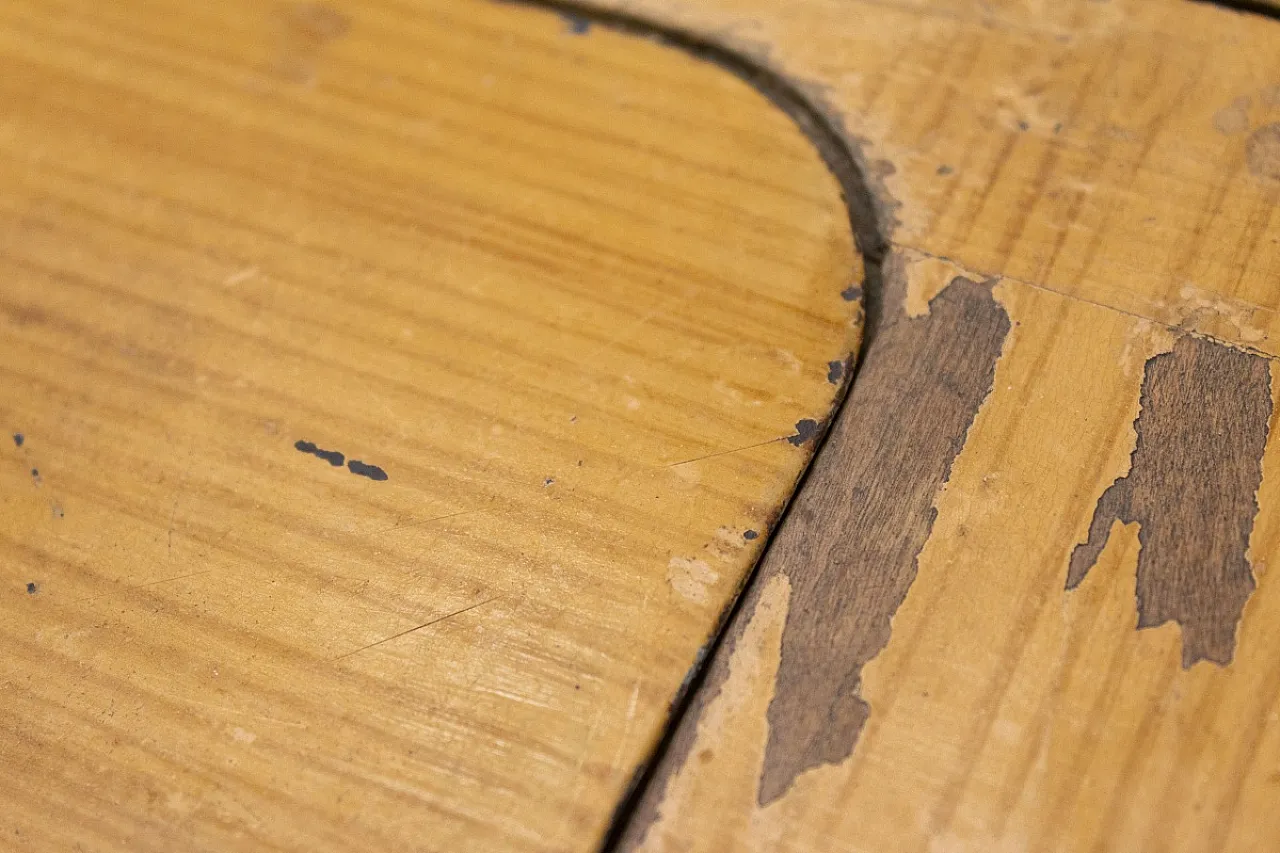
The load-bearing structure of the furniture is made of pine wood, particularly suitable for its excellent natural thermal insulation qualities and its intrinsic lightness. The outer surface was worked in "faux oak" using the complex traditional graining technique. This high-school workmanship allowed the oak veins and medullary rays to be masterfully recreated on a soft wood base, perfectly integrating the functional household appliance into the furnishings of stately kitchens at the beginning of the century. The small, natural signs of surface film exfoliation accumulated over the decades testify to the originality of the oil paints and resins of the time, highlighting the absence of aggressive modern restorations.
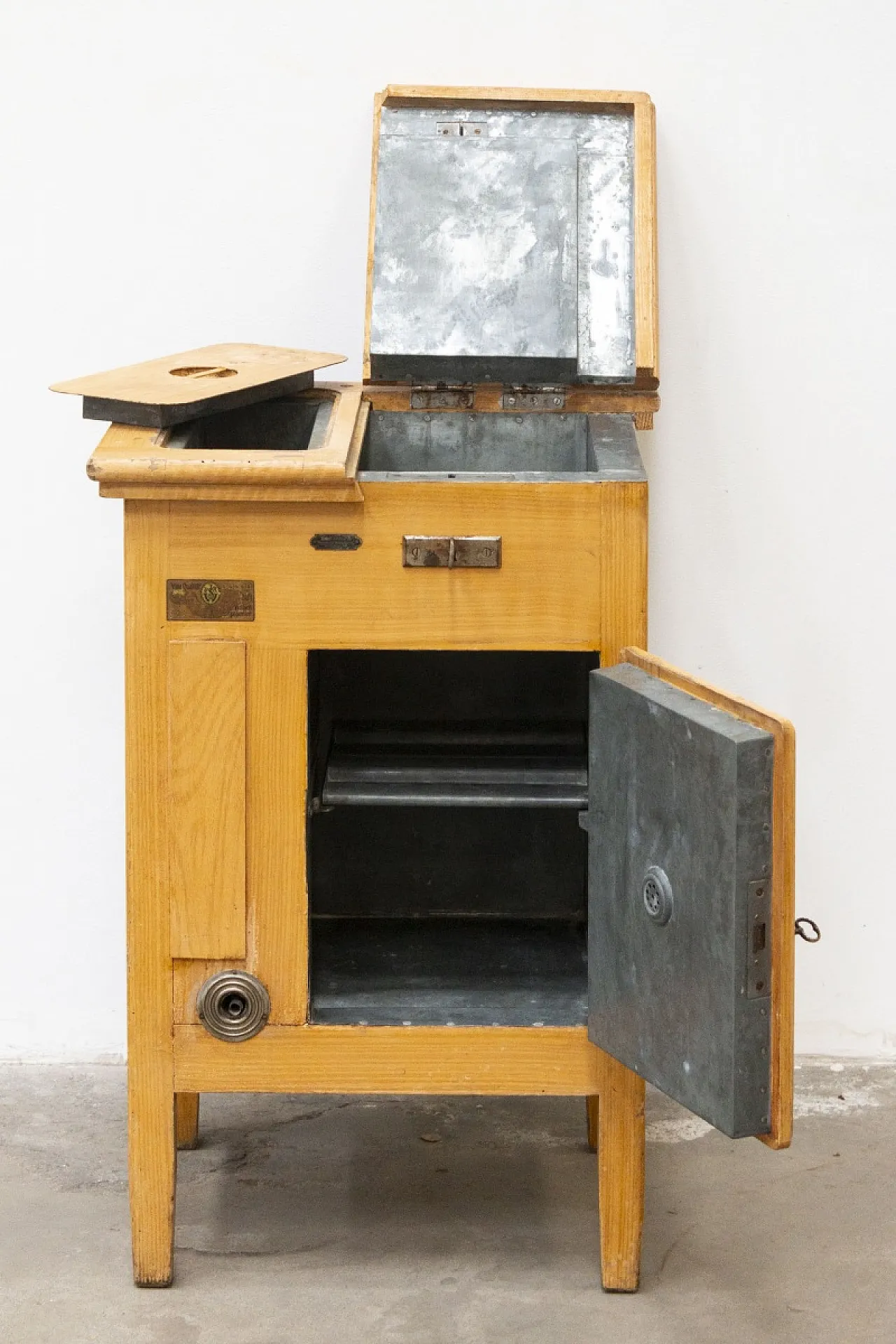
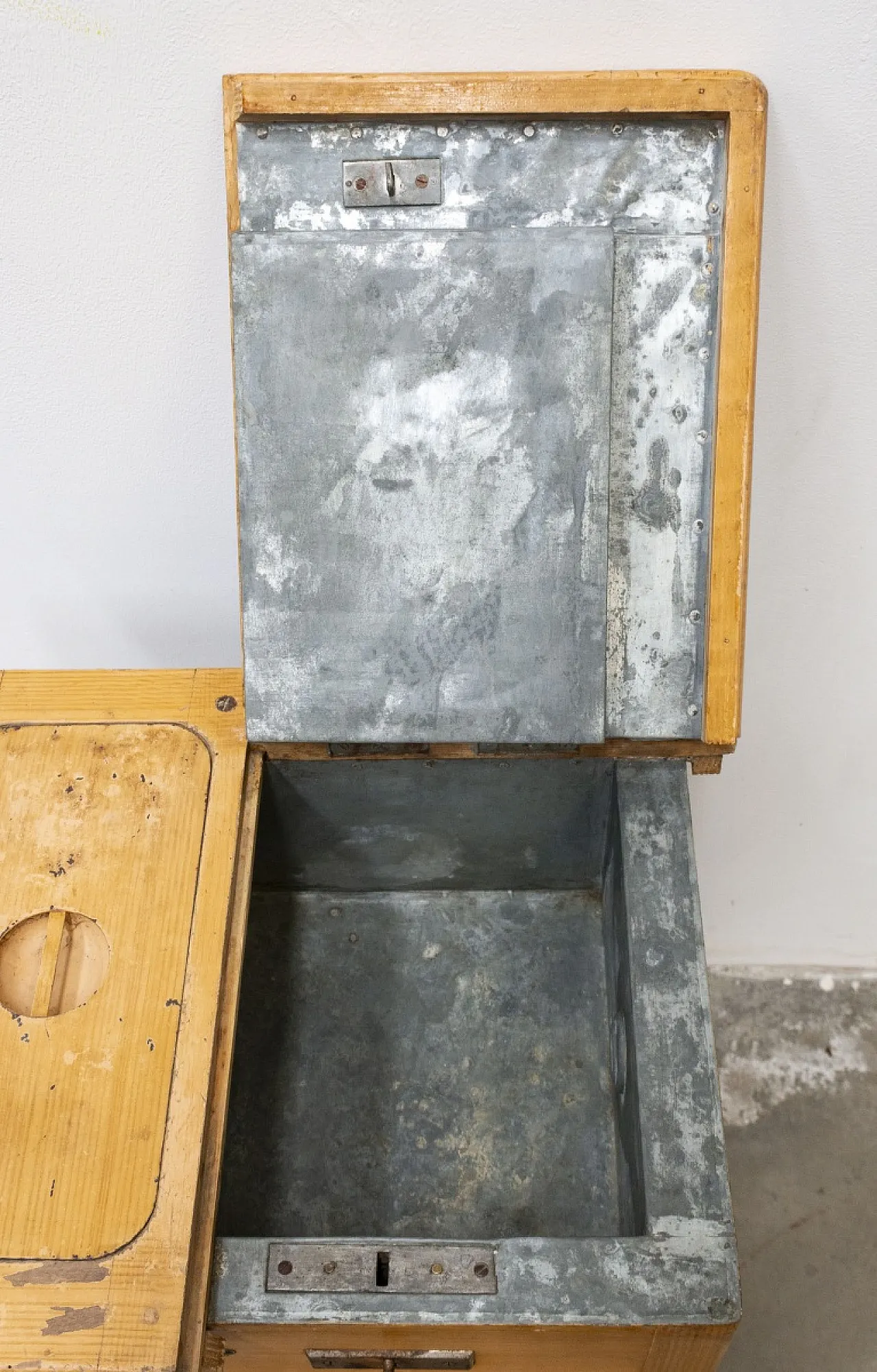
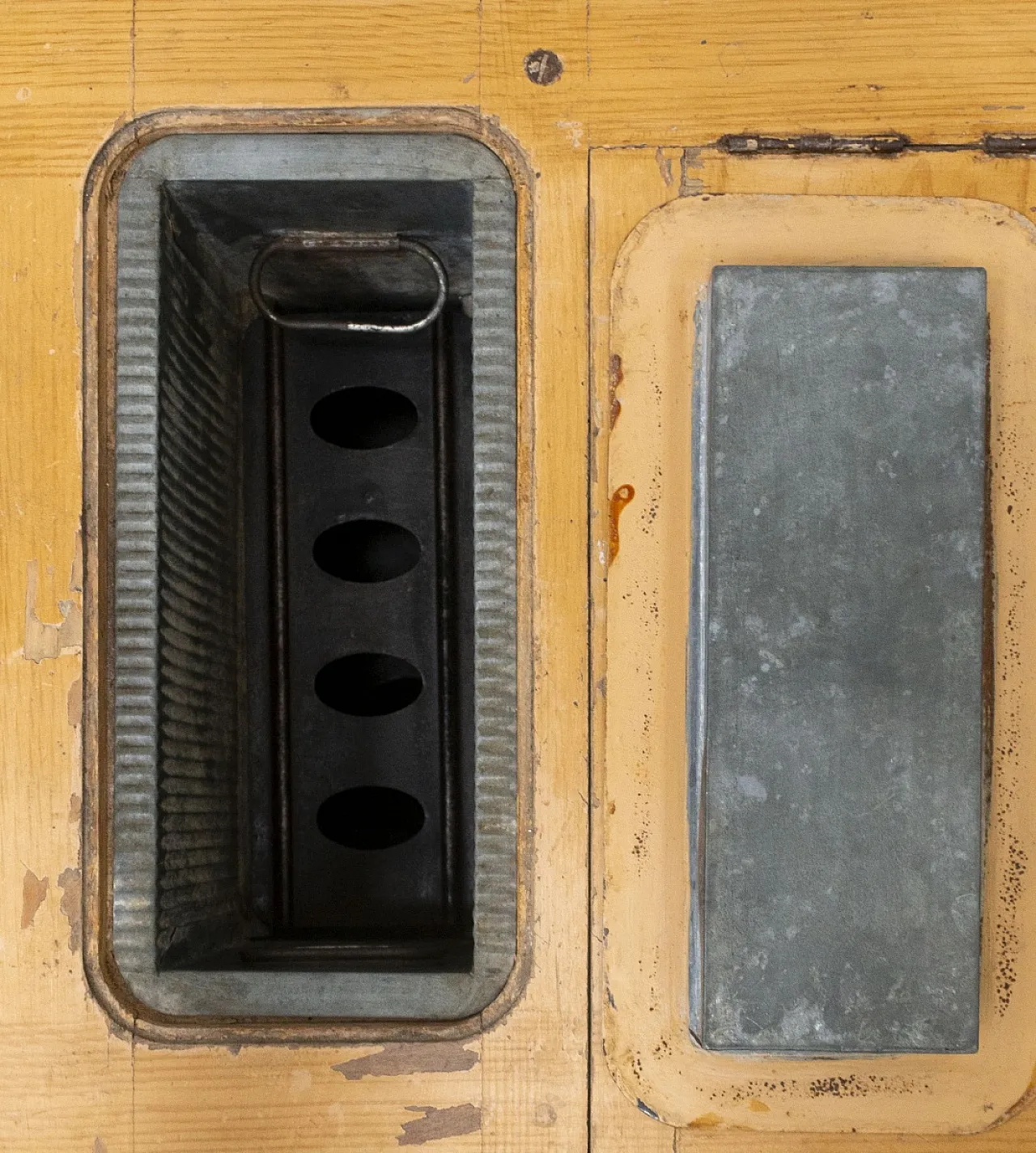
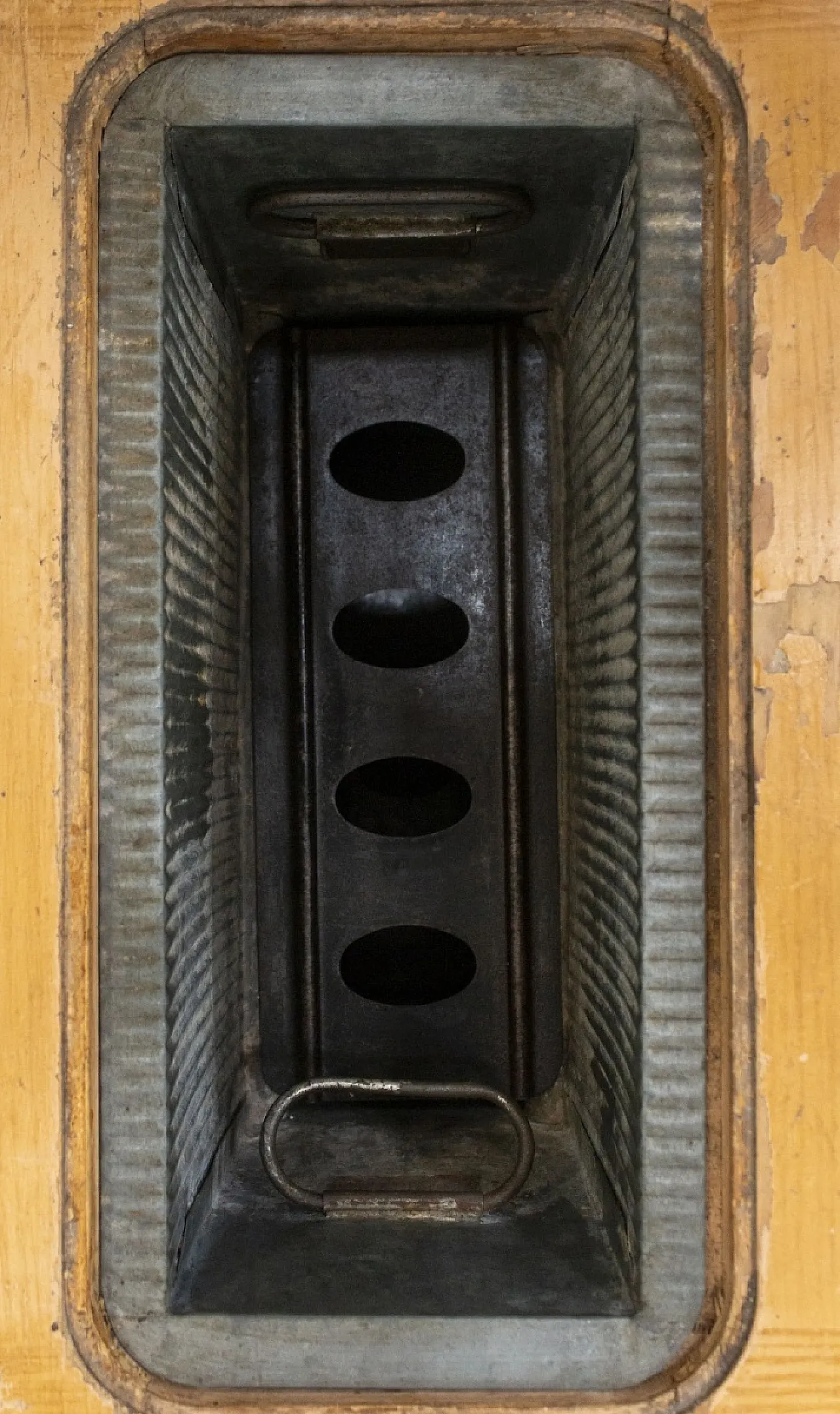
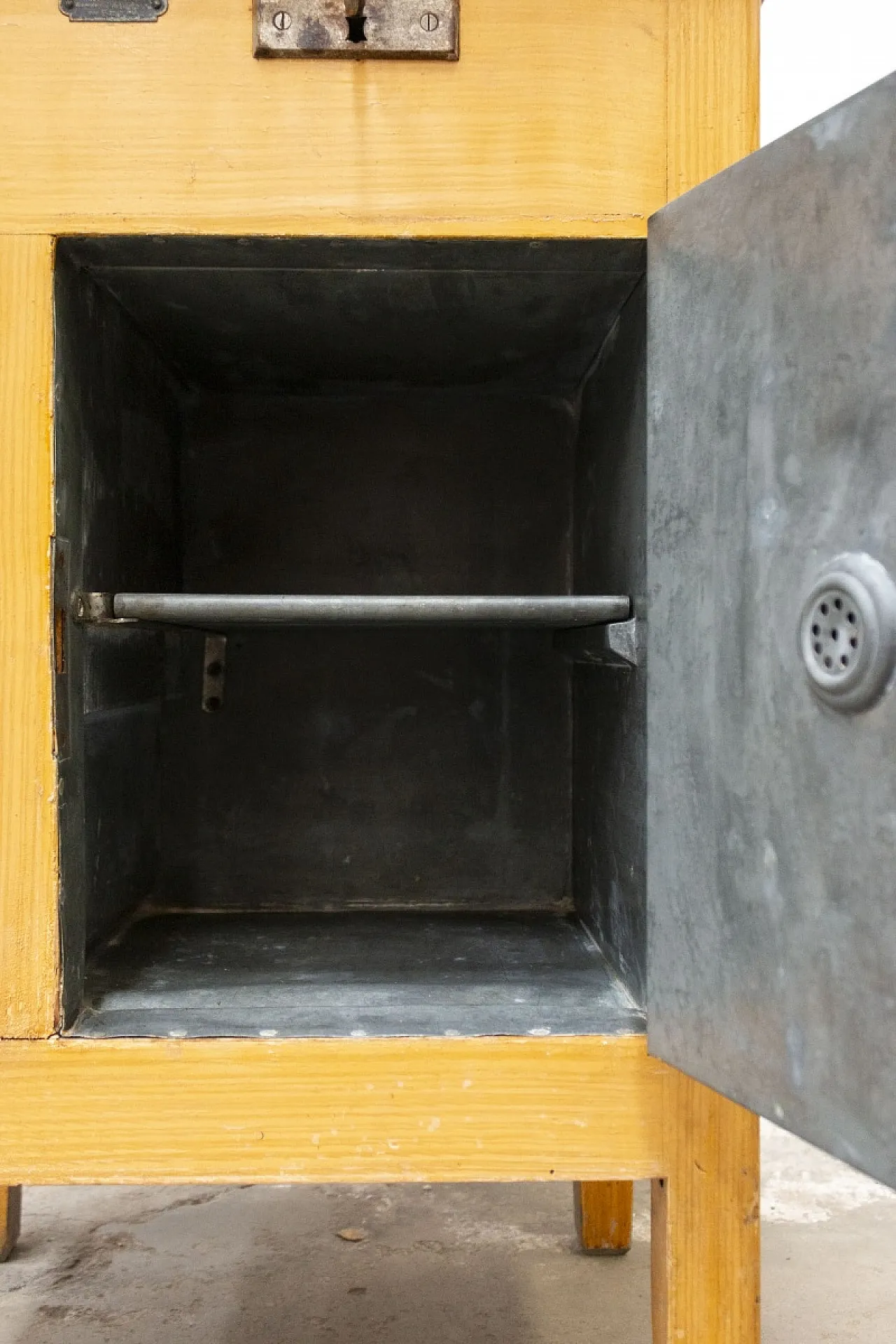
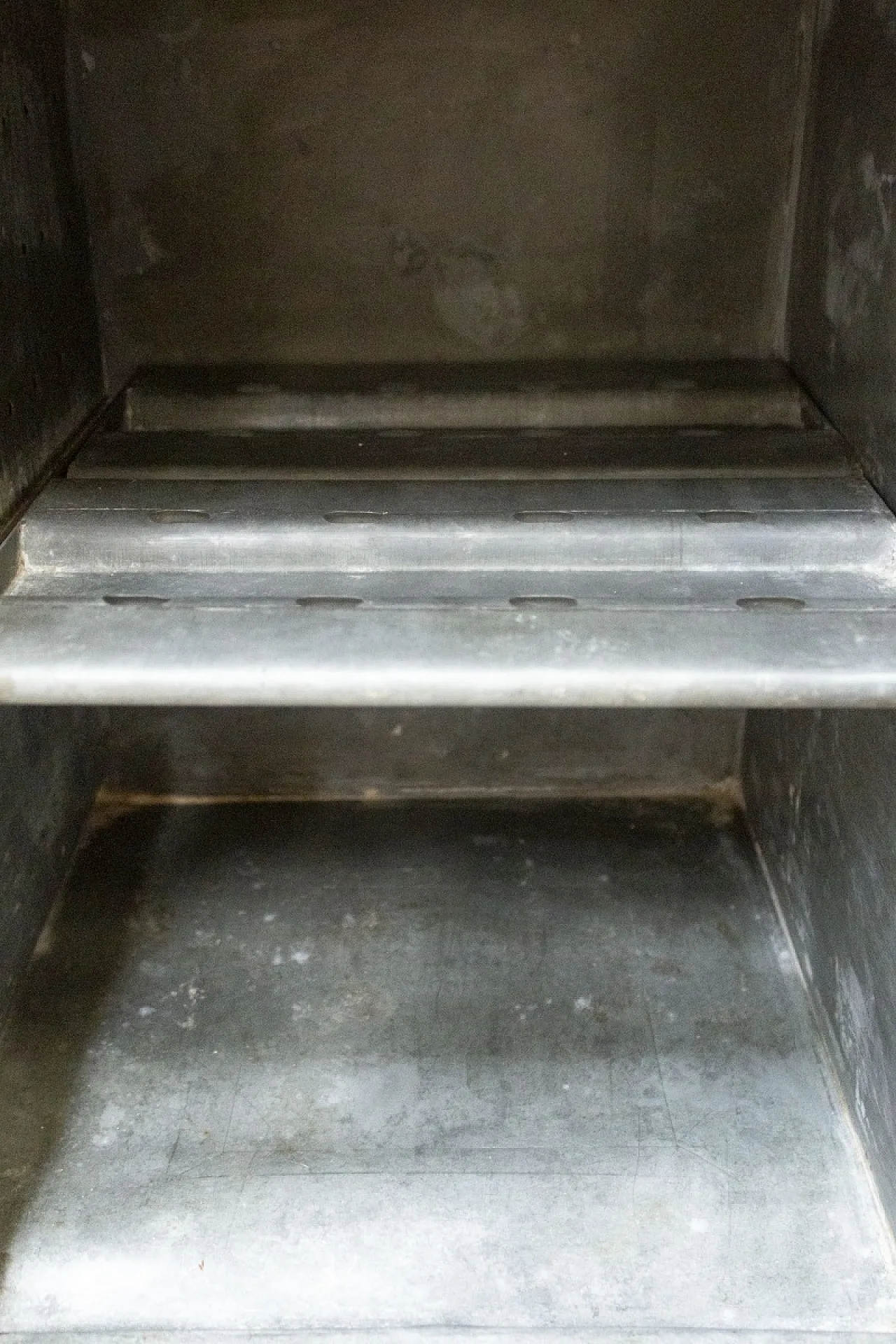
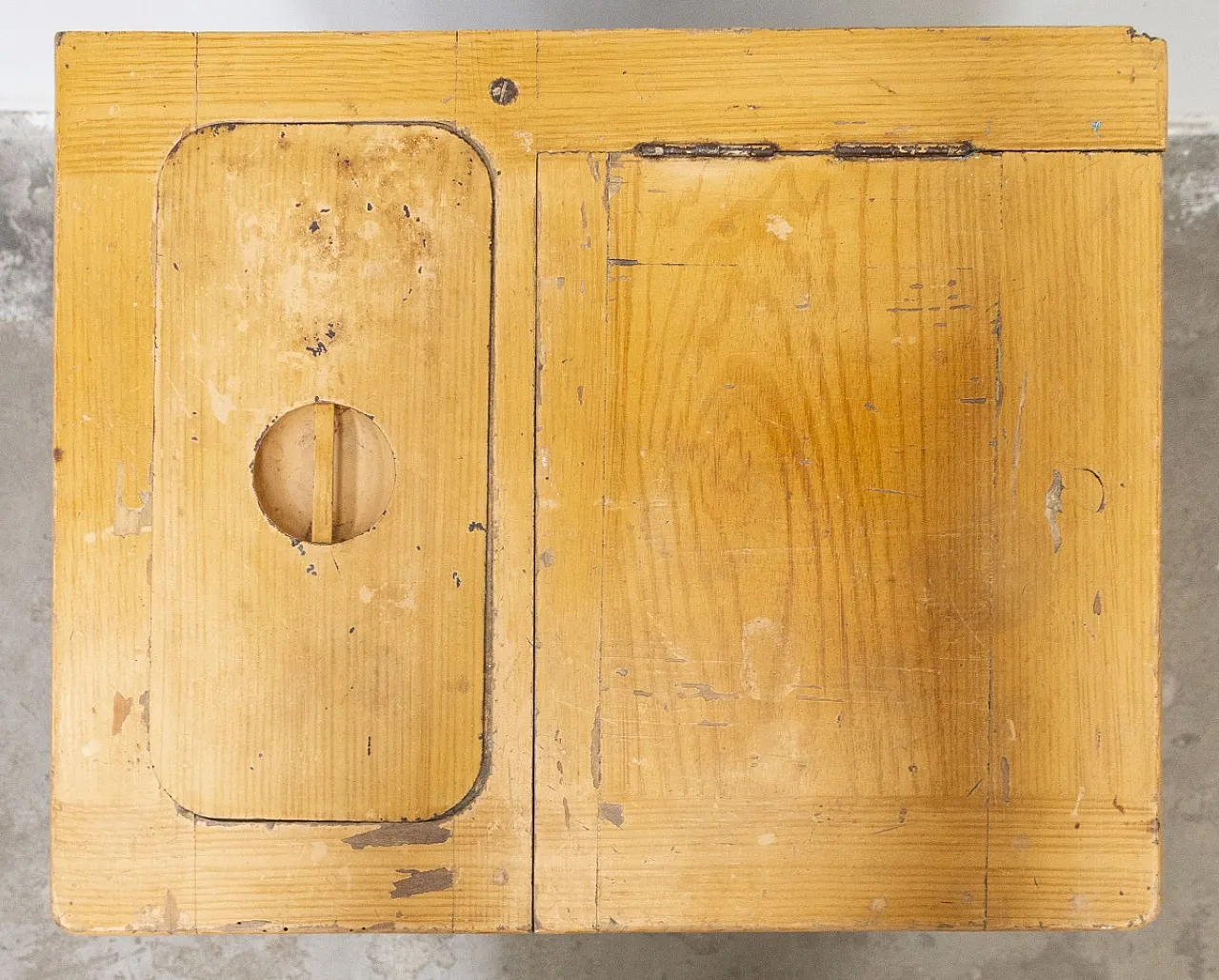
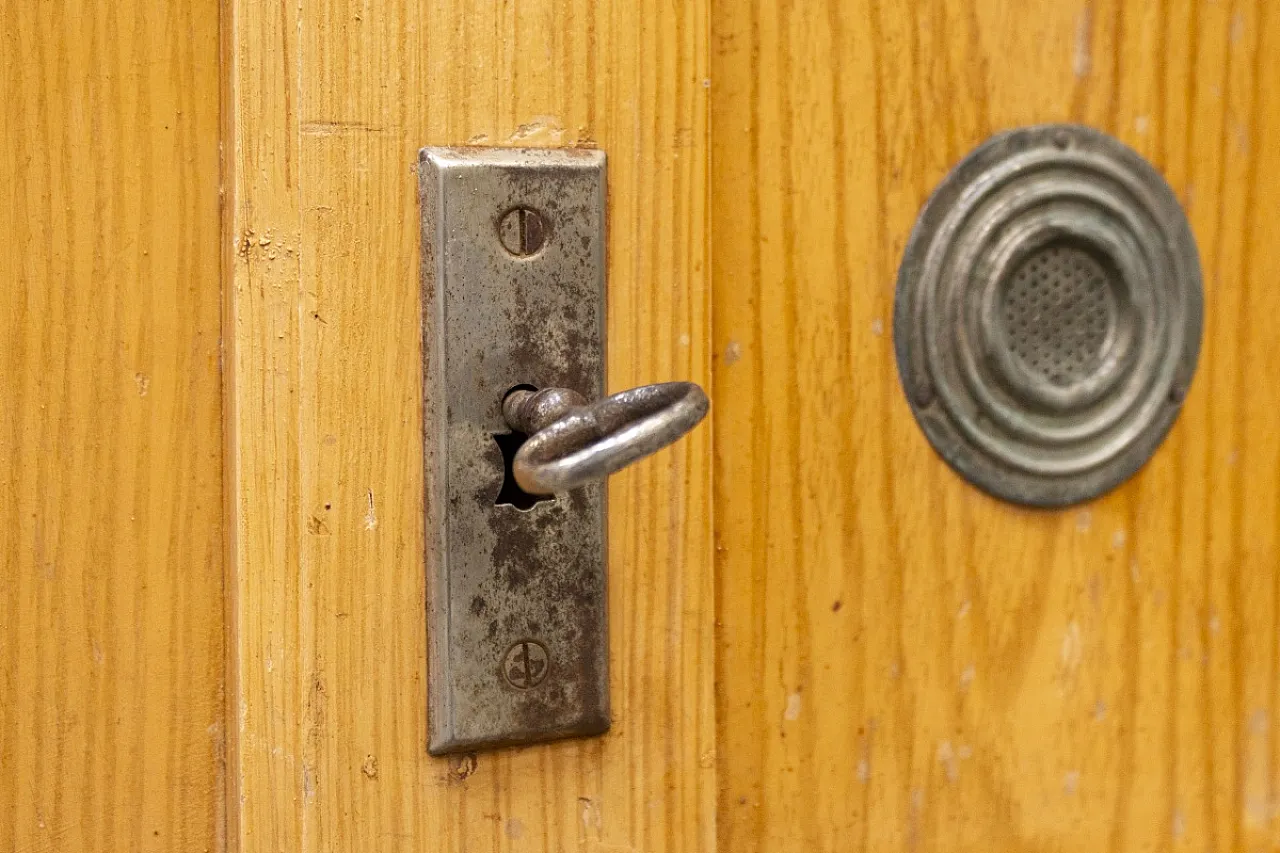
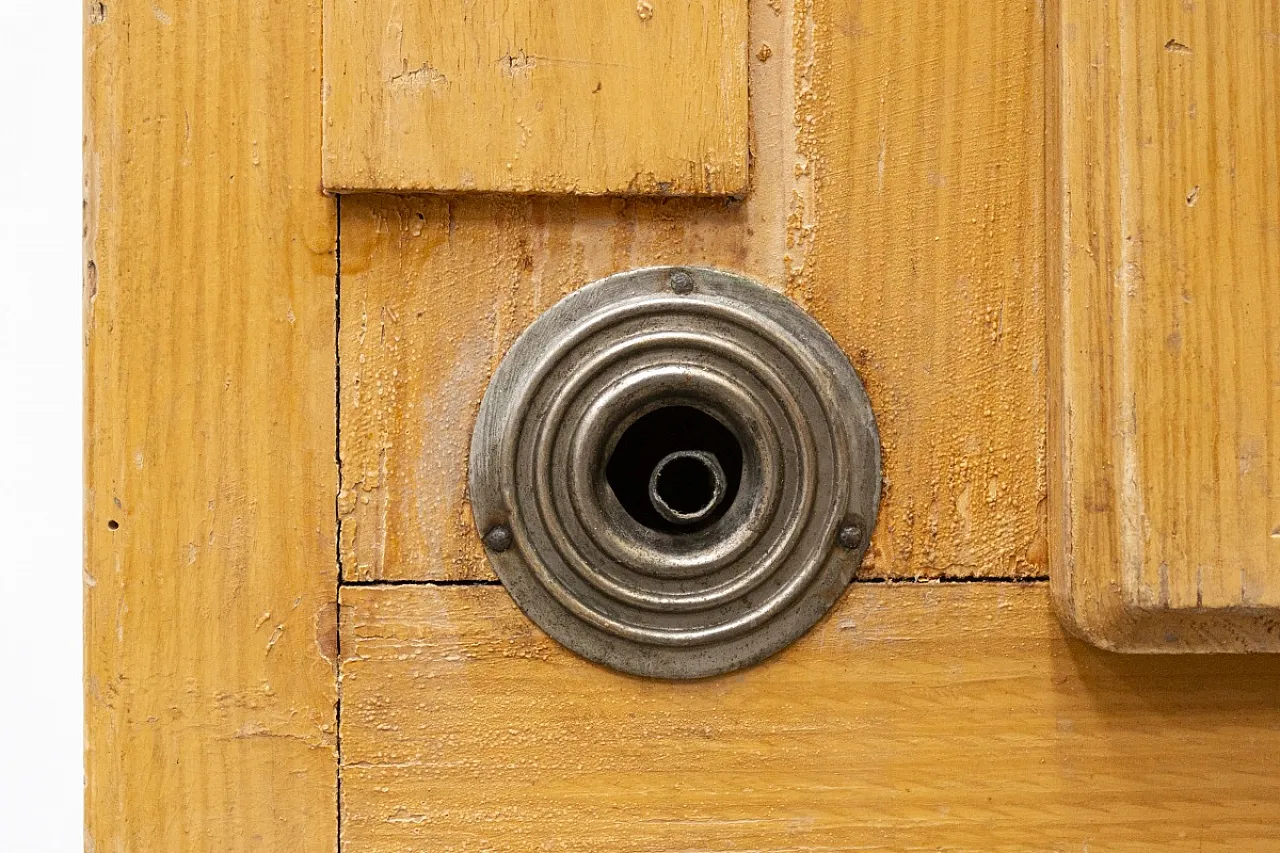
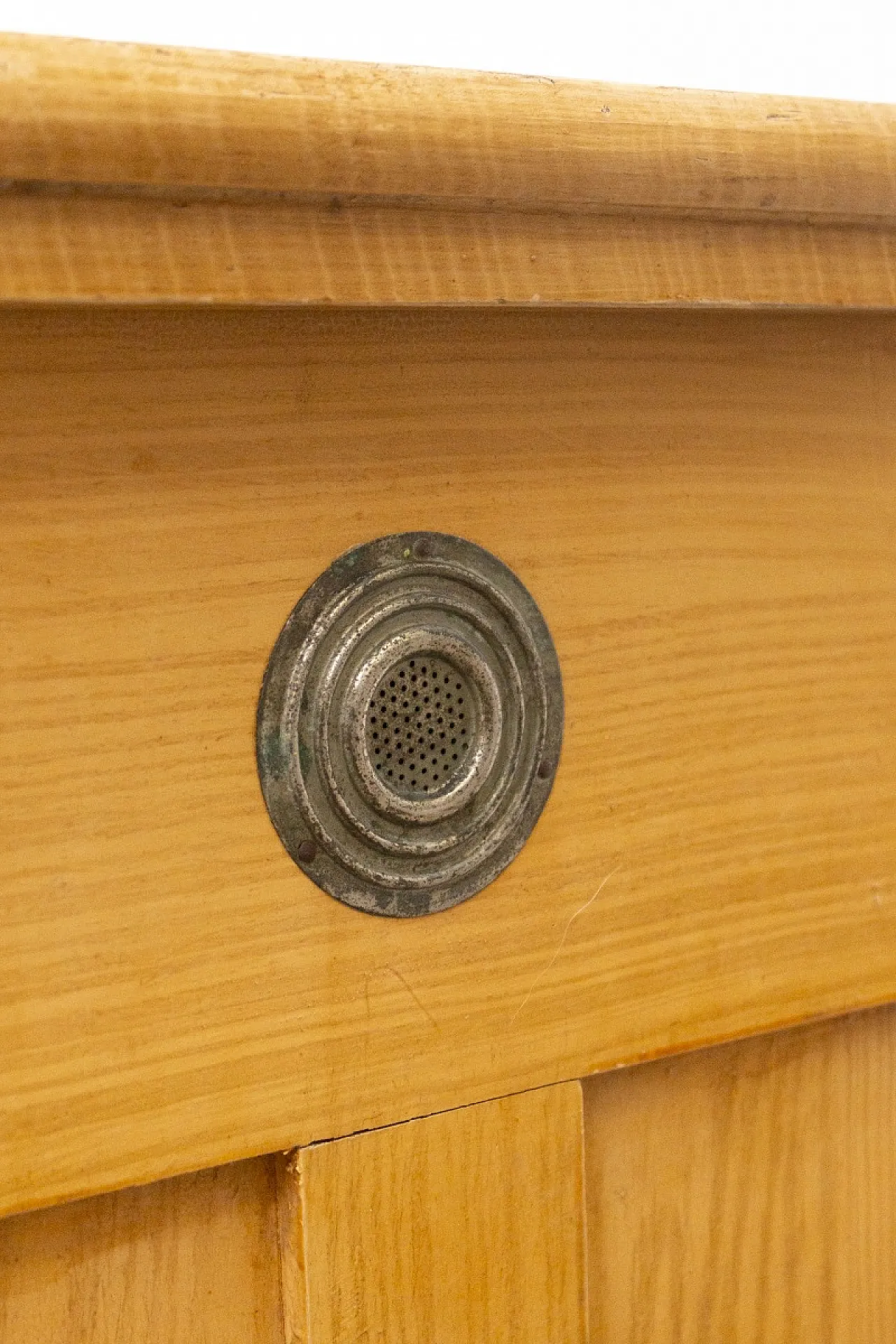
Interior space management is a true ode to old-fashioned home engineering. The upper part is accessible through two differentiated and targeted openings: the right lid, firmly fixed in a flap, opens onto the large main compartment intended for the insertion of large blocks of ice. The fully removable left lid instead provides access to a second, narrower technical compartment covered in corrugated zinc to maximize heat exchange; this compartment houses the original removable metal basket equipped with oval handles and slits, designed as a vertical auxiliary reserve for crushed ice, optimizing uniform cold descent. The wide front door finally reveals the lower food compartment, structured with a high-thickness internal stop to ensure perfect thermal sealing. The entire interior is lined with its original zinc plates, in an excellent state of preservation. The hydraulic and thermal system is completed at the bottom by a solid metal molded circular nozzle equipped with its original through-duct for controlled drainage of melt water, assisted at the top by a finely perforated grid aeration valve, designed for internal micro-ventilation and odor prevention.
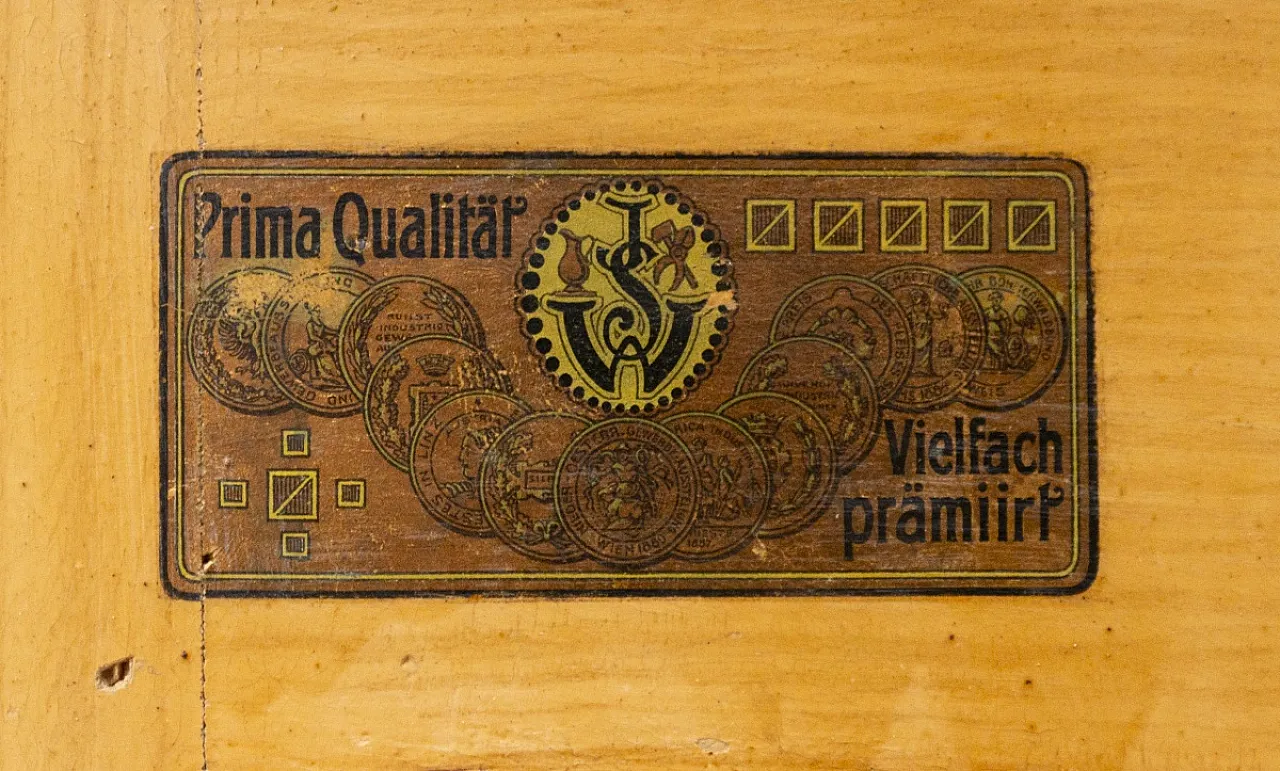
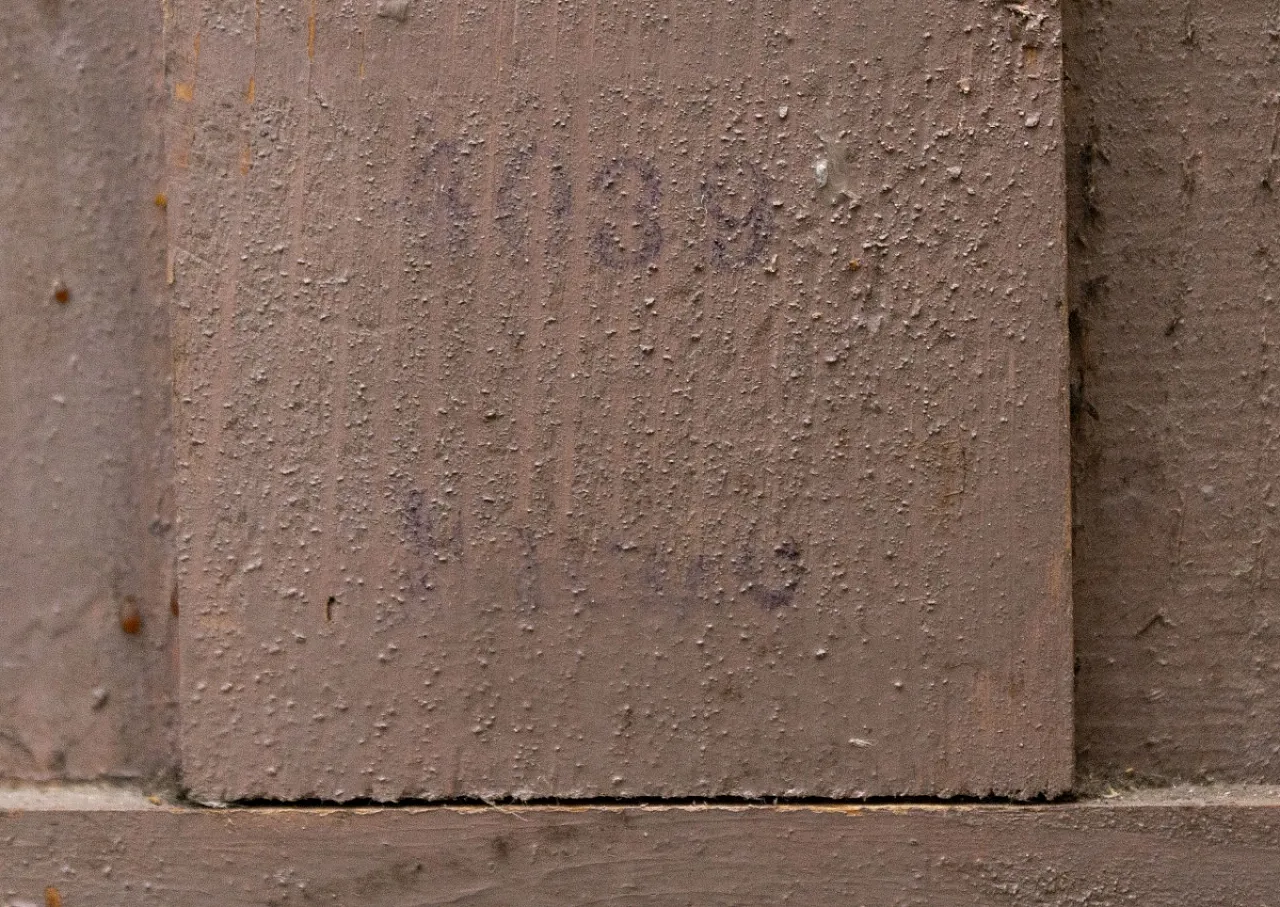
On the front, the plaque of the elite "Prima Qualität" line (Multi-Award Award) stands out, enriched by the coat of arms of medals of honor won at major European industrial exhibitions, among which the Vienna International Exhibition of 1880 clearly stands out. Inside is the second burnished metal stamped original plaque bearing the inscription "Rudolf Ondráček - Eisschränke-Erzeugung", which signs the factory. The original factory ink stamp showing (presumably) the model catalogue code or production serial number is still visible on the raw structural wood.
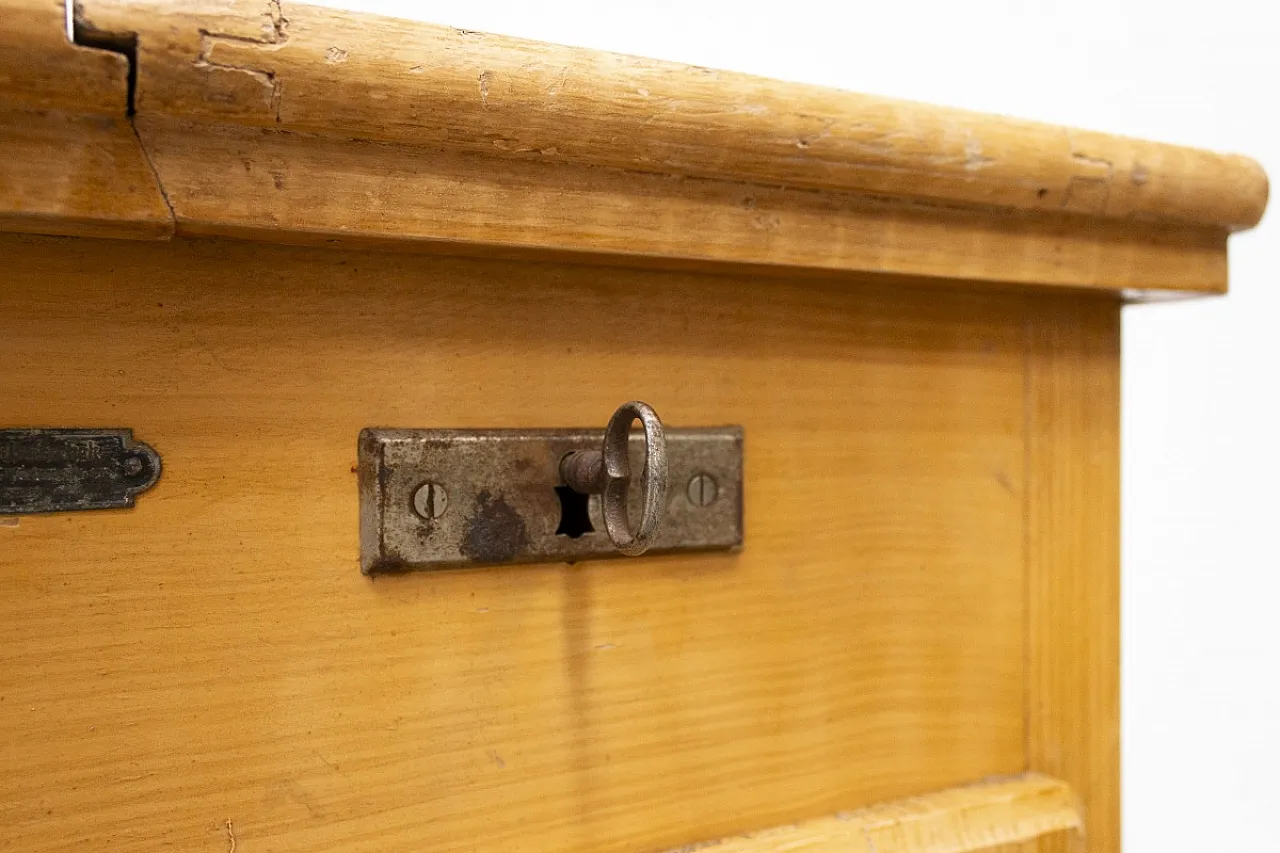
The icebox is in excellent condition, with normal signs of age. Our intervention was limited to cleaning and polishing for conservation purposes. The hardware, hinges, keys and vintage locking systems are fully complete, intact and fully functional.


.png)

 SILVER Seller in Milano, Italia