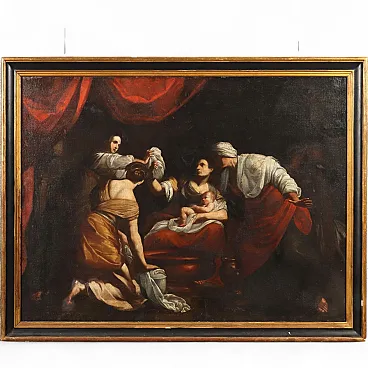
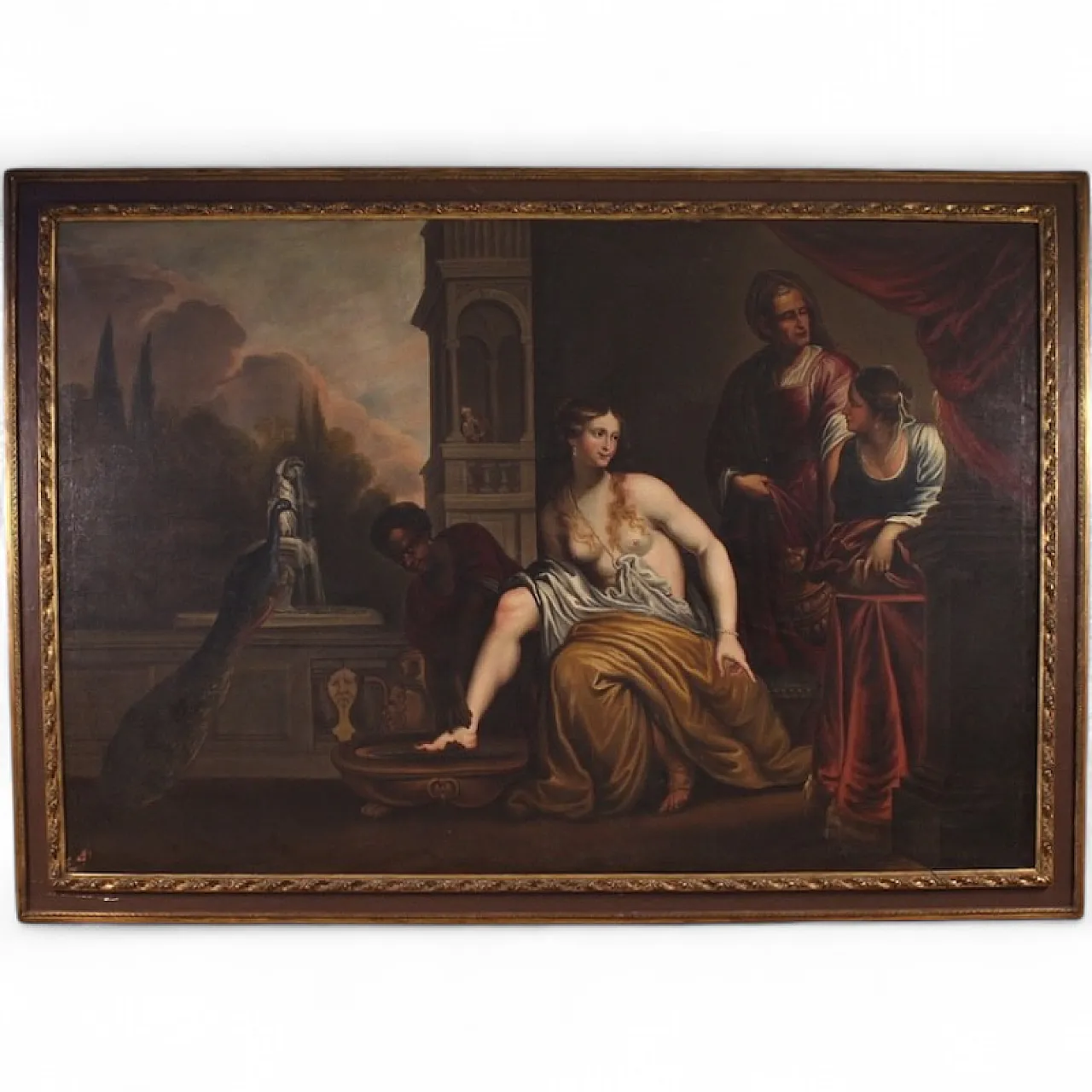
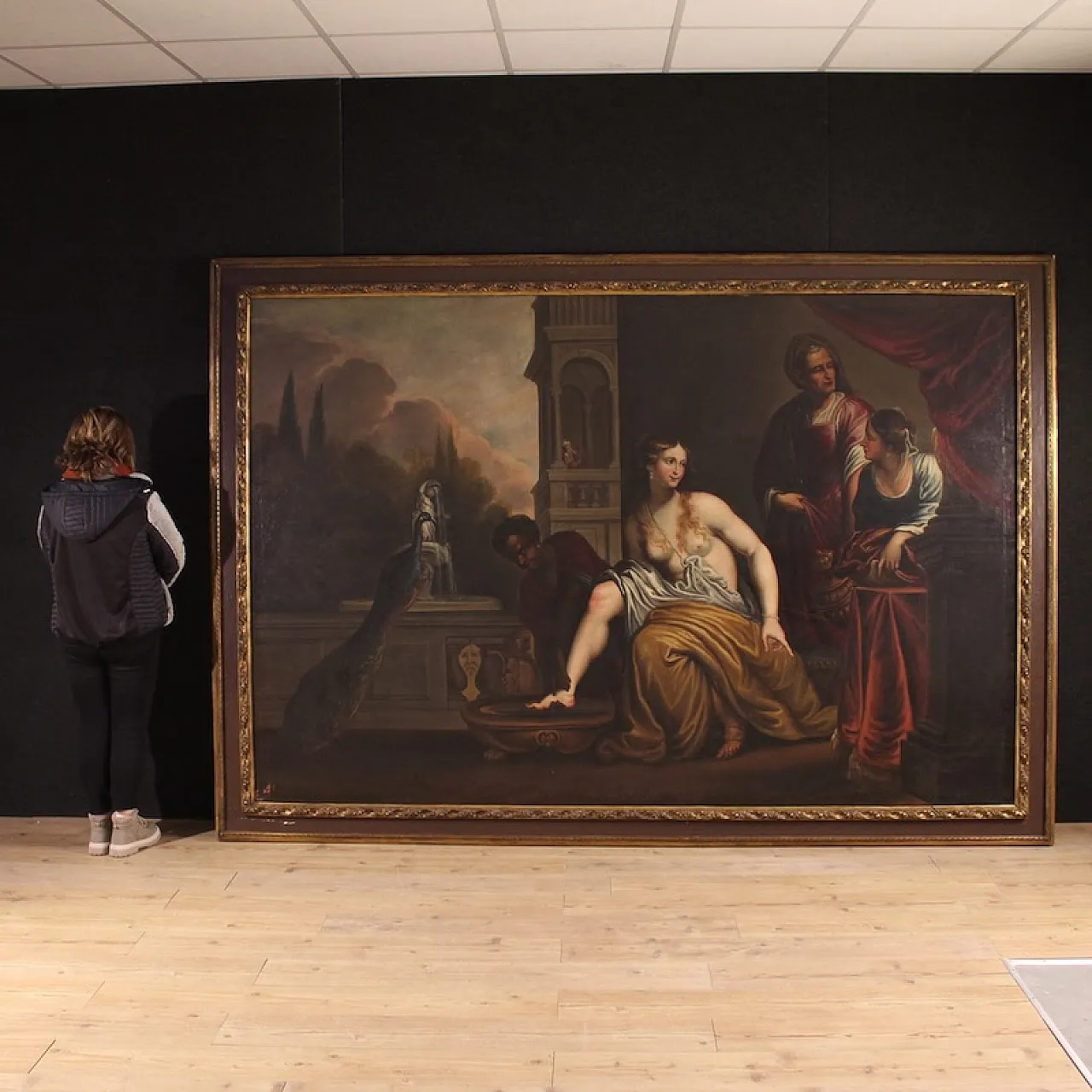
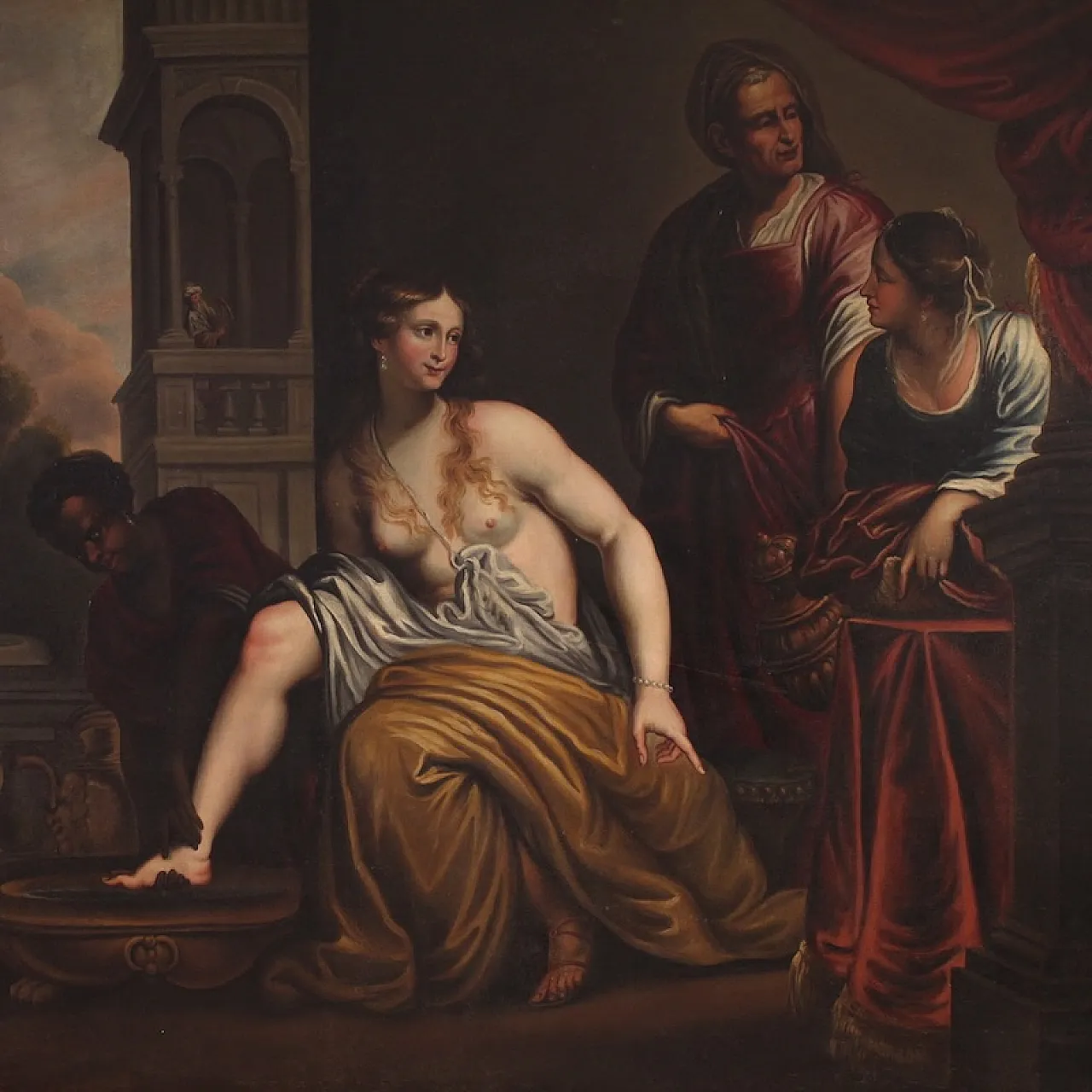
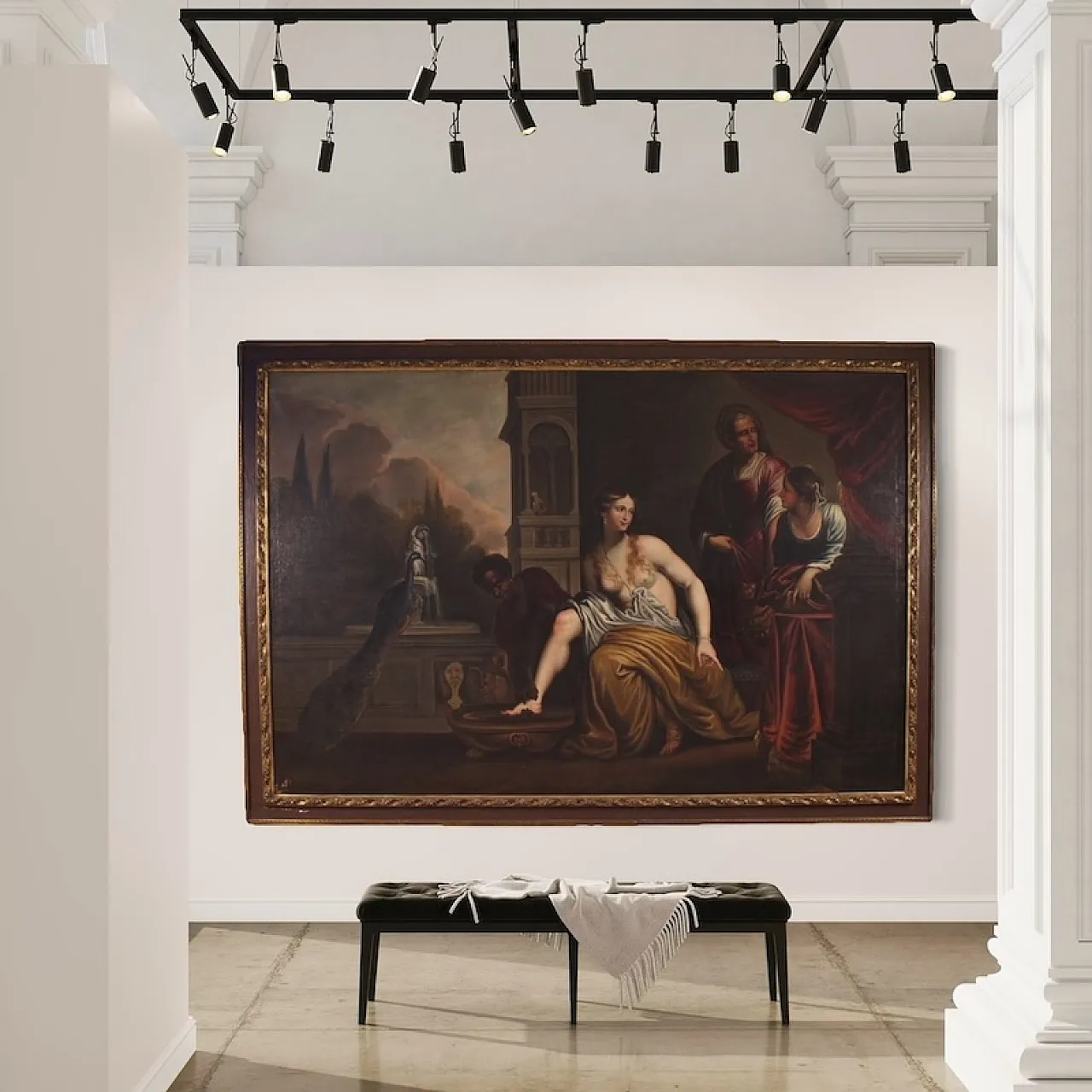
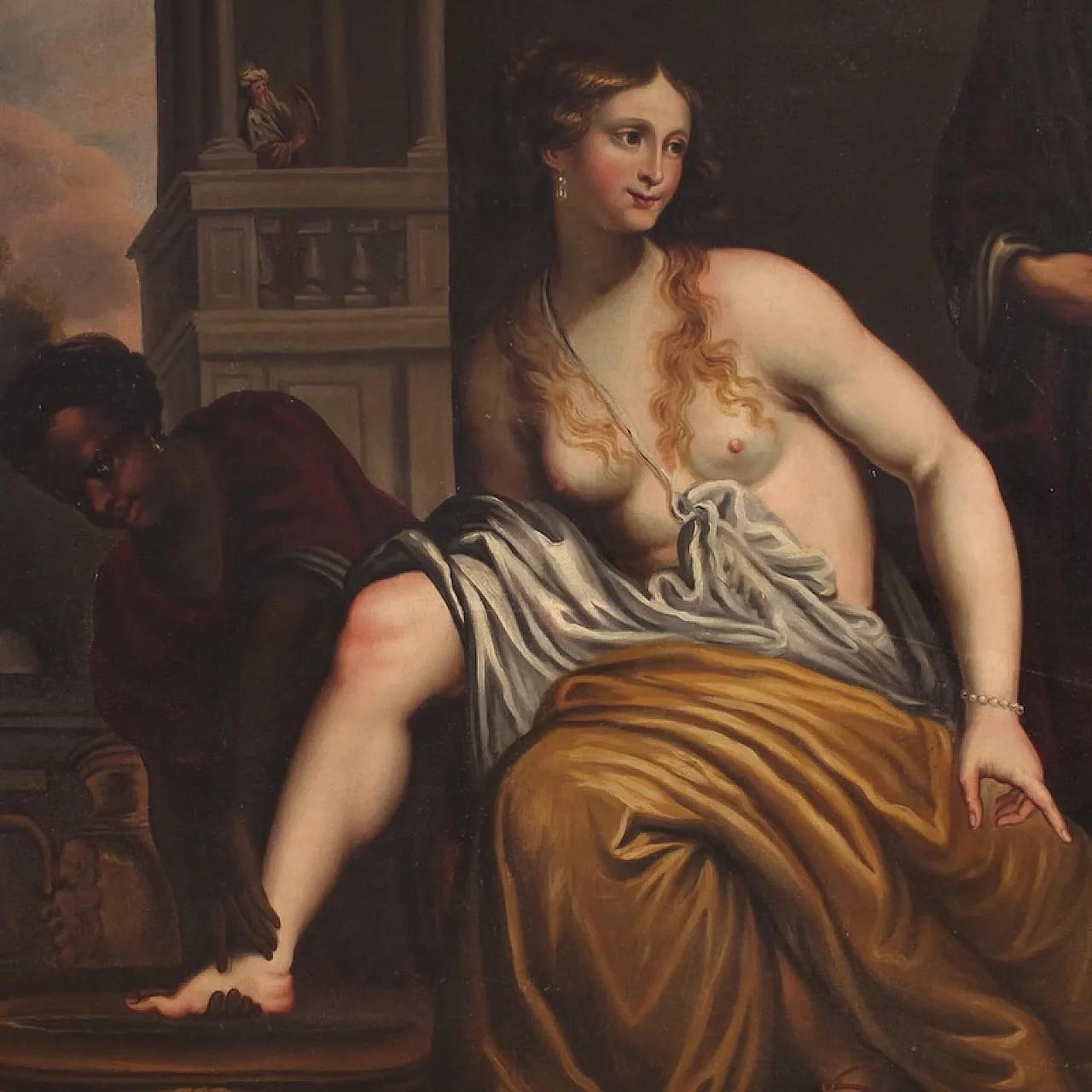
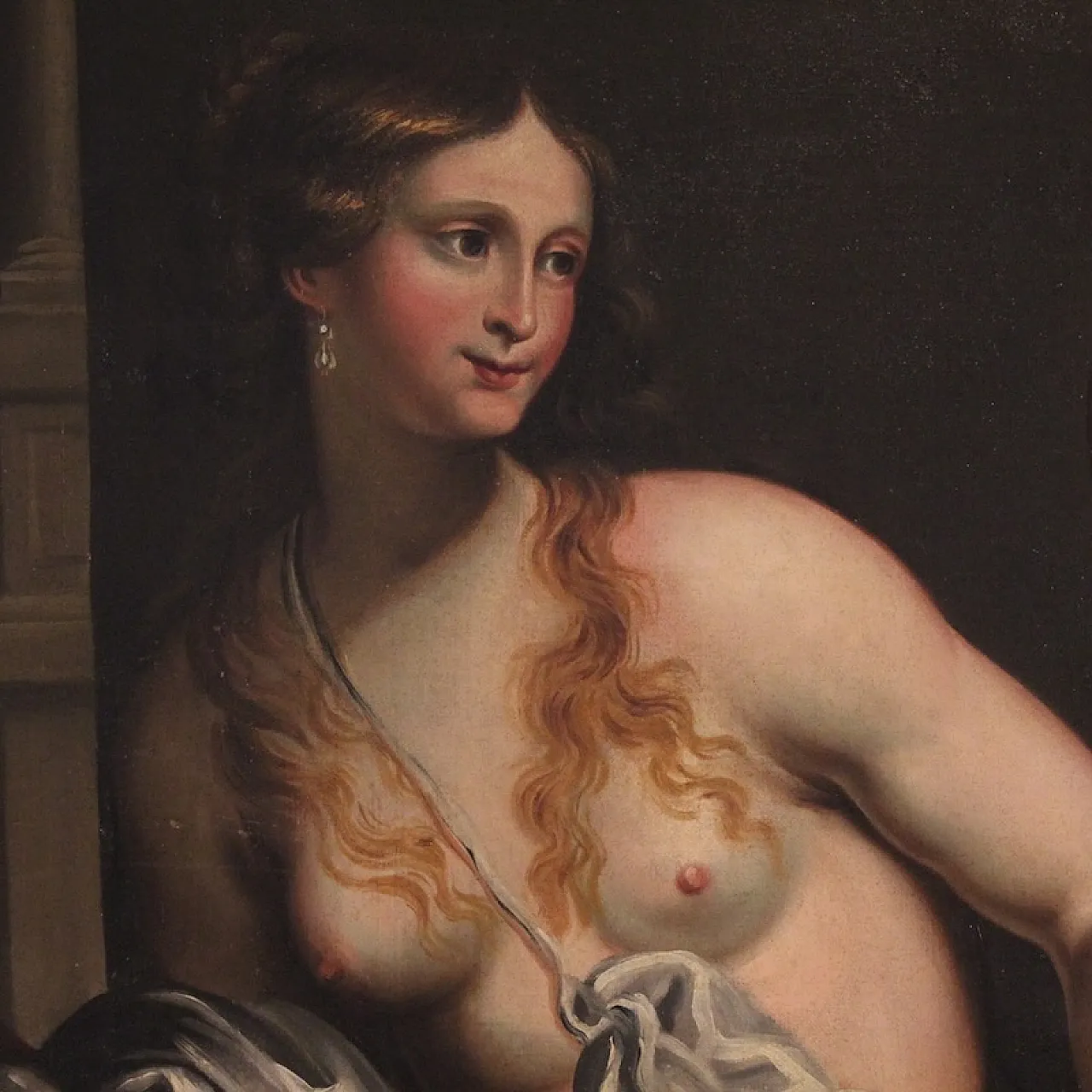
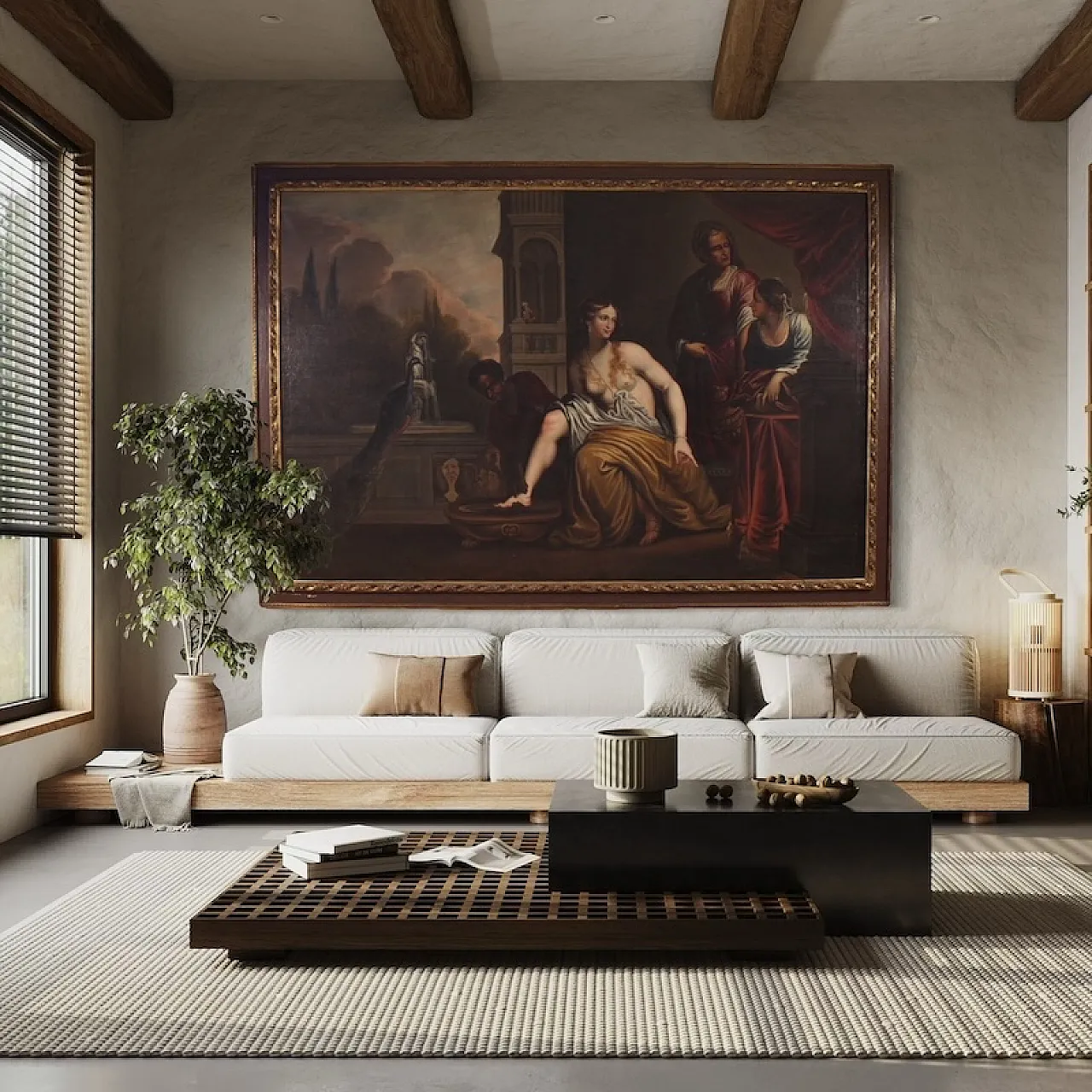
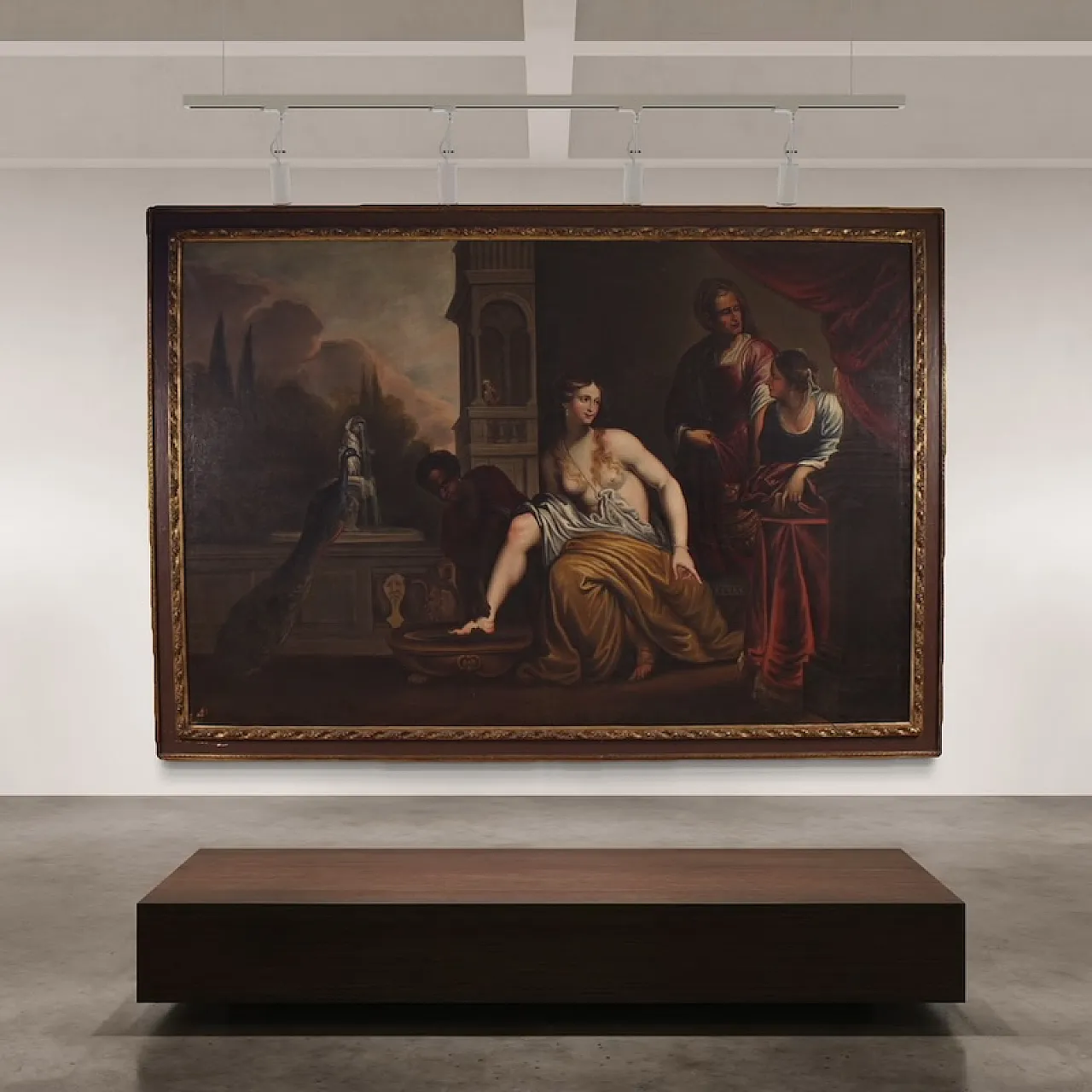
Important Italian painting from the first half of the 18th century. Oil on canvas work of monumental size with a biblical subject depicting the famous episode of Bathsheba bathing. The young protagonist, half naked and surrounded by handmaids, is caught during an intimate moment. In the background we glimpse King David, who, walking on the terrace of his palace, sees the fascinating Bathsheba, wife of the soldier Uriah. A relationship begins between the two and the woman becomes pregnant. David then calls Uriah back from the army, with the idea of having him spend time with his wife, so that he can attribute the paternity of the child to him. However, Uriah wants to immediately return to the front to his companions and the King makes a very harsh decision: he writes a letter to the commander of the army and entrusts Uriah with the delivery of the message containing his condemnation: the order is clear, put Uriah on the front line and thus make him die.
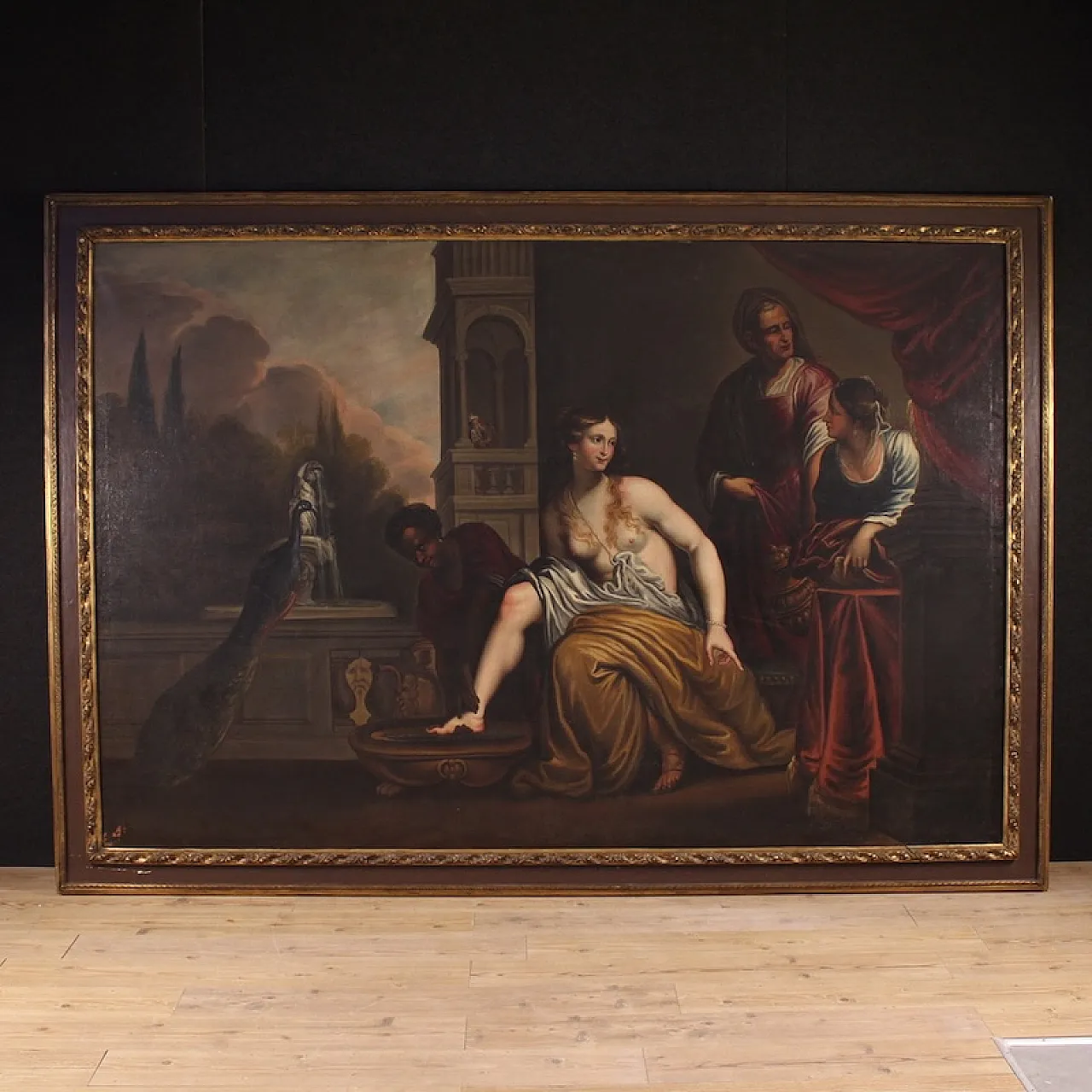
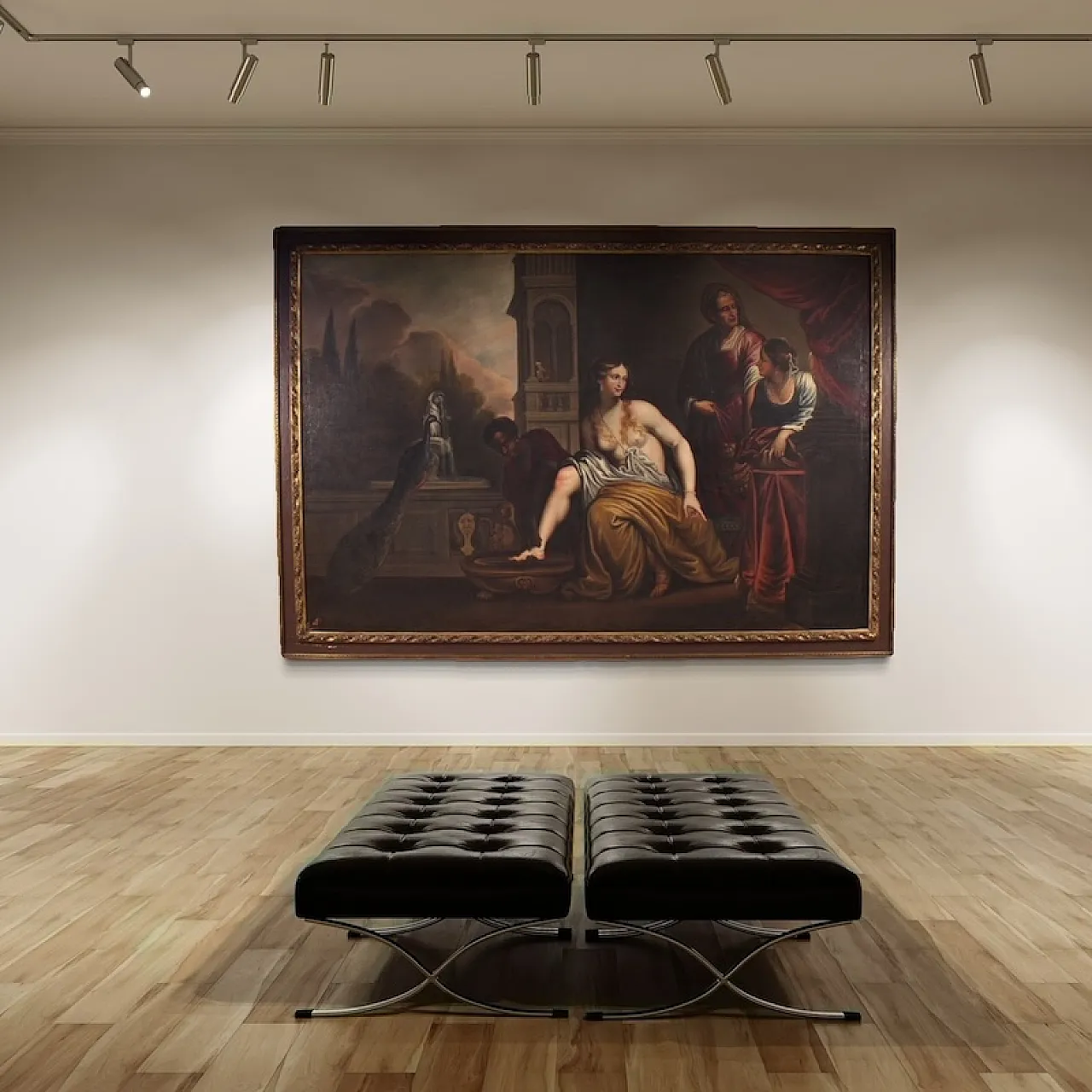
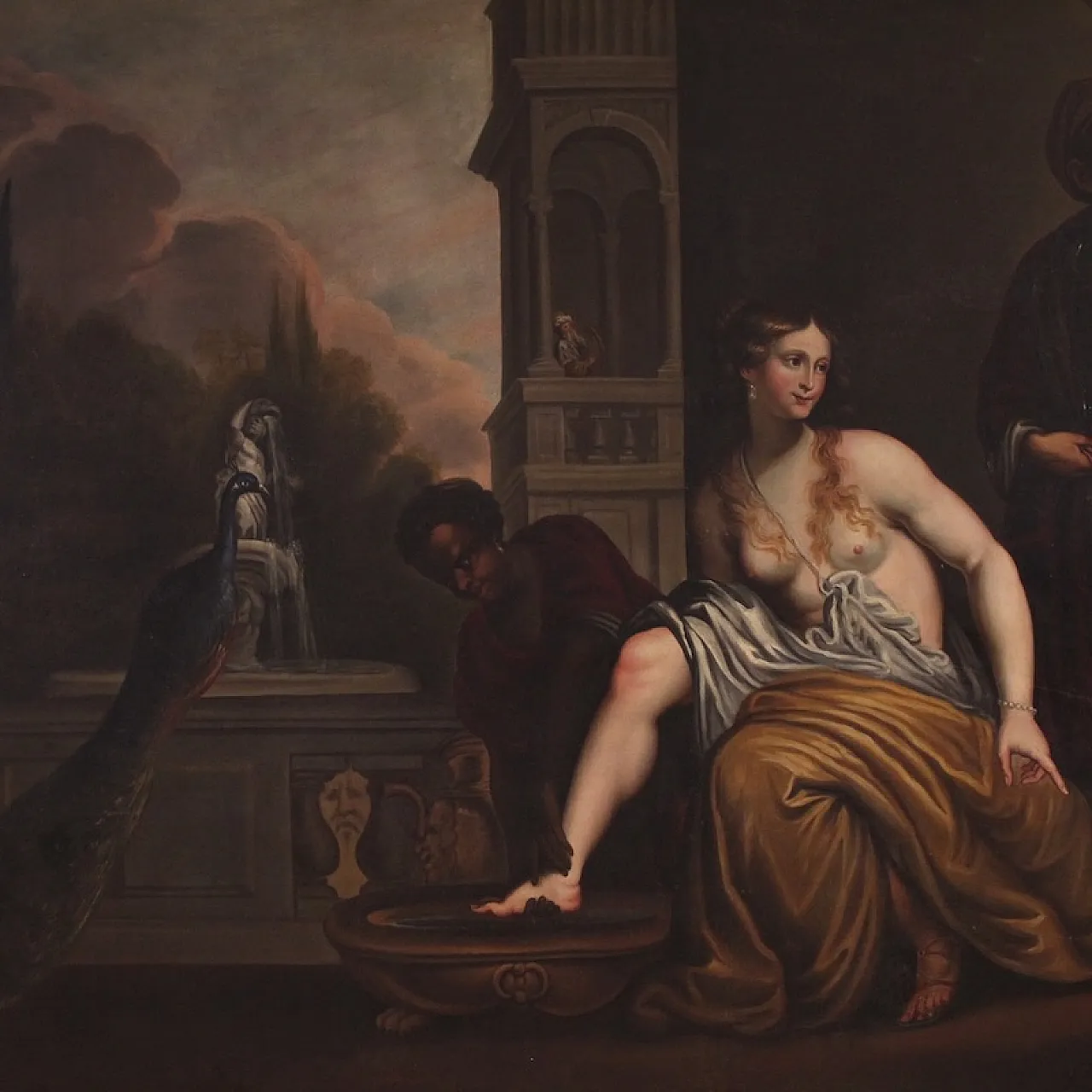
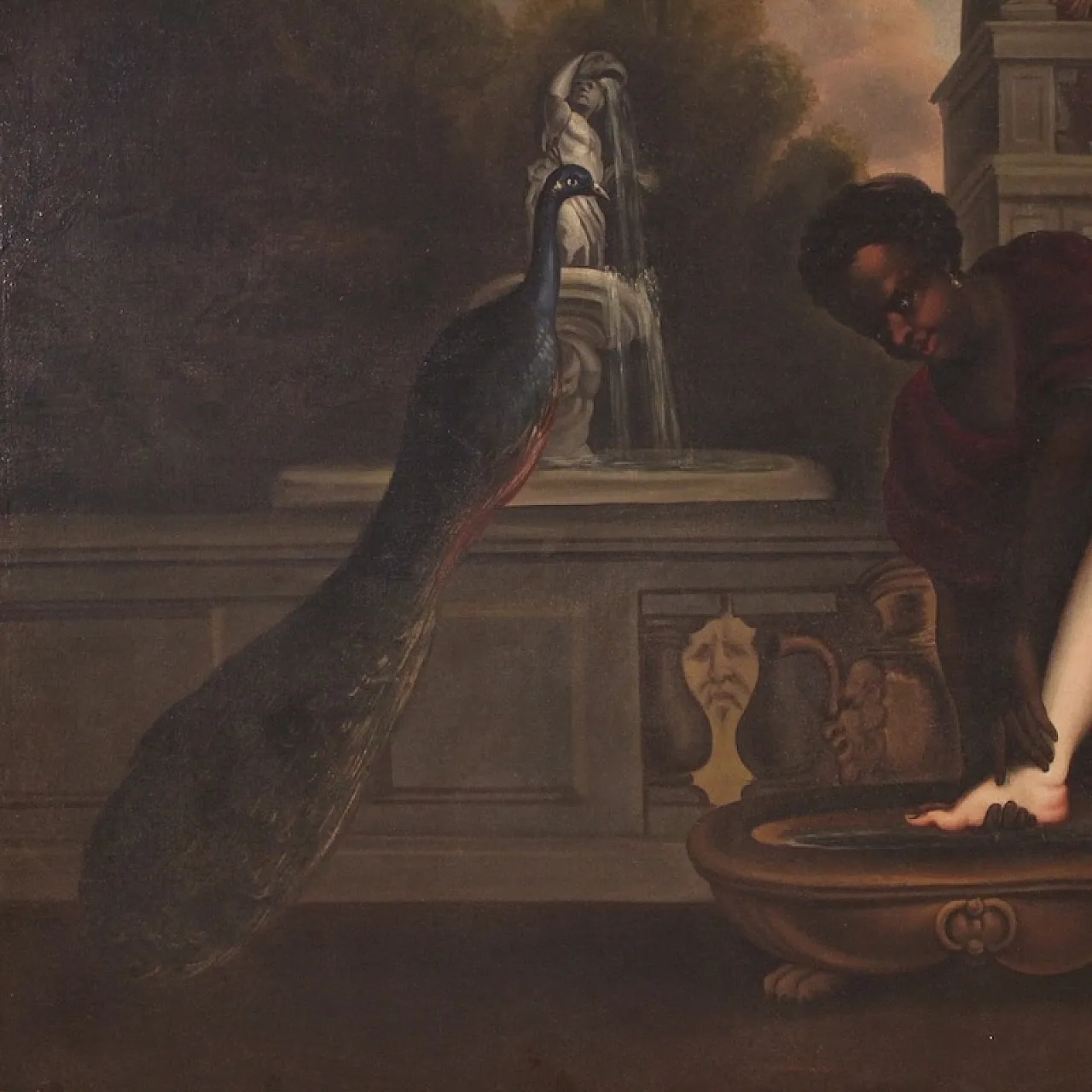
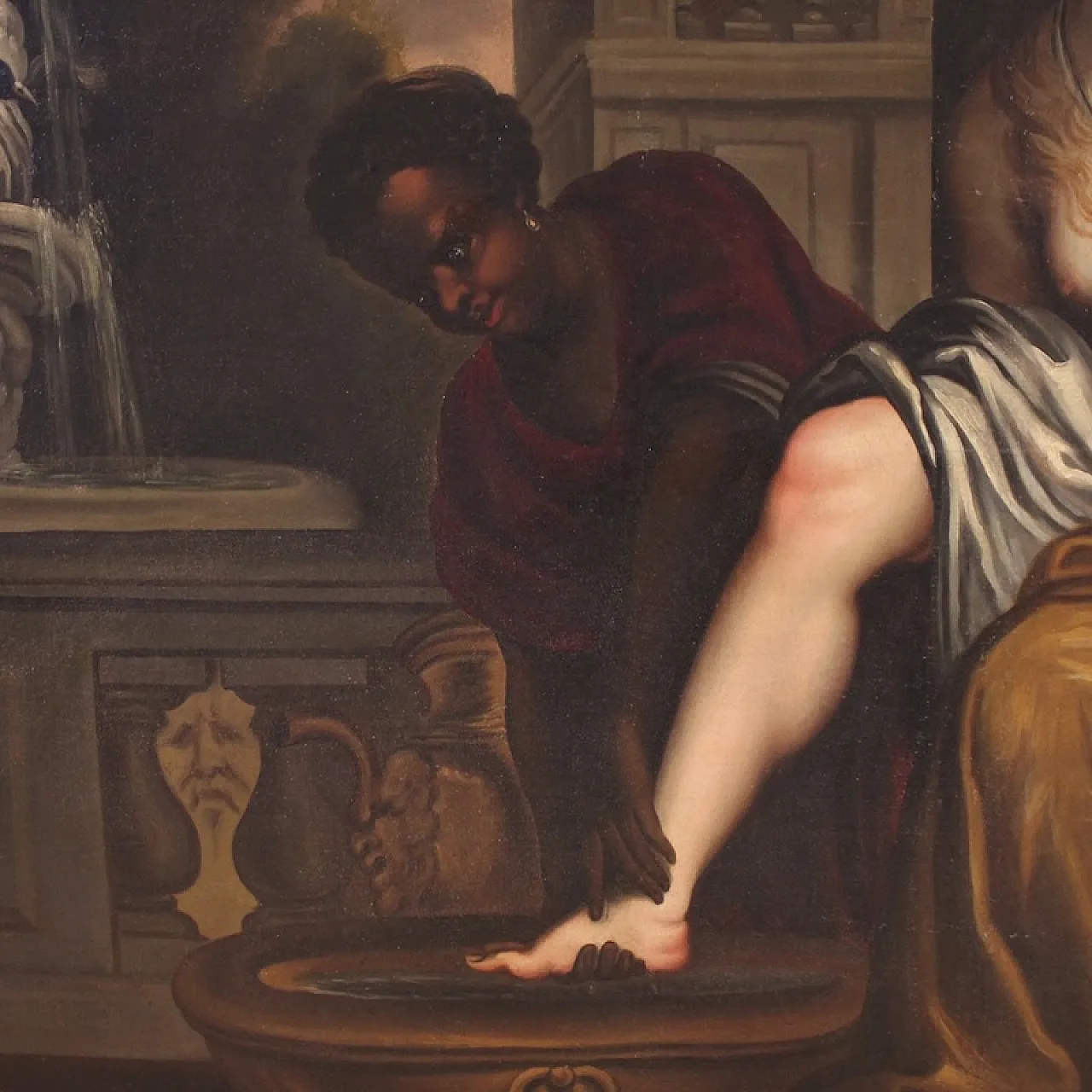
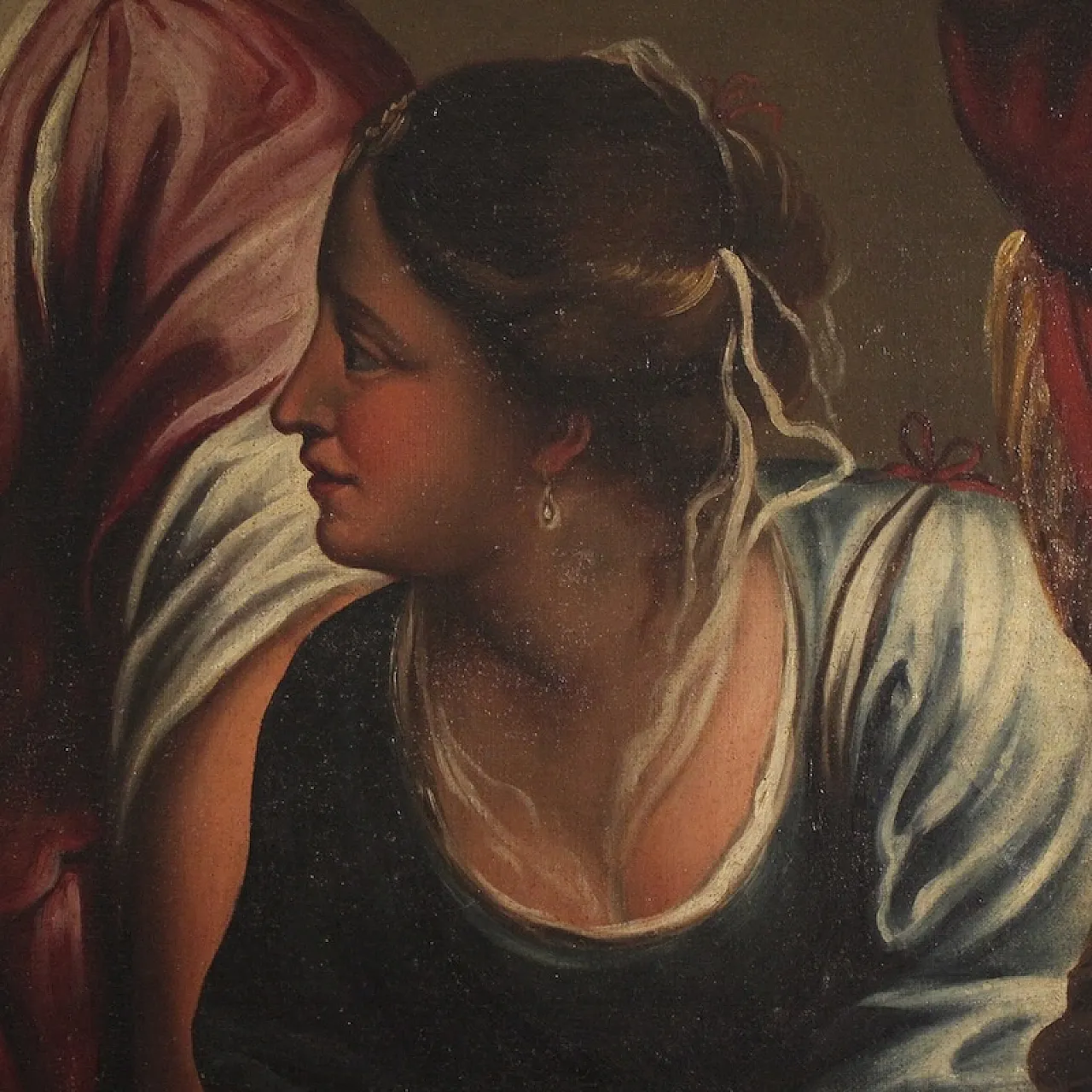
The painting stands out for its executive and compositional quality, chromatic harmony and extraordinary theatricality. The warm tones, combined with the refinement of the skin tones and drapery, make this painting a work of strong visual and decorative impact. Particularly effective is the contrast between the brightness of the protagonist and the surrounding darker areas, rendered with refined chiaroscuro contrasts. The kneeling servant introduces a note of realism and dynamism, while the figures on the sides contribute to the construction of a calibrated and profound visual story. The large crimson curtain acts like a theatrical curtain, opening the view onto a scene of great classical elegance. The protagonist emerges with extraordinary brightness from the dark background, while the rich golden dress and the wonderful drapery contribute to creating a set of notable decorative effect. The presence of the peacock in the foreground is very suggestive, a symbol traditionally associated with beauty and royalty, inserted here as a sophisticated allegorical reference to the theme of seduction and the fragility of passions. In the background, the garden with fountain, cypresses and monumental architecture amplify the aristocratic and cultured character of the entire representation. The work reveals a late Baroque northern figurative culture, characterized by elegant formal idealizations, softness of skin tone and accurate rendering of fabrics.
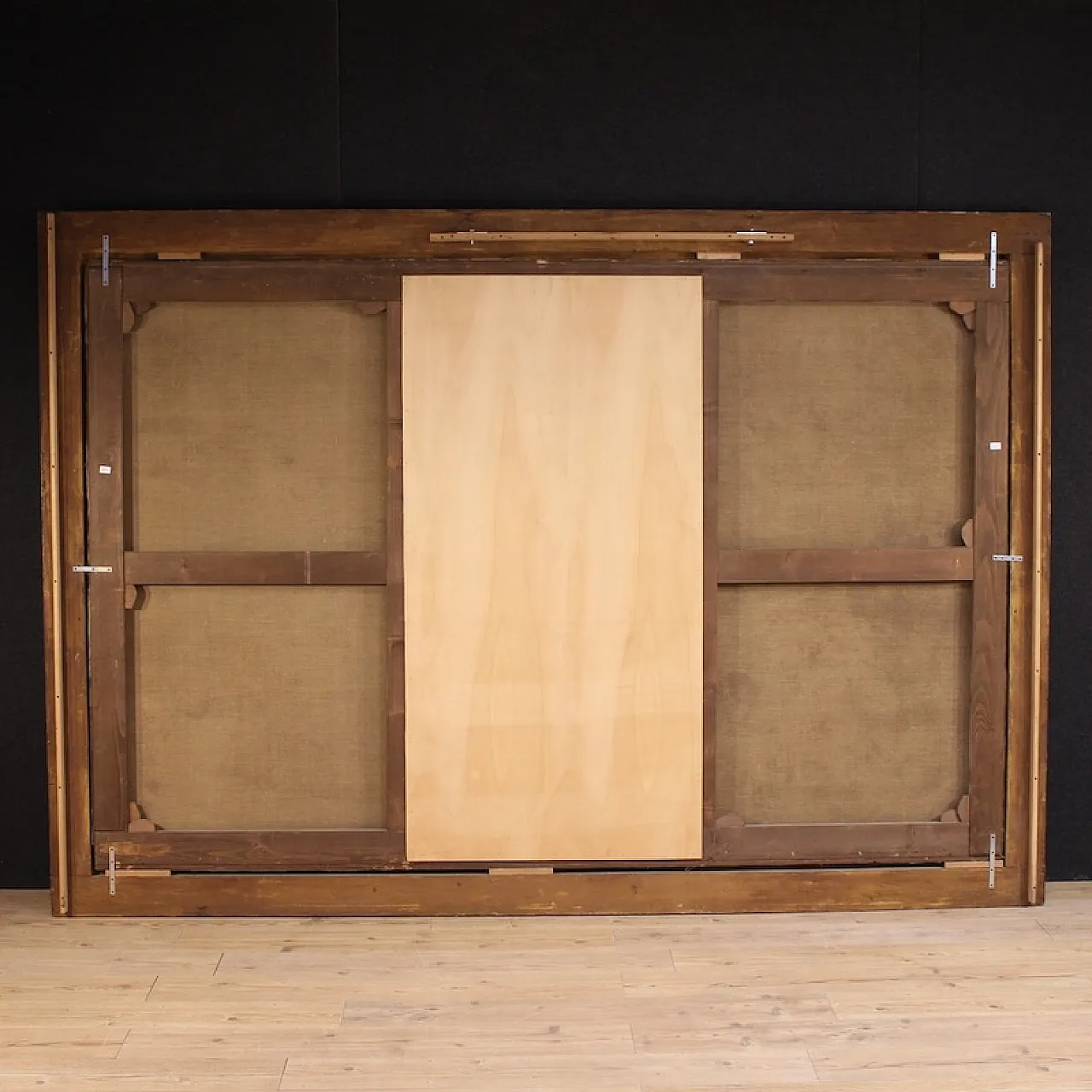
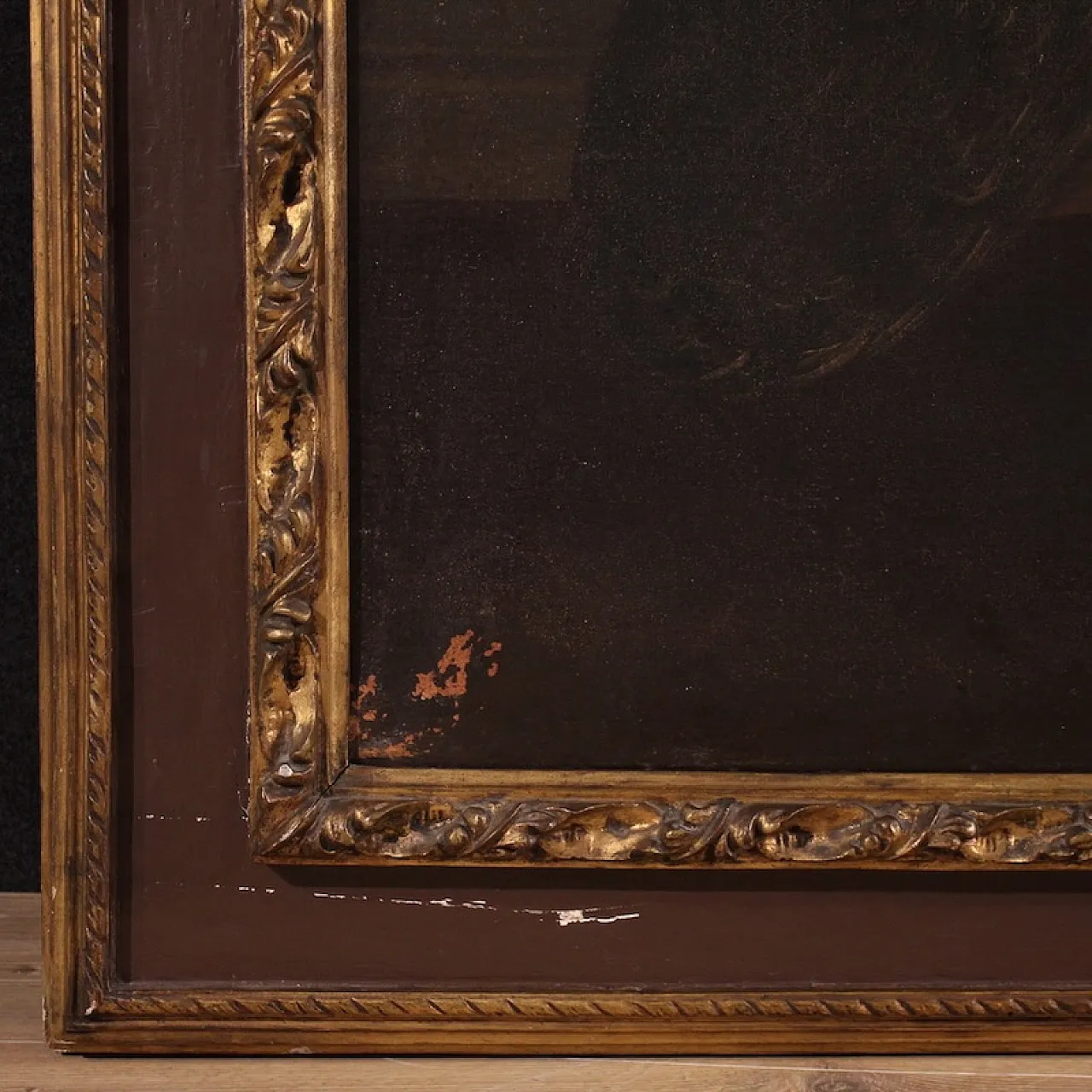
The quality of the pictorial drafting and the monumentality of the dimensions suggest a prestigious original destination, probably a noble palace or a castle. Thanks to its imposing dimensions, it represents an ideal solution for large environments, reception rooms, historic homes or luxury hotel lobbies. Spectacular 20th century frame in carved, lacquered and gilded wood, highly decorative, with some signs of aging. Work already restored with relining, replacement of the frame and restoration of color in some places. It has small drops of color in the lower left corner (see photo), overall in good state of conservation. Light painting H 196 x W 296 cm.




.png)

 SILVER Seller in Cuneo, Italy