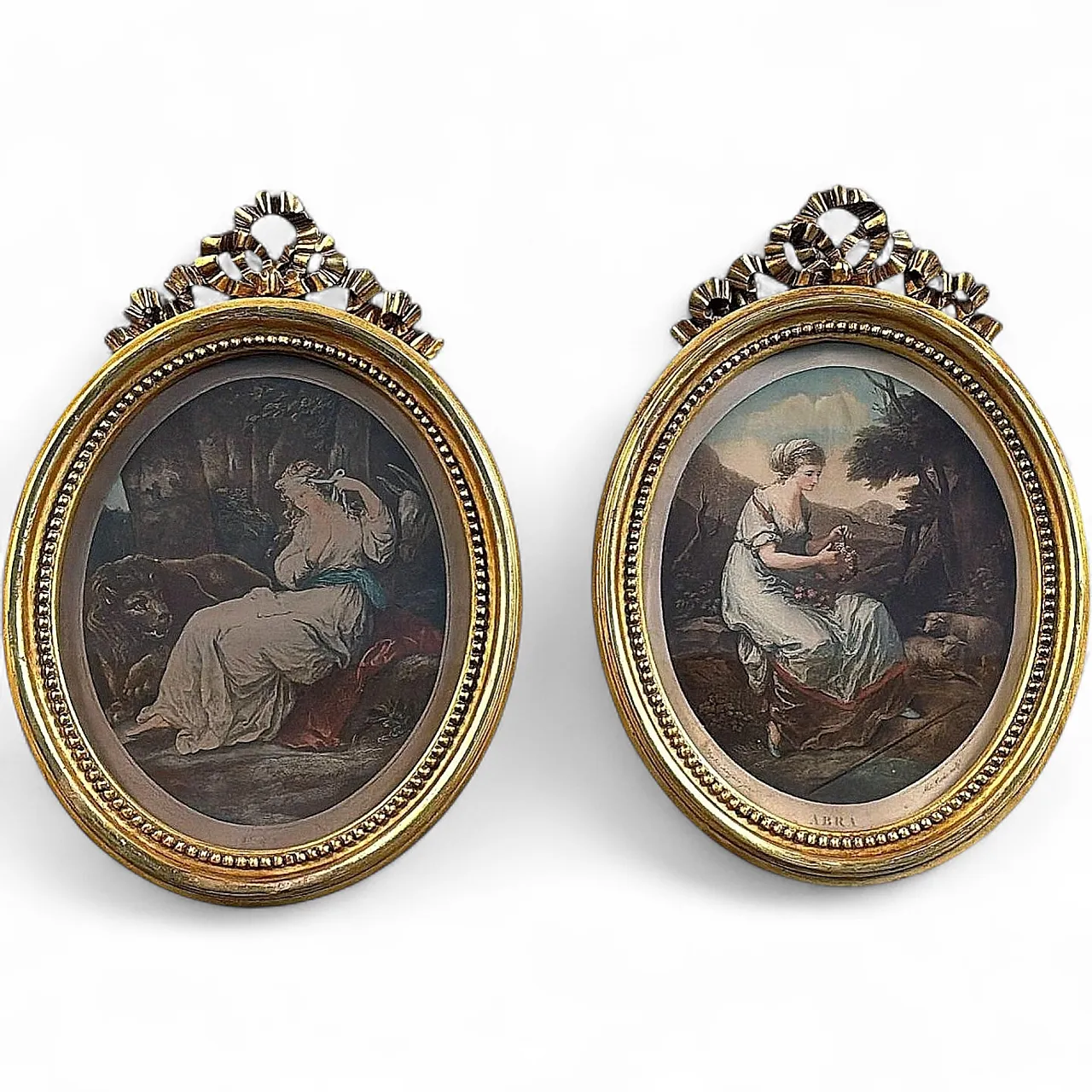
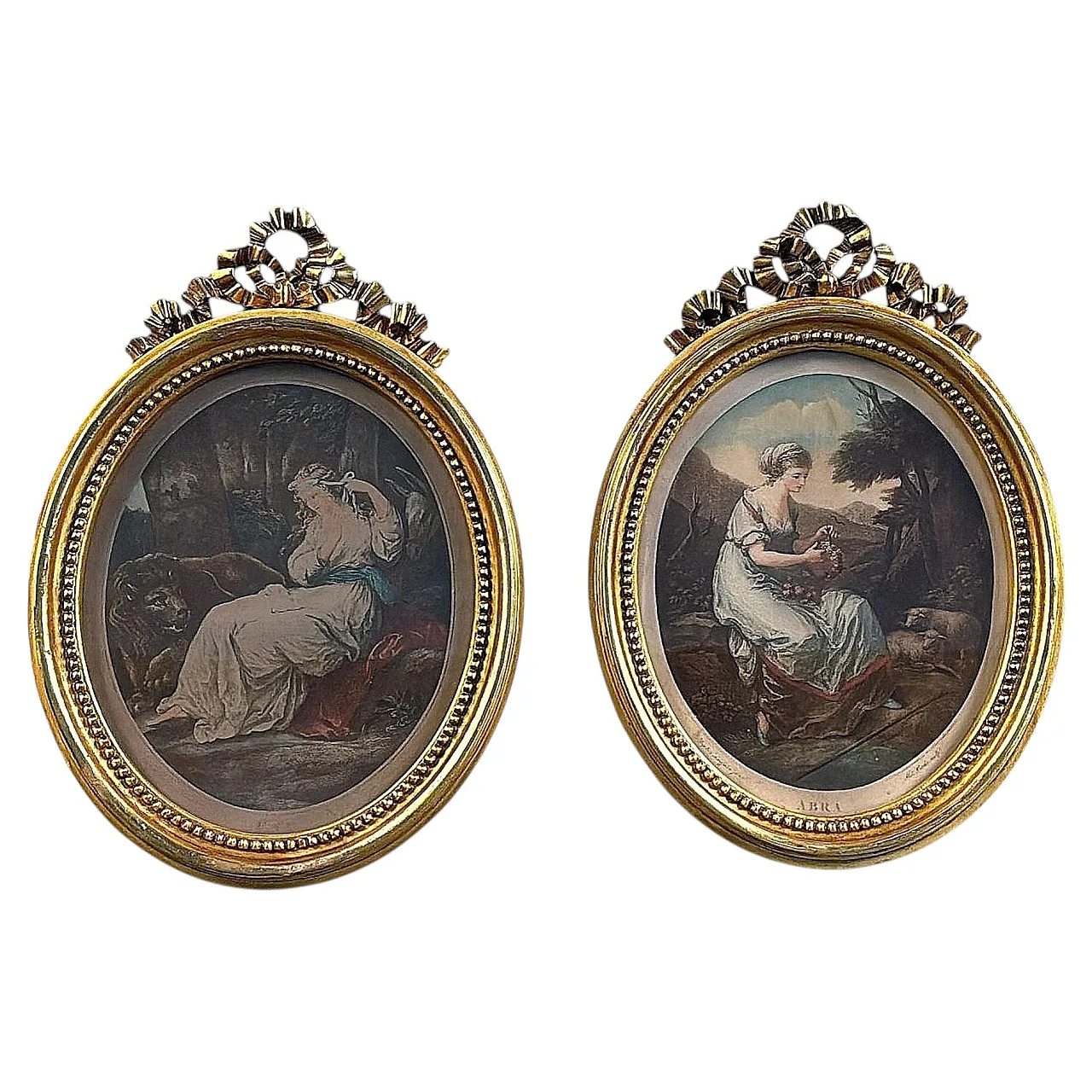
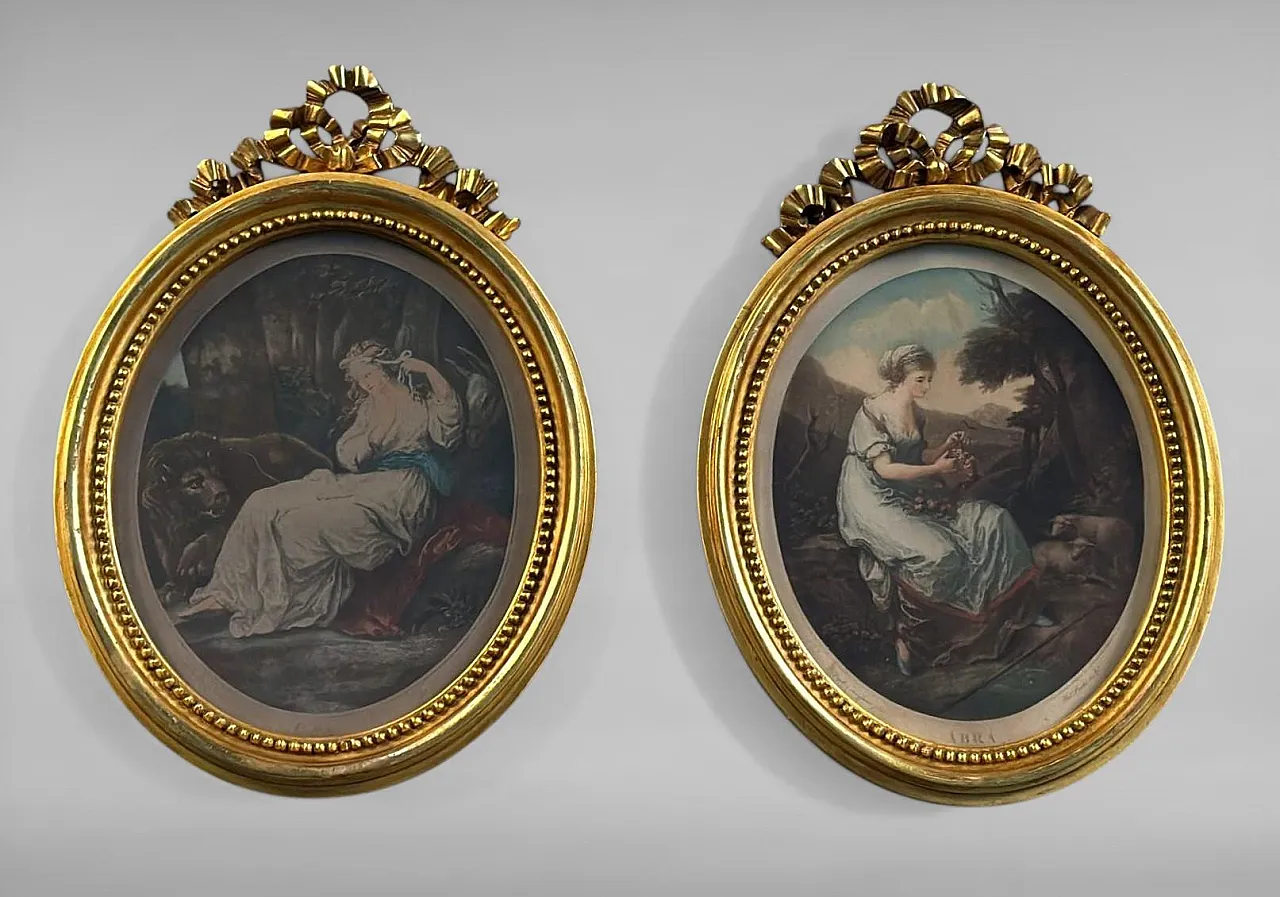
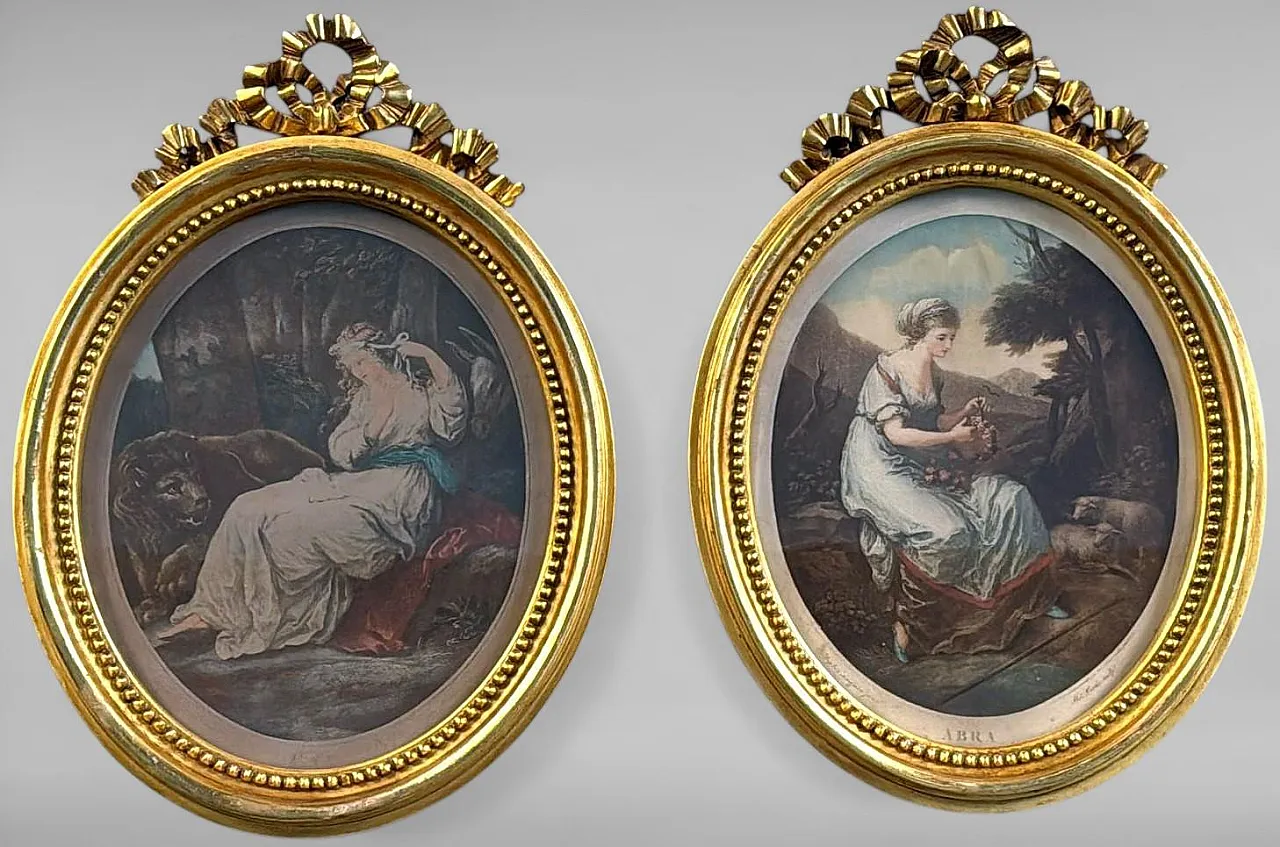
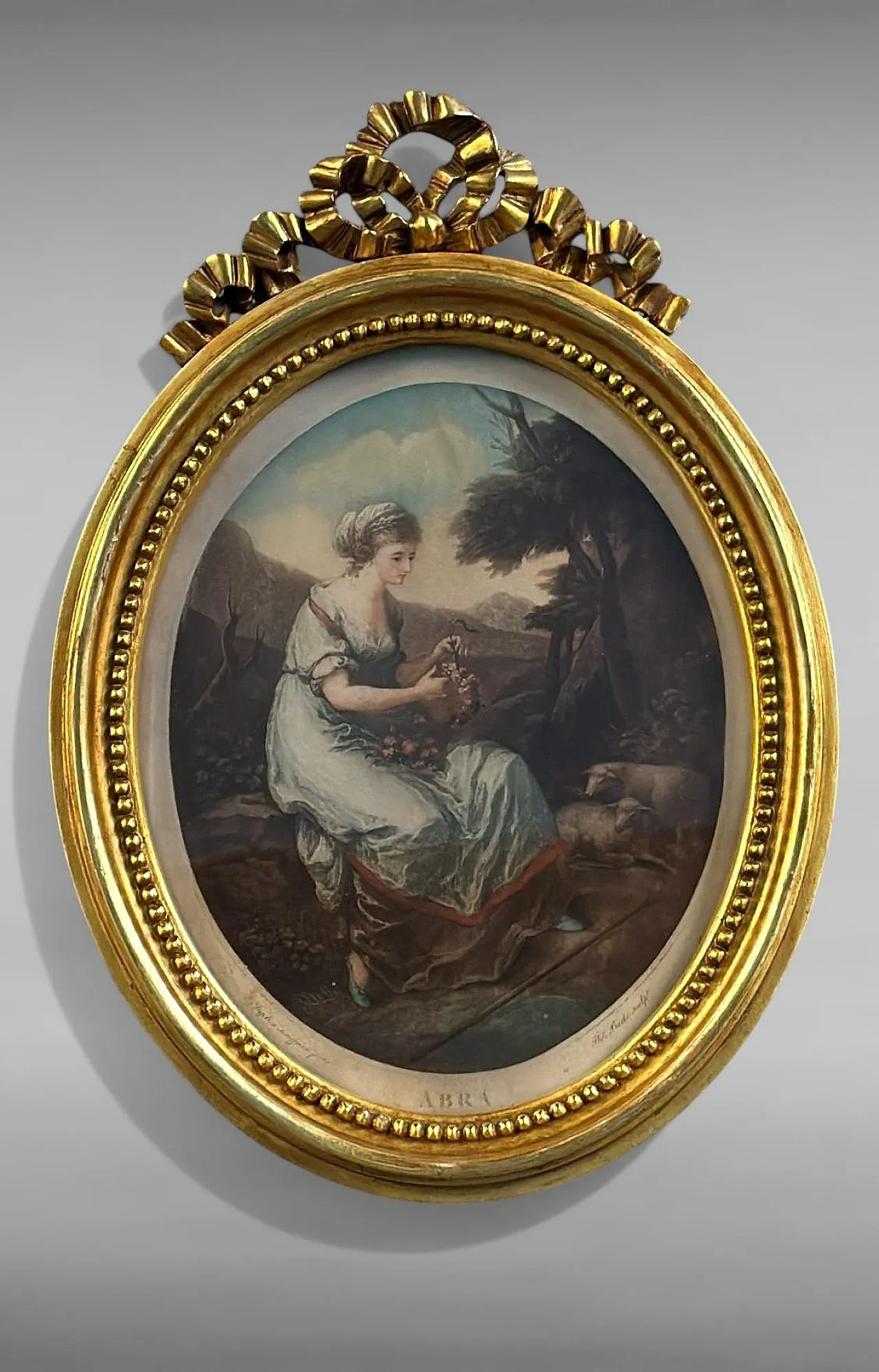
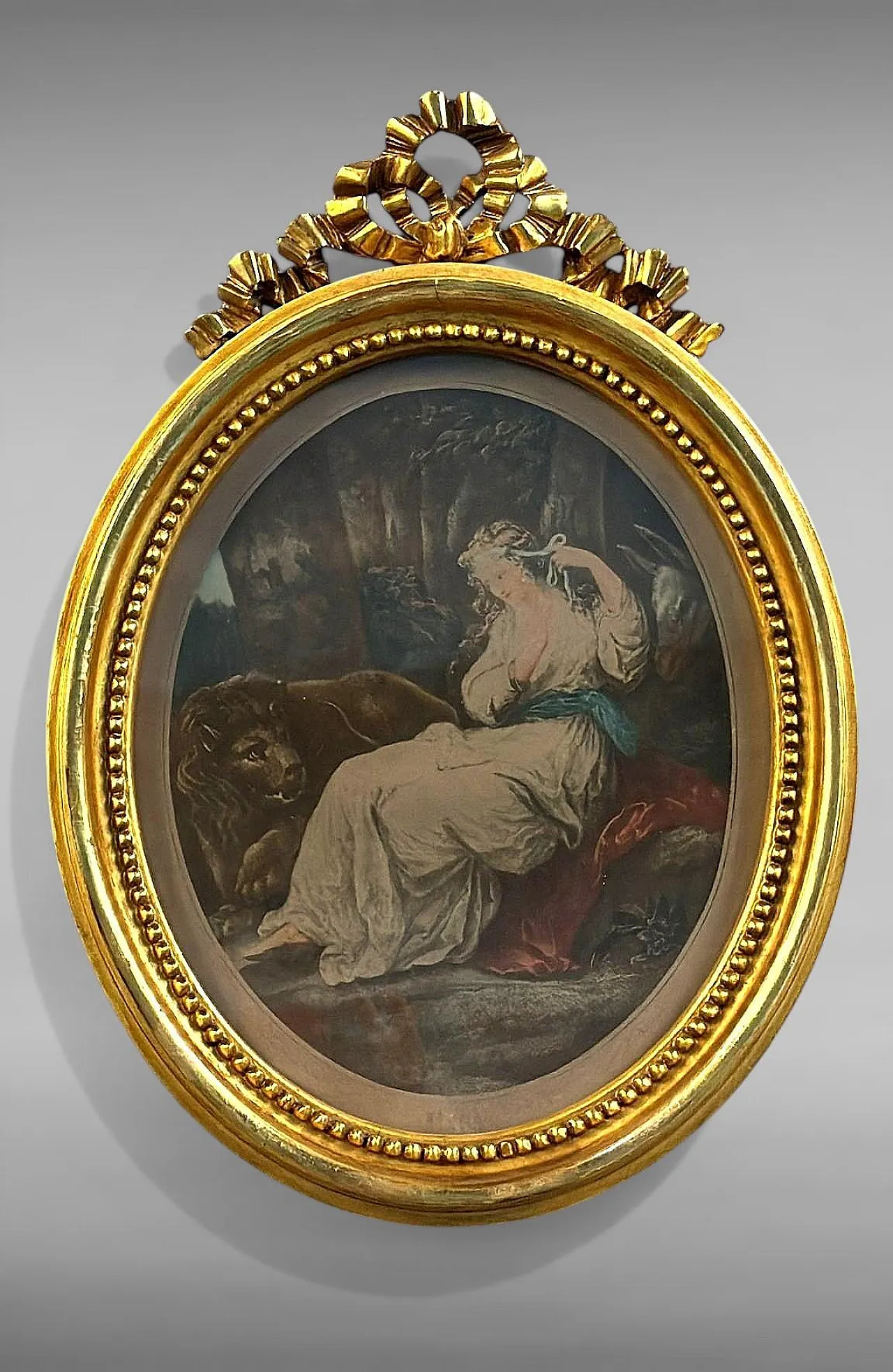
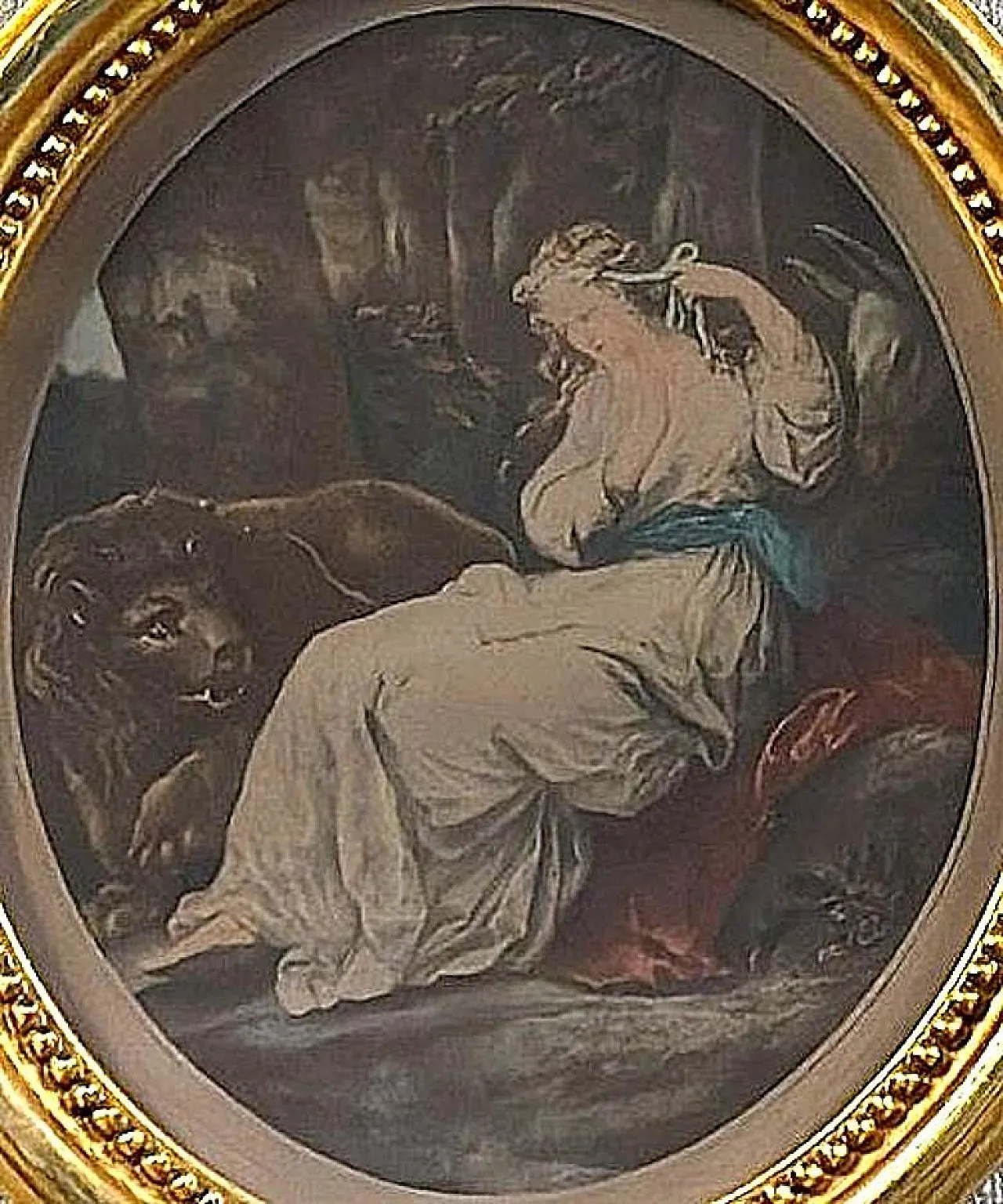
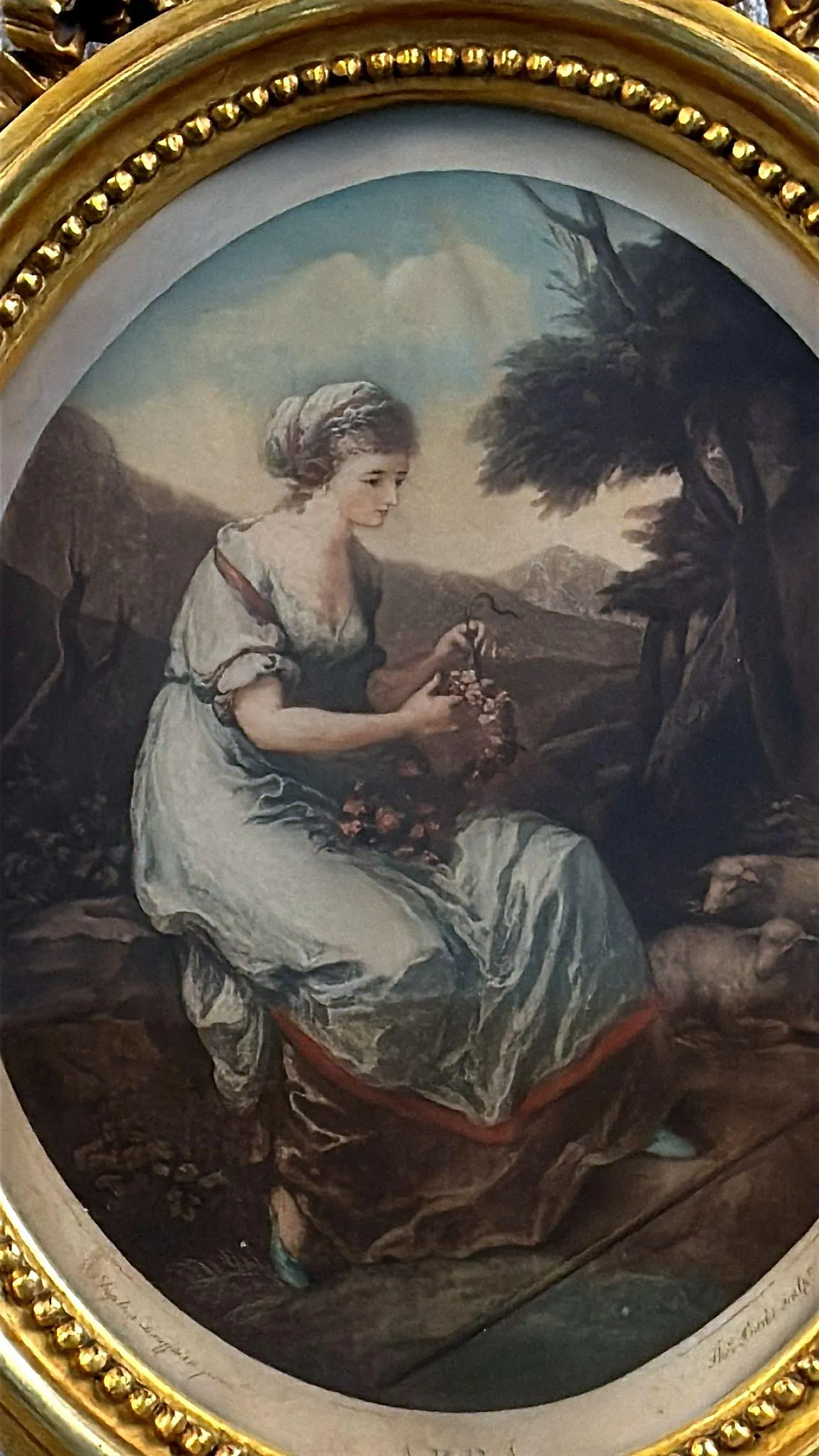
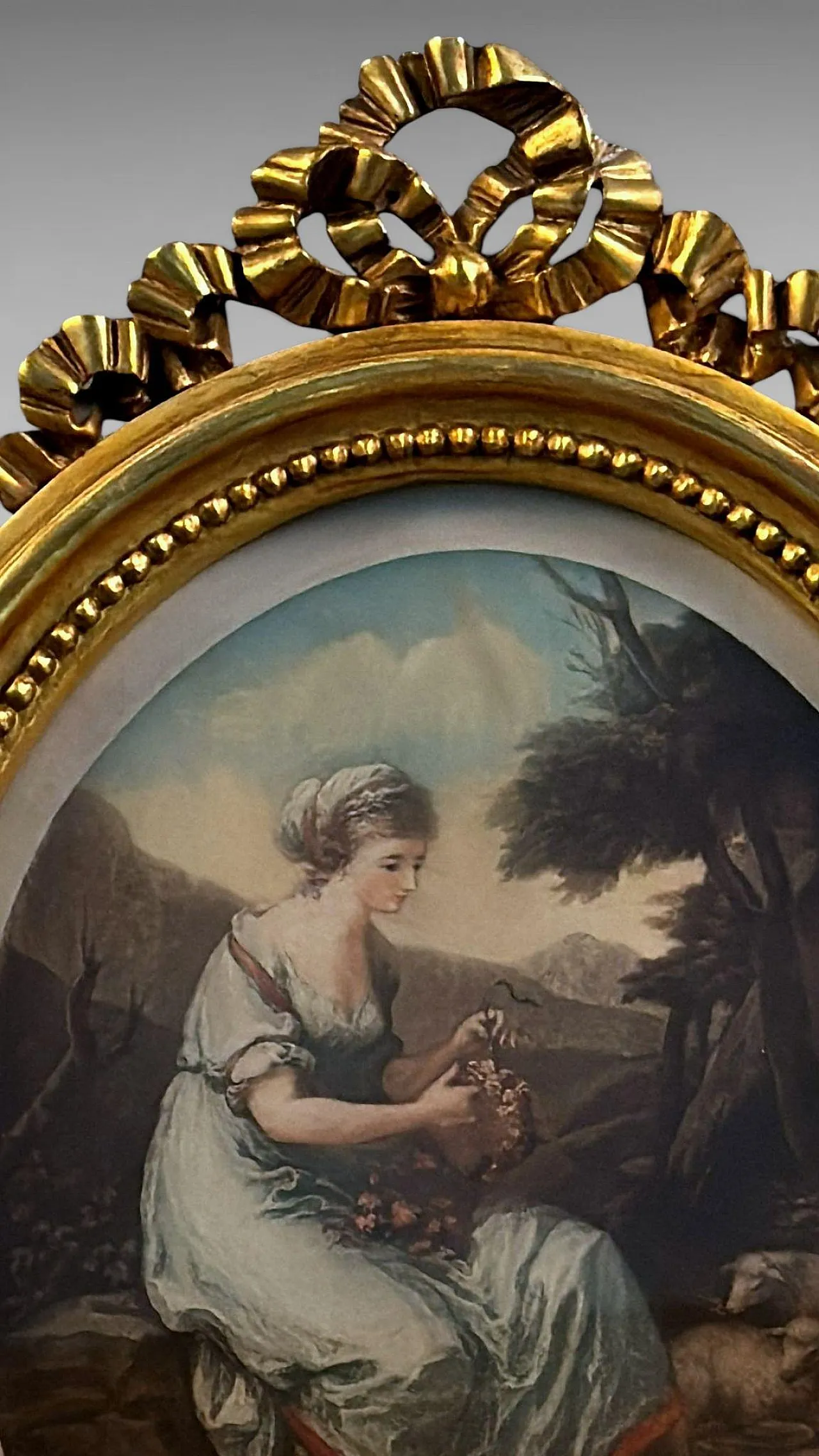
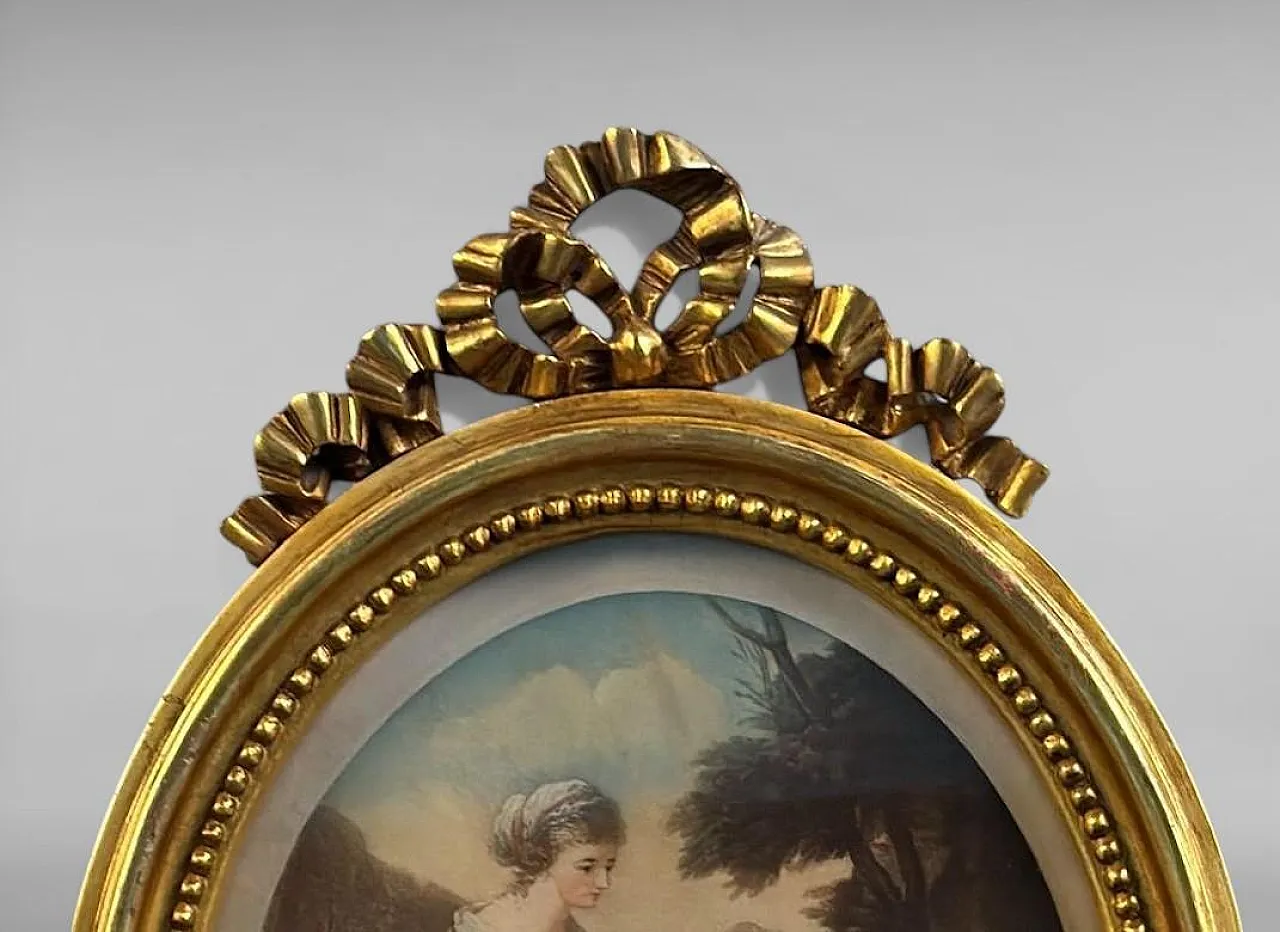
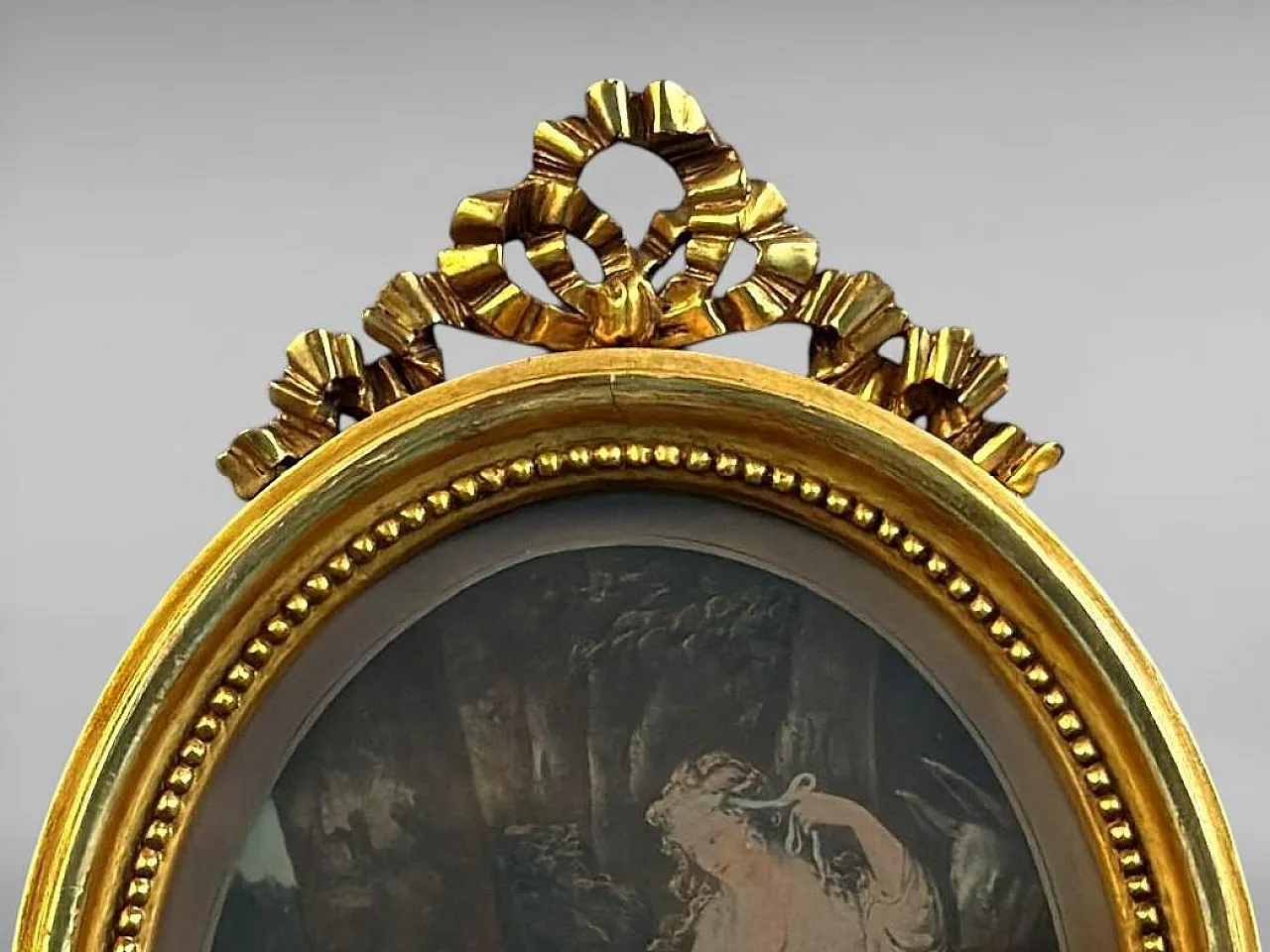
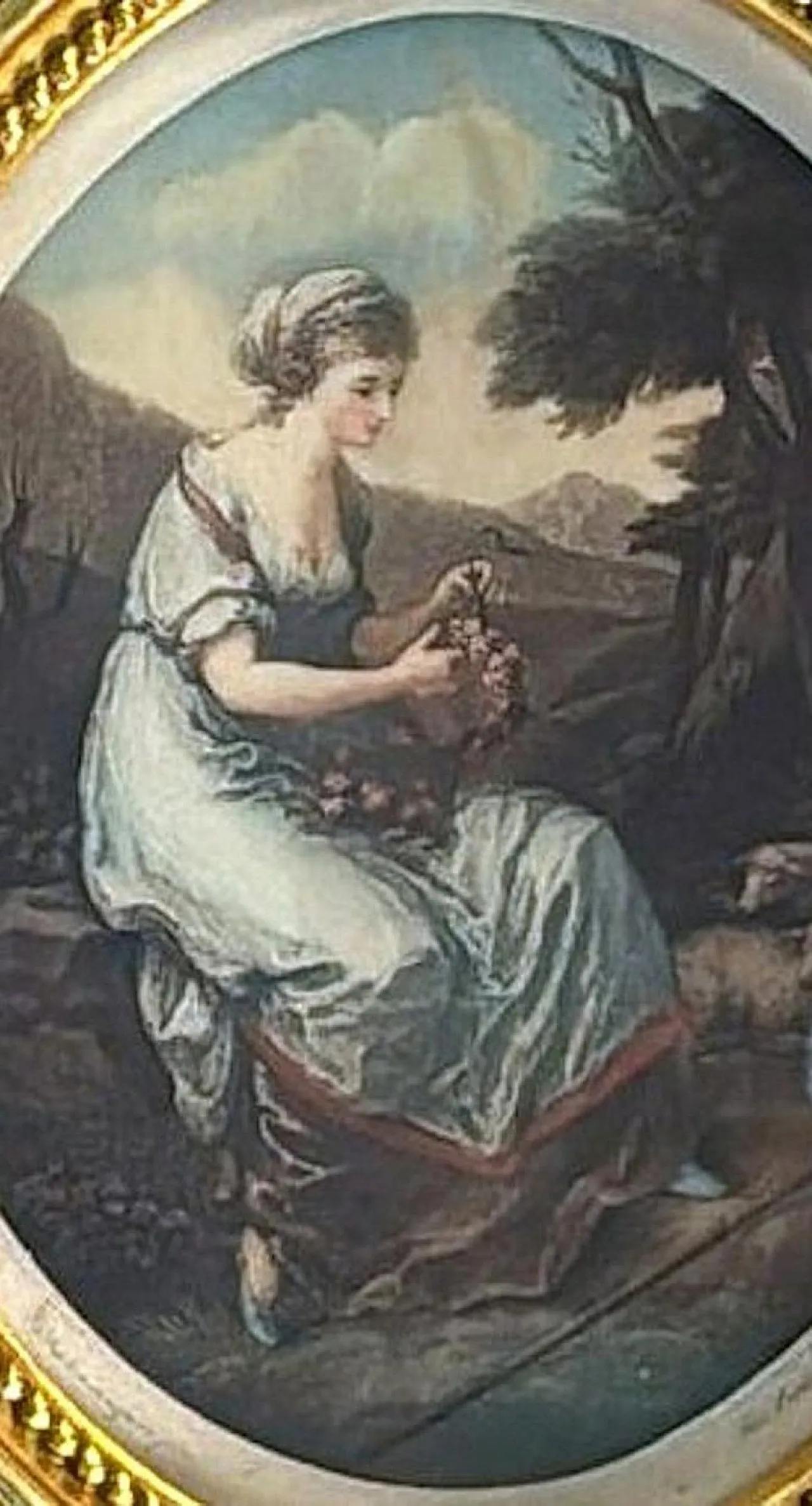
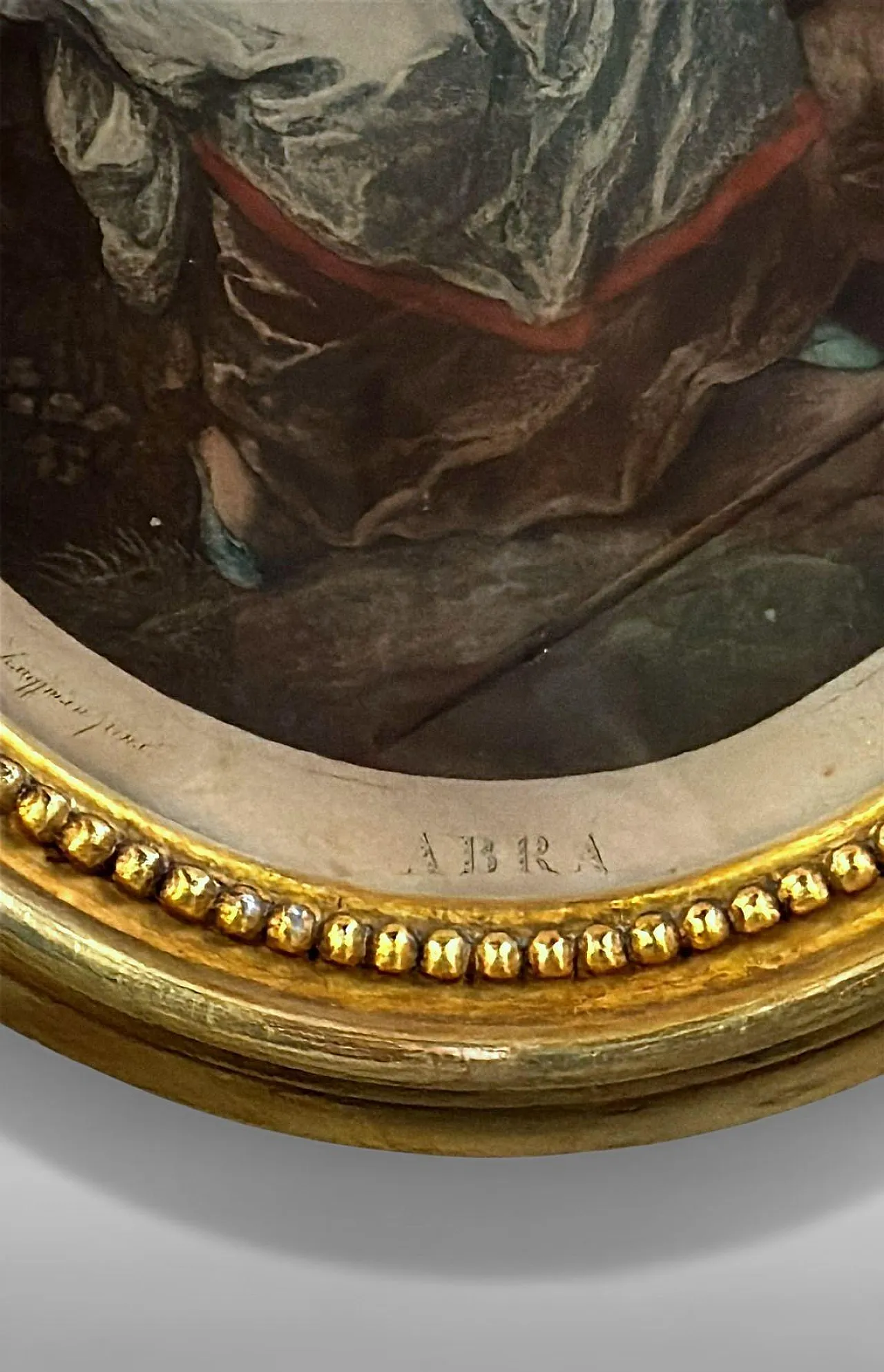
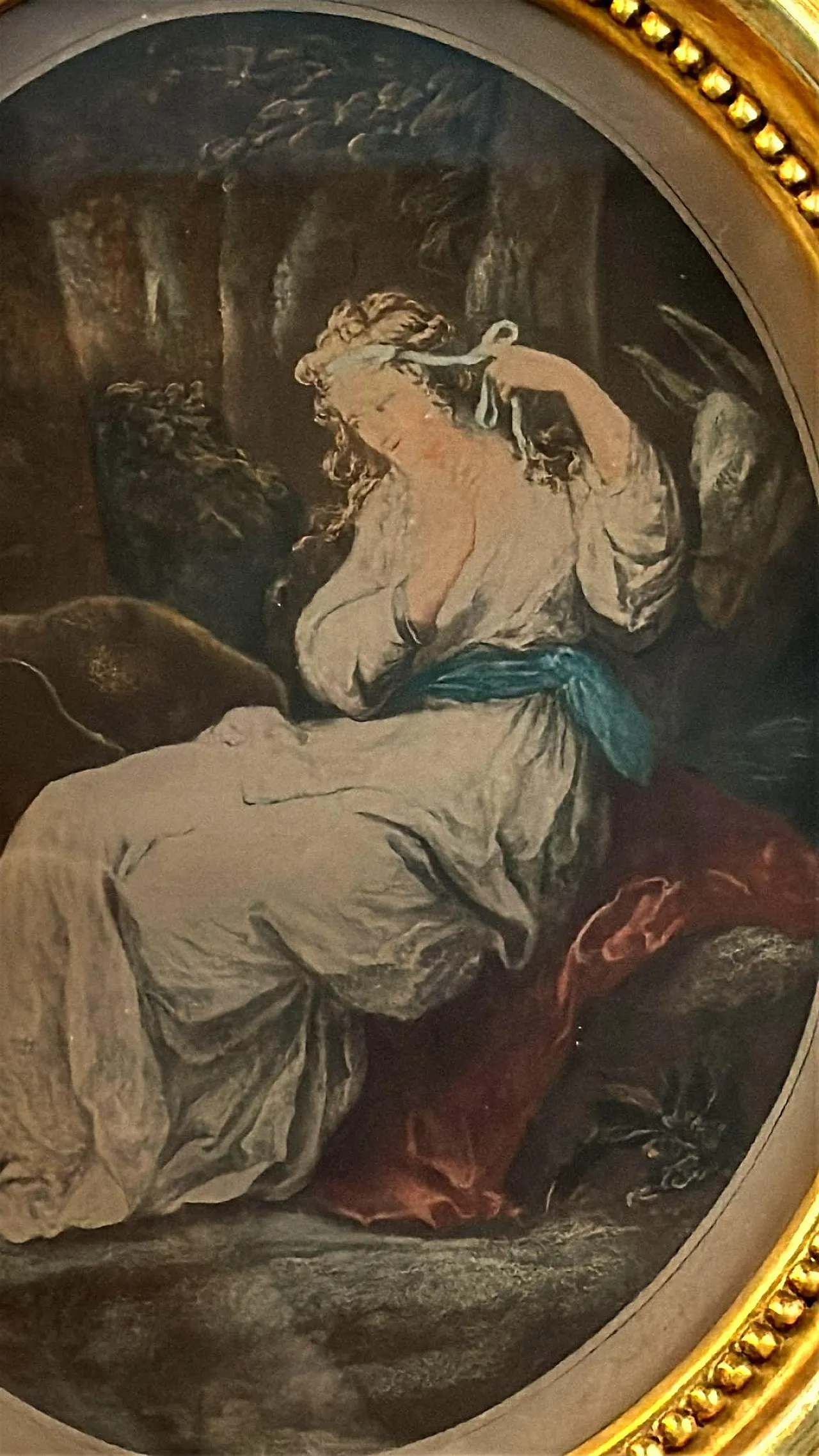
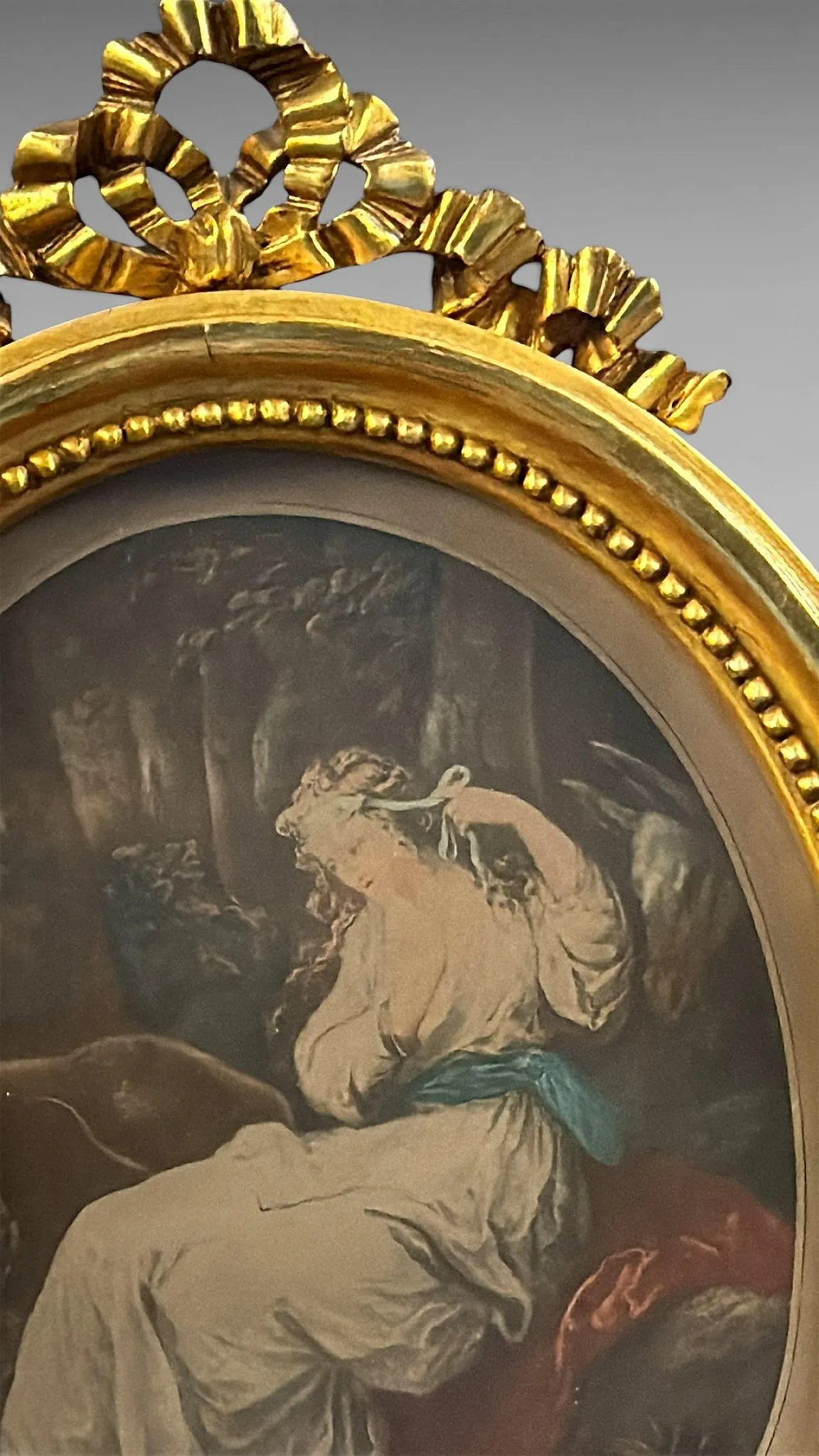
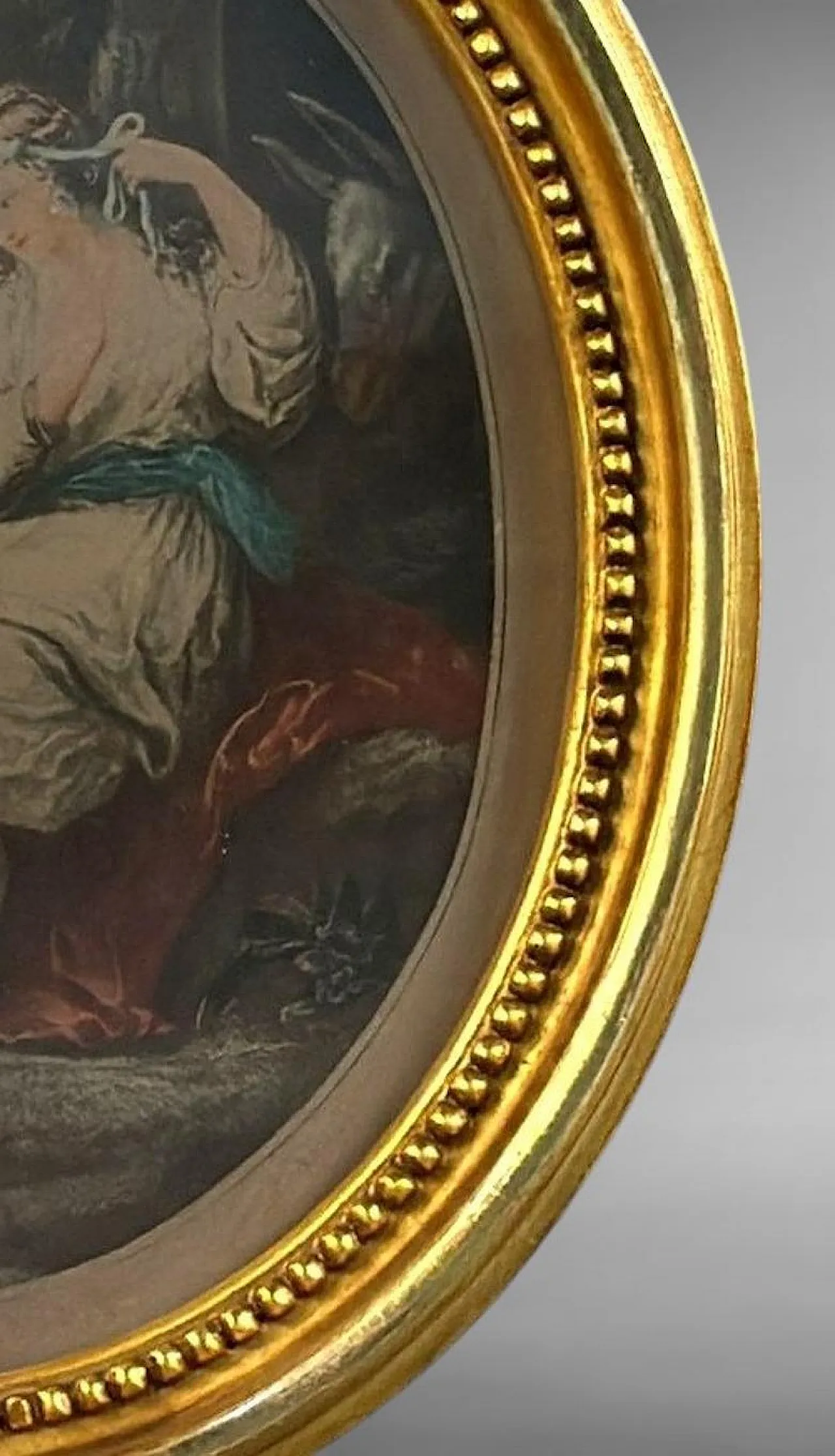
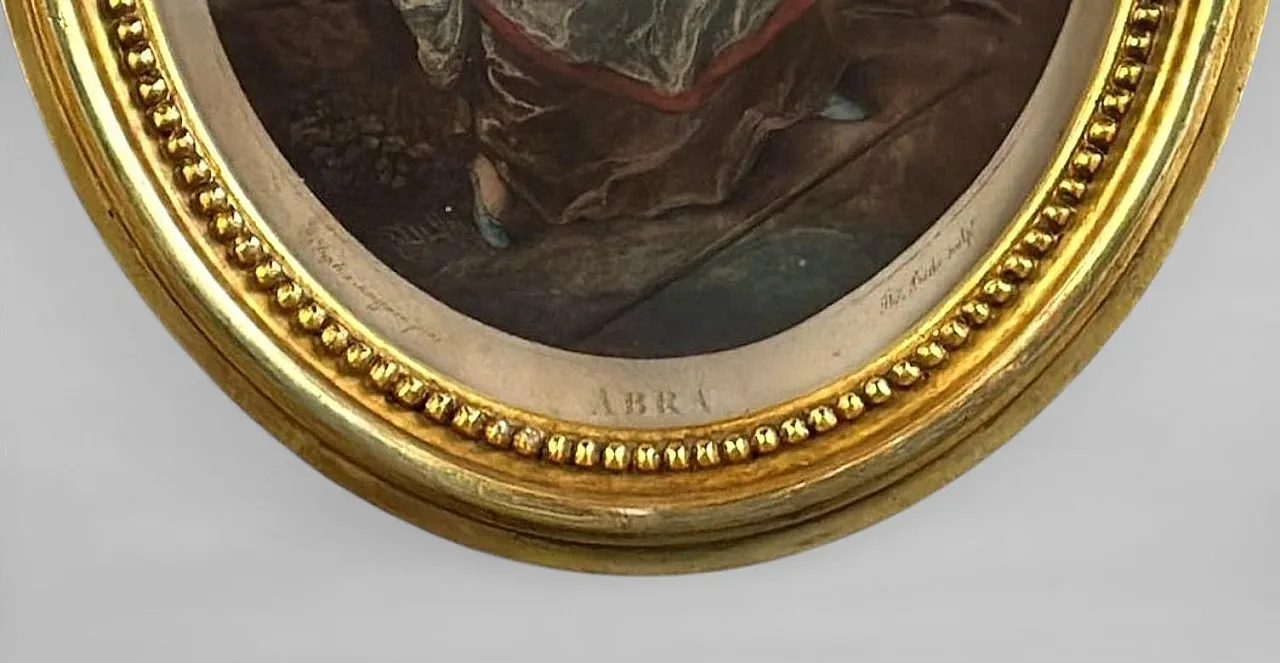
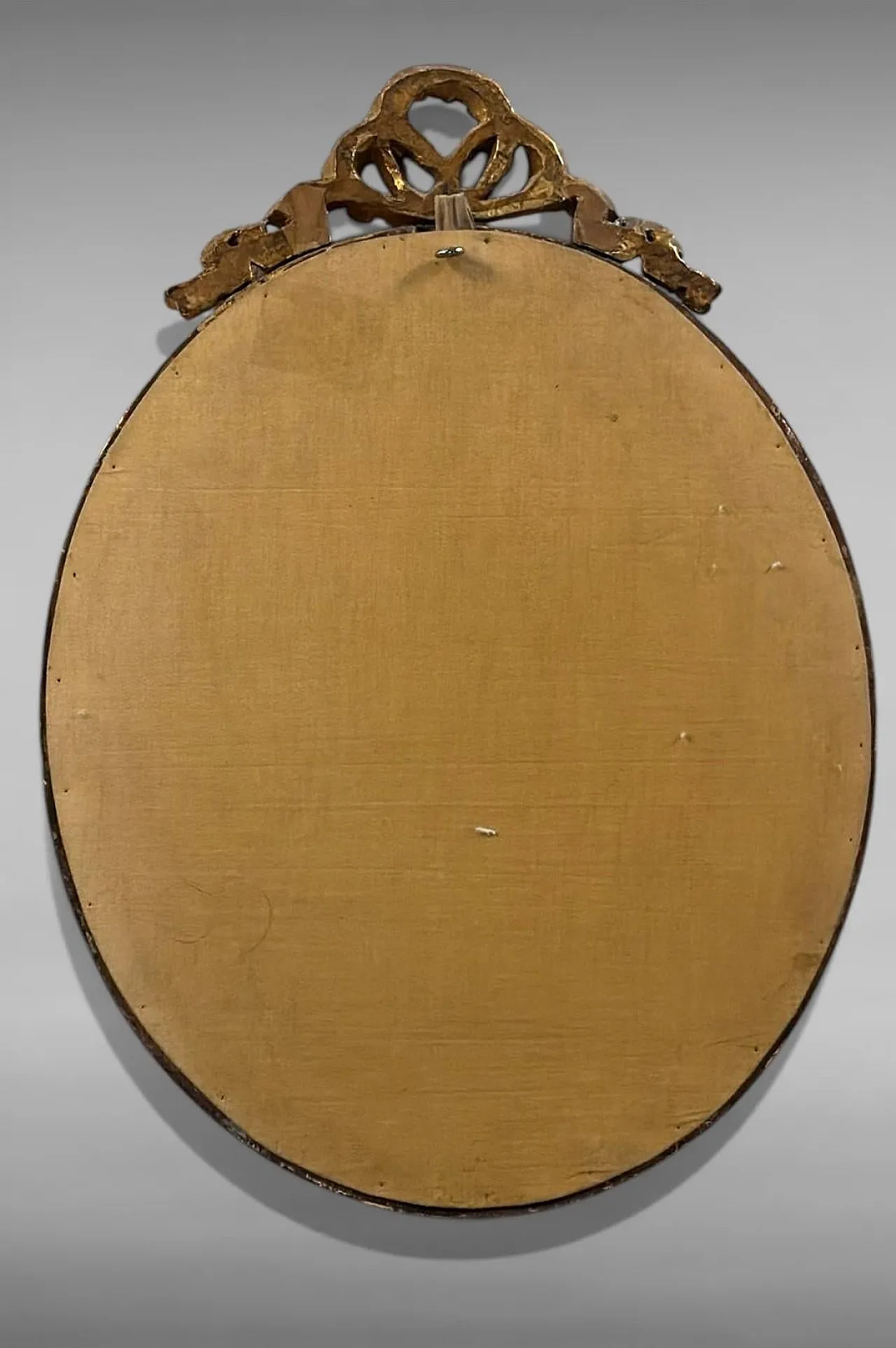
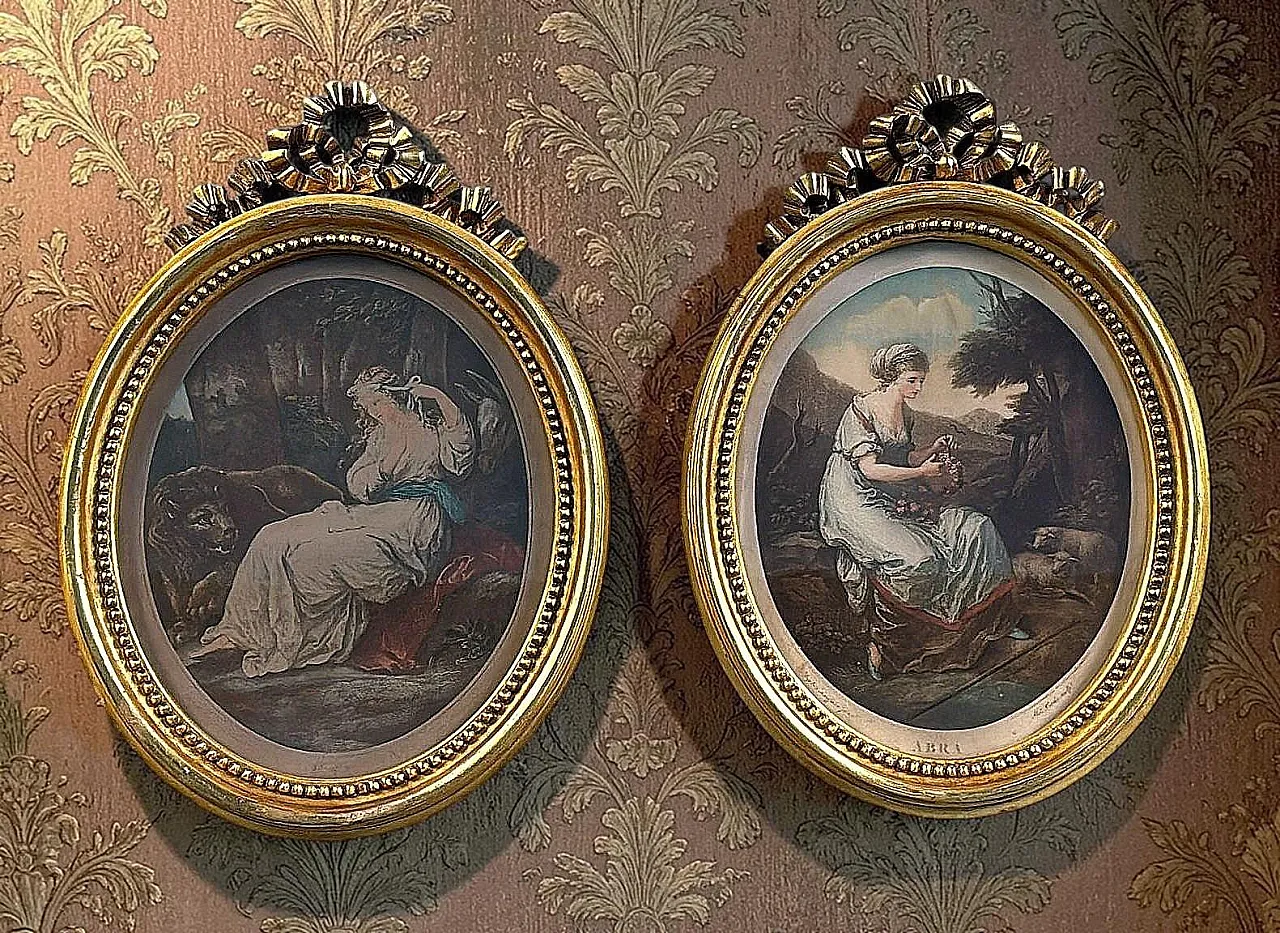
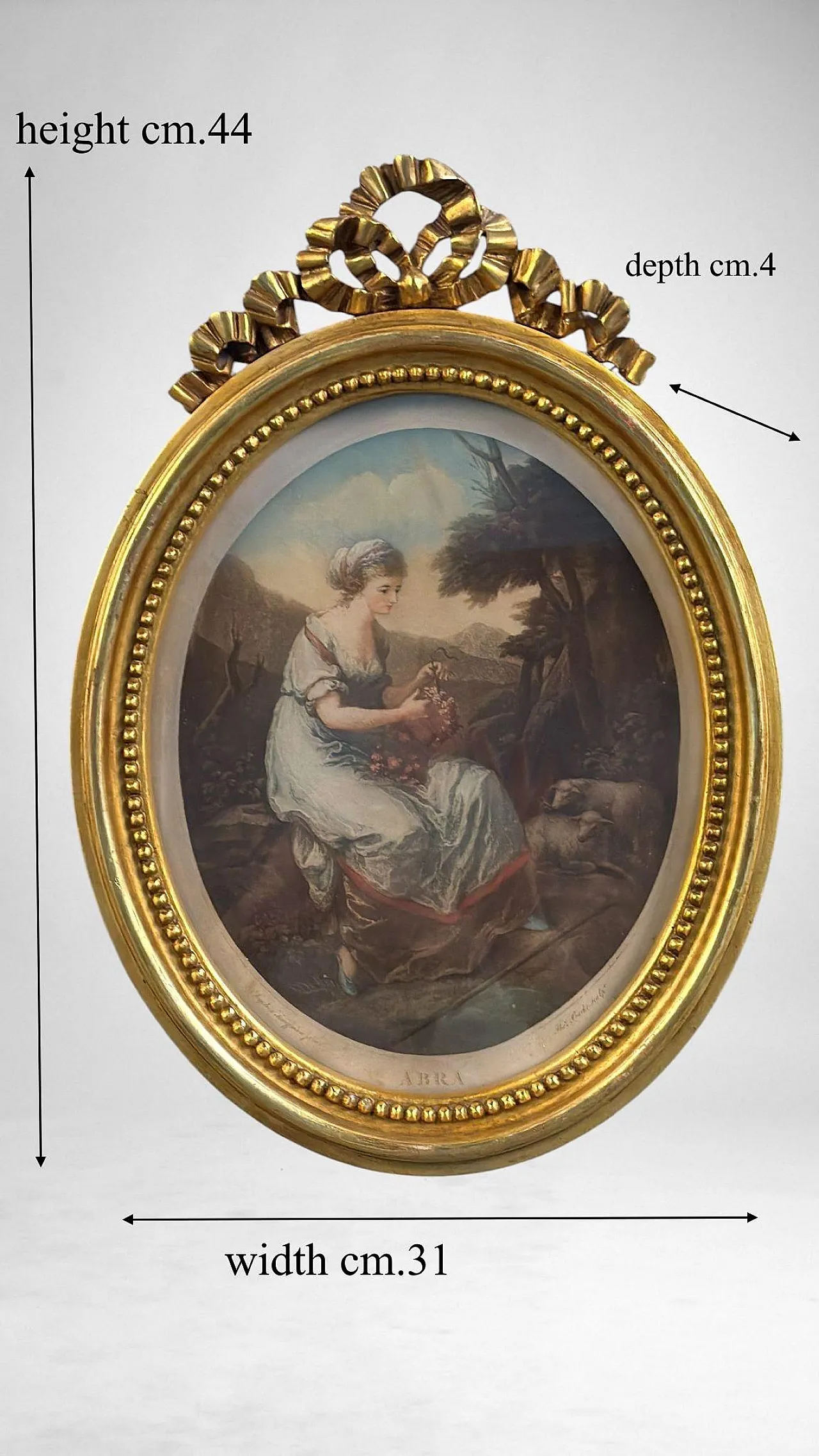
An intriguing pair of oval stipple engravings by Irish engraver Thomas Burke (1749–1815), executed in the early 19th century after compositions by the Swiss painter Angelika Kauffman. The two prints were later framed in France between 1930 and 1935 in elegant oval giltwood frames, distinguished by a refined ribbon motif crowning the upper section and a fabric lining on the back. The subjects are derived from Kauffman’s compositions inspired by the epic poem The Faerie Queene by Edmund Spenser, first published in 1590. The scenes depict the characters “Abra” and “Una”: the former portrayed as a young shepherdess, while the latter is shown encountering a lion during her quest to rescue her royal parents, imprisoned by a fearsome dragon. Enchanted by her beauty and innocence, the lion refrains from harming her and instead becomes her loyal companion and protector. The Faerie Queene, Spenser’s unfinished masterpiece, was largely composed during his years in Ireland between 1580 and 1595, with the declared ambition of emulating—and perhaps surpassing—Ariosto’s Orlando Furioso. Angelika Kauffman (Chur, October 30, 1741 – Rome, November 1, 1807) was a celebrated Swiss painter, particularly renowned for her portraiture. A cosmopolitan and highly cultivated artist, she also pursued interests in music and singing. After extensive travels and training throughout Italy, she settled in London at a young age, where she established her studio and quickly achieved international acclaim. Thomas Burke (Dublin, 1749 – London, 1815) was an engraver and painter. He trained at the Dublin Society’s Schools under Robert West and moved to London in 1770, where he refined his engraving techniques under John Dixon. Much of his output consists of engravings after works by Angelika Kauffman, often produced for publishers such as William Wynne Ryland; he only rarely issued prints independently. Dimensions (each frame): Height: 44 cm (17.32 in), Width: 31 cm (12.20 in), Depth: 4 cm (1.57 in).


.png)
 SILVER Seller in Prato, Italy