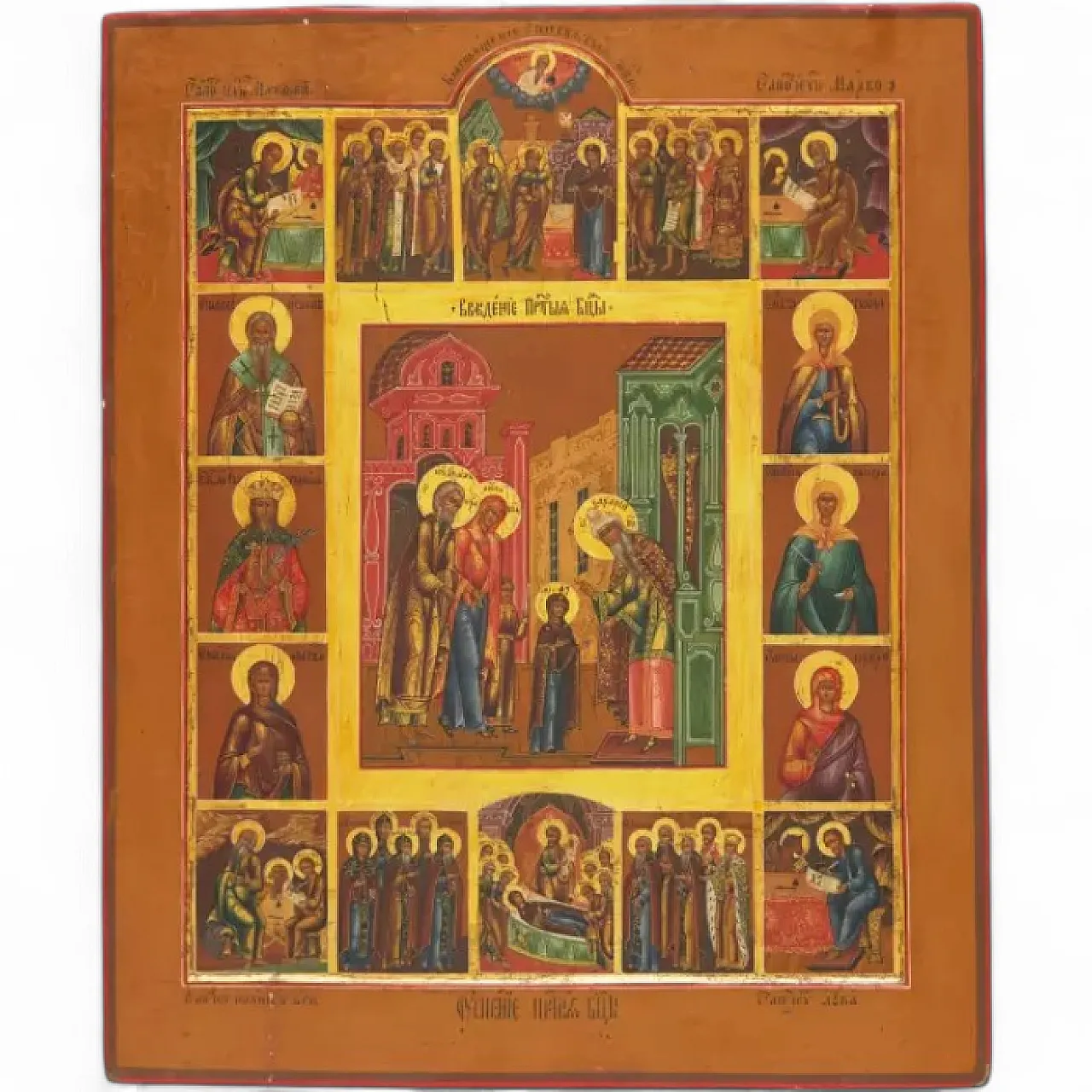
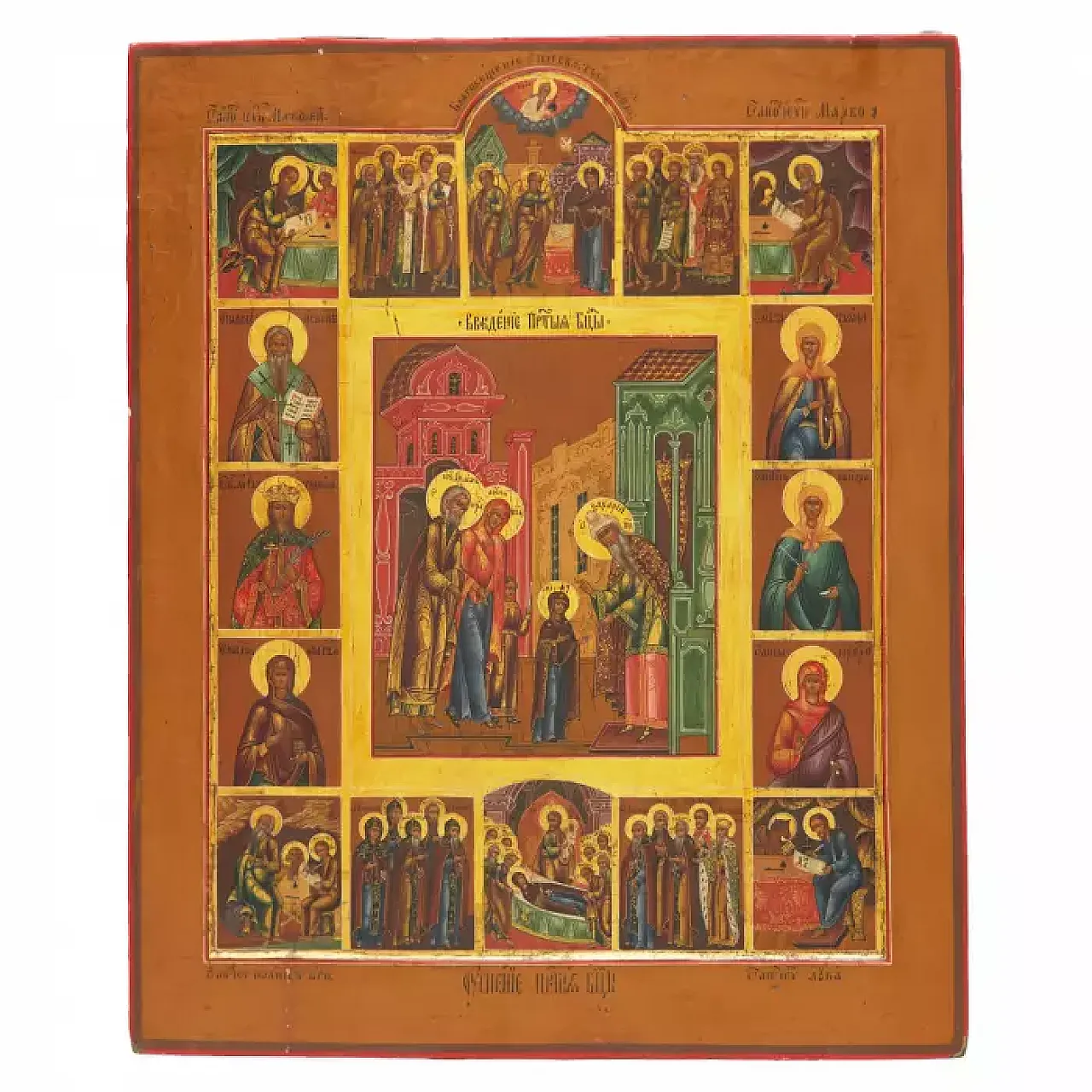
The Icon of the Selected Feasts of the Mother of God Cycle, created by Palekh masters in the 19th century, represents a refined example of the Russian icon-painting tradition with a carefully developed theological programme. The composition is arranged along a central vertical axis and is dedicated to the principal events in the earthly life of the Most Holy Theotokos, from the Annunciation to the Dormition.
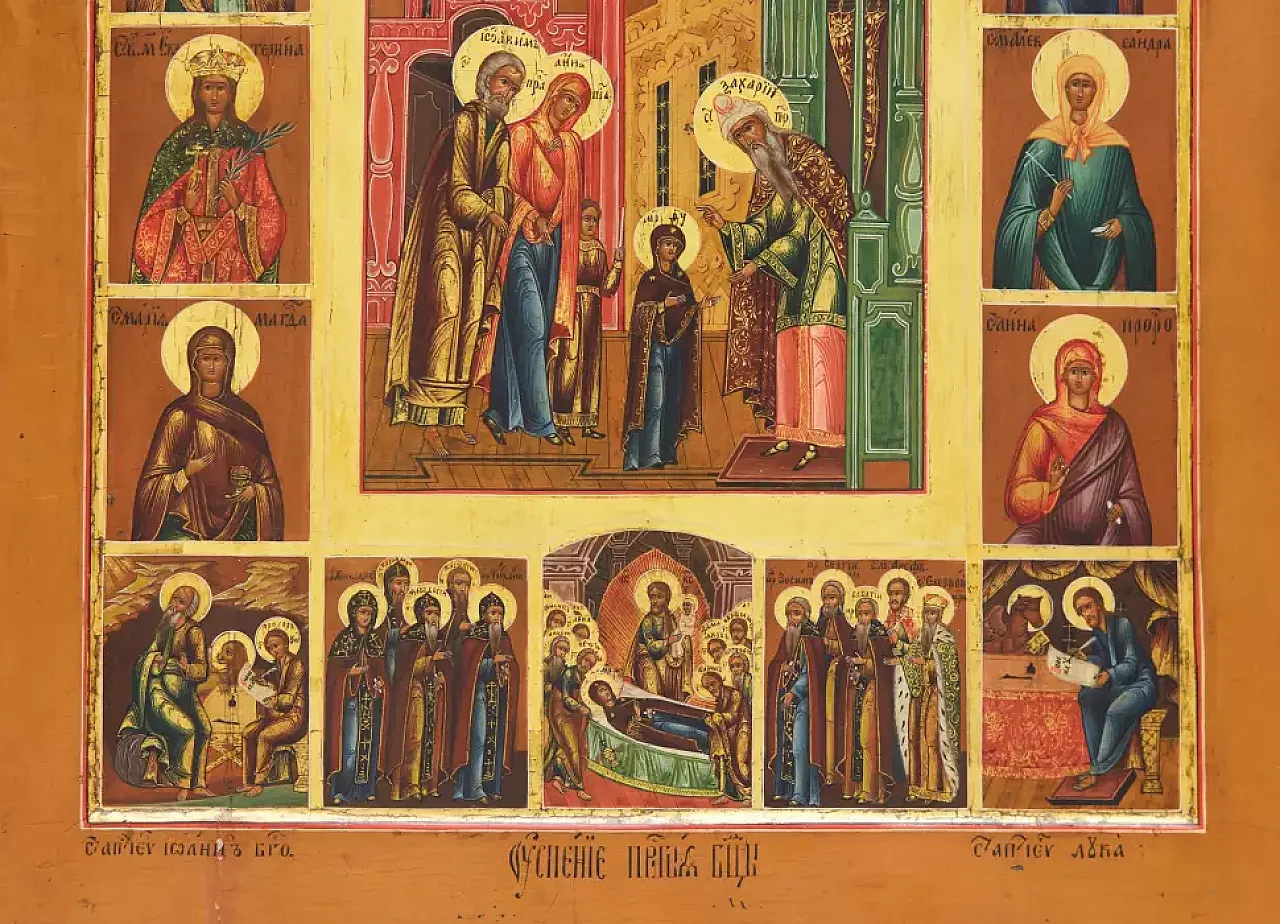
The central position is occupied by the scene of the “Presentation of the Most Holy Theotokos into the Temple”. At the centre of the composition is the three-year-old Virgin Mary, brought by her parents, Saints Joachim and Anna, to the Temple of Jerusalem in fulfilment of their vow to God. The Virgin is received by the High Priest Zacharias, the future father of Saint John the Baptist, depicted with a halo as a righteous saint. Behind him are shown the gates of the Holy of Holies, symbolising Mary’s divine election and her unique role in the history of salvation.
The upper section of the icon features the “Annunciation of the Most Holy Theotokos”, depicting the appearance of the Archangel Gabriel to the Virgin Mary and the proclamation of the forthcoming Birth of the Saviour. The lower register is occupied by the composition of the “Dormition of the Mother of God”, completing the Marian cycle and expressing the theme of the earthly journey and heavenly glorification of the Theotokos.
The corners of the feast compositions contain depictions of the Four Evangelists, emphasising the connection of the represented events with Sacred Tradition and the Gospel narrative. Surrounding the central scene are selected saints: Saint Tatiana, Saint Alexandra, Saint Anna, Apostle Paul, Saint Catherine the Great Martyr and Saint Mary Magdalene Equal-to-the-Apostles.
A distinctive feature of the iconographic programme is the predominance of female saints among the intercessory figures, suggesting that the icon may have served as a family devotional image, possibly associated with the spiritual protection of the female members of the household and the idea of initiation into the Orthodox faith.
The work was executed in the traditions of the Palekh school of icon painting, renowned for its miniature-like precision, delicate drawing, complex multi-figure compositions and exceptional decorative refinement.



.png)
-large.webp)
 SILVER Seller in Riga, Latvia