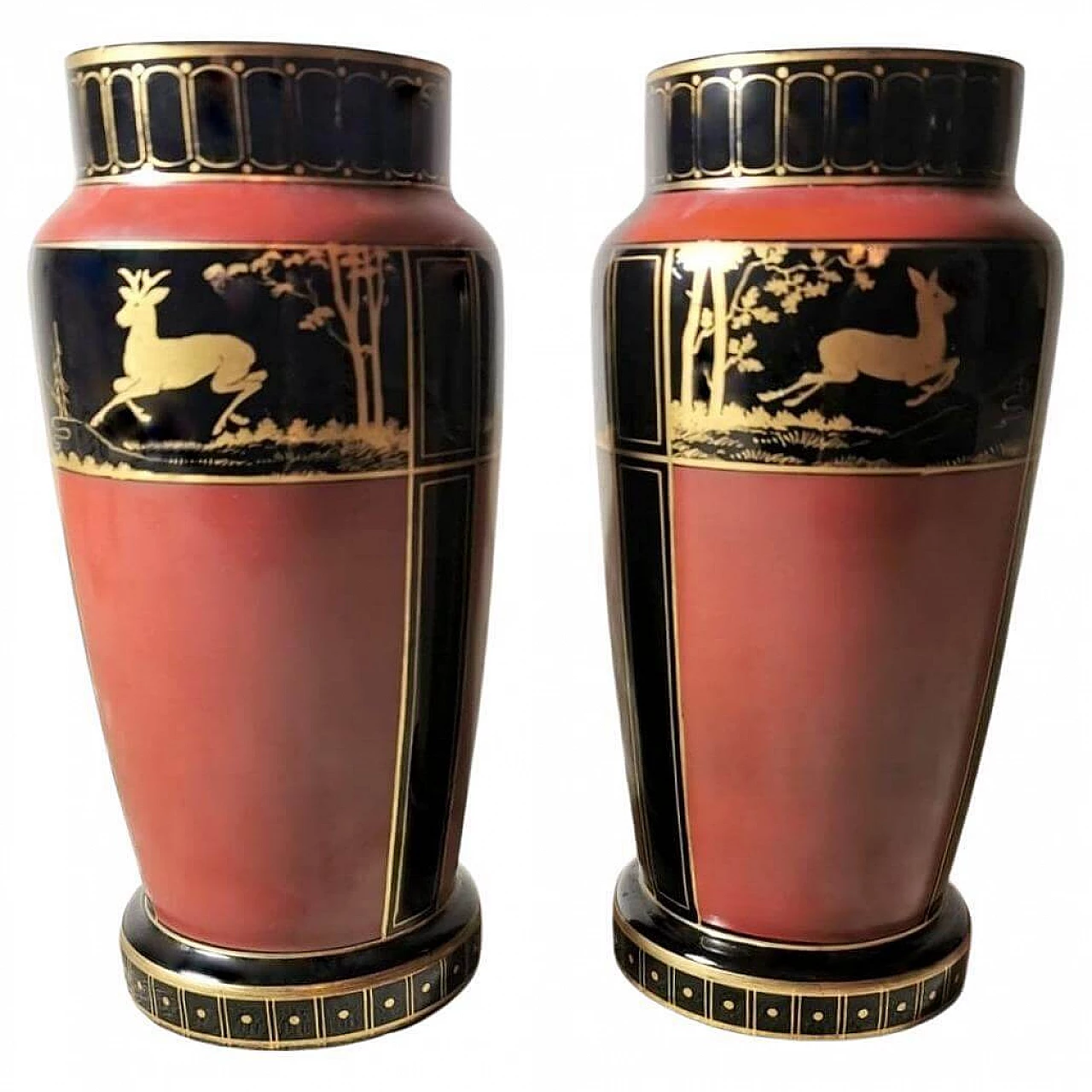
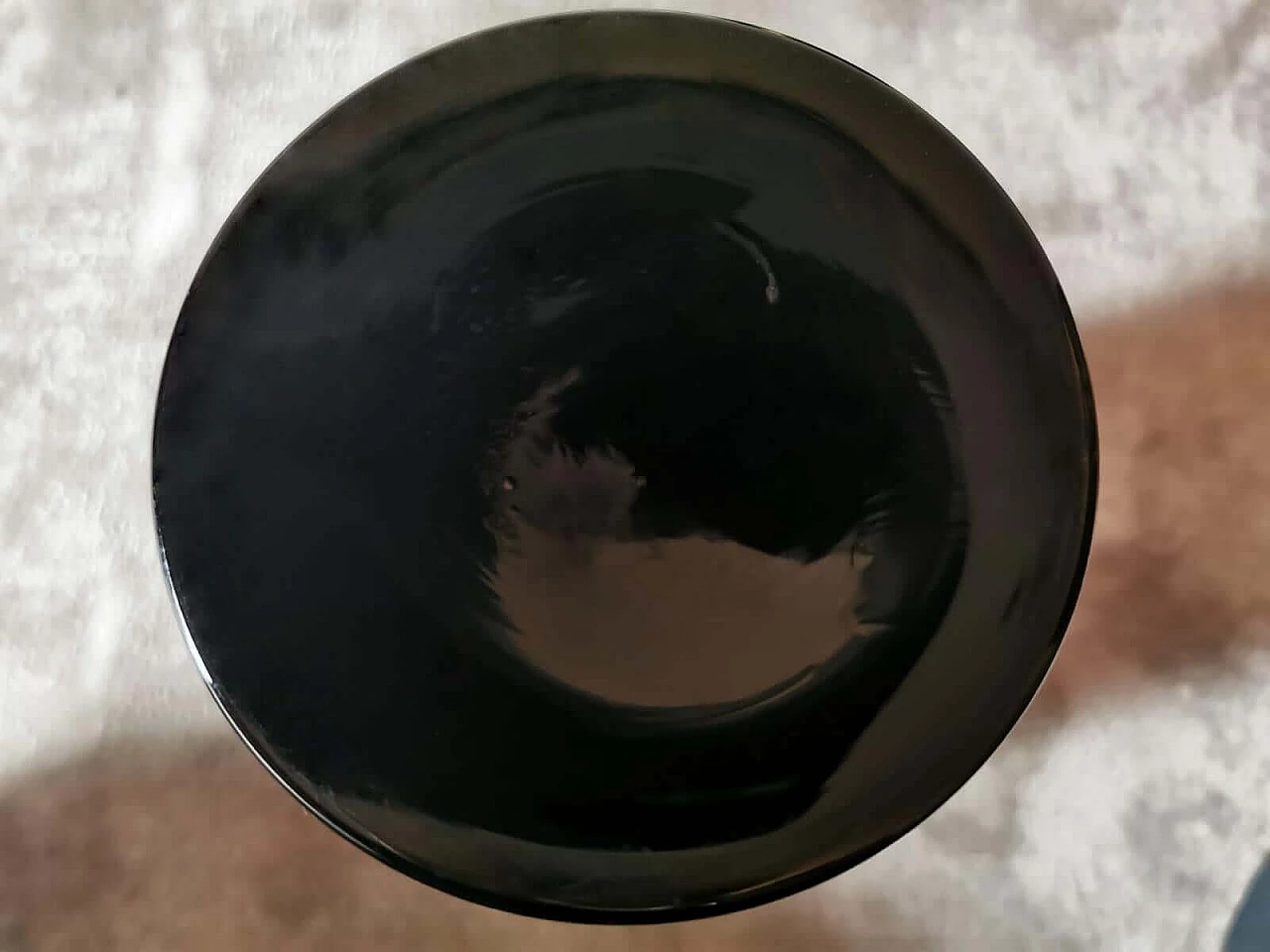
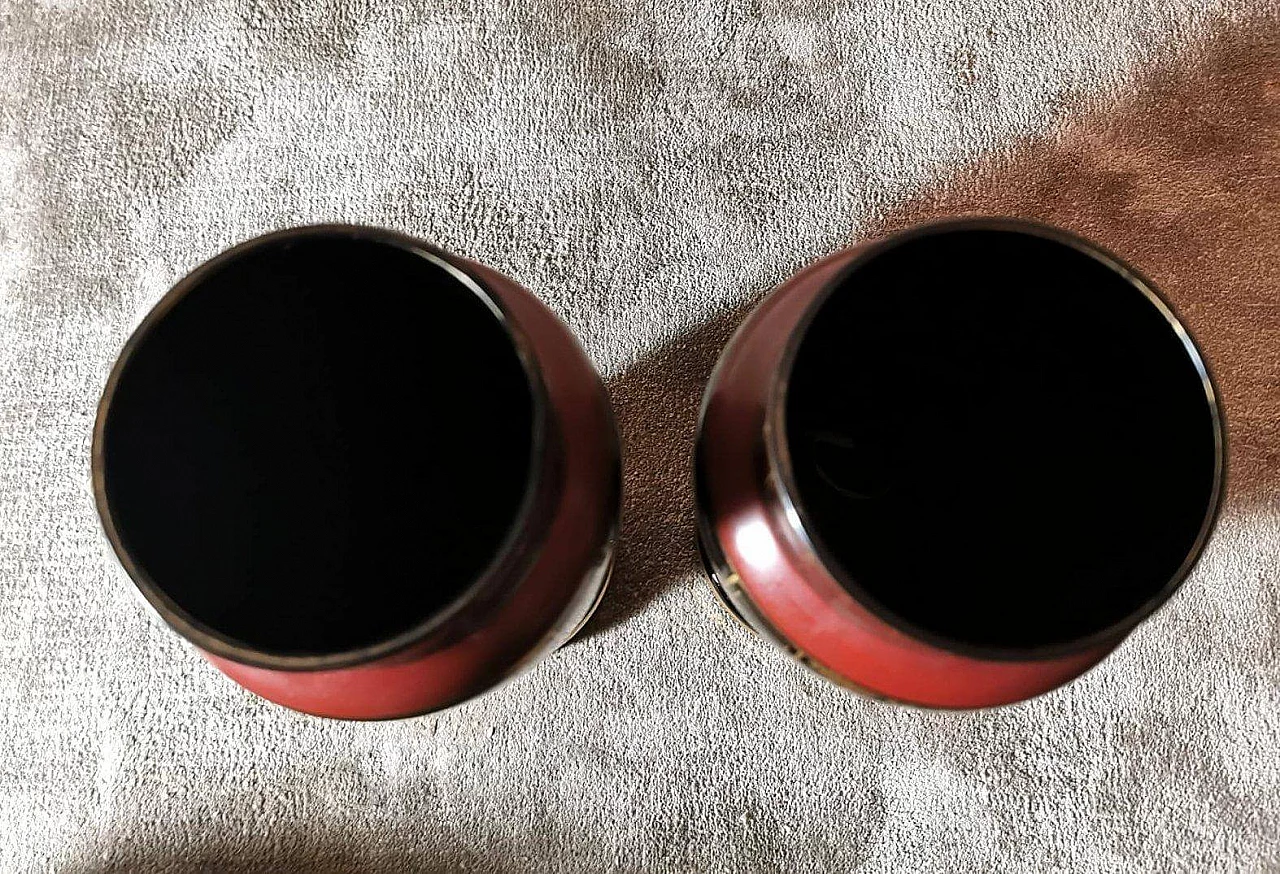
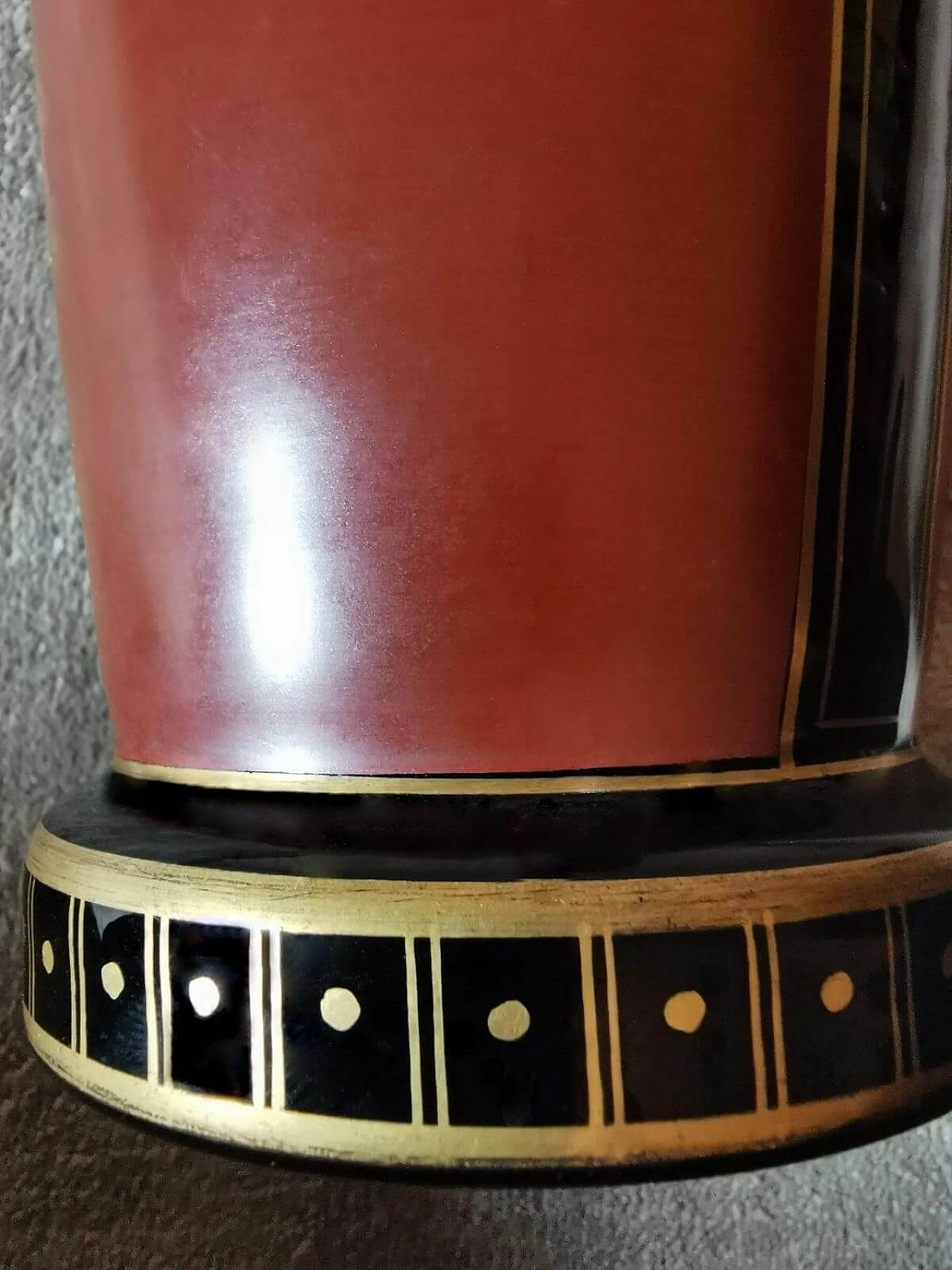
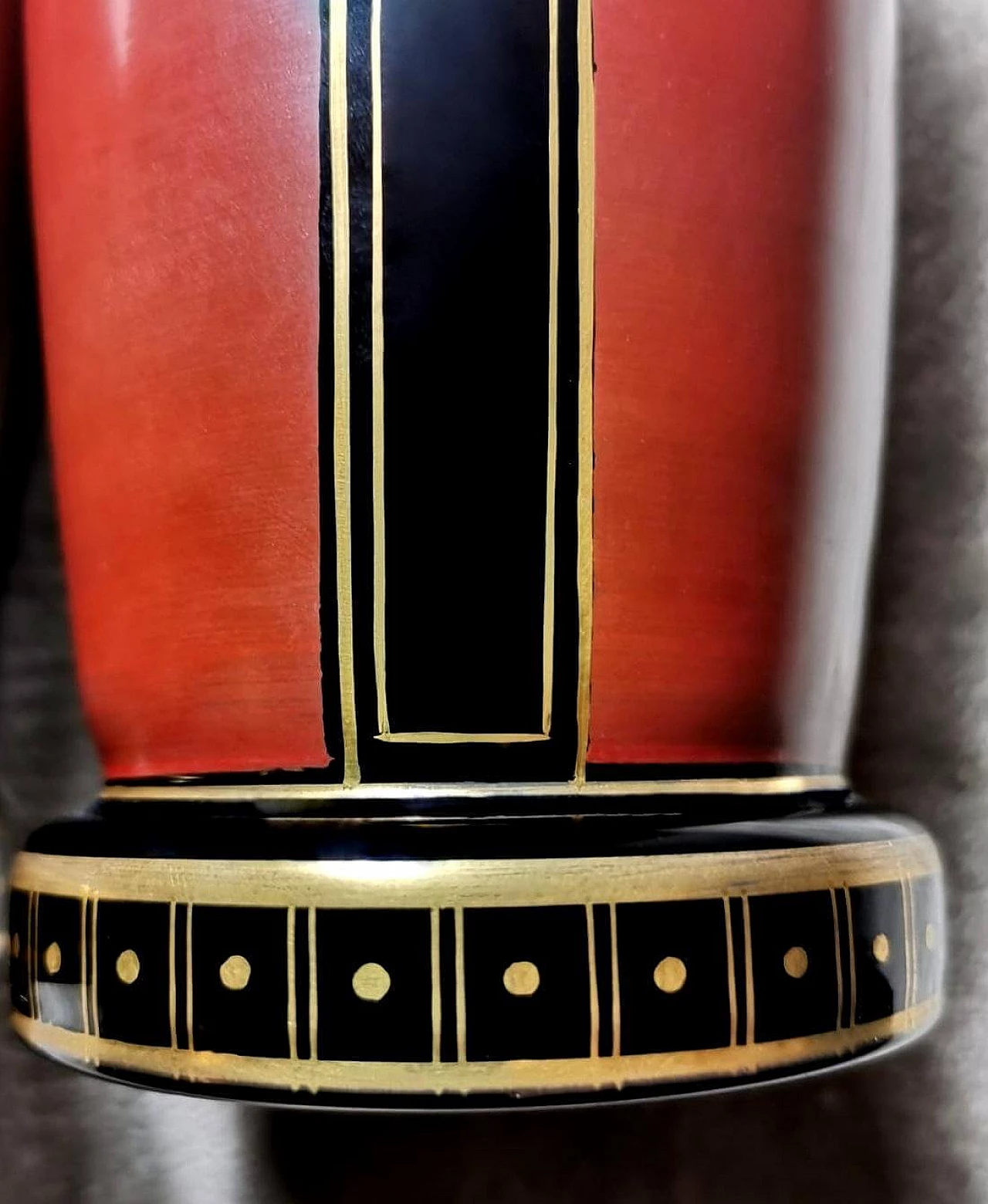
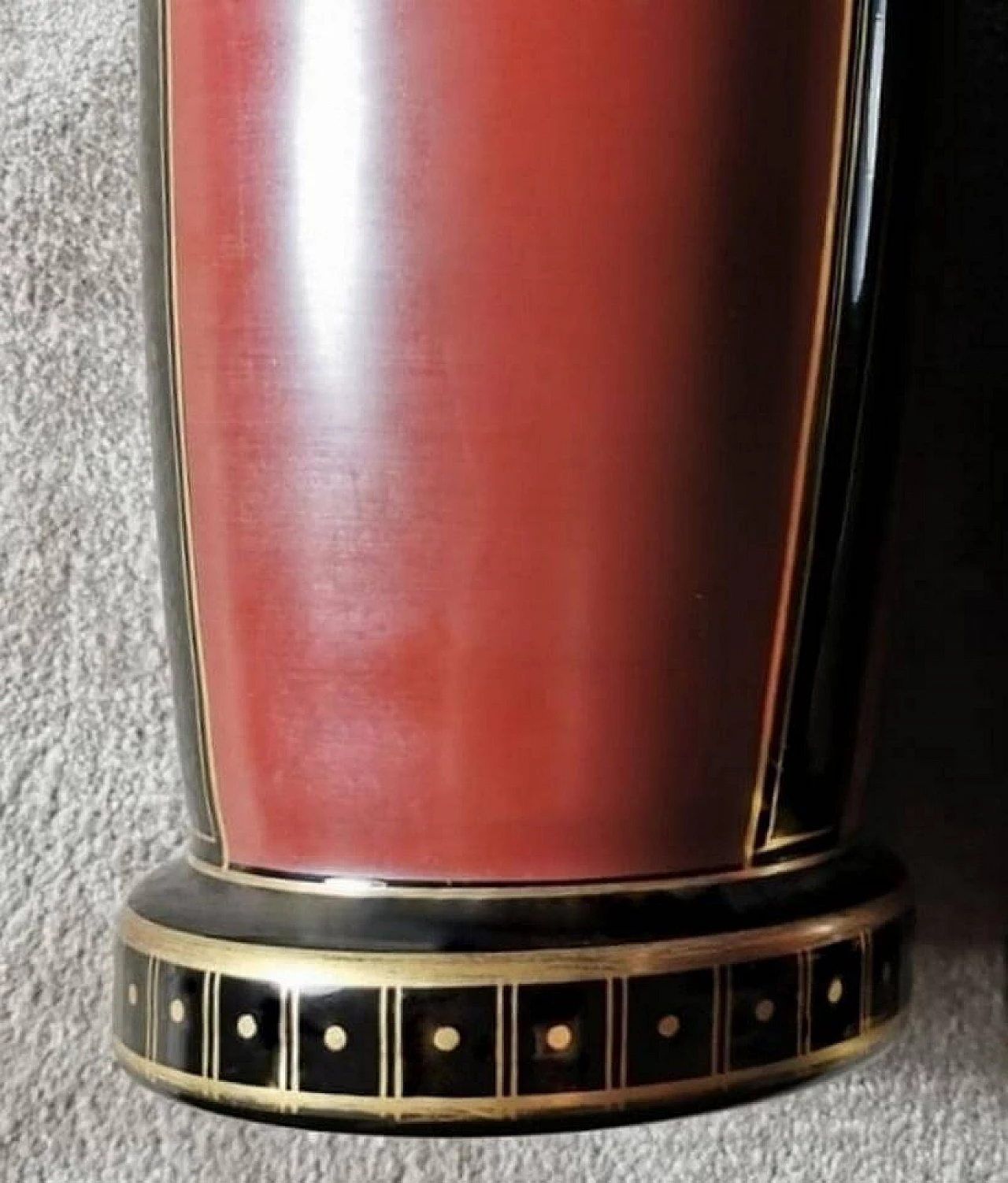
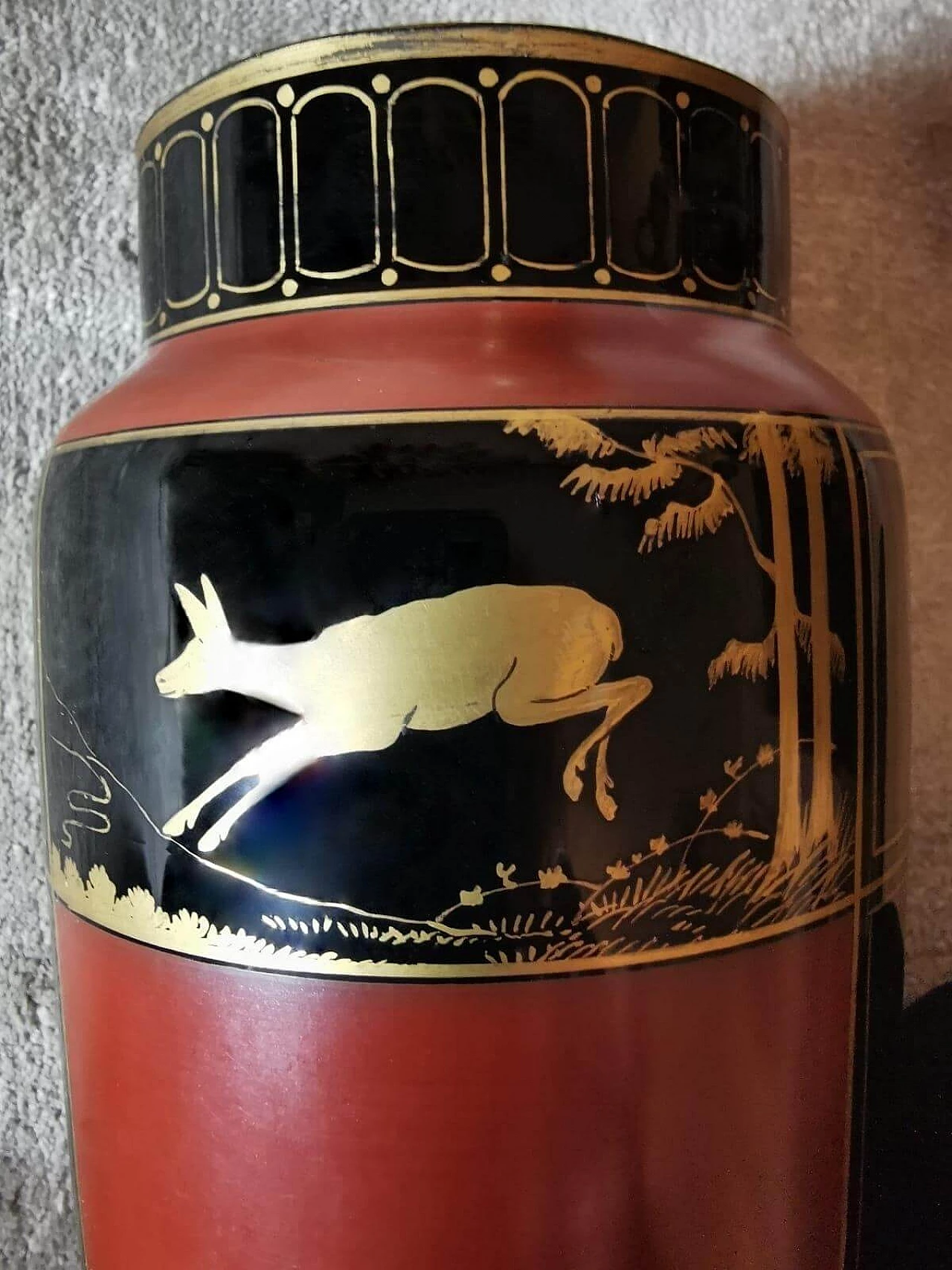
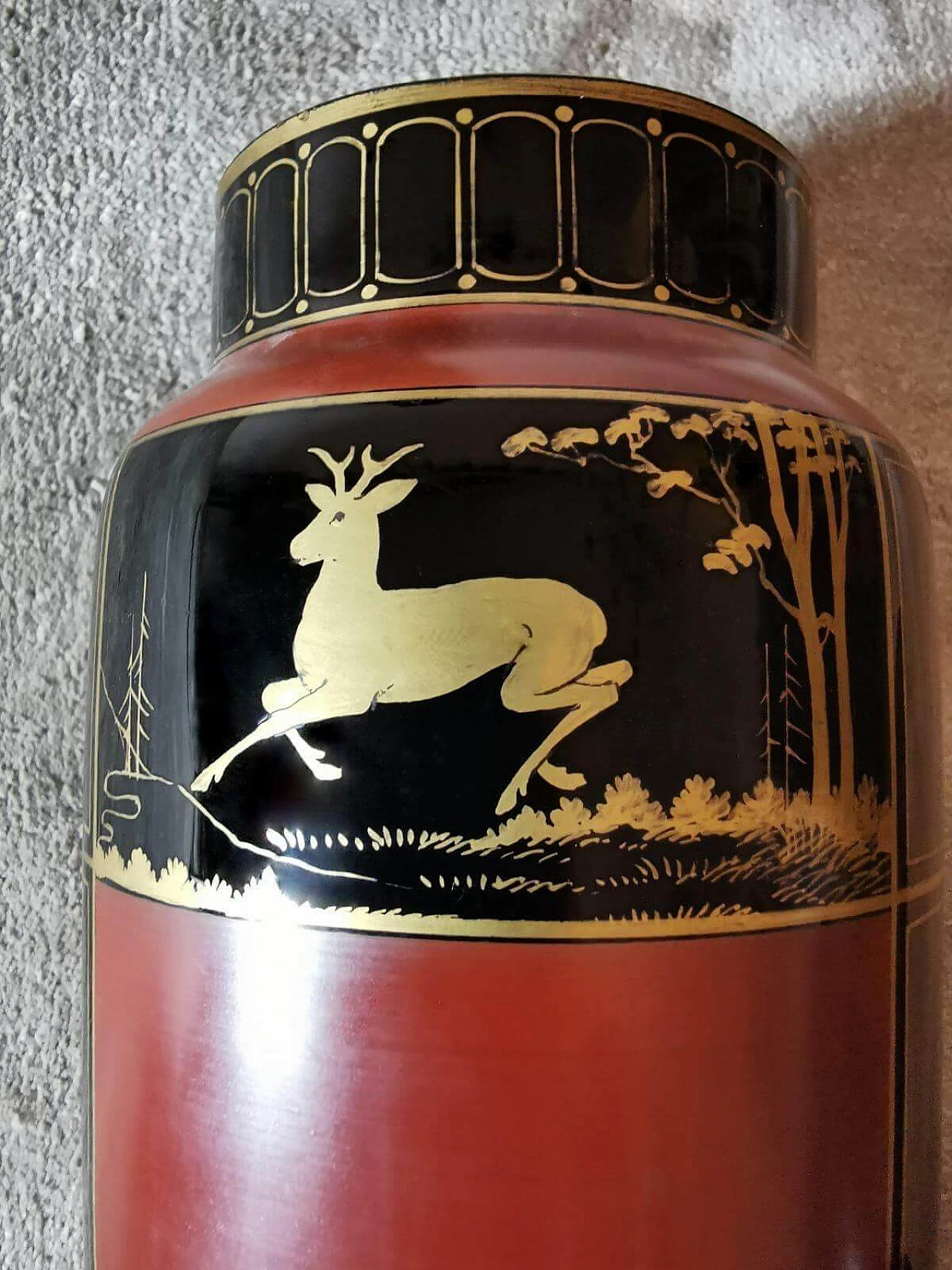
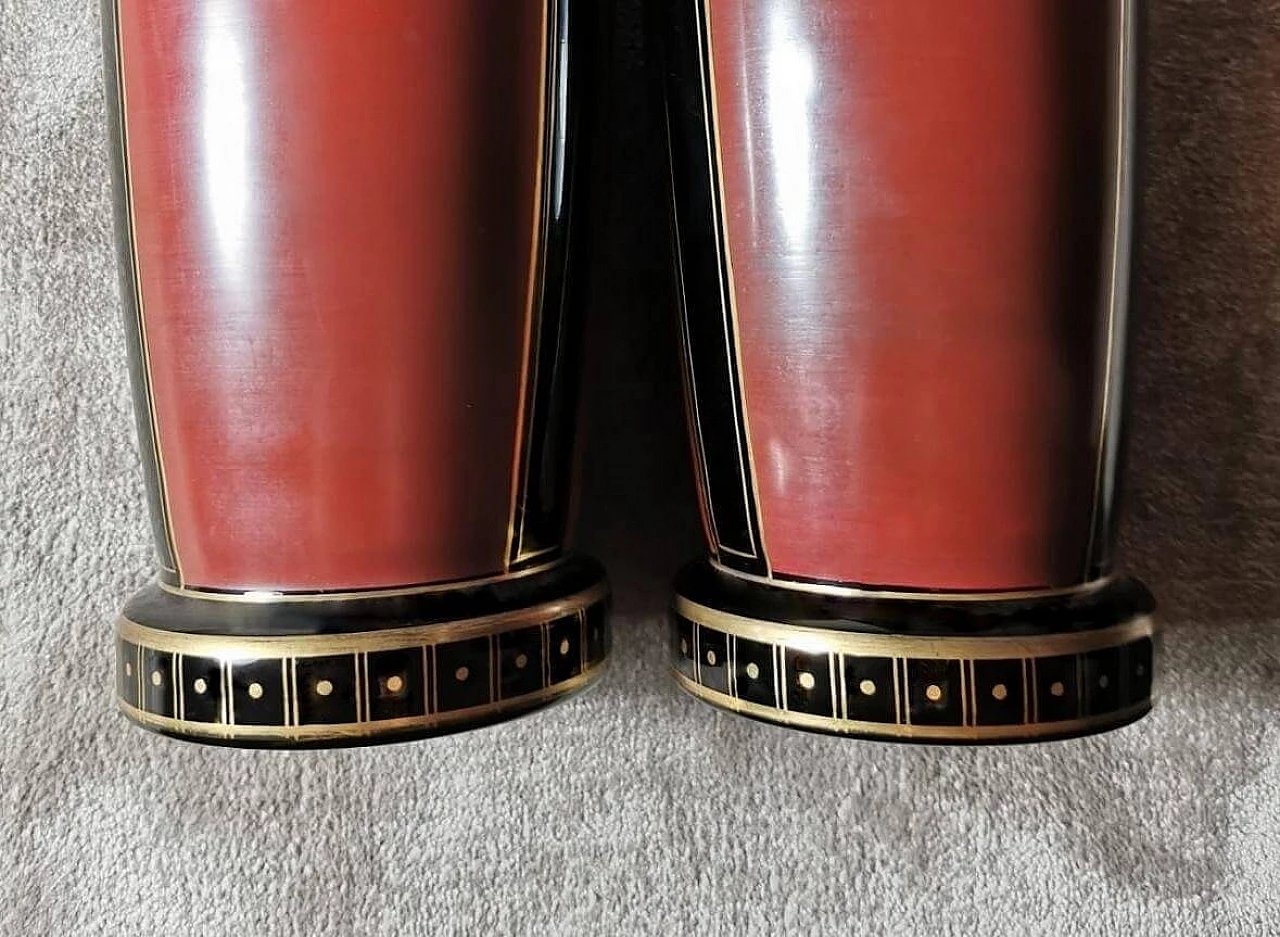
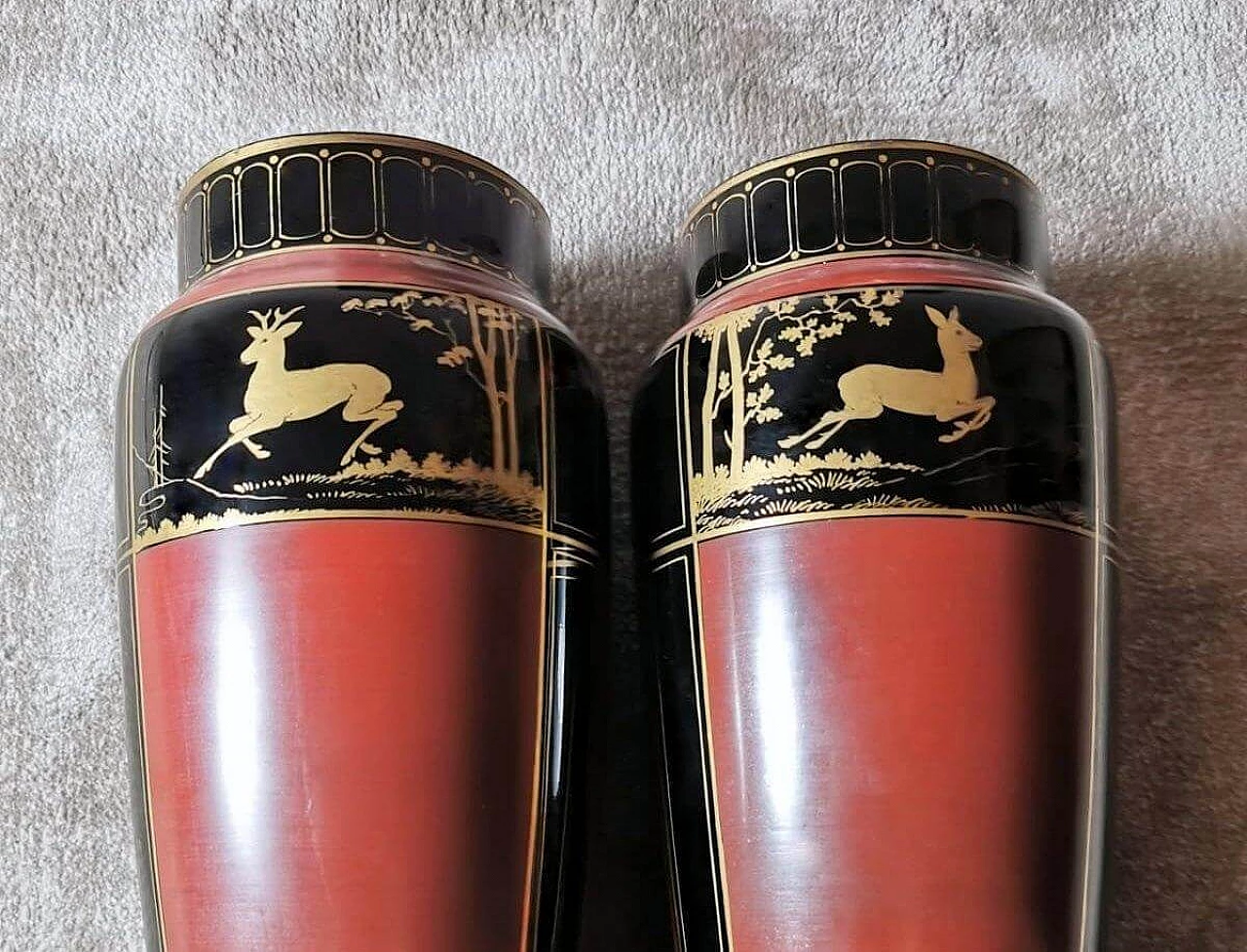
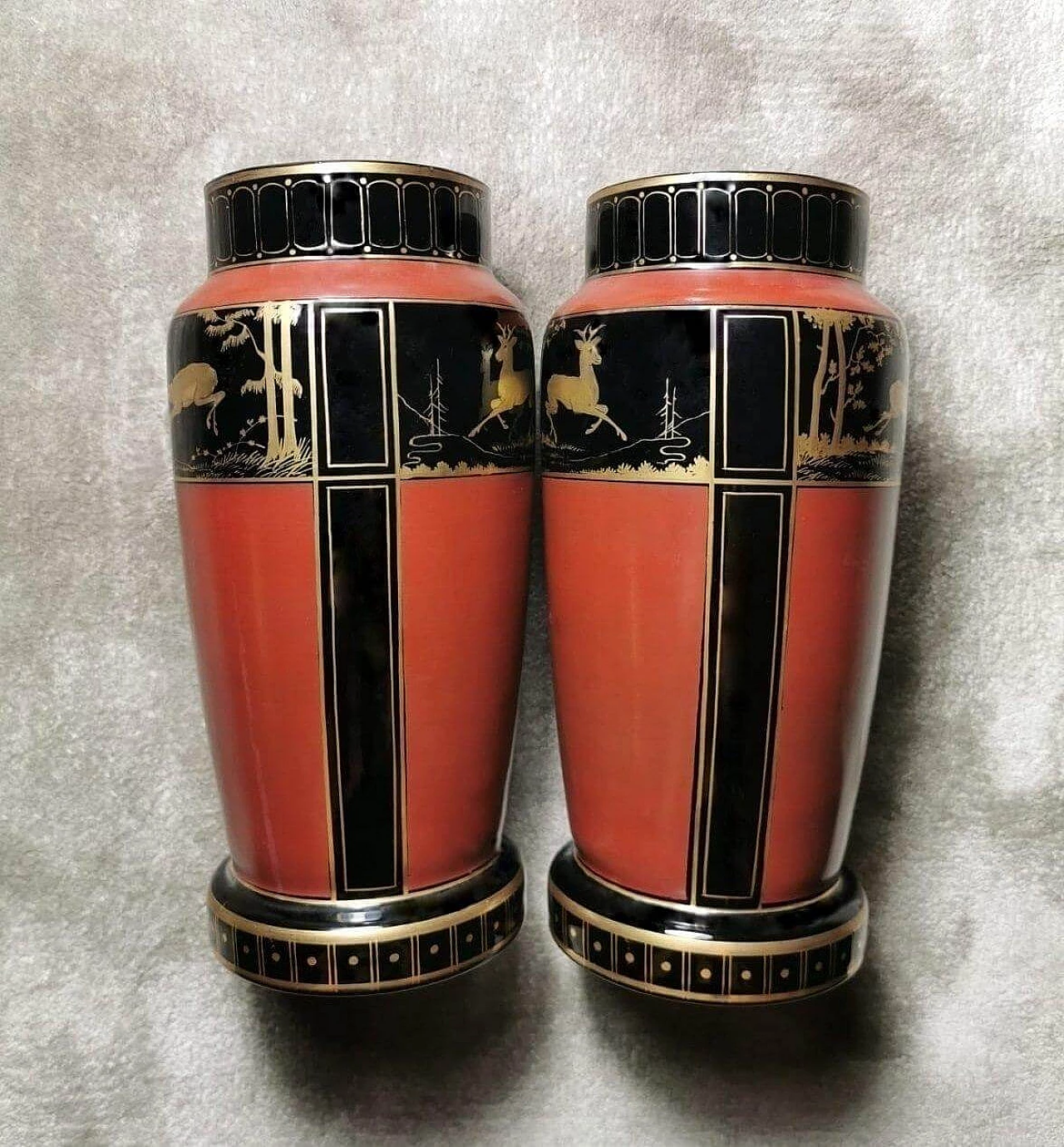
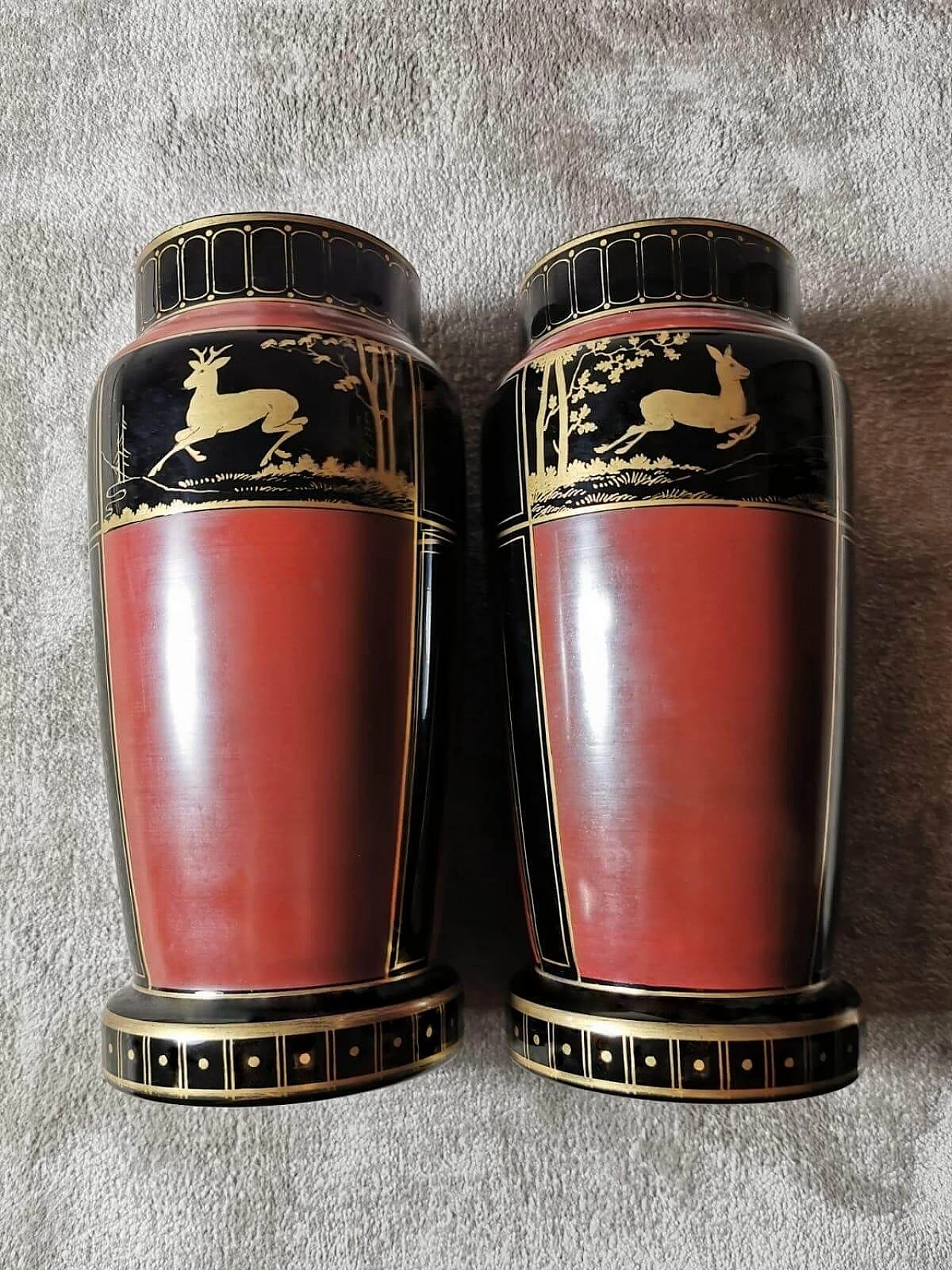
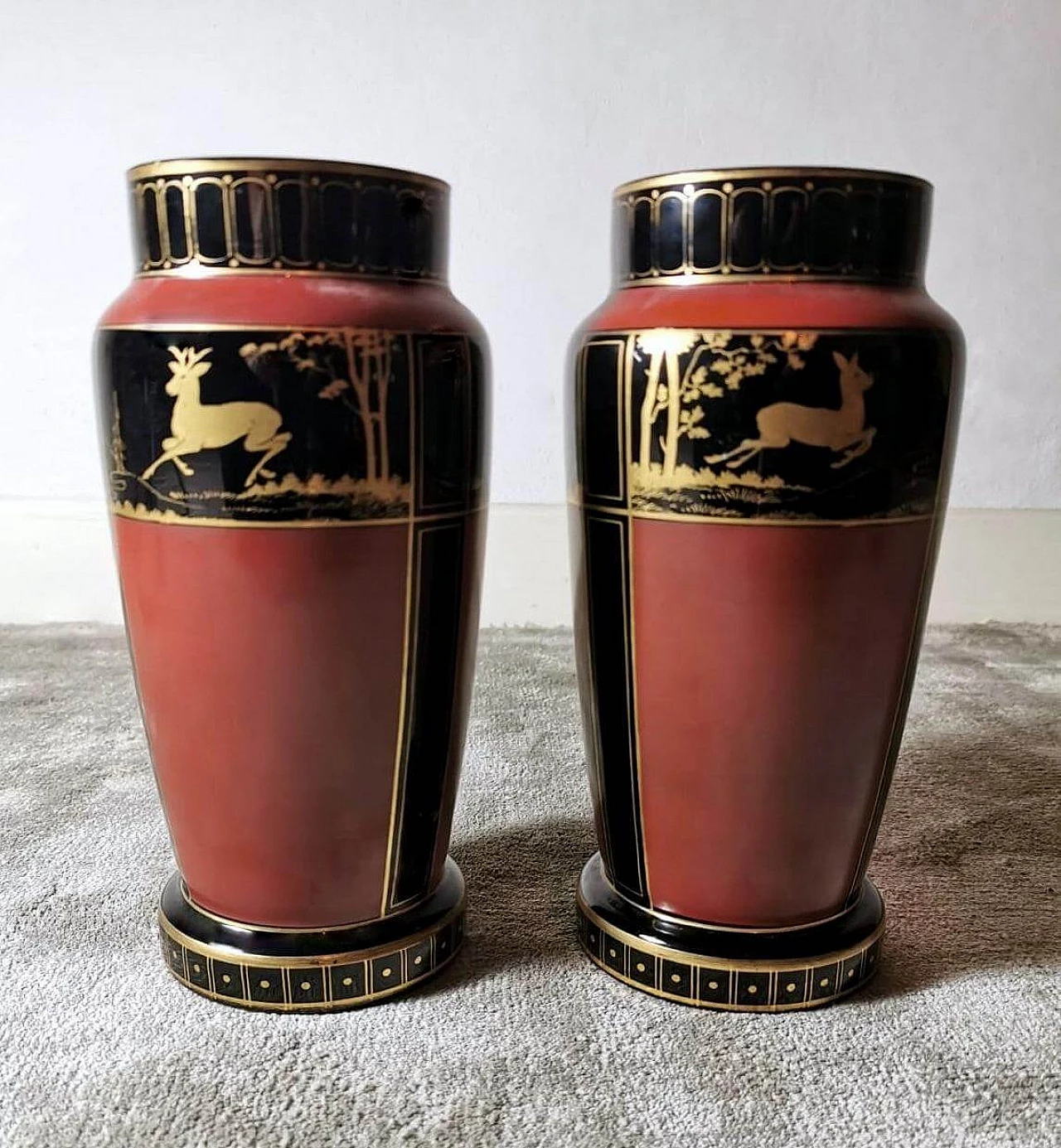
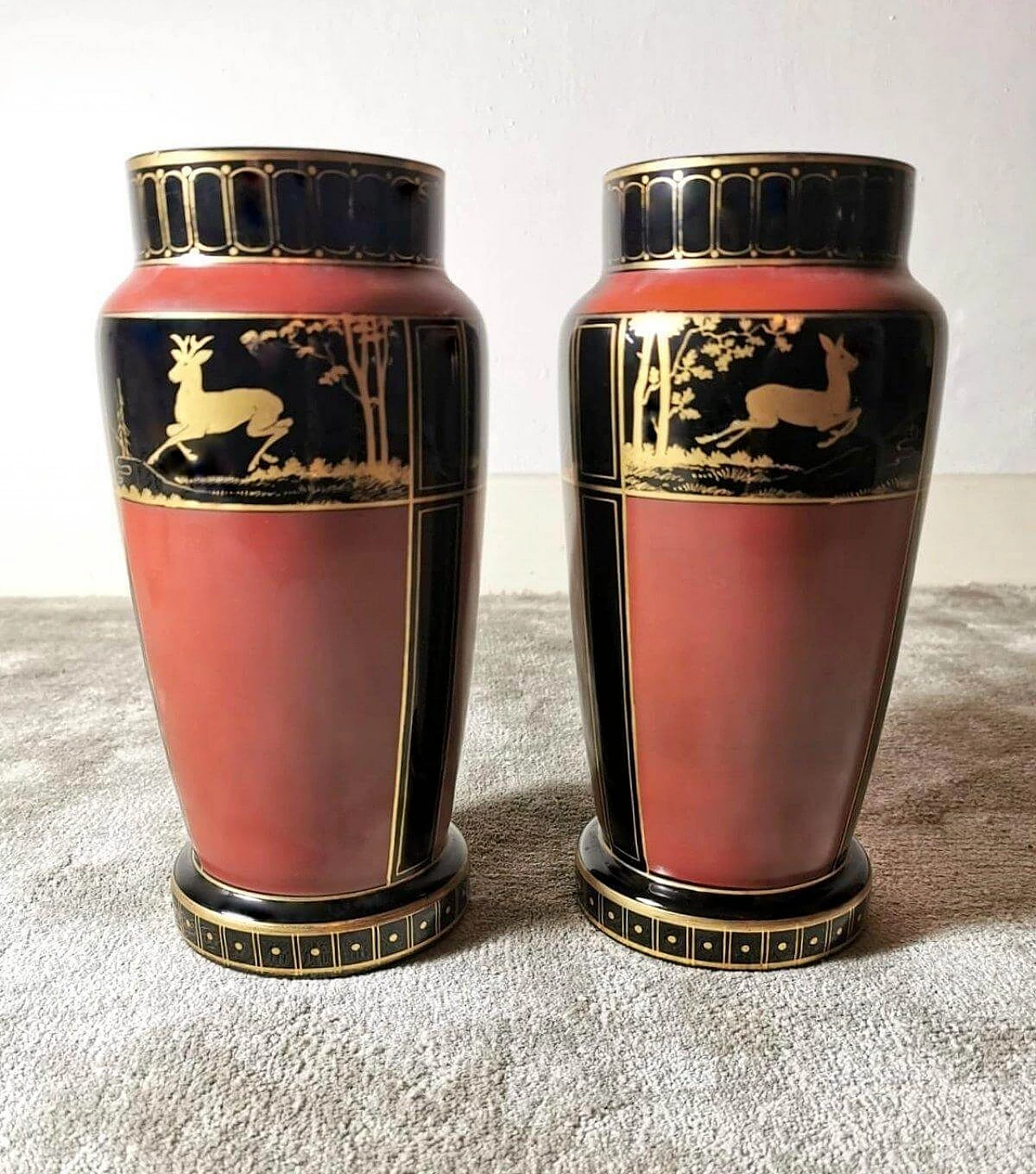
Splendid pair of Art Deco vases in shiny black opaline glass; the shape is linear and decisive; for their manufacture, the master glassmakers used a white opaline glass then, using the hot fusion colouring method, added small quantities of a metal oxide, in this case, cobalt-manganese, to obtain the perfect black, a very difficult colour to obtain! This process guarantees an infinite duration to the colour, which remains stable, unalterable, particularly vivid, homogeneous and intense; at this point, the craftsman working exclusively by hand, using special tools, gave the desired shape to the vases which were then placed to cool; Once the vases were cooled, a skilled artist-painter applied the special sober Pompeian red varnish where he saw fit, then, in the remaining black spaces, he painted rural landscapes with leaping deer in pure gold with meticulous attention to detail, and then finished the base and neck of the vases with geometric decorations typical of Art Deco. At this point the two vases were put back into the kiln at a low temperature to definitively fix all the colours and finally into the tempera kiln where they cooled for many hours with skilful slowness and patience. The two vases were made between 1930 and 1935 in a craft workshop in Wimmenau, in the Vosges region, an area made famous by the important glassworks in the area (Saint-Louis, Lalique, etc.). The high quality of manufacture makes our vases unique and incomparable, elegant and refined, capable of embellishing and enhancing any type of environment. Opaline glass is a slightly translucent glass, opacified by means of phosphates, sodium and calcium chlorides with the addition of metallic oxides, thus obtaining various shades of colour from milky white to black; opaline glass is much less dense and opaque than lattimo glass (very similar to porcelain); Opal glass is a French product which originated at the end of the 1700s/beginning of the 1800s in imitation of Murano and German semi-opaque glass from the 17th century and which reached its peak between 1820 and 1870 thanks to the production of French factories (Baccarat, Saint Louis and Choisy-le-Roy). From 1800 onwards, opaline spread throughout the world with the handcrafted production of everyday objects. France, from ancient to modern times, is recognised as a producer of the best quality opaline glass. The two vases are in excellent condition. Measures diameter 12 cm, height 24 cm.


.png)

 SILVER Seller in Prato, Italy