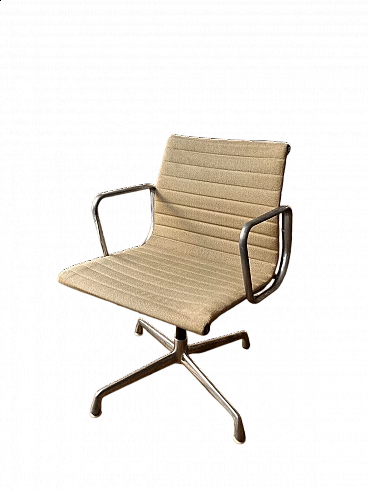
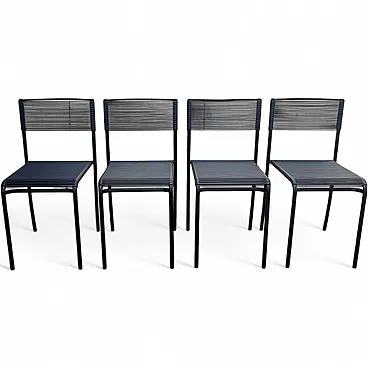
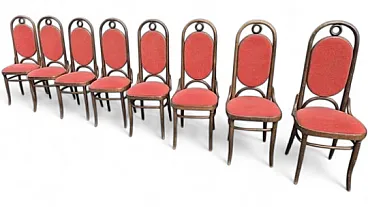
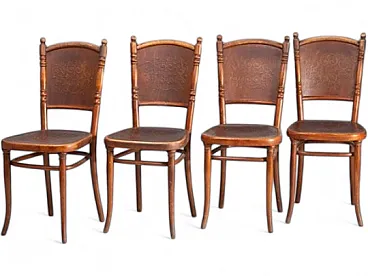
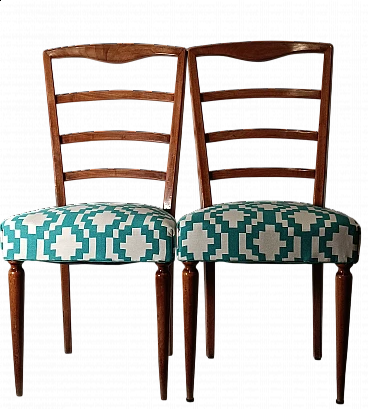
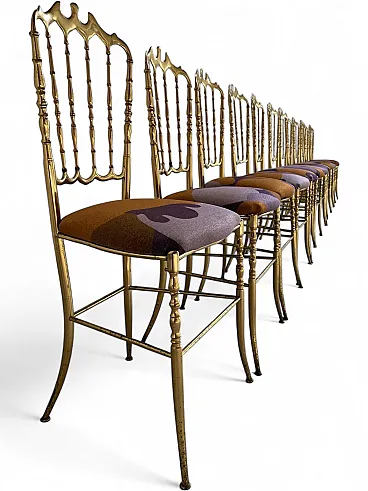
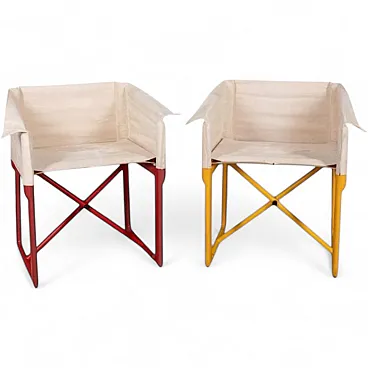
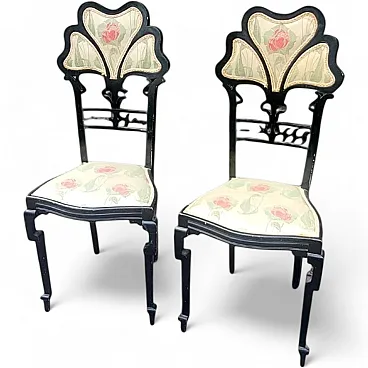
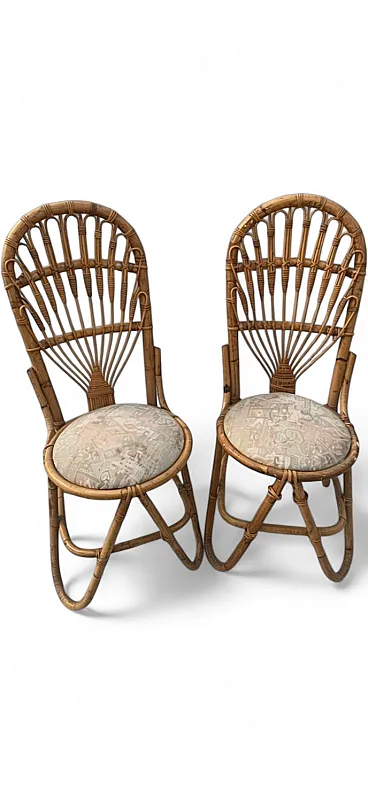
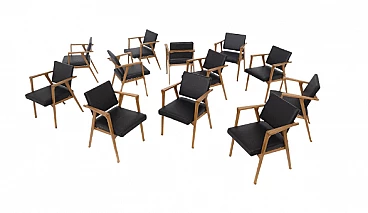
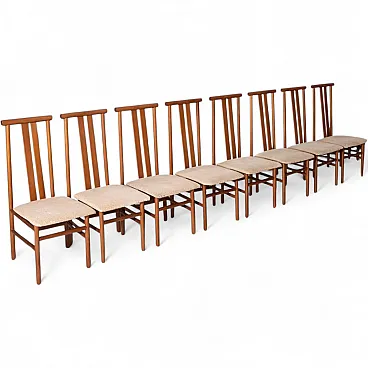
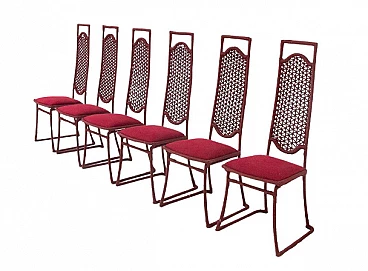
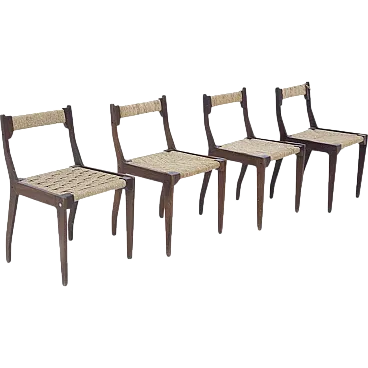
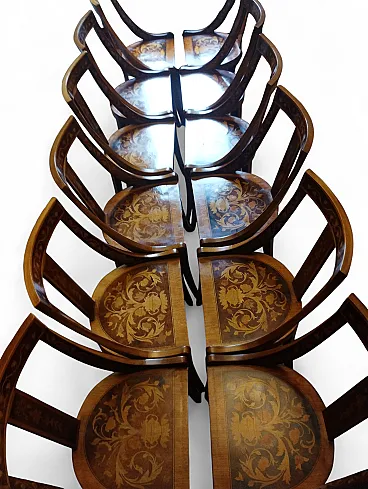
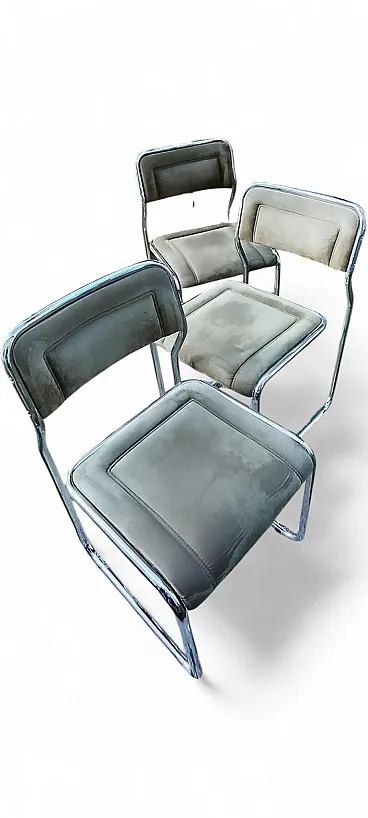
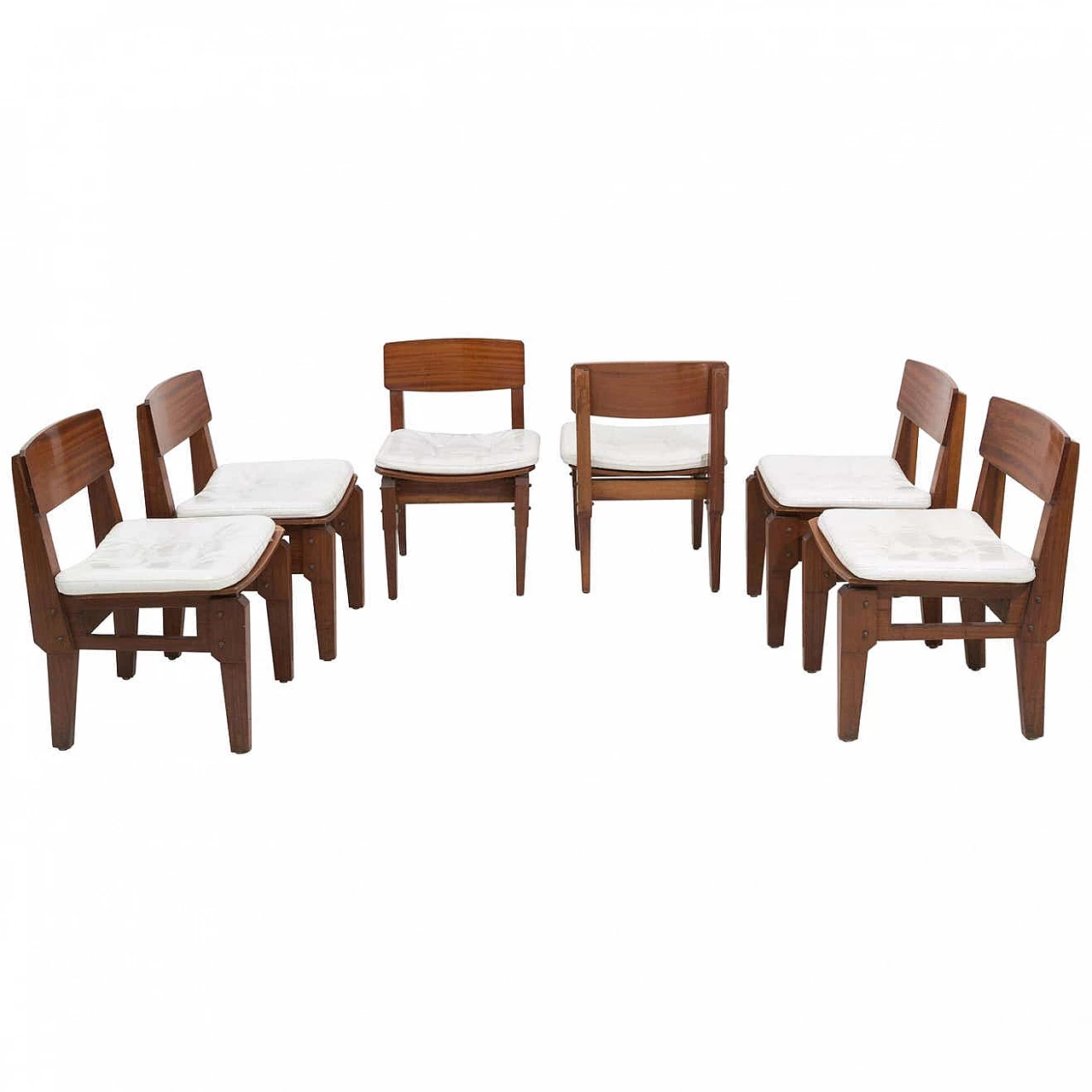
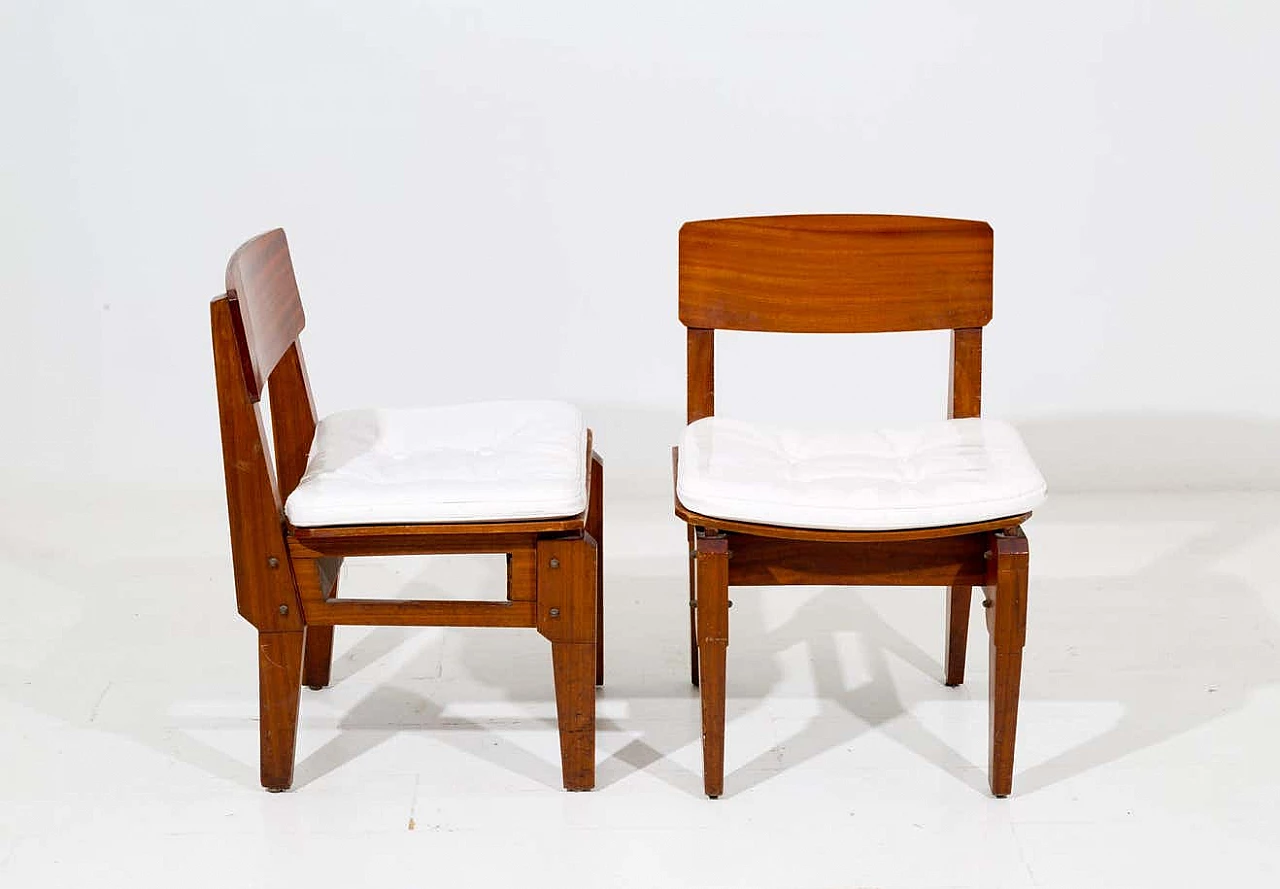
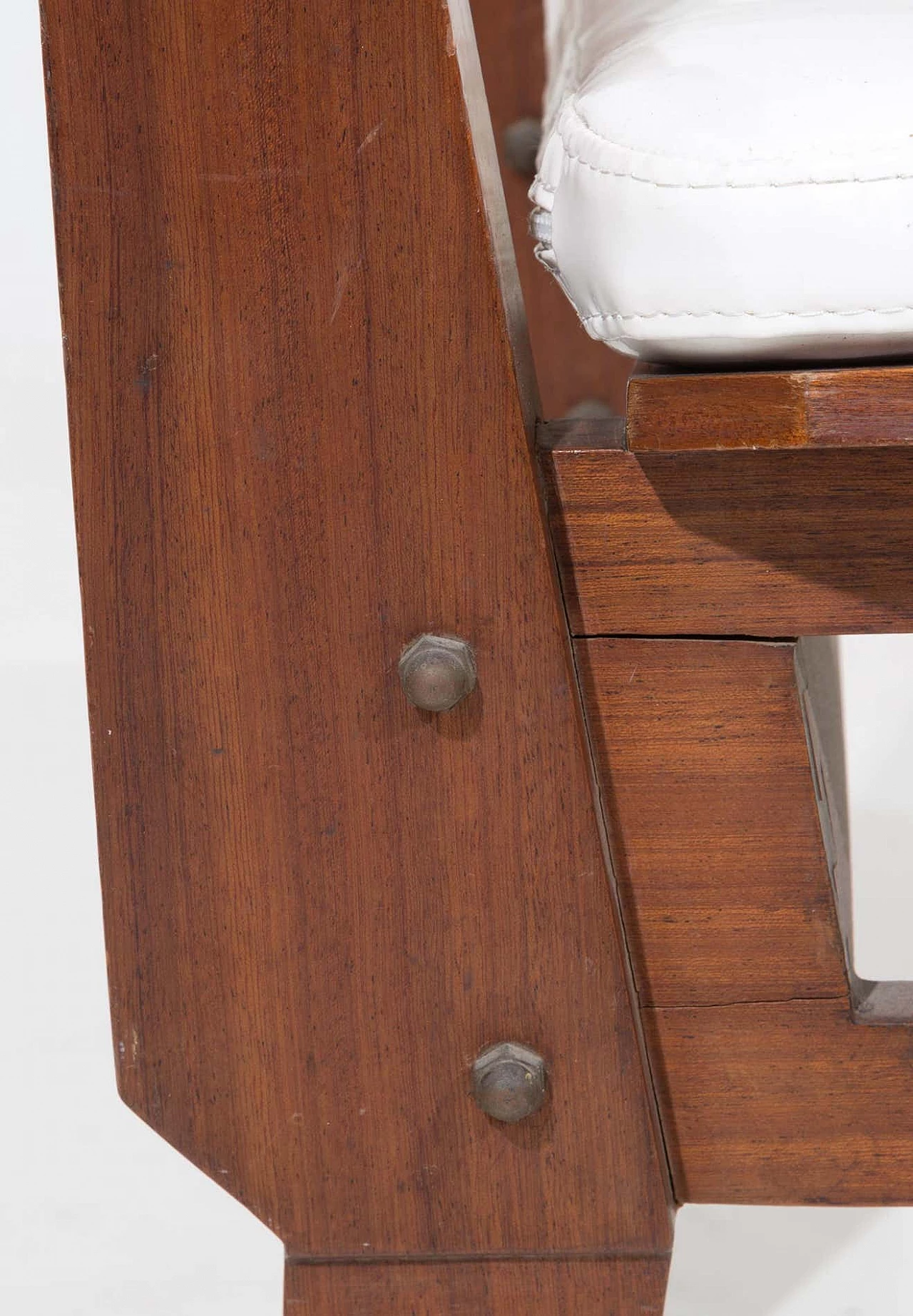
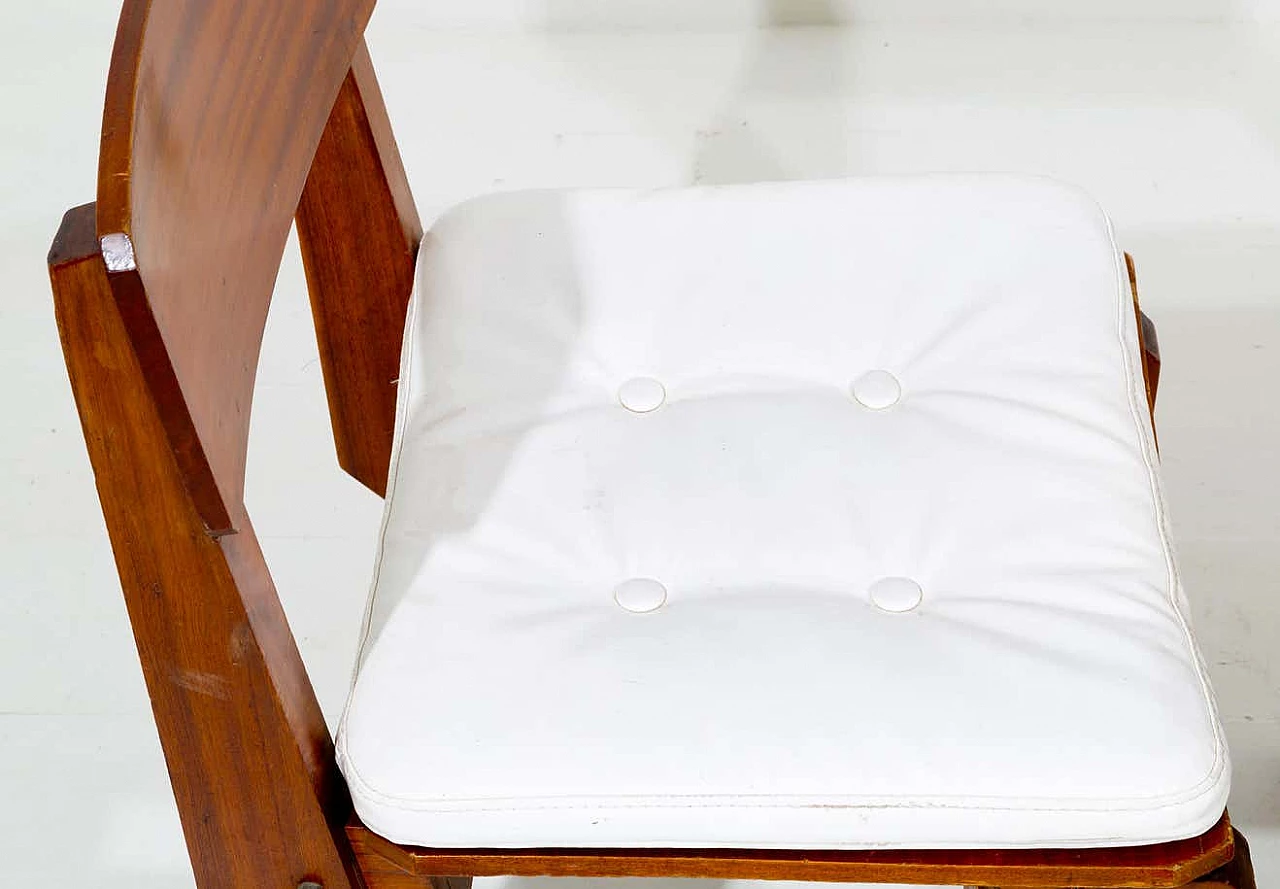
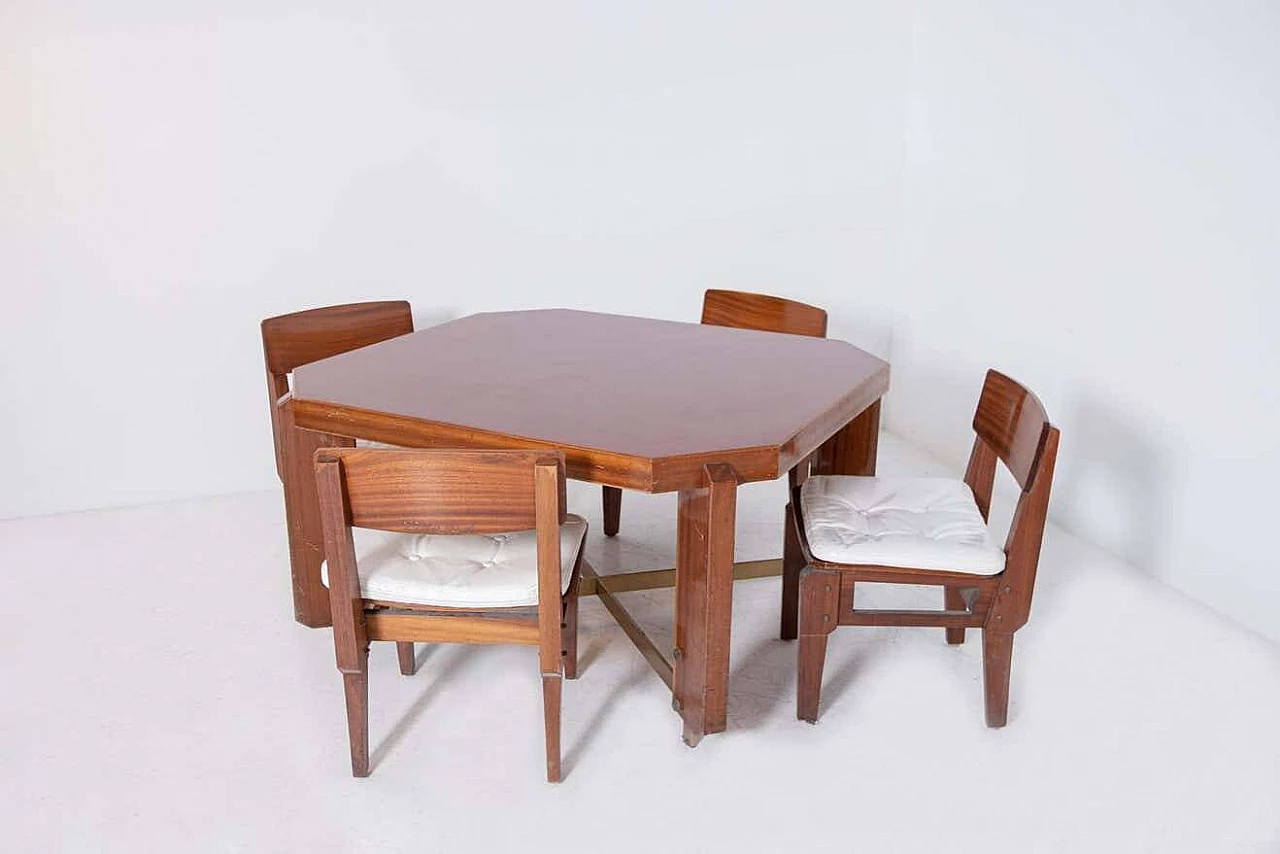
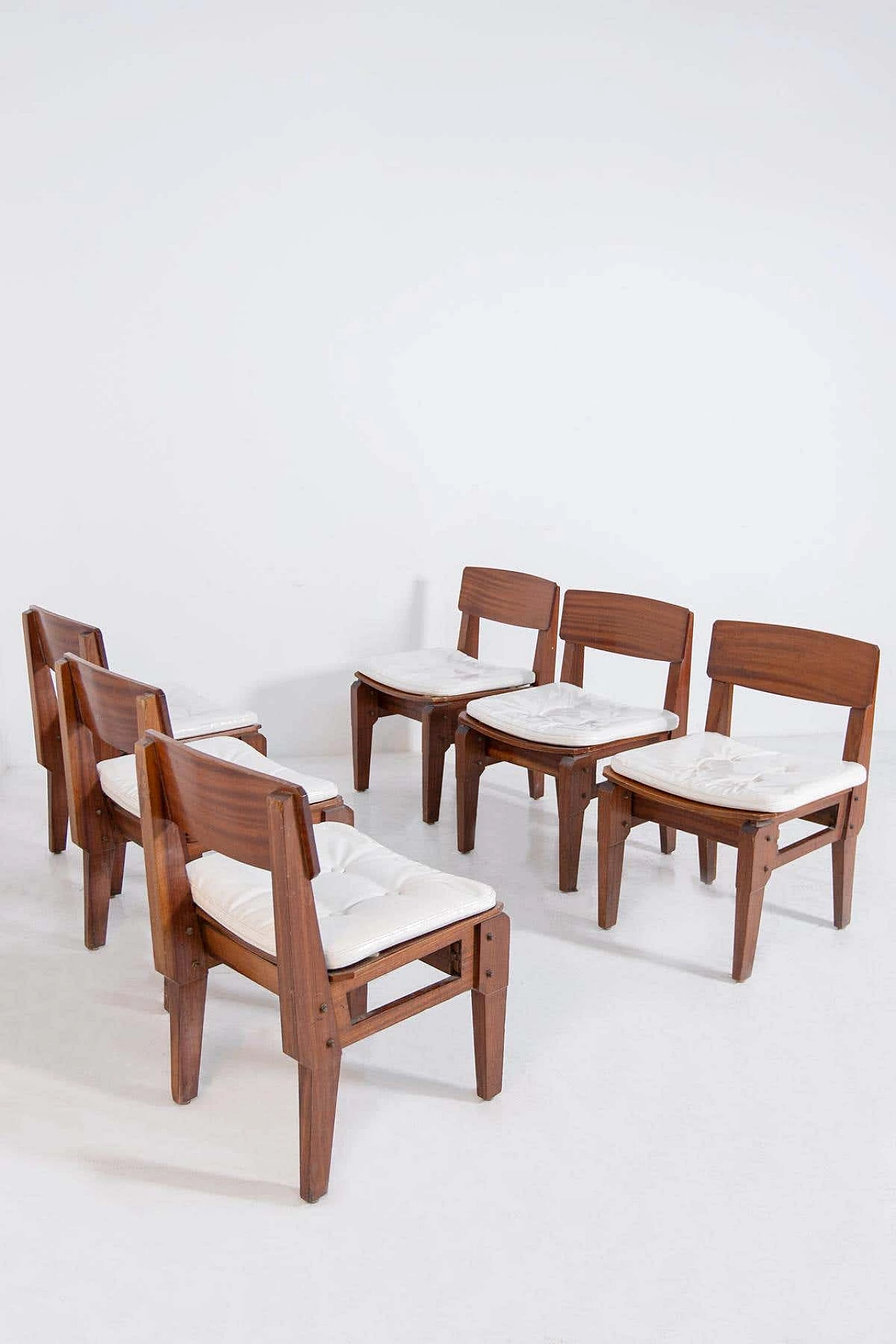
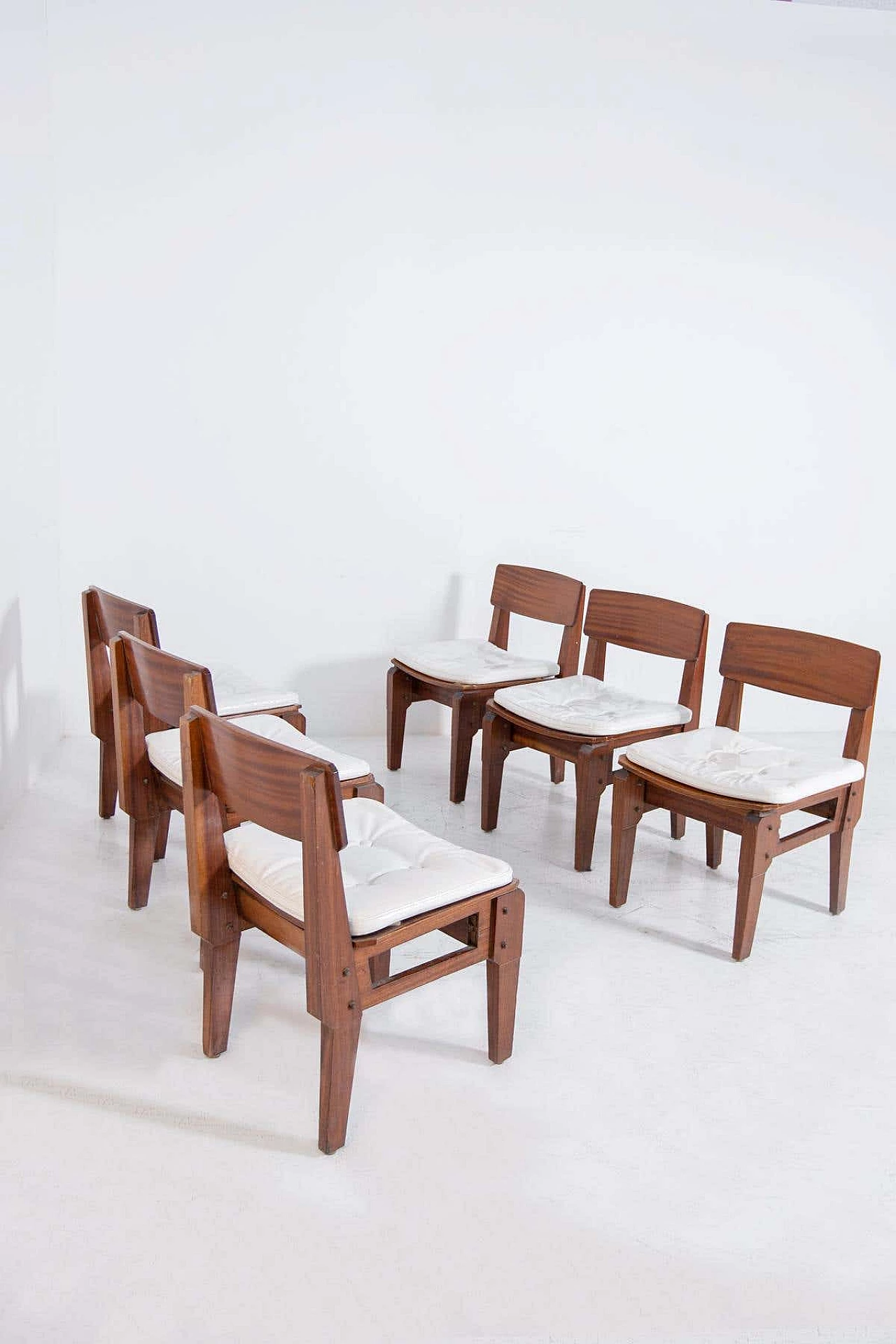
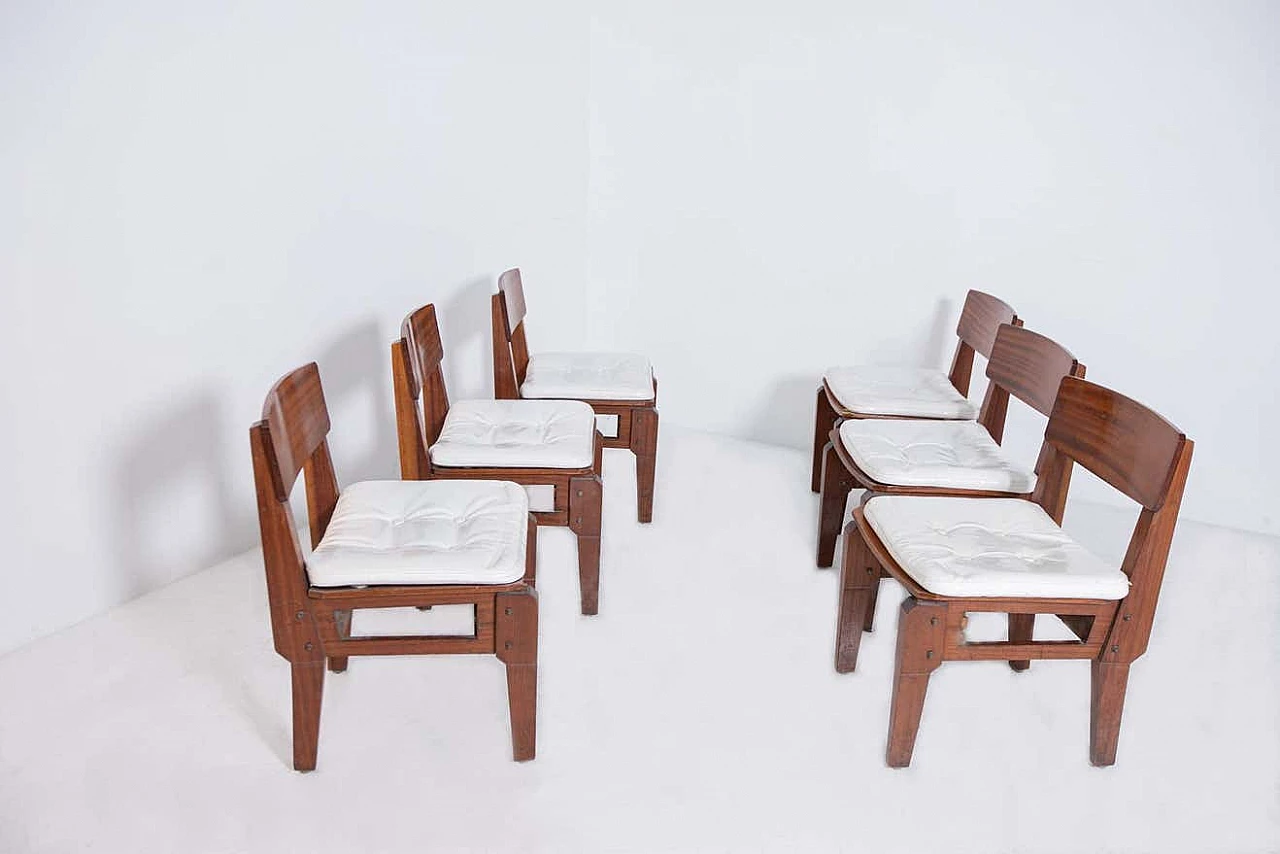
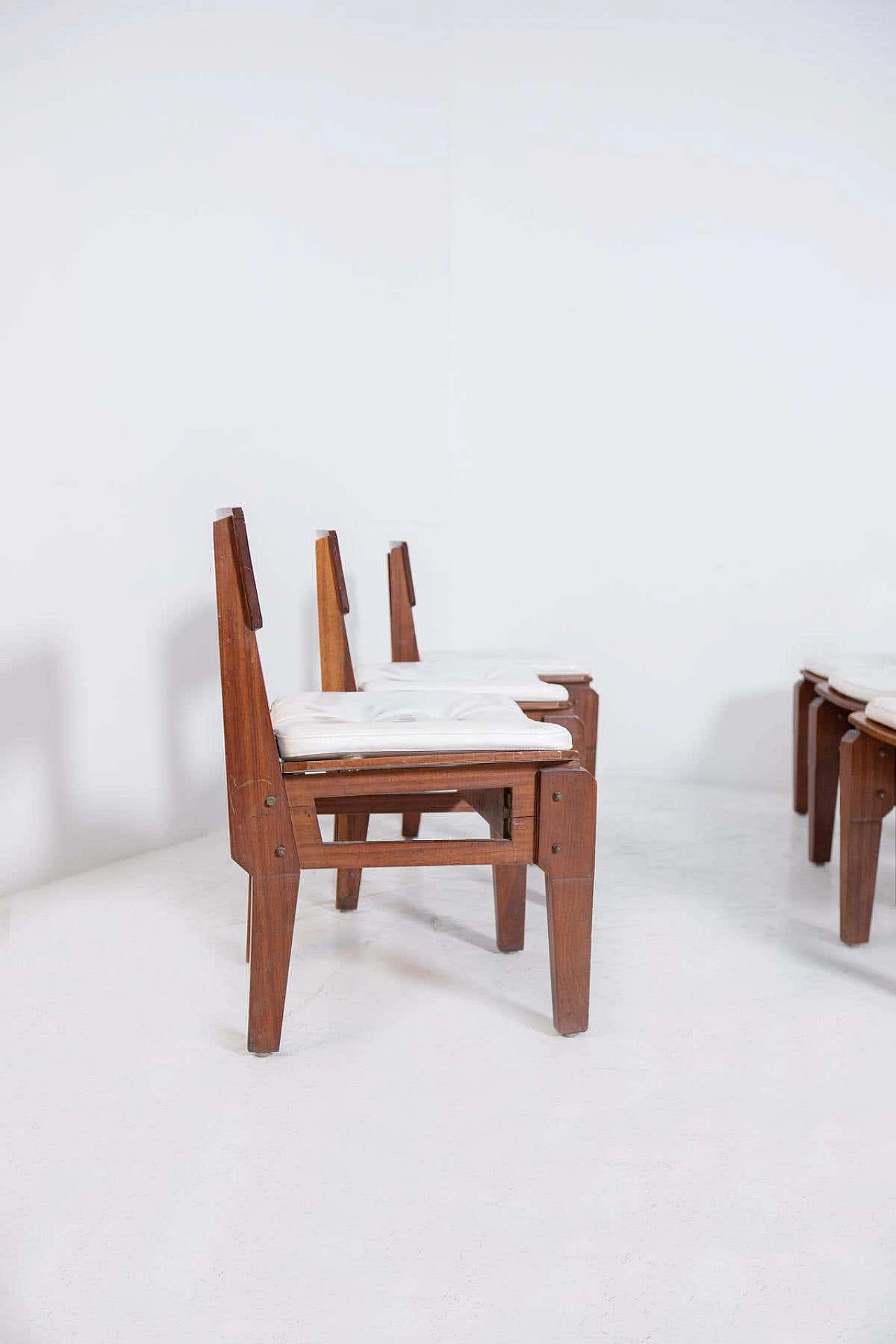
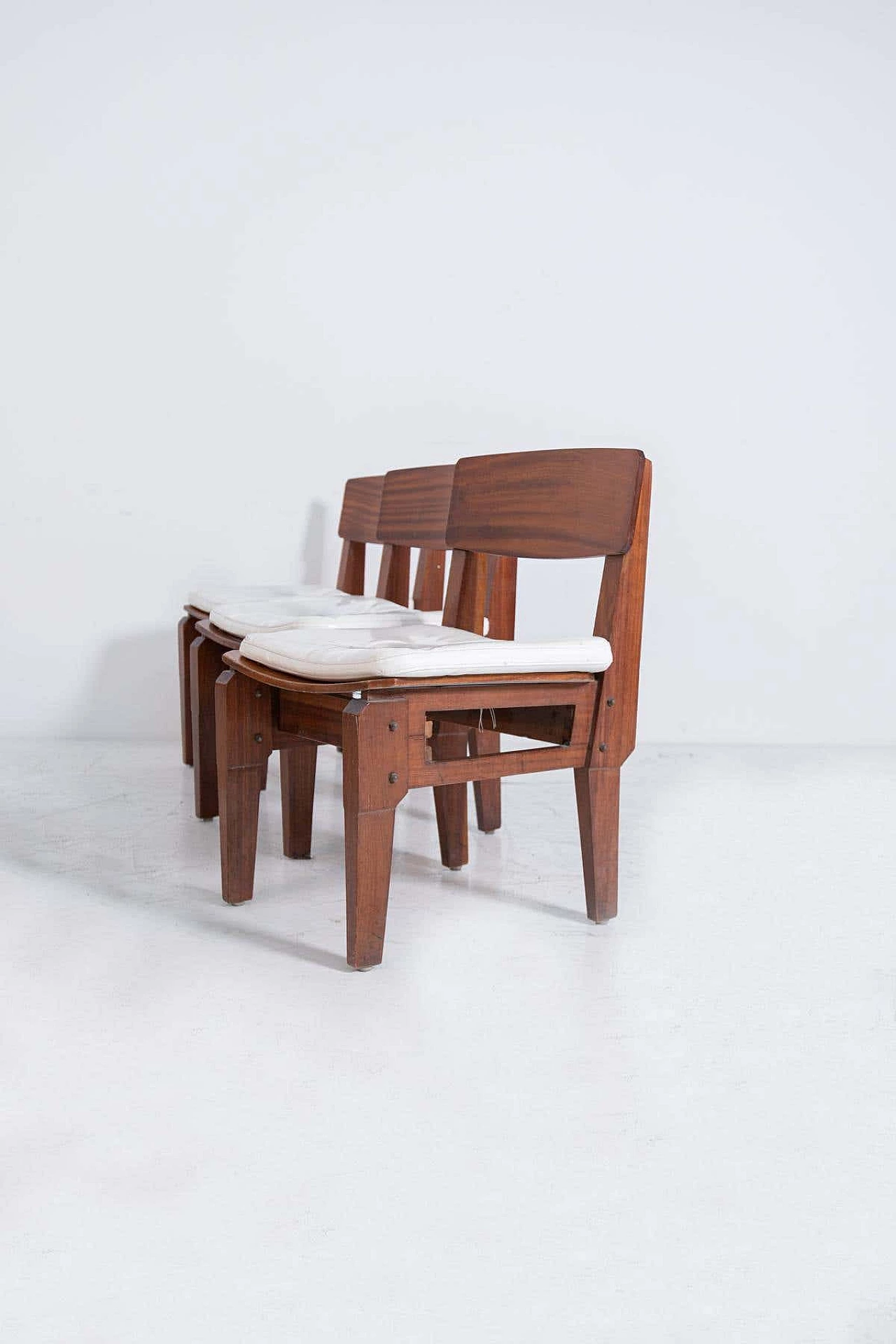
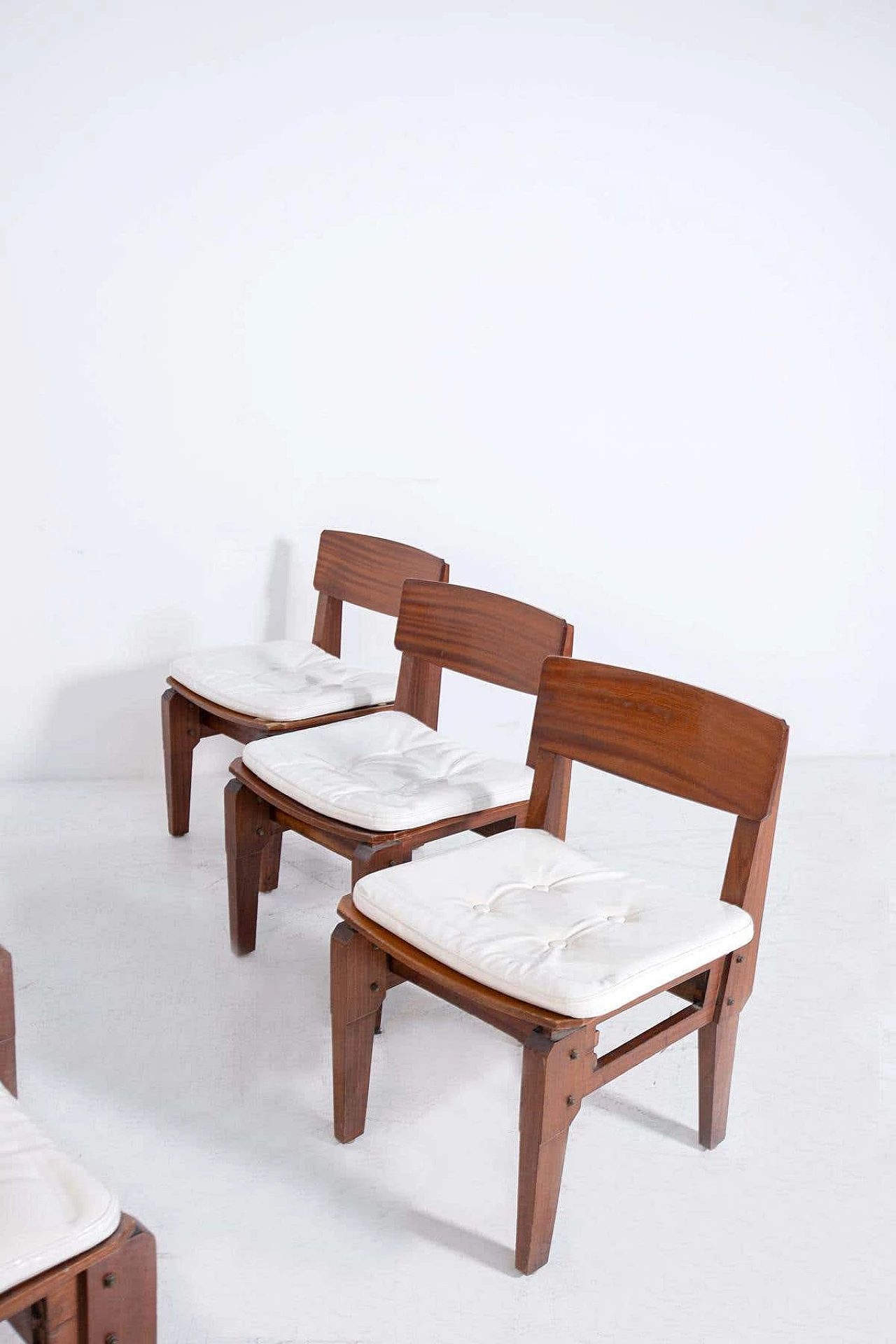
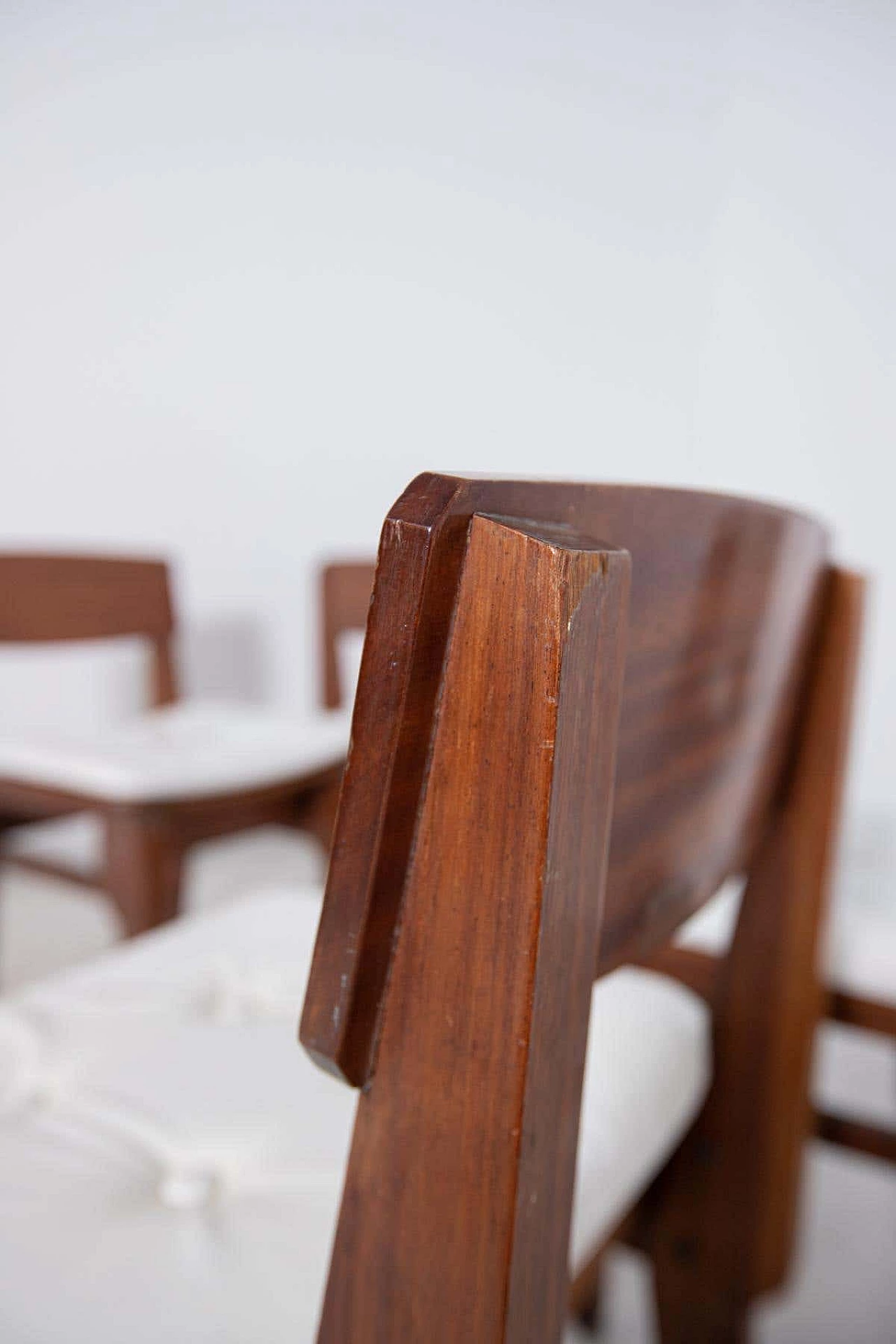
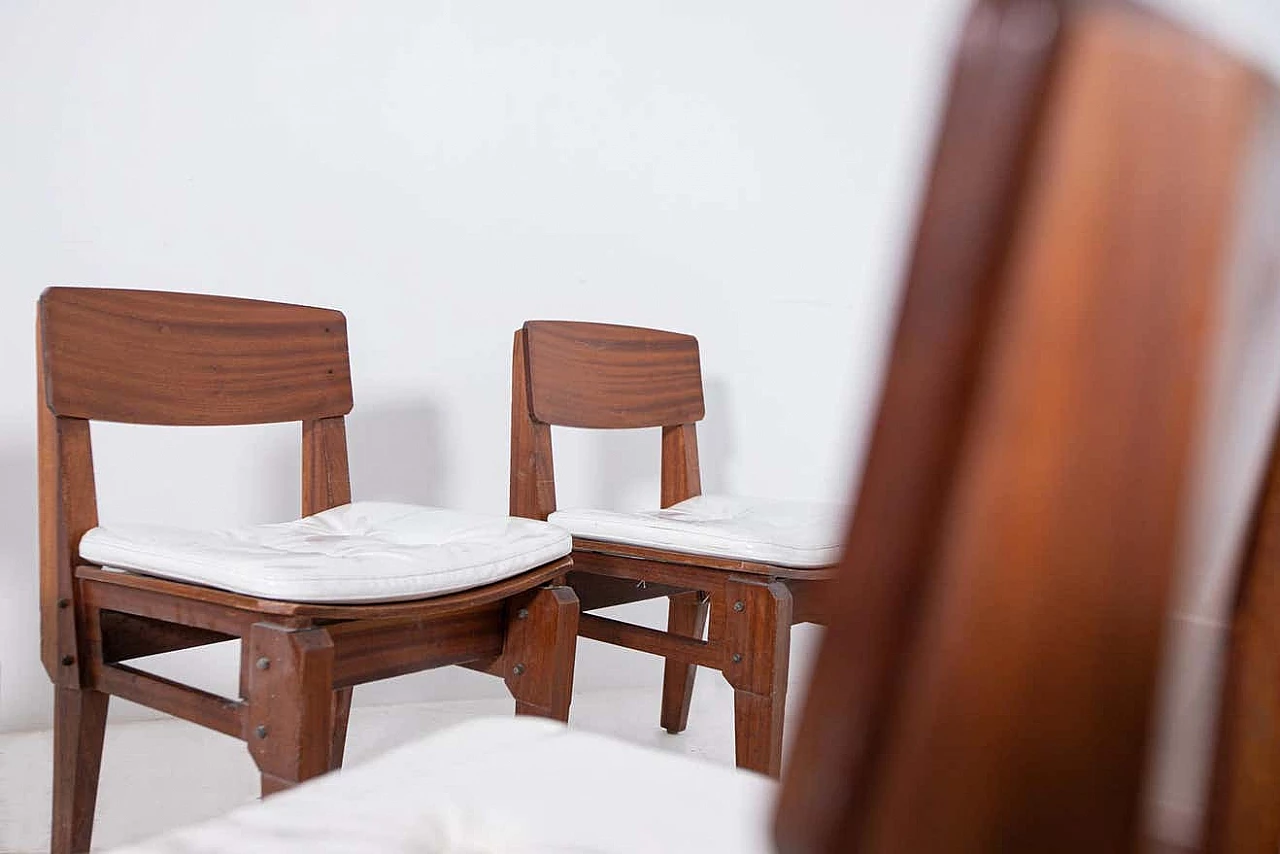
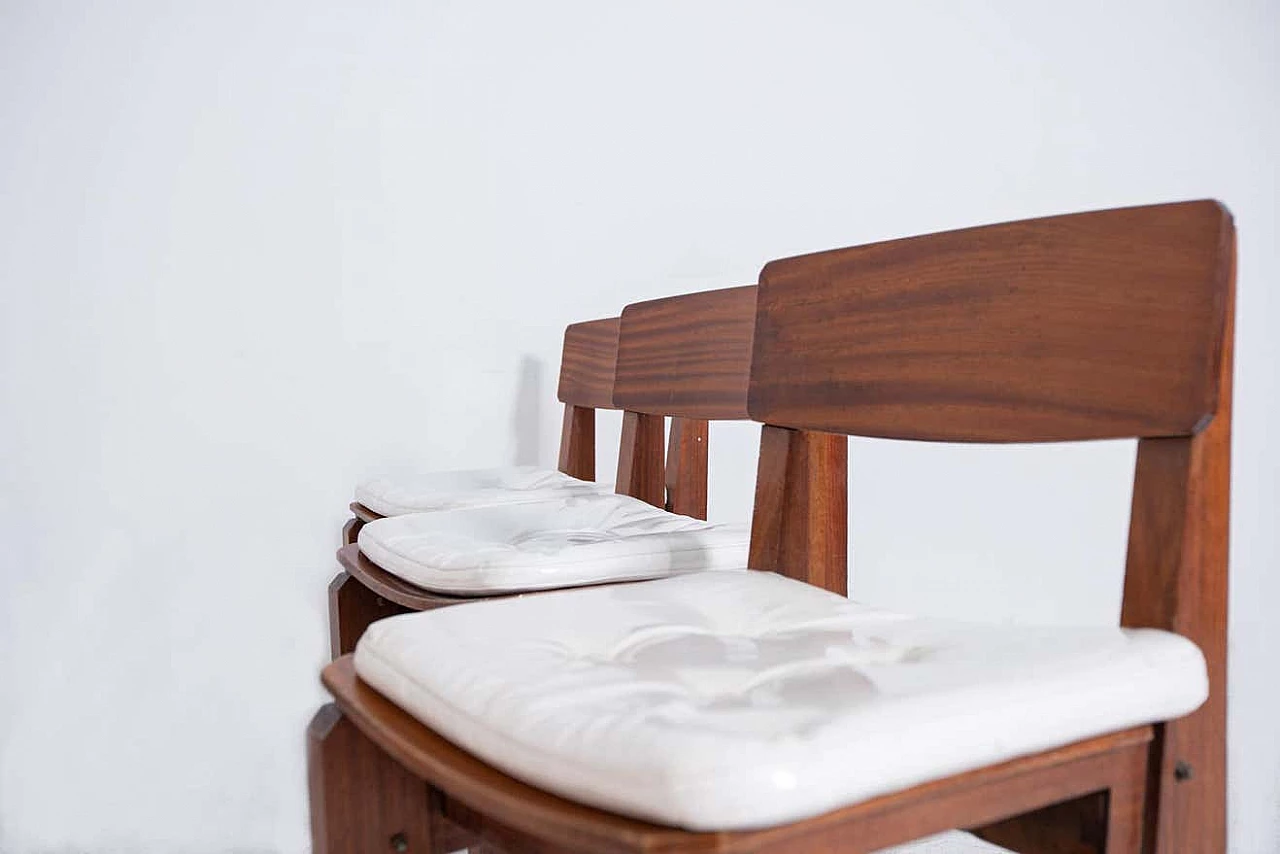
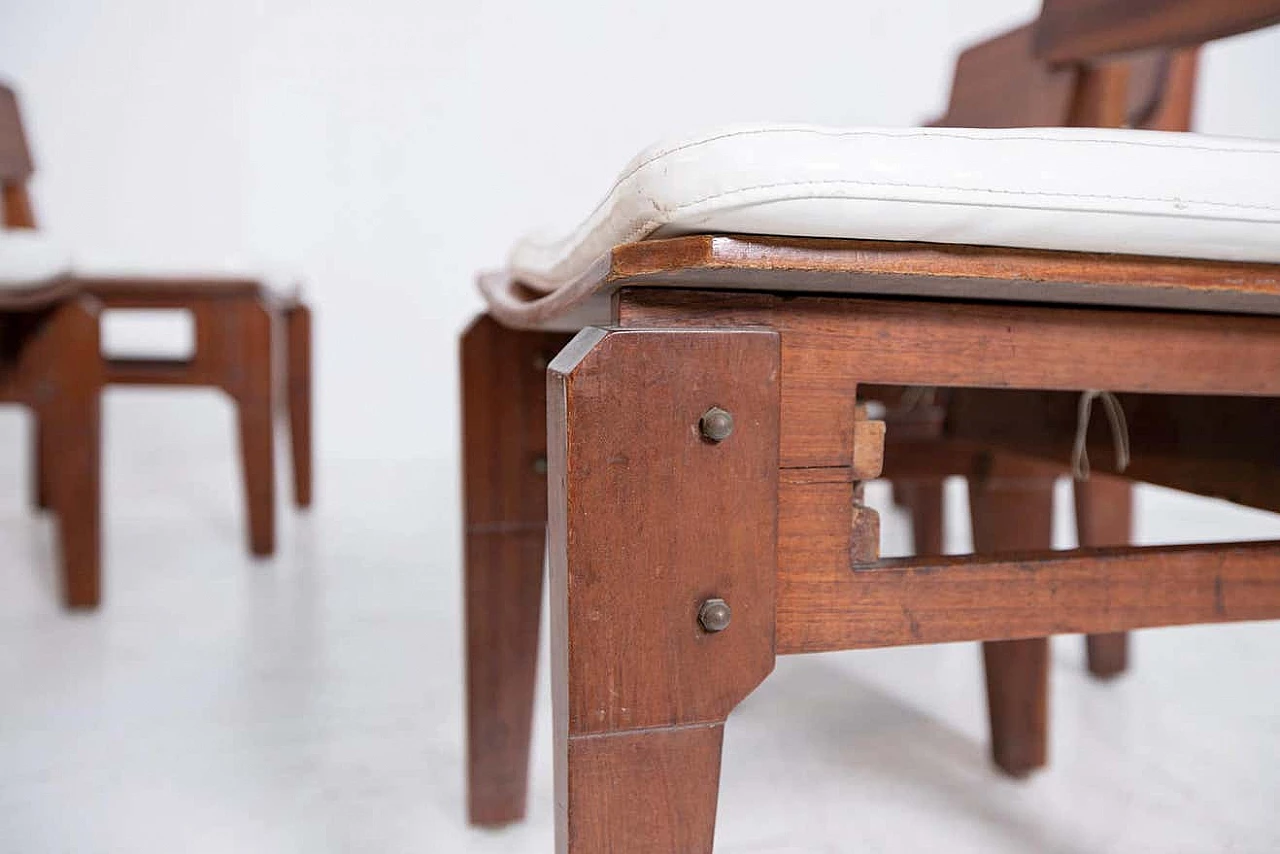
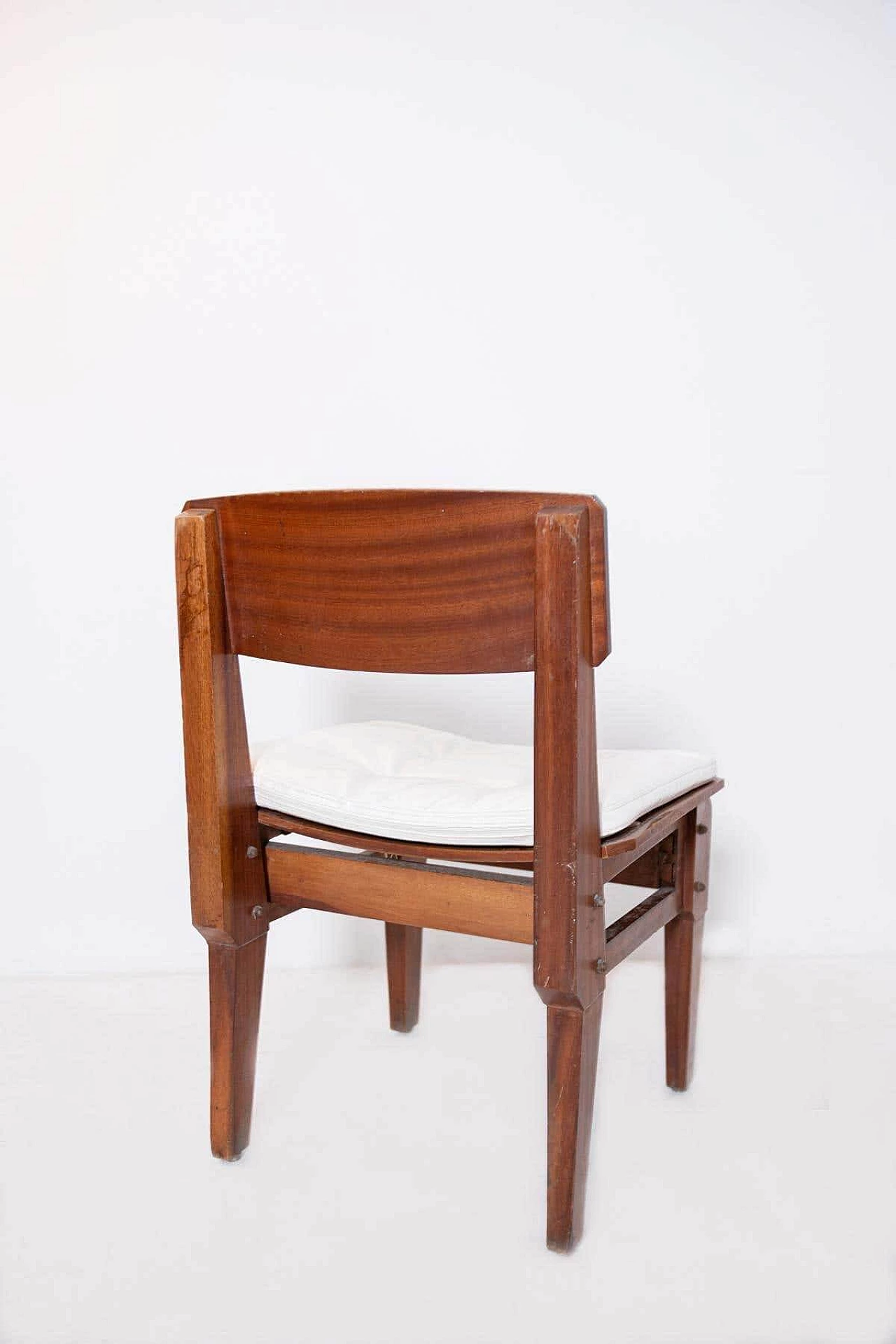
Rare set of six Italian chairs designed by architect Vito Sangirardi for the Pallante shop in Bari, Palo del Colle, in the 1950s. The set is made of sturdy mahogany wood. The seat is made of white Italian fabric. The furnishings of the Pallante shop were all custom-made by the architect, in fact no other similar ones of that production can be found. The design of the model is geometric and linear. A play of perfect joints in the wood determines the configuration of the seat. The shop fittings also follow the same line. The chairs are perfect for furnishing mid-century style dining areas with a nod to architectural cleanliness. The set of chairs is in original condition and has defects and faults, so they will be fully restored and delivered in excellent condition. Vito Sangirardi attended courses at the Royal University of Architecture in Naples, graduating on 21 December 1938. After a few years in Naples, he returned to Apulia where, in 1941, he married Luigia Mastronardi, by whom he had four children, and lived in Sannicandro (Bari) where he also had his first studio. It was a period of about nine years of activity, interrupted by the events of the war in which he was forced to join the military genius. With the passing of the post-war years, the focus of his activity shifted towards the capital; therefore, since 1953 he has lived in Bari, where he mainly carries out his profession, which is, however, of interest throughout the Apulian territory. From 1953 his office was located at 89 Via Abbrescia; until 1968, when he moved to the 2nd floor of a building he designed and owned by Assicurazioni Generali at 2 Via Michelangelo Signorile, where he has shared office and activities with his son Germano since 1979. In 1960 he was elected President of the Order of Architects of Apulia, remaining in office until 1971. In this capacity, having worked continuously for a long time, especially in Bari, he was able to take an active part in the city's debate on its urban development, leaving various contributions on the subject, communicated at conferences and through newspaper articles.


.png)
 SILVER Seller in Milano, Italia