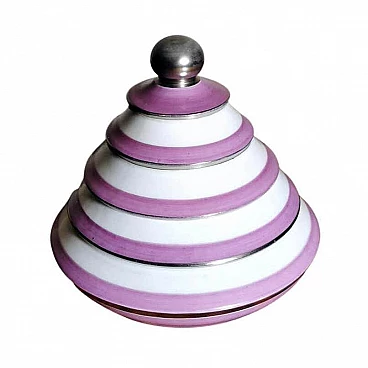
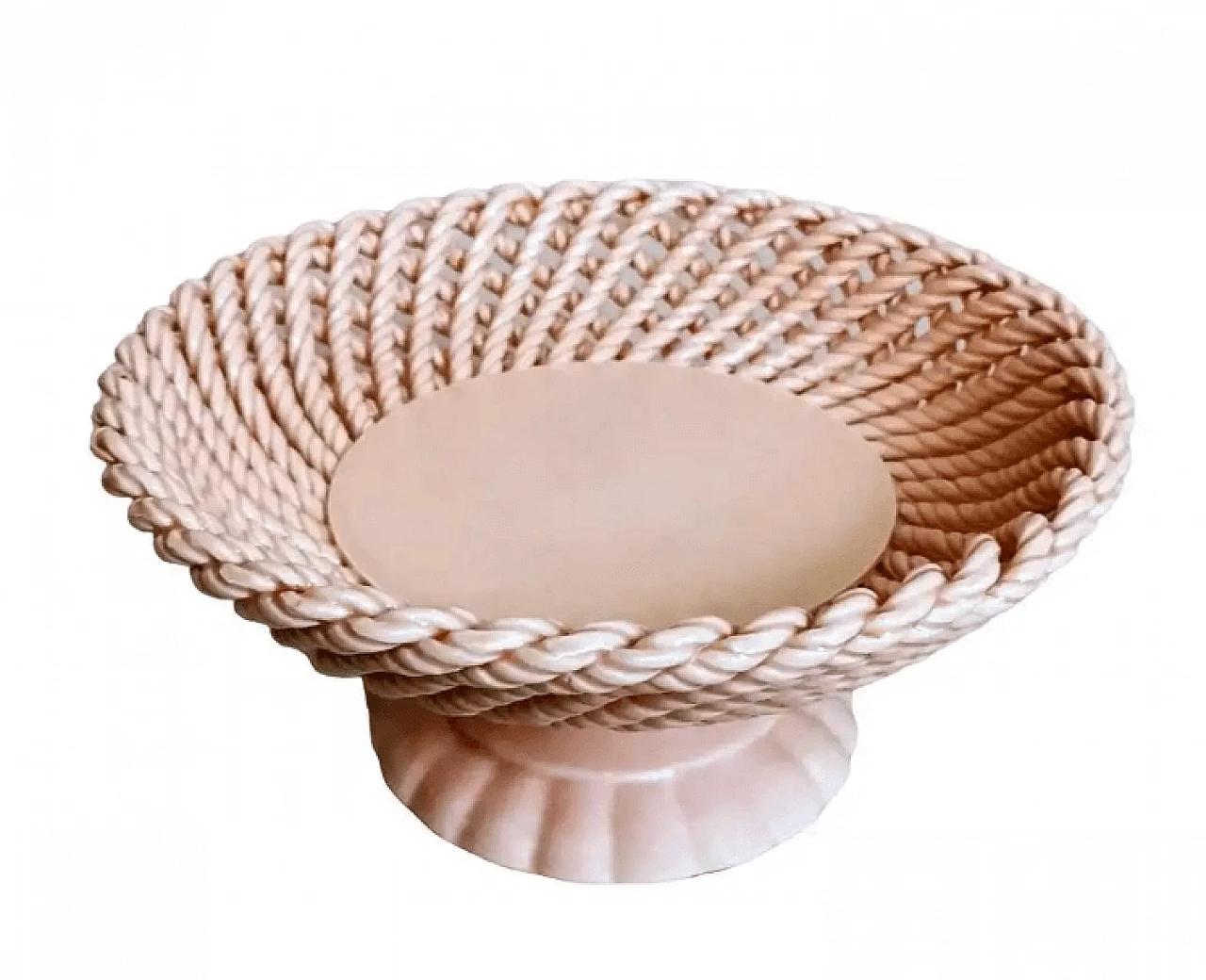
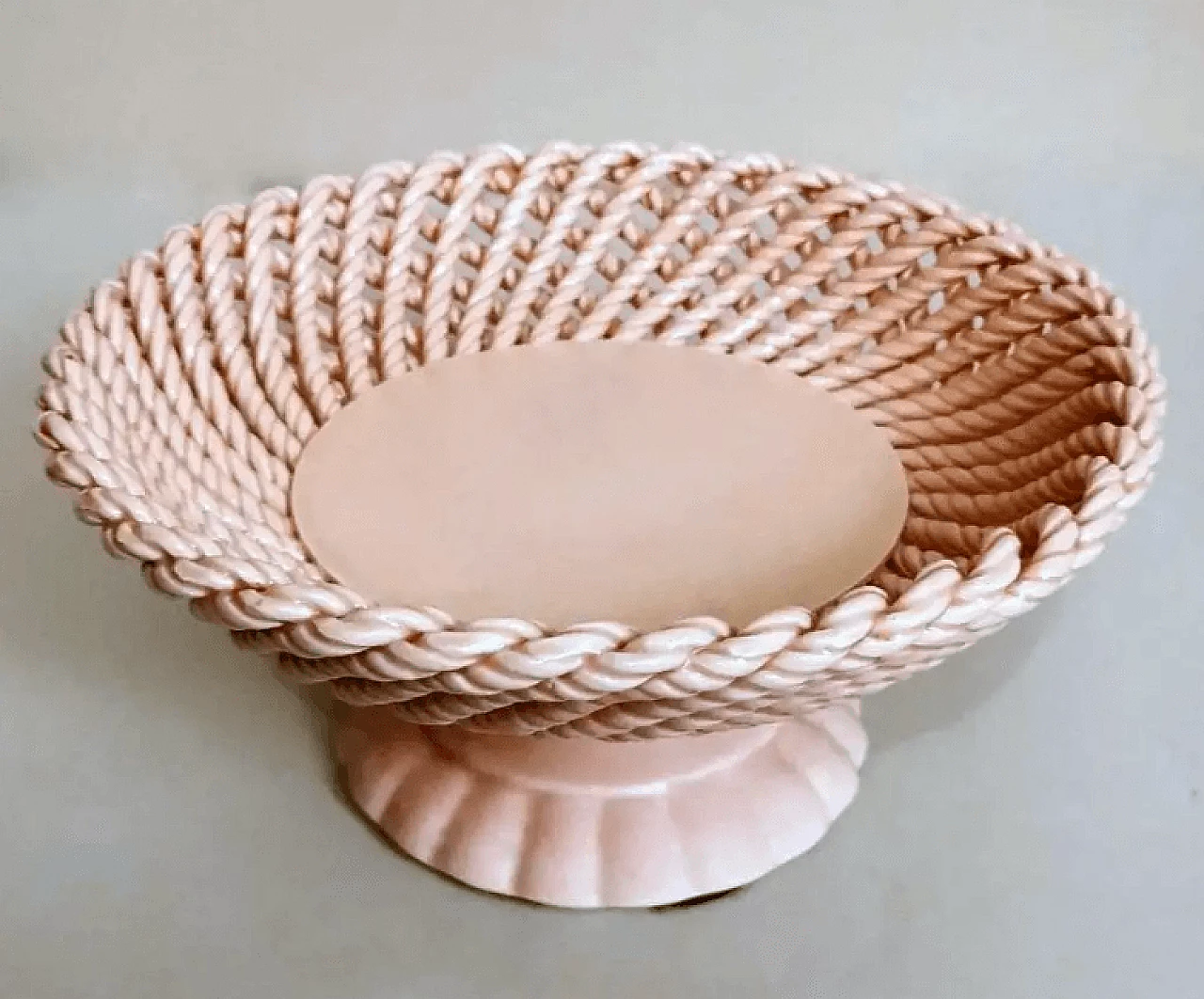
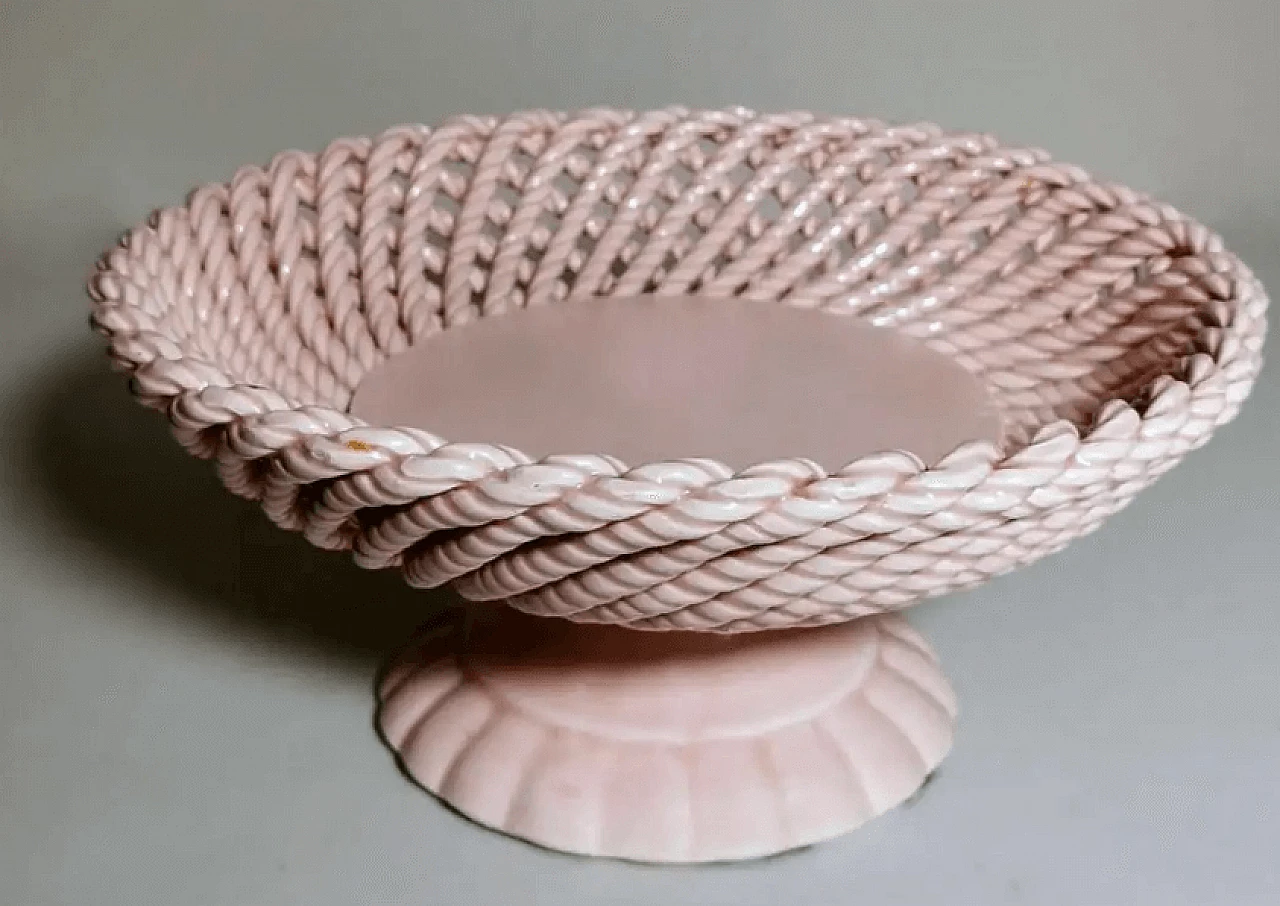
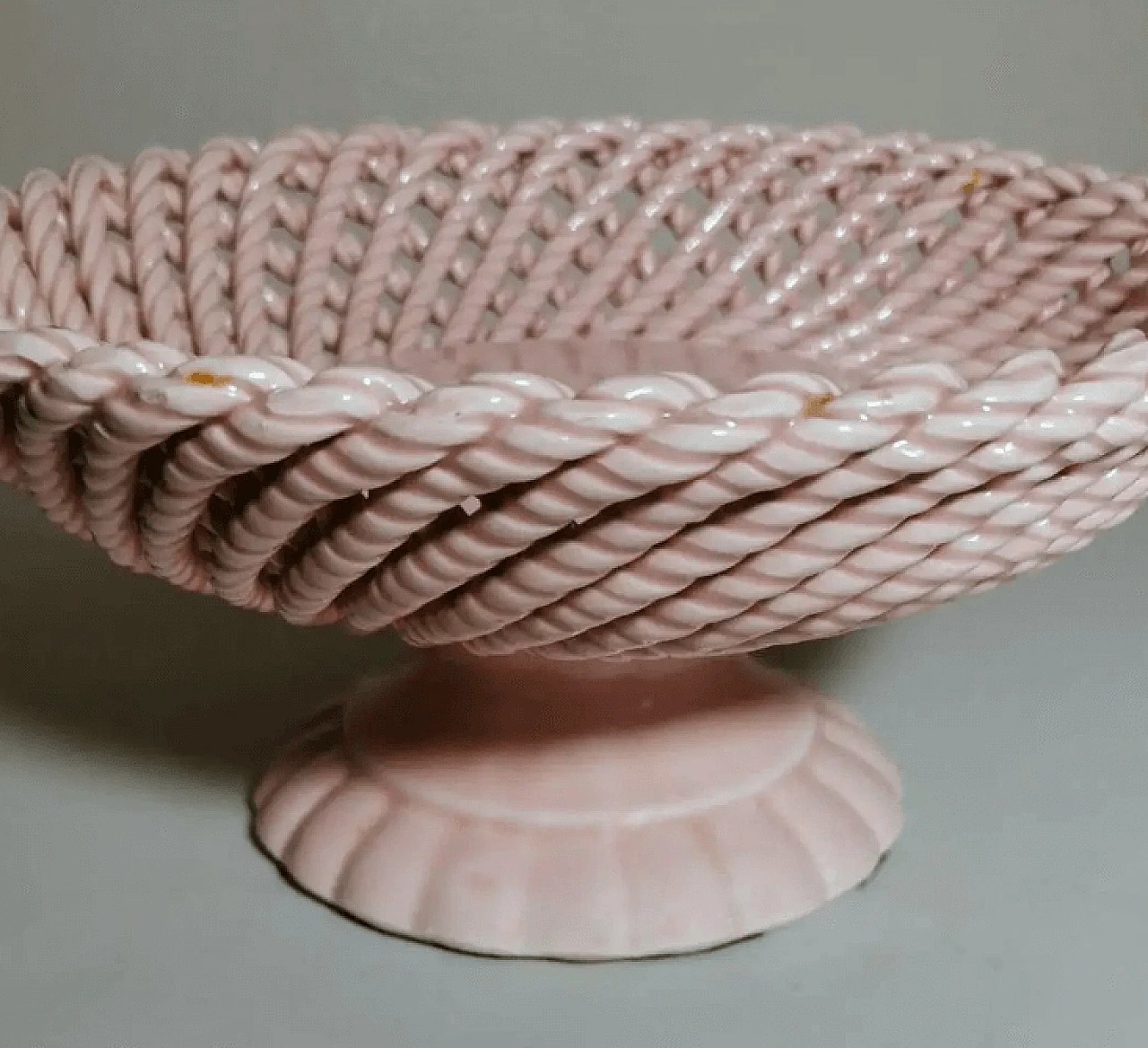
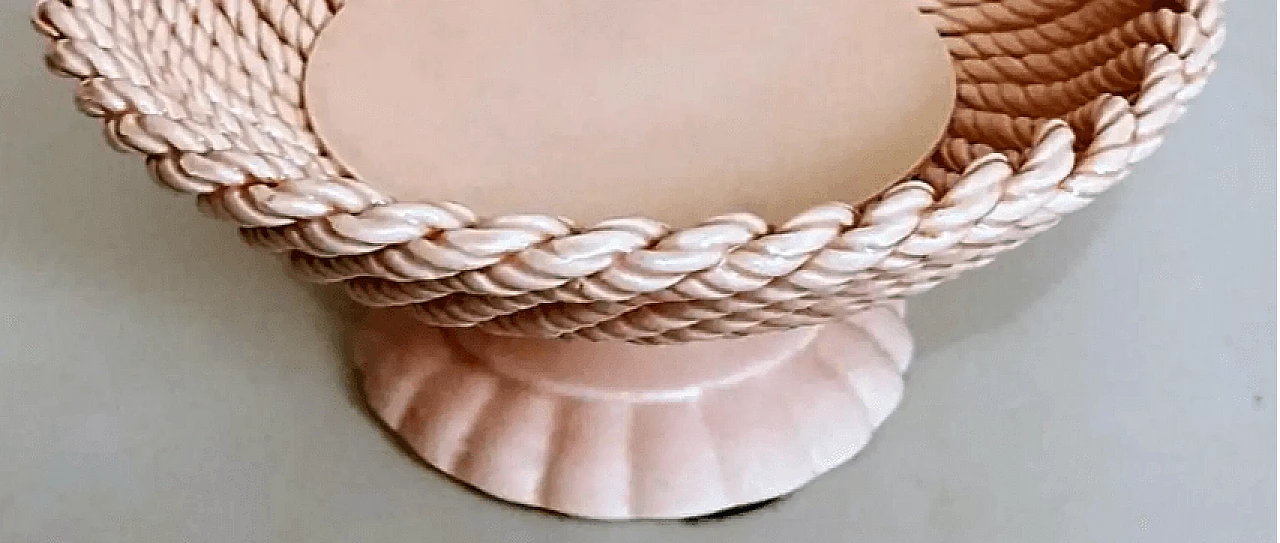
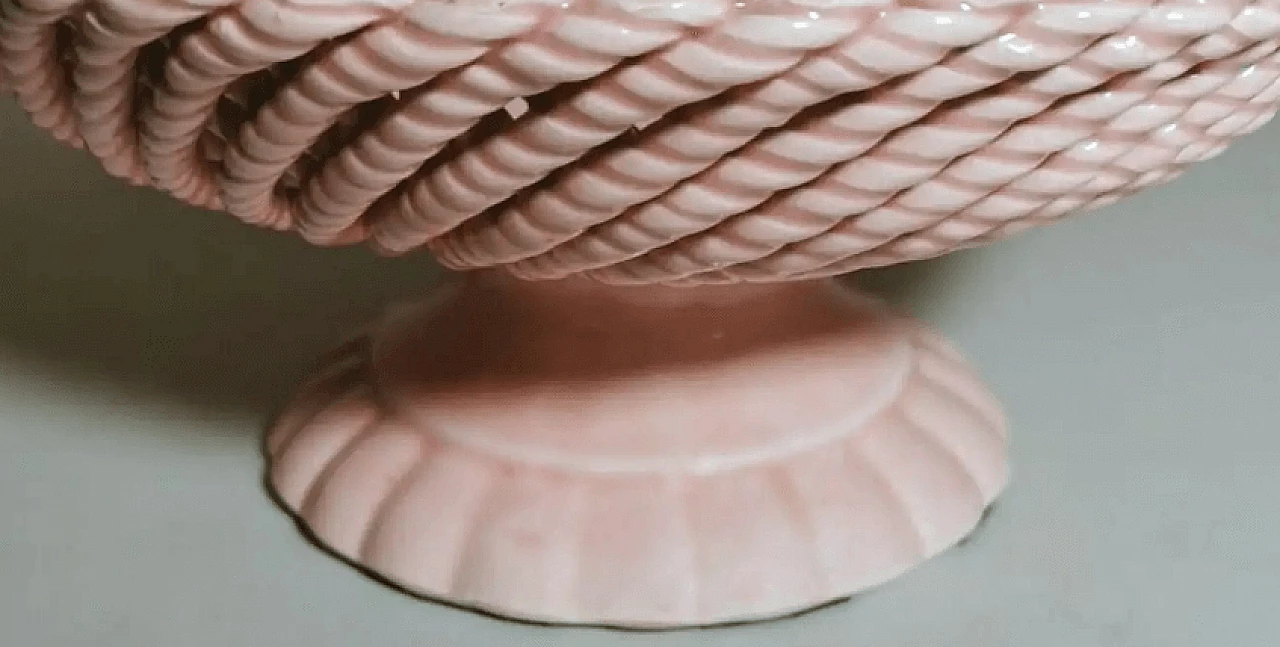
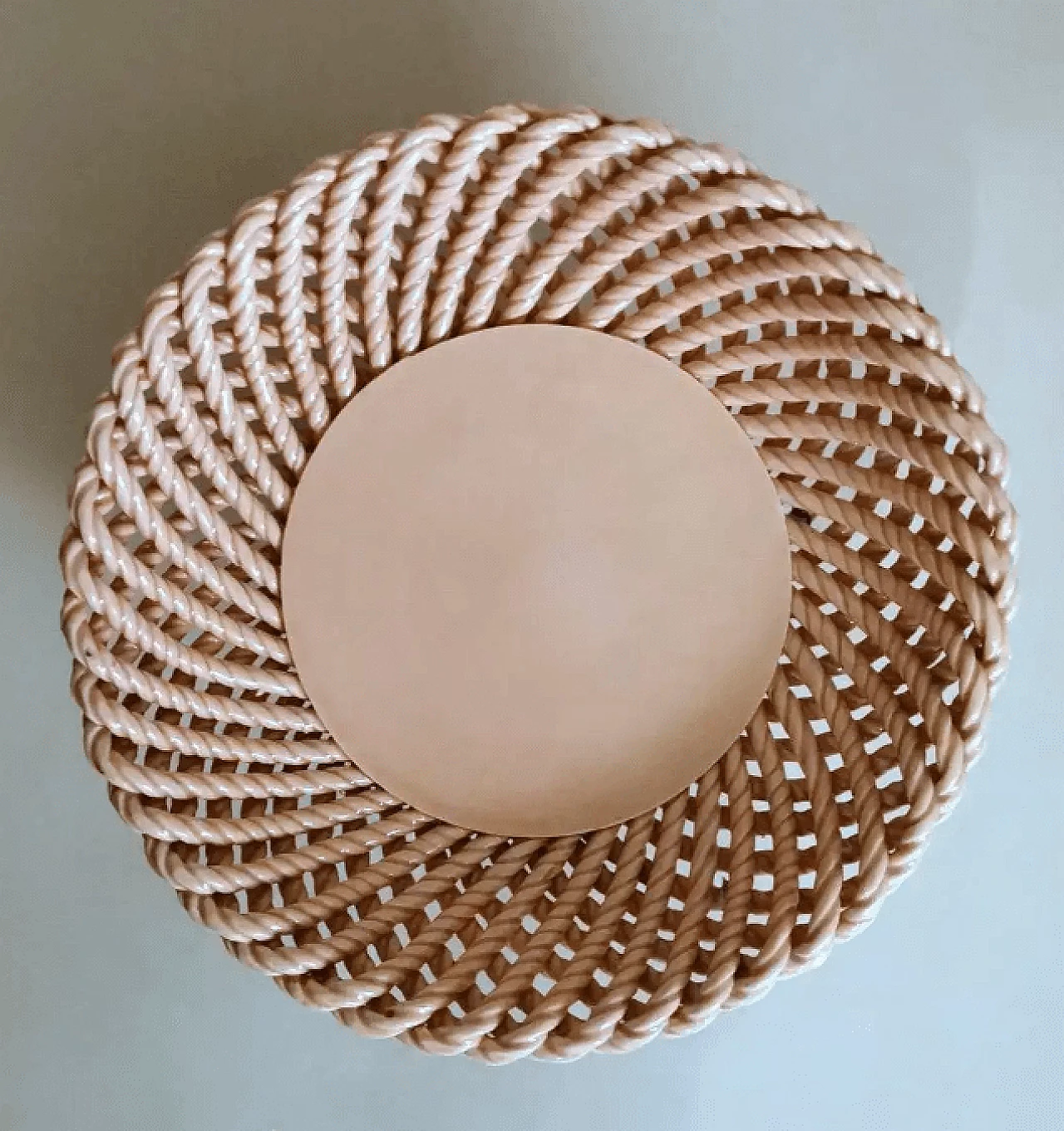
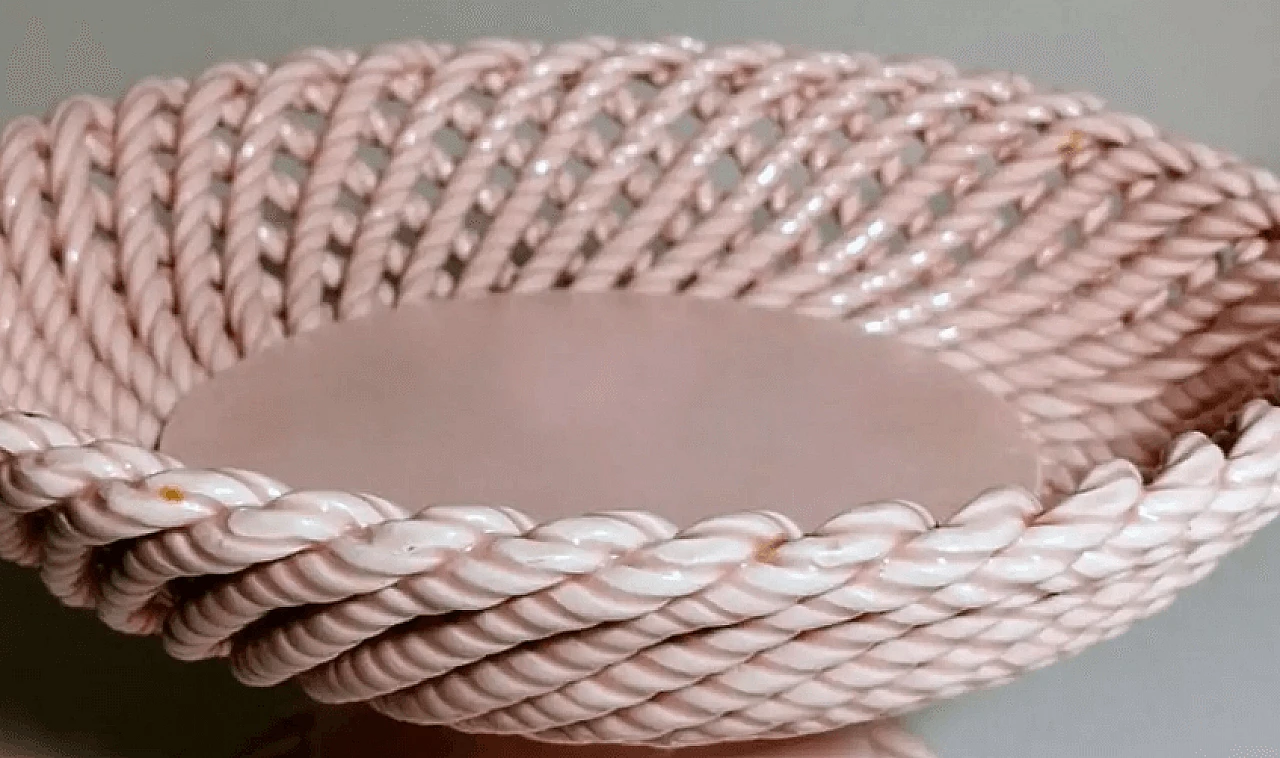
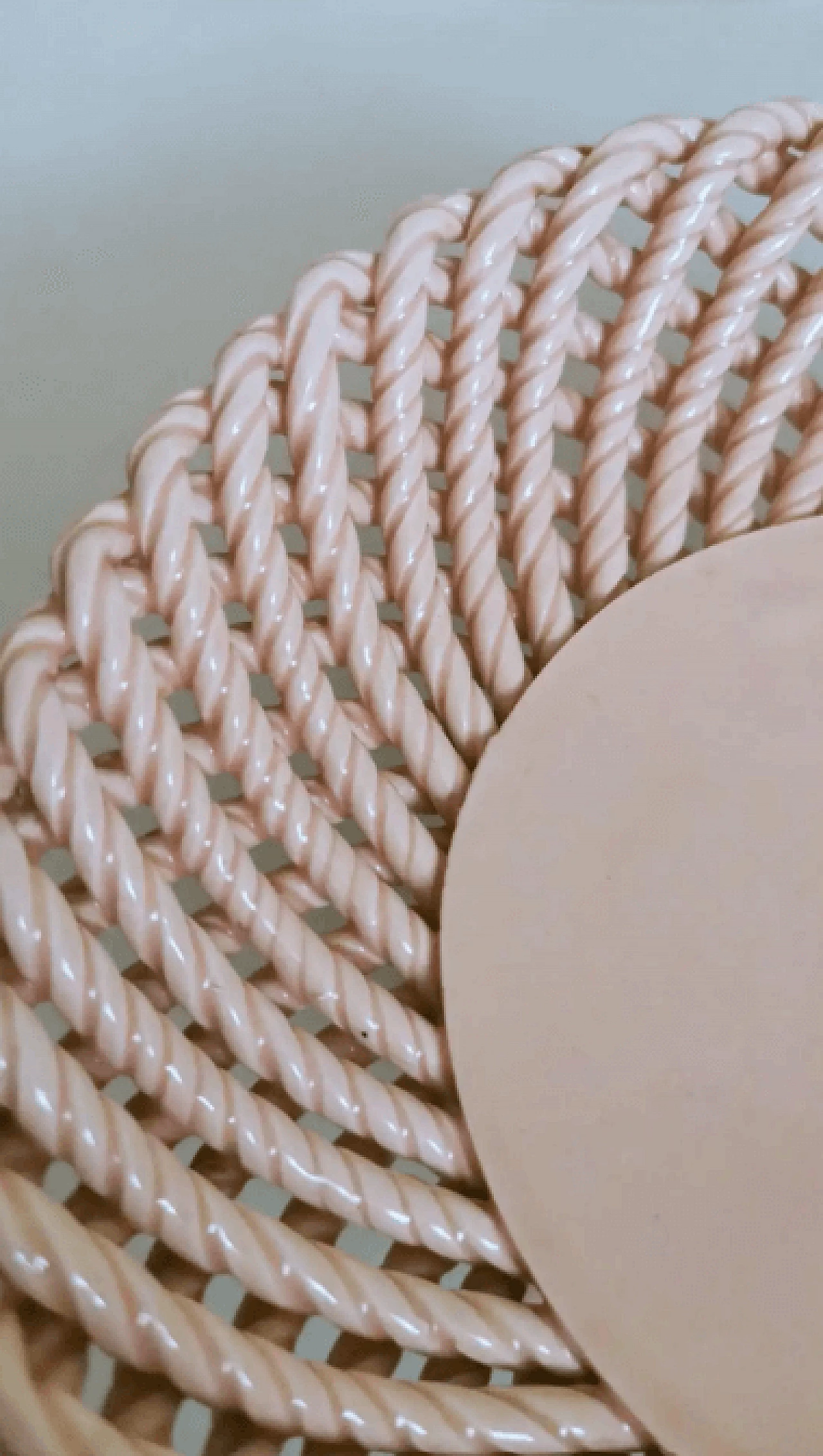
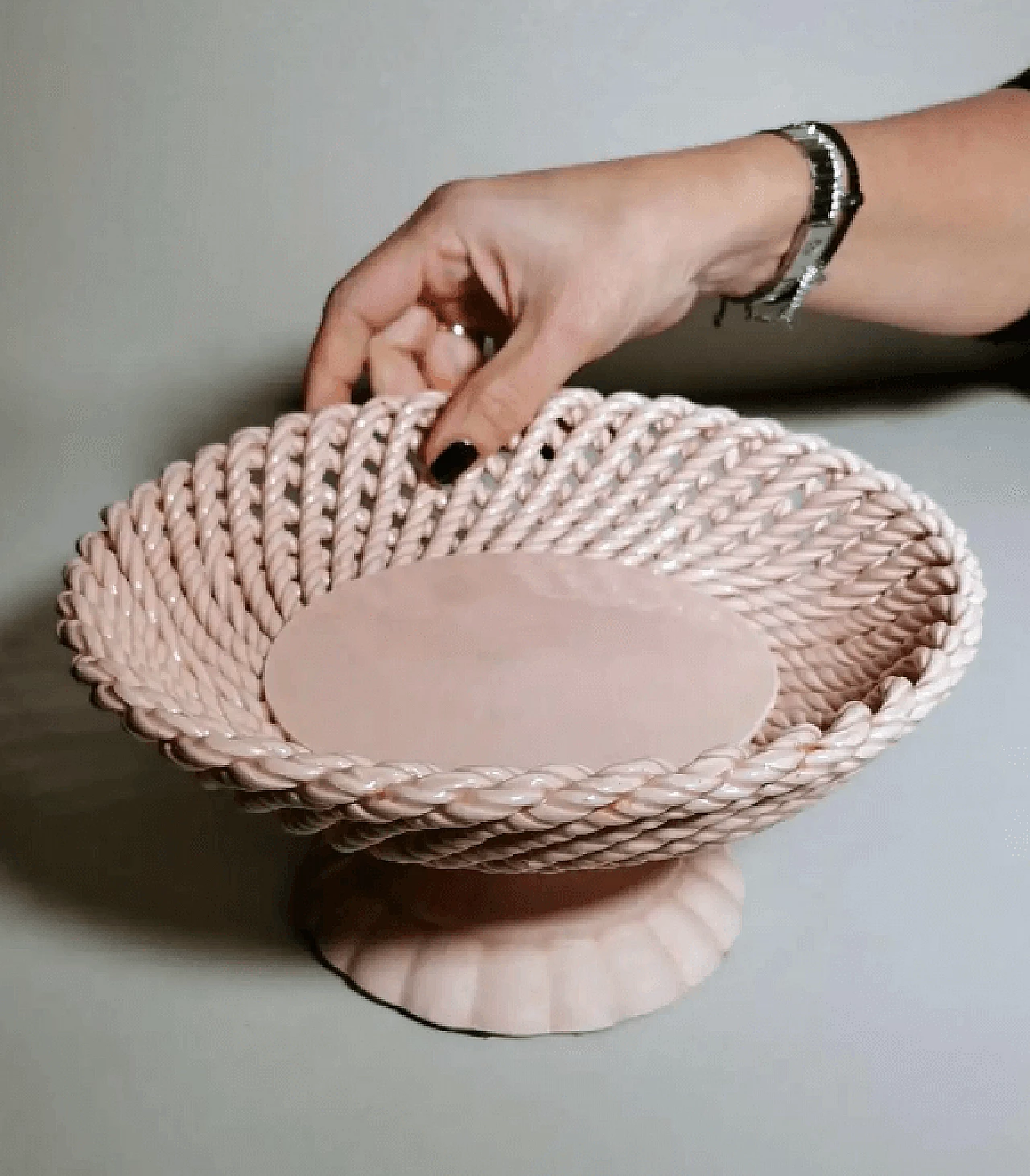
The object was made entirely by hand, the craftsman used terracotta in its plastic state, turned the base and an overlying circular surface with a pedal lathe, then performed with masterful skill and infinite patience an intertwining of earthenware, as if making a wicker basket; he then assembled everything, creating the centerpiece in the desired shape; the artifact was left to dry for a long time so that the residual water could evaporate from the clay; once the drying process was finished, the object was finished and sponged with water to eliminate imperfections and increase its porosity, then it was placed in an oven for a first firing of about 12 hours at 1000 degrees Celsius (biscuit firing), which was followed by a subsequent gradual cooling of the oven which occurred naturally by heat dissipation; at this point the object was subjected to the ancient technique of enamelling, performed manually by immersion in an aqueous solution of pink enamel; this phase requires great skill, as it is important that the enamel is deposited uniformly on the surface. To definitively fix the dye, a final firing was then carried out in the oven. The centerpiece was made between 1950 and 1955 in an artisan workshop in the south of France, near the city of Uzes; this area is famous for this type of processing of the particular local terracotta.


.png)
 SILVER Seller in Prato, Italy