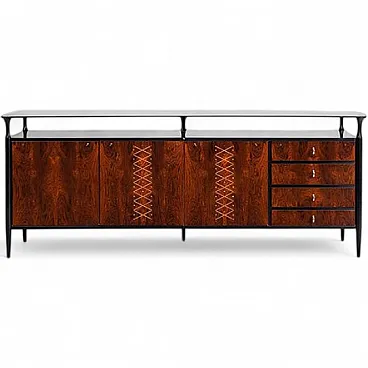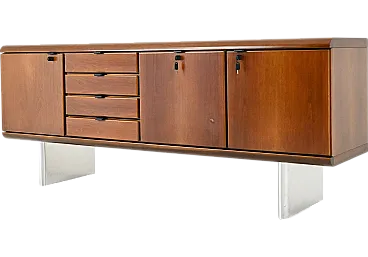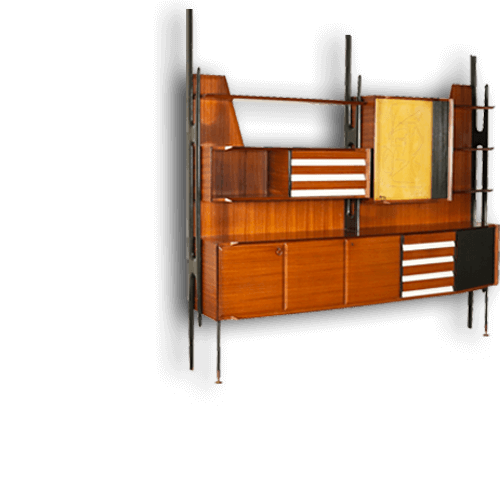


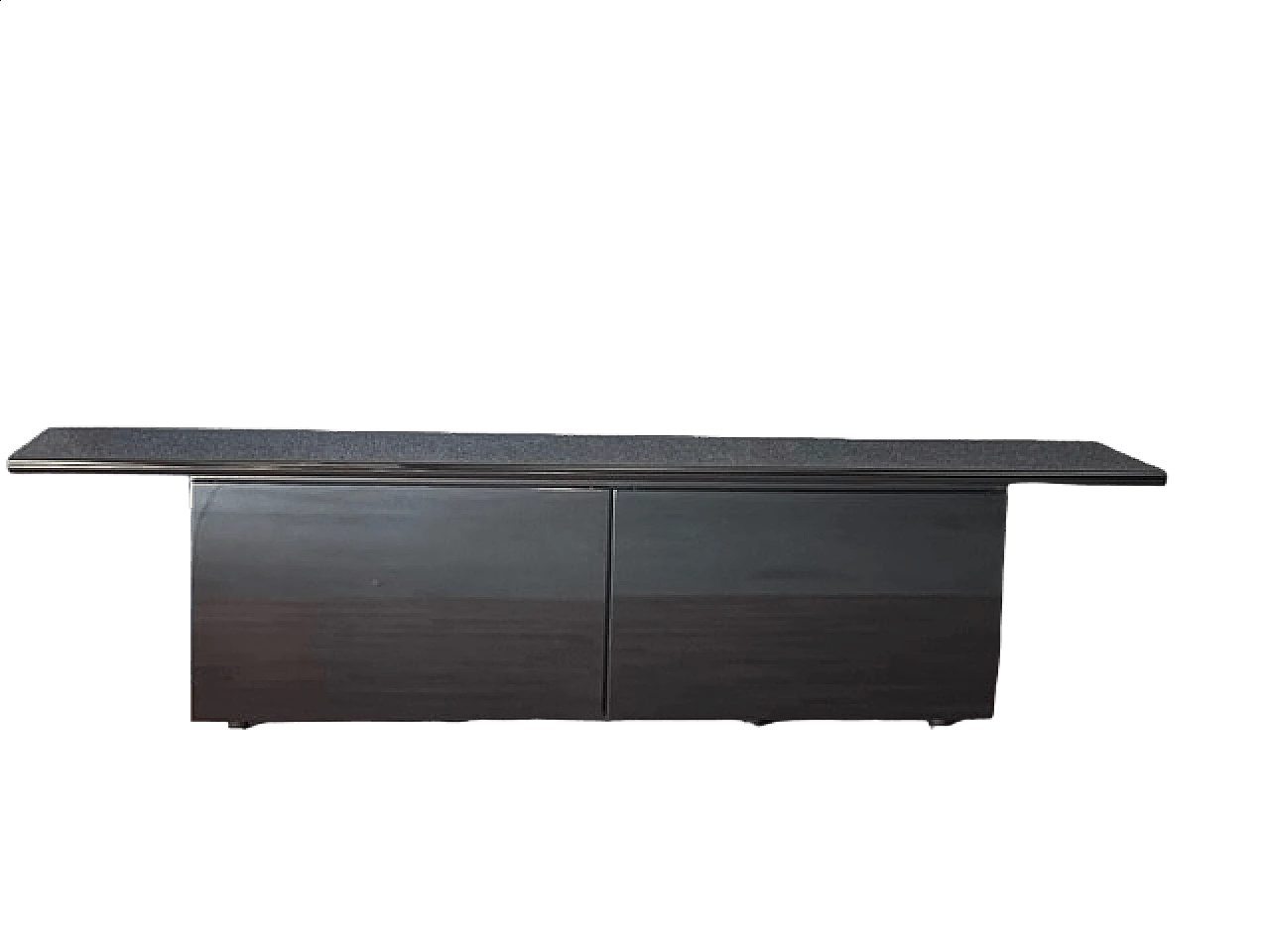
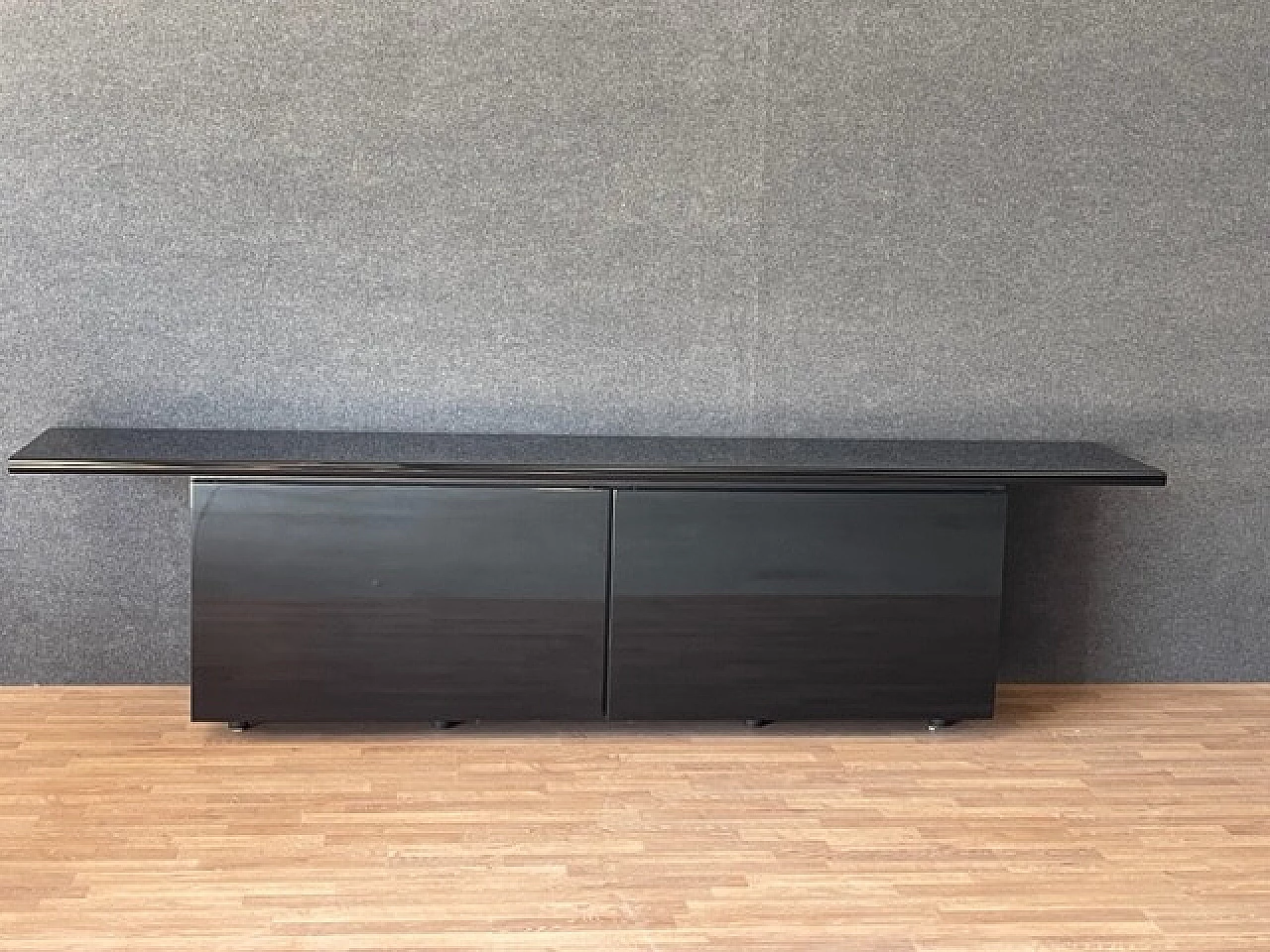
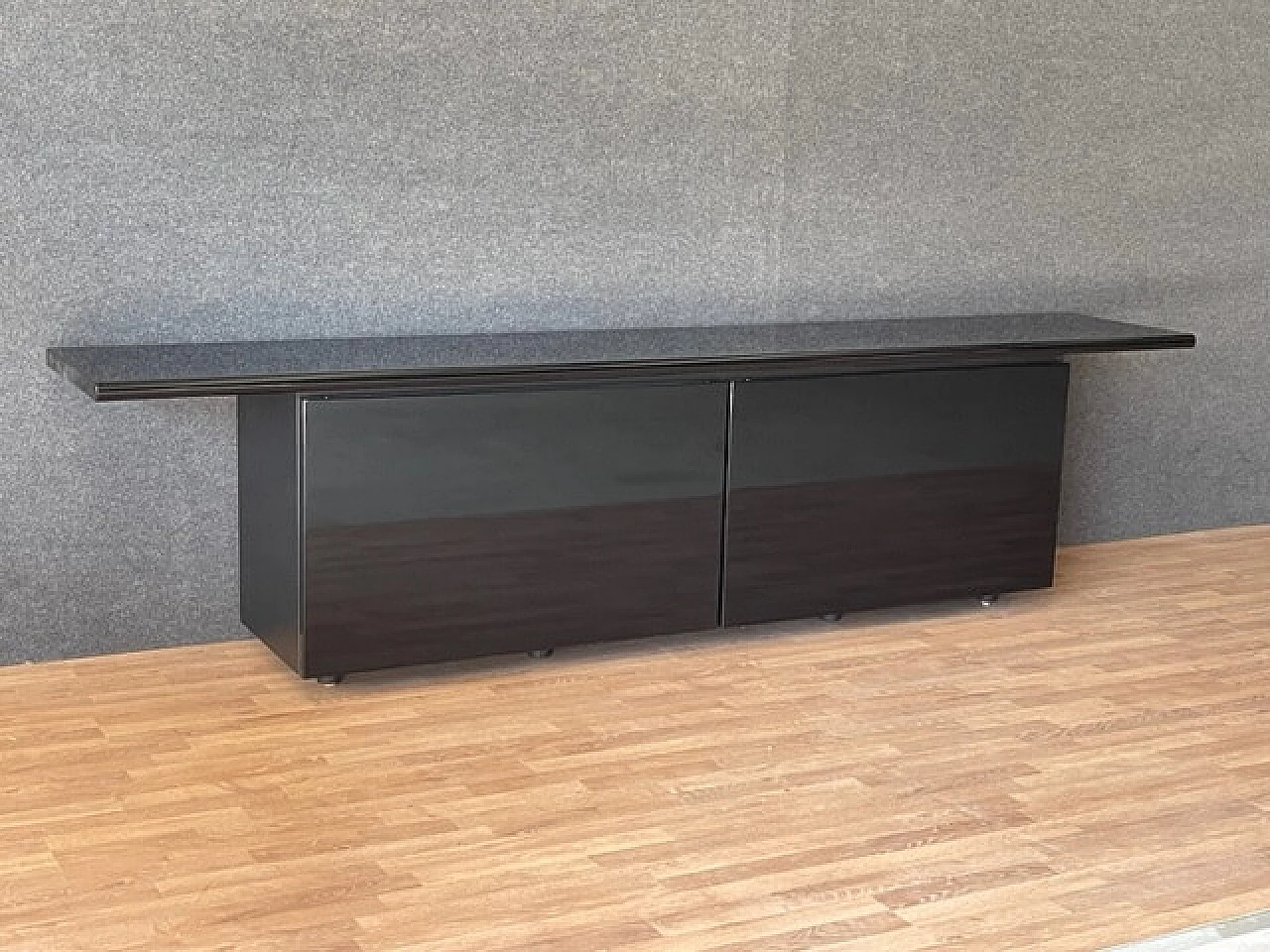
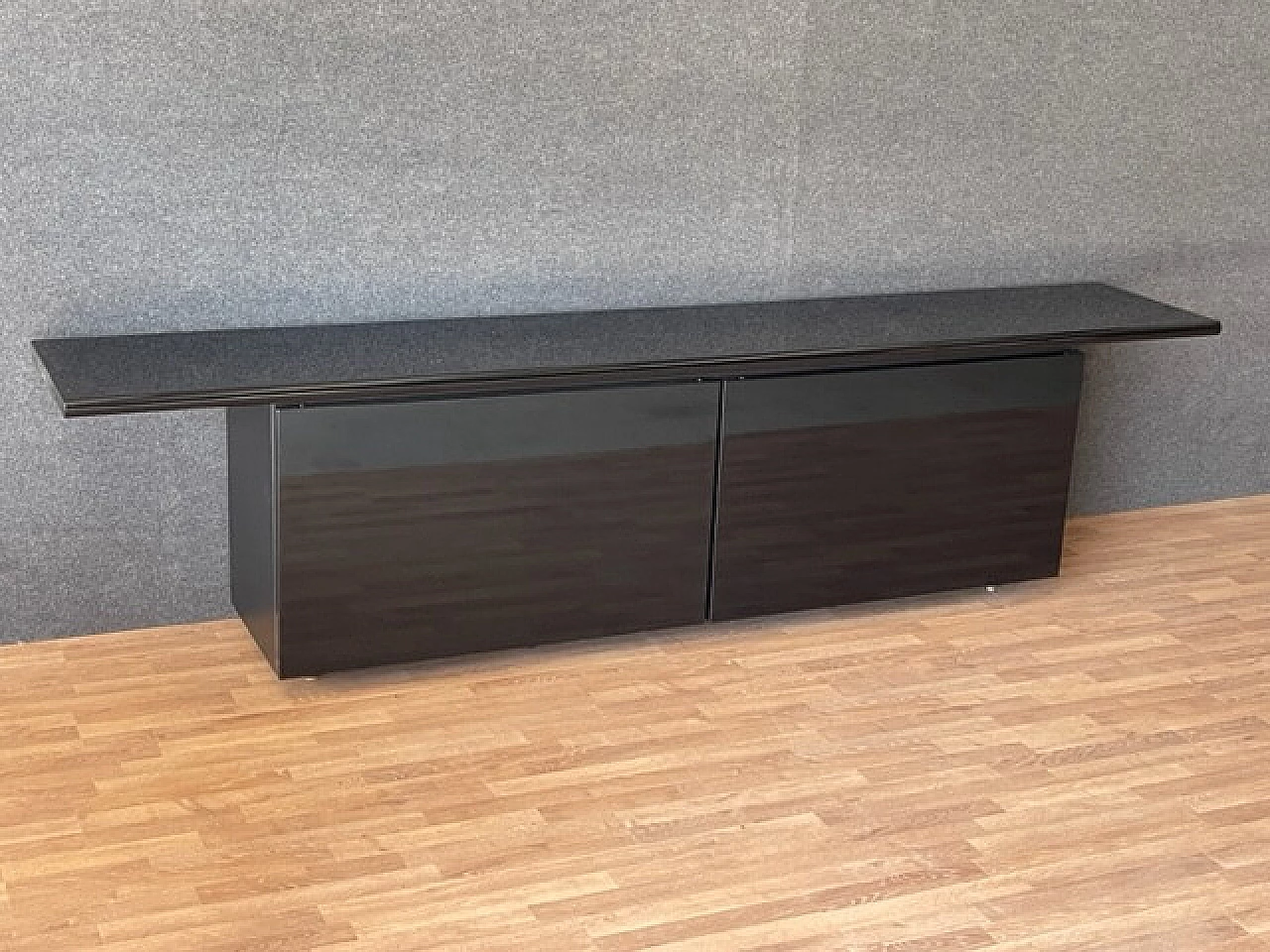
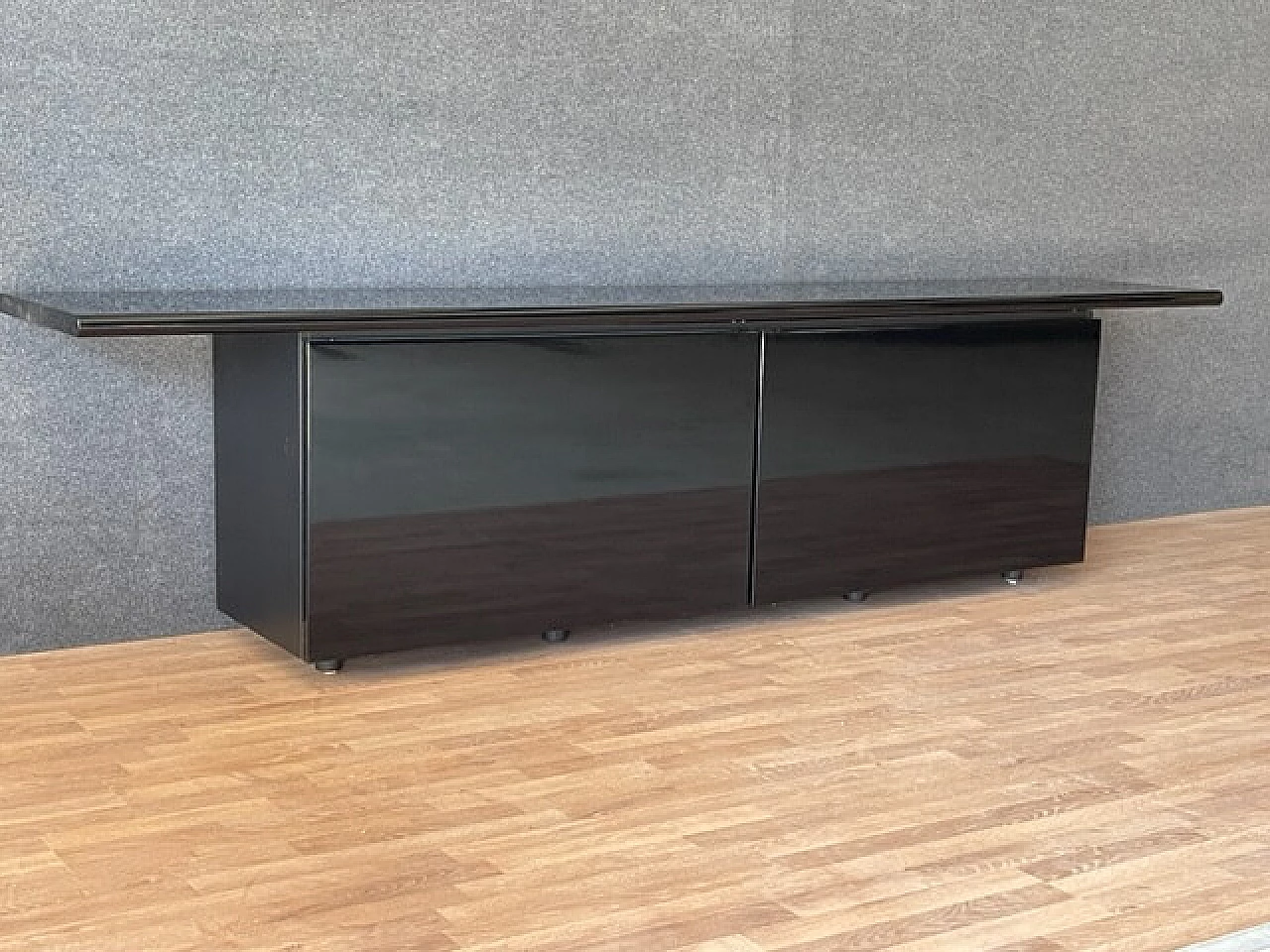
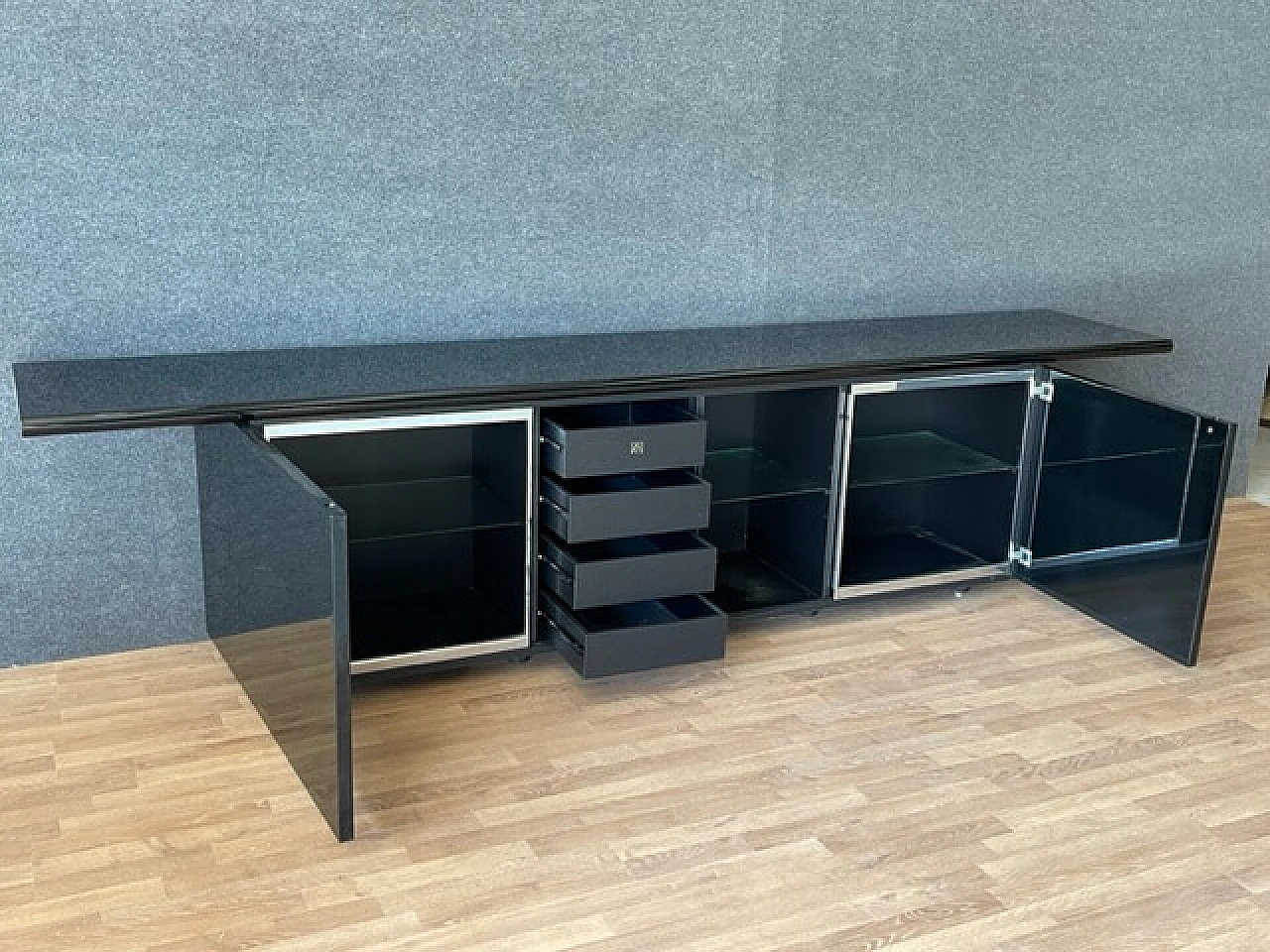
Sheraton sideboard in lacquered wood and laminate by Giotto Stoppino for Acerbis, 1970s
.png)
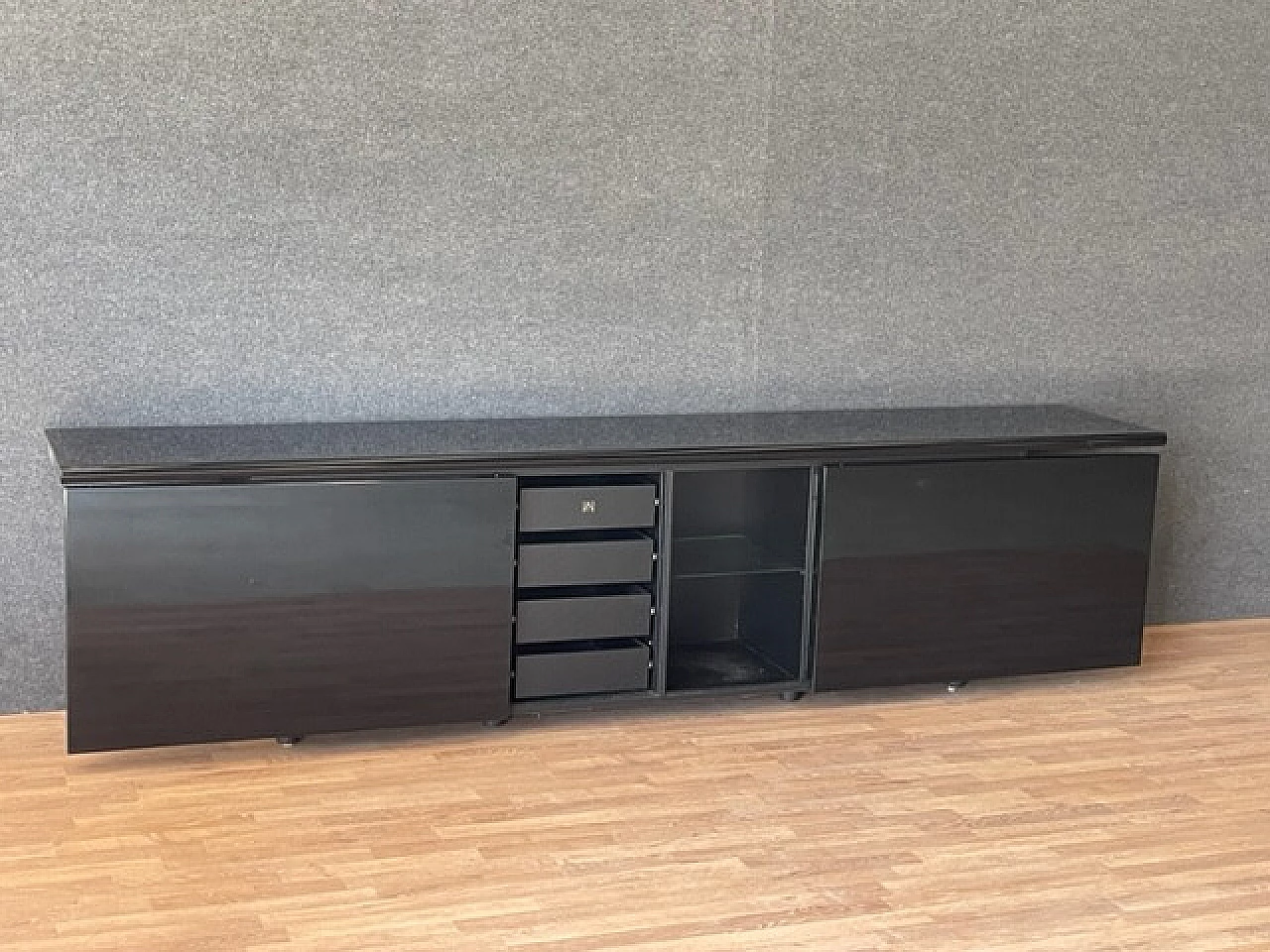
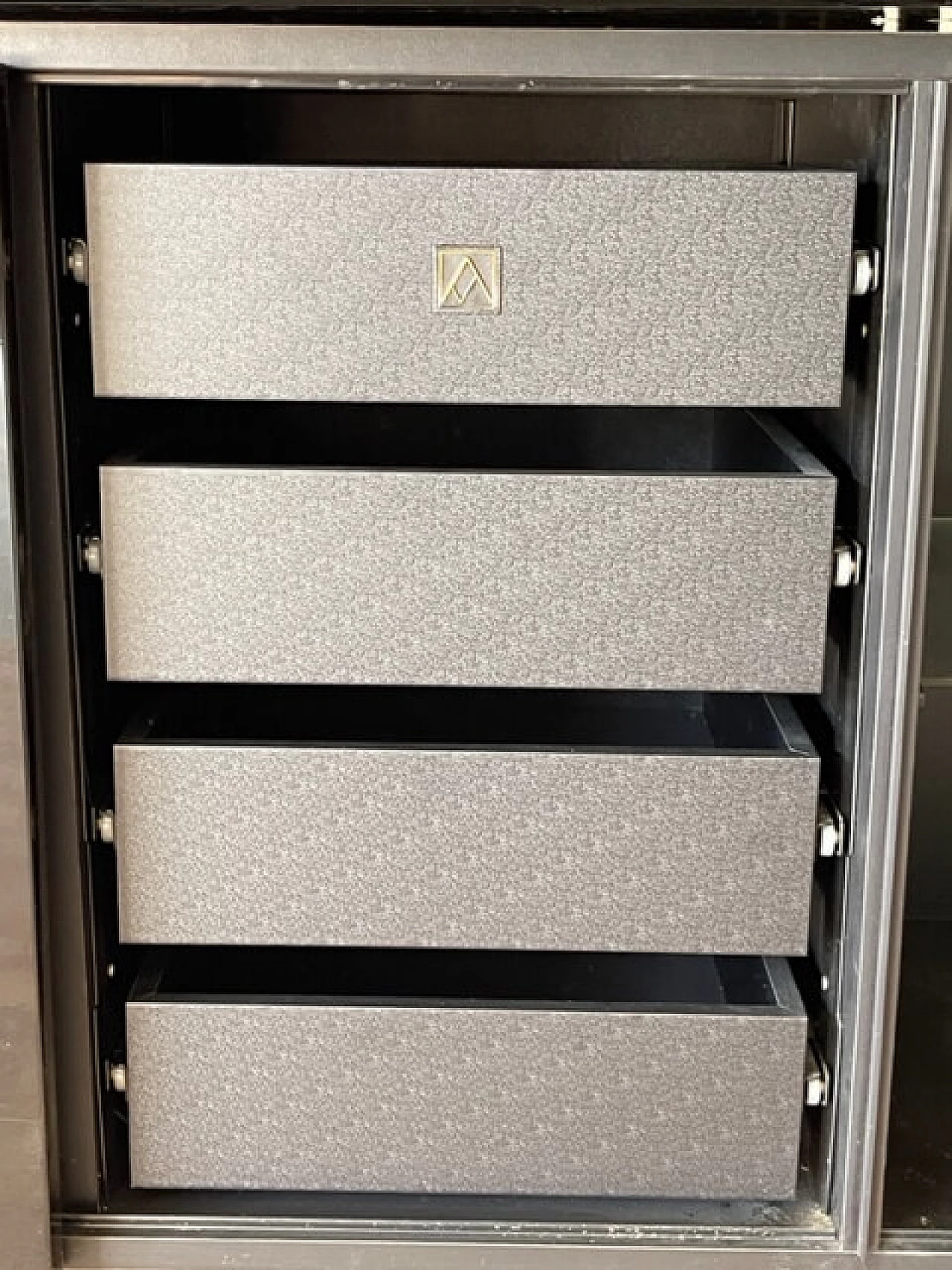
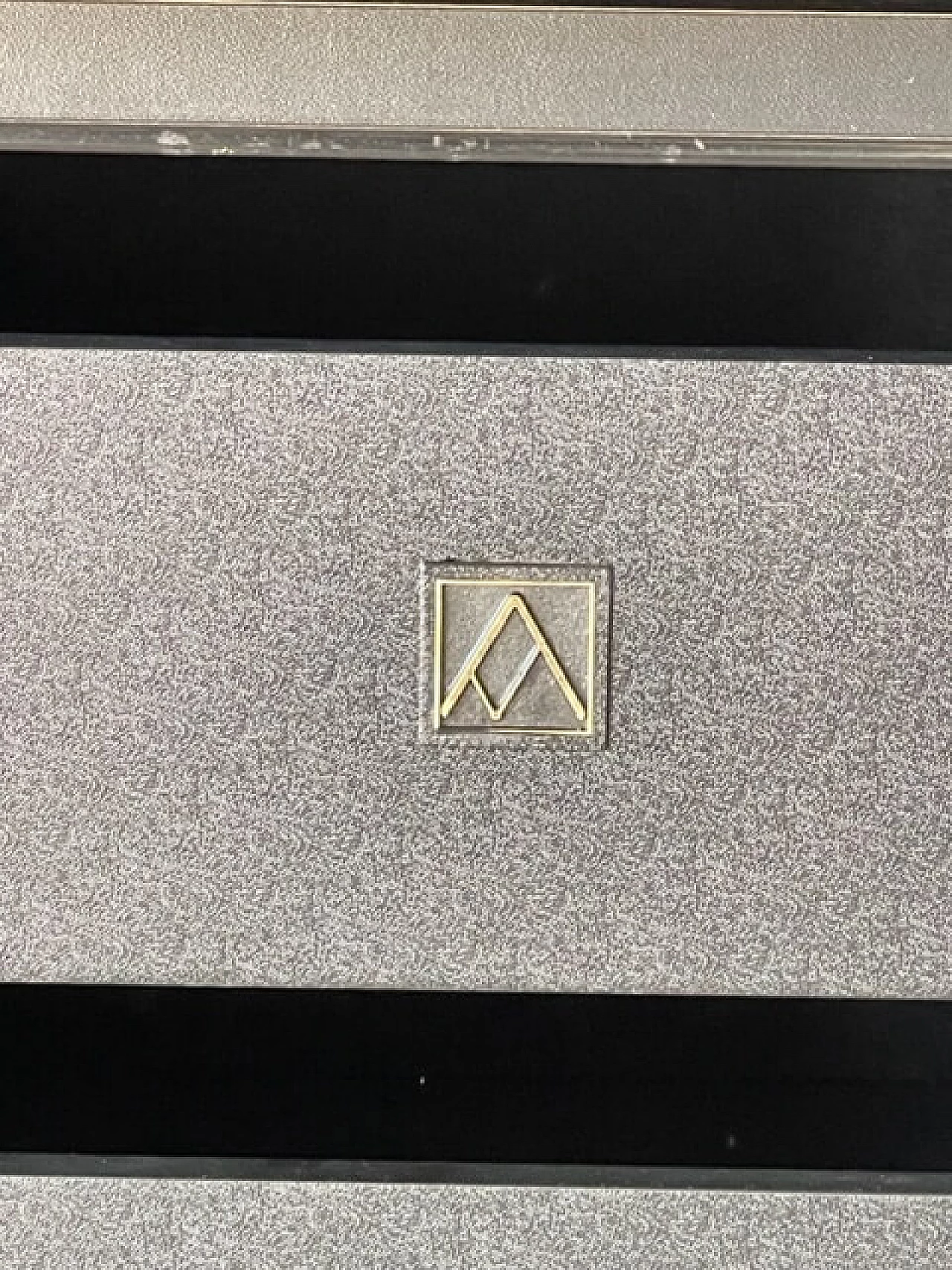
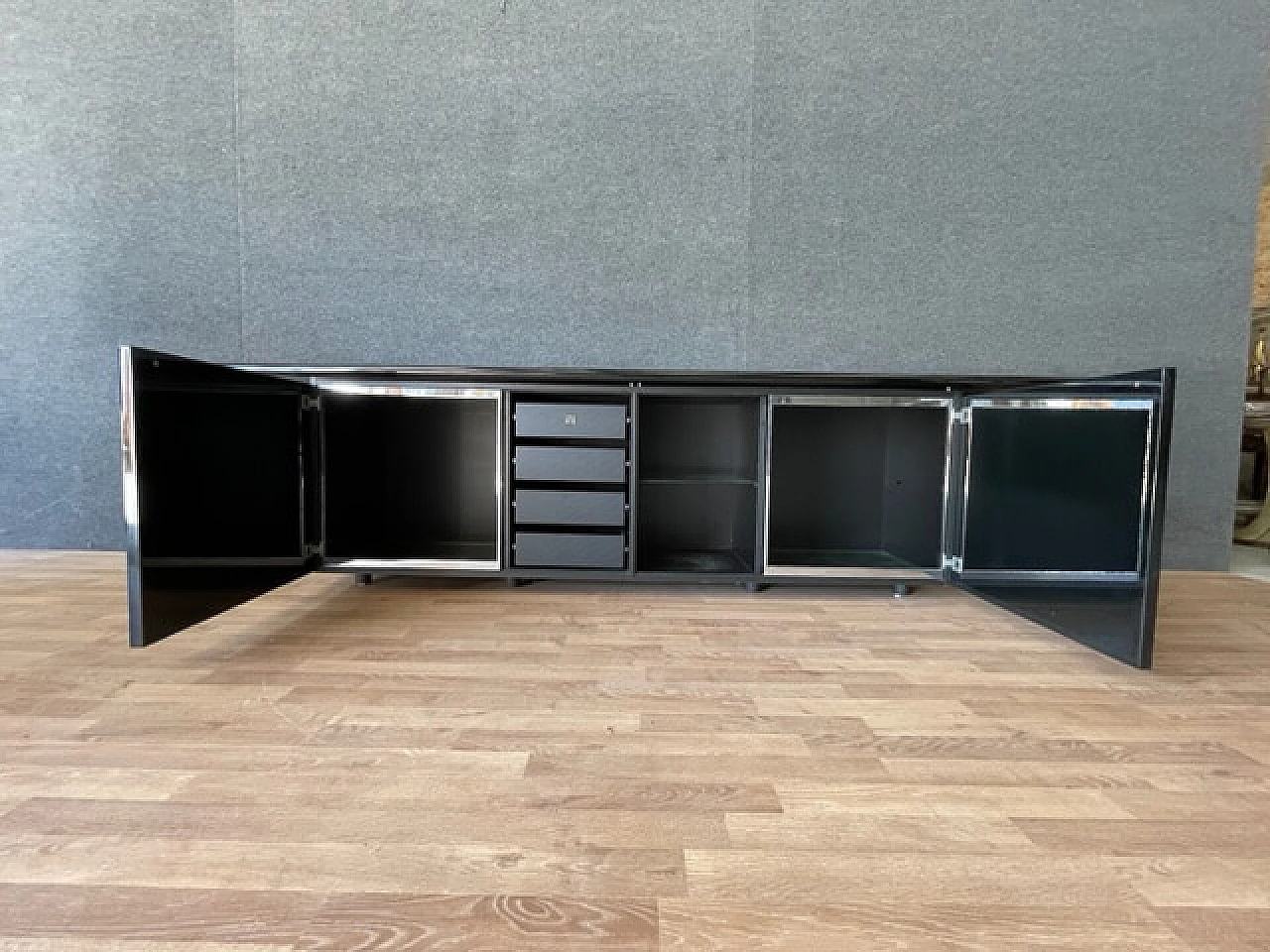
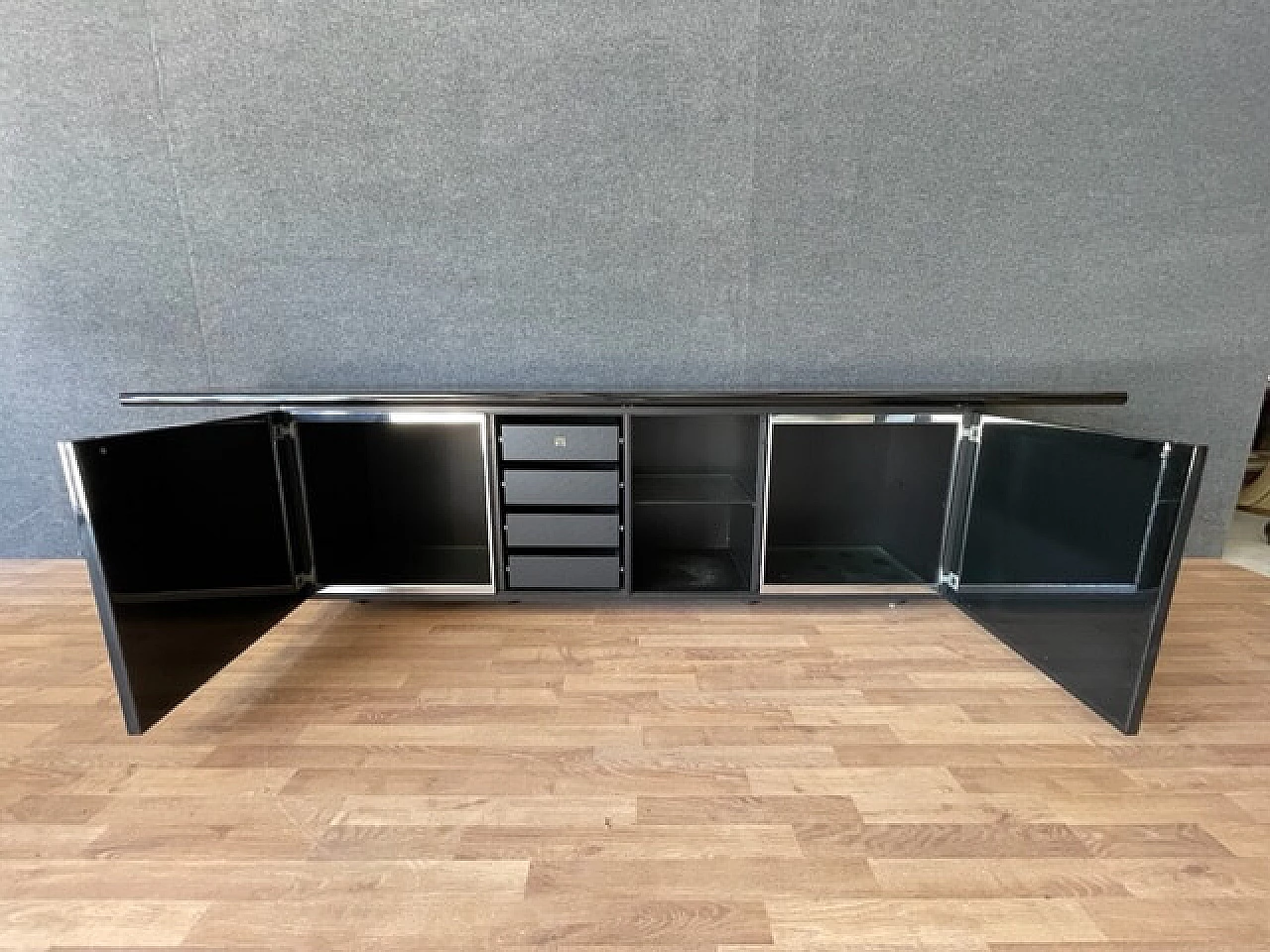
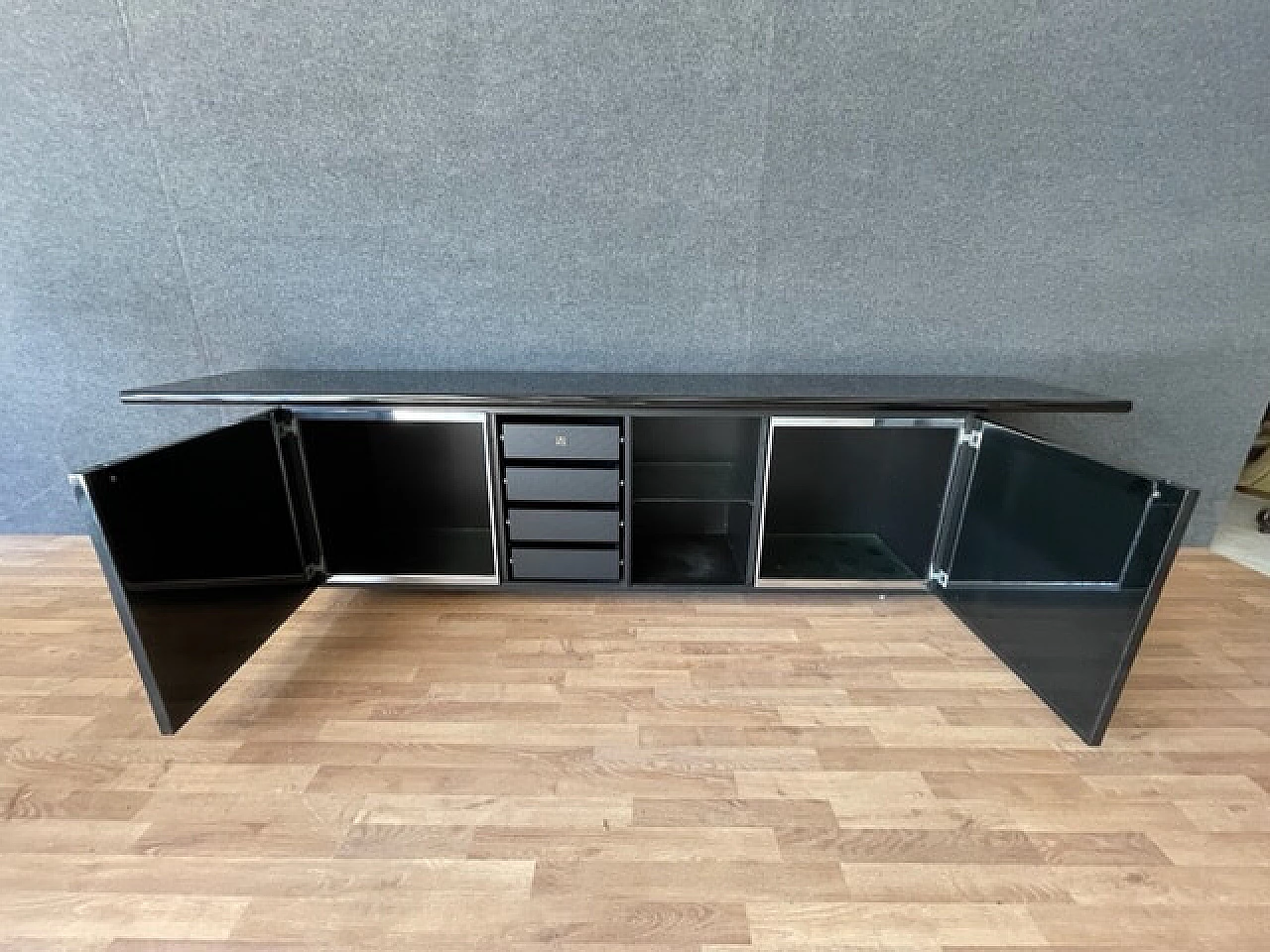
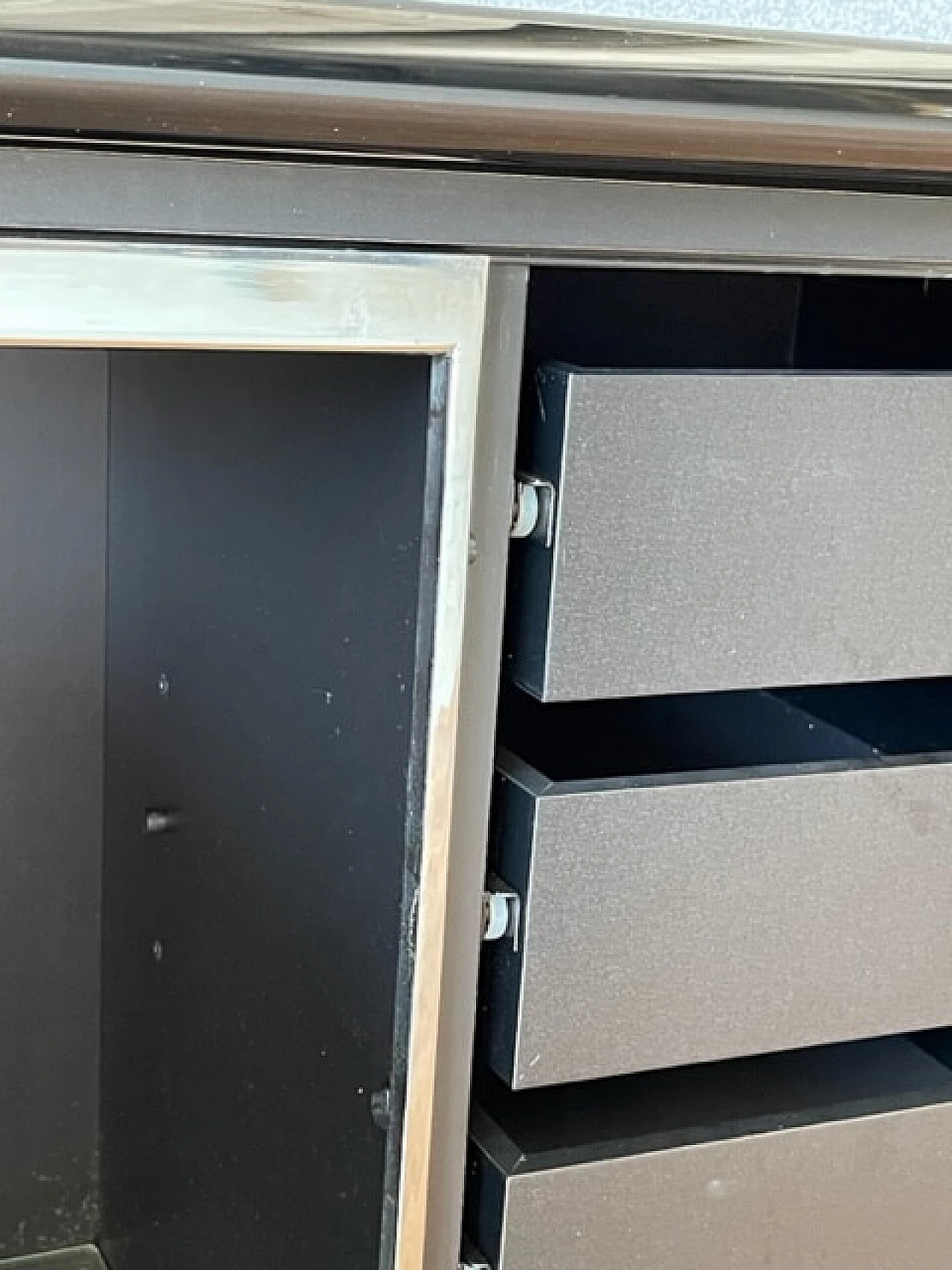
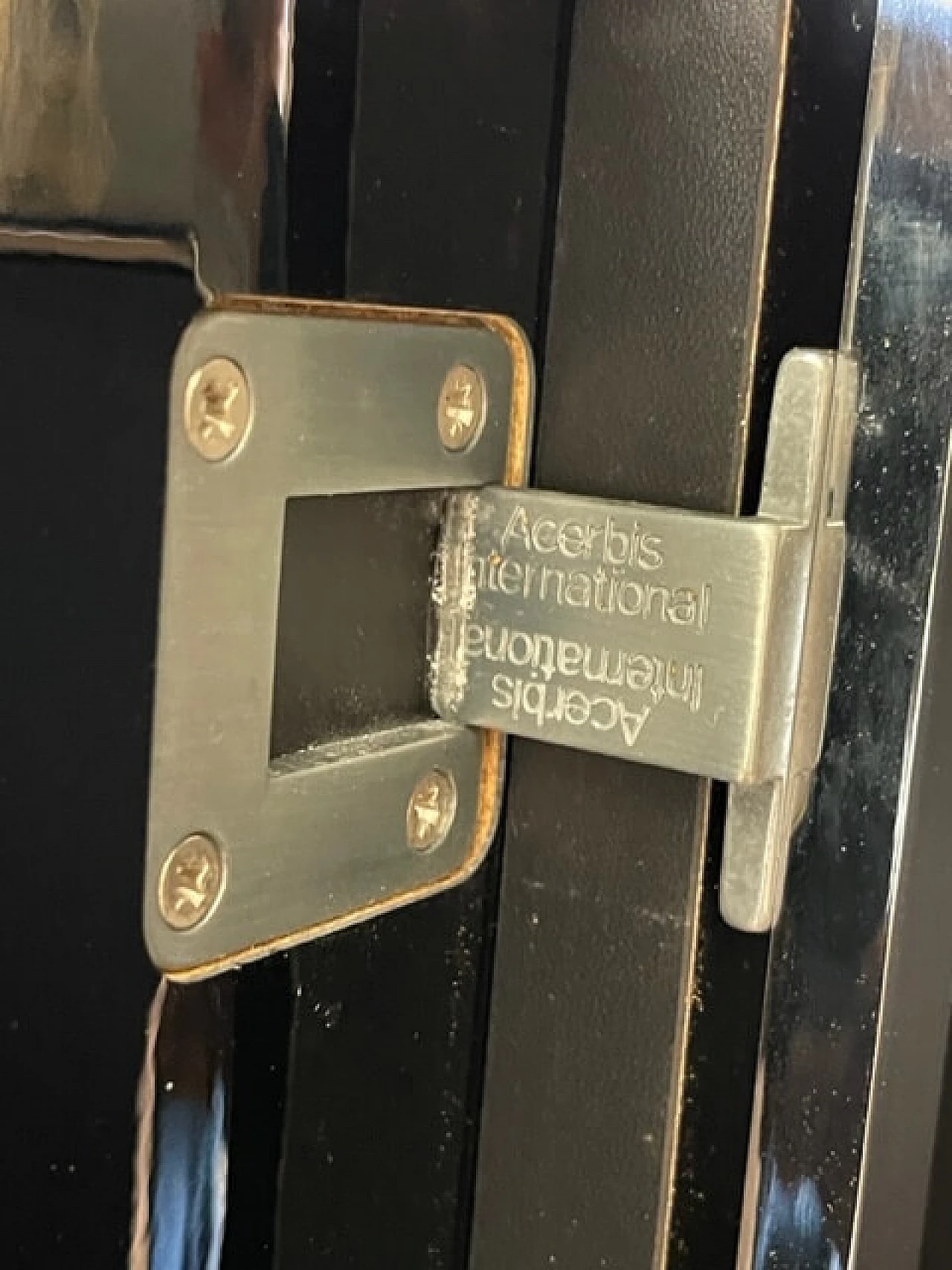
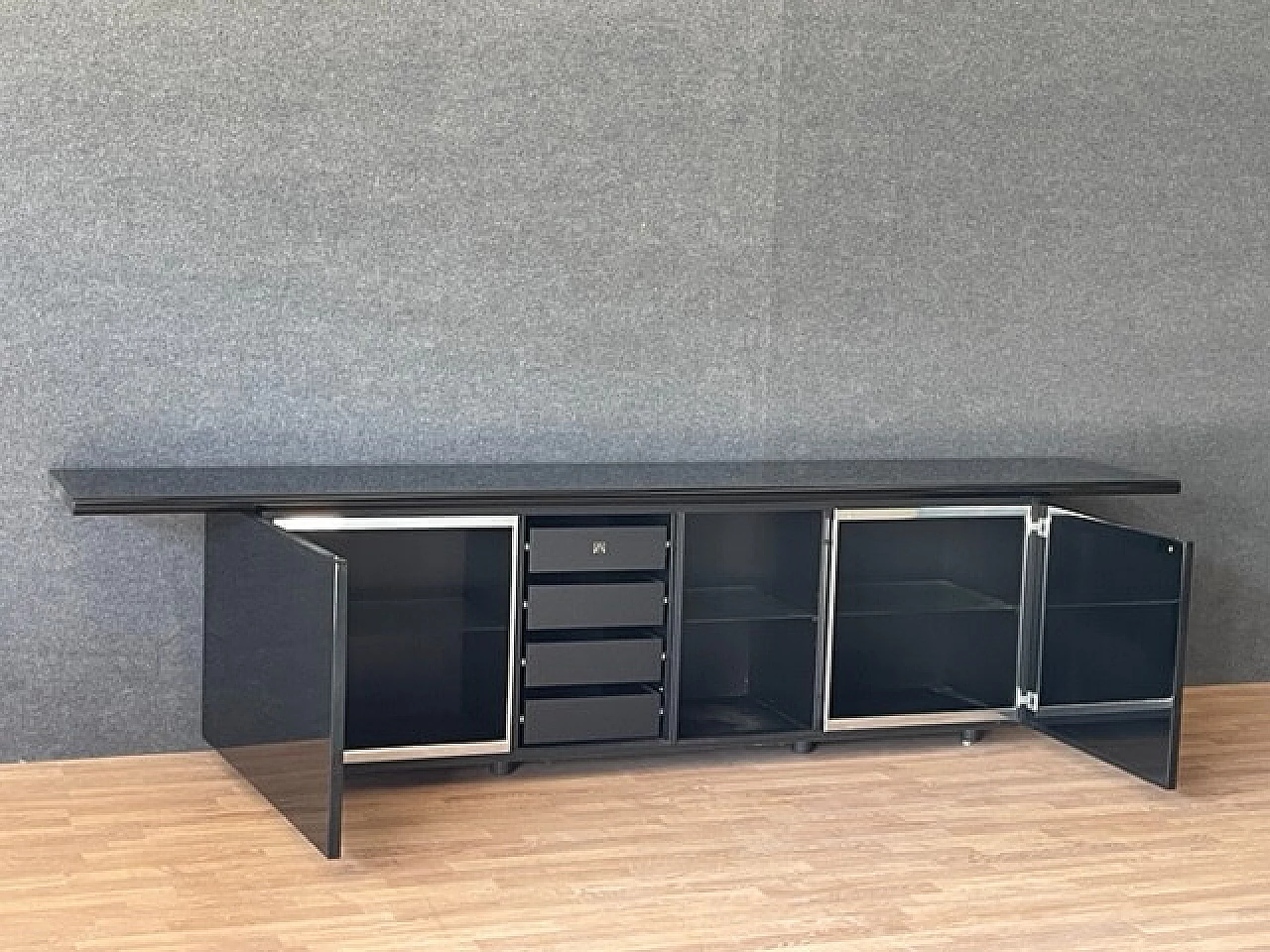
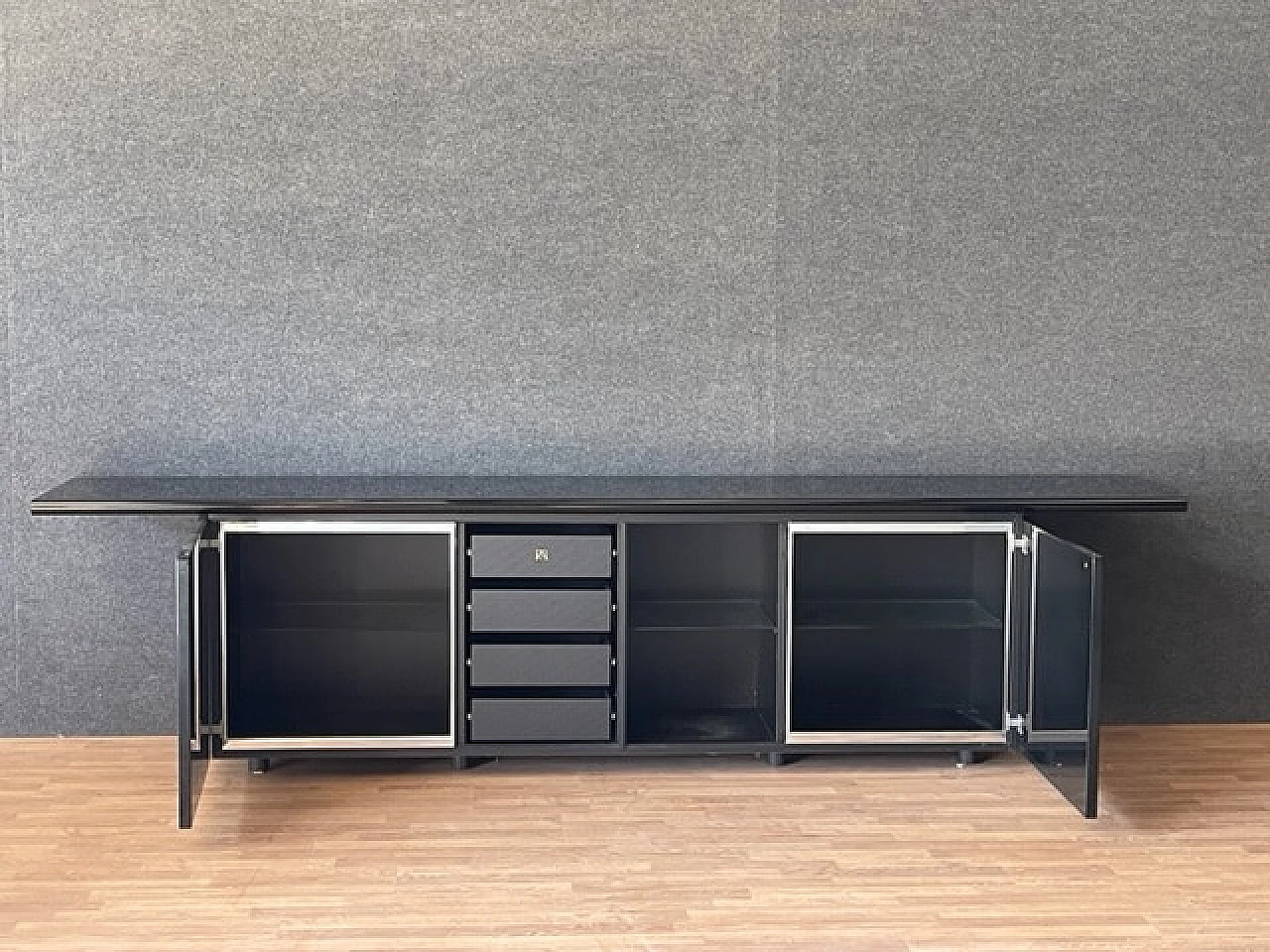
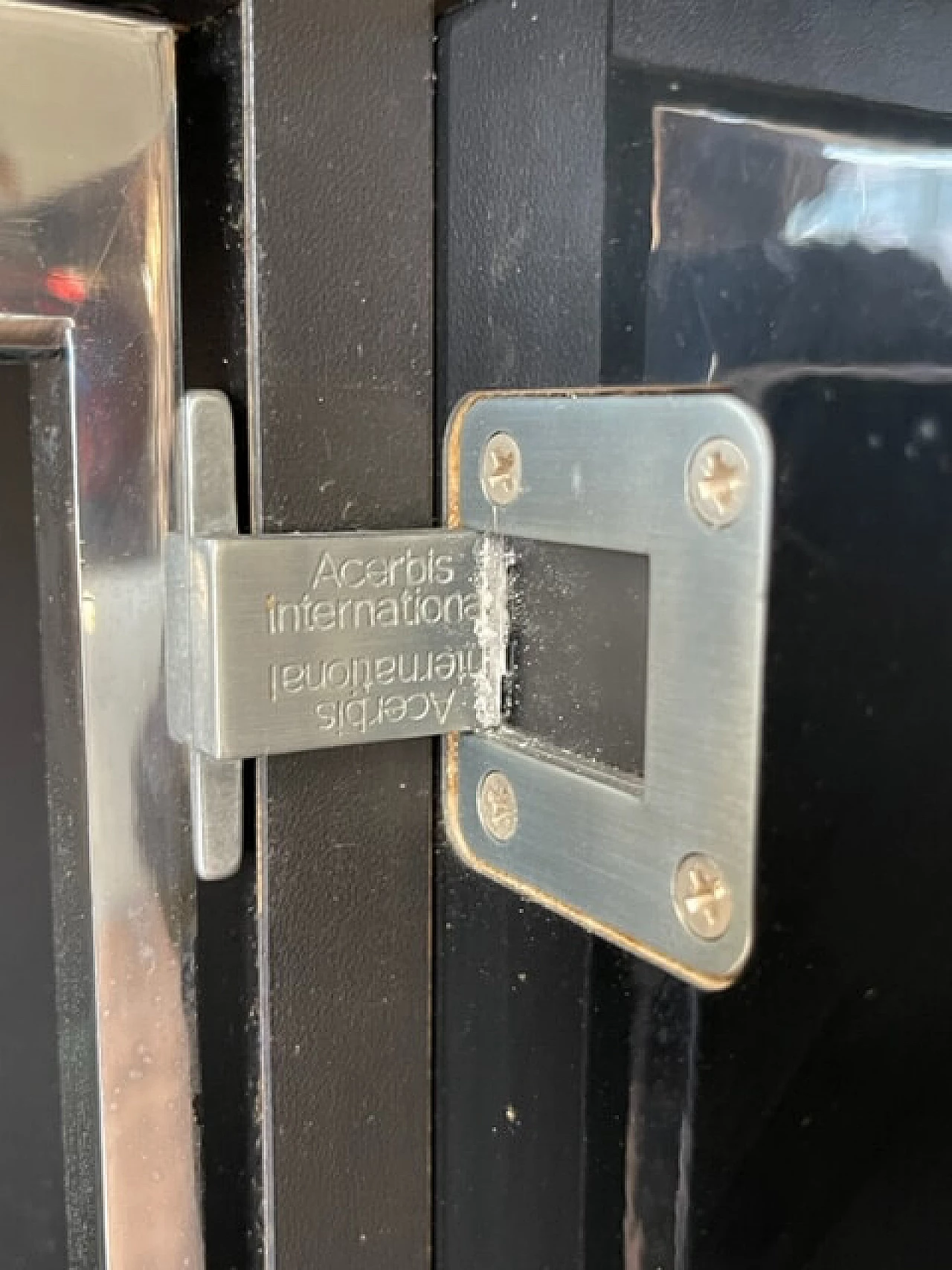
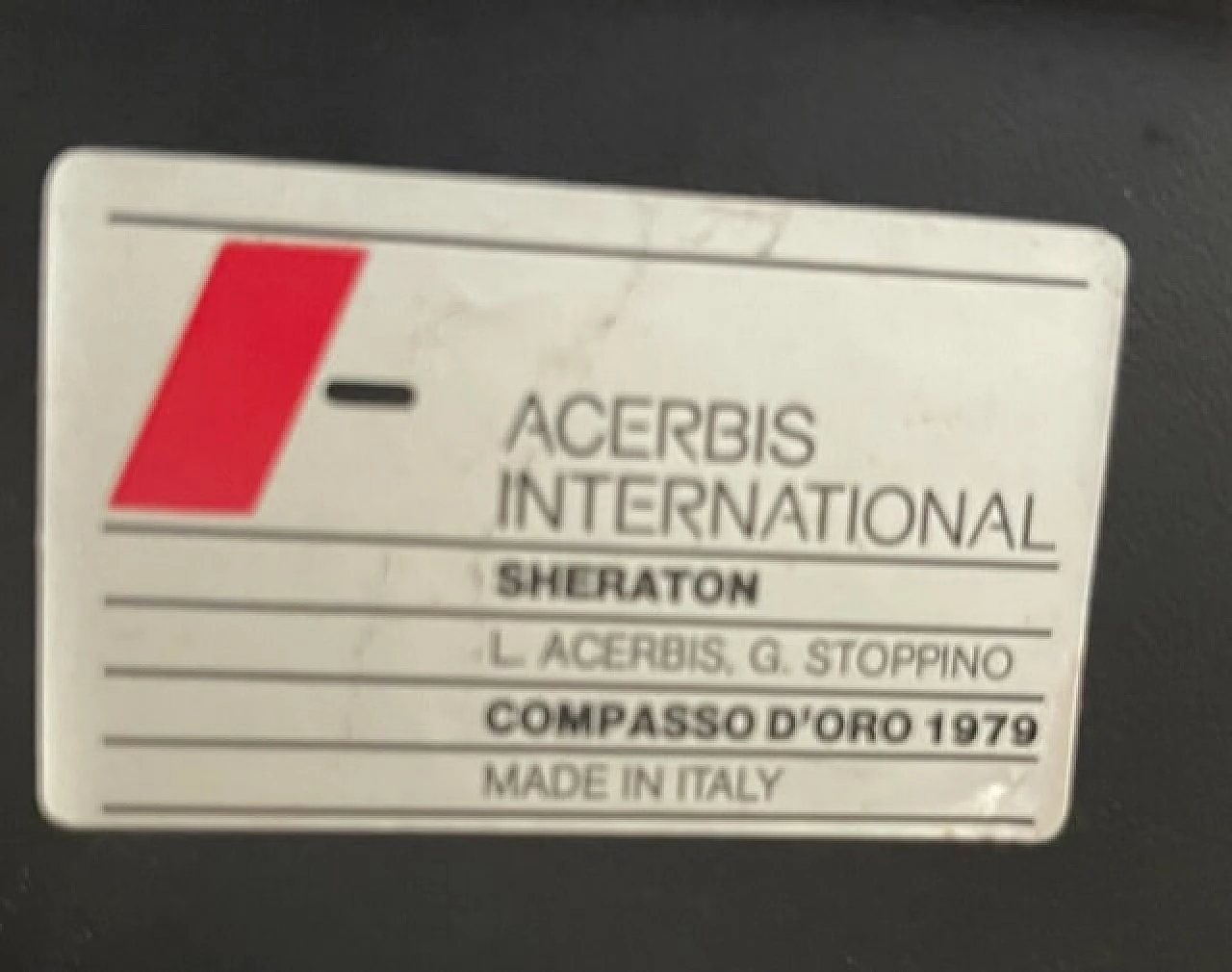
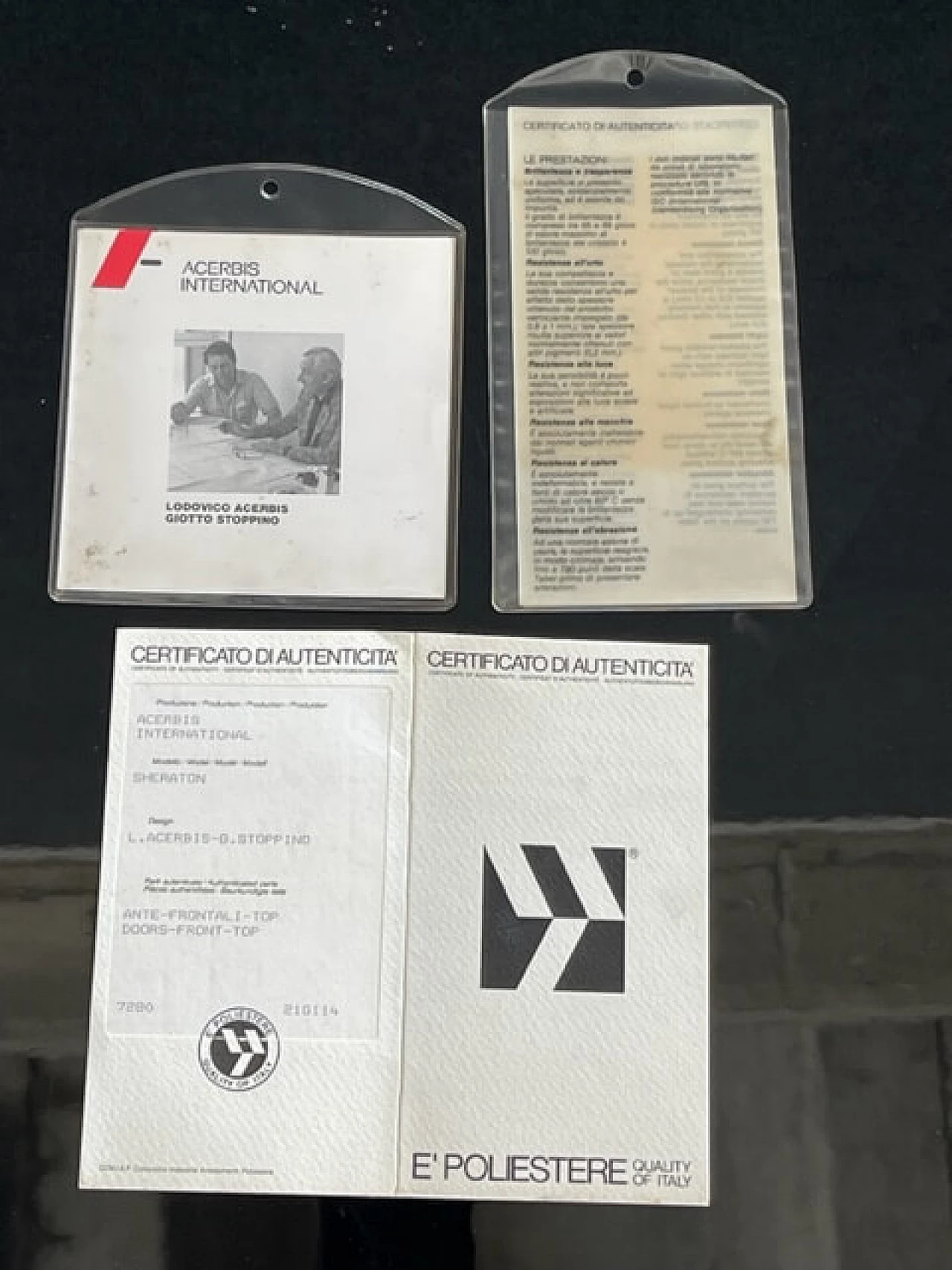
Sheraton sideboard by Giotto Stoppino for Acerbis, 1970s (circa 1977/79). Black lacquered wood and laminate frame, interior glass shelves. Equipped with two sliding doors that open outwards to reveal three spaces with glass shelves and four drawers in the central part. This model won the Compasso d'Oro award in 1979. The sideboard is complete with its original period certificates (see photo) Bibliography: Flavio Conti, I progettisti Italiani. Giotto Stoppino, Rima, Milan, 1992. pp. 52-98. Giuliana Gramigna, Repertorio 1950-2000, Allemandi, Turin, 2003 p. 248. Giotto Stoppino is one of the central figures of Italian Neoliberty. He made his name at the 54th Triennale where he exhibited a series of innovative pieces made of curved plywood, a clear inspiration from the Scandinavian style that was very much in vogue in the 1950s. He began a fruitful collaboration with Vittorio Gregotti and Lodovico Meneghetti, with whom he also founded a studio based in Novara. From this collaboration came innovative furniture such as the light rush armchairs produced by Bonacina in 1961. The 1970s were the years in which Stoppino became famous for his metal objects such as the 537 lamp for Arteluce that was also displayed in the exhibition 'Italy: the New Domestic Landscape' at MoMA in 1972.
ID: 41333-1686546378-65706
Time period

 SILVER Seller in Cremona, Italia