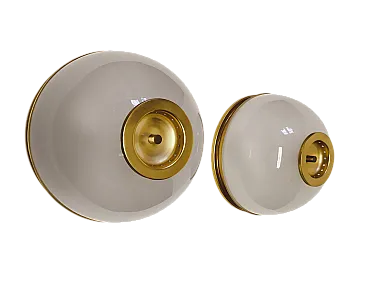
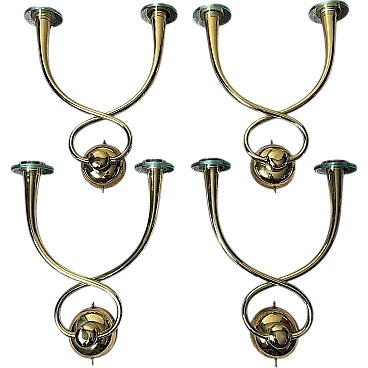
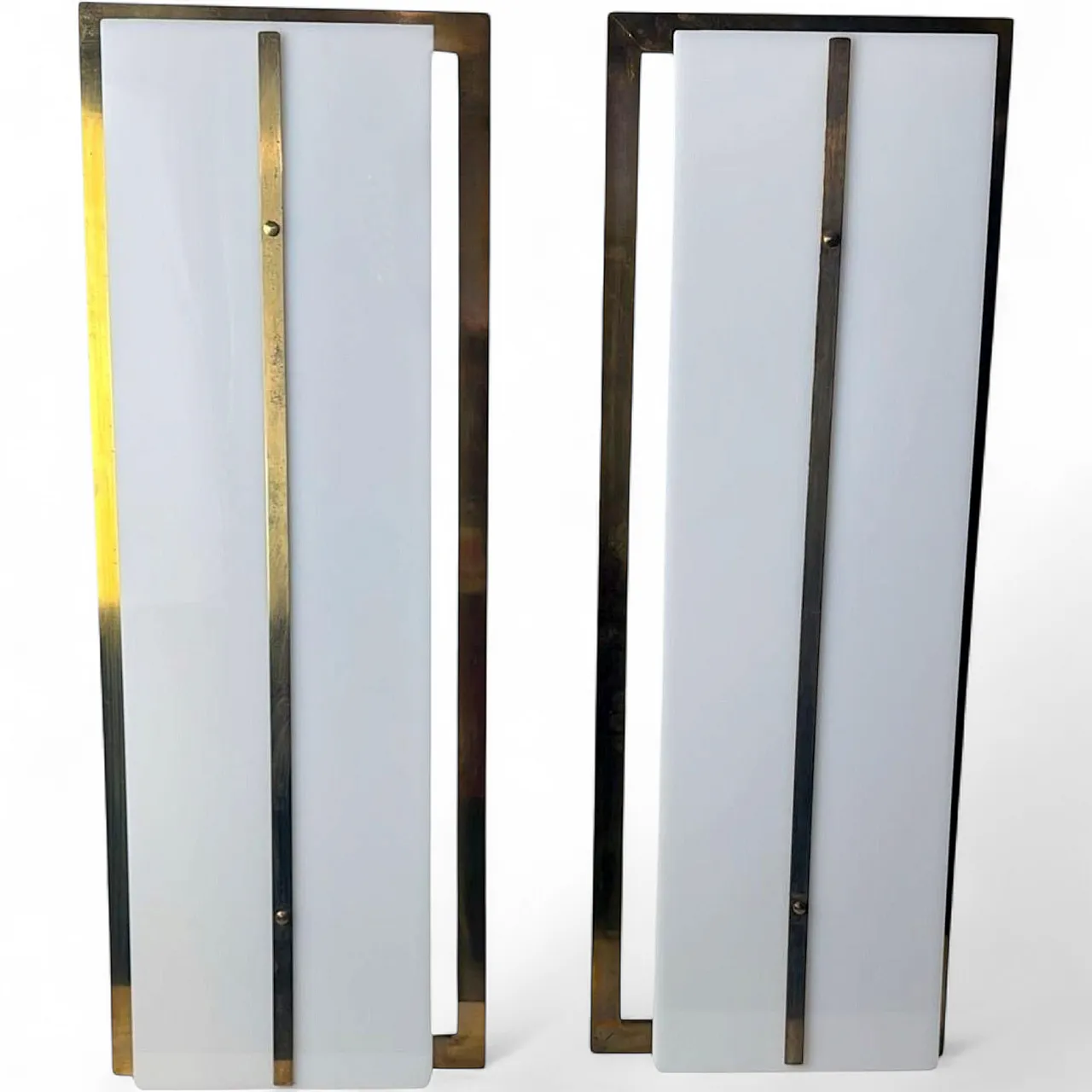
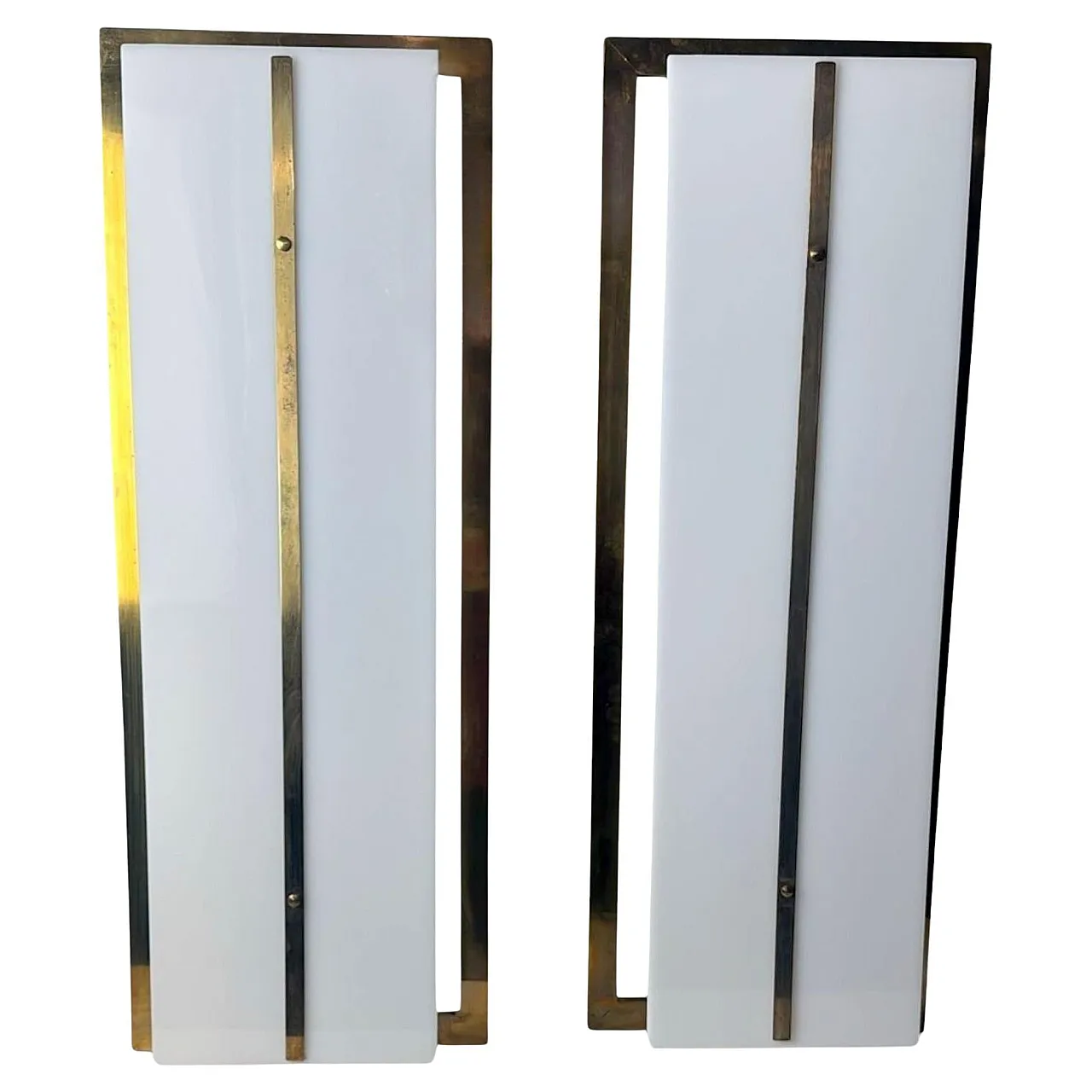
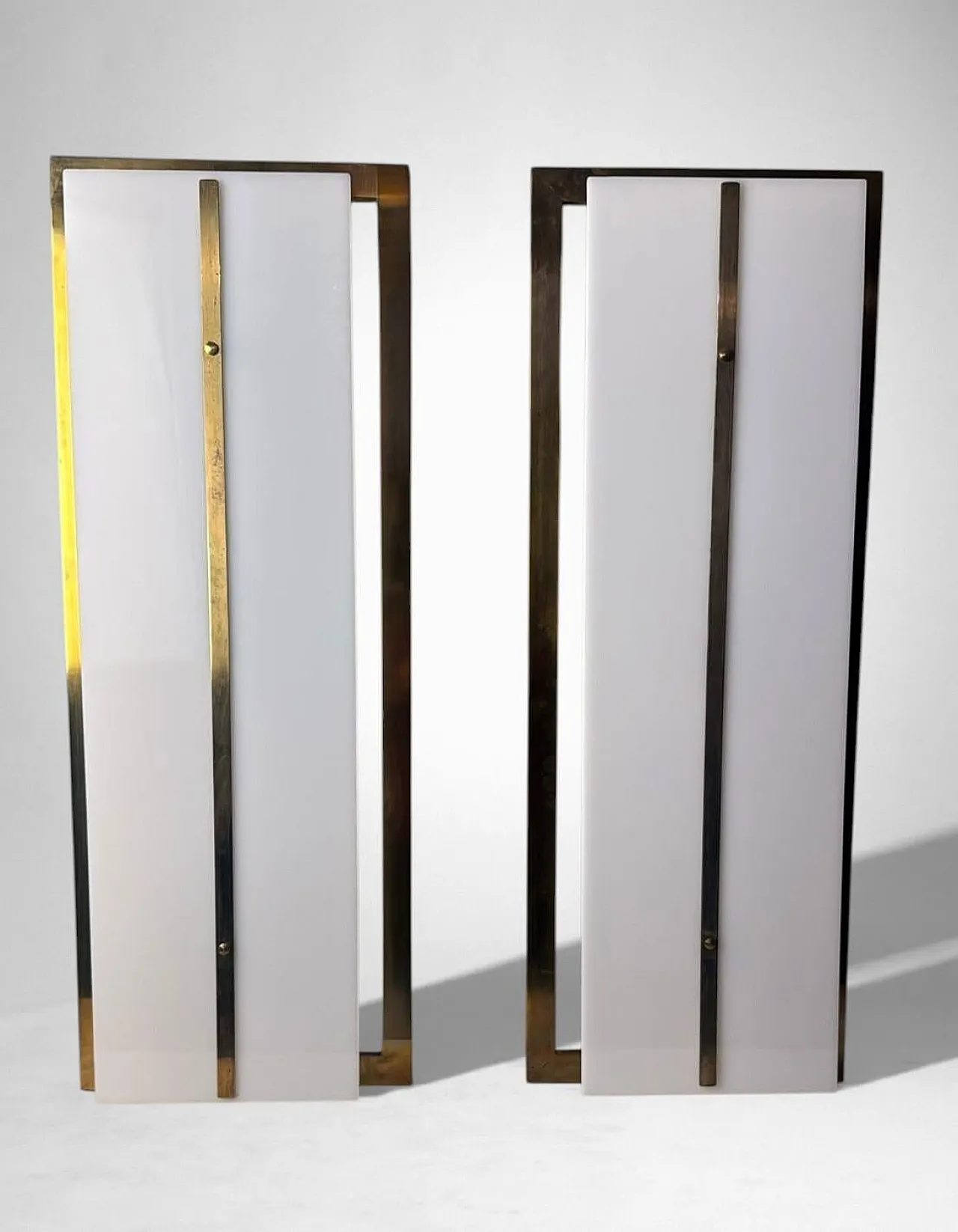
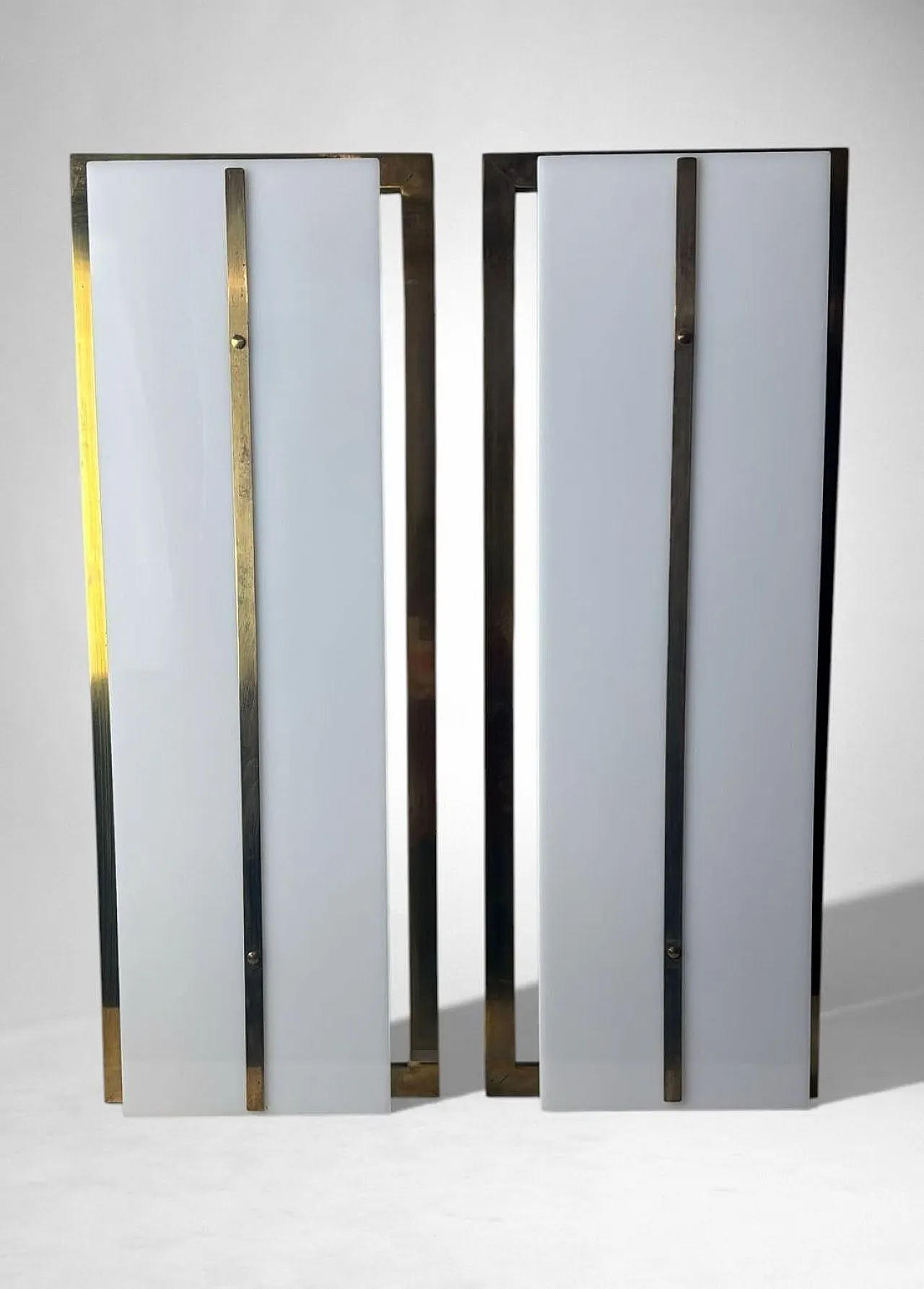
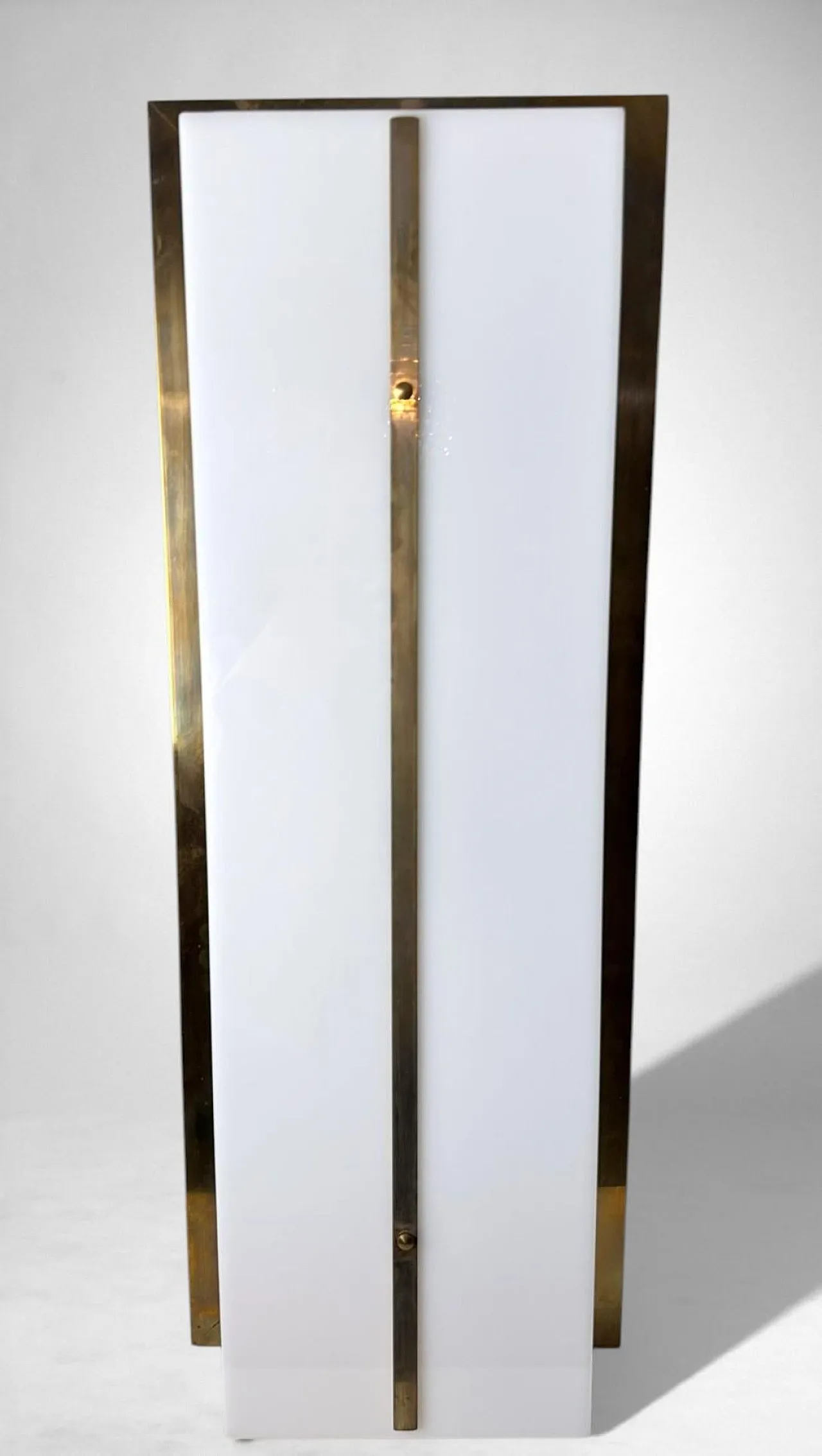
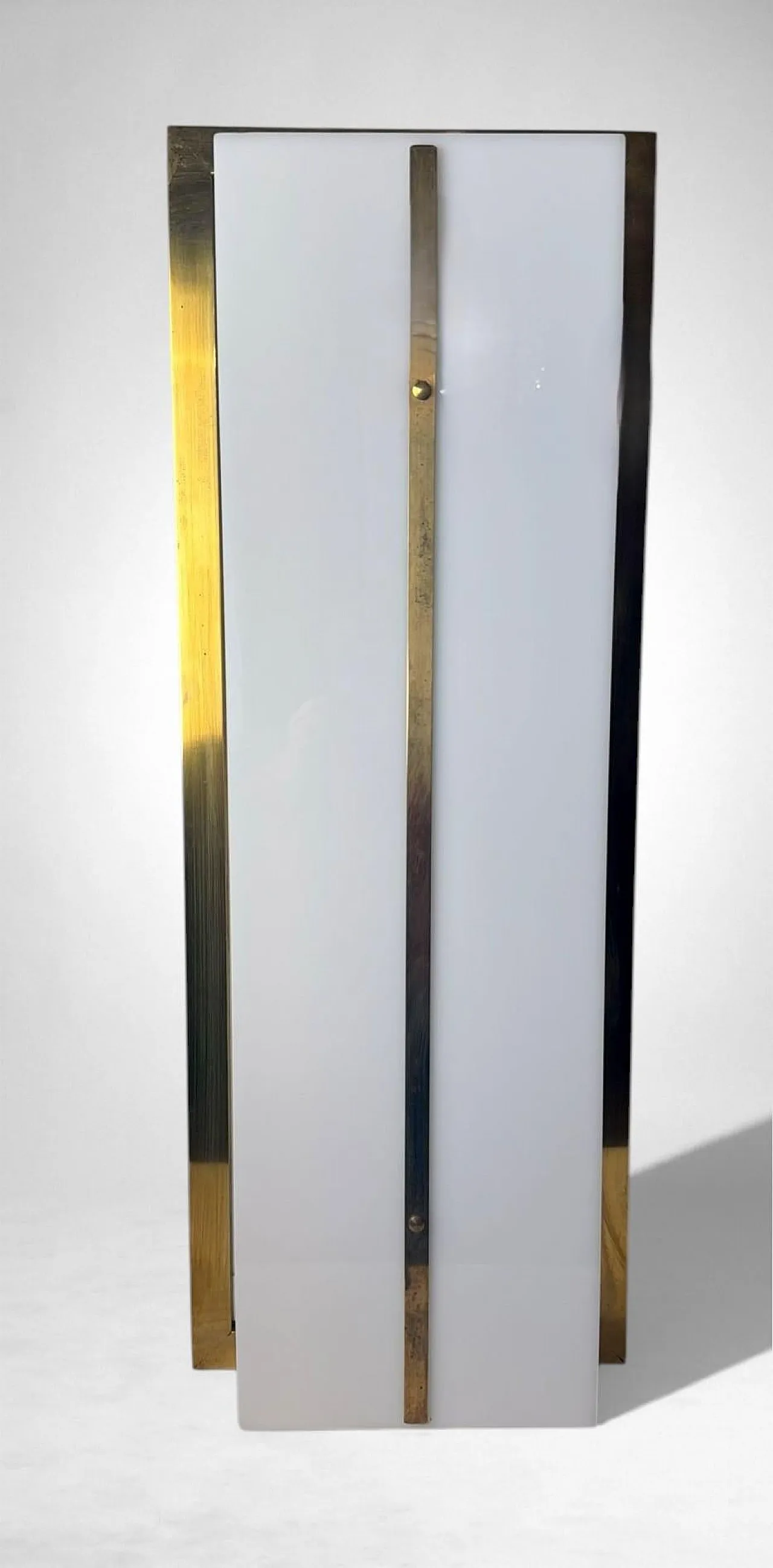
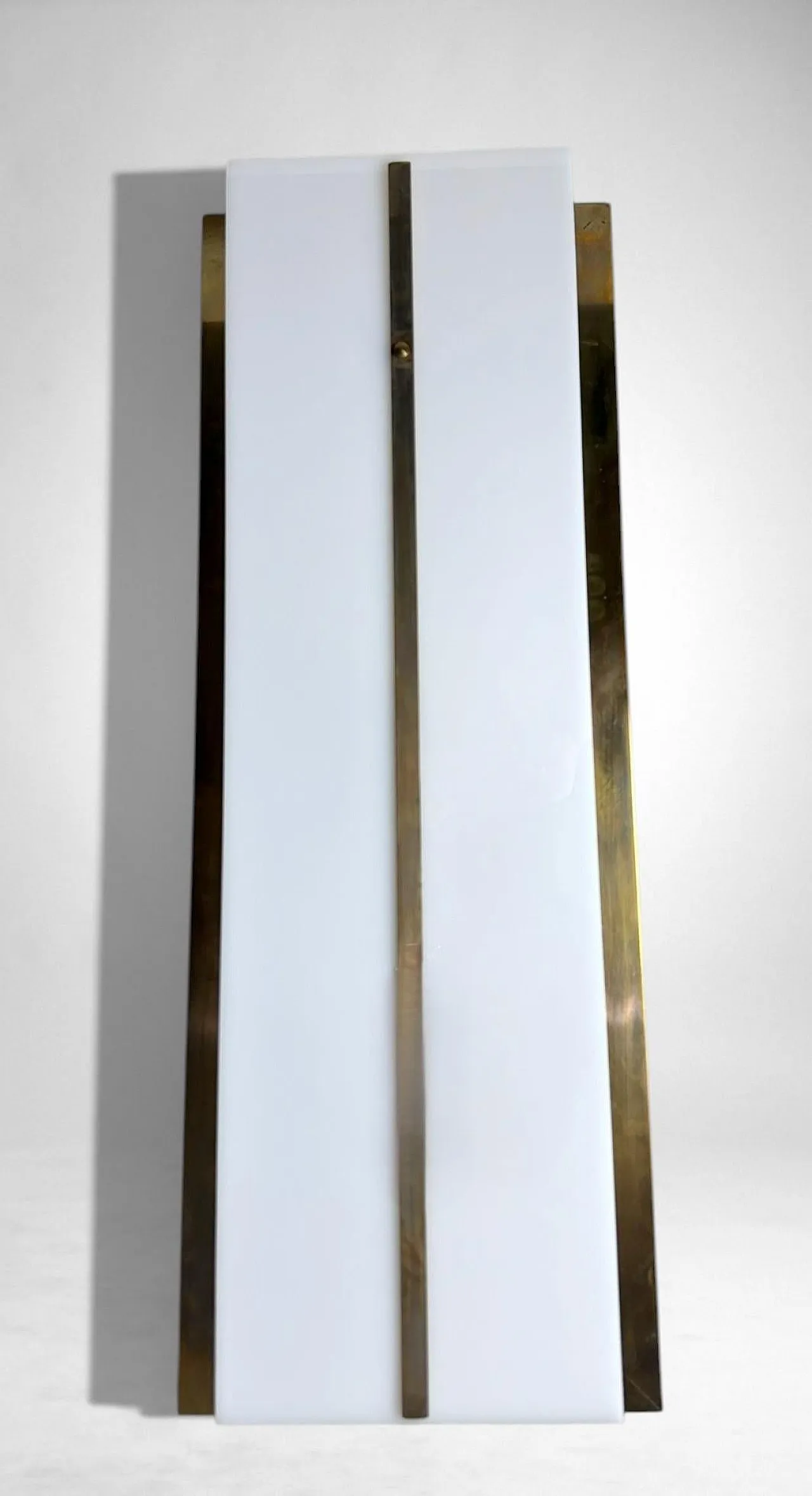
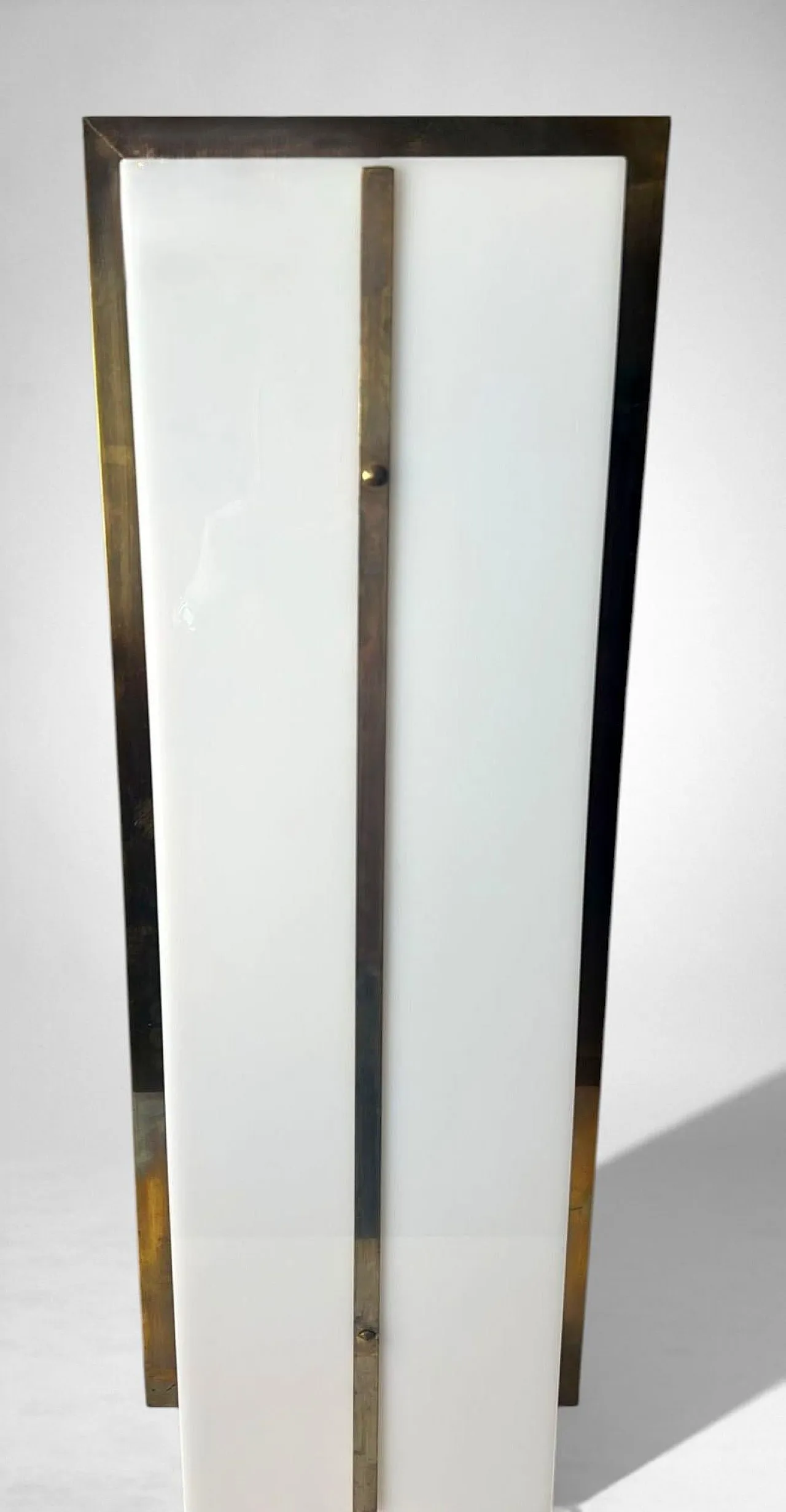
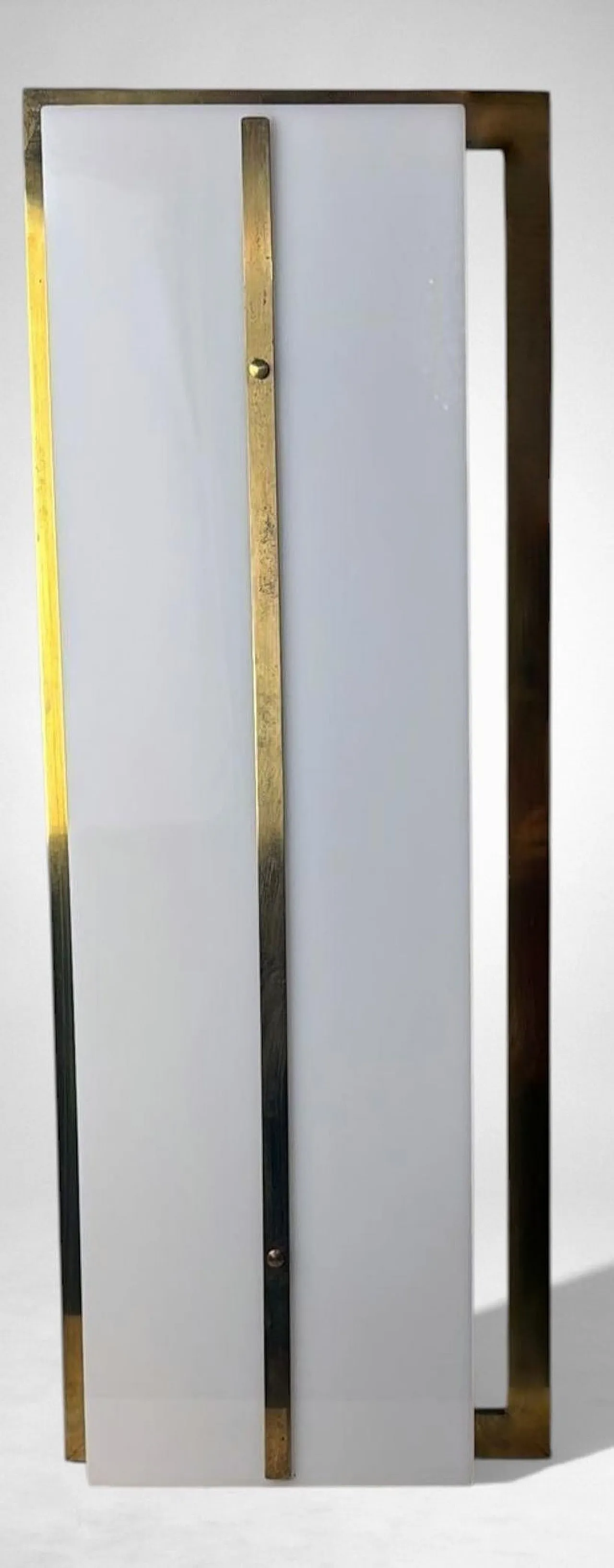
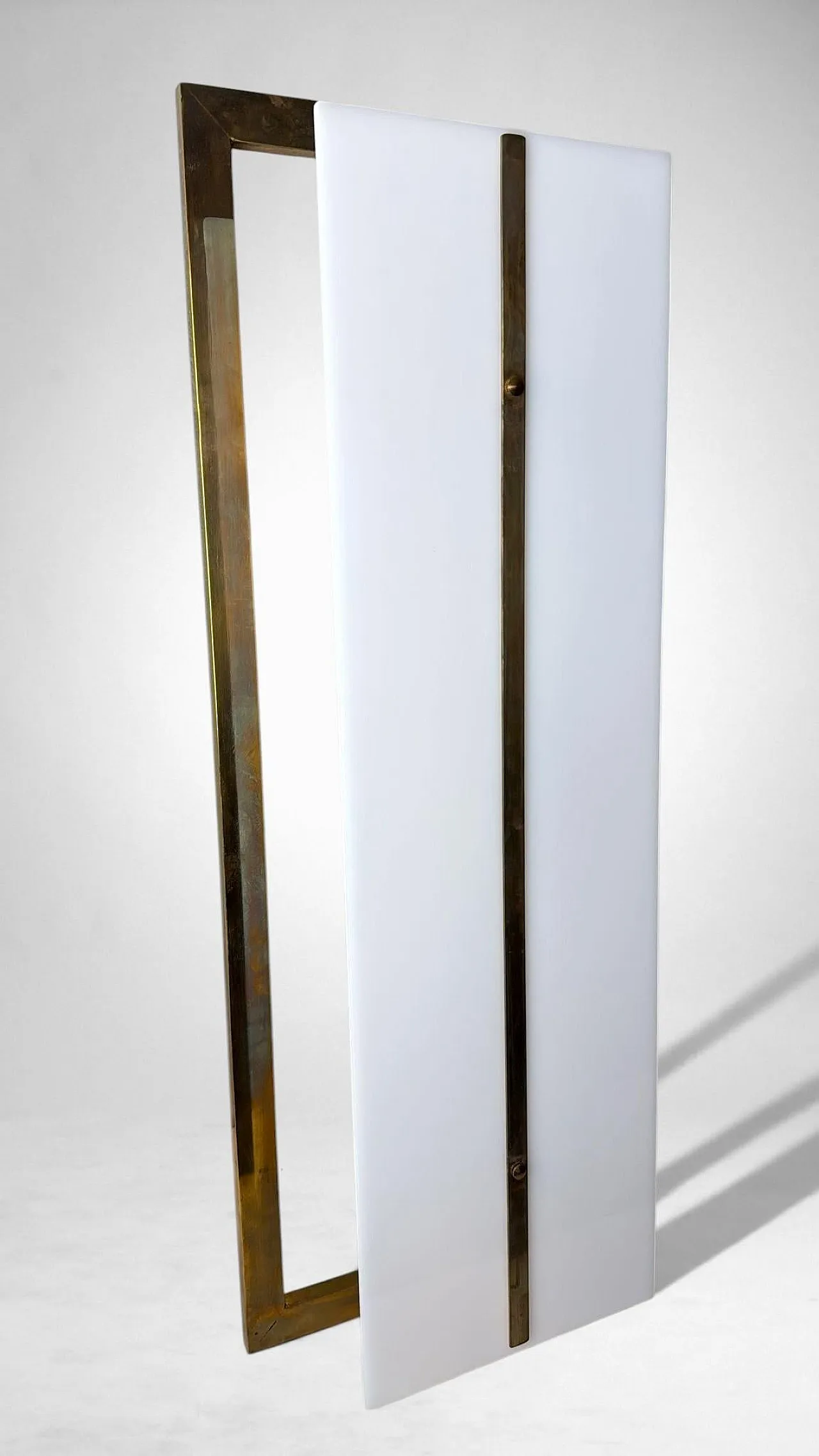
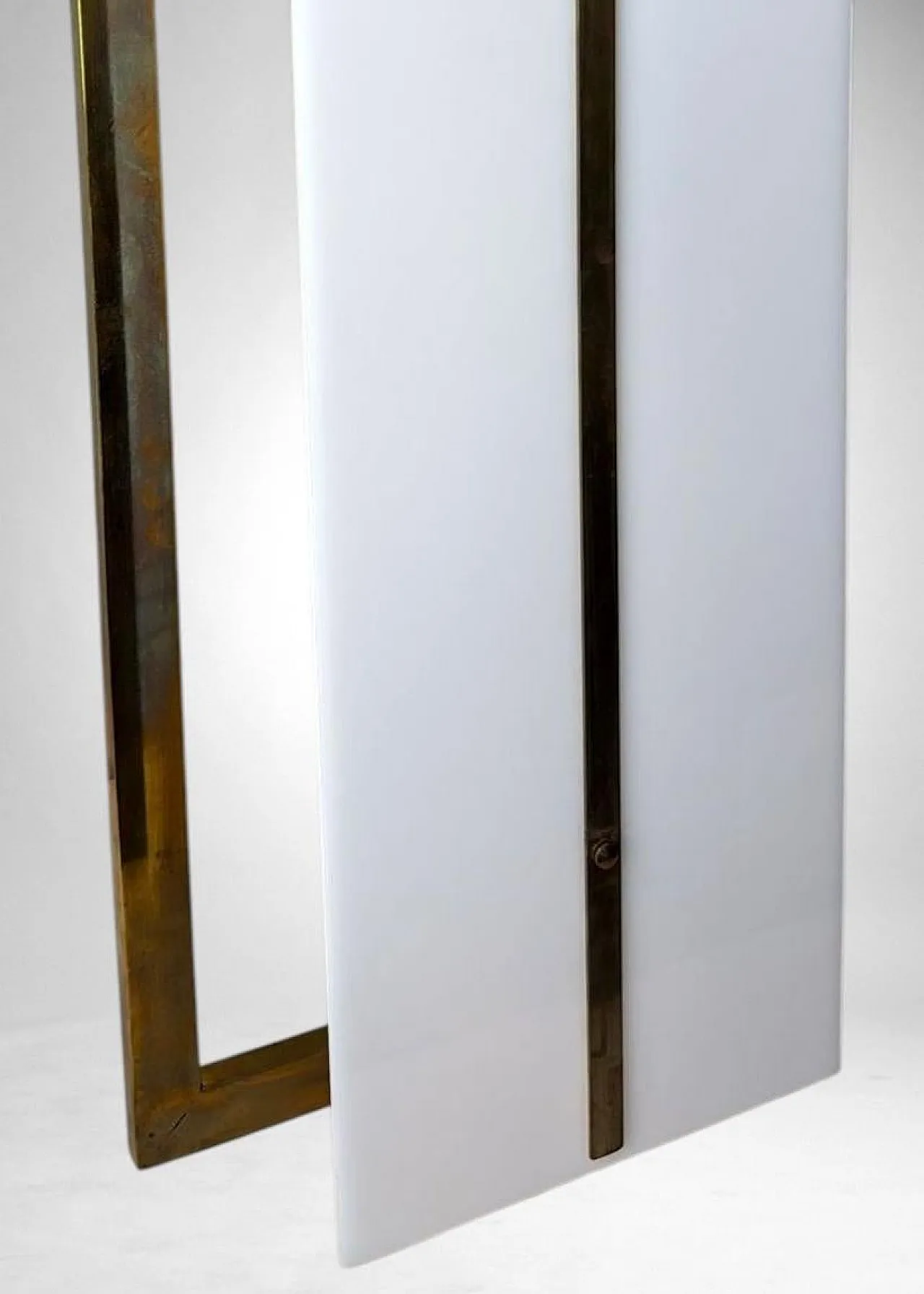
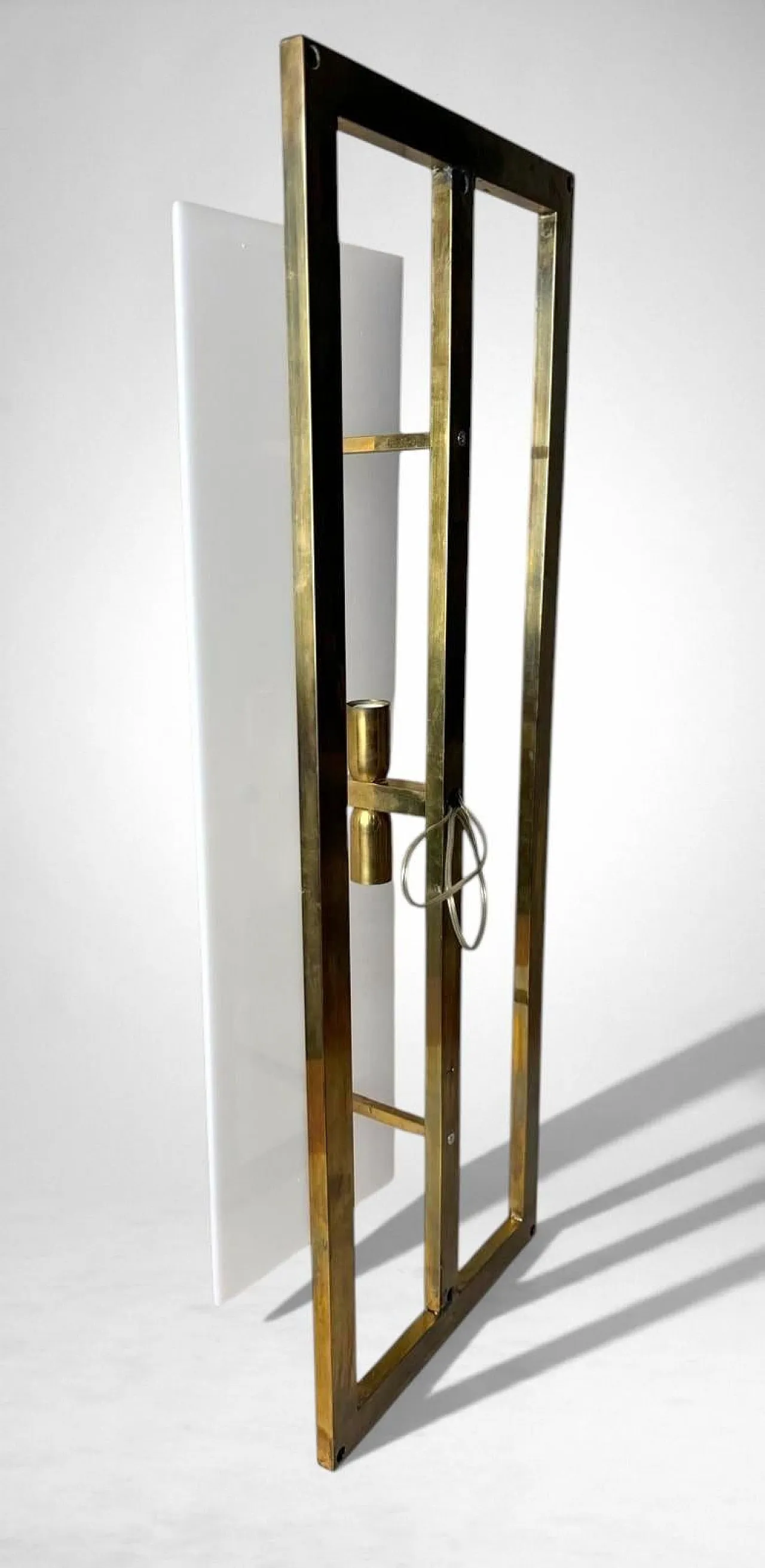
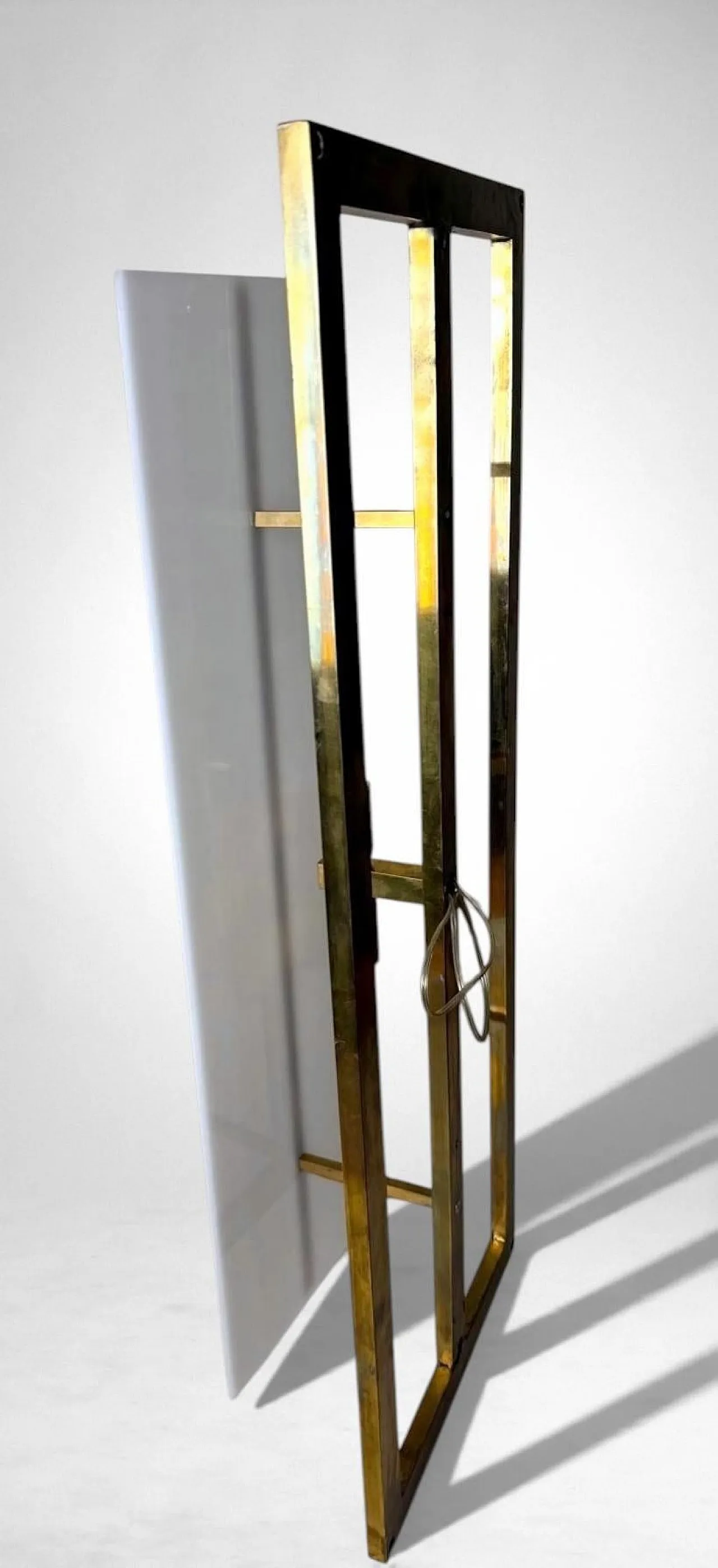
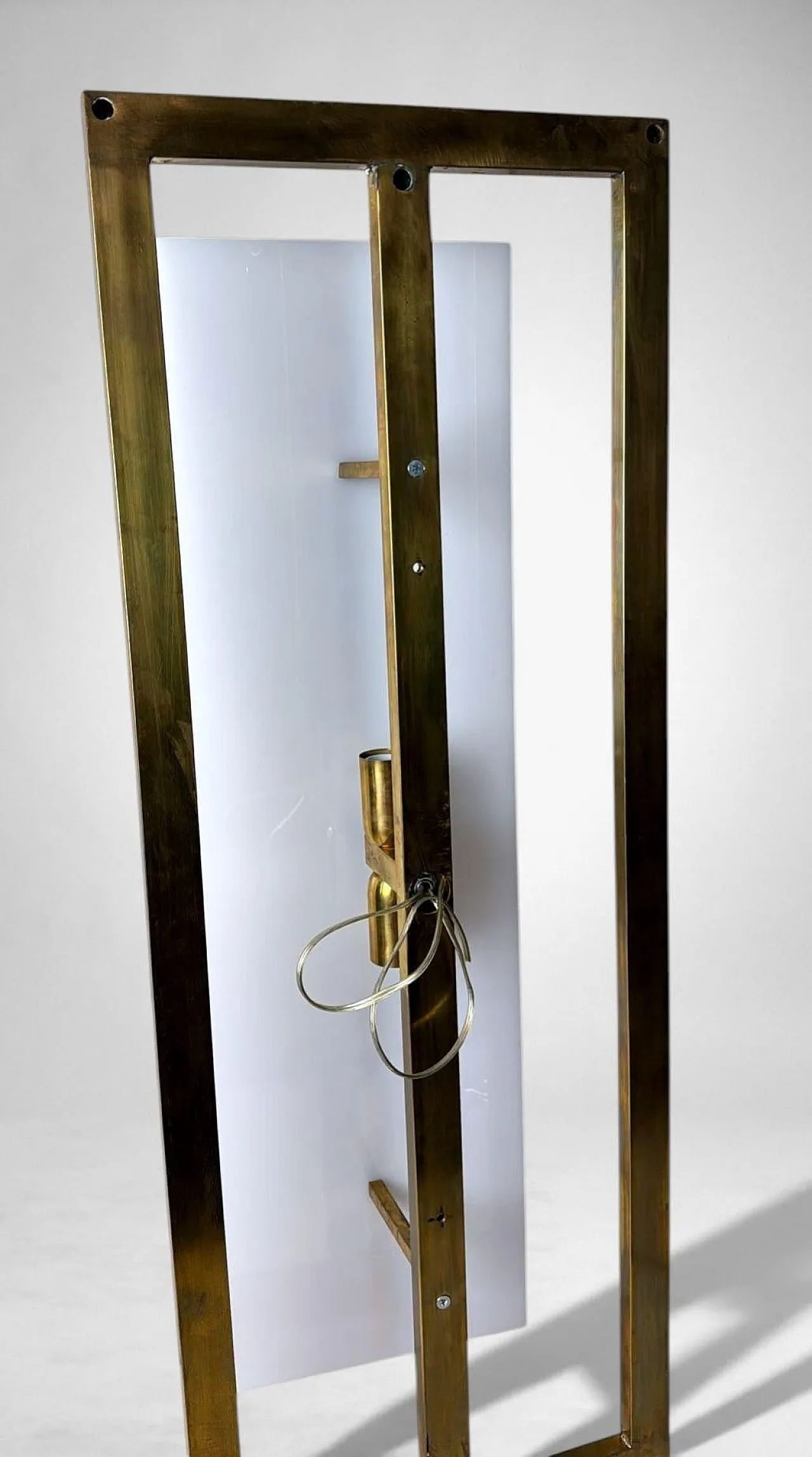
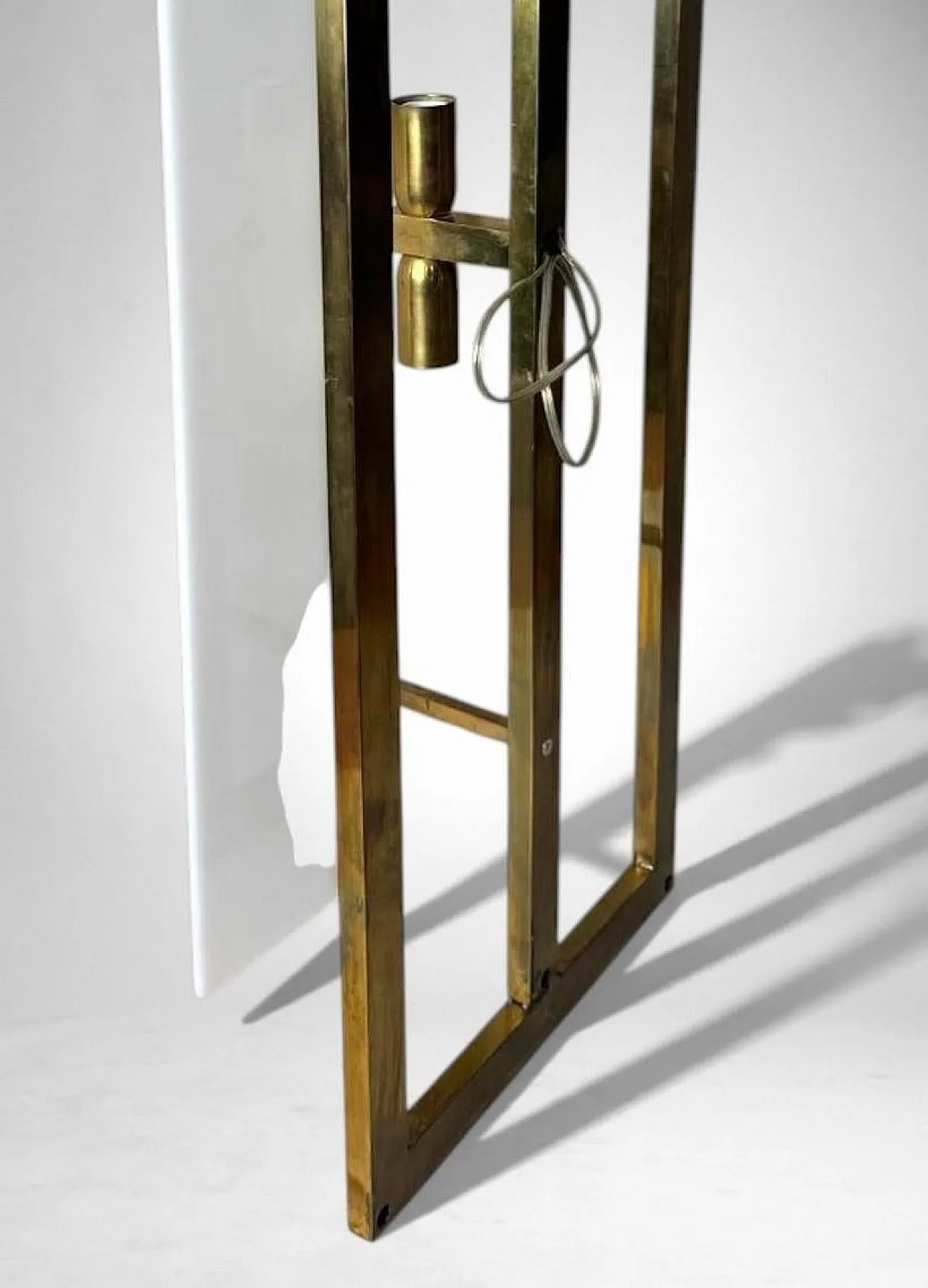
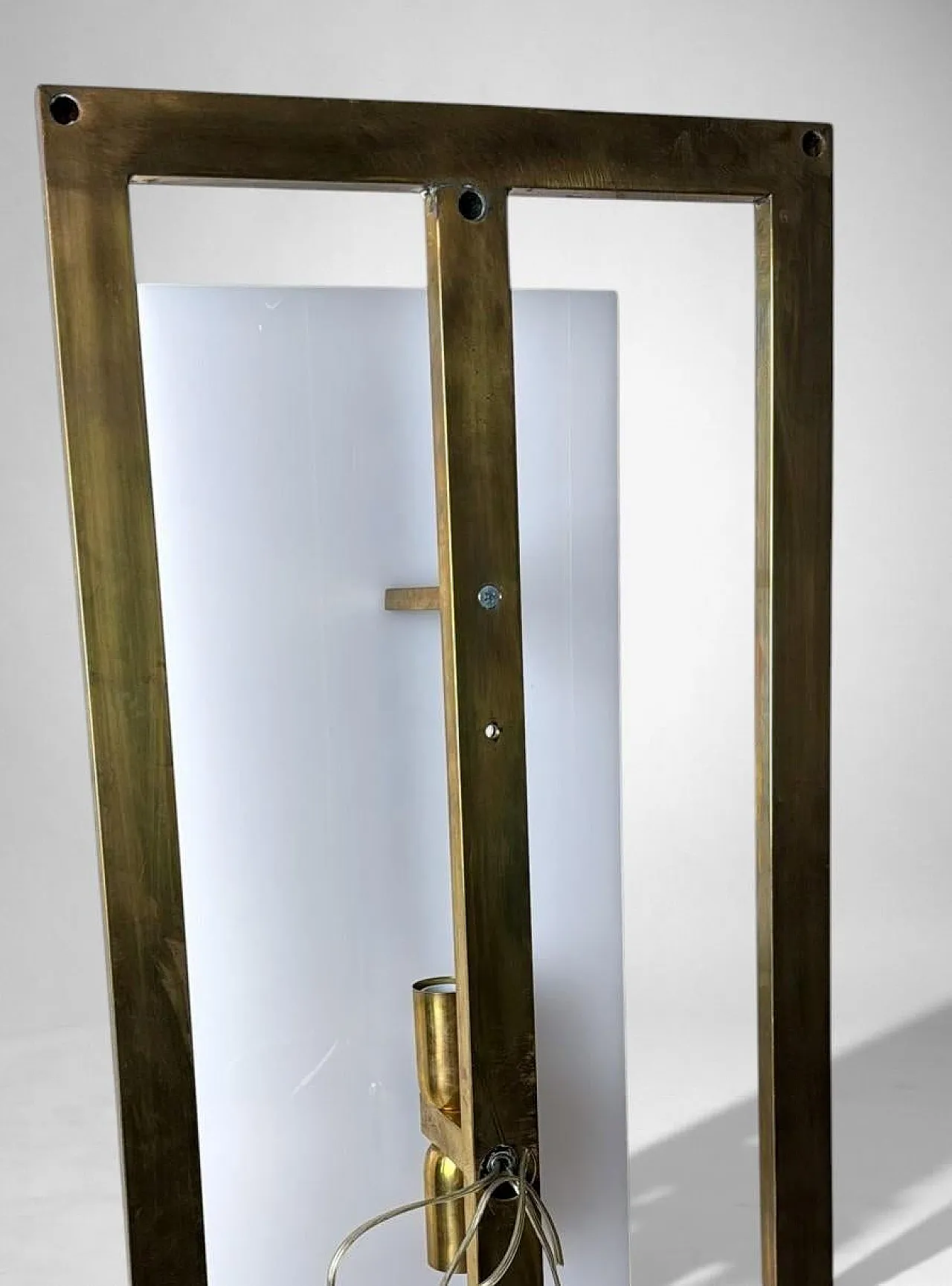
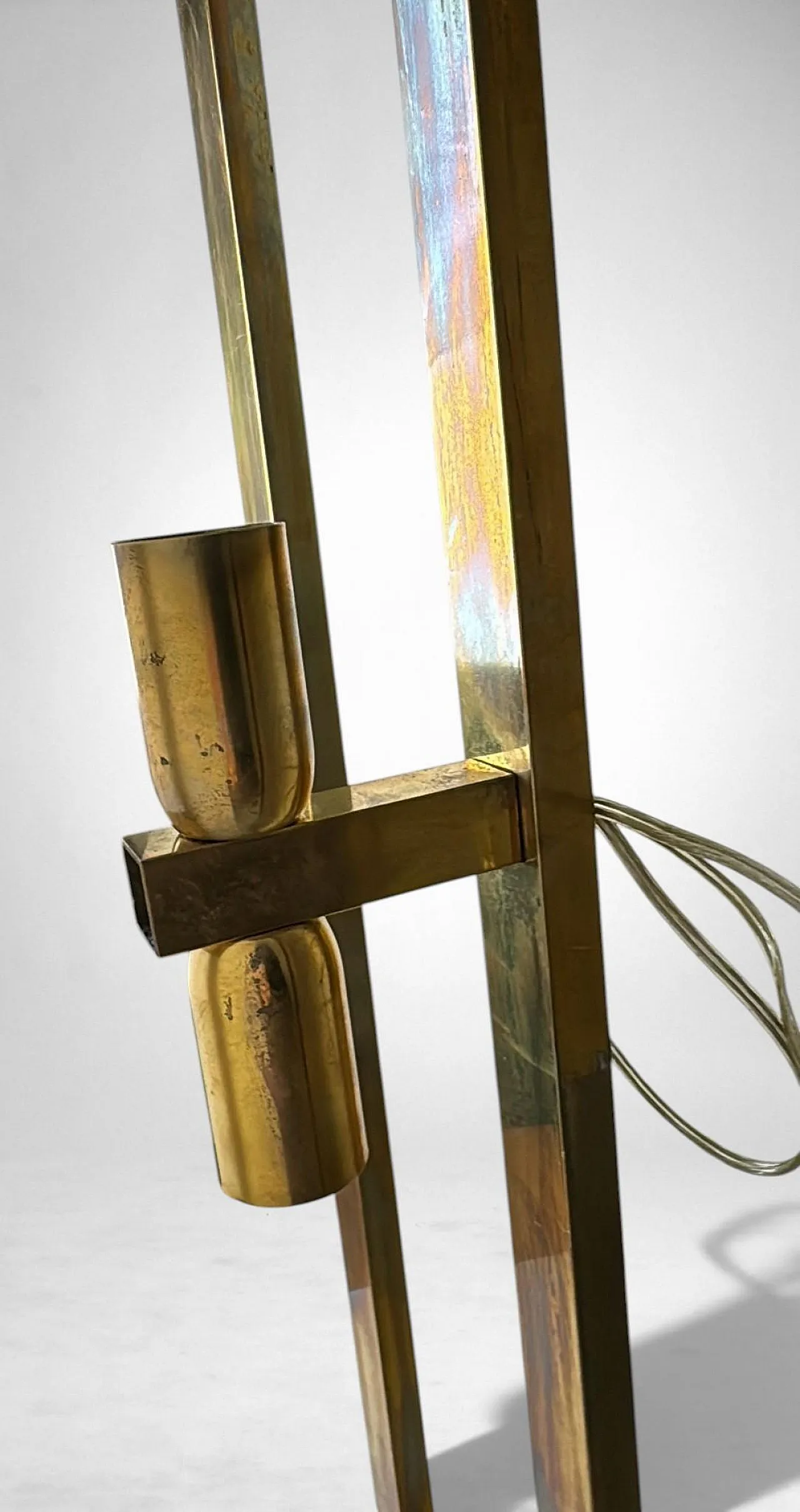
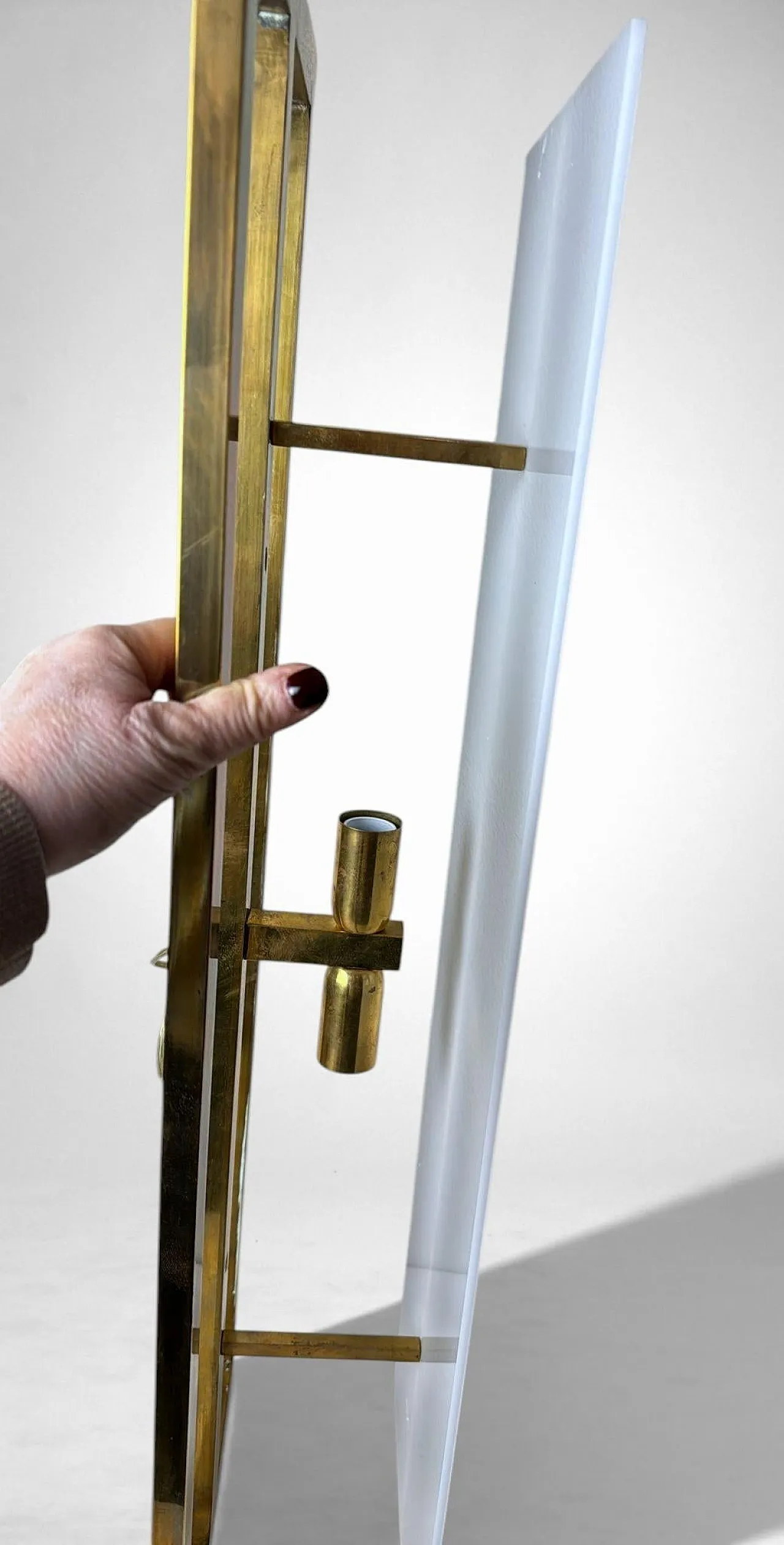
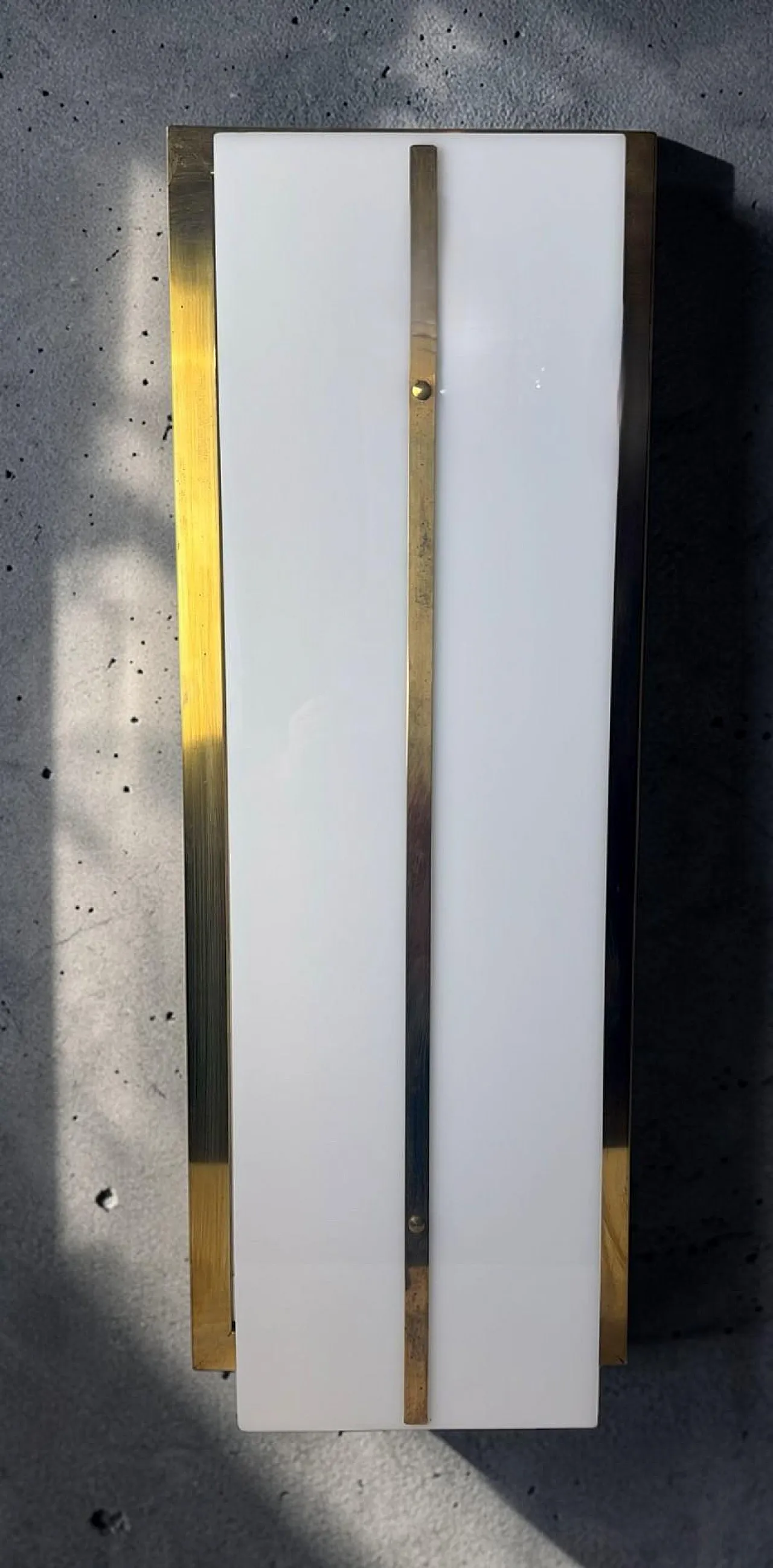
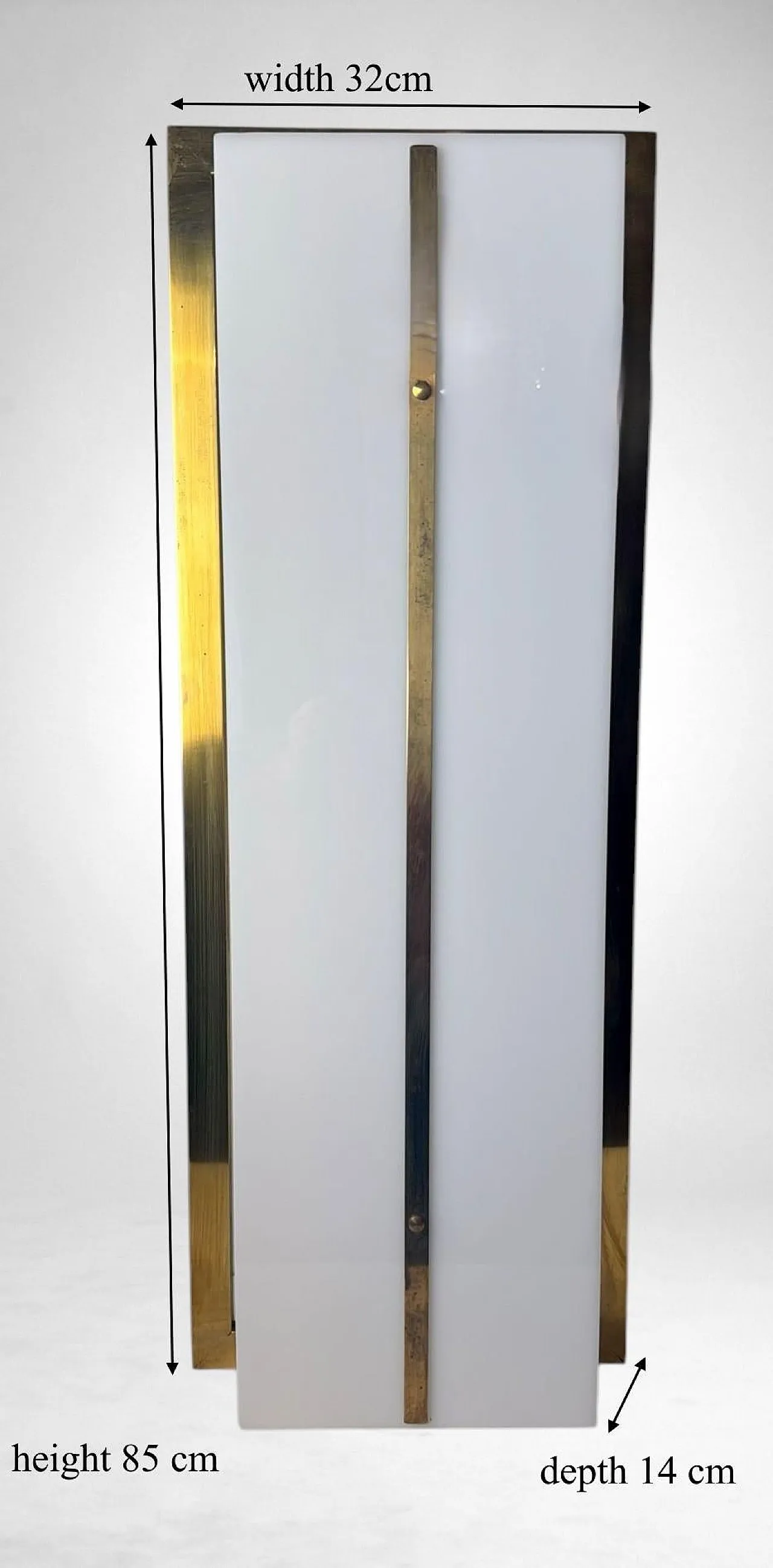
Stunning and highly decorative pair of large wall sconces in the style of Romeo Rega. The robust and substantial structure is crafted from solid brushed and polished brass, featuring a clean and essential design of fine artisanal quality. Firmly mounted to the frame are two flat rectangular panels of opaline plexiglass; positioned centrally behind each panel are two light sources. When illuminated, the sconces acquire an even greater sense of elegance, diffusing light in a soft and balanced manner. They were produced between 1970 and 1975 by a Roman craftsman working in the Magliana district of Rome, inspired by the designs of the celebrated Italian designer Romeo Rega. Romeo Rega (1925–1984) was a Roman designer who, over the course of his forty-year career, established himself as a pioneer and leading figure of the golden age of Italian design, both nationally and internationally. The 1970s marked a period of profound cultural transformation in Italy, when design became a fertile ground for experimentation in both form and materials. Within this dynamic context, Rega successfully combined traditional artisanal craftsmanship with modern industrial materials such as plexiglass, glass, brass, and steel. Many artisans of the period, eager to move beyond the limits imposed by conventional materials, embraced plexiglass for its remarkable versatility and ease of fabrication. Its widespread use enabled the creation of elegant, innovative, and modern objects, helping to define the aesthetic language of 1970s contemporary design. Lamps, wall lights, chairs, tables, coffee tables, vases, and magazine racks emerged from the creativity and technical mastery of skilled craftsmen capable of merging imagination with craftsmanship. Plexiglass gradually entered domestic interiors as well, bringing a fresh and contemporary aesthetic to everyday objects that had long remained bound to more traditional design conventions. This pair of sconces features generous proportions while maintaining a sober, luxurious, and refined presence. The simple structure, defined by clean and architectural lines, makes them elegant and prestigious decorative elements that can easily complement a variety of interiors. For those who appreciate the charm of vintage design, introducing pieces of this kind can be an ideal solution: beyond visually warming a space, they illuminate interiors with a timeless and sophisticated character. Plexiglass is a plastic material whose technical name is polymethyl methacrylate (PMMA), also commonly referred to as acrylic. Plexiglas is the best-known commercial name and has become widely used as a generic term. The material was invented in 1928 by German chemist Otto Karl Röhm and was first commercialized in 1933 by the German company Röhm. It is also known under several trade names, including Perspex, Amanite, Lucite, Trespex, Vitroflex, Acrivill, Perclax, Limacryl, Crylux, Oroglas, Setacryl, and Altuglas. The electrical system is in working condition; however, the wiring follows European standards. Voltage compatibility for other countries should always be verified by a qualified electrician prior to use. Dimensions: Height: 85 cm (33.47 in), Width: 32 cm (12.60 in). Depth: 14 cm (5.51 in).



.png)


 SILVER Seller in Prato, Italy