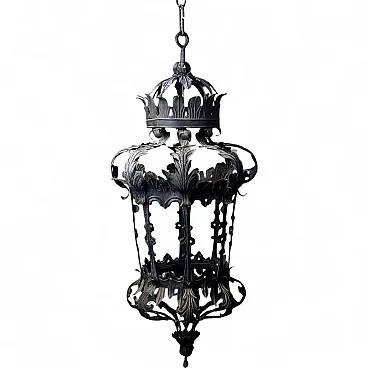
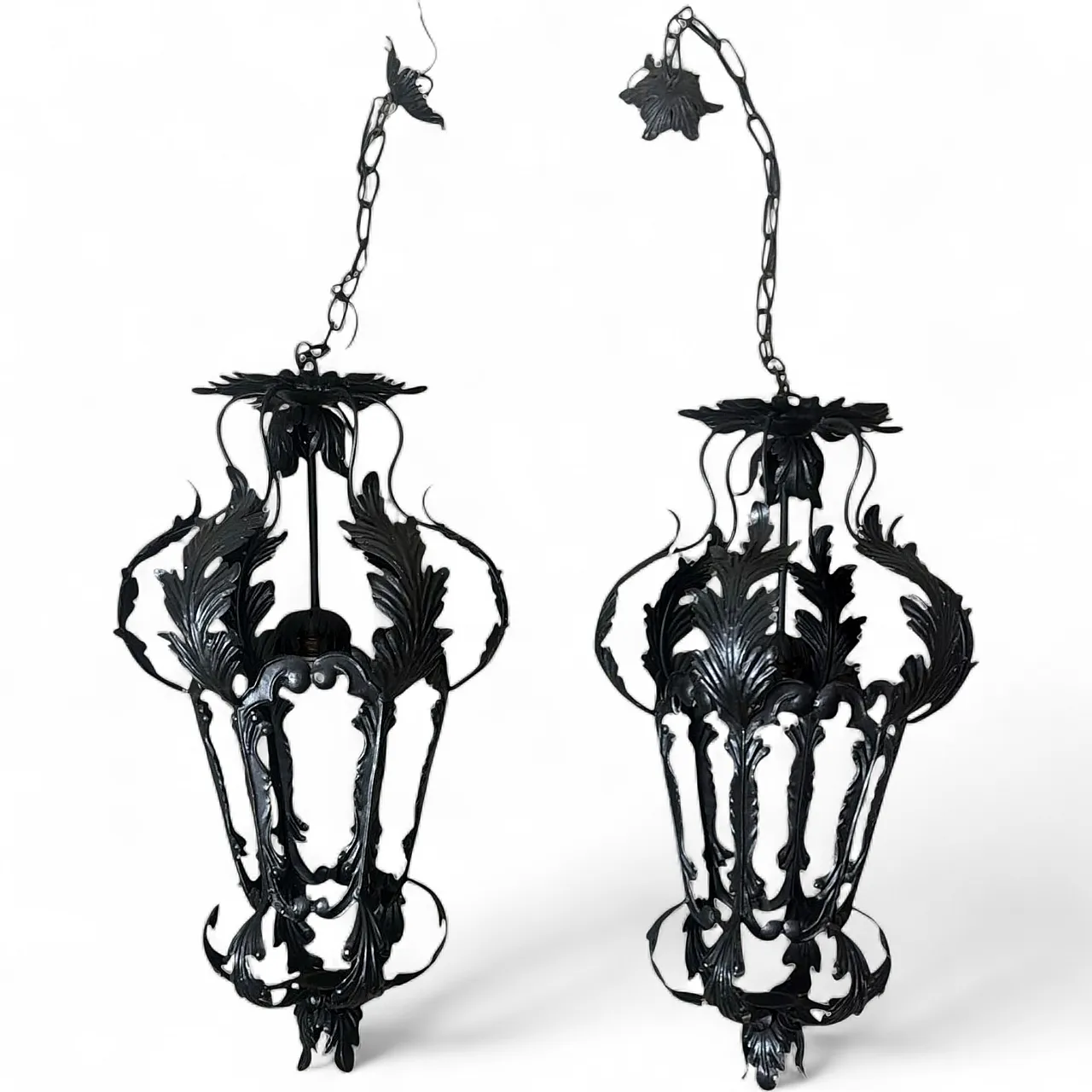
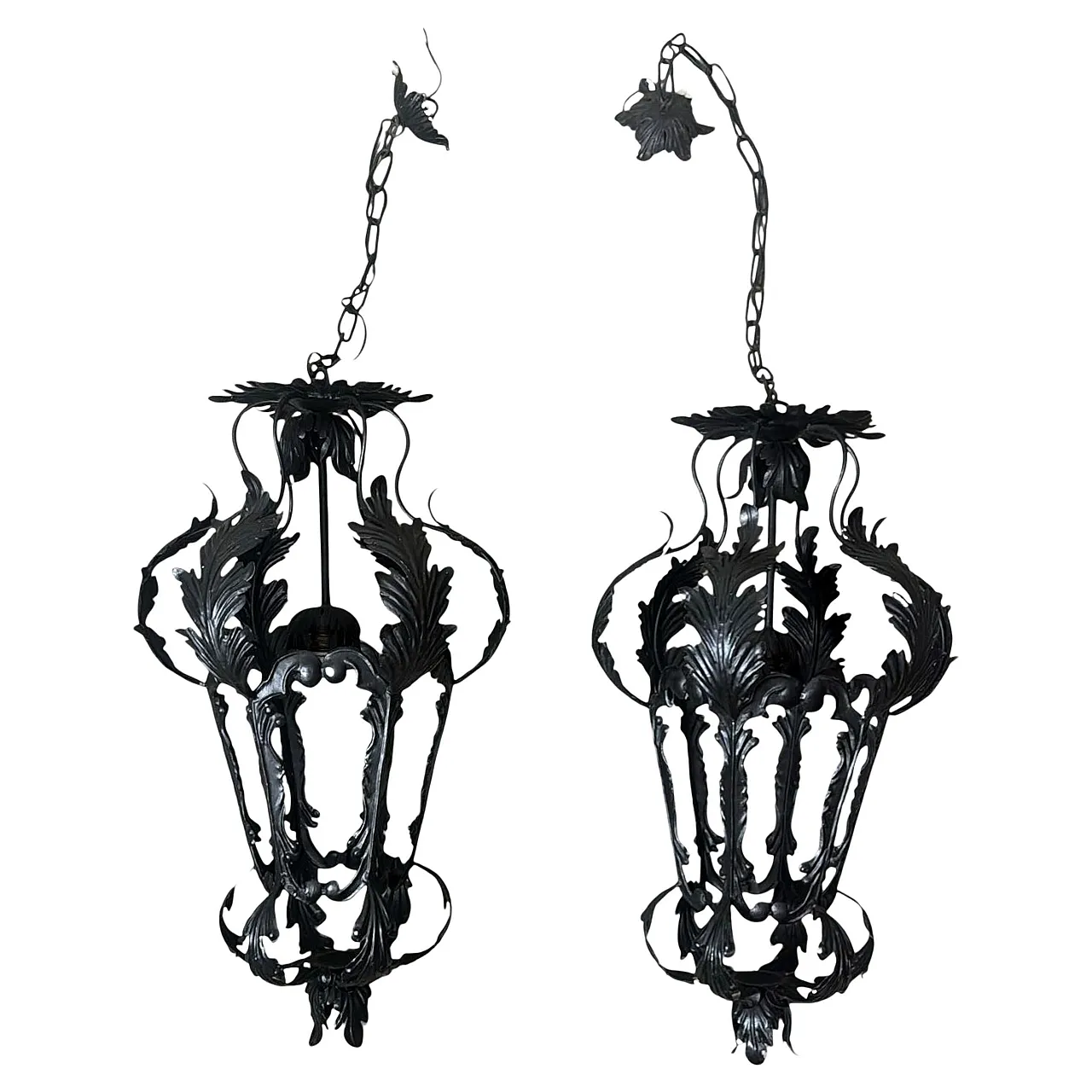
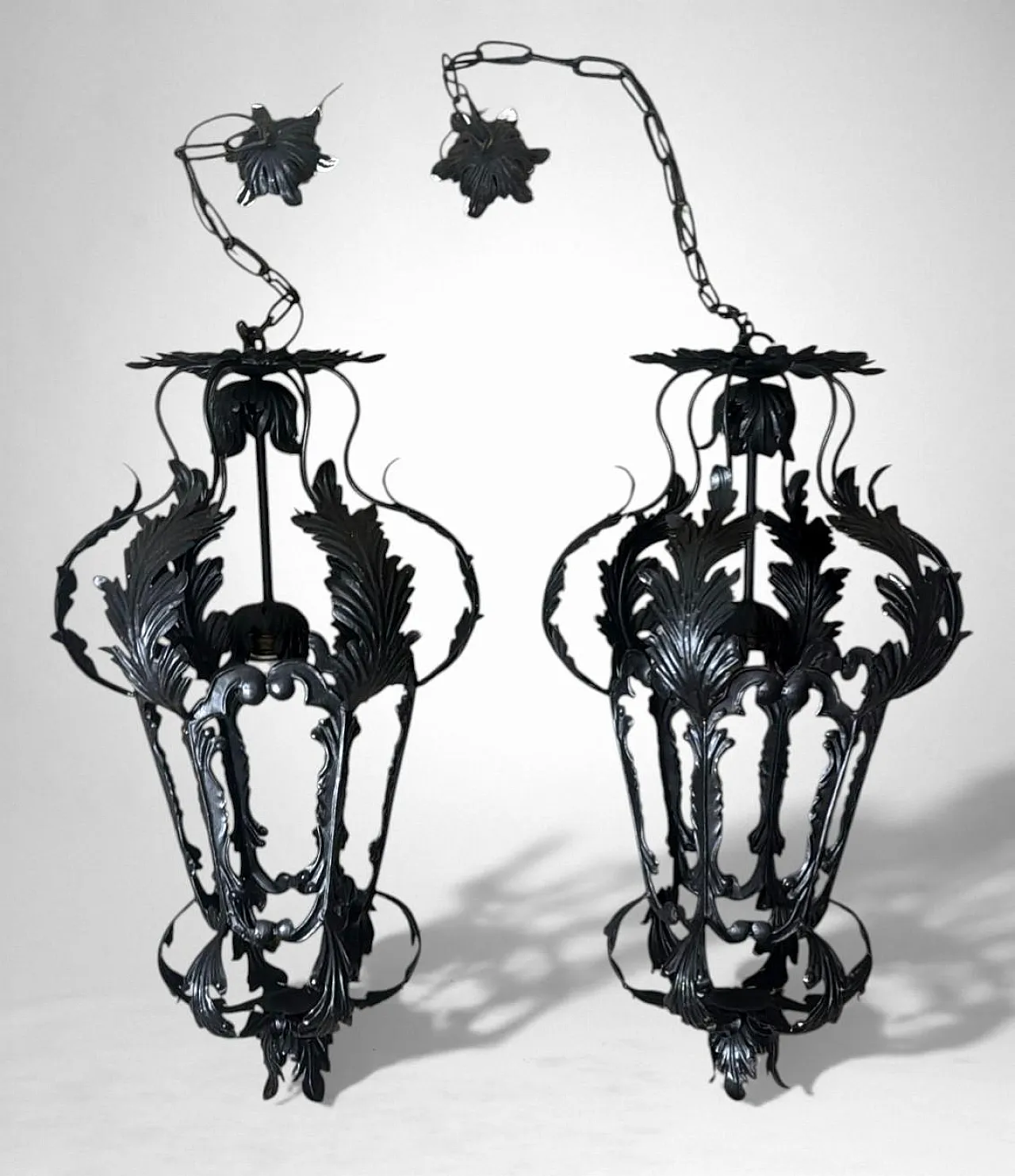
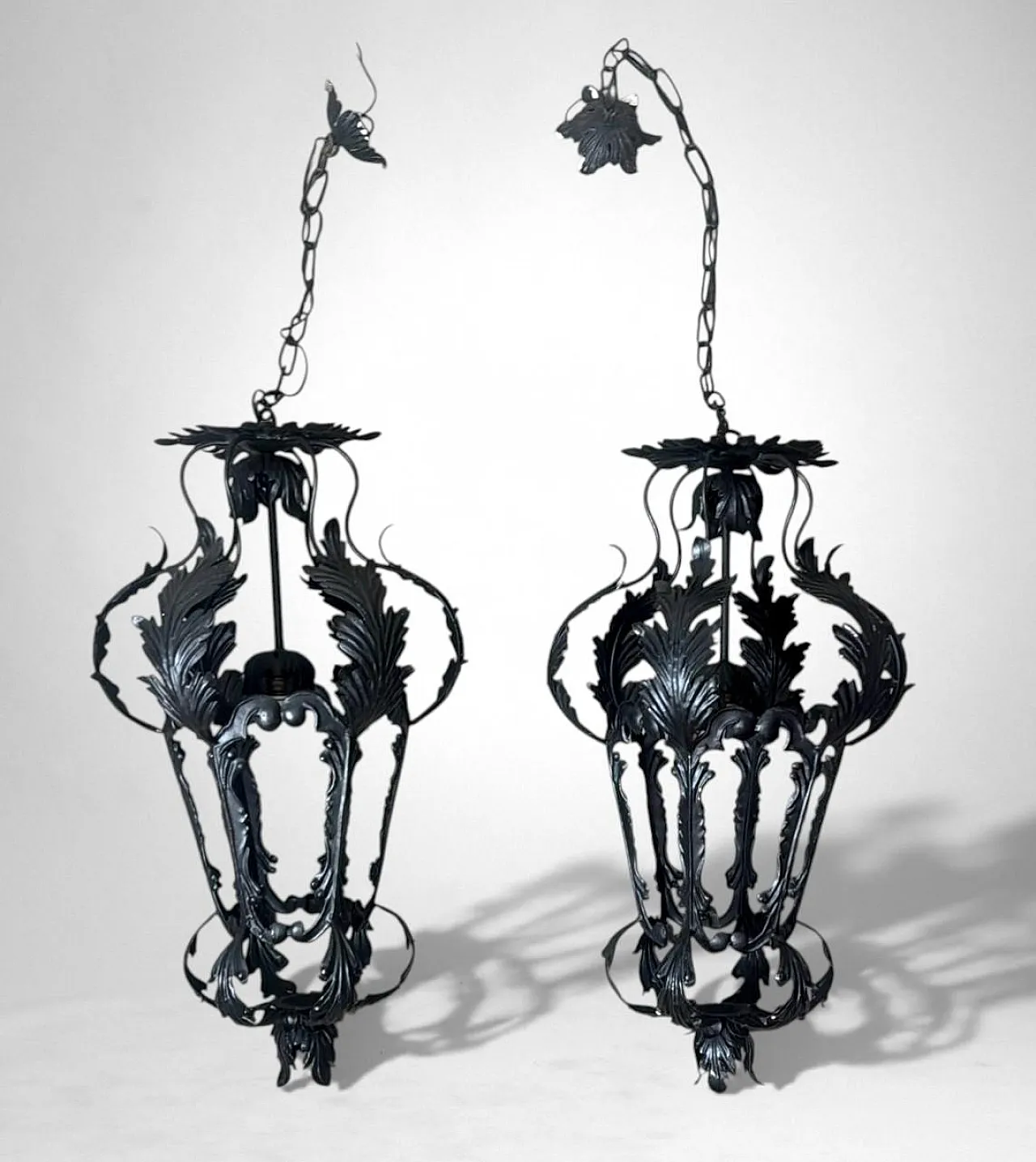
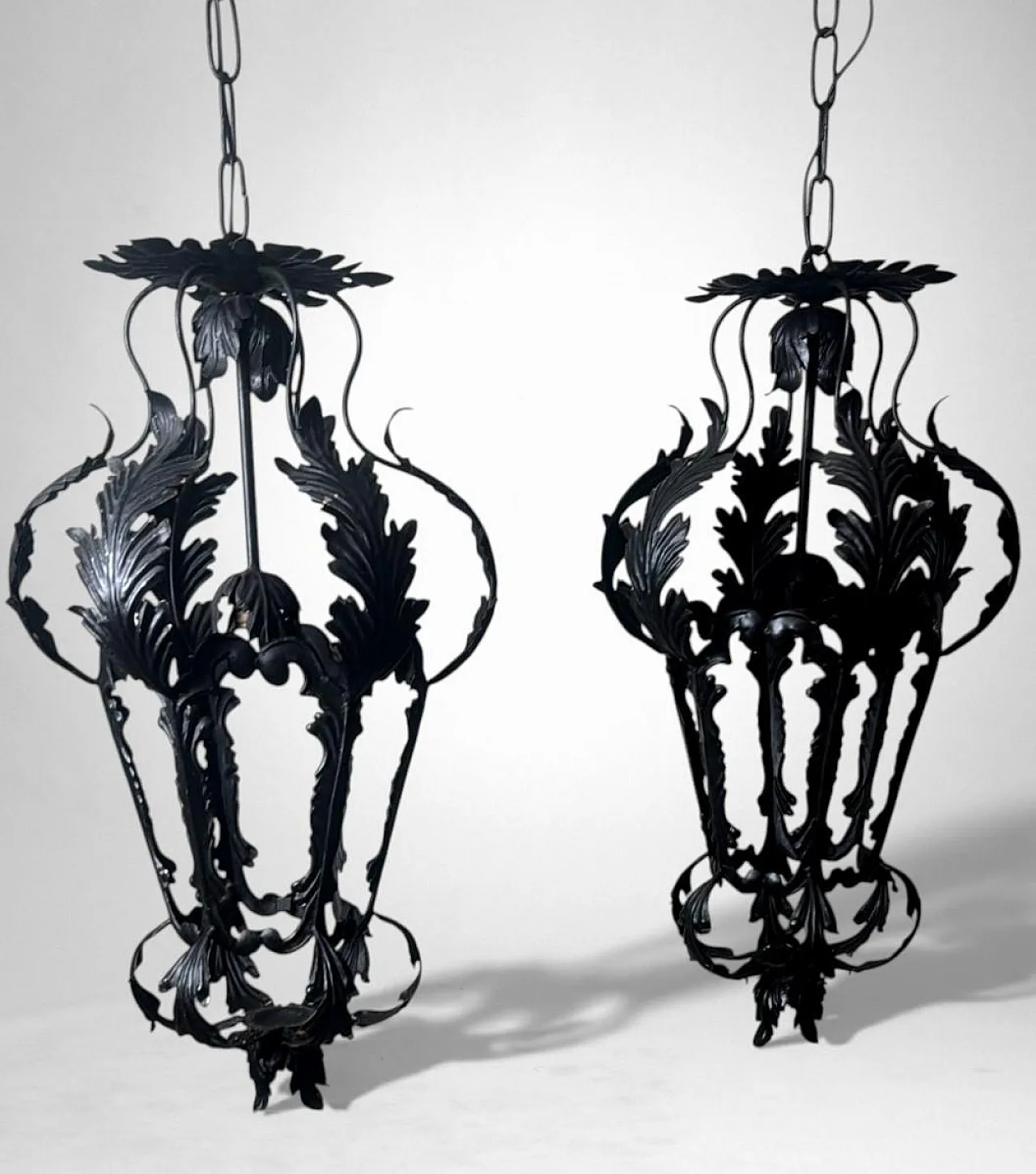
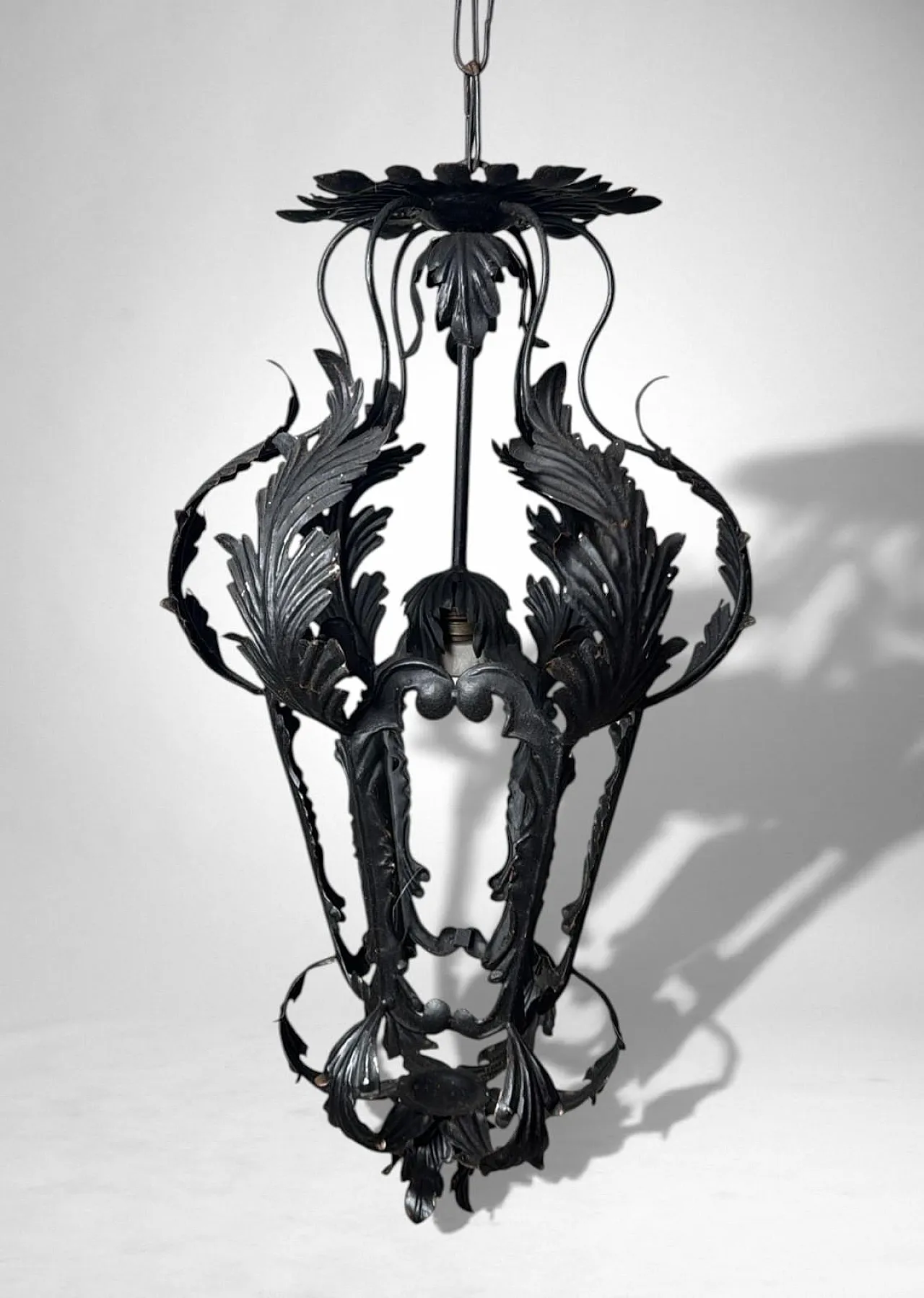
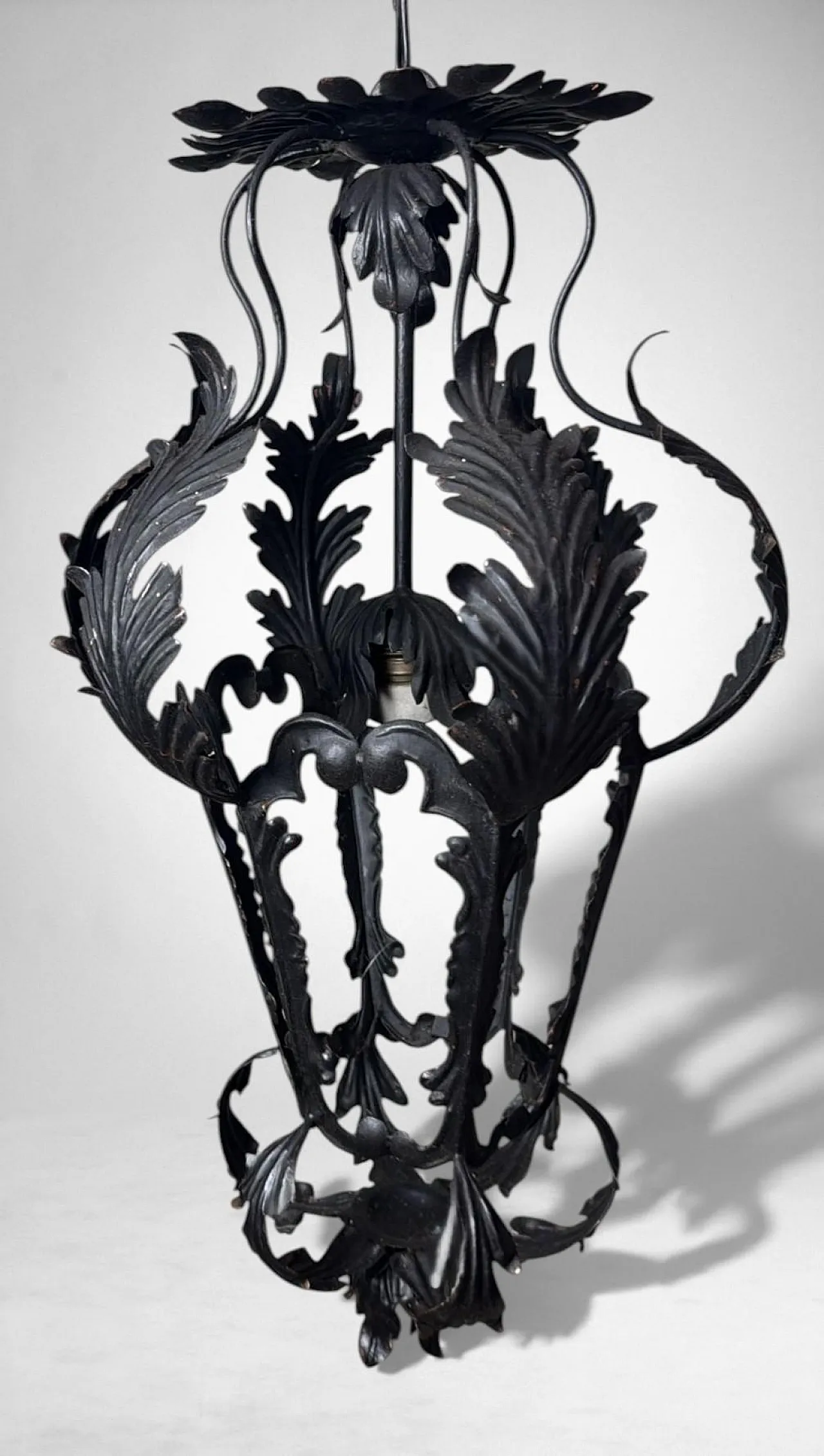
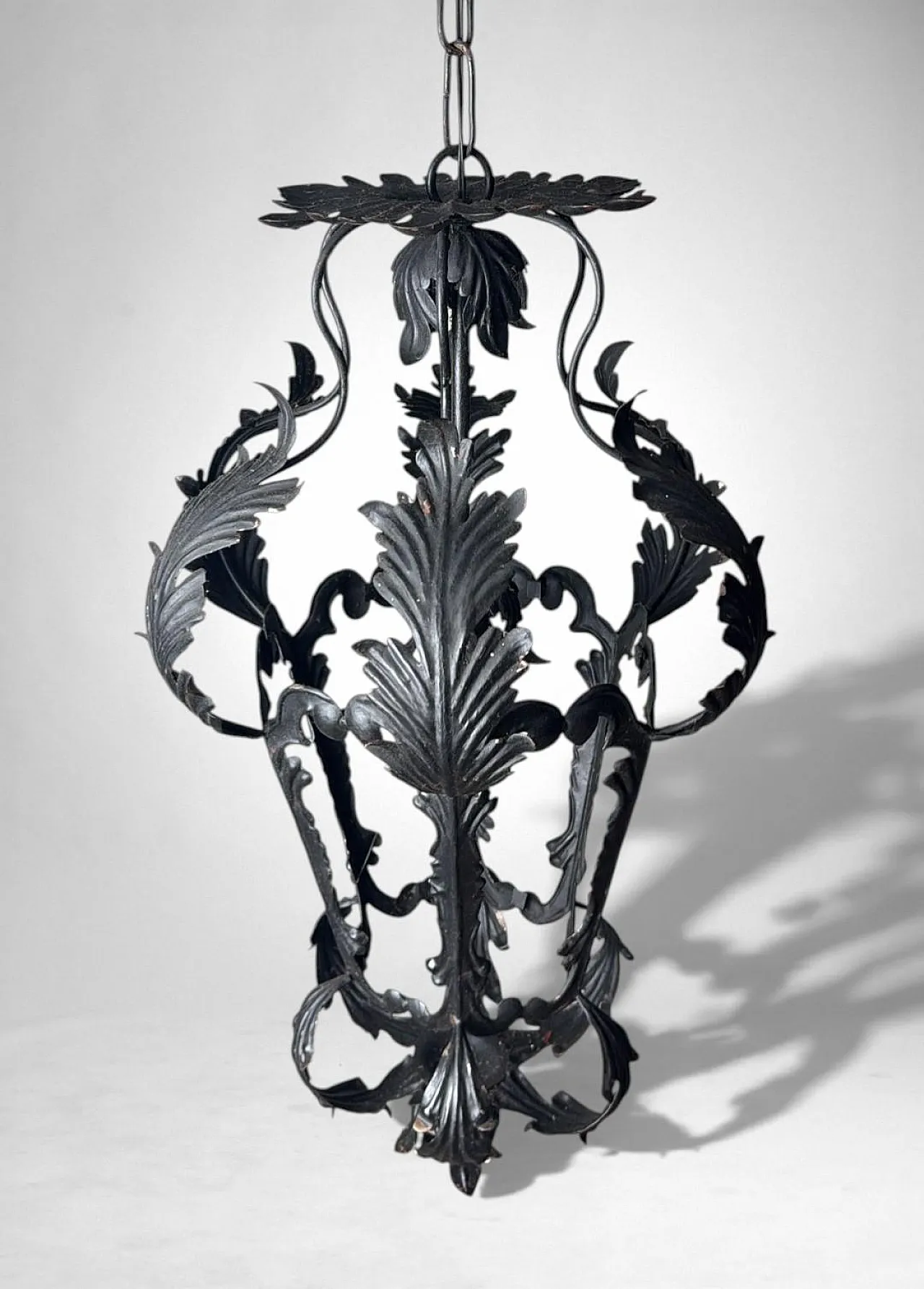
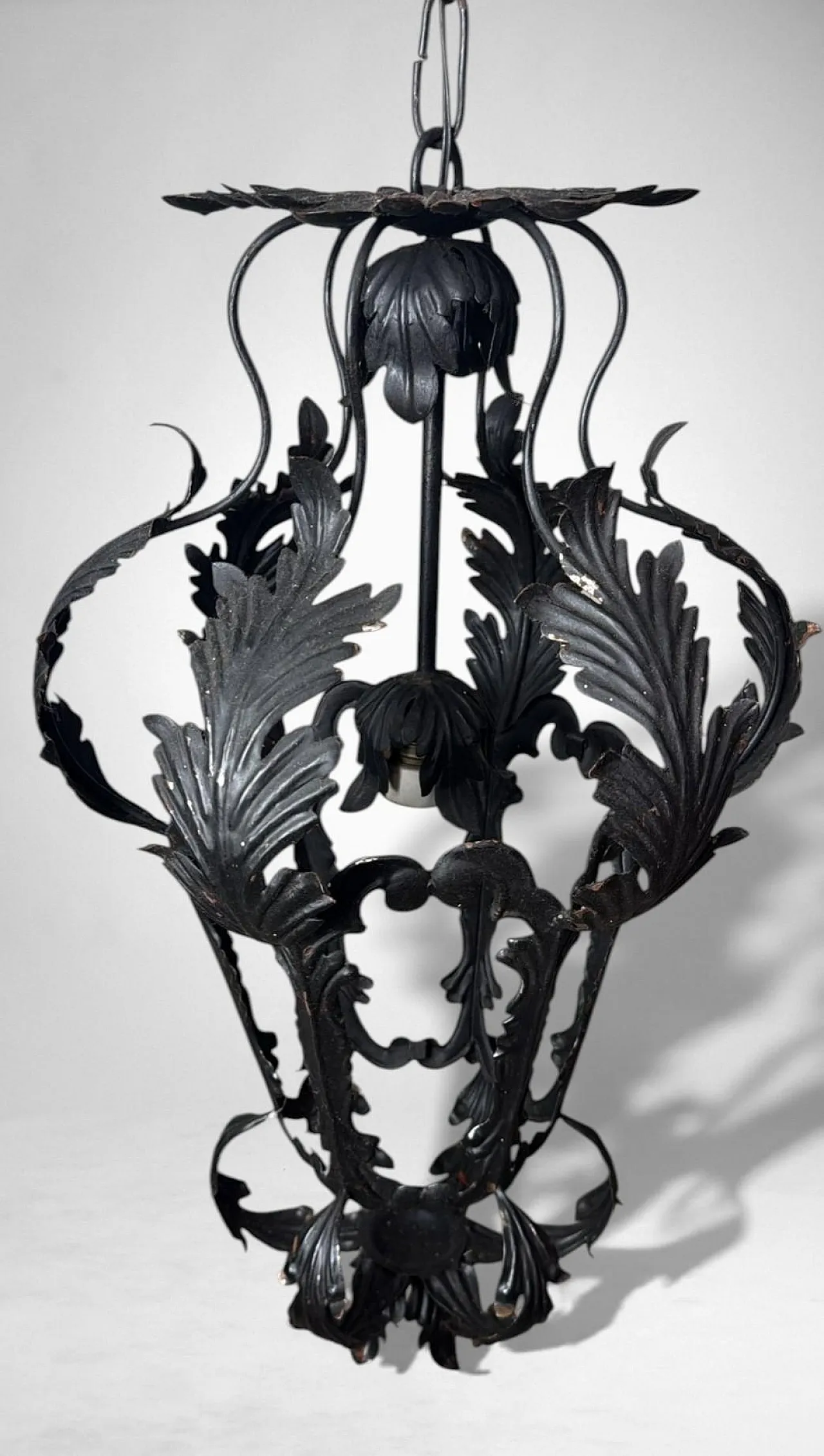
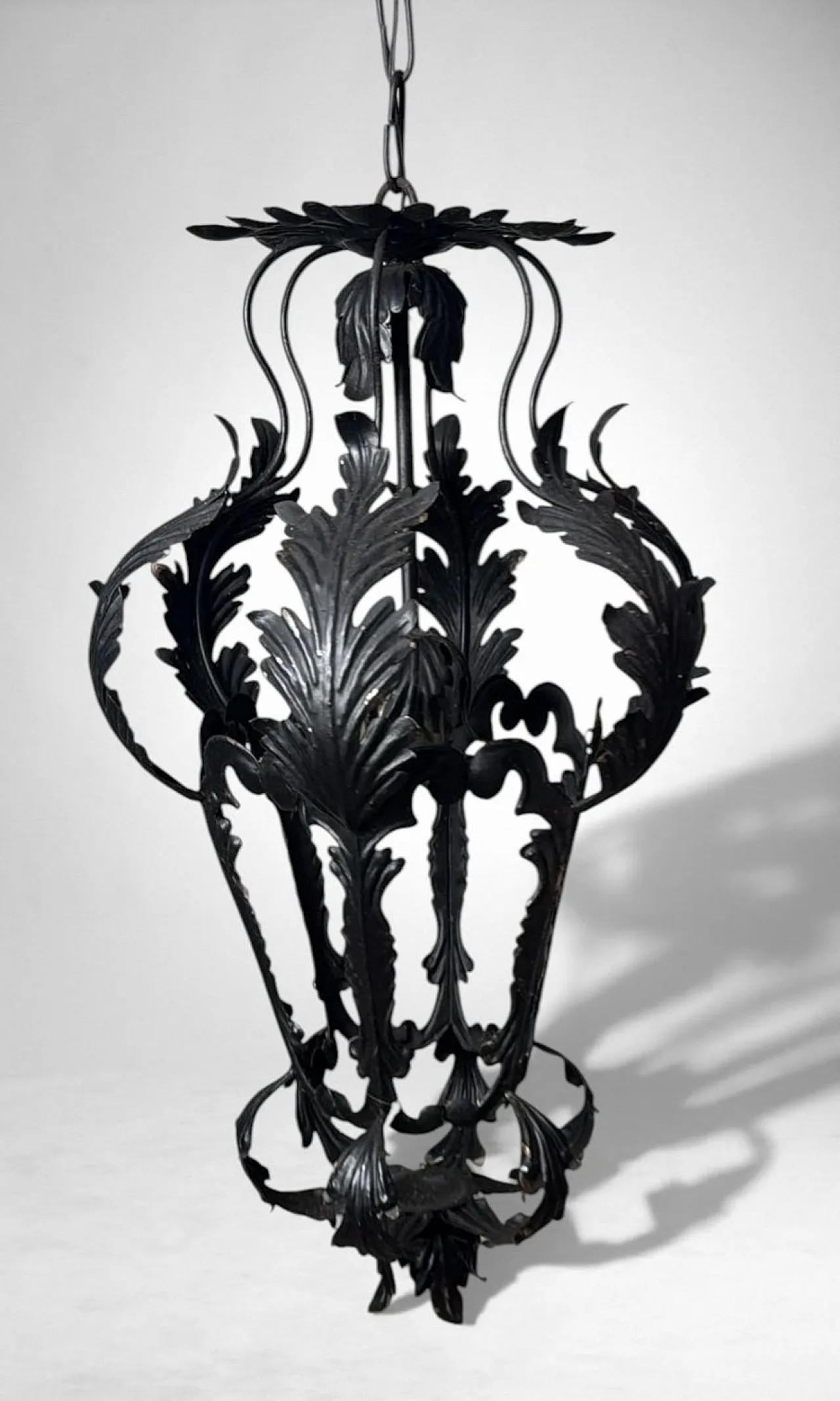
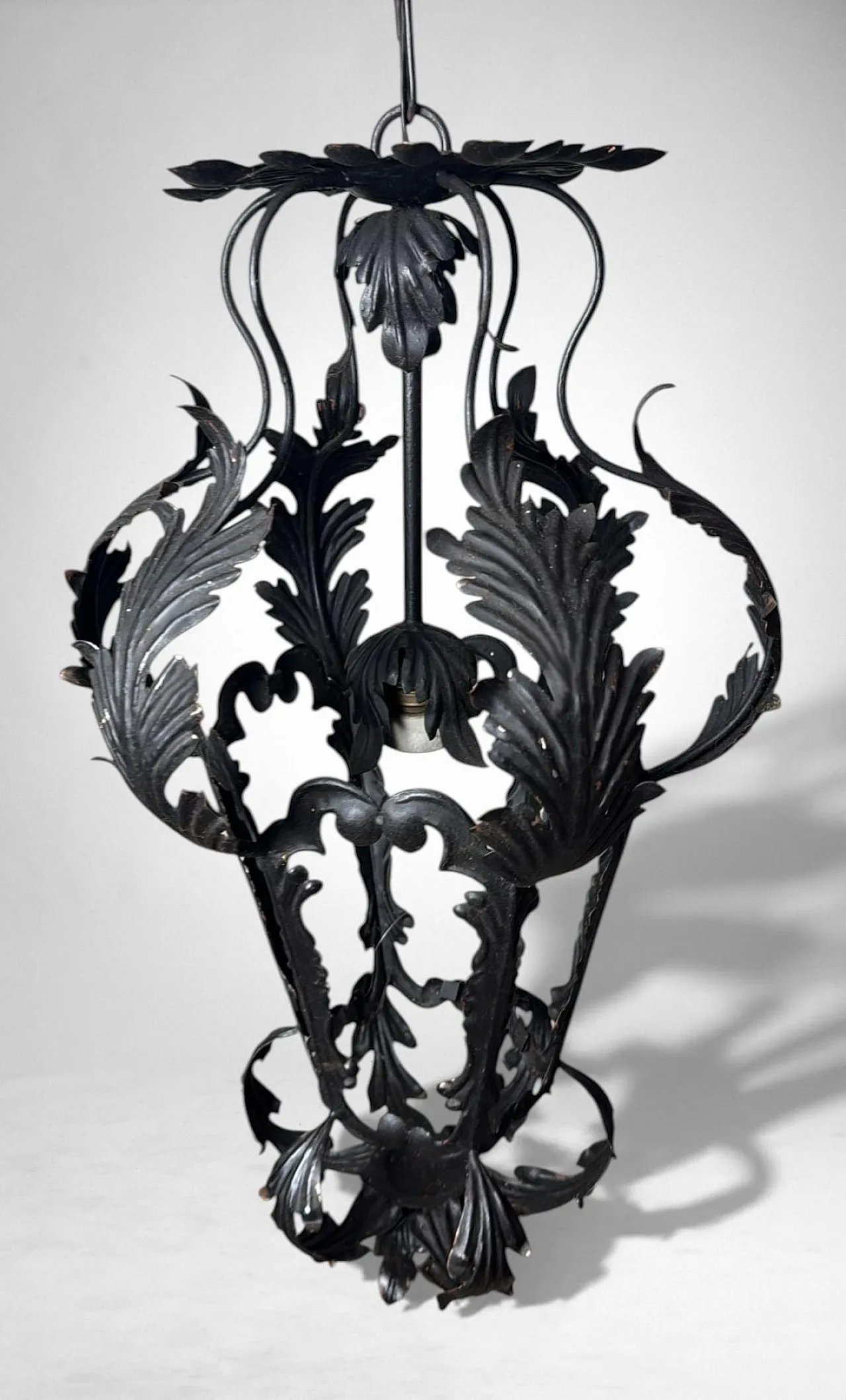
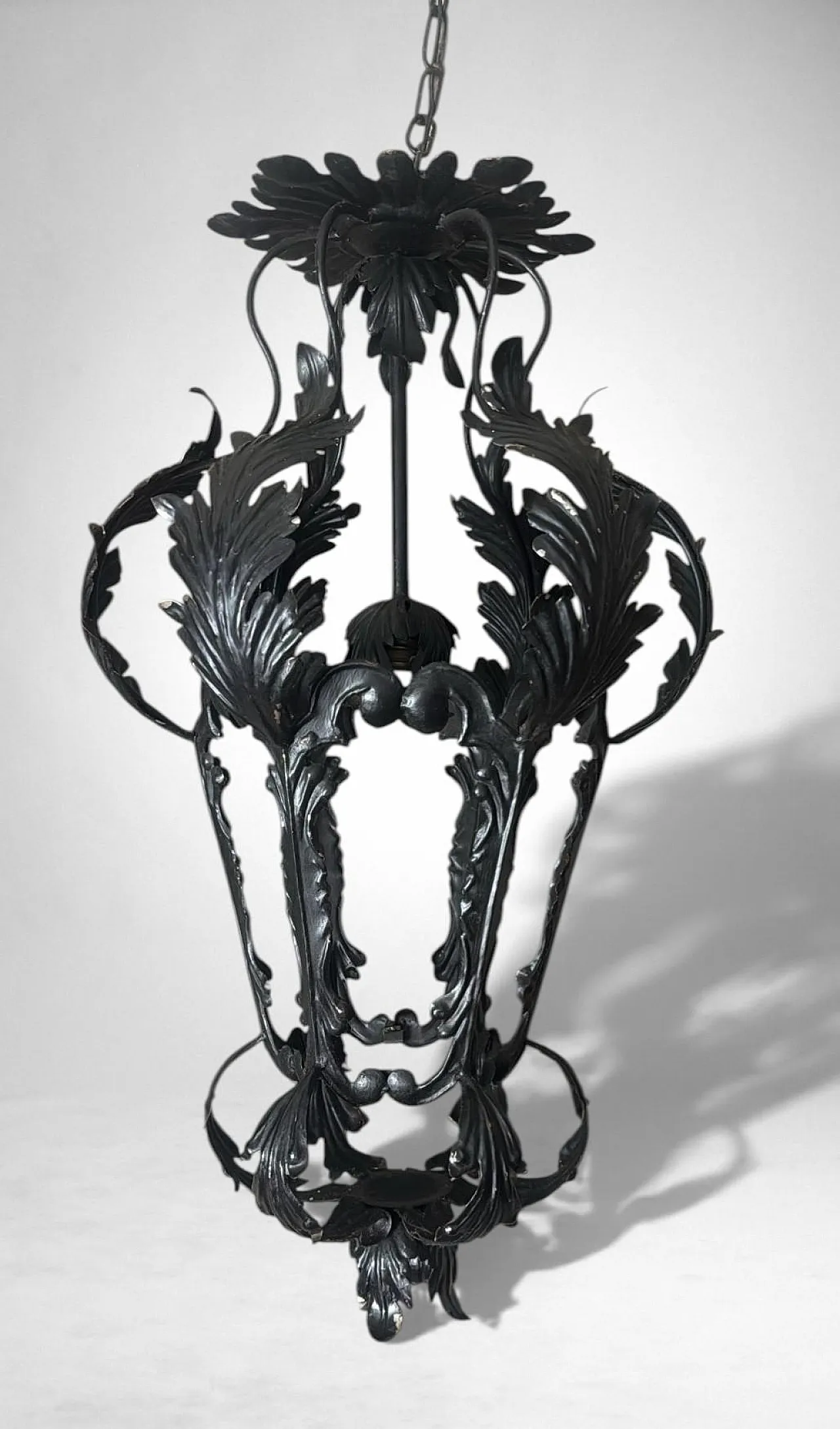
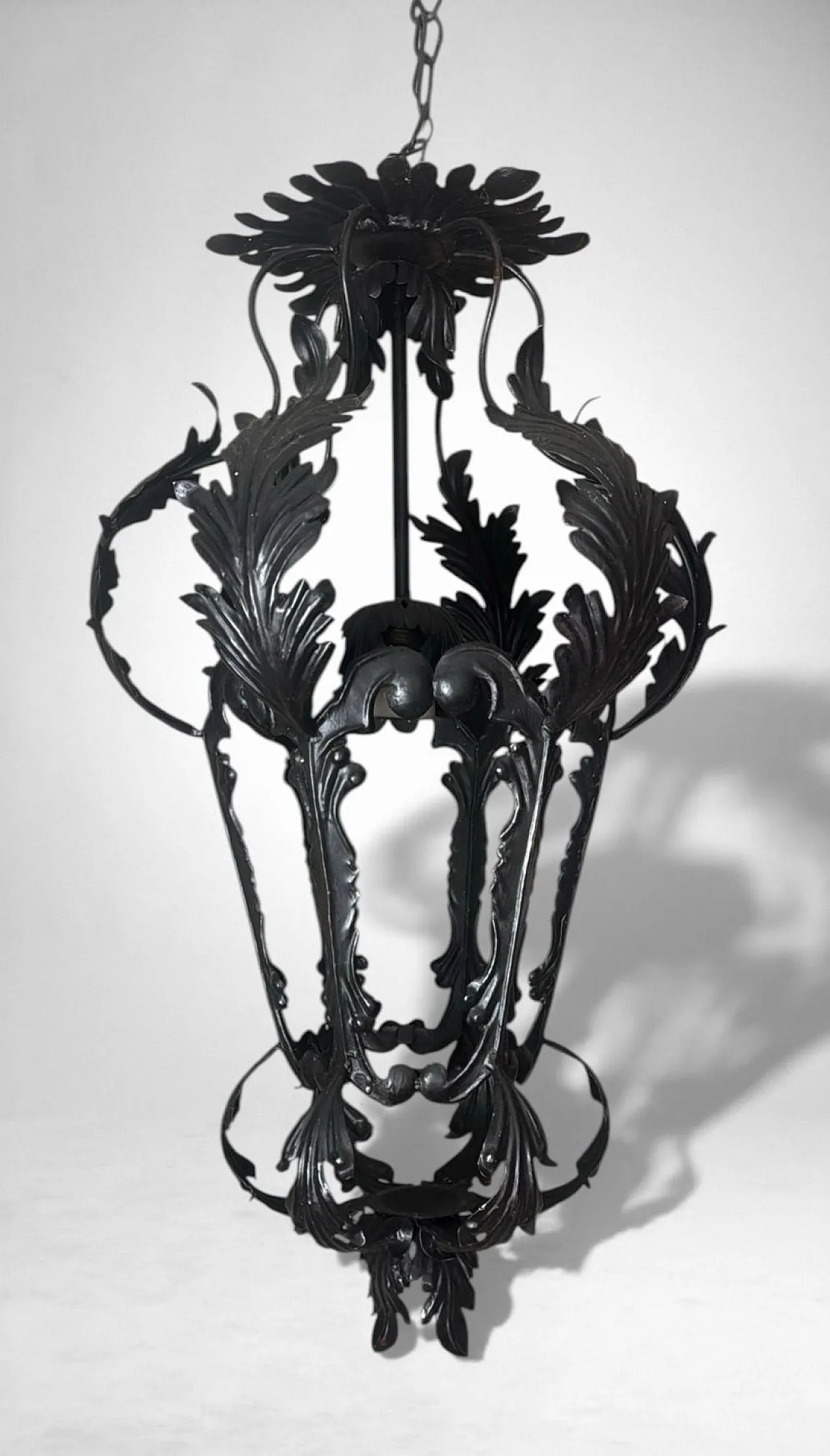
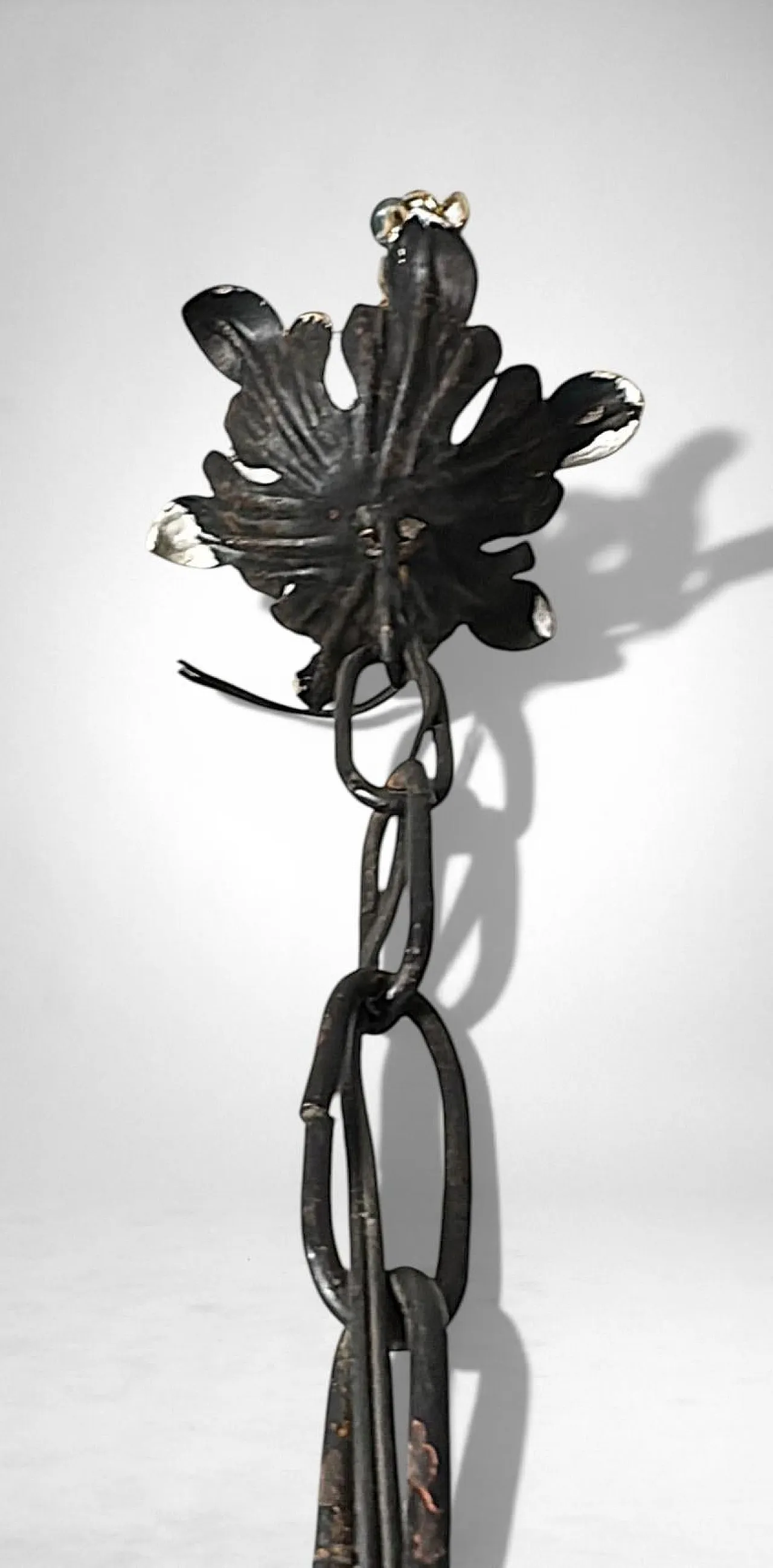
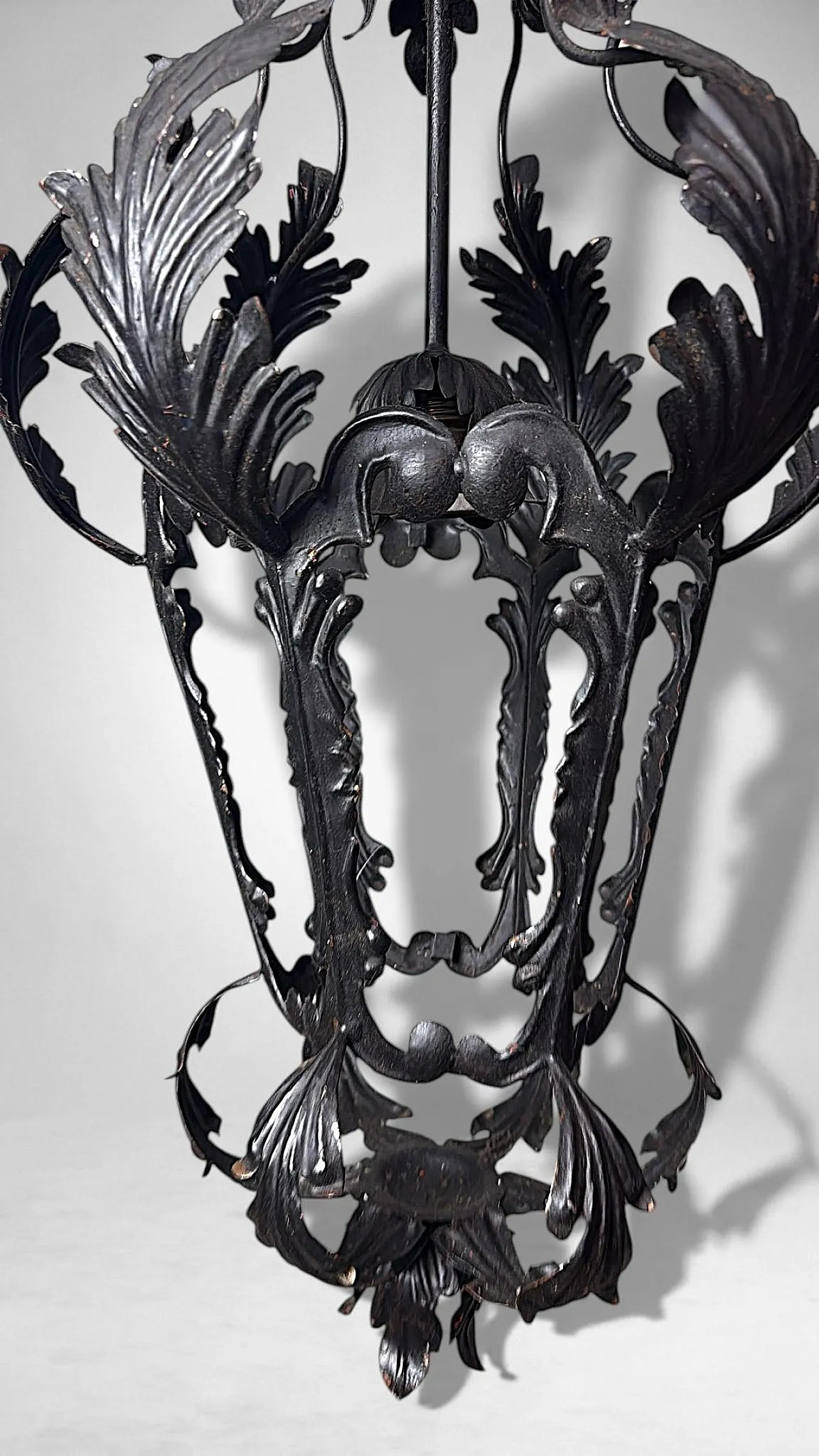
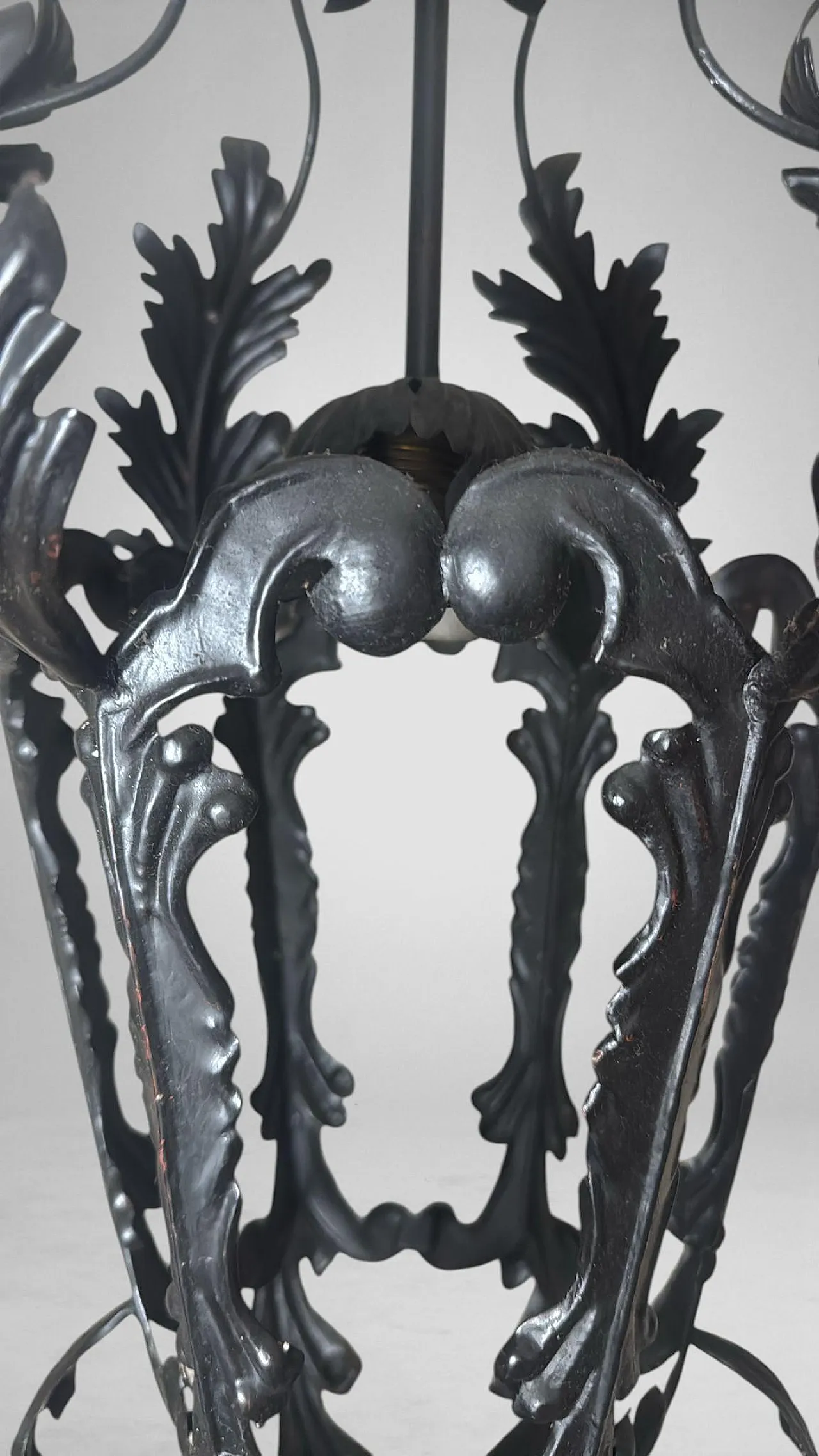
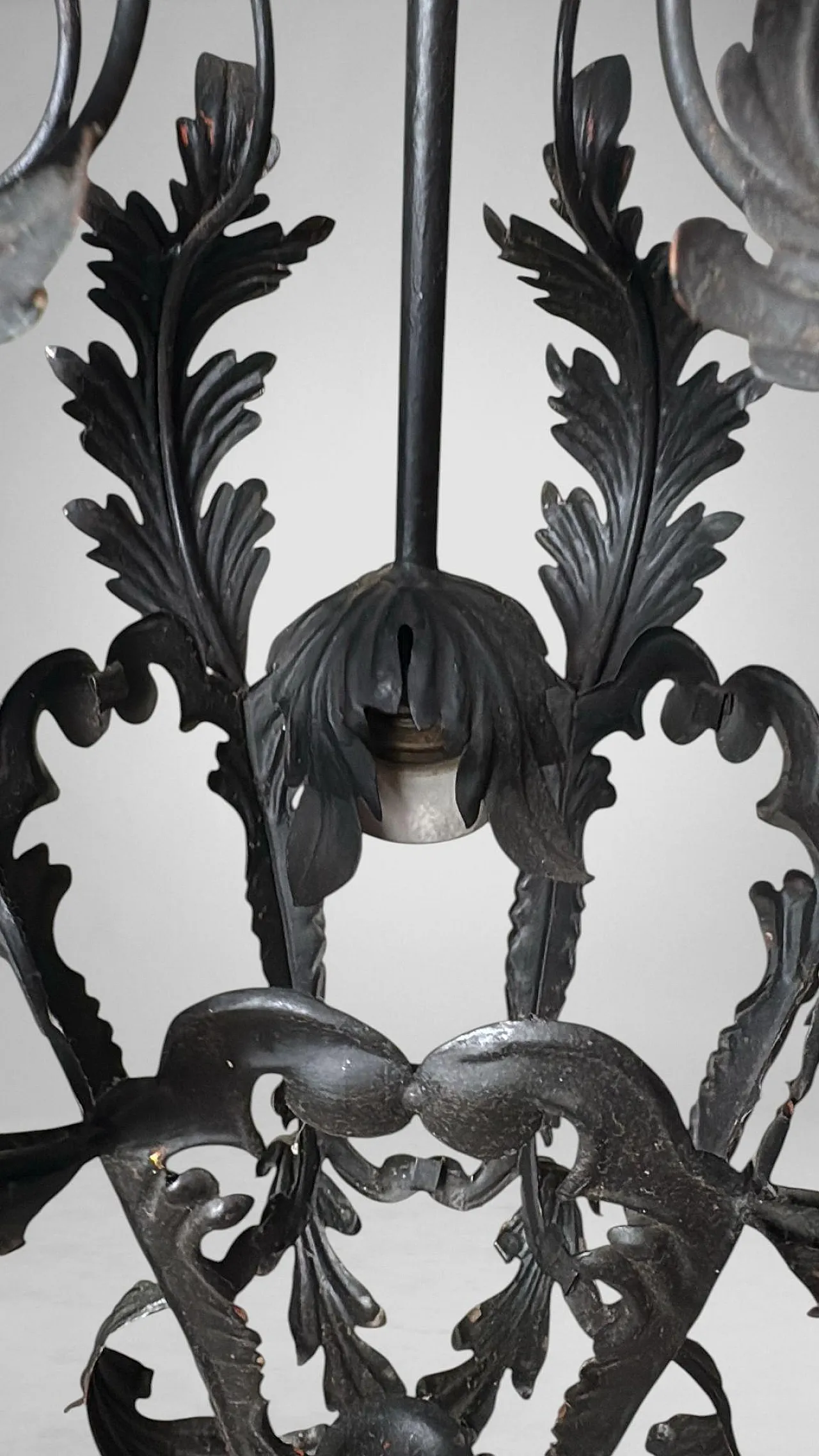
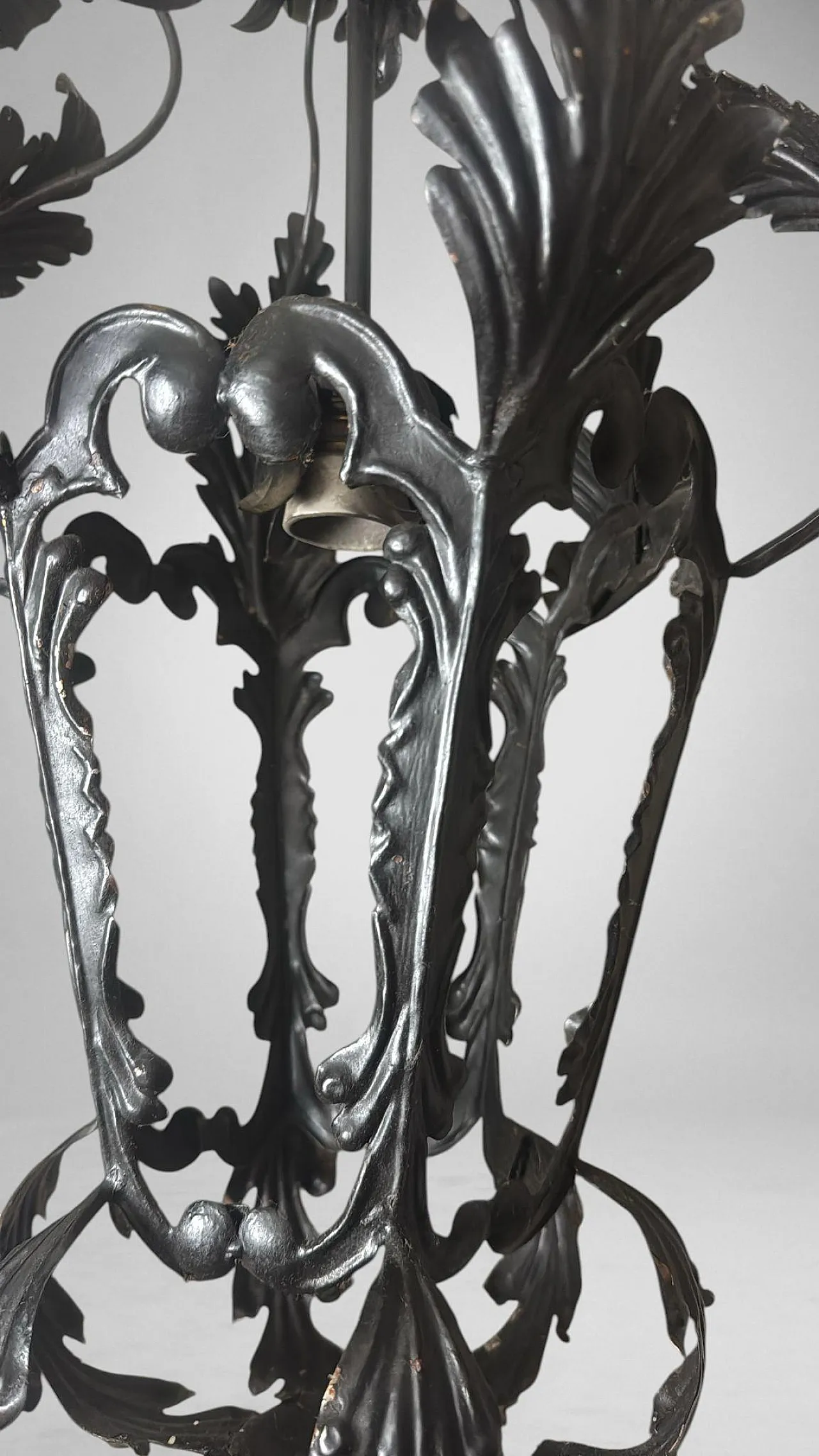
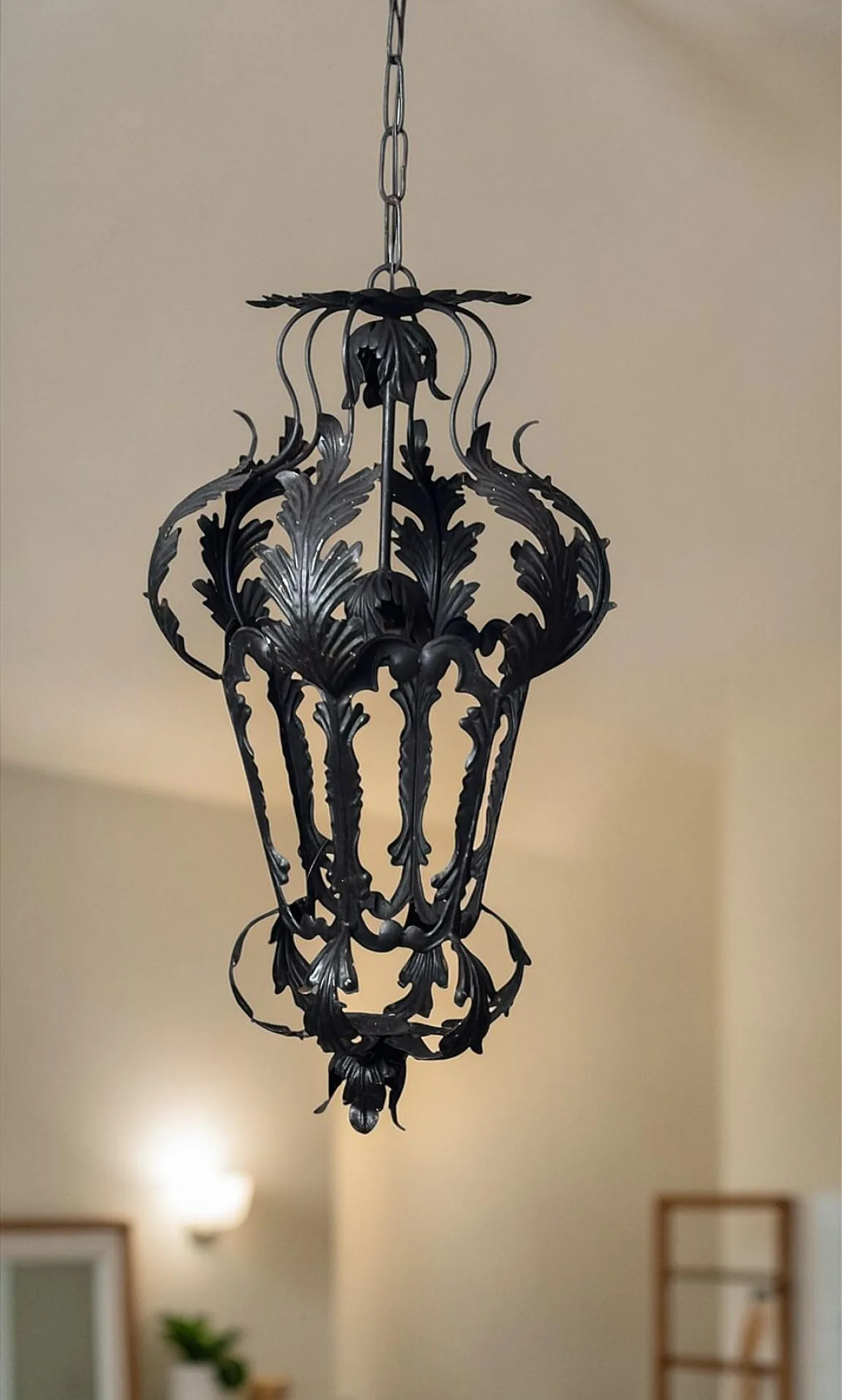
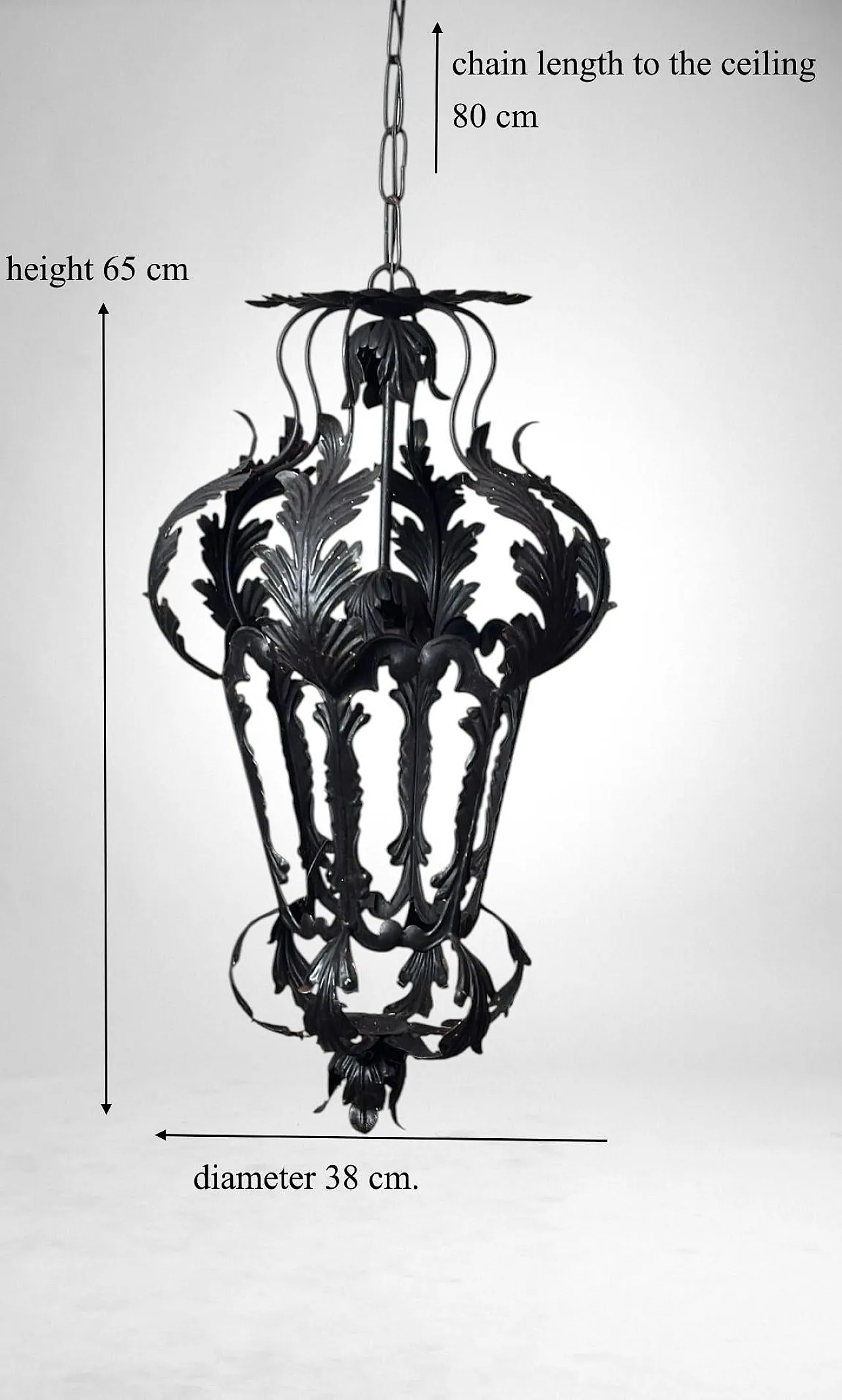
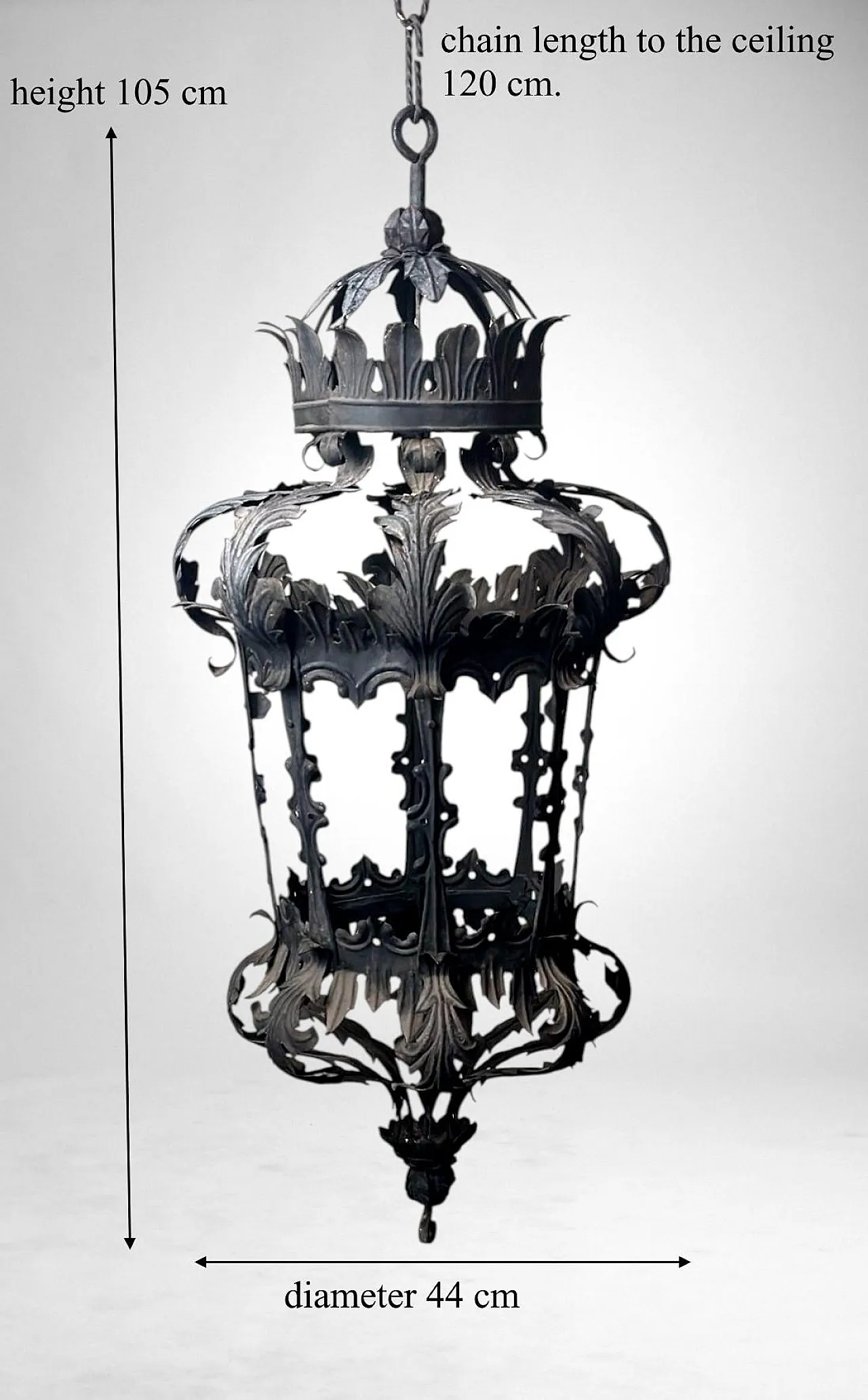
We also have a large single lantern, photos and measurements of which are attached. This elegant pair of Italian wrought iron lanterns represents a refined example of the artistic ironwork tradition developed in Tuscan workshops between the late 19th century and the first half of the 20th century. Entirely hand-forged, the lanterns feature a light yet highly decorative structure composed of slender iron elements shaped while hot. The design unfolds in a harmonious composition of scrolls, acanthus leaves, and finely worked vegetal motifs that intertwine to form a tall and graceful decorative cage. The upper section is crowned by an elegant floral element from which curved iron arms extend, defining the sinuous silhouette of the lantern, while the base is enriched with a foliate ornament that gives balance and rhythm to the overall structure.These lanterns can be dated to around 1920–1930, a period between the late Liberty style and the Renaissance revival with Mediterranean character, widely appreciated in the decoration of villas and palaces during the interwar years. They were most likely produced in one of the renowned artisan workshops of Florence, particularly in the Oltrarno districts such as Santo Spirito and San Frediano, where master blacksmiths specialized in lanterns for portals, loggias, and architectural settings. Their construction in hot-forged wrought iron, shaped entirely by hand, with leaves and scrolls obtained through hammering and bending of the metal and assembled through traditional riveting and artisanal welding, reflects the same techniques used in Italian architectural ironwork—known as ferri da facciata—widely employed in Tuscan architecture. The quality of the forging and the richness of the decorative details testify to the work of a highly skilled master blacksmith capable of transforming iron into an almost sculptural material, in keeping with a tradition that in Tuscany dates back to the Renaissance and continued to produce objects of remarkable craftsmanship well into the 20th century. Already during the Renaissance, Florentine master ironsmiths were celebrated for monumental and decorative lanterns, such as those created by Niccolò Grosso, known as Caparra, for Palazzo Strozzi. These masterpieces of wrought iron decoration became among the most admired examples of European ironwork and greatly influenced later ornamental metal production. The artisans who produced this pair clearly drew inspiration from those celebrated Renaissance models, whose elegant architectural forms continued to inspire decorative ironwork designs for centuries. The deep black finish enhances the architectural character of the forms and gives the lanterns a strong visual presence while maintaining remarkable lightness. Thanks to their open structure and intricate decoration, they create particularly evocative plays of light and shadow when illuminated. These lanterns are ideal for installation in an important entrance, beneath a portico or loggia, in the foyer of a villa or palazzo, along a corridor or grand staircase, or in a covered garden or veranda. They integrate beautifully into Mediterranean, Tuscan, or classic Italian interiors, rustic-elegant or Neo-Renaissance settings, and even contemporary spaces, where the contrast with modern materials highlights their sculptural presence. As a pair, they are particularly well-suited to frame doorways, portals, or architectural passages, creating a refined and highly decorative visual effect. Dimensions Lantern height: 65 cm (25.6 in). Diameter: 38 cm (15 in). Chain height: 80 cm (31.5 in)


.png)
 SILVER Seller in Prato, Italy