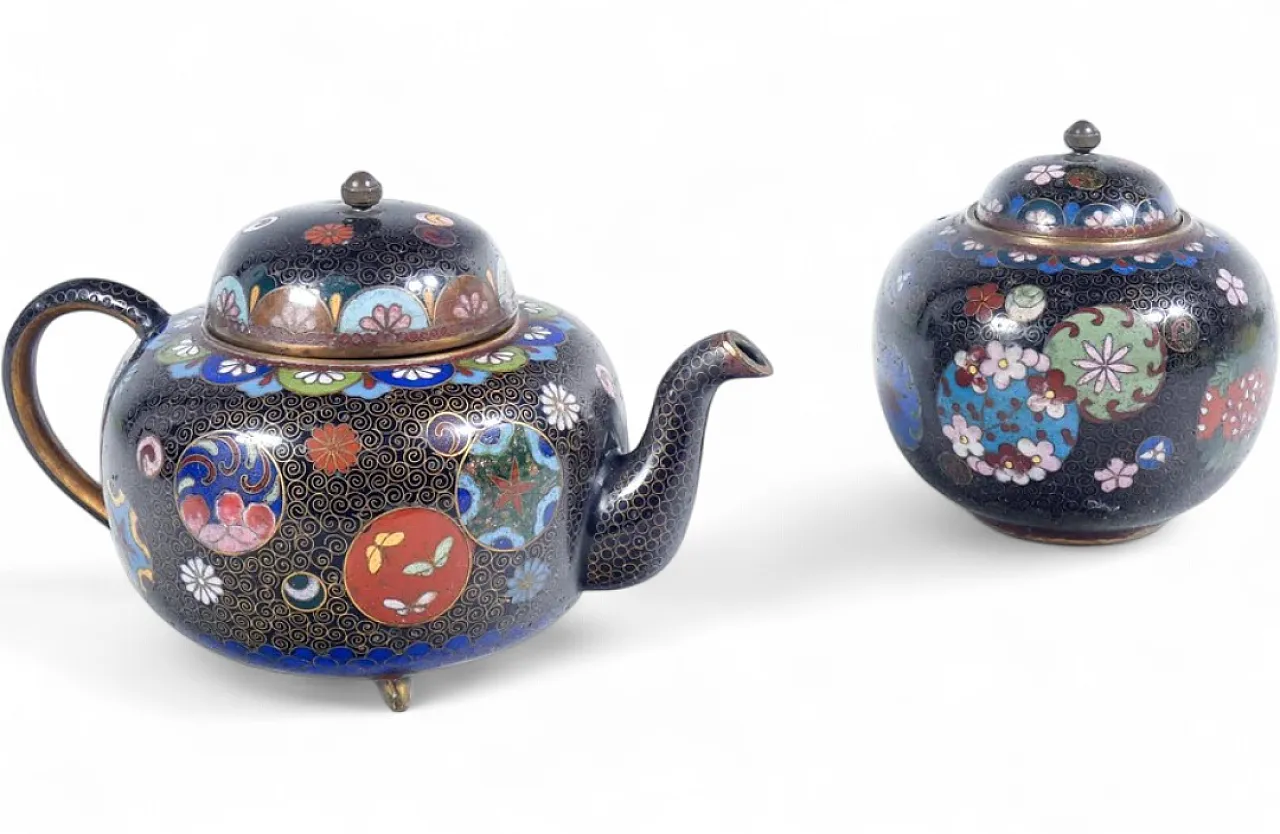
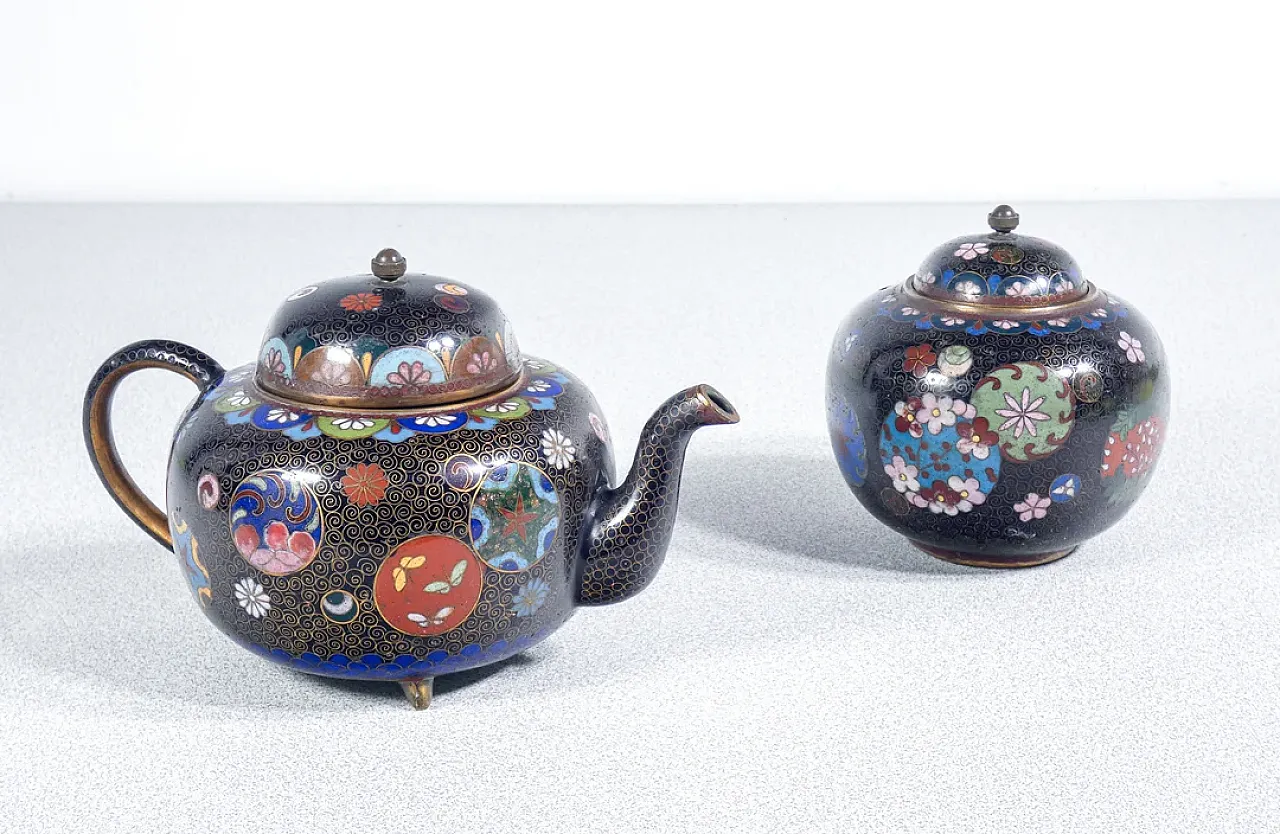
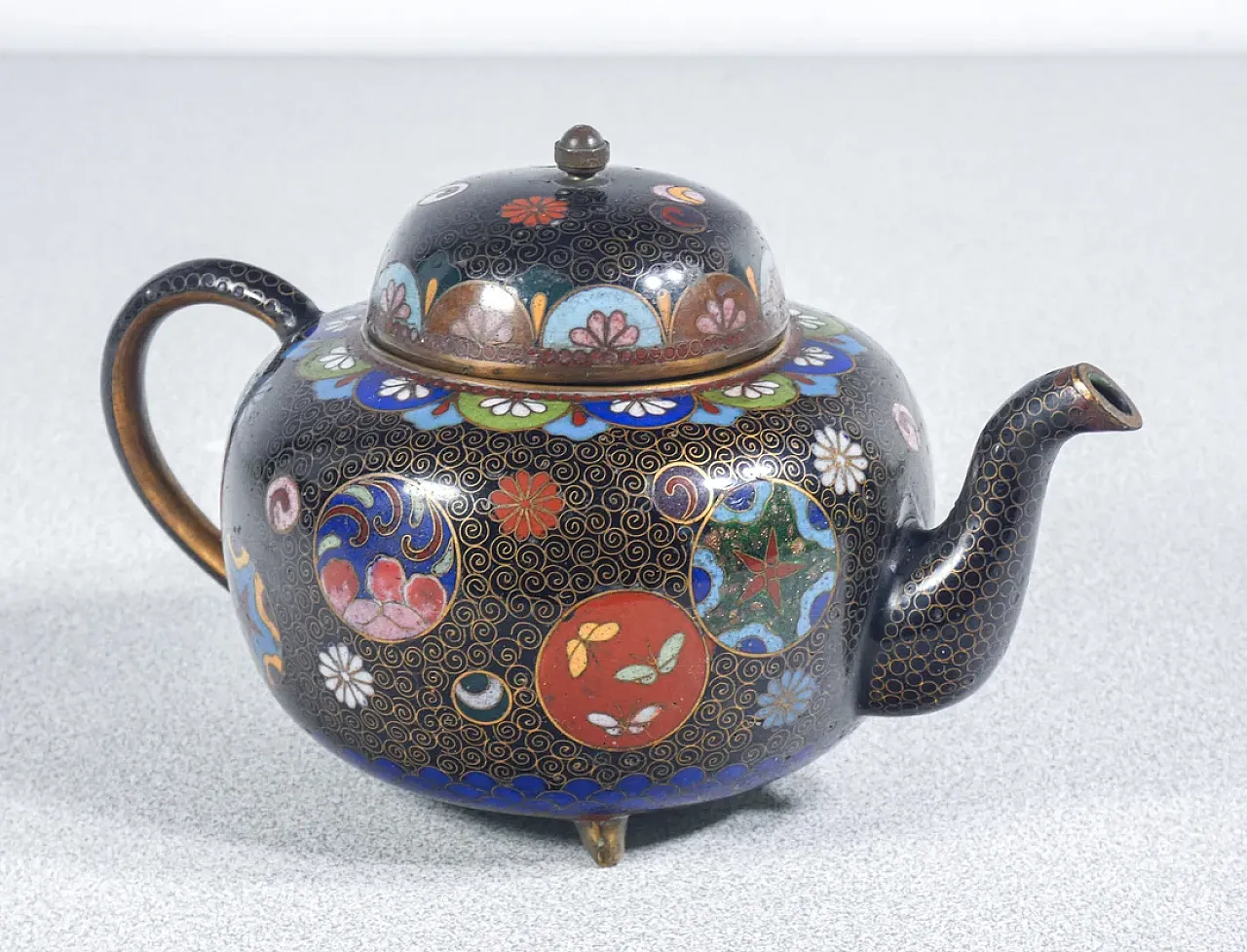
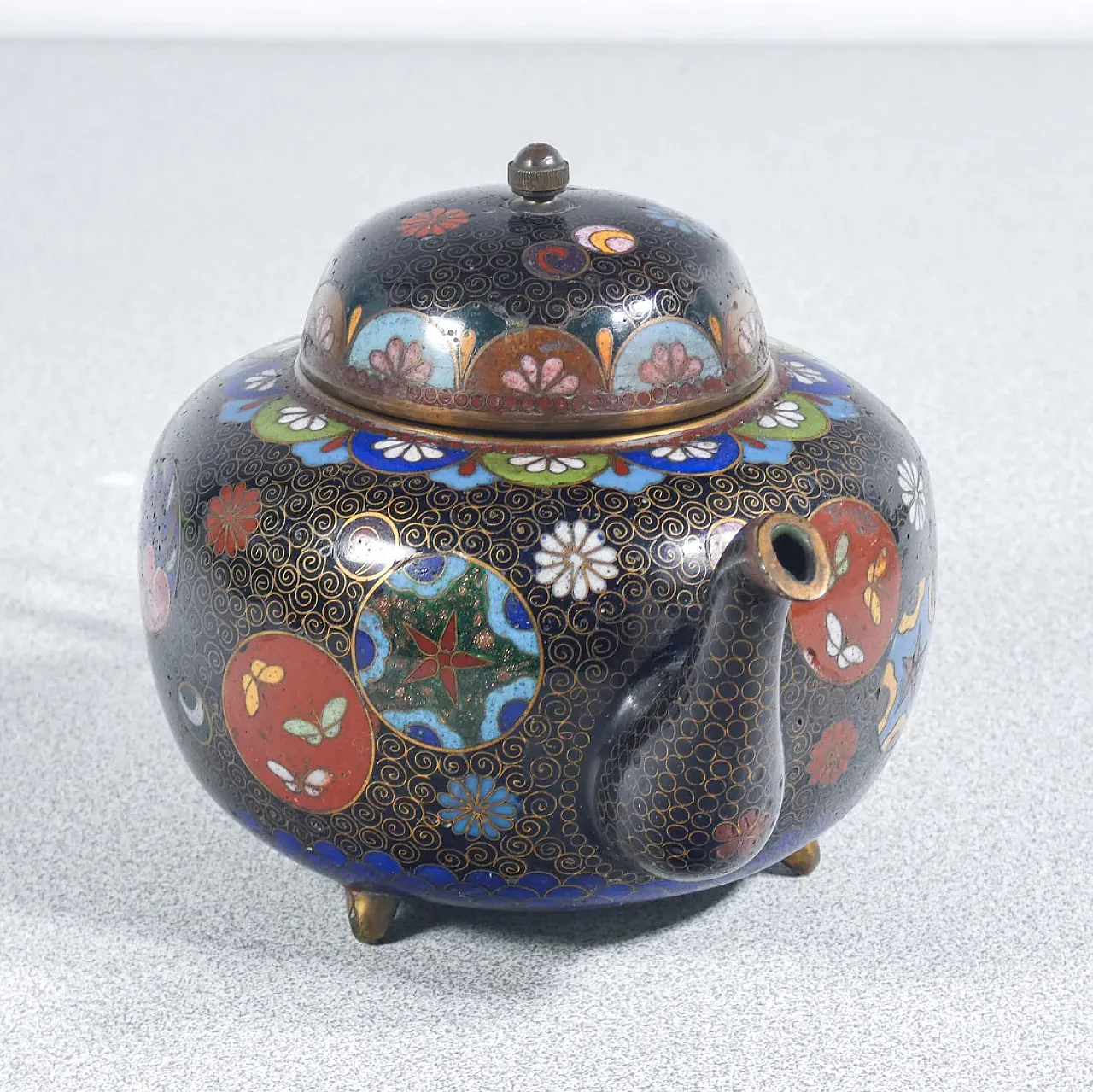
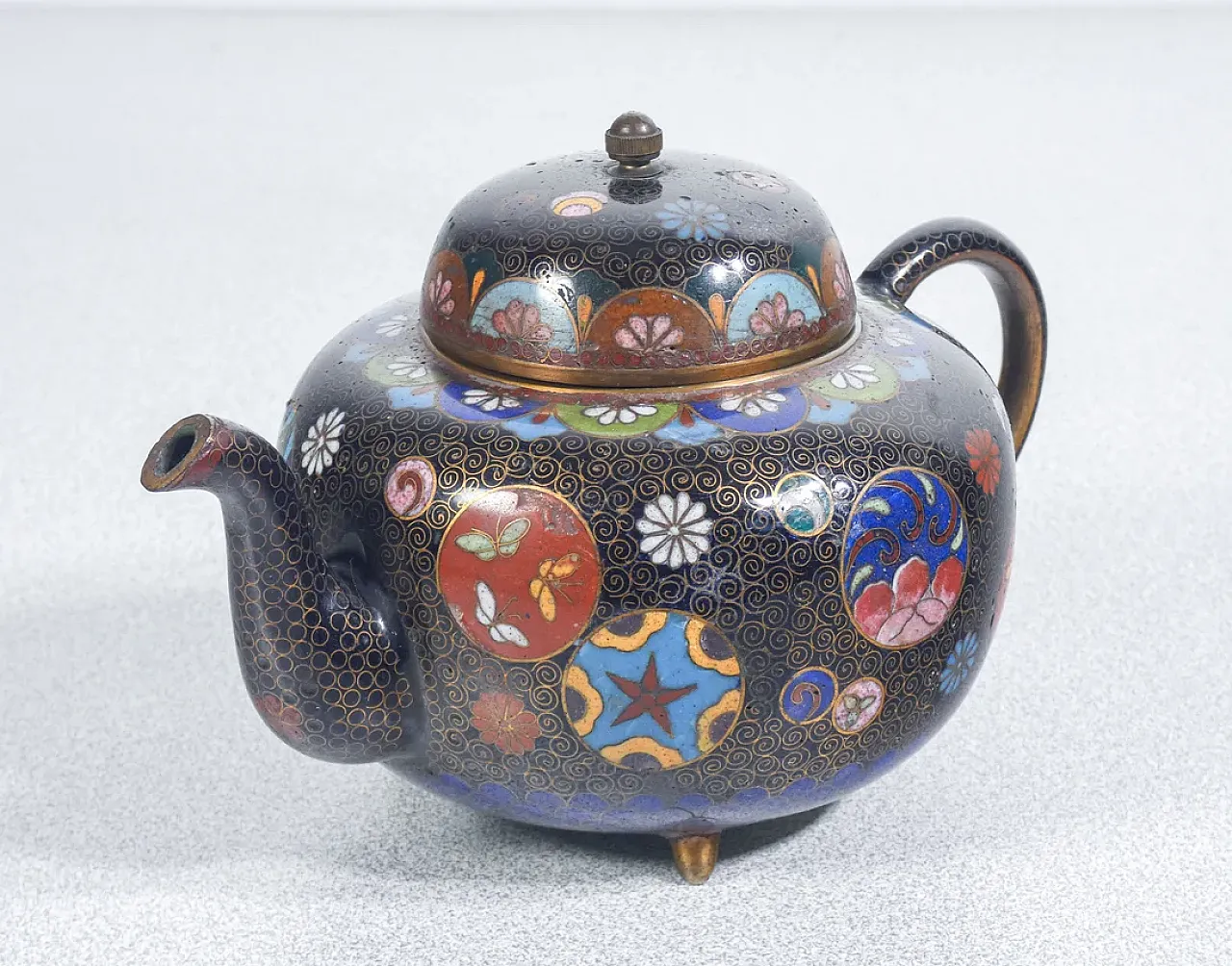
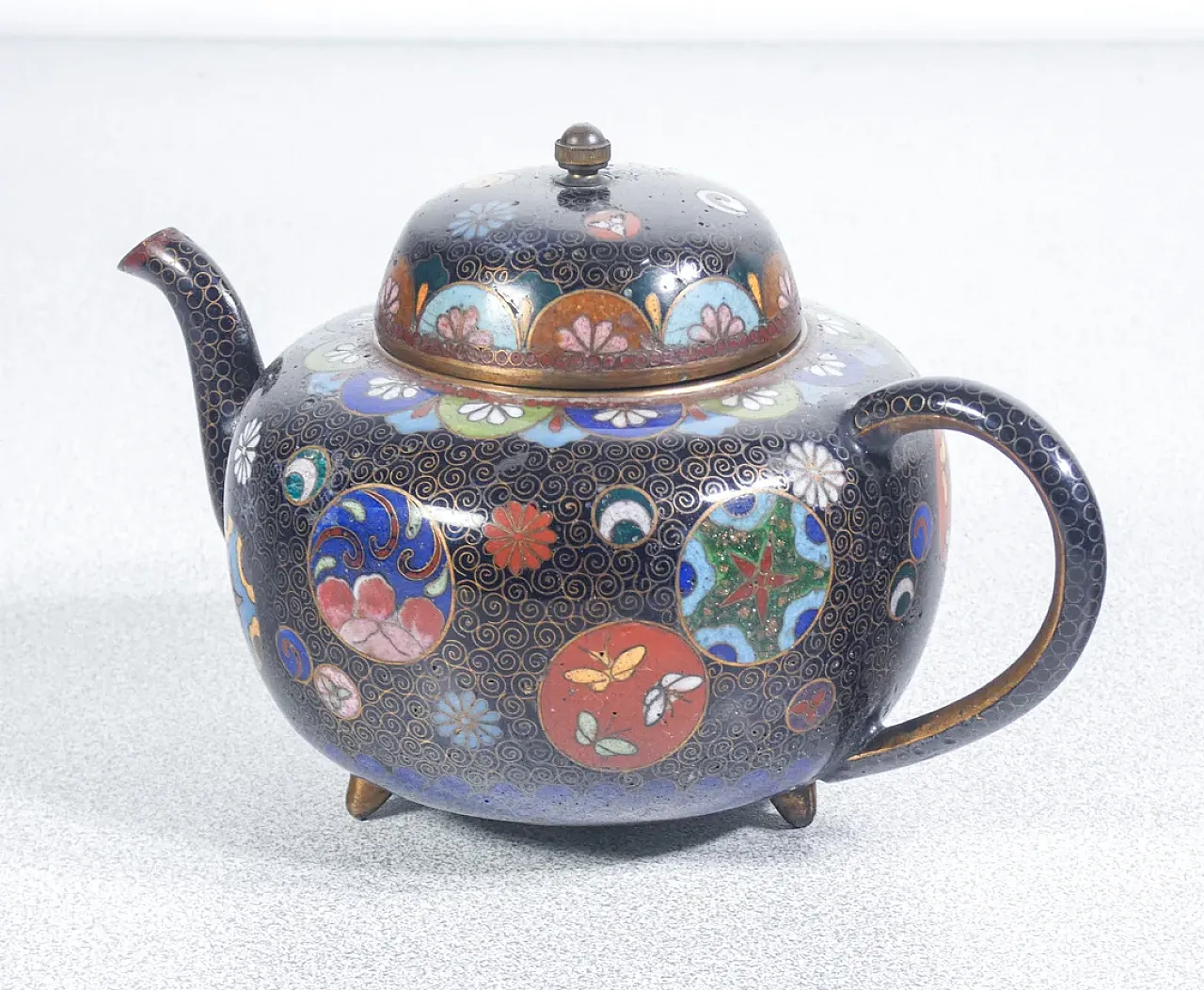
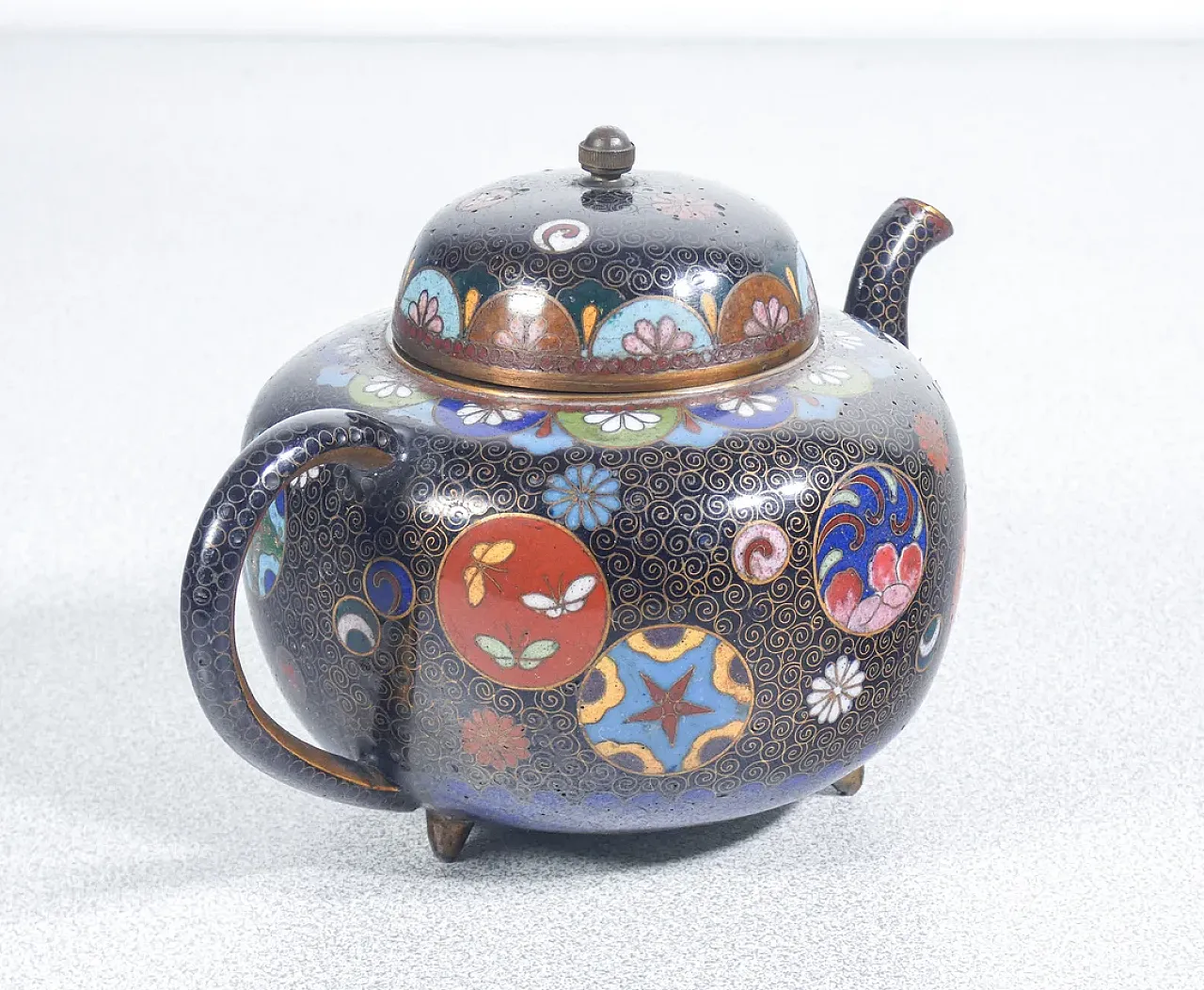
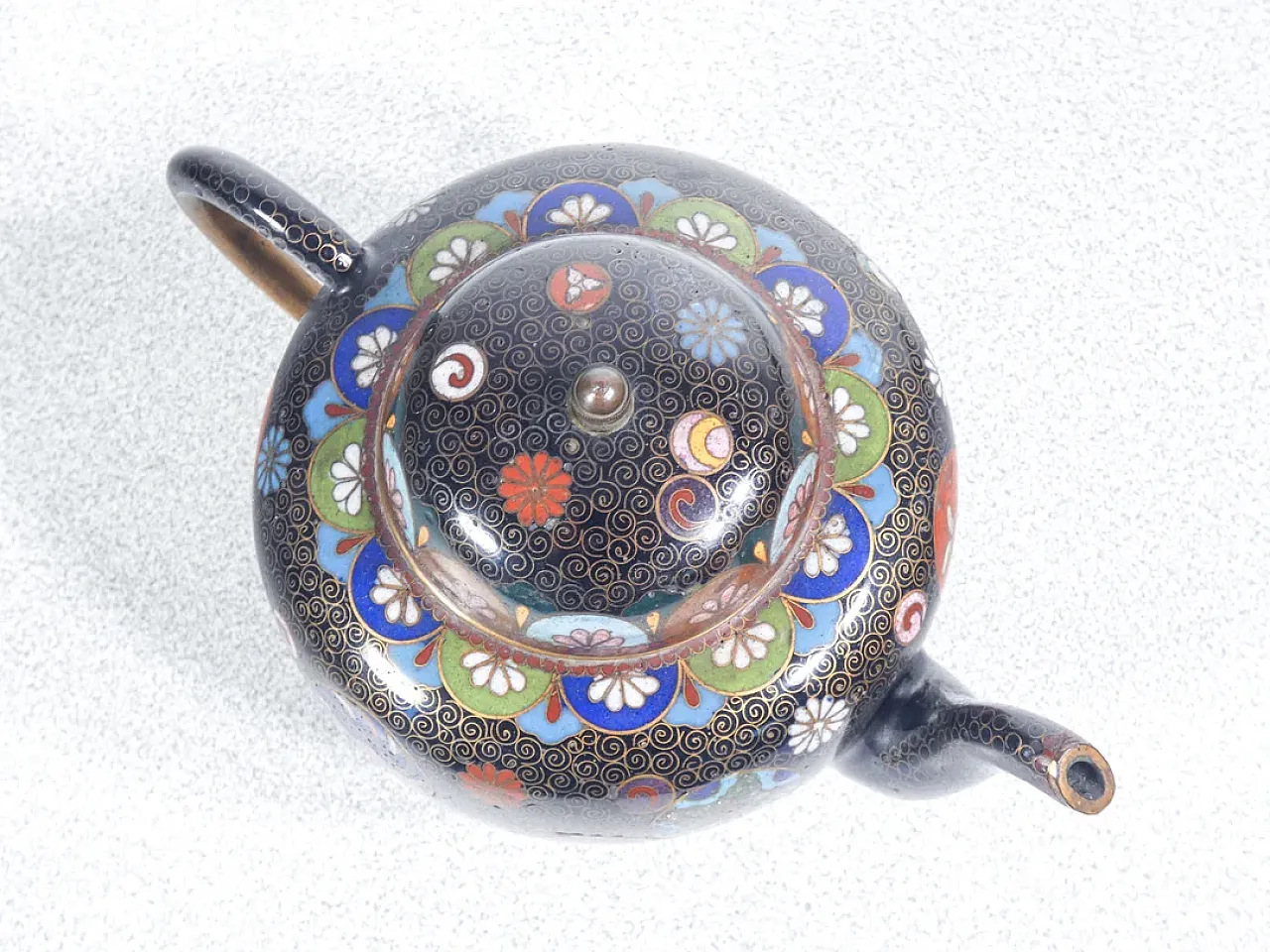
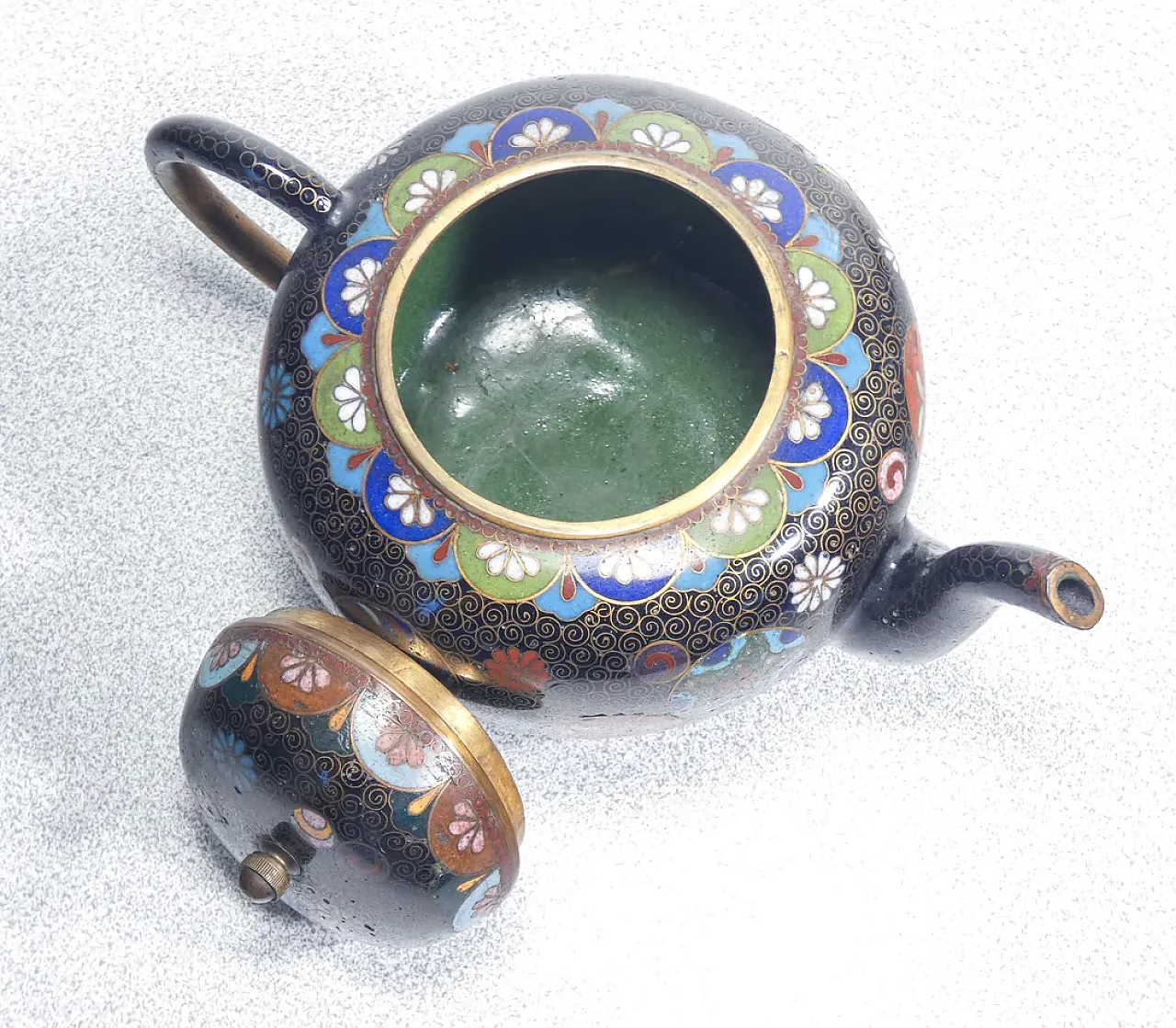
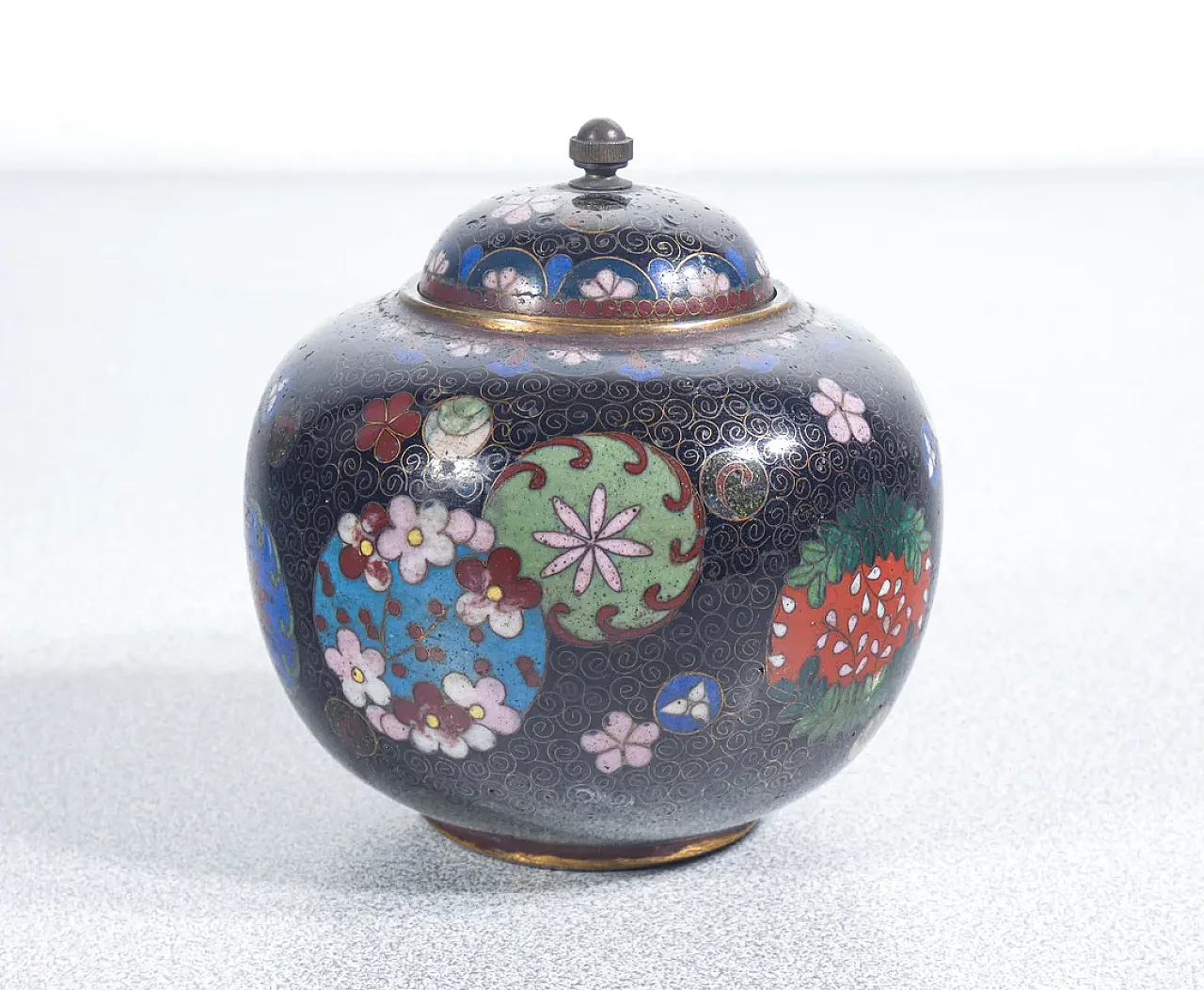
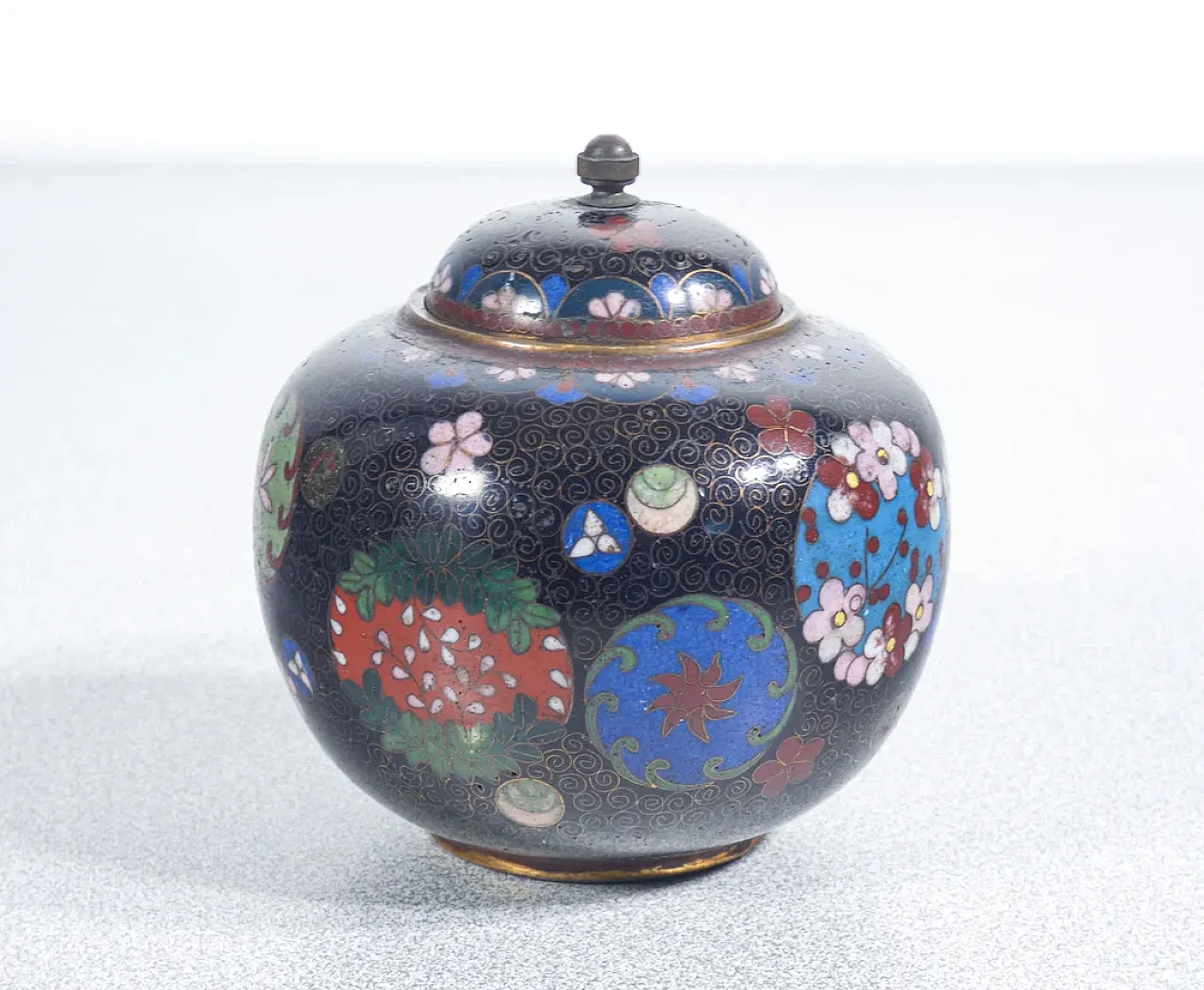
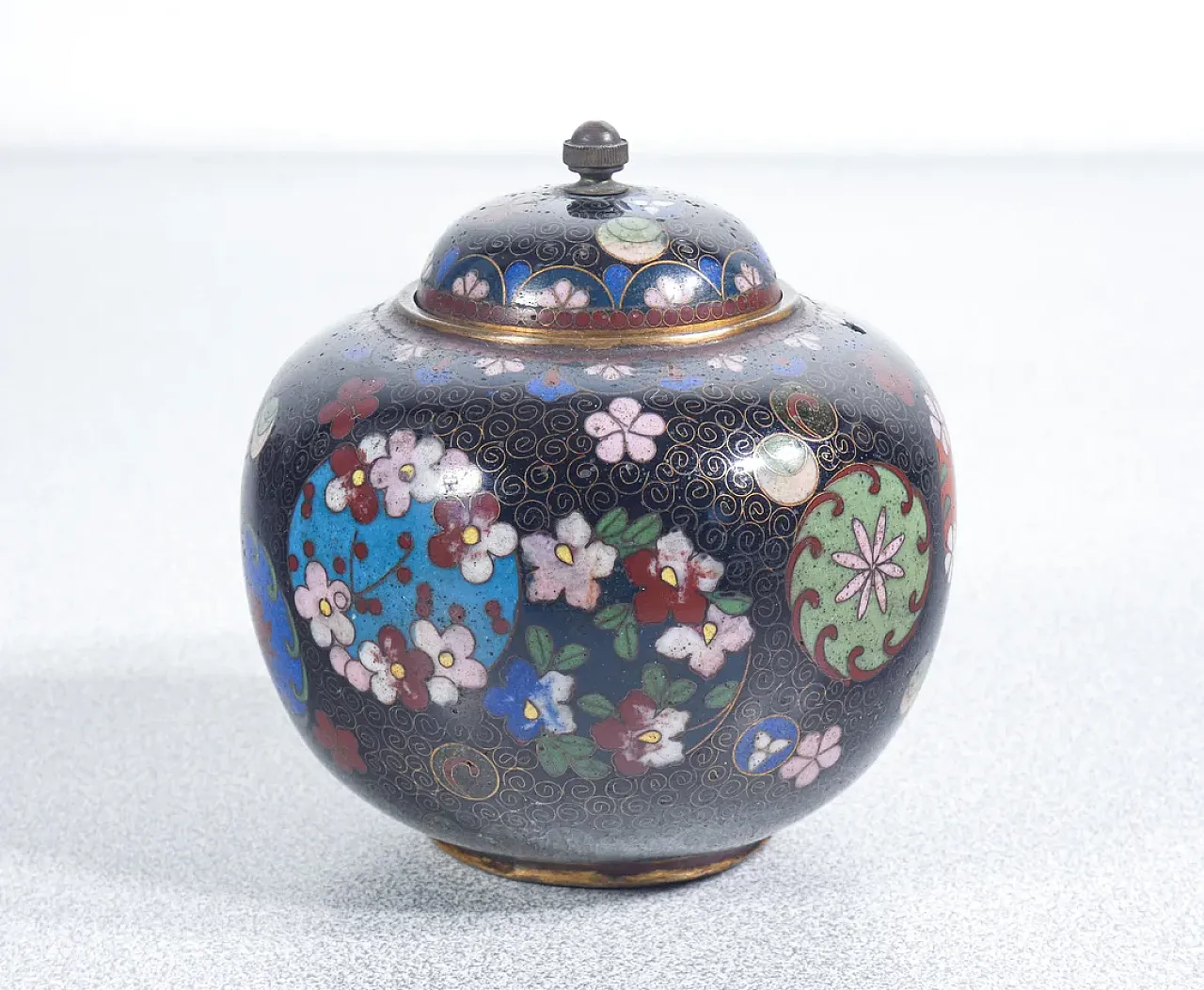
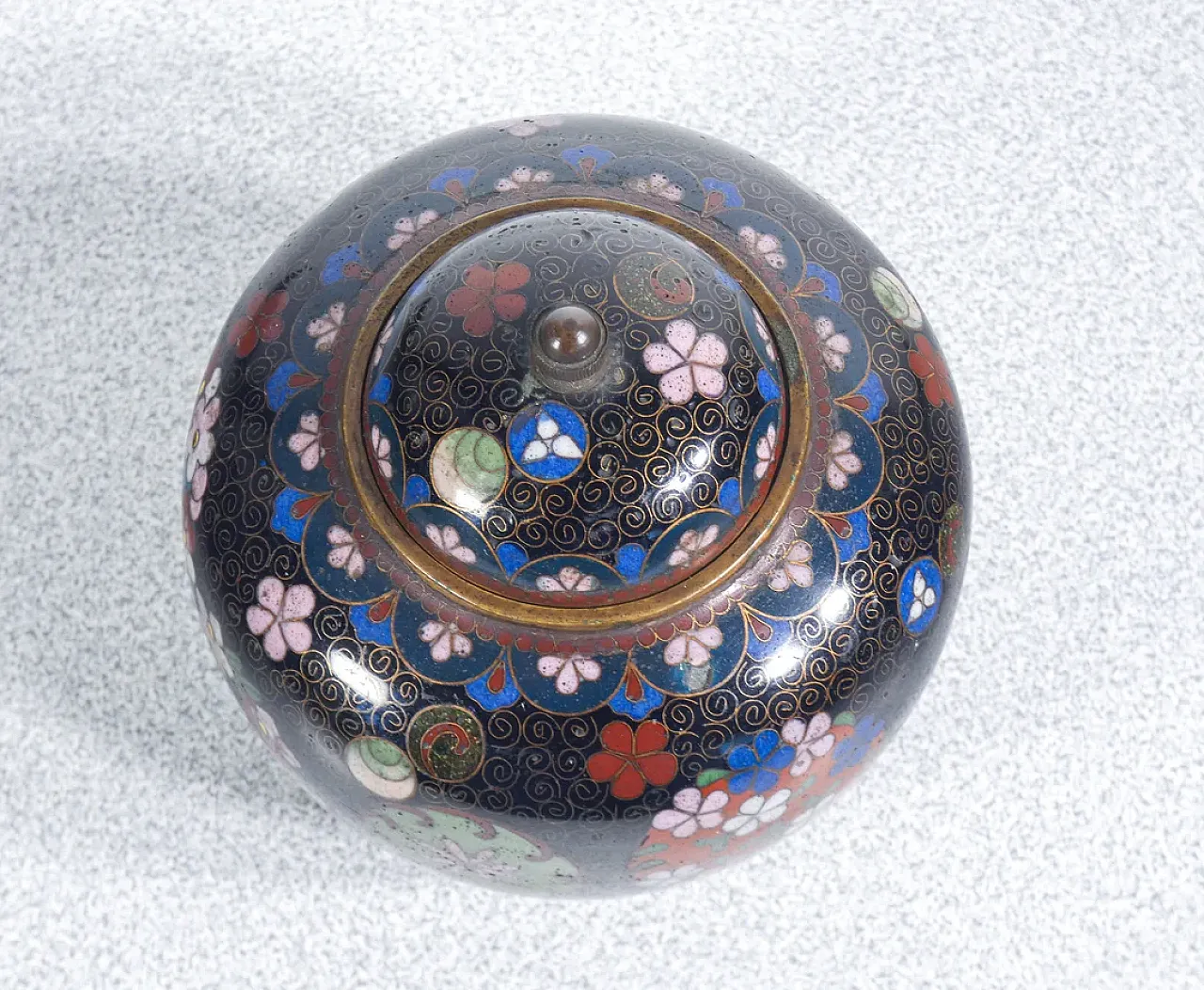
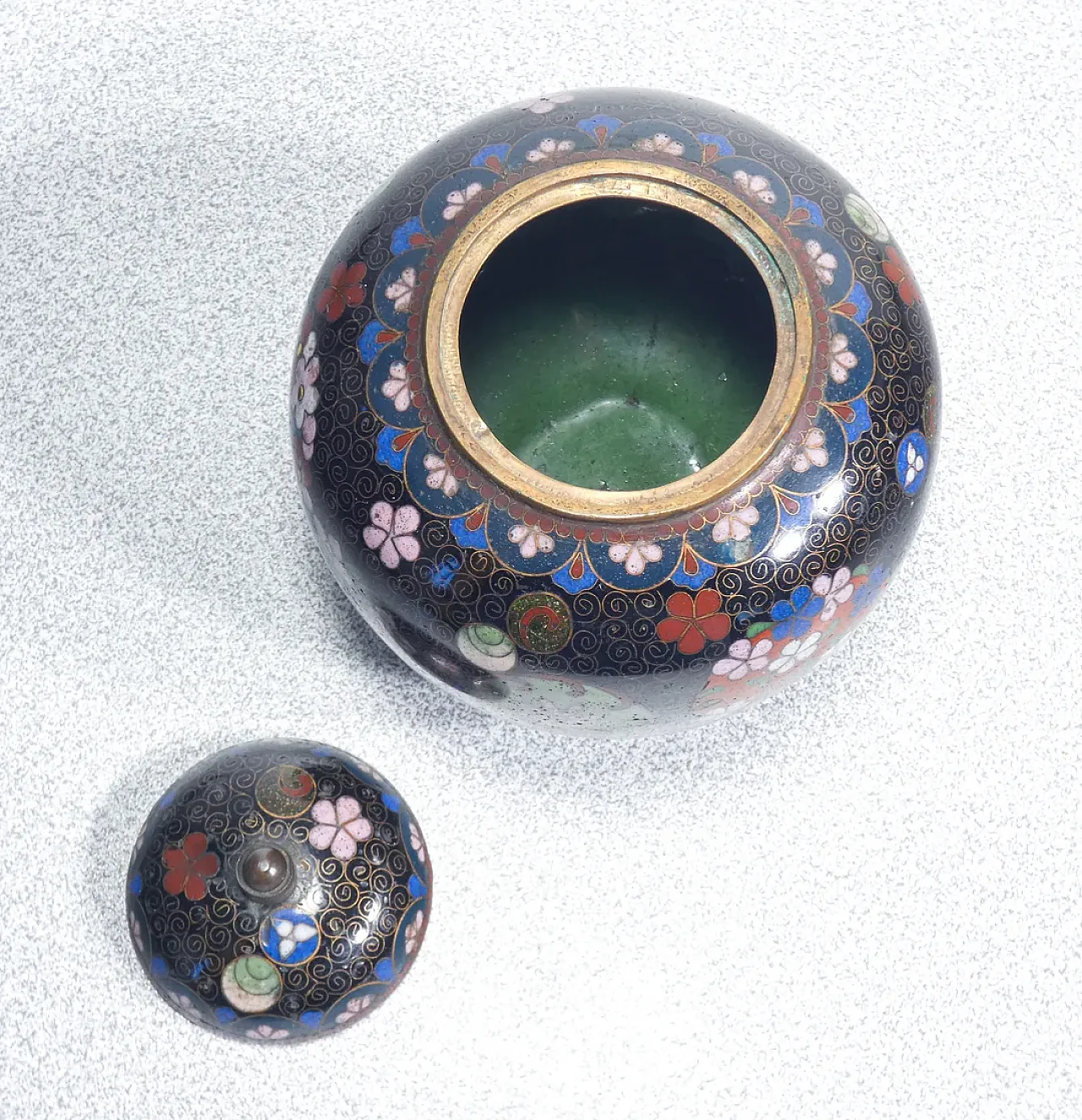
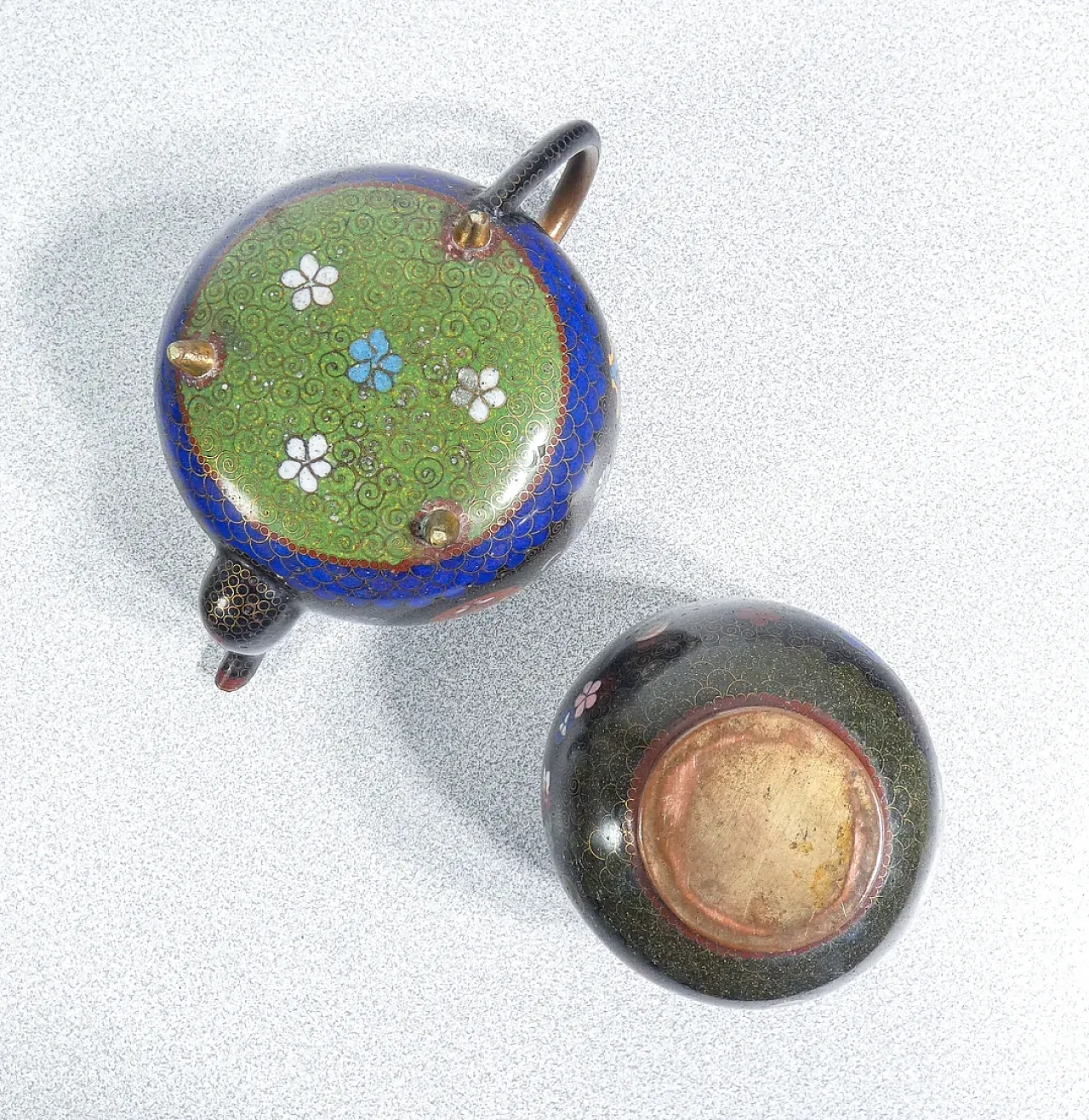
Teapot and sugar bowl
in cloisonné on the back
black, with medallions
flowers and butterflies.
Japan, Early Twentieth Century.
Cloisonné processing, a craft technique used to decorate metal objects with colored enamels. This technique involves welding thin metal wires (usually gold or copper) to the surface of an object to create small compartments, called 'cloisons'. These compartments are then filled with powdered enamel, which is subsequently melted in an oven. Once the enamel has cooled, the surface is smoothed to create a uniform, shiny appearance. The cloisonné technique has ancient origins and was already used by the Egyptians, but reached its peak in China during the Ming and Qing dynasties. Today, cloisonné is prized for its beauty and artistic value, and is commonly used to decorate jewelry, vases, and other ornamental objects.


.png)


 SILVER Seller in Torino, Italia