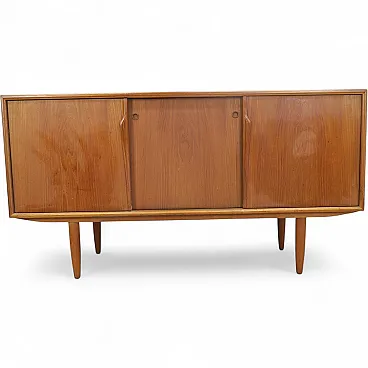
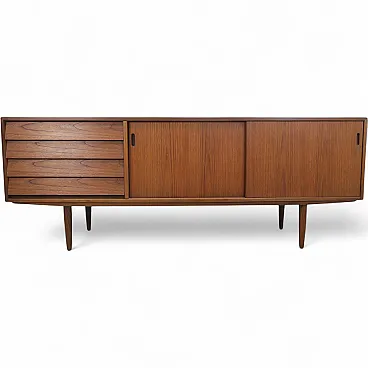
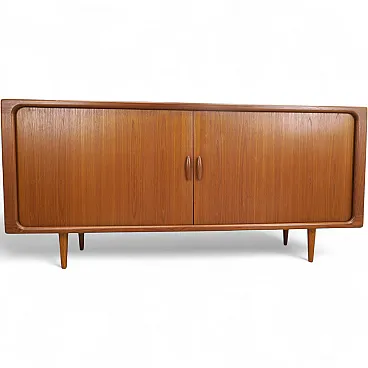
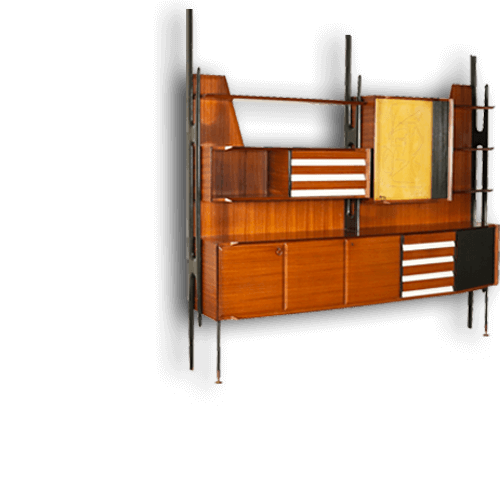
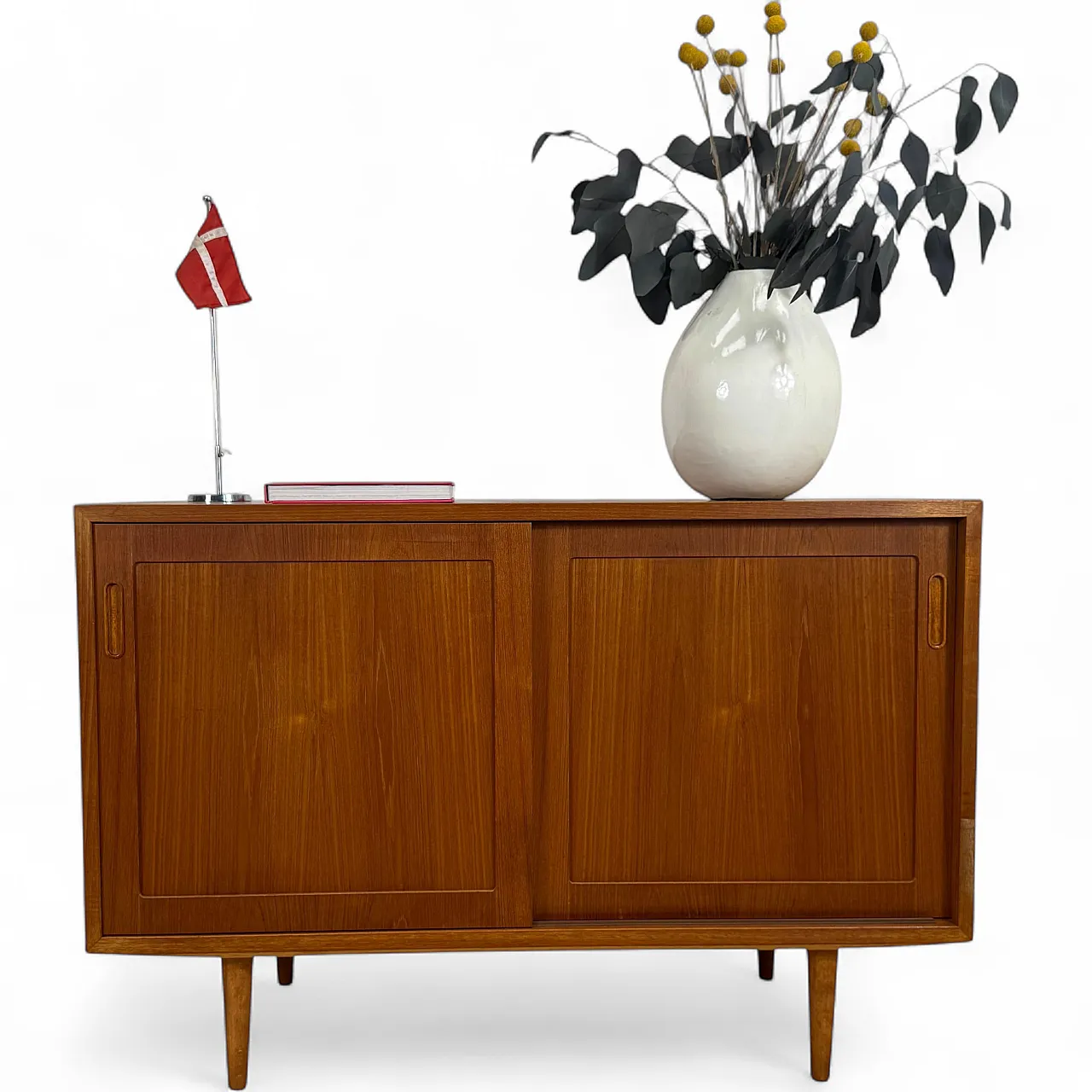
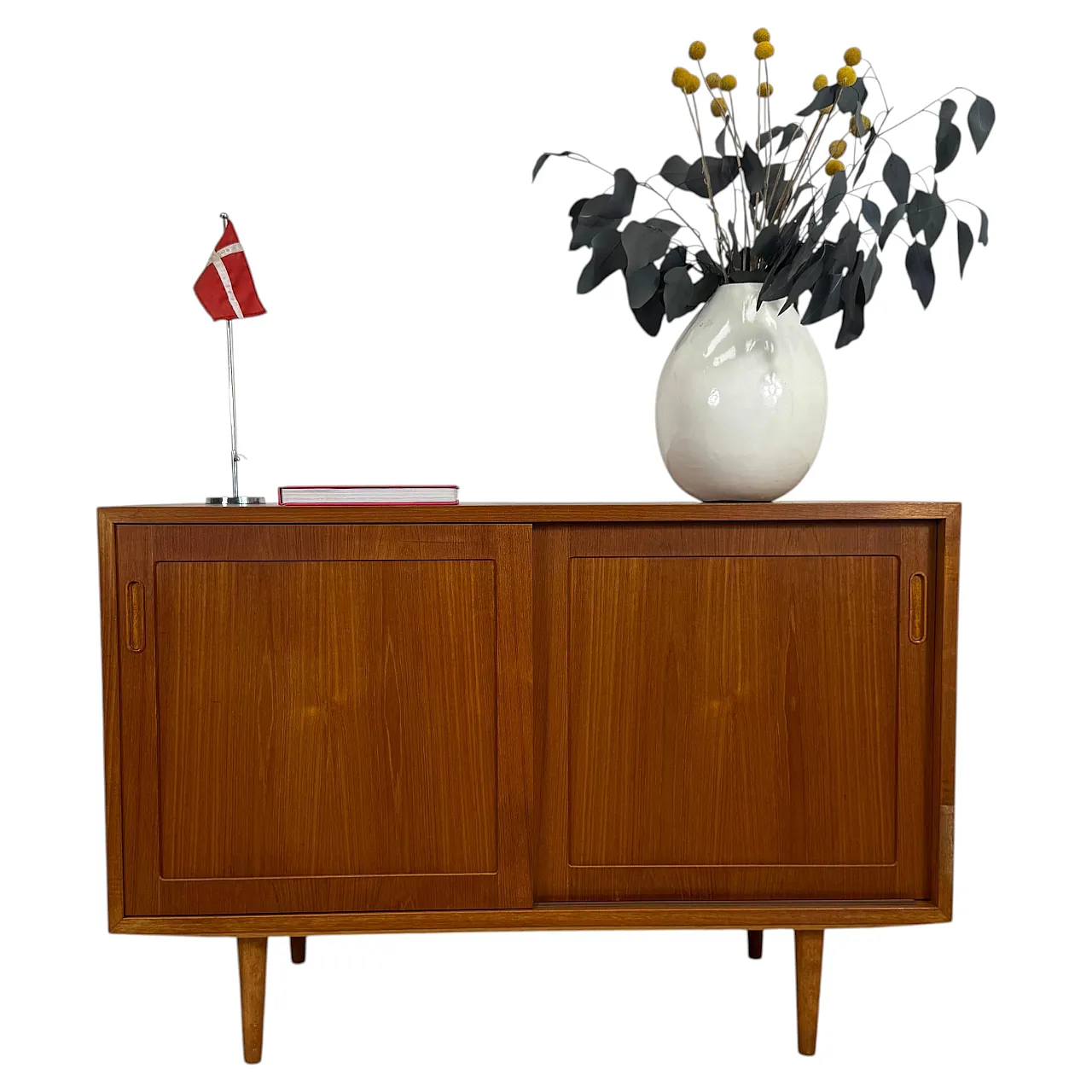
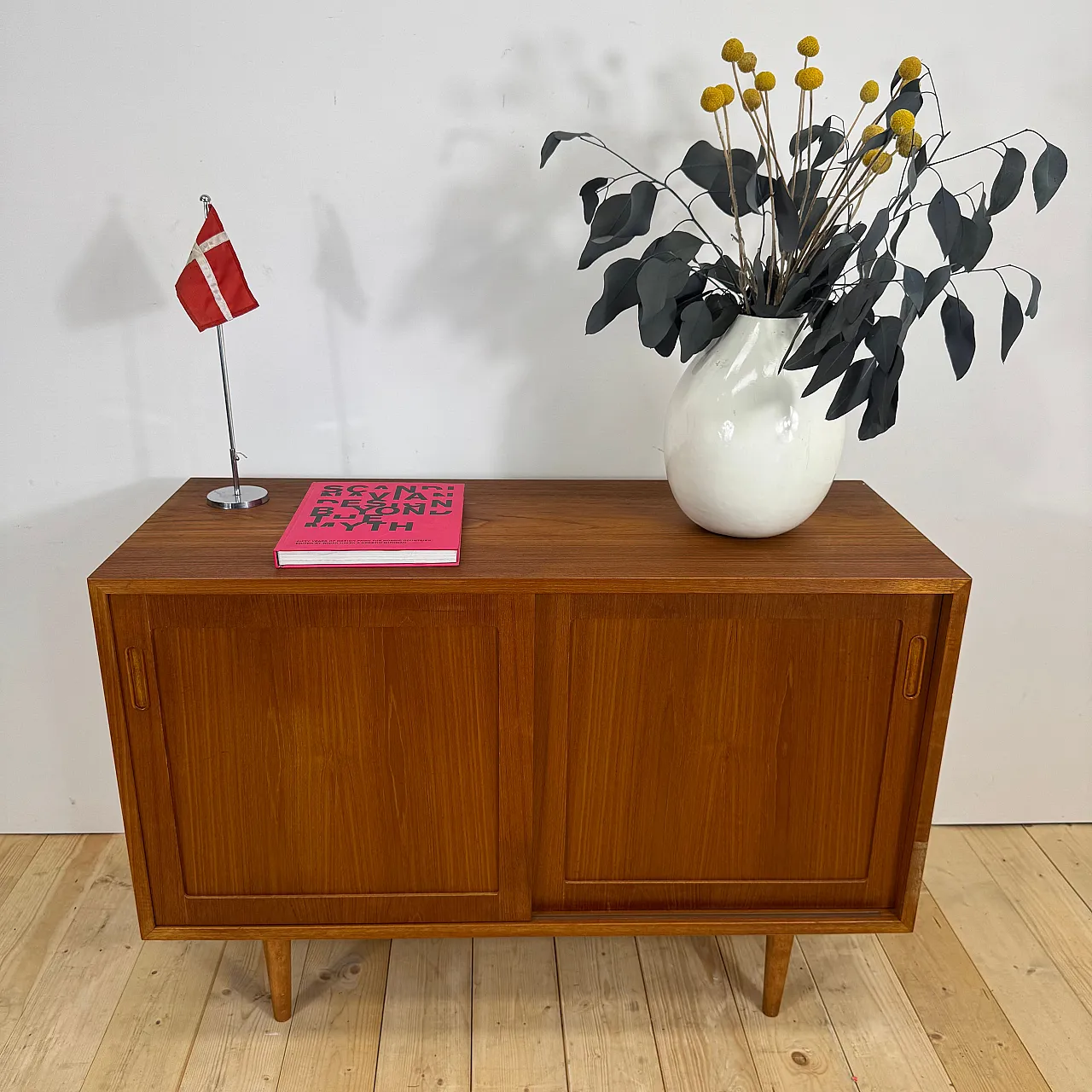
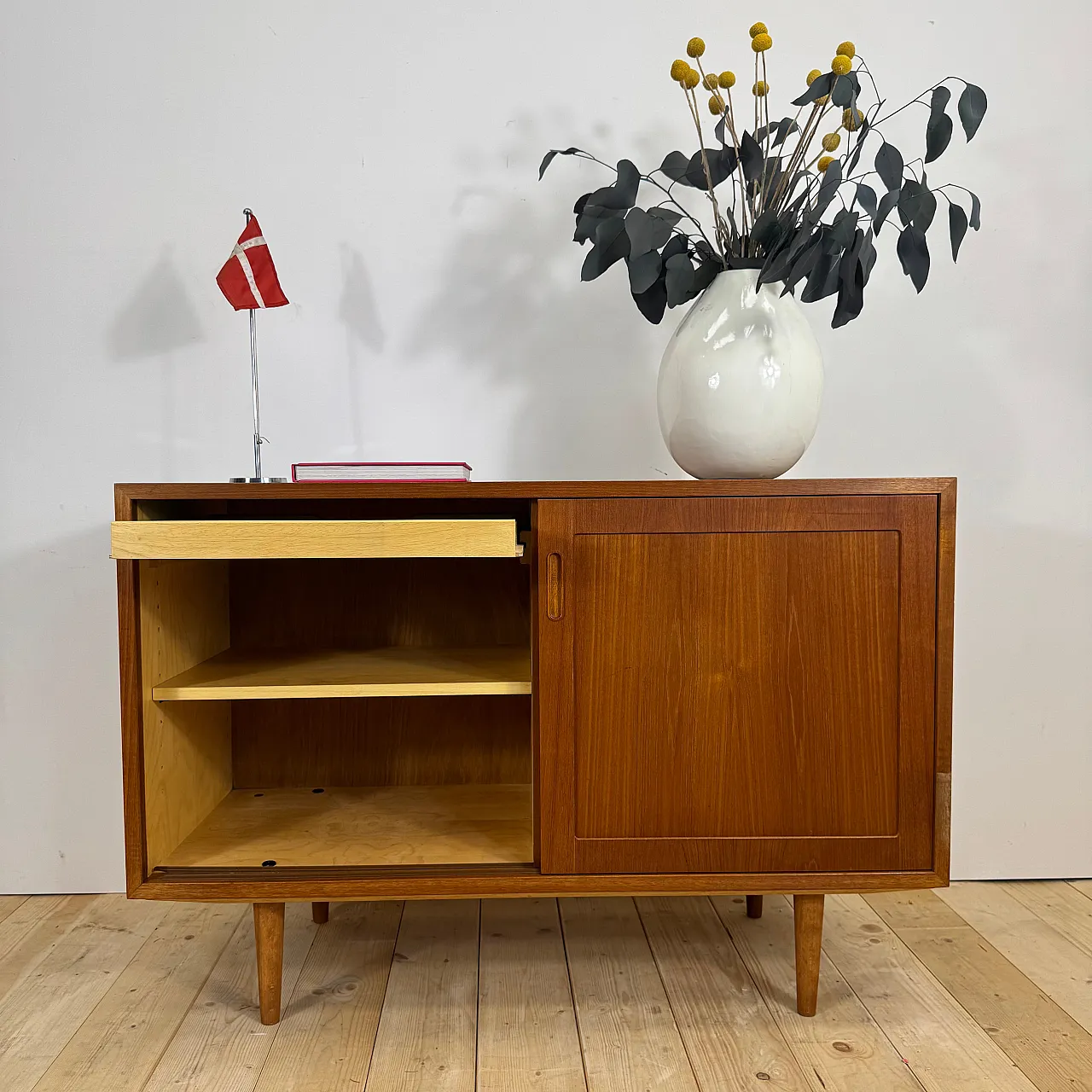
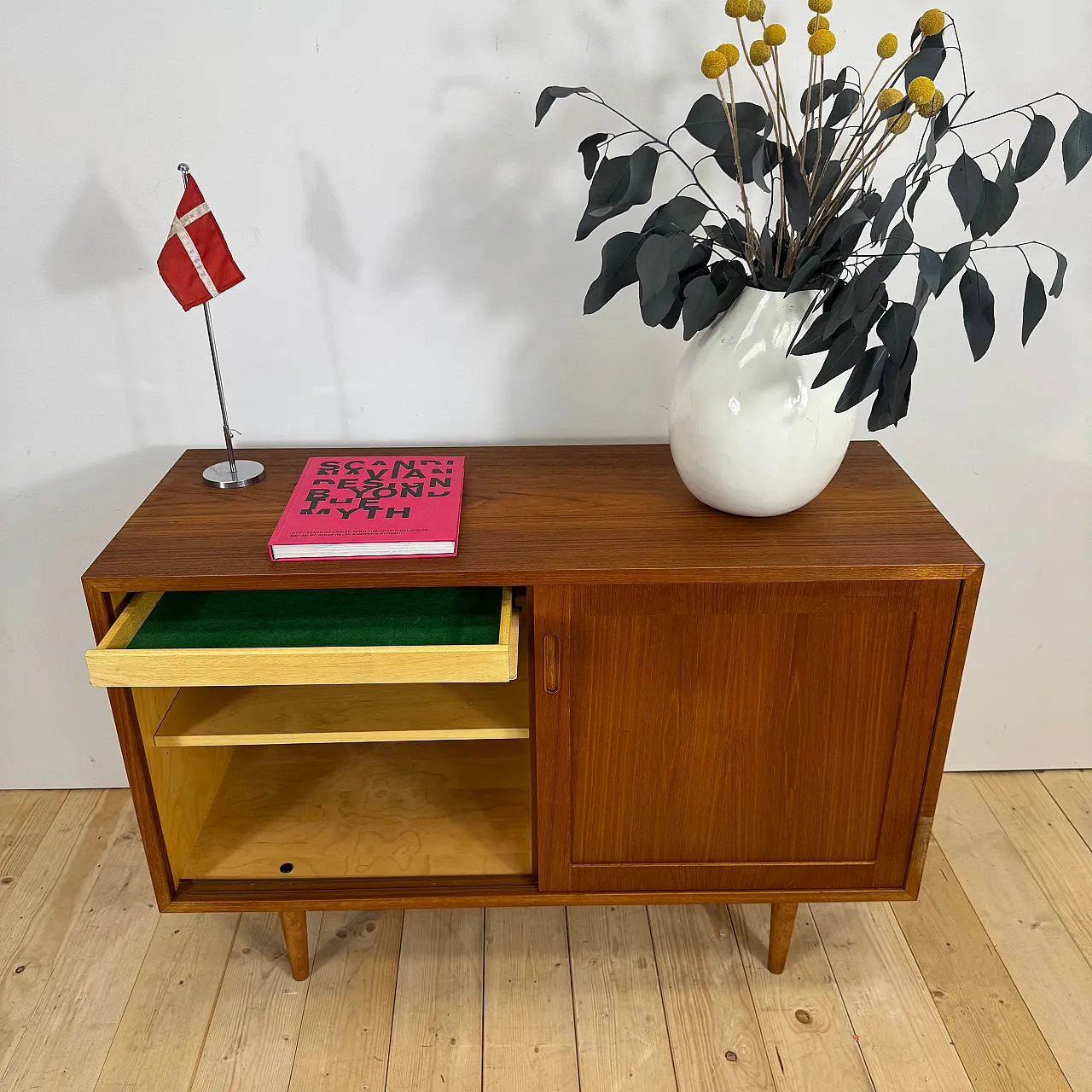
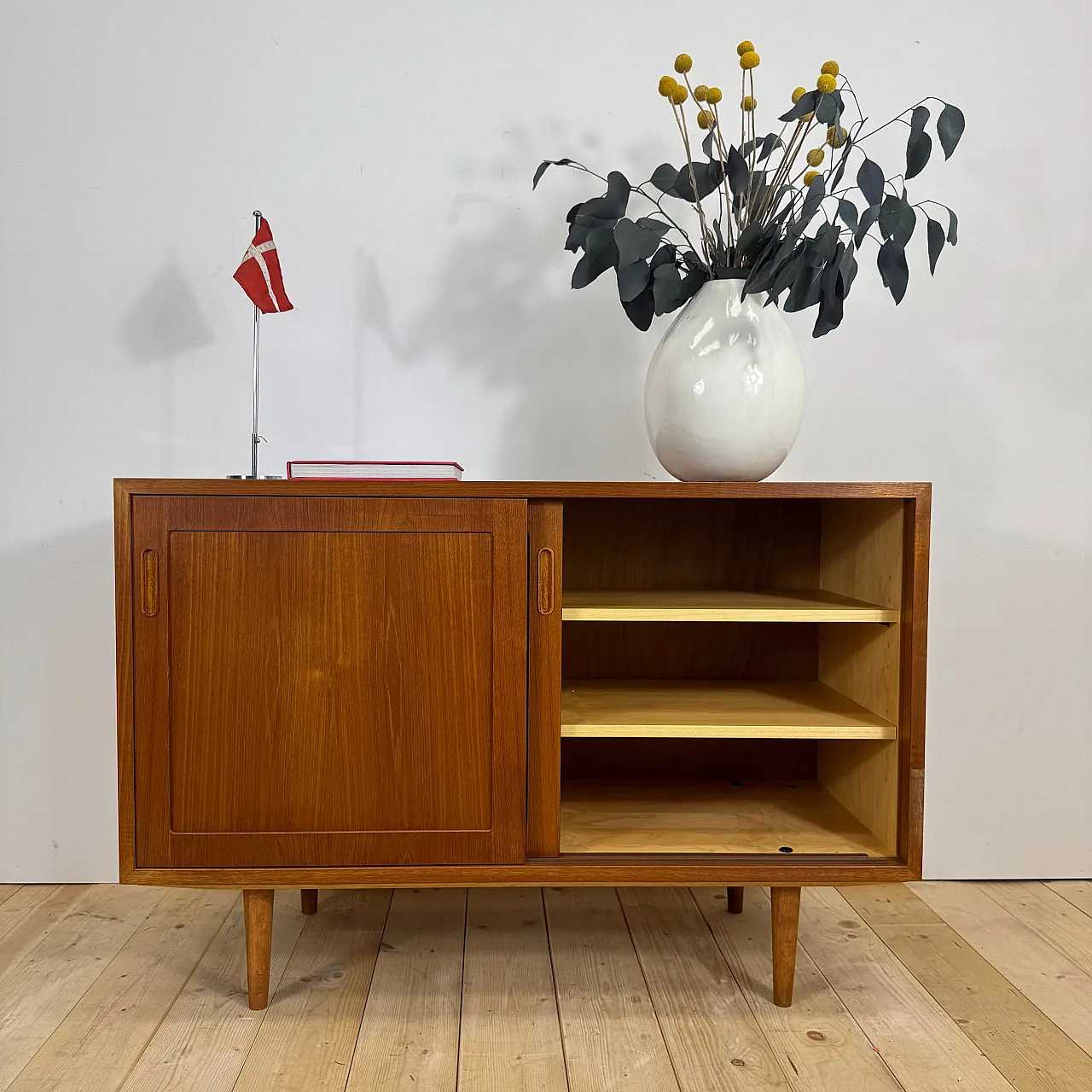
The movement of the doors defines the character of this 1960s Danish sideboard. The sliding system allows access to the compartments without altering the overall dimensions of the piece, a simple yet highly effective solution that reflects Scandinavian design's focus on everyday use. Teak occupies the entire surface and becomes a fundamental part of the design. The natural grain follows the horizontal lines of the piece, while the warm tones of the wood emphasize its depth. The absence of applied decorative elements highlights the quality of the workmanship and gives the piece a restrained look, typical of Danish modernism. Behind the sliding doors lies the storage space, designed to organize everyday objects while maintaining a visually uncluttered front. The upper shelf can be used for books, lamps, ceramics, or other decorative items, transforming the sideboard into a functional focal point within the room. Its relatively compact dimensions make it easy to fit into a variety of spaces: living room, dining room, entryway, or study. A piece of furniture created to meet the practical needs of the 1960s and still perfectly suited to contemporary interiors, thanks to the combination of teak, functionality and essential construction.



.png)

 SILVER Seller in Torino, Italia