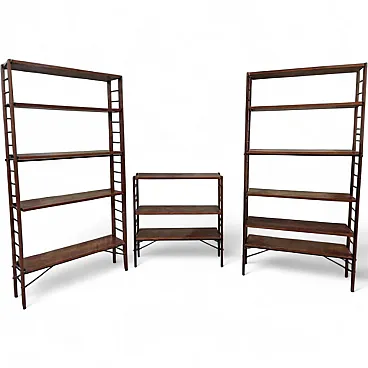
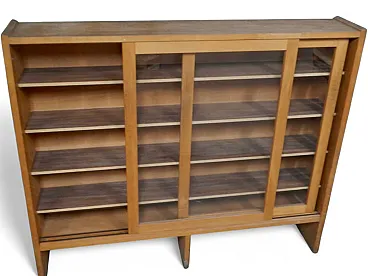
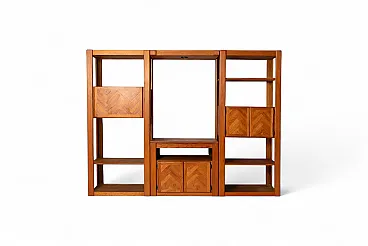
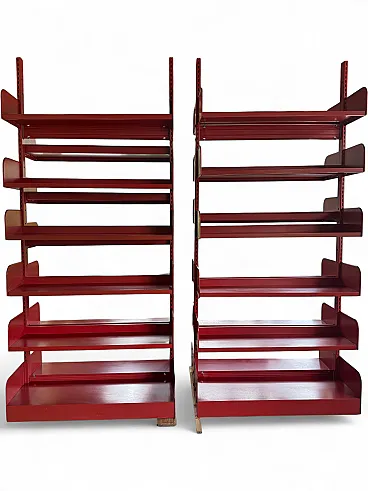
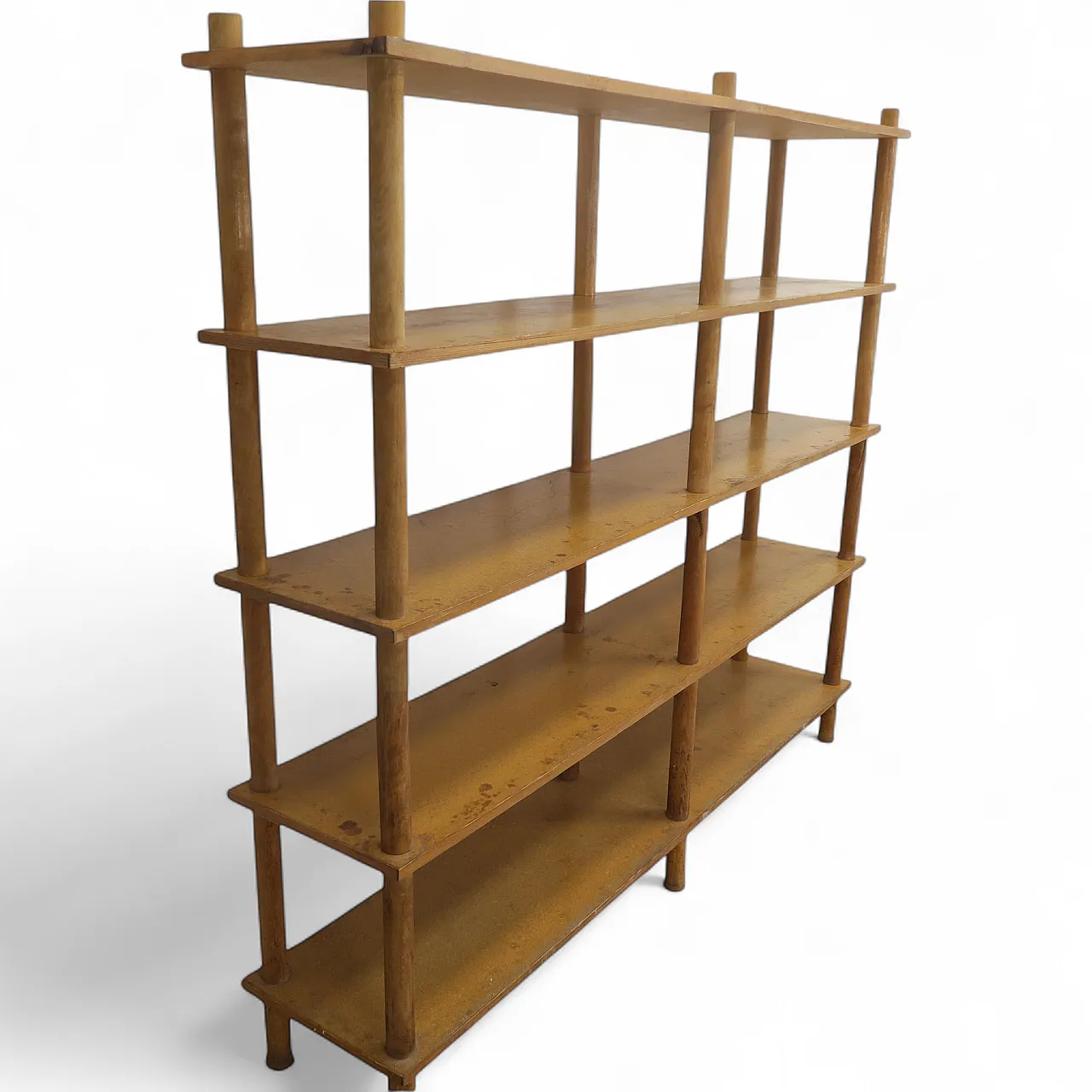
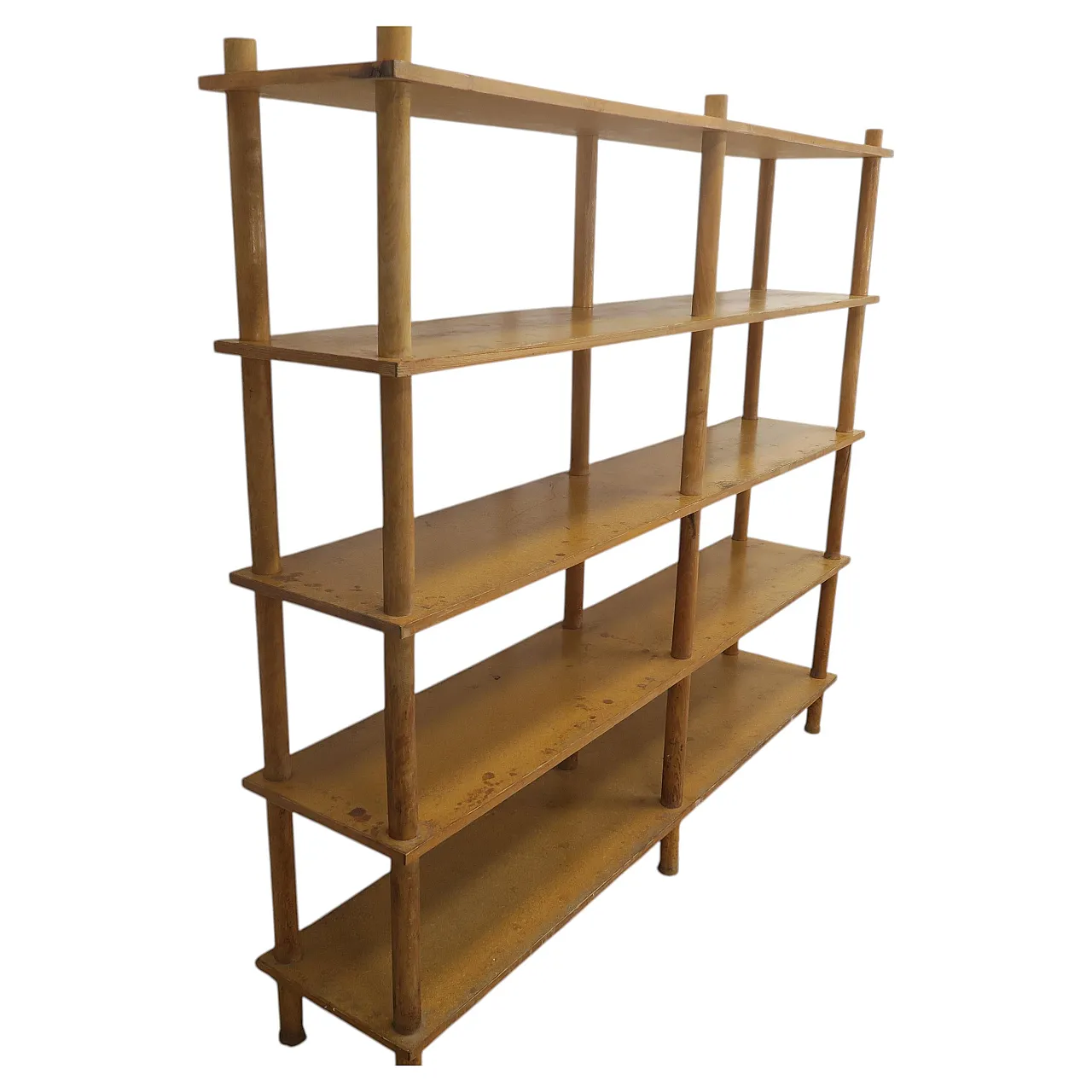
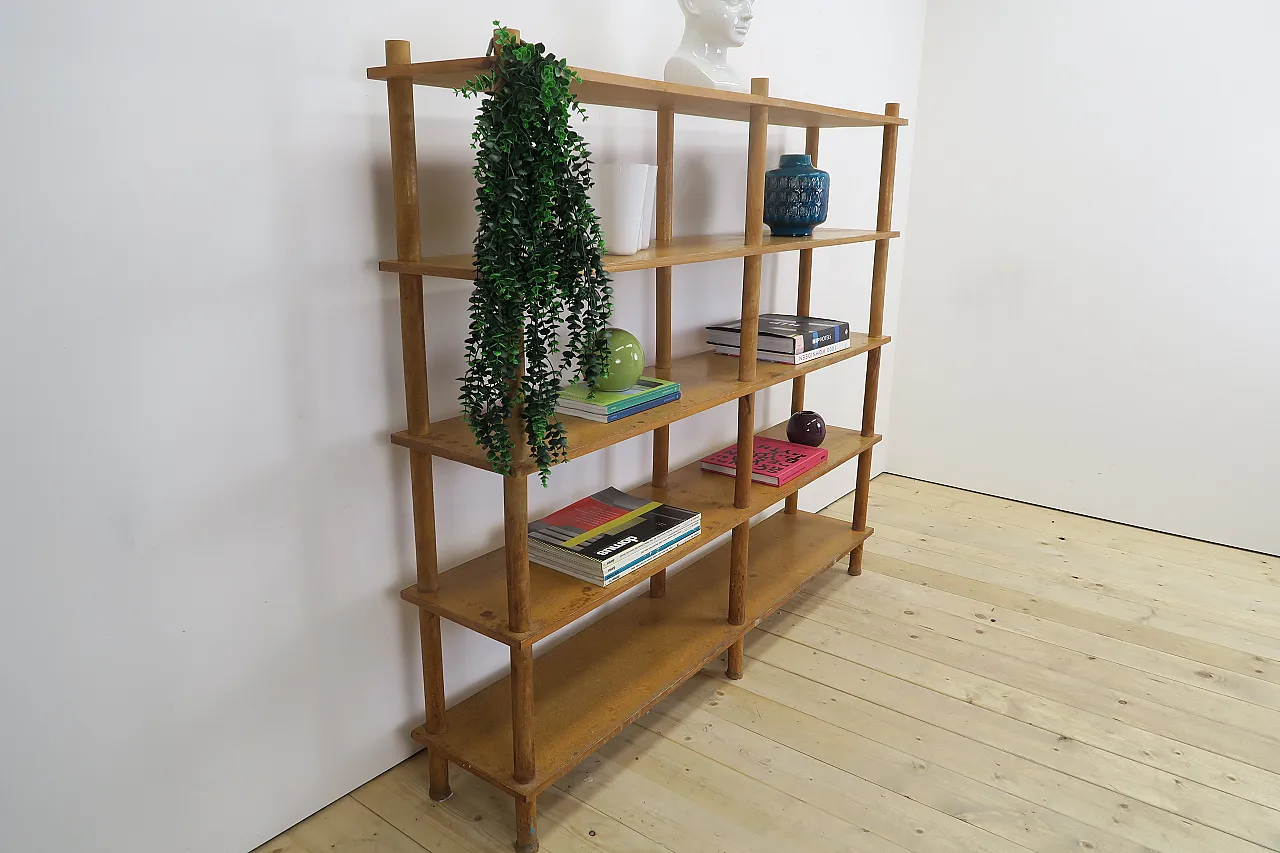
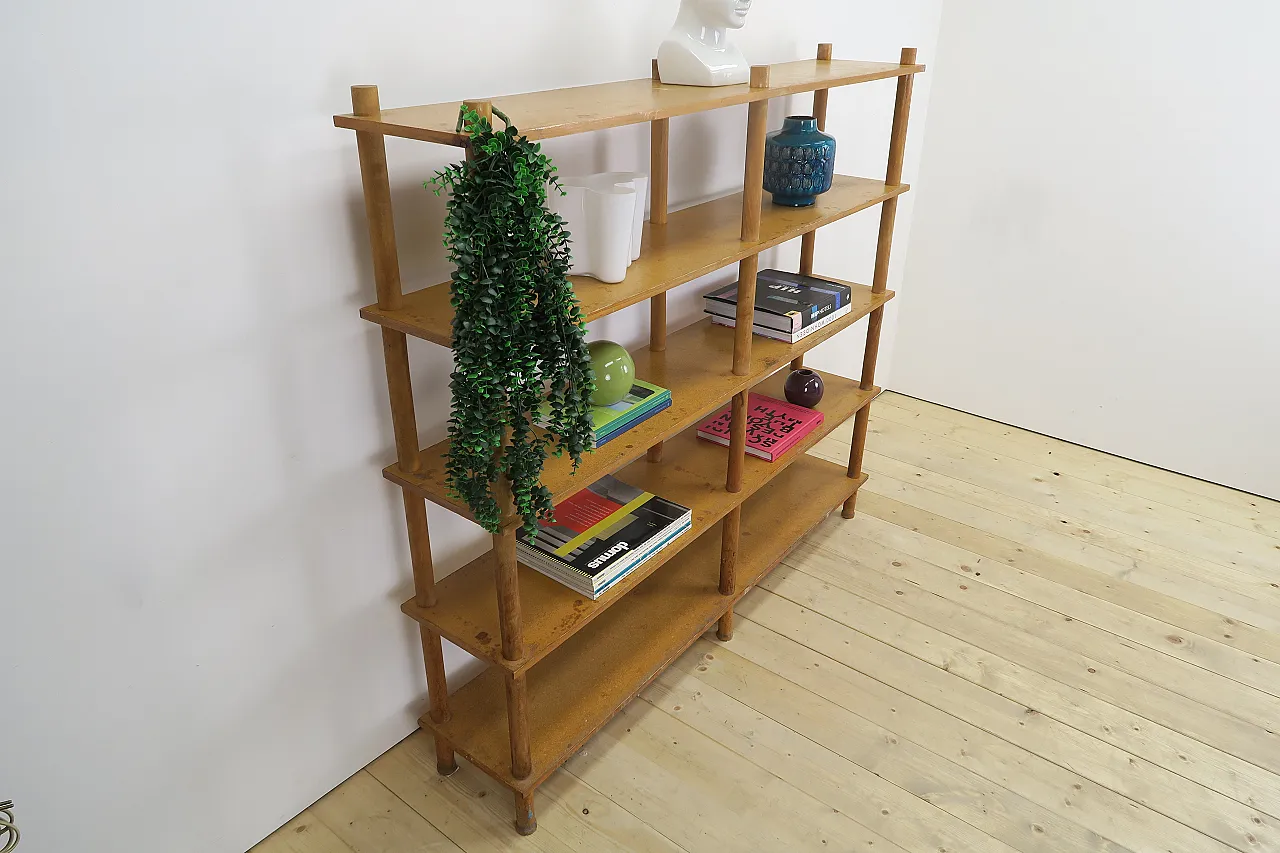
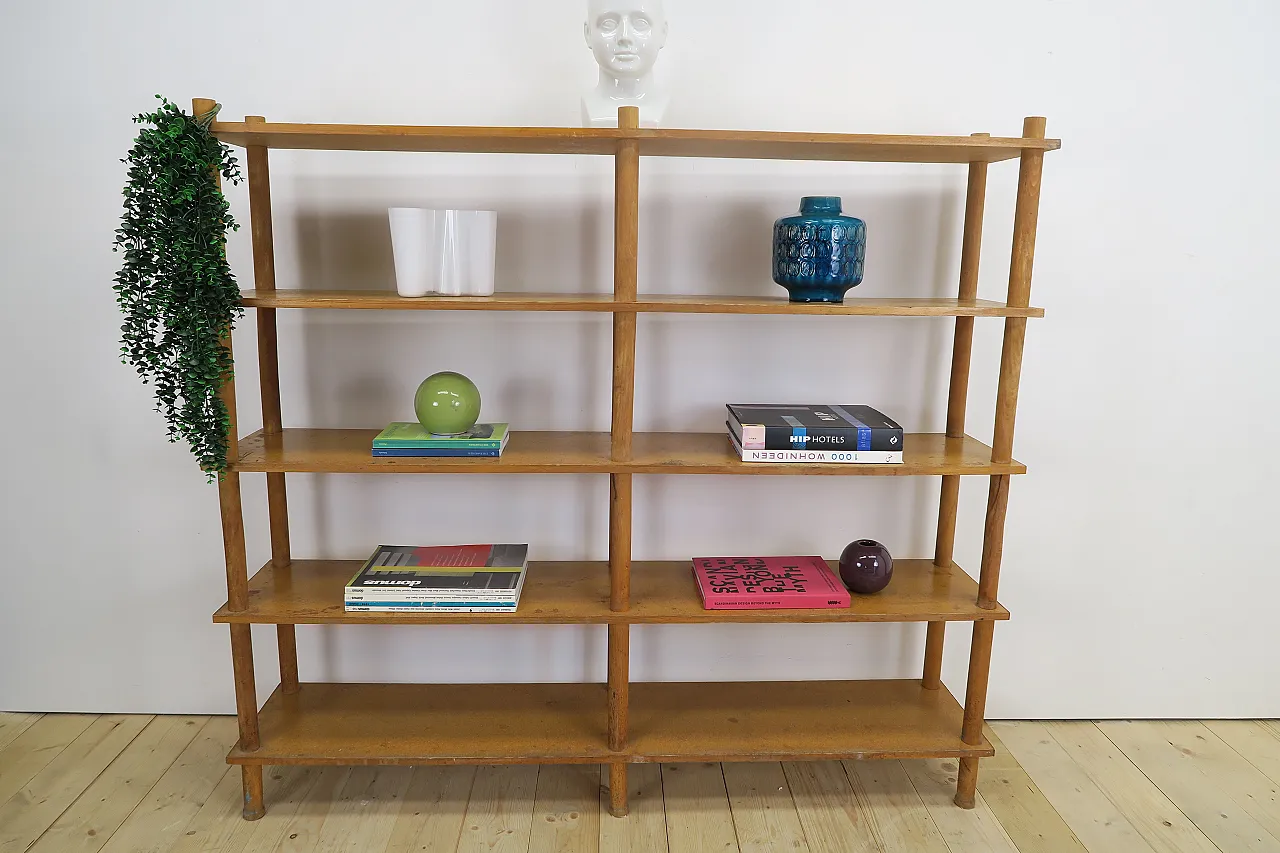
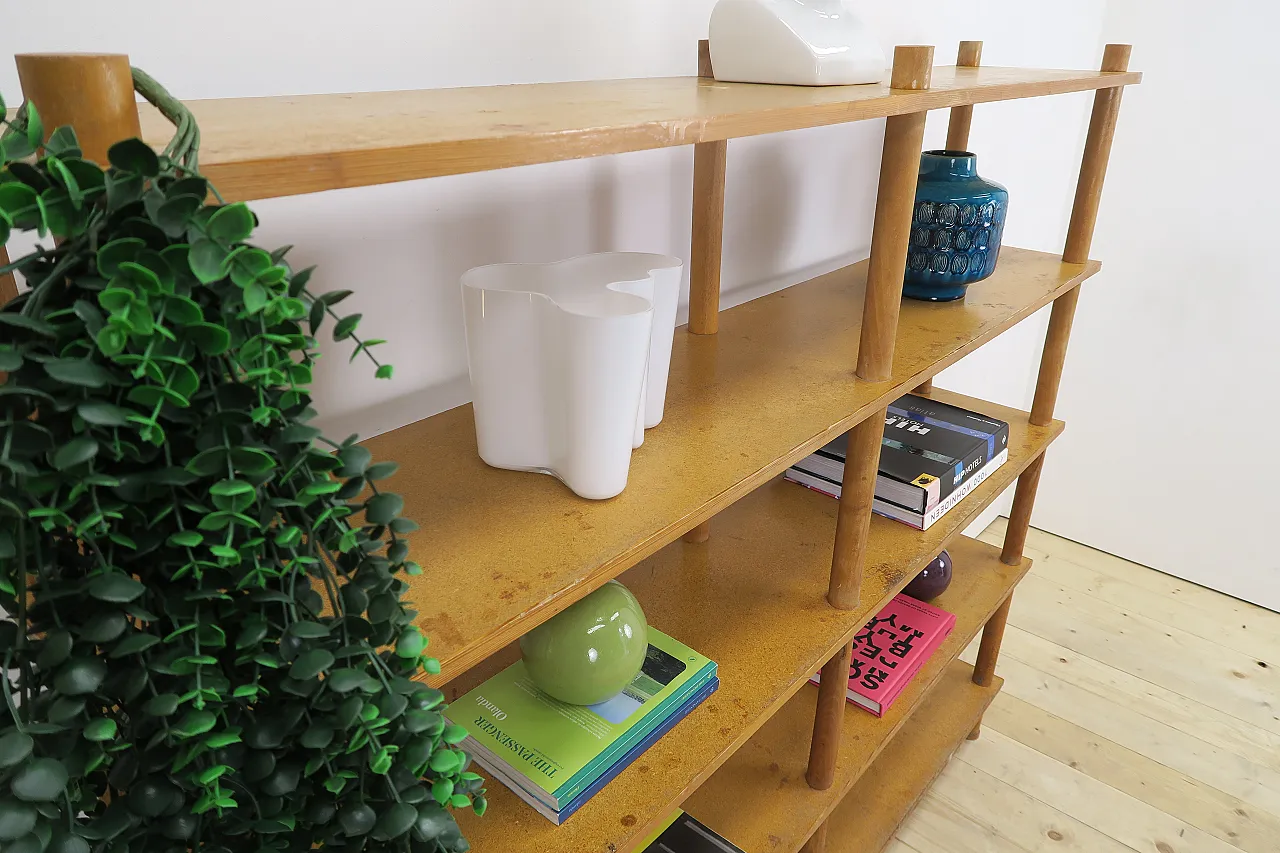
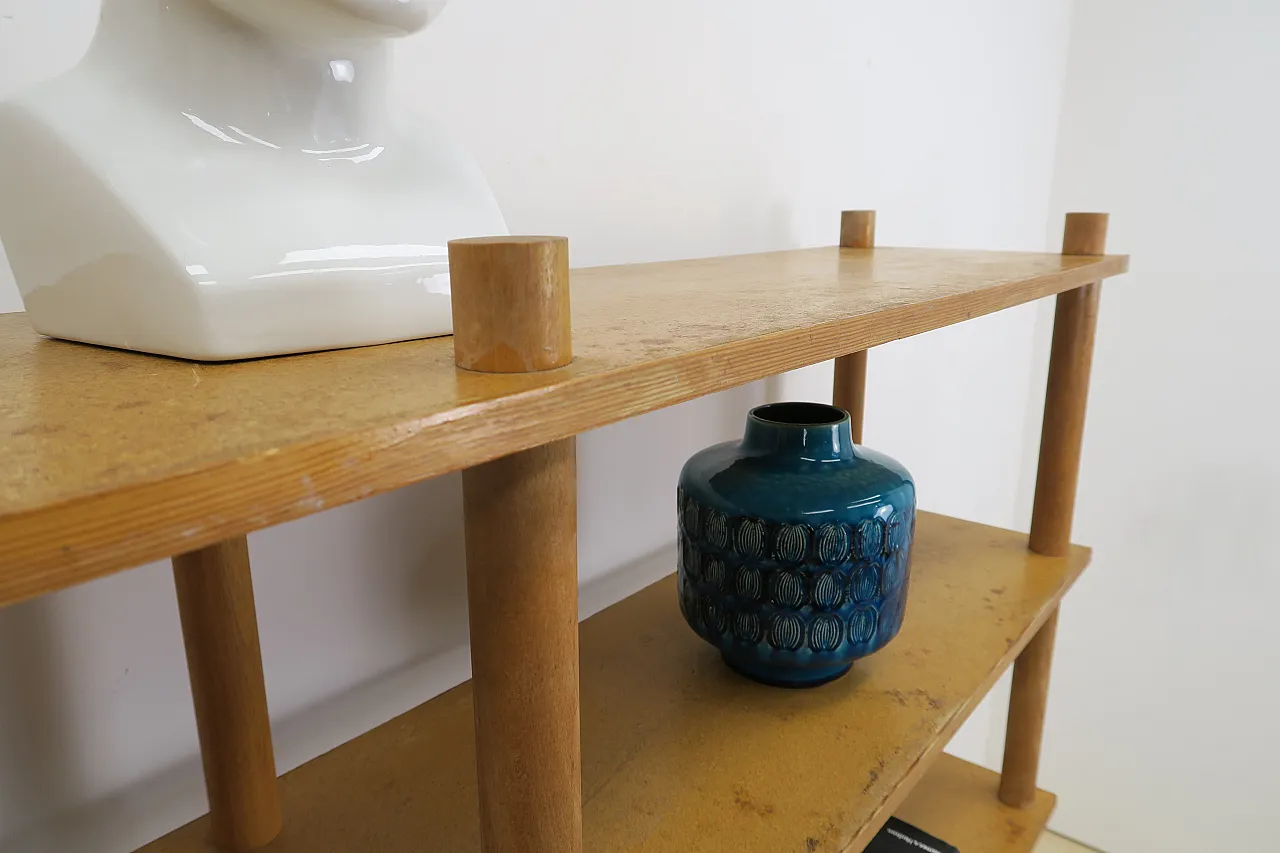
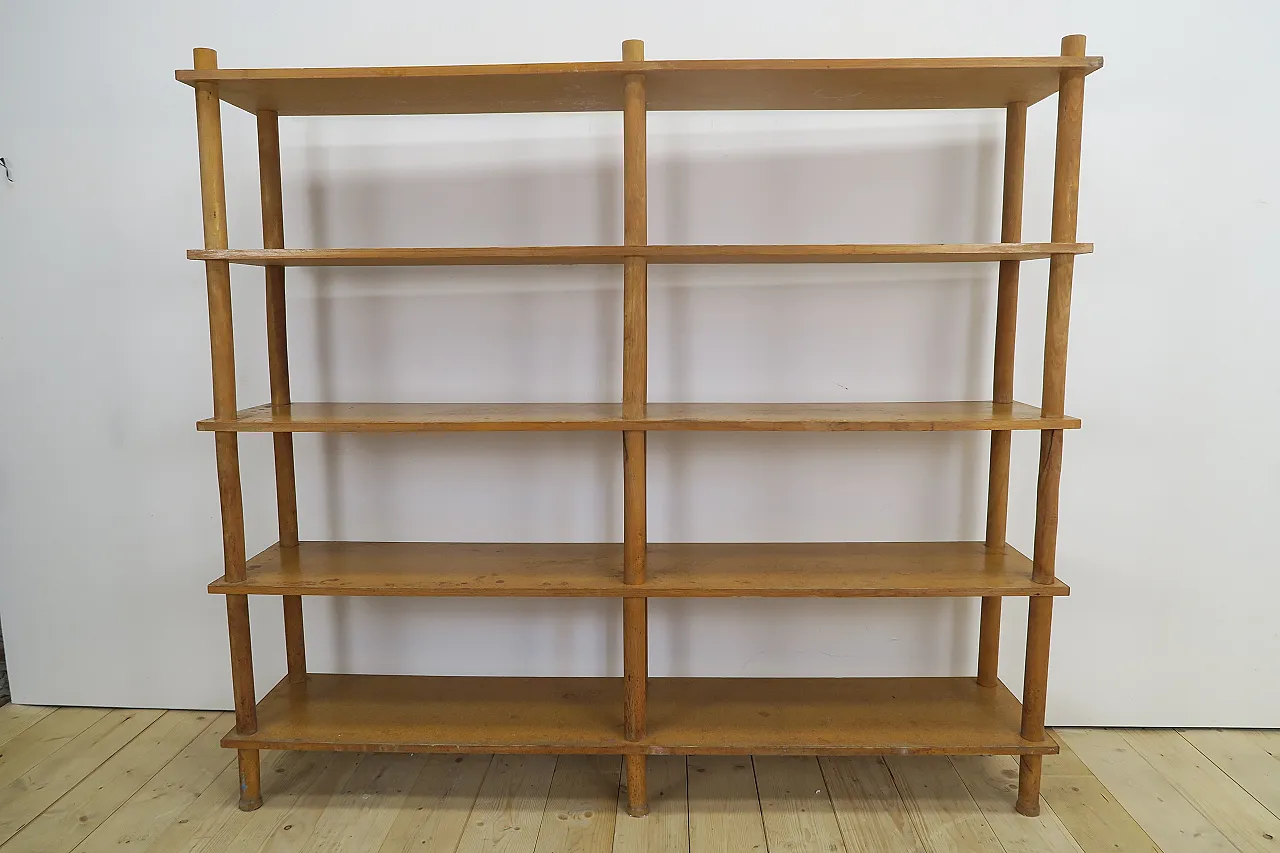
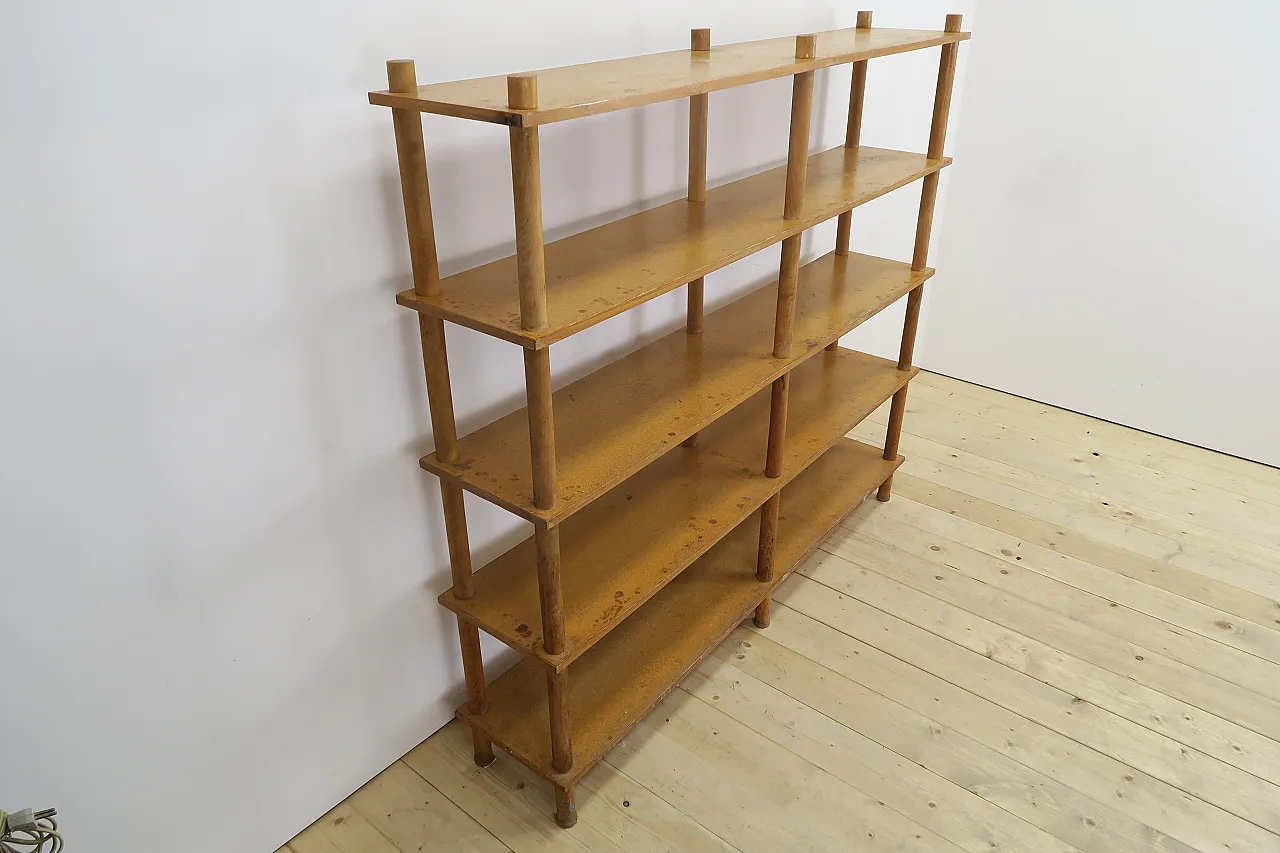
Not all bookcases are designed to be placed against a wall. This freestanding Danish piece from the 1960s, on the other hand, is designed to be a focal point in a space, with an open composition that can be viewed from both sides and also used to define different areas within a room. Made of oak, it features a horizontal layout punctuated by open compartments and storage surfaces, in a minimalist design where form follows function. The natural grain of the wood adds a textural element that contrasts pleasantly with the structure's regular geometry. Its depth of just 31 cm contributes to its light, airy appearance and allows the piece of furniture to be used even in spaces where room is limited. Placed in the center of a room, it can serve as an open partition between the living and dining areas or between different sections of an open-concept space; when placed against a wall, however, it retains its more traditional function as a bookshelf. Its dimensions—153 cm wide by 138 cm high—also give it a particularly balanced look: substantial enough to serve as a focal point on a wall or to visually divide a room, but without creating a closed-off barrier. An example of Mid-Century Danish design in which furniture is not conceived simply as a storage unit, but as an integral part of the home's architecture.


.png)
 SILVER Seller in Torino, Italia