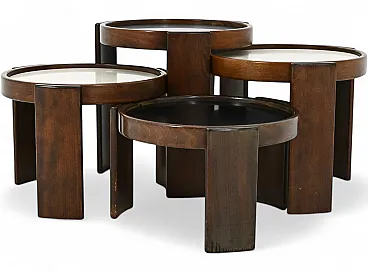
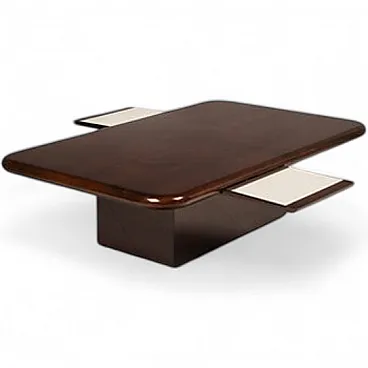
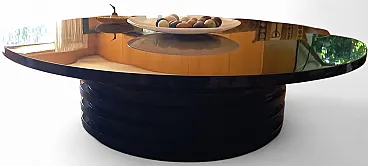
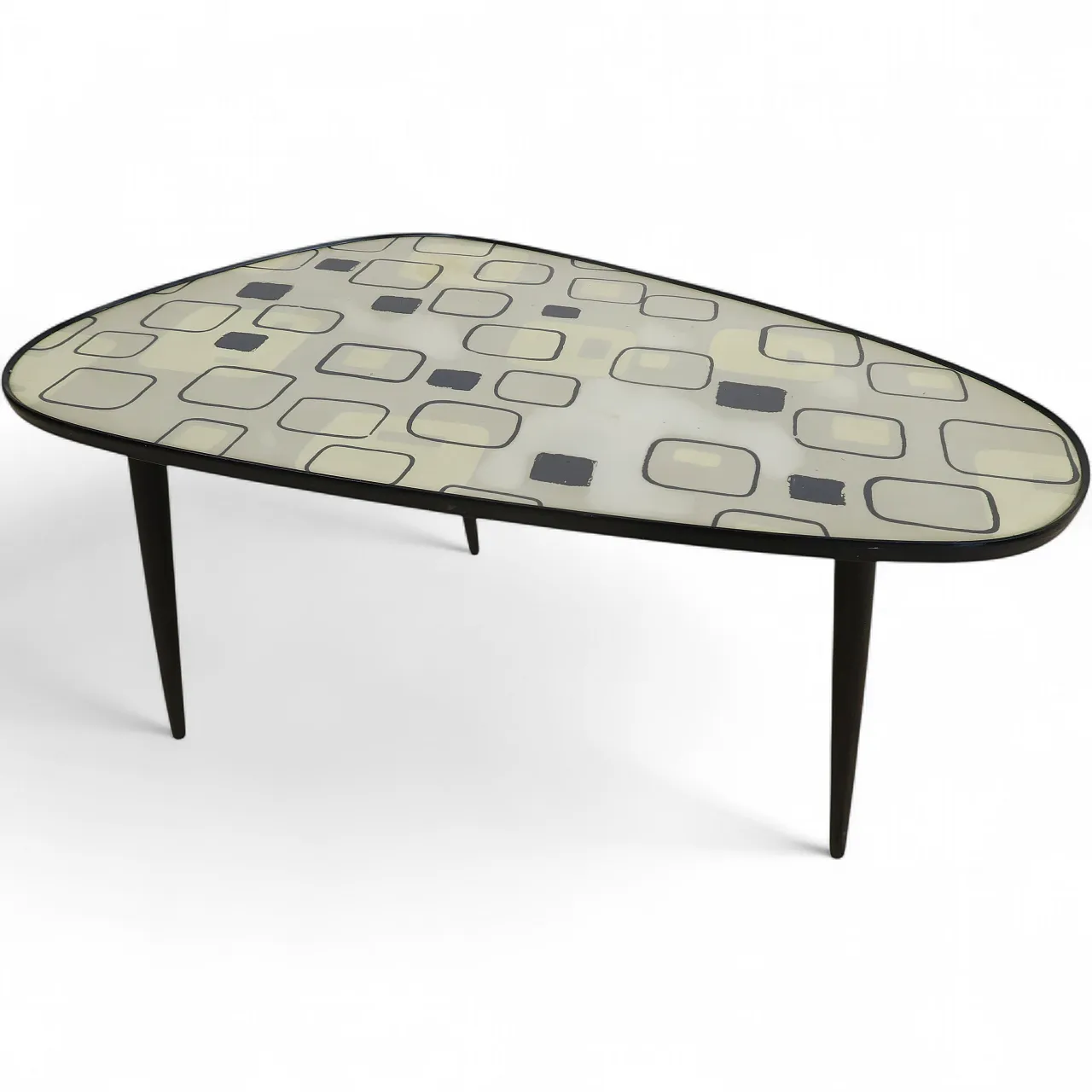
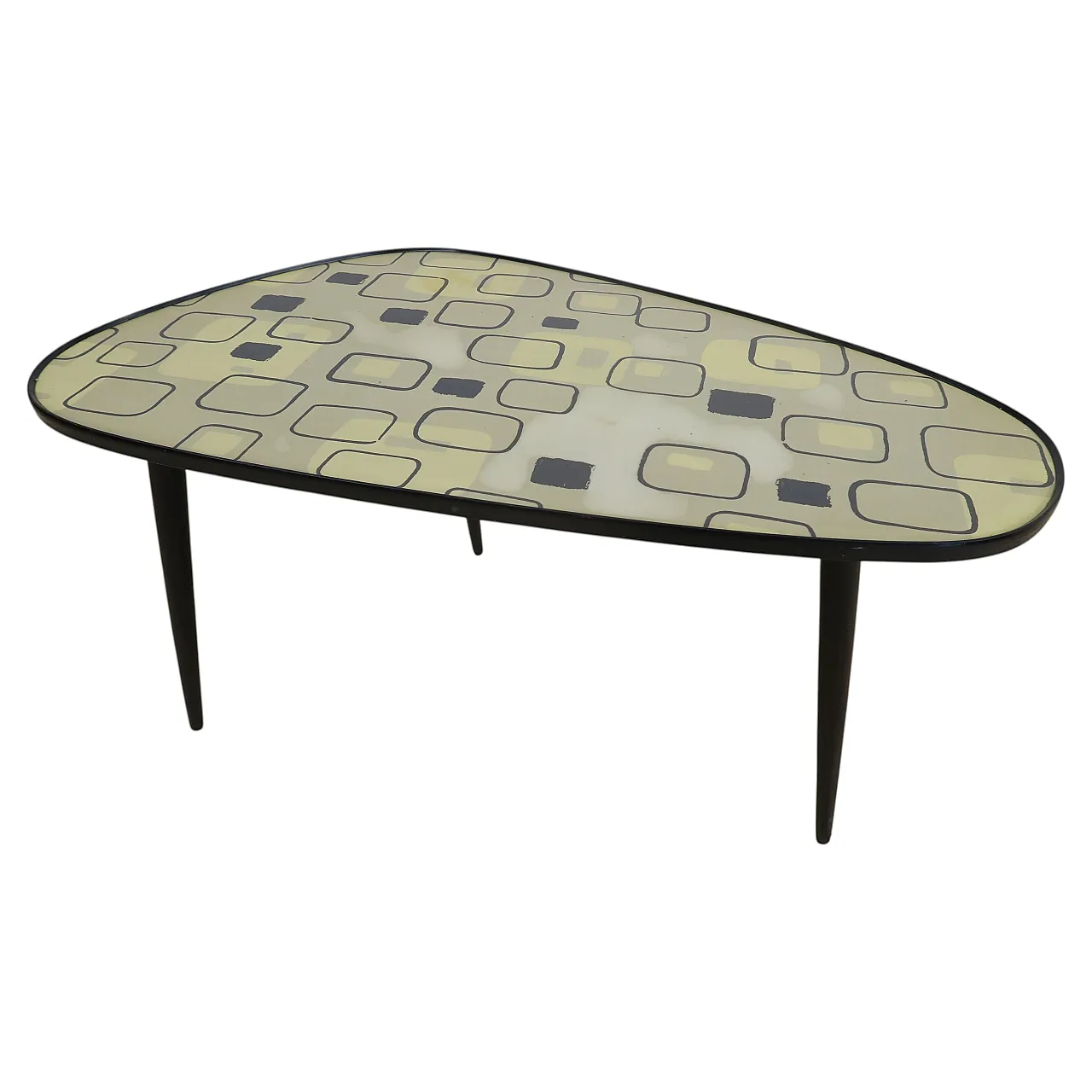
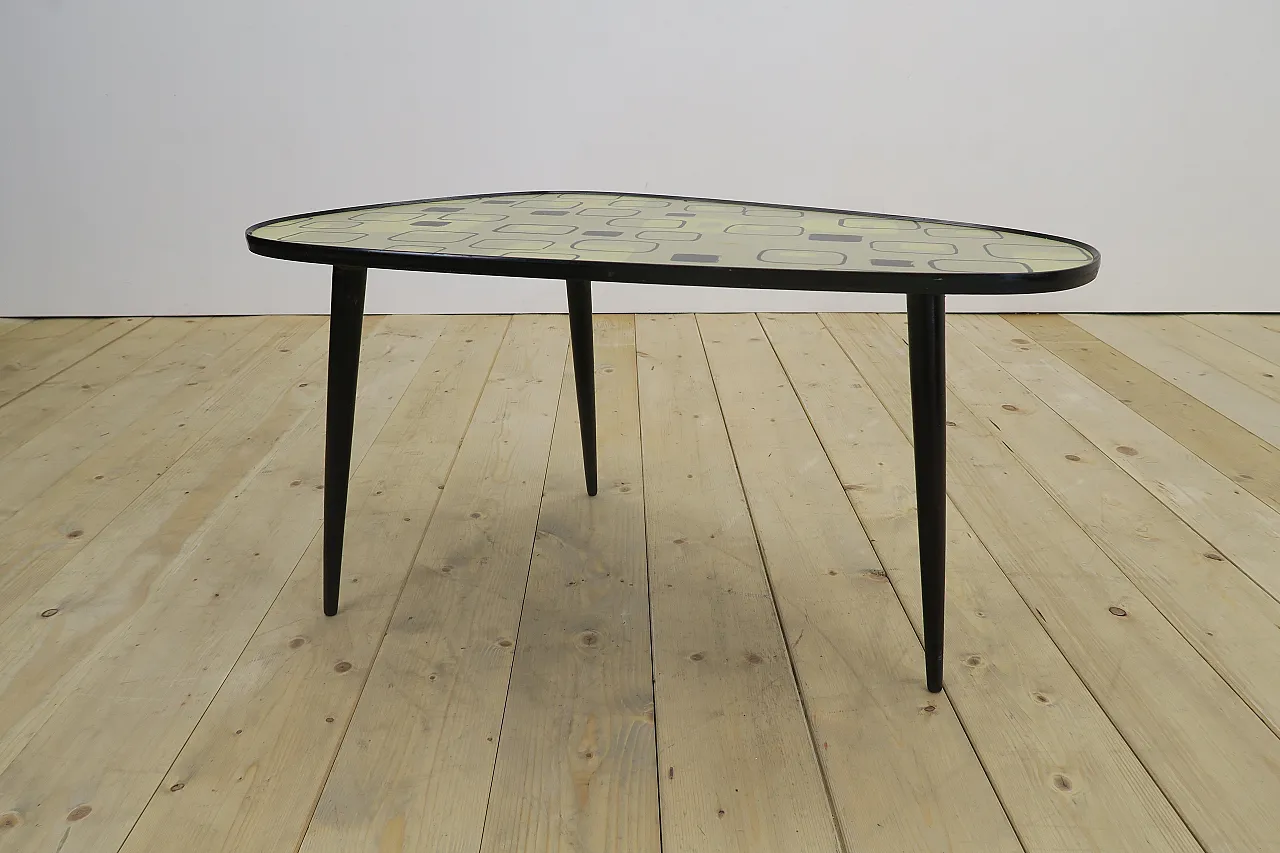
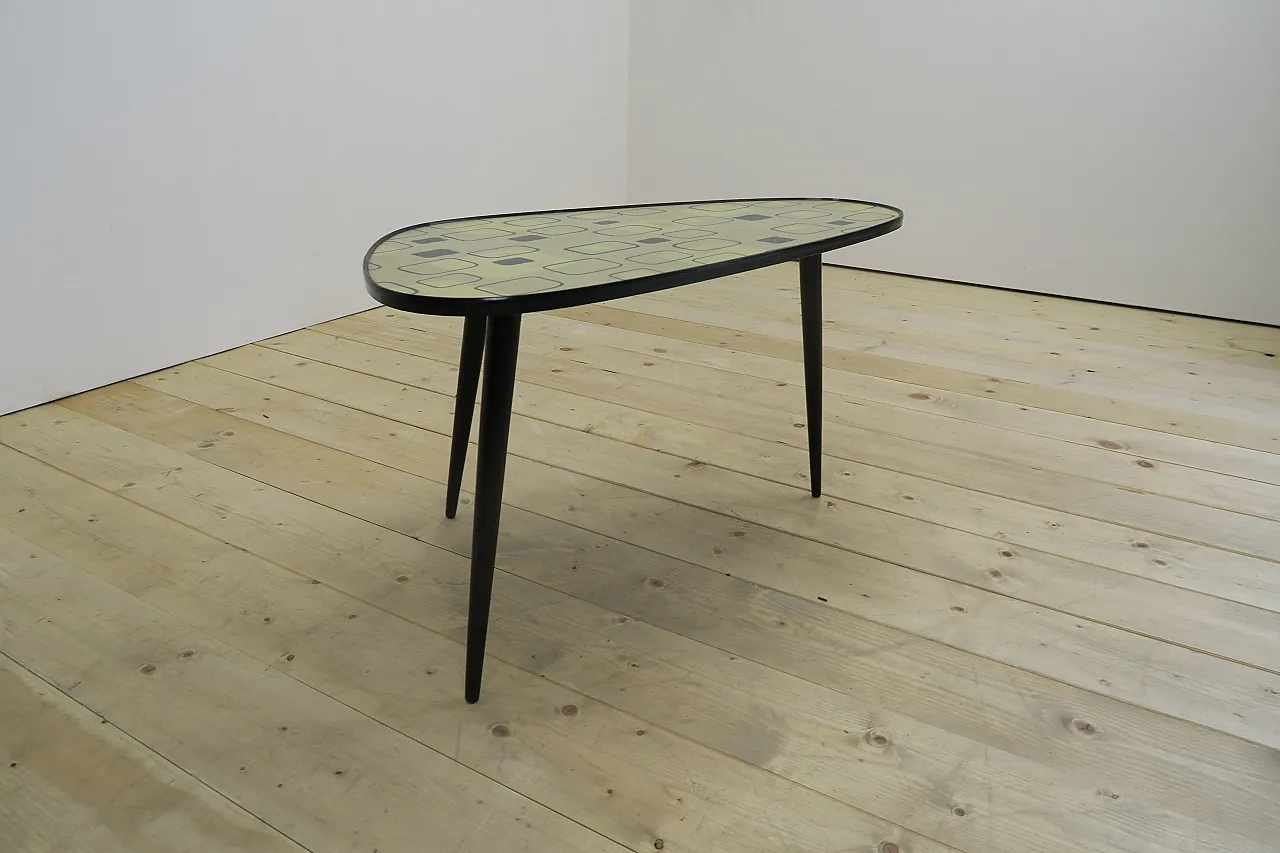
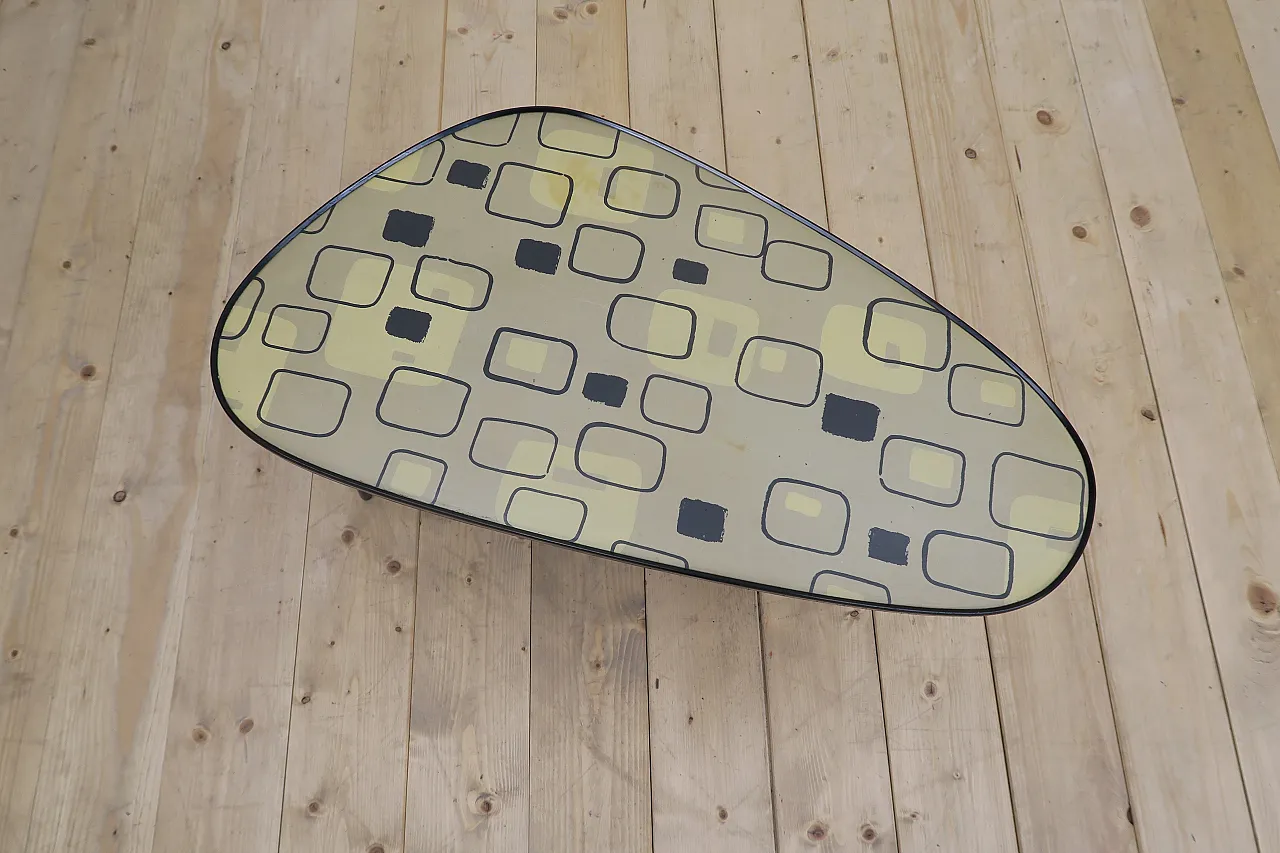
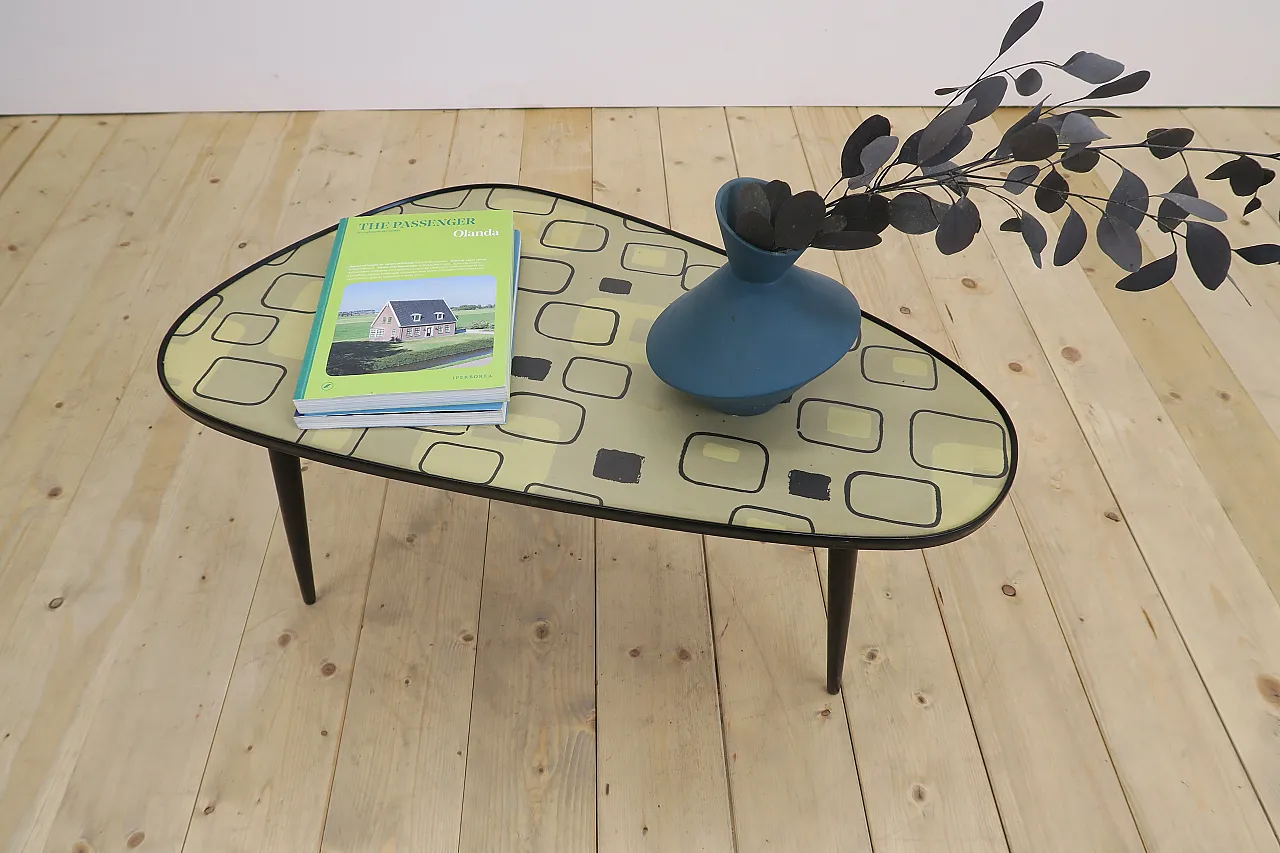
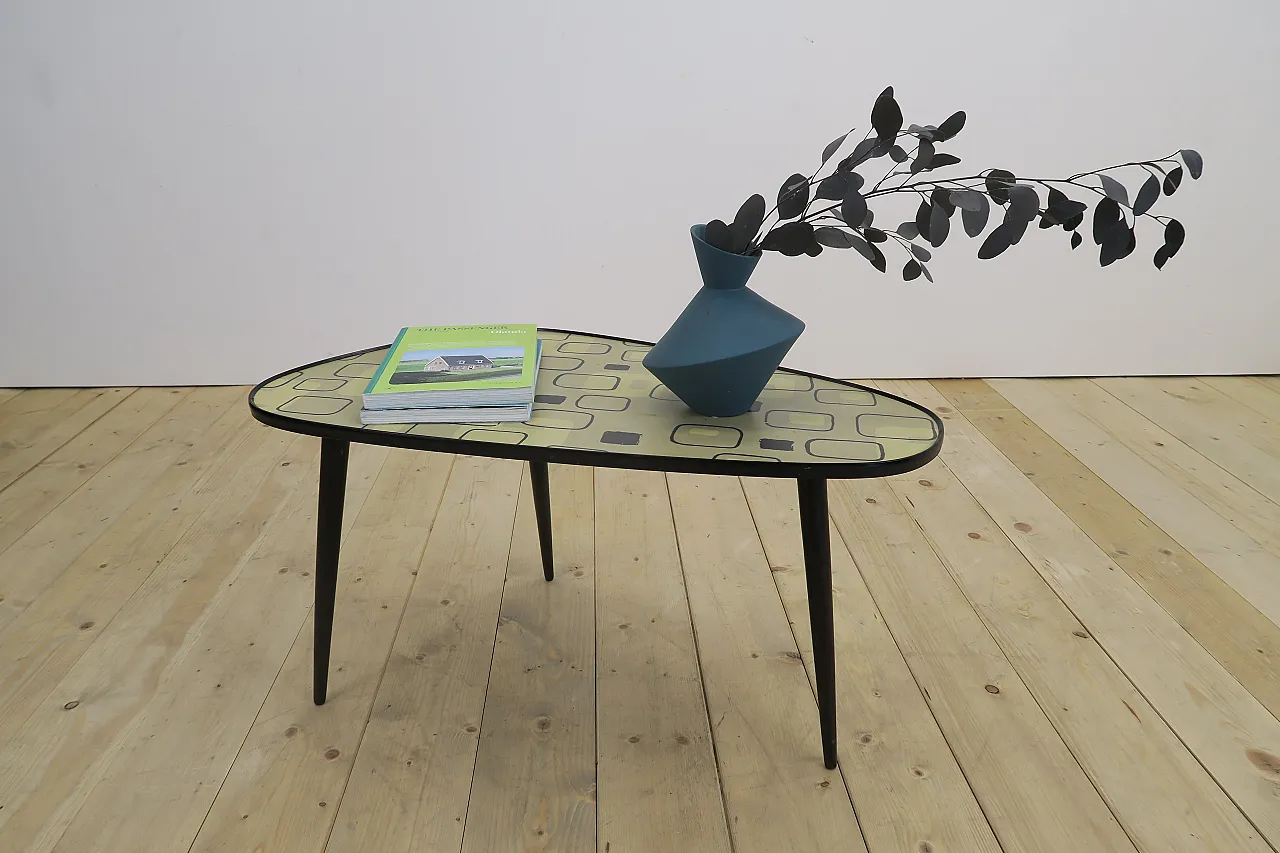
This 1970s German coffee table simply interprets European design's shift toward more contemporary materials and solutions. The black Formica top provides a practical and durable surface, while the wooden frame balances its appearance with a more material presence. The composition is defined by three legs, a construction choice that maintains the lightness of the volume and gives the table a clean silhouette. The contrast between the dark top and the wooden frame is an integral part of its character, as is the absence of superfluous decorative elements. With its compact proportions, it can be used as a coffee table, a side table next to an armchair, or a storage surface in a larger space. Its understated aesthetic allows it to easily fit into a midcentury interior as well as a contemporary space. An interesting example of German production from the early 1970s, when experimentation with materials began to complement traditional wood with industrial, easier-to-maintain surfaces.


.png)
 SILVER Seller in Torino, Italia