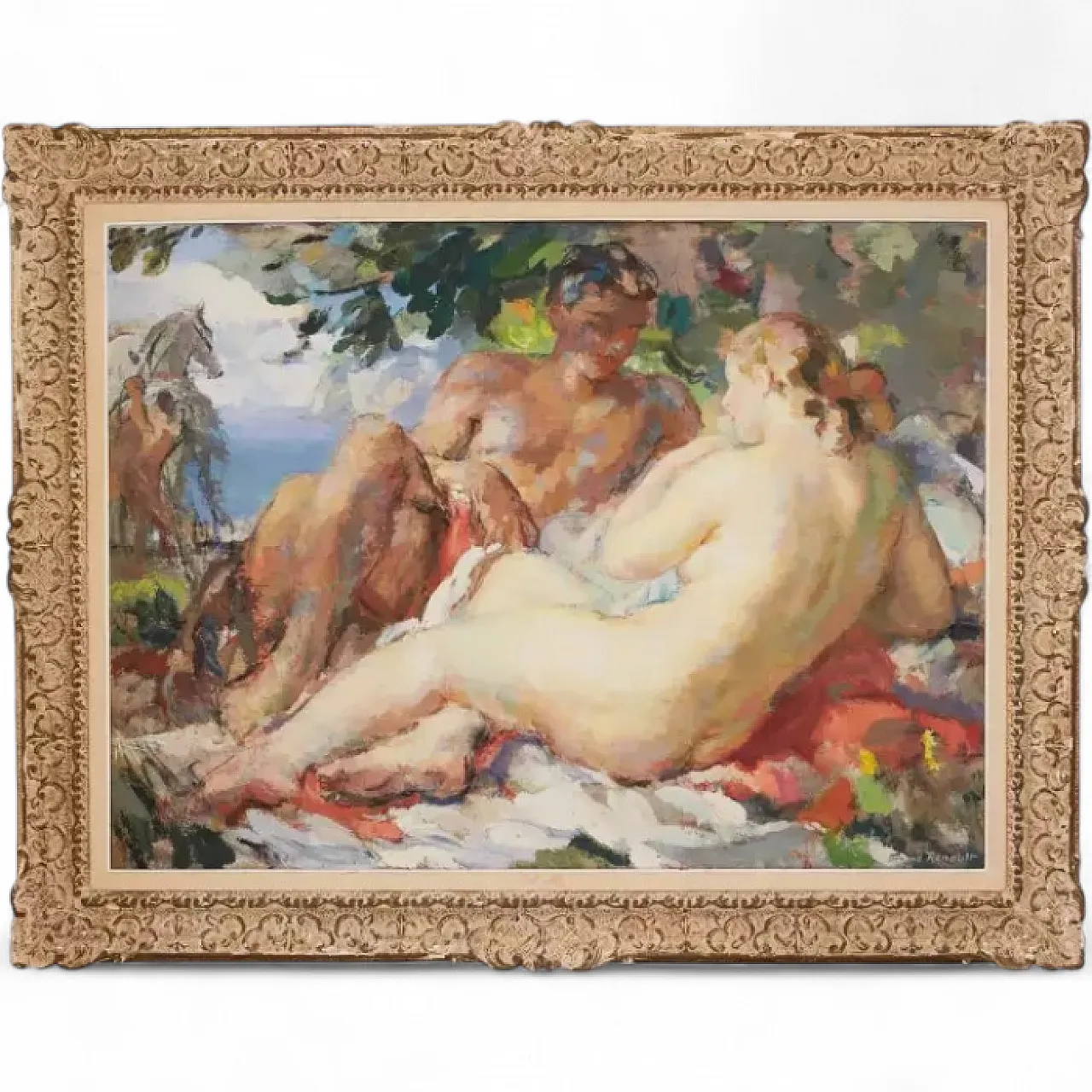
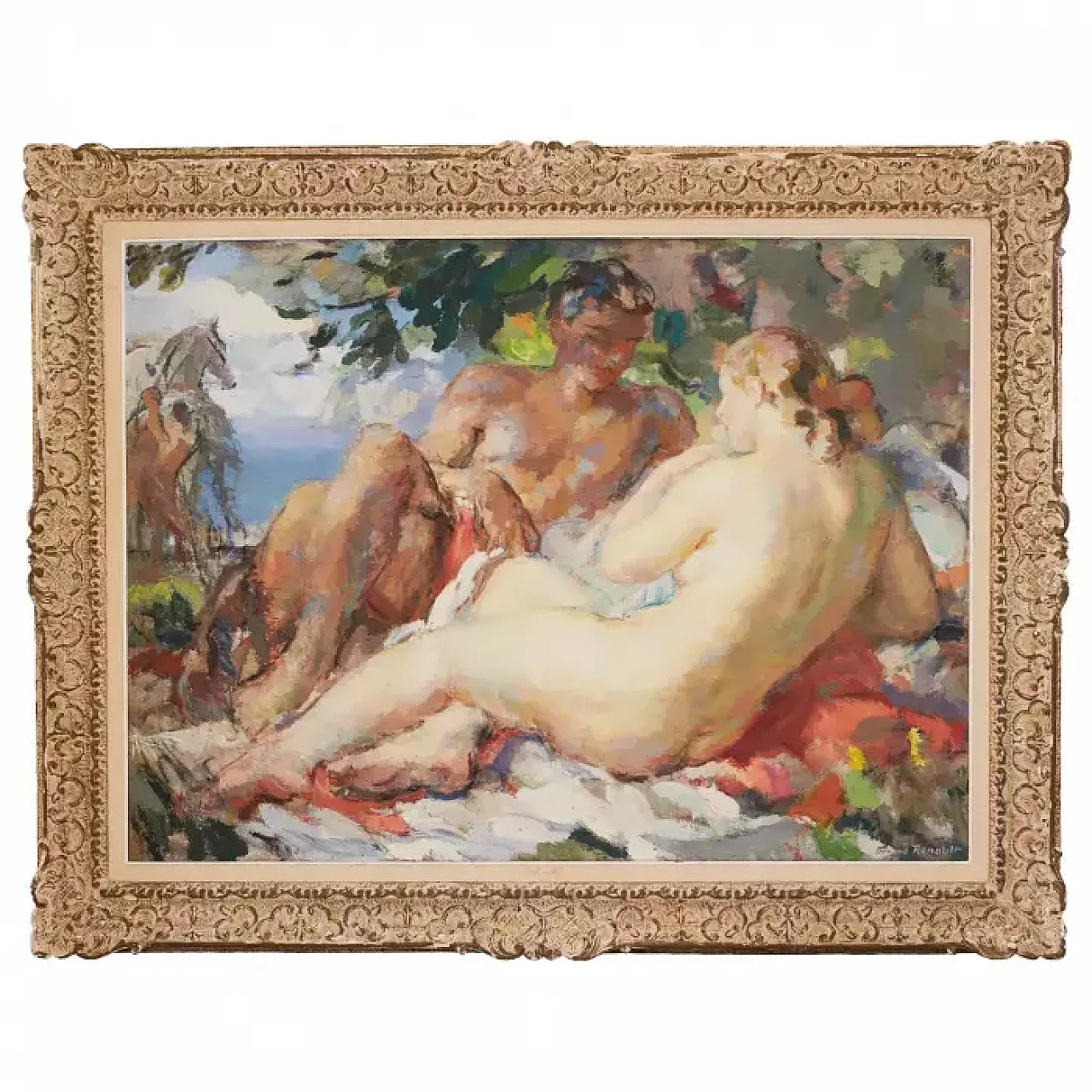
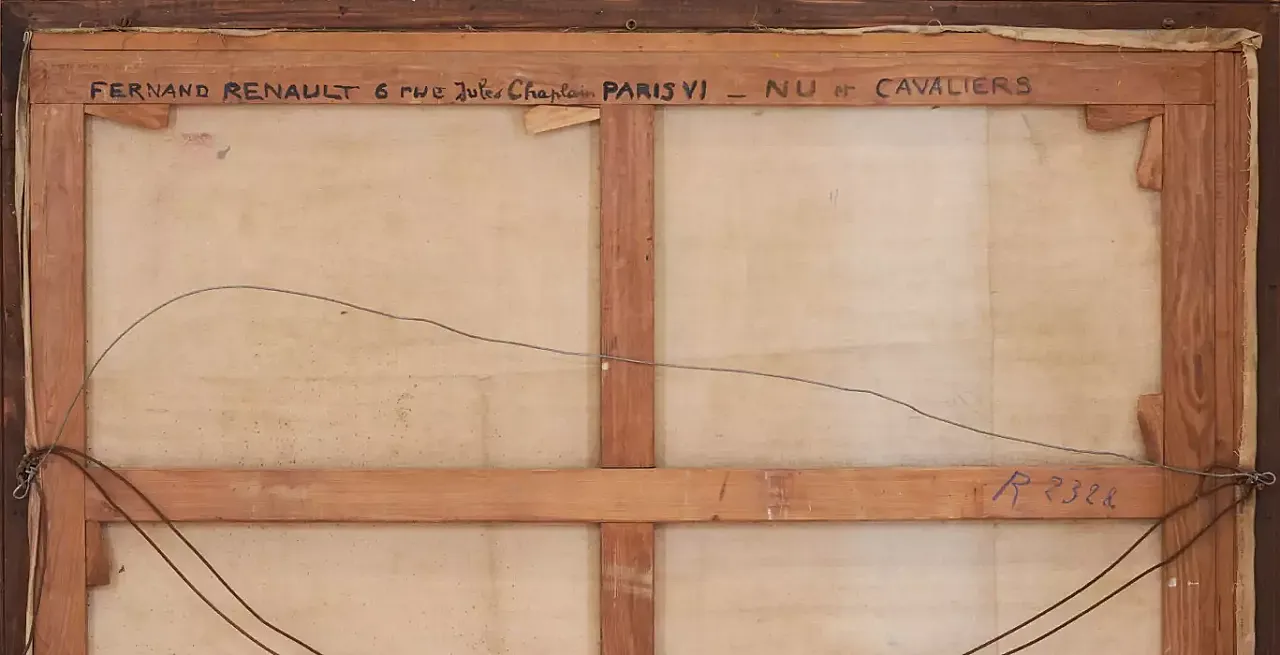
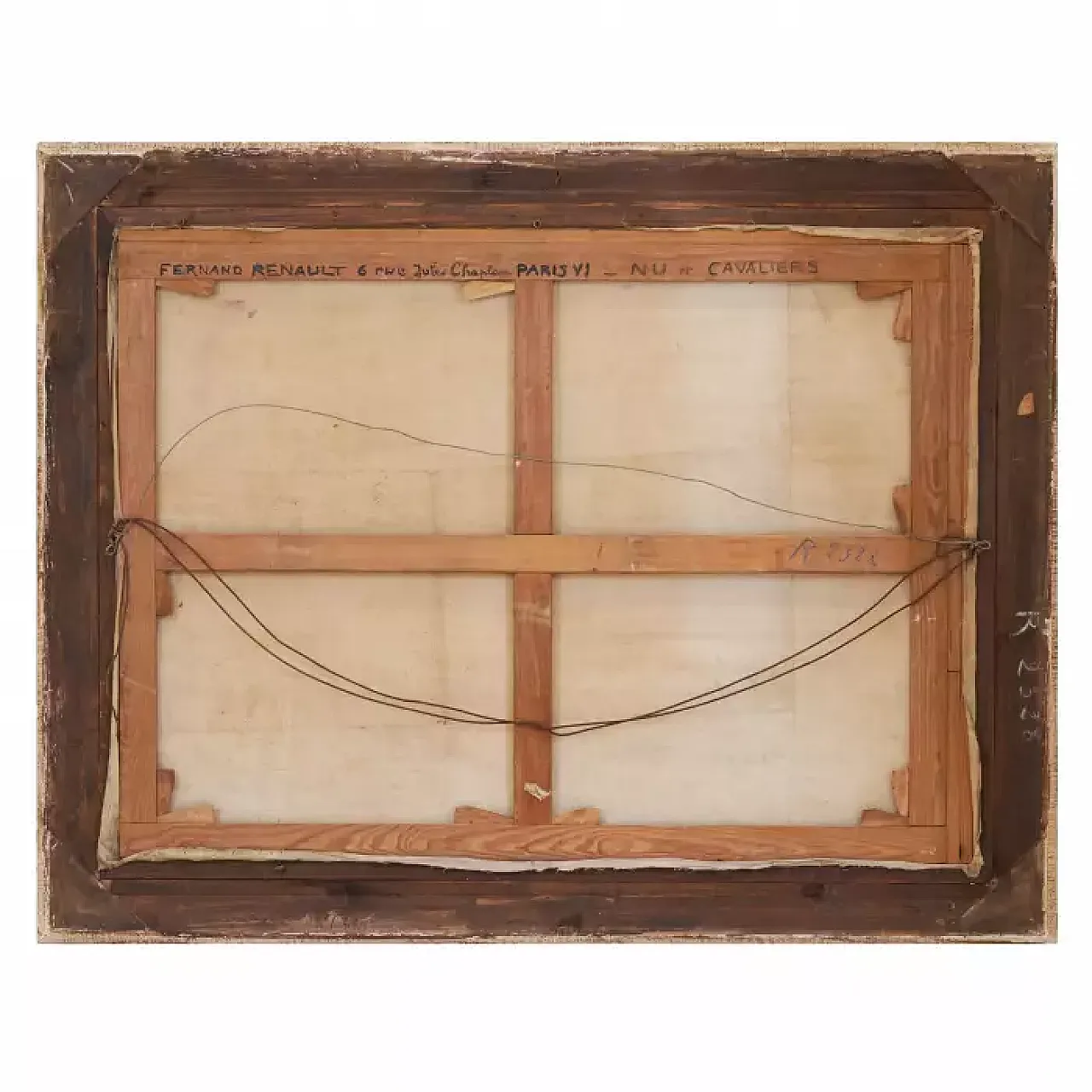
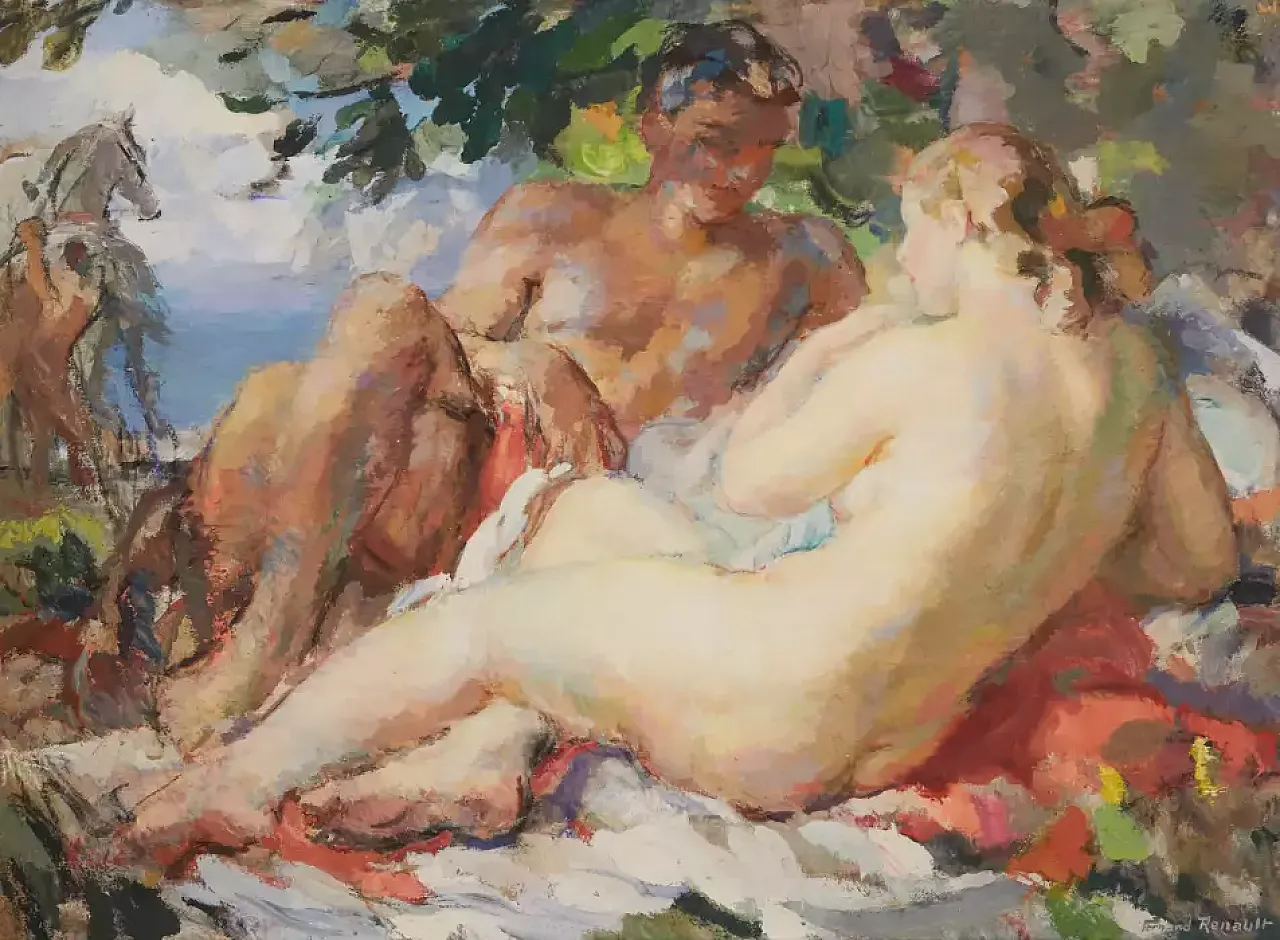
A large-scale work by Fernand Albert Renault that reveals the key artistic principles of the master during his mature period. The painting demonstrates the characteristic synthesis in Renault’s oeuvre of classical compositional structure and a free, vigorous painterly manner shaped by the influence of Fauvism and the Paris School of the interwar years.
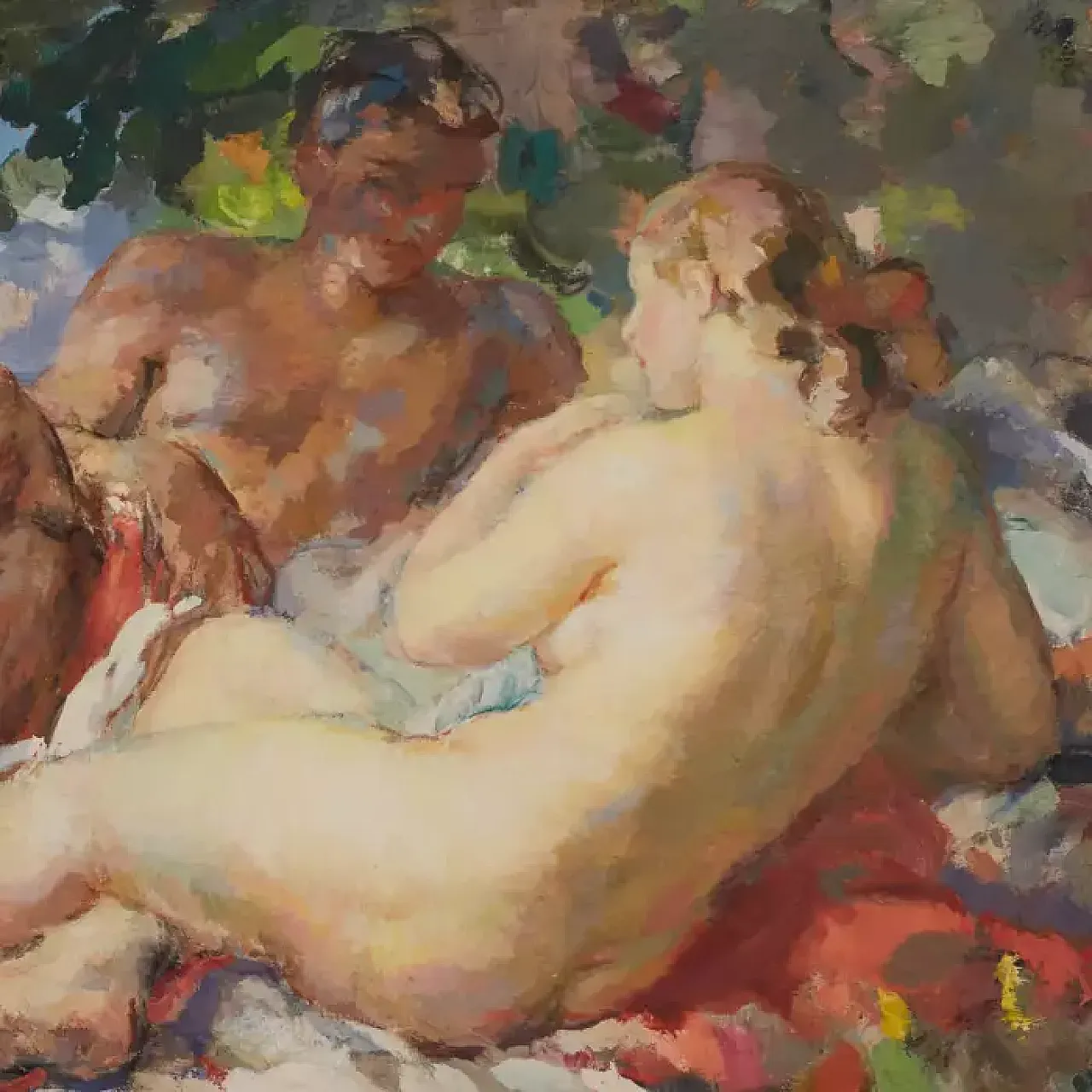
At the center of the composition lies a nude couple placed within a natural coastal landscape. Renault constructs the scene according to a balanced diagonal rhythm: the luminous female figure, rendered in broad, vibrating strokes of ochre and rose tones, forms the principal plastic accent of the foreground. The male figure, treated in denser, more saturated brown and olive hues, establishes a tonal contrast and intensifies the dramatic interplay of light and shadow.
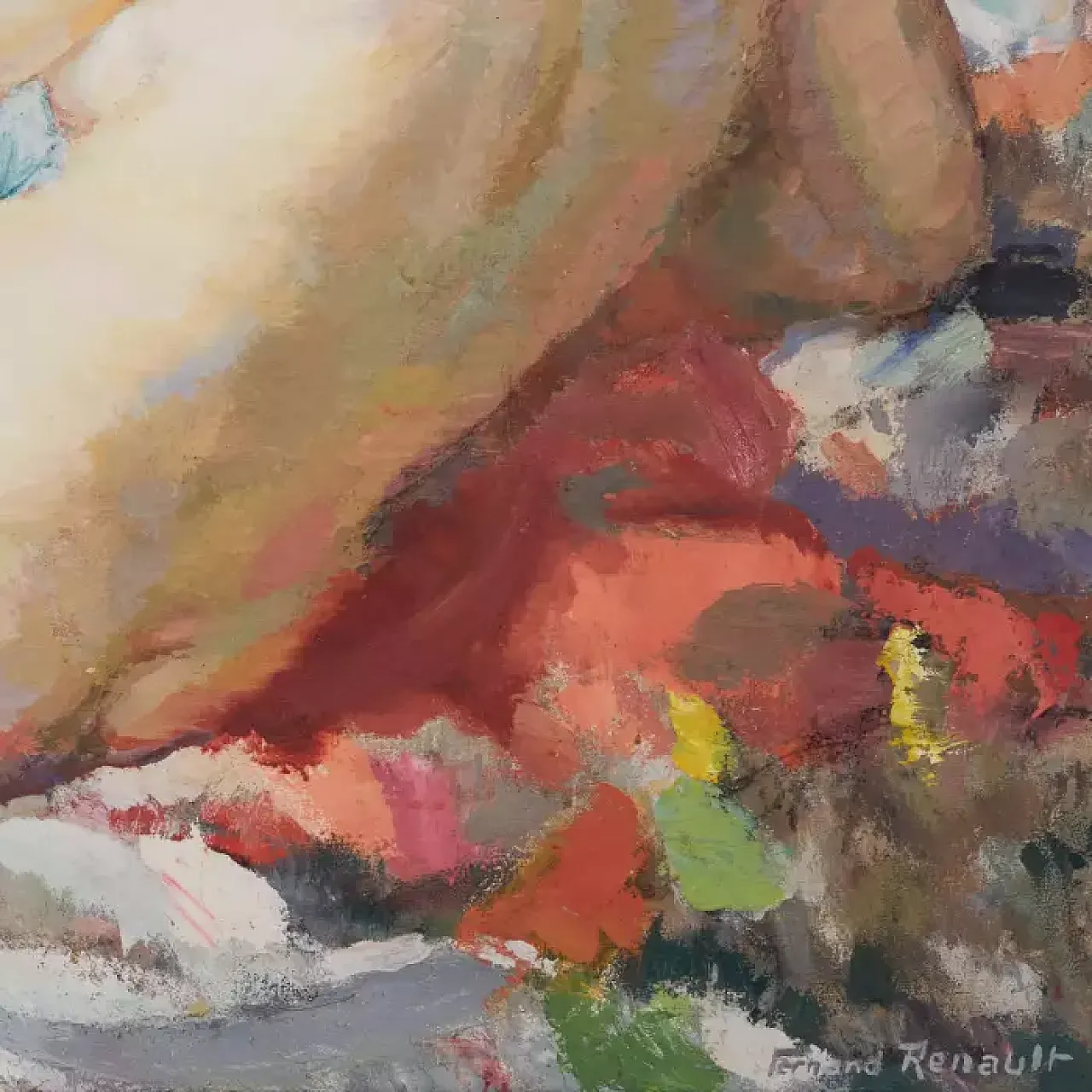
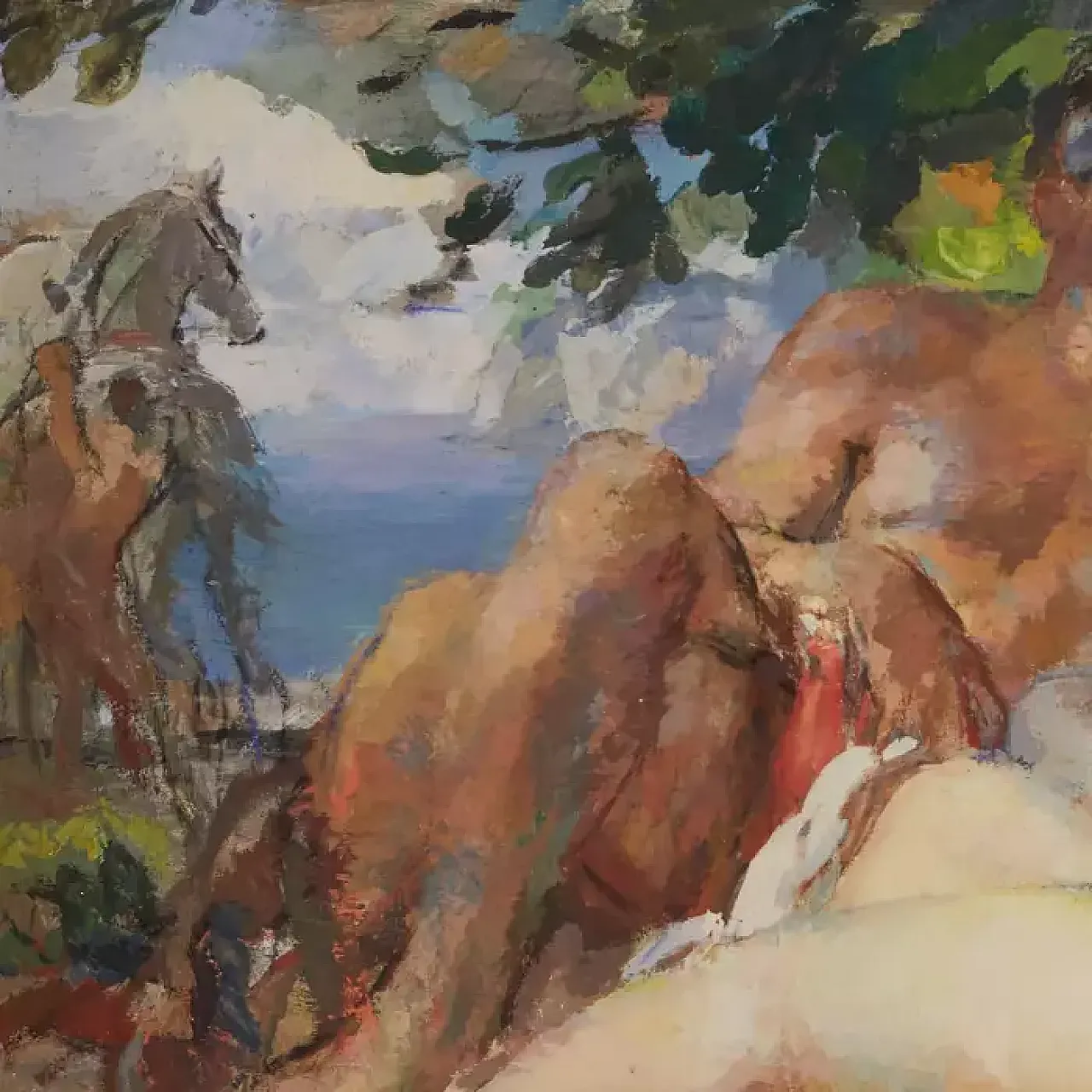
For Renault, color functions as an independent expressive force. In this composition, the scarlet, emerald, and lemon accents of the draped fabrics do not merely describe objects, but rather create the emotional atmosphere of the painting. The foliage and openings of sky are resolved in free patches of pigment that evoke moving air and the pulsation of sunlight.
The background scene, depicting figures subduing horses, carries particular significance. This motif recurs in Renault’s work as a symbol of vital energy and masculine initiative. Within the context of this painting, it enters into a meaningful dialogue with the intimate foreground scene, reinforcing the themes of attraction, strength, and inner impulse.
Unlike academic treatments of the nude, Renault avoids cold idealization. His figures exist within the realm of color and light rather than anatomical display. Corporality is conveyed through the plastic mass of the brushstroke, where color replaces line. This characteristic allows the work to be situated within French Neotraditionalism of the 1930s, which sought to preserve figuration while rejecting excessive academic rigidity.


.png)
 SILVER Seller in Alpes-Maritimes, France