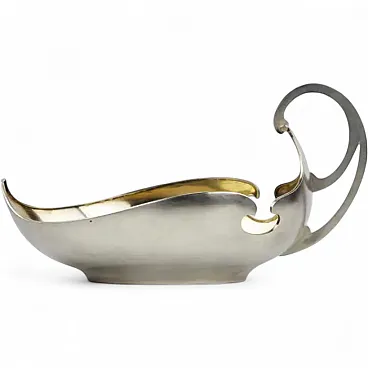
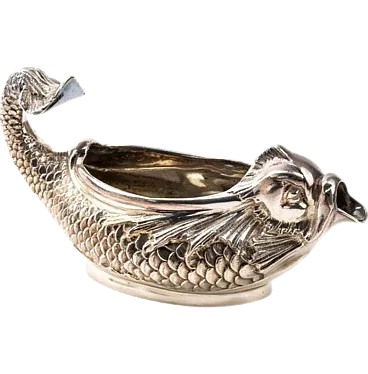
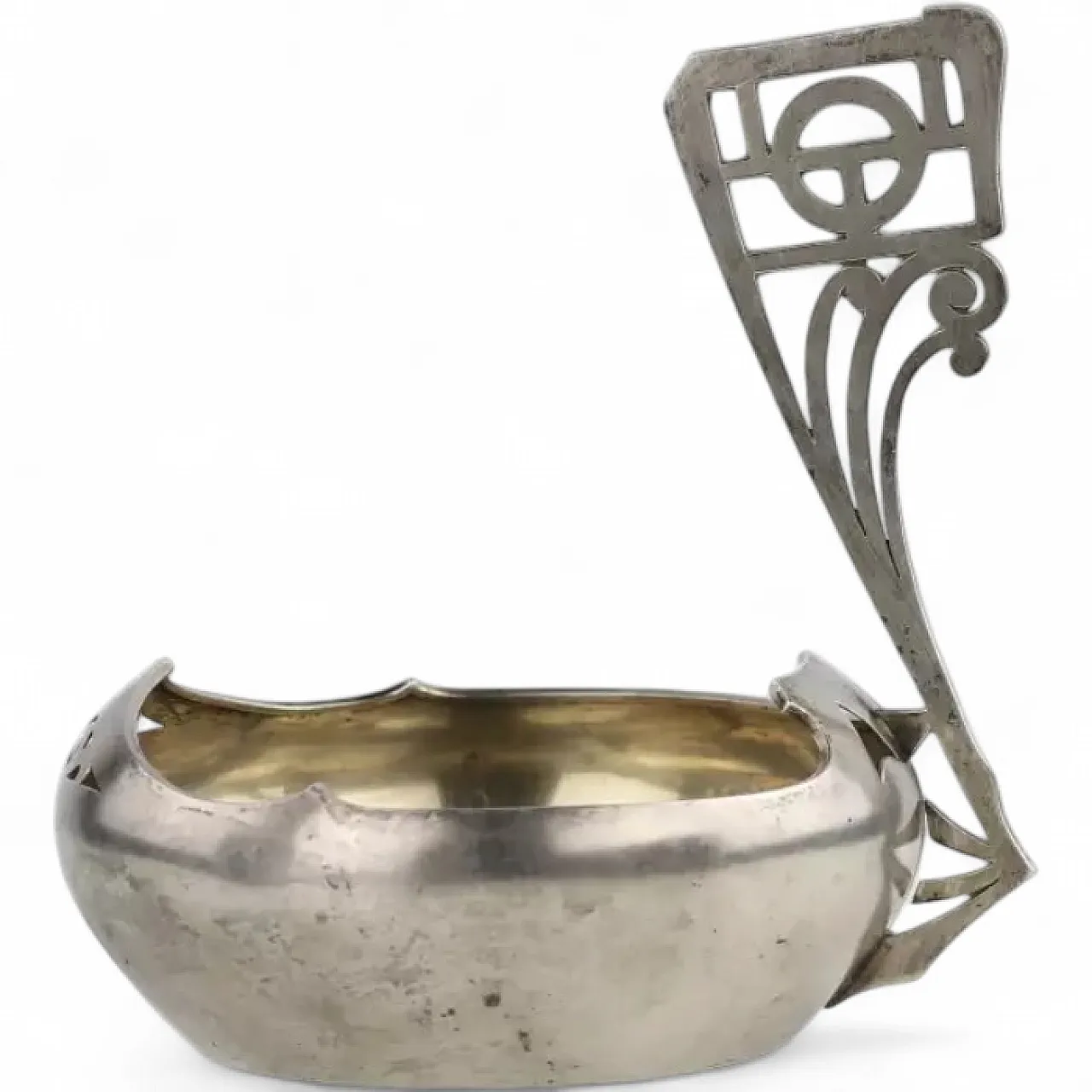
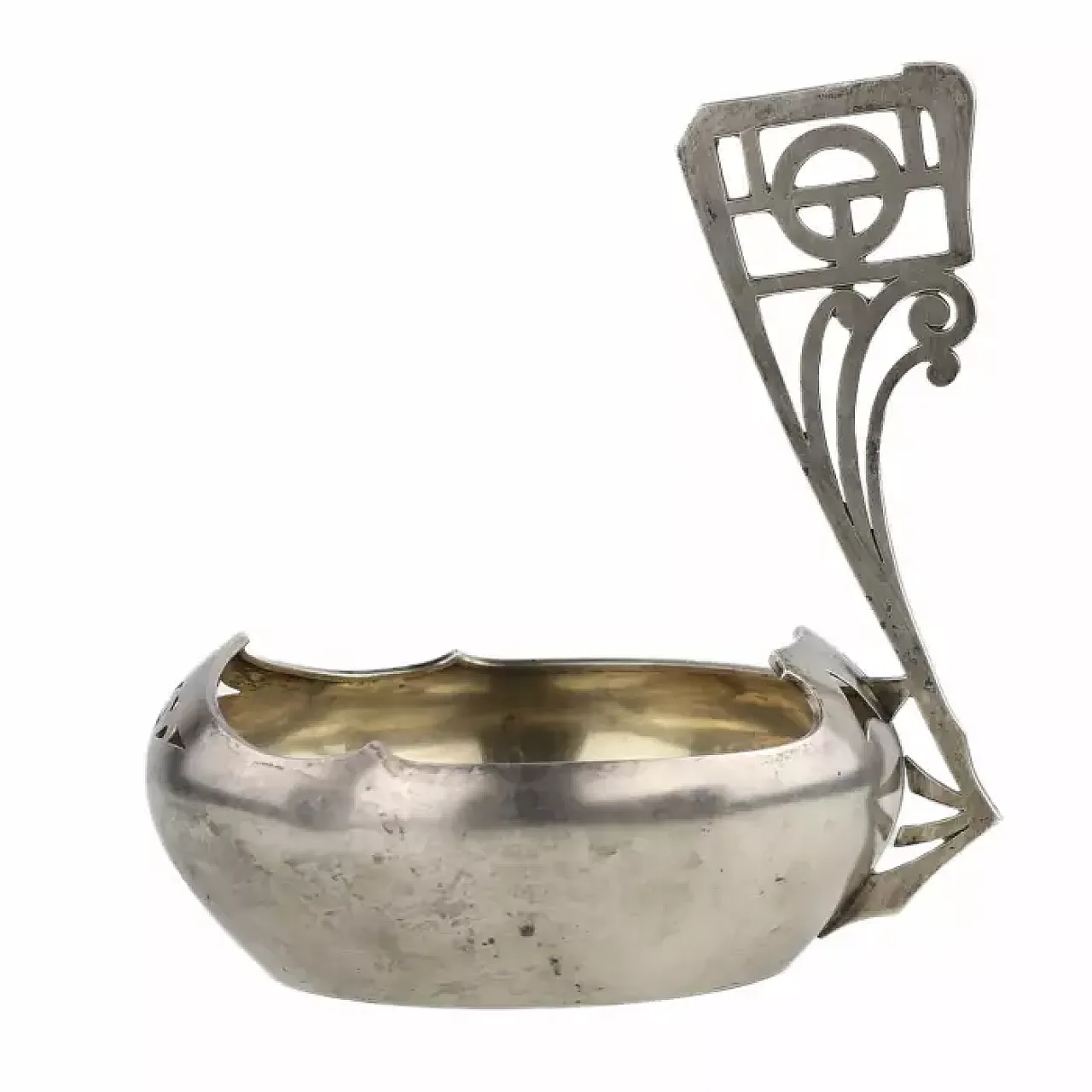
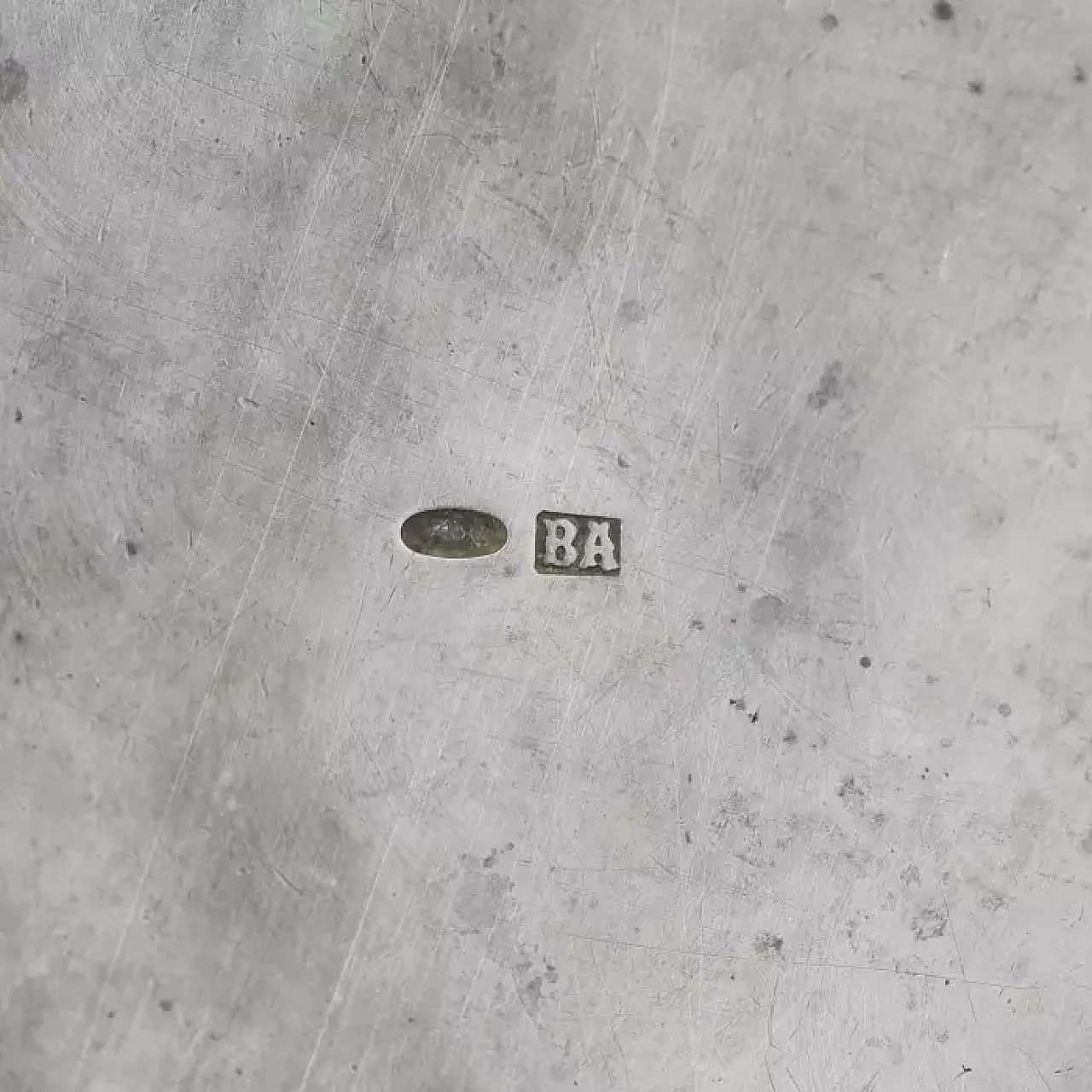
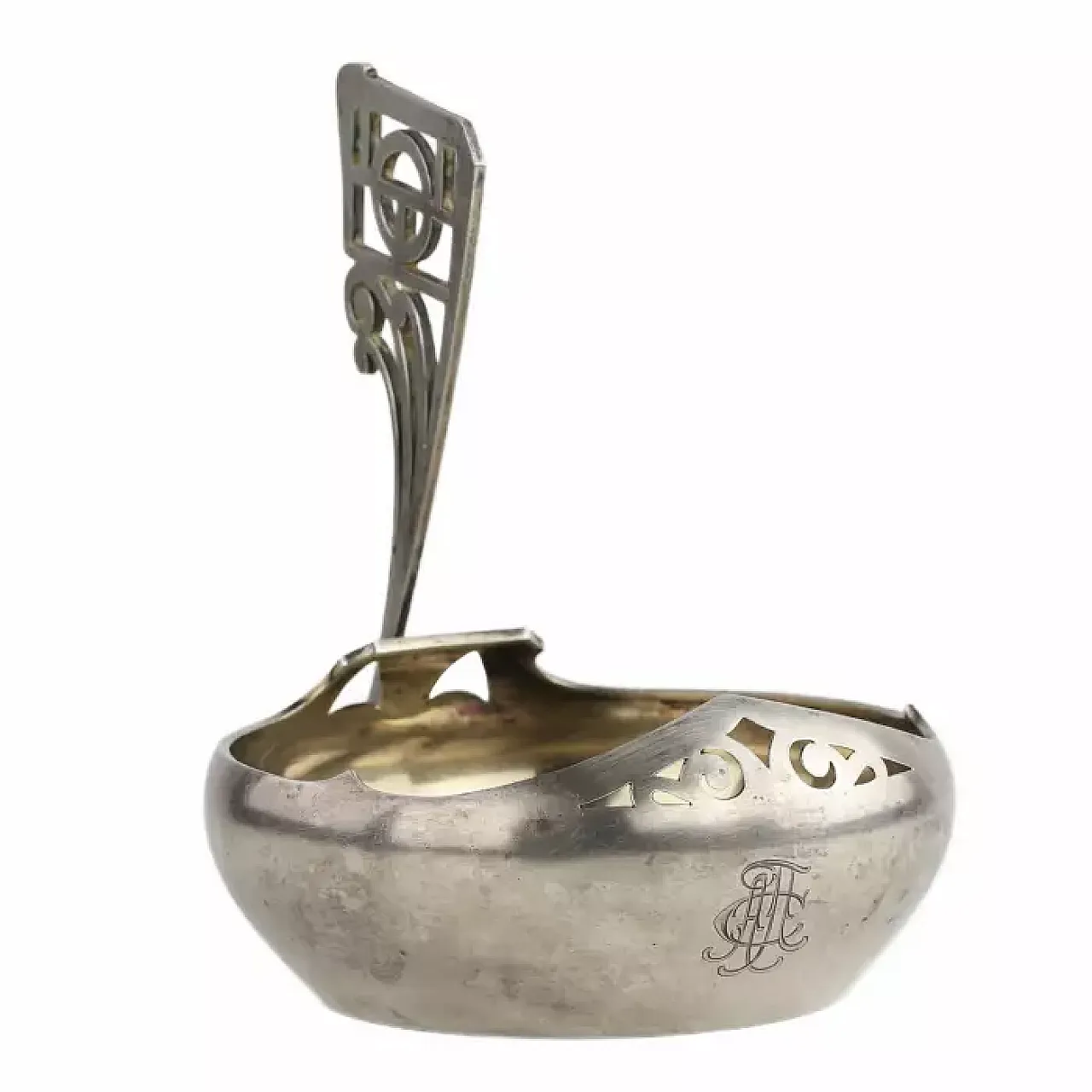
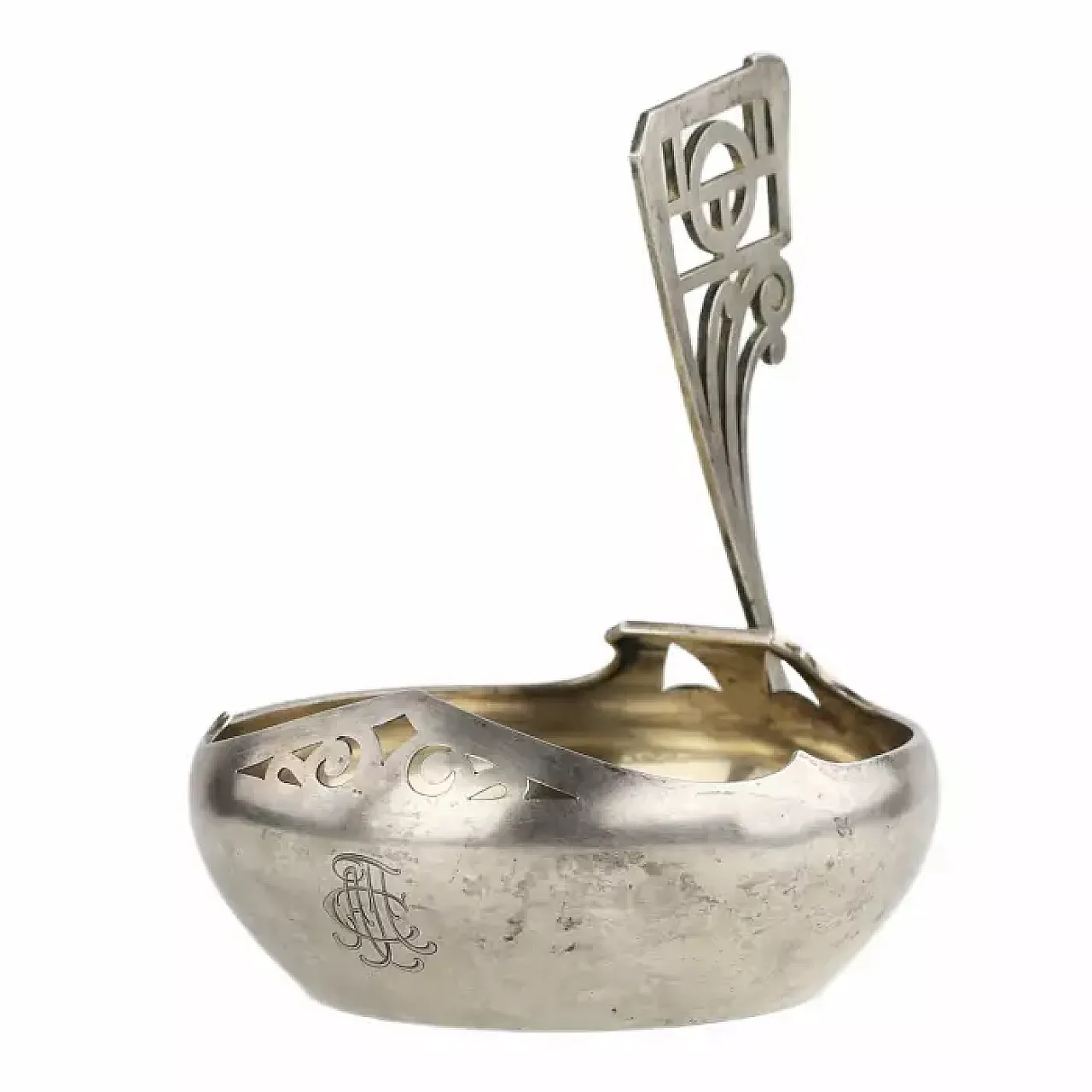
This Russian silver kovsh, created in the workshop of Vasily Ivanovich Andreev in Moscow between 1899 and 1908, is a distinguished example of Russian decorative and applied arts of the early twentieth century. Executed in the traditional form of the ancient Russian kovsh, the vessel has been reinterpreted through the refined aesthetics of the Art Nouveau movement. Flowing contours and an asymmetrical silhouette reflect the organic plasticity and sculptural elegance characteristic of the period.
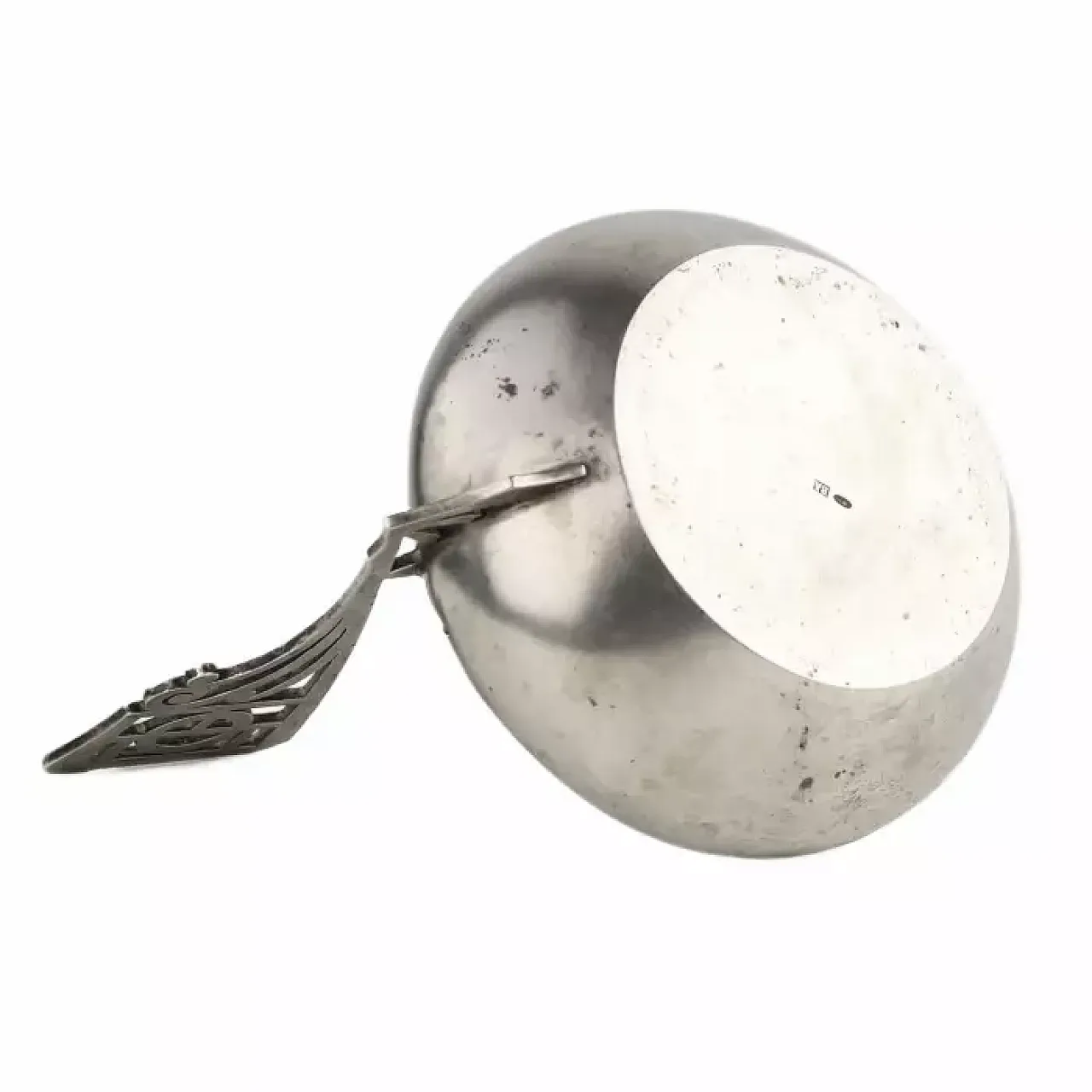
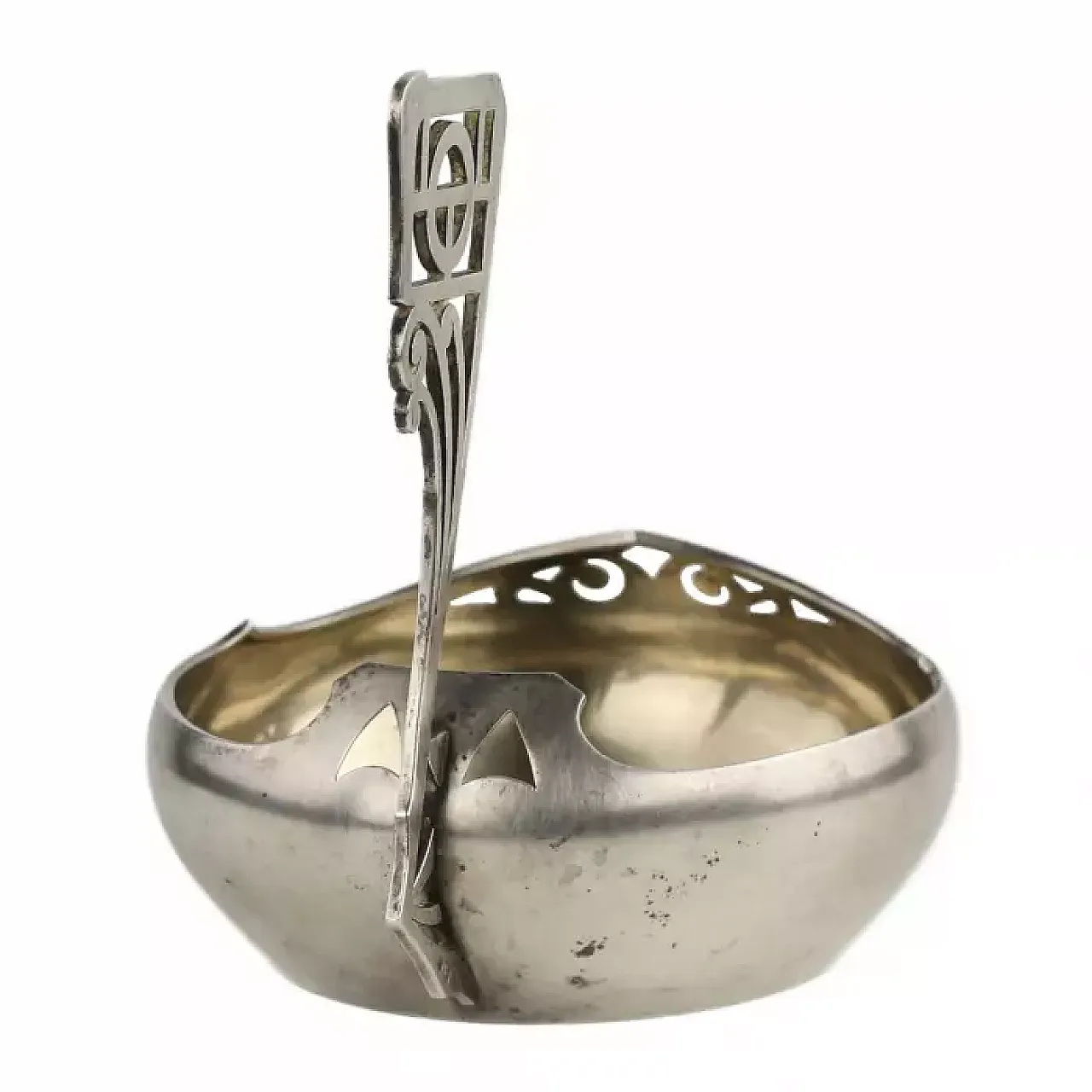
The kovsh features a substantial oval body with softly modelled sides and an uneven shaped rim, lending the composition a sense of fluid movement. Both the prow and stern are enriched with finely pierced ornamentation, reducing the visual weight of the form while enhancing its decorative sophistication.
The tall openwork handle is conceived as an independent artistic element. Its composition combines geometric forms with flowing organic lines characteristic of Russian Art Nouveau. A circular medallion incorporated into the upper section of the handle, together with elegant wave-like piercings, creates a distinctive graphic silhouette recalling the decorative vocabulary of early twentieth-century architecture.
The restraint of its ornamentation, the expressive modelling of the form and the exceptional quality of craftsmanship make this kovsh a characteristic example of Moscow silver produced during the flourishing of Russian Art Nouveau.





 SILVER Seller in Alpes-Maritimes, France