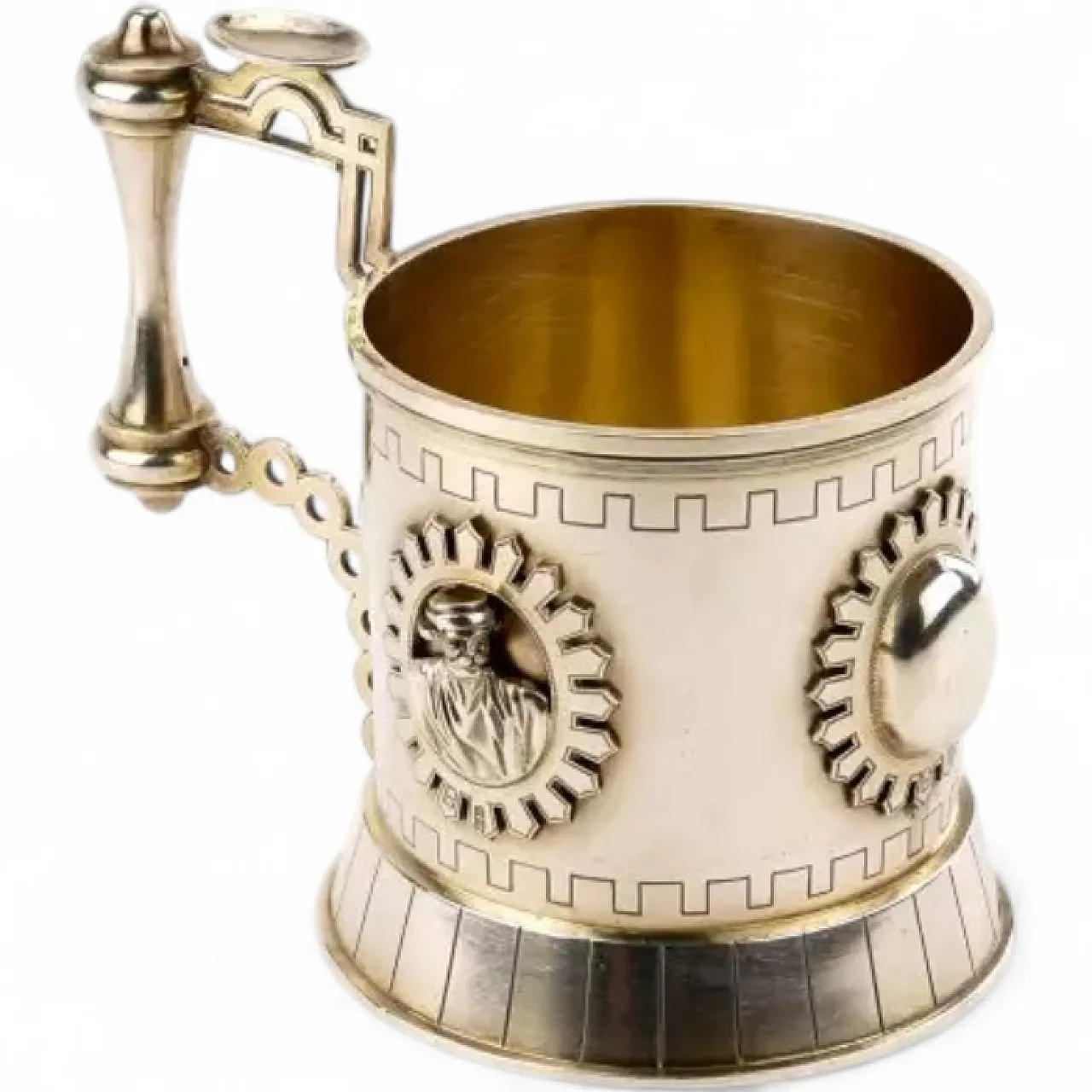
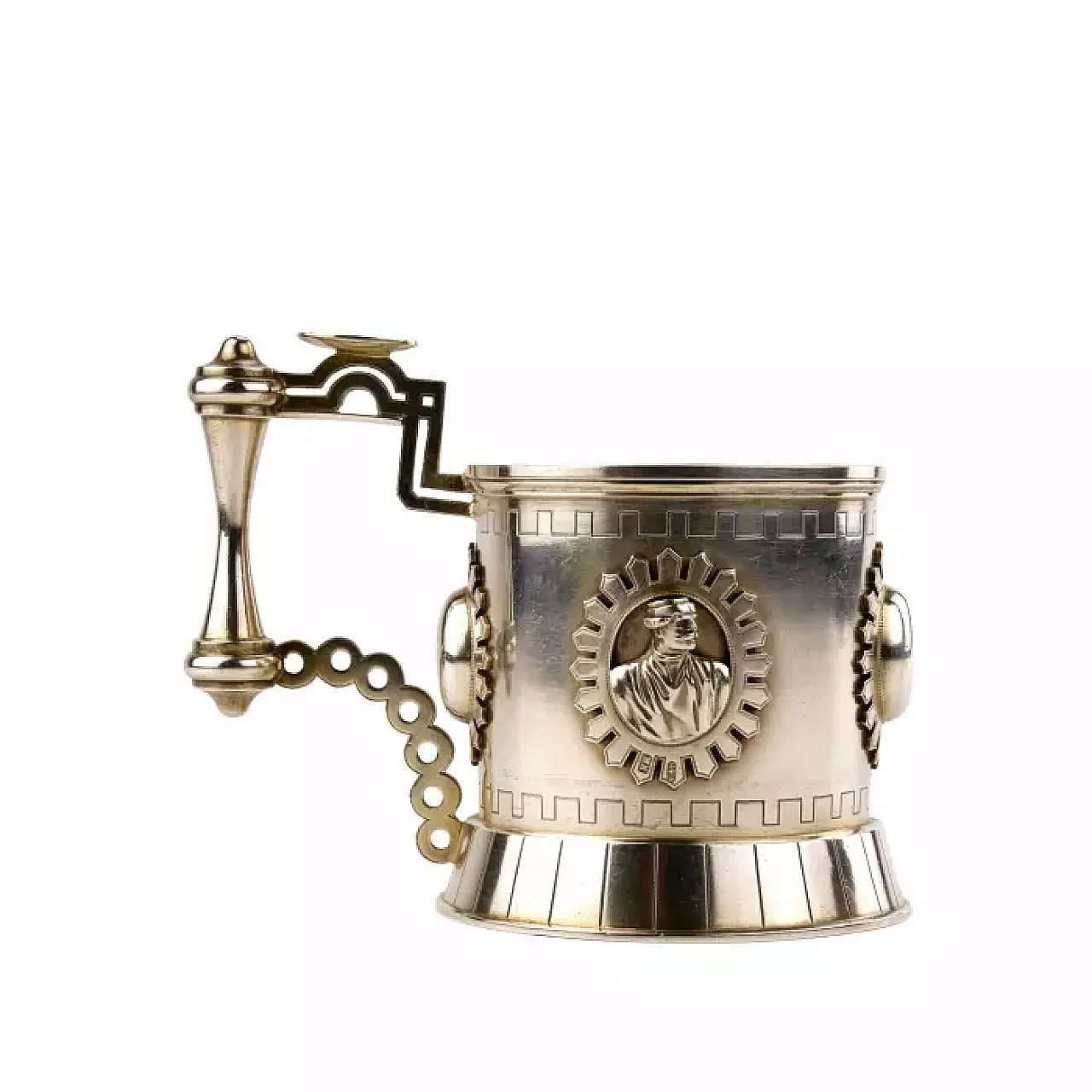
A silver tea glass holder made in St Petersburg in 1879, representing a characteristic example of Russian silverwork of the last quarter of the 19th century, combining a functional form with historicising decoration inspired by the Russian national tradition.
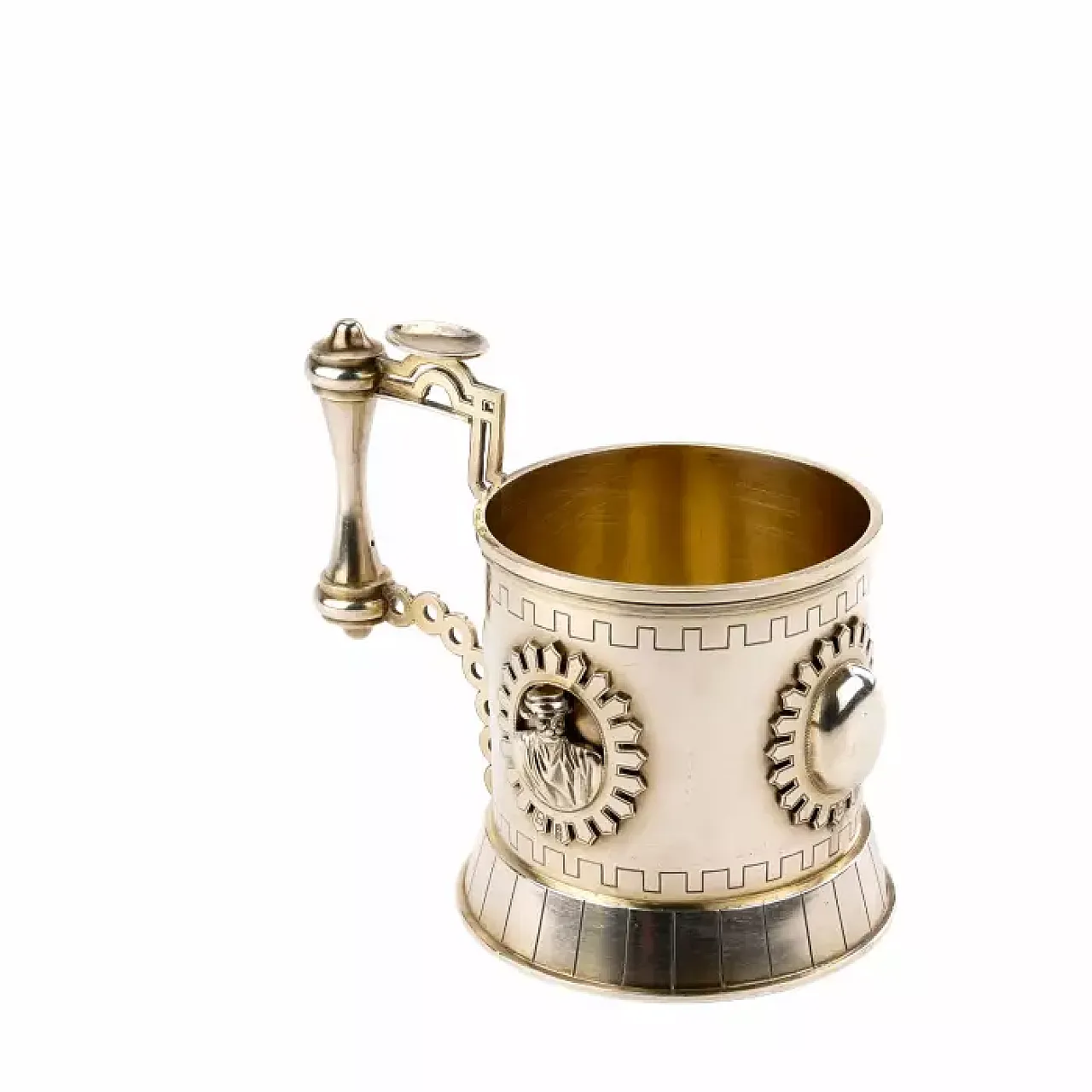
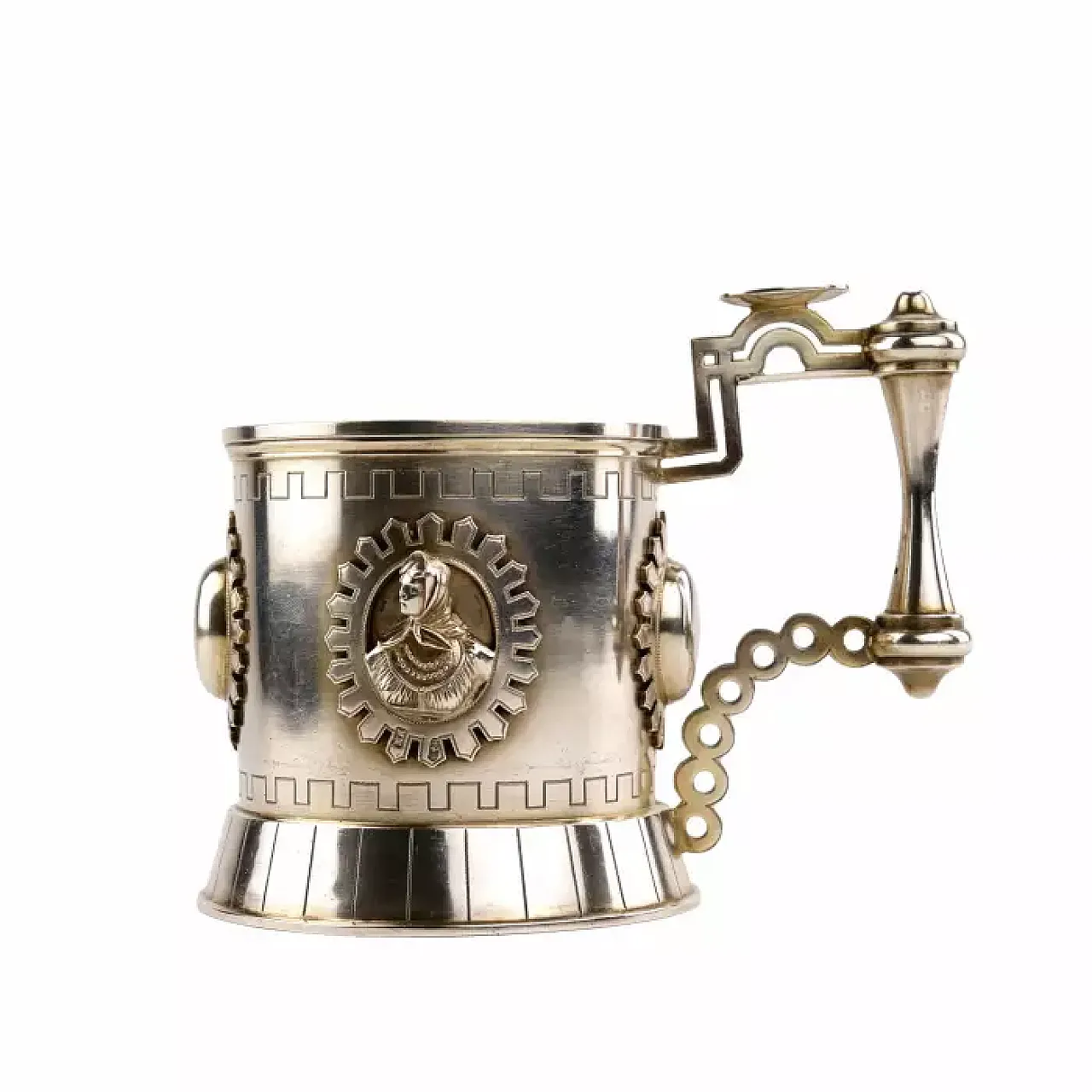
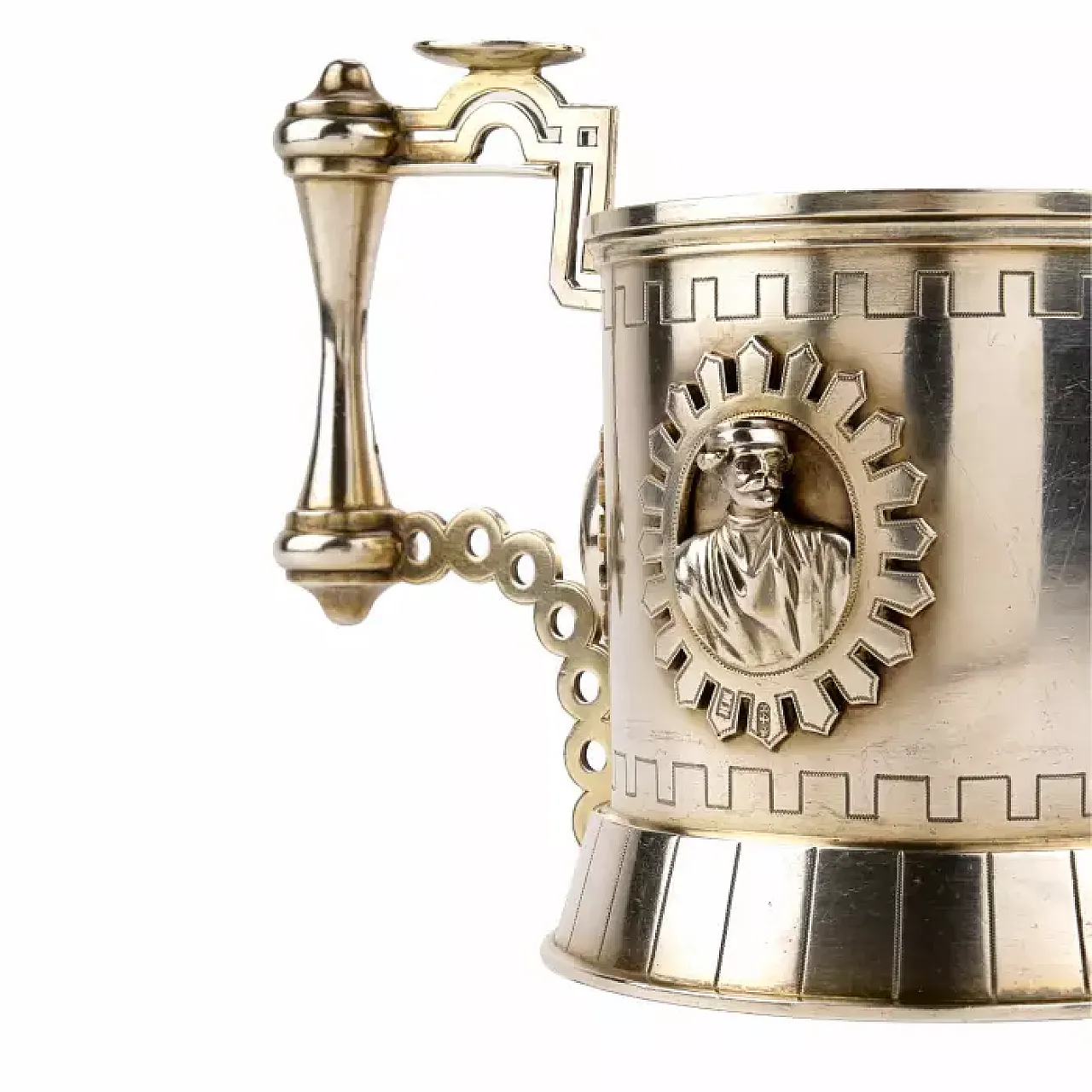
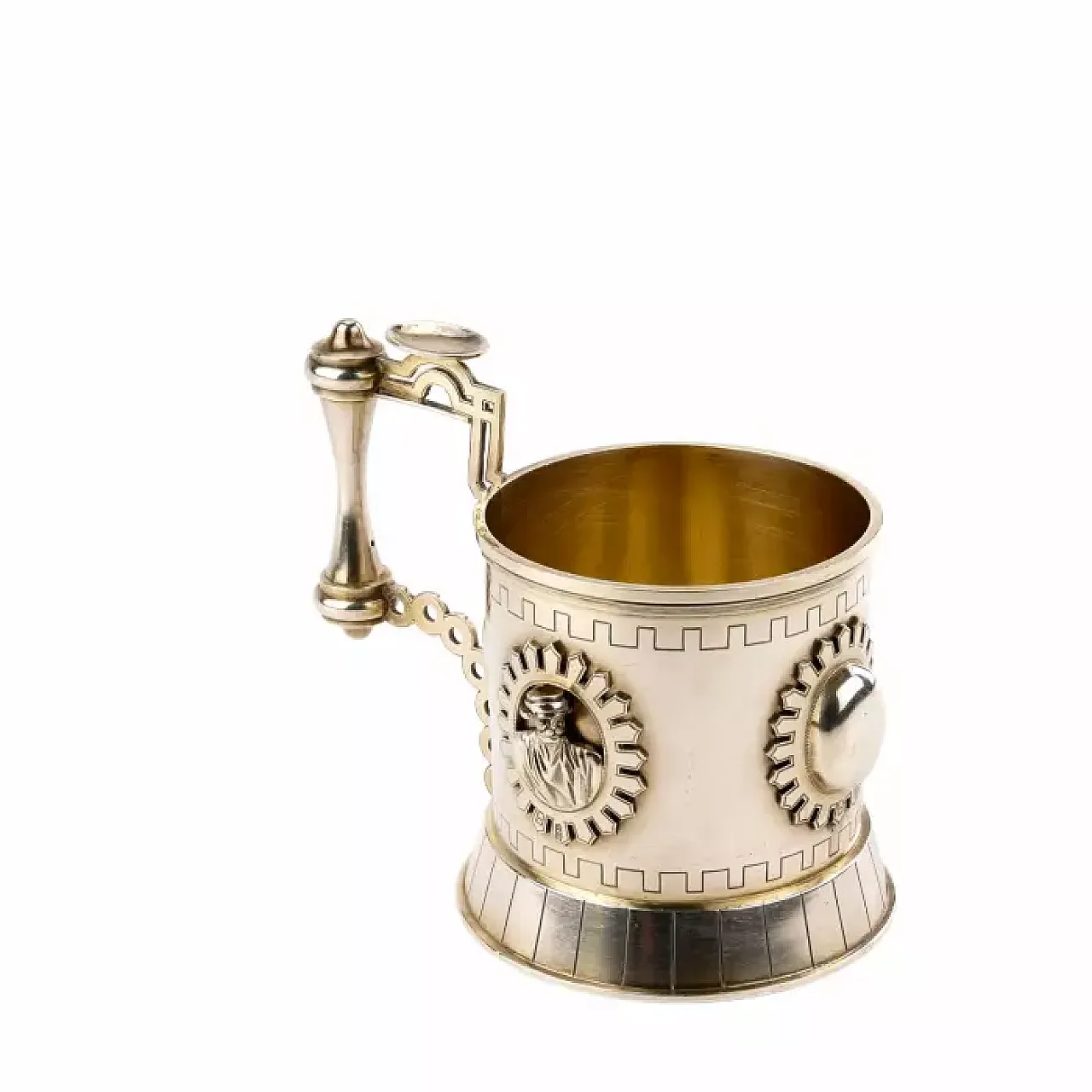
The cylindrical body rests on a broad flared base articulated by vertical engraved bands. The upper and lower sections of the body are framed by geometric friezes composed of stylised crenellations. The central decorative register is formed by applied circular medallions within crenellated borders. The medallions contain relief bust portraits of figures in historical Russian costume, alternating with raised hemispherical elements. The repetition of these motifs creates a pronounced rhythmic sequence around the circumference of the body.
The tall lateral handle is distinguished by its elaborate architectural construction. Its upper section is composed of geometric stepped elements and an arched motif, while the lower attachment to the body is complemented by a chain of circular links. The vertical grip takes the form of an elongated, profiled baluster. The combination of architectural motifs, historical figures and geometric ornament gives the object the distinctive national-romantic character associated with Russian Historicism.
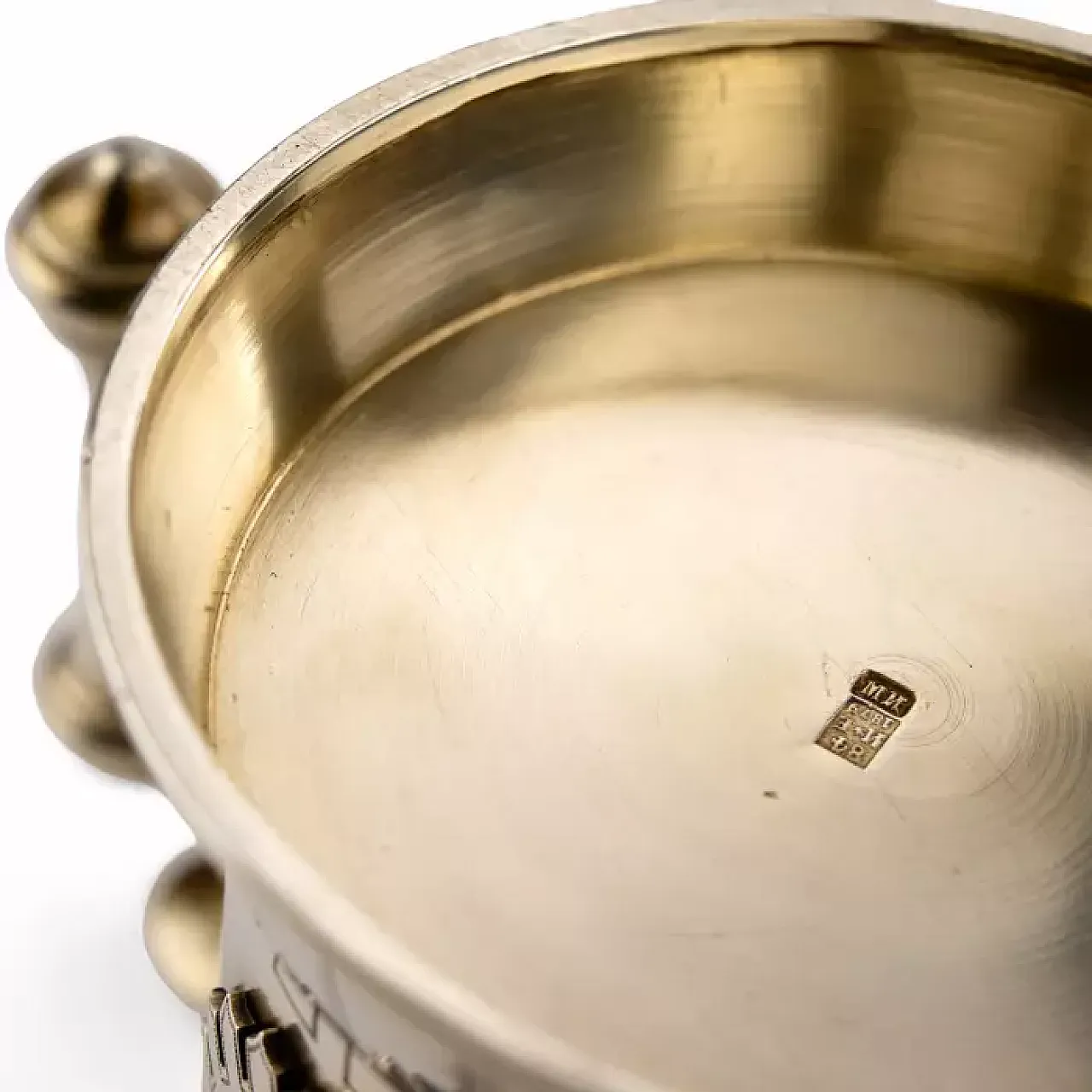
The interior is gilded. The contrast between the golden interior, patinated silver and relief decoration enhances the sculptural quality of the object.



 SILVER Seller in Alpes-Maritimes, France