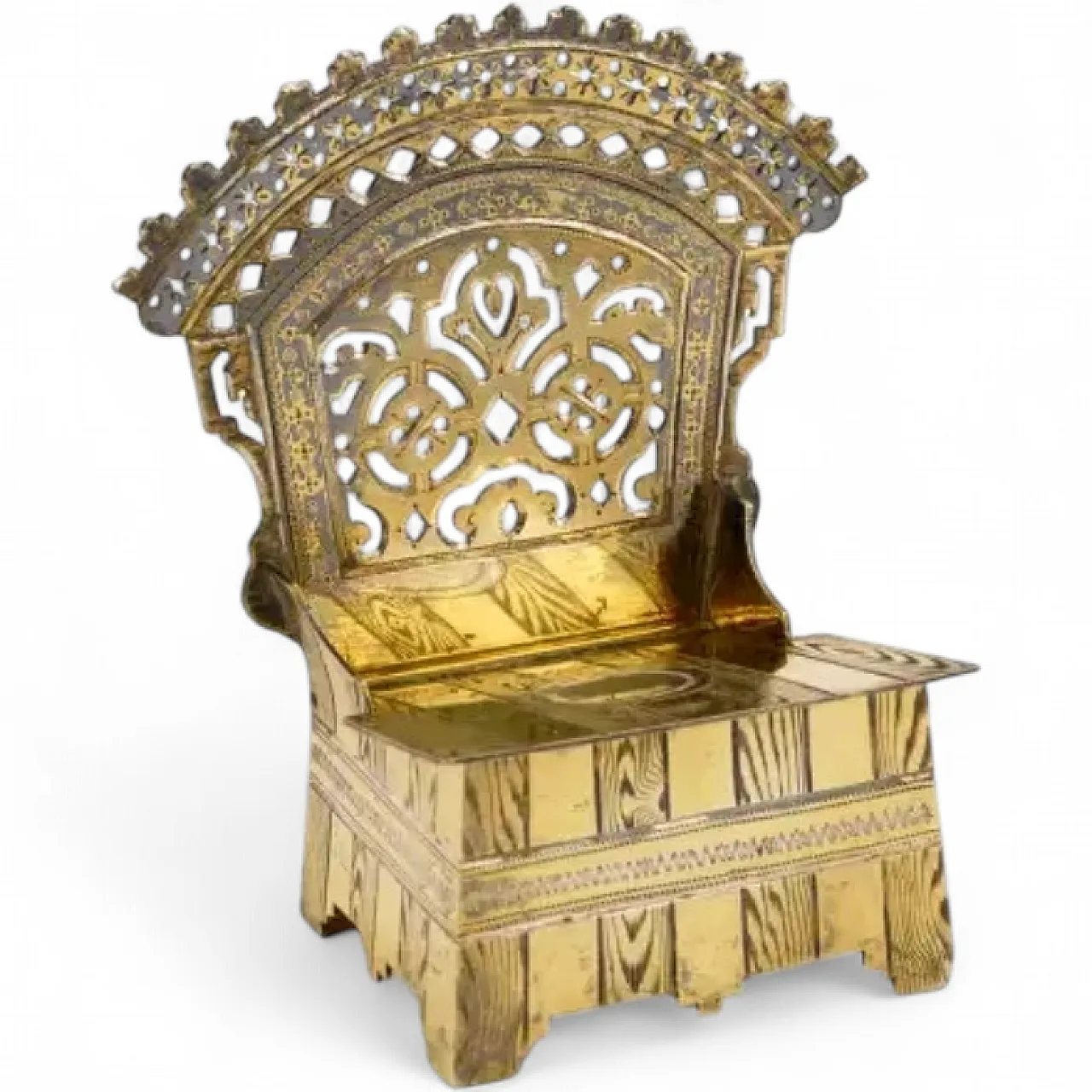
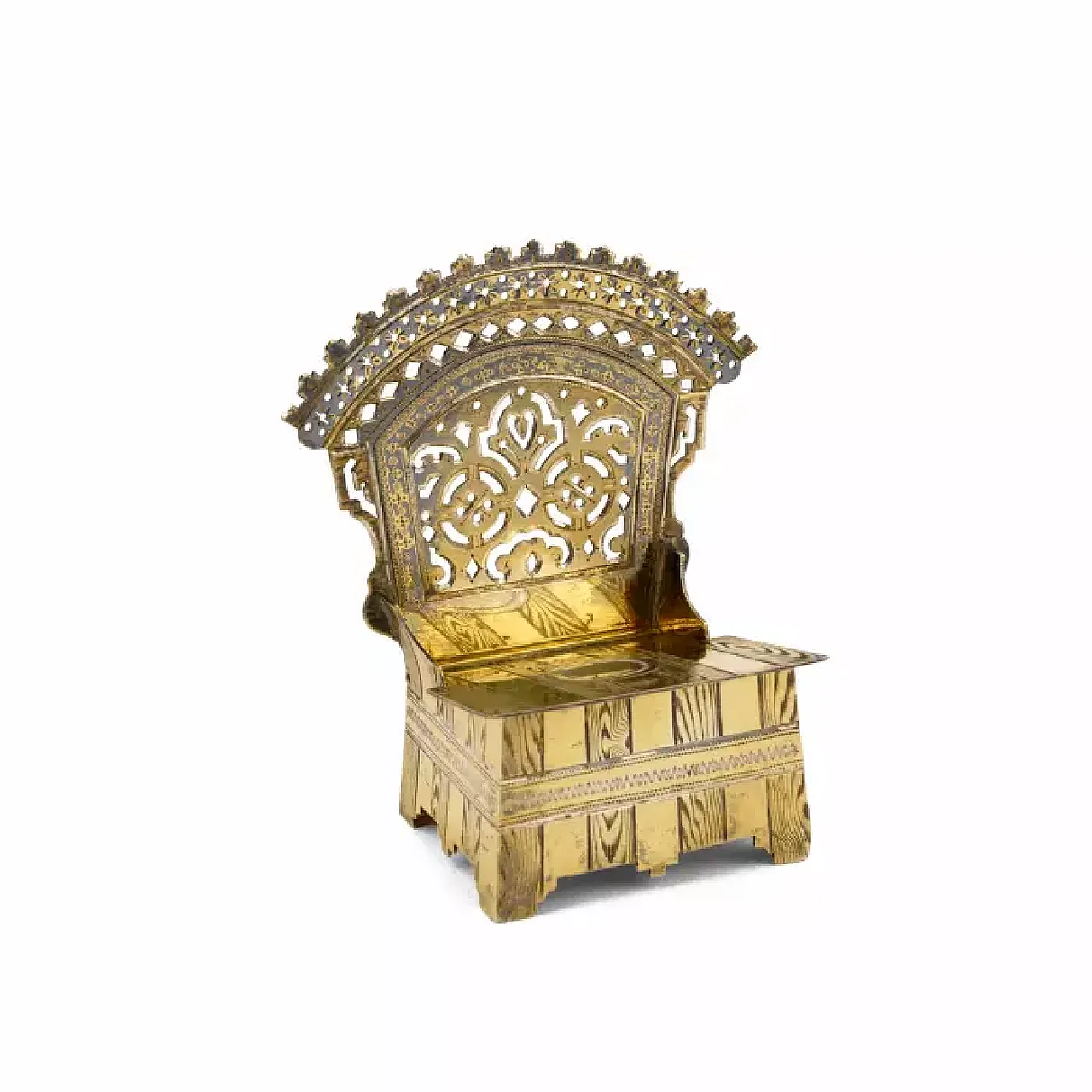
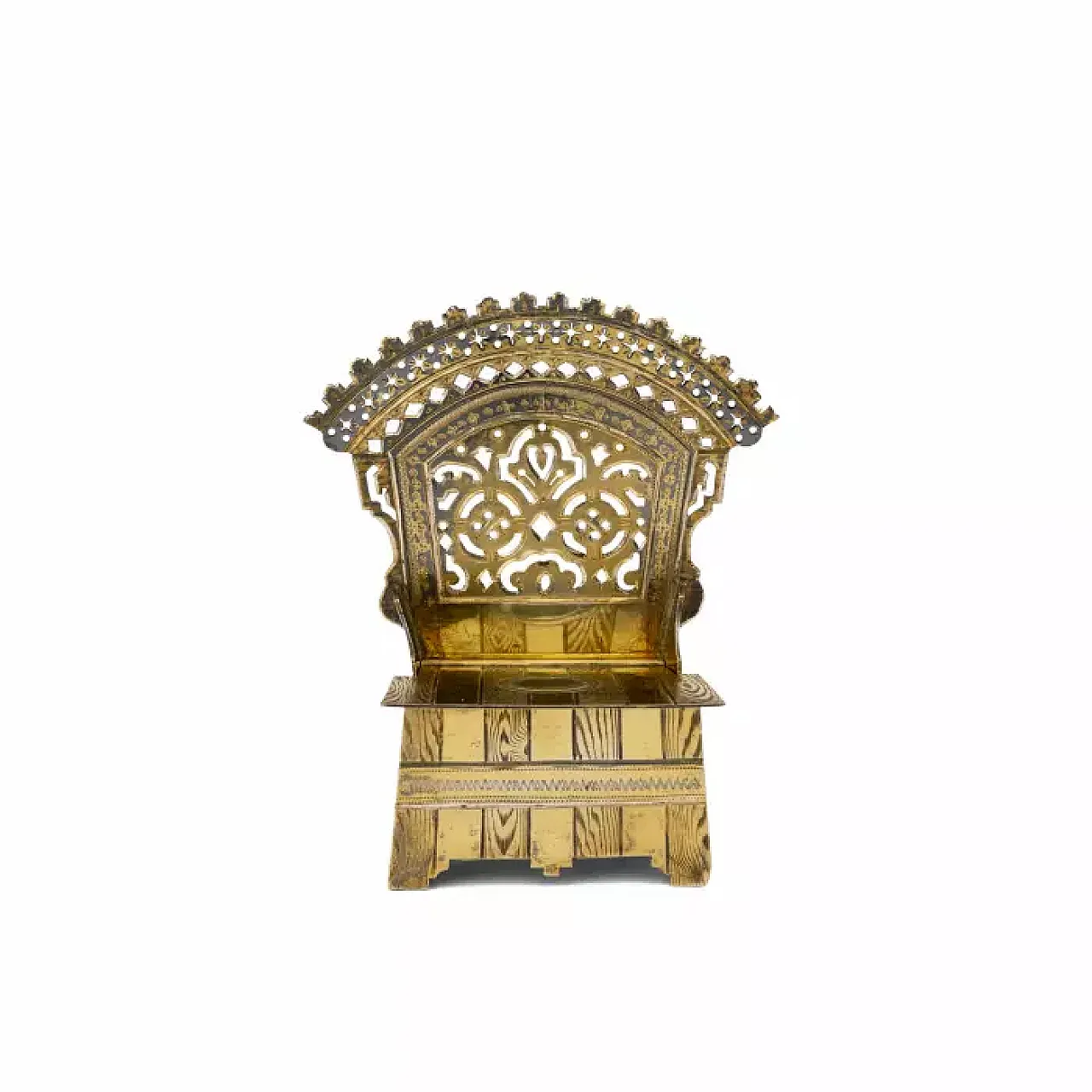
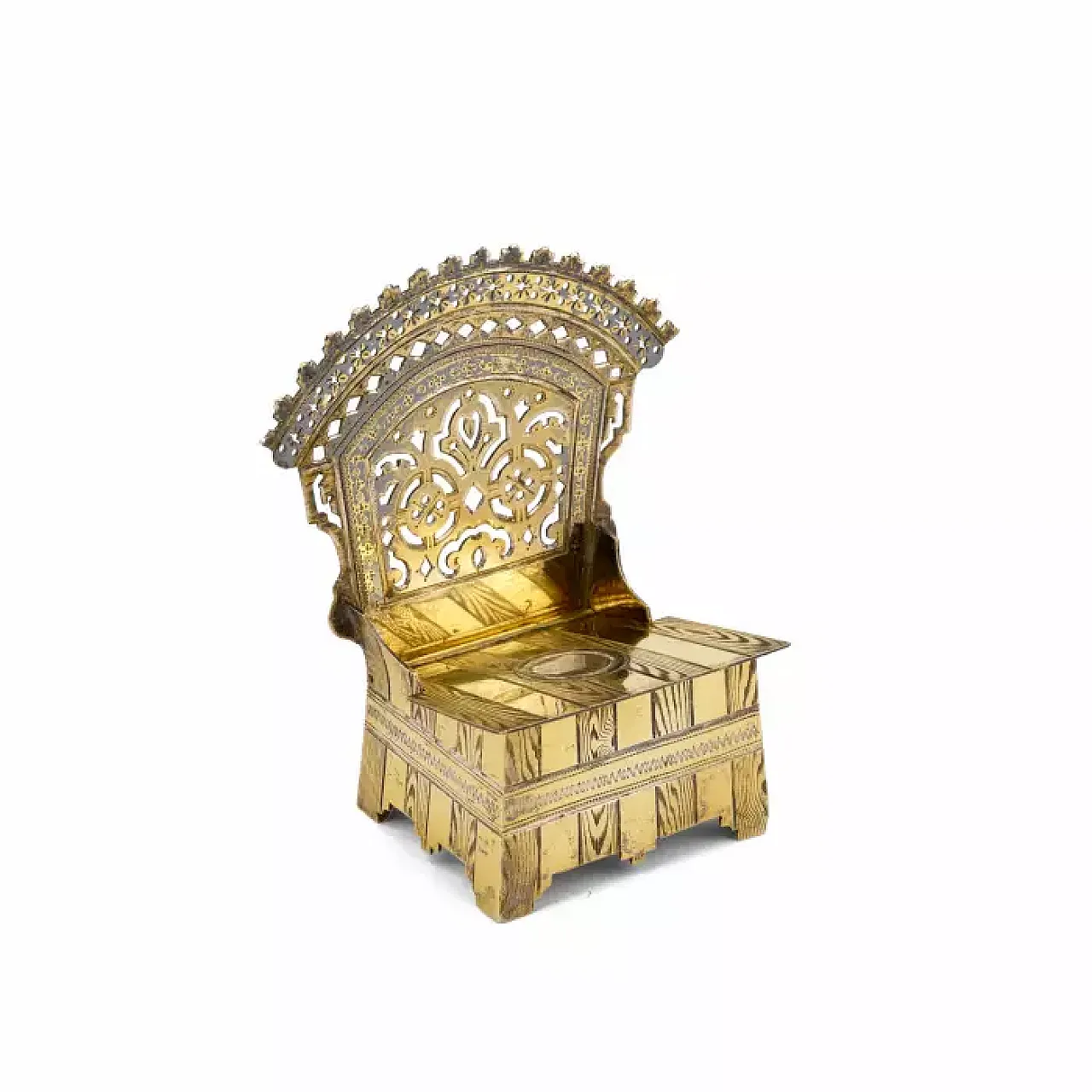
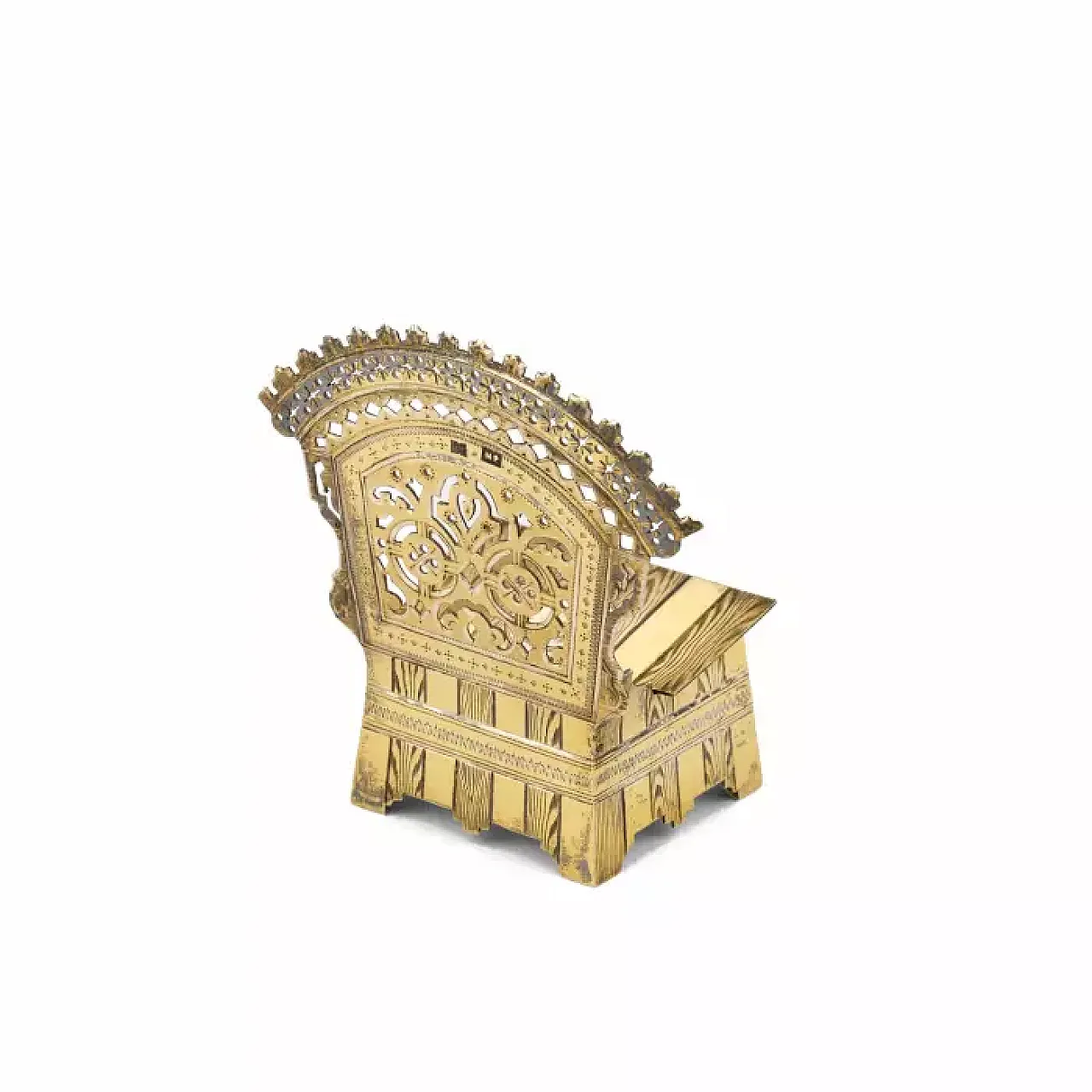
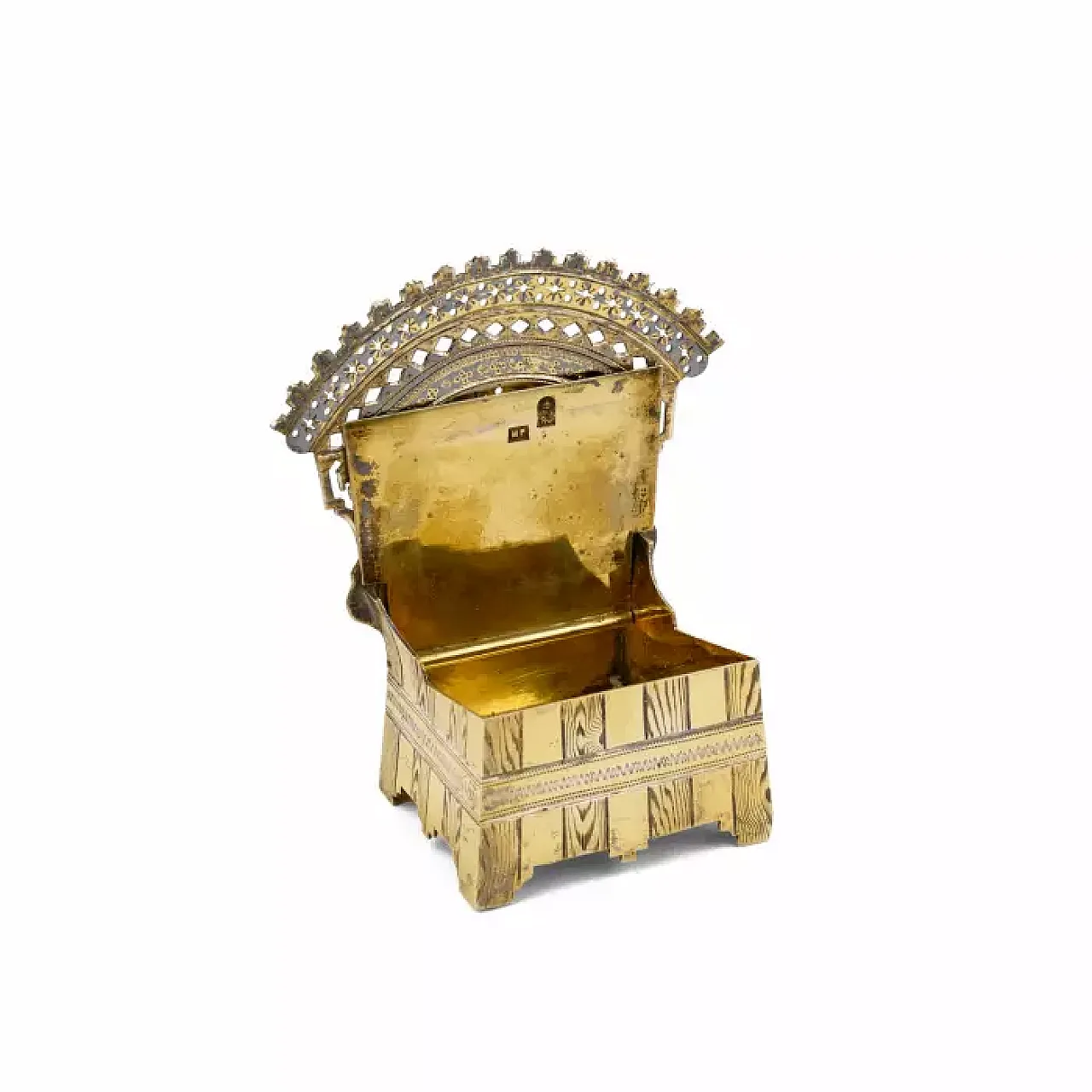
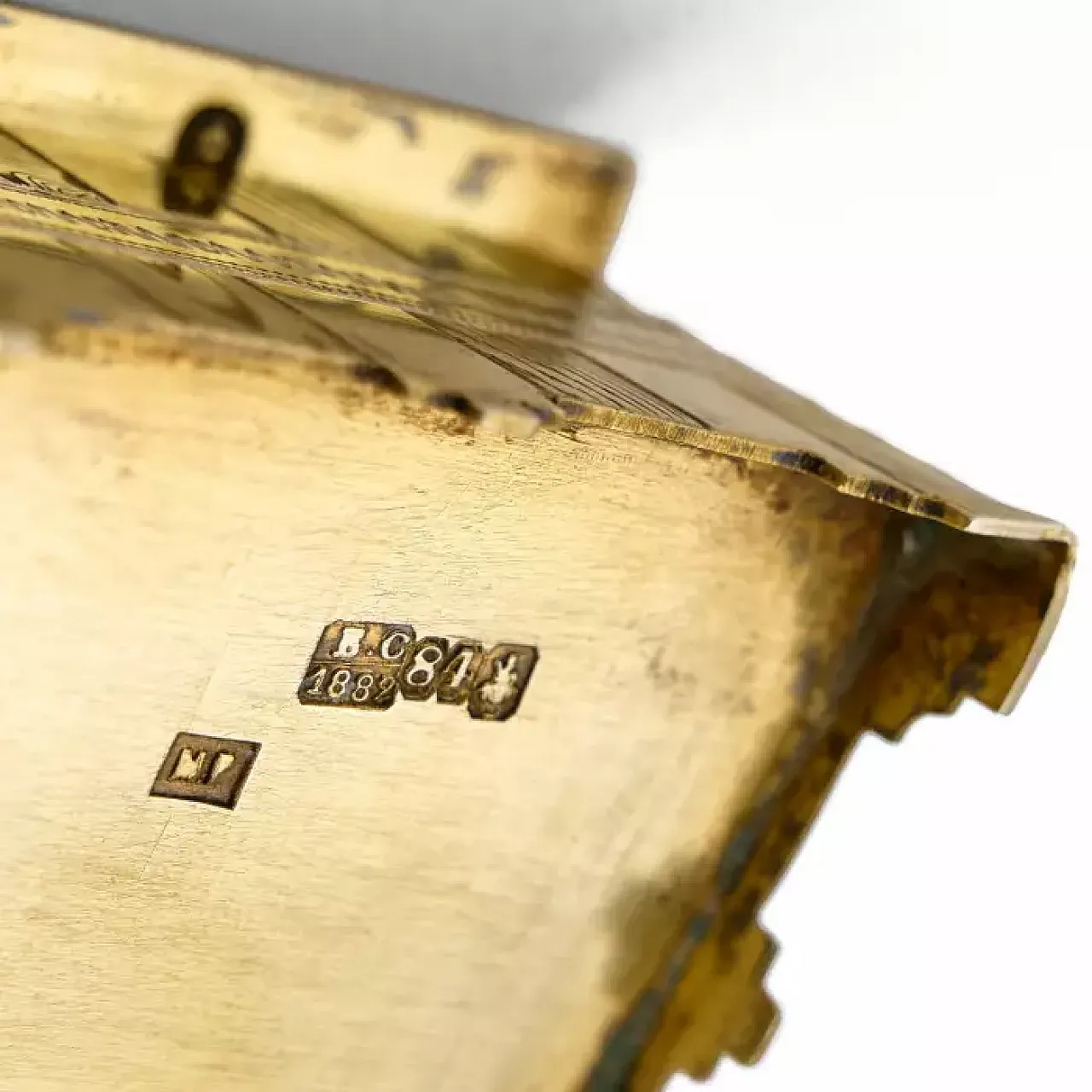
A Russian silver-gilt salt cellar, made in Moscow in 1882. Designed as a miniature throne, the object represents a characteristic type of Russian silverwork of the last quarter of the 19th century.
The body is conceived as an architectural chair with a rectangular base and a high, keel-shaped openwork back. The central field is decorated with symmetrical pierced foliate ornament, framed by bands of lozenge-shaped and circular piercings, geometric motifs and a crenellated border. The composition draws upon the forms of medieval Russian architecture and traditional wood carving.
The silver surface was originally entirely gilt. The body is decorated in a trompe-l`œil technique imitating the construction and texture of a wooden chair. Engraved lines, knots and wood-grain patterns reproduce the appearance of individual wooden boards, particularly effectively rendered on the seat and lower section. This illusionistic treatment directly references traditional Russian wooden chair-form salt cellars.



 SILVER Seller in Alpes-Maritimes, France