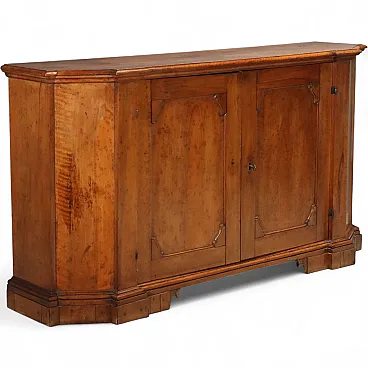
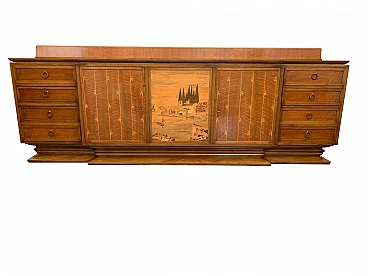
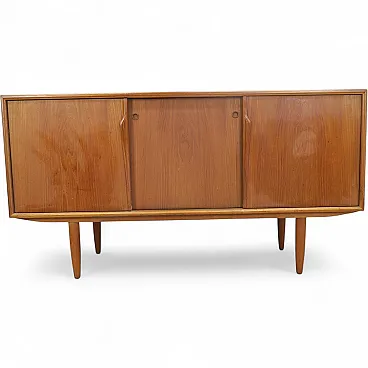
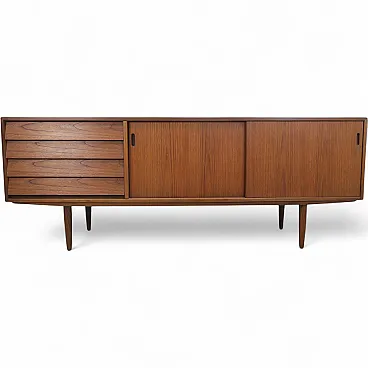
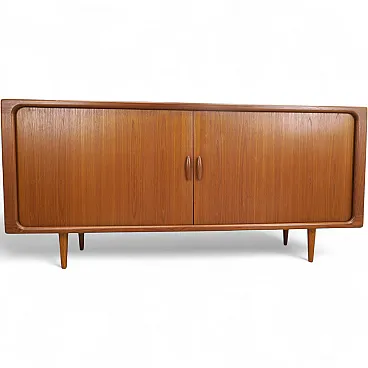
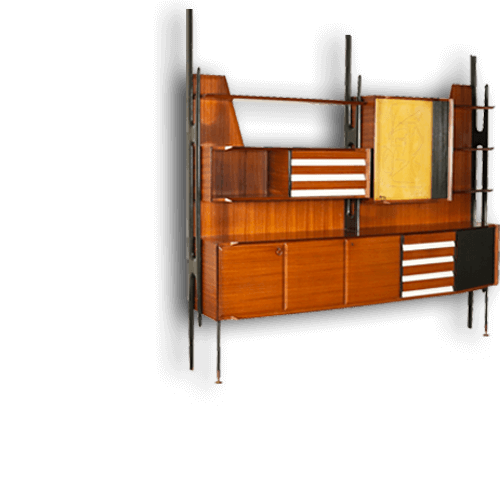
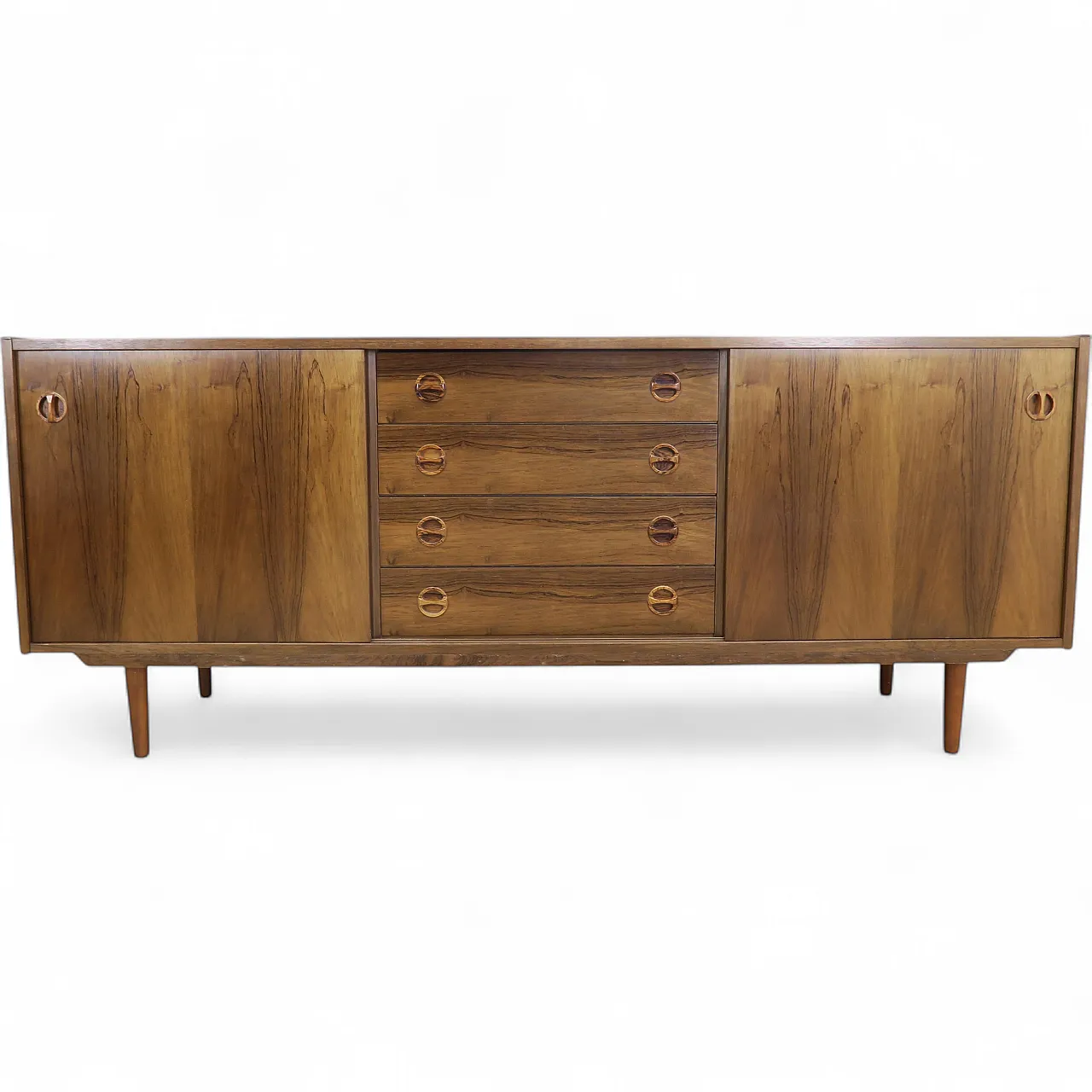
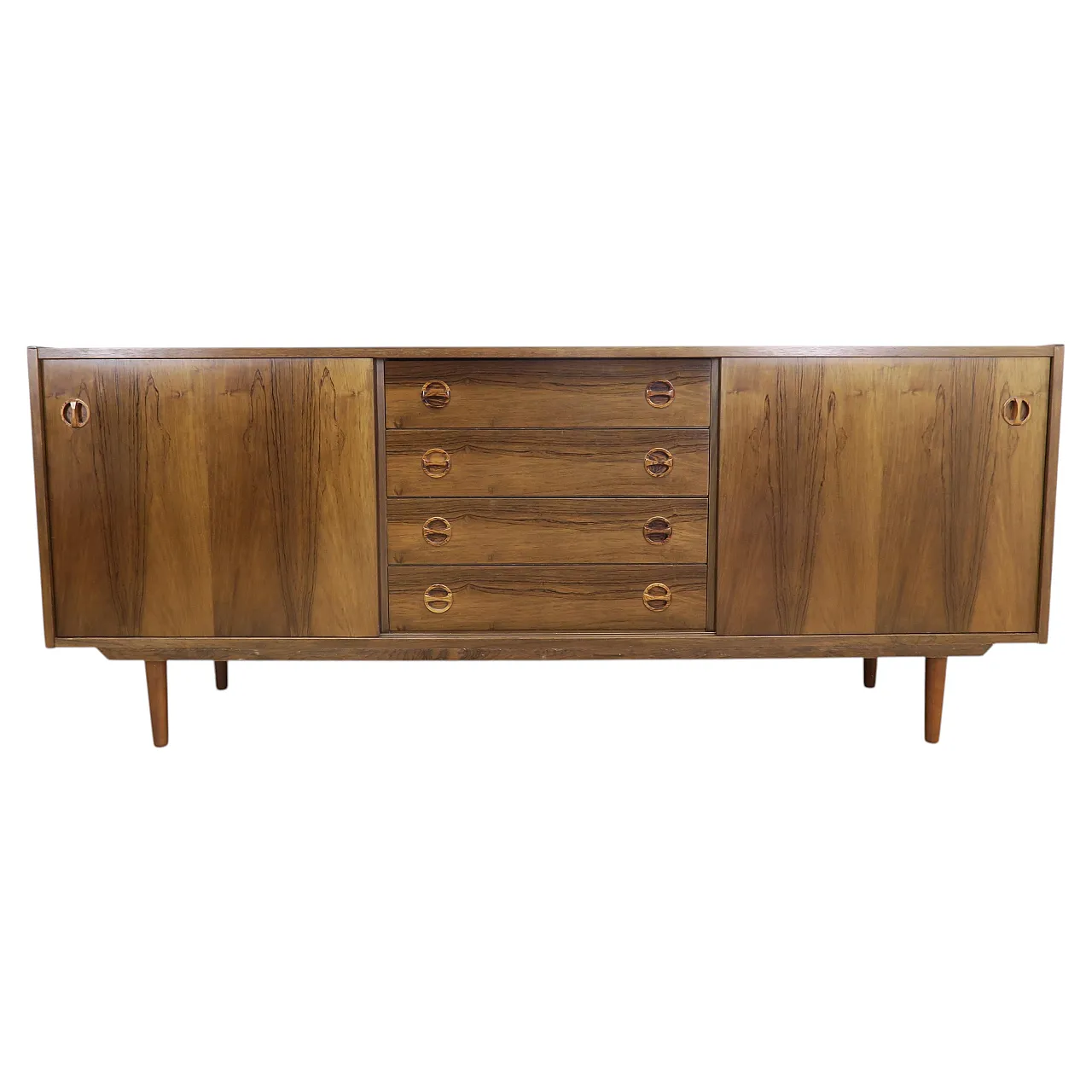
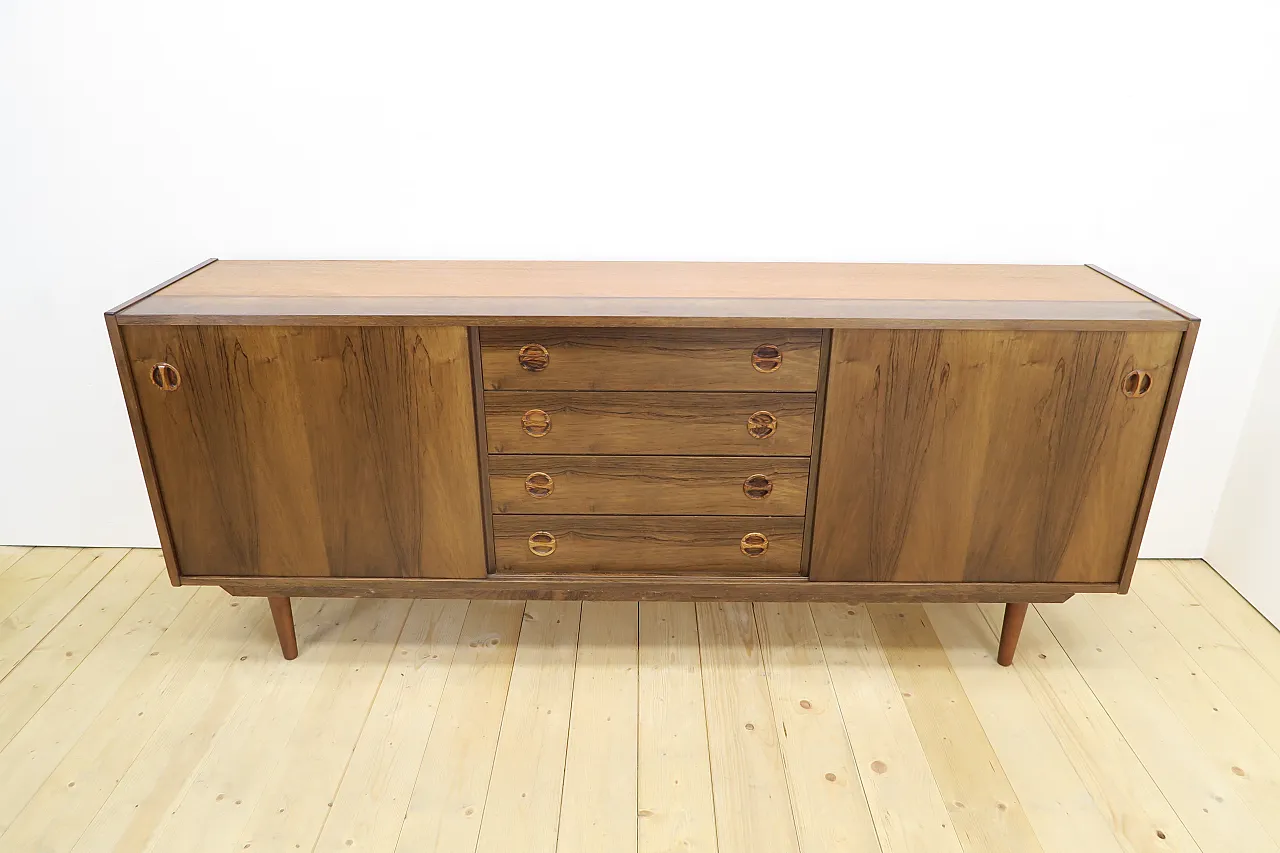
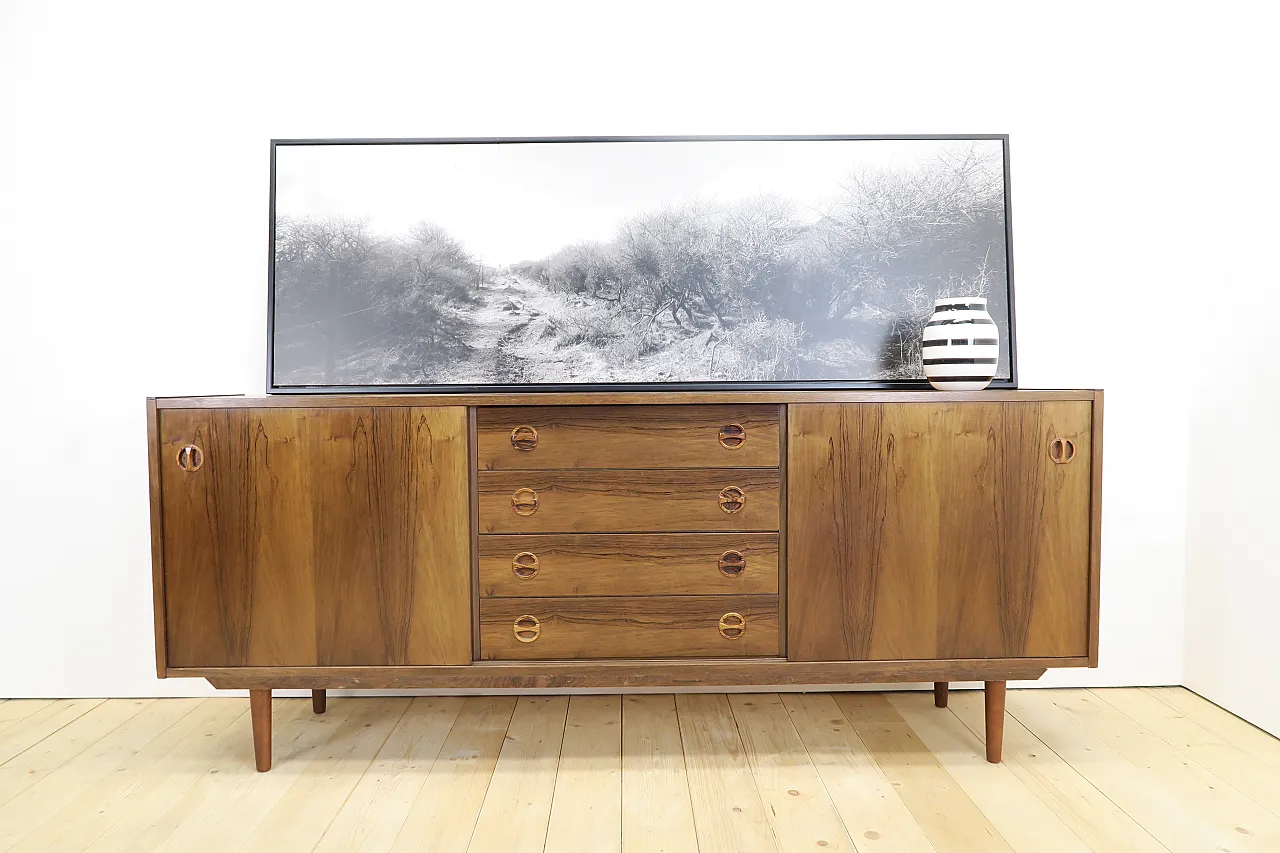
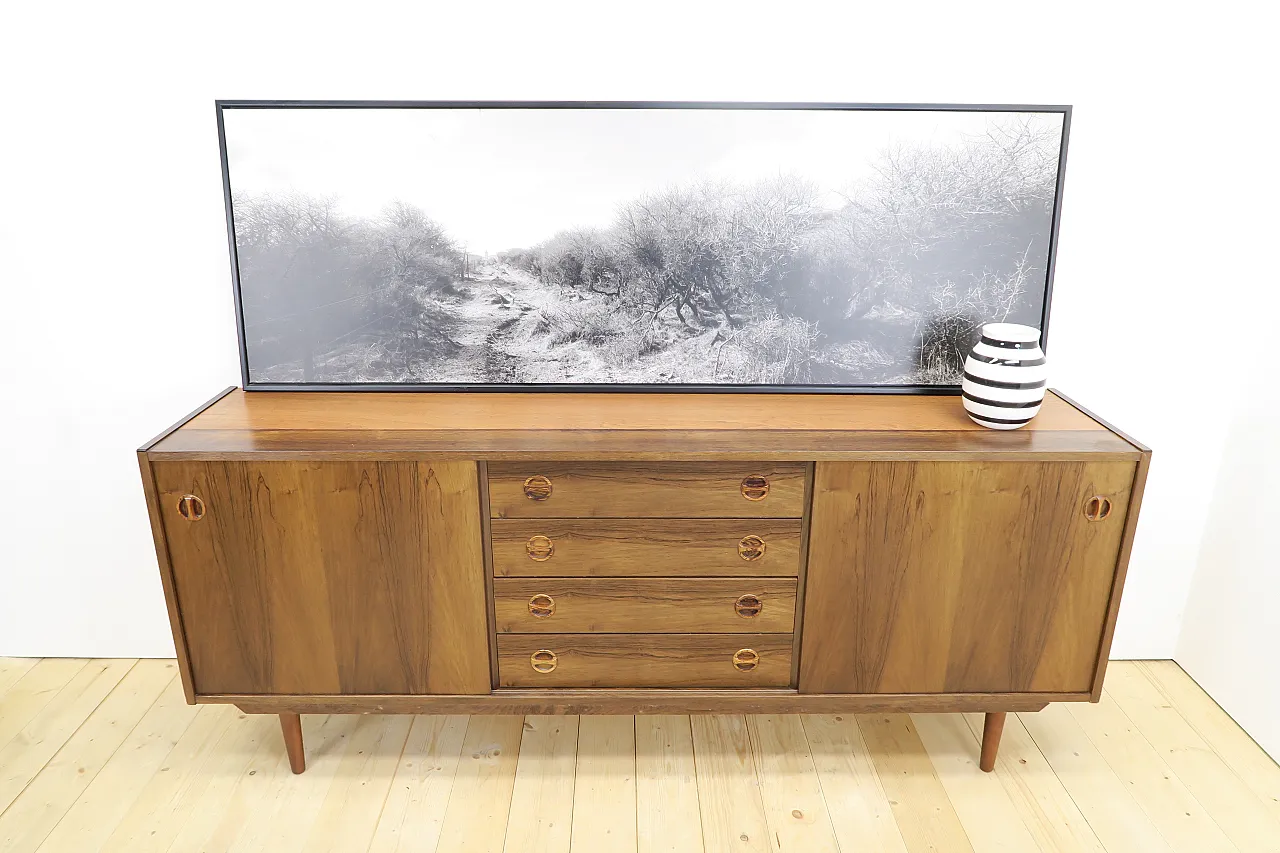
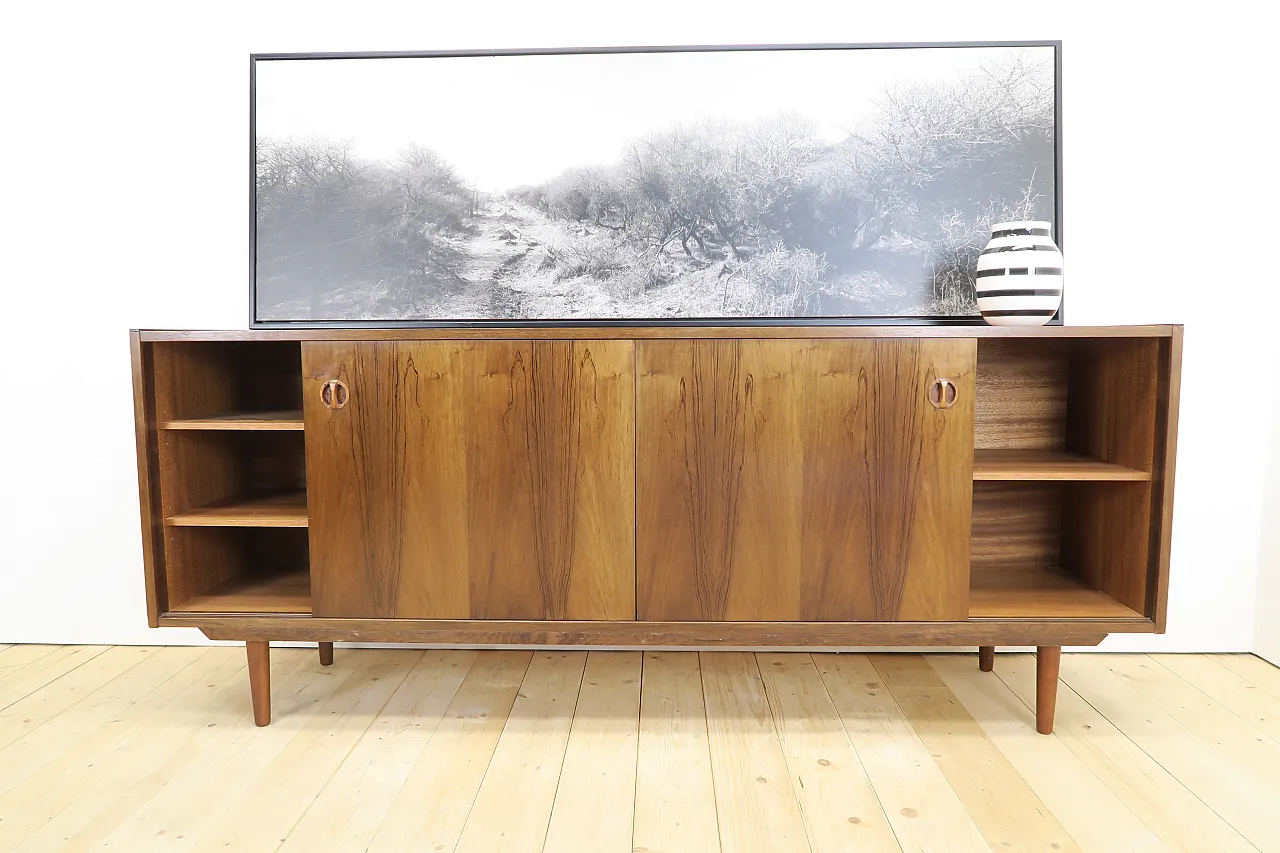
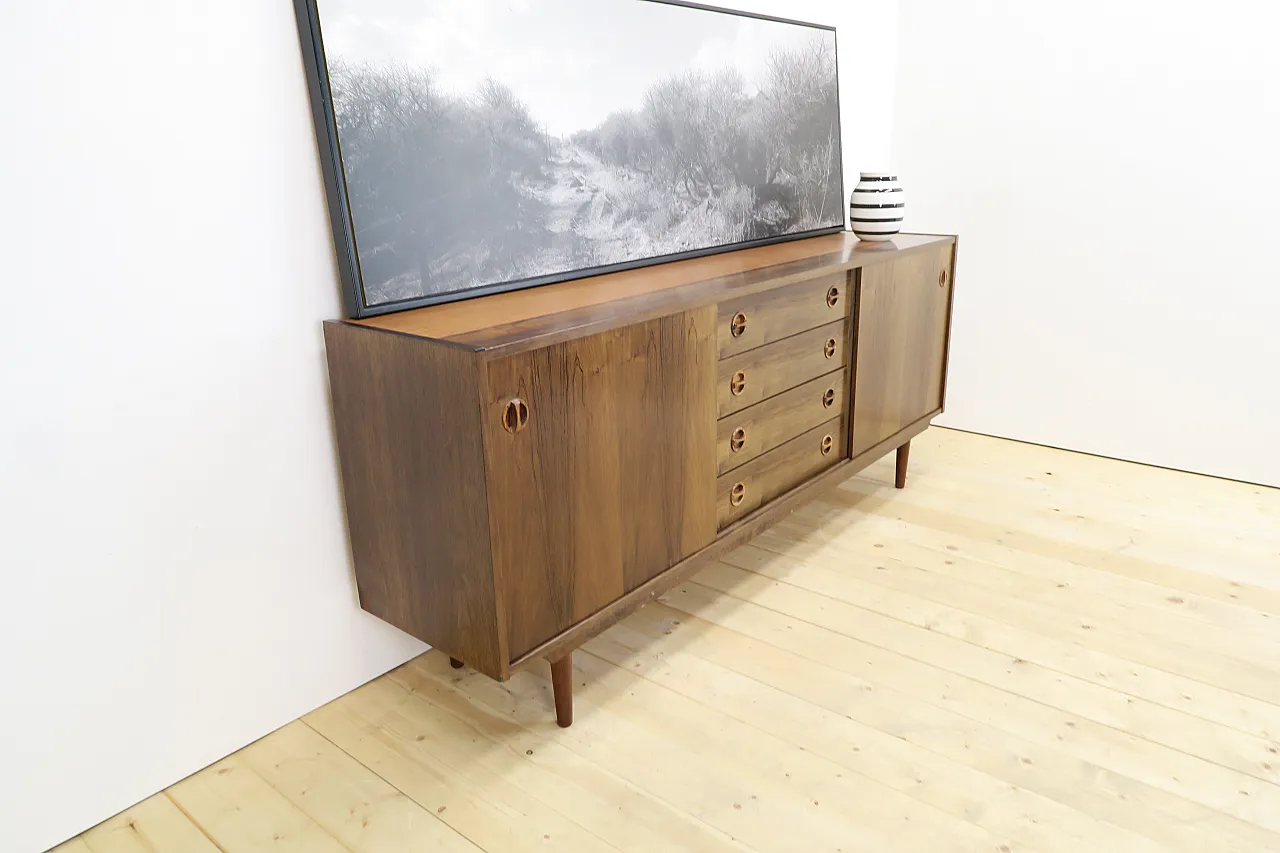
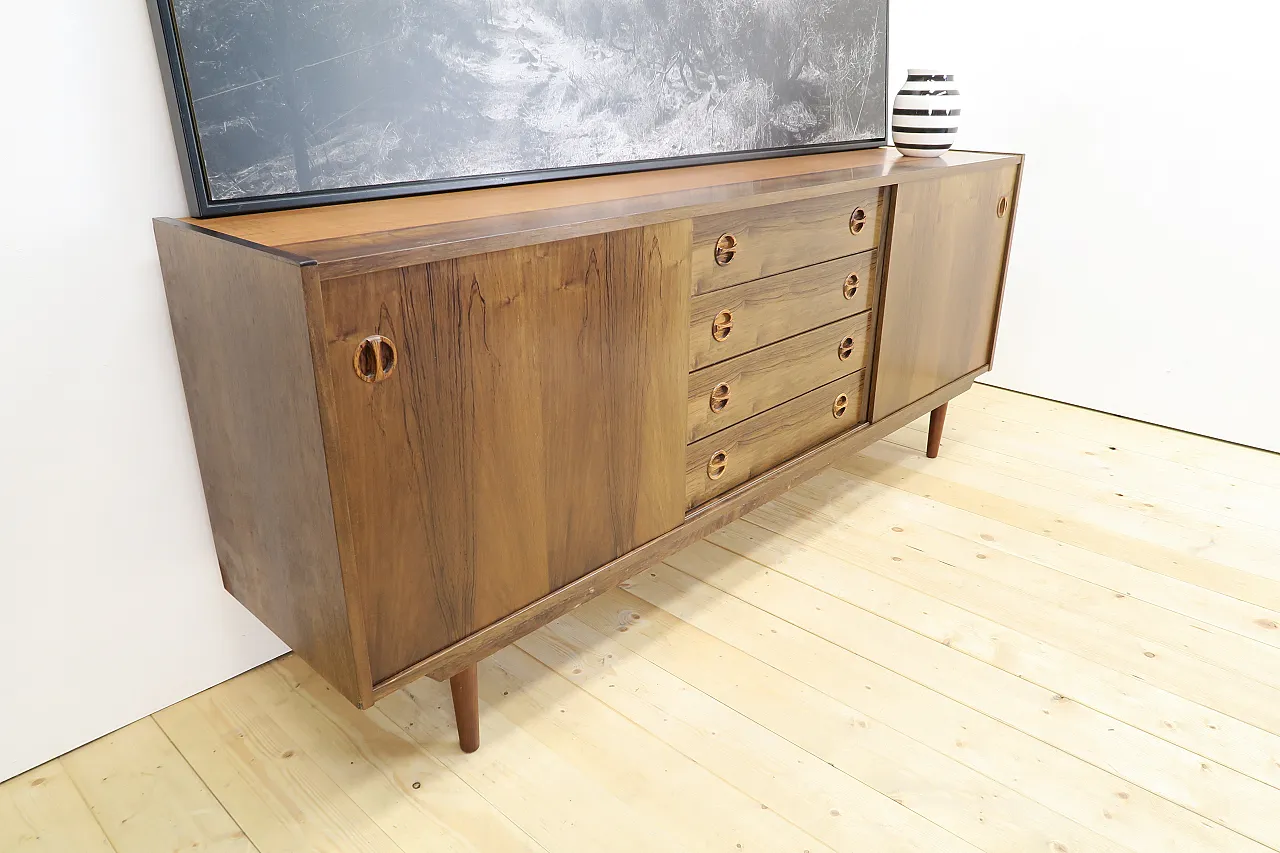
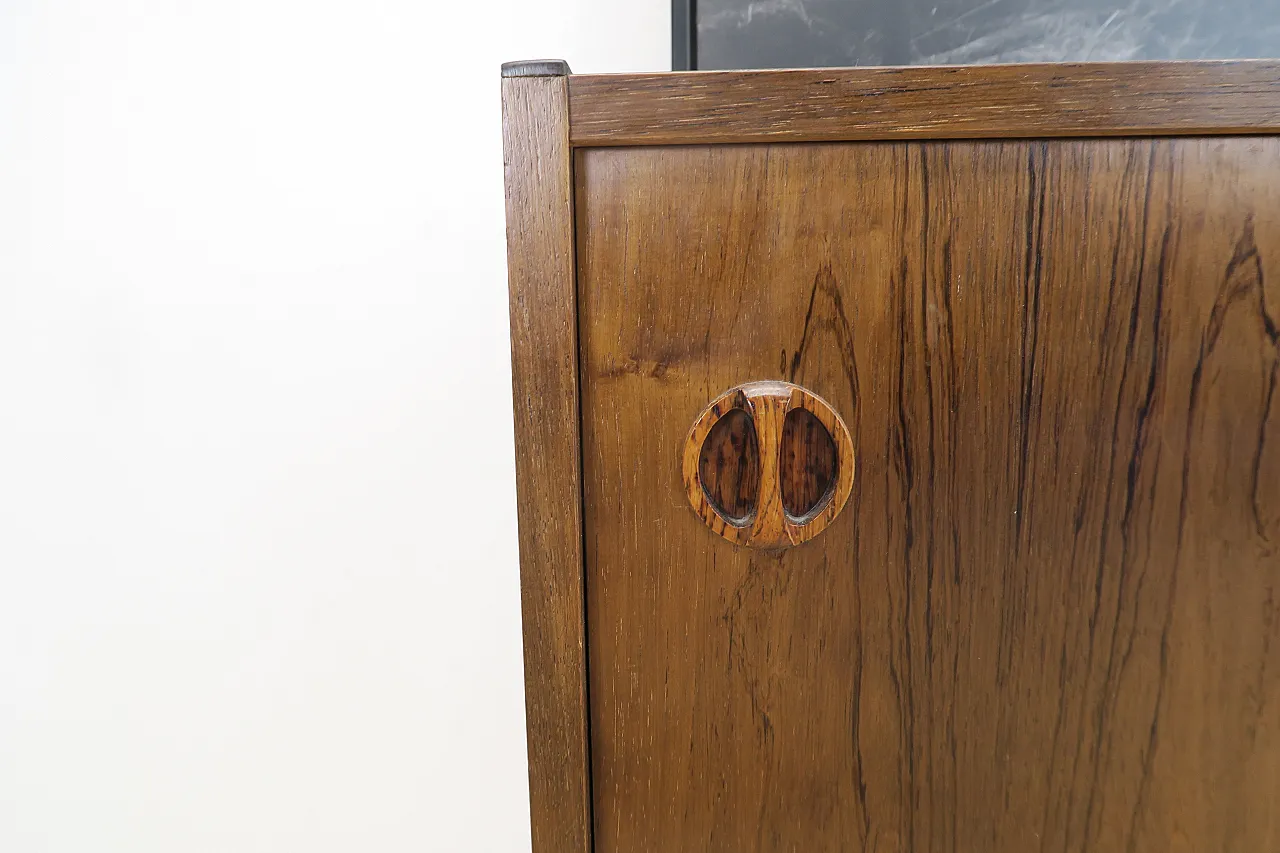
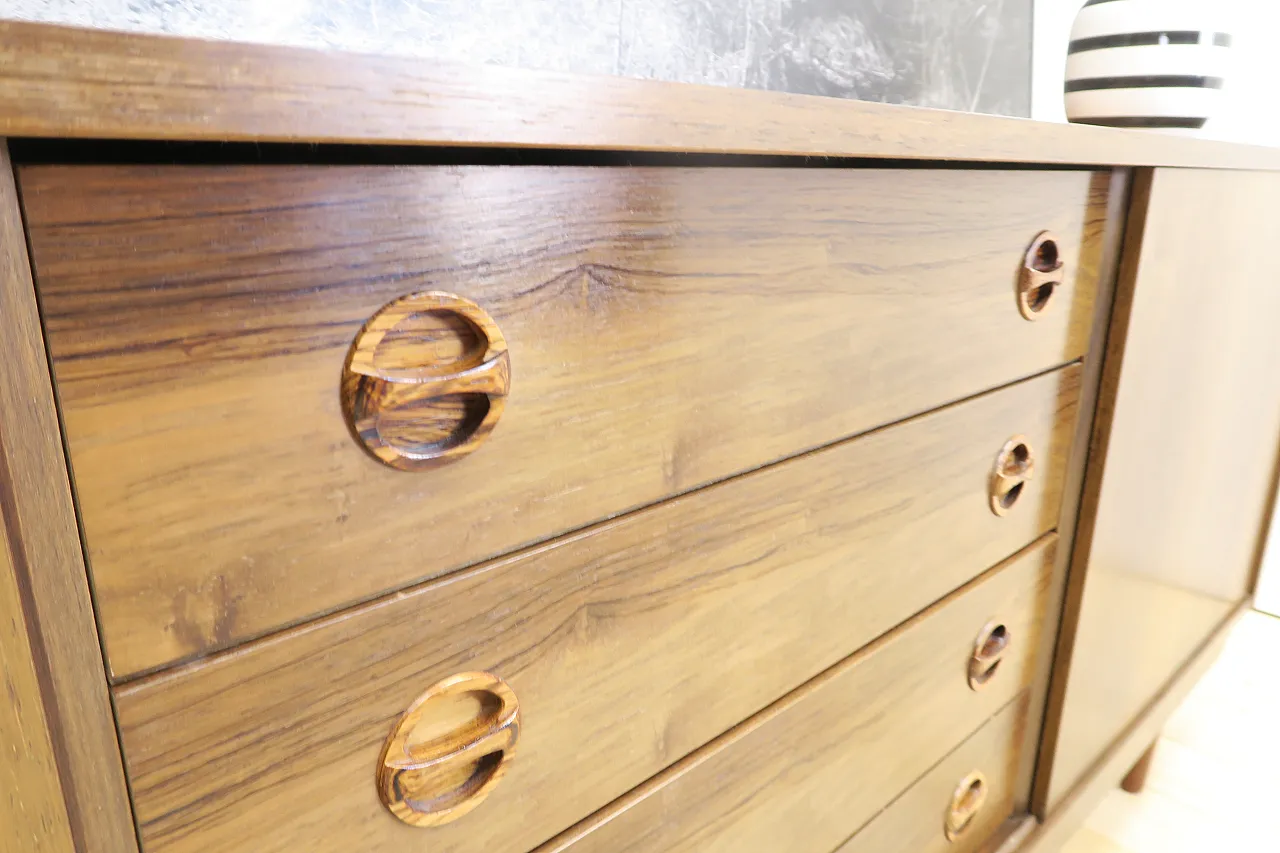
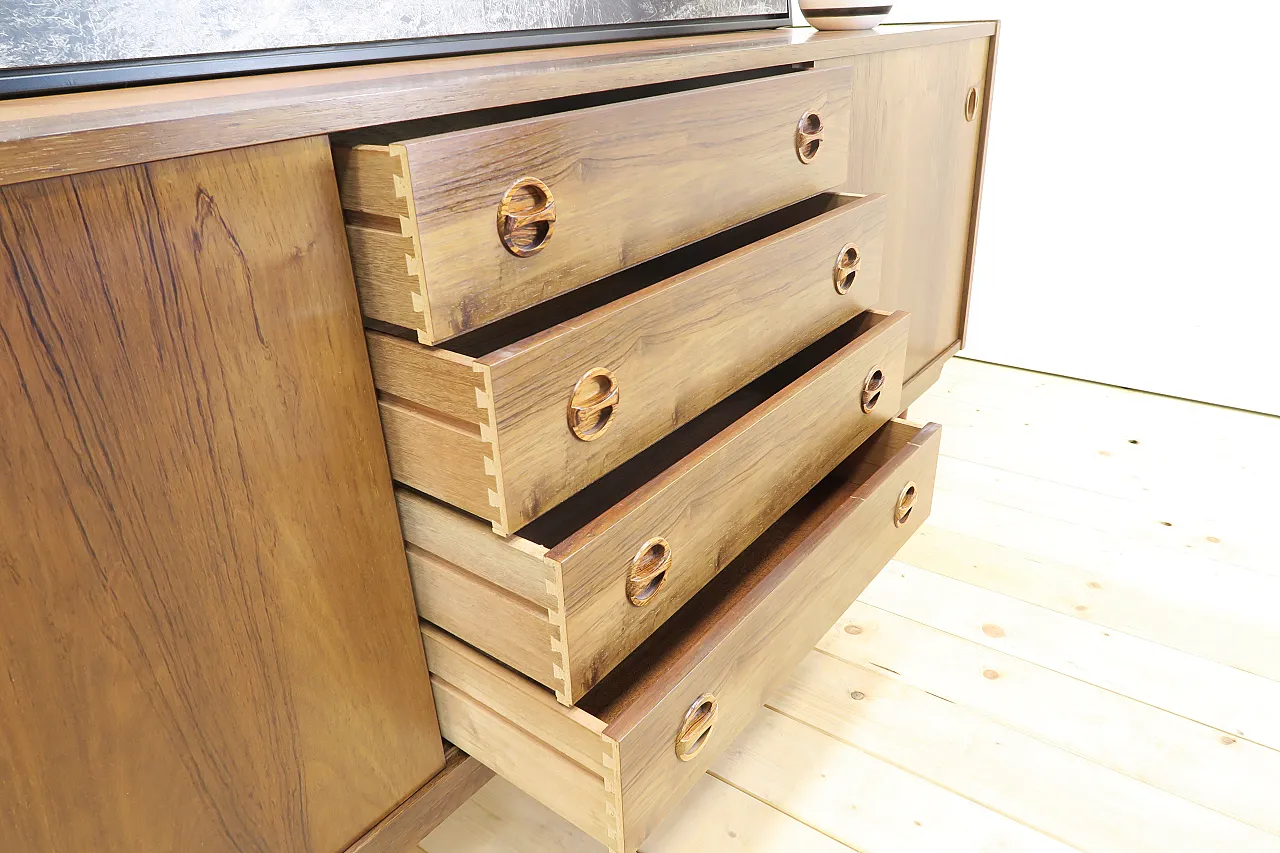
This Danish sideboard from the 1960s stands out for the striking textural presence of the teak, which takes center stage across the entire front. The natural variations in the grain—denser in some areas and deeper in others—create a continuous pattern that appears different depending on the light. The design is strictly symmetrical: a central chest of drawers is flanked by two large side compartments, while the small circular handles barely break up the wooden surface. The body of the piece is supported by slender, tapered legs, which make its considerable length of 195 cm appear lighter. The interior layout offers ample storage space, making the sideboard suitable for both the dining area and the living room. The long upper shelf provides the perfect surface for lamps, ceramics, books, or works of art, transforming a functional element into an architectural feature within the space. With its generous proportions and the bold character of teak, it is a prime example of Mid-Century Scandinavian design, reinterpreted here in a style that is less minimalist and more strongly focused on the visual quality of the wood.



.png)

 SILVER Seller in Torino, Italia