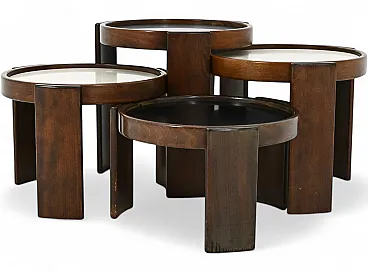
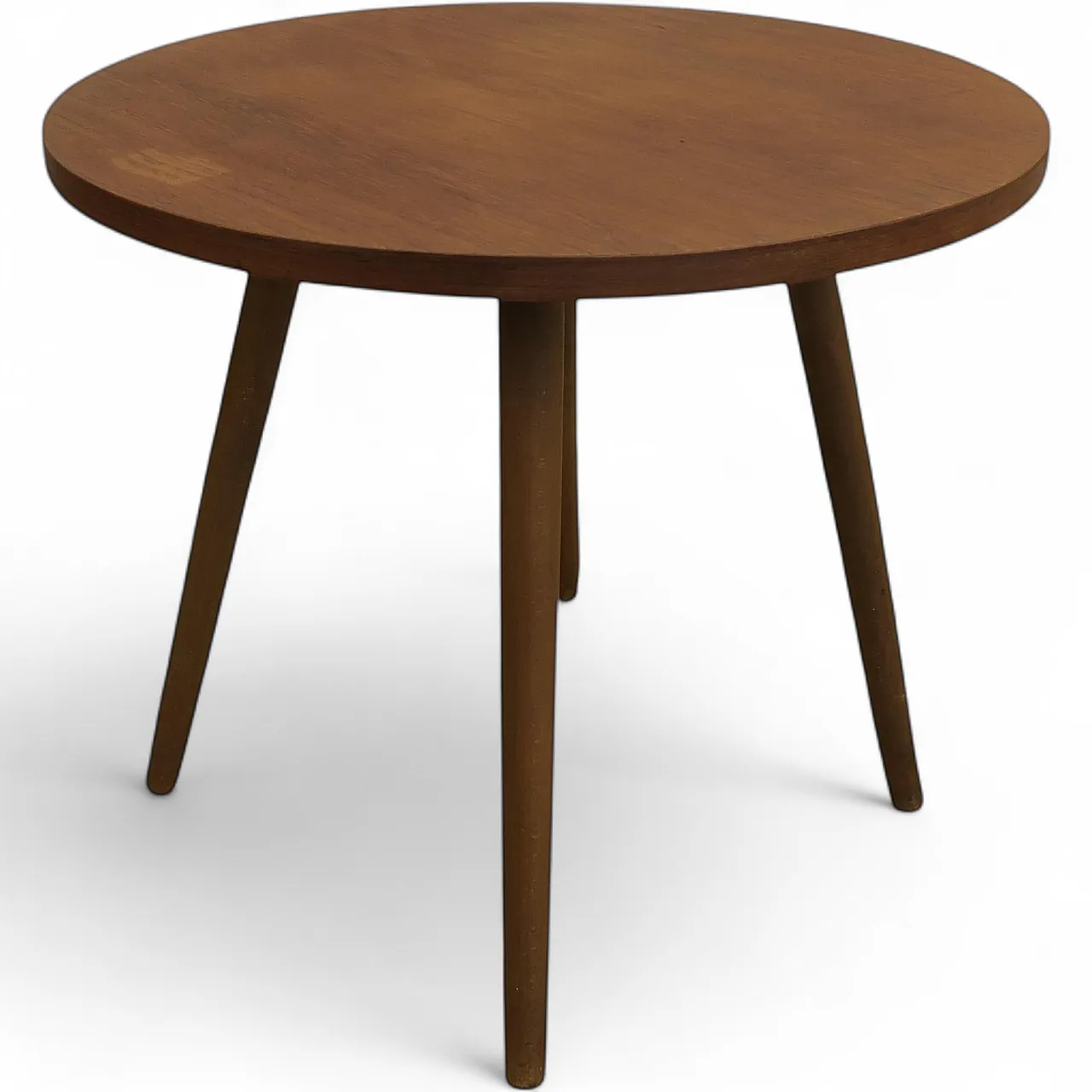
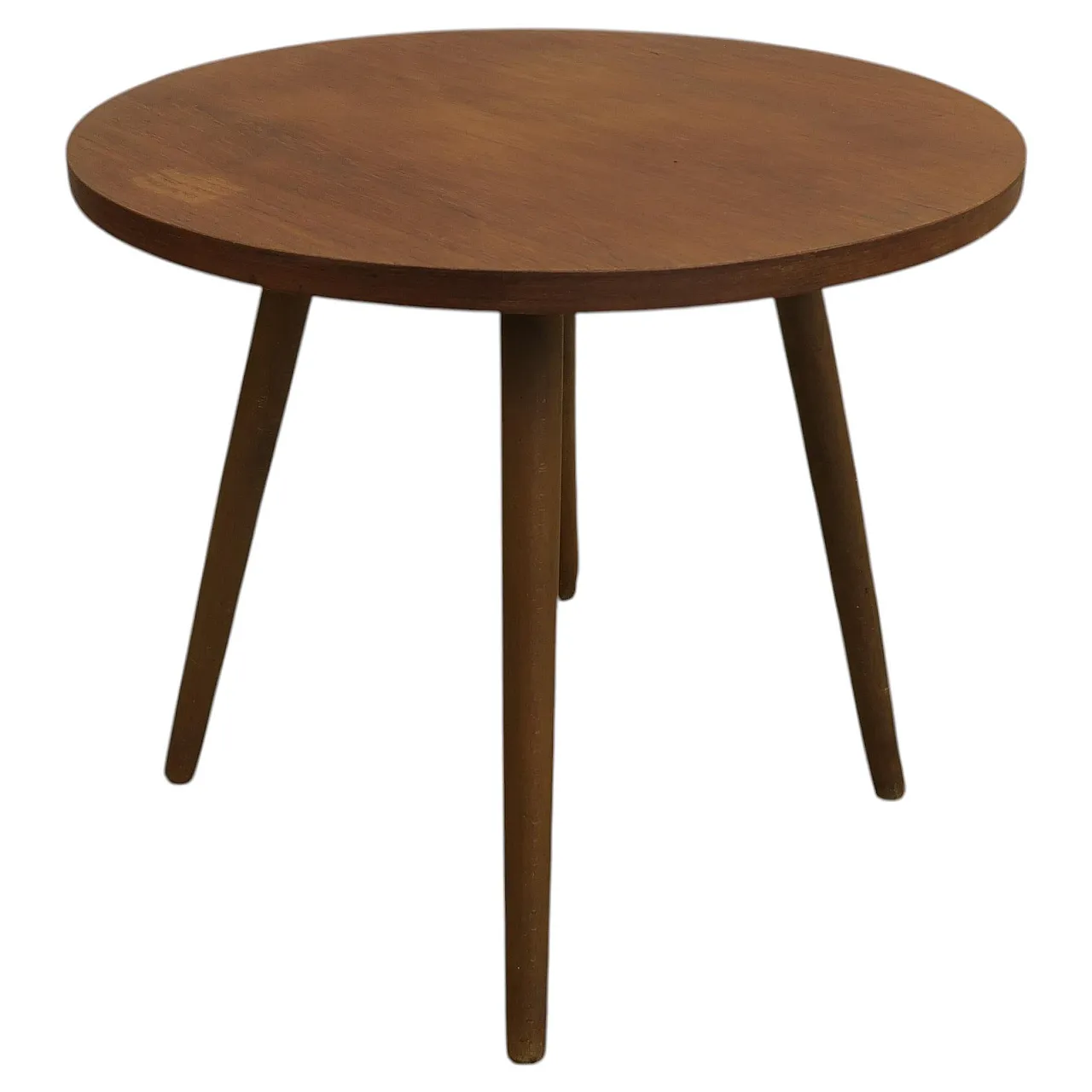
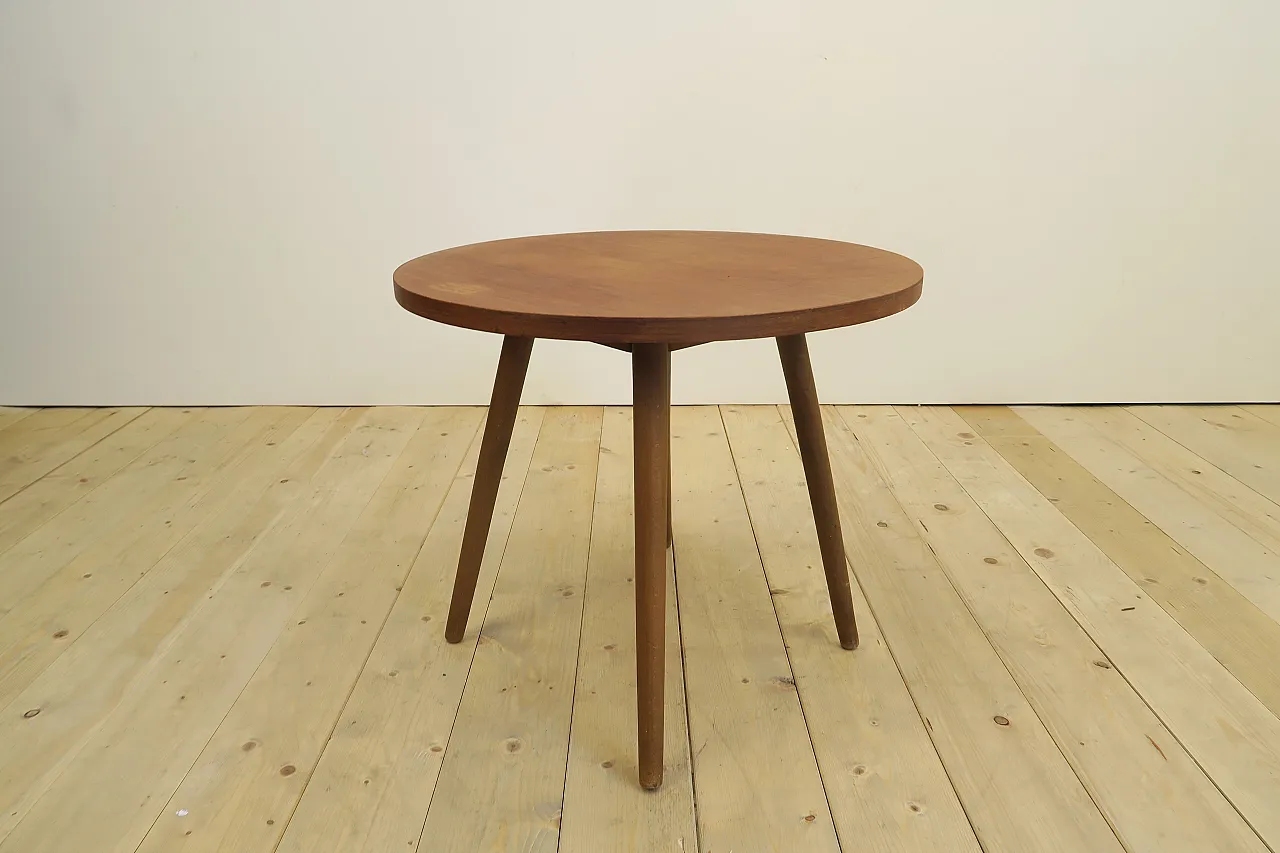
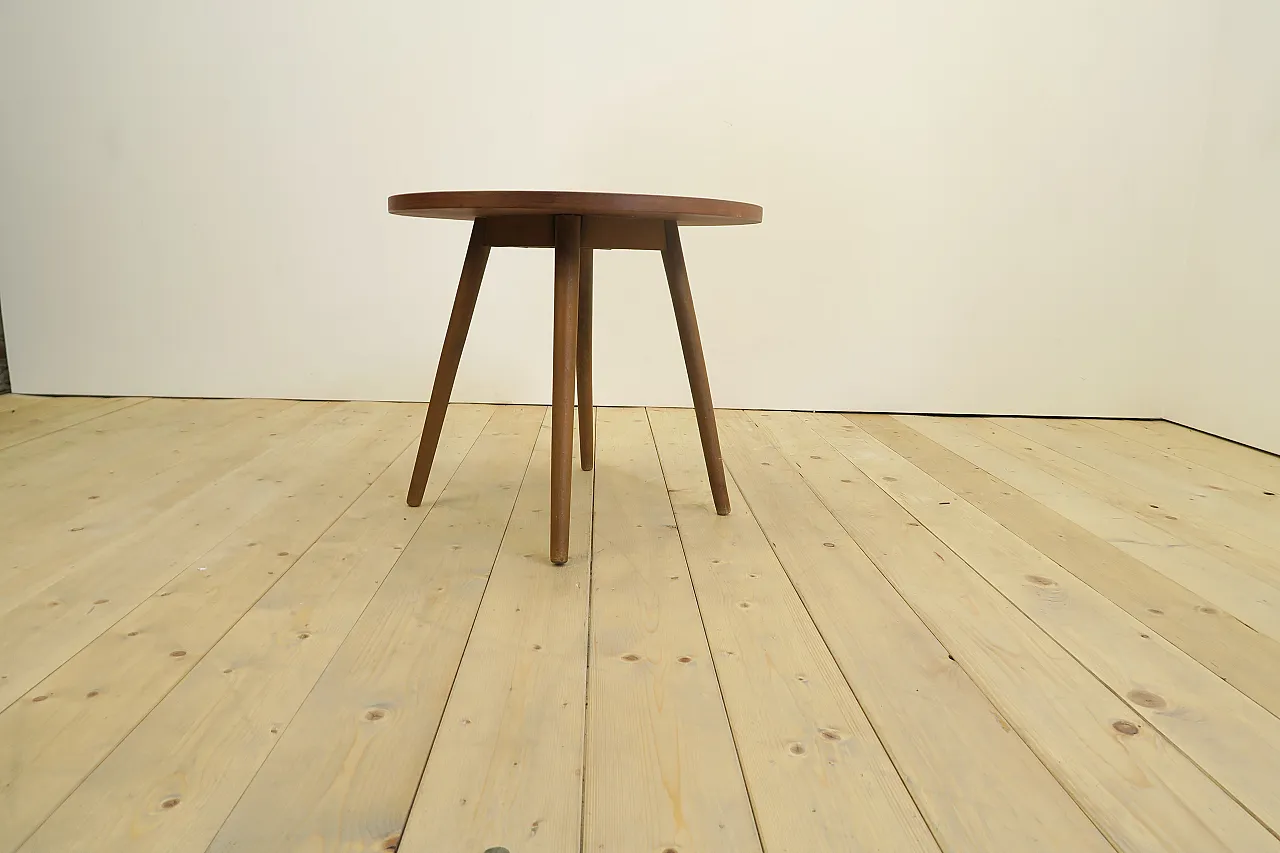
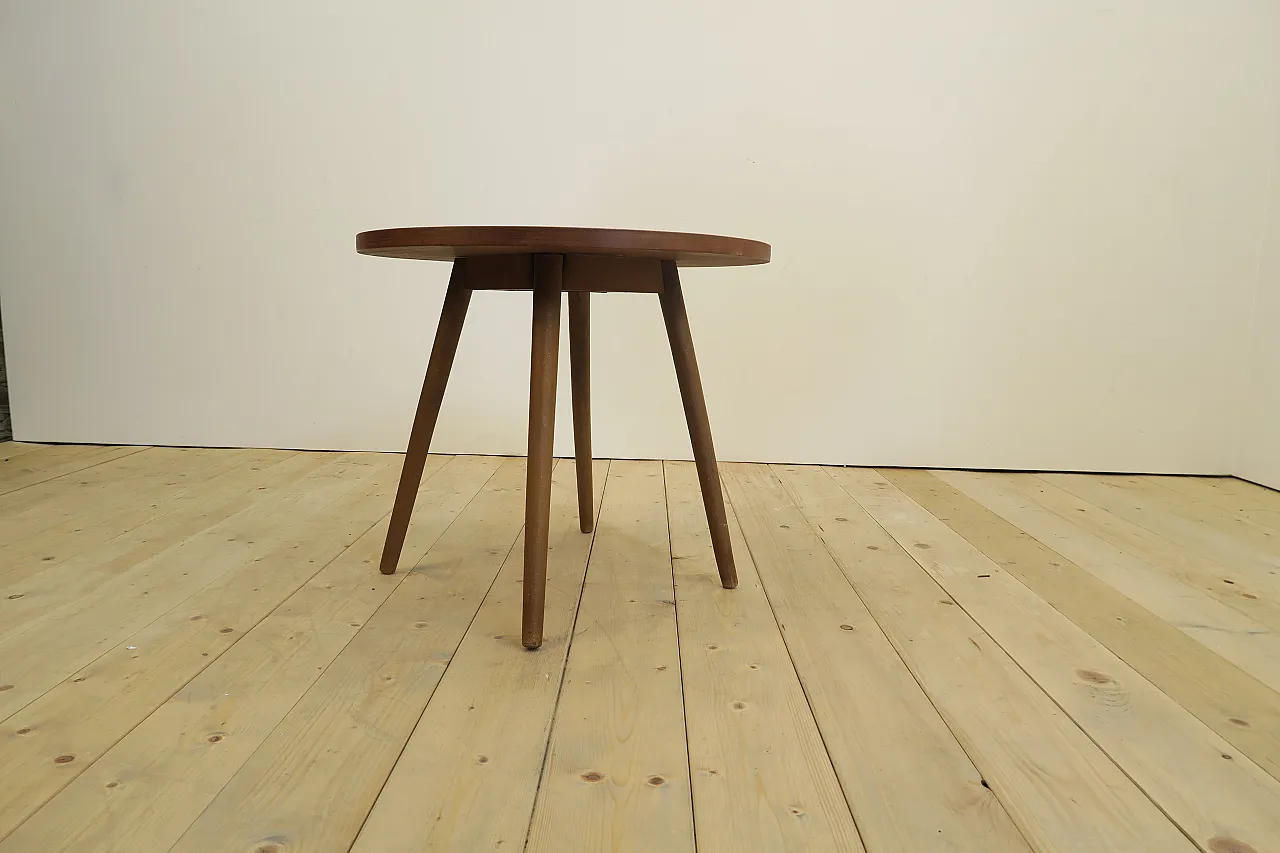
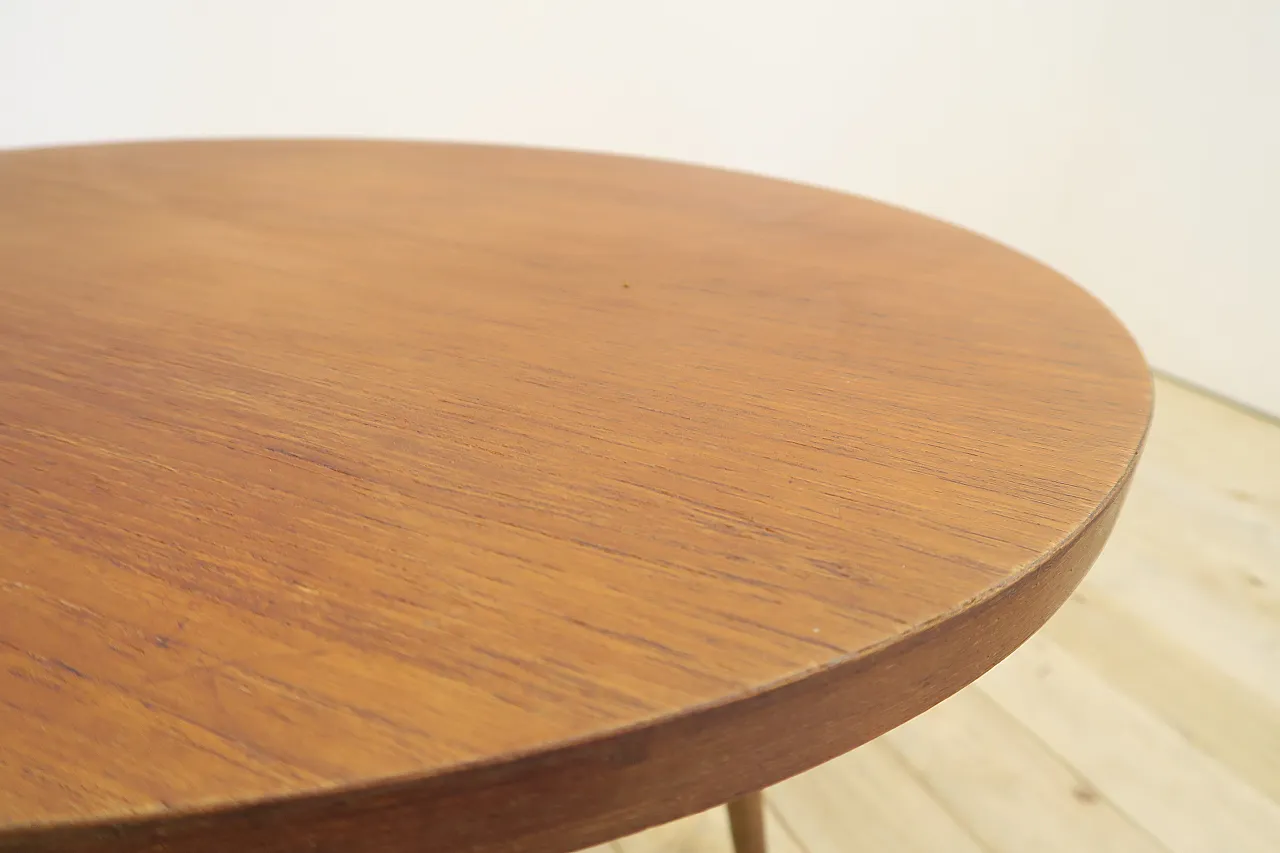
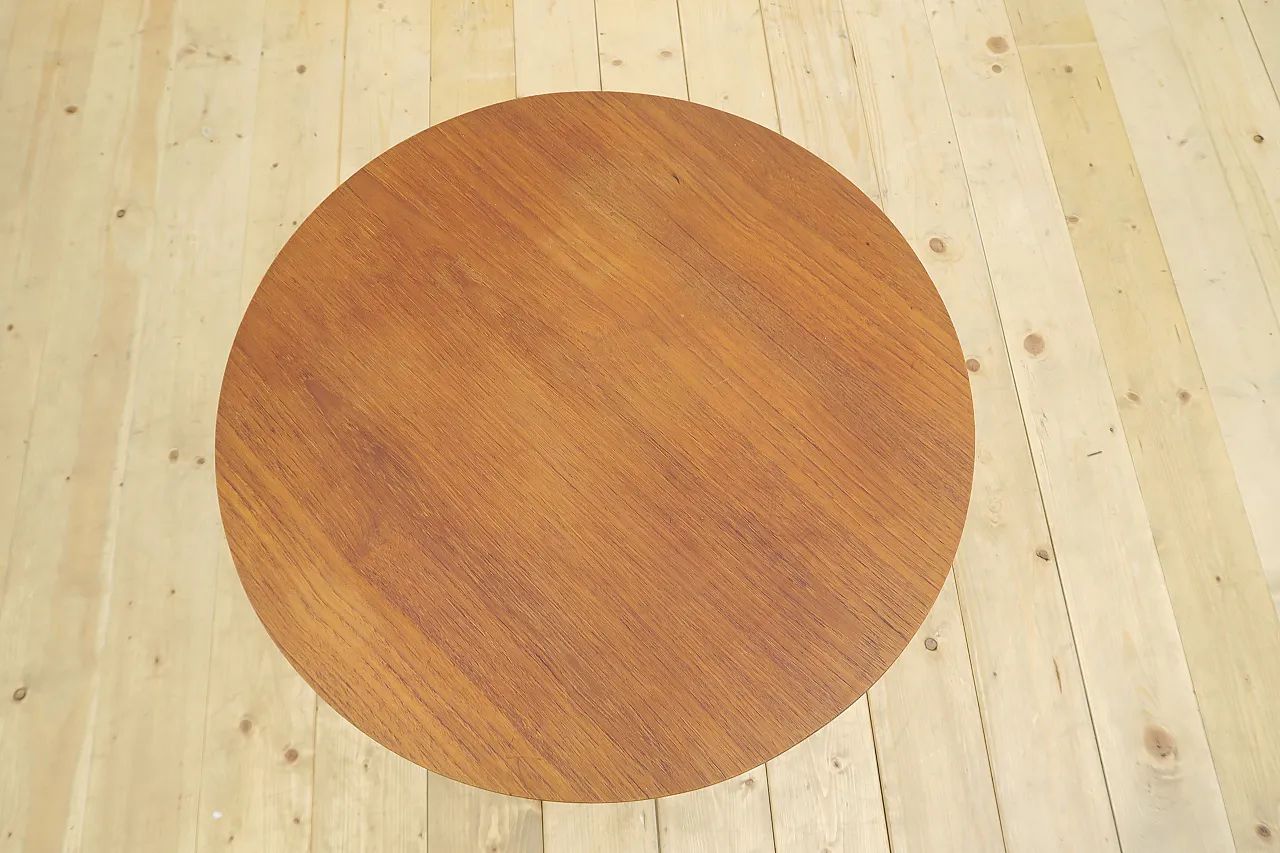
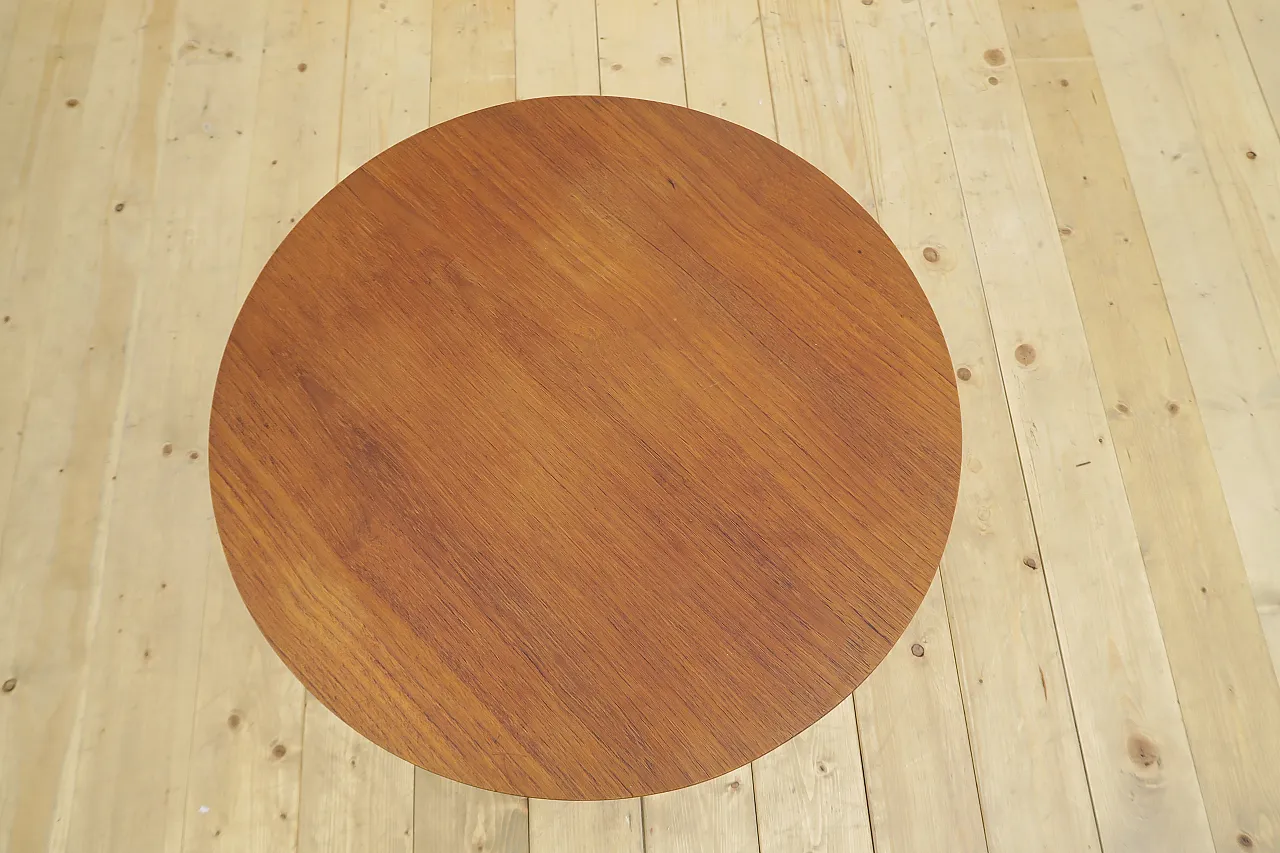
A circular top supported by three slender legs: this 1960s Danish coffee table owes its character to its essential construction, where each element has a specific function. The barely defined edge follows the contours of the top, while the legs, slightly inclined outward, leave the space underneath free. The round shape makes the table particularly pleasant to use around a sofa or between several seats, eliminating sharp edges and facilitating movement. The top also offers a well-proportioned surface for books, ceramics, and small objects. The teak surface brings the natural variations in tone and grain that characterize the material and lend depth to an otherwise very restrained structure. An example of 1960s Scandinavian design in which simplicity of construction becomes part of the aesthetic. Its compact dimensions and open silhouette allow it to easily fit alongside sofas and armchairs from different eras, as well as in a contemporary living room.


.png)
 SILVER Seller in Torino, Italia